Act One Podcast
Act One Podcast
Film Producer Howard Kazanjian
Act One Podcast - Episode 22 - Interview with Film Producer, Howard Kazanjian.
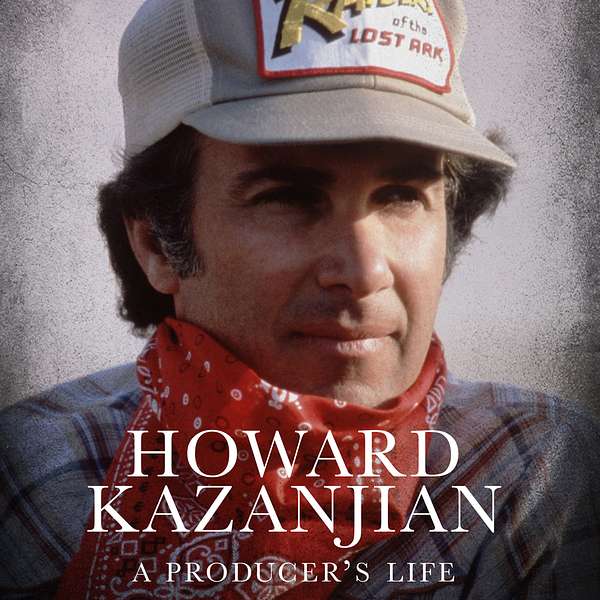
Over his 50 year career in Hollywood, Howard Kazanjian has made films with some of the most important filmmakers of all time such as Robert Wise, Billy Wilder, Paul Newman, Sam Peckinpah, Clint Eastwood, Francis Ford Coppola, George Lucas, Steven Spielberg and Alfred Hitchcock just to name a few. Some of the films Howard has worked on include COOL HAND LUKE, THE WILD BUNCH, RAIDERS OF THE LOST ARK, and RETURN OF THE JEDI. Recently, a new biography was released that chronicles Howard’s illustrious film career titled, Howard Kazanjian: A Producer’s Life, written by J.W. Rinzler. The book is a fascinating look into Howard’s 50 year career as a filmmaker.
The Act One Podcast provides insight and inspiration on the business and craft of Hollywood from a Christian perspective.
I was now doing something that I had dreamed about. And I was having fun. And I did smile a lot. Why not? Why cry? When the pressure's on, especially if you're an assistant director or producer or one of the leaders, they read you. And if you're down, they read that. But if you're smiling and you can talk to the crew, you can ask them the question, what are you doing? You get them involved. And that's fun.
James Duke:You are listening to the Act One Podcast. Thanks for tuning in. I'm your host, James Duke. Just a reminder that if you enjoy our podcast, please don't forget to subscribe and leave a good reading. My guest today is prolific film producer Howard Kazangian. Howard has made films with some of the most important filmmakers of all time, such as Robert Wise, Billy Wilder, Paul Newman, Sam Peckinpaw, Clint Eastwood, Francis Ford Coppola, George Lucas, Steven Spielberg, and Alfred Hitchcock, just to name a few. Are you a fan of classic films such as Cool Han Luke, The Wild Bunch, Raiders of the Lost Ark, or Return of the Jedi? Yeah, me too. And Howard worked on all of them. Recently, a new biography was released that chronicles Howard's illustrious film career titled Howard Kazangian, a Producer's Life, written by J.W. Rinsler. The book is a fascinating look into Howard's 50-year career as a filmmaker. I had a great time talking to Howard about the book and his life in the movies. I hope you enjoy our conversation. Howard, welcome. It's such a pleasure to have you on the Act One podcast.
SPEAKER_00:Thank you. Thank you, James.
James Duke:I've I've always enjoyed my conversations with you, but uh I I want to make sure that we spend the bulk of our conversation today talking about this brand new book that came out this year recently, um, uh, which is your biography. And I think everybody, I think the book is too big to probably be a stocking stuffer when you say Howard, but but but it would be a great Christmas gift, I think, for anybody in your family that um is a fan of any of Howard's films or obviously just interested in the movie business in general or and even the history of film because there's a lot of wonderful anecdotes and stories in this book. It's called Howard Kazangian, a producer's life, and uh written by J.W. Rinsler. And uh it's just a it's a it's a great book. So, first of all, congratulations on uh your biography. Thank you. I want to just kind of start, you know, kind of go back a little bit to the beginning, Howard. Um uh we were just kind of touching bases on this. Uh, you talk about this in the book. Um, you have this unique um place in in uh in the motion picture history, if you will, in that when the DGA um created their first kind of trainee program, you actually have the letter, which is kind of fun in the book. You had heard, right? Like you at the time you were at USC, um, you were either just graduated or you were still there and you'd gotten wind, right? Of there was going to be this brand new kind of uh director's guild training program. Is that right?
SPEAKER_00:That's correct. Yes. I was I was had graduated and I was doing graduate work at the time I received the letter.
James Duke:And you so you reached out because you'd gotten wind, and their response was, hold on, kid, not yet, right?
SPEAKER_00:Exactly. We'll get back to you.
James Duke:And so you but you eventually were in this inaugural uh DGA training um program. And it was you and it was about what you and about 10 others, 11 others?
SPEAKER_00:There were 10 others, including Walter Hill, who uh became a fine writer director.
James Duke:Yes, love Walter Hill. Oh my goodness. So um, so you were about what age uh when you started the DGA training program?
SPEAKER_00:22, 23. Okay, or 22 or 23 when I got into director's guild. Uh we we started the program. Um uh I think uh I was 19 or 20.
James Duke:Okay, so yeah, so you were fairly you were still a young pup. Um I was, I couldn't finish graduate school. Right, because you jumped right away. Yes, I remember you said in the book, you dropped it. So here you are, you find yourself now with this amazing opportunity. You had gone to, you know, you obviously you'd gone to film school, you had interacted, but USC had afforded you this wonderful opportunity to interact with these filmmakers you talk about in your book, um, coming to speak, the the um kind of the fraternal order that you guys started there for filmmakers. Now here's your chance to be on these like real life movie sets, and you're gonna have a chance to work with these guys. What was going through your head at the time? Like, were you were you were you just were your eyes just full of stars? Were you overwhelmed? Or did you really kind of have a sense of uh, you know, almost like a workman's attitude of, you know, I'm I'm gonna, I'm just gonna go to work, I'm gonna put my my, you know, my hard hat on, and I'm just gonna go to work and figure this stuff out, or, or was it a little bit of a mixture of just kind of that excitement that you sometimes get when you're around stars and celebrities and things like that?
SPEAKER_00:Well, I don't think the excitement has ever been around stars. The excitement has been around movie makers, filmmakers, locations, exotic sets, period pictures. I'd rather do a period picture any day than a picture that takes place today where you take a truck and a camera and you go out to Wilshire Boulevard and you shoot a stoplight. That's easy. The challenge, especially in a Western, is to create something, whether it's a Camelot, whether it's Indiana Jones, or whether it's something in the future. That's the challenge. But when I first got into the business, yes, we had a decent and a very good background at USC, but it was nothing like the real world.
James Duke:Was there a sense of, you know, because obviously in class there's theory, you're being you had you talk about some of the great professors that you had. Um, but really being on a set, it's just a whole nother experience, isn't it? A film set is just unlike anything else.
SPEAKER_00:You open your eyes, you open your ears, at least that's what I did. I wanted to learn. I wanted to know every axe aspect of the film industry. I wanted to know what a prop man did, I wanted to know what the grip did. I wanted to see the grip department, I wanted to see at Warner Brothers where they repaired the the lights. I and that was very important for me, and and it helped me a great deal. I wanted to be able to talk intelligently to the crew. One of the uh eye-openers were that everybody seemed to be 30 or 40 years or 50 years older than I was when I first started working in the business.
James Duke:Yeah, I remember you talking about that in the or being discussed in the book. Like a lot of you guys that were kind of coming out and starting, there was this huge gap between those who had been working at the time, these huge 30, 40, 50 year gaps between you and some of the other crew, which um, I mean, obviously had to have its own unique challenges just in terms of relating to people who are twice your age. They have they have kids and grandkids your age, you know.
SPEAKER_00:Well, you have to gain their respect, and you also have to respect them. But one of the challenges in the production side of it was that some of the old older timers were very envious of the young, yeah, and felt that they would be taking their jobs. That's opposite of me. I always felt if somebody was smart enough to take my job, I should move on to the next position. Yeah, and that was my attitude. That is my attitude today.
James Duke:Well, I think it comes across in the book. That that's one of the things I wanted to talk to you about is um you you have a this tremendous what comes across in this biography is this tremendous work ethic you have. So there's two things that I think are working here. One is you have this tremendous work ethic, but you also have what so many other of your coworkers described as this joy, like this sense of joyfulness and playfulness and happiness that you exuded when you were on set. And I'm just curious if you could, you know, talk about those two things. Where do you think your sense of work ethic and joy in terms of how you went about carrying yourself? Where did that come from?
SPEAKER_00:Well, um I think it started with my parents, the way they trained me as far as word that work ethics. And um I've never forgot that. And and I was now doing something that I had dreamed about. I had a goal, I reached that goal. Now I wanted to take the next step and the next step and the next step, and I was having fun, and I did smile a lot. Why not? Why why cry? Why when the pressure's on, especially if you're an assistant director or producer or one of the leaders, they read you. And if you're down, they read that. But if you're smiling and you're more or less having fun, you can't have games, but you can have fun, you can talk to the crew, you can ask them questions. What are you doing? How did you do this? Even if you know the answer, you get them involved, and that's fun, and that's a learning process for me.
James Duke:Yeah, and you clearly um had some amazing teachers who kind of helped you through that process. I so in the book, you obviously um the biographer kind of walks through so much of your um career, and I think that one of the coolest films ever made was your first big film, and that is Cool Hand Luke. So, this is a film that I have watched over and over again, and uh you have some fascinating stories that you talk about. What are some obviously there it's discussed in the book? What are some of your fonder memories about being because you uh, if I remember correctly from the book, you essentially functioned as a DJA trainee there at the beginning. You essentially kind of functioned at first as almost like a second A D. Would that be right? Would that be the right way to say it?
SPEAKER_00:That's correct. That was my attitude, yes.
James Duke:So, what what are some of your fond memories from that set?
SPEAKER_00:Well, uh Kulan Luke was the first long distant location that I had been on, and it was in Stockton, California. The weather was difficult, it was hot, we had a huge crew. The fond memories are the crew, and and they had a lot of fun between scenes and between shots, especially somebody like Stroher Martin. I would load everybody on the bus in the morning, some of the key crew uh actors would take cars, would be shuttled out to the set. But the last one on the bus every morning was Stroder Martin. And it was him that would usually stand in the doorway of the bus, look down the aisle at the crew, and give his famous line, even long before we photographed that. And I often thought, was he talking about me or was he just rehearsing the line? Because I was putting pressure on him to be in that bus on time so we could leave. That's one of my favorite.
James Duke:He's rehearsing, he he was rehearsing the line over over and over again. He to he to know for him to have known that that line would become one of the most famous lines in motion picture history. That's just uh what we have here is and his delivery of that line. What we have here is a failure to communicate. Like I just the way he does it is just I just it's such a great um obviously George Kennedy, and of course, you know, um Paul Paul Newman. Um at that time, Paul was he was he was right at the pinnacle of about to take off, right? He was just like he was already a star, but his star was about to just explode with this film and Butch and Sundance and things like that. So, what was it like working with Paul Newman?
SPEAKER_00:Paul Newman certainly was a gentleman. He was always on time, he was very good to the crew, quiet. I think, I think he was rehearsing his lines quietly in his brain the whole time, while some of the other prisoners were joking and laughing and pushing each other around. Uh, Paul was prompt, Paul was a gentleman. I don't I don't ever recall him flubbing a line or having to do it again. Uh he had he had studied, he had he had rehearsed, he had gone back east and he had met with prisoners and he learned his part. Paul was a professional and and and really somebody you respected at the time and took your hat off to, but left alone. When you needed to speak with them, you could speak with them. Other than that, you stayed away. Well, as an assistant director, I always stay away from talent. I mean, some people hang around talent. I don't.
James Duke:There was a balance, there's a balance there, right? You have to try to figure out what what's and for each talent, probably it's very different. That's part of your job, right? It's trying to figure out who who's going to be maybe more jovial and who's you should just be more hands-off with, right?
SPEAKER_00:Most of the time through my entire career, I was able to knock on an actor's door and walk in. I I never had to wait for some reason for yes, come in, who is it? And and and I'll tell you, there were times where I'd knock on the door and walk in, and an actress was standing there nude.
James Duke:Oh boy.
SPEAKER_00:And and I gotta tell you, your eyes just focused on her eyes, yeah, nothing else. Keep your eyes up, keep them up, but they didn't care. Yeah, I mean, it was it's it it's one of the things I was able to do, and I don't know why or how I was able to get away with it. But I'm uh but I I just didn't have the time to knock on the door, knock on the door, right? Some of them aren't gonna say who is it anyway. Yeah, just go in. You have something to do, then you have to move on to the next thing. There's no sitting around in our business.
James Duke:That's right. You said that. You said that I believe you said that that's one of the first things you learned from your um, I think it was your first AD mentor. Maybe I'm I'm I'm apologize. I read the book, but it all kind of you're right. Hank Boon Jean was one of his whole thing was, and it's funny because I've always taught this at act one uh with production, and I just love having it here. You are, you know, this was being taught years ago. Like this is the way a first AD moves is you're never sitting, you never sit. No, and and and why is that?
SPEAKER_00:I I think by not sitting and standing, you're in control, and you're you're you're uh I do I sit? Rarely did I sit. If a director was sitting and called me over, there's a picture in the book of me and Hitchcock sitting. He he wanted to talk to me, he wanted to review the script, he wanted to tell me what was next. So you're sitting next to them, but right after that, you get up and you because you're moving around the crew, you're checking the crew, you're checking how long it's gonna take to set up a uh uh uh to light the set. You have to be prepared to call the actors or change wardrobe or or take a telephone call from a studio, something you're you just got to keep moving, you've got to keep thinking, and you keep moving fast.
James Duke:Yes, I've told many people I I can walk onto a set where you know there are new people or students working, and I can tell within the first 10 minutes which ones will make it in the business in terms of how they move, right? Like there's a lot of hurry, hurrying up to wait, yes, right? Like get it all ready to go, and then you gotta, yeah.
SPEAKER_00:Um you know, also at the time that I did most of my work, there was smoking on the set, and at that time, most of the people smoked, with the exception of me. And and that's body language to me. If you're standing over in a not even in a corner, but standing near a a light or a trailer or something like that smoking, boy, that tells me that that guy's relaxing or not with it, or is not listening to somebody, the director, or or not quite there. So I use body language a lot in the way I present myself and the way I watch people.
James Duke:Uh you you talk about, or or sorry, it was written about in the book um about Kohan Luke. You you talked about how one of the things that you enjoyed was when you got a hold of the script and you read it and you were thinking about it, you you found a lot of uh Christian symbolism. Um you said that you felt like you could connotate connotate a Christ-like figure. And uh can you talk about that a little bit? Because I agree. I've always held up Cohan Luke as a as a Christ figure, as a film to study, you know. But I'm curious that someone who actually worked on the film who was reading the script early on, um uh what was it about the Kohan Luke story that you recognized that from the script or when we were there?
SPEAKER_00:Well, from the script also, some of the dialogue. You know, he looks up and and he and he he refers to, in my opinion, God as as his old man or as the old man. Yeah uh when he was being fed the eggs, he's lying down on a table. Not that Christ lied down on a table, but he's in a position like Christ. And in a way, there's subtle story points about that character being a Christ-like person. Yeah, that's the way I saw it. I mean, you know, some people will tell you, you're absolutely wrong, Howard. Hey, so I'm wrong. But I had fun thinking that way.
James Duke:It really the film really does communicate him in that way. I'm reading this biography, and the way you carried yourself, just hearing the people who worked with you, um, you lived your faith out. Like it just like um uh uh uh Richard, the you know, the Richard Harris stories that are you know, um this is uh someone who I mean it's well documented what he Struggled with. Um, you the book talks about in length about kind of how you earned his kind of respect, if you will, because you kind of helped take care of him. You kind of made sure that between you and the driver, and you know, so it was like you guys uh wanted him to be okay, and and he uh appreciated that and valued that, and sometimes just just that kind of ministry of presence. That's what I that's what that's what came away a lot of from a lot of the book.
SPEAKER_00:That's true. That's the way I was I grew up, that's the way my parents trained me, if so to speak. And I I believe, I mean, we're all brothers and sisters, or maybe it's another terminology nowadays, but uh uh why not?
James Duke:It's a lot easier that way to help than to fight, yeah, to treat people with dignity and respect, and and um and it comes back to you. You tell this great story. So I want to move on to this other phenomenal film that you were a part of, which was The Wild Bunch. I'm a huge Western fan, and of course, Peck and Pa is is one of our best uh Western filmmakers, and The Wild Bunch is is uh is this seminal film, and uh you were a part of this, what seemed like a crazy production, and even in this, you tell this wonderful story of um Peck and Pa had a tendency to chew people out and yell at people, and you tell the story of he just decided to take it out on you one day, and you had had enough, and you went and you told the producer, right? I'm we can't we can't, and the producer was someone who wasn't always there, you were always there. The producer wasn't always on set as described in the book, rarely on set, rarely on set, and I can't remember his name. I apologize. What was the name? Do you remember what was the name of the Phil Feldman? Yeah, and so Feldman, you went to him and said, Hey, he can't talk to me and the other you just gotta knock this off. And and and you said it did, things got better because you stood up for you and the other people in the crew to say, Hey, I know you're Sam Peckinpah, but let's not treat each other this way. And I and I think that that that's there's a lot to be said there for for a young guy like you to be able to stand up. And and you talk about that, you think Peckinpaw admired that.
SPEAKER_00:Yeah, in hindsight, you're right. Yeah, he he he did. He did. And and after that, if there was any yelling, it was it was usually not so much yelling, but it was directed toward me, uh not the crew, occasionally a cast member, but usually to me, and I could take it because I think I knew the answer. I mean, there was no answer, but you'd say, yes, Sam, coming in. Yes, I'll do it, I'll do the impossible.
James Duke:I love that, by the way. I that's one of the things that I admire about it is the book is so practical for people who are interested in producing film and working on film. There's so many great just gems of wisdom. And one of them is what you just said right there. You talk about you learned with Sam Peckinpa, the response is always coming in, Sam. You you would have to find a way to anticipate his needs and know that if he told you the, you know, you tell the one story about the goats, and he and you say, Are you sure you only want white goats? Yes, of course I only want white goats. And then, of course, the day of production, he wants white goats and black goats, but you knew that, and so you had some black goats standing by. Um, can you talk a little bit about the the production of of um of um of that film and just the wild bunch and just just your uh peck and paw was a you know, he was a difficult kind of figure. He he also was a bit of a heavy drinker and other things like that. Just kind of talk about some of the things that you uh took take away when you think back on uh on that set. Uh, what were because it seems like that was a seminal set for you personally in terms of what you learned, the job itself. When I read the book, it seems like you kind of come away going, I'm this is a movie I made, like I really contributed to the creation of this film.
SPEAKER_00:Well, you don't contribute to the early part of it. Yes, you get involved in breaking the script down and the physical production of it creatively, no, because the script was there and it didn't basically didn't change, and you're not going to go to Sam with who you don't even know yet, and tell him something's not working or you don't understand. But it was also my first foreign location. And you know, you're you're in in a country where fortunately I knew a little bit of Spanish, but you're in a country where you're dealing with people that you normally don't deal with. Uh, yes, you had an uh American, mostly an American crew that kept getting fired. 70% of the crew was fired, so you always have new people. And with that on your shoulders, you're hoping you're not the next person. And so you're working very, very hard, you're thinking ahead, you're not saying I'm going home, but there, but there are times where you say, Well, what am I doing down here?
James Duke:You went through you, you talk about that in the book. It talks about you you were one of the few people that survived from day one of production till till the end. So many people. You you yourself, you went through four. So you were you were functioning as second AD, and you essentially went through four or five first ADs. Like, how does that even happen like how does that how like I hear that and I think how did that movie even work? Like, how does that work, you know?
SPEAKER_00:Well, the first first, who was extremely capable and a wonderful person, was fired the Sunday before the first day Monday's shoot. And if you recall the picture, it was the opening of the bank robbery, and with all of that happening, and there was no first. So, who was doing the job? Who was doing the job of the first and the second, with all those extras, with the horses, with the buggies, with the crew, with the marching band? Who was teaching who was teaching the Mexican talent how to sing the words? In English. In English, while you're trying to set up everything else. But that's the fun, that's the challenge, that's what you learn to do. I, you know, it was great. I would not trade that with anyone. It it's tough. Yes, but then then Cliff Coleman came down, and after a while, another first assistant, you know, we always had a Mexican first and second, and they were really the translators. And the second Mexican dealt with the Mexican army most of the time because we had 50 Mexican, real Mexican army people with horses with horses, yes, yes, to do the background or whatever we needed. But they both eventually, towards the very end, left the picture. Uh, I needed help, so they sent down another second. He was thrown out. He was fired, and the third first was almost well, he was set aside while another first came down. Yeah. Why? Why do you think fired and the gaffer was fired, and 70% of the crew were fired?
James Duke:Was it just was it just that Peck and Paul was that temperamental? Like, what do you think? I mean, because I mean, talk about trial by fire in terms of you learning with all that going on. Was it just that difficult of a I'm just curious what what what what do you think was the reason for such a high turnover?
SPEAKER_00:I think a lot of people didn't like the job. I didn't think I think they were tired of being in Mexico. Um, we didn't break for lunch on time. Sometimes we'd go an hour or two hours into meal penalty. The meal penalties were not being reported. They were upset about that. They claimed that they weren't being paid overtime and certain things like that. Um and and I think it was just Peck and Paw's reputation of having dismissed so many people on prior movies. I never saw Peck and Paw say to somebody, you've done wrong, you're fired. It was always the production manager that I rarely, if ever, came out to the set, would do the firing. Uh in the book, I I recall about we were on the bus in the morning, ready to leave, and Bill Farella, who was the production person, was walking by, looking up at all at the at us in the windows, through the windows, and uh the gaffer said, Well, I wonder who's getting fired today. And by golly, by golly, somebody did him. The stillman got fired because there was a huge sandstorm and he put his cameras away, his still cameras away. Can you imagine what happens when you have sand in a camera? Got fired. Man, the the in the book, there's one guy that got fired that they couldn't dismiss, and that was the makeup man. The makeup guy, because he had all the mustaches and mustaches and chops, and he folded his box and he said goodbye. And they said, Whoa, wait a minute. Those are the fun moments, those are the things you think about. Now, what did he do wrong? I don't know, but he was a heavy drinker too. Yeah, you know, his previous Western did not do well, and there were problems and there were overages, and he he was fighting for his life, I think. Now, separately, uh again in the book, I met him uh when he was editing the film in the United States. He did a lot down in Mexico, then he brought it back, and he was a different person. He was a wonderful person. He gave me a hug, he thanked me. But I've heard that about other directors, I've heard that about I think Henry Hathaway and and and and some others that were one type of person on the set and another one off the set.
James Duke:Yeah, yeah.
SPEAKER_00:Uh, you know, I'm not uh I'm not a psychologist, I don't know what his challenge was, but there was a challenge there.
James Duke:You you you were uh yeah, it seems like oftentimes, at least as I read the book, you were a little bit of the director whisperer. You you seem like you did have the ability. Um, I mean, you did have a little bit of an issue, obviously, with with Robert Wise and and some other stuff. I mean, by the way, just the list of just the list of filmmakers that you work with is just so impressive. I just, I just as I'm going through the book, I'm like, what? He worked with them, and he worked with them, you know, like it's just so uh it's just so fun to kind of uh read through all those things. Uh, you you you talk a little bit about your relationship with Ben Johnson, and he was almost, you know, you said you didn't need a father figure, but he was very fatherly, he was very jovial with you. Uh, you guys would um uh can you talk a little bit about that cast, that amazing cast and the relationship you have with them?
SPEAKER_00:Well, Ben was unique. Ben, uh, I say a father figure, and I had a father figure at home. Ben uh would talk to you about other things, like he was a rancher where he had come from. And Howard, you're young, and you should think about a side business. And he was, you know, Ben explained that he did besides being a busy actor, he had a rice farm. And Howard, you know, the future is this, and it could go that way. And and and and I had never I never had conversations with an actor, let alone a crew member, about things away about life, about treating people good. And Ben was that type of guy, he was a gentleman, and you could see it, and he'd talk about it, and he'd instilled that in me. And maybe because he knew I listened, but but he he he was a he was great. He was one there were a lot of great people.
James Duke:Here you are having to function as the first AD and the second ad for this for this massive scene with all these different things going on. For those who maybe are the a little bit of the uninitiated of what an actual first AD or second ad does on a set, can you describe like basically essentially what what your role was? Um, you know, with that scene. Um you're you're having to work with uh the extras, you're having to work with the um stunt department. Can you can you just describe all the kind of different roles that that you would have had as a first or second on a on a film set?
SPEAKER_00:Well, prior to that, in pre-production or even the night before when you're preparing a call sheet, you know, you're laying out the day's work, the location, the number of horses, the number of extras, how they're dressed, what they're gonna do. Is it a bank robbery? Do you have guns? Are you, you know, are you do you have how many squibs do you have? Where where are the good guys? Where are the bad guys? Do you have what kind of stunts do you have? Do you have a medic on the set? Have you rehearsed that stunt the day before? All of those things you think about the day ahead of time or two days or a month ahead of time. And so when when you start that morning, you have to you have to know where the camera's going. Usually you do, or the cameras in that case, many cameras. And now you start to set your background, working with the director, working with the DP, working with the prop man. You know, I don't want to talk too much about it, but guns are an issue, weapons are an issue. Those weapons have to be locked up by the prop man on the wild bunch. It was a prop man who had the key to his box, and you take out those weapons, he takes out those weapons and he hands them to the actors, and most of the time there was nothing in them. But if they go to shoot it, it becomes a blank. Is it a full load or a half load? Well, Sam usually wanted a full load, and there were time there were times in pre-production when Sam would say, This is the way it sounds, and he'd shoot off a real gun.
James Duke:But he would have a gun or he would go pick up.
SPEAKER_00:No, not with him. He did he asked for it ahead of time for some reason none of us knew. And he'd shoot off as an example in the book when we were uh a week before when the key people were reading their lines, and Sam was you know working with them, and we were figuring out the final wardrobe, and which actor does Bill Holden have this size horse or that size horse, and this is the best hat for him, and this is the best gun for him. These are all the things you, if you're fortunate as an assistant director, you're there witnessing.
James Duke:Yeah.
SPEAKER_00:And and when when we were called out to this corral to see these squibs work, I had never seen a squib in my life. And most of most of the actors hadn't seen a squib.
James Duke:You talk about in the book, is this true? So you in the book, you talk about how um he wanted um projectile from the squib. He wanted he wanted the you know the blood or whatever. And you guys went out and did several days of tests. He wasn't happy, he wanted more. He asked for gunpowder to be put into it and all that kind of stuff, so they would feel it. Um, was that the first time squibs had been used that way? Was that you guys, or had it been used that way? You just you guys hadn't you had not done it?
SPEAKER_00:Personally, I had never seen it, and most of those actors had not seen it. Had it been used how many times? I don't know. Obviously, it'd have been used somewhere because they existed.
James Duke:No, but they but that was so that was a fascinating part of the book when you were talking about him. He wanted the at first they would the squib would go off, and the actors didn't know, and so he wanted them to feel it, right?
SPEAKER_00:So they had to put some gunpowder in it, and yeah, and some of them got burned a little bit from that powder because because now when you shoot and the special effects man is watching the gun go off and pushing the button for the squib to explode, the actor does because he's he's acting, doesn't necessarily feel it. So, what do you do? Sam says put a skin, uh a squid on his skin as well. Well, that burned a lot of the guys. So the squid would break the material and shoot out the blood or shoot out the blood and meat, which usually was a sponge material, and it would hit the guy in the chest or leg or wherever it was, and oftentimes burn him. Sam didn't care.
James Duke:Well, you uh you know, I wonder if we could stop for a second here and talk a little bit about this because obviously, with your career starting in the um in the late 60s or something, you've been a part of this um transition that we've experienced in our industry uh with a lot of safety precautions and safety protocols and things that have you know the unions have stipulated and asked for and stuff. And and so it's like, I mean, back then, yeah, things were probably a little bit more willy-nilly than they are today, right?
SPEAKER_00:Yes, a little a little bit more. I I think it depends on the crew you're working with, with the studio you're working with. Uh it it independents are a little looser back then.
James Duke:And and and and so a lot of the stipulations that have come since are all valid. They all uh, you know, that's one thing I always look at and I go, look, if this rule was put in, it probably was put in because it had to be put in at some point because someone was doing something that caused it, you know.
SPEAKER_00:Oh yeah. I I I point out uh on one film, I was on a 20-foot ladder at the top of a 20-foot ladder, and OSHA happened to walk in because there was another problem, and they said, No, you have to go down three feet, and then they looked around and there was a parallel with a 10K on it lighting part of the set. And they said, Uh, well, there has to be not only a bar at the top, there has to be a bar in the a protective bar in the middle, and also where your feet go, there has to be a piece of Wood, so your foot won't slide up. That was all new. It all happened on the set that I was the assistant director on. And it became a universal thing throughout our industry. So you see those things.
James Duke:Given the kind of recent tragedy, that's I don't know when people will listen to this, but obviously that there was a tragedy that happened a month or so ago on an independent film set where the DP was shot and killed on accident by Alec Baldwin, who was they were, I guess they were doing a camera test or camera rehearsal or something, and this gun went off and it had a live round in it. When you hear stories like that, um Howard, given all your ex your vast experience as a as an AD and as a producer, when you hear stories like that, what's the first thing that you think of?
SPEAKER_00:Somebody didn't do something, and and uh obviously it was a very sad, terrible thing that happened. Um things in the industry will have to will change because of that, like it did with the latter situation in me and the parallel and all. Uh, but uh, but also after thinking about it again, it was a low-budget film. Now I don't know the answer, but it was a low budget film, they were pressed for time, they were hurrying, probably taking chances. And in the past, on some productions, to set a squib in a wall, let's say a wall, because an actor's gonna shoot and it's gonna chip the wall or it's gonna hit the doorway, takes time. You have to hide those wires, and then you have to synchronize it and you have to shoot it off. And what happens when that doesn't work and you need to take two? You've got to fix the wall, you've got to fix the door, whatever it is. In the past, I have seen and I have heard to save time, you take a real gun and you shoot a real bullet into the wall. That's easy. No one's around and all of that. Also, and and again, I wasn't there, I did see a picture, a still picture. Usually, if you have guns shooting towards camera, you have a very large plastic or or or plywood, and you just have a little hole for the lens of the camera, and you clear the crew, except for the operator, or maybe the director, but most of the time now the director is looking at a video monitor. But you'd have the DP and the camera operator, or maybe not even the DP. You clear the set. So that's what I think may have happened that they may have used this gun, and rumors are that they were target practicing between takes or earlier on. This gun may have been used to actually shoot a bullet into the set for whatever reason to save time. And then it was used as as the wrong weapon. I don't know that. That's my thinking. I that is probably about what we'll hear down.
James Duke:Well, no, that's a really that's a really interesting take. I didn't I've never actually heard the thing of beauty, because you know, I I I've heard from several working ADs today talk about how, like, you know, why is there any live round? You know, what why in the world would there even be a live round on Captain?
SPEAKER_00:Never should be absolutely never should have been. I will tell you on the wild bunch, there was one shot we made where they they needed to break some glass a window, and they used the shotgun, but I gotta tell you, no one was around, and they used the shotgun.
James Duke:Yeah, so I want to spend some time talking to you about my favorite filmmaker. I know everybody um who's gonna probably tune into this podcast, they're gonna be like, Oh, I can't wait to hear his George Locus, uh his George Locus, his George Lucas, Steven Spielberg stories, and we'll get to a few of those later. But I want to talk about Alfred Hitchcock. So you I you have what I think you describe what's described in the book is a very unique relationship with who I think is the is the greatest uh filmmaker, and Alfred Hitchcock. So you worked with Hitch on Family Plot, and it's a fascinating story and uh takes up a a lot of the book. You you had uh done a lot at this point in your career, and you get the call that Hitchcock is looking for a first AD for his new project. What was it like for you? Because you were you're you're you're a fan of film, right? You you were a fan of film. What was it like for you to get a call that to go work with Alfred Hitchcock?
SPEAKER_00:Well, it was certainly one of the greatest events that ever happened in my career, you know. Again, I we we had worked with Billy Wilder and and right after that Robert Wise. And and I'll go back a moment. Robert Wise was the only director I ever wrote to when I was in college as a student. He and David Lean were my number one.
James Duke:Oh wow.
SPEAKER_00:Um there's always William Wiler and so many great, great, great directors, John Ford, too. But those two really were somebody, those were two guys that I wanted to work with. Hitchcock was so far out there, you know, you you couldn't even dream about him. So when it happened, it was a miracle. It was it was terrific. It was the pinnacle of my life. And and he was the only director that ever mentored me.
James Duke:I mean, he really like he really mentored you. Like it's described in the book. Like he spent so much time. Well, you well, you kind of talk about it took you, it took you a long time to actually meet him, right? Like they you talked about, like at that point, he was older, he was uh more frail than he had been in the past, and his kind of team that had been around him, his long-standing assistants, they really they really looked after him and protected him. And but uh you tell the the story is told where you finally get up the courage to just bust in the room, right? To go and talk to him. But then after that, you finally you finally connect with him. He's gracious with you, he says, Yeah, let's let's talk. And then after that, you said it was like every day, every morning, you started this kind of relationship with him.
SPEAKER_00:But also being a bit frail, you know, when we take an airplane ride, and there were several of them because we were going to shoot in San Francisco area, you know, you held you you held his arm, or he held your arm. Uh, going up and downstairs, you were there. Uh Peggy Robertson was his right hand person for dozens of years, but she's back in the office. She's not gonna hold this guy's hand. But yes, every single morning in pre-production, when he came in, which was roughly nine o'clock, uh, we sat down, and I always say uh we had coffee on fine china. I mean paper cups, never fine, but but he's English, you know, and and he he would talk about what we were going to do, what's in the script, but he he usually would say, Howard, do you remember? and he'd pick a scene in one of his pictures, and he'd ask about it. And sometimes I knew the answers, but you'd say, Tell me, Mr. Hitchcock. And it was always Mr. Hitchcock, always Mr. Hitchcock, until the very end when he said, Call me Hitch.
James Duke:Yeah, he sent you a he sent you a um a letter, right? It's in the book, and he said, Call me Hitch, and he signed this letter, um, thanking you for for uh for something that you had done, and he signed it Hitch. That's a beautiful, that's so beautiful.
SPEAKER_00:But I couldn't call him Hitch. Yeah, you know, it's a it's a question of respect. Yeah, you know, I grew up in a time where it was Mr. Yeah, it was Reverend, it was Sir.
James Duke:Yeah. I what do you um so you talk at length about you would he you would sit in his personal theater and watch films, and he would dissect films with you, he would ask you questions. It was like he was quizzing you, like uh like you were a student. He would say, Howard, um, you know, why did I choose to use put the camera there or or something like that? And you would have to give your thoughts on it. Um, which in and of itself was it's it was a masterclass, it must have been. Like it must have been be being back at USC all over again and kind of learning. But um out of everything that you kind of learned from from Hitchcock as a mentor, I want to get into the production in a little bit, but and just the the overall in terms of your relationship and as you look at him as a filmmaker, um what do you what do you think was one or two of his greatest strengths? What was it that made him such a unique and interesting and wonderful filmmaker from your perspective?
SPEAKER_00:Well, he always felt that the script was most important, and once he had the script, everything else was easy. I think you've probably heard him say that, and he's been quoted many times. Uh so the script was extremely important to him, and he wanted me to understand why the script was like it was, and then translating that to or picking his cast, music was very important to him as well, and the execution. Execution had to be executed correctly, but it was all over for him, and that's why after being brainwashed so long by him, there were times where he'd leave the set early because there were his wife who was quite ill at the time, and he'd go home and I'd finish directing the day's work. It wasn't my ideas directing the day's work, he was plugged into my brain. I was directing the way I had been taught by him, the way I had been mentored by him. There was no creativeness coming out of me, it was him through me.
James Duke:Do you think he did that? Did he have you heard from anyone if he did anything similar to anyone else?
SPEAKER_00:Um no, but he he certainly would let people go out and shoot plates or second unit, sure.
James Duke:Yeah, I I'd heard that as well. And and that a lot he he would he would hand he would hand over his storyboards, right, to his his to a cinematographer and shoot it.
SPEAKER_00:That's he would his direct shoot the where sometimes he'd do his own storyboards, rough. I wish I had kept them because he'd because I didn't, yeah. But he'd do his own, he'd call me in, ask me to stand over his shoulder, and he he would draw out what he wanted. So, as an example, when we uh got to uh San Francisco, where we were shooting at Grace Theater at the exterior, before he arrived on the set, I had set the cameras. I know exactly, I mean, they we had we had drawn it out exactly to the pinpoint where those cameras were going to be, and who was going to walk in and what the background may have been about, and all of that, and how they were dressed. They're go they're going to church. A lot like most people are dressed today going to church. But again, this is an Englishman who always wore a tie. And speaking of a tie, and I point that out in the book too Henry Bumstead, who was the production designer, Lenny South, who was the deep, and I had to wear a coat and tie every single day, no matter where we were. You know, it's 110 degrees up on Angeles Crest Highway. The dust is blowing, and I'm wearing a tie. And I get home, and it's like taking a picture off the wall where you see the shape of the picture. I take my tie off, and you see the shape of the tie on my white shirt. And I had to be careful on the colors that I wore. More conservative colors. But you know, we had fun. He he talked to me about non-essential things to the movies. He would say, Howard, do you know I wear three different color suits? And I'd say, No, and he'd say, Yes, I wear black, I wear dark gray, and I wear dark blue. Well, they all look the same to me. And then he'd say, Do you know how I match my coat with my pants? And he'd open up his coat, and over here there was a big number, 23 or something like that. And then in the lip of where his belt is, he'd roll that back and you'd see 23. And that's how he matched his clothes. I mean, that had nothing to do with what we're doing, but we had fun just talking to each other at times.
James Duke:He seemed to really he comes across in everything I've ever, you know, so the way he's written about in this book, um, with you to other books that I've read and and and and obviously interviews uh with him. Um he comes across as a playful showman. Like he comes across as he loves a good story, he loves to entertain. And um, and I and I think you talk about it in the book, like someone or you or the author quotes someone as saying, uh, oh, I think it's William Devane saying he never told uh a story twice. He he was always telling new, you know, he had he had a new story for everything, and he would just regale the cast and crew um with these stories. You know, when you look back at um your career and you look at being able to work with people like Robert Wise and Billy Wilder and Alfred Hitchcock. And do you think that out of everyone, do you feel like Hitchcock probably shaped shaped your storytelling kind of philosophy, maybe more than others? Or is there someone that would stand out even more than him in terms of really shaping you as a filmmaker?
SPEAKER_00:Hitchcock without question. And from that point on, now when I look at a film, especially an old film, whether it be Billy Wilder or William Wellman or you know, some of some of the great filmmakers of the past, I analyze them quite differently. Much differently.
James Duke:Do you you okay, it's not talked about in the book, but surely uh your you know, your contemporaries at the time, surely when they heard you were was there like a little bit of jealousy from George Lucas and these guys, like you got to do what with uh Hitchcock? Like, was there a did you did you hear from some of these guys about um a sense of like you you got to spend all this, you got to watch person his personal film collection in his theater?
SPEAKER_00:Um I I didn't talk a lot about I I'm one that is quiet, and I don't brag.
James Duke:So you didn't really you didn't really tell people about some of this stuff until until more recently.
SPEAKER_00:Oh I mean, I would I I I documented it all so I wouldn't forget it, and you don't forget some of it. Um Randall Kleiser was the one that from the beginning would say, Howard, you've worked with this guy and you've worked with Hitchcock and you've worked with that guy. You have to write a book, you have to write a book, and others would say the same thing. Umce said that he wanted to meet Hitchcock. And uh I tried to set it up, and we we were busy and we didn't do it. Um, I met Hitchcock many times after um I left him.
James Duke:When did he pass? Did he pass? Because he did Father Family Plot. Did he do two more films after Family Plot?
SPEAKER_00:That was his last. He wanted to do one more.
James Duke:That's right, that's right, that's right.
SPEAKER_00:And basically Wasserman took it away from him.
SPEAKER_02:That's right, that's right.
SPEAKER_00:And I think that's what killed him. I say that in the book, and I may be wrong, that's Howard Kazanjan's opinion. But I know when I'd go visit him and he'd tell me that he no longer can do a picture, or they're not letting him do a picture. He was crestfallen. He felt terrible.
James Duke:You he never recovered from that, you don't think?
SPEAKER_00:I don't think so. I mean, this guy could do anything. He'd tell me that he could shoot the yellow pages as long as it was under X amount of dollars. He had total control, and he was a big stockholder, big stockholder in MCA.
James Duke:You talked to you even talked about how he would talk to his cameraman about the lens. So he it's almost like he saw he you kind of described it, it's like he saw what the camera saw. He saw it. He didn't have to look through it. He knew what the camera, he knew what that 50 millimeter or whatever that 70 millimeter, he knew what it was going to show and was able to direct from that way.
SPEAKER_00:I only saw him look through the lens one time on the film. One time. I don't remember why um Lenny South asked him to look through it, but he he would sit usually under the camera, not always, and he'd say, put on a 50. Or I do like to put tell him to put, or he'd tell me to put on a 50 or 75 or whatever. And then he oftentimes he'd say to the camera operator, you should be cutting through the second button in his shirt, and the left side would cut through that doorway handle, and the right side and leave two inches above his head. And you know what? He was absolutely correct.
James Duke:That is unbelievable. That is unbelievable. You you you tell this other story in the book of you found you found yourself directing Hitchcock's actors in front of Hitchcock on Hitchcock's set. And you you at one point you turn to him, you you you it dawns on you what's happening, what you're doing, and you turn and look, and he kind of just gives you this nod of approval. Is Was there a was there ever a sense when when you thought, um, hey, after this, I want to become a director? Like I've sat with the master, he's mentored me. I want to be um a I want to make be a full-time, you know, film and television director.
SPEAKER_00:I wanted to be a director from the onset. I always wanted to direct. And then later on after that, yes, really wanted to direct. I mean, now was let's go find a project. And and oftentimes I'd find the project that I wanted to produce, but not direct. Or I wanted to direct, and I wasn't given the opportunity by the entity, the studio, whoever it was, to direct. So, no, I've never directed a full film. And uh, you know, I talk about it now with you, but it doesn't bother me because maybe my path was set to produce. Maybe that's what I was born to do.
James Duke:Yeah, I if I may be so bold as to remove that maybe, because uh you've done some amazing uh obviously producing as well. You talk in the book about you and this um this uh young filmmaker named Francis Ford Coppola that you meet and you connect with, and you end up working with him on uh um oh, is it Rainbow's Finney? Is it uh Phineas Rainbow? Sorry. I knew I was I knew I was saying it wrong. And so here you are, you find yourself working with this guy, and you your your your college buddy, this guy who uh you had b befriended at USC, um, he was younger than you, right? Uh Lucas Lucas was younger than you.
SPEAKER_00:About a year and a half, two years, yes.
James Duke:Yeah, but you guys had connected there. Obviously, you were in part of the same film fraternity and everything, and um you invited him to the set. And the story is told, right? That that uh Coppola looks and says, Who's that guy that you're who's that kid over there who looks kind of similar to him with a big scruffy beard?
SPEAKER_00:Yeah, the only two around with the with the with the beard.
James Duke:And and here you are introducing these guys, and you guys end up you you you are instrumental in forming the what what becomes this very important American filmmaking company, American Zootrope. Can you talk a little bit about those early days in terms of just your memories of that young Frank? Because I'm a huge Coppola fan as well, that young Francis Ford Coppola being with him, working with him, watching how he worked, because uh, and then and then also just this young George Lucas and just how you guys were at that time period. You you guys were all roughly the same age, um, all kind of breaking into the industry at the same time, but you all had kind of clearly different paths. And um, what was what was it like in the early days with those guys?
SPEAKER_00:Well, Francis firstly, Francis was one that would change his mind quite often. We had a big cast, and so as an assistant director, I had to deal with um, I think there were 18 full cast members, plus Batula Clark and Fred Astaire and three or four other key players on the call sheet every day. So that call sheet would be prepared by me by nine o'clock. It had to be turned into the production office because not only did it give the times for makeup, etc., and wardrobe and what we were doing and where we were doing it, it had to list the crew. Do we have five electricians a day or seven electricians? I had to know how many we needed, depending on where we were shooting on a set, in a big set, a little, etc. Well, by the end of the day, basically there many times are changes. And Francis could say, Well, uh Howard, I I I really want the the dance, the dancers, the 18 of them, uh, first thing in the morning. Let's let's not use them in the afternoon. Well, Francis, they haven't rehearsed, finished rehearsing that scene. Or I know I have to have them. Well, now you have 18 people, it's eight o'clock at night. Who's going to make the telephone calls and find these people and give them a change that you're no longer in a 10, you're you're you're in at 6:30 in the morning. So I realized that I have to go to his office and just kind of sit there and hear of his changes. Oh, we need a Titan Crane. Well, when George Lucas came along, the three, the two of us would go sit with Francis. And a lot of it was I here. I'm trying to get information out of production information out of Francis, which usually you did, but it was uh it was about Hollywood, it was about filmmaking, it was about George Lucas and anti-Hollywood and controls, and we don't like the studio, and all of so it wasn't all related to Penny and Rainbow. And it was interesting. And and and Francis would talk about his next picture and things that he wanted to do and how he wanted to do it, and he didn't need all of these trucks and cars and stuff like that to to go out to a location. It was very interesting to hear him talk. And of course, George would sit quietly most of the time until he really got his legs with Francis and and uh Francis liked George, and the rest is history.
James Duke:You you when you look back at that group, and obviously I know you know these guys as as friends, and and and but I'm just curious, you know, just because this is the kind of conversations we have these days. When you look back at that kind of great group that kind of all came up together, the the you know, Coppola, I know was a little bit ahead, but the Coppola, the Lucas, the Brian De Palmas, the they all kind of came up there at this around the same time. The um of course Spielberg, sorry, I don't mean to leave Alphonse Spielberg. Um is there is there one in particular that you go, yeah, out of all of them, this was the one that the rest of them kind of looked to and and admired. And uh this this was the this was the one that that I think um kind of rose above all the others.
SPEAKER_00:I think that would have been Francis at that time and a number of years. It would have been Francis.
James Duke:And he was a you he was he was primarily a writer who became a director, isn't that right?
SPEAKER_00:Oscar-winning writer before before he did Godfather.
James Duke:When you look at all the filmmakers that you have worked with, and it's such an impressive list, whether it's Coppola, Lucas, Spielberg, Billy Wilder, who I think is one of the greatest writers of all time, um, Alfred Hitchcock, of course, uh, Robert Wise, so many. I know I'm leaving out a bunch. Um, that's why you should read the book, by the way. If you're listening to this, read the book. Uh, but uh uh when you think about the art of directing, the art of filmmaking, what do you think that is uh maybe one or two attributes? So you're you're talking to students now. You're you're people who are listening to this podcast, they want to learn how to become a great filmmaker, they want to learn um what it means to to tell a great story. Um, what do you looking at the filmmakers that you worked with, what do you see as maybe one or two key essential things that maybe they all had? They were all really good at X or Y, and that's what led them to be great filmmakers, and that's what you should work on as an aspiring filmmaker. What are some takeaways that you would have looking at all the greats that you worked with? Did they all have one or two things in common that you think is important to be a good director?
SPEAKER_00:Story, number one, casting, number two, and the team that you put together without question, in that order. Your story is most important.
James Duke:So this is really good. So, in that order, so let's talk story. What is it that you felt like when you look at all those guys? Um, all those filmmakers, what is it that they knew about story that maybe some of us don't?
SPEAKER_00:Well, I think Spielberg is a little different. Spielberg somehow another is able to pick what the audience wants. The others basically pick what they want, but make it a good picture designed for a target audience.
James Duke:That's really insightful. He is the he is, he's the populist, right? Like, you know, um Martin Scorsese and uh Lucas and Copeland, these were all the guys that wanted to buck the system, they wanted to be anti-Hollywood. Yes, and Spielberg was like, Yeah, that's very interesting. That's very interesting.
SPEAKER_00:Well, Spielberg is more studio, though. He's a studio guy, yeah. Spielberg, of all the directors I've worked with, is well, I should say he's 100 or 1000% opposite of Peck and Paw. But Spielberg could walk into not that this happened, but Spielberg could walk into a set that he's never seen before and know exactly where he's going to put the camera and how he's gonna direct his actors. He's that good. While others need to look at that set ahead of time or a miniature or plan it out. Not that we do that to Stephen, but there are times where he just clicks very, very quickly. He knows where those actors are, he knows if the camera is going to move in or move back. He knows, he knows, he knows fast. The others might do the very same thing that Spielberg would have done, but not as fast. Peck and Paw, it'd take him two hours to figure out to put the camera where where your camera is to photograph you. Take him that long.
James Duke:And he would he would make you stall, he would stall for time. Yes, he'd send you off to do an errand, go find more goats.
SPEAKER_00:Yeah, find more dirt, green in the pasture, something. Go get the art director that's an hour away.
James Duke:Here you are. We find yourself like you're in the middle of kind of the birth of uh, I don't know what you would call it, modern cinema or the blockbuster, really. So you have um you and George and Francis kept missing each other. Like every time you'd go to, according to the book, you wrote uh they wrote about how um every time they would go to try to convince you to work with them on a project, you would always have another commitment. You talked about the importance of keeping commitments, which I think is a very um part of I think one of the things that drew people to you is your integrity. And so there were so many times when you weren't able to work with George uh Lucas or or um Coppola on the projects that they were were asking you to. But eventually, you and George get around to making the sequel to More American graffiti and uh or the sequel to American Graffiti called More American Graffiti. In that process, you kind of got into that system, which was which was up in um Northern California. And it's fascinating to hear you describe the film community that was being developed up there. Can you talk a little bit about like such an interesting time uh of just really young filmmakers doing some really fresh new things? Who was a part of that group and and what was it like being a part of uh that that little film community up there at that time?
SPEAKER_00:Well, it was a great film community. I mean, you had some sought-after directors, some great directors and some wonderful producers. And look at one flew over the cuckoo's nest, uh, among others, was brainstormed up there. And but the projects were not made up there. And it was the intent of Francis, and especially George, and that's why George built the ranch, to bring filmmakers, trained filmmakers. And that was the first challenge I had on the American Graffiti sequel, to train the filmmakers. We only brought two people from Hollywood, two trained people from Hollywood. The rest had dabbled, some of them had worked on the previous uh graffiti, some had worked on this and that, but they weren't professionals. You know, they might work once a year, once every other year. So it was my job to really put together and work with the unions and establish ILM up there, move ILM up there from Van Nuys area, and establish a film community. And we never did that.
James Duke:Why why is that? Why do you think it never actually came to fruition the way they um had intended? What any guesses on that?
SPEAKER_00:Well, I think that you know, the big thing that Francis did, or one of the big things that Francis did, besides films in Hollywood or on location, was the Godfathers. And most of that was New York.
James Duke:Yeah, East Coast, yeah.
SPEAKER_00:And what did George do?
James Duke:He went off to England for three Star Wars and a couple three Indiana Joneses, and you know, so they couldn't even commit to the area because they're off making their yeah, and you don't take people from California to England.
SPEAKER_00:That's it. So it died, and any of the people we were training moved on to Hollywood back back to Hollywood, not back to Hollywood, went to Hollywood or became independent filmmakers somewhere along the line. And it it never happened. George built the ranch for writers. George wanted writers to sit and meet with each other and talk over their projects, talk over their ideas, have one writer has happy a script read by another writer that not lived. Well, you could live at Skywalker Ranch, but you'd work at Skywalker Ranch, and that's why he had the gym there, that's why he had the swimming pool, that's why he had horseback riding. You you could it would be a community of writers, and that never happened.
SPEAKER_02:Well, that's it.
SPEAKER_00:And and I'm not saying you know, maybe maybe if that had happened, there wouldn't have been the Star Wars's or Indiana Joneses.
James Duke:Yeah, right. A completely different path.
unknown:Yeah.
James Duke:So you so let's talk, let's let's go there. We you you basically end up finally because you weren't a part of the first Star Wars, you were working on another film at the time, and you talk about it extensively in the book. Um, but you're tracking with George because you guys are friends. He's coming, you you guys are actually sitting and talking about it in posts, you're in posts on both of your films. You were on roller coaster, I believe. And um, and of course, you and your wife are friends with him and his wife, and and then eventually you start hearing about this other project that's being developed with Spielberg and and Kazden, uh, that eventually comes with the title Raiders of the Lost Ark. So now you're a part of these conversations that are happening about this new Star Wars film. You've got more American graffiti that you're developing, and then now you've got this other project, uh, Raiders of the Lost Ark. Um, there was a lot of creative energy. There was a there was a lot of stuff going on uh at that at that time. And you were uh instrumental in all that. Can you talk just a little bit about the development um of um Raiders of the Lost Ark? Let's just start with that one.
SPEAKER_00:Yes. Well, let's go, let's go back to uh end of Star Wars days and the preparation for Empire Strikes Back, where George said, Howard, you're gonna be the producer on the third one. I want you in every single meeting that happens on Empire Strikes Back. During that time, we were talking about and we started to develop another story called Radioland Murders, which George did many years later. But he always told me he had a secret project. So while we were at we had offices at Universal for a short time, and because we were in post on Moramer and Graffiti, George asked me to get a projection room and view as many cereals, old cereals, as possible. Now this is this is 19, this is way back. This is long before I even knew the name Rainer, let alone an Indiana Jones picture. And so we'd see these cereals, and sometimes uh friends of Lucas uh of us would come in. You might have John Millius there, and sometimes you'd see two episodes, sometimes you'd see all 12 or 13 episodes of a particular serial. Uh George would see some of them, not all of them, because he was very busy preparing Empire or getting the script done. And we'd make notes. And out of that is where Raiders of the Lost Ark came from. And some of the clip hangers in Raiders are very similar to the cliphangers in these films that we saw. And as a kid growing up, I was too young to go to the theater to see it, but I had all of those on VHS. When I say all of those, maybe maybe 30 of them on VHS. So I was used to them, so it was no surprise. I mean, it I was there, and then um uh Larry Cassen was hired based on his performance on Empire Strikes Back. Stephen, we won it, and we talked to Stephen about it, but Stephen always has so many projects, we really weren't sure, and he wasn't committed until almost a month, two months before we started production that Stephen was going to direct. In fact, at one time George asked me to start looking for another director because we weren't sure that Stephen was going to take on the challenge. Like I said, he was so busy with so many other projects. So, yes, uh it was it was Stephen and Larry and George that put together the screenplay. And then um I scouted, uh I was given the first draft, and I scouted Egypt and came back and said Egypt is the wrong place to shoot. And George said, Why don't you think about Tunisia? So that was another scout. And um creatively, there were some things in the original draft, in the original drafts. The first draft was very close to the finished draft, with the exception if you recall in the submarine, Harrison boards the submarine, and it has for an Island and in the script the submarine submerges and heads for this volcanic island and a big underwater door opens right out of a cereal and the submarine goes through and it comes to the inside of this hollow volcano and the rest of the movie takes place the opening of the ark. I'm reading this and I said, This is this is right out of 20,000 leagues under the sea. And one of them says, I haven't seen that movie in a long time. I said, You better see that. It changed. You know, so many things you look around and they've been done before. Well, when I when I was in uh scouting in in Egypt at Abu Simbel, uh is a temple that was raised out of the water when the Aswan Dam was built. Uh it was raised by the Germans, French, and Americans, like 60 feet up and reconstructed. And this is when you see it, I mean, you've seen it in pictures, it has four giant statues of Ramses. And you go in and you go in about 200 feet, and there are four life-size statues of Pharaoh sitting there, one of which is Ramsay. It was tunneled in, it's one of the temples that was built into the side of the mountain, and it was built so on the solstice, the day of the solstice, the sun came down, bounced across the Nile River, and lit the one statue of Ramsay, similar to Raiders of the Lost Ark. Similar to similar to um another movie, uh Incas that that I pointed out. Another movie, uh Journey to the Center of the Earth with the sun at a certain time.
SPEAKER_02:Yes.
SPEAKER_00:So what's new, folks, is just how you handle it and how you tweak it and how you change it to make it new and interesting.
James Duke:I love that. You so one of the things that you are known for for Raiders of the Lost Ark fans, Indiana Jones fans, is you are the guy that really pushed for Harrison Ford. You you were advocating that's kind of part of the legend, right? And kind of talk about that a little bit. So Lucas was he was, I don't want to say obsessed, but he was all he was all in on Tom Selleck, right? Like that was the or was it Spielberg? Was it was spil was Spielberg sold on Selleck as well? Yeah, so so they were both sold, and was that because of Magnum PI? Was it was was Magnum PI on at the time or something?
SPEAKER_00:I can't remember, but um Magnum PI has shot its pilot, okay, giant scene, and I can only say good things about Tom Selleck, however, he wasn't the talented actor in that particular pilot that he is today or was shortly thereafter. Yeah, and I I just could not see it, and and Stephen and George, I don't believe, ever saw the pilot. And I I just didn't see it. Sid Gannis thought he was the guy. A lot of the Lucasfilm key people said he was the guy. I just saw Harrison Ford and kept saying Harrison Ford. The challenge was that we couldn't get Salek. Everybody knows that story. Couldn't get Tom Selleck, so who are you gonna get? So we start interviewing many on tape. Um uh Stephen, very seldom George would be there. Uh, all the young, talented actors of the day, dozens and dozens of them. And it always came back to Harrison Ford for me. And it wasn't until almost the last minute that we cast Harrison Ford.
James Duke:Because yeah, like how how close was how close? I can't remember what it was said. It was fairly close to production, wasn't it?
SPEAKER_00:Yeah, it was like four weeks, something like that.
James Duke:Yeah, which for a film like that is you know, that's pretty it's cutting it close.
SPEAKER_00:Or well, it was budgeted at 20 million. That was a decent sized budget at the time. No, uh Blues Brothers and 1941, and some of those movies certainly cost more than that, but we were limited to 20 million, not a penny over.
James Duke:So we come to Return of the Jedi, and uh, you know, you you were not a part of Star uh the first Star Wars. Um, you were a part of meetings and conversations and everything with with uh Empire, but but George had this thing where he was delineating everyone's kind of roles, and you were kind of non-Star Wars films, and you kind of did Raiders and you were working on the other projects and things like that. But with Jedi, he wanted you on it, it was a part of it. Um that must have been at that point, all the hoopla, everything, right? Everybody's all in the money, the studios. When Jedi comes around, the stakes must have gone through the roof. And I'm just curious, like, did you guys feel that pressure? Was there ever a thing where we're no longer just kids just out here making stuff? But like now our movies have made gobs of money. People have a higher level expectation. On top of that, we're finishing a trilogy. Um when you would sit in those early meetings for Jedi, was there a um was there a sense that um that the stakes had been raised higher? Did you guys feel any kind of different level of pressure, if you will?
SPEAKER_00:Yeah, there there is a lot of pressure, and I think it's there's more pressure on high budget film for me, high budget films, than there are on low budget films, and they're harder to make, not easier because they're you have more money to spend. Uh we also had the challenge of making it as good as the first two. You can't go downhill, you can't make it a mess, you can't destroy what George had worked so hard at that time for about eight and a half years. We also had the challenge of the first the first three trilogy, the trilogy was really act one, act two, and act three. And act three was the end. Yes, there were rumors about prequel sequels and all of that. When I first joined Lucasfilm, there were rumors about 12. George talked about doing nine. Episode one, two, and three was World War One, where the effects would be more primitive than four, five, and six. Well, that never happened. It was the reverse.
James Duke:The opposite happened there, yeah.
SPEAKER_00:And seven, eight, and nine would be World War III. That's the way he described it to me way, way in the beginning. But but episode six, jet Jedi, was the end. We had to end that story. Kirshner with the middle one, Empire. That's where a lot of wonderful things can happen, and that's where relationships are built, and camaraderie is built, and story is built. Star Wars is an introduction, and so those are the challenges. It's just not going off and making another film. Maybe today, maybe today is that way. But for us, the trilogy was the important one. The first first four, five, and six.
James Duke:And what was the budget you ended up? That was that was the biggest budget at the time, right? What was the budget on 34? Okay. And was that the biggest budget you had ever worked on?
SPEAKER_00:Yes.
James Duke:Yeah.
SPEAKER_00:The second was the second was about the same, and the first one was a little over 10, but you're also dealing with the fluctuation in the pound.
SPEAKER_02:Yeah, yeah.
SPEAKER_00:With Star Wars, uh, they were able to it the pound fluctuated where they were able to pull it off at 10 and a half. Otherwise, I think it was going to be 13 or something like that. With Empire and Jedi, the pound was really moving up, but with Jedi, we locked it in by pre-buying uh pounds. So we knew exactly what that picture was gonna. Well, you didn't know how if you were gonna go over or under, but you knew what the pound was gonna cost.
James Duke:There are so many wonderful artisans and craftsmen that have come out of the Star Wars universe. It really is a a um when you go back and you look, the Joe Johnson's, the Ralph McQuery's, there's like there's the the the um oh man, I'm so sorry. I'm forgetting the sound engineer, the legendary sound engineer, uh Burt uh Ben Bird. Ben Burt. Like there's so many just amazing um filmmakers uh in their own right, and just um the the talk. Can you just talk a little bit about just the creative synergy of being on a project like that when you're around such master craftsmen and things like that? Your role as a producer, I mean, you are your your role is basically to just clear the playing field to make sure everyone has a chance to be their best, right? Isn't that isn't that essentially what you're what you're doing? You're you're the helping make sure that all these amazing talents are able to do their very best, take out all whatever's going to limit them from that.
SPEAKER_00:Yeah, basically you let them go when they ask for certain things. Uh, if it's in reason, you have to give it. And George, fortunately, has trained some of the best and has hired some of the best. Look at Dennis Murin, he has nine, seven, nine Academy Awards.
unknown:Yep.
SPEAKER_00:Then Burt has a handful of Academy Awards, and these are the people you hire and you let run. I mean, you guide them, you talk to them, you help them. But it's not a one-man show. It may be a one-man show who created it. And I'm taking nothing away from George because he's brilliant. But if you don't have the men behind you, the men and women behind you, the talent behind you, what are you gonna get? You're not gonna get what we gave the audience. These are talented people who also are in love with their work and what they're doing, and that's important. You gotta love what you want to do. I mean, uh, Dennis Mirren and these people dreamed all their life that they could do visual effects or be be in be filmmakers in one respect or another. Ben Burke started right out of USC, but it was his talent and his love for what he was doing and made it so special. And then you bring along somebody like Johnny Williams, the Mozart of today, and he does your score.
James Duke:Yeah, he's the best. You know, when people when people read this book and they pick up this biography and they read all these stories about you know, all the films you worked on, all the projects you were a part of, all the filmmakers you uh worked with, what do you want them to walk away with? What do you what do you what are you wanting them to come away with after reading this book and and and learning about your your journey as a filmmaker?
SPEAKER_00:Well, it's very subtle, but one of the main reasons why I wanted the book was for young potential filmmakers and others to understand what our industry was all about, the good and the bad. But I hope in it people see that you have to have a dream and you have to have a goal, and you have to work hard at it and be honest about it, and work hard, very, very hard. The the other other thing is you can't start at the top. My story is about me starting as a trainee for two years with very little pay, the lowest, the lowest rank. Now, I'm not suggesting you start at the bottom, start somewhere, but to start at the top, you may have one or two successes, but you're gonna fail eventually because you don't know how to make a film. And when I say you don't know how to make a film, you don't know what the filmmakers that you have hired do. You don't know what the prop maker does, you don't know what the special effects guy, I'm talking about the special effects, set special effects, or the customer, or what the customer has to go through, how early that customer has to get up in the morning and make changes, or the electricians, or the grips, or even the drivers. And if you do, if you haven't started, if you haven't seen how the production designer creates a set, and how you go in there and you make changes and say, I don't need these three walls, I only want one wall, or I only want two walls, or you don't need to build it 14 feet high because I'll never see it. If you haven't gone through that, you're wasting a lot of money, a lot of time, and and may fail. And that's what I wanted to say in this book. I started at the bottom. You don't need to start at the bottom, but you can't start at the top and really be successful and know what a filmmaker does.
James Duke:Wow, there's there's a lot of wisdom in that, Howard. There's a lot of wisdom in that. I I want to thank you personally, um, just for your kindness and graciousness. You've always been so um so good to act one and um and just to so many people in the business. You've been um just a joy um to so many people. And I think it comes across in the book how um you always found a way to win people over as best you could um in difficult situations on difficult productions. You always tried to just have be a man of integrity and a man of conviction and uh filled with joy. And I just think it's it's made a difference. And so um thank you. Thank you for today, and thank you for this book, and uh thank you for your career and and your example. Um, I just want to remind people again, they can pick up this book. It's on Amazon, of course, as well as any um uh anywhere you've uh you purchase books. It's called Howard Kazangian, a producer's life. Uh, it's a biography. It came out um uh just a couple months ago, right? Howard? And it's uh I've I've read it, it's a fantastic book. It would be a fantastic gift for the filmmaker in your life, or just someone who just likes to hear good stories because Howard Howard tells a lot of great stories. Um, Howard, God bless you. I tried. You did, you tried, and you said God bless you, my friend. I uh we always like to close our podcast by um praying for our guests. Would you allow me to pray for you? Please. Let's do Heavenly Father. I just uh want to stop and pause and reflect and just thank you. Uh thank you for this opportunity to speak to Howard. And I just want to thank you for Howard. Thank you for just the testimony of his life and his career. Um, thank you for uh the example that he has led. Thank you, God, for using Howard in so many different ways, um, not only in his business, but just in the lives of the people around him. Um, God, thank you for uh just the chance to be able to spend some time with him today and talk about all these stories. And God, I just pray just a blessing upon Howard and his family. Just pray um that you would continue to just um remind him each and every day of how much he is loved by you and uh just fill him with your presence. And we just thank you for this time, and we pray this in Jesus' name and your promise as we stand. Amen. Thank you for listening to the Act One podcast, celebrating over 20 years as the premier training program for Christians in Hollywood. Act One is a Christian community of entertainment industry professionals who train and equip storytellers to create works of truth, goodness, and beauty. The Act One program is a division of Master Media International. To financially support the mission of Act One or to learn more about our programs, visit us online at Act One Program.com. And to learn more about the work of Master Media, go to MasterMedia.com.