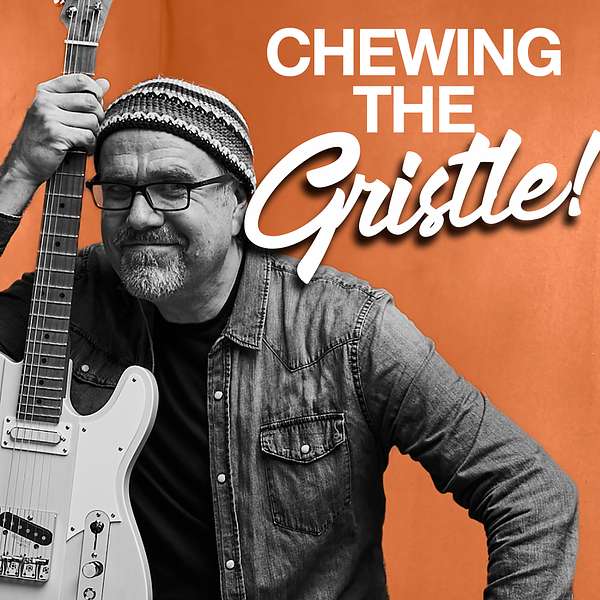
Chewing the Gristle with Greg Koch
Listen in on Greg Koch's conversations with his guitar-hero friends. Every episode Greg unleashes his fiendish humor and unique perspective as "one of the most famous unknown guitar players in the world", asking his often-famous musical friends the questions that we all want to know the answers to! Each episode is brought to you by Fishman and Wildwood Guitars
Chewing the Gristle with Greg Koch
From Shenandoah Roots To Nashville Stages: Mike Seal On Craft, Tone, And A Life In Music
A wide-ranging conversation with guitarist and composer Mike Seal on the making of his newest album, the craft of touring, and why human connection still matters for music. We swap road stories, gear notes, and honest takes on streaming, AI, and what it takes to last.
Go pick up Mike’s new record, Danger Ranger, at MikeSealmusic.com
Folks, welcome to Chewing the Gristle, the podcast with yours truly, Gregory S. Cock Esquire, also known as Gregory Cockery in some circles. It's brought to you by our friends at Fishman, Fishman Transducers, if you will, and it features just random conversations with various guitar and music friends, just kind of shooting the breeze or chewing the gristle, if you will. Junior My Roadwork, we're gonna stay away from seasons, but we're gonna drop these as they become available. We appreciate you tuning in these years. We're gonna keep on doing this as long as we can, folks. If you're enjoying them, we're enjoying them. Can you dig it? Let's chew the gristle. Ladies and gentlemen, welcome to Chewing the Gristle. This week we have the amazing Mike Seal, guitarist extraordinaire, originally from Virginia, now a Nashville dweller. You've seen him on countless videos for Carter Vintage. You've seen him on stage with Jerry Douglas. He's got a brand new, glorious record out that I encourage you all to purchase. But let us join Mike right now around the gristle fire for another episode of Chewing the Gristle with Mike's heel. Ladies and gentlemen, ladies and girls, we have convened once again around the gristle fire, if you will. A savage conflagration. And I'm here with a magnificent guitarist and composer of sweet music. And uh boy, this new record is just blowing my mind. Mike Seal, ladies and gentlemen, beautiful Nashville, Tennessee, as we speak. But I believe you're from Virginia originally, am I correct? That's correct. Yes, a little bit about growing up in sweet Virginia. Your dad was a guitar player. How tell me about how that whole thing worked out.
SPEAKER_00:Oh well, I grew up in Bridgewater, Virginia, which is um right there in the middle of the Shenandoah Valley. Uh, if you've driven up to 81 quarter in Virginia, and as I know you have a million times, um, we're right off the interstate there. Um, yeah, I grew up in a in somewhat of a musical family. My dad actually didn't play music, but um, my grandfather did. Oh, your grandfather did, sorry. And uh my older brother plays and actually is a guitar shop owner. Uh, he owns Waynesboro Music in Waynesboro, Virginia, which uh kind of curates high-end bluegrass guitars and all bluegrass-related instruments. Um, it's become a cool thing where he's um hosting jams on the weekends and is doing pretty well there. They just opened a new shop. So uh it was great growing up there. Uh, we would go to DC for concerts in Charlottesville, Virginia. Those were kind of the hot spots for us, and sometimes Richmond. And um, I was lucky to have a really great guitar teacher up there, uh, but ended up moving out when I graduated high school to I ended up in Knoxville, Tennessee, going to the school down there. Is that where you mentioned by the mighty Daniel Kimbrough? In fact, yes. Uh we were in the trombonery choir together as uh we lads, and uh he was the bass player and I was the electric guitar player for the Tennessee trombonery.
SPEAKER_02:Uh I also love the the archaic name for the uh uh the aboriginal or the the original iteration of the uh the trombone, the sackbutt. Yeah.
SPEAKER_00:They called it back in the day. It was a lauded sackbutt choir that we participated in.
SPEAKER_02:So for those of you who may not be familiar, um you've probably seen Mike play these amazing guitar demos that he does occasionally for our friends at Carter Vintage, and he's in Jerry Douglas's band and also in the Jeff Sype Trio. And um, you've got this new record out, and my buddy, of course, bandmate Toby D. Marshall played on a couple tunes, and he played one for me in the car a couple of months back, and I was like, holy caramba! Just really, really good stuff. So tell us a little bit about your journey from your going to school in Knoxville. How'd you end up in in Nashville and kind of give us a little synopsis?
SPEAKER_00:Sure. Uh so uh I went to music school down there a couple years in. I started going on tour really early. Uh I guess when I was about 20, I started going on the road with Jeff Coffin, um, who actually lives here in Nashville. At the time, his uh soon-to-be fiance and now current wife was my neighbor in Knoxville. And so Jeff Coffin would come over and play with some of the local groups around town. And uh Jeff Saipe, uh drummer Jeff Sype, also was coming into Knoxville periodically and playing with a group that we had called Primordial Soup, where we would actually uh we had a maybe eight guys, and we would turn around backwards on stage, and there would be a film playing, something weird like Baraka, uh, with the me with the music turned off, and we would provide the soundtrack and improvise a soundtrack to it. So both Jeff Coffin and Jeff Sype came to join in on that. Subsequently, I was invited to go on the road with both of them. And um actually the first tour I did with Jeff Coffin while I was still in school was with Victor Wooten and Roy Wooten, future man, and we went up to uh Blooming Bloomington uh for a camp for a couple days and we're and we're teaching it. Long story short, I got I was lucky to be able to get on the road and I actually dropped out of school my third year and to to pursue the road work, which is not unusual.
SPEAKER_02:That's I'm kind of the same thing happened to me in terms of not finishing school and so on and so forth. Later on, my dad would, you know, uh towards me, I said, the only thing that ever disappointed me was that you never got your degree. And it's like, Dad, I think it worked out.
SPEAKER_00:I've I've heard uh similar things, and I yeah, I I feel I feel the shame as well. But no, my parents were really supportive of it, and they they knew that that's why I was going to school was to get eventually get out on the road. And in fact, one of the first tours with Jeff Coffin, we we did a clinic at the University of Tennessee School of Music, uh, which was kind of cool because I've been on the road with him for a few days, and then we pulled into the school where I'd asked my teachers if it was all right for me to go on the road. And I remember the back uh door opening, and my friend Jamel looks in and goes, Mike, what the hell are you doing here? I thought you were skipping class. So no, I'm here to work, grab my amp. No. So but uh yeah, that led to a lot of road work, and and really fast forwarding until now, I've pretty much been on the road since then as a side man in some capacity for either jazz and fusion kind of stuff or Americana work. So uh early on with Jeff Saipe trio, the Jeff Coffin Mutet, we did quite a bit of touring with Felix Pastorius and Kofi Burbage on Keys.
SPEAKER_01:Oh, yeah, yeah, yeah.
SPEAKER_00:And a really cool group. Jeff Saipe was actually playing drums on that. Um and then on the Americana side, I've also played in Sierra Hull's touring band and worked on her records. And um I I worked with the Victor Krauss band. We've actually got a fun gig tomorrow with Bob Lanzetti of Snarky Puppy here in town. Nice and and just a whole lot of uh convergent stuff like that. So it's been it's been fun. But uh yeah, I've never done any solo ventures until now. So this is the first uh full band kind of record. I have one acoustic EP that I put out in 2018, but it kind of flew under the radar.
SPEAKER_02:So hold on just a second. I'm just gonna plug in my earphones just in case this is gonna be a problem with the audio. Sure. And then we will continue our convivial conversation. That list of folks you were uh we were talking about there, it's it's it's a pretty magnificent group of individuals. How how was there always the pressure to perform at a obviously an interstellar level uh when you're surrounded by these types of individuals? Was it was it a lot of pressure? Was just natural because that's who was you were just playing with you, people you were around.
SPEAKER_00:Well, I always felt really lucky to get the calls for stuff like that. Uh, especially being in my early 20s. I I've probably felt some pressure that, you know, I got my ass mopped around the stage by a lot of these guys, and that was good for me. Um that that turned out to be a really good thing. Uh so yeah, there was some pressure, but I feel like that was a great way to learn and and build up some confidence. Uh so and then learning, you know, I've I was lucky to be one of the least good players in uh some of those configurations. Like Felix Pastorius was a real inspiration to be on the road with because he constantly practiced. And even at the hotels, his door would be open. I could always tell which room was his because I'd hear a metronome going on inside and just like insane bass work coming out. So, but even in the van on like a six-hour trip, we had you know notation pads out, and we're he was coming up with ideas constantly, and we were going through the depths of music theory and possibilities of weird stuff.
SPEAKER_02:So, did you have an idea of what you wanted to do in terms of making a living making music, or were you just preoccupied with getting better and seeing what occur what things kind of manifested?
SPEAKER_00:I I grew up in the era of you know the C D. So I was obsessed with uh I looked at all these great records, a lot of jazz and crossover stuff, as like almost like baseball teams where all my favorite players would get mixed and mix mashed in different iterations. So I would memorize the liner notes of everything. So what I thought would be a music career would just be to be a side man and get a phone call and go on the road. Uh and that and that really was the most of the work that I got for a long time and recording. Uh so yeah, I've been lucky to eat out a living uh just by staying on the road. Sometimes a lot. Uh I worked with uh an Americana band called the Black Lilies, where we would do 200 dates a year and working with other groups in between and stuff like that. So yeah, I'd say that was my vision of it. But you know, the music industry has changed so much since the early 2000s that it's almost a different uh paradigm now, I would say.
SPEAKER_02:I was just gonna ask you how I'm sure at this point you've done every kind of permutation of road travel, and uh just wondering how you like the road and what what things you prefer, you don't, that type of thing.
SPEAKER_00:Man, I'll tell you what, I just got off a really fun road trip. And I'd say best case scenario, um, I just got off a week on the road with the Jerry Douglas band out in Phoenix, Arizona, and we were in the same city for eight days, which was awesome. So uh, and we split our time between two events. We played two shows at the Mem Music Instrument Museum at the tail end, which was great. You know, leave your stuff set up, come back the next day, no sound check. Uh, and then the first five days we were at the Del McCurry picking party, which was hosted by the Del McCurry, but and Del McCurry's 86 years old and still just crushing it, which is was so cool to see. You know, one of the original bluegrass luminaries. Uh, but it was a camp put on by Dreamcatcher. They do um like the Tommy Emanuel guitar camps, sure. And you've worked with them uh before, I think. And uh it was great, it was really well organized. It was at the Wigwam Resort in Phoenix, Arizona, which is this big kind of lofty golf resort. And so we were there, you know, wake up, walk to work. Um, everything was right there. So if it can always be like that, I'd love being on the road. But uh yeah, no, I've done it, I mean, I've done the 15-passenger van with eight people pulling a single Axle trailer that, you know, multiple because they keep breaking. Um, I've I've been in the group where the entire rig was stolen in the front of the hotel with everybody's stuff in it. Um and you know, the late nights and early mornings and all that kind of stuff. The with touring with Jerry Douglas, and we did a long tour with John Hyatt, uh really awesome songwriter. We did a record with him. They actually got a Grammy uh nomination, but we lost to Los Lobos. Uh somebody that's that's not bad. It's acceptable. Uh so that was a nice tour that, you know, on a bus and everything. And um, we we even did it one private jet, which is the only time I've done it. I'm an aviation enthusiast. I got my pilot's license a couple years back. So I sat up, I sat up front with the pilots and didn't enjoy the free drinks in the back. But uh yeah, I you know I've seen a cut kind of a wide spectrum as I know you surely have. Um, but I'll tell you what's humbling too is talking to Jerry Douglas and those guys and them reminiscing about the 70s when they were like in a beat up station wagon. He told me about a gig in Kentucky where that they were playing, and someone came in and from the fire department and said, uh, is that your station wagon out there? And they looked out and just burning on fire. So, and they were able to put the fire out and they rode to the next gig with no seats, you know, uh sitting on the wireframe of the old seat. So it's insane.
SPEAKER_02:Yeah, you know what's what's been fascinating for me is you know, for years, um, I didn't, you know, every touring thing I've ever done, we've either flown everywhere, uh, or you know, we get to Europe and we're in a sprinter and that kind of stuff. But what I what I find is very interesting is when you, you know, I've been going on these uh almond bets things where the band is opening up for almond bets, and we travel in our Ford Transit and they're on the buses. And and I gotta say, having never really done a bus tour per se, um I think it would drive me insane. I mean, just in terms of, I mean, they're they're obviously nice and so on and so forth, but I'm 6'7, and then that whole policy of you know, of course, you can't poop on the bus. Yeah, that poses some issues. I mean, what happens if you have some kind of and then and then the other thing is too is them not getting hotels except for days off. So you're always showering at the venues. And I'm like, man, I'll tell you what, this may be a more luxurious way to go with the bus, but I'd rather drive to the Hampton Inn on my own dime and stay stay in the comfort of the Hilton membership.
SPEAKER_00:Man, I'm with you on that. I'm with you. And yeah, the bus, especially being on it for a long time with a lot of people, can be uh can be smelly, can be really smelly. So it can be a little fragrant. Yep. And then yeah, you get the day room for showers, and the entire crew uses it. So by the time you get there, it's just wads of matted hair in the corner and the watered up towel.
SPEAKER_01:So tra trade-offs everywhere.
SPEAKER_00:I you know, I sleep really well on the bus. Uh um, and I like waking up at the next town. Right. But that, but but you know, like you said, the close proximity to everything is so much elbow room. Yes, indeed. So when did you make the move to Nashville? Uh let's see, about 2015, 2016. Okay. Uh, my wife and I have been living in Atlanta at that time. She's from Georgia originally, and uh, we were living in Marietta, just north of Atlanta. Uh, and traffic was killing us. And her band member, she she has a lovely band called Larkin Poe. Oh, I'm well familiar. I was gonna ask you. Yeah. Yeah. They do really well, and at that time they were uh kind of getting a new roster in their band that was Nashville based. And I had just gotten the call from Jerry Douglas, so it kind of made sense for us to move up here. So we bought our first home in uh Donaldson back in 2015. So, with you both being musicians, how'd you meet how'd that all work out? So I played in the very first iteration of Lark and Poe when they had so before I met her, she her and her family had had a bluegrass band called the Lovell Sisters. And uh her oldest sister, Jessica, had gotten out of music and they re reformed and turned into Lark and Poe, which was still really kind of a folk folk band at that time. Megan was playing Dobro and Rebecca was playing Mandolin. Okay and uh Dani Daniel Kimbrough called me for that. Uh he had he had been playing bass with them. So that was uh maybe 2010. Um we started playing together. I did like a year's worth of touring with them and four EPs, and then joined Jeff Coffin's mutette kind of full time straight from that. Uh so we met then and started dating like a year or two later. Awesome.
SPEAKER_02:And you know, it's it's always interesting, but being both musicians, that that can either be really good or not so much. Obviously, it's working out for you guys. It's it's it's a good thing. But how is it being able to because that's one thing about I mean, from my own personal relationship, my wife knew nothing really about music. She was an artist, you know, she was a theater major and an art major, and she's a graphic designer by trade. Uh, but as far as music was concerned, I'm you know, the fact that she wasn't was was like awesome. This is as a matter of fact, one band I was playing with, I had this one gig, and and um I told her, I was trying to impress her. I was like, Hey, what are you doing Saturday night? And uh she's like, I don't know why. I'm playing with this band Saturday night, I mentioned the name of the band, which everyone in that town who would and she grew up living there would know who this band was. And she just said, and I I'll never forget. She goes, Who the fuck is that? And I was like, There she is. There she is, my future.
SPEAKER_00:Right there.
unknown:Yeah.
SPEAKER_02:No bullshit. Well, you guys, obviously, you enjoy both being musicians and being able to uh commiserate and also at the same point enjoy music together.
SPEAKER_00:It's great, you know, except for aside from me not being able to ever impress her. I mean, I could call and say, Hey, I got a gig with you know Jerry Douglas and John Hyatt. She loves Jerry, actually. She liked idolized him growing up, and uh, they're good friends. But oh, that's cool. Well, I got a call from Ringo Star or T Bum Burnett. Oh, my favorite, man. She was playing a music cares event, and there were all these great luminaries up there with her. I can't remember if it was Cheryl Crow on this one and all these great people. And she told me all about all this. Wow, amazing, amazing. And I finally said, Well, who's in the who's in the rhythm section? She goes, Oh, I think it was Steve Gadd and Will Lee. Oh, sure, just fine. That's what that's who was in the rhythm section. Oh, Lord. So no, she's great, man. She's uh yeah, inspiring and encouraging in all the nice things. And the the road thing, we're just used to it. We've both been on the road this entire time, so so we're used to it. Excellent.
SPEAKER_02:And of course, your brother-in-law is the mighty uh Tyler Bryant, an old buddy as well. Yes, yep. So that must be fun to just have you know the the the the inner circle just be your relatives who are all just and successful.
SPEAKER_00:Yeah, they live uh relatively close to us. I mean, that's the uh that's the Thanksgiving and Christmas hang. It's pretty fun. Yeah.
SPEAKER_02:So tell me a little bit about the fact you get you're doing some um some stuff with Carter Vintage, and we and you mentioned earlier how the paradigm of the music industry has changed. Tell me a little bit about how you're approaching things at this point that's different from uh you know that what that change was for you.
SPEAKER_00:Well, it's uh really it's the kind of a no-plan thing, and being a side man for so long, I've really been lucky that the phone has rang and my calendar has usually stayed pretty full. Um doing this record is an attempt to wrestle a little bit of control in the in between time that maybe I can go out and do some shows uh on my own time. The Carter Vinish thing was just a serendipitous call that's been really great. That's helped with social media stuff and reaching out to people. I'm actually doing another shoot shoot with them um next week. It's been good for my guitar playing because I kind of ran out of songs within four four or five sessions of that. And then the next time I'm like, oh shit, I have to figure some things out. So uh and I don't always come up with new stuff for them, but I've but it's a good uh good reason to do that. Uh and you do those sessions, how many how many guitars do you do? I'll walk into usually between five and seven guitars, and uh we'll do one one take on each, or maybe two if if uh sometimes a second chance on a tune, but it's quick. I mean, it's usually done in an hour and and out. They're really sweet people, they take good care of so excellent. Yeah.
SPEAKER_02:Yeah, it's a good way. I mean, that the Wildwood thing for me was a way where a lot of people, you know, uh knew where I was a result of doing that. And then the internet is one of those things where, you know, and I frequently discuss this with guests on this old podcast, talking about, you know, the pros and cons of the intergoogle on music. And uh and I often say that it's kind of the it's kind of the golden age of learning guitar because you have access to so many things, and I like to have a and of course, as an individual artist, you're not gatekeeped as much because you can reach your crowd and do all the different things. I mean, at least for now, uh, there are ways to be able to make a connection with your fan base, and therefore, you don't need necessarily a million people, not that we're against. Having a million people, of course, but uh you know, you can cultivate your own um your own crop. But at the same token, I I I kind of am in a more snarky mood the other day. I was talking about this with somebody, and I said, you know, I just hope that the internet doesn't do well for many things, but I was talking specifically about guitar playing. I hope it doesn't do to guitar playing what MTV did to music, which is at first you're like, oh my god, this is awesome! We can actually see all these people we've liked over the years, and da-da-da. To the fact that it completely devalues the experience. People don't really know the difference between one thing and another, and and it just becomes not valued. Now, again, that's just me on the Charlie Brown aspect of things, but what are your thoughts? I'm sure you've thought about these things a million million ways from Tuesday or something.
SPEAKER_00:Well, man, I definitely agree with the education side. And um, growing up, transcribing stuff from CDs and sometimes vinyl, and sometimes take take cassette. You remember the struggle of hitting the rewind button to the right spot, and then you accidentally start the track over and have to fast forward back to that spot. Absolutely. So I man, I remember getting a uh a boss loop station when I was in high school back in the in the 20th century, and um this thing had a five-minute uh digital storage, and you could tap tempo, you could sample stuff with the aux input. So I take my disc disc man and put you know Mike Stern CD in or something, right? And then find find the part I wanted, and then I could loop it in there, and then I could tap tempo and slow it down without changing the pitch. That was like a revelation. Well, now you can do that with Windows Media Player or a native YouTube player. You can slow it down to 25% without changing the pitch.
SPEAKER_02:So they even have the thing called the the the amazing slow downer.
SPEAKER_00:Yes, yes, and there's a newfangled thing, like an app that somebody was showing me where you can isolate all the individual tracks from records now, it uses some kind of AI algorithm, and it's really effective. So the tools at people's disposal today is really amazing. But and on the value of music for sure with the streaming stuff and Spotify and the kind of new models of how music is sold and consumed. I mean, the what fractions of a penny per play on on Spotify. Right. Um so yeah, the value has changed a lot. And of course, from the days of going to buy CDs from the CD store, I miss the tangible element of holding it and flipping through liner notes and yeah, but you don't own it.
SPEAKER_02:You know what I mean? It's it's just so weird to not actually. I mean, I looked at all my, you know, I've got a still a ton of vinyl in um from back in the day, and I still buy it. Uh and of course, all my CDs, but you know, 99% of the time I'm listening to music on the phone, you know, if I'm going for a walk or at night when I'm going to sleep or whatever the case may be. And it's just so markedly different. And again, you know, times change, then you must go with, you know, and I'm not gonna say, oh, no, back in my day, but it's definitely different in terms of the value uh and just you know, the the amount of time that people are engaged with music. You know what I mean? It's like I'm sure you're familiar, you know, you throw something online and and um you know they watch it for about 30 seconds, no matter how much they like it. You know what I mean? Yeah, and then those analytics, yeah, yeah, they're off and then they're off to the races. So it's just it's just bizarre, but again, it's you know, you just gotta kind of adapt to the times and keep on, keeping on.
SPEAKER_00:Yeah. My wife and I were talking about this recently is you know, the advent of all this AI music, and I saw that um there was an AI generated song on Spotify that went number one for an amount of time or something. Yes. And uh, we were kind of having a uh disheartened conversation about this onset of artificial intelligence and music. Um, but uh the hopeful s silver lining that I wish to see is that uh maybe it'll make people um crave humanity a little bit more and come out to concerts more.
SPEAKER_02:I mean, as you well know, uh I sometimes facetiously say, like, listen, the internet's not real, but of course it is real for what it is. But when you get in the room with people, you experience things in an entirely different way. And uh in that magic that exists in a room with people is something that cannot be replicated. Um unless AI is able to somehow bewitch that scenario in some way, shape.
SPEAKER_00:Right. It'll be uh robots on stage before long. No, I hope that uh I hope that the more people see this AI stuff that they'll want to get and you know, buy tickets and go out and see see something in real life that they can uh feel and smell, so to speak.
SPEAKER_02:So exactly. And uh and if they don't, as long as enough do, we're good. Right, right. It's too late to kind of reverse engines at this point.
SPEAKER_00:That's right. I know it's scary, man. Scary times.
SPEAKER_02:So, what do you have coming up? So, this record actually comes out. Um, I don't know when this will air per se, but we're this is the 13th of January that we're talking. And on the 15th of January, your new record comes out. Now, what's the record called? Do you have a name for it? Yes, it's called Danger Ranger. Actually, I have a copyright here. Let me uh let me grab it. Yes, please. Danger Ranger is one of the tracks.
SPEAKER_00:I don't know if it'll show up with the section. But it's it's called Danger Ranger. And uh let's see, you're probably getting all the reflection on my screen there, but uh yeah, it's coming up. So I've it's it's available for pre-sale right now on my website, MikeSealmusic.com. And uh it's a full-length record, uh, nine original tunes, one cover. Um, it's featuring um well, it was produced by Tyler Bryant, and it's a project we've worked on for probably a better part of two years, but we were both on the road and we would come together for a day or two to make another track. Um, the the tunes were all written during the pandemic, they were all kind of demos that I'd come up with, but they weren't fleshed out, they were like maybe one-minute, two-section kind of ideas. So Tyler helped me arrange everything into full tracks, and uh through trial and error, we got built up some mock-ups and then had people come in and start playing on it. So we got um Toby Lee Marshall, your your boy, he was one of the first people we called for some organ work. And uh he did a great job, man. And he's on three of the tracks. Um, we got Keith Carlock, the amazing drummer from from everybody from Steely Dan and Sting to I knew him from Wayne Kranz. That was my first first time exposure to him. So um he did a great job. He actually flew his parts in. And we also got uh Tyler played guitar on one track. Uh Larkin Poe did a vocal cameo on one, which is really sweet and amazing. And then uh we have a couple drum, a couple other drummers, Mark Rodabaugh playing drums, who I'm actually working with tomorrow. He's the drummer for C.R. Hall's band currently, okay. A really, really talented guy. And then uh Caleb Crosby, who is uh the historic drummer for Tyler's band The Shakedown. Okay but I think I think Caleb's out working with um Kelsey Ballerini now, doing the kind of country gig. So yeah, I'm thrilled, man. We got a brand.
SPEAKER_02:I listened to the tunes you sent me and they are magnificent. And these are not these are not uh simple songs. I mean, they have there's really beautiful arrangements, uh some sophisticated chord changes, some cool time changes, um you know, and a bunch of different genres as well. But the the but across the board, the tones, your guitar tones and playing are are majestic. Did you do a lot of this? I I know Tyler has that studio. Is that where you recorded all of it?
SPEAKER_00:We did it at his old studio, uh Lillipad, I think he called it. And uh so he used to have a uh a duplex kind of house where or two units where upstairs they lived, and downstairs was a small studio. Uh, and he did quite a few records there. So we this was all at his previous studio before he had the new construction where he's at now, which is immaculate. He's got like a 3,000 square foot awesome state-of-the-art building now. So yeah, we did it at Tyler's old studio. Mm-hmm. We did it pretty much in his control room. And you know, Tyler's got like every amp that you can imagine set up in the background, and he just would plug stuff in. So all I would do is bring in a guitar, and sometimes not even that. He would just hand me a guitar here, and then uh he he was coming up with the tones and everything. So that was a thrill for me. I didn't have to do anything. Nice.
SPEAKER_02:Yeah, there's some there's some really glorious playing. The the tune Danger Ranger itself has our buddy uh Travis Toy playing Travis Paddle Steel. He's a freak of nature as well.
SPEAKER_00:Oh my god, man, he did he play on two, another one called Tractor Dogs, and after he played on that, and I heard what he had done, I had to go redo my guitar. I said, I can't be coming in with this amateur shit when he's doing all that. He's a freak. He's awesome, man. He sent that stuff really quick too. And I, you know, I think he he sent two takes of each, and it was hard to pick which one to use. They were both awesome. Sure. I first met Travis at uh Andy Wood's camp. Yeah, Woodshed. Yeah, yeah. Andy's old buddy, the Knoxville contingent, man. There's a bunch of us out there. Exactly. So you knew Andy from Knoxville. I did, yeah. He's so he's still a buddy, man. Andy's awesome. Yeah, yeah, yeah. What an inspiration. I went over and hung out at the woodshed uh last year, two years ago, just for the um the artist jam. And that figure was uh Steve Morse and uh Tom Quayle and a couple other amazing, amazing folks. Yeah, it's good times. Yeah, oh Brent Mason was there too. Oh, exactly.
SPEAKER_02:Good old Brent Mason. So were you a fan of um of Colonel Bruce and the Aquarium Rescue Unit with uh with Jimmy Herring and company before you met Jeff?
SPEAKER_00:Yes, I was. Uh my brother gave me a burned copy of am I allowed to say that? No. It's it's not too soon. Yeah, uh, he gave me a burned copy of uh Mirrors of Embarrassment um when I was 14, maybe 15. My brother's four years older than me, so he came back from college with all this great music. Uh yeah, I spun it every day. I was obsessed. The live album that they had. Oh, the live album was awesome, so good. Uh their version of working on a building. Yeah. So I I would wake up before school and crank this stuff in my bedroom. That's how I'd wake up every day. Uh, but I was listening to all kinds of jazz stuff and everything, but I love that because it was Jimmy Herring, holy shit. Yeah, he was out of his mind. I still is. I mean, he plays magnificently. Yeah, so amazing. And uh, I was lucky to get to meet Jeff Sype really early on. I think I was 19 in Knoxville, and I remember calling him Mr. Sype, and he was like, Oh, you don't have to call me Mr. Sype. But I mean, to me, I was meeting like Elvis Presley, is how I I've I remember waking up that day, I had a show with him, and I woke up that morning like, I can't believe this is real. I'm gonna get to play with Jeff Sype, apartment Q258. Exactly, yeah. Just being jazzed the whole day about it.
SPEAKER_02:So that and when you were uh there's a uh couple things on this record that remind me of the Dixie Draggs. Were you a big Dregs fan?
SPEAKER_00:Yeah, I was I can't I've learned more about them later, but yeah, Steve Morse, I mean, God, what a what a legend, yeah. Yeah, absolutely.
SPEAKER_02:That kind of infusing of the uh kind of the more classical kind of chordal passes.
SPEAKER_00:Yeah, I love that part of his playing and uh and also the random Americana kind of bluegrass element to it with the fiddle and some other or country or chicken picking type type stuff that he would do. So I've got a great uh DVD live and I think it's Mantro, live and Montre. Uh I could watch that over and over again. Uh Dixie Dregs Laugh.
SPEAKER_02:I remember I saw Steve Morris on the um uh I didn't see him with the Dregs, uh, the initial iteration of the Dregs, but right after the Dreg split up, he put out that record, the introduction, and toured with that band. And I saw that trio with Rod Morgenstein and Jerry Peak, and I was literally the front row right in front of him. And he still had that old telly with a million pickups in it, and and so on and so forth. And man, it was it defied comprehension at that point. You know, I was just like, how is this how is this even possible? You know, the amount of practice that it would need to just have those tunes accurate on a on a daily basis.
SPEAKER_00:Absolutely insane. Yeah, and he goes out and nails it live every night. And uh, his composition work, too, man. He's got so many pretty songs and aggressive songs and everything, the whole spectrum, man.
SPEAKER_02:Well, especially when you listen to the dregs, I mean, it's just those records. I listened to, you know, it was interesting because initially when I was in high school, you know, I was more of a blues rock guy, you know, and a little bit of jazz, and and I got into the chicken picking thing. Um but I wasn't really a prog guy per se. And this drummer I was playing with was more of a prog guy. And he kept him talking about the dregs, and um, and I was just like, oh, that's that prog stuff. And then at some point, I I listened to Dregs of the Earth, and I was like, oh, okay. Yeah, yeah. And then, but you know, at that point, I mean, I was um I couldn't even tremolo pick. You know what I mean? It's like I I my I had no right hand technique at all. I just would use downstream because Hendricks and Clapton, you know, when I would watch them on the videos that I had that I that I taped from um MTV showing on a Sunday night, they'd show like, you know, the Goodbye Cream uh movie, or they'd show Jimmy Plays Berkeley. And you would watch them and they would it was all almost downstrokes, unless they were strumming. So it's like I had I couldn't even tremelo pick. So when I saw him play, I was like, oh Jesus. Well, if I gotta get into this stuff, it's gonna take me a while. And I remember, you know, getting into college and realizing, okay, well, now I gotta learn how to alternate pick. And so it really started then. But my whole interim period prior to that, you know, I would do my chicken picket thing where I ditched the pick, or else just I used to actually hold the pick with two fingers and go like, you know, and and then I finally I broke this middle finger playing basketball. I don't want to give you the illusion that I was a good basketball player because I wasn't, I was just tall. Um, but I broke this finger and I had to have it in a splint. And so because of that, I actually learned to play just holding the pick with one finger, and then I was able to use my other fingers. But but I would have met all the bluegrass guys, you grew up with alternate. That was just part of the thing.
SPEAKER_00:Well, man, well, you know, I'm I'm a finger style player. I've never learned to use a pick, so I'm just finger style. I feel your woes on trying to figure out how to alternate pick. And for me, that's some kind of thumb index and middle roll, or I'm trying to really build up the index middle thing, a lot of the great uh Mateo uh Yeah, I call him I call him fingers McGee. Yeah, right, right. And uh and dude, uh other guys too, like Apaco de Lucia had you know, obviously, master of that kind of and um like Jaco Pastorius, bass players, and then also like Baila Fleck using a three-finger roll to get really clean single note lines. So I'm somewhere in between the the two. I'm trying to get better with index middle, but it's a slow working part of it.
SPEAKER_02:But you know, the the thumb pick guys and guys with no pick at all, such as yourself, you I think the facility to be able to make things fast and seamless uh is so much more smooth once you've got that technique down than alternate picking, which really seems to be something that has to be maintained in a very obnoxious way.
SPEAKER_00:I remember uh something that was a breakthrough for me with the finger thing was um doing this session with uh the great um O'Teal Burberge. Uh it was it was a session with Jeff Seite, O'Teal, and his brother Kofi before he had uh passed away, um unfortunately. Um I remember we did that we did a tune of mine that has this uh melody that comes through on the speaker. Um it had all these weird turns in the melody, and I remember watching at that time I was still doing a lot more hammer ons and pull-offs, but could I just shy away if I felt like I couldn't pick it out fast enough? And O'Teal Barbage, I remember, went through that melody, but without fretting the notes, and he just he goes, Let me try and pluck it out real quick. And he he played it like um I remember hearing him do that and watching it, and I thought, oh, that's a great way. So from then on, I would start looking at it.
SPEAKER_01:Oh, here we go.
SPEAKER_02:Oh, for those of you just listening, he's using his his thumb and first and middle fingers to to do the stuff you can do.
SPEAKER_01:Like, I like getting a thumb and indexing these little rolls on the or you know, that's where I'm still trying to build up that thing with the index in the middle, but I like it's fun.
SPEAKER_00:You know, if it's fun to play, it's it works for me. Absolutely. Sounds glorious. Thanks. Thanks. I got this telly a couple years ago. I'm enjoying that, it's got some some bite to it. Man, I really enjoy it. I was watching your live show yesterday, live stream, and uh, whenever I get a little alert when you guys are doing that, so if I can I tune in and I was really jamming out with you guys, that was awesome. Oh, thanks. Uh your band sounds. We're always flying by the seat of our pants. It's cool to hear you with the I've heard I've seen you with Toby quite a few times. It's cool to hear you rock out the trio with the bass, too. And um, your son is such a great drummer, man. The whole thing works. It's awesome. Yeah.
SPEAKER_02:Yeah, we have a good old time. You know, it's you know, Toby lives up in Minneapolis, so that's five hours away. So if we want to do live streams, my buddy Matt Turner comes over, or another bass player by the name of Steve Androni. But yeah, it's I mean, for years I played in a trio with a bass player, and um occasionally we do four-piece. Um, but you know, you do approach things differently. I'm sure you're well familiar. You know, when you're playing in a trio with a bass player, you gotta, you know, I'm I'm thinking more about filling the space rhythmically, and you know, lead-wise, it's uh just a different aesthetic. And then by the same token, if you're you know you're doing stuff with somebody who's holding down some kind of harmonic rhythm, you can kind of go off the the rails a little bit. Yeah, yeah, absolutely. So it's fun to do both. I mean, I I you know, obviously for many reasons, but Toby's such a great left-hand bass player that it's um, you know, when we go on the road, it's just usually the three of us, Toby, Dylan, and I. Uh, but when we do stuff in town, you know, occasionally Turner the Burner will come with us and we'll do some stuff. And we've got a couple shows coming up where this other vocalist buddy of mine's coming in, and he's a really good sax player as well. So that'll be fun. It's fun to fun to mix it up a little bit. So if you had to go on the road right now, what would your lineup be and who would you take?
SPEAKER_00:Hopefully, I can do this pretty soon. Uh, I've been doing some of the tunes from this record here locally in a little trio with Mark Rodabon drums. Uh, again, the guy uh he's playing with Sierra Hall's band right now. Okay. Um but he's old Bunny, he's he's played with everybody over the years. Uh and this uh really talented uh organist who's a friend of Toby's, Ty Bailey. Oh, Ty Bailey, yeah, he's great. He's awesome, man. So we've gotten together and worked up a lot of the music, and we got into these uh trio gigs occasionally. Um doing whole mix of all classic organ trio stuff and also some of this new music. So it probab hopefully, if I can get those guys when they're not on the road with somebody else, it would be that it would be Mark and Ty, and then either a bass player or but Ty's kicking pedals and covering the bass lines. Yeah, it makes me sick, man, because he's covering the chords and harmony and harmonizing the melodies and places where that happens and then playing the bass. So he's kind of like the he's doing the work of three people for the price of the ball. You have to pay him three times. Yeah, exactly. Exactly. But yeah, I I really want to take that on the road. Um, it'll probably start, you know, kind of small uh regionally, uh Knoxville, Nashville, Chattanooga, Asheville, North Carolina, and just see see what I can do with it. Um that's part of the reason for making this record, is I you know want to get out there and do something.
SPEAKER_02:Yeah, because you know for gigs and sell the sell the uh the product at the gigs, and that's where the that's where you make some of that free money. Yeah, I want to make at least 20% of it back, you know. Well, there's that, isn't there? I mean, that's that's the thing with recording these days. It's a you know, you try to keep the expenses down, and uh so that people will you know buy it enough to make it worthwhile doing, but it's kind of one of those things it's like, what else are we gonna do? Not record? You know what I mean?
SPEAKER_00:You know, it at the very least, it's like even just having something that I can hold in my hand that I made, I feel really good about that. And uh I'd done all that side man work for you know 20 years, and then I blinked my eyes and I was 40 all of a sudden I went, I've never really made anything. So So this way, if I'm in a car crash tomorrow, knock on wood, I'll have something that I've that's done.
SPEAKER_02:Well, and it's it's I think there's a lot of people that like to buy vinyl. You know, I I've no I've been noticing that people are more apt to buy vinyl than CDs these days, but still, there's still plenty of people that actually still buy CDs. Um, and a lot of times when they buy the CDs at gigs, it's it's not even to probably play them, they're just doing it to support the cause and they want you to sign them.
SPEAKER_00:Yeah, they might have a collection of them at home with no CD player. It's interesting to me, uh, it seems like older generations now might have a CD player, but won't have a vinyl player, even though they grew up listening to records. Yeah. And then younger generations will definitely not have a CD player, but they'll have a record player. Exactly. Everything is like turned on its head. Everything's topsy turvy.
SPEAKER_02:Yes. Well, these are uh these are crazy times, let's just be honest. So indeed. Indeed. Everything is upside down and sideways, and so my motto is you just got to be grateful for what you got because it could so easily be not. Yeah, true.
SPEAKER_00:That's so true.
SPEAKER_02:Yeah, that's right. So what other stuff you've been listening? So when I when I hear you play, obviously I I hear, you know, you mentioned some of the people, um, you know, a lot of the different fusion cats, and you know, certainly the the chicken pickers and so on and so forth. But if you had to dig deep as to the people that really inspired you early on that continue to inspire and that you actually still listen to to this day, who would you say that is?
SPEAKER_00:Oh man, it's probably a long list. Um the the greats, of course, like Schofield and all those guys. Yeah, you know, but it's funny, I used to buy every record that they put out, and I don't know that I've still do that. I'll end up seeing it online or something. Uh I guess I'm part of the problem. I'm not buying going out and getting people's CDs very much. Uh lots of guys, uh John McLaughlin is still crazy inspirational when I watch him play. Um I would have said Jeff Beck a couple years ago, we're losing a lot of these guys. Yes. So um, but yeah, yeah, but uh I I grew up listening to a lot of grunge and rock too. So I still uh when I get in my truck, I turn on this uh 102.9 radio station that just pretty much plays nostalgic 90s classics. So Nirvana, Nirvana, Soundgarden, uh Rage Against the Machine, stuff like that. I still get a kick out of listening to that. So you know, I I've I'm still hearing about new people, and um see, I've I've I've I've never been like a huge prog guy either, but I've been checking out Tosan Abbassi Animals as Leaders just for the crazy machinations that he's coming up with with his crazy guitar. Yep. And uh and I love I like that they're just basically two eight-string guitar players or whatever they're playing. Oh, Charlie Hunter, man. I can I can't leave him out. He was inspiring when I was growing up, and I still listen to him today. So absolutely. There's so many, man. Are you a gear hound or not not really? In terms of like not historically. I'm I'm learning more. I actually wish that I had learned more when I was younger because, dude, my when I went to off to college, I had a polytone solid state 15-inch speaker, and I thought that was the best amp. I thought, oh, that's what like Jimmy Bruno uses. So I'm gonna. Yeah, man. Yeah. Uh so I had that, and then I, you know, I would start getting on stage with these really loud drummers and uh loud places, and I thought, man, this is not cutting it, and it was real thin and wiry. So then I just started using a Fender Deluxe reissue 65, and that worked really well. But you know, I didn't really understand anything about overdrive or gain stages or any of that stuff. So I wish I could go back and like knock myself in the head back then and be, you know. Oh no, there's plenty of time to go deaf. Yeah, right, right. Well, now I've got uh this Tyler amp. Have you tried these things out? Tyler amps. Uh the guys here based here in Nashville, uh over on the other side. I don't know if you can see it. Maybe right there, there's a Dumble clone. It's like a one-to-one Dumble clone, so I'll take that out sometimes. And uh and then I've got a like a two-stage overdrive, it's a Rodenberg 808. It's actually uh Tyler Bryant's proprietary uh creation. Okay. Um, so I pretty much just do yeah, the amp a little lower than it breaks up, and then a little two two-stage overdrive. So one for a little bit of grit and the other for more grit. But no, I've never been a gear head and I've a lot of it I don't understand at all. If you had if you asked me, if you tried to pay me a hundred bucks to fit together an effects loop, I'd it'd be hopeless. I wouldn't be able to. So it's kind of funny.
SPEAKER_02:I'm I'm not a I'm not a huge gear. Well, I I like guitars and I, you know, I like a few pedals and I like a few amps. But as far as like taking them apart, knowing about recording, hooking up shit, I mean, yeah. I mean, I I can do an effect loop under pressure, but I I just never do because it's a hassle. So yeah, I just try to keep things as simple as possible. But you know, I do. I like the thing you have.
SPEAKER_00:What's that? I'm sorry to interrupt. I like the setup that you have, that pedal that's gonna do some demos. It's cool.
SPEAKER_02:Yeah, it's it's it's been simple and and it really does everything I needed to do. I mean, there's times where it's like, you know, I was watching um uh we were down somewhere touring and we had a day off. So I went back to the gig we were played at and saw somebody of mine's play, and and and a guy hit a um hit a pedal. It was a certain type of vibrato that reminded me of a of a of a vibratone. Oh not a vibratone, well a um of a magnetone amp and the vibrato on a magnetone. So I heard it and I was like, god damn, I miss that sound. And so I went up on stage and I looked at what he was using and I went home and he and I bought one, and it was one of these um what the hell is the name of this damn thing? It is a Memphis pedal by crazy tube circuits. And so I got the pedal, and what's cool about it is that it does have a volume on it, so it's got the rate and the depth, but you can also bump the signal a little bit, which is nice because a lot of times you know you hit a vibrato pedal or you know, tremolo and you lose a little gas, so it's nice to be able to bump it up a little bit. So that was cool, and then I I did plug it in with in conjunction with my orange beast, I put it at the end, or I put it through the effects loop of that of the of the monster supreme. But then I realized, well, if I just take my chorus pedal, put it on vibrato, and set it to that, it sounds just like there you go. So then I then I ditched that. So yeah, I mean, occasionally I'll think, well, maybe I'll use this, or maybe I've got everything I need in that damn thing, and it's all analog. You know, I love to watch it. It sounds great, man. Plugged you. I never really thought of you as an uh multi-effect guy. I'm like, it's literally just a pedal board and a casing.
SPEAKER_00:That's all it is. Yeah, it's all real stuff in there. I I love it. It sounds great, and uh, I I see the convenience factor of it too. Man, I was out at that uh camp in Arizona and one of the dreamcatcher staff came up to me. And so when I play with Jerry, I have I'm the only electric instrument, and uh and I'm also the only fretted instrument because you know he's playing Dobro with slot, Daniel Kimber is playing upright bass, and he has a violinist. So uh I used to bring an amp, lug an amp out on on stage with those guys, and we're using in-ears, but I was always having to keep it on one or face it, you know, or put it in another room or something. It was like the uh disgraced part of the stage. And uh finally, uh the fender hooked me up with this box that with the tone master little amp simulator. Yeah, yeah. So it's like a it's a multi-effects thing, it's cool, you know, it lets me get something close to what I would normally sound like, and and there's no stage volume, which is awesome. But I was out there in Arizona and uh a dream catcher staff came up and goes, So this uh box is it's one dinglebob box. She said, All your dingle bobs are in one. But Andy Timmins has individual dinglebobs. Can you explain? She wasn't a guitar player, she just wanted to know why there were so many dinglebobs in one box versus other people who have individual dinglebobs. So so yours would really throw her for a loop because you have individual dinglebobs in the same casing.
SPEAKER_02:Yeah, she dingle bobbed or her dinglebob brain would be blown. Yes. Oh, that's fantastic.
SPEAKER_00:Well listen, what do you got coming up in the near future here? Well, let's see, uh, gig tomorrow at the vinyl tap, 8 p.m. in Nashville with uh Victor Krauss, Bob Lanzetti of Snarky Puppy, and um and Mark Rodabaugh. Um I'm doing another thing with Carter Vinich next week. And then I've I've got a fun gig coming up with uh harmonica player here in town, Alia Port and Iev with uh Pitar playing drums from Cory's Cory's band. And I forget who's playing bass on that one. Um but yeah, a bunch of fun little one-offs like that, and uh uh some hopefully this week, so some uh making some progress on getting some of my own shows booked. Uh is sort of an unofficial CD release uh thing. The record comes out Thursday, so hopefully before the end of the month or next month, I can I get a couple on the books. Uh I'd like to do a CD release show here in Nashville and then take it over to Knoxville and do one there.
SPEAKER_02:Well, we're gonna be in town there. Um because I'm finishing up my my course with Brett Papa. Um and that is week after next. So the week of the we'll be in town like the 25th through the the 28th, we'll leave. So I don't know if you're around then, but maybe I'll keep an eye out for you guys feast of some sort.
SPEAKER_00:That would be that would be awesome. We should go over to Tyler's uh studio and and have a big fun chain. That would be fun. Absolutely.
SPEAKER_02:Now, do you know Brett? Brett Papa? I don't. Okay, I did I I I was uh singing your praises to him last time I was there, and I and uh we watched a couple of your videos. It's like, oh, I'm like, yeah, he's a bad man. Oh man, thanks a lot. Thanks.
SPEAKER_00:What's funny? Yeah, I've Greg, I've I've told my wife before this interview, I said, I've got to be really careful not to fanboy out because um on other podcasts, people have asked me, Who are you listening to? I'm like, Greg Hock, check him out, he's amazing. Well, of course, most of the time people are like, Oh, yeah, that guy, oh he's insane.
SPEAKER_02:So that's uh but you know what that I mean, I'm flattered. I I can't when I listen to your stuff, I was like, I don't even know how that could be since this is so awesome.
SPEAKER_00:I feel that way watching you uh you said something in a and maybe another podcast that you did, or maybe in one where you were interviewed, um, but you were talking about the music that just hangs right on the edge, and I really uh related to that. Um where it's just a little bit on the edge of chaos. Yes. And you're not sure like what is really gonna happen, but um, I see you ride that line sometimes. Well, and I can't tell everything you do looks natural to me. It looks like it's easy for you to do, but I think about what it would be like to play some of that stuff, and I like that chaotic on the knife edge of chaos. Oh, well, thank you.
SPEAKER_02:Because I I because there's times where I'm literally like, what's happening here?
SPEAKER_00:That's awesome. Well, it makes it interesting, man. It's I'd so much rather hear that than something that I that's really predictable that we've all heard a million times, you know.
SPEAKER_02:Well, I don't know, but you know, a weird thing about it is is that you know, all the guys that I really idolized early on, and and still, I mean, like to me, like premier clapton phrasing, you know, up through uh up through Derek and the dominoes, it's like the bar in terms of you're gonna play a couple notes. That's the guy who plays a couple notes as good as it's gonna be, as far as I really want to listen to it. You know what I mean? Yeah. And then there's the Hendrix thing, and just the the whole package, the way he played rhythm, the tone, the abandoned, you know what I mean? The yes, and and all that kind of stuff. And then, of course, I got into all the roots of the stuff, and you know, Albert King, and you know, I did all my homework on all the different people and so on and so forth. But but the thing that I thought was interesting is that those guys didn't really know what they were doing. And so I wanted to know what I was doing to the extent that I could play over changes, but man, I was not a good student. You know what I mean? It's like I I I thought that, and again, there's all kinds of arguments online about this now, how much theory is good and how much theory is bad. I I think it's all good. So, whatever, whatever your point, whatever your point of ear training, it's all good. But for me, it's like I do wonder that, you know, I was never one of those guys in music school where I would hear about guys who were older, and part of the thing, music schools slacked up way by the time I even went to school. It was it's like you didn't get tortured in ear training class, like, you know, sing all the intervals in, you know, and remember singing, yeah. You know, they'd say a chord and you had to like rattle off the note. That never happened. So, you know, to this day, it's like, yeah, I know my intervals, yeah, uh, you know, but but I'm my ear training is is not impeccable where I can hear an air, you know, a plane flying over and be able to use relative pitch to tell you where it's going. You know, I never worked to that point, so that I am surprised to shit by sometimes I'm just playing. I'm like, what was that? Okay, you know what I mean? And I and I wonder sometimes if if that's why it's still so fun for me to play it, because I'm still like, what the fuck is this again?
SPEAKER_00:Sure, I feel that way more with techniques and stuff. If I get pull something off it, I I think I've spent way more time on harmony and melody growing up and a lot of transcribing and like I have really fast ears. I can most of the time I don't think I don't think I have exactly perfect pitch, but something slightly imperfect pitch. Um, because most of the time I know the note like from out of thin air, I know what I'm hearing. Right and especially on the guitar, I can see it, I see this fretboard in my head. And when I hear guitar players play it, it's all mapping out on the fretboard. And same with piano growing up playing piano, same thing. Um, but I think I spent so much focus on that that I neglected a lot of the technique stuff and gear and um to just trying out more styles of music. Because I think in high school I was really obsessed with jazz and thought that was the only form of music that I was ever gonna play, and that couldn't be far farther from the truth, man. And uh so yeah, it's I think it's interesting, different, different, different approaches to it.
SPEAKER_02:Yes, and that and and all the approaches are good. That's that's the thing. It's like however, you know, whatever led you to do what you do gives you your own voice. That's why, you know, I I know the internet is obsessed with who's the best and the 10 best that's not even a thing, but we're we live in a society that's so preoccupied with kind of you know it's the super bowl to bell everything is this the Super Bowl amongst guitar players.
SPEAKER_00:Yeah. Do you remember uh speaking of MTV, do you remember Celebrity Deathmatch? Oh, yeah. Claymation. I was just thinking of the one uh was it Mick Jagger and Steven Tyler that got in one of their lips, their lips turned into boxing gloves and started.
SPEAKER_02:That's how they should do this today. Speaking of Mick Jagger, did you see I there's a new there's a new Keith Richards uh ES355 that just came out. And I what's funny to me is I remember reading interviews with Keith Richards where he was like, I will never do a signature guitar. You know, like just artistically, he just thought that that was so something changed. Let's just put it that way, unless he's giving it away to some charity or so on and so forth. But he came out with a it's kind of the same thing with the Jimmy Page stuff. I I knew um when I did Fender stuff back in the day, I would always ask the the English artist relations guys, like, man, how come you guys haven't done a Jimmy Page telecaster? And they would say, We have had a contract on his desk for years asking him to do it. And then when it finally came out, I saw this interview with with Jimmy Page going, he starts off with a thing with I had an idea. I'm like, interesting. Of course you did. Yeah, it just came to him suddenly. But you know, it is it is wild when you when you consider I mean, I'm a bit older than you. I was I was born in 66. So I went to high school in the in the 80s, and my oldest brother was, you know, uh, you know, his his high school was from 66 to 70. So I was exposed to all of his records. So my my perception of um of music and um you know that it was it was not just about the music, it was about rebellion and and all that other kind of stuff. And uh it just seems that that that whole thing at this juncture in time, it's like those aspects of it are not in play. You know, it's like music is not rebellion anymore, per se. Not I'm not I think it's great that I mean, like me, I play with my son, and it's the most awesome thing in the world. Me playing music with my dad, I love my dad, my dad was cool, but you know, he hated the music I played until later on. He's like, Yeah, that stuff's not so bad. But it was just it was a rebellion against that generation. And it just seemed that that it there's it's just a different perspective. And so when you think about a guy like Keith Richards, you know, you want to think that he's too cool for that. Right. And then at the end of the day, it's like, no.
SPEAKER_00:Yeah, yeah. Well, he's probably getting paid really well for that guitar. Uh it's funny, you've seen that meme, it says, You uh you young people better start thinking about what kind of world you're gonna leave behind for Keith and Willie. Exactly.
SPEAKER_02:Exactly, correct. I mean, it's it's amazing. I mean, I've I've been I've been kind of a Stones fanboy all along and have read a lot of the different books and so on and so forth. And and um yeah, it's it's amazing he's still alive. As as it's amazing that Jimmy Page is still alive. And the only thing you can attribute it to is like when you've when you've got that much money, uh you can kind of mitigate the the havoc that you wreak on your body, but still, even even so, I mean, it's it's amazing.
SPEAKER_00:Yeah. Well, it's I'm thinking about that generational change too, and that maybe absence of rebellion now. It's also my my perception of rock and roll bands from that era is that they were living pretty pretty wild lives on the road. I mean, I was reading books about Led Zeppelin and they're when they first got their airplane, and right they one tour their safe got robbed and they lost like a week's worth of money, but they they were making so much every night they didn't even care. Yeah, and like whatever. Yeah, just this crazy lifestyle. And so even today, I think people when they think about musicians going on the road. I've had a lot of like my older family members when I was first getting on the road, oh, be careful, watch out for the, you know, you're gonna get if you do this, you might end up in some bad uh situations of watch out for the drugs and all that. Well, hell man, for me, being on the road, everybody's doing yoga, eating kombucha and uh smoothies, and they're getting eight hours of sleep at night, somehow, I don't know how they do it. Um, so I I tell my family, you know, these are these are some healthy healthy people.
SPEAKER_02:Well, I think that's the thing, too, is that if if in this day and age, uh if you're gonna be a successful musician, unless you're of the smallest percentage of people who are so successful they can actually pull it off of being a reprobate. But the vast majority of people, you've got to work harder and be more on the ball than Normi's. You know. Right. I mean, I I used to think that partying was was every bit as important as playing. And I excelled. I excelled at debauchery because I read these same books. I read Up and Down with the Rolling Stones, and you know, the Led Zeppelin book, you know, uh, what was that called? Hammer of the Gods, and of course you read, you know, No One Here Gets Out Alive, the Jim Morrison thing, and then you read the Hendrix book and the key full moon, the Keith Moon book, and you're like, shit, you're gonna be a musician in a rock and roll band, you better have your party in jumping off, yeah, jumping off a roof into a swimming pool at the very least. I mean, it's exactly and and so I did crazy shit early on, and then I realized, yeah, you know what? Um, now I got a kid, and if I want to maintain you know, any kind of uh uh marriage, let alone health, and so I quit doing everything years ago. And and I and no one in my band uses, and I I just don't know how it would be possible. You know, the amount of I can't imagine it either, man.
SPEAKER_00:Yeah, the it's it's actually it's so refreshing to be out there and everybody's like exercising and being in great health. Yes, making it making it work for the long haul. So I'm a little less healthy on the on the exercise side. I'm not going into the gym like a lot of the guys are, you know, in the afternoon. Yeah, I like to walk. That's about it. And my uh one of my neighbors is coming over here in a bit to help me cut a bunch of trees down. My wife and I live way out in the woods. That's my exercise right there. We'll get out and knock some trees down. Get that firewood stacked. We got all these ash trees. They're all dying, man, from this beetle. The emerald boar beetle has come through. So we've got all this dead standing ash, but it's great firewood. That's the one silver lining. Is any of it still good for guitar making? Or is it all messed up? You might get a neck out of it somewhere. Yeah. Yeah. I wish I had a mill, man. I've got so many trees here. I could I could I could make use of a mill, but I last time I looked at a wood misery it was a little out of my budget. No. Oh, it's some damn thing. Damn.
SPEAKER_02:Are you uh in up in Wisconsin or uh I am in Milwaukee. So yeah, Dylan and I live in Milwaukee. He lives down in Bayview. I live in a suburb called uh Wawatosa. Okay. And um where I am now is uh above our garage. We have a uh the the the new orange room. The old orange room was in the house, and uh it was during COVID, and my wife said, get the shit out of the house. Yeah, you know, it's it's um we've been here. I mean, you know, I've I've got four kids. Dylan's my oldest, he's he's 31 now, or 31, as he likes to put it. And then uh my youngest is 22. So, you know, we raised four kids here, you know, it's a really good, you know, really good schools, really good area around here. So, you know, at one point I thought, well, maybe we'll move someplace, and now I'm like, yeah, here we are. And I we travel everywhere from here, so it's it's all kind of worked out, but um, but yeah, and it's you know, we've uh we got a family uh cottage up north, so we could to go up on the the boondocks and go on a lake and hang out and nature's finery and this type of thing.
SPEAKER_00:Yeah, well, I love Wisconsin, man. I've been up there, I actually went up there to deer hunt with my buddy at um Northland University, uh right there at the crook of the lake. And um, I've played up at the uh what it's uh Big Tac to Taco, probably. That's it. Yeah, yeah. I always have trouble remembering that. I've played up there a couple times and I always enjoy getting to that part of the country. I feel like Wisconsinites are built a little tougher than uh the parts of the country just on the climate alone.
SPEAKER_02:Well, there's that, yes. Yeah, there's um, you know, and then up north it's it's one thing too. And then Minnesota is another place. It's like Minneapolis is is markedly colder. And people will say, well, it's not that much. Like, yes, it is. I mean, I've lived in both places, and winter just hurts a little more in the Twin Cities than it does here. Oh man.
SPEAKER_00:Yeah, I don't know how you got it. We do when it gets below 30 here, we're all freaking out.
SPEAKER_02:So I'll tell you what, and we've had we've had winter this year. Ever since like before Thanksgiving, it was cold. I mean, like today we're having a heat wave and it's gonna be 40 degrees, and we're like, I'm going for a walk outside. It's gonna be glorious. But man, it's been it's been something. But you know, they say it builds character. I think that's probably bullshit, but be that as it may. Well, listen, Mike, such a pleasure talking with you. Thank you, Greg. Thank you very much. I encourage everybody to go out and pick up the new record, which is called Danger Ranger from Mike Seal. Go out and see him with his own band, go see him with Jerry Douglas if he's been touring with him or whoever he might be around with. And uh hopefully we'll cross paths soon, my friend. I hope so. Thanks very much for having me, Greg. I appreciate it, man.
SPEAKER_00:Take it easy. All right, you too. See you back.
SPEAKER_02:Thanks once again to our friends at Fishman and to all you for checking out our show, which we call Chewing the Gristle. We're gonna keep on keeping on. See you soon.
