Why Are We Like This?
Making sense of people who don’t make sense, Why Are We Like This? is a podcast about human nature, pop culture, and the wonderfully strange ways people behave.
Hosted by a gay married couple with strong opinions and an endless curiosity about what makes people tick, Why Are We Like This? dives into movies, TV shows, celebrity moments, internet obsessions, social trends, and everyday quirks that shape our lives. Each week we break down the pop culture moments, questionable human behavior, and everyday oddities we can’t stop talking about—and the surprisingly relatable reasons behind them.
Part cultural commentary, part relationship banter, and part armchair anthropology, Why Are We Like This? explores the question at the heart of absurd trends, awkward interactions, and the collective obsession that begs to ask, Why Are We Like This?
Why Are We Like This?
Going Runway Rogue with Patricia Hartmann
Use Left/Right to seek, Home/End to jump to start or end. Hold shift to jump forward or backward.
This week Nomi talks about one of her absolute favorite things, 90's Fashion, with one of her absolute favorite people, 90's Supermodel and Founder + creator of Runway Rogue Beauty, Patrica Hartmann!
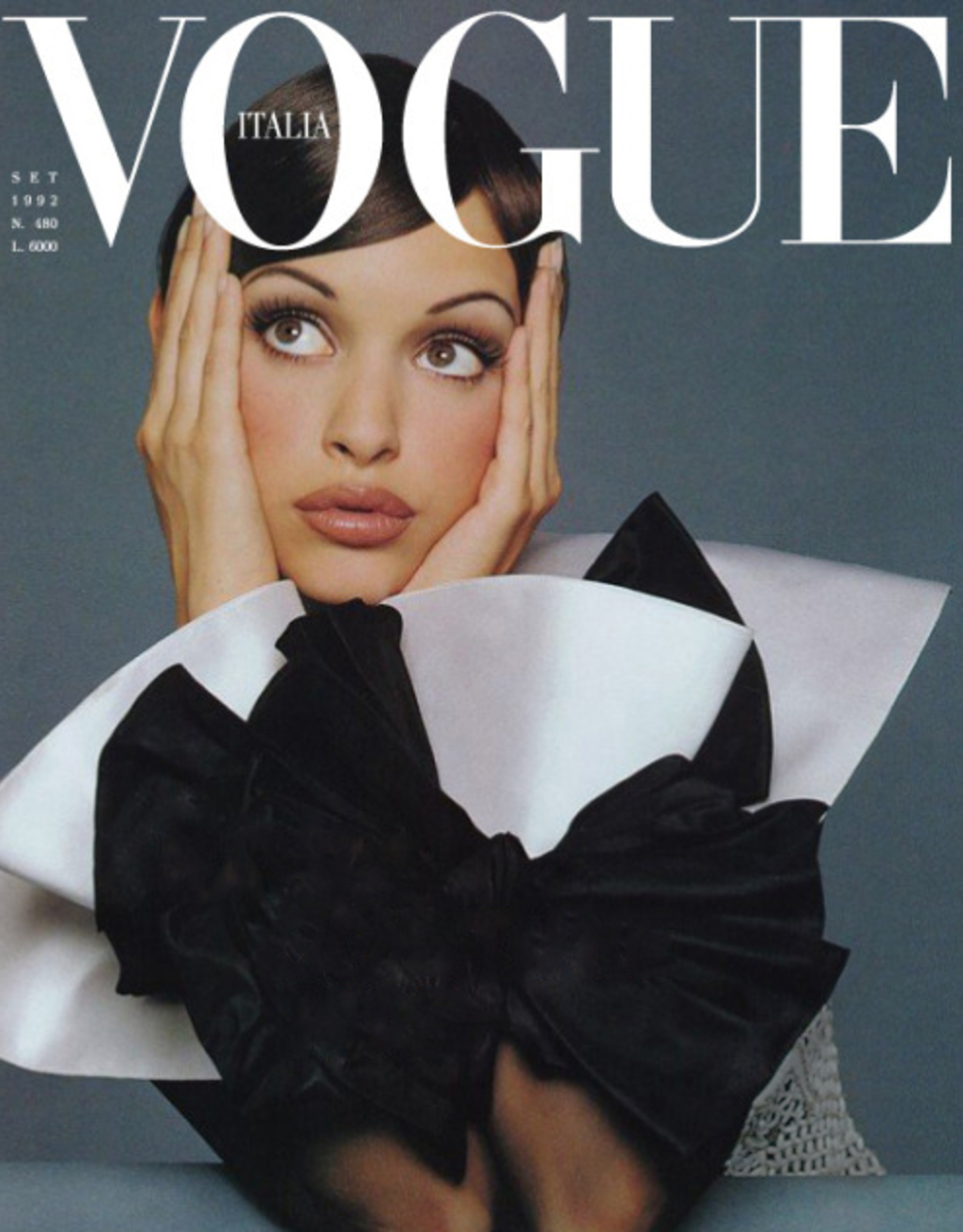
After being discovered in her native Germany as a teenager, Hartmann went on to appear on the covers of Vogue Italia, Harper's Bazaar and Elle Magazine, among many others. She walked the runway for labels including Chanel, Christian Dior, Fendi and Dolce & Gabbana and was signed up as the face of Maybelline and L'Oreal.
From the beginnings of the Waif Wave, to what it means now to have Celebrities instead of Models on Magazine Covers, Nomi and Patricia take a wonderful catwalk down the runway of memories.
Download this and future episodes of our podcast on Apple Podcasts, Spotify, Pocketcasts, and anywhere else to find your favorite shows. You can search MR & MRS and please be sure to subscribe, and/or write a review if possible to help build our show. Have an idea for a future episode, or want to join us for a conversation? Email us at hello@mrandmrs.show!
Send us a quick "Fan Voice Mail" with this link!
Download this and future episodes of our podcast on Apple Podcasts, Spotify, Pocketcasts, and anywhere else to find your favorite shows. You can search Why Are We Like This? and please be sure to subscribe, and/or write a review if possible to help build our show. Have an idea for a future episode, or want to join us for a conversation? Send us a message with the link above!
Hello. Welcome to another edition of the Mr. and Mrs. Show. I am Nomi Moore. And today I am heading up this podcast solo today because I am joined by my dear friend and 90s model, Patricia Hartman. Hello. Hi, hi, hi.
SPEAKER_01Hello, my darling. It's so fun to be here today. Yay!
SPEAKER_00This is the season of guests on our show. So I'm super excited to have you here today because we get to discuss and dive into all things 90s fashion. And Robert has chosen to set this one out because he says that he knows nothing about 90s fashion. I really don't.
SPEAKER_01I was trying to think of questions that I could ask, but they would all feel odd. I can't even think of questions that I could ask.
SPEAKER_00That's so ridiculous. You guys are the pros. It'll be great. Yeah. Well, I am I'm I'll start and say that I'm obsessed with 90s fashion because I came of age in the 90s, and it's when the big supermodel boom hit that you were a part of. And it has just it's been a part of my life since I was like, I don't know, 12 or 13 years old. I used to come home from school and used to use my bed sheets and design dresses for myself and then walk up and down my hallway. And my parents looked at me and knew something was wrong. So tell let's start by talking about your experience in the modeling industry. How did you get started and how old were you and all that jazz?
SPEAKER_01Well, you know what's funny? I actually wasn't interested in modeling. It was not, I wasn't one of those girls who was like, oh, it's my dream, and when I grow up, I want to be a model. And it was just when the supermodel stardom hit a little bit at the beginning. And I'm from Germany. So Claudia Schiffer was kind of like the the new big thing, if you will. Um, the new big model in Carl Lagerfeld's Muse. But what happened with me is I was, God, I want to say I was 17. I was sitting in a coffee shop in Munich with after school, and this lady came up to me and she was a talent scout, and she um said, Oh yeah, I own this agency, and you have the right look, and I was maybe you should take some test pictures. Why don't you come by? Here's my card. So I did that. Um I was kind of shocked by the whole thing, I to be perfectly honest. But anyway, long story short, so I went to see her. I did some test pictures, and they were okay. Not great, to be perfectly honest. Um, and then a uh scout showed up, like a town scout from uh from Paris. Small agency in Paris, and now, oh shoot me, I can't remember the name, but um Madison. It was called Madison, Madison Modeling Agency. So they were like, okay, you know, why don't you try spending a few weeks in Paris, spend the summer in Paris, and um we'll see how it goes. So I went for six weeks and I stayed for six years.
SPEAKER_00Wow. And what was your big break? Like what year did you just hit the scene and you were getting booked and you knew that you were gonna make a good living doing this?
SPEAKER_01It took a little while. So at the very beginning, I was, you know, doing catalog work, I was doing a lot of castings, but it was definitely not the big break. And then I want to say it was uh 1991, 1990, 1991. It was the fall winter collection, Chanel. They sent me to a casting. I was sitting out there with there was a line out the door, Recambon, I remember it very well in Paris. And um, so this guy who was Lagerfeld's right hand at the time, um, he kind of walks up and down, and the girls are sitting there and they're all you know hopeful. And he picks a few of them out of the line, including me. And he said, Okay, you, you, you, you, you, come with me. You know, my heart started beating really fast. Of course, hello. I was so like, yeah. I I just remember that. So um so he ushered us in there, and then King Carl is sitting at this big table, and I'm you know, very shy. I got super nervous, and he starts I start speaking German to him because my English wasn't that good back then.
SPEAKER_00Still is and he is German, and he is German, was German.
SPEAKER_01So um Yeah. And the next oh yeah, and I had kind of longish hair.
SPEAKER_00But he liked that. Right. He found it endearing that you were able to speak his native language, and so that kind of got his attention.
SPEAKER_01Yes, yeah, yes, it did. And um he looked at me, he made me try on some clothes, he goes, you know, he'll walk for me. I didn't really know how to walk at the time. And then um he was speaking of French, I didn't really understand, but basically, so it turned out, okay, I want you for the show. And he points at my hair and he goes, but this, this, this stuff on you, this gotta go. This gotta go.
SPEAKER_00Oh, if only I was in your life at that moment.
SPEAKER_01So yeah, they cut my hair on the spot that very afternoon. Because I remember calling my agency, I was like, I don't know what to do. They're gonna cut me do that, they wanna cut my hair, should I let them? They were like, Whatever they want you to do, do it, do it.
SPEAKER_00Yep, yep, do it now. And then And this was and this was also too, this was um right at the beginning of the second wave of the supermodels. So you had the the first wave that came with the late, like mid-late 80s. So that was Linda, Cindy, Christy, Naomi. It was the wave wave, and then it was the waif wave where you had you and Shalom Harlow and Amber Valletta, yeah. So it and it was about the time that um grunge started influencing, right? So I think it was Marc Jacobs in '93 that had the the grunge collection, and then it slowly infiltrated itself into various other collections, but then by 95 was done. It was out. It was Return of the Body by 95.
SPEAKER_01Exactly. And then it was um Gucci.
SPEAKER_00Yes, you know, Versace.
SPEAKER_01Well, yeah, and you know Versace never they never did it. They even tried for a minute and a half to do a little bit grungy. A little bit. You were in that 94 show with the Doc Mark.
SPEAKER_02Right. That's right. Uh-huh.
SPEAKER_00I was in that show. But then the the spring summer 95 show, which I have told you time and time again how disappointed I am that you were not in it. Because it's my favorite fucking fashion show. Yeah. Yeah. I it's it's it's just it's such a I think 95 across the board for me was probably a pinnacle year in fashion because it was also, which once again, you were not in this one, but the spring summer Chanel show was fucking amazing. And then we had uh Thierry Mugler's The Show, which was like, are you kidding me? I mean, it was a production, right? Yeah, there was something about 95 Prada was amazing in 95, Isaac Mizrahi was amazing in 95.
SPEAKER_01Came in with the sexy with the with the bandeau dresses.
SPEAKER_00Oh, those dresses are absolutely amazing. Oh my god. Yeah, yeah. And you've done shows for him.
SPEAKER_01I've done shows for him.
SPEAKER_00Yes. And you, I think, were quoted in one interview as just saying he knows how to cut a dress for a woman's body. Yeah. And I completely agree with that. Yes. And that bandage dress is iconic.
SPEAKER_01Yes. Yeah. Absolutely amazing. It's just the way that made you feel when you walk down that runway, you know, and here I am with the little pixie cut, you know, kind of skinny, the short hair.
SPEAKER_00Yeah, so we're talking about you getting your hair cut off in the second wave movement. So you got a short pixie cut.
SPEAKER_01Pixie cut. But I had the feminine face to offset it, you know, the big round eyes, the big lips. And that kind of gave me that edge that they wanted.
SPEAKER_00So 92, 93. It was like it was quintessentially of the moment at that time. And then um we cut to your iconic Vogue Italia cover that I recreated a few years ago. Um, so tell tell us about that moment because to get a Vogue cover is a huge thing. And this is Vogue Italia, which is like um it's like the Linda Evangelista equivalent of Vogue, whereas American Vogue is like the Cindy Crawford uh equivalent, right? Commercial versus editorial.
SPEAKER_01Because that was kind of always like in the business. That was sort of everybody knew that kind of thing. It's like Italian Vogue, yeah.
SPEAKER_00Pushing the limits a little bit more than what is commercial or digestible.
SPEAKER_01Yeah, exactly. Yeah, I remember that shoot so well. It was right after the couture shows. It was and um basically the the editors were fighting over the clothes, like no no no no, I'm gonna shoot at a three in the studio A over the in the you know, it's like okay, and then you gotta drag it over there. So everyone was trying to get the best pieces. And because we were shooting with Mari Testino and it was for Vogue, we got first dips. So we were the first ones to shoot the new couture items. And I didn't know at the time that it was gonna it's called a cut, you know, it's called a cover trial. You don't you you you know you're trying for a cover, but you don't know if you're gonna end up on the cover.
SPEAKER_00Well, and that's the thing with photo shoots, too. Like fashion shows are live, it's in the moment. But you can go to a photo shoot, you take a picture, and it could be four or five months before you see that picture used for anything. It may be used for something completely different than what you were originally contracted for, or it may just end up in some vault somewhere never to be seen again.
SPEAKER_01Exactly.
SPEAKER_00But you get paid for showing up and doing your job, whether it gets used or not. And then the really successful models are really get paid for editorial. For editorial. But if you show up for a photo shoot, you get paid if it doesn't get used for showing up to the photo shoot.
SPEAKER_01Yeah, but the the the numbers were, I mean, we're talking like a hundred bucks.
SPEAKER_00You can't live off of it. No, right. So the the commercially successful models are the ones that actually get those photos used. Yeah, then you start seeing the big bucks roll in and you start getting paid the big bucks for the live fashion shows. Yeah. And the supermodel movement of the late 80s, early 90s is different than anything that may have come before with like Twiggy or Gene Shrimpton, because the supermodel term has been used prior to that with Gia and Janice Dickinson. That's true. But what was different about this time and why I think it was so explosive is that it was the first time in fashion history, and this is Versace, where you saw the same women in the magazines that you saw on the fashion on the runway in the fashion shows. Because before then it was you either you were runway or you were editorial. And now we had women who looked just as good on the runways as they did in these photographs, and it just made you guys larger than life, especially at a time where everyone else was dressing down because of the introduction of the grunge movement.
SPEAKER_01Yeah, exactly. But it was also at that point they started to accept the shorter models. I'm I want the shorter ones, five nine.
SPEAKER_00So because Kate Moss is five six.
SPEAKER_01Yeah, five seven.
SPEAKER_00Five seven on a good day. On a good day. With a platform heel. With a platform heel.
SPEAKER_01Um so yeah, so that was kind of that was a big change. Because before that, it was, yeah, like you said, runway models, there were the runway models, and then there were the editorial fashion models.
SPEAKER_00But you've also done a lot of, I would say, va va vu modeling too. Like you may have started out as a waif, but you can't model for Hervé Leger if you don't have curves. True. You know, Claude Montana. True. It was one of my favorite shows of yours that you barely even remember, but I love it. I know.
SPEAKER_01It was such a whirlwind back then. Of course. Sometimes when you tell me these things, I'm like, was I in that show? Or I was on like I don't actually remember.
SPEAKER_00Well, and sometimes I'll just be scrolling through social media and you will pop up in my feed as like on like the like whatever 90s. One of the fan pages, and I always send them to you because I just think it's so, I mean, it it's it's your body of work and it's being celebrated. And I think it deserves to be celebrated.
SPEAKER_01No, I I definitely take some pride in that. And you know, the industry has just changed so much. It's just I not that I would even know what it's like now, but you know, back then we didn't even, we were shooting film. You didn't even know what the what it was gonna look like. You got a Polaroid to test the lighting. That was it. Now everybody, you know, you know, you kind of know what you end up with right after you.
SPEAKER_00It's a huge benefit to be able to actually see yourself while the picture is being taken, because you can like, no, I need my arm like this. Whereas before the photographer would be like, no, I need your arm like this. So I think that it can be efficient. Uh so Shalom Harlow had said, just because you can take a selfie with an iPhone that has a filter doesn't make you a model. And you and I talk about this all the time. And I'm a complete amateur, okay, when it comes to like well, thank you. I don't have the validation of the career that you've had, but thank you. And yes, I do admit I well, looking at the gallery wall in the studio here, I take a really fucking good picture. Thank you. And I live for for runway walking. I absolutely love it.
SPEAKER_01I think that it's And you're amazing at it.
SPEAKER_00Thank you so much, my love. I it's the clothes. Like the you and I have had like multiple jaywalking sessions in my hallway, and it's and it's the clothes. The clothes dictate how I feel my body should be moving. And um, so as we're as we're seeing this huge explosion of these supermodels, and then we get the second wave of supermodels with you in it, and now we're in the mid-90s and we're seeing glamour come back. So tell us about the journey from what I think is the pinnacle in fashion of 1995 to the millennium and 2000, and what I think was a change in fashion and the way that fashion was received by the public as it got more exposure coming into the 2000s.
SPEAKER_01I think it's the way it was received by the public, is what you're just saying. I think there was something about people always saying they were tired of the whole grunge thing, they were try tired of women not looking feminine and made to look like boys, and you know, that that whole enchilada. But you know, to be perfectly honest, the the the from 95 to 2000, um, I had slowed down on purpose. You know, I was getting ready getting ready to get married, and then I had my daughter Anna in in 2000, at the beginning of 2000. So, but in terms of you know, the the the the grunge and the feminine aspect, uh the best ones were able to mix both. You know, and the designers, the models, the photographers, if it if you were too much one way, like think of Kristen McManamy, total grunge, right? You there was just no bombshell in there.
SPEAKER_00Yeah, you're right. Um, well, I think it's very easy to for models to get typecast, just like actors get typecast, right? And you're bringing something to the table. And I think with modeling more than acting, you really are getting paid, in essence, to play yourself. But each time you play yourself, you're a little bit different depending on the clothes, the environment, and what the designer wants from you. So I think it's the same aspect in terms of perception and how people view things based on how they are fed. And there was this sort of like pendulum swing where models were worshipped for so long. I mean, you guys were opening up Planet Hollywoods, right? Yeah. And then all of a sudden there was this backlash. And people were like, were tired of being compared to these people who are not someone that you can compare. Like, I mean, genetic freaks, if we're gonna be honest, right?
SPEAKER_02Not relatable.
SPEAKER_00Not relatable, that's it. Wasn't relatable. And then the 2000s came along, and I feel like things just got oh dare I even say it, sloppy almost. Like they're just things didn't seem as professional. They didn't seem like we were sticking to what was tried and true and what had built like this sort of mystique around the fashion industry. Now it was just sort of like all access to everyone, and I feel like it got dumbed down. And I feel like that's why we lost the supermodels, because the supermodels were basically too glamorous for the clothes that the designers were making at that point in time.
SPEAKER_01That and then there was a huge shift where it was celebrities and no longer models. So now you have your current supermodels are in fact celebrities, right? Reality stars, you know, the Kardashians and so on and so on. Um, and they also started putting actresses on the magazine covers before during during the 90s, you did not see Jennifer Anderson on the cover of Vogue or any of the major.
SPEAKER_00I remember the first, I think the first non model Vogue cover I saw was Julia Roberts. And I was incensed. I was like, wait, what? Why do you not make enough money doing your movies that you now have to steal jobs from models?
SPEAKER_01People felt like they knew the person. It was relatable. Julia Roberts back, she was pretty woman.
SPEAKER_00Yeah, yeah.
SPEAKER_01She was pretty woman, she was so relatable. She was ever you know, the models were no longer relatable. People came and watched the shows, not just for the fashion, but for the models.
SPEAKER_00Right, right. It's you know Well, and what a lot of people also don't realize, going back in that like there's this been this, I feel like this resurgence of 90s supermodel movement on social media. And everybody's talking about 90s supermodels like they were there when it happened. And a lot of these people that are talking about it was not. Back in the day, too, there was a lot of privacy. There was not social media, there was not all these shows that were being broadcast or streamed. So it was a much more exclusive world, dare I say. And uh people built up a lot of fantasies around it and what they thought was happening, which sort of kind of added to the mystique and made what I think were these larger than life characters. And then we see that start to slowly wither away once people got tired of kind of looking up or aspiring to that picture of what life could be like, which is what it was to me. It was a picture. What if life was like a Vogue magazine? What would that look like?
SPEAKER_01And then the detrimental sentence by Linda Evangelista. Well I will not get out of bed for less than 10 grand a day. You know it. She said it.
SPEAKER_00I have it on the back of one of my jackets. We don't wake up. It was even that's this is what people, okay, and this is not a big deal. Like it doesn't make me upset, but I I I chuckle because people love to misquote it as saying, we don't get out of bed for less than 10,000 a day. But the actual quote in the Vogue article is we don't wake up for less than 10,000 a day. Like we are not even opening our eye. Forget getting out of bed. And and in the context, she was talking, I believe, if I remember correctly, she was joking about the boom that she and Christy were experiencing. And it was a joke. It was like, Jesus Christ, we shouldn't even wake up for less than 10,000 a day.
SPEAKER_01And the money we were making, so it was taken out of context. Models weren't paid those kind of numbers before that. So so all that, all that kind of thing exploded. And I think there were a lot of people who felt like we didn't deserve it. Sure. Like, what you know, what what what are you doing? Looking pretty, that's all you can do. And it was so much more than that. And just like you said, you know, um, even even sitting in front of a camera and modeling nowadays, yeah, you can dissect every frame because it's right in front of you in a computer. We had to know what we're doing. Right. You had to look at the lighting, analyze it, and figure out what your angles are going to be in that lighting.
SPEAKER_00And I think that I digressed in an earlier comment where I was trying to get to that point. Like, you can take an excellent picture when you can see yourself in the screen as you're taking the picture. But that's you know, that picture that you love of me over there with the like my hand up by my face. One of my faves. I that's and that's one of my favorite photos ever taken. And that's not a selfie. That was that's actually Robert. That was Robert. I had no idea what I looked like in that moment, except because I practiced, I knew what I looked like in that moment without having to see myself.
SPEAKER_01Exactly. So that's what we did, and also you had to know, it's not just you had to know what you were wearing, right? And how to make that look good and the shapes, and you have to know your body, you have to know your how to hold yourself.
SPEAKER_00Like if you look at me straight on, I look like a 200 something pound guy. But if you look at a photo of me where I, you know, I twist my body and I make an S out of my hips and I hide like the delt behind my arm, all of a sudden now I look like I've shaved 40 pounds off myself.
SPEAKER_01We all knew our perfections and imperfections, and we knew how to hide them, and we knew how to, you know. But again, to me, and I say this until the day I die, lighting.
SPEAKER_00Lighting, lighting, lighting.
SPEAKER_01Know your lighting. Know your lighting and understand where to put your face in that lighting. Yep. Like where to how to find your light.
SPEAKER_00But that's and that's real.
SPEAKER_01You know, you can a photographer would say I was I was more of a studio model. I did outdoor stuff, but I was not your running on the beach kind of.
SPEAKER_00Oh, right, right, right, right.
SPEAKER_01Right? I was more of a studio model. So I'm not sure. I feel comfortable in the studio. Yeah. I analyzed the lighting, I knew exactly where it was coming from, what the idea was. I studied the Polaroid, and that kind of gave me an idea of what was gonna look good and what wasn't.
SPEAKER_00Yeah, I think in I mean, in any industry, you get to a point where you want to do the best that you can because you're getting paid well for it. And and it and it's I think having a sense of accomplishment is important to the human ego. But um Oh, I forgot where I was even going with that. My brain has just turned to mush. I have so much spinning around in my brain because this is like my favorite subject, obviously, that it's hard for me to just kind of reel everything in. But let me say that I I think that the mid-2000s were really difficult for me because I wasn't seeing any of the things that I was used to seeing for nearly two decades. Everything was radically changing. A lot of the faces that we were used to seeing, we were not seeing any longer. And even the new faces that came in around 2000, like Maggie Riser, were just gone as soon as they arrived. And it's like the turnaround. And then, and then we and we got Giselle. And I think, right, Giselle was sort of the bridge between the the 90s supermodels and then the 2000 supermodels, where things got a little, I think, over exaggerated, a little clunky with the horse walk that they came out with, right? In 2000 or 2001 for Gucci, right? Don't get in the stuck. I know, I know. But also, even Robert, like, and that carries on into today, like, even Robert can watch a show and he was like, it just doesn't seem like the models are enjoying themselves like they used to back in the day. And I'm like, that's completely it, because now you guys really are like coat hangers. Like, if you exhibit any kind of personality, you overshadow the clothing, and you're out. And you're out. And you're out. And so where's the fun in that? Well, and then and what's really being sold? Who's selling what here? Like the reason why you guys were hired is because that dress didn't come with your hips. Your hips filled out that dress and made it look a certain way that made it attractive. Oh, and the thing I was saying earlier about 90 shows when I digressed was the fact that what a lot of people don't realize because it was so closed set, if you will, is that I just lost it again. This is ridiculous. This is so ridiculous. Because I wanted to put in that detail for context, and then I lost my original point. Oh, it's it's a buyer show. Let me just say it. Fashion shows were buyers' shows. They were for buyers. It wasn't until 2000 where you started seeing people being able to purchase tickets for fashion events. It's not even, it's social media, it's it's become so diluted and bastardized that's not yeah, I know. I would like to see a return. And I feel like we get really close. Like every couple years, though there will be a model that hits the scene, or there will be a fashion show that's like, oh my God, remember when? But then it just like it fizzles out. And it's like, why can't, why are we as a collective or an industry so afraid to give women that kind of power again?
SPEAKER_01That's what you know, that's a really good question.
SPEAKER_00Because that was win that that was that was female empowerment.
SPEAKER_01It's yeah, it's about I think it's about being relatable.
SPEAKER_00I but with all what I see on social media today are women talking about, you know, independent women, right? Like the song Beyoncé, you know, I pay my own bills and I do all this stuff. That to me would be something that you would want to relate to, that you would want to aspire to, this powerful woman who is in control of herself and can command the perception that others have of her through her actions and the way that she presents herself to the world. Why would that not be aspirational unless it's just too much work for most people? Because we we I think we've also gotten incredibly lazy, right? Yeah.
SPEAKER_01As people, we've yeah, lazy and comfortable. Yeah. Everybody wants everything quick without a lot of input, without without a lot of effort.
SPEAKER_00Yep, yep. I agree. Well, maybe we'll we'll start to turn that around again. And before we go, real quick though, I would like you to tell us what is your favorite fashion show as an audience member, and what was your favorite fashion show on the runway as a model, and why to the second?
SPEAKER_01Oh, you're putting me on the spot here. I'm putting you on the spot. Spotlight. One of my favorite runway moments was uh Christian Dior with Couture, I was the bride, and a gold dress. It looked like it was spun of gold.
SPEAKER_00Oh, for people who don't know why the bride is so important, it's the finale for the wedding couture, which can only be shown in Paris during Fashion Week.
SPEAKER_01That's correct.
SPEAKER_00So you close the show if you were the bride.
SPEAKER_01The bride closes the show and then comes out with the designer.
SPEAKER_00With the designer.
SPEAKER_01So that was that was an incredible moment. And I I think even now it's been I've seen it on social media, you know, when people post stuff of me, that is one of the moments that we see a lot.
SPEAKER_00It's a big deal.
SPEAKER_01Yeah.
SPEAKER_00And that's also too your first show for Carl, you were not the bride, but he did pull you out for the closing with Claudia, right? He did. Yeah. So that also catapulted you into the spotlight.
SPEAKER_01And there was in in Palymat, which is a uh a French newspaper, there was a little cover story the next day, and it's at Lagerfeld's New Darling.
SPEAKER_00You guys were like the German Trinity.
unknownYeah.
SPEAKER_00And what's your favorite, like what fashion show have you been sitting in the audience and just been like, oh my god, that was an amazing show. I haven't. Uh I I've got to be a good one. Not the ones that you haven't been in.
SPEAKER_01At the only show. I'm not, I'm I swear.
SPEAKER_00Well, the one that the one that you saw me in recently, right? In October.
SPEAKER_01Oh. Well, seeing you. Thanks. I appreciate it of itself. But yeah, no, the the Art Hearts fashion shows, there's, you know, there were definitely some fun, fun designers and fun stuff and fun watching it. But of course, you know, I look at the models and what they're doing. I don't barely look at the clothes.
SPEAKER_00One fashion show that was my favorite that I was an audience member at was back in 2003 or four. And it was Jennifer Nicholson, Jack Nicholson's daughter, and she had that shop Pearl in Santa Monica. And uh it was LA Fashion Week when it was at Smashbox Studios before it moved to the Majestic.
SPEAKER_01Was that a fabulous show?
SPEAKER_00Uh, it was amazing. She really put on a good show. Jack was there. Um, did briefly get to meet him backstage and before I was in the audience, and it was just a ton of fun.
SPEAKER_01Yeah, isn't it funny that I haven't been to a lot of fashion shows?
SPEAKER_00Well, I think it makes sense. It makes sense. It's it would be like me going to like a hair salon and hanging out in someone else's hair salon. It's not gonna happen. Well, we could sit here and talk about this all day, and we probably will. But um, as far as you guys go, I think this is the end uh of this episode. And Patricia, my darling, I want to thank you so much for not just spending this day with me, but also jumping on the microphone and putting some stuff out into the Ethernet with me. I adore you.
SPEAKER_01Darling, I adore you too.
SPEAKER_00And if you guys get a chance, be sure to check out Patricia. Um, you can look her up online, Patricia Hartman with two N's, and uh the Google is just littered with images of her. And you also own your own lipstick company called Runway Rogue, where people can find your company at runwayroguebeauty.com where you've got matte lipsticks, you've got cream lipsticks, you've got lip glosses, and you've got long wear liquid lipsticks.
SPEAKER_01And lip liners.
SPEAKER_00And lip liners, which are amazing. Designer liner is absolutely amazing. So be sure to check that out. And uh until next time.
SPEAKER_01Until next time. Take it easy, balafoka. Thank you for having me, babe.
SPEAKER_00Love you.
SPEAKER_01Love you too. Bye. Bye.