
The Compliance Divas Podcast
Our podcast covers current topics such as infection prevention and control, OSHA and HIPAA compliance for dentistry. We discuss the latest regulatory information, answer frequently asked questions and give suggestions for dental practices to make compliance easy and sustainable. The Compliance Divas are a trusted source for consistent, accurate information based upon current guidelines, standards, science, and recommendations.
The Compliance Divas Podcast
#72 Surface Disinfectants: What You Don't Know May Hurt Your Patients
Use Left/Right to seek, Home/End to jump to start or end. Hold shift to jump forward or backward.
During the COVID-19 pandemic, a great deal of emphasis was placed on the effectiveness of surface disinfectants. This episode will discuss characteristics for selecting, proper use and misuse of surface disinfectants.
Resources:
- CDC Guidelines for Infection Control in Dental Health-care Settings 2003 https://www.cdc.gov/mmwr/pdf/rr/rr5217.pdf
- CDC Guidelines for Disinfection and Sterilization in Healthcare Facilities 2008 (updated 2019) https://www.cdc.gov/infectioncontrol/guidelines/disinfection/index.html
- Selected EPA Registered Disinfectants https://www.epa.gov/pesticide-registration/selected-epa-registered-disinfectants
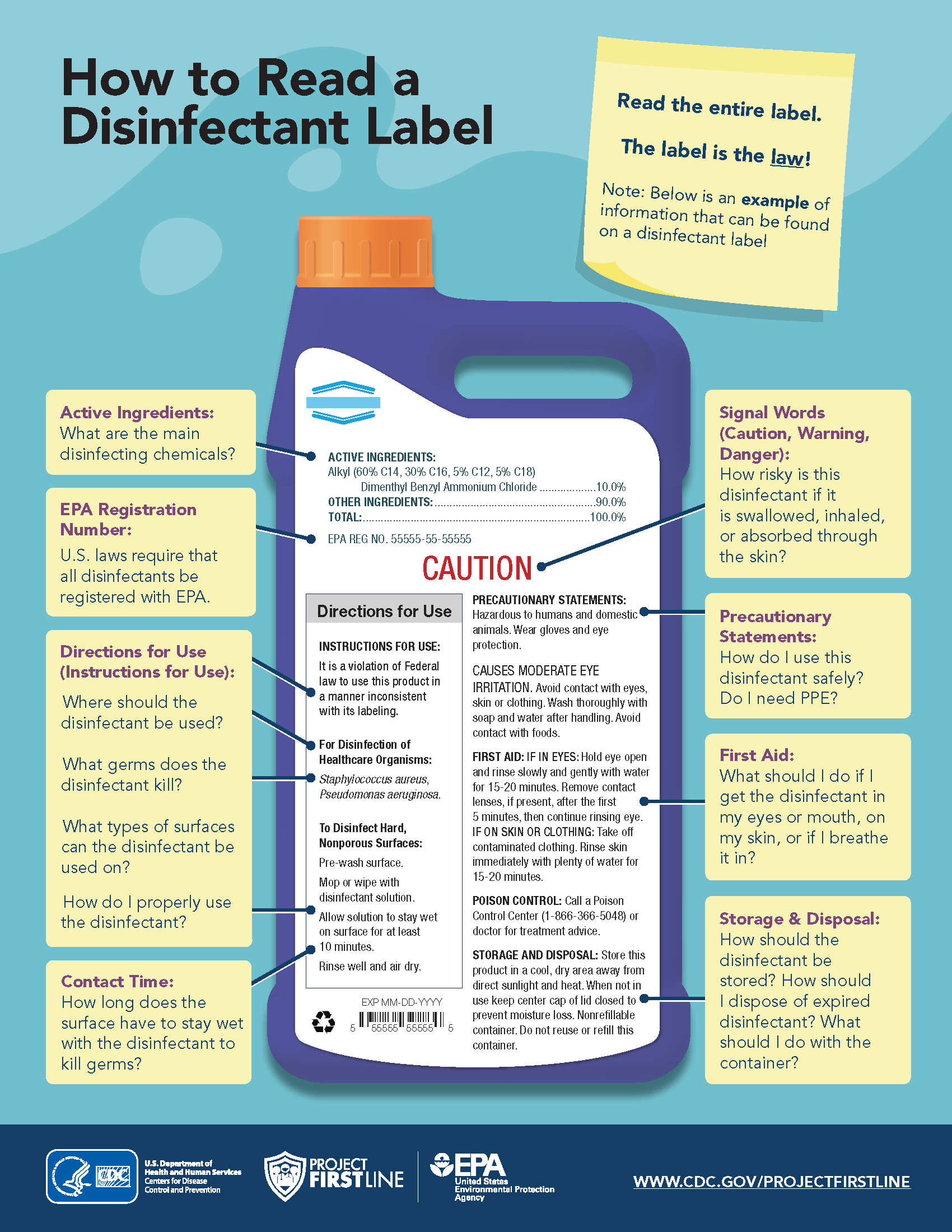
- How to Read a Disinfectant Label https://www.epa.gov/system/files/images/2022-09/HowToReadALabel-508c-Final-2022-08-30%20%28005%29_1.png
Welcome. I'm Leslie Cannon. I'm Mary Gavoni.
SPEAKER_02I'm Linda Harvey. I'm Olivia Wan. And together we are the Compliance Divas.
SPEAKER_03Welcome to the Compliance Divas podcast. I'm Mary Gavoni and I will be the moderator for this episode. The Compliance Divas brings clarity and simplicity to the regulatory world to keep you on course. You can subscribe to the Compliance Divas podcast through your favorite podcast channel or on our website, thecompliancedeevas.com. All of the resources that we mentioned during this episode can be found on our website, thecompliancedivas.com on the resources page. And you can submit questions via email to support at thecompliancedivas.com. The divas are very excited and privileged to welcome our new sustaining sponsor, Hugh Freedie Group. With over 200 years of collective experience in the dental industry, Hugh Freedy Group is a global leader in dental instrument manufacturing, infection prevention, instrument reprocessing workflows, and bringing together companies such as Accutron, Crosstex International, Hugh Friedi, and Palmero to help clinicians be the best in practice. So we thank Hugh Freedy Group for joining us as a sustaining sponsor. And we have a really great podcast episode today. Surface disinfectants, what you don't know may hurt your patients. So, Linda, we're going to start off with you and let us know about what kind of characteristics we should look for in surface disinfectants.
SPEAKER_01And aren't they all the same? Mary, that is a good question because no, surface disinfectants are not all the same. As a matter of fact, one of the things that we should be thinking about for our listeners here is that we should not just be looking at cost alone when we're purchasing our surface disinfectants. And I'd like to challenge our listeners to understand do they use their surface disinfectant or do they purchase this particular product that they use for any particular reason? In other words, is there a design to how you what you know about the product and why you've chosen what you've chosen? Or did you just choose it by default, indicating that, well, this was the cheapest, it was on sale, a sales rep came by and we we bought it on the promotion, or it's the newest thing on the block. What do we know about it? So I'd like to mention to our listeners that there's several things that we want to keep in mind when evaluating the wipes. First is the scent that most people can't get past a scent if you're going to be living and working around it and it's not pleasant or no scent in your work environment. Does it streak when it dries? We all know that can be a challenge when our patients look up at the overhead uh light after we've spent so much time cleaning and disinfecting. And if it looks streaked, it appears dirty to our patients. Next is the TB kill time. And I know Leslie and Olivia are going to be going into these, some of these areas in more detail, but we want to know how long does it need to stay wet in order to kill uh tuberculosis, the hardest pathogen to kill. That's very important. And next, Mary, is the alcohol content. Many times after an office will use a product for a while, they'll say, you know, it's turning some things yellow, it's turning some things cracking, turning colors, stripping off paint, whatnot. And so the alcohol is important because you want to lower alcohol content, then it will not affix the blood and soil debris to the surfaces. So that's really important. While we think a high alcohol content would be something that clean and disinfect with, and it really smells good, we have to remember that uh alcohol is a chemical. And when we look at the safety data sheet for alcohol, there are some hazards associating associated with um that product. So having a lower alcohol content is very important in our surface disinfectant. Next is the compatibility of the surfaces. When you read the back of the label, what is it compatible with? Many products are compatible with hard, non-poor surfaces. But what I particularly like about the AdvantaClear product is that it is designed to be compatible with a host of different surfaces, including acrylics, aluminum, stainless steel, and plastics, for example. And those are some of the different types of surfaces that other wipes will discolor or crack or, you know, just they look like they're dirty over a period of time because they no longer look clean and fresh and new. And the last thing I'd like to make sure our listeners are aware of, Mary, is just what is the wipe made of? What is the substrate that the wipe is made of? You know, surface disinfectants are quite different than other disinfectant wipes that we might have in our life. And I'll draw a completely opposite analogy to the other end of the spectrum here to um baby wipes. So baby wipes have to be soft, they have to be gentle, you know, because the material that they're made out of is very different. So evaluate the current wipe that you're using to be sure that it's sturdy enough. Is it staying structurally sound, that it's not tearing? And does it actually have some cleaning effect to it when you're using it? And so that you can really be thorough, Mary, because not all surface disinfectant products are the same.
SPEAKER_03Thanks, Linda. That is such great information. And I'm especially appreciative of your information about compatibility because so many practices are not paying attention to what their product is compatible with, and then they're complaining that items are getting dried and cracked because of high alcohol contents and staining, and it can make it look worse and dirty, as you said, as opposed to clean and aseptic. Olivia, during COVID, we saw a lot of people change brands of disinfectants because of some marketing issues and other factors. Can you talk to us about what a practice needs to know if they are going to switch brands or chemistries of disinfectants?
SPEAKER_02Sure. You know, during the pandemic, there were supply chain shortages, and practices may not have had a choice of what they wanted to order. And so they would just randomly order whatever they could get their hands on. But now that supplies are not so depleted, I always encourage practices to develop what I call brand loyalty. And the reason being is if we are in compliance with OSHA, we are supposed to train our team members on how to use the product, the hazards associated with the product, reviewing the safety data sheet and making sure that this SDS is included in the collection, whether that's a paper copy or digital versions. Also, we need to add that product to the chemical inventory, which is required by OSHA, and making sure we have proof of training on the chemical, and also making sure that secondary containers are labeled properly. And in this area, I've seen where OSHA cited dental offices because they switched product lines and the pictogram was reflecting a previous product. And also other issues come up when maybe they were trained on a product and the product was switched, and the contact time no longer corresponds with the current product in use. For example, let's say that a dental practice is using Advantacle, which is only a two-minute contact time. And now they switch to a surface disinfectant that calls for a 10-minute contact time. So if they did not have training, they may not have realized that there's a longer contact time to satisfy, which could affect their scheduling, their internal processes, and also the fact that they may run behind. So, Mary, I think those are some key considerations when they're looking at products. And also, I like to encourage dental practices to have the person that's in charge of ordering be more of someone that's researching products and maybe come up with a couple of products to present to the team and make a group decision. So it's not all driven just by cost, because if we keep changing product lines just because it's on sale for the week, think about what we're paying the team members in labor cost just to get them back up to training level and all our paperwork in order. So we've got to factor that into budget considerations when ordering products. And also, it may be a good idea, and this is something also suggest, is that the person that's managing the safety data sheet collection would be a great person to handle ordering, or vice versa. Whoever's handling ordering can take on the safety data sheets. So these are some things to think about when we're choosing brands and to develop, once again, what we call that brand loyalty. What are your thoughts, Mary?
SPEAKER_03I think that's an excellent, excellent suggestion. And it certainly could help streamline things. I think that a lot of times the surface disinfectants are just almost an afterthought. We have to use them, we have to use them a lot. And many people think that they're just interchangeable. One is the same as the next. And I love your um issue about that you raised about the contact time because not all contact times are created equal, and that depends on the product. So thank you so much for that information, Olivia. Leslie, can you talk to us about labeling of disinfecting products? Why is it so important for us to read the labels? Again, the the thought process is that they're all the same, they kill the same microorganisms, but that not isn't necessarily true.
SPEAKER_00Mary, I want to piggyback on the contact time because that is so important. As uh Olivia mentioned, you could have one product you're used to using and it's a two-minute product, and then you switch to a different brand and it's uh three, five, or even 10 minutes. And I would like to put another challenge out to dental teams. How about at your next morning meeting, ask everybody to write down on a piece of paper how long the surface contact time is of the disinfectant that you're using in your practice? And if you use several products, then write down the name of the different products and how much time, and then collect the answers on these little pieces of paper, read them out loud, and then bring the container in of the products that you use, read the manufacturer's directions. I'm sure that answers from the team are going to be all over the board, and the manufacturer's directions may be a surprise to some of the team members. So that's a great way to get uh everybody well informed on the product that you're currently using. But as Olivia said, if you switch products frequently, that's gonna be very hard to keep up with. Another thing that's important to look at on the label is the chemical formulation. And the reason this is important for team members to focus on is that they need to check with the manufacturers of their high-tech equipment to make sure that the disinfectant that they're using is going to be compatible with whatever the device is. Lately, I've been to dental practices where they have multiple products that they use, and I questioned that to find out are they using multiple products on multiple on the same surface or on different devices? And time and time again, I was actually very pleased to find out. Well, we checked with the manufacturer and they said, don't use this type of a product on this device because it'll crack the plastic on it, and you'll find that your device will wear out very quickly. Use this type of disinfectant or at least this formulation. So it's important to pair the chemical formulation by having a conversation with the manufacturer. And it's as simple as a phone call to find out what not to use, what type of uh products not to use, and what type of chemical formulation to use. And I'll let you know up front that they're not going to tell you the name of products usually. They'll tell you what chemical formulation to use or not to use. The other thing is besides the chemical formulation and surface compatibility, um, the kill claim is important because in some cases, you'll need to have a tuberculosidal kill claim. I know for us in California, we have a dental board regulation that tells us that when we're disinfecting impressions, which I hope everybody is doing, um, or disinfecting prosthesis appliances, retainers, partials, dentures, that when we disinfect them before we manipulate them in the laboratory, that we need to use a product that's an intermediate level disinfectant. And if you're familiar with the CDC guidance on the levels of disinfectant, we have low-level, intermediate level, and high-level disinfectant, with just a quick point that high-level disinfectant is cold sterile. It's not to be used on surfaces. But with intermediate level disinfectant, in dentistry, we're pretty lucky in most cases, that's going to be the product that has the label can't claim as being tuberculosidal. And so it's important to know not only what the contact time is, but for what organisms that you're uh intending to kill. I have a slide in my PowerPoint that shows the difference between cleaning a surface and disinfecting a surface, where you can have something be uh bacteriocidal and viricidal at a two-minute kill claim, and then it's tuberculosidal, it's the extra minute, so it's three minutes. Now, if you're like me, I'm busy when I'm working. And in my days as a dental assistant, I would read the container, I would get the information I would need, and I'm out of there. I wouldn't read the rest of it. So it would tell me that for cleaning, you know, use one wipe to clean the debris and get the surface completely free of debris, and then use a second wipe to disinfect. And if you're looking at cleaning or disinfecting to get the bacterial cytal and viricidal, it had to stay visibly wet on the surface for a certain amount of time. But if you were looking for tuberculosidal, it would have to stay an additional amount of time. And I think if you don't read the label all the way through, you'll miss that. And I think team members being so busy as we are in dentistry, just read enough to get what we think is enough information, and then that's it. And one other point that I want to make about surface contact time is that sometimes the manufacturer's directions will tell you that you're going to need additional product in order to get that full two minutes or three minutes or five minutes or what have you. And uh I a lot of times I hear team members gripe that, well, the disinfectant wipe didn't stay wet as long as it was supposed to. And well, the the information, the instructions, if you read the instructions for use, tell you that you might need additional wipes or you might need to spray it again to get that extended amount of surface contact time. And just another quick uh point I want to make is that uh with a wipe disinfectant, we clean the surface first, throw away that wipe because it has the stuff it cleaned off of your surface, get a new wipe out of the container, and then disinfect. And now our clock starts for the surface contact time. And so many times I see team members will just take this one wipe and wipe the surface, and they think, well, that's cleaning and disinfecting at the same time. So I want to uh reiterate that uh in the old days when we didn't have wipes, we would call it spray wipe spray, which meant that we'd spray the surface, remove the debris, we would uh, you know, with the wipe, and that was the wipe part of it. And then our pre-cleaned surface, our surface that is now uh free of any debris or any uh dental materials, now we can spray it with the disinfectant and start our surface contact time from that moment. Well, it's the same with wipes. It's not just one wipe does it all. It's wipe, discard, wipe, start your surface contact time and see, you know, challenge your product to see if it's going to stay wet the full amount of time. If it doesn't, you may have to apply more. Or one other little thing to remember is to keep the lid closed on the disinfectant wipes so that we don't have it evaporate.
SPEAKER_03Mary. Thanks, Leslie. That's a lot of great information. Um, one point I want to make that piggybacks on what you were just talking about. There are some disinfectant wipes that are approved for a single wipe process, but you have to a one-step process instead of wipe to clean and then wipe to disinfect. However, if you read the label, it will say if there's any possibility of the presence of blood or if there is visible blood, it reverts back to a two-step process. So I like erring on the side of caution and always making it a two-step process, but there are some products that mark it as a one-step, and I can't think of too many situations, maybe taking radiographs where you could do a one-step process, but be very careful. And Leslie, you talked about the label kill claim. What microorganisms does the product kill? And the way we know that, aside from reading the label, is with information from the Environmental Protection Agency or the EPA, because they are the ones that certify these products to be effective against certain microorganisms. And we have three lists essentially that we need to pay attention to. The most important one, I think, is list B, because this is the list of all of the disinfecting products that have a tuberculosidal kill claim. And going back to the CDC guidelines, as you mentioned, Leslie, it states that when there is likely to be blood on a surface or some equipment that we are to use an intermediate level disinfectant, which means it has to have a tuberculosidal kill claim. So that's the first place I would look. And I'm not a fan of people saying, well, we have to use the tuberculosidal disinfectant here, but we can use another one that doesn't have a TB kill claim there because we all know what happens is then we start using whatever our favorite is, and it might be the non-tuberculocidal disinfectant, and then we're not doing our very best job. We learned a lot about List N during the pandemic. This is the list of disinfectants that have been proven to kill COVID-19, the SARS-CoV-2 virus. And early on in the pandemic, there were some companies that had that label claim for their products and others that didn't. And so many people were influenced by some marketing messages that said you had to switch disinfectants, which you didn't have to, um, although many people didn't know that. The EPA did issue a clarification that if you were using a disinfectant that had a higher level of efficacy, meaning it was on the list B tuberculosidal, that you would be able to kill the SARS-CoV-2 virus. So the SARS-CoV-2 virus and enveloped viruses are sort of at the bottom of the food chain, if you will. They are the least resistant to disinfectants. And TB bacteria, as Linda said, are the hardest to kill. So if we're using something that's very stringent, um, a higher level of efficacy, then we're okay with list N. List Q came into our view because of monkeypox. And List Q is the list of disinfectants that are effective against emerging viruses. But again, monkeypox virus is an enveloped virus, very unresistant or non-resistant to surface disinfectants. So stick with your tuberculosidal disinfectant. Pay attention to list B. That's the most important one. And unless something changes, that's where we go. And we don't necessarily have to worry as much about list N and list Q. All the we have enough alphabet soup in our in our lives. So we want to wrap up this episode with a couple of points about misuse of disinfectants. And we see that a lot. Two things, I'm gonna lead this off and then I'm gonna turn this over to the rest of the divas. Two things we see. One is if you are going to change brands, as Olivia talked about earlier, you because the chemistries, even in the same categories from one product to another, are different. You need to clean all your surfaces first, or you will have staining. Um, it may smell. And so you take a very dilute soap solution. I recommend using Dawn because it also is a degreaser. And you go over all your surfaces and wash them and then rinse and dry them before you start using your other products. So be very, very careful and don't assume that chemistries are the same. Linda, Olivia, or Leslie, do you have any things that you want to add?
SPEAKER_01Mary, I'd like to just say really quickly, um, to piggyback off of something that Leslie said about leaving the lids open. I actually was in an office recently and the lid was cut off. It was just gone. Oh my gosh. So while we didn't point fingers at one another, it was just totally not there. It was the lid of the surface uh tub of wipes that was in the lab. Not that that makes any difference, but um, it's still going to be a product that's going to dry out. And this this day and time budgets are very, you know, uh for foremost in our doctor's minds. Um, and so when you purchase something that's a quality product, we want to try to take care of it. So having the lid kept closed is what we should be doing, Mary.
SPEAKER_03And thank you for sharing that because that was the other thing, and I forgot what it was for a second, about making sure that every couple of days you make sure that the tab is closed, the lid's screwed on tight, and you tip your container upside down to let the solution that's pooled at the bottom of the canister reabsorb and the top that tends to dry out more. And then if there's liquid left over when you've used up all the wipes, you discard it. You don't pour it into the next canister because it's been exposed to air from opening and closing it. And we don't know the efficacy or the concentration of that at that point.
SPEAKER_02Olivia and Mary, just to re-emphasize, uh, reading the product label. And when I'm on site, that can be challenging because I have a uh a reader in my bifocals, and sometimes I have to line it up just right to get it, the print large enough, or go to the manufacturer's website and read it there. But reading the product label is critical because that's where we're going to get the information on PPE. I have seen dental offices cited with wipes because they were not wearing the suggested PPE that was recommended on the product label. So if they're introducing a new product, be sure that the label is read together and understood and capture that training segment in an OSHA compliant roster so that you've got that documentation that must remain on file for three years. Leslie.
SPEAKER_00I don't think anybody addressed the big sin of disinfectants in dentistry is uh mixing um disinfectants, storing them with gauze. And uh we need to make sure that we reiterate that because that was a common mistake of blooper that people were doing during pandemic when they couldn't get their favorite wipe, they would uh use two by twos or four by fours and saturate them with the liquid disinfectant, which we know that number one, that is an off-label use of disinfectant. So you're in violation right there of EPA uh when you're using something in differently than what the manufacturer has directed you to do. But what's even more scary is that the extended period of time that the gauze or uh two by two or four by fours are in that saturation, that they break down and they chemically react and absorb the chemical disinfectant, thereby inactivating the disinfectant's efficacy. And a study that was cited by CDC actually showed a significant decline, 40 to 50 percent lower in the concentration of a disinfectant after only one hour of soaking the gauze. On top of that, just very quickly, uh, you know, gauze is expensive and paper towels are not expensive. So if you're gonna use a liquid disinfectant, let's please use it the right way. And uh, you know, if you really need that grit on the gauze, you know, you can saturate the gauze at time of use and use that on a surface, but you're gonna save the practice tons of money if you are using paper towels and spray disinfectant. Um, again, another thing to keep in mind is to keep the bottle of the sprayer bottle of disinfectant closed at least overnight. Let's try to do that so that it doesn't evaporate overnight. I know uh Olivia can relate to this. We both have horses, and and I use fly spray, which is extremely expensive. When I buy it, it's like $70 a gallon. So I put it into sprayer bottles to use on my horses, but after I use it, I tighten that lid, you know, that spray so that it doesn't evaporate between the times I use it. And then one other thing I want to mention that seems to happen uh frequently is that uh if we do use sprays, and and in my opinion, there's a place for sprays and a place for wipes in every operatory. We have smooth surfaces that are easy to wipe with the disinfectant wipe. We have surfaces that have nooks and crannies that where the wipe sort of damp mops over the top. So the sprays penetrate into those nooks and crannies and lift out, then something can be wiped away. But when we do uh use sprays, um I've seen uh frequently the gallon jug being purchased as opposed to the sprayer bottles in the treatment room and refill of the sprayer bottles. And I want to note that number one, put the same product that's in the gallon jug into the sprayer bottle. So you have the exact product that's on the sprayer bottle as what's in the gallon jug. You have the exact same instructions for surface contact time, you have the exact same formulation, all the things you need to know, PPE, everything's the same. And also one other small little tiny thing that might help you if an OSIS safety officer ever were to look, why not take a piece of tape over the expiration date on the sprayer bottle and transfer the expiration date of the disinfectant from the gallon jug to that sprayer bottle so it doesn't look like you're using expired product?
SPEAKER_03Excellent. Excellent point. Anyone else have anything else to add to our tips and tricks for using disinfectants? Oh, one more thing. Um, you also might want to include the lot number of the disinfectant when you're when you're labeling with that um disinfectant expiration date so that we know we can trace that back to the product that we're putting in the secondary container when we're using the products. So we've shared a lot of information today about utilizing surface disinfectants, which are such a big part of our infection prevention and control plan in um in our practices. And again, we want to thank and welcome our sustaining sponsor, Hugh Freedie Group. We look forward to future podcasts on timely infection control topics. If you have questions from this podcast, submit them via email to support at thecompliancedivas.com. And all the resources that we mentioned in this podcast will be available on our website, thecompliancedivas.com on the resources page. Thank you for joining us. We look forward to having you join us again on a future episode.