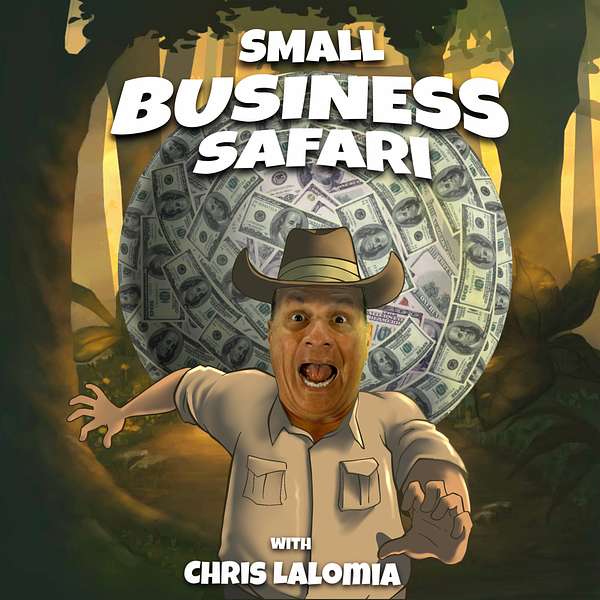
The Small Business Safari
Have you ever sat there and wondered "What am I doing here stuck in the concrete zoo of the corporate world?" Are you itching to get out? Chris Lalomia and his co-host Alan Wyatt traverse the jungle of entrepreneurship. Together they share their stories and help you explore the wild world of SCALING your business. With many years of owning their own small businesses, they love to give insight to the aspiring entrepreneur. So, are you ready to make the jump?
The Small Business Safari
From Distributor To Barber To Manufacturer: Eric Malka Shares The Playbook | Eric Malka
What does it really take to turn a scrappy New York storefront into a globally recognized luxury brand—and then exit it on your terms? Eric Malka breaks it all down.
Summary
Eric Malka shares the real story behind building a premium grooming brand from the ground up—starting with a $12,000 shop in New York and evolving through distributor, retailer, service provider, and manufacturer. We unpack the pivotal press moment that drove a 20x sales spike, how disciplined brand and margin decisions enabled luxury positioning, and what it takes to plan and negotiate a strategic exit—especially during crisis moments.
Along the way, Eric explains how customer pain points shaped natural product formulas, why not every “great” location works, and how luxury distribution partnerships validated the brand while protecting margins. We also explore omnichannel growth in a privacy-first ad world and what purpose looks like after a successful exit—from fatherhood and health to mentoring the next generation of founders.
🎥 Watch the full episode on YouTube:
https://www.youtube.com/@TheSmallBusinessSafari
💡 GOLD NUGGETS
• Moving from distributor → retailer → services → manufacturer
• Using PR strategically to create demand and brand credibility
• Building products directly from customer pain points
• Designing a premium in-store experience that converts to retail sales
• Lessons learned from a failed Wall Street location
• Leveraging Neiman Marcus for luxury validation and distribution
• Defining luxury vs. mass—and protecting margins
• Adopting omnichannel while adapting to privacy-driven ad changes
• Planning for a revenue-based brand exit and negotiating under pressure
• Redefining purpose after the sale through health, family, and mentorship
Author of the book: On The Razor's Edge
🔗 Guest Links
• Website: https://strategicbrandinvestments.com
• Personal Site: https://ericmalka.com
• LinkedIn: https://www.linkedin.com/in/eric-malka-9071529/
• Instagram: @ericmalka
🌍 Follow The Small Business Safari
• Instagram | @smallbusinesssafaripodcast
• LinkedIn | Chris Lalomia
• Website | https://chrislalomia.com
Thanks to our sponsor Smart Hire Solutions LLC!
Um you know the real mom and pop story gone right. Yeah, definitely gone right. I I gotta ask. So the beginning, the first store was just selling products, not actually uh doing the no shaving in that first store.
SPEAKER_02:Only for that three-day event. It was actually 10 by 20 the store. So just a tiny little smallest store we could get our hands on.
SPEAKER_03:Right. So you get into business as a distributor. Then you say, Oh my gosh, we can be a barbershop, a high-end barbershop. So then, and we've had Jessica Denahan as well. Uh, so then you get into the actual service providing, right? So I went from a distributor to a service provider. Now I'm a product manufacturer. I mean, those are three distinct businesses, and yet you were able to kick the shit out of all three of them. Here I am, still trying to slog along in a stupid service business. And I can't do that right after 17 years.
SPEAKER_04:And I just need to let you know this happens on every episode where Chris is just really jealous. But you know, go ahead and revel it. It's true.
SPEAKER_03:Welcome to the Small Business Safari, where I help guide you to avoid those traps, pitfalls, and dangers that lurk when navigating the wild world of small business ownership. I'll share those gold nuggets of information and invite guests to help accelerate your extent to that mountaintop of success. It's a jungle off there, and I want to help you diverse to the levels of owning your own business that can get you bogged down and distract you from hitting your own personal and professional goals. So strap in adventure team and let's take a ride through the party. Strap it in, let's get it together, let's sharpen the saw a little bit, Alan.
SPEAKER_04:I knew on the way over you were gonna have all these little crazy dad jokes. I did crazy dad jokes.
SPEAKER_03:Am I cutting it a little too thin? Yeah, cutting a little close. Am I a little too close on the shave?
SPEAKER_04:You're reducing this to stubble.
SPEAKER_03:That's what we're all about, small business safari fans. We are rocking and rolling, doing it again, man. Hoping you're having a great week. If you're driving around in your truck, maybe you're doing this on a walk, doing whatever. Let's get better. Let's get better at what we do. Let's get better at everything we are, Alan. Or let's run 100 miles an hour in a 25 mile an hour zone. Or we could just stick our head in the sand. We could stick our head in the sand and say, everything's gonna be all right. Everything's gonna be all right. You know what? Hope is a strategy. You know, I don't care what those pundits say. Hope is a strategy. I have hope. All right, Alan. We got to get after it. Big daddy. We gotta, we gotta, we got a big deal on the pod today. I know. Eric Malka has joined us, and you're all fanboying on him and telling me, oh my god, this is great.
SPEAKER_04:My son is gonna go nuts when he finds out who he's such a huge fan of yours product. Oh, thank you. Yeah, no, I I cannot wait to let him know when you're usually people tell me my dad's a fan, but oh no. Yeah, so he's in his uh, I guess, late 20s. And uh, yeah, no, I mean that's my core audience right there.
SPEAKER_02:Is that right? Young entrepreneurs, the next gen.
SPEAKER_04:Yeah, and I mean, I and I love, you know, I can't wait to get into this because you know, we're in an era where masculinity is toxic, and you've created an outlet in what Chris and I probably just do as a perfunctory chore every morning, and you've you've you've elevated it to a rite of manhood, a ritual. And I mean it's just awesome.
SPEAKER_03:So come on, are you are you are you permission to groom? All right, permission to groom. So, Eric, uh, give us that backstory, man. How did you get into all this? Is this what you were dreaming to do when you were seven, eight years old? Why don't we say no, not at all?
SPEAKER_02:Although when I was five, I was in uh taking a bath, and my mom left me in the bathtub for a few seconds, and I reached for my father's double-edged razor, and still have a mark to this day. So it was probably uh a sign that of what was to come. But uh it was in my mid-20s when I moved to New York City and I uh found a job working in the industry of men's grooming for a distributor of uh British products, and uh that's where I get the idea to open a shop like the ones I've seen in London during my my trips, my business trips. And I thought nobody had done that in the US, and uh perhaps um it could do well in New York City, so you know, very simple, coincidental. I was always agnostic about the industry. I I don't have a passion for men's grooming or or shaving as you can tell, uh, but I do have a passion for succeeding as an entrepreneur, and I thought that was an opportunity. And that's part of my principle is uh, you know, the idea is it doesn't have to be an incredible idea. It's how you execute things, right?
SPEAKER_03:Well done. Yeah, absolutely. Obviously, it's so let's talk about the niche, the art of shaving that you started. What what was the concept? Uh and what is it?
SPEAKER_02:It was very simple. It was to open a shop specialized in men's grooming products in New York City. Uh, that was the whole idea that my wife and I had, you know, scrap a few dollars together that together. Uh, we sold our car for twelve thousand dollars, and uh we were too young to know that it was impossible to open a shop for twelve thousand dollars in New York City, so we actually did it, you know.
SPEAKER_03:So that's one where ignorance is bliss and it works out to not have a plan.
SPEAKER_02:Every great story starts like that, though. I freaking love that. Yeah, listen, it's the truth, it's the god honest truth. Uh my wife was 22 years old. I told her she had$3,000 to furnish the whole store, and she didn't know any better.
SPEAKER_04:What now when did you when did you open it?
SPEAKER_02:What year? October uh 6th, 1996.
SPEAKER_04:Wow, and so in it you just you you carried products that you thought were cool and you've now evolved to proprietary products. Of course, the whole e-commerce came in. I mean, it's been you you've been through it's been a wild ride.
SPEAKER_02:Yeah. Listen, from kitchen table to strategic acquisition in 12 years, that was really, really, really light speed. Um, and we realized that it doesn't happen every day. Things had to align pretty well. But as I said, we sold our car to open the business, so we had no money to do anything except maybe, you know, get the store open. From my job, I was able to get products on consignment. So I was able to get products in my store, sell them, and then pay for them. And um fortunately, my my employer agreed to do that. So thanks a lot. Yeah, you were hustling. I was hustling, you know. I did what I had to do without breaking the law. Uh, but within within that confine, I did all you know everything I could to get done.
SPEAKER_04:See, Chris, it is possible to do business without breaking the law.
SPEAKER_03:Oh wow, I didn't know that happened. Oh my god.
SPEAKER_02:Well, lesson learned for Chris after 17 years. I broke a few balls, you know, I've I broke a few rules. I broke uh I offended a couple of people along the way, but I've never broken the law. That's okay.
SPEAKER_03:Well, I've done all three of those. So at least I won't admit it on this podcast. Ah, you're doing good then.
SPEAKER_04:Man. When when we got so when I saw that you were gonna be our guest, I'm like, okay, this is a big brand. And when were you aware that okay, we we've actually created a brand? So much so that my son who lives in Belgium is a huge fan.
SPEAKER_02:Well, first we realized we were onto something big, and then we created a brand, and then we realized that the brand had potential, right? It was not uh it was a building blocks because again, we were not a huge company, and it was a blessing in disguise, by the way, to bootstrap. I consider that to be a blessing in disguise because it forced us to really build a foundation from day one and not try to go uh you know faster, you know, not getting ahead of our skis, as they say. So six months after opening the first store, um the New York Times took notice of us and wrote a two-page article uh on Sunday. Monday morning, our business 20x uh overnight. Oh my god. So when they back in those days, it was Yeah, that's 96.
SPEAKER_03:This is again pre-internet. So they came, they interviewed you, you kind of went, okay, whatever, figured it was gonna be on Wednesday morning, the Wednesday edition, like the 27th page of the paper or whatever. When did you know it was gonna be Sunday? And did you think it was gonna do what it did?
SPEAKER_02:Well, we we did a big event with the barber that came from England, and a publicist brought a lot of press to us. She loved the event idea, and she says the New York Times wants to do uh Nix Tuesday before anybody else runs the story because even CNN ran three minutes uh about the the event. But um we said, yeah, sure. She says you should do it, you should definitely give them, you know, we knew nothing, we were in our 20s. Said, yeah, sure, let's do it. And then on Sunday, the 23rd of 1997, we're opening this two-page article in the Metro section, and we're reading it, and we're like, eh, I don't like the way they wrote this, and they didn't mention that, and you know, we chucked it to the side. We had no clue what was the power of the New York Times back then. I mean, that was that was like going viral.
SPEAKER_03:When you literally, when you went to work on Monday, you're like, ah, yeah. What's going on? He learned, he learned.
SPEAKER_02:Here's the funny anecdote is that my wife and I, my wife was um, I was gonna sponsor my wife for a green card. She's French, and a lawyer we met told us, you have to get married before April 1. The law is changing, and we have to file your your demand. So we ran into the city hall on Monday morning before opening the store, got married, and then we walked back nonchalantly to our store, and there's like a mob of men uh uh waiting outside, and we thought maybe there was a fire in the building or something like that. They they had these little what a day. I mean what a day, yeah. That was a wedding gift. That was a wedding gift.
SPEAKER_04:Yeah, yeah. That's right. That's a reception right there. Oh my god. He and that he learned that any press is good press at that point.
SPEAKER_02:It's at that point we realized two things. Uh, we realized that barbering should not be an event that we do for three days, it should be a full-time thing we do in our stores going forward. And we should have a publicist on pay, you know, on retainer forever. You know, and that those two things became a huge driver of brand awareness for us over the next 10 years.
SPEAKER_04:Wow. Did you uh come up with your branding on your own, or did you hire an expert to help you to take it to the next level?
SPEAKER_02:It was a combination. My wife has impeccable taste. Um, she's a formulator of natural products. She formulated all of our products, the first one in our kitchen. And we uh again, the stars aligned for us. We we were introduced to this um great designer who actually had been part of the uh team that designed the Starbucks um uh green logo, and uh she did work on the side for for freelancing, and uh she came on board and between our vision of what the brand would be like, my wife's creative direction and and that designer's talent, uh, we built a beautiful brand that really um we wanted our packaging and our products to look like our customer as a product. So pinstripe suits, you know, gold rings, uh colours that were masculine, uh things like that. So that's how we started creating the brand in 1998. Once we had enough money, because of the New York Times article gave us the resources to open a Madison Avenue shop on 46th Street, and that was a game changer that became a huge success with barbering full-time, and the success of that store gave us the resources to start our own brand. That was that was more than 12 grand to open that store. That was believe it or not, it wasn't that much more, it was maybe 75 grand. Um eventually. Yeah, we again we were lucky. I mean, we you know, I remember we ripped off the paper, the the carpet from the store, and there were pristine wood floors throughout from the 1930s that were preserved by that moldy carpet. So, you know, I can tell you a bunch of times we were, you know, where we were extremely, extremely lucky. Uh, we we created that luck, but you know, that luck is not guaranteed. So uh we feel that it was uh the stars really aligned for us, the timing was right, the metrosexual movement started uh in 2000, and that was a game changer for us as well. But uh moving uh going back to the creation of the products, um what was really incredible for us is that for the first 18 months of starting our company, we didn't have our own products, we had other brands, and uh we just listened to our customers every day telling us what they wanted, what they weren't finding in the marketplace, what they were experiencing while shaving, and that became a sort of a um a focus group, a real focus group, and hundreds and hundreds of men were telling us the exact same thing. We want fragrance-free products, we want products that are for sensitive skin. When I shake too close, I get irritation, and that became uh the insights we used to build the entire product line. So, you know, when people say, you know, you guys hit it out of the park, how did you create such a beautiful brand? But you know, we just uh we just uh did what customers told us to do and what wasn't available out there.
SPEAKER_04:So so let me ask you this you you said your wife would actually create some of your first products, and the thought that went through my head was okay, here's a woman creating a product for men. So is she creating what she thinks men would want, or is she creating okay Okay, here's another anecdote.
SPEAKER_02:So from my uh I'm working now, I'm employed in the men's grooming industry, old English. I I discovered a shaving brush, great shaving cream, it improves my quality of my shave. I'm in the industry. And my wife's father had this whole thing uh throughout his life. He used to use baby Johnson oil on his face before shaving cream, and he says it helped the razor glide. But my wife and I are into natural ingredients. She was studying aromatherapy at the time, and she says, I'm gonna use that idea, but I'm instead of using you know petrochemicals basically, I'm going to use natural botanical uh oils. And so she used olive oil, she used castor oil, essential oils of lavender, sandalwood, black pepper, and cloves, and she made me this pre-shave oil that I used with my brush and the cream from my job. Had the best shave of my life, uh, no irritations for the first time. And, you know, we had to we had to park that because we had no money to manufacture until 18 months after starting the business. We went back to those formulas, uh, cleaned up the shaving cream we were selling under our own brand, uh, went to manufacturers to get Aftershave Bomb made, private label shaving brushes, make some fancy handles, and we little by little, uh, we launched five products in '98. Uh in 1999, uh, we launched 37 products based on the success of those three products. It was, you know, usually brands don't launch that many products, but because we had our whole store to fill up, we decided to go big. And by doing that, for the wrong reason, we became uh perceived as a specialized expert in the shaving, luxury shaving category. So Neiman Marcus came calling in 1999. Uh, we did a deal with them, and you know, then it was all uh off to the races. And uh my job at that point was to not screw it up. I mean, that was my main goal.
SPEAKER_03:Now, were you still working full-time when you launched the shop in 96?
SPEAKER_02:No, the um as soon as the uh 20x uh New York Times article uh happened, uh we could support our lives without having a job you know on the side. So I quit my job and I spent all my focus on the art of shaving. I opened the second store, I managed one store, my wife managed the other store, and then we started hiring people and so forth. So we were managing the business in between helping customers. Um you know, the real mom and pop story gone right.
SPEAKER_03:Yeah, definitely gone right. I gotta ask. So the beginning, the first store was just selling products, not actually uh doing the no shaving in that first store.
SPEAKER_02:Only for that three-day event. It was actually 10 by 20 the store, so just a tiny little smallest store we could get our hands on.
SPEAKER_03:All right, so you get into business as a distributor, then you say, Oh my gosh, we can be a barber shop, a high-end barbershop. So then, and we've had Jessica Denahan as well. Uh, so then you get into the actual service providing, right? So I went from a distributor to a service provider. Now I'm a product manufacturer. I mean, those are three distinct businesses, and yet you were able to kick the shit out of all three of them. Here I am, still trying to slog along in a stupid service business, and I can't do that right after 17 years.
SPEAKER_04:And I just need to let you know this happens on every episode where Chris is just really jealous. But you know, go ahead and revel in it. It's true. And he keeps going, ah, well, you know, it's good luck.
SPEAKER_03:It's good luck, it's good. And then he's thinking it's why. Was that a question? My wife is sitting there going, wham, wham, wham.
SPEAKER_04:When are you gonna make more money, Chris?
SPEAKER_03:So uh, so did you when would when did you go, distributor? All right, let's do the shaving. You know what? We're gonna start to provide a service.
SPEAKER_02:Well, after we did that event, and it was such a success with the New York Times, and the next store we uh we had the resources to open a store on Madison Avenue. Uh, and the store was perfectly built. It was this long store with staircase and a small room in the back. So the barber shop was in the back on the you know, down the stairs. And we, you know, I immediately thought, listen, this is this this is incredible to have a barber shave customers, and then they get off the share, they buy all of our products like a doctor gave you a prescription, right? So I said, I need to do this, you know, seven days a week. Um so we decided to open uh an elevated form of barber shop, which we call the Gentleman barber shop, uh barber spa, because my wife had a bit of a spa background. So she was able to create these beautiful mix of traditional Shaving barber services with spa services, a combination of those two gave us a little bit of an innovative edge. And uh we hired barbers, we trained them, um, and we started to uh use our products. Uh actually, at first we didn't have our own products, we started to uh shave customers, and customers would I I literally would get out of the chair, come to the register with a bunch of products, and ask me, how do you make money on Madison Avenue charging$35 for a shave? And you know, they were buying$400 worth of products uh along with it. So, you know, I was like, oh, I don't know. It'll be$435, please. So going to Madison's. So it was a great mousetrap. It was a great mousetrap, and it became something the press loved because we were innovating in the area of men's uh barber shop. Until then in New York City, it was it was the$8 haircut, right?$12 shaves. Um so it was real innovation. And then they ignited a whole industry. Now you go anywhere in the country, anywhere in the world, you're gonna see elevated barber shops uh that they will tell you was probably uh prompted by what we did back in the 90s.
SPEAKER_03:Unreal. It's all right. So you open the Madison Ave, you you're mom and pop in it. What you're running one store, she's running the other. You guys are probably working like business owners, uh 24-7, working like dogs, just doing it. Right? Launch these products. Nordstrom's calling, or Neiman Marcus, whoever's calling, whoever you're just killing it. And then you say, Well, we're gonna make all these products. When did you start to pivot to the brand and the products and start to get out of the mom and pop?
SPEAKER_02:So, right away when when the second store on Madison Avenue started to do really well right away, we had the resources, and we said, uh, first of all, what prompted us to do our own products is that our suppliers were becoming very difficult with us. They wanted a piece of the business, and uh uh we felt that we were our livelihood was being challenged. So we said, listen, we have to make our own products so we don't depend on anyone else's brand. And we launched three products to test it out. Um, very homemade kind of products that we had manufactured locally. We tested the thesis, those products became our best sellers overnight. Um, and then we said, okay, we're ready. Let's go full full tilt, let's build this uh this product line, this brand, 37 products, a bunch of accessories, razors, brushes. We need to fill this entire store eventually with our brand. Because in those days, we were looking at stores like The Body Shop or Craft Tree and Evelyn or Kiel's, and they had retail stores all over the country and they only had their products, but we had other people's products. And I said, that's the future, right? We need to have, we need to control our supply chain, we need to control our destiny. And in doing that, we became a cons a luxury consumer brand in the process.
SPEAKER_03:Love this. And so you you moved into a brand just by developing the product. You know, the brand became the brand, but really it comes about delivering that great product and service to build on the brand as you're doing that. And again, yeah. Did did you open more stores?
SPEAKER_02:Or is that point where you said, I'm yeah, we opened more stores. You know, we were kind of bullish, so we opened a store on Wall Street. We're like, where do men where can we find men? Right, Wall Street, big mistake. Uh, that didn't work out because really wait.
SPEAKER_03:Well, yes, you finally hit a mistake. We finally hit a mistake because let's talk about that mistake. No, I I was like, I was like, I was three days into my business and I had already made like a thousand mistakes.
SPEAKER_02:No, but look, we thought it was going to be solid. Yeah. Yeah, it was a no-brainer. I was like, yeah, Wall Street, all the men work there. But what I forgot is that we did 40, 50 percent of our business on the weekends. And Wall Street is completely shut down after Friday at four o'clock. So they're all gone. And the real hot shots, you don't see them walk in the streets, it's the little brokers that are walking the streets. So it didn't really do well. It didn't do horribly bad, but it didn't do, we were used to just opening stores and having a Grenole time, you know, ringing the register. But um, that was a great lesson. Um, and then because of a uh an article in the American Airlines magazine, American Air, uh, I don't know what they call this uh magazine they have on the planes. This executive at Neiman Marcus saw a whole feature of us with our barber shop on Madison Avenue, got off the plane, called me, and said, Listen, we are interested in opening a barbershop for men uh in our flagship store in Dallas. Uh, would you be interested in speaking to us? And I said, you know, hello. It's not a trick question, buddy. Yeah, right. So I was there. When and uh I was there uh, you know, 15 minutes later, I was in Dallas.
SPEAKER_04:Um is Neiman Marcus, did they also carry your products in the store?
SPEAKER_02:So we first opened the store with them in late 1999, um on the second floor of the downtown Dallas um shop. We put our products in that store and we had barbers there. We did mostly the executives because that store was not a very, very big store for them, but it housed the entire uh management of Neiman Marcus globally in that building. So they all became our customers. Uh, I befriended the the global VPs and the presidents of Neiman Marcus, and that was a great place to get started because it was like having a Fox in the henhouse, if you will. Um so after the store was open, I went to the buyers and I said, we want to sell our products in all your stores. You have 32 stores, give us access to all that. And uh there's a whole story about that as well. Um, if you have time. But uh eventually they gave us access to distribution and and that really put us on the map. Um, that was a huge uh credential for a luxury brand to be sold at Niman Markets.
SPEAKER_04:So just for our listeners, you know, if if somebody out there has uh got a product, you hear the stories about uh I have a product and suddenly Walmart wants to carry it. And then when I got in bed with Walmart, I I lost money because so how did you how did you know how to structure that deal?
SPEAKER_02:So first of all, luxury and mass are different animals. So you cannot give the same advice as somebody going into a Neiman's as somebody going into a Walmart. Walmart, if you're not uh if you don't have strong backbones, they can they can kill your your company, right? If it doesn't, if it doesn't work out, it can really be your demise. Um so you know what we did with Neiman Marcus, again, we leveraged our asset. We were very profitable with our stores. Our stores were churning out huge profits, so we were not dependent on Neiman Marcus for profitability and for survival. So we were able to reinvest all the dollars they gave us back into the relationship. And we always made sure that we at least broke even, right? We didn't want to be bled to death. Uh when it comes to Walmart, that's a different animal. Um, but you know, the biggest lesson I tell entrepreneurs is don't bite more than you can chew. Be patient, build yourself, become strong. You don't win the Super Bowl because you just walked on the field. You have 10 years or 15 years of preparation. If you're if you're great, if you're lucky, if you're talented, if you have grit. Same thing for entrepreneurs. Entrepreneurs need to understand that patience is your greatest friend. You need to have urgency, but a lot of a lot of patience. I must have a lot of patience.
SPEAKER_03:You need to go get you need to get some. I think I think I have a lot of fucking patience.
SPEAKER_02:Yeah, too much patience, man.
SPEAKER_03:I must, I must have had too much patience, not enough urgency. I'm about to go out. I'm gonna I'm actually gonna buy some of your products go out there and start whipping my guys. Look, hey, see the saving brush? See the saving. Maybe if your guys use this product. We sell straight razors too. I've never done anything you'll oh that was Eric. You can slash the tire with a straight razor. Well, I mean it's throat with a straight razor. Yeah, well, it was it was a blade, but it was not all right. So Eric, uh obviously uh today here we are in '96. You did all of this before anything digital was even around. You know, the dot-com boom, it was in 2000. Um, and so you're doing all this. Uh, tell us how you pivoted through the digital uh in the beginning, because I think we're going through another uh another uh disruption, if you will, with AI. And people think this is the first time ever. It's funny so funny listening to younger people. Oh, oh my god, this is like the best thing ever. I'm like, yeah, let me tell you about the 2000s. And then uh older people say, Well, let me tell you about the advent of TV. So so that's right. How did you how did you how are how those are now?
SPEAKER_02:Those are tools, right? Uh PNG used to advertise on radio before they advertise on TV, before they advertise on billboards and so forth. Right now they advertise on social and digital. These are just uh mediums, right? They're tools. AI is a tool. All all participants have access to the same tools. It's really a race to the most creative, you know, talented and uh clever, right? So, you know, we I remember our first website. You you know, it was you know, you had to dial up. Um, it looked horrible. It looked horrible. You couldn't buy products, you know. Um, and little by little it became another channel of distribution. Um, in those days, we were not pushing products online, we were just servicing customers that were loyal to our products and wanted the convenience of buying it online. Sometimes they had offices three blocks away from our store, they would buy the products online because they knew they just replenishing, right? It was uh selling eggs and and milk. Um, and and they just needed to buy it again. They didn't want to be inconvenienced to walk over to the store. Uh other people lived in Kansas. They had discovered our products in Vegas or in New York. Now they wanted to reorder. So the the website became about 10-12% of our business consistently as we grew. Um and you know, it's not until really after I exited the business that that people started to really push Facebook ads and uh and Instagram to really become digital native brands, right? Um, and in those 10 years between 2010 and 2020, um retailers like me were called dinosaurs, right? Um we were going to the graveyard. After 2020, when it became more competitive and and privacy laws made it more difficult to re to to be profitable digitally. Now we see a balance between the online and offline, and retailers come back after COVID very strong. Um so we see a synergy between all these worlds, what we call the omni-channel distribution.
SPEAKER_04:You're thinking the the privacy laws are pushing people back to the brick and mortar?
SPEAKER_02:I've never heard that. No, the um, you know, what they called the um Facebook. Facebook had these uh, or was it um Apple had these uh new new regulations that uh made it more difficult to target customers and so forth. So it became more expensive, and then everybody wanted digital business, and the big brands were uh spending so much money it was hard for smaller companies to compete. So now we're seeing a mix of business between you know third-party retail, wholesale business, brick and mortar, and um digital.
SPEAKER_03:Interesting. Yeah, obviously, I'm not in that space that you're talking about, but the omnichannel marketing, I love that uh, because that can work for a lot of us. Uh again, you have to have resources to pull it off, but you can do it. You mentioned the word exit. Uh, if everything is going so awesome and you're kicking the shit out of everything, why exit? And was it planned?
SPEAKER_02:Was it it's very yeah, it was planned. I I was building this company to uh sell it um to a strategic. And when you build a brand, you know, brands are not like regular companies that are just focused on profitability, right? If my company was highly profitable, I wouldn't sell it because a company is valued on multiples of Ibida. So three, five, six, seven, eight times Ibida. My company actually was losing money when we sold. Uh the unit economics were strong, but the PL as a whole was negative. Uh, brands can be valued on a multiple of cells. So, you know, when when somebody wants to offer you a hundred million dollars for a company that's generating 30 million in sales and uh no profitability, I mean it's a real no-brainer.
SPEAKER_03:I got two no brainer. I'll take the 100 million. I have no profit, but I don't have the 30. Yeah, you're so close. Yeah. So was that your that was your strategy? I mean, so 96, you you mentioned, you know, we're young, we did this, we got going. Obviously, you saw the brand happening, and you said, you know what, to build because that's a whole different model. In my world, um, I do have to be profitable because you know why I feel like I have a great brand, but I'm still a home service provider in a local geographic market. That's right. So you you had to have a whole different mindset at the time. A whole different mindset. That had to be hard to explain to your wife.
SPEAKER_02:No, not at all. My wife is a brand builder like I am, she's very gifted and um she's a perfectionist, which is uh something highly useful when you're building a luxury brand. You need a creator behind the brand that is um obsessive about every detail and a real police of the brand so that nobody you know tarnishes it. Um in my case, since 2002, I had a target price, target date where I wanted to build this brand and sell it. And uh that's what I was working towards. So you were more of the CEO, she's more the COO.
SPEAKER_03:Is that how you guys would would she well, she was the scientist.
SPEAKER_02:She was a creative officer. Yeah, she was a creative officer, but she's really a scientist. Uh, I was really the entrepreneur of the two, so I handled all the business leadership, supply chain, all the fun stuff, right? Um, and then she did a lot of the creative visual, you know, marketing campaigns and so forth, and product science, the science behind the products, if you will.
SPEAKER_03:All right, so congratulations on your exit. And then then what? So they talk about it. Well, then it's what he wrote, he wrote a book.
SPEAKER_02:So yeah, just um well, you know, the exit wasn't a walk in the park either, right? It was a 15-month negotiation that was interrupted by the 2008 financial crisis. So a little bit of a little bit of a stress makes for good stories, but um, you know, I don't I don't recommend going through it. Um I went good stories. Uh I was about, you know, I was negotiating to sell my company for a crap load of money, and next thing I know, I'm talking to bankruptcy lawyers, right? Uh real real fun stuff, but we made it happen. We made it happen. And we stayed on with PNG, which was wonderful for 18 months. Uh learned a bunch of stuff about corporate America. Um and uh No, not at all. I mean, their discipl their discipline to branding and marketing is is is infamous. That's true. So to be to be able to be a fly on the wall for two, three years was incredible school uh for me. Um but you know, once we left the company, we had a couple of babies in our hands, and um and it's what I call the morning after syndrome, right? Uh entrepreneurs that are lucky enough to sell their business sometimes find themselves uh the morning after, right? You've lost your job basically, in exchange for you know a nice amount of money, hopefully. Um, and you don't know what you're gonna do. You know, I I had no clue what I was gonna do. I had no no plans. Uh I I didn't have to get a job, but you know, it's not healthy to be just uh doing nothing.
SPEAKER_03:So yeah, clearly that doesn't that doesn't seem like you either. So you had to do something.
SPEAKER_02:Well, I had two babies. Um I had two babies at home. My wife and I transitioned from um from running a a global brand to uh being at-home parents. Uh and that was you know a blessing, but a tough transition nonetheless, right? Um the brain doesn't really recognize a positive life transition with a negative one, right? Uh we do. We we're sad or happy, but we transitioned. It was a shock to the system for us to go through that change. Uh completely upended our our our lives. Um, we didn't see the people we saw every day, we didn't have a place to go every day. We had a couple of babies. Um and I started to rebuild my life and figure out what I wanted to do when I grow up at that point, uh, back to the drawing board. So um that that was you know, that was a process. And for me, it um I I approached it like I approach business uh in a very method methodological way, whatever it yeah, whatever it is. Uh you could tell whatever that is.
SPEAKER_03:You can tell uh you've you've you've slowed down a lot in your cadence since this happened. So this was a big part of your life is that you ran, ran, ran, ran, ran, you sold. You're at home, you're with your kids, and and you know, uh, as we all do as as fathers, is that that's the very important. But you weren't completely fulfilled. I mean, I'm just I I'm putting words in your mouth, but I can see you pause for a minute there.
SPEAKER_02:Well, first of all, I was working since I was 16 years old. I didn't really take care of my health as well as I should. Uh emotionally, I was a little bit uh raw. And what happened to me was real real life um blessing because at the same time I achieved all of my life's dreams, and while I was feeling pretty hollow inside, I I I it it it really did not fill the void that I had and the anxiousness that I had felt most of my life. You know, like a lot of people, I thought selling my company, having babies, living in a beautiful place, having a a beautiful wife, all these things are gonna make me happy. But you know, it just doesn't work out that way. So at that moment I realized a few things. Um I I realized that what was in front of me was uh fatherhood. So my kids became my number one priority. My dad wasn't around. Uh so for me it was really important to be there for my kids. Uh my health was a huge priority. I wanted to expand uh spiritually, emotionally, and physically. I and the third one, the third pillar was uh you know, the bless the financial blessings we had, you know, you have to manage that and make sure it doesn't go away. You know, you were lucky enough to have it. You don't want to you don't want to mismanage that. So those were the that became my job, right? Fatherhood, health, and investing.
SPEAKER_03:All right, oh for three, Chris.
SPEAKER_04:I'm done. Vegas, yeah, go out.
SPEAKER_03:Vegas, uh, go out. Still drink bourbon while we're doing the podcast. Uh still haven't thought about my health. My kids, who cares? I got they're still on the freaking payroll. Although I was complaining about it.
SPEAKER_04:So once again, our guests are better than us.
SPEAKER_03:Oh, yeah. You know, but you know, I did I did say I'll just brag for a minute. I was telling somebody, I'm like, ah, my kids are still what are they doing? Well, one's a PA and one's a lawyer in law school. She goes, Oh, so you have a doctor and a lawyer. Huh? Oh, yeah. You're you're you're really hard. I'm like, Well, that's a different story, but uh so Eric, I know we're coming to the end. What are you doing now? Tell us uh you came on the podcast, how can people find you? Obviously, great story. Amazing. Yes, I am in total envy.
SPEAKER_02:So, what what I do now is obviously I manage our investments, um, and um for fulfillment, I um I mentor, I coach, and I invest in uh young entrepreneurs uh trying to come up in the uh luxury beauty and men's grooming uh industry. Um and that's what really is my way of um paying it forward and helping the next generation of entrepreneurs um avoid some of the pitfalls that I've learned about along the way. It didn't sound like you had very many pitfalls, though, Eric. I'm gonna say no. Well, I believe my my philosophy is. Don't forget, my pitfalls happened before I started the art of shading. Like many entrepreneurs, my failure. I had failures before I had successes. So I I've learned that's actually a great point. You're right. I've learned the hard way.
SPEAKER_03:We're here in the good side, but there's a lot that had to happen before that, right?
SPEAKER_02:Yeah, the Air Shaving was my fourth company, even though I was only 28. Um, and my third company wiped me out. So I've learned a few things along the way, but uh we had good instincts, and um it's really part of my uh thesis and what I teach entrepreneurs is you know 90% of uh startups will fail statistically. I mean, this is proven statistics, and they fail because of a few basic pitfalls. So if you avoid those pitfalls, you're avoiding 90% of the problems, then potentially you'll have the chance to survive long enough to find success. So you have to do you do have to avoid the pitfalls in order to find success at the end. Too many entrepreneurs are smart, they find success in the beginning, they're hard working, they have good ideas, and then five years later they're done. And that's because they've made too many mistakes along the way. That's a little bit of my purpose in this world right now is to teach entrepreneurs how to avoid those pitfalls.
SPEAKER_03:Well, Alan, it sounds like his target market is not you and me, since you are sitting there with stubble on your face, and I am old, uh, and you are older. So he's at least people who want to get walking into the pits.
SPEAKER_02:Actually, you know, my my audience has no age or gender. It's really about the uh stage you're at as an entrepreneur. So it's for early stage entrepreneurs, um, is my audience. You could be at any age starting out uh on that journey.
SPEAKER_04:And so is that are are those things that you cover in your book, The Pitfalls?
SPEAKER_02:Uh some of them. Some of them. Uh I I the book is really telling my story and the lessons I've learned along the way. But since writing the book, I've really developed my um my my talks. I'm doing a TED talk soon about those pitfalls. Um and I really developed the the principles, what I call the eight principles of winning at the game of startups. Um is really what I'm focused on. It's probably if I have it in me, the next book I'm gonna write is gonna be more of a business. This one was a memoir. This this will be more focused on the how to or the how not to. I love it. How do people find you, Eric? Eric Malka, just type it in. You should be able to find me. There's not too many of you know of me and with that combination of names.
SPEAKER_03:Finally, I have something in common with Eric. I do not have a very I have a very unique name, Chris Lalomia. I have one thing in common with Eric. That's it. Oh, and I've written a book.
SPEAKER_02:Uh other than that, so abject failure. Uh, I'm sure we have a lot more in common than that. But uh the um, yeah, Eric Malka. You can find me at strategicbrandinvestments.com, ericmalka.com, on LinkedIn, on Instagram. Um I'm all over the place. Love it.
SPEAKER_03:He's omni channel omni focused on the. You know, I've got to ask though, what uh I'm gonna ask the four questions because what is the book you would recommend to our audience that you didn't write. That you didn't write. Um I would recommend from Zoo to the Wild, but yeah.
SPEAKER_02:From good to great is always a classic. You know, good to great is always uh, you know, that was a game changer when I read that. Uh seven habits, you know, there's some classics out there.
SPEAKER_03:You know, what's the favorite feature of your current home?
SPEAKER_02:Uh 500 uh percent increase in value over the last five years.
SPEAKER_03:Ah, now finally, the first real answer. And another thing you don't have in common 500% increase. I do over 20. Holy shit, that was hilarious. I don't think you should have any real answer right there. You know what? So you're not moving, are you? Odo? I can't. You can't, I know, right? I can't. That's why I can't buy I can't buy back in. I just got done telling people I got a 2.75% more. Yeah, what are you gonna do? I'm gonna sell my house. Or you are, huh? What are you gonna buy? Uh nothing, right? Because you can't afford the rent. That's right. I'm stuck. How old are your kids now?
SPEAKER_02:Uh they're late teens, 15, and 17. Do they like still hanging out with you? That's not one of the questions, but I love that. Yeah, listen, my I'm very proud of that. My my oldest loves hanging out with me. Why do you do that to yourself? I don't know. My youngest uh hangs out with me when uh he needs something.
SPEAKER_03:Oh, so my oldest, my daughter, yeah. She only in fact, calls I get now are always dad, I just need more money.
SPEAKER_02:Yeah, yeah, that's the call.
SPEAKER_03:Yeah, no, that's a great age. I uh I actually started my business as they were both in one in middle school and one in grade school, and I was uh I was the one who was around a lot while my wife was out traveling and working a ton as I was growing the business.
SPEAKER_02:So uh but I'm not looking to be their friends. I mean, I consider myself the parole officer at this point. Oh I mean, that's that's I'm not a dad, I'm a parole officer. I I track them, I test them, you know. I'm I'm not here to make friends. I have enough for that.
SPEAKER_03:I promise you, my friends will my my kids will attest I'm not their friend. But no, we have a great relationship, and Alan has the other racing boys as well. Uh and so his son, who's the uh who's the user of your product, is over in Belgium getting his PhD in some kind of something smarter than us. So yeah, I can't even explain it, but it's all about world geopolitics and whatever. So I don't think he'll be an entrepreneur just yet, but I still think he's gonna find out that he can't make as much money doing that as he can do an entrepreneur. He could be a great entrepreneur. He'll be a great he will. I know he's gonna do it. I know. I know he's going to, he's gonna do it, he's gonna do it. It might surprise you. Eric, this has been a great conversation, man. Thank you so much for coming on the pod. Uh, thank you, guys. Uh, that was a great story. Love that success. This is a great story for all of us, right? If you think about it again, man, he did it in three different three different business models, right? Distributor, service provider, and then product manufacturer, and then figured out a way to build a brand and sell a brand. Maybe that's not you, but you picked up something today. And if you didn't pick up something today, man, that's on you. You got to learn something each and every day. If we're not getting better every day, we're getting worse. Go out there, get better, make it happen. We're gonna get up that mountain. We got to go. Cheers, everybody. Thank you for listening to this episode of the Small Business Department. Remember, your positive attitude will help you achieve that higher altitude you're looking for in a wild world small business market. Until next time, take a great day.
%20png.png)
