The Cancer Pod: Integrative Medicine Talk
Join Tina and Leah, two naturopathic physicians with years of experience in natural medicine and cancer care. Leah is the ”cancer insider.“ Tina is the science-y one. Listen in and join us as we talk with each other or respected experts in integrative oncology. Whether it is you or a loved one, whether you are in treatment or beyond, you’ll find helpful info, tips, and tricks to get through tough times. We frame things around cancer, but honestly, anyone can benefit. So, tune in, join our community of like-minded folks, and please let us know what you think!
Disclaimer: This podcast is for education, entertainment, and informational purposes only. Do not apply any of this information without first speaking to your doctor. The views and opinions expressed on this podcast by the hosts and their guests are solely their own.
The Cancer Pod: Integrative Medicine Talk
Integrative Approaches to Pain Control
Use Left/Right to seek, Home/End to jump to start or end. Hold shift to jump forward or backward.
Did you know you can lower pain levels with natural agents as well as medications? Food matters too. What you eat can worsen pain, while some foods help you resolve it. Tina & Leah are naturopathic doctors who know what works (and what doesn’t!). They’ll spare you the arms-length list of supplements that “may” help. So tune in and find out how to lessen pain and inflammation.
Links we mentioned on this episode:
55% of people going through cancer experience pain
Boswellia information from Memorial Sloan Kettering
Frankincense has no boswellic acids, but it works anyways!
FDA rules around the use of Cannabis-containing products
Vitamin D deficiency and Pain Association
Links to prior episodes for more info:
E21 Omega-3 fatty acids: Supplements 101
E35 Chemotherapy-Induced Peripheral Neuropathy: The Return of side Ef#@cks
E53 Magnesium: Supplements 101
Become a member of The Cancer Pod Community! Gain access to live Q&As, exclusive content, and so much more! Join us today!
Check out our website! Looking for more information? We have blogs, merch, and all of our episodes listed by season and category.
Shop our favorite reads! We've joined with Bookshop.org to offer some of our fave books!
Buy our merch! Whether it’s a cozy hoody or a handy water bottle, we have something for everybody.
Have a comment or suggestion? Email us at thecancerpod@gmail.com
Follow us wherever you browse. We're always @TheCancerPod:
THANK YOU!!
You know what we forgot to talk about? Arnica.
TinaOh,
LEAHTopical Arnica. Arnica Pellets. Good for that bruise like pain.
TinaSo, so it's funny cuz Anika has become one of those things that we all use automatically, but really in homeopathy, It's how people react to a situation that is often indicating the homeopathic, not the situation itself. So you get, I don't know, beamed by a baseball and you fall down and the classic aren. A or a symptomology is not just that you just had an acute injury, but that you're like, leave me alone. Leave me alone. No, don't, don't touch me. Don't touch me.
LEAHOr I'm okay. I'm okay. Like, no,
TinaI'm okay. I'm okay. I'm fine. I'm I'm fine.
LEAHYeah. It's specific for like a bruise like pain. And that's one that's most readily available over the counter.
TinaYeah, It is. there's a handful of homeopathics for pain, but everybody knows Arnica.
LEAHI Also like that um, that shotgun one, what's it called? Tea relief or whatever. They change the tro t relief. That one kind of is nice too, cuz it's Had a whole hodgepodge. Ooh, that's my new word. That's my new willy-nilly. It's got a hodgepodge of different homeopathics in
TinaYou can use that hodgepodge, but don't use it willy-nilly. I'm Dr Tina Kaczor and as Leah likes to say I'm the science-y one
LEAHand I'm Dr Leah Sherman and on the cancer inside
TinaAnd we're two naturopathic doctors who practice integrative cancer care
LEAHBut we're not your doctors
TinaThis is for education entertainment and informational purposes only
LEAHdo not apply any of this information without first speaking to your doctor
TinaThe views and opinions expressed on this podcast by the hosts and their guests are solely their own
Introduction- How common is pain in cancer care?
LEAHWelcome to the cancer pod Hey Tina.
TinaHi Leia. How's it going?
LEAHit's going okay. We gotta, we got some more stuff we're covering in this, pain episode. It's a bit of a pain. Well, cuz there's a lot to cover.
TinaThere is a lot.
LEAHand we're not gonna cover it all in this episode, but I think it's an important subject to talk about because it just affects so many aspects of a person's life. Where it's just not a physical thing. I mean, it's also, a psychosocial component. I mean, it's just, it pain really affects every aspect of a person's life, whether it's acute or chronic. and there was a statistic which I was a little surprised by, where I found that 55% of patients undergoing treatment for cancer experience pain. And that seems kind of low.
TinaYeah, just over half.
LEAHYeah. Doesn't that seem low?
TinaIt seems extremely low.
LEAHYeah. So,
TinaI mean that's, kind of a bummer. That's quite, quite a statement to say cuz pain, the way you and I see it and we're interpreting it could be any discomfort maybe. This was only a certain level of pain, like pain that required narcotic medication or pain that required? No. It was just any pain. Hmm.
LEAHSo yeah, it just, it was, it was a surprisingly low number. And I don't know if part of that is just people not reporting it like we had talked about in the first episode, because after a certain point yeah, people are just like, I'm just gonna live with it. Because, I mean, not everyone says that because sometimes obviously there is horrible incapacitating pain that needs to be addressed, but,
Tinaright. And this is during treatment 55%. I would say 55% post-treatment would make more sense to me. Like within the first year of treatment so there was acute pains during treatment that went away afterwards.
LEAHYeah, I'll go back and look and see what the, the reference was for that, that statement. Cuz there were little, there were those numbers after references.
TinaWhat, what the listener cannot see is, is her finger in the air making an asterisk?
LEAHI'm not doing an asterisks. It's, it's a number. It's okay. So we're gonna explain. I am post covid,
TinaBarely.
LEAHbarely post covid.
TinaYeah. You're kind of still covid, aren't you?
LEAHWell,
TinaTechnically.
LEAHyeah. So, so the brain is not completely functioning. Um, but we digress. So yeah, let's, let's pick it up. Let's talk about,
TinaSo on that note, where were you?
LEAHso on that note,
TinaWhere was I?
LEAHso on that note, I'm Dr. Leia Sherman.
TinaThis is the cancer pot.
Types of pain and our approaches
LEAHGood night. Um, okay, so today we're gonna talk about how there are many different ways of addressing pain integrative. And it kind of depends on where the pain is coming from, right? So as integrative naturopathic doctors, we are always thinking about treating the cause. sometimes you know what that cause is, and those can be easily addressed by your, your oncology team, um, especially with a lot of the cancer related pain, whether it's, okay, refer them to surgery or radiation, or here's your prescription medications. Um, and then sometimes it's pain from your treatments, which could be surgery, chemotherapy, radiation, um, sometimes, oh, the aromatase inhibitors, right? That's a huge source pain.
TinaA lot of joint pain and muscle pain from, from anti hormone agents in general. Yeah.
LEAHYeah. what I like is like just people knowing the definition. So acute pain is something that it lasts for a relatively short period of time. It's comes on quickly. Um, like the pain in my ear, which got me to the doctor to get tested for covid came on quickly. I was on a flight and the next day I experienced this ear pain and I was like, oh, it's flight related. It
TinaMm-hmm. Mm-hmm.
LEAHbut it was virus. so that would be like an acute pain and then it cleared up. Chronic pain is something that continues for at least three months or and longer. Um, and then the interesting one I think is breakthrough pain because that's when somebody is on a pain regimen and. The pains will break through, and even though they're taking medications that have normally controlled it, then all of a sudden they'll have like a flare.
TinaYeah. And I can tell you that sometimes with my patients, if we can control the pain with purely natural means, they can use an acute pain medication for that pain. they're controlling it most of the time without medication. And then they just need a nip of some kind of drug, for breakthrough pain. so they reserve it for that because they don't wanna take the medication all the time. And other patients do take a pain medication all the time because of the type of pain or the severity of pain that they have, that kind of thing. So it's all, it's all case by case. But a lot of times we can get some control of chronic pain through natural means. So we'll talk about that some more.
LEAHAnd I just wanna get it outta the way because it's not something that either of us do. But we do refer to people who do practice it as, um, acupuncture.
TinaMm-hmm. Mm-hmm.
LEAHI, I, we haven't mentioned it in a while, but acupuncture is fantastic for pain. it is musculoskeletal or, or whatever. I mean, nerve pain, it's fantastic.
Tinayeah, so acupuncture across the board could be used for pain regardless of the cause. I think you can see if acupuncture may help relieve some pain. Then we also refer out to other professionals for body work, physical therapy, chiropractic, Cranial sacral therapy, depending on the case and what we think is gonna serve the patient best, so that's yeah, a little caveat at the beginning here that everything we talk about from here on end isn't the be all end all. We also refer out to other professionals as needed. So then we'll talk about some of the drugs and some of the herbs and some of the nutrients.
LEAHOh yeah. And I think all of those people are an important part of the integrative care team and the integrative pain management team, to do solely prescription medications. It can be helpful, but to have all of those other components, mind body massage, if you know that's available. Um, really, really important because pain is so multifaceted that pain management also is multifaceted.
TinaYeah, So with that, should we talk about how like if someone's sitting across from one of us, realistically from a practical level, what we do is what you mentioned already, which is we look for the source. What is causing the pain, where is the pain and what is the mechanism of your pain? Is it, you know, mucositis in the mouth? Is it lingering neuropathy from treatment that you had three months ago? So my thought is this, during treatment time, it's basically do whatever we can to get you through it, you know, and, and oftentimes that will take medications to get people through that hump. Afterwards, I'm thinking, okay, how do we heal the tissue and address the pain at the same time? Sometimes medications are still needed. Sometimes we can wean people off their medications that they needed during more acute phase of treatment. But regardless, we always talk about the source.
LEAHAnd yeah, depending on their medication, there are times that we can't touch them. But if you work with the, the oncology team explaining you know, what your plan is, then you know that that's really what works best. But yeah, um, where I am, there's none of, there's none of that.
Topical pain relief
TinaYeah. Your setting is different because one, you're in a state where you are not governed by a licensing board, but you're a naturopathic physician at the hospital, but you don't have a licensing board, so your scope of practice is different than mine in Oregon.
LEAHright. And when I was in Arizona, I had a DEA license, and so I could actually, not that I did, uh, but I could, if I was working more in private practice, I could, um, you know, wing patients off of certain medications. But where I practiced, I did not. I used that DEA license so that I could. Right. For, um, compounded prescriptions, which, next to acupuncture, I think is one of my favorite things for, for pain topicals because it, there's less risk of interaction with prescription medications that people take orally.
TinaSo topical pain relief with a combination of whatever you put in your prescription for the patient. In other words, like a cream or a lotion or an
LEAHYeah. Or gel. Yeah, absolutely. Um, it could be as basic as a compounded 30% magnesium, or something more complicated with maybe gabapentin and ketamine even. Um, yeah, there's a lot of good use for compounded medications topically, and patients liked it, because there weren't the side effects. It's that they would experience from, from taking things orally and sometimes they, they did both, but maybe the compounded topical helped them to take less of the oral meds cuz of the side effects that those have, like bad taste in your mouth or constipation or, you know, whatever it may be.
TinaSo did you, did you find that you were doing it for regional pain? in other words, was this being applied to the area of pain or were you trying to get these drugs into them systemically without having to go the
LEAHno it's regional, it's regional pain. So whether it's like specifically on the spine or you know, a joint pain, yeah. And the cause of the pain, it could be because of it, like an injury that they had previously or it could be from, you know, the cancer itself. Um, and then the topicals for neuropathy to address what happened during treatment. Or with surgery, like neuropathic pain, post-surgery, if they persisted once everything was healed up, then you could do topicals. I just, I don't know, it just, I like it. And, and there's more things than just prescriptions that you could use topically, um, that I thought, I just kind of, I, I thought it was kind of a, I don't know, I'd say elegant way of, of addressing pain.
Tinaright, right. It's very precise because you're going right to the area of pain that drug's not. In circulation throughout the entire body, affecting the liver and affecting the kidneys and affecting everything. It's basically, some of it goes into circulation, of course, but most of it's being absorbed into the tissue that you're targeting wherever the pain is.
LEAHRight. Yeah.
TinaSo it makes sense. That's it. Yeah. There's more precision to that for sure. And you know, and compounding pharmacists are some of my favorite people that talk to, when it comes to, to symptom relief because they're so clever and very creative. And so often I would get on the horn with our compounding pharmacist and describe the situation and ask them, and I, and I would say maybe we want something that's antispasmodic or anti-inflammatory or something that relieves nerve pain, but they would come up with these combinations or have combinations that they know work really well. So, yeah, I didn't do it a lot, um, because we often did natural agents, but if I had to, I would go that direction.
LEAHWell, we had it at the cancer center. We had a compounding pharmacy there. I know that there are fewer and fewer compounding pharmacies out there. Um, so that was kind of different. And it was nice because yeah, you could be like, oh, well let's add in some menthol because
TinaMm-hmm.
LEAHwe need it to address this, or some amitriptyline because of this thing that's going on. And yeah, the compounding pharmacists were genius.
TinaYeah. Yeah, because they, they almost immediately know the incompatibilities, so we could dream up things and they're like, yeah, you can't put that with that because,
LEAHWell, cuz they're the same thing or they're gonna have the same effect, you know? Or like Yeah, no, it's, it's, I loved it. I loved it.
Tinayou know, that's interesting because what you just said represents a larger issue in healthcare, and that is, you did it a lot because the compounding pharmacy was in under the same roof where you worked at that particular hospital, and it just shows you how much access to care. Changes how we practice, you know, so that this is like the difference between a small clinic in rural America and a large clinic in a hospital setting in a large city. So access, you know, when things are close by, I think it's just better care in general.
LEAHOh completely. And then I would also write prescriptions cuz patients were like, oh, I wanna fill it at my compounding pharmacy back home. And it was like, Multiple times as much money. It was really expensive. And so there's another issue with access is that, yeah, these are great topicals and everything, but they're not covered by insurance and they're not cheap.
Tinaright. And and compounding pharmacy. Prices, just so people know most of the cost, unless the drug that they're using is incredibly expensive, most of the cost is in the labor because they're compounding a specific formula. So if you're in a higher volume, like your hospital setting, maybe they had a few formulas that they made up and they got more of the bulk product, like either raw ingredient in larger quantities, which makes it cheaper. And then they probably made, you know, 10 vials at a time instead of one vial at a time. That kind of thing. So compounding pharmacies, often the cost is in the labor, so get more, get a 90 day supply out of the gates instead of a 30 day supply. And you usually save a lot of money same amount labor, either way.
Capsaicin
LEAHGood point. So, uh, you were saying that you use, more herbal medicines like to and topically. So what kind of stuff are you, are you more familiar with using, like capsulation or,
TinaSometimes. Yeah. So capsaicin is, um, if they could, there's no open skin and there's no wound site. Capsaicin is a really nice way to control general pain. joint pain, it works for you can make a nice, uh, liniment with capsaicin. Capsaicin is basically chili peppers. It's the hot stuff. It's the stuff that burns your mouth when you do hot peppers. Um, but I generally only use it topically If I am gonna use that in a pre-packaged, cream, I don't have people make it at home or anything like that.
LEAHI've had patients who I've recommended it to and it's just too burning topically, like it's too much.
TinaHmm. I wonder if it's too
LEAHI don't know. It's whatever. I'm just like, go grab it over the counter. I don't know, I don't think I was realizing that maybe there are different levels of it. I would assume that it's pretty standard. Um, cuz these are, you know, things that you could pick up in just your drug store.
Tinayeah, I was gonna say, I wonder if when it's combined with things that are cooling at the same time, if it helps because in herbal medicine, as you know, we try to balance the formula out. So we'll put soothing herbs with, with things that are hot or we'll put some cooling herbs alongside it. So we try to balance it out so it's hot and cold at the same time. So maybe a couple drops of peppermint oil in the combination so that there's some menthol along with the capsaicin. That's kind of the icy hot idea. Anyways, those products out there. but it works really well topically and I have used it quite a bit. Menthol is the classic, topical anything with menthol, and that does vary in percentage. This could be 1%, could be 4%, could be 8% menthol. Menthol is the, um, it's the part that makes peppermint smell peppermint. You know, and it's, it's that cooling and very relaxing compound. So it's, it's found in the essential oil of peppermint. If you bought an essential oil though, you do it in drop doses, like one drop, two drops on the tissue. Usually we put it in a carrier oil. When you use an essential oil, you put a little bit of carrier oil, meaning almond oil, could be olive oil, could be coconut oil, but something where you dilute it a little bit cuz it's so strong.
LEAHYeah, don't be slathering that all over.
TinaNo essential oils can be very irritating because they're so strong. So you always have to be careful if you're using it straight, but one of my favorite uses of peppermint essential oil is one drop just a drop on the temples for a headache. And so people who get tension headaches in particular, what happens is you then inhale it, you start inhaling the menthol, It's very relaxing to the muscles, and for whatever reason, it's, it can relieve a headache almost instantly for some people's tension headaches.
Frankincense
LEAHThere's an essential oil that I think I started using it because patients told me that they really liked using it topically, um, frankincense.
TinaOh, okay. Mm-hmm.
LEAHFor some people, topical frankincense worked really nicely for their pain. Uh, which is interesting because Boswellia, which is an anti-inflammatory that we have recommended I'm sure to many patients is derived from frankincense. But when I looked up to see, you know, what the mechanism of action would be for the frankincense essential oil, I couldn't figure it out because boswellia, it's the boswellic acids that help to reduce inflammation and. Frankincense Essential oil does not have boswellic acids,
TinaHmm?
LEAHso they're, it's derived, you know, they cut their origin is the same, but I don't know why frankincense is helpful for some,
TinaYeah. I know that it lowers an F kappa b. So that would reduce inflammation and I don't know how it
LEAHwhich does. the, the essential
TinaWell they both do. They both do. But I know I've seen frankincense, essential oil lowers NF kappa b cuz they were trying to use it for brain tumors in that sense. And we do use Frank Cene Essential Oil, as well as black human seed essential oils for, for people with glioblastoma, which is a primary brain tumor, but that's separate from the pain.
LEAHwe digress.
TinaThat's a digression. I know. I, I digress. What else is new? That's what I do.
More natural agents for pain...
LEAHUm, no, cause I wanna know more about the use of herbs cuz it's not really something that I use. I mean, typically with patients, the pain that I would be addressing would be from mostly aromatase inhibitor pain, or neuropathic pain. And so I kind of go back to those anti-inflammatories like proline baia, um, turmeric slash curcumin.
TinaMm-hmm. Ginger.
LEAHGinger. Yeah. Those kinds of things. And of course checking to make sure it's not interacting with any of their treatments or medications that they might be taking.
TinaYeah. And another fairly reliable means of doing an anti-inflammatory, besides those which are all very reliable, is, um, pancreatic enzymes if they're empirically coded.
LEAHWobenzym enzyme is a product that be helpful and it's not for everybody's pain cuz I have recommended it to some people and it doesn't touch their pain. And then somebody else is like, this is miraculous. And it could be like joint pain, like two people can have knee pain. One person, it works on the other person, it doesn't.
TinaYeah. And the, the way that it works and wo enzyme is one that's out of, Germany that's reliable and, and the enteric coating on there is really important because every enzyme is itself a protein. and if you just swallow them, many of them get digested in the stomach as they should, their protein, right? So their stomach starts digesting it. Then you have proteases that break it down, and so you don't wanna break down these enzymes. So the, the enteric coating means that it's coated in such a way that it can get through your stomach acid and begin to break apart in the small intestine, where you can then absorb the enzyme intact. If it's too big, you know, if it's, if the enzyme itself is, is too large and your small intestine is healthy, then you might not absorb as much. So I kind of wonder if people with a leakier gut actually absorb more. Of these pancreatic enzymes than people who don't have a leaky gut, because leaky guts let larger proteins through. So it's kind of one of those, if you have a leaky gut, you're gonna have more inflammation, but you should be able to absorb this larger protein right through your gut a little more easily because you're leaky. And if you have a strong intestinal barrier, probably don't absorb them so well.
LEAHYou're too healthy.
TinaYeah.
LEAHMm,
TinaYeah. you know, it's a, it's, it's a good thing to not have a leaky gut, but I wonder if it kind of serves a purpose for some people, and when they take these pancreatic enzymes, which could be why you see dramatically different results in people, I don't know that's, that is hypothesis, but it's something I would note in my mind if I was with a patient, be like, oh, that's interesting. You have no result from that. So maybe I, I'm less concerned about your gut. You know, it depends what else is going on with them, but,
LEAHI thought of another topical that I have recommended in the past, and you just have to make sure that there's no contraindication with aspirin. But, um, those salon paws,
TinaOh yeah.
LEAHI actually saw commercial for those. I mean, I remember before they were like so hard to find and now they're everywhere, but they're those menthol patches and they come in all different shapes and sizes and as long as you don't really react to adhesives,
TinaUhhuh.
LEAHthey're pretty effective, uh, from personal experience. Don't forget about it and then wear it in the shower because that water, I don't know, kind of reactivates it and made it a little burn cuz of all that menthol. But it is, it's these menthol patches that have aspirin. Or
TinaMm-hmm.
LEAHsalicylic acid in them. Um, so you just wanna make sure that there's no issue with, with blood thinning.
TinaYeah, this is a total tangent. I'm gonna tell you a story about how I learned that that hot pepper and capsaicin on your skin will reactivate with water,
LEAHOh, and this isn't even capitation. this is just menthol.
Tinamenthol.
LEAHme salon pause or menthol,
TinaOkay, so that reactivates too. So it must need some moisture it to have its effect.
LEAHI guess. But do tell your story.
TinaWell, my story goes like this. So it's the early nineties, Buffalo, New York. I carried pepper spray in my hand all the time, so I forgot it was on my key chain. Went to a concert, shoved it in my boot, right? So of course I gotta sneak through security with my pepper spray. So I shoved my, shove it in my boot. Unbeknownst to me, it's spraying the back of my leg all night long. For whatever reason. I didn't feel it until I got in the shower the next day and it felt like somebody just took like a blow torch to the back of my leg.
LEAHOh my God. And nobody in the club reacted to like this, like aerosolized or was
TinaWell, it didn't,
LEAHon you?
Tinait didn't, it went down my boot, right? Like I had a high boot on and it only, it only hit me. It didn't go. I don't even know how it leaked. But anyways, this is how I learned that yes, it all reactivates and I was young. I could take it.
LEAHOkay. Let's, let's, let's cut to a break and We'll come back and we'll talk more about pain
Tinaall right. And discomfort.
Pain from treatments
LEAHand discomfort. So, on the break, I kind of mentioned I have a lot of pain stories related to treatment and yeah, I, I had, I think I had the whole gamut. I didn't have the bone pain from, from the Neulasta, didn't get the bone pain. From that. I took Claritin as my team recommended, um, for the seven days. Didn't experience it. I don't know if I would've experienced it. Because not everyone does. But I had, and I've mentioned before, just crazy neuropathic pain from the taxane. I woke up with a frozen shoulder during treatment and I'm sure there was other pain. Didn't really feel like I had a lot of pain after surgery. But yeah, and again, acupuncture really helped with the neuropathic and the shoulder pain and cupping, physical therapy, all the things we mentioned at the very beginning. massage. All of that really, really was helpful, throughout the treatments. but it's not all musculoskeletal pain, right? I mean, there's also, like you mentioned, you know, you might have mouth pain from, from sores, right?
Tinamm-hmm.
LEAHSo you have, you know, the mucositis, the stomatitis, that pain can go all the way down to your rectum. You can have vaginal pain cuz you could have mucositis on any mucosal tissue. Um, bladder pain,
TinaMm-hmm.
Soothing herbs/demulcents are great!
LEAHthat's another, that's another one is just from either chemotherapies or from radiation. Radiation side effects. You can have, Pain, that's not a urinary tract infection, but when you urinate it, it's uncomfortable. And so those all kind of have things in common that there are more herbal treatments that really help address that.
Tinayeah, yeah. So this is something that in conventional medicine, there's just less emphasis on, in herbal medicine there's a lot of emphasis on what we call demulcent. And demulcent actually make tissue more supple. So we have demulcent for the bladder, we have demulcent for the stomach, we have them, for the mouth, for the lungs even. So, you know, the dry cough, that kind of Bernie feeling in the lungs. That can happen with certain conditions. We would give demulcent and, and for that, the classic demulcent is licorice for the lungs. The classic demulcent for the stomach is again, licorice, but we often now do what's called dg, glycerin related licorice. D G L and D G L has the component of licorice that can cause high blood pressure in some people pulled out of it so that it's safe for people to use. So D G L, is what we use for stomach, irritation, stomach gastritis, ulcers. you know, this is one of those things I'm gonna do another little caveat. When someone has gastritis or an ulcer, these drugs that. Are meant to inhibit the production of stomach acid, were really invented for the healing period of a gastritis or ulcer. So their, their original intent was to relieve symptoms, but also reduce stomach acid so that the stomach can then heal. So there's not a constant irritation of acid against the stomach lining. So, you know, ideally two to four weeks on something that does that. And then the stomach heals if this is a, an acute gastritis, or acute early ulcer. So just kind of throwing that out there, because a lot of people take those drugs for life. And our intent as naturopathic docs is to get people off of them and have them have a normal stomach acid production and be without pain. There are certain conditions that said, certain conditions where people have to stay on that, but there's a pretty short list of conditions where people should be doing those for the, for the duration of their life, uh, lifetime. Um, another demulcent classic is corn silk for the bladder.
LEAHLove corn silk. I was gonna mention that, that's, that's one of my favorites for, bladder discomfort.
Tinait's very reliable. And we talked about this in another episode, but I don't remember which episode it was, but I can, I can remember talking to you about, here comes corn season right as the corn comes out, sweet corn comes out, get the sweet corn, hopefully organic, that's best. And that way it's not sprayed with stuff you're gonna be extracting into your tea. You definitely wanna get organic. Um, and that's fine if it's a family farm down the road. It doesn't have to be certified organic. If you know the grower and you know, they didn't spray it, that's fine. but you use the, the silk around that husk and you can dry it, you can use it fresh or you can dry it and you can dry it any way you want. You can put it over a little line, like a clothes line almost and make little, um, strings out of it. I like to put little circles and just sit that out and somewhere good and dry, um, and air dry it. You don't have to do anything fancy. You don't turn on the oven or anything. Um, once it's dry, just put it in. Airtight jars and then you can continue to use it and you, it's actually pretty tasty and it's really reliable for soothing the bladder in the urethra.
LEAHI have patience. Just add a little bit of honey. To it. And you know, that's got its own antimicrobial properties. And so, but yeah, I've actually have several patients right now that are, are drinking corn silk tea for whatever they've got going on.
TinaOh, and the other one that I don't wanna forget is cold extraction of marshmallow root.
LEAHSo I was gonna ask you, because there's marshmallow root and then there's also slippery elm powder and Slippery elm is kind of controversial in the herbal world. I love slippery elm powder. It's so great. But there are issues with the elm trees,
TinaYeah. So the problem with slippery elm right now, and it's a wonderful plant for soothing the throat, especially You know, you can make little lozenges out of it, but
LEAHWe've talked about that. Yeah.
Tinayeah, it uses the inner bark of the tree. And so it's not something you can harvest without harming the tree or in some cases, killing the tree if you take too much of it. So that inner bark is something that has to be harvested very carefully not to harm the plant. And, and yes, el trees are in some trouble, especially throughout the east, northeast. so I'm using that, but only if I have to marshmallow. We call it a cold decoction. You basically take marshmallow root, put some room temperature or cold water, and leave it on your counter overnight. And then in the morning you'll see this gelatinous layer. that gelatinous layer is the demulcent aspect of the marshmallow and it, it gets destroyed with heat. And so we prefer that that be a cold overnight soak But the marshmallow root is good for the stomach and the bladder. But yeah, the demson, sorry, I really like, cuz I think that they're, they can be soothing and healing at the same time. Cause the idea here is to get you to the point where you don't need to take this. Right. Healing, the actual tissue is the goal
Herbal tincture vs. tea
LEAHAre you having patients like open capsules or using tinctures? for just any of the, the demulcent? I mean you had, you had a medicinary at your clinic and so you were able to carry things and I know you compounded herbal formulas as well, but Well, when you were seeing patients more online, how would they obtain things
Tinathe marshmallow root, you buy bulk. Um, mountain Rose herbs is my preferred vendor for herbal stuff. Star West is there online, they're always organic. those are two online sources, um, that are reliable. Mm-hmm. Yeah. The, the corn silk, the reason I urge people to make their own corn silk is it's always outta stock. I don't know if it's because it's labor intensive, cuz you have to hu the corn and dry it. I don't know, but, it's seldom around. and It's free cuz we're throwing it out generally.
LEAHYeah, I looked for it on, uh, for somebody on Mountain Reserves, and they don't even, they don't have it. They have tinctures and I've used to see capsules of it. Um, nature's Way had capsules, but now it's not available on the online ordering system that we use. So, I don't know, I don't know what's, what's happening with corn silk, but,
How does food affect pain?
TinaAnd honestly, I don't know if it works as well. I mean, I, I know the capsules can be helpful, but I don't know about tincture. I don't know if the, a alcohol extracts the proper components. This is always something that I think about when we're doing any plant medicine. A lot of them can be done in tincture, which is basically just a vodka and the plant. So it's extracting a lot of components out of the plant it's a preservation method, so tea will go bad, but a tincture you can have for many, many months. even ears, they can still be good as long as they're capped and kept a cool, dark place. That said, if the traditional uses tea, most of the components come out in the tincture, but not all of them. So you just have to know that they're not always equivalent, I think in the caza corn silk, I think the tea works best. It's just the most difficult to obtain. I'm thinking about the other, the other times that this comes up with my patients. you know what we haven't talked about, we should, cuz I know we both talk about this with our patients, is nutrition and how their diet can affect. They're inflammatory state, if you can lower the inflammation in your body systemically, then you should have less pain wherever the pain is happening.
LEAHAnd yeah, where I am now, we have dieticians who address things like this, but yeah, for sure. because you can take all the supplements in the world and eat. A crappy diet and it's just you're kind of battling uphill.
TinaYeah. I always say like, if you're gonna stop something, like you're gonna stop your car, you don't keep your foot on the gas pedal and then put the other foot on the brake. You take your foot off the accelerator first, and then you use the brake. So taking foods out of the diet that cause inflammation is like taking your foot off the accelerator. And then if you must, you have to hit the brakes, then add some anti-inflammatories, some baia or ginger and turmeric and enzymes, whatever's Floats your boat. But, um, first you gotta stop the, the, forward motion, which means, you know, things like corn syrup, white bread, processed food, sugar is highly inflammatory, pretty much across the board.
LEAHYeah, I think, I think sugar is one of the. It's a big ones and it's also one of the hard ones. I mean, it is the hardest one cuz it's everywhere and it's, it's pretty endemic in the American diet. Isn't that the proper usage of that word?
TinaI think
LEAHYeah. So it's, it's kind of everywhere. But yeah, sugar is one that if somebody does eat a lot of sugar, if someone's like, oh, I never really eat sugar, then don't worry about it. But obviously if it's something that is in their breakfast, lunch, dinner, and all their snacks and they have a lot of chronic pain, definitely taking sugar out. I know I've mentioned this before, again, who knows what episode we're up to. Lake episode 62. How can we remember which episode? We talked about what before, but there was a doctor who was our pain management doctor at the previous cancer center, and he would talk to his patients about diet when it got to like where these pa these pains were continuing. You know, and we're just really like not, letting up. He even at one point recommended to somebody to give up gluten and we were all shocked. That was crazy that it was something where the patient came to us and they were like, well, I have to learn about a gluten-free diet because the doctor told me that I need to try it for my pain. So, diet definitely plays a role, increasing those omega-3 fatty acid foods, you know, decreasing those hydrogenated fats,
TinaRight. So making sure there's some kind of omega-3 fatty acids going in. And that could be fish oil, could be algae oil, could be flax or chia seeds.
LEAHwalnuts.
Tinawalnuts. If they're fresh, you know, nuts go bad. pay attention to this. Cause I think that, we forget how much oil is in the nuts until if they taste a little off, don't eat them, because that means the oils have gone rancid in them.
LEAHI, yeah, I, I store mine in the freezer or the fridge. Um, same with the ground flaxseeds, chia seeds, you're pretty safe. But the, that ground flaxseed,
TinaMm-hmm.
LEAHyou know, it, there's that certain rancid smell. If you're storing it in your cupboard, chuck it and go buy yourself a new packet and keep it in the fridge or the freezer.
TinaYeah. Anything that smells off and that includes your fish oils. So yeah, flax oil actually taste, to me, it smells a little fishy if it goes bad That's what I smell.
LEAHOh, flax oil. Yeah. And I never really recommend flax oil. I'm more like a flax seed, ground flax seed person. But yeah, I know some people don't do, um, don't do fish products, so they'll do flax oil, but not everybody converts the plant omegas, not everybody converts that to, um, the omega three s. So there's that too.
TinaRight. so what you're, what you're talking about is that, If people do plant omega-3 fatty acids, there's like a last step cuz the two the two omega-3 fatty acids for humans are e p A and d h a. And some people cannot make those final products because they lack the enzymes that we would need. When we take the plant in, there's one last step and some people lack that last step because of our heritage.
LEAHwhich is why I really push ground flax seed because there's so many other benefits that if that person's not converting that to the E P A and the D H A, then at least they're getting all the other good stuff.
TinaMm-hmm.
LEAHAll the fiber.
TinaYeah. You know, and I will say that, you know, when people do eat meat, there's a little omega-3 fatty acids in the meat as well. If the meat was never corn fed, So this is a reason that we are advocates for wild game or we're advocates for, grass fed, grass-finished animals. Because if someone's gonna be eating the animal, then it's best if it didn't hit that feed lot for six months or so because at the feed lot they get fed corn. Corn doesn't have these omega-3 fatty acids in it, the grass does. So if they were grazing right up until the time of their slaughter, then those fatty acids are still in the meat, which is why that kind of meat goes bad more quickly. Omega-3 fatty acids are much more volatile and so they spoil much faster than omega six fatty acids, which is soy, corn, that kind of thing. Those are high omega six fatty acids they're pretty tolerant to room temperature even, which is why corn oil can sit in the counter or in a cupboard and not go bad, but your flax oil has to go in the fridge. So it's pretty easy to remember the difference between the two.
LEAHAnd I, I have seen patients just on their own shift towards, uh, healthy plant-based diet. I'm gonna say that because there are unhealthy plant-based diets, but on, you know, a healthy, well-rounded, plant-based diet and chronic pains that they may have had before they even started treatment, will will. Will diminish and then you throw in some of those fresh herbs and spices and those are all anti-inflammatory. So depending on what the cause of the pain is,
TinaMm-hmm.
LEAHyou know, diet can be a huge part of helping to manage that.
TinaYes. Huge shift. And you know, I, I will say I'm pretty much a believer that there is no reason to have vegetable oil in your cupboard, like the vegetable oils, like the good old wessin or corn oil. Just get rid of it. Because the ratio of omega six omega-3 fatty acids is already a little skewed in America in the wrong direction. And so when we cook with omega six fatty acids in our own kitchen, we don't have a chance of really balancing this out because when we go out to a restaurant, we don't have control of what oils they're using in their kitchen. But if we in our own kitchens keep olive oil in there and use less oil in general, we've got a better chance of balancing out our omega-3 omega six ratios. Because in America we have more omega six than omega-3 makes us more inflamed. We really want that ratio to be technically about four to one.
LEAHWhich is probably where the demonization of seed oils comes from, because I don't think that all seed oils are bad, but there's a really big push, especially on social media, that you know, oh, don't do seed oils. Seed oils, evil. And they're not for not saying all, all of them are, you know, you find a lot of them in processed foods.
TinaThat's the problem. It's not that the oil is bad, it's the dose we're taking and the ratio being off. So Omega six fatty acids are also essential fatty acids. We need to ingest them. But if you think about it, we've only recently been able to bottle them like we do, we have bottled olive oil for centuries. We have, you know, put coconut oil or palm oil into containers for. Centuries we haven't only been able to do that with corn oil and soy oil of late. And so if you think about it, just in a traditional sense, any traditional oils are probably gonna be better for people. And if you can follow your own heritage, all the better. so wherever your people hail from, what did they eat? A lot of follow that. As far as fats go, more than protein and carbohydrate even. I think fats are one of those things. We should really be looking at our genetics as best we can. I know some of us are quite a mishmash of genes, but as best we can look back at the continent and your people came from or continents, and do your best to just do oils that they occurred in nature or we at least extracted them with a stone wheel in the case of olive oil. I think that's everything for diet that we can mention other than, um, sensitivities and food allergies and that kind of thing, which is a whole nother conversation to have about specific sensitivities. People have to specific foods,
Cannabis? CBD?
LEAHBut that is a really good point because For a lot of people, keeping a diet diary can be helpful. If somebody has a history of disordered eating, I don't recommend a diet diary, but a diet diary can be helpful. If it's like, oh, every time I have corn, two days later I have a flare up of pain. You might not realize that until you start tracking what you're eating. But yeah, uh, we've touched on this before. A lot of this, you know, the omega three s we did an entire episode on omega-3 fatty acids and so you can always go back and, and hear what we had to say and we may be repeating ourselves, but that's okay cuz you may not have heard that previous episode. Um, I know people are out there going like, I hope they talk about C B, D and T H C and all of that, and I am not really gonna touch much on that. I think that is one thing where we are trying to get an expert. I have somebody in mind, but yeah, we need to get an expert to really talk about the, gritty.
TinaMm-hmm. But we can report back that some people do swear by it. Right? Some people talk about how. Their's. C B D, um, or C B D T, HC, or C B C B N cb fill in the blank. gives them some
LEAHYeah. And, um, topicals. I have seen, you know, just being in Arizona and in Orient topicals can be really helpful for some pain for some people. And that could just be the stuff that you get in the grocery store. It's not necessarily the, as as I call it here in Indiana. It's not the Michigan grade
TinaWhat does that mean?
LEAHIt's legal in Michigan and not in Indiana. Yeah. So, yeah, so Indiana grade can be fine for some people. Um, and I, I always come back to, there was this one patient that I had in Arizona who had rectal pain and was using rectal suppositories that they got from whatever state where it was recreational and medicinal. And I mean, they found great relief from that and didn't have to take the opioids. So, yeah, I think there's a lot of information out there. Again, I want us to get a professional so that we can really have somebody talk to us more in depth about it.
TinaYeah, there, definitely a couple studies on that very topic where people took less opioid based pain relievers. They needed less of them when they did cannabis in some way, shape, or form. And I don't remember what forms they were using, but they were published studies and there's been a couple, at least, maybe a few by now. But that was my observation as well. And I mean, in Oregon we've had medicinal marijuana since 1999. So we've got quite the history with medicinal use of it, and it's, uh, it's effective. the problem with it, I can tell you this, the hurdle with researching it is that the federal government keeps the actual percentage of t h C down to such a low level that it doesn't even exist any on the streets anymore. In other words, I don't know if it was 3% or 4% or whatever the percentage is. It's so low that what they're allowed to use in some of these studies is basically not even relevant to what the actual dispensaries are dispensing. Cuz now the,
LEAHyou're using this stuff from like the seventies.
Warning on mixing meds/herbs
Tinayeah. Yeah, they are, they're using that what we would, what would be considered completely watered down now. Um, so the stuff even in dispensaries now, I mean, to give an example for thc, which is the part that most of my patients don't want much of, if they can help it, because that's the part that affects their thinking. Um, you can get 26% THC now. I mean, back in the day, in the, you know, seventies and eighties, I mean, 6% was considered a lot. And so that's what's been sanctioned by the federal government to be studied. is just not that relevant anymore. And we have to change the federal law in order to do the studies properly. So that's why you have to look to other countries, cuz other countries can study it more effectively, at least for now.
LEAHAnd I do wanna, cuz I'm always the, the Debbie Downer on all of this in terms of if you are taking something internally, you know, there are potentials for interactions, whether it's something, an herb that might increase sedation. And so if you're already taking medicines that make you sleepy, you can take something that's natural and that might also compound your, your being tired. And then also with a lot of those opioids, there is that really fine window. You don't wanna have anything that keeps that in the system any longer. And some herbs can affect your liver metabolism that. Do keep drugs around your body longer or that they speed them up and so the drugs go through your system, uh, more rapidly, which again would cause somebody to take more of their medicine and that might lead to more constipation and then other side effects that you don't want. So I always caution people when taking anything internally that, could potentially interact with their prescription pain medications.
TinaYes, yes. That's, that's always an issue. That's probably why we like to go around so much essential oils and topicals and, you know, ways of getting around. Taking something orally kind of helps minimize that no matter what other drugs people have to take, whether it's for treatment or, um, other reasons, other conditions that are going on at the same time or,
LEAHYeah, and people don't always want it. Like, they're like, I'm so sick of taking pills, and so having something like a cream or getting a massage or just something that isn't one more pill
TinaMm-hmm.
What else can you do to lessen pain?
LEAHnice.
TinaYeah, and I'm, I'm trying to think other things that we haven't mentioned, but we probably need to make sure we mention is, adequate amount of vitamin D. Low vitamin D and inflammation are associated.
LEAHI would add to that I would say hydration.
TinaMm-hmm.
LEAHHydration really important. And I think you and I can both say that we're guilty of not always being the best with our hydration, but yeah. And I'm not, I'm not an advocate of people drinking pop as hydration, uh, herbal tea, water, adding electrolyte powders to your water,
TinaMm-hmm.
LEAHyeah, just hydration and pain, I think. I think that's a good thing.
TinaYeah. Yeah.
LEAHlessen your pain.
TinaYes. As you sip your water, I'm gonna add to this magnesium. So we didn't mention like, as far as nutrients go, I think of all the nutrients, magnesium rises to the top in my mind as far as making sure that it's adequate. may or may not have to take it as a supplement, but certainly making sure your magnesium levels are adequate, because without magnesium you do worsen muscle spasms and twitches
LEAHWe mentioned this in the magnesium episode. Your levels can be normal on your blood test, but you may be functionally low. So just incorporating those foods that have magnesium, the green leafy vegetables, the nuts, the seeds that are raw, unsalted, preferably, and fresh. We don't want rancid seeds.
TinaYeah. So, you know, you know who keeps their seeds in the fridge and is, is, I don't know if it's across the country, but it's certainly a, across the whole west, I believe is, uh, natural grocers. They're their nuts and seeds are in the refrigerator.
LEAHOh, really?
TinaYeah. They keep'em in there to keep them fresh. Oh. On the magnesium thing, I also am an advocate of Epsom salt. it could be anything from a foot soak of Epsom salt to a full bath if you can get in and out of a tub with no problem.
LEAHOr a compress
TinaOr a compress, if you wanna put it on an area.
LEAHA compress works great as well if you can't get into a tub.
TinaBut Epsom salt is magnesium sulfate, and both of them have some. Anti-inflammatory action, anti-spasmodic. So magnesium is an considered an anti-spasmodic. So topically it will go through the skin, relax the muscle. and it's a nice way of getting it in to your system, especially if magnesium supplements give you, loose stools or diarrhea cuz you don't want to go that direction. And since I said sulfate and sulfur, I failed to mention that some of those things that I do topically, I will have people put those essential oils into MSM cream. MSM is a topical sulfur source that penetrates and it has an anti-inflammatory effect. And m is also taken orally too. A lot of people will see that in their arthritis formulas.
LEAHYeah. Glucosamine formulas will have msm.
Peripheral neuropathy
TinaAnd it stands for methyls methane, in any case. Is there anything else we forgot to say?
LEAHProbably,
TinaOh, so okay, we have an entire, very popular episode on peripheral neuropathy. So we're not gonna go into detail on peripheral neuropathy, but this really speaks to the whole idea of knowing the source of the pain. if you can some kind, sometimes you don't know in, in the grander scheme, sometimes you don't know why you have peripheral neuropathy. It's idiopathic, which means cause unknown. But if you know what caused it, it happened during treatment, you know where the damage happened, it helps in addressing it. when we talked about it in the basics of the pain episode, you can address it. Through trying to heal the nerves, and that's something that we do in natural medicine. We, I would use acetyl L carnitine. acetyl l carnitine is something that I find helps with healing and relieving the nerves. You can also, if ultimately that doesn't happen it's two years or four years or six years after treatment or whatever, and you still have some left over, then a lot of times medications to stop the perception of the pain as best. But I say peripheral neuropathy because there's also, there's chemical reasons, which means chemotherapy or radiation or something happened to damage the nerve. There's also impingement and when there's impingement, that's a mechanical. So it's not a, it's not a damage to the nerve, it's, it's actually impinging the actual nerve transmission. And impingement can happen during the. Cancer itself or during treatment or afterwards or even like a slipped disc. I mean impingement of a nerve can is literally exactly what it sounds like. You're just pinching it somehow. Nothing is really gonna bring relief until you stop the impingement. if possible, if you can do that, if there's some mechanical means of correcting that. So I'm just putting that out there cuz I think, you know, reassess, reassess is always my theme and when you don't get relief, no one should be in pain. That's my all, all their thoughts. Like when I'm with sitting with someone, if they're still uncomfortable or they can't sleep because they're uncomfortable or whatever, I'm like, okay, we have to get after that. Pain is not something people need to live with today. We have way too much technology there's even nerve blocks, right? pain specialists are out there. That's all they do all day, is help people relieve their pain. And sometimes it takes a procedure to block the transmission completely of that one nerve. And if that's what it takes, then so be it. There's gotta be something I'm, I'm kind of, I doggedly pursue that because there's nothing that affects quality of life, like discomfort or pain.
Good physical assessment is essential
LEAHAnd that's where somebody like a physical therapist, and I don't know how frequently they're used anymore, but you can get something, um, like a TENS machine or I think the other one's called like a scrambler. And I, we may have touched on this in the neuropathy episode, but that's where I really miss being able to refer patients to physical therapy. And now I just send them back to their PCP and say, ask for a referral. Not all states need referrals, but. You know, even just being deconditioned from going through treatment, not being as active as previously, maybe sitting at a desk or sitting on a couch or laying in bed, you lose, you lose muscle and that in turn can lead to pain.
TinaMm-hmm.
LEAHSo, you know, being able to be assessed by a professional is so important. You know, maintaining that muscle during treatment is so important because it might help to reduce pain down the line if there is deconditioning. I feel like this episode is kind of like a best of, cuz we do refer back to other episodes, which is great because like I said, people aren't necessarily listening to older episodes if they just recently joined us. So because of the multifaceted aspect of pain, as mentioned at the beginning, um, the one part we didn't really cover is the mind body. Again, we can find an expert in mind body medicine to help us. You know, take that off our plate
TinaYeah. Cuz we are not experts in mind body
LEAHoh yeah, absolutely. I am not, I am in need of mind body medicine. but yeah, I think that this is, this is a good hodgepodge of, of information I think for people.
TinaYeah. And even, you know, cancer or no cancer, discomfort happens with aging alone, right? I mean, there's, we just all get used to our own levels of background, levels of discomfort or pain. And what, this is why, if you are blessed enough to live a long life and you're in your eighties or something, and you ask someone if they're in pain, they'll often say no. And they might, you know, if you ask that same question when they were 20, it might have felt like pain, but you get so used to the little aches and pains over the year that I don't think they register anymore.
LEAHAnd I don't say when patients say, oh, I have aches and pains, it's due to age. I don't say, yes, that's true. It's due to age. I always say, no, it's due to life experience. Because as people age, and if they can continue being mobile, they will experience less pain.
TinaYep. movement is, is essential. You're right, movement is key. Keep moving as much as you can. Within the parameters of, you know, your own tolerance, but if you can keep moving to whatever extent means for you, it does help for pain control in general and muscle preservation.
LEAHand I really think of movement when it comes to those aromatase inhibitor
TinaMm-hmm. It's definitely proven that pain gets worse and worse if you don't exercise, if you don't keep moving, if you keep moving, you might still have a little pain, but it's not going to get worse and worse over the next months or years. That's what the studies really showed.
LEAHAnd I have a lot of patience to back that up. When does it feel better? When I exercise? Hmm. Catch 22.
TinaMm-hmm.
LEAHAgain, this is unrelated to specific cancer treatments, surgeries, radiation medications, chemotherapies that contribute to pain, but just in general, stay active, stay mobile, eat well and yeah, get acupuncture. This is, this program has been brought to you by the American Association of Acupuncturists. No, it has not,
TinaIt is not,
LEAHOkay. So hopefully there is some information out there that people find of use or interesting. What have we just talked about for the past? How many hours? so, uh, as usual, if you aren't following us already, we are on social media, we're on Instagram, kind of Facebook. We have a TikTok page. I'm not putting anything up there, but we've got a page and oh, YouTube, we have a, we have a YouTube channel. So what I like it for, because it's it's not this whole video thing that happens as we're recording. Um, but it is nice because if you know somebody who is hard of hearing, can put on the closed caption and then they can actually read the podcast.
TinaOr if English is not your first language, you could put, watch it in your own language. Your close captioning in whatever you speak.
LEAHAnd so hopefully the translation is
TinaOh, it could be, it could be entertaining too. See, you put on the translation. just even in English, YouTube is not always so accurate. So some of our medical terms may get, um, may get spliced and diced quite interestingly, because we don't check it. Let's just be honest, we're not looking at the, the auto captioning on
LEAHUm, I, I look at it briefly, but I'm not looking at, you know, the, the Russian or the German versions for sure. Um,
Tinalisten to an entire episode and, and read it.
LEAHno, I, I, I look enough, I, I, I, I, I watch, I listen.
TinaI was gonna say, wow.
LEAHno, no. I, I,
TinaGotcha.
LEAHperuse it. I make sure that it works. So, um, write us, if you got questions, write to us the cancer pod gmail.com. We have a Buy me a coffee. So we like coffee, even though it could be contributing to pain in some people.
TinaOh, bladder pain especially.
Thanks for the coffee, Andrea!
LEAHOh yeah. And speaking of Mia Coffee, we want to thank Andrea for buying us several coffees.
TinaThanks, Andrea.
LEAHYeah, that's awesome. On that note, I'm Dr. Leah Sherman,
TinaAnd I'm Dr. Tina Kaser
LEAHand this is the Cancer Pod.
TinaUntil next time.
Thanks for listening to the cancer pod. Remember to subscribe, review and rate us wherever you get your podcasts. Follow us on social media for updates, and as always, this is not medical advice. These are our opinions. Talk to your doctor before changing anything related to your treatment plan. The cancer pod is hosted by me, Dr. Lea Sherman. And by Dr. Tina Caer music is by Kevin McLeod. See you next time.


Podcasts we love
Check out these other fine podcasts recommended by us, not an algorithm.

Natural Medicine Journal Podcast
Natural Medicine Journal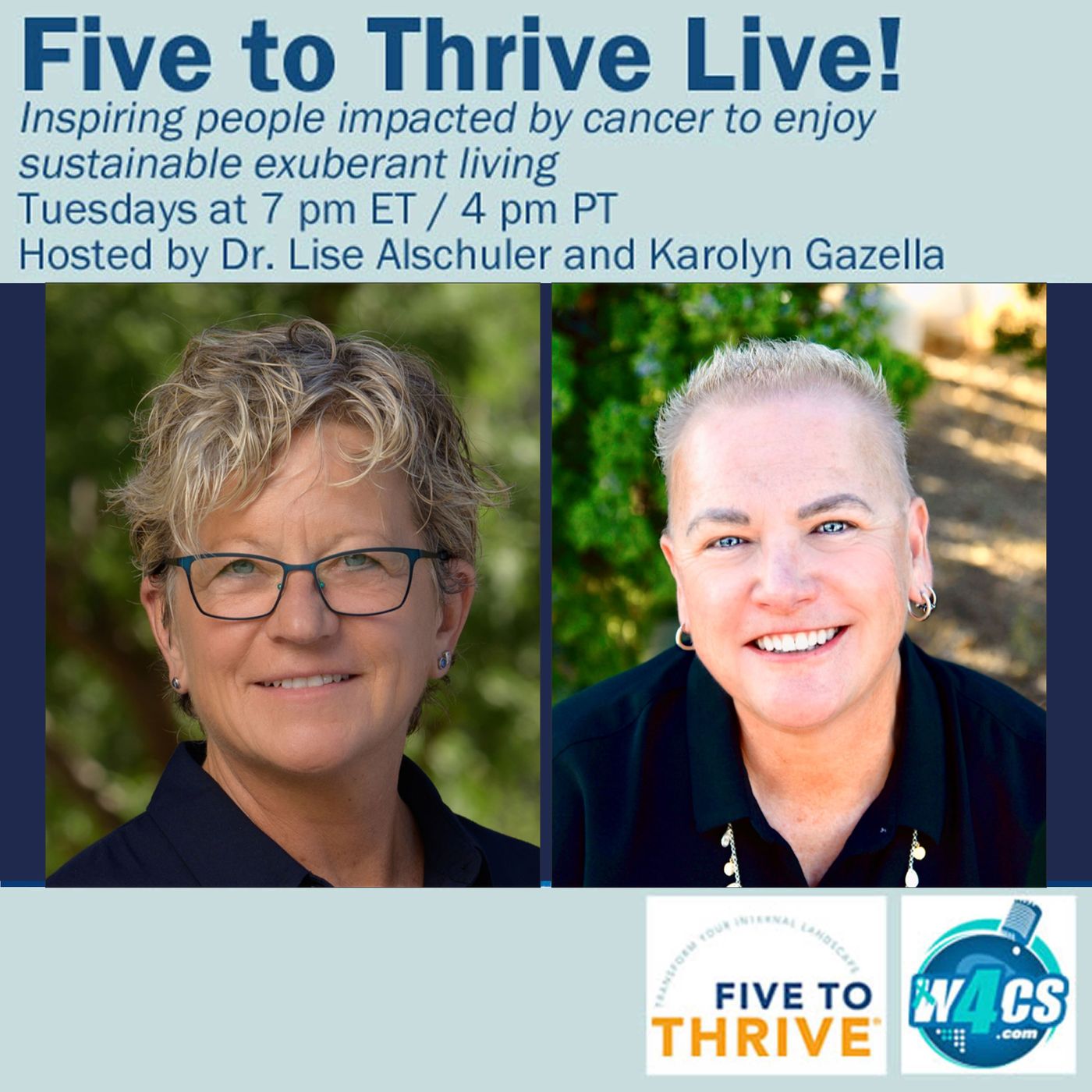
Five To Thrive Live
Talk 4 Radio
Huberman Lab
Scicomm Media