The Cancer Pod: Integrative Medicine Talk
Join Tina and Leah, two naturopathic physicians with years of experience in natural medicine and cancer care. Leah is the ”cancer insider.“ Tina is the science-y one. Listen in and join us as we talk with each other or respected experts in integrative oncology. Whether it is you or a loved one, whether you are in treatment or beyond, you’ll find helpful info, tips, and tricks to get through tough times. We frame things around cancer, but honestly, anyone can benefit. So, tune in, join our community of like-minded folks, and please let us know what you think!
Disclaimer: This podcast is for education, entertainment, and informational purposes only. Do not apply any of this information without first speaking to your doctor. The views and opinions expressed on this podcast by the hosts and their guests are solely their own.
The Cancer Pod: Integrative Medicine Talk
Slay Stress with Adaptogens: Supplements 101
Use Left/Right to seek, Home/End to jump to start or end. Hold shift to jump forward or backward.
Adaptogens are all the rage, making their way into popular pick-me-up products (looking at you, Monster energy drinks). Many different plants are adaptogens (Ashwaganda, Ginseng, Rhodiola, etc), but should these plants really be taken willy-nilly? Tina & Leah give you the low down on adaptogens, including their uses, side effects, and some contraindications.
What's an adaptogen? "a natural substance considered to help the body adapt to stress and to exert a normalizing effect upon bodily processes. A well-known example is ginseng." Tune in to learn more!
Learn more about Ginseng
Technical paper on Asian and American ginsengs
Schisandra Herbalgram from American Botanical Council
The difference between red and white Panax ginseng
ASCO study on ginseng and cancer-related fatigue
American (Wisconsin) ginseng from the source
Become a member of The Cancer Pod Community! Gain access to live Q&As, exclusive content, and so much more! Join us today!
Check out our website! Looking for more information? We have blogs, merch, and all of our episodes listed by season and category.
Shop our favorite reads! We've joined with Bookshop.org to offer some of our fave books!
Buy our merch! Whether it’s a cozy hoody or a handy water bottle, we have something for everybody.
Have a comment or suggestion? Email us at thecancerpod@gmail.com
Follow us wherever you browse. We're always @TheCancerPod:
THANK YOU!!
What's up with Ashwaganda everywhere?
TinaSo what's up with ashwagandha? I'm seeing ashwagandha in everything.
LEAHIt's everywhere. I just saw it in one of those non-alcoholic kind of cocktail type drops that you can buy. It's everywhere. It's everywhere.
TinaOh, like the mocktails where people are saying this is good for stress?
LEAHexactly. Cuz it doesn't have alcohol, but it's got something that's gonna relieve stress. And so yeah, it's, it's in that, it's in those menopause formulas. Whenever you see an ad on Instagram and they talk about taking a supplement that's gonna like reduce your belly fat and all of this kind of stuff. Balance your hormones. I'm using the, the, I'm using the bunny ear quotes here. Balance your hormones. It's all ashwagandha. Ashwagandha.
Tinayeah. I just figured that some like Goop or Honest or some brand or Jennifer Aniston or somebody was out there touting it and suddenly it's everywhere.
LEAHYeah. I think it's just kind of, it all kind of happened at once, didn't it? I kinda wonder about those formulas because they have ashwagandha and then other things as well in them. But my concern is ashwagandha isn't for everybody.
TinaThis is true,
LEAHYou know, in the world of adaptogens, it's not like one adaptogen fits all.
Tinaright? And in adaptogen we should qualify for the listener.
LEAHWhat is an adaptogen, Tina?
TinaI'll read you the definition. It's a natural substance considered to help the body adapt to stress and exert a normalizing effect upon bodily processes. And probably the most popularly known is ginseng,
LEAHAnd apparently now ashwagandha.
Tinaand now Ashana is on the rise.
LEAHYeah. And there are qualities that need to be taken into consideration when looking at something that's an adaptogen. they should be non-toxic when taken in normal doses. They should help your body cope with stress and allow your body to return to balance or homeostasis.
TinaYes. And clinically which adaptogenic herb each person should take depends on what's going on with that person, and that's what we should talk about today. I'm Dr Tina Kaczor and as Leah likes to say I'm the science-y one
LEAHand I'm Dr Leah Sherman and on the cancer inside
TinaAnd we're two naturopathic doctors who practice integrative cancer care
LEAHBut we're not your doctors
TinaThis is for education entertainment and informational purposes only
LEAHdo not apply any of this information without first speaking to your doctor
TinaThe views and opinions expressed on this podcast by the hosts and their guests are solely their own
Introduction
LEAHWelcome to the cancer pod All right, Tina. So we defined what an adaptogen is. Um, in this episode we're also gonna talk about the different kinds of adaptogens.
TinaMm-hmm.
LEAHmentioned ashwagandha. We'll go into a little bit about that. We're gonna talk about the Gin Singhs,
TinaMm-hmm.
LEAHum, and then the, not really a Gin Singh Siberian ginseng,
TinaYes.
LEAHum, neighbor of a ginseng.
TinaNeighbor of a dancing.
LEAHUm, we've got, uh, Cassandra, which is commonly used in Chinese medicine.
TinaMm-hmm.
LEAHRhodiola.
TinaRola very popular too these days in formulas.
LEAHYeah. Yeah. And tulsi.
TinaOtherwise known as holy
LEAHHoly basil. Holy basil.
Tinaholy basil.
LEAHHoly basil. Um, and then as always, we will talk about, you know, the contraindications when we wouldn't use these things. and as always, always, we're not your doctor. We're not making recommendations for you. If you're interested in using any of this stuff, talk to your doctor. Talk to a naturopathic physician who is trained in working with whatever cancer medications you may be receiving, and.
TinaI was gonna say, talk to your herbalist. Cause I don't think your doctor's gonna know
LEAHYour naturopathic doctor.
TinaWell, your naturopath, yes. But
LEAHI know. No, that's true.
Tinamaybe the best compromise is. Talk to your herbalist about which adaptogen is appropriate, and then go to either your doctor or your pharmacist, especially a good pharmacist, to see if there's any contraindications with any medications you're currently
LEAHThat's a great idea.
TinaYeah. That might be the best of both worlds. Onward forward, you were saying.
Adaptogens- No drug equivalents
LEAHOh no, I was just thinking about, the basics episode. So we have an episode where we talk, the very first one we did supplements 1 0 1, the basics, and we kind of went through like all of the different reasons somebody would use a supplement, whether it's replenishing, uh, or preventing a nutrient deficiency or, um, as green pharmacy. And this doesn't really do any of those things. Like, it's not like you have like a. Ashwagandha deficiency, which marketing out there is trying to tell you, you do.
TinaYeah, because there is no equivalent to adaptogens in Western medicine. There is no drug equivalent for these things. It doesn't exist because the model doesn't exist. We don't have a similar model in Western medicine. This is not treating a pathology or a disease state per se. It's helping give the body some. Endurance to stress by working on the adrenal glands, working on the pituitary, working on the nervous system. So it's very different. It's the classic tonic, really. There's a tonic, and in herbal medicine we have tonics that fortify, nourish and strengthen systems or organs that concept doesn't exist in western medicine in any way, shape or form. With big pharma or little pharma.
LEAHand I, I think it's important in my mind that this is, Not something that is taken forever, because as we mentioned offline when we were of reviewing this yesterday, you have to remove the cause. And again, the cause isn't an adaptogen deficiency. It's whatever stressor is happening in your life, whether it's, you know, physical, mental, emotional. And so that needs to be addressed. This isn't something that I've been taking this for years, every single day, that sort of thing. It's, it's not.
TinaUnless you can't get away from the stress, cuz there are situations that are inherently stressful. I'm thinking of, I'm thinking right now of parents and no matter what age their children are, if the children are having their own challenges in life, it could be mental health issues, it could be addiction, it could be whatever, no matter what age that person is. And just cancer aside for a moment, the parent will feel stressed, you know, to a certain
LEAHI mean, cancer in itself obviously a big stressor, but, do you feel with adaptogens the way that one would with botanicals, that you take a break from them, that you're not on them constantly?
TinaI. I will keep people on adaptogens long term. I most of the time have people take breaks anyways or, or switch it. Like I might change the adaptogen over time, like switch out maybe a Siberian ginseng for something else, ashwagandha if appropriate, or depending on this situation cuz life changes and our symptoms change and so I'm very individualized with each preparation that I do for patients. So it just depends what's going on.
LEAHAnd the adaptogens also work on different organ systems. And so that's another way of looking at, um, which one might be most appropriate for somebody.
Homeostasis
TinaMm-hmm. Yes, and we'll definitely give all sorts of details about that. Which adaptogen for what? Symptomology or what organ systems, that kind of thing.
LEAHSo we talked about kind of balancing, did we mention the word homeostasis? We may have. It's just been like five seconds ago and I can't remember. But
TinaI think, I think I avoided using big words by saying a normalizing effect, but yes, that's what I, I implied homeostasis.
LEAHyeah, so homeostasis is a big kind of catchphrase in the. Um, alternative natural medicine world. I learned about homeostasis forever ago when I took my reflexology certification course back in the nineties, back in the olden days. Um, and the idea behind using reflexology was to establish homeostasis or balance.
TinaMm-hmm.
LEAHYou know, it's not pushing your body one way or other, it's just helping your body just kind of come into balance.
TinaYeah. What's interesting to me about homeostasis is it's a biological concept that living organisms, humans included naturally, if they're healthy, naturally strive for homeostasis. So that's just kind of a default state, whether you're talking about an ecosystem, you know, in the forest, or you're talking about your own body, it doesn't matter in biological systems homeostasis and that balance is built in to a healthy state of that being.
LEAHBut it's not something, if you go to your conventional doctor, if you talk to your oncologist, it's not something where they're gonna be like, we're trying to achieve homeostasis. No, it's not gonna happen. So,
TinaNo, but this goes back to the, the. They used to, doctors used to actually give placebos. I mean, they really did. They had little pills that were just little sugar pills, and they would give a placebo because they knew some of the time the body was just going to take care of itself and heal, and all the person needed was the suggestion and just the, you know, confidence that that's gonna happen now. Yes, you're not gonna cure yourself of cancer with little placebo pills. I'm not talking about cancer right here. I'm just saying homeostasis in the general sense of the word, is something that has been used for good in the past. Because old fashioned docs, I'm talking like before pharma, you know, before like 19 hundreds, 18 hundreds, they really did dole out sometimes absolutely nothing. Knowing that, okay, whatever the ache, pain, or acute situation is, is gonna probably be okay. They didn't have anything for it either. Let's remember, if they didn't have anything, they'd pretend to have something.
LEAHSnake oil. I have Newt.
How do Adaptogens work?
TinaIt was. Yes, exactly. Basically nothing but that. They really had nothing and but the perception of giving something and then the body went back to homeostasis a lot of the time in those situations. I mean, again, this is cancer aside, this is just general,
LEAHSo when you recommend for a patient to take an adaptogen, how do you, how do you recommend them? I, I know a lot of formulas are like take upon waking, you take a bedtime, but I mean, is there kind of like a, like a steadfast rule on how you.
Tinaso first of all, when you're giving an adaptogen, I have in mind that what I'm doing is supporting the H P A axis and the H P A axis that stands for hypothalmic pituitary adrenal axis. So there's three organ systems that are all talking to each other, and this. Is how your cortisol, which is a, I call it the bright-eyed, bushy-tailed hormone. Cortisol goes super high in the morning and you should wake up feeling energetic and good. This is how kids wake usually, right? And, and then it goes down during the daytime. But it should be at a level where you're, you're not fatigued.
LEAHIf you're not getting that three o'clock crash,
TinaYou shouldn't be crashing, midday and needing to reach for sugar or caffeine. In a healthy state, you have the endurance to get through a day without any aids, without any stimulants. That's a good healthy h p a axis. When we're under stress, it doesn't matter if it's mental, emotional, or it's physical. Now, when we say stress, when I say the word stress, I'm talking about anything. It could be pain, it could be psychological stress. It could be emotional stress. I mean, stress. And the, the burden it puts on your HPA axis is your cortisol goes high. Because you're under stress, and stress is the fight or flight thing. Yeah. Pain actually does kick in your fight or flight mode. Your physiological effects inside are a lot like fight or flight, even though you're not going anywhere. Right? And so all of that over time leads to a fatigue because the system is taxed and it's overtaxed. What adaptogens do is basically help you endure those times of stress. And if you had a, let's say you've had stress for 10 years, 20 years, and at this point you're fatigued and you are reaching for stimulants in the middle of the day. Something like an adaptogenic plant that's appropriate for that person would be something that's slightly stimulating and taken in the morning like a gin sing. I use a lot of what we call Siberian ginseng. And Siberian Ginseng is not truly a ginseng plant and a plant sense if you're a a botany person. But we call it Siberian ginseng cause it's easier than its real name, which is a Luther Occus. So
LEAHA RO is, you know, if, if you're in the know, you call it a ro.
Tinayeah, that's what the cool kids call it. But that, that's a nice one cuz it's also in my practice, I'm seeing oncology patients only when I see patients. So it's a blood builder, it can help with red blood cell counts and it's pretty neutral. And when we we're gonna talk a little bit and kind of skirt some Eastern medicine thoughts, because adaptogens is one time that I actually think about what the plant is doing. Is it warming? Is it cooling? Is it neutral? Is it. Is it stimulating or is it calming? And all of these adaptogen plants have different properties and need to be applied appropriately to this given situation or given person so that you don't stimulate someone who's already feeling anxious, for example. So I think that was a very long answer to your question,
LEAHI, what was the question?
Tinadon't remember.
LEAHso what you just said I think is really interesting. Going back to the very first question about like, why is ashwagandha everywhere? Why is it in everything? Because in my mind, ashwagandha is very warming.
TinaMm-hmm.
LEAHAnd so giving ashwagandha to people in menopause seems a little, kinda, it seems a little hot. I don't know what specifically else in these formulas. I don't know how much ashwagandha's in there, but yeah, that's where, I mean, ashwagandha's being given willy-nilly,
TinaOoh, there we go.
LEAHneed a willy-nilly song, willy-nilly. Um, but yes, so it might not be appropriate for everyone.
TinaOh, it's definitely not appropriate for everyone. I can tell you some people react to Ashwagandha
LEAHI do, I do. I actually had a full cardiac workup.
Tinabecause of ashwagandha. Oh.
LEAHI think so, I think that was the only thing that was unusual that I was taking. Um, and it was to help with stress, with sleep, but I was waking with palpitations I got one of those little, finger EKG things. Um, a cardiologist actually told me to get that, to try to, you know, to catch one of these moments. But yeah, initially I felt the ashwagandha was helping and then it wasn't. And I didn't realize until I stopped a whole lot of, things that I was taking to help me with sleep. But, um, yeah, I, I think it was the ashwagandha that was exacerbating.
TinaYeah. I'm thinking of the active ingredients in there and what could be doing it. And as I'm thinking that, I, I'm realizing we didn't give its other name. Ashwagandha is, its Ayurvedic, or its common name, but it's Withania.
Ginsengs- Asian & American
LEAHSo, and I wasn't taking a hanus, like I wasn't taking an extract. Cuz there is a difference. Sometimes they'll take an extract out of a adaptogen and other times it's the whole herb, what I was taking was a, the whole herb. anyways. Okay, so let's kind of go through, you touched on Siberian ginseng. It's not really a ginseng, it's the neighbor of the ginseng. The one, I think when people think about ginseng, the most popular one is the Asian or Korean ginseng.
TinaYeah. It's, alternatively called Asian ginseng, Chinese ginseng, Korean ginseng.
LEAHIt's the one that when you, if you live in New York and you go to like the bodegas and they have like the little vials of ginseng, do you remember that
TinaOh, sure.
LEAHat the cash register, they'd have them at the little corner stores.
Tinastill have them.
LEAHI never tried one of those. No.
Tinasure. Yeah, I
LEAHI probably needed it more than anything when I lived in New York, but I never tried. I was always like, oh, I don't know what that is. so yeah.
TinaYeah. And so, this is true ginseng. It's Panex ginseng, that's its Latin name. Right. just call it Asian ginseng and the preparation of the ginseng will change its properties. And so if you're seeing someone who does any kind of Eastern medicine, They'll call it white ginseng or red ginseng. And that has to do more with how it's been prepared and it will change its properties according to its preparation. And in order to make sure I don't say anything that's completely stupid, cuz I am not an Asian medicine practitioner, I'm gonna avoid what little I know about the differences between white and red. Because I don't look at that as much as the, the Asian ginseng itself. I think all the ginseng that I use tends to be red ginseng in its preparation. That's the one that's often used in studies within cancer care to address fatigue. So you'll see Red Korean ginseng is what they'll often say in the title. That is a panex ginseng. That is true ginseng. And there is definitely research to, to show that it helps with fatigue cancer related fatigue specifically. So the Asian ginsengs, in my mind, I think of it this way, Asian ginsengs are the most stimulating. So I'll give you an example. If somebody's prone to headaches, they're come in, they're fatigued, they're going through treatment, they have had treatment a year ago, whatever. If I'm thinking adaptogenic plants and they tell me already experience headaches, I will probably not give them an Asian ginseng. I lean more towards more neutral ginsengs that aren't quite as stimulating. So the one I use the most is American Ginseng.
LEAHAn American ginseng, also known as Wisconsin Gin Singh. That has also been studied and we wrote an article for our blog back when we, back in the day when we used to write articles for our blog. Um, we did, and we did talk about that in our fatigue episode as well. Um, there was a study that was done through Mayo Clinic and it was a specific brand, yeah, I guess it was a specific brand of ginseng that was used. And it's from Marathon, Wisconsin. So it actually is American.
TinaIt's actually grown here and processed here.
LEAHYeah. It's grown and processed in the United States in Wisconsin. How many times can I say Wisconsin?
TinaI don't know, but I think this should be brought to you by the state of Wisconsin Chamber of Commerce or something.
LEAHWell, the, the co-op, there's a co-op in marathon and they produce the, the ginseng that was, was used in the study.
TinaYou just introduced me to this co-op and I looked it up and I actually didn't realize they existed. I didn't know that people could just buy directly from the very people who provided the Wisconsin ginseng for that study. And the study was clear, and it was actually presented at ASCO many years ago how this ginseng avoid, I'm avoiding saying Wisconsin a thousand times. How am American Ginseng helped with the fatigue and, and this was fatigue during treatment, which was unique. Not a lot of studies are giving a plant during treatment to show that it actually helped. So the nice thing is when ASCO presents something and it's positive, we have an easier time having that conversation with the conventional care team because they're like, oh yeah, Wisconsin ginseng that was at that conference several years ago. you know, so for me, working outside of a hospital and having conversations in community clinics with oncologists, I like to know what they know. So I always keep an eye on ASCO and the positives or negatives of trials they're being presented with at asco. Um, and ASCO is the American Society of Clinical Oncology. it's the entity in the United States that is the main society for conventional oncologists, and they meet every June. and this is one of the updates that went on back in, I wanna say early aughts, mid aughts.
LEAHI think one thing that does need to be pointed out because it is confusing is that uh, American ginseng. Its scientific name is panics. I can never say the second part. Quinquefolia don't confuse the panics ginseng with the panics, Quinco Folia. Um, they are different and it can get confusing cuz people will talk about panics, ginseng and all of that sort of stuff. So just kind of keep that straight so,
TinaVery few people react to American ginseng. In other words, there's not a lot of side effects. It's not very stimulating. cuz I have been asked several times, is ginseng and caffeine similar And they're not similar.
LEAHAnd, but they will be in those energy formulas. but that's more the, the Korean gin Singhs that the panics ginseng.
TinaYeah. Yes. The Panex Ginseng or Korean ginseng, they put in the formulas, those drinks where they put a little bit of everything that could give you energy and 300 milligrams of caffeine,
LEAHJust to, just to make
Tinawhich which is like three cups in one little bottle. I do not recommend those drinks, but the reason they put that particular ginseng in there is it is the most stimulating of the bunch. If someone is just going to try something and they don't have an herbalist, and they talk to their oncologist or their pharmacist, and it's okay to take a ginseng, American Ginseng or Siberian ginseng is much gentler on the body. Then the Asian, because it just doesn't have the same stimulation to your system, so you're less likely to have a side effect or any unto the symptoms.
LEAHAnd it also did not show to be of benefit for fatigue in people who had completed cancer treatment. It was shown in people who were doing radiation and chemotherapy to have the benefit. So that's kind of another little interesting point.
TinaYou know, I feel like adaptogens in general, this is kind of a joke, but it, we're all under so much stress all the time. It's just maybe we just should, you know, somehow put it in our water supply or something. I don't know, like who's not under stress. I mean, I guess there's some folks who don't have any stress,
LEAHI think these days there is a lot of stress, going on. Just, it's just innate in our culture. We're just a highly stressed society.
TinaYeah. And so even in general, whether you are, you know, someone who's going through treatment, a cancer survivor or a caregiver, I mean, or just an average American. I think adaptogens are one of those things that really is, you know, in my mind, the hard things to get are vitamin D fatty acids, essential fatty acids. Those are the two that are hard to get in your day to day and be replete in, meaning non deficient repletion is the opposite of deficiency. So fatty acids from fish oil or algae oil, and then vitamin D, and then if you were gonna support the body, like a multivitamin, low level, and you know, as far as plant medicines, adaptogens might be high on the list if you're kind of living in a stressed world that we live in.
LEAHSo you're basically saying that all of those products that are out there, they, they got something to them maybe.
Tinamaybe. I mean, I I like whole plant better than combinations where they're extracted a lot. Extraction processes use chemical compounds, and if you're. Not checking. There could be residual chemical compounds on an extracted plant, and what they use to extract sometimes, and they might want to extract a lot of the gin cynicides, which is one of the active compounds, and show you, oh, we have the highest gin cynicides on the, on the shelf. And you're like, well that's gotta be good. More is better, right? Because that's another Americanism. More is always better. So if it's the highest in Cynicides, it must be the strongest. But maybe, maybe next extract isn't ideal. Maybe the whole plant is better. Maybe just having a tea is okay,
The not really a ginseng, ginseng
LEAHokay, let's just finish off the Gin Singhs with the, not really a ginseng. So that would be the Eleutherococcus Siberian ginseng, or Eleuthra if you're a cool kid. And you kind of already touched on that one.
TinaYeah, yeah. I, I lean towards Siberia and ginseng for people who have anemia. Because it's a blood builder, Actually, ashwagandha is considered a blood builder too. on the flip side of somebody has too many red blood cells, I will not use those. But we're gonna talk contraindications later. And Occus, you wanna do a small dose and go steady. You don't wanna just jump in with a big dose. I have had a few patients over time who took Siberian ginseng and had a reaction, and they tended to. Do too much too soon. So I would say that probably for all adaptogens, don't just jump to the high end dose on a bottle. Cause you're nudging your h p a axis into health and you don't wanna just immediately hit it with a high dose.
LEAHRight. You're not repleting a deficiency. You're nudging
TinaAn actual nervous system pathway. And so when, whenever you're doing anything, anything that affects endocrine or neurotransmitters, you wanna be mindful that the body could also react. Right. And so I had, I've have had a few patients, and actually one was a mother daughter, so I was like, oh, there must have a genetic predisposition. But I gave them too much Luther crocus outta the gates and they said it was too much like it's it, it made them anxious. And I, it's very, very seldom have reactions to Siberian ginseng. So obviously it was real, um, because both of them had it, and I just thought, oh, maybe I shouldn't dosed it so high outta the gates. And so that was kind of my aha moment, way back in the day when prescribing, and I never had that reaction again from anyone. So I think it's because I went slow and steady after that.
LEAHOkay, so let's take a break and then we're gonna come back and we're gonna talk about the, the thing that started it for our conversation, ashwagandha.
TinaAll right.
LEAHSo we've been talking about Ashwaganda kind of like throughout, you know, before the break, but it is an herb that is commonly used in Ayurveda. And in Ayurveda it does have certain properties that are more conducive to certain doshas or constitutions that people may have. And so I think of it as more commonly used in Vata and Kapha Doshas because those tend to be, um, people who are very cold. And so the ashwagandha is more warming. And so with somebody who is of a Pitta dosha, they tend to run hot. the ashwagandha in my mind is not necessarily. The most appropriate herb to give them. So chemotherapy, radiation, those are very pitta. They're very, they're very, they're heating, Just in general. And so that's why I'm kind of like, I, I'm just a little like reluctant with everything having ashwagandha in it, because again, it's, you know, one adaptogen does not fit all, but when do you think of using ashwagandha?
TinaWell, it's supposed to be calming, right? It's supposed to be the one that if you have anxiety or a tendency towards feeling anxious that it calms you down. And I would say eight outta 10 times. That's probably true, but there seems to be a paradoxical effect once in a
LEAHLike me?
TinaYeah. And I don't know how to predict that really. Well. I, I think that it could be genetic.
LEAHThere is a gene that's known as compt. I'm not even gonna try to say the whole word. but C O M T. And so depending on what mutation a person has, ashwagandha may be a good thing or it may be a bad thing. And compt is what we think of how you manage stress. Are you a worrier or are you a warrior? And so, yeah, ashwagandha might work for you. It might not. And it could be based on your genetics, like you said. And it could be this comp gene
Schisandra
TinaYeah, I think the simplest way to translate that. Genes are dictating our neurotransmitter production and breakdown, and that affects the mood and that's that C O M T. When you say warrior or warrior, just depends on that one. Gene's ability to down dopamine in this case.
LEAHAnother adaptogen that you're more familiar with. I did use it somewhat in in school and when I was in my residency but I didn't use a lot of it because it is traditionally used in traditional Chinese medicine and it's Schisandra. But what's really interesting about Schisandra is That's where they kind of. Got the whole idea of adaptogens from these Russian scientists who were studying it because of its homeostats ability. I don't know. Its ability for like people to be able to adapt to different situations. And I don't know if we mentioned, so adaptogens also, it's not only stress, but it's also works on your immune system too. So it's not just, you know, like physical stress. It's also immune system support.
TinaYeah. Yeah. And I know some of those early, the Russian scientists back in the, I don't know, thirties, forties, fifties that were looking at some of the adaptogen plants, they were doing it in athletes, they were doing it for performance. So some of the earlier studies were actually done and athletes to see if they could improve their endurance in the whatever running or whatever sport they were studying. so I, I did use a lot of Cassandra both as a tincture and we had it in a capsule for people who didn't wanna do tinctures. I think of Cassandra mostly when I want lung. Tonic alongside an adaptogen. So I thought of it when there was heart lung issues or lung and kidney issues as well. So it's really three organ systems that were part of my thought process because there's, when you think of tonics, we think of certain plants for certain organs. Cassandra was kind of one of my lung tonics. and that it is a berry. So there's also some nutrition. You know, whenever you're looking at a colorful berry, whether it's a Hawthorne berry, a blueberry, or a Cassandra berry or a goji berry, as soon as you start saying berry, you're thinking nutrition and you're thinking building up, you're thinking
LEAHFlavonoids.
Tinaflavonoids or thinking, you know, actual components that are nutritious. And so I used a lot of sh Andra because a lot of people were very depleted. And so if they need lung, heart, or kidney, Support. I would put that in the formula if it was a tincture. And most of my tinctures were, you know, three or four plants. So Cassandra would be one of them. Or we did, like I said, have capsules on the shelf that were clean. Cuz a capsule of a plant is only as good as the plant it came from. So you have to make sure you cleanly source it.
LEAHwhen I was a resident, I had a rotation with a doctor who practiced anthropomorphic medicine. Isn't that, gosh, that's so hard to say. And he would, uh, refer to Cassandra as the female ashwagandha. For him, ashwagandha was more of a masculine herb, and Cassandra was more of a feminine herb.
TinaInteresting.
LEAHYeah. I don't remember a lot about an anthropomorphic medicine. I thought it was fascinating, but complex.
TinaYes, it's done in Germany a lot. It's the basis of a lot of German clinics that see patients who have cancer.
LEAHYeah, so it's, I no way am any sort of expert, but I sat and listened and it was fascinating. Anyways, so Cassandra, you think of morph for lung.
Rhodiola
TinaYeah. And I will even use it in people who have lung issues like asthma or something like that. So, so yeah, it's a, it's a pretty universal lung tonic in my mind. And, in Chinese medicine or traditional Chinese medicine. The lung and the kidney are, are connected. And so I think of it in those scenarios. And a lot of folks, even though they're presenting in a, to me, a western doctor with labs, that is a western piece of medicine, it's not uncommon to see lung and kidney problems at the same time.
LEAHSo Rhodiola is next on our list of things to review. again, I don't think I use Rhodiola so much anymore. I think I used it more when I was a resident and in school. And part of that is because of all of these, I think this one has the most known interactions
TinaMm. With drugs or other.
LEAHwith drugs. Yeah, with medications. And so I'm, and which we'll go into a little bit more, but. That's the one that I'm the most cautious, where I'm like, oh, maybe Rhodiola is appropriate. And then I look up to see what treatment they're receiving and I'm like, okay, Rhodiola is not a appropriate thing to recommend. And that also you have to be cautious because that is also in a lot of these trendy products that are out there. Um, it may have Rhodiola. And my big concern with these trendy products, which is we're gonna talk about cautions, but just to put it out there, is they're often these combinations and they're proprietary blends, and so you don't know how much of what is in there.
TinaYes. Yeah. And Rhodiola, in my experience, it can be too stimulating mentally. And so one of its claims to fame is to help people concentrate. Like for a performance, like you're gonna take a test and you wanna concentrate or you need to focus. So it's pretty well studied for. Cognitive benefits in that sense. But there's a certain subset of people, and there's a pretty good size subset unlike Withania, which is a rare reaction in my experience. Like people would feel, we call it a paradoxical effect. It's supposed to be calming, but they don't feel calm. They feel the opposite. Rarely did that happen. Withania. Almost never with Siberian ginseng, but with Rhodiola, a lot of people felt like, woo, this is like, just increase their anxiety.
LEAHTwo. Zoom, zoom, zoom.
TinaAnd it's, it's more of an anxiousness. It's not even, it's more anxious and maybe it's a mental anxiousness, like, you know, ruminating and thoughts and going this way and that way. But I, I actually avoided Rhodiola because it happened enough that I was like, I feel like I'm tossing a coin here. You know? Unless someone's super calm, you know, and they're just someone who's just like, nah, nothing, nothing. Riles me up. They can probably take Rola and not notice, but if it's anyone who has any level of anxiousness or anxiety already, I wouldn't give it.
LEAHSo not for someone who's stressed and anxious, cuz those don't always go hand in hand.
TinaCorrect.
LEAHTulsi. Holy basil.
TinaHoly basil.
LEAHholy basil. Tulsi is also an herb that is commonly used in Ayurveda. It. Like ashwagandha, it's not necessarily for everybody at every time. So it, it can be most beneficial for people who are of the Kapha dosha. But I would say because it is kind of warming, like maybe somebody who is Pitta don't take it during the summer, you know? it, it's one of those things that it could be relaxing and stimulating as can I guess, all of these things. Um, so I know for myself, I like to take it at certain times because it is relaxing, but I also feel more alert and I know for you it's too much.
TinaIt's very stimulating. Yeah. So for me, holy basil, um, which I like the taste of, I mean just the tea, which isn't considered a strong way of taking it. Just the tea. If I did that in the afternoon, it would affect me for the rest of the day. And I don't feel anxious cuz I'm not prone to that. But, you know, going to sleep that night, I might be awake a lot longer than usual and wonder what, why am I still awake? I should be sleeping right now. And so I figured it out over time. So I don't really do holy basil past noon if I do it at all because I use other adaptogens.
LEAHso when I drink, when I drink tulsi, because I don't drink caffeine typically is I'll have my decaf in the morning and then I'll have some sort of like a tulsi tea because it does kind of help, like I said, with that alertness. It doesn't make me sleepy, but it, I don't feel ramped up like I would if I was having caffeine.
Tinaright? Right. Holy Basil Tea is sold in any grocery store that has herbal teas. So like all of these adaptogens, I think the way to go about it is to try the tea, see how you do. That's the my form of any of these.
LEAHAnd tulsi comes in different combinations too. The brand that, I can't remember the name of it, but it's the one that I tend to buy. Um, it does have like a ginger toy. They have a different combinations and I'm growing it too. It's over on my windowsill right now. It's growing next to my regular basil. And it's a pretty plant with pretty purple flowers. Okay, so let's take a break again and then we'll come back and we'll talk about things You gotta look out for cautions, interactions and all of that.
TinaAnd how, if you Google what we're talking about, Google's wrong.
LEAHCautions and contraindications. So there kind of are, I guess generic ones for adaptogens, which you apparently discovered on your Google search.
TinaYeah. Dr. Google. Sometimes Dr. Google's just making up stuff,
LEAHSo,
Tinaso I gotta tell you because under, uh, I, I just googled adaptogen and the definition of adaptogen when I looked up was proper. That's fine. You know, I read that at the beginning of the show. There is a list of who should avoid adaptogens, and some of it's true and some of it's not. Lemme just give you the whole list and then we'll just say, true, false, pregnant and breastfeeding women, diabetics, people with high or low blood pressure. Let me repeat that. People with high or low blood pressure, people with stomach ulcers or history of them, people with autoimmune disorders, especially thyroid disorders and surgery candidates, that's under certain populations that should avoid adaptogen use. my BS meter just pegged on this because it's not all true.
LEAHSo it can potentially affect blood pressure. so.
Tinaby lowering it slightly or raising it, which
LEAHI've seen that it can do both.
TinaOkay.
LEAHUm, with the blood sugar it's because it can potentially lower your blood sugar. So if you are taking an anti-diabetic medication, whether it's metformin or something like that, that is where the caution comes in with, um, or even insulin if you're on insulin. And I think they are also clumping them all together. So I know with panics ginseng, which is the Asian ginseng, that may increase the effects of those medications.
TinaOkay.
LEAHSo there, there's like truisms, but they're kind of like it, it depends on the individual. Adaptogen, which is why we're like, check with your pharmacist, check with your doctor, check with your naturopathic doctor, functional medicine doctor, that kind of thing.
TinaI think my major put off here is it says populations that should avoid adaptogen use, include, and maybe avoid, I would say pregnant and breastfeeding women. Yes, sure. Pregnant breastfeeding women. I agree with that one. The rest of these, I think it should say, each of these populations should look at the use of an adaptogen closely, like a diabetics. Well, if it lowers your blood sugar, then perhaps you can modify your medication and your diet alongside this and work with somebody.
LEAHbut again, Dr. Google is not your doctor, so it's actually kind of a good thing for the Dr. Google to be like, don't do any of this because you shouldn't be doing what Dr. Well, anyways,
TinaSo I, I'm gonna say on the rest of this list, I've, I give it to people with all of these because they're my patients and I'm watching them. So if they have blood pressure, we know their blood pressure, if they're on medications and it lowers it, then we can modify the medication. So my goal is always to, to use this little medication as possible for diabetes or blood pressure, or, you know, cure their ulcers, that kinda thing. So I'm just saying this because it seemed a little bit, um, I don't know, too definitive on a topic that it should be more, you know, speak to your doctor about it if you have these things.
LEAHYeah, cuz you need somebody who's able to monitor your prescription medications because there could be issues with affecting the metabolism of antidepressants. Um, you know, the, the big thing that I think the generic warning with Ginsengs is to hold them a week before surgery because some of Some of them can affect coagulation, so how blood clots.
TinaAnd that's true of all herbs
LEAHYeah. So you know, they, some of their, um, their, their contraindications are, like you said, like they, they kind of go across the board. American ginseng can, uh, affect, how morphine is metabolized apparently. So that would be a, a caution with that. I, I know that there are certain kinds of antidepressants, MAO inhibitors that, um, some of these can interact with as well. Siberian ginseng affects Digoxin, which is a medication that, people take for their heart you know, we talk about like the CYP three A four, the liver enzyme pathway that drugs are metabolized through. They can affect that in a lab. We don't know how it necessarily translates in humans because Herbs can act one way in a lab, but when you take in the complexity of a human may not be the same. with Rhodiola, it has been shown to in inhibit three A four, which can affect the concentration of certain drugs. it also can affect it, I believe it inhibits p glycoprotein substrates. And so that one also is how many drugs are metabolized. And I think that's the big thing with Rhodiola. That's why I don't use it so much when patients are in treatment, because of those.
TinaYeah, Rhodiola is just not one I use very often because of its paradoxical reaction in so many people, so I just don't even use it. Probably that simplifies it.
LEAHSo again, I don't think that adaptogens because of all of the potential interactions or reactions, I think it is something that needs to be managed by, by someone who knows what they're doing. I don't think it is something that should just be thrown in every single new supplement, new tea, new powder, new alcohol substitute, whatever. I, I think it's, it's something that people should be maybe a little cautious of, not take so randomly,
TinaI think it depends on the person. Like the more critical your medication The more likely I am to agree with you. In other words, if someone's on Digoxin or someone's getting chemotherapy, like these are critical times, these medications are being dependent upon to sustain life or maybe get rid of the cancer completely or whatever. I think of diabetics, cuz we have so many diabetics in America and my thought for somebody who's out there with, you know, they went through cancer treatment or they didn't, they just a diabetic in general. I think an adaptogen is ideal for that person because it, a lot of the interactions have to do with bringing the body back to homeostasis. In which case you're gonna have to adjust things, right? You're gonna, maybe you're not gonna need as much of another medication. You do have to be watched over this course of time. it's like losing weight, like you have high blood pressure, you drop 20 or 40 pounds, something substantial. You are gonna have to adjust that blood pressure medication. It's kind of like that. It's like, you know what? You're also getting. Healthier getting better balance overall. So you should be working with someone who's watching your medications and hopefully it goes in the right direction where you actually need less medication. But the more critical the medication, the more likely I am to say be cautious.
LEAHwhenever I recommend something that may potentially lower blood sugar, I always ask, are you checking your blood sugars? Most people say, no, most people do not that I encounter. so then I talk about, what levels are your blood sugars running? And then if you do take this, then be aware that it may affect your blood sugar levels. I do the same with, with high blood pressure too.
TinaMm-hmm.
LEAHhow, how are your readings Oh, they're running low. Okay. You know, just keep up, keep an eye on it. I mean, I don't know, not that long ago, people were checking their blood pressures all the time. They had little notebooks and they were like keeping track of it. I don't see that anymore.
TinaOh, interesting.
LEAHI really don't see that. Yeah. And nobody checks their blood sugars. Like it's really stresses me out
TinaSo I would say instead of contraindications, I'd put cautionary. Yeah, that's interesting. And maybe it's the danger of being a medical editor for the last, you know, 15 years or whatever. You know, in my mind, the difference between avoid and consider, like Google should write that differently. Avoiding it means it's a contraindication. when I hear contraindication, I think absolute. Like, don't take vitamin K when you're taking Coumadin. Those are contraindicated. Like it's a contraindication. Do not. as opposed to a cautionary, which is, you know, you need to take some caution with how much greens you eat when you're on Coumadin. Like that's a cautionary as opposed to a contraindication. And so maybe it's just me being absolute and, and and too definitive with the terminology too.
LEAHYeah, when I look up interactions, I check Memorial Sloan Kettering because they have their about Herbs database and they kind of cover some of the. Overall categories on what you need to be cautious, but it's not comprehensive. I also look at up to date, which you need a subscription for, so that's not really accessible to a lot of people. Um, I check Medscape, which I think you can get a free membership, a free subscription. and I don't just look at one, I go to PubMed and I look for interactions and I look to see are these in vitro? Are these in, you know, rodents? Where are these, you know, interactions coming from. There were a lot of case studies out there. One person took ginseng while taking Imatinib and, and they had, um, hepatotoxicity, elevated liver enzymes. You just kind of look at all of these things and you kind of weigh the, the risk and the benefits.
TinaRight, which, which ultimately I come back to the, depending what's going on with you. If you're a healthy person and no other things are going on, you're not in treatment and you're not taking any medications that are critical for your health, then adaptogens are pretty harmless. But if you are. In treatment. If you're taking medications that are critical to your health, then you should be talking to somebody about it and making sure that you monitor your, your own your own body and your reaction and your medication levels and labs and all that. As you do something like this, you know, getting healthier requires adjustment, you know, and I think that's, I mean, I get hopeful about it. You're like, oh, good. You can, you know, use less of this blood pressure, pressure medication or diabetes.
LEAHAnd I see. And I see patients who are like, oh, I'm not seeing my primary care for another six months. And I'm like, ah. Yeah. So I think that's a big difference. And, and Maybe you're seeing people who are more proactive about their health.
TinaYeah, that is true. They are self-selected. They're coming in as outpatients to talk to me, and so, so they're very, very proactive themselves. And so I think it might be easier to institute for me, because my patients are on board to be, you know, on top of whatever we need to do to monitor them.
LEAHSo are there any types of cancer where you would be more cautious about certain adaptogens? Um, is there anything that would be like estrogenic or too much testosterone, anything like that that would caution you?
TinaYes. there's a condition polycythemia where people make too many red blood cells, and I have seen literature and I don't give ashwagandha, or if you wanna call it withania either way, same plant, different names. Um, and those folks, and I don't give them Aeu Occus, otherwise known as Siberian ginseng either. Um, and then there is some thought on some of the ginsengs being hormonal, having an effect, especially on testosterone. I don't give Asian ginseng to men who are taking. Androgen deprivation drugs or which is lowering their testosterone essentially. It's a lot like in women's cancers when they take a drug that limits their estrogen production, men have the equivalent, but it's with testosterone. I probably wouldn't give them a, you know, an Asian ginseng of any kind. But that's super cautious. And then that's because, you know, testosterone or estrogen is essentially zero in some of these patients. I mean, for all intense purposes, there is none. And so anything that boosts production, I probably would be cautious about.
LEAHWhat about if somebody had autoimmune disease?
TinaIt depends on the situation. I probably would, would consider the rest of their health picture. Um, autoimmune disease is a lot of times there's a problem with the HPA axis function in autoimmune diseases. And so I don't avoid adaptogens in autoimmune diseases. I am careful to apply the proper adaptogens for that person, but I don't think of them as immune stimulatory. I think of adaptogens as immune regulatory. So even in, in, in autoimmune reactions, when we consider the immune system turning on ourselves, right? Like it turns on the body and starts attacking our own cells, there's no reason in my mind to think adaptogens would be contraindicated. If anything, they might be indicated because of the HPA Axi involvement in autoimmune conditions in general,
LEAHI'm trying to think if there's any other circumstance as to why somebody would,
TinaI guess blood thinning.
Quality control in herbal products
LEAHYeah, like you were saying, like anything that's a life dependent drug.
TinaOh, you know, the only thing we haven't touched on is quality control and making sure you get something that is clean pure.
LEAHyeah, that's why I really like that source. Um, and we can put a link for the source for the Wisconsin ginseng that was used in the, Mayo Studies. What's kind of neat is I had recommended that website or that source for a patient, and they asked the patient who, who referred you to our, our store, our online store. And then the company ended up sending me brochures and coupons for other patients. They were so gracious, um, that I had referred them.
Tinait's a co-op. It looked like.
LEAHIt's a co-op. So there are people growing the ginseng throughout, you know, northern Wisconsin and yeah, it's a co-op.
TinaThat's cool.
LEAHIt is cool. Um, yeah, so we'll put that information as a source. But yeah, you do have to be cautious because if these are supposed to help with sleep or these are supposed to help with energy, you don't know if there's contaminants in there. You don't know. That's why those proprietary blends, they sketch me out.
TinaYeah. You know, another company over the counter that people will find or online is Gaia, um, Gaia Herbs.
LEAHMm-hmm.
Tinathey're down in one of the Carolinas, I don't know if it's north or south, but one of the Carolinas. And they have a lot of land and they grow a lot of their plants themselves, but they always have, regardless of whether they grew it or they procured it, they have a little tag on every bottle that says, no, you're Herb and you can track back. Where it originated, how it was grown, where it was grown, and when it came through the facility, the whole bit. um, I think it was a QR code maybe on there, on the bottles that you can track back the plants that went to that very batch and the bottle that you're holding. So I thought that was pretty cool.
LEAHI think another, um, thing to kind of keep in mind is, which we may have touched on earlier, is whole herb versus extract. There's gonna be more of a risk of interactions if you're using an extract of whatever the property is in any of these. So, um,
TinaAlways. Mm-hmm. And, you know, don't go, don't buy the cheapest thing on the shelf as gen, a general rule of thumb, because quality control takes some cost to the company. And so if a company procures their ginseng from overseas, or they get it from India, for example, it might be perfectly fine. But if you. Get it from somewhere and you don't know that supplier, really, a responsible company will do post encapsulation testing and they can look for heavy metals, contaminants, organisms that could have grown on that plant. Um, and we're talking like pesticides, herbicides, dioxin. So you do have to be careful of quality. It's not that you can't get good herbs from another country, but quality control has to be in place at the company that imports it and that costs money. And that's why my general rule of thumb is don't always, don't, don't buy the cheapest thing on the shelf because when people send back bad product, cuz they found out that it does have lead in it or something nasty, that company that they send it back to in India just finds some company that won't be testing it and it does make its way onto the shelf eventually because they don't just throw it out. I know that much. It's not a law.
LEAHsome of these, some of these like proprietary formula, trendy products are also incredibly expensive.
TinaYes. And then so cost can't be your complete guide. You have to actually look at the It's true.
LEAHNo, that's what I, cause I just looked, I looked one up before we, we started recording and I was like, that's really expensive.
TinaYeah. There's no guarantee they're using their money for quality control. They could just be using it for their next yacht for all I know,
LEAHOr for advertising, I, I probably for marketing and advertising and having like really slick packaging.
TinaYeah. Yeah. But you can inquire at any company and say, what do you do? You can actually call them, they're, most of'em have their phone number. They have to legally have their address and their identification on the bottle. You can track it down if you're so inclined. Or you can just go with, you know, a company that we're mentioning, Gaia Herbs is one of'em. The Wisconsin ginseng can be gotten from co-op, but it's hard
LEAHI like Banyan Botanicals. They're in Oregon.
TinaAre they?
New Unofficial Theme Song
LEAHI think they're in southern Oregon. Yeah. But yeah, I just, I like them because it is whole Herb product. So, We have an unofficial theme song for this episode, which I played for you before and we both agreed it's a great song.
TinaI really liked it. I only heard the, like the first 30 seconds, but I liked it already.
LEAHit's, um, feeling Good by Nina Simone. a great song.
TinaAll right. So they have to go to Spotify.
LEAHLet me sing it for you.
TinaOkay. Do it.
LEAHNo, I'm not. It'll be on our Spotify. so check out the link that we have so you can listen to our unofficial theme song. Playlist.
TinaYeah, and if you're listening on Spotify, cuz our podcast is on Spotify, if you're already listening there, then go ahead and, you know, follow the,
LEAHThe playlist.
Tinacall it? The playlist. Okay, ahead and follow the playlist.
LEAHAnd if you're on Spotify or wherever you're listening, remember to give us a rating, leave a review, subscribe or follow or whatever they they want you to do. share us with your friends. Share this episode. That's how we, that's, that's our marketing.
TinaYeah. Yeah. And you know, I constantly think this, but I don't think I say it out loud very often what we're creating is a resource library of podcasts. And so the idea here is that when people do have challenges along the way, whether it's during treatment, after treatment, it's a loved one, you know, someone else that could use it, you can look back at our library right now, I believe this is our 65th episode, and it's a resource library for people who need help during treatment and after treatment. And so there is a kind of evergreen quality to it. So regardless if they listen now or listen in a year, it's still relevant information.
LEAHI know for our anniversary issue, we're gonna kind of do little updates too, because information changes. And so because we say something in like an early episode, there may be new information that comes out, um, in a, you know, a year or so. So we will try to make updates, When possible.
TinaYeah, most of it's, based on physiology and biochemistry So most of it's not gonna change 180 degrees. It might get adjusted.
LEAHSo on that note, I'm Dr. Lea Sherman,
TinaAnd I'm Dr. Tina Caer
LEAHAnd this is the Cancer Pod.
TinaUntil next time.
Thanks for listening to the cancer pod Remember to subscribe review and rate us wherever you get your podcasts Follow us on social media for updates, and as always, this is not medical advice. These are our opinions. Talk to your doctor before changing anything related to your treatment plan. The cancer pod is hosted by me, Dr. Lea Sherman. And by Dr. Tina Caer music is by Kevin McLeod. See you next time.


Podcasts we love
Check out these other fine podcasts recommended by us, not an algorithm.

Natural Medicine Journal Podcast
Natural Medicine Journal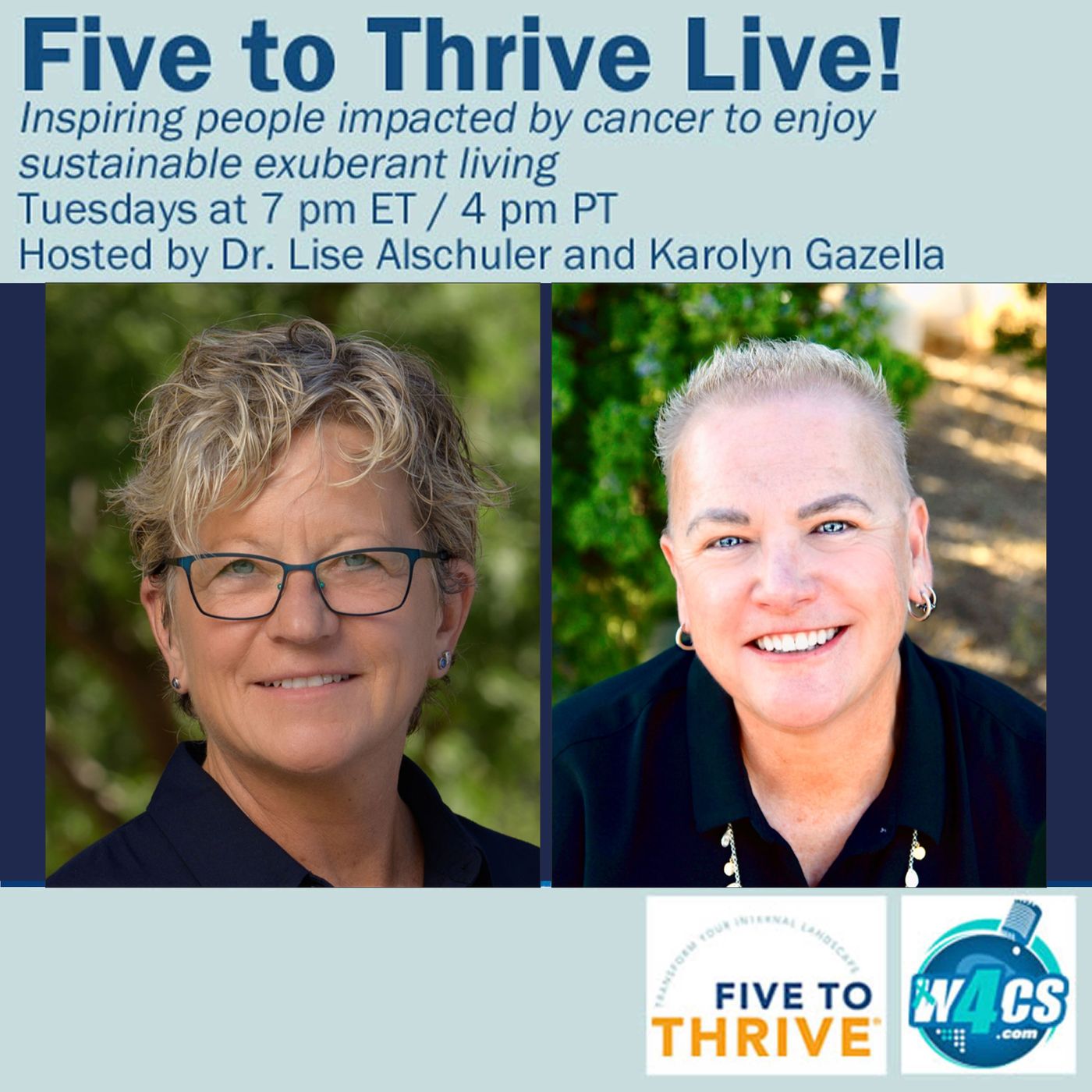
Five To Thrive Live
Talk 4 Radio
Huberman Lab
Scicomm Media