
The Cancer Pod: Integrative Medicine Talk
Navigating a cancer diagnosis, treatment, or recovery comes with complex decisions, unpredictable side effects, and daily challenges—but it doesn’t have to feel completely heavy or overwhelming. The Cancer Pod is an integrative oncology podcast designed to provide patients, survivors, and caregivers with practical, evidence-based tools, honest conversations, and just the right amount of humor to keep things grounded.
Hosted by Leah Sherman, ND, FMCP-M, RYT, the show bridges the gap between conventional cancer care and natural medicine. Drawing on her clinical expertise working in integrative cancer centers as a licensed Naturopathic Doctor, alongside her own personal experience, Leah delivers science-backed guidance to help manage side effects, navigate cancer survivorship, and debunk popular health myths. Episode range from interviews with experts in their field, practical health strategies, and real, relatable perspectives from #cancerinsiders, everyday people who have used their own diagnosis to inform, advocate for, and support others.
No matter where you are on the cancer continuum, The Cancer Pod offers a lighthearted, supportive space with the evidence, insights, and community you need to navigate the road ahead with clarity and confidence.
Support the podcast and join our community on Patreon: https://www.patreon.com/thecancerpod
Disclaimer: This podcast is for education, entertainment, and informational purposes only. Do not apply any of this information without first speaking to your doctor. The views and opinions expressed on this podcast by the hosts and their guests are solely their own.
The Cancer Pod: Integrative Medicine Talk
Alcohol and Cancer, An Update 2025
Use Left/Right to seek, Home/End to jump to start or end. Hold shift to jump forward or backward.
Did you know it takes an Act of Congress to change the warning label on alcohol? It’s true! But even more crucial: how much alcohol does it take to increase your cancer risk? In this episode, Tina and Leah dive into the connection between alcohol and cancer, exploring why the Surgeon General is pushing for updated warning labels. Whether you’re sticking with your current habits or considering a mindful approach to drinking, this episode delivers eye-opening insights that might make you think twice before your next sip. Tune in to learn more!
Prior episode: Good for You? or Bad for You? Alcohol
Ireland's strong alcohol label stance
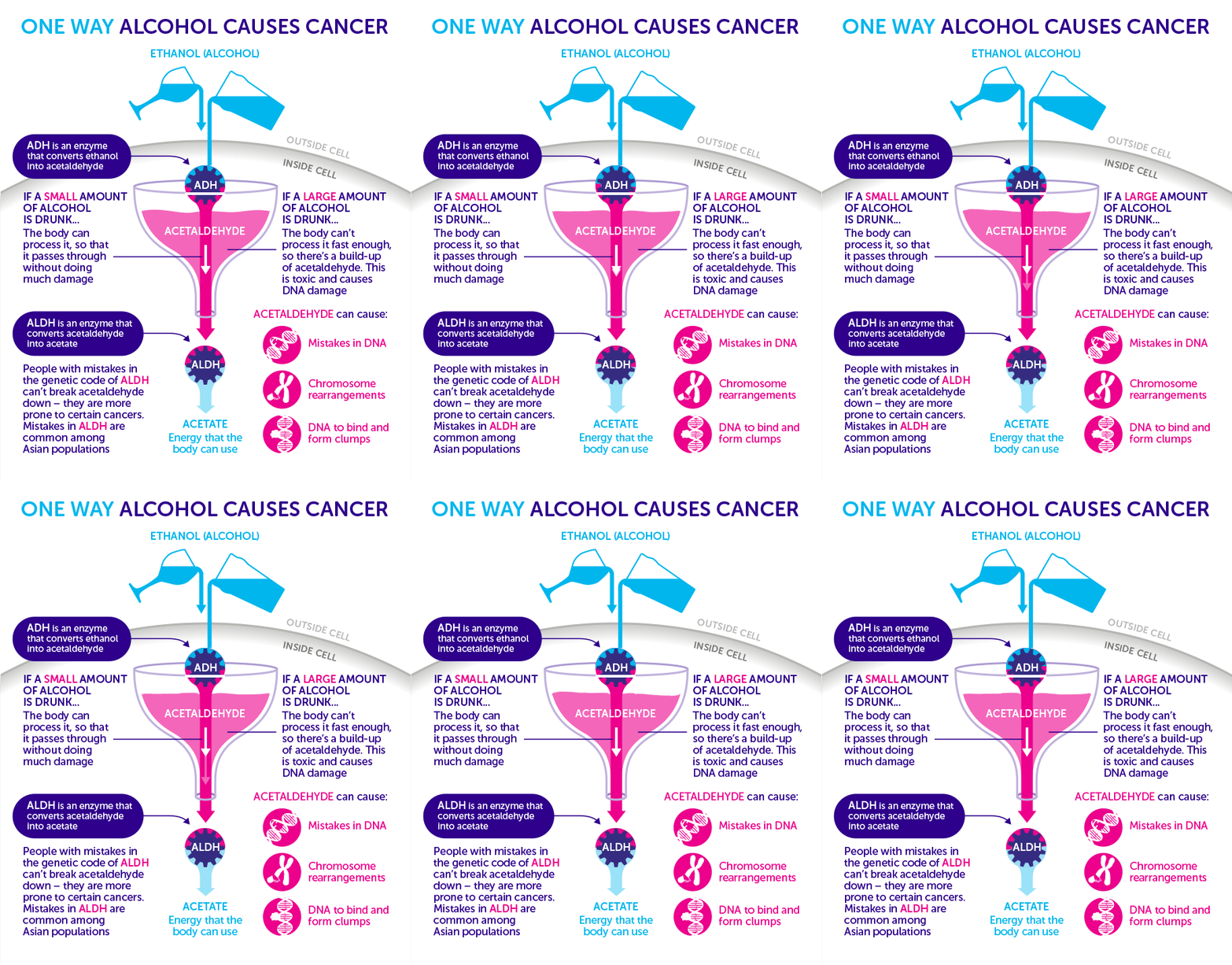
How acetaldehyde from alcohol ingestion forms in your body
Which cancers are linked to alcohol consumption?
Leave a message and let us know what you liked about the episode!
Become a member of The Cancer Pod Community! Support the podcast and gain access to exclusive content and more! Join today on Buy Me a Coffee or Patreon.
Check out thecancerpod.com! Looking for more information? The website has blogs, merch, and all of the episodes listed by season and category.
Shop the Bookshop! The shelves at Bookshop feature books by authors who have been on the show and other fav books.
Buy The Cancer Pod merch! Whether it’s a cozy hoody or a handy water bottle, we have something for everybody.
Have a comment or suggestion? Email info (at) thecancerpod (dot) com
Follow @TheCancerPod on social media:
this is a good recap
Excerpt from episode
Leahof episode four for those who did not listen to us at that time.
TinaIt's still online. It's still in your podcast player.
LeahI was really afraid. That episode really, I remember starting off and being really afraid that it was just going to like piss people off. But, you know, now
TinaI know.
Leahthe Surgeon General behind
TinaYeah. Yeah. Don't blame the messenger. We didn't make the data. We both have cocktails on occasion, too. So, like you said, there's nothing wrong with that. It's
LeahWe all have one. Together.
Tinatogether on occasion. It's okay. We're, we're mindful of the risk we're taking at that moment.
Intro
LeahHappy New Year, Tina
TinaHappy New Year, Leah.
LeahSo we're kind of starting the, the new year with, um, some news that isn't really news because it's something we covered like in episode four.
TinaOh, yes. I said news that isn't really news. You know what I thought you were going to say? That 2025 we're going to do more news headlines.
LeahWe are, that's actually probably a better way to start. Thank you Tina. Uh, we're gonna talk more about cancer in the news and, and yeah, the, this big news that's in all the headlines. It's kind of been known for at least 40 years
TinaYes.
Leahand we talked about it four years ago.
TinaYep. The evil demon alcohol.
LeahYeah, yeah.
Leah (2)So what started this whole conversation is the Surgeon General Vivek Murthy. He wants to put a warning label on alcohol saying that it can cause cancer.
Leahcurrently alcohol has the warning against, you know, drinking alcohol while pregnant and operating heavy machinery and driving that sort of thing.
TinaYeah, I think that, I think there's a little, at the very end on the warning it says, and other health conditions, or something like that, something kind of vague about alcohol not being great for you.
LeahYeah.
TinaAnd he wants it to really be strong,
Leahhe does. He does. And if you like, look at the numbers, there's in the U. S. like a hundred thousand cases of cancer can be attributed to alcohol and 20, 000 cancer deaths
Tinaattributed to alcohol.
Leahattributed to alcohol. Yeah. In terms of The cancers that are associated with alcohol consumption.
TinaYeah. Yeah. My understanding when I was looking at some of these news briefs coming across is that in Ireland, they've already passed legislation that will put a very strong warning in 2026. alcohol causes aggressive cancers or something really like akin to the tobacco label that I see in Canada that said tobacco kills, you know, when we were kind of hedging over here, tobacco may cause cancer of the lung,
LeahRight.
Tinaso I also read, confirmed this for me, cause I think you looked into this further than I did, but. It takes an act of Congress to change the label on the alcohol bottles, is that true?
LeahYeah. Yeah, it does.
TinaThat's actually, I mean, I shouldn't laugh, I just think that it's funny, don't we use that as like, what does it take, an act of Congress? You know. Yes,
And I even watched an interview with the Surgeon General and he mentioned that.
Leahbecause he's, you know, we're about to change administrations. And so he was saying, but you know, it will take an act of Congress, but I guess back in the sixties, that's what they did with, um, tobacco warnings. So.
TinaRight. Well, for obvious reasons, because tobacco was a huge lobby group and they had the Congress people in their pockets, so of course they wanted it to be an act of Congress, that's why it took so darn long, even though we had evidence.
LeahWell, you know, what's really interesting is there's been all of this stuff about like, you know, wellness influencers and all of these people have been talking about things that are so bad for our health. And this whole alcohol thing, they haven't really said anything about. No one's touching it. No, it's so funny. And like people will get really like up in arms. And they're like, but, but, and I'm like, well, maybe you should check yourself. Maybe you should like see what your relationship with alcohol is. Why are you so upset? about this announcement. So, um, yeah, so that's what we're going to talk about today is alcohol and cancer. And we'll talk about, what the current alcohol guidelines are, which we've talked about all this, but then we're just going to rehash this and kind of bring it, to the forefront.
Tinayeah, the larger context to play devil's advocate is there's the cancer aspect, but people are more complex than just cancer. So, what are the recommendations in the You know, heart association world or the dementia groups, or, you know, like alcohol itself may not have a lot of redeeming qualities for health, but some of the vehicles do have other components that have been advocated for health, like wine and the resveratrol and polyphenols.
LeahRight. But it's the resveratrol, it's not the wine. Yeah. So,
Current guidelines for alcohol intake
Leahokay. the current guideline is. Like one drink a day for women and two drinks for men is what's the guideline, but in terms of safety, there actually is not any safe amount.
TinaMm
LeahLet's say someone drinks like four glasses of wine a week. what is recommended is that you don't drink those all in one sitting, that it is spread out if you were to do that. But, just knowing that. There really isn't any safe level of alcohol
TinaWell, and I think when the people who created that guideline for the public were pressed as to how they found. A definitive one drink a day for women and two for men. They admitted that the only reason they did that was because they didn't think people would do zero. They didn't think people would abstain from alcohol. So they kind of
Leahhedged.
TinaThey did. they put it there so that there was something, and It's more of a perception that people couldn't do abstinence from alcohol or that that might backfire maybe. I don't know. But in their interpretation, they said the data doesn't back it up. We just thought that this was more a practical way of doing it back in the day when they created the one for women, two for men. So I just thought, I thought that was kind of interesting, a little bit of artistic license with the science there.
LeahYeah. Yeah. Because, because we just wouldn't be capable of avoiding it altogether. so
Is alcohol really linked to getting cancer?
Leahone of the big things that came out, I think from the surgeon general's, statement is that. Alcohol is the third leading preventable cause of cancer behind smoking and obesity.
TinaYeah.
LeahSo everyone talks about preventing or reducing your risk of cancer, and, you know, you don't really hear that much about it. Again, I'm thinking of these wellness influencers and stuff, like nobody's talking about like avoiding your rosé
TinaNo, you know, it's, it's harsh to do that because, you know, it's that inconvenient truth kind of idea where people get hit with that and they don't want to hear that. And so if you're an influencer, you want people following you, and if you give them bad news like that, that's not, that's not conducive to your brand.
LeahI know, but I, you know, like I've found it for so long. I've found it so cringy whenever it's like October and like, you know, breast cancer awareness month and there are like wine gatherings or special bottles of wine with pink ribbons on them, all that pink washing, and it's around alcohol or anything where it's like some sort of fundraiser, I'm not saying like a general fundraiser, maybe like with a big dinner and everything. But if it's like, I can't think of anything in specific. I think of things specifically. I don't want to say their names, but anything where it's like, Something in beer, you know, maybe like yoga and wine for breast cancer. I don't know if that exists, but it probably does. You know, I just think that's so cringy
TinaYeah, I understand. Yeah. Cause you're a purist. And now here's my pure. Yeah. Because you're literally saying that that's a carcinogen you're giving out
Leahright? It's like, it's like, let's do a lung cancer, fundraiser with, uh, radon and cigarettes, you know?
TinaYeah. Yeah. So here's the big picture. Here's my question. It's clearly carcinogenic. I mean, that's not even disputed. I mean, the science is there. We can talk about that There is some data showing that people who a drink had less neurodegeneration. For example, so, so my
LeahA drink of what? A drink of what?
Tinaalcohol,
LeahAny alcohol.
TinaI think it was various types of alcohol, like a drink a day. So I'm only saying this because in the real world, let's face it, someone has a half a glass of wine or a smidge of something and it takes their stress from, a super high level to a lower level. I don't know. Some, sometimes I'm like, I don't know. Like, yeah, you're, you're right. Doing a detriment in the long run because it's clearly carcinogenic, but at that moment does the De stressing give you enough benefit for your overall health that it cancels out. You know what I
LeahYeah. I mean, then that would be trying to find a different way to de stress
Tinafor
LeahTo To replace it.
Tinayeah,
Leahyeah, because I think there were some studies showing that drinking red wine decreases the risk of heart attack, but then like alcohol increases your risk of hypertension and other things. So it's like, it's such a like
TinaYeah,
Leahanyways.
What is "a serving of alcohol" anyways?
LeahUm, okay. So I want to talk about like what standard drinks are. So in the U S. Uh, serving of alcohol is five fluid ounces of wine, 12 ounces of beer, or, one and a half ounces of liquor.
Tinathat's a serving
LeahThat's a serving of alcohol.
TinaBut, we have to add to this, that is what beer used to be. That was like, our good old Budweiser and such.
LeahI mean, it still is. That's your average beer. That's not your craft,
TinaRight.
Leahfancy IPA type. The thing I
TinaYes. So, I thought it was four ounces of wine. You sure it's five?
Leahsaw was five
TinaOkay.
Leahbecause I just looked it up.
TinaSo,
LeahMaybe they increased it.
TinaWhat's that?
LeahMaybe they
TinaYeah, right? The powers that be increased it. The wine industry was there. Um, the higher the alcohol content, obviously the lower the volume you can do. So with beer, if it's a four or 5 percent beer, you can get 12 ounces. But if it's a six to 8 percent beer, 12 ounces is going to be
LeahA lot. Yeah.
Tinathan one serving.
Which cancers are linked to alcohol consumption?
LeahYeah. So, um, the cancers that are implicated in alcohol consumption are breast and it's hormone receptor positive HER2 negative breast is one of them. And I think the other one is lobular, colorectal cancer, esophageal cancer, liver, oral cancers. Um, and then pharyngeal, your pharynx, laryngeal cancer.
Tinahmm.
LeahSo, and it doesn't matter what you drink. It's not like, oh, well, then I just won't drink liquor, I'll just drink beer. It doesn't matter. It's alcohol in general.
TinaMm hmm.
Leahand then this is kind of a interesting statistic that for breast cancer itself, 16. 4 percent of total breast cancer cases are attributable to alcohol.
TinaWow.
LeahYeah.
TinaThat seems like a lot.
LeahIt does. It does. you know, we've both had patients who've never had a stitch of alcohol in their life and they've had breast cancer. So, you know, it's breast cancer happens. But it is it is a big number.
TinaIt seems like, well, it's more than my population, but maybe I don't have the general population coming through my doors when I practice, right? So,
LeahYou're right. You because because in private practice, you tend to have people who are more naturopathic, perhaps a little bit more mindful of their consumption.
TinaYeah. Yeah, I do recall that one incidence of a woman who I actually, I was actually a visiting doctor in Indiana at the time when I asked her what she drank, and she said she had a drink every night when she got home, and I said, Oh, what do you drink? And she said, I drink whiskey. I believe it was whiskey. I know it was hard liquor. And I said, So you only have one drink? She said, Yes. And I said, How big is your glass? And she's, she kind of smiled wryly. She's like, It's a, it's like a highball glass. It's probably about four ounces. So
Leahlike she's having like, you know, double shot at
Tinayeah, so all that is is a risk factor. It doesn't mean it caused her cancer. I, I want to be really careful about that because I think blaming people for their own cancer is a really dangerous place to go. But it's no different than any other risk factor for any other condition or something out in the world. I mean, it's, it's, You control the risk factors that you can control in your behavior and your lifestyle as best you can, because there are many risk factors you can't control, like your own You know, family history, for example, your genes,
LeahOr the exposures that we get every single day, you know, from the air and the soil, like we can't control those things.
Tinaright, right. So risk factors add up. So if somebody is, I don't know, they're sedentary and they are drinking a lot and they end up, um, taking on smoking, I mean, now you're, you're, you're getting an additive effect of risk factors as you pile them on. So I want to say that just to be clear that even this woman who I, Had a lot of empathy for because, you know, she didn't know that that was a risk factor for breast cancer until she was told afterwards, and there's no guarantee that was what caused it. Could have been something
LeahNo, and I mean, that's where we met was at that cancer center in Indiana. And you know, we had a lot of patients who worked in factories and they worked around formaldehyde and all these other chips and chemicals. And so it's the compounding of every single thing. It's not the one thing. Um. Yeah. So, yeah, for sure.
How, exactly, does alcohol increase cancers?
LeahSo, okay, let's talk about what is it about alcohol that is carcinogenic. And the first thing that we always talk about is acetaldehyde.
TinaMm hmm.
LeahAnd this is a compound that damages DNA
TinaDirectly. Yes.
LeahYeah. So that's kind of like The big one. And it's also the hardest one to say. had to get that out of the
TinaYeah. Acetaldehyde is, um, it blocks the repair of the DNA and it also increases inflammation. It also increases the inflammatory state within the body. Mm hmm.
LeahYeah. So oxidative stress would be like another cause. And so that kind of is a nice segue. Good going. Um, and so oxidative stress also damages DNA and increases inflammation.
Tinayeah, the other piece alcohol does directly is it affects our Nitric oxide pathways to create free radicals that way too. So nitric oxide is Not good because nitric oxide within the cells and within the nucleus can block DNA repair as well. So That's another pathway. And the other that I think about, and I don't think it's well established, but it makes perfect sense, is alcohol can lead to a deficiency in certain B vitamins, and it can lead to a deficiency in folic acid, or folate, more, more, um, precisely. So folate is needed for normal cells to reproduce in our bodies and we need folate when DNA replicates within our cells within normal cellular repair day to day and so alcohol leading to a deficiency of folate can probably also have an additive effect to the whole carcinogenic process.
LeahYeah. the other thing is that it affects our hormones. So it affects the endocrine system overall. So I think in my mind, I always think like, yeah, it can affect, how estrogen and other hormones are metabolized. But it affects the entire, hypothalamic axes, like it affects thyroid, um, and, insulin growth factor. all of the other, the other hormones in the endocrine system. So that's one thing that I don't think a lot of people are aware of. And As we've discussed in other episodes, hormones are messengers and so alcohol can change how these chemical messengers are made and how they, um, communicate with each other and that could be like neurotransmitters. it can be just, you know, the hormones, estrogen, testosterone, um, progesterone that we think of. it's affecting the communication on how our cells talk to each other.
TinaMm hmm. Yeah, and I think another thing that alcohol does, which is just logical, and I don't know how much research has been done in this so far, it affects the biomes of the body. I mean, most bacteria can't live in alcohol. And so when you take alcohol down, whether you're affecting your mouth or anywhere along your GI tract, your small intestine, your large intestine, you're probably affecting your microbiome in ways that we're just beginning to understand and we know That that microbiome has a lot to do with our overall health and our immune system And so there's the direct effects. I would call that an indirect effect because it probably Adversely affects the populations there. That would be my guess Because it's not really considered a healthy thing to be consuming alcohol.
Leahand, you know, in the research that I did for this, for this episode that nobody mentioned microbiome. And so I, I think. I think that's a great thing to look at and it is something that we tend to mention at least once every couple of episodes. So, Yeah. it's, that's a, I mean, that's a really interesting, cause I mean, I, I saw the, you know, about it causing nutrient deficiencies and it being empty calories, but yeah, nothing said directly, you're kind of a solvent.
Tinayeah You're drinking something bacterial can't live in so that can't be good You're definitely monkeying with your microbiota in unknown ways.
Leahyeah, yeah. So, I mean, do with the information as, as you, as you wish. I think just kind of letting more people know when I was reading an article, it said that less than half of Americans knew that alcohol was carcinogenic.
TinaI saw that
LeahSo I guess not enough people listen to our episode. So maybe they'll listen to this one, but, um, yeah. And you know, there are options more and more options I'm seeing, at least in Portland area, um, that if you go to a bar restaurant, there are mocktails there. We did, I think it was four years ago, we did a post on, different mock tales and, Non or low alcohol products. So we'll put a link to that in the show notes and maybe I'll add onto it. I'm not going to promise anything cause
TinaSo, so here's a,
What about regular drinking in European countries?
Tinahere's a legitimate question. What about cultures who drink every day? Like I'm thinking of Italy, go to Italy, people have a glass of wine with lunch and then they go back to work. I mean, it's just part of what you do.
LeahI mean, this is worldwide. Obviously this is something that is occurring worldwide. I think, there are, I don't think I have my notes in front of me. 741, 300 cancer cases worldwide can be attributed to, Alcohol. And that's from 2020. So this is a worldwide problem. I don't know. And I did not look up specific things with other countries. the wines in Italy and I could be wrong, but but it was my impression that they are lower in alcohol.
TinaOh yeah.
Leahyeah. And like the ones that, that there are certain ones that people would drink, like during the daytime, the more social wines. And it was my understanding. Those are lower in alcohol. I don't know specifically if that is true. you know, like you said, like it's other factors that, you know, in, involved. So, and, and it's hard to say because in Europe people smoke a lot. So you've got people smoking and drinking alcohol. I have no, I have no idea how they do that. It's kind of like the French paradox, right?
TinaRight.
LeahThrow in some fatty foods. And I mean, is it because of the diet that they eat? I don't know because American diet versus, you know, uh, Italian diet. We eat far more ultra processed foods. Um,
TinaYeah. I couldn't believe the stats around that. I recently saw 60 percent of people's calories or something was ultra processed food.
Leahyeah. And we'll go, we'll, we're going to talk about that in another episode and we're going to talk about the difference between processed food and ultra processed food. But yeah, so I don't, you know, all of these other factors, is it, do they have less stress in their life? Do they
TinaRight.
Leahmechanisms? Like my,
TinaWell, it is, their entire food system is different though. So I personally think, let's say you're eating all Italian diet here in the United States, sourcing everything from your local grocer here in the U. S., it doesn't seem as healthy as Italy because of our mass production of everything. Because we pick the tomato when it's green and then we throw some chemical on it to make it red just before it's at the shelves. We put it in a gigantic you know, 18 Wheeler, ship it across the country. It's just so different. Like our food systems don't serve us. I mean, unless you have local growers and you can constantly go to the market. I mean, it's, it's hard here to mimic exactly the, the, the diet they have there. Even the oils. Like I was in Italy last spring, every restaurant we went to had its own olive oil from their own little small olive grower down the road, and we were not going to fancy restaurants. These were just regular restaurants, some of them very touristy, but it was just a different way of obtaining your food. And here, we just have agribusiness, and I think that that's a huge problem.
LeahDo they, and now we're going into like more like tourism conversations, but it's my dream to go to Italy. Do they kind of linger over their meals? Like in Spain, like in Spain, I remember, it's not like, Standing over the stove and shoveling food in your mouth or quickly eating at the table and then clearing the plates like it's seems like it's a much more relaxed, almost like type of thing.
TinaI would agree. I think the food is almost incidental to the convivial company you're keeping during the meal. So, the food happens, but the bulk of what's happening is the interaction of the people at the table. And, of course, you're doing it over food, but Yes, it's a very different experience where the conviviality and the food seem to be on par rather than I'm sitting down to eat, they're sitting down to visit and they're eating while they visit.
LeahWell, yeah. And again, this, this is a worldwide concern. And so I don't know the specifics on, um, the statistics from other, other countries. So, I mean, it is something interesting for us to look into.
TinaI do know that the Mediterranean diet does lead to greater longevity in general, whether we're talking about Greece or Spain or Italy so we do know that eating a lot of plant foods, maybe that somehow negates some of the alcohol carcinogenesis too, because we're talking about oxidative damage.
LeahRight. Colorful foods. Right. And then also you were talking about, you know, it's, it's very social. There's like a sense of community, which I think we're really lacking in the U. S. And so, I mean, who knows, we're at this point, we're just, we're spitballing. But I think these are things to consider.
TinaYeah, for sure. I mean, it's, it's clear that some of our habits here in America are not good for our health and, uh, isolation.
Leahalcohol. They're just not.
Tinaisolation is definitely high on that list.
LeahYeah. So,
What can you do in lieu of alcohol?
Leahyeah, typically we talk about things that you can do to decrease your risk and
TinaCan I highly recommend the mocktails? The recipes you put on the blog that you already mentioned.
LeahYes.
TinaI highly recommend trying to make some mocktails at home if a cocktail is your thing. I think kombucha in a glass, put a wine glass, but you pour your kombucha in there. I think that's a nice way to, like, feel like you're doing something that's alcoholic, but you're not. Yeah.
Leahthat is and I actually drink kombucha from we have these like glasses that look like cans. They're kind of can shape of their glasses. And that's how I drink my kombucha.
Tinayeah,
LeahAnd we're sometimes I drink it out of a highball class.
Tinayeah,
LeahAnd I'm not saying I don't drink alcohol. I do drink alcohol. I try to limit it. Like if I go out, you know, one drink, not perfect. Um, but, um, And I don't go out a lot. And I think that's when I go out, if I go out, but, um, yeah. And I do have a habit of, if I go out, I tend to, if they have fries, I'll have fries and that's probably a really bad thing to have, you know, that's, that's not really as good as a, as I think it is. So, yeah, just being mindful of risk factors in your life. I think that's kind of what you're
TinaAnd we didn't really mention this, but there is a linear relationship. So it's If one drink is bad, two drinks is worse, three drinks is worse, four drinks is worse, as far as risk goes. So we know that people who drink heavily have a much, much higher risk, you know, four drinks a day or more. And, and that goes on occasion too. Like you shouldn't really over drink to the point of getting drunk or buzzed. that's when you know that it's toxic to your brain as well, for sure, because that's why it is intoxication, toxic, So it's toxic to your brain at that moment. It's easy to remember. I didn't make that up. Some smart neurologist in the integrative space said it and I was like, Oh, that's a really good point. Um, so yeah, so if you're going to drink, don't over drink. because I think you've passed the point of any benefit if there is any, whether it's for your heart or your brain or anything else.
LeahI think that's good advice.
TinaI like to do some absolute.
LeahIt's not even in moderation. It's less than moderation. It's, you know, disperse your alcohol with a club soda. Like, I think having that same feel. And that was the thing when I was making mocktails. Disperse? You know what I'm trying to say. But, you know, like inter intermix. And so if you have something that also has bubbles, like a kombucha or like a club soda with lime or twist or, you know, a splash of juice or something like that's that mouthfeel. And that's what's really hard to replicate with, um, with mocktails. But, um, yeah, putting a little citrus in there, putting a little bubble.
TinaMm hmm. Mm hmm. I, I totally agree. Or just using some bitters with the bubbly water. Makes you think you have a cocktail because there's kind of that, another flavor and there's all sorts of bitters out there now, not just Angostura, but there's all sorts of nice bitters available in the liquor stores or grocery stores, depending what state you're in.
LeahOr the Portland Airport PDX, they've got, they've got the place that sells whiskey and they've got a bunch of different bitters there. And yeah, I mean, if you're, you know, having that small amount, I mean, there's, it's a very, very small amount of alcohol that would be in bitters
TinaYeah. I don't think there's much in there. It's almost like a tincture. you only use drops. Yeah, Yeah, So, unlike a tincture, which I dose in teaspoons for some people. I mean, bitters is less than that.
LeahYeah. I wonder how much alcohol's in a serving of NyQuil. Okay, those are questions that we're going to answer at some other
Wrap up
Leahtime. Because I think this is it. I think we've covered it. I think, this is a good recap of episode four for those who did not listen to us at that time.
TinaIt's still online. It's still in your podcast player.
LeahYeah, so, so see how we were getting around. I was really afraid. That episode really, I remember starting off and being really afraid that it was just going to like piss people off. But, you know, now
TinaI know.
Leahthe Surgeon General behind
TinaYeah. Yeah. Don't blame the messenger. We didn't make the data. We both have cocktails on occasion, too. So, like you said, there's nothing wrong with that. It's
LeahWe all have one. Together.
Tinatogether on occasion. It's okay. We're, we're mindful of the risk we're taking at that moment. Cause that's what you get to do as an adult.
Leahso on that note, I'm Dr. Leah Sherman,
TinaKazer.
Leahand this is The Cancer Pod.
TinaUntil next time.
LeahThanks for listening to the cancer pod. Remember to subscribe, review and rate us wherever you get your podcasts. Follow us on social media for updates, and as always, this is not medical advice. These are our opinions. Talk to your doctor, but for changing anything related to your treatment plan. The cancer pod is hosted by me, Dr. Leah Sherman. And by Dr. Tina Kaczor music is by Kevin See you next time.


Podcasts we love
Check out these other fine podcasts recommended by us, not an algorithm.
Cancer for Breakfast
Cancer for Breakfast
Life on Pause
Penn State Health
INTERLUDE: Cancer Stories with Dr. Teplinsky
Eleonora Teplinsky
Yogaland Podcast
Andrea Ferretti
10% Happier with Dan Harris
10% Happier
Life Kit
NPR
Five To Thrive Live
Talk 4 Radio