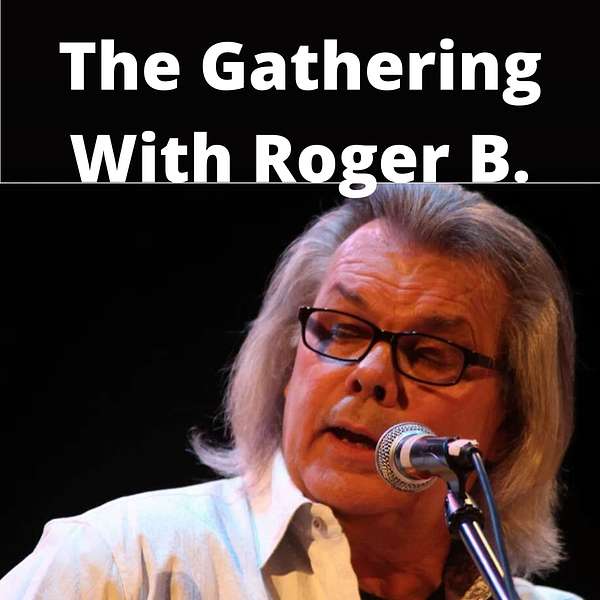
The Gathering With Roger B.
The Gathering’s talks are generally tied to one or more of the 12 Steps, but are always guided by spiritual concepts, principles and ideas common to most faiths. Topics are drawn from a variety of sources: the 12 steps, many of the well-known wisdom texts, science and other teachers that speak to a spiritual solution to life's challenges. About Roger B. Roger has been in recovery for over 47 years and has spent thousands of hours in service, sharing his experience, strength and hope. He has created curriculum for treatment centers, and lead workshops and retreats throughout the United States and Canada. Roger is a Certified Spiritual Director, and offers insight into spiritually-based living skills that are relevant to all people – whether in recovery or not. Roger is the first to admit that his long-term sobriety was brought about by the “trial-and-error method.” His experience reveals what has worked, and - perhaps more importantly - what has not worked, but taught him valuable life lessons. Roger B. and The Gathering with Roger B. are not affiliated, or endorsed by any third parties or 12-step programs. The Gathering on Zoom first and Third Wed 7pm CT id 728-200-4166 password 513915 downloads at www.gstl.ecwid.com
The Gathering With Roger B.
#98 Loss and Change
Use Left/Right to seek, Home/End to jump to start or end. Hold shift to jump forward or backward.
Life is celebration and loss. Everything that comes into our life has a expiration date. What do I do with loss , grief, celebration? Do i lame something or someone? When I push away the pain I also push away the answer. What is this trying to show or teach me?
PLEASE BECOME A GATHERING SUPPORTER FOR AS LITTLE AS $3.00 PER MONTH, WE ARE IN OVER 900 CITIES AND 58 COUNTRIES WITH OVER 10,000 DOWNLOADS, PLEASE COME JOIN US! YOUR SUPPORT IS VITAL TO THIS MISSION, THANK YOU IN ADVANCE FOR THAT SUPPORT!
Roger alcoholic. October 11th, 1978 is my sobriety date. For those of you new to the app or listening to this talk, the intent is to share experience, and the hope is that it'll be useful. The uh there's no I'm not anointed or appointed. Um, I got sucked into this as a volunteer thing, and I agreed to do three meetings, 195 meetings ago. So, what are you gonna do? So it's again, it's not it's not to be instructive, it's it's not to tell people what to do or how to do it, it's just to share a little bit about the journey that I've had with the 12 steps and the spiritual ideas and concepts um that are embedded in that process. You know, I had a uh the orientation of this book is kind of interesting. But the uh the talk tonight is on well, it is changed. It was on loss and change, and then I went, well, loss and change, perception, time. There's a lot of things that get that get wrapped up in this this idea, and I think that we all know what these words mean, but I'll give you a quick dictionary definition. Loss, the fact or process of losing something or someone, change, to make someone or something different, to alter, to modify. So loss and change are two sides of the same coin, like shame and guilt. If there's loss, there will always be change, and if something changes, something's lost. Why? Because every time I say yes to something, I'm saying no to something else. Every time I embrace this idea, I have to let another idea go to make room for it. Okay, so out of there comes an attitude, which is my approach, the way I come at things. That approach comes from my perception, the way I see things based on my experience and interpretation. Okay, so that's why I'm the way I am. But the is the interesting or not interesting. One of the things that was kind of fascinating when I started thinking about it, because you're talking about loss and change. That's all part. That's all part of life. There is no life without loss and change. It doesn't have to be bad or good, but if you look around, everything you can see with your eyes right now is changing. Everything. Your beautiful car out in the driveway, the paint slowly oxidizing, and you can't see it. The rubber's rotting from the UV waves, the grass is growing. You can't see any of this stuff. There's change going on all the time. All the time. So what there's so with all that, there's, I mean, I don't care if the grass grows or not, that change doesn't bother me. I don't care about my roof getting older because the sun's beating down on it. I don't sense that change, and I don't sense the loss of it. You know, but um think about this. I lost my youth. That went away, no control. When you think about it, and you really ponder it, you and I have been changing since inception. We have been changing since the egg was fertilized. And we came out and we've been changing the whole way. I got a couple of friends that just had babies, and those babies are weeks old, months old, and they're just changing all the time. So, my youth, innocence, lost my innocence. What did I replace my innocence with? Cynicism, sarcasm, defensiveness. I've lost classmates, I've lost schools, I've lost teachers, I've lost friends, I've lost houses, I've changed houses, I've changed friends, I've changed clothes, right? Those things aren't real big deals. I don't sit around and grieve the loss of my third grade teacher, Miss McDonald, although I do remember her. She was a knockout, she's really a hot one. So so much so that 69 years later I still remember her. Anyway, you get the idea. Then later on, think about the houses, the neighborhoods, jobs, careers, clothes. The clothes I wore when I was 20, article clothes I wear when I'm 40 or 60. Maybe they're love. My idea, my concept, my experience of love has been changing the whole time. My dreams. I lost my dreams. Did I replace my dreams? No, for a long time I didn't. They just got smashed. Ideas all changed. Growing up, ideas have all changed. Ideals have all changed. The things that I thought were important, you know? Time. Hope. Integrity. Honesty. The past changes. Have you noticed? The longer I'm here, the more differently I interpret my past. It's changing. What's changing is not the events, but what's changing is the evolution of the way I see and think about them. The meaning I derive from them or don't, right? Health. Health comes and goes ups and downs, changing all the time. I'm getting old. I mean, it's inevitable. Right? You get on the show and you get a class of yourself in the mirror, you go, when did this happen? Marriages, relationships, parents. We're all gonna be orphans at one point. Right? Parents changed. Boy, I'll tell you, that might have been one of the biggest changes historically for me. The way I saw my parents growing up, the way I saw them in my 20s, and then I got away from them by the time I was about 17, 18, and I had a story about them. And uh the story did not serve me well, and it did not serve them well. Then as I got older, I found out they had a story. Then I realized their story shaped them just like my story shaped me, and your story shapes you. We're back to perception, right? And I saw them differently over time. Money, attitudes about money, my physical and mental abilities. It's all constantly changing. My dreams, my aspirations, goals, if I have any. My plans. Are you a planner? My plans. I don't have plans anymore. I have directions. You know, I had plans. You know, I don't know if you grew up with this, but I always heard, you know, you gotta have a plan. You gotta have a five-year plan, you gotta have a one-year plan, you gotta have goals. Look at the history of your life. I I I don't know for years, but I think this is pretty universal. Nothing I thought was gonna happen happened. And if it did happen, it didn't happen the way I thought it was gonna happen. And then some things happened that I didn't even know the significance of for years. Expectations, plans, death, grief, all these things that we talked about that change, there's loss involved with that, there's grieving. I have to honor the loss, I have to honor the change, honor the moving on, turn the page. Now, some of those things are not significant, but some of the other, some of them are very significant, you know, and uh and you can't undo the past. The kind of son I was. I was a lousy son for a lot of years, and I was a really good son for a lot of years, but in that order, I was much lousier in the front end and much better in the back end. Amends, restitution, right? Makes a big difference, makes a big deal. So I think I've come. This is just me. I'm not telling you it to be you, but you know, in the book it talks about on page 52 the benevolence, having trouble with personal relationships, can't control your emotional nature, are your prey to misery and depression? Have a tough time making a living? Ever feel useless, full of fear, or maybe you're gonna call you call your fear anxiety, unhappy, couldn't seem to be of real help to other people or yourself. That's the second half of the first step of my life become unmanageable, and it was unmanageable because I was managing it, one, and two, all I ever did to it was react to it. I never made choices about it, I just reacted. So I need to change my ideas about it. Why? I need to change my ideas because my ideas don't work, they don't produce results that I like. So when you reflect on this, who or what taught you about life? Did did my dad and mom ever sit down to me and say, This is life and this is how it works? No. No. Who taught me about God? No one. I went to a church when I was a kid, they didn't teach me about God, they taught me about compliance and conformity and memorizing scripture. They didn't tell me what any of it meant. So anyone teach you about love? Anyone tell you about love? I don't mean about sex, I mean about love. No, I thought sex was love. I thought your approval, you know. Um so here I am. What about time? Anyone talk to you about time? This is, you know, when I asked myself where I learned all this, almost all of it was learned through observation and my experience. You know, I learned early on, I didn't have words for this. I mean you've heard me say this many times, but I learned early on that my parents were not available to me emotionally. I couldn't ask a question. If my dad, if I asked my dad a question, he told me it was I was being weak or I was too sensitive. I couldn't ask my mom a question because she was always trying to manage my dad. So, how do you learn this stuff? You watch, you look, you learn it from magazines, you learn from movies. You know, you learn in movies. When I was growing up, cool people smoked. Everybody smoked in movies, everyone smoked. I'm gonna get cool, right? Get the girl. That's the guy, that's the guy who's winning. So I cop a perception, and the two biggest perceptions I coped through observation and the experience of my life was I'm not safe as fear, and there's something wrong with me. I'm not lovable, they're shame. And a million different forms of those things, but that's the two umbrellas everything fell under fear and shame, and fear and shame are like loss and change. They're two sides of the same thing. When I get afraid, it opens the door for the shame. When I get a shame attack, it opens the door for the fear. When one's present, they're both present, right? So a lot of what recovery is for us in these 12 steps is we're teaching ourselves how to grow up. We're teaching ourselves, we're reparenting ourselves in a lot of ways. Not everybody, but some of us again locked around are. And there is definitely a maturation process that we get hooked up to in these steps. So I need to find a deal, a way to deal with this stuff that I call life, this this change, this constant change, and a lot of times a big surprise with the change. I didn't see that coming. I call them curveballs, you know. I got up and I thought this was I doing today, and I got in the car and the engine blew up. I guess I'm not. Now I'm doing something else. I thought I was getting up today and I was gonna do these readings. I did the readings and then I thought I knew what I was gonna do. And then the phone started ringing. And I got crazy drunk guys on the other end with their hair on fire. I didn't know how to spend in the morning doing that. So I have to find a way to roll with this instead of fight against it. When I have a plan, when I have a sequence that's everything is supposed to fall in line with, this is my 24-hour plan, this is my week plan, this is my month plan, this is my one-year plan, my five-year plan. Then I tend to try and get everything in my life to conform to the plan. I wonder why I'm so tired. I wonder why I'm so pissed off. I wonder why I'm so frustrated. I wonder why I feel so hopeless. Why? Because you're powerless. That's why you, Roger, you have no power. Oh try harder, try harder. So here's uh sorry. I need to find a way to make this work for me. This thing called life, right? So I have to figure out who I am and why the hell I'm here. That's for me. I think the two fundamental questions that have been burning inside of me my whole life, and it boils down to who am I? And why am I here? What's my purpose? What's my purpose? I don't know who I am. All I know is who you've told me I am. You're a Bruner. We like hot dogs, we like beer, we like baseball. These are the teams we like, these are the churches we go to, these are the schools we go to, these are the activities we do. My Catholic friend said I was a pagan. My dad said I was a German. My mother said no, you're Norwegian. You know, it's like, okay, who am I? Will you tell me who I am? And what's behind that identity question is, and will you tell me my value? Do you love me? Am I enough? Am I enough? I think it's universal. I think in our culture, women get it much nastier than men in a different way. Is this good enough? Am I pretty enough? Am I smart enough? Men get it in the other way. Am I competent enough? Am I strong enough? It's all about self-reliance, you know. And uh it's impossible to succeed. So I have to get a different way, a different way of being with this, a different way of understanding it. And it's an evolution, isn't it? It starts with this, I'm powerless and my life's unmanageable. Well, then I better find some ways to manage it. And we start looking at principles. We start looking at this concept of a power greater than ourselves, right? And then we make a decision to go for it. And the first thing we do is what? We mine our history. We do a four step, and we, in a rough way, we get a starting point, a discernment of how screwed up our wiring has gotten. No wonder I drank. I'm miserable. I'm scared to death, and I never feel good enough. I'm discouraged, I'm disappointed, I'm full of fear, and I have some depression, so I think I'll drink a quart of depressive today and see how that works. You know, Jesus. So in the process, what are the what are the two essentials of this process? I think honesty is one, and I think willingness is another. God will take care of the rest. Am I honest enough to stand in front of what I find in that four step? Am I honest enough to tell it to another human being? Am I honest enough and humble enough to become teachable and take the direction of what the data says in four and five? Am I willing to consign it to the best of my ability in six and seven to the God of my understanding? And if that if all the lights are green on that, then I can then I'm ready for restitution and living to clean up my past and get free, and then living in the present tense out of 10, 11, and 12. So here's a rather than think that I'm working against something, I want to work with it. You know, think of life. I'm not when I think of life, I'm just I'm just sharing you my idea. And I'm not saying you should think like me. I'm just saying, for your consideration, if you struggle with this stuff, this might give you something to think about. Or it might spur another thought. But this life thing seems to be like the Chinese talk about it's a flow, it's an energy. And we get in the energy, and you know this. When you're in a stream tubing, it's much easier to go downstream with the current. And when you start swimming upstream, it's much harder, isn't it? So if life is like that, if life is this big flow, this energy, just metaphorically, a river, I get in the river and let the river take me, take, take me where it wants me to go. Instead of me deciding everything, that's why when I was talking earlier, I said, I don't have a lot of plans. I have directions. I have things, directions I think I'm going in the direction of, but I don't really know what's going to happen on the way. I don't even know what's going to happen when I get there. You know, Susan and I were recording a conference at Bismarck last weekend, and I didn't know what was going to happen there. I knew what I was recording, and I got there surprised. Who else had to record some stuff we didn't tell you about? And then we get a little workshop on traditions and concepts, and it's really useful. So I got a piece, she's got a piece, she gives it to all the responsees, and off we go. I didn't know any of that was going to happen. You just got to go with it. Just got to go with it. And say, well, you know what? I don't have pre-made labels for that, but we can handwrite some, whatever. Can you just do it? So this flow idea, if I can trust the power, higher power, the God of my understanding, if I can trust that there's a power of a higher nature, of an eternal nature, if you will, unlimited in wisdom, unlimited in power and understanding. If I can trust that idea, I just practice trusting the idea. So I'm in this boat called Roger. Jean's in her boat called Jane. Tim's in the Tim boat. And we're all just floating down the river of life, right? And every once in a while the boats come together. You know, and uh sometimes they just bump up against against each other and then they separate. Sometimes they come together like Brian and I came together 25, 30 years ago, and the boats stay connected, right? Gene comes in, the boat's hooked up, and we stay connected. Susan comes in, the Susan boat and the Roger boat get hooked up, right? What I'm trying to say is people have been coming in and out of my life since the beginning. And this is what I've come to believe. This is not an accident. I don't know why you're here or if you're here for this conversation or for some other conversation. But we're not brought together by accident. We're brought together by the power of that stream, that flow, that river, if you will. So I try and treat these things with respect. They're sacred interactions to me. I'm gonna do, I'm gonna do a workshop this weekend, a weekend retreat. And uh I have no idea what's gonna happen. There's a title, that's all I know. And God will, God will roll it out, God will unfold it. Not to my criteria, but to the group there. The people that come assembled for the weekend retreat will pull the retreat out of me. So, in that respect, everything is this is the namesate moment. This is, I recognize the divinity in you. I direct, I try and recognize the divinity in this moment, the sacredness of this moment. Now, I don't do this 100% of the time, but I'm getting more and more evidence. You know, I had a guy call me that I went to meetings with 40 years ago. Out of the blue, and he calls me and he and he tells me that I helped him when he was new, and he was really pissed off. I remember, but he's like, I didn't know that, I didn't know the effect I had on him. I remembered him because he had an effect on me. But you know what I'm saying? You know, my my my Aunt Jenny, old school Norwegian immigrant, um, she would just come over and brush my hair. While the men talked, she would brush my hair. She was like 70, 80 years old, and it was in the 60s, so I had long hair, and my grandpa called me a fucking hippie, and all she saw was the beautiful beautiful hair, and she'd sit and brush my hair for hours. And I felt the love of that. I felt that she saw me, my soul, who I really was, and she didn't care about the outside, she didn't care about the costume. That really helped me when I got to the point where I started getting sober and I had to think about my past, my life. Do I have any examples of love? That was an example of love. I don't remember my mother ever holding me or consoling me. If I'd come in with a busted up arm or something, she'd say, What'd you do that for? Clean yourself up, you know, that kind of thing. And so I had some examples of people's kindness and people's love that was was um unconditional. There was no requirement of me to be a certain way for my Aunt Jenny to love me. She just loved me. She's an old Norwegian Lutheran and she didn't have to drink herself to death to find God. She just bought the whole deal and lived a good life. Oh, who would have ever thought of that? So I'm trying, I'm trying to get in this flow, to get in this creative, inspiring, sacred flow. And that takes a lot of shift in my ideas and my perceptions. Because if you look around the world, you can get an unlimited amount of data for this is a crazy, messed up place. And there's a lot of people hurting a lot of people. That's true. And there's a lot of people helping a lot of people, and that doesn't make the news, but you see it all the time if you look for it. There's always people helping people hold the door for you, carry your bags, whatever. So you'll see what you're looking for. There's an Eastern axiom that says, I don't see the world as it is, I see it as I am. That's what we're talking about in recovery. I need to have Chap Chamberlain, I need to have a new pair of glasses, I need to have a new vision for how to do this. And I can't come up with it myself. So I see it in your examples. I study, I read things, I search, I seek, I find out what these guys think about it, this group thinks about it, whatever, because I need to get some new ideas. And then I need to practice them. A great example is James Allen, as a man thinketh. The metaphor for your brain is a garden. And whatever you plant there grows. What the mind focuses on expands, right? And so his his his book was written in England in the Industrial Revolution because he was seeing families and agriculture, the agrarian society was turning into an industrial society, and he was seeing people lose their way, lose their souls, lose, lose their uh the essence of what they are about. And so the whole book is about your consciousness and what you plant there grows there. Well, what is that about? That's about what the mistaken ideas we came to this process with, which induced us with so much pain that we had to drink or take drugs or act out sexually or do some weird shit to kill the pain. And we get to the end of that rope and we're here and we're going, okay. Okay, now what? And this is what you got to build a new life, and I have to build it on something that is not predicated on the three dimensions. Because if I'm gonna build my life on how new my car is, I'm gonna be in trouble. How much money I have, how much status I have, how many reviews I got in the newspaper, how many articles about me. If that's how I'm gonna judge myself, man, that's not about my worthiness. That's about a claim. It's all external stuff. I can't base myself on stuff that is finite. There's a Longfellow prayer that I love. It says, Lord, help me be free of the good opinion of others. There you go. Help me be free of your flattery, help me be free of the reviews, help me be free of that nonsense that doesn't mean anything. You know, yeah, it's nice if you say something nice. I like a compliment, that feels good, but I also know I know the truth about me. I know there's some things that are not very complimentary. I know there's some stuff that's still pretty unperfected, right? So I'm trying to find a way to go with this flow. COVID has done this to us this year, the last 16 months. What have you been called to do? Change. Adapt. Not let COVID define you, not let the circumstances define you, but find a way to adjust to them so you can continue to thrive. That's the big challenge, isn't it? That was the big challenge. Oh, I don't like Zoom meetings, so I'm not going to meetings. And all of a sudden you're drunk. What a surprise, right? I don't like Zoom meetings either, but I've come to like them. I I look forward to this. And I look forward to the live meeting now that they're back, right? But the question is, can you adapt? You know, my whole calendar disappeared for a year and a half, it still disappeared into 22. Um, I have to adapt to that, or it's going to define me. There's an expression, either I define the moment, or the moment defines me. And I want to define the moment, but I have to define it with something of a higher authority, a higher nature, a higher power, so it's sustainable. Do you get what I'm saying? Because it's not sustainable on the basis of my self-will and my self-reliance. Because I cannot, if I have to get all of you to conform to my idea about things you're supposed to be, I will end up in the nuthouse. I will go insane trying to make it all happen. Welcome to Helen, right? We all got the same problem. We got to connect to something that has real, transformative, transcendent power. That you can call it God or you can call it higher principles, you can call it ideas, you can call it whatever you want, but you'll know it by the effect. And if it doesn't lift you up and if it doesn't help the people around you, it's probably not of the right uh dimension or energy. You know, when when you're in the groove and I'm in the groove, we go through the day, everybody who I meet is either left in the same place or in a better place. And the same for me. That's a great way to live, but it takes practice. And so I have to be able to, all those things that we talked about losses and changes. I have to be able to mine that and get something valuable and useful out of it rather than use it as a way for wholesale condemnation of why I can't be a better person. You know why I can't? Let me tell you the story again. Maybe you didn't hear me the first time or the first 20 times. So let me tell you the story again. And I've got this story about why I'm the way I am. No, I'm the way I am because I learned some lessons that did not serve me. Some of those lessons were taught, some were demonstrated, and some I made up out of my little perverse, little bent ideas and perceptions out of fear and shame. So if I created it, I can create something else. But I have to have the conscious awareness that that's the problem. That's why the book says, remember, bottles were just a symbol. It's a much bigger deal going on here than drinking or doing drugs or spending too much money or not spending too much money, whatever, any of the compulsive things we get into. So I'm gonna close this here. I'm gonna turn off the recording, and then we will um have a chat.