Frets with DJ Fey
Frets with DJ Fey
Mary Huff and Rick Miller – Southern Culture on the Skids
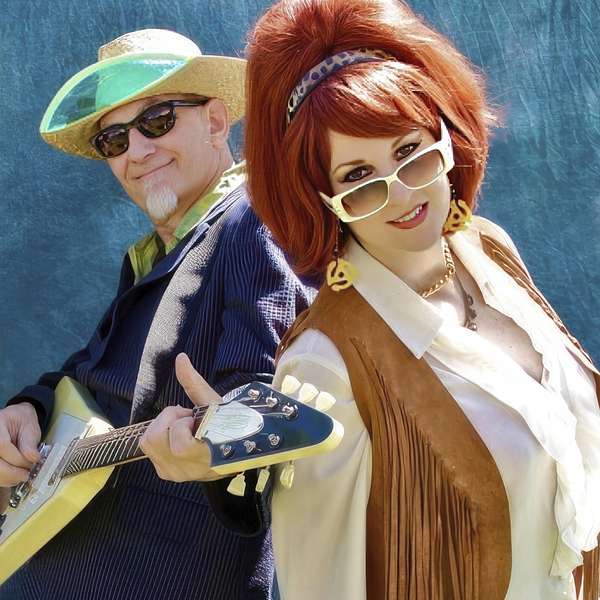
In the early 1980s, Rick Miller formed the first lineup of Southern Culture on the Skids. Rick had grown up dividing time between his father’s home in North Carolina and his mother’s home in California. Mary Huff, from Roanoke, Virginia was a cello major who also played bass guitar. Upon hearing that Rick’s band was looking for a replacement bass player, Mary joined and also recruited her long time friend Dave Hartman on drums. The trio of Rick, Mary and Dave would go on to become a much-loved, very fun and extremely talented band who have recorded and toured for several decades now. I’ve seen them play shows over the years, most recently at The Duck Room in St. Louis. And I had the pleasure of talking with Mary and Rick who called in from their rehearsal space and studio, The Kudzu Ranch.
Photo by Ron Keith.
Save on certified Pre-Owned iPhones, Androids, AirPods, Macs, Smartwatches, accessories, and more at Plug Tech. – http://plug.tech/DJFEY
And find more music from Southern Culture on the Skids here at Bandcamp.
Start for FREE
Find or Sell Guitars and Gear at Reverb
Find great deals on guitars, amps, audio and recording gear. Or sell yours! Check out Reverb.com
Save on Certified Pre-Owned Electronics
Plug has great prices on refurbished electronics. Up to 70% off with a 30-day money back guarantee!
Disclaimer: This post contains affiliate links. If you make a purchase, I may receive a commission at no extra cost to you.
Thanks for listening to Frets with DJ Fey. You can follow or subscribe for FREE at most podcast platforms.And now, Frets is available on YouTube. There are a lot of fun extras like videos and shorts and audio of all episodes. Subscribing for FREE at YouTube helps support the show tremendously, so hit that subscribe button! https://www.youtube.com/@DJFey39 You can also find information about guitarists, bands and more at the Frets with DJ Fey Facebook page. Give it a like! And – stay tuned…
Contact Dave Fey at davefey@me.com or call 314-229-8033
In the early 1980s, Rick Miller formed the first lineup of Southern Culture on the Skids. Rick had grown up dividing time between his father’s home in North Carolina and his mom’s home in California. Mary Huff, from Roanoke, Virginia was a cello major who also played bass guitar.
Upon hearing that Rick’s band was in need of a replacement bass player, Mary joined and also recruited her longtime friend, Dave Hartman on drums. The trio of Rick, Mary and Dave would go on to become a much loved, very fun and extremely talented band who have recorded and toured for several decades now. I’ve seen them play shows over the years, most recently at the Duck Room in St. Louis.
And, I had the pleasure of talking with Mary and Rick, who called in from their rehearsal space and studio, the Kudzu Ranch.
You’re listening to Frets with DJ Fey. No lessons, no technique info. I just talk to people who play guitar.
DJ: Well, Mary Huff and Rick Miller, I know you’ve been very busy touring, and I really appreciate you carving out some time for this today.
Mary: No problem.
DJ: You guys have been in the band now for decades, and I want to get into your beginnings as a band, but I’d like to go back even further. I know the band originated in Chapel Hill, but Rick, you grew up not only in North Carolina, but also spent time in California, or maybe divided time between the two?
Rick: Yeah, I moved. I grew up in North Carolina until I was about 12 in a little tiny town called Henderson, or Henna-son, as the locals call it. And then we moved to Southern California. I know my parents got divorced. My dad moved back to the South, and my mom stayed in California, and my sister and I stayed with her. But we’d have to come back to Henderson, and wherever my dad was living, right, for summers and working. My dad had a mobile home factory. I used to come back and work in a mobile home factory during the summer, things like that. So I got kind of a bi-coastal music education.
DJ: Yeah. Mary, you’re from Roanoke, Virginia?
Mary: I am. Roanoke, the Star City of the South.
DJ: I thought I was going to ask you. I thought it was called the Star City.
Mary: Yeah, Wayne Newton is famously from there. And yeah, nestled in the Blue Ridge Mountains of Southwestern Virginia.
DJ: Nice.
Rick: You know, I want to say one thing, though, about...
Mary: We’re going to interrupt each other. That’s just how we work.
DJ: That’s totally fine.
Rick: Growing up actually in Henderson, I think contributed to my musical direction very much so, because we only had one FM and one AM radio station. And I think the city, I don’t know what the demographics were, but it was probably about half black, half white. And they had to appeal to a wide audience. So I remember listening to everything from Buck Owens, to Aretha Franklin, to the Rolling Stones, the Yardbirds, to Roger Miller, to just Booker T. & the MG’s. It was all over the place. And I think it was a really great musical education, which you don’t get too much anymore.
DJ: Right, right. Well, I’m always interested in what music influenced people in their early lives. And then, you know, even when you got to the point where you’re starting to play out and record, Rick, you just mentioned some of the bands and artists you were drawn to. Mary, did you have similar tastes or were they more in a different direction?
Mary: You know, just all over the map. Growing up, my mother had a killer vinyl collection. And so I remember, you know, obviously growing up with The Beatles, that was my first, I think, formed memory is an “Octopus’s Garden.” I think, I think. But she had stuff like, you know, Jesus Christ Superstar and Iron Butterfly and Eydie Gormé. And, you know, so we’d listen to those records. My dad played a boogie woogie piano and my mom was in the theater. And then as I got older, yeah, same as Rick, you know, the AM radio stations in Roanoke were, you know, they played a little bit of everything. And then eventually, you know, as I got older, I got into, well, I played classical music as a kid and-
DJ: You played cello, right?
Mary: I played cello, yeah. So I did that and then I discovered, you know, oh, I don’t know, Aerosmith. And from there, it was heavy metal. And from then it was David Bowie and New Wave and then Big Punk Rock Slice was part of my high school. So all the DC hardcore bands and that kind of scene in the mid-80s. And then Rockabilly, which eventually led me to Southern Culture on the Skids. Kind of all over the place.
DJ: And was cello the first instrument you learned to play?
Mary: No, I started piano maybe at six. So I have one of those musical ears, as my dad would say. And so I started piano early and then cello because they said, they did an outline of my hand in school and said my fingers were long. And I wanted to play the flute or the violin or something girly, but they gave me the cello. I was saddled with that for the next 10, 11 years.
DJ: Well, while we’re on that subject, Rick, was guitar the first instrument you learned to play?
Rick: No, it wasn’t. I kind of wanted to learn it, but about the same time though, I was in school band and I had to pick an instrument. The only one that was left was like a trombone. So I tried to learn how to play the trombone. I was a horrible music student. Matter of fact, I remember my band teacher told me that I was totally backwards. He said, my feet stunk and my nose runs. So anyway, that didn’t work out. So I tried guitar, right? But my parents got me an acoustic guitar and they got me some lessons at like the local, I don’t know, it’s like upstairs in Henderson down by the Methodist Church. And it was like all folky stuff, right? And I mean, I just want to learn like “Sunshine of Your Love”. So I remember kind of like they dropped me off and I just didn’t want to learn “Greensleeves” right? So I remember I take off, I show up and then I take off and I go down the street to this place called the Smoke Shop. It was the pool hall, but they had all the titty mags and all that kind of stuff. So yeah, that’s my rock and roll education. How I got started on guitar.
DJ: That’s fairly similar to my brother. My older brother played trumpet at school and I thought, well, I think I could do that too. I was horrible. I mean, I just didn’t have the lungs for it or something and I just wasn’t into it. So yeah, I pretty early on, early teens switched to guitar and to this day, that’s really the only instrument I play. I fiddle around a little bit on piano, but I’ve never learned to play properly. But guitar is the instrument I just stuck with.
Rick: Yeah, man, I like guitars. It’s just, ya know I tell my son, I said, Jack, I go, man, you really need, you should pick up guitar or you should pick up an instrument. Because it’s like a psychological thing too. It’s just like, I’m never bored. I can always sit down and pick up my guitar and play, and it just kind of mellows your mind, it focuses you, it’s meditative. So, it’s not only a way to make a living if you’re lucky, right? But it’s also a way just to relax and kind of, yeah man, like, you know, be a person.
Mary: Although you did give yourself, you gave yourself piano lessons or took piano lessons in the last…
Rick: Well, no, Jack, my son was supposed to take piano lessons and we had, you know, and I felt bad because he wanted to quit. So, I let him quit. And so, I just filled in for him for a while because the teacher was a friend of ours.
Mary: Didn’t you actually learn from Professor Longhair?
Rick: No, no, no, no, no. Are you kidding me? That’s my favorite piano player, right? And that scored points with the instructor, but it didn’t do any help once I put my fingers on the iron.
DJ: Stay tuned, we’ll be right back.
Hey, I want to talk about Plug. Plug makes it easy for you to purchase the personal technology you need at 40 to 70% off retail pricing. What can you get from Plug? Certified pre-owned devices, including iPhones, Androids, AirPods, Macs, Smartwatches, accessories and more. I originally didn’t even want an Apple Watch, but I got one from Plug and I love it. I wear it every day. Your purchase is backed by their unmatched one-year warranty and 30-day money-back guarantee. One more very cool thing, Plug is dedicated to helping reduce e-waste around the globe. To date, Plug has helped save over 1 million devices from reaching landfills and they’re looking to double that number by 2025. Link to Plug Tech from the show notes and check out all the great deals and savings on certified pre-owned devices. Plug Electronics. Check it out.
DJ: Well, Rick, when you first formed the band, you were an art student, and I think you guys would even practice at school, like in the art lab or something?
Rick: We did, we practiced in the art lab where my studio was, until we got kicked out. I guess the Dean of Students lived close by.
DJ: Oh, he didn’t like it.
Rick: We got to word from the head of the art department, like, you guys gotta move it, move it out of here. But yeah, we used to practice over in the ceramics lab. There wasn’t any place big enough, right?
DJ: That’s funny.
Rick: So yeah, we had a good time, but that’s when we started my second year of grad school.
DJ: And Mary, you were in a band called The Phantoms, and I think some other like punk groups before joining SCOTS.
Mary: I played in a high school, and in high school, I played in a sort of a new wave cover band that we finally recruited Dave Hartman. Dave Hartman used to hang out with my older brother, and our drummer quit, and so we recruited Dave. But yeah, that band was called The Trademarks, you know, I did my best Chrissie Hynde back in high school, and then played, like I said, a hardcore band called мир, that’s M, backwards N, P – that’s Russian for Peace. And a couple other bands I dabbled with and when I got to VCU in Richmond, and but the last band before Southern Culture, yeah, it was called The Phantoms. And so, you know, that’s, we did Wanda Jackson and Duane Eddy and, you know, dabbled in like some Guana Batz and some rockabilly. And then that’s where I just started listening, really hardcore started listening to The Cramps. And then discovered Southern Culture on the Skids and that was pretty much all she wrote right there.
DJ: Well, even though your band has the word Southern in the title, I hear a lot of genres being explored or tapped into, you know, rockabilly, like you mentioned, surf, soul, country, even garage rock. “Sheik’s Walk” on For Lovers Only even has sort of a Middle Eastern thing going on, I think so.
Mary: I love that song! Thank you for bringing that up.
DJ: I do too. Yeah, I was just listening to that the other day and I love that song too. Well, I love Les Paul’s very laid back album, Lovers Luau, and I can hear some of that when I listen to the title track on For Lovers Only. I don’t know, it just reminds me of that. It’s very cool and nice and laid back. Unlike Les Paul’s ya know, blindingly fast double speed stuff.
Rick: Well, I’d say he’s speeding the tape deck up.
Mary: Maybe he was ADH.
Rick: Yeah. Well, that goes right back to, I think, for me anyway, growing up in Henderson and listening to all that different music when I was such a young kid, it just made me realize that good music is good music, right?
DJ: Right.
Rick: It doesn’t have to be this or it doesn’t have to be that regardless of style, but music is good music. And we used to spend so much time in thrift stores that, man, the easy listening stuff, I mean, that’s totally, and that’s when you used to buy records just based on the covers. And they had the best covers, right? The best covers. I love all that stuff. But you’re right, we have a lot of different music and it’s like I’ve said before, it’s like our music is kind of like a Southern plate lunch where you got your meat, your potatoes, your lima beans, your turnip greens, and it all on the side and it all kind of runs together in the middle of when you eat it. The best bite, the last bite, it’s the one right in the middle.
DJ: I want to talk about the days when you started recording and touring. Before we get into that, we absolutely need to talk, I think, about the origin of your look. And I want to start with Mary. And Mary, tell me if I’m getting this right. But wasn’t the beehive hair and go-go boots and all that, was that inspired by your mom?
Mary: It really was, yeah. She did local theater. And so she would drag me and my brothers and we’d hang out in the basement of this, it was called Showtimers, this playhouse. And I would wander around in the wigs and all the costuming and all that good stuff. But yeah, I mean, mom was a model for a short while and had like the best, you know, beehive kind of a bouffant going and her clothes were great. And so I could, back then I could still wear the same size when I joined the band in ’87. And so I would just raid her closet and get all the great, you know, capris and everything that she had. So yeah, very much inspired by mom. Well, I think we all need to thank your mom for your look. It’s a great look.
Rick: Thank you, Mrs. Huff!
Mary: I’m still finding good stuff. I was just up there and raided her closet yet again.
DJ: Oh, nice.
Mary: Taking it to California in two days. So, yeah.
DJ: And Rick, you and Dave both wore overalls a lot, I think over the years and maybe, I don’t know, early on or.
Rick: Well, you know.
Mary: Free balling. <<laughs>>
Rick: <<laughs>> I kind of like the bibs because they only touched me in a couple places. So: and we used to play some really hot miserable punk rock clubs all over the country, the world basically. Plus, you know, you just have one pair or two pair of overalls, man, it’s just easy to keep track of, easy to put on, easy on, easy off. And my grandpa was a dairy farmer. And I just thought, well, you know, he wore bib overalls to work every day, I guess I can too, right? Just keeping it in the family. And you know, and it kind of went along with the of, sometimes people ask, what kind of music do you play? And I’d say, oh, well, we play “Surruralism”, right? So we kind of kept in, you know, with the rural, you know, RFB aspects of our music.
DJ: Stay tuned, we’ll be right back.
Song: “Rhythm Guitar” by Ben Vaughn
DJ: Ben Vaughn’s radio show, The Many Moods of Ben Vaughn, is broadcast from “Parts Unknown, USA”. I guess we’ll never know where that is exactly, but we do know Ben grew up in Philly on the New Jersey side of the river. When he was only six, his uncle gave him a Duane Eddy album. That record would have a profound impact on Ben, who was playing drums in a garage band by the time he was 12. His interests then turned to the guitar. Ben has been recording, performing, touring and providing scores for films and TV theme songs for years now. He still finds time to host what, in this fan’s opinion, is one of the greatest radio shows on the airwaves. My talk with Ben Vaughn is available in season two of Frets.
…Four Mississippi, let’s ride…
Rick: Hey, this is Rick Miller from Southern Culture on the Skids, and you’re listening to Frets with DJ Fey.
DJ: Well, speaking of clubs, after you began recording and releasing albums, you guys toured a lot. Any good stories from those days on the road? I’m thinking like, like were there any memorable experiences that were either good or maybe bizarre at some show, or just, I’m sure you’ve seen a lot over the years.
Mary: I mean, really too many to mention but if you’re gonna pick a couple…
Rick: Probably the one stretch that was the worst is when our van broke down in Eastern Montana. We were stuck in Eastern Montana for like 10 days, and they had to fly an engine in, right? It was a town called Glendive, which is a nice town, but we broke down like a little bit outside of town, and the hotel we were at was about two or three miles from downtown, or the closest beer store. And so we were stuck there for, I don’t know how many, like I said, 10 days, on the sixth day, I think, I remember going, I called them and they said, your van is all ready, the engine’s here, we just can’t get it done because the mechanic can’t make it in today, his horse is sick.
DJ: The horse was sick.
Rick: His horse was sick. So his horse got better, right? So we got it fixed and we took off. And we got about, I don’t know, 60 or 70 miles to a place called Miles City, Montana, where it threw a rod again, right?
DJ: Oh, no…
Rick: So, I mean, so at this point, I called them up and they were like, well, we can’t get a tow truck to you. And AAA, man, the guy, there’s only a couple tow trucks in Montana, I guess, at the time. And one of them was like somewhere else, and he said, I can’t get there, but I got a friend who has a trailer. He’s going to come and get you and bring you back, right? And we’ll get this fixed. So this guy shows up in Miles City with like a six-cylinder jeep truck and a trailer that barely fit our 15-passenger van, right? I mean, the wheels were right on the end of it, on the end of his trailer, right? It looked like a pretty lightweight setup, right? To tow a truck, or our van on the highway, right, for 60 miles, 70 miles. And sure enough, and the guy had, I swear, I thought the guy, he had one glass eye. And everything was fine until we got on the interstate. And when we hit the gas on the interstate, if we went over 20 miles an hour, the front end of the truck would come up and we couldn’t steer.
DJ: That’s not a good thing.
Rick: No.
Mary: And we’ve got two guys in the van back down there.
Rick: And there was only room for two of us. And with him, the other two guys were laying down in the van because they can’t be seen because it will get busted, right? Because you’re not supposed to have anybody in the truck and then you’re towing. So it took us going 15 miles an hour to go 60 miles. It took us like eight hours.
DJ: Man, oh man.
Rick: And then every time the guy was full of stories, though, I gotta say it was an entertaining ride, but every time you get to a punch line or a story, he just had to look at you. And his one good eye was on the left side. So he had to turn all the way around see you and get your reaction. And then he’d step on the gas in the front end and come up and go all over the freeway.
Mary: You could hear Dave screaming, you know.
DJ: Wow, wow, that’s a classic. That’s a classic story.
Mary: Well, it went on and on and on and on and on.
DJ: Man, oh man.
Rick: And then that same van, right? A year later, we’re out touring, and in Eastern Washington state, something happens again to the engine, right? So we pull over, what was the name of that town? Do you remember?
Mary: It’s where they filmed Twin Peaks.
Rick: No, no, no, that was the place where we stopped. That was closer into Seattle. Anyway, we stopped there. It was the Wheat Capital Hall of Fame was there, remember?
Mary: But it was the week of cowboy art shows. I know that.
Rick: It was that, but that came in later because what happened there was we just had to, we had to be in Canada. We had a big festival in Bellingham that we needed to be at. And we were just like every business had the same name on it. So we just thought like, oh shoot, we’re gonna be stuck here for a while because it’s all kind of one family. Anyway, I said, you have anybody that would just trade our vehicle? Trade us? Cause we have to get to the, we have to get to Washington state out, Western Washington for shows and stuff. We’re just losing money right and left. And he said, you know, I think I do have somebody.
Mary: Oh my God.
Rick: So he calls up his buddy and his buddy comes down. And what he’s got is he’s got a Chevy short bed van that used to be a Pacific Bell van. A Pacific Bell van.
Mary: Just the lightest, you know, primer gray over it. Just barely covering it.
Rick: Over parts of it, right?
Mary: Parts of it.
Rick: So we were just like, well, does it run? And he said, yeah, it runs. And deal, done.
Mary: Short bed.
Rick: We unloaded our stuff and we got it in there and stuff. And the guy handed me a screwdriver instead of the keys.
Mary: As the sun’s going down.
Rick: Right. I said, well, man, I said, do you have the keys? And he goes, don’t need a key. Don’t need a key. Starts with a screwdriver. Tap on the solenoid, right? And I’m like, whoa, but we, but undeterred, we just said, fine, give me the screwdriver. Right.
DJ: The show must go on.
Rick: So we hit the road. Okay. We didn’t know it, but there was three different size tires on it.
DJ: Oh.
Rick: So we couldn’t go over like 30 miles an hour again, right? Or it would just wiggle all over, off the road.
DJ: This is like a cartoon. This is, this whole thing is like some hilarious cartoon.
Rick: And we stopped about two or three different places on the way, because it was really desolate out there. And we couldn’t get a hotel room because there was a cowboy art show.
Mary: Cowboy art show.
Rick: I said, what? So anyway, we drove all night. We got to outside, it’s about an hour outside of Seattle. We found a guy that would change the tires, fix the brakes, the steering wheel, like hardly, it just moved all over the place. There was so much play in the front end.
Mary: And this was a, like a utility van.
Rick: And he re-keyed it. But he said, I’m not supposed to do this. He said, I’m going to need to see the pink slip. And I said, oh, okay, well, here’s the pink slip. And I realized it didn’t have the guy’s name on it that sold it to us or traded it. It was somebody else’s name.
Mary: Getting ready to cross into Canada.
Rick: I go, oh my God, we got to do a border crossing. And then like, are we in a stolen vehicle? So luckily my mom’s husband, not my dad, but her husband was a judge in California. So I called him up and I said, hey, Chuck, I said, I think I got a stolen vehicle, but I got to go, I got to do a border crossing tonight to go play in Vancouver. I said, what should I do? And he’s a judge, right? And he goes, whatever you do, don’t go to the police. He goes, they’ll just stop you. You’ll never get anywhere. He said, you’re just gonna have to take your chances. So, you know, he rekeyed it, because he knew he was in a band himself, the guy that, the locksmith. And sure enough, man, we went to Canada and we drove that band like for three weeks all up and down the West Coast. Now there were, Mary had to sit in a lawn chair because there wasn’t, there was only, there was only two seats in the front. And I think the passenger door had to be held on with a bungee cord.
Mary: Yes.
Rick: Because it didn’t, right?
Mary: I just kind of laid my feet on top of the cooler in between them.
Rick: So anytime we break it, had to break it out fast, Mary comes flying forward in the lawn chair with us.
DJ: That’s great.
Mary: And we made it again, right?
Rick: Yeah, we did. And with that van, it was such a piece of crap that, but it ran, it ran and it ran and it ran.
Mary: I wish we still had it.
Rick: I do too.
Mary: It’s like the mystery machine.
Rick: Yeah. Anyway, we got down to LA and we were going to, and we needed to get rid of it. I mean, we couldn’t keep touring in it. It was okay to go up and down the West Coast.
Mary: The fumes were going to kill us.
Rick: Yeah, no, it was just too dangerous, right? So we went to Geffen and we parked it in front of Geffen Records on Sunset Strip, right? This total piece of junk and just said, we need a new van. You need to give us money.
Mary: And like we’re one record in.
Rick: Right. You need to give us some money so we can continue touring and making this record sell, right? And they were like, eh, I said, well, we’re going to leave it right there and we’re going to spray paint on the side of it. “Geffen sucks”. You know, give us some money. So they gave us like 17 grand and we went out the next day. I remember we went to Tustin Auto Park and we bought a Ford Econoline and took off for a gig in Vegas. And we got right to the, right by the, the, the, we got right over the Vegas border and that van threw a differential, right? The drive shaft fell off. So that’s where we got the song “40 Miles to Vegas”.
DJ: Oh, nice.
Rick: Yeah, so it all worked out in the end, right? We got it fixed. It was warrantied. Ya know what I mean? We toured in that van, put 300,000 miles on it.
Mary: Yeah. The end. There you go.
DJ: Yeah, you served up a story for me.
Mary: Hopefully, your podcast isn’t runnin’ long here.
Mary: Hi, this is Mary Huff from Southern Culture on the Skids, and you’re listening to Frets with DJ Fey.
Rick: Another interesting thing though, as far as touring or playing out, we did a prison tour of the state of North Carolina. We played almost all the prisons, except we didn’t do Maximum over in Raleigh, where Death Row is, at the time. But we played all the prisons. We played women’s prisons, men’s prisons. We played youth facilities, youth correctional. We played infirmary. We did the prison hospitals, and that was incredible. We played with a blues band and a gospel band, and that’s where I just got so impressed by the gospel, the gospel guys. Man, they were just killing it. Yeah, yeah. the Holy Spirit. It’s real.
DJ: One of my favorite songs is Irma Thomas, “Hittin’ on Nothin’”. You’ve covered that with Mary on vocals. Do you guys have a recording of that, or is it just something you did in your live sets?
Rick: No, we have a recording. It’s on Liquored Up and Lacquered Down, in fact.
DJ: It is on Liquored Up and Lacquered Down, of course.
Rick: It’s gonna get, we were just working on a reissue actually had the original mix tapes, the half inch mix tapes, and I had to, I baked them down for about 24 hours and took them over to our friend of ours, Mitch Easter. And he had a, we recorded that on a Dolby C machine, mixed it anyway. And he decoded it and sent me back some high def files. And we are going to remaster it, add three bonus tracks, and it should be out in the fall. And we’re gonna do a CD and vinyl.
DJ: Oh, nice!
Rick: Yeah.
Mary: So you listened to “Hittin’ on Nothin’” about 25 times.
Rick: I did! So it’s funny you brought that up, because I’ve just listened to it over and over and over again.
Mary: Thinking about working it up in practice here today, but I don’t know, we’re gonna have time.
DJ: I love that song.
Mary: Irma, she’s still doing great.
Rick: Is she?
Mary: Yeah. Queen of New Orleans.
DJ: That’s right, that’s right.
Mary: Still performing.Rick: Good for her.
DJ: Yeah, I’ve included that track on playlists that I’ve made for people. And it’s just always been a favorite. That’s great.
Mary: Yeah.
DJ: A friend of mine and I were just talking recently about how much we love the film, Flirting with Disaster. Your song “Red Beans and Reverb”, was on that soundtrack. How did that come about? Did they just approach you and say we’re, we’d like to use the song? Or how was, what was the story?
Rick: No, that was another total kind of fluke in a way. When we got signed to Geffen, we had just finished putting out a record called Ditch Diggin’. And they wanted us, they wanted some songs. And we said, well, you know, we just got done touring and they wanted us, I think this was in August or September and they wanted us to be ready to record a full length record in January. So they said, well, we’ll give you some money and we want to hear some demo songs. Well, at the time we were rehearsing in an old gas station right outside of town, right in one of the bays. And I remember we, they gave us $10,000 and we split up, split up four ways with the band being the fourth partner. And I remember we bought an 8-track tape deck, a Tascam 8-track tape deck, a couple SM58s, some mic cables and we had some, some stands and a little Mackie board, a 16 by 4 Mackie board. And we started cutting some songs, right? Cutting some demos and recording them on the 8-track. Well, “Soul City” was one of those, “White Trash” was on Dirt Track Date. And on the strength of those, they said, good. But there was a couple other songs too. There was one called “Red Beans and Reverb”. And was it BSA 441? I can’t remember. I think that was it. From that whole session that we did totally green in a garage, right?
DJ: Oh, wow.
Rick: 8-track tape machine. And sure enough-
Mary: But the reverb was just right, really.
Rick: But “Red Beans and Reverb” was one of those songs. And when it got picked to be, we were on Geffen at the time and they took the song as a demo, but it never came out on a record or anything, but they did get it placed in that movie. So, it’s kind of wild that that happened, right? That even happened. But that was recorded in a gas station outside of Carborro, North Carolina.
DJ: Nice.
Rick: Yeah, and it ends up in a movie.
Mary: Well, don’t forget, “Camel Walk” made it in there too. They’re having tantric sex. I think Mary Tyler Moore mounting George Segal to that song.
Rick: Well, I mean, I am very proud of that moment that I could be there with a song. But you know “Camel Walk” is another one of those strange things that it was total filler, again, for Dirt Track Date. We were pressed for songs, and they wanted a couple more songs, and we were kind of like, well, what can we do? Well, let’s go back in the catalog and see if there’s something that came out on a single or relatively obscure that we can re-record and throw on here that they’d be okay with. And our producer, engineer, Mark Williams, said, you know, I always liked that song “Camel Walk” that you guys did on Zontar Records, because we did a little single on Zontar Records called “Viva De la Santo”. And he said, let’s just re-record that. So we did, right? And it was total filler. It was total filler. And I think we toured for a full year on Dirt Track Date before that got played at like one of those, like a modern rock station in Tampa, Florida. And the DJ said, hey, this song’s got legs. This is going to do something. And I remember radio people called us up and they said, hey, you guys, it’s going to hit. You guys get ready. You got to go back out on the road.
Mary: I’m like “Like Camel Walk”?
Rick: Because they were playing “Voodoo Cadillac” and “Soul City” on the AAA. AAA was really big at that time for radio, for us. And anyway, so yeah, “Camel Walk” came out and boom, all of a sudden it’s getting played on these modern rock radio stations. And we were going from touring and doing our indie thing for playing, maybe 80 people next time, 100 people, maybe 120 the time after that, to playing in front of thousands of people, and just because they like “Camel Walk”. So it was just kind of blew my mind, right? When the people think of us, they think of “Camel Walk”. It was a total fluke.
DJ: Well, you mentioned Geffen. I guess the bulk of your recent albums were all recorded at your own facility, the Kudzu Ranch.
Rick: That’s correct. Well, you know, once we did that thing for “Red Beans and Reverb” and we got a check, I’m like, whoa, this recording rack, it’s not bad. But you know, but we always knew too, I think from day one, that the bands that wrote their own material were the bands that survived.
DJ: Right. Well, I think Dex Romweber recorded there, right?
Rick: Oh yeah, man. I love Dex.
DJ: Yeah, I really want to get Dexter. I want to get Dexter on the show.
Rick: Oh yeah, you should. You should. Matter of fact, I can help you with that probably. We’ve been, when I moved to town to go to grad school, I moved, Dexter was my neighbor and he was in like seventh or eighth grade. Yeah, yeah,
DJ: I used to go, I used to go see Flat Duo Jets, you know, just in really tiny small clubs. There was, I saw them once in St. Louis and about 12 people showed up, but uh, Dexter played as if there was like a stadium full of, you know, 10,000 or whatever. He just poured it out, man. It was great. It was really, really cool.
Rick: Oh, I love Dexter. Yeah. He’s my favorite local band.
DJ: Yeah. Well, I talked with Florence Dore back in season one of the podcast and we were talking about the compilation Cover Charge. It was to benefit Cat’s Cradle. And there’s a track on that as well. At least one track, right?
Rick: Yes. Mm-hmm.
DJ: And then Mary, you contributed on Florence’s album, Highways and Rocketships.
Mary: Yes.
DJ: She’s great.
Mary: She’s fantastic.
DJ: Yeah.
Mary: And that record is fantastic.
DJ: It really is.
Mary: Every one of her songs is a hit song in my opinion. And I was very honored for her to take part of singing a little harmony on that song.
DJ: Yeah, it’s a great album. I bought the vinyl on that. I’m slowly rebuilding back up my vinyl collection. I got a pretty good turntable these days and I’m loving stocking up on vinyl.
Mary: Now that it only cost you, you know, what, 30 or 40 bucks to replace everything. But yeah, we love Florence and she’s been really busy promoting a record this year. And yeah, it’s great. And I listened to your interview with her and uh…
DJ: Oh, good.
Mary: A great interview as well.
Rick: What was it? Our song on that was “Let’s Work Together.”
DJ: That’s right. That’s right. On the Cover Charge album.
Rick: Wilbert Harrison. I am a huge Wilbert Harrison fan.
DJ: She talks about that song and about him being the composer of that in the podcast. Yeah.
Rick: I mean, Canned Heat, I think most people know it as Canned Heat. That’s probably the first time I heard it was Canned Heat.
DJ: Sure.
Rick: But I’m a sucker for some serious boogie. Yeah, yeah, yeah. I’m a big Canned Heat fan. But Wilbert, when I discovered, you know, that’s how so many of us, I guess from my generation, Mary’s generation, your generation, probably discovered music was in music stores. And listening to people that, you know, might be your age or bands that you knew, covering songs. You know what I mean? And you just go, well, wait a minute, they didn’t write that, who wrote that? And you look it up, like, you know, and you just go, oh man, it’s like, I remember when I was young, I love “Summertime Blues” by Blue Cheer, right? Sure, yeah, yeah. And I was like, wow, but who wrote that? And I saw this guy named Cochran. I remember going to like Tower Records and digging through the bins, I go, yay, Eddie Cochran, man. And they’re like, oh yeah, right over there. UA United Artists reissue double record set. Man, I got that and I was like, oh my gosh, is this good, right?
DJ: That’s great stuff. Well, it was so fun to see you guys in St. Louis recently. I love that you closed the show with “Dear Mr. Fantasy”, powerful vocals on that by Mary, and then Rick, that was a pretty amazing guitar solo. That was just, what an incredible finale to that show. It was so fun. It was great.
Mary: He’s got some whammy thing going on.
DJ: Yeah.
Rick: Yeah, you know, every once in a while you gotta get in touch with your inner psycho.
DJ: That was so great.
Mary: Thank you.
Rick: Yeah, no, that’s really fun song. I always loved that song.
Mary: Yeah, love the psych. Yeah.
Rick: And Mary does a great job singing it.
DJ: Yes, it was beautiful. Well, what’s on the horizon for the band? Or will you be able to take a break? I know you guys have been touring and touring and touring.
Rick: We just got caught up with everything that we, was on the back burner from COVID.
Mary: Yeah, we did our last COVID makeup gig this month.
Rick: Yeah, St. Louis was it.
DJ: Oh, okay.
Rick: Yeah, St. Louis, well, St. Louis, Omaha, maybe Iowa City. And that was it. Now we’re all caught up for going back to California. We got August off. We’re working on a new record.
DJ: Great.
Rick: That’s the nice thing about having a studio is when you’re back, you can always kind of make the most of your time working on some new stuff.
Mary: Dave’s on the way. We’re gonna practice.
Rick: Yeah, we’re gonna still rehearse. Fly out to California Sunday 3 a.m. Something like that. I mean, we still rehearse. I thought about that the other day. I was thinking like, I wonder how many bands have been together for like almost 40 years, still rehearse.
DJ: Yeah, that’s great. And you’ve got the place to do it.
Rick: Yeah, we do. Well, it’s fun too. Well, you know, maybe not all of them have to rehearse. Sometimes.
DJ: Mary Huff and Rick Miller, thank you guys so much for this. This was great.
Mary: Thank you so much, Dave. We love the Frets podcast.
DJ: Oh, I love hearing that. I love hearing that.
Mary: See you next year in St. Louis.
Rick: I’ll hook you up with Dex!
DJ: Thanks for tuning in to Frets with DJ Fey. If you like the show, you can subscribe for free at most podcast platforms. Hope you’ll join me again next time. Stay tuned.
Mary: I think I’m gonna grab my coffee.”
Podcasts we love
Check out these other fine podcasts recommended by us, not an algorithm.

WHAT WENT WRONG
Sad Boom Media
WTF with Marc Maron Podcast
Marc Maron
The Daily
The New York Times
S-Town
Serial Productions