China’s Looming Demographic Challenge
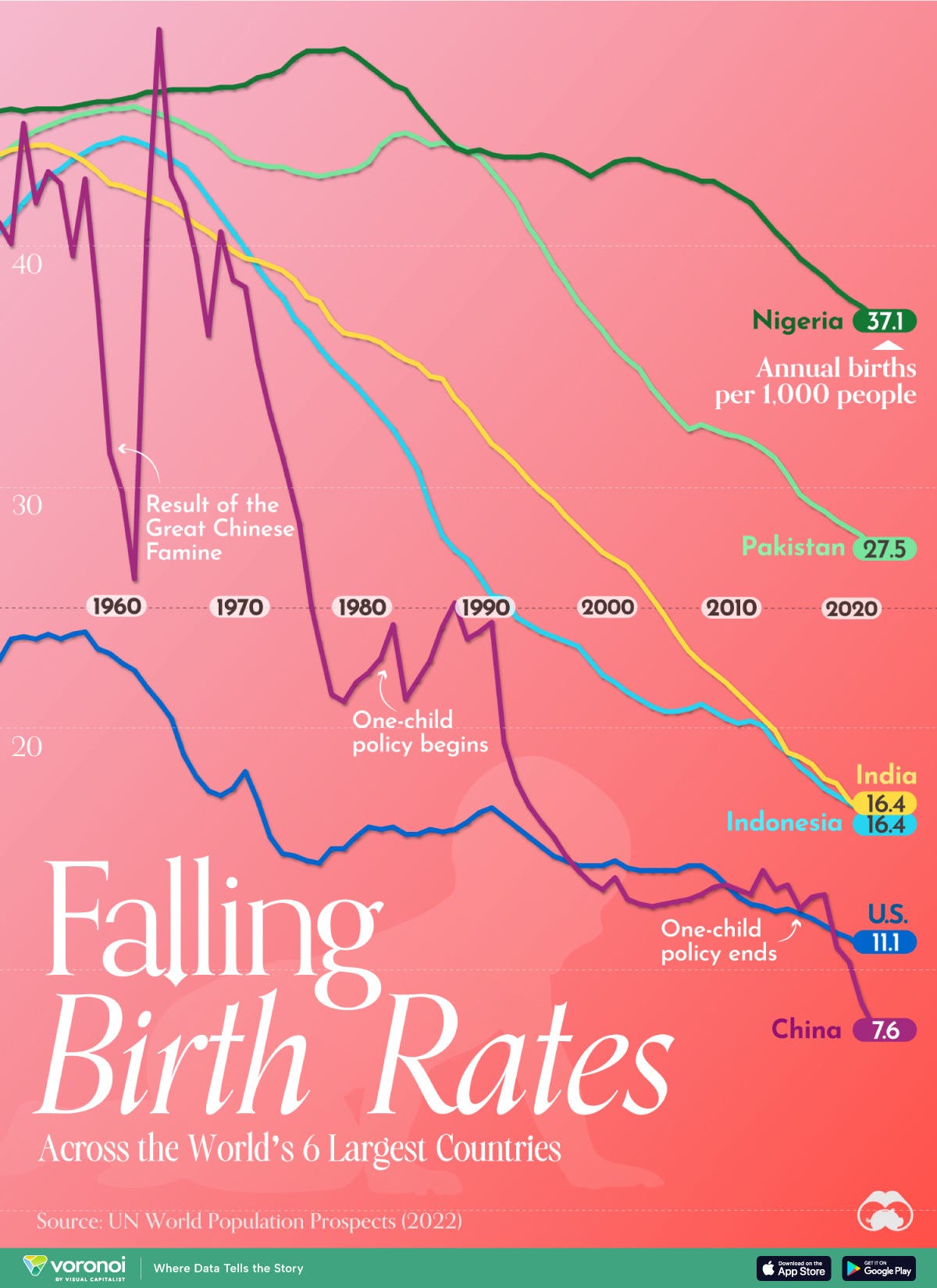
China, home to over 1.4 billion people, stood as the world’s most populous country until recently, surpassed by India in 2023. Its demographic trajectory, however, presents a mounting challenge that threatens to reshape the nation’s economic and social fabric profoundly. After decades of sustained population growth, which fuelled rapid industrialisation and urban expansion, China is now encountering a steep demographic transition characterised by a rapidly aging population and a declining birth rate. According to the 2020 census, the fertility rate has plummeted to approximately 1.15 children per woman, well below the replacement level of 2.1. This decline is a direct legacy of the one-child policy implemented from 1979 to 2015, combined with evolving social and economic factors, including rising education and career aspirations, and increased costs of child-rearing. In 2022, China recorded its first population decline in six decades, with the total population shrinking by nearly 850,000, a trend projected to accelerate in the coming years.
This demographic shift is generating far-reaching socioeconomic impacts: a rapidly shrinking workforce, increasing old-age dependency, and growing pressure on pension and healthcare systems. By 2050, it is estimated that nearly 40% of China’s population will be above retirement age, creating a dependency ratio unseen in modern global history. These changes come at a critical juncture as China transitions from an economic growth model reliant on abundant labour to one that demands higher productivity and technological innovation. Understanding China’s demographic outlook is key to anticipating not only its domestic challenges but also its role in the global economy and geopolitical landscape as it navigates this unprecedented population transition.
China is a vast and complex country with a population and urban landscape that often surprises many who only know of its well-known cities. Beyond iconic metropolises like Shanghai, Beijing, and Hong Kong, there are numerous other large urban centres such as Chengdu, Chongqing, and Xi’an. However, these cities do not yet command the same global recognition as New York, London, or Sao Paulo, highlighting the enigmatic nature of China’s urban geography.
The Overlooked Complexity of China’s Urban Environment
Historical Context: The One-Child Policy and Demographics
For decades, China’s population size was widely regarded as a key engine for its economic momentum. However, this enormous population also harbours a serious demographic dilemma, primarily a consequence of several decades of population control policies. Introduced in 1979, the one-child policy aimed to rein in population growth due to previous challenges like famine and widespread malnutrition. It succeeded in reducing birth rates drastically, but with unintended, long-lasting consequences.
Key effects include:
An Aging Population and Workforce Shrinkage
China’s demographic shift has resulted in a rapidly aging population and a diminishing workforce. This manifests in several critical ways:
Social Consequences and Gender Imbalance
Chinese officials are cognisant of the country’s mounting demographic crisis. Ning Jizhe, the director of China’s National Bureau of Statistics, stated, “The economic structure and technological development need to be adjusted and adapted” to accommodate the shrinking working-age population
Government Measures to Mitigate the Crisis
The Chinese government has implemented several policies to encourage higher birth rates. These include:
Despite these efforts, results have been modest, suggesting that a more holistic, long-term approach is necessary.
Multifaceted Strategies for Sustainability
Experts argue that addressing China’s demographic challenges requires:
The Uncertain Path Forward