
Geography Expert
Geography Expert
The Industrial System
Use Left/Right to seek, Home/End to jump to start or end. Hold shift to jump forward or backward.
The industrial system
The industrial system is a multifaceted web of economic activities and processes dedicated to the large-scale production, distribution, and consumption of goods and services. This system encompasses diverse sectors, including manufacturing, mining, energy production, transportation, and infrastructure, all of which collaboratively drive economic growth and development. At its essence, the industrial system involves transforming raw materials into finished products through a series of interconnected activities. This intricate process often begins with the extraction or procurement of raw materials, such as minerals, metals, or agricultural produce sourced from natural resources or primary producers.
Check out my website, Facebook groups and other social media.
www.ritchiecunningham.com
Geography Expert Substack | Ritchie Cunningham | Substack
Geography Expert - Facebook Group
https://www.facebook.com/groups/3514097965371452
UK Geography teachers | Facebook
Twitter - @RRitchieC
YouTube Geography Expert@geographyexpert
BlueSky @geographyexpert.bsky.social
Threads cunninghamritchie
LinkedIn (7) Ritchie Cunningham | LinkedIn
Thank you for listening
The industrial system
The industrial system is a multifaceted web of economic activities and processes dedicated to the large-scale production, distribution, and consumption of goods and services. This system encompasses diverse sectors, including manufacturing, mining, energy production, transportation, and infrastructure, all of which collaboratively drive economic growth and development. At its essence, the industrial system involves transforming raw materials into finished products through a series of interconnected activities. This intricate process often begins with the extraction or procurement of raw materials, such as minerals, metals, or agricultural produce sourced from natural resources or primary producers.
Once raw materials are secured, they undergo a series of processes within the manufacturing sector. This phase includes not only the utilisation of machinery and equipment but also relies heavily on skilled labour to convert these raw materials into various intermediate or final products. Manufacturing processes are typically high in specialisation, incorporating activities like assembly, fabrication, refining, and packaging that lead to the creation of goods tailored for consumer needs.
After manufacturing, the industrial system incorporates logistics and distribution, facilitating the movement of goods from production sites to several distribution channels—be it wholesalers, retailers, or direct consumers. Transportation emerges as a critical function in this phase, employing a range of modalities, including trucks, ships, trains, and aeroplanes, to ensure the efficient movement of products across domestic and international markets.
Supporting this expansive system is a necessary infrastructure that includes energy production, telecommunications, and transportation networks. These facets ensure the smooth operation of production and distribution processes. Energy production and distribution systems are essential to provide reliable power for factories, while telecommunication networks enable effective communication and coordination among various stakeholders within the industrial landscape.
Moreover, the industrial system is inherently influenced by a myriad of economic, political, and social factors. Government policies, regulations, and trade agreements can significantly sculpt the structural and operational dynamics of the industrial system, affecting labour practices, environmental standards, and competitive market landscapes.
Over time, the industrial system has seen remarkable transformations. The First Industrial Revolution, emerging in the late 18th century, signified a shift from manual labour to mechanised production driven by steam engines. Subsequent industrial revolutions introduced groundbreaking technologies, such as electricity, mass production techniques, and automation, resulting in enhanced productivity and the formation of global supply chains.
Presently, the industrial system is poised at the brink of further transformation owing to the rise of digital technologies, the Internet, and advanced automation. Concepts like Industry 4.0 and the Internet of Things (IoT) are delineating a new era characterised by smart factories and interconnected systems wherein machines, processes, and data synergise to optimise production and elevate efficiency.
In summary, the industrial system serves as a comprehensive framework that encapsulates the interconnected activities, diverse sectors, and processes involved in the large-scale manufacture and distribution of products. It acts as a bedrock for economic growth, technological progression, and societal advancement.
Main Types of Industry
At its broadest definition, industry encompasses work aimed at achieving economic gain. For geographic and analytical purposes, industries are generally categorised into five principal groups, determined by the nature of their economic activities and the products or services they provide. These classifications are vital for understanding economic dynamics.
1. Primary Industry:
This sector is characterised by the extraction and production of raw materials from natural sources. It includes vital activities such as agriculture, forestry, fishing, mining, and oil extraction. Primary industries are crucial as they serve as the initial link in the production chain, obtaining natural resources essential for subsequent industrial endeavours.
2. Secondary Industry:
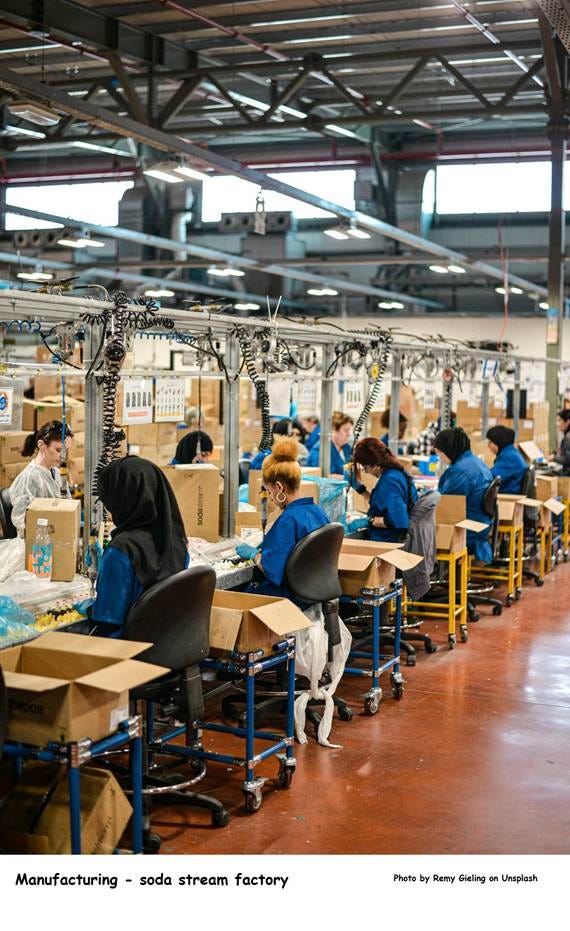
Secondary industries concern themselves with processing and transforming raw materials into finished or intermediate goods. Drawing inputs from primary industries, they engage in various manufacturing processes. Notable examples include automobile production, textile manufacturing, steel production, and food processing. These industries create value by converting raw resources into usable products.
3. Tertiary Industry:
Also known as the service sector, tertiary industries do not produce tangible goods but instead provide essential services. This sector covers a broad range of activities, including transportation, retail, hospitality, banking, education, healthcare, tourism, and professional services like legal and consulting services. Tertiary industries play a supportive role in both the production and distribution of goods while catering to the diverse needs of individuals and businesses.
4. Quaternary Industry:
The quaternary sector comprises intellectual activities focused on knowledge creation and management. It encompasses research and development, information technology, data analysis, consulting, and other knowledge-driven services. This sector serves as an elevated form of the tertiary sector, engaging in services tied to the knowledge economy, which includes the demand for information-based solutions. Those employed in quaternary industries tend to be highly educated, typically benefiting from substantial remuneration linked to their specialised skills. This sector is pivotal in driving innovation and technological advancement.
5. Quinary Industry:
Quinary industries involve high-level decision-making roles across various sectors. This includes top executives, government officials, and policymakers responsible for strategic planning and governance. These decision-makers significantly influence the trajectories of industries and economies through their leadership and administrative capabilities.
It’s important to recognise that these classifications are not always distinct, and numerous industries may embody characteristics of multiple categories. For instance, a manufacturing company (secondary industry) might also provide maintenance services (tertiary industry). Additionally, as technology continues to evolve, the boundaries between industries often become increasingly blurred, prompting new sector formations.
Sectors of Industry
Industry can be dissected into sectors to better categorise and analyse various types of economic activities based on traits, functions, and interrelationships. This segmentation is instrumental in establishing a systematic understanding of the diverse economic activities present within the industrial landscape.
Reasons for Sector Breakdown:
- Classification and Organisation:
Dividing industries into sectors facilitates a structured classification of economic activities. This systematic approach aids in grouping related industries based on similarities in production processes, inputs, outputs, and market dynamics. Such an organisation is invaluable for researchers, policymakers, and analysts seeking to understand industry patterns and identify specific challenges. - Policy Formulation and Analysis:
Identifying sectors aids in crafting targeted policies and regulatory measures. Policymakers can tailor their interventions to meet the unique demands of each sector, leading to more effective governance. - Economic Planning and Development:
Sector classification assists in economic planning at various levels. By identifying key sectors that drive growth and innovation, planners can formulate strategies to enhance competitiveness and sustainability. - Economic Performance Evaluation:
Analysing economic performance at both macro and micro scales becomes easier with sectoral disaggregation. Monitoring sector-specific indicators helps policymakers gauge economic health and pinpoint areas needing intervention. - Analysing Interdependencies and Linkages:
Understanding how different sectors interact and depend on one another is crucial for comprehensive economic analysis. This knowledge sheds light on how developments in one sector may influence others, drawing attention to supply chain dynamics.
Commonly Recognised Sectors:
- Manufacturing Sector:
Involving the production of goods by transforming raw materials, this sector includes diverse activities, from assembly to packaging. Key industries encompass automotive, electronics, textiles, and food processing. - Mining and Extraction Sector:
This sector focuses on extracting natural resources, including minerals, metals, and fossil fuels. It is essential for supplying raw materials necessary for various other industries. - Energy Sector:
Responsible for energy production and distribution, this sector includes activities related to fossil fuel extraction, renewable energy generation, and electricity distribution. - Construction Sector:
The construction sector involves building and maintaining infrastructure. Activities range from residential and commercial development to civil engineering projects. - Transportation Sector:
Facilitating goods and people movement, this sector employs various transportation modalities such as road, rail, air, and water transport. - Utilities Sector:
Providing essential services such as electricity, water, and sanitation, this sector underpins industrial activities while contributing to public health and welfare. - Information Technology (IT) Sector:
Focused on technology development and application, this sector spans software, hardware, telecommunications, and data management. - Financial and Professional Services:
This sector encompasses a broad range of support services essential for industry, including banking, insurance, legal assistance, and consulting.
Overall, the classification of sectors within the industrial system not only aids in comprehensive analysis but also fosters informed decision-making, strategic planning, and the promotion of sustainable economic development. This nuanced understanding of industry dynamics is vital for navigating the complexities of the modern economy.
Thank you for listening to this Geography Expert Podcast. You can find access to all my free resources through my website www.ritchiecunningham.com including links to my Geography Expert Substack and Podcasts.