The Mitten Channel
The Mitten Channel is a Michigan podcast and media network created by former Genesee County Prosecutor Arthur Busch.
We produce original programs that blend legal expertise, investigative storytelling, and deep Michigan history — including true crime analysis, environmental investigations, employee rights, and rich biographies rooted in Flint’s working-class culture.
Our mission is to preserve Michigan stories, examine the systems that shape our communities, and give voice to the people who define our industrial past and future.
Mitten Channel Podcast Shows: Radio Free Flint, Flint Justice, The Mitten Works, Mitten Environmental and The Mitten Biography Project
To listen to full audio podcast interviews visit https://www.radiofreeflint.media
Radio Free Flint is a production of the Mitten Channel where you can find podcast shows Mitten Environmental, Flint Justice, The Mitten Works.
The Mitten Channel
Keeping Old Documents,Photos and Donating Your Treasures
Use Left/Right to seek, Home/End to jump to start or end. Hold shift to jump forward or backward.
In our highly mobile society, figuring out what to do with our old papers, photographs, and keepsakes is challenging. We accumulate boxes of possessions over a lifetime, and when moving, retiring, or upon the death of a parent it sits in your house begging for a home.
Your junk can be true treasures that preserve the history of your community or your family.
What do you do with all those boxes and files that you will "someday" get around to sorting out? What is valuable, what is worth saving, and what is worth donating to a local historical society, library, or museum?
Lastly, what are the best ways to preserve the photos of four generations of family members? Should you frame them or keep them in your basement or garage?
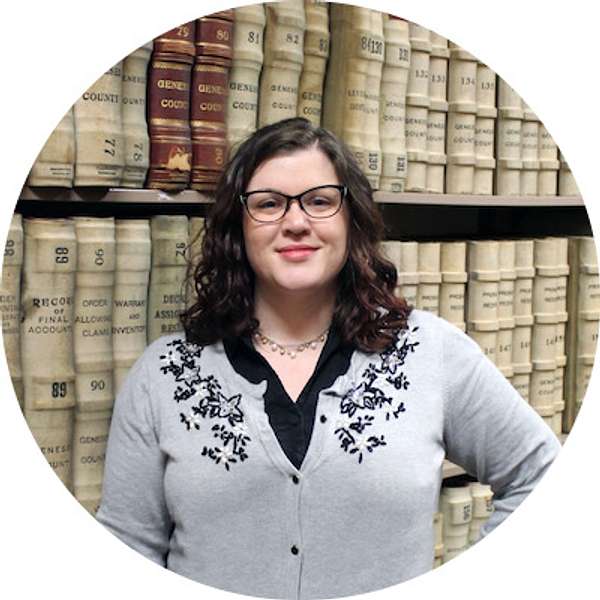
Colleen Marquise is an Archivist at the University of Michigan-Flint Willson-Thompson Library and supervises the Genesee Historical Collection Center. She answers these many questions and more about how to sort out your valuable documents, how to store them, and whether they are worth donating.
Colleen is also a historian and shares her exciting views about the collective trauma the Flint, Michigan, area experienced over many decades. The UM-Flint collection reflects archives of materials explaining the Flint Sitdown Strike, the Beecher Tornado, and the Open Housing Protests in the 1960s. She also discussed the relative lack of public archives about one of Flint's most prominent residents C.S. Mott.
Colleen shares some humorous antidotes about the many donations of historical records she has processed. She also shares how a library archive views your "treasures" and what types of things are most needed to help keep the history of your community. Collen talks about what institutions do with your treasured photos and pictures once you donate them.
Visit the Genesee Historical Collection Center of the University of Michigan-Flint Library website. They have an extensive collection of fascinating materials available online or for you to see in person.
Join us on The Mitten Channel on Substack.
Subscribe at the Free tier for regular investigative essays and updates.
Or choose the Premium tier for deeper analysis, forensic breakdowns, and exclusive content for paid subscribers.
Visit TheMittenChannel.Substack.com and choose your tier today.
The Mitten Channel is a network of podcasts.
👉Subscribe to The Mitten Channel
Join us for the full experience. Subscribe to The Mitten Channel on Substack to receive our latest narrative essays, audio stories, and deep-dive reporting directly in your inbox.
Explore Our Series:
- Radio Free Flint: Narrative storytelling and community perspectives on industrial resilience.
- The Mitten Works: Essential history and analysis of labor and economic policy.
- Flint Justice: Critical insights into the legal and institutional challenges facing our state.
Visit our Mitten Channel website for our complete library of podcasts, videos, and articles.
The Mitten Channel is a production of Radio Free Flint Media, LLC. © 2026 All Rights Reserved.
Hello, this is Arthur Bush. You're listening to Radio Free Flint. Thank you for joining us. Today's podcast episode is with Holly Markey, who shares stories about the Flint area and its history, as well as the archive collection at the University of Michigan Flint, Francis Wilson Thompson Library. This is part two of our interview of two-part podcast. The Wilson Thompson Library is a center which has three primary collections: that is Labor History, Civil Rights, and Community Organizations such as the UAW, Local 599, and much more. Colleen Marquis is very interesting because she's going to help us understand how we preserve documents. Many of us are baby boomers who are now aging and have the need to move or consolidate our things. She talks to us about how to preserve pictures, what to save, what to donate, how to donate. We talk in this interview about how to deal with photographs, how to make sure your photographs stay good for a long, long time. And I think you'll find this podcast interview very interesting, especially with the practical tips on how to clean out your garage, your files, and what to do with some of that, which may be valuable. I want to mention one other thing. Radio Free Flint has taken some time this summer to retool. We now have a new podcast host. We also have a brand new web page with many features such as transcripts, uh, the ability to search our catalogs, zippy and speedy. And uh you also can donate. We would really appreciate it. And uh we have a new feature called Buy Buy Me a Coffee. So, with no further ado, here's Colleen Marquee. The aging baby boomers like myself and and also others who live in a highly mobile society, often find themselves living in one place or collecting things, and their parents are gone, and they end up with all their mom and dad stuff. And so, like me, I don't some of that stuff I don't want to go back into for a lot of reasons because as you say, it's very emotional for me to revisit the Kayla Roland story or to look at my mother's dreams for me and what I turned out to be. I wanted to to ask you some questions for whatever it might be worth. You know, as we're cleaning out our houses, what should what should I keep?
SPEAKER_01:That's a really good question. So you should keep photographs, obviously photographs, but um it really comes down to what are you going to do with materials? Are they going to be donated to an archive, a local history organization, anything like that, or are they for personal use? So if you're keeping stuff that's personal, then you are the only one that can make that decision about what you're going to throw away. But if you're thinking about donating, the great thing is about donating is that the professional will make the decision about what to be thrown away, and you won't have to worry about it. Mostly we say, you know, you keep your photographs, any business papers from, you know, the past businesses, receipts you don't need, you know, your report cards you don't need, we won't take any health records or anything like that. That's super personal. Anything that was published massively, like any kind of newspapers or magazines that are not like community focused local publications, get rid of them. You know, if somebody saved that life magazine from 1950, like that's a really cool cover. Sure. Somebody else already has it. You can get rid of it. You can throw it away. That's fine. For the materials that are left, the uh gold standard is uh under 30% humidity and about 60 degrees or under, um, above 30 degrees. So, in other words, keep it dry, keep it cool, keep it out of the light. If it's a paper, you know, if it's curling or anything like that, especially photos will love to curl. There's something really easy you can do if you're not going to donate them if you want to preserve them yourself. You can take uh what I do is take a rubber-made container and you put a baking um cooling rack in there, fill it with about an inch of water, and then put your curled up documents and photos in there for about an hour, maybe two, then take them out and flatten them, and they'll be just like new. So that's something that you can do at home. That's a really easy preservation step.
SPEAKER_00:No, when I take my stuff to you because I have boxes of stuff. Some of which I left in my garage, unfortunately.
SPEAKER_01:No garages, no attics, no basements.
unknown:Okay.
SPEAKER_00:I read someplace where in a local in a local history kind of situation where ordinary folks are giving things to historians like yourself, that the retention rate of that might be higher than in some other cases. So you might keep you might keep it all, or you might only keep half if it has some special significance.
SPEAKER_01:Yes. Um, so in the the industry, the professional standard when you're working with organizational documents is to keep about 5% of what you're given. When it's personal documents, it's 15% or 50% or up. When you donate to small organizations, uh, this is not true of large. We can call you and tell you what we're not keeping and if you'd like to come collect it again. That is not the standard for large organizations, just because they don't have the time to call people back and to sit through all that stuff within a reasonable amount of time. Like every archive has a backlog, right? But if it's personal information in a small uh organization, then they can call you back for stuff that that they can return to you.
SPEAKER_00:Well, to what extent do you digitize these records or do you accept digital records?
SPEAKER_01:We do accept digital records. I love born digital materials. And if you have materials that you can't, you don't want to give up but are important to the historic record, I will digitize those on demand. There are things like digitization is such a hard thing to talk about because people don't really understand the amount of time and expertise that really goes into digitizing a collection. So I have a big backlog of digitization, but if something comes in, like uh, for instance, we just had Ruth Winchell and Forrest Davy collection. Do you know about these two? Forrest Davy owned the first airport in Flint, the municipal, um it was called the municipal Flint Airport. They took aerial photos of Flint in the 1930s. I just posted these online, they're available on our digital website, but there's no way she was going to give me these things. And she only had a couple of weeks, so I I just scanned everything and gave it back to her immediately. So now we have these amazing pictures in the historic record, and they're saved not only on the digital display, but they're saved in several other spots, including an external hard drive that I have at my house in case anything happens to the building. So things that are born digital, we have ways of preserving for a long time.
SPEAKER_00:The deal with photographs and how to keep them. Maybe we could get a tip on that. I think someplace where it's not a good idea to put photographs and frames. And I in my home, Florida, I have pictures of my mother and me, which I don't have, I don't even know where to find the originals, but they're starting to get white. Yep.
SPEAKER_01:And that's the number one reason not to put them in frames, is light will bleach whatever you have. The other reason is that it creates a closed uh system where as the paper or the photograph breaks down, the emulsion breaks down, it traps gases, and those gases cause the photo to break down even faster than if it had been without uh that sealant. So the best thing to do is to scan all your photos and print off pages and take your originals, put them in a polyurethane sleeve, and then store them upright, but you know, compressed. So they're upright and um they're not falling down, they're not curling, they're upright and they're they're uh patent and tight. That's the best way to keep your photos. And then again, dry, no sunlight, uh low humidity.
SPEAKER_00:So if somebody finds an uh an unusual item at a rummage sale, like a Civil War battle flag from the 10th 10th Infantry Regiment of the Michigan Guard, I guess they call themselves. What do they do with that?
SPEAKER_01:Well, that's a little different because it is a um it's a piece that would probably do better in a museum, just because it's uh a textile. So when you go to archives, we're paper experts, not textile experts in general. I do have some textile materials, but I really try to avoid it because I don't know the best way to care for that kind of thing. Uh there is, you know, chemical washes and and people who who preserve that kind of stuff, they all have chemistry degrees. I don't have a chemistry degree.
SPEAKER_00:What's the weirdest thing that you've had taken in for an archive?
SPEAKER_01:Either the wedding cake from 1901. It was a little piece of wedding cake in a box with a ribbon around it, or the letter that had a big chunk of thumbnail stuck to it that said, Look at this big bastard that I pulled off this morning. He literally sent it to his wife in another state to show her the fingernail he had pulled off. And this was 1910.
SPEAKER_02:Why would you want that?
SPEAKER_01:Because it was it was it came with a lot of letters from a very important um person in Grand Rapids. He was the first librarian at the uh public library, and he was a war librarian. He went over during World War I and brought books to soldiers. He's a fascinating, fascinating guy, and he wrote thousands of letters during his life, and he just happened to have a thumbnail tacked onto this one.
SPEAKER_00:Part of your special emphasis in archiving uh being an archivist has to do with the representation of trauma in uh archival material.
SPEAKER_01:When stuff comes into an archive, it hasn't been sanitized yet, it hasn't been um interpreted by historians and made into a palatable way that we can consume it. So what you're getting is a lot of raw emotion um out of these materials that you receive. Um I've had more than one donor hand me things while in tears. So that's the kind of materials that you run into. Um, we're actually right now starting an inventory of all of the sensitive collections that we have that could cause distress uh for people who aren't prepared for it, for that.
SPEAKER_00:Like what would be an example of that?
SPEAKER_01:Um, definitely the the tapes I mentioned earlier of the 911 calls. Another one would be um probably all of Beasley's papers. There's a lot in there that deals with racism and segregation and discrimination that can be very upsetting for people. And giving them kind of a heads up, but not taking the history away, not sanitizing it, not interpreting it, um, making it available is still the number one priority. Um, so what do you do with that? And how do you warn people? And do you give them verbal warnings? Do you have it written out? It's that kind of questions that you you come across. There's also some remembrances that we have, some some journals and things like that with some pretty racist language, you know, 19th century language and things like that that we we would like to give people heads up on.
SPEAKER_00:You know, one of the things that strikes me about Flint, and again, I have the advantage of growing up here, but it's a town that's been highly traumatized over a long period of time.
SPEAKER_01:Repeatedly, repeatedly traumatized. Once you think you're getting over something, something else happens.
SPEAKER_00:If you look at the city starting back even in the early days, the trauma of traveling and migrating to this city to only be found in you know, in squalor and in tar paper shacks with no running water, puddles everywhere, bad drainage, and the family's still down south because you can't afford to bring them up.
SPEAKER_01:And even if you did, where would you put them?
SPEAKER_00:I hear one one of my podcast guests, Norman Bryant, who would be an interesting person to get an oral history from. He he said, you know, if people had realized that the dream, the American dream that they were chasing was what they found when they got here, their parent their parents would roll over in their graves. Yeah. But I look back at Flint history, you know, we have the history of the Ku Klux Klan in Flint, which is nearly impossible to trace. You look at that, and that that's traumatizing for a whole population that has never been asked about it. Yeah. But the other part of that has to do with the trauma of the conflict with General Motors in the 30s. Uh people were injured, people had their livelihoods, you know, people were being threatened in their homes by you know, goons that were hired by General Motors. Uh, some of these goons actually worked for General Motors, they were foremans and so forth. That's in some of the archives that I found where you're at. And it's your archives reflects.
SPEAKER_01:Yeah, they would specifically target women, especially women alone, they're waiting for their husbands at work and then talk to them about how they need to keep their husbands away from unions and threaten them. They also would say that women like Jenora or um Emily Besson or um Peter Walker, all of these women uh were sent to seduce their husbands into joining the labor unions and that they were trading sex for unionization. So these women were being victimized repeatedly by GM without anyone there practicing it.
SPEAKER_00:That's a that's an ugly story, but if you keep going on into uh our history as a community, we had the Beecher tornadoes in 1953 that killed uh I forget 130 or 40.
SPEAKER_01:It's still the deadliest tornado in Michigan history.
SPEAKER_00:And there's a lot of people who are talking about this on the internet even to this day, uh, who tell stories, who have pictures, who have you know things that their parents wrote to them about it. And you know, as a community, it wasn't just Beecher, they talked about uh Charles Mott. When I did a podcast on Charles Mott, they talked about him going there personally and helping rebuild houses. Uh but the community itself was was collectively traumatized. You know, then we get into the the the trauma that uh Norm Bryant speaks about in Floral Park and and uh St. John's. He says that's when they bombed the city.
SPEAKER_01:He refers to it as bombing the city, and which lots of people from those communities still say when after the bomb went off, or when the bomb went off, that's how they they describe 475 or 69.
SPEAKER_00:Yeah, they they talk about neighborhoods and communities and families being torn to shreds. Their social network was was, you know, the fabric was badly torn and people were traumatized by this. Well, when we look at what is the current trauma and what has been, you know, since at least the the you know the crack cocaine pandemic, as I would call it, uh or epidemic, we've had a the trauma of mass victimization from from high crime rates. And I think historians largely overlook this. And Flint had the first school shooting in this century uh that went viral, of course, and you know, millions and millions of people learned about this across the world. And so the city has had what some we call it some form of porn, some sort of porn where the you know they they come and swoop in here with their satellite trucks and leave and traumatize the hell out of the community, you know, uh over some of these these events, yeah. So I'm very interested in this trauma and how you would address that. But I mean, is that something on your radar screen to talk about some of this? I mean, now we have people that are mowing each other down with assault rifles, which we've had in Flint going on for quite some time. I mean, we've had decades of this. Is there something that you think that might happen with all this? I mean, it is a chapter of Flint history that's you know, it's ugly.
SPEAKER_01:I think this is this is just my personal opinion, that the story of Flint and their trauma is an overarching start story about capitalist exploitation. Because when did things become real violent in Flint? When GM left, when they left with their 80,000 jobs. When it's been repeatedly victimized by this one one business, one industry, one horse town type of idea that Flint keeps going back to. We can look at like the failure of Auto World and how the city had to go into debt to build Auto World and took community block grant funds from the actual community to build the damn thing. Just trying to hold on to that abusive relationship that has dragged the city down. I think that's going to be the overarching view of things in Flint and how we have not gotten over the sit-down strike. It's it's just continued on. Um, at least that's my you know, leftist opinion.
SPEAKER_00:In marketing the city, the people at that time were trying to blame the the people in the city because they are activists. They said, Well, we're the only city in the country that celebrates a strike, which is which shows their ignorance about labor history because that's certainly.
SPEAKER_01:Have you never been to West Virginia? I mean, sorry.
SPEAKER_00:Or Chicago or any of these places when they've had strikes that you know were you know, they were celebrated because of the vic the small and infrequent victories that workers actually had.
SPEAKER_01:Right. Like the teacher strike in New York in the 70s, or yeah, that kind of thing.
SPEAKER_00:These things are still, or or you look at the air traffic controller strike, but there is an activist culture in in Genesee County. Absolutely. And that activist culture is the survival mechanism.
SPEAKER_02:Yep.
SPEAKER_00:I mean, if it wasn't for the activists in the Flint Water Crisis, we'd still we'd probably never have heard of it.
SPEAKER_02:It's still because lead water.
SPEAKER_00:It wasn't until they went around door to door with their little cups collecting water that that they got the ball rolling because people didn't believe them. One of the other things I wanted to say is that that collective trauma that we felt, these people have been gaslit over and over and over again. In other words, they were told, you know, don't believe your your lying eyes. That water really isn't dark brown and it really doesn't smell, and uh you're just a complainer. So rather than address the issue, they turn on the people and make them the problem. And this is a repeating thing in Flint's history. It isn't the fact that people wanted not to be mistreated at work or that they weren't paid enough to take care of their families. They were the problem because they sought to alleviate that. Yep.
SPEAKER_01:And it was turned to desperate measures in some cases, and you know, or turned to drugs and alcohol, or which causes more violence, or you know, it's not the people. The trauma of living in such a careless society.
SPEAKER_00:Yeah, the middle class in America might not have ever emerged as soon as it did because of the Lenora Johnson's uh Dellingers of the World or of other people, Bob Travis and others who led the sit-down strikes. Or they might not have, I mean, the people in Flint in 1912 or 10 or 11 or whatever uh that was, they had protests. They were upset because they were being treated like cattle. So, you know, blame them, I guess, but you could blame Mr. Mott. One of the things is you talked about rich old white men history. I'm not sure how that works with Mr. Mott because you know, when I look to find what else I could read about him in terms of secondary sources, they were almost non-existent. And the ones that were there were either something that was written, I forget when it was written, way back maybe in the 40s or 50s, called uh The Foundation for Living or something.
SPEAKER_01:Yeah, I've got one. I've got probably six copies of that sitting right here.
SPEAKER_00:We can't get that book online, that book's not available, which has a lot of Mr. Mott's history. I mean, one of his story. Very little is written about this man, and then they then one of the the survivor the surviving uh uh daughter of Mr. Mott, Marianne Mott, had paid through the Mott uh Ruth Mott Foundation to have this biographer come to Flint and write a biography about him. And I Mr. Renahan, I talked to him for quite some time, and he's an interesting guy. You know, why is it that somebody like Mr. Mott, with all that influence, especially even in this region, would never have had history interested in what he was up to?
SPEAKER_01:There's a couple of reasons. Um, one, the Mott's uh control the um image of Mott as much as possible. So there is restrictions about who and what people can see from the archival record. And the archives are in like his archives are in like three different places too, so that kind of complicates things.
SPEAKER_00:There are his archives in case people want to go nose around and figure them out.
SPEAKER_01:Charles, uh the the Mott Foundation has them, the um Applewood has some, and then Kettering has some. I've got some microfilmed stuff, but it's like stuff that was left in his desk. It's like business cards and thank you notes. Um, but there there is some stuff out there, it's just not incredibly accessible. And that's something that archivists also focus on and is a big thing in archives is access to materials. Um, because the old archivists would sit on their materials like a dragon sitting on their hoard, you know, didn't want anyone to touch it because then they might hurt it. Um they kept the history for the sake of history's sake. Well, today archivists keep history so that people can see it. There's no point in keeping this stuff if people can't see it. So for many, many years, you have um an organization that wants to control the image of the person you're writing about in and controlling that information uh and keeping it locked up so that it's not easy to write about Charles Stewart.
SPEAKER_00:You know, Colleen, I look at some of the things you raise with me, like a lot of historical themes, uh they do raise strong passions in people.
SPEAKER_01:Have you become a Flintstone since you moved to Flint? I'd like to think so. I'm an honorary Flintstone. What's that mean? You know, you love the city, you participate in the community, and you know the history. And I I love it here. I live here and and I know as much as I can. Uh I learn something new every day.
SPEAKER_00:So does it mean you come with come with an attitude?
SPEAKER_01:I do. That's a big thing. Yeah. There's an attitude here of not just survival, but uh take no prisoners, take no shit type of attitude that I really, really appreciate.
SPEAKER_00:Helly Marquise, you're a gym. You're a gym for our city. And uh and uh I love what work that you're doing. Thank you very much uh for all of that you're doing to preserve the future.
SPEAKER_01:Oh, yeah. No problem. Thank you so much for having me. I really appreciate uh having a chance to talk about this stuff.
SPEAKER_00:Yeah, take care until the next time. I may call you back, you never know. Do you better? Absolutely.
Podcasts we love
Check out these other fine podcasts recommended by us, not an algorithm.

Michigan Minute
WKAR Public Media

It's Just Politics
Michigan Public