The Mitten Channel
The Mitten Channel is a Michigan podcast and media network created by former Genesee County Prosecutor Arthur Busch.
We produce original programs that blend legal expertise, investigative storytelling, and deep Michigan history — including true crime analysis, environmental investigations, employee rights, and rich biographies rooted in Flint’s working-class culture.
Our mission is to preserve Michigan stories, examine the systems that shape our communities, and give voice to the people who define our industrial past and future.
Mitten Channel Podcast Shows: Radio Free Flint, Flint Justice, The Mitten Works, Mitten Environmental and The Mitten Biography Project
To listen to full audio podcast interviews visit https://www.radiofreeflint.media
Radio Free Flint is a production of the Mitten Channel where you can find podcast shows Mitten Environmental, Flint Justice, The Mitten Works.
The Mitten Channel
Midnight in the Vehicle City: The Strike Heard Around the World
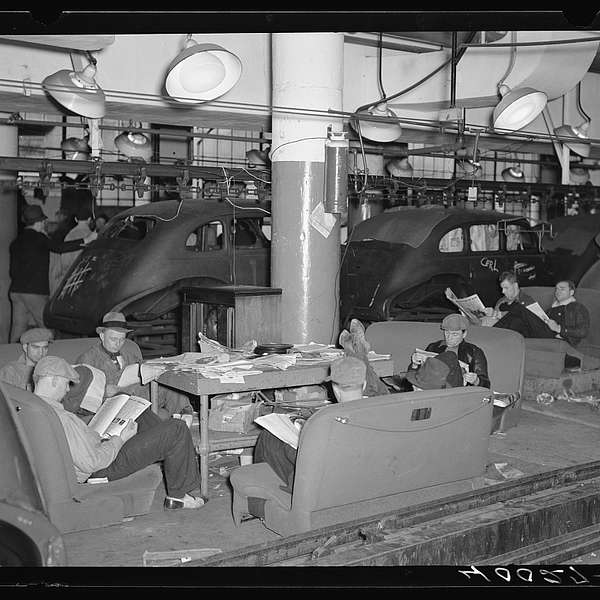
Midnight in Vehicle City by author Edward McClelland is a book that tells the story of Flint, Michigan, during the Great Recession and the struggles of its residents as they try to survive in a city that has been hit hard by the economic downturn. The story centers around autoworkers struggling to make ends meet and their challenges of working for General Motors Corporation in the 1930s. Those challenges included poor pay and working conditions.
The author does an excellent job of capturing the mood and atmosphere of Flint during this time, and the characters are well-developed and believable. The book is also well-researched and provides a lot of insight into the history and culture of Flint and the larger economic and political forces that have shaped the city.
Overall, Midnight in the Vehicle City is a compelling and poignant read that provides a unique perspective on the struggles of ordinary people in an extraordinary time. It is a powerful reminder of the resilience and determination of the human spirit. It is highly recommended for anyone interested in social and economic issues or the history of the Rust Belt.
Listen to a clip of a stirring archival speech by the late Walter P. Ruether, former President of the United Automobile Workers Union. Ruether's words hit a note, given today's struggle to protect democracy.
The conversation examines the impact the strike made on the culture of Flint, Michigan, and its people. Does the intensive local activism of 1937 that spurred the birth of the UAW still exist today in Flint?
Now that the 1937 sit-down strikers are gone, why does the labor movement still celebrate this strike? What did this historical confrontation between the UAW and General Motors accomplish? Did the famous strike help build the American middle class?
Please visit the author's website if you want more information about author Edward McClelland and to purchase his book Midnight in the Vehicle City or any of his other books.
- Watch Video: Babies and Banners: Story of the Women's Emergency Brigade (1979). Oscar-nominated documentary about the women who battled the police to help and support their striking husbands inside the GM auto factories of Flint, Michigan.
- Watch Video: The Flint Sit-Down Strike and White Shirt Day. A video about the history of the historic strike. The UAW produced it.
The song "1937" in the podcast introduction and outro was written by David O. Norris and Dan Hall and performed by Dan Hall and a local choir of UAW members. Many thanks to them and UAW Region 1-D for their assistan
We would like to hear from you! Send us a Text.
👉 Subscribe to Radio Free Flint Podcasts at The Mitten Channel:
- Don't miss our full investigative Podcasts:
- Radio Free Flint: The community perspective on industrial resilience.
- The Mitten Works: Labor history and economic policy analysis.
- Flint Justice: Legal and institutional analysis of the state's challenges.
- Visit Our Website for both Podcasts, Videos & Articles.
This is Arthur Bush, and you're listening to Radio Free Flint. Thank you for joining us today. Today our episode Midnight in the Vehicle City, the legacy of Flint's Autoworkers, centers around the 1937 sit-down strike in the city of Flint. The author, Edward McClellan, is from East Lansing, Michigan. He joins us to talk about his book, Midnight in the Vehicle City. It's a good review of the history of the Flint sit-down strike. What might be the legacy of the 1937 strike all these many years later? How it's continued to be remembered, and what it means for the future of Flint. Edward, welcome to Radio Free Flint. It's an honor to have you.
Author, Edward McClleland:Why did you write this book? I decided it would be more interesting, maybe more exciting to just write about one incident, and I settled on the sit-down strike. Partly because one of our old family friends, a guy named Everett Ketchum, who's mentioned in the book, he was a sit-down striker, and he was one of the last, if not the last, survivors of the sit-down strike. He died in 2013 at age 98. To me, he just exemplified the victories of the strikers. You know, he started out as an apprentice making 25 cents an hour, and he retired as a tool and die maker in the 70s, making, you know, $27 an hour. And he had that GM lifetime health care, which is probably one reason he lived so long. You know, he was certainly an inspiration for writing the book. I mean, I really benefited from the fact that in the late 70s and early 80s, a guy at U of M Flint named Neil Leighton, he conducted oral histories with the sit-down strikers. But they had dozens and dozens of interviews. Some of them are online at the U of M. Flint uh Labor History Project, but a lot of them were just uh in boxes at the Thompson Library, I think at the Genesee County Historical Collection. So I spent a couple days just you know making making photocopies that allowed me to tell, tell the story uh of the strike, you know, from the you know, the voice of the striker. And I think one reason it's it's such a great story is you know, you got uh not only do you have those people, but I mean it was a story that involved people up to the very highest levels uh of society. It involved you know, the governor of Michigan, Frank Murphy, and the president of the United States, uh Franklin D. Roosevelt. He even got involved. He had to call a GM executive to convince them to negotiate with the sit-down strikers. GM's place in the corporate hierarchy or the American hierarchy was at that time, maybe still is so grand that they were not going to take orders from anybody but the president himself. Roosevelt had to call William Knudson.
Arthur Busch:Well, they had they had C.S. Mock that lived in Flint, who sat on the board of General Motors.
Author, Edward McClleland:Right, right. I don't think he was really. I I I didn't write anything about him. I don't know how much he was involved in this or if he was involved at all.
Arthur Busch:But I mean, obviously I don't I've been trying to find that out.
Author, Edward McClleland:Yeah, obviously, you know, Flint is the hometown of General Motors, where General Motors was founded. It was where William Durant lived and where he put all the companies together that made up GM.
Arthur Busch:The research that you did was from these from these interviews that you conducted. Some are actually oral, so you can listen to them on the internet, and some you say you read.
Author, Edward McClleland:I think I read all of them. As I said, all the strikers have passed away, and that was actually another reason I think I wrote the book, is that somebody has to keep telling the story because none of the participants are with us to tell it anymore. And of course, you know, I used a lot of accounts from the Flint Journal. Frances Perkins left a great oral history. She was the first woman in a presidential cabinet, and she was very instrumental in helping to settle the strike, her argument with Alfred P. Sloan. That's in her oral history. He backed out on an agreement in an agreement to negotiate with the strikers, and she called him uh she called him a rotter and told him he was gonna choke on his money and go to hell. He said, You can't talk to me, I'm Alfred Sloan. I've got $70 million and I made it all myself.
Arthur Busch:Well, that's not exactly true. It sounded good at the moment, probably to him, but I don't think it it landed with much effect to the audience he was speaking to.
Author, Edward McClleland:I went to New York, to Columbia University, to look at the Francis Perkins papers.
Arthur Busch:There were also three brothers involved in this.
Author, Edward McClleland:Right. The Ruther. Mostly two. Uh it was it was Victor and Roy Ruther. Walter Ruther was busy in Detroit. He had his own strike going on.
Arthur Busch:One of the places it was was Fisher Body No. Yeah, which is uh iconic historic auto factory that appeared in Roger and Me, and it showed the balling, I guess, is or felling of the tower, of the water tower that was symbolic of the plant going away. Right. The workers gathered in another place. Tell us where that was.
Author, Edward McClleland:Uh, just had a storefront across the street, uh, where they were gathered for meetings, and there was a red light above the door to let them know. They called it, I think, the flicker or the flasher to let them know that there was a meeting going on. And that's that's where Bob Travis, who was the organizer in charge of the strike, that's where he declared that this was the this was the time they were gonna go on strike because they'd wanted to delay it until after the new year when Frank Murphy was sworn in. Yeah, he was the New Deal governor of Michigan, and they thought he was gonna be sympathetic to the Union cause. But uh a couple days before uh the new year, first of all, uh another sit-down strike kind of broke out in Cleveland, and then uh they were hearing that GM was gonna move the dyes from Flint to Grand Rapids, and you know, Fisher One contained dyes that stamped out body parts that were used in GM cars all over the country. So if they could capture that plant and control those dyes, then they could stop GM production everywhere, and the company would have to negotiate with and I think that storefront is still there. I mean, there is a storefront right across the street. I think that building is still there.
Arthur Busch:There was also a building called the Pengalley Building, which was downtown. Right. And there's a road that's just three blocks from this factory called Pengalley Road. What do you know about the Pengalley building?
Author, Edward McClleland:An office building been demolished since then, and that's where that's where the union had its headquarters. You know, they they'd have rallies there, they'd have meetings there, and I think the strike kitchen was there, they would put on plays there, show movies there. So it was just the nerve center of the whole strike operation.
Arthur Busch:Yeah, now they had uh a women's brigade, right?
Author, Edward McClleland:Right. Well, well, it started out as uh you know ladies' auxiliary, and uh there was a woman named Janorah Johnson, and I think uh uh some people in Flint think there should be a statue of her downtown, like there's a statue of you know Buick and Durant and all those guys.
Arthur Busch:Well, they're making progress. They have one now, a Rosie derivator, so they're working their way to Janorah Johnson, yeah.
Author, Edward McClleland:So she was someone who she was married to uh an auto worker, a striker named Kermit Johnson uh at that time. And you know, she was someone who'd been involved in socialist causes. She invited Norman Thomas to speak in Flint, and her family read all the socialist publications. And when she went down to the Pengelli building to volunteer, they said, Well, we can put you to work in the kitchen. And she didn't want to work in the kitchen. So she organized a picket line, and she had her two-year-old son carrying a sign that said, My daddy strikes for us little types. And then uh after the battle of the running bulls, when the police attacked Fisher 2, she encouraged women to, you know, run down to the plant and interpose their bodies between the strikers and the and the police and protect their men. And so she thought that the women ought to play, you know, there was as much at stake for the women as the men, so the women ought to play a significant role in the strike as the men did. I mean, there were women working in Fisher One and the cut and sew department, but they were told to leave as soon as the sit-down strike broke out because you know the union didn't want any rumors about what might be going on between men and women in the plant. That would have just undermined support from the home front. So she started the next day, she started Women's Emergency Brigade. She was the captain and they wore red berets and they wore red armbands, and they all carried billy clubs underneath their coats. And when the union tried to take over Chevy 4, which was an engine plant, and that would that was really going to shut down the whole company. And there was a diversionary battle at Chevy 9, and the plant police fired tear gas, and so the women's emergency brigade broke all the windows to let the tear gas escape. So they they went into action. The next day, the Flint Journal, I think, was reporting that crazed women had broken windows for no apparent reason.
Arthur Busch:Well, that wasn't true. It wouldn't be the first time they got it wrong. I want to ask you some questions here. First one is what effect do you think this strike had on Flint?
Author, Edward McClleland:Well, I think that for you know a long time they said there was a more of a spirit of Union militancy in Flint than other cities. I think I'd read that strikes took longer to settle in Flint than they did elsewhere. But certainly it it had an effect on Flint. You know, as late as 1980, Flint was the city with the highest wages for workers under young workers in America. And that was because you went to work in the in the shop and you you went to work at the union wage. So Flint had several prosperous decades following the sit-down strike as a result of the sit-down strike.
Arthur Busch:The UAW uh was not a socialist organization.
Author, Edward McClleland:No, but there was some of the organizers were socialists and even communists. Uh Wyndham Mortimer, who was the first organizer sent to Flint to sort of organize uh put together a union, he was a communist, and so was Bob Travis, who was the uh sort of the general and the architect of the sit-down strike.
Arthur Busch:So the the history of socialism in Flint dates back quite a few years.
Author, Edward McClleland:Well, yeah, I think Flint had a socialist mayor in the in the early 20th century, and then Mott ran against him. The establishment, you know, decided to get its act together, and they ran Mott against him, and Mott was elected mayor.
Arthur Busch:At 1911, Thomas Menton was elected along with three aldermen to the Flint City Council, and that's they were running on wages, hours, and working conditions.
Author, Edward McClleland:There there were some tough times going on. A lot of workers have been laid off.
Arthur Busch:There were people living in tar paper shacks in the shadow of Buick.
Author, Edward McClleland:Right, right. I mean, they couldn't build enough housing for all the workers who were you know streaming into Flint for these good jobs.
Arthur Busch:Right. Well, the socialist idea, let's f let's follow that for just a second here. You're quite knowledgeable about labor history. The socialist had a whole agenda and it involved a lot more than work. Part of it had to do with the fact that there were all these men. Flint went from like six or seven thousand people to ninety thousand people in less than uh ten years. In fact, at one point it was the fastest growing city in America. Some of their issues had to do with they couldn't take a bath because there wasn't any place to get warm water. They didn't have any recreational activities and so on. Industrialists at the time, they weren't too keen on the idea that these people were trying to end child labor because that was one of their platforms. Right. They were unkeen on a whole bunch of stuff, but that was one of them. But in the end, the workers of Flint voted for the guy that that had just sold his company to General Motors. He he had to be one of the largest shareholders at General Motors at the time.
Author, Edward McClleland:They they gave him a 5% share to uh entice him to move his company to Flint, and of course, you know, that ended up being worth multi, multi-millions of of dollars.
Arthur Busch:Once he got to Flint, he initially sold 49% of his company, and he then after he got elected mayor, he sold the rest.
Author, Edward McClleland:Okay.
Arthur Busch:They didn't like the union. I mean, they didn't like what they saw was the beginning of organized labor in Flint.
Author, Edward McClleland:Right. Well most industrialist don't.
Arthur Busch:And and that theme has continued to this day. It's not really any different, it seemed like. In those days, Charles Mott was more in their face. And they voted for him until they didn't, which was only a few years later, 1915 was when he was defeated. You said you wrote the book because you think you think the story needs to keep being told. Yeah. Do you think that's because it's not taught in school, or why why isn't it being told?
Author, Edward McClleland:Well, I don't think it's very well known outside of Michigan or even outside of Flint. You know, it's the foundation of the of the United Auto Workers, which was the flagship union uh in the United States. I mean, this was the union that set the wages and set the benefits and set the terms for industrial workers uh all over the country. And it was sort of the key to this great 20th century middle class that we had. You know, it was interesting to me that you know, these workers who were trying to start a union at Amazon and Alabama, uh, that how similar their concerns were to the concerns of the sit-down strikers. You know, they wanted a more humane pace of labor, uh, you know, they didn't want to have peeing in bottles on the job, they wanted more job security, they wanted more say in the workforce. And of course, that effort failed. What I thought, and and I read an interesting article by a guy named Harold Meyerson uh about how today the unions are becoming a white-collar movement. You know, they're always thought of as a blue-collar movement. But workers who feel like they're replaceable, who feel like the company can just move out of town or pull the rug out from out of them if they start a union, they're more they're more reluctant to unionize than you know professionals who either are not as replaceable or feel like they can find uh jobs somewhere else. So it's a so it's a strange moment in the in the history of the of the labor movement.
Arthur Busch:And one of the things that was the legacy of the sit-down strikes in Flint was that they celebrated a strike.
Author, Edward McClleland:Right. White shirt, white shirt day. I went to a couple white shirt days.
Arthur Busch:Okay. Celebrating a strike is an odd thing. I mean, most people don't want to strike. That is the most union people I've ever met in my life, they prefer not to have strikes. Right. Why should the union celebrate this strike?
Author, Edward McClleland:I guess for the uh same reason that Christians celebrate Christmas. This is where it all began. Uh this is where it all began for the UAW.
Arthur Busch:That's very good. Why a white shirt?
Author, Edward McClleland:Uh they wanted to show that they were that they were as good as the as management. Management, you know, the the foreman wore white shirts, so then all the workers wore.
Arthur Busch:Let me understand what you're saying. They have an event in memory of the strikers and all these heroic people, and then they and then they all wear white shirts to this event. Is that it?
Author, Edward McClleland:Right. Well, uh, but they would originally they would wear white shirts to work, and and I think they still do in the plant.
Arthur Busch:The day of the strike.
Author, Edward McClleland:On February 11th, the day the strike was settled.
Arthur Busch:And is this just in Flint or all over the place?
Author, Edward McClleland:I think they wanted to make it a nationwide thing, but it's mainly in Flint. I've I mean I never really heard about it being celebrated in Lansing. Uh, but every year it's at a different union hall uh in the in Flint or in the Flint area. And you know, they have politicians come there and uh union officials, people come make speeches. They hold hands and sing solidarity forever. And then they have women dressed up uh like when the women in the women's emergency brigade, and they're serving bean soup and apples and bread, uh, which is what the strikers were eating in the plants. They want to say that this is a remembrance of the sacrifices that they're the sit-down strikers made for the prosperity they have.
Arthur Busch:Do you think that traditional carry on pretty well?
Author, Edward McClleland:Yeah, I mean, uh, you know, I went to a couple in recent years and they mentioned that these there were no original strikers or members of the women's emergency brigade left anymore. I mean, I guess as long as cars are made in Flint, however much longer that is, uh I think it will carry on.
Arthur Busch:Well, they don't make cars in Flint anymore, they just make trucks.
Author, Edward McClleland:Okay, well, as long as vehicles are made in the vehicle in the vehicle city.
Arthur Busch:What do you hope is the impact of your book?
Author, Edward McClleland:Uh, you know, I want people to see what can happen when when workers stand together, unite, and I want to I want to show that uh when the government supports workers, then then they succeed. I mean, it wouldn't have succeeded without the support of Frank Murphy and Francis Perkins and Franklin D. Roosevelt. You know, Frank Murphy could have sent in the National Guard to evict the strikers from the plants as the as the court or as the court had ordered them, but instead he sent the National Guard as a peacekeeping fort. He said, you know, get in the streets, get between surround the plants, get between the police and the strikers, and make sure there's there's no more violence. You know, President Biden delivered a speech that some people thought was the most pro-union speech they'd ever heard from in America. He supported the workers in in Alabama and said every worker has a right to belong to a union. You know, as I said before, some workers just have so much economic anxiety now, they're afraid to join a union. And I want Flint to be known for something other than the water crisis. How about that?
Arthur Busch:The strike was one thing that's known for that that many people who were trying to market the city thought was a negative. How would you respond to that? They said, why do we celebrate a strike and put it on our expressway? Why why do we celebrate the strike? And that is supposedly a message to business don't come here.
Author, Edward McClleland:As a result of the strike, there was more of a a spirit of labor militancy in Flint than in other cities. And some people in the 80s, they thought that that was the reason that the GM was pulling out of Flint. They thought that they were getting revenge for the sit-down strike 50 years later. You know, the the decline of G of GM employment in Flint is pretty much at the same level as it is everywhere else in the country.
Arthur Busch:Let me ask you about Flint as we see it today. You said you spent a lot of time in Flint, that's right.
Author, Edward McClleland:Yeah.
Arthur Busch:What was it about your visit to Flint while you were writing this book that that surprised you about the city?
Author, Edward McClleland:Well, you know, I just thought it was fascinating, sort of the progression that the industries followed. You know, Flint started out as a logging town, lumbering town. When the lumber was played out, they had this this wood, and okay, what are we going to do with this? Well, we'll make carriages. Uh, and so then Flint was the number one carriage manufacturer. And then around 1900, they saw that uh, you know, these guys like Ari Olds and Henry Ford were putting motors on carriages. And they said, well, we need to do that, we need to get with the 20th century. So then Flint became an automaking town. So I I was fascinated by that for sure.
Arthur Busch:The Flint people, some of them like to call themselves Flintstones.
Author, Edward McClleland:Right. I thought, well, that was popularized by uh Mateen Cleves and Morris Peterson and Charlie Bell when they played for the Michigan State Spartans, they called themselves the the Flintstones. And I I before that I'd heard Flint Oid, but I think Flintstones is the one that's that's really caught on and been embraced locally. Do you do you call yourself a Flintstone?
Arthur Busch:Absolutely.
Author, Edward McClleland:Okay, yeah.
Arthur Busch:Uh what does that represent to you? But what's it mean to be a Flintstone?
Author, Edward McClleland:Yeah.
Arthur Busch:I mean it's more than a moniker, it's more than a nickname. It has it has more to do, I think, with something else. What's that? There's some theories about the Flintstone uh concept here that I'm exploring. And the theory is this they're tough, they're resilient, you know, they have strength, uh, they're loyal. Once they won the national championship, they were they were one other thing, and they were winners.
Author, Edward McClleland:Right.
Arthur Busch:The townspeople here began to identify with this, this idea. They they articulated what people in Flint. I mean, before that, people were looking for Texas, you know, they weren't they weren't talking about how wonderful Flint was. So now when you talk to these Flintstones, many of them will say they believe that those qualities, those those character, the ethos of their philosophy and so on, that it's embedded in the fabric of the city. And many feel that they they've acquired those those things by being part of Flint, by being raised here, that that's what you learn when you're little. Okay. How is that different than what you've observed in other blue-collar cities that you wrote about in your works?
Author, Edward McClleland:I think you'll find it in other places. I think you'd find it, say, in a place like Youngstown, Ohio. That's another blue-collar city that's been through some tough times. I think you'd find it in Cleveland. You'd find it in Detroit. So yeah, I think I think it is a common thread in blue-collar cities that endured tough times during the during the Rust Belt era. It makes a lot of sense.
Arthur Busch:And you wrote this blue sky book, which I was fascinated by. You talk about an optimism in that book.
Author, Edward McClleland:Right.
Arthur Busch:Can you explain what that is?
Author, Edward McClleland:Uh you know, I kind of meant the title as sort of a play on words, you know, nothing but blue skies. That's what I think I got the idea from a guy in South Chicago, and after the mill closed, he said, I looked up uh one day and I saw a blue sky and I thought the world had ended because there was no more smoke coming out of the chimneys. It's the end of something, but it's also a blank slate. Of course, you know, nothing but blue skies, that's a very optimistic kind of song. Build something new.
Arthur Busch:There have been some studies that show that de-industrialization in these cities that we're making reference to, that it gives rise to a certain optimism that may be unrealistic.
Author, Edward McClleland:Sure.
Arthur Busch:Have you heard of that?
Author, Edward McClleland:You know, I did see people who thought, you know, they could build something brand new, I guess, out of out of the ashes, and I don't know how successful uh it it always was. I mean, I think there's some optimism in Flint. It's got a new farmers market. That's something you know people are optimistic about.
Arthur Busch:When I talk to these people on this podcast, many of them tell me that they believe that Flint has a certain resilience.
Author, Edward McClleland:Yeah. I mean it it has to. I mean, it's lost more than half its population, I think, since it's its peak. I think you'd have to be resilient to stay in Flint, to want to stay in Flint and to want to keep trying to build something there.
Arthur Busch:The history of the city is is such that they've overcome a lot of uh ups and downs. And the automobile economy, by definition, is uh an economy that is a roller coaster.
Author, Edward McClleland:Right, right. I can't imagine what's gonna come back. No other uh industry where there's more value added than in in making automobiles. That's why it was so lucrative for such a long time. So I don't I don't know that Flint's ever gonna find anything to replace that. It's hard to imagine Flint being as prosperous, say, as it was in the 60s and the 70s and the and the 80s.
Arthur Busch:What do you think that they did in babbling for their town way back then?
Author, Edward McClleland:Yeah, they always say even today that it wasn't about money, it was about you know it was about dignity. And I think that they they established a lot of precedence or things, things that workers take for granted today. You know, before the sit-down strike, they would say that there was no job security. You had to bring food to your foreman, or you have to you'd have to paint his house or throw him a party, and if you didn't, he could just you know kick you out, and his brother-in-law would be working in your place the next day. And you know, they really didn't like workers over 40 because they couldn't keep up with the pace of the assembly line. You know, after the sit-down strike ended, the contracts at layups were going to be by seniority, and that's something you know we we take for granted today, but that was something that was not at all in place at General Motors before the sit-down strike.
Arthur Busch:We still have General Motors in Flint, they didn't leave. We still have one of the most significant factories in there, a bag of tricks. We make hot selling trucks. Right. And there are still 7,000 workers there in those two plants. Is there something different today about the workers than there were in 1937?
Author, Edward McClleland:They're more prosperous. I hope they're more they're more satisfied with with their working conditions uh than they were back then, and uh even today a direct result of what the sit-down strikers did, you know, 85 years ago.
Arthur Busch:Anything else? Are they willing to fight for what they've got?
Author, Edward McClleland:I mean, I remember talking to a guy, he was a guy in Lansing, and he'd been participating in the 1970s strike. You know, that was when they got the you know the 30 and out. He said, well, after that we had everything. There was nothing more to fight for. I think maybe maybe they're more likely to feel like that now that they've got it all. There was that strike a few years ago, and there was a pretty significant strike a few years ago.
Arthur Busch:You're talking about the strike at the metal fab that shut down General Motors?
Author, Edward McClleland:Well, that was one. I was thinking that was in 1998. This was the one, I think it was just two or three years ago when GM went on strike, the whole company.
Arthur Busch:How is Flip Michigan so different than any of these other places? Janesville, Wisconsin was a company town. Yeah. General Motors Company town. And uh, but for us for some demographic differences, it probably was the same city. Right. In a different place. Janesville, Wisconsin, they went home and waited until the people in Flint sat down.
Author, Edward McClleland:Right. Well, I mean, the the the whole UAW uh uh hierarchy had just decided that Flint was where that they wanted to, that Flint was the key city. Flint was the city they were targeting because you know Flint had the most GM plants, and Flint had those key GM plants and had those key dyes and those key engines. So if they could organize Flint, if they could shut down Flint, then they could organize the whole company. So I think it's just a matter of you know having being so central and so important to General Motors is is why this happened in in Flint.
Arthur Busch:Let me get back to my original question. So we have we have a whole bunch of places uh where General Motors operates. How is Flint different today or and then than other places?
Author, Edward McClleland:Because it it was so dependent on General Motors. I mean, I think I read like two-thirds of the people in Flint got a paycheck from General Motors one way or the other. You know, I'm from Lansing, and Lansing uh, you know, had a significant GM presence, but you know, it's also the state capital, and it also had Michigan State University. So the state employment was a three-legged stool, you know, campus cars and capital. But in Flint, it was a one-legged stool.
Arthur Busch:You started out talking to me about the willingness to fight by these workers, their willingness to stand up and stand up for what they believe. Is Flint different in that respect? That it has a more uh intensely uh activist uh mindset than these other places?
Author, Edward McClleland:Can I read uh uh from a guy named Gordon Young that it might have been he might have been on your show? And I think he sums it up pretty well. It's a it's a blurb he wrote. Let's see. Midnight in Vehicle City captures the flint today through the captivating story of the city's past. McClellan reveals the toughness, determination, and even recklessness that fueled auto workers and their families in 1936 as he took on a corporate giant, the military, and an unsympathetic press. If you ever wonder why current Flint residents haven't given up, this book is an engaging reminder that fighting seemingly unwinnable battles is part of this city's DNA.
Arthur Busch:Some experts that I've talked to in political science have studied more recently in the water crisis, and that's exactly what they describe. Actually, that's what they found, the research. They call it intense localism. It's a culture uh that activists develop in this area, which uh fuels mostly fights about local things, bad water, right, bad working conditions. Right. You know, you go to Seattle if you want to see somebody fight about the monetary system of the world.
Author, Edward McClleland:Uh-huh.
Arthur Busch:You come to Flint if you want to see what what happens every day in their lives.
Author, Edward McClleland:Yeah.
Arthur Busch:In your opinion, do you think that helped to fuel the resolve of the strikers?
Author, Edward McClleland:I think that's probably where it came from. That's where it was established. Probably a lot of cities where a sit-down strike could have been successful, but but Flint was where it happened, and I think that success was what established this tradition of activism that you still see in Flint.
Arthur Busch:And you have a magnificent list of uh books. Tell us about that.
Author, Edward McClleland:The one I wrote before this one was called How to Speak Midwestern. I wrote that for a actually a small publisher called Belt Publishing in Ohio, but it turned out to be my best-selling book. It got a review in the New York Times, and that sells a lot of books. So, you know, it was it was about the Midwestern, you know, Midwesterners like to believe we don't have an accent. You know, regional accents are part of regional identity, and part of being a Midwesterner is believing you don't have a Midwestern accent. But I broke down the Midwestern accent and I included a lot of uh regional terms, like Michigan terms, you know, coney dog and party stuff. Another book called another book in the sky and sort of the rest of the spend of time. I appreciate it for your time. Thank you for promoting Midnight Vehicle City. So I think they've got some other copies there.
Arthur Busch:Okay, very good. We'll post that on our website and uh we'll make some links to your other book.
Author, Edward McClleland:Thank you very much. I appreciate it.
Arthur Busch:That's the end of our podcast. Thank you for joining us today. This is Arthur Bush. You're listening to Radio Free Flint. We hope that you will uh sign up for our newsletter at radiofreeflint.media. You'll rate us, review us on Apple Podcasts, or wherever you get your podcast. I want to thank Dan Hall and David Norris for allowing us to use the song 1937 when Spirits Burn, written about the Flint sit-down strike. The song contains excerpts from a speech from the late uh former president of the UAW, Walter P. Rutherford.
Dan Hall, Musician:We stand for right and we'll win this fight and match them toe to toe. So bring 'em on. We're waiting here to fight or talk, you choose. And while we hold our brother's hand, the worker will never lose. Is there a truer heart today than those who took us there? In 1937, cold the set-down strike would end. They left their wives and babies alone to face the certainty. What there when spirits burn was passed to date.
Walter Reuther, UAW:What it was like in the early days, how we were beaten up by the gangsters and the underworld goons, and how we were shot at. How we were intimidated. But we overcame all of that power of these great corporations. And we demonstrated.
Podcasts we love
Check out these other fine podcasts recommended by us, not an algorithm.

Stateside On Air
April Baer
Michigan Minute
WKAR Public Media
The Mitten Channel
The Mitten Channel

It's Just Politics
Michigan Public
Daily Detroit
Daily Detroit
Dungeon of Doom: A Detroit Lions podcast from MLive
MLive Media Group
WJR Sports
Cumulus Media Detroit