
LessWrong (Curated & Popular)
Audio narrations of LessWrong posts. Includes all curated posts and all posts with 125+ karma.
If you'd like more, subscribe to the “Lesswrong (30+ karma)” feed.
LessWrong (Curated & Popular)
"Automated Alignment is Harder Than You Think" by Aleksandr Bowkis, Marie_DB, Jacob Pfau, Geoffrey Irving
Use Left/Right to seek, Home/End to jump to start or end. Hold shift to jump forward or backward.
Summary
This is a summary of a paper published by the alignment team at UK AISI. Read the full paper here.
AI research agents may help solve ASI alignment, for example via the following plan:
Outline:
(00:13) Summary
(07:10) Acknowledgments
The original text contained 4 footnotes which were omitted from this narration.
---
First published:
May 14th, 2026
Source:
https://www.lesswrong.com/posts/gpuYFbMNH8PJXpmny/automated-alignment-is-harder-than-you-think-1
---
Narrated by TYPE III AUDIO.
---
This is a summary of a paper published by the alignment team at UK AISI. Read the full paper here.
AI research agents may help solve ASI alignment, for example via the following plan:
- Build agents that can do empirical alignment work (e.g.~writing code, running experiments, designing evaluations and red teaming) and confirm they are not scheming.[1]
- Use these agents to build increasingly sophisticated empirical safety cases for each successive generation of agents, gradually automating more of the research process
- Hand over primary research responsibility once agents outperform humans at all relevant alignment tasks.
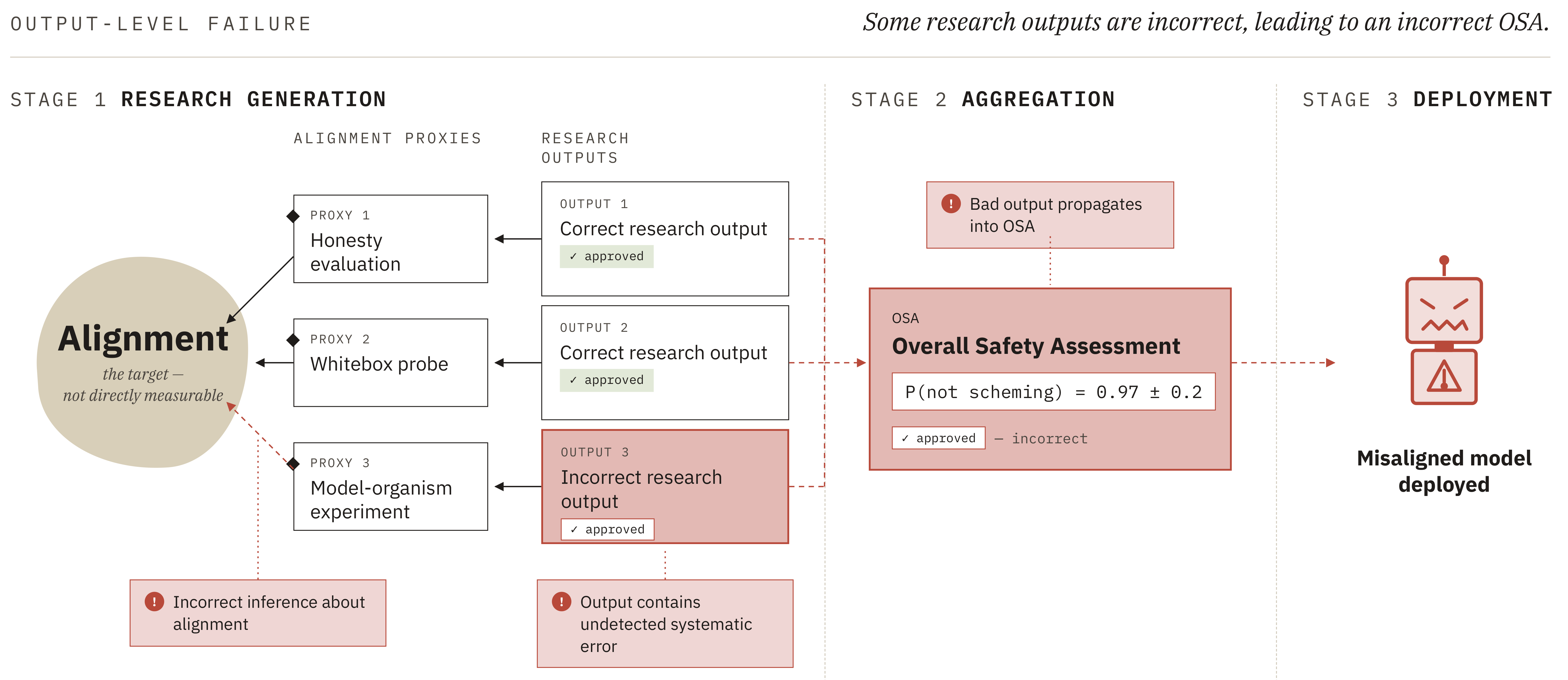
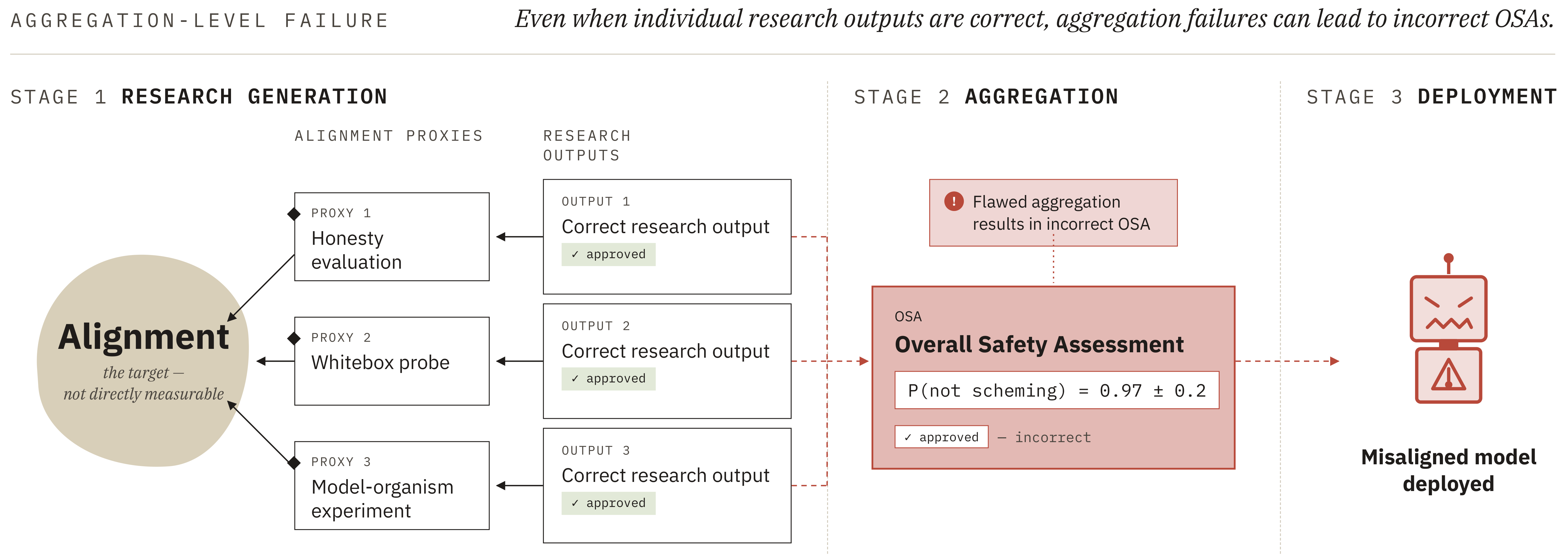
- The goal of an automated alignment program is to produce an overall safety assessment (OSA) - an estimate of the probability that the next-generation agent is non-scheming - that is both calibrated and shows low risk.[2]
- Producing an OSA involves several tasks that are difficult to check. We refer to these as hard-to-supervise fuzzy tasks: tasks [...]
Outline:
(00:13) Summary
(07:10) Acknowledgments
The original text contained 4 footnotes which were omitted from this narration.
---
First published:
May 14th, 2026
Source:
https://www.lesswrong.com/posts/gpuYFbMNH8PJXpmny/automated-alignment-is-harder-than-you-think-1
---
Narrated by TYPE III AUDIO.
---
Images from the article:
 Apple Podcasts and Spotify do not show images in the episode description. Try Pocket Casts, or another podcast app.
Apple Podcasts and Spotify do not show images in the episode description. Try Pocket Casts, or another podcast app.