Electric Evolution
Electric Evolution is about the journey to a more sustainable future so we can all do our bit to achieve net zero. Liz Allan will be discussing a variety of topics with experts in their field in order to educate and increase our knowledge of clean and renewable energy, electric vehicles, and the electric vehicle infrastructure. There is so much overwhelming information currently out there and so much to learn. This podcast aims to help people make more informed decisions.
Electric Evolution
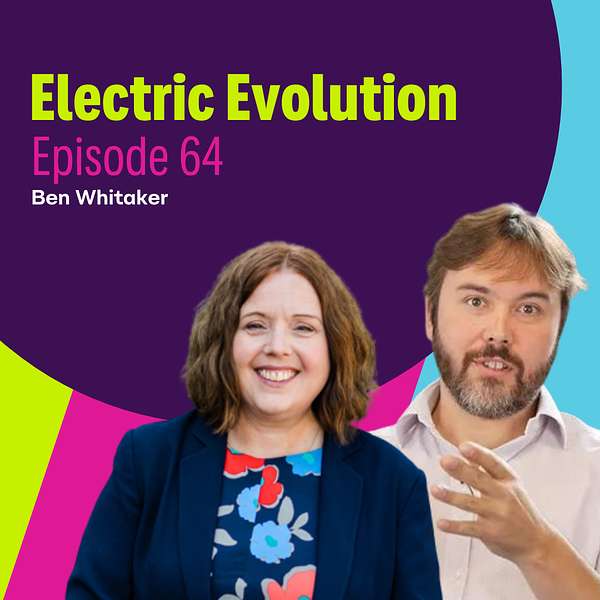
Episode 64: Liz Allan and Ben Whitaker - Creating Pleasant, Attractive Cities: The Power of Sustainable Choices
Episode 64: Liz Allan and Ben Whitaker - Creating Pleasant, Attractive Cities: The Power of Sustainable Choices.
Liz Allan speaks to Ben Whitaker, Chief Technology Officer at Kerbo Charge and Founder of Masabi. They explore the impact of transitioning from fossil fuels to EVs and how it can address road traffic and safety issues. Ben provides insights on engaging with individuals resistant to change, focusing on the benefits that sustainable choices can bring to their lives. He highlights the importance of at-home charging solutions and suggests alternative charging options, which don't require ultra-high speed or new grid connections, and explains how flat owners can become hosts for EV charging and earn money by sharing their private supplies.
Ben Whitaker Bio
Ben is a passionate advocate for the transition to electric vehicles (EV) and is dedicated to spreading awareness and normalising the shift. He recognises the importance of bringing people from the cities and the high-density residential areas along the EV transition. Ben's dedication to the EV cause inspires others and contributes to the growing momentum of the clean transportation movement.
Ben Whitaker Links:
Website: https://www.kerbocharge.com
LinkedIn: https://www.linkedin.com/in/bjdw
Episode Keywords
Electric vehicles, Central London, road space, interaction, road users, safety, parking, mobility, public transit, software, equipment, custom software, cost, bicycles, scooters, mobility scooters, protected bicycle lanes, electric vehicle, EV, range anxiety, charging stations, rapid charger, sharing electricity, domestic chargers, neighbours, charging needs, long-term infrastructure, EV adoption, public charging infrastructure, at-home charging solutions, Kerbo Charge, lamppost charges, grid connections, smart chargers, grid demand, local current sensors, fossil fuels, road traffic, safety, climate change, sustainable choices, low traffic networks, bicycle routes, national security, energy sources, sustainable cities, Mesabi, mobile ticketing, mass transit system, installation process, charger partner.
Episode Hashtags
#EVTransitionChallenges #PublicTransitMobility #SharedElectricityApp #RangeAnxietyRelief #ChargingInfrastructure #LanguageofChange #SustainableCities #MassTransitE
If you enjoyed this episode of Electric Evolution, please take a moment to leave us a review on your favourite podcast platform. Your feedback helps us improve and enables more people to discover valuable insights from our amazing guests.
Click the link below to find out how to add a review on Apple or Spotify
https://bit.ly/4dtiMJK
The Electric Evolution Podcast is proudly produced by Podforge, helping purpose-driven voices be heard.
Links for Full Circle CI:
Visit our website: https://fullcircleci.co.uk/podcasts
Electric Evolution LinkedIn Page: https://www.linkedin.com/company/electric-evolution-podcast
Support our podcast here: https://www.buymeacoffee.com/electricevolutionpodcast
Liz Allan [00:00:01]:
Right. Okay. So on my podcast episode today, I've got Ben Whitaker. Now here's the Co founder and the CTO at Kerbo Charge. Ben, thank you ever so much for joining me today on the podcast. It's really, really lovely to see you again. We met in Brighton, didn't we very briefly?
Ben Whitaker [00:00:21]:
Yeah. No. It was a lovely windy day in Brighton, but it was I think, fantastic to get EV transition companies all along the, the seafront there, because it wasn't just, we weren't just meeting members of the public who had deliberately come along to a, an electric transition event. There were just normal drive by walk by people, walking their dogs, doing their exercise, hanging out in Brighton who then saw what was going on, and it helped them all to a few of them to, to find out a bit more and to, to normalize that, you know, the EV change, the electric bikes, the cars, the charge the infrastructure is all coming now, and it's it's not just the domain of the early adopters anymore.
Liz Allan [00:01:05]:
Exactly. So I suppose really a better way to spread and blah blah, give me teeth in. Better explain what I was there for, what what we were there for in the first place. So it was the lun we were me and my husband did the London to Brighton of the London to Brighton to Paris electric vehicle of it in Raleigh. So EV rally. And, some, like I say, so me and my husband, we kind of we we kind of met there, that we arrived in London at half past 7 that Saturday morning, the day that we saw you, And then we drove, and in fact, actually, that was our first longer length of time that we'd actually had an electric vehicle for. We drove all the way from London to Brighton, using using a variety of, back roads customer husband wanted to keep us more efficient, which was rather interesting, and slightly unnerving going going through these really narrow roads in a car that I didn't know that well. But, but, yes, so ending up in Brighton, and and it was great. So yeah, you were one of the one of the exhibitors on the front. So there was a there was a number of companies. And, yeah, so we just I just stopped and had a chat with you, didn't I? But very brief because you had lots of people demanding to talk to you at that time.
Ben Whitaker [00:02:23]:
Right. It was I mean, Kerbo charger's, relatively new company, and a new idea for many people to find out about. So we, we tend to get a lot of people turning up on our stand because we're we're solving such a really major pain point for people making the switch to EV in many cases.
Liz Allan [00:02:43]:
Absolutely. So go on. Right. So I just wanna say before you before we move on and I'll get you to a explain what turbo charge does. You also co founded a company called Musabi, didn't you as well, so may I think there's gonna be a bit of crossover when we're when we're talking when we go through this, but give me start off by telling me about turbo charge, where where did it all start, and what was the reason for it?
Ben Whitaker [00:03:07]:
Well, Mike Goulden, the, the main founder of Kerbo Charge lives, in the middle of London on a terrace street, got an EV because that's the right thing that we're all all supposed to be doing and reducing the, dependency on fossil fuels. And, he found the experience quite, well, annoying, a bit inconvenient because, unlike most people who the joy of an electric car is one that fills itself up overnight. And you, you know, unlike these these funny petroleum burning where you have to take them to a petrol station regularly and get something which has been imported from many miles away in process by magical industrial plants outside of your control. most EVs, park them on your driveway, plug them into your 3 pin socket, and hey presto in the morning, the tank's full hooray, unless you live in a major city. if you live in these residential areas, high density, most people don't have a driveway. And for these people, I think it's just under 40% of UK Households
Liz Allan [00:04:10]:
--
Ben Whitaker [00:04:11]:
Yes.
Liz Allan [00:04:11]:
--
Ben Whitaker [00:04:11]:
don't have a driveway
Liz Allan [00:04:12]:
-- Yeah. Yeah.
Ben Whitaker [00:04:12]:
Yeah. -- then you can't charge up at home. You end up every single time your car runs out of, elect, of battery, you have to take it to a specific place plug it in and pay, I think, five times as much for public charging electricity, which is pretty expensive right now. And then either sit in that car for a long period of time, or walk away from the car, some distance back to your home, or whatever you're doing, and then come back and get it so you don't get fined for overstaying, and then retrieve it again. And this care and feeding of the EV when you know, all of your recharges must be public charges, really was very annoying, for Mike. So Mike thought very much there must be a better solution to this staring at the pavement. How do I get my cable across without dangling it from the trees and the lamp posts? How do I do it without the the bumpy cable covers that you see waking up the babies and, you know, to be honest, being, you know, quite upsetting for anybody in a smaller wheeled wheelchair trying to get over.
Liz Allan [00:05:13]:
of course. Yeah.
Ben Whitaker [00:05:14]:
They're not a very pleasant thing to do, and he said how to do this better. So Kerbo Charge, we, came up with a, we we came up with a cell closing lid for a channel that could be fitted flush with a pavement. So whenever you wanted to put a cable in, you'd hold open the end of the lid and, you know, feed the cable into it like a little it it zips itself up like a like a like a magic ziplock bag. Yeah. and then anybody walking over, it gets completely flushed. They don't even notice there's a, a cable in there. and you charge your car overnight, nice and off peak, so you get the cheaper off peak power. It's better on the, grid. It's better for your battery in your car, because slow charging is better. batteries. And when you finish, you just whip your cable out and it closes itself behind. the challenge for us is that the pavement is public infrastructure. So we're going to council by council to get the pilots and then the approvals that we can open this up to everyone. And we've got about 10 councils at the moment doing pilots of turbo charge for various people, making sure that, it's you know, acceptable to the utilities and the the street workers, highways teams, and then we're going to roll out more widely. But, I think the the early customer's feedback has been incredible, and we know it's 5 times cheaper to charge a home. But the main thing that our customers have been saying is freedom. The freedom from having to take your EV somewhere, the freedom from having to plan that, the fact that they can just charge at home is is is the main thing they're, they're they're delighted about. And for us, it's so important that we bring people from the cities and from the high density residential areas along with us to the EV transition, especially because that's where the clean air zones have Bristol. Clean air zones are coming in, and a lot of people have said they don't want to get an EV unless they can charge at home. If that had one customer who got an EV, hated charging it publicly so much, he got rid of it, then we gave him the turbo charge, and now he's going back to a full EV. And that's saving 60 liters of fuel a week from their high already, just on their their plug in hybrid. because they're now able to plug in for all of their normal daily drives. But, you know, very much our belief at turbocharge is that expensive dedicated public for fast public charges should be the charger of last resort. That's the charging you use when you've done an unusually long journey, you're going on holiday, you're going to see our mabel, that's when you go to a public charger, and you don't care. that you might have driven a couple of minutes extra, or you've gotta sit there for 40 minutes, or you've got to, pay five times as much because It's only happening every now and then. Most people drive, you know, journeys which are between two miles and five miles, and they only need to recharge once a week. Exactly. If all of that standard commuting and shops and and school run if all of that was all dealt with by off peak overnight or solar peak during the day charging, slow domestic charge, the grid isn't gonna melt down.
Liz Allan [00:08:34]:
Exactly.
Ben Whitaker [00:08:35]:
We don't need loads of extra generation. I think there's, you know, gigawatts less demand over We've got, you know, renewable, availability, which flex demand by getting the cast charge advantageously when we've got excess renewables is is gonna use capacity on the grid that we've got available. and you know, that that I think is where we need to be to make the EV transition really work and work without the the doom of it's gonna melt the grid. We're just gonna melt the grid if everybody's trying to use their fast chargers at the end of the working day, because they've all wanted to plug in at the times when they're awake. The grid's gonna be absolutely fine if they're all parked and charging overnight nice and slowly.
Liz Allan [00:09:19]:
Yeah. Absolutely. I I totally agree. So this weekend, so and I can hear these small children it's the summer holidays, isn't there?
Ben Whitaker [00:09:28]:
So this
Liz Allan [00:09:28]:
--
Ben Whitaker [00:09:29]:
It is. if you can just give me 2 seconds.
Liz Allan [00:09:30]:
Yeah. That's fine. I'm just gonna say -- --
Ben Whitaker [00:09:32]:
closing up.
Liz Allan [00:09:33]:
-- enough to edit this bit out. Okay. It's fine. Go ahead. I'll have a little drink while I'm waiting. Here we go.
Ben Whitaker [00:09:42]:
scratches. I'm just recording.
Liz Allan [00:09:48]:
Summer holidays. Tom. So when you when you actually edit this, it's probably gonna be the end of Christmas. But, hey. Don't worry. I've been there. I've had screechers in the background. He's now seventeen, so he's still in bed. So it changes
Ben Whitaker [00:10:11]:
a lot.
Liz Allan [00:10:11]:
--
Ben Whitaker [00:10:11]:
screeching is later. when the when the air guitar comes out.
Liz Allan [00:10:17]:
Oh my god. Right. Okay. So what we'll say So so what I'm I was gonna tell you about so last week, we bought an EV So our very, very first first TV. I said, no. I know. I cried. It's so sad. I cried when I got rid of my my petrol. is because it felt like I was saying goodbye to an old friend. But, you know, we'd had it since 2019, and it was a good little VW Golf. And then but then, you know, kind of and I think it was the it was ridiculous really because it was a bit of fear as well about fear of the unknown You know? So so I and and the thing was like you said, we literally did be before we were taking my I was taking my son to school and back. which is probably only about kind of 5 miles each way, you know, 5 to 8 miles each way, not not a lot, really, on a on a kind of daily basis. so this the the the the weekend, I had this long longer journey from Reading down to Bournemouth with some friends. And for me, that my range anxiety, it is a thing. You know, it was I realized now why people get anxious about these things. and it was because, a, I've not I've not really driven the car very much. I've not driven it on a long journey. my friends who were non EV drivers were in with me. I love them dearly, but I was worried to bits thinking, oh my god. So the amount of organization that I did in a buzz looking at that map, working at which charges, you know, to to use down there, etcetera, etcetera. Once we'd set off and we were down there, it was absolutely fun. I had 65% battery. And I was like, why was I so worried? I knew it was probably it was an an idea to top up when we were down there, but but we did use, a a charger, you know, kind of high a high a rapid charger. And we literally just went for a cup of tea. So we did it on the way back. We went for a cup of tea. Half an hour having a cup of tea came back, chat car was charged, Bob's your uncle.
Ben Whitaker [00:12:29]:
I think that's that's the thing that really gets the goat of Evie evangelists is modernevies, and I don't mean the super, super expensive. Modony, these all do
Liz Allan [00:12:44]:
20250
Ben Whitaker [00:12:45]:
miles on a tank quite happily on a battery. And That's about 3 hours of driving.
Liz Allan [00:12:53]:
I mean, ours is less than that bench.
Ben Whitaker [00:12:55]:
That's that's that's 3:4 hours of driving. Nobody is driving 3 or 4 hours without a break.
Liz Allan [00:13:01]:
No. If the ice mental, they need
Ben Whitaker [00:13:03]:
to stop. So you've gotta stop. And so you know, and we're not talking about stopping to refill the whole battery either. No. Generally, what you're doing is, you know, you might be doing a three hundred mile journey that day, and so you go all the way up, and you get halfway back, and you go, ah, I need to top up for the last fifty miles. So you drop in, have a cup of coffee, add fifty miles to it, and then get back to it.
Liz Allan [00:13:27]:
-- carry on. Exactly.
Ben Whitaker [00:13:29]:
It's not about sitting there to refill the whole tank you're gonna do that when you get home. It's, you know, unlike a like a petroleum car, you generally start every day full, and, you know, you'll you'll be able to do that big long journey, either the whole of it like you did. It's only 64% done when you were halfway around. You're like, I didn't even need to charge. I've just gone all the way back and it would have been done. but the charge gave you that little bit of extra comfort, but it didn't take you more than a cup of tea. And
Liz Allan [00:13:56]:
No, exactly.
Ben Whitaker [00:13:57]:
Once people have done it a few times and have friends who've done it, it's gonna reduce that anxiety, but also we've got that sort of lumpy leap frog between EV adoption and infrastructure availability. And, briefly, we've got a time when there's more EVs than maintained infrastructure, because we went through a period when we had a load of infrastructure and no EVs. Yeah. And so the commercial value in keeping all of that infrastructure operate operating wasn't there. Now we've leapfrogged it. We need to bring all of that back into main maintenance. Yeah. But also the the at home infrastructure isn't there. And I don't think we need public charging infrastructure to be big enough to charge everybody's car the whole time, that way madness lies, and a whole bunch of an underutilized infrastructure. We need to let people charge at home. That's why solutions like, Kerbo Charge, solutions like, slower lamppost charges and, you know, the dilute charging outside the office, No. Various places, these don't have to be ultra high speed. These don't have to have new grid connections. These can also be on smart charges. So at the times when the, you know, the electricity is expensed or the local substation or even the local, your office or your industrial facility is using a lot of power. You feather back the charging that's going on on the vehicles. you know, all of these smart chargers can both respond to grid demand and also have local clamp local current sensors to know whether or not your building or your house -- Yes.
Liz Allan [00:15:36]:
--
Ben Whitaker [00:15:37]:
is currently drawing a lot of power to do its own thing. And they will slow down. So if you've got a really old 1920s, terrace house with, a wax, a wax paper, you know,
Liz Allan [00:15:52]:
40
Ben Whitaker [00:15:53]:
amp connection to your house. And if you have fitted an induction hub and electric water heater for your for your shower, Oh, yeah. It can't.
Liz Allan [00:16:04]:
I'll go the other stuff. Exactly.
Ben Whitaker [00:16:05]:
An oven and a this and a that and a that at the same time. So you just fit it with a little clamp that senses when your house is using a lot of power doing other things and it just backs off charging the car until you finish doing that, and then it comes out again. And you can do exactly the same in these other facilities to make sure that nobody's really gonna run out of power because
Liz Allan [00:16:24]:
-- No. -- most people don't
Ben Whitaker [00:16:26]:
need to be in and the -- Yeah.
Liz Allan [00:16:27]:
Yeah. Yeah. Yeah.
Ben Whitaker [00:16:28]:
That's just the motorway.
Liz Allan [00:16:29]:
And and all I wanted was that kind of level of comfort that actually while I'm getting used to the car, that I had enough charge in it to not have to worry because my my thing was so I said, right. While we're down here, let's let's, you know, we were on our way back. I said, look. Let's just go to I knew there was a couple of charge points locally. There were rapids. there's a shopping center next door. I said, let's just do that. Let's go and have a cup of tea because by the time we go back, we're gonna be going up the M3. I knew that there was there was a few points up there, but I just said, look, there's only 2 there. There's only 2 there. I don't want going and actually as having to wait longer. It's earlier on. Let's and I think it's just a matter of a matter of planning and just being a bit more organized. I mean, We did actually there were only 2, rapid charges, because it's the first time I've actually charged with our my husband was there before. It's not that I'm in in-depth or anything like that, but literally with power to put these 2 kind of side by side charge points, And I couldn't I couldn't get it charging because it was out of service, but it didn't say on the or it didn't say anything about out of service. So So once I've finished, well, so so basically what I did, I've re parked the one next to it. It wasn't a biggie. It was just kind of checking it out. We couldn't use the less on the first one, couldn't get it to work on the app, moved to the next one, and that was absolutely fine. And I could tell on that, Matt, once I understood how what was that Matt was saying to me, because I could see there was something not quite right on the first charge point. So I just moved did it, connected it, and I actually even took a little video of me and my friends going, yay.
Ben Whitaker [00:18:13]:
But this is this is really the transition we're going through, which is getting away from an experience with EVs that's okay for early adopters. People who are willing to do a bit of DIY that understand that they've gotta do pre planning, change their expectations, and sometimes they'll find bits of infrastructure that are broken, or not very easy to use or are hidden or and they know that they're an earlier doctor and that they they wear that. That is a badge of pride, but they wear it because they know they're doing something during those early adventurous days to get it to be bigger. We're now transitioning through so that this has to work for everybody. This has to be easy for people who are not mechanically minded, who aren't programmers who understand that somewhere there's a network connection not working, and that's why they can't turn it on with their app. They expect it to be more like a petrol which is the only thing they've been trained to use, and using a petrol station as a whole bunch of skills, which people have understood, along with, you know, care and feeding of of petrol oil, breathing, you know, cars, and they've got to figure out the new stuff. But we also, as an industry, we need to raise our game to not just be serving the early doctors it needs to be for the every person who is given a navy as a hire car or a company car or a lease car. didn't set out to be an early adopter. They just need it to sort of work. And so we need the accessibility and the design of where these charge points are going in to be better, new regulation saying every new charger must have just a simple Tapper bank card and give me power. can't force me to download a new app, sign up for a new account, have to tell it my postcode and my maiden name of my mother's dog or whatever, it's just gotta give me stuff like a petrol station. And, you know, when you go to a petrol station and it's out of
Liz Allan [00:20:03]:
fuel, there's a
Ben Whitaker [00:20:04]:
big sign up saying there's no fuel here.
Liz Allan [00:20:06]:
Or -- Yeah. Yeah. You know,
Ben Whitaker [00:20:07]:
the big yellow things stop it. You can see very clearly which pumps are not working, and we haven't got there as EV industry yet. We we we we're still needing to learn that the the machines need to be very clear with people so that they don't have to figure out that the machine is not working by doing the debug themselves. the machine should make it very, very obvious, because the amount of wasted time and frustration, if you're debugging, oh, it doesn't work with my card. Can I do it with the app? Can I ring the phone number or is now eating my cable and won't release it. All that stuff needs to not be a problem for the consumer. And I think this is This is a transition transition we're going through now. It's from early adopter to to kind of mass market, and we need to knock those sharp edges off this experience, but now the commercial opportunity is there. People are recognizing that the charger shouldn't be round the back of the car park near the bins, it should actually be around the front. And in fact, the disable base -- Yeah.
Liz Allan [00:21:07]:
--
Ben Whitaker [00:21:07]:
it's it's the the Motability customers who get their cars changed regularly are gonna be some of the earlier EV adopters, and they
Liz Allan [00:21:15]:
need accessible
Ben Whitaker [00:21:17]:
visible close to the front of the shop charges.
Liz Allan [00:21:20]:
And we're gonna get we're going to get
Ben Whitaker [00:21:22]:
up, but it's not there this
Liz Allan [00:21:24]:
So on that map, what I haven't probably looked at was the information on it to say exactly where these charges were. And we were already driving. I was like, oh, god. Maybe I should have which floor they were on. So we came into this car park. There was no signage to say EV charging. Here, hi. And over here, hi. This blushing light. or something like that. And we've already gone up to the first floor when my French spotted. She went, is that them at the end there? And I kind of paired stop stopped the car peered over and went, yeah, that's them. So we had to go all the way around. Oh, the next one back down and down and down again. and actually parked up, and they were right in the far corner, not in the easiest place to access, and I've got a larger car. It's not a problem. You don't got rear parking cameras and all that kind of malarkey. but it wasn't, you know, trying to get when I ended up moving from one space to the next space, that was really near the wall and, you know, a little bit of maneuver in, and I just thought, do you know what? This is in this is on the bottom floor. In fact, I might actually have to let Charge Safe know about this one as well. on the bottom floor, there's not a lot of lighting.
Ben Whitaker [00:22:40]:
A bit dangerous. Well, charge safe is very good for for starting to say these are the accessibility, the safety, the the cleanliness, all of that sort of thing around charges for people who don't wanna be round by the bins
Liz Allan [00:22:53]:
-- And there wasn't -- -- in
Ben Whitaker [00:22:54]:
an area
Liz Allan [00:22:54]:
with Bella. There wasn't anybody on that floor because you're more likely to kind of want the where it was
Ben Whitaker [00:23:00]:
this this this problem that you've just been describing, as well as color of a charge helping people in terraced roads to be able to charge their car right outside their house on domestic tariff, lovely and off peak, saving money, and not to travel too far
Liz Allan [00:23:16]:
-- Yes. --
Ben Whitaker [00:23:16]:
not having to go to slightly scary, unusual places to leave their expensive precious new new car. Yes. most people only have to charge once or twice a week. So we have, we we've developed an app,
Liz Allan [00:23:31]:
which can
Ben Whitaker [00:23:32]:
connect to the ChargePoint that we support so that you can share your charger with neighbors and other passers by on the days that you're not charging. And when we set up one of these, two parts of our setup app, when you're going to share your charger and be a host to other people, One of them is, as well as putting in your postcode, you then drop the exact pin for where the parking space is, that is the right place. because if you're a a housing, you know, housing block or it's round the back or it's in it's in the the the the the alleyway behind you, rather than in front of you, or, you know, offset in a in a courtyard. I don't know. So put the pin where the actual, parking spaces. And then the second thing is a couple of photos that actually show where the charger and the space is in context. Yeah. So you're not hunting around on Google Maps. It's like, you can this is what it should look like, and that's when you know you're in the right place. So if you go and hook in your cable to that, nobody's gonna be saying, what are you doing at the front of
Liz Allan [00:24:31]:
my house? That's a really good idea.
Ben Whitaker [00:24:33]:
You absolutely know that this is the right one. And the whole point of this this sharing thing is one of the things that was found by, where the early gullies and channels have been put in is people only need to be outside to charge once a Yes. But sometimes another neighbor is parked in your space. And so there are not everybody on the street will be on the neighborhood WhatsApp group or Facebook group, but they were using it to say, Oh, I've really got to charge for a business trip I'm doing tomorrow. do you mind my moving your car so I can charge there and people generally were saying, yeah, yeah, I'll move that car. But what they also started doing was saying, well, my daughter's coming to see me, and she's an EV, can she use your charger while she's here? It's like, yeah, sure. just give us a fiverr. And
Liz Allan [00:25:16]:
That's good.
Ben Whitaker [00:25:17]:
You know, that they were helping each other out and sharing it their their charges. And so we thought, well, let's do that, but more so that if we've got a street of 15 terrace houses, and we get 3 or 5 turbo charges there. I was gonna ask you that.
Liz Allan [00:25:32]:
We're not
Ben Whitaker [00:25:33]:
needing everybody to have one. Then if you've got
Liz Allan [00:25:37]:
3
Ben Whitaker [00:25:37]:
or 5 in the street, well, wherever you park, you can use a long cable to either park, either charge right outside the house with the charger or one up and one down. You just sort of trail the the cable along the gutter. anywhere you go, you'll be able to either charge at your own house or somebody else's. And so when you're sharing the charger, it charges out at your domestic electricity price, peak and off peak, plus a few pence per kilowatt hour. So every time you share your charge, you get a few extra quid if they charge a full tank. But that's
Liz Allan [00:26:08]:
£20
Ben Whitaker [00:26:09]:
per tank.
Liz Allan [00:26:09]:
Yeah. Exactly.
Ben Whitaker [00:26:10]:
Yeah. I agree. using a public charge point. So all the neighbors and anybody nearby, they're they're not coming to go somewhere very strange. They're in a residential area where they'd normally park their car. They don't have to walk very far And also when they park it and they're leaving it overnight, our app has charge now or charge off peak. So it'll delay the charge until the off peak tariff kit. in.
Liz Allan [00:26:32]:
Yeah.
Ben Whitaker [00:26:32]:
And then you're getting, you know, massively cheaper charging. And it's where the grid wants that to happen, and it's doing nice slow charging, which is kind for your battery. that's what we want to be happening. So that all these residential areas where -- Yes.
Liz Allan [00:26:45]:
--
Ben Whitaker [00:26:46]:
bollards on the pavement would be blocking the pavement. bulge out would be taking away parking spaces and ending up with wars between who's losing their spaces. Whereas, if we can just allow domestic houses to be a second charging network in these residential areas, then it's gonna be a lot easier to go visit people or be, a worker in that area and just plug in your van when you're when you're outside one of these, we can show those kind of share charges on Zapapp when they're turned on. And people can still say, oh, yeah, never share it on Wednesdays or Sundays. That's
Liz Allan [00:27:18]:
-- Yeah. That's good. --
Ben Whitaker [00:27:20]:
thing is when I do mine. So take it off there. But But the the sharing is something 70 percent of our, current respondees on our sort of sign up form for people who are interested in charge on our website, 70% have
Liz Allan [00:27:36]:
said they're interested in sale. Perfect, isn't it? I was gonna ask you, you know, because this has gotta be a burning question on everybody's lip, surely, what permissions do you need and how much space? Obviously, I saw your the kind of the mock up that you had with you in Brighton, but because you're you're having to put something onto the public path for, you know, footpath as it were, what permissions do you need to get from the council? How does it all work? Do you do this? Does the resident do this? You know, what what is it?
Ben Whitaker [00:28:10]:
Basically, yeah, the the public footpath is under the, auspices of the council. sometimes the county council, sometimes the city council, depending on who has highways authority, but it's there. They have to grant a license and permission for anybody to do fit. You can't just cut it up just because
Liz Allan [00:28:31]:
you don't
Ben Whitaker [00:28:31]:
have a chisel or a, cutting disc. so basically, if you the councils we're doing pilots with are separated into 2 camps. In one of them Kerbo charge look after everything. So customer talks to Kerbo charge. We do the pre survey, get the licenses in place for the council, turn up and use a, an approved highways contractor to cut into the pavement and do the install of the channel and make sure it's all in the right place etcetera and get that done.
Liz Allan [00:29:04]:
Is that all? Okay. And what's and what's the site what size do you actually are you dig you so that approved contractor what size are they digging into the pavement then?
Ben Whitaker [00:29:17]:
Well, this is one of the main benefits of turbo charge. because turbocharge is a polymer channel, it has a bit of flex in
Liz Allan [00:29:25]:
it. Yeah.
Ben Whitaker [00:29:25]:
Yeah. So we can cope with the fact that most payments are not flat and have a bit of up and downy, especially where people have cut through them to put optic fiber or change where the paving stones are or anything like this. So, we only have to cut 6 centimeter wide gap, and we go about 3, 3 a half centimeters down. So it's still in the tarmac player. So we're not going down into the subbase, We're not going down into any of the utilities. So 3 a half centimeters deep. And then what's we cleared that out, we put a bit of, some special, mortar and sealant we put in, settle the channel in that, make sure it's flat on both sides, and we can hold it down to match the curve of the pavement, and then, yeah, within an hour, it's done, and it means we can fit into relatively, you know, badly misshapen payments without having to take out a huge load of payments and reinstate it. the Council Highway team's really like that because payments aren't flat. So if we came with some sort of rigid solution,
Liz Allan [00:30:27]:
So do you work with the council highways people, or do you work? Oh, you do. Okay. So is is it something that the council says you have to work with these people.
Ben Whitaker [00:30:41]:
Yeah. Well, every council has, as well as their own in house team, which may be out or store in house, they approve a number of other highways contractors for that area. So they say in this area, here are our rules, here's what you have to do. here are the safeties. This is what we the style of work we approve and don't approve. In these historic areas, you must use this kind stone, this kind of whatever, and then if you sign up to these things, then you're approved. So we, use our an approved highway contractor. Some areas, it isn't the customer speaking direct to us. It's the council, so you go to the council website, same sort of place you get a drop curb, and it says, I want a, turbocharged charging, channel, and they will then do the survey and put their staff out on-site to put it in, and they just buy the channels from us, and they deal with the whole thing. two different ways that different councils do it. but if you start by coming to turbo charge and signing up on the web site, we will direct you either to us or to the, to the council accordingly. And at the moment, we're going through a number of pilots and we have new pilots coming on stream all the time. So if you go to the turbocharged website, put in your postcode, we'll say, either, ah, we've got a pilot in your area. Let's sign you because, we've got a discount for that, and sometimes the pilots have a partial funding from the council. So that will get you a lower cost on your, channel. when you're ordering with us, we you can also order 1 of our, charger partners to put a charger in. because as you might know, most charger fitters will not fit a charger to your house if you don't have a driveway, because it's not proved to do So, because we're getting council permission to put in the channel, we can also, slipstream a, charger in do at the same time. And if it's one of our approved charges, we can connect it to our sharing network as well. But, yeah, go to go to the turbocharged dot com website, fill in your details, and we'll tell you, yep, we'll get you in a pilot. Nope, there's not one yet, but if you nudge your local counselor, you might be able to get a pilot in your area. So if you mail your counselor and persuade them, they probably want to try this, Fantastic. Then we'll give you
Liz Allan [00:32:58]:
50%. That's a really good idea. I wanted to ask you, so what is the length of time? Cause we all know that councils are under stress and under pressure. What is the length of time that it takes to get permission for, you know, for all of this to happen? What, on average, have you got an idea?
Ben Whitaker [00:33:18]:
At the moment, this is still in pilots. So it really depends when you arrive in the pilot cycle. we had one person who was very lucky who, contacted his council while we were just putting some things in for one of the pilots. And for them, it took a week. Normally, we're looking at weeks, not days. So, you know,
Liz Allan [00:33:40]:
2, 3, 4
Ben Whitaker [00:33:40]:
weeks it's not something that's gonna happen overnight. It's something where you wanna be, especially pre, during these times, you want to just get your mail in really early, it depends how quickly the council move. and then we need to do the the pre survey. It starts with a stop survey, and then sometimes they send someone on-site to just make sure that there's no obvious things in the way, such as the payment being so bad, it's dust and we can't fit anything to it. We need a secure surface of some sort, or there's manual covers, or there's, you know, access or other things there. So we just need to sure that's right, need to suspend the parking so that the space directly outside your house doesn't have a car in it when we try and bring a big diamond edge disc cutter through because we don't want this flying stone to hit anybody's car. Yeah. So there's just a few bits.
Liz Allan [00:34:32]:
So so we're talking it might say a week's not days, so they need to be kind of looking at that. In fact, because there's while we've been talking, there's a there's a street that I I know quite close to us there's it's all very tight terraces. The pavement is a little bit wobbly, you know, wonky, but I can imagine that actually having turbo charge there would be amazing for these people. I mean, there's always cars on both sides of the road, so even just navigating it is quite tight. you know, but the pavement is intact. So, you know, it's not just I'm shoe I'm assuming if the pavement was dodgy, it would be down up to the council to make sure that that yeah.
Ben Whitaker [00:35:16]:
Yeah. They do a little bit of resurfacing in that area, and then you can go in there. It's not the end of the world. It just
Liz Allan [00:35:21]:
means -- Yeah. --
Ben Whitaker [00:35:21]:
there's an extra bit of activity that has to happen first. And, I've only ever seen one that was that bad that, it needed, that it would have needed, resurfacing. but we found a little bit of paper further up that was okay and use that. But we've done we've done things in paving slabs and in block pavers, in very, very wobbly, very wobbly, pavements before, and that's that's not been a problem. It's it's been one of the things that's really impressed
Liz Allan [00:35:49]:
That's good.
Ben Whitaker [00:35:50]:
Really impressed the highways teams that we've been working with is how it is able to cope with going up and down and following the
Liz Allan [00:35:57]:
And are you able to tell us to share where the current pilots are, or is that is that secret squirrel stuff?
Ben Whitaker [00:36:08]:
it's not secret secret. It's just that councils like to make their own press announcements So we need to allow them to do that. So, councils like milk and beans
Liz Allan [00:36:19]:
ready. look. Well, that's where I live.
Ben Whitaker [00:36:21]:
So West Yeah.
Liz Allan [00:36:25]:
Ah. We do have a driveway, but let me say, where I live in Carnation, which is north of Reading, There is there are some streets, some there's definitely one really long terraced street that I was thinking of in in kind of cavish him. and there's quite a lot of there's quite a lot of terrorists in Redding.
Ben Whitaker [00:36:42]:
Oh, brilliant. Yeah. Yeah. Well, let people know, write in, but Redding, yeah, Redding, doing one of them Durham is one of the hero councils up in the north, followed by, Eastlothian, up near Edinburgh. And, yeah, that there's various, in some cases, it's basically a a local hero council is doing the first pilots, and then the neighboring councils, sort of thinking over the fence, and then they're gonna copy their homework. So we're once once those pilots are complete, we're hoping all the neighboring councils like, when we did the first installs in Durham, I think we had 4 or 5 other councils standing around, you know, helping with the illusion support work of digging in, digging in the pavement if you've ever seen it. so, you know, these things are gonna start in some councils and then spread out from there. And we've got some London councils. We've got, some in Wales, in Cornwall, in, you know, all over the place you know, moving moving forward towards pilots.
Liz Allan [00:37:42]:
So, you
Ben Whitaker [00:37:43]:
know, this is the pilot year. but when we get to next year, it's gonna is gonna be, you know, much more widespread. What we found very exciting about people thinking ahead in the EV transition is people in their house searches are now saying they don't wanna buy a house where they can't charge an EV at home because they recognize as an issue. Some of them are saying I'm not getting an EV until I've got at home charging, but they're saying, long term house purchasing, and we've seen people spend tens of 1000 on buying extra land or parking rights to be able to offer that. And things like turbo charge are a long term asset for the house, but it means that house then can be sold with EV at home charging, and it's gonna make people's transition to EVs happen faster. And it's it's it's gonna mean people can look at more houses as practical for them to have with at home EV charging. So I think it's it's we're gonna see it slowly slowly then all at once. And, you know, a lot of people, and really it's getting people to know that it's possible. Cause at the moment, they think, I haven't got a driveway. I can't park at home. It's gonna really suck.
Liz Allan [00:38:59]:
Their options.
Ben Whitaker [00:39:00]:
And getting them to know that there are solutions now. they can, you know, nudge their councils to prioritize getting their sooner in some cases, especially if they've got an EV now and they're feeling that pain. especially we've got, some of the big utility companies are, you know, making big commitments and they're electrifying their engineer, Van Fleet, And many of these engineers take the vans home overnight, and then they begin the next morning with an empty van and have to take up a half an hour an hour of their shift time to charge, the utility company itself is wanting to pay for curb charges to go in. so that their drivers can start the shift with a full tank. So even commercial electrification of fleet is, you know, a really exciting space where we're gonna see this roll out for people who are working on your electricity supply in an EV vehicle, or they they they they know they
Liz Allan [00:39:58]:
really want
Ben Whitaker [00:39:58]:
this this this future to come quicker. This convenience at at home charging for everyone taxi drivers for the the the the vans and the the van drivers and the engineers as well as -- because
Liz Allan [00:40:09]:
she just got me thinking about -- -- private. So I've got a friend who lives in bath. and and he was talking about how there's no, there's no lamppost on his street he's so he lives in in a in in some flats. I don't know how how tall it is, but I was kinda thinking, actually, it would work for those if you can get parking on the on the street and I'm sure outside the flats, if they can install kind of, you know, charge points there, are that are managed by the people who live in the flats and you've got turbo charge running to their car, that'd work perfectly, wouldn't it? Yeah. Yeah.
Ben Whitaker [00:40:50]:
And shared. whether it's a situation where people who've got the ground floor flats act as the hosts and use their own private supplies and then use the sharing app to make a few pence on every kilowatt when they're sharing, or you get the, the the landlord meter to have a bunch of charges put on that And again, the app automatically takes care of the payment to pay for the electricity plus a few pence, but that's still way below any of the private network prices. And you're not having to put a commercial charger in. You're just putting a a standard, you know, domestic charger. It's not gonna be that expensive. And as you were asking earlier, neighbors who are near enough to run their cable through a channel, they can they can use the same channel. There's nothing private about it, and One of the things we like about the channel being simple is it's not just for running a, type 2 charging cable for today's technology. you can also run a V2X cable to do bidirectional charging of the house from the car, Or we've had some people say, well, I've got a mobility scooter that I need to charge on 24 volts. Will it take a 24 volt mobility charger line? It's like, yeah. What about trickle charging my camper van? Yeah. It'll do that. It basically, if technology moves forward and you get a different charger or a different vehicle or different cable, it's gonna charge all of those things. It's a long term piece of infrastructure.
Liz Allan [00:42:20]:
Yeah. As we say about the campaign, it's
Ben Whitaker [00:42:22]:
gonna allow you.
Liz Allan [00:42:23]:
because I was asked to be anyway, wasn't I?
Ben Whitaker [00:42:25]:
Whatever it is.
Liz Allan [00:42:26]:
Reason why I was asking about camper van specifically or I saw, like, an RV, you know, sized big camper van thing. And they had a cable going over a bush that was going over a over a path that was going in through the window. and I just thought, oh my god. That just looks shocking. So so, yeah, it's it'll solve all of that, won't it? It was tidy and everything.
Ben Whitaker [00:42:59]:
Yes. Yes. It's it's -- Absolutely. That's exactly it. we've had and especially where you've got people who are mobility impaired. You don't want things that are gonna trip people at night when you can't see anything or during the day, don't want bumps or anything else. So whatever the reason is for taking a cable across to the, to the highway, this is a safe way of doing it. We've got one protected residential housing area where the, the social, the support workers vehicle fleet is electrified.
Liz Allan [00:43:32]:
Oh my god.
Ben Whitaker [00:43:33]:
And they want to charge these while they're visiting some of these facilities. but they need to make sure they're not gonna trip over anybody with mobility walkers where they're not lifting it very high, as well as wheelchairs and other things. And yeah, but we're we're going in, installing there in a place where it couldn't be higher profile that the council doesn't trip over. Yeah. Absolutely. -- it's trying to protect. So it it really is there to to to mean that the the EV transition is not going to, make things worse for the blind and the the mobility impaired. And and because we've got a a self closing flap that absolutely seals flush and leaves just the tiniest little -- Yeah.
Liz Allan [00:44:17]:
--
Ben Whitaker [00:44:17]:
you know, crack. So almost nothing's going into the channel. It means kids on razor scooters aren't, you know, getting their wheels going down. It it's people in healed shoes, haven't got anything. Their heel is gonna go down. It's making sure that it's it's
Liz Allan [00:44:34]:
safe from
Ben Whitaker [00:44:35]:
all the
Liz Allan [00:44:35]:
different kinds
Ben Whitaker [00:44:36]:
of of road users. In fact, the the high heel is the most tricky thing we've had to design around in terms of the the pressure on one point. It's higher pressure than an elephant. We we we actually tested it at the BSI up to triple the highest truck
Liz Allan [00:44:50]:
tire pressure? Do you know what? I want to ask you, the one thing that I have --
Ben Whitaker [00:44:54]:
So as long as three brake trucks
Liz Allan [00:44:56]:
aren't sanitized.
Ben Whitaker [00:44:57]:
I think it'll.
Liz Allan [00:44:58]:
So Who pays then? Is it the council that pays for this? Is it the residents that pay for this? Right. Okay. Yeah. I get you.
Ben Whitaker [00:45:16]:
Normally, this is going to be the homeowner that's going to pay. so if it becomes an asset for the home home now can charge safely, etcetera. during the pilots -- Yes.
Liz Allan [00:45:27]:
--
Ben Whitaker [00:45:28]:
the councils are sometimes paying part of it. and turbocharge does have some early adopter discounts available for people as well. But even those for those people who are paying full price, the payback break even is in about 8 to 9 months compared to charging on public charges. it's ignoring the convenience. That's just
Liz Allan [00:45:49]:
-- If you're talking about the pure price differences -- -- the friend of mine who's
Ben Whitaker [00:45:52]:
in a flat bar. -- a domestic supply instead of
Liz Allan [00:45:54]:
-- I assume that -- -- the actually as a group of residents so they can either have the landlord pay or they can actually pay for it as a as a group of residents, can't they? and split it between them. You know, as as you could have multiple points depending on what the residents decide and actually split the split the cost so that they, you know, wherever they're parking, if they're all parking in with this one specific area, they know that they say this for for turbocharged that, you know, areas that they can charge through.
Ben Whitaker [00:46:34]:
Yeah. Yeah. And you can get several cables through one channel. If it because we've had to oversize the channel so that if somebody's using a a high speed DC charging cable, it'll go through it. But domestic charging is AC, and you you only need a narrow cable. So if you've got, you can probably get 2, 3, or maybe even 4 -- That's
Liz Allan [00:46:54]:
really good. --
Ben Whitaker [00:46:55]:
domestic case. So, you know,
Liz Allan [00:46:56]:
we were talking so much about about there were so many things that we were talking about before we started recording this. I think I've asked you every every single thing except for So we haven't talked about Mesabi, and we haven't we haven't talked about you being the entrepreneur in residents. and I can't even remember where that was now because we've just been talking so much here, but do you wanna talk a little bit about Masabi, which was your your the previous company? and how you kind of managed to what did that do to get you into turbo charge? What did it how how did it sort of support your your want and your, you know, kind of recognition that you this was a good, this was a good option to move into.
Ben Whitaker [00:47:48]:
Well, the Mesabi company, does public transit ticketing. So we've been helping to digitize and virtualized ticketing around the world. We started in the United Kingdom with UK Rail, and we set the standard for digital ticketing on phones and on paper. for the UK Railway, which is now available everywhere. So if you've ever bought a ticket on train line web app on the train line mobile app and then scan that through a gate, That's what we developed. Miami. And then we took that technology over to the USA, and we deployed that for the commuter railways in boss and New York, Los Angeles, Vegas, and a whole bunch of other bus and subways, and then took that to Japan and Australia, and Canada, and bits of Europe, and now going down into Central America. So, the sun never sets on the Mesabi Empire It does over a
Liz Allan [00:48:43]:
$1,000,000,000
Ben Whitaker [00:48:43]:
of tickets a year, and it's a it's a great British export. So it's something where we turn up and we are in procurements for government kind of service contracts where it's us versus IBM and Xerox and Accenture and, you know, big big names and this tiny little company from, from from London called Mesabi. but we're very proud of what we've done, and we We now no longer only do the kind of mobile ticketing, but we do tapping your bank card and have it automatically figure out the cheapest fare that you could have paid that month. Yes. and we do cash digitization for the people who are under banked and don't have smartphones so that they can still take part in better price ticketing and just folding away all of the unnecessary single use infrastructure. So really upping the sustainability and lowering the cost for transit agencies and also working to try and help push people towards the right kind of mobility choice. So at the center of high density cities, getting people in and out, that's really about mass transit. It's not about saying, let's get everybody into a self driving electric Google car. It's getting people in and out of London, New York, and big cities, you've gotta be on mass transit. The the the train I take into, into London is not a high speed train. It's a flat fronted common garden boring train, and it gets 2000 people into London at an average of 90 miles an hour. And then in 4 minutes, everybody's got off the train turns around and goes out and does it again, and it's only driven by 2 humans. And that efficiency cannot be met by any private car technology. Yeah. So if I had a whole bunch of self driving Teslas
Liz Allan [00:50:31]:
--
Ben Whitaker [00:50:31]:
Yeah. -- trying to get two thousand people in and out of Central London, the road space the interaction with other road users, the safety issue, the parking? No. So the transition to EV is basically, oh, my my interest in in in, mobility from Mesabi, and getting that around the world. I love what we've done there. We've encouraged more people to use public transit. We freed up more funds from public transit to go into vehicles and provision of service rather than into everybody building new IT projects to do expensive smart cards and other sort of ticketing systems we're we're kind of, I think we've better than halved the cost of fair collection in that industry, and we've we've dropped the upfront cost by about 5 x of getting every getting the industry out of the idea that they need to buy lots of equipment and do lots of custom soft and we're getting everybody to just reuse the same software. Don't have as much equipment. It's very, very, you know, sustainability focus business, and I love that. I love active trans travel. I love where we make the cities, have safer ways for you to use, lighter travel options. So whether that's bicycles and scooters or mobility scooters of one form or another. So often, you know, protected bicycle lanes are not about like the road warriors. Yeah. Protected bicycle lanes is where people on, tricycles go. It's where people on those little electric, kind of senior buggies go.
Liz Allan [00:52:05]:
Yeah.
Ben Whitaker [00:52:06]:
It's it it's really is a mobility enhancing way to get people from within 1 or 2 miles of a center of a city in and out of a city without having to find parking. And then travel from the parking to a road is much better when you've got dedicated lanes that are separated, not a, not a painting of a line, with please don't run over the cyclist and people on mobility scooters here is, like, separated, and then people can
Liz Allan [00:52:30]:
use it.
Ben Whitaker [00:52:31]:
I I really like that. In terms of in the middle of
Liz Allan [00:52:33]:
a city,
Ben Whitaker [00:52:34]:
I really don't want to see us just take what we do now with petrol cars and turn them into electric cars. Absolutely.
Liz Allan [00:52:41]:
--
Ben Whitaker [00:52:41]:
still gonna have the road traffic issues, the safety issues, and everything else. where you do have to have a vehicle, I really think we need to shift from fossil fuels to electric. And from from the the changing the language around, environmental, the the climate, climate change, I think we should very much stop talking about saving the planet. The planet really doesn't care, and it's going to be around long after we are. saving mother nature, nature is going to adapt to the changing climate. There are going to be extinctions, and there are going to be new opportunities, that is going to happen whatever we do. The reality of climate change is it's going to impact humans, and we've got to start even, even we've got, I think from a language point of view, focus on helping humans to survive. We've got to start talking in in in selfish language, which is gonna appeal to not preaching to the choir, the audience who are already engaged with climate change. We've gotta start using language is gonna appeal to people who resist changes in their current habits. We've got to explain what we're selfish reasons. are. And the selfish reasons for a low traffic network are living in a nice quiet place with open air pubs. the selfish reasons for bicycle routes are that you can cycle back slightly tipsy after two glasses of white of of red wine. The the selfish reasons are, it's quieter, and the air is better for you and everyone that's around there. The selfish reasons are it's cheaper. The selfish reasons from a right wing political point of view are that renewable electricity security is national security. Energy security is national security. If we're generating a 90% of the energy we need locally from good local wind and good local sunshine we don't have to engage in political pacification or international wars to secure gas and oil supply from places that we don't really align with politically and socially. We don't want to prop up dictatorial regimes with appalling human rights records. We really don't. We don't want to have to pacify people who are resting journalists or our own journalists for that matter, and we are forced to do so for energy security. the moment we start doing more local energy production for local people. Yeah. the the more we don't have to be militarily and politically entwined with, with other interests, which are not aligned with the interests of our country. And so, if we start to change that language around those choices in a city being around having a nice city. If you want to see pictures of great places to visit on holiday, they're the pedestrianized cities they're the walkable city. It's
Liz Allan [00:55:42]:
a little little, isn't it? Yeah.
Ben Whitaker [00:55:45]:
That's the selfish reason why people like going to Center Parks. it is actually a nice simple, nice simple place to go. And and let's it is. And and let's have a look at some of the beautiful cities of Europe. it's interesting, unusual, but it's walkable. And it's you're you're walking at you're we really can rehabilitate our towns
Liz Allan [00:56:07]:
--
Ben Whitaker [00:56:07]:
Yeah.
Liz Allan [00:56:07]:
--
Ben Whitaker [00:56:07]:
by banning cars from the middle of the towns. The the funny thing is chopping malls
Liz Allan [00:56:13]:
-- Horrible. --
Ben Whitaker [00:56:14]:
artificial town center created because we let the cars make the middle of towns really unpleasant to be in. And so we created a shopping mall where you have a whole bunch of shops, the same shops it would have been in town in the shopping mall
Liz Allan [00:56:30]:
--
Ben Whitaker [00:56:30]:
Yeah.
Liz Allan [00:56:30]:
--
Ben Whitaker [00:56:30]:
without cars driving between them. now you can stroll from shop to shop and not get run over, and that's all nice, and the and the city dies, the town dies, And when you then ban cars from the center of the town, and you can now go to somewhere which has character, which has interest which has real old shops and back alleyways and pubs and restaurants and nice places to be, and it's in the middle of town. The shopping mall starts to wither. and drop off like a parasite that's not needed anymore, we really can rehabilitate our towns. If you go to ljubljana, in Eastern Europe. If you go to, somewhere like Chichester, where I live, the center of town is not empty shops. The center of
Liz Allan [00:57:12]:
-- We've got a bit of that in Redding. We've got a bit of that in Redding, but we need a bit more, to be honest, because Redding is just the the center of town Center of Redding. I don't know whether you'd been very often. The center of town, it is kind of it's fine. You can get from the station, and then you've kind of got a lot of pedestrianization.
Ben Whitaker [00:57:29]:
There's no true traffic.
Liz Allan [00:57:30]:
-- get yourself on what they call the IDR, which the inner distribution road, or coming into Reading or coming over the Reading Bridges and, oh, sorry, the Reading Bridge or the Cavishon Bridge where I live in Cavishon. It oh, it's just it's just awful. It polluted. It's horrible. We need to do something about it. Do you know what? I could talk to you. I we've talked so much of this so much more to talk but I think I need to get you back on again, Ben. What I want to I'm gonna have to we're gonna have to finish off now because you know, I will tell you later how long we'd be talking. So let's just finish off the width. So you've given your your website. So it's is it Cobotach ker kermitita? cobocharged.co.ukor.com, did you say? Right. Okay. And you're on you're on linked. You personally are on LinkedIn anyway, aren't you? So people can contact you through LinkedIn if they're interested in talking to you. Okay.
Ben Whitaker [00:58:31]:
kerbercharge.com with a k at the beginning. Yes. Yes. Yeah. Yeah. And sign up on the website. Sign up on COVID charge to find out if it's a pilot in your area or for goings production or whether or not It's still
Liz Allan [00:58:54]:
-- Really, really good idea. Yeah. Honestly, so
Ben Whitaker [00:58:57]:
I might need
Liz Allan [00:58:57]:
-- So for those for those of you who -- --
Ben Whitaker [00:58:59]:
nudging up
Liz Allan [00:58:59]:
-- Haven't got driveways. --
Ben Whitaker [00:59:01]:
say this is important.
Liz Allan [00:59:02]:
and haven't, you know, and live in these types of streets where, you know, talk talk to the people that you'll that you live in the area with and see if you can kinda come some agreement, or or, you know, I think this is a a really good way to get, you know, start bringing electric vehicles into into local areas. So so I congratulate you, Ben. And obviously, you know, yourself and the and the founder as well, you know, you both co founders fantastic idea. So if there's if there's anything else you want to want to share before we go with regards to kind of other social media, I'm happy for you kind of do that.
Ben Whitaker [00:59:48]:
Thank you, Liz. And I'd say mainly LinkedIn, I think these days for cover charge on LinkedIn as well, if you want
Liz Allan [01:00:03]:
to keep up. As and when the So when this goes out, I will make sure that anything in addition to what you talked to me about is in the show notes. So we'll make sure that All the links are available for everybody to to choose and --
Ben Whitaker [01:00:14]:
Another area.
Liz Allan [01:00:14]:
-- for all your your kind of all your feeds and everything like that. But look, just to say, it's been really interesting. Like I say, there was so much more we could have talked about, so I will need to get you back on again if you're happy to do that. Oh, bless you. Well, listen. Well, so can I, so that's 2 of us. Listen, thank you. Thank you ever so much, Ben. It's been brilliant talking. And for everybody else, I'm gonna say see you next time.
Ben Whitaker [01:00:44]:
Always a pleasure.
Liz Allan [01:00:44]:
Thanks for listening and watching. See you later. Bye.
Podcasts we love
Check out these other fine podcasts recommended by us, not an algorithm.

Everything Electric Podcast
The Fully Charged Show
The EV Musings Podcast
Gary Comerford