
Keep This In Mind
What you think affects everything. Thoughts are formed before an action is taken or not. David Specht knows this all too well and has made it his mission to help people contend with their thoughts and overall health. He interviews many inspiring people and brings practical tips to his audience.
Keep This In Mind
Stephanie Dorwart: Cultivating a Thriving Workplace – Positive Mindset, Overcoming Resistance, and Generational Harmony
Use Left/Right to seek, Home/End to jump to start or end. Hold shift to jump forward or backward.
Unlock the secret to transforming your professional environment with the wisdom of Stephanie Dorwart, CEO of Altius Healthcare Consulting Group, as she joins us to discuss the untapped power of a positive mindset. Stephanie draws from her rich experiences across education and healthcare sectors to reveal how cultivating positivity isn't just feel-good fluff; it's a strategic move that boosts productivity and wards off the all-too-common burnout. Discover the ripple effect of celebrating the small victories, maintaining core values, and the profound influence self-leadership has on creating thriving work cultures.
Resistance to change can feel like an immovable mountain in professional landscapes, but this episode unpacks the toolkit for turning resistance into forward momentum. Stephanie and I dissect practical strategies and illustrate with a case study how small, manageable changes can energize teams, build resilience, and lay the groundwork for sustainable progress. Listen to learn how facing the resistance head-on with a positive vision can initiate a chain reaction of improvements that benefit individuals and organizations alike.
Finally, we tackle the complex dance of generational diversity, where Baby Boomers to Millennials share the stage. Through a lens of empathy and tailored communication, Stephanie illuminates how understanding generational differences can lead to a harmonious and productive workplace, especially in the wake of challenges like layoffs. This conversation is not just about avoiding generational clashes; it's a masterclass in harnessing the unique strengths and perspectives each age group offers, transforming potential discord into a symphony of collaborative success. Join us for this inspiring journey towards a positive work culture, rich with actionable insights for leaders and teams alike.
Hello there, I'm David A Specht and I want to be your coach. If there's anything that I have learned in my 30 plus years of leadership and coaching, I have learned that mindset is everything. Join me and my guests as we explore the positives and negatives of that thing between our ears. This is Keep this In Mind, all right, welcome to Keep this In Mind, brought to you by davidaspectcom. And, of course, I am David A Spect, and today's show is really an interesting one.
Speaker 1Today, stephanie DeWart is somebody who has just recently entered my circle through mutual connections. But here's the cool thing We've got so many similar connections and circles. It's amazing that we haven't crossed paths yet. We were just talking about that prior to recording the show. She is the CEO of Altius Healthcare Consulting Group. She's a speaker, she's in leadership development. I mean, when you talk about parallel paths, I mean it's just been. Yeah, I'm just surprised I haven't seen her on a stage myself.
Speaker 1But here's the thing when we were talking about what we wanted to address in today's show, stephanie wanted to talk about positive mindset, that productivity brings positive mindset. But here's the thing A negative mindset will never lead to the productivity that leads to the positive mindset that productivity brings a positive mindset. But here's the thing a negative mindset will never lead to the productivity that leads to the positive mindset. So, stephanie, welcome to the show. I'm super happy to have you here. I'm going to shut up now. I kind of want to hear your side of it, your story. How did you arrive at your belief system about mindset and kind of give us a little bit of background about who you are and how you are?
Speaker 2Thank you so much, david. It is a pleasure to join you here today and to be here and to share some information with your audience and talk about mindset. I'm going to go way back, if I have your permission to do that, to really where my mindset belief started. What a lot of people are not aware of about my background is I began my career as a public education teacher and I taught mathematics and calculus and trigonometry, and many times I encountered students that had very, very fixed belief systems and had been told throughout their life that they couldn't do something. You're not good at math, you're never going to be able to do that. You should focus over here.
Speaker 2And what I learned while I was in education is that you could actually adjust and change the belief systems of the students by fostering positive things and really getting them to reprogram the limiting beliefs that they had in their mind. So, as an educator, just by telling them hey, you're going to do great things. I believe in you. I know that you're going to amount to something You're going to be able to develop. I saw very quickly that mindset had everything to do with it. So who they were when they came into the classroom was not who they were when they left, so over the course of the year I could influence what they were doing by planting positive seeds in their mind. Now I carried that into health care. After I left education I moved into really working with hospitals and health care systems.
Speaker 2My core is really productivity and workforce optimization and anyone that knows anything about productivity the first thing people think about productivity tends to be negative. The first thing people think about productivity tends to be negative, and what I learned with my mindset is that if I can start to plant those seeds with managers and leaders and start to celebrate small wins and change their belief patterns, you can now produce big things. And really my whole core thing that I talk about and that I share with our leaders is productivity produces positive results. We all know that if we can control our time management, if we can evolve our schedule, if we can be more effective and more efficient, good things come from that. But productivity doesn't matter if you have a negative attitude about it or a negative mindset about it. So really my mindset beliefs have evolved over time that you have to learn how to first lead yourself, because if you don't lead yourself through positivity and productivity, you can't lead anyone else. So start here, start with yourself, and that will transition to everyone else.
Speaker 1So you are in two very, I would say, negative, dominated fields. Negative dominated field what was it like for you in your own personal positivity mindset work as you are engaging so much negativity, whether it was from peers, whether it was from, you know, your bosses, whether it was from the general public I mean, you know, public education and healthcare are both very like I said, they can be very negative spaces as organizations, as an entire entity. How were you able to birth, foster and keep a positive mindset that you could then teach to someone else?
Speaker 2It's a great question, david. I love that question and if we talk about healthcare right now, we're dealing with difficult times. I hate to keep bringing it up, but we're only a couple years removed from the pandemic. There are a lot of workforce shortages. You hear the word burnout pretty much every 10 seconds when you're talking about hospitals or healthcare systems pretty much every 10 seconds when you're talking about hospitals or healthcare systems, and healthcare is one of those areas where people get into it because they're passionate and want to make a difference. However, when there are obstacles and challenges and roadblocks in their way that they cannot figure out how to get over, they then go into the burnout phase, the negativity phase, and they really get disgruntled.
Speaker 2The way that I've been able to overcome that and the way that I work with our managers and others to overcome that is you really want to focus on those small wins and staying core to your values, because if you lose track about what's important to you and why you got into public education or why you got into health care in the first why are you a physician? You got into public education or why you got into healthcare in the first, why are you a physician You're not going to be able to ground in your values and keep that positive thing. So, always going back to the vision of what matters to you, what do you believe in? Why did you become a doctor? Why did you become a nurse? What matters to you? And the fact is, in healthcare they tended to become leaders doctors, nurses because they want to make a difference, they want to deliver high quality of care, they want to do the right things.
Overcoming Resistance to Change in Environments
Speaker 2But they sometimes are in an environment where they can't do that. But we often, when we're in those situations, feel like we can't change it. And what you know, I've learned is that you have a lot more power to change the environment that you're in than you believe that you do. So how do I overcome those negative situations? When I was a public education teacher and there was negativity or there were budgets and couldn't do that, I understood that I could change the outcomes by my attitude. I could change the outcomes of my students by changing what I was thinking. And if I could do that, I could actually make a difference in everything. And that's the same thing that we work through with our hospitals dealing, you know, with a pediatric suicide patient, and in those challenging moments it's very difficult to go back to that positive mindset. But if you root in your vision, root in your habits, root in your belief system, understand why you're there and what there is, you can really influence the environment and the outcomes a lot more.
Speaker 1I love how you said that it's almost like you know, working from the inside out and even if the outside is so daunting and you feel like it's so fixed. One of the things that you brought to the table was talking about productivity and how productivity will also foster a positive environment. But what I've seen is and you alluded to it earlier there is an adversity to change in the mindset of most I won't say all, but most that even if it was the best thing that could ever happen to them because it's change, there's a wall do as change agents, because I believe the people who listen to the show and have listened to it multiple times they kind of get the idea that they have to have the right mindset to be successful. But how do you, how does that spread? How can you break down the walls of the anti-change?
Speaker 2Yeah, anytime you're in an environment and you're looking at change, you know the first words you're going to always hear is this is the way we've always done this, this is how we do things here, this is how we accomplish it, and I don't have any compelling reason to change. The first thing you're always going to get is that resistance to the change, and until the reason to change becomes more important than the reason you don't want to change, you're never going to break through that resistance. More important than the reason you don't want to change, you're never going to break through that resistance. So pushing through that change resistance is again really showing what it's going to look on the other side and then making it so easy that there's no reason not to change. For example, if you're looking at a hospital and you're looking at the operating room schedule and the utilization rates and you might have all these numbers and information it can become very overwhelming and it's much easier just to use the same schedule that they've been using for the past five or 10 years. However, if you now change one thing and you work on one small task, it's very similar to like a weight loss journey, where, if you change too much at the same time you're never going to get to the other side.
Speaker 2So from a change management perspective, pick one component that you can influence, one component on that schedule to change and start doing that. So it's very much from that mindset of mental health and et cetera. Celebrate the small wind of that change and once it starts doing things, then add in the next change that you're going to do so from a productivity perspective. David, it's always focusing on making those small changes so that you overcome some of those obstacles, get some of the small wins early on. So when you have to overcome the big obstacle, you've already had success as a team, because when you're celebrating those smaller wins you can get on that momentum. And now you have the compelling case as a leader or as a person, why you need to change, and you can jump to the other side and overcome the obstacle. But if you don't start out by making small changes to get to that change component, you're never going to get to the other side.
Speaker 1So I would like to ask, and something may spur your mind when I ask the question so yeah, and we must change the names to protect the innocent, but can you take me through a scenario where you came in as a consultant, you had the resistance, you, you walked them through the path, you celebrated the small wins and then you got to see the momentum can? Can you tell me an instance? Like I said you may. It may be a combination of five instances that have very similar situations, but kind of take me through an actual case study.
Navigating Generational Diversity in the Workplace
Speaker 2So I will take you through probably one of the. I have several case studies, but one that really sticks out in my mind right now is we were brought into a hospital to put in place an accountability system and productivity targets and to coach and mentor the leaders so that they would never get into a situation where they had to have a layoff. What we did not know when we walked into that hospital and this was on a Tuesday we were going in for the big kickoff. This was on a Tuesday. We were going in for the big kickoff. Unbeknownst to us, they actually just laid off 200 people on Friday. So we walked in and, of course, as the consultants, as the team the initial assumption was Altius already was they're the ones that told them who to lay off. So imagine looking at 200 leaders who are all already very angry at you and talking about productivity. So that was a very hostile environment for us at first.
Speaker 2But we started through, we do group education sessions and we talk through change management. How do you become the CEO of your department? How do you become the CFO of your department? And by having the mentoring sessions and the coaching sessions one-on-one, and talking about great things for them to do to improve productivity. We got to the other side of that and I am proud standing here. That was several years ago, but they have not had a layoff since. That particular client still utilizes the benchmarks and the targets and they use it to adjust their staffing in real time so that they never get back in that situation. So the example is you build trust over time by working with the leaders and giving them concrete examples that are going to make a difference in their day-to-day life.
Speaker 2And you know, with healthcare it can get very, very stressful very quickly and sometimes them just knowing someone's on the other side to talk about what they can do and have a resource is extremely helpful. But that particular hospital, we dropped $25 million of efficiency improvements to the bottom line over a three-year period and that was great because they could now buy additional capital equipment. They were able to hire more staff and able to do a lot more things, and by sharing those results, that then gave everyone fuel to keep going. So when we started the engagement and people were like productivity, that's horrible. I hate it, we don't need it. I don't know why we're talking about this. It's just going to lay off more people. We ended with okay. I now understand that when I become more productive and I have higher efficiency and better effectiveness and higher quality of care, this is going to help me see more patients in the day that I have and have higher quality and better patient satisfaction throughout it.
Speaker 1So it's an example where we went in very hostile and ended very positive and everyone was very engaged needed to hear, because when you talk productivity, a lot of times that's what Automating, delegating and eliminating right, it's just that's all people think about. And so there's two lines of thought here. There's the process or the procedure, and then there's the people, and when they're both are embraced, we have good outcomes. We've talked about beginning to change the mindset, but how do you, they, they have this fixed negativity that they can't seem to to let go of, maybe because of their upbringing, maybe because of they were told they didn't amount to anything. Maybe they they, you know they had a trauma in their life that that created this, this mindset. So is everybody, does everybody have the potential to go from negative to positive, or is there just some people that are just not going to be able to make that transition?
Speaker 2Great question and I like to believe that everyone has the potential to go from negative to positive, but we have to be willing to go along for the journey right, and there are some people that it takes longer than others. Now, when you're thinking about that, you know health care education. Regardless of where you're starting in that journey, you know it does start with the fact that you have to know why someone is doing what they're doing. So you know, regardless of what that is, that manager has past experiences and there's clearly a reason that they're set in their ways, or that leader is set in their ways, or as a human being that you just don't want to change. Whether it's you refuse to take out the garbage or you don't want to clean your room as a teenager, something is causing you to act that way, right? So the question is why are you doing what you're doing? Why do you have the negative attitude? What's causing you to respond in that way? Why don't you want to change? Why are you so adamant? And many times, when you ask those questions and you really connect with the person and you connect with a human being and you understand it, you develop the empathy, the appreciation for that person, david, you can actually get them to then open up and you can make progress.
Speaker 2But if you don't actually connect with the human being and you focus just on the process and the task and the outcome, you're never going to get past that. Because they need to feel heard and they need to be able to share their story and be able. Once you get to the why they're doing it, you can now unpeel it and start to get past that. But if you don't actually chip away at the resistance, chip away at the wall, chip away at all the reasons that they feel they haven't been heard, maybe there's been a management structure that they weren't able to share what they wanted to do. Maybe they tried to do something and were shot down the path. If you don't break through that, they're not going to go from negative to positive. So it is a trajectory, but everyone has the potential to shift from that negative attitude to the positive. But you have to be willing and in order to be willing, sometimes you have to get to the why and you actually have to bring the feelings and the human being back into it.
Speaker 1That's good right there, because as a leader, we oftentimes see things from a strictly getting it done perspective and that when a subordinate or employee team member whatever label you want to give them act out or get obstinate, we oftentimes give them act out or get obstinate. We oftentimes don't go any deeper to find out why they're doing that or why they're acting out that way, which again goes back. You know your teaching career. You probably saw that on a regular basis. Like a child acts out or a teenager acts out in class, you're like the initial knee jerk is they're coming up against me, but the truth of the matter is they've just come out of something that has put them in that particular mindset.
Bringing Generations Together in the Workplace
Speaker 1I think the next question would really kind of it's going to speak to me for sure, because I'm 55 years old and I'm Gen X and I grew up a certain way. I think a certain way, I work a certain way. Have you seen or I should say I know you've seen, but how do you address how generationally we're now far more diverse than we ever have been? You know, if you, you know, there's probably at least three generations, if not four, now in the workforce. They're all having to work together. They all have different worldviews. They all have different upbringings. They all have experienced different types of crises, traumas and successes in their life. How do we bring them all together to work well together?
Speaker 2That's a great question, dave, and this comes up often. I was just speaking with someone about this yesterday and I'm also Gen X and right now we have baby boomers and boomers all the way down to millennials and younger generations. And as Gen Xers, if we get an email or a phone call at 10 pm at night, we're still up. We're going to respond to it. But younger generations a lot of times they're shutting off at four o'clock, five o'clock. When they walk out of the door, they have that you know work-life balance where they don't look at it. So if you need to get in touch with them, you might need a text message to them.
Speaker 2So how do we bring everything together? It's education, it's knowledge and it goes back to understanding. You know, as a gen xer, I need to have understanding and you know education what does make a millennial like and what are there? So it's very similar to personality traits and understanding how to work with different personality traits. We have to understand how to work with each of the other generations, but as leaders, we also have to be flexible enough to be able to be willing ourselves to change our expectations and our requirements in certain cases. There are some places where flexibility is going to be a lot more important right now, and healthcare is one of those. We have a lot of workforce shortages. Traditionally, you might work 12-hour shifts, 16-hour shifts and you work five days a week, but what if there's someone that needs to come in for four hours in the middle of the day for a reason? Well, we need to be able to accommodate that, and that's one of the things that some of the younger generations have a lot of expectations for is the accommodation of that.
Speaker 2So how do we bring everyone together? Education, respect, understanding and then setting expectations that we're going to work together as a team. And when you can meet in that expectation and understand why someone that might be 20, 30 years older than you has different expectations and responsibilities, you can then come to the table and operate as a team. And also from a technology perspective, there are huge differences in how each of those generations utilizes technology, and there are some cases where you know some people it might take them two seconds where, for me, I am not technology friendly it might take me two hours to do something.
Speaker 2So also play to people's strengths. You know, understand what the strengths are of the people that are on your team, the people that you're working in day in and day out, and you can cultivate that positive attitude in the work environment by playing to people's strengths, acknowledging what they're good at, letting them do more of what they're good at, Because when we do that, you get that dopamine hit and the feel good hit and that brings on that positivity. If we're always focused on the negative and always focused on why the different generations can't get along and the fact that we're never going to be able to have four generations working on one team at the same time because of X, y and Z, it's never going to happen. But if you focus on the strengths of that and the fact that look at all of these different skill sets we now have how fantastic it is that we have different individuals that grew up in different times and bring different perspectives together you can then refocus what you're actually focusing on.
Speaker 1That's good. You know one of the things that I've learned between the generations. You know, I was the generation that we were on the phone all the time, and I don't mean texting, yeah.
Speaker 1I mean I'll call somebody, it's, it's immediately what must be bad. They could have texted me. You know if it's a phone call, it's either really important or really bad, or both. And so that, understanding that perspective I have, I have since learned that, when dealing with certain members of my teams, keep it to a text unless you really need to get clarity or text them and say, look, I need to talk to you about X, y and Z. Don't leave it open in it, or else, you know, overthinking comes into play and you say, look, I need to talk to you about this. Do you have some time to jump on a zoom? Or something like that?
Speaker 1you know so so yeah that, that, that relaxing your, your, even your communication structure, maybe, maybe, in order for you know to, to make all of the generations work well together.
Speaker 2And if I can just play off of that for one second, just with email. You know, email is such a hard thing because you can't have tonality in an email is such a hard thing because you can't have tonality in an email. It might be just one sentence and there's a lot of mental health components that come along that where you sent the one sentence email out and someone on the other end of that email has gone down a complete and total path of destruction when it was just a simple thing. So I think that plays into it too, because it's just a simple direction and the other person is going down that component and you know everything that comes along with that. So just an understanding of different communication styles is always important.
Speaker 1Absolutely so this will be an interesting question. I was thinking about it as you were. You were talking about all the things that people can implement and you talk about your own personal journey through basically embracing positivity as a way of life. What are who or what or both were some of the influences on you as you were going through this journey? Like if I, if I'm, if I'm the type of person that's like, look, I know I'm kind of negative and I really want to change and I really want to, you know, embrace some things. What are some of the, what are some of the tools or resources, or you know, whether it's books, podcasts, whatever. What have been some of the influences on you, on you and your journey?
Speaker 2Great question. I love that. And I'm going to start with. I used to be one of the most negative people that you would ever be. That was my default. My grandmother defaulted to the worst case scenario so if there was anything that was happening, she would figure out the worst case scenario and it was the end of the world and she would live there. Bless her heart. She was an amazing woman, always had a smile on her face, but her default was negative and I've had to overcome that my whole life. And so when I started into my, you know, personal transformation journey, I started really focusing in the early days. It probably started just about you did with Brendan Bouchard, you know, back in 2008,.
Speaker 2You know I do a lot of Tony Robbins and you know some of the things that have made a huge difference for me seem so simple. But there's things like meditation in the morning, for just a couple minutes. So before I look at my phone, before I do anything, I'm meditating and getting just quiet and might be in bed. It may, you know, sometimes I might play music, sometimes not, but it just gives me that time to just think you know about my day and really, you know, go into my and get, you know, really grounded with my breath work, and I'm a big believer in God and spirituality and so I always, you know, would start with prayer, and prayer grounded me and always took me from whatever negativity I was thinking, knowing that there's a larger force than me that's guiding me and that gave, you know, gave me that grounding as well. And also spending time reading something that was going to grow my mind every day, you know, even if it's 15 or 20 minutes, some type of book was always good.
Speaker 2And then looking for personal affirmations, and the great thing to all of your listeners today is there's so much information and knowledge that's out there. You know that you can find to do any of those. And when I say personal affirmations, I'm just not talking. You know, a lot of people think that you know personal affirmations aren't going to do anything for you because you're just saying something in the mirror is not to come to fruition. However, the subconscious mind is more powerful than any of us think, so really recognizing anytime a negative thought it doesn't matter how negative it is and just flipping it. So if you're saying I can't do X, just flipping it. And how can I do that? Or whatever that's coming in, those have been big things that have really impacted me.
Speaker 2But getting to mindfulness, it really starts with really understanding yourself through meditation, gratitude, prayer and all those have great practices. But where can people look? I think Brendan Bouchard's always resonated with me. You know Tony Robbins has been a great one. More recently, coach Michael Burt, I believe, has a lot of great resources that are out there. You know he has podcasts that are there. Your podcast is a great place. But if you're looking for anything you know regarding positive attitudes, ways to change, right now there's all kinds of resources.
Speaker 1Yeah, I would say that there's been almost a revival of growth, mindset, teaching that. You know whether it's. You know I'm a person of faith, you know. So you know there's certain things that I think get a little bit out there but at the same time, some of it lines up with what faith really is. You know the evidence of things unseen. You know being able to believe in something you can't see or taste or smell.
Speaker 1You know, and one of my big beliefs and I'd love to hear your feedback on this big beliefs and I'd love to hear your feedback on this is that I choose to be positive even when I feel like it's negative. So for me, I tell people all the time I'm like, I'm a, I'm a overthinking compartmentalist, which is like like the worst two things you can be, because you could be going through like major overthinking trauma inside, but you can put on the face of everything's hunky-dory on the outside. But what I've learned is that even when I'm overthinking or I come in contact with something very negative and it really is affecting how I feel, I still have the power to choose of how I will react and how I will, how I address it. And I want to say do you see that as a trait among a lot of people is that their feelings oftentimes override their choice, when their choice should override their feelings?
Speaker 2Absolutely. I see that a lot of the times. You know we're working with different individuals because we get into reactive mode. You know when you're putting out fires on a day-to-day basis and you're always looking at what's the biggest issue that you're dealing with and whatever that fire is and you know the particular moment can be anything you're focusing and coming at it from emotion and when you're in that emotional state you're reacting. You're not proactively thinking about.
Speaker 2And I loved what you said because you can acknowledge that, yes, there are fires going on around me and I, as a leader, responsible for putting them out, but you can pick what you're going to focus on at that time, take the biggest fire and put it on the side in a box and deal with it later and then just come back and react to whatever's occurring.
Speaker 2You know whatever that is and what I have found that's really effective is staying calm, controlling your breathing in that moment. So if everything's spiraling around you and whatever's happening, if you can just understand it and then go back and breathe and just take three deep breaths and, you know, come back to the present moment you can then emerge with a much more positive attitude and even a different perspective on what's happening and when you take that and you breathe deeply and you just ground yourself again, you can then start to process things. Because when you're just responding and you're in that fight or flight mode and the monkey brain's taking over, you don't have the capability to really have the ability to process what's happening and make the right decisions. So if you actually slow things down and pause, you can make a completely different decision and, as you mentioned, david, get that positive outlook on things.
Speaker 1Well, stephanie, it has been amazing having you on the show today. I think if somebody came onto the show listening and had negative things going on in their life, I think we've given them not only the why behind becoming a more positive person and more positive environment, but certainly some practical tools to help them start their journey. But I know that this is your purpose, your passion, this is what you want to bring to the world. So how does somebody follow you? How does somebody get in touch with you? How can somebody engage with you so that you can help them, whether it's corporately in the healthcare or individually in your coaching? Kind of give us all your contacts.
Speaker 2Absolutely. People can follow me with my first and last name, stephanie Dorwart, on Facebook, on Instagram, on LinkedIn, and they can also find me on Twitter and they can reach out direct message me. They can message me, you know, via phone if they want email, all those components, but I'm very easy First and last name Facebook, instagram and LinkedIn, and they can find me there.
Speaker 1Fantastic. Stephanie. Once again, thank you for being on the show, thank you for bringing insight, thank you for bringing your attitude and, folks, I encourage you follow her, listen to her. I Facebook stalked her so I know about the content she puts out there, which is all very good, but again, like I, and I'm going to close the show once again with the same phrase, because, now more than ever, we've given you some knowledge. Today, it's the application of that knowledge. It's not knowledge that's power, it's applied knowledge that's power. It's applied knowledge that's power, god bless. That is going to do it for this episode of. Keep this In Mind. For more, visit davidaspectcom. Like, follow and subscribe. Thank you for listening and remember applied knowledge is power, god bless.

Podcasts we love
Check out these other fine podcasts recommended by us, not an algorithm.

What If It Did Work?
Omar Medrano
Pull Up Your Chair
Cicely Simpson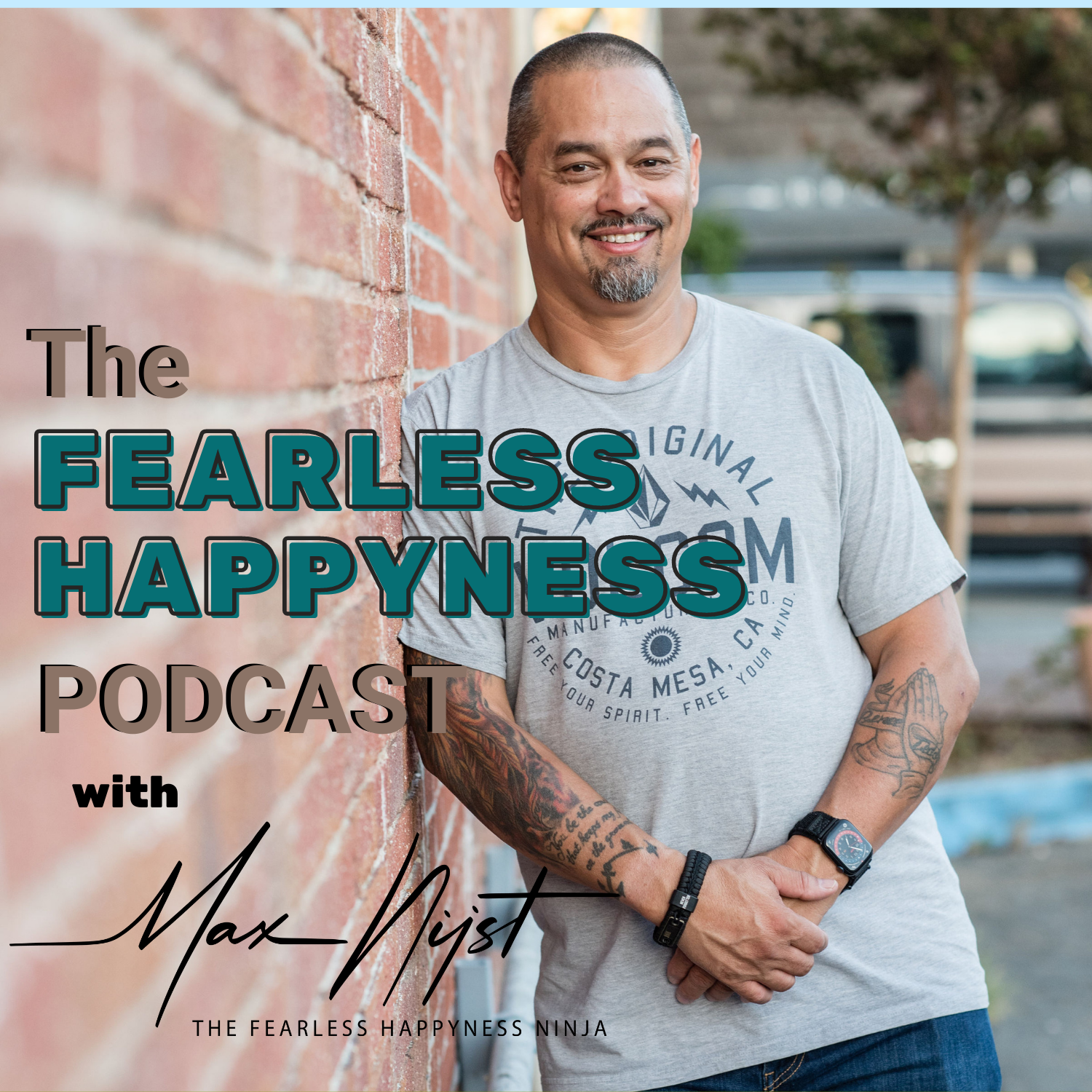
Fearless Happyness Podcast
Max Nijst
MindCep
Alex Muir
Doug Unplugged
Doug Wood
THE ED MYLETT SHOW
Ed Mylett
Cultivation Podcast
Tom Hammel
Ask The Planman
Bruce M. Weinstein