.png)
No Limit Leadership
No Limit Leadership is the go-to podcast for growth-minded executives who refuse to settle for mediocrity.
Hosted by executive coach and former Special Forces commander Sean Patton, this show explores modern leadership, self-leadership, and the real-world strategies that build high-performing teams.
Whether you're focused on leadership development, building a coaching culture, improving leadership communication, or strengthening team accountability, each episode equips you with actionable insights to unlock leadership potential across your organization.
From designing onboarding systems that retain talent to asking better questions that drive clarity and impact, No Limit Leadership helps you lead yourself first so you can lead others better. If you're ready to create a culture of ownership, resilience, and results, this leadership podcast is for you.
No Limit Leadership
113: From Army Intelligence to Inner Awareness: Chase Chewning on Trauma & True Strength
Use Left/Right to seek, Home/End to jump to start or end. Hold shift to jump forward or backward.
What happens when the identity you built your life around is suddenly taken away?
In this powerful conversation, Army veteran, health coach, and Ever Forward Radio host Chase Chewning joins Sean Patton to unpack identity, trauma, resilience, and what true self-leadership actually looks like.
After being medically retired from the Army at just 24 years old, Chase found himself navigating not only career loss—but a complete identity shift. What followed was years of striving, building, achieving… all while avoiding the deeper wounds beneath the surface.
This episode explores:
- The hidden identity crisis veterans (and high performers) face
- Why “ever forward” became both a strength and a crutch
- The role of safety in healing trauma
- Fear as a teacher—not just an obstacle
- The difference between achievement and alignment
- Fatherhood, protection, and redefining masculine leadership
Chase shares vulnerably about losing his father, suppressing trauma, navigating PTSD, and ultimately redefining what it means to move forward.
If you care about self-leadership, resilience, protecting your peace, and becoming the kind of person your family can rely on — this conversation will challenge how you define strength.
⏱ Chapters
00:00 – Why This Conversation Matters
02:00 – Army Intelligence & Medical Retirement at 24
05:00 – The Identity Shift After the Military
12:00 – Who Am I Without the Uniform?
18:00 – Curiosity as the Voice of Your Soul
24:00 – Fear, Safety & Trauma
30:00 – When “Ever Forward” Becomes a Crutch
35:00 – Fatherhood & Protecting Your Peace
37:45 – Redefining Strength & Leadership
🔗 Connect with No Limit Leadership
Website: https://www.seanpatton.me/
Instagram: https://www.instagram.com/seanpattonspeaks/?hl=en
🔗 Connect with Chase Chewning
Ever Forward Radio (available on all major platforms): https://www.everforwardradio.com
Instagram: https://www.instagram.com/chase_chewning
No Limit Leadership is the go-to podcast for growth-minded executives, middle managers, and team leaders who want more than surface-level leadership advice. Hosted by executive coach and former Special Forces commander Sean Patton, this show dives deep into modern leadership, self-leadership, and the real-world strategies that build high-performing teams. Whether you're focused on leadership development, building a coaching culture, improving leadership communication, or strengthening team accountability, each episode equips you with actionable insights to unlock leadership potential across your organization. From designing onboarding systems that retain talent to asking better questions that drive clarity and impact, No Limit Leadership helps you lead yourself first so you can lead others better. If you're ready to create a culture of ownership, resilience, and results, this leadership podcast is for you.
Sean Patton (00:00)
If you care about self leadership, resilience, and becoming the kind of person your family can rely on, this episode is for you. Army veteran entrepreneur and ever forward radio host, Chase Chuning breaks down identity, trauma, purpose, and how to protect your peace without losing your edge. He even came to question his very life motto. This conversation will challenge how you define strength.
Sean Patton (00:36)
Welcome to the No Limit Leadership Podcast. am your host, Sean Patton. Today's guest is Chase Chuning, the creator and host of EverForward Radio, a podcast and platform devoted to helping people build a life that truly propels them forward. Through solo messages and conversations with leaders across entrepreneurship, fitness, mindset, technology, and personal development, Chase challenges listeners to live with clarity, intentionality, and purpose. What began as a podcast has grown into a movement centered on momentum, self-leadership, and aligned action.
And today we're unpacking the journey behind it. Chase, thanks for your time today,
Chase (01:09)
My pleasure, Sean. Great to be here. Welcome back to the world of heat and electricity. I was telling you, I feel like a jerk over here in my 84 degrees and shorts. So I'm glad we're able to get this flowing.
Sean Patton (01:14)
You
Yeah, yeah, I know. For those who are wondering, we just came out of an ice storm in Nashville where I didn't have power for over a week. And we were, you know, lugging our whole family around and you're like the maybe the third person that time I've talked to that's either in like Arizona or California. It's just it's a whole different world out there. Yeah, now I get it. Now I get it. But man, this has been awesome. We you know, we connected years ago at I it was the military influencers conference, both army vets.
Chase (01:37)
Now you get it. Now you get it.
Sean Patton (01:48)
and just hit it off and both have similar backgrounds in terms of like interest in fitness and development. And also if you like just mindset towards life entrepreneurship. So I'm really excited for this. You know, again, we're both army vets. Can you tell people like your army, your army experience is, you know, it's just different for everyone. What was that like for you and what did you do?
Chase (02:11)
So what I did, I guess I'll answer that part first. I was a 98 X-ray, that was my MOS. Like halfway through my career, I served active duty six years from 2003 to 2009 from ages 17 to about 24. So I enlisted as a 98 X-ray, got reclassed about halfway through the army was restructuring and their infinite wisdom to constantly change stuff for no reason to a 30 series, I was a 35 Papa. And so I was a military intelligence. I was an intelligence specialist with a language.
which I don't know what wisdom came down upon me to decide to pursue a career in the military as a linguist when I literally had to take like Spanish summer school and high school because I just could not get it. Um, but you know, Hey, when you're a kid from a small town in Virginia and they dangle a $20,000 sign up bonus and benefits and all that stuff, you're like, Oh my God, I'm rich. I can do whatever I want. I can travel the world. I'm going to have all this money, go to college.
Yeah, well, I'm sure I don't know if you got anything like that, but years later and about 50 % of that money, you know, I saw and, ⁓ you know, I did my thing and I went to school for Russian. it was a Russian intelligence specialist. And so, yeah, the army also in their infinite wisdom, I'll give them credit for this. They know how to craft linguists. And so in about 14, 15 months, I went through the defense language Institute day one, no English.
which is true to every language that you go through there. And whether it's Pashto or Farsi or Russian or Arabic, native speakers. And so from day one, you're just immersed in history, culture, semantics, pop culture, entertainment, even days in the kitchen. And so you're learning as if you were a native. And so about 14, 15 months later, I became fluent in Russian, Yoshul Govoruparovsky, and I did my thing as a Russian intelligence specialist for the next several years.
through DOD technically and also also technically now being kind of assigned out to other agencies for my intelligence work. And then I had planned on doing 20 years, but about four and a half years ish into that career path, I was volunteering for a deployment to Afghanistan suffered career ending injuries in that pre deployment war game training actually, and wound up being a patient honestly, for about the next year or so.
I had both of my hips reconstructed, blew out my back, tore my hamstring, and I was medically discharged, medically retired actually. So I like to think that I couldn't follow through my dream of serving 20 years and retiring, but I guess I'm just an overachiever. I was actually medically retired, so I retired at six years instead of 20. And then, you know, now here I am doing the next phase of life.
Sean Patton (04:39)
Wow.
Yeah. I mean, I had a schedule. that is such, you know, we talk about, I'm sure you work with different clients or people on the podcast around these major transitions in life and whether they're sort of like forced upon you or decided upon, but at such a young age to go through that physically and mentally, right? Like such a shift in the vision and direction you had in your life to what's next. Like what's the next step look like talk about
maybe the mental piece of the identity shift necessary to go from like, I'm a soldier, I'm doing 20 years to like, my body's broken, what do I want to do next?
Chase (05:21)
Sean, I'm sure you can relate, man. That's kind of the beauty. Dare I even say also the downfall of being in the military. You don't have to think. And honestly, it's better for a lot of the scenarios if you don't, depending on the chain of command, depending on, you know, the op tempo, depending on all the things, know, situational depend, situationally dependent. You don't need to think and they don't want you to think sometimes also. And this is one of those situations where they didn't want me to think. And so I was just doing what I was told.
And that's a big part of the military. And that's how that big machine works. You've got the right people doing the right things at the right place at the right time. And only certain people need to think in order to, you know, to navigate that situation. So I really, the mental part of that, the identity part of that, I had no idea I was actually going through until years and years and years and years later after being out of the military and kind of beginning my personal development journey for the first time.
I had no idea that I was actually going through an identity shift because in my mind, I was just being told what to do. was given my next set of orders. Hey, Sergeant Chuning, go here, do this. Hey, Sergeant Chuning, thank you for your service, but you're no longer of service to us. See you on the other side. Here's, you know, here's some medical benefits. Here's this, here's that. Go sign out, do your thing. And, thank you for your service kind of thing. And so then it was like, okay, now my orders are to just go be a civilian. I got
these education benefits. Okay. Now my orders are to go to school. I, just did even in the transition period, I did what I was told slash I did what I believed I was supposed to do because of the way the things were laid out for me, especially in the military. Hey, you served your time. Hey, you got these benefits. Hey, you're supposed to do this when you get out, boom, boom, boom. And that's what I did. So I kind of just like leaned into
maybe a few curiosities, but truly honestly, I felt like I was just doing what I was supposed to be doing for years after that period. Being 17 and joining the military and listening in the military, being 17 in general, you are so malleable to your environment. You are so malleable to the people, places, things around you. You are being influenced. You are being imprinted. You are being molded. You are being brainwashed. Even if you don't realize it.
And the military has a great way. And I'm not bashing military by any means. I'm just saying in those years coming online, literally as a human being, those formidable years, your brain is still developing up until like 25, 27 for guys. It's probably a lot later, but I was, I was molded into this person, this identity that, even if I thought I was in control, I truly wasn't. And so it wasn't until then, like 36, when I unpacked all of that and I went through, ⁓ my God, like
my dream of serving 20 years in the military was taken away from me. My, my dream of this career of, of going green to gold or pursuing becoming an officer or just like navigating cool schools and things and deployments and just all the things that I thought I wanted to be. I had no say so in that stopping. It was, it was not my choice. It was not my will. And in fact, not only was that taken away from me, but my physical abilities for daily living radically changed.
And so not only was I, and these are all things I was unpacking. Not only was I navigating a identity shift, a career shift, but navigating, like learning how to walk again and navigating, like needing to be reliant on people for just like daily function and getting around and being young was like honestly a bonus because you're so naive and you're so much more resilient and stupid, honestly and oblivious.
And so you can just roll the punches more and more. And you think just because maybe personally speaking, just because there is a next task in front of me, that that is the right thing. Just because I can find a way to move forward and navigate through something, whether that's just literally getting out of bed today or going to school or finding a job or building new community, knowing where to go, what to do and how to do it without someone telling me, hey, tuning, be at this place at this time in this uniform was a total new concept to me. But just.
I think my youth really positively influenced me in a way to roll with the punches a lot more. But man, it wasn't until I was 36 when I went down that rabbit hole of what that actually meant and recognizing and honoring and respecting and processing all those emotions that I didn't fully realize I was having and also suppressing at the same time.
Sean Patton (09:39)
And there, there's so much that I can relate to, the transition conversation. Um, so much of that of my own experience too, was just sort of happening. And I didn't have, you know, I did a little later. was 32, but going to West point, you know, three weeks out of high school, four years at West point, 10 years as an officer. And it was, you know, Iraq, Afghanistan, it was, it was, you know, infantry, special forces teams, like it was just next thing. And I got wrapped up in that. And then.
It's so funny. haven't really thought of it till just now. The way you said it's like what you're supposed to do next. was, I want to start my own company. So what's that? it's just, it was just always sort of like the next mission, the next position, the next thing. and, and slowing down and like really processing, like who am I? What does that mean? What can I be? You know, it was just always just a focus on what I'm supposed to do. Like what is that next thing? And what I'm hearing in,
Chase (10:29)
Yeah.
Sean Patton (10:30)
One example I use, don't know if maybe you can relate this or not, was it was in my mid 30s for me as well. A few years after I got out of the military, I was like, how do I want to dress myself? I've been in high school, because I know maybe how it was for you, but I remember being in military.
Chase (10:47)
The middle
school, high school, was in a private school. Yeah. So I had to dress code. So I had the flexibility of like three different colors I could wear, but it was, it was black khaki or Navy blue all the time. So then I like downgraded to the military. You know, we had the ACUs that when I was in or BDUs and then ACUs. Yeah, man. I swear when I got out, I can't wait to wear whatever I want. Now I wear the same three fricking things all over again. I rode off camo and I love camo. Now it's just like, I'm going back to just
Sean Patton (10:51)
yeah!
you
Yeah.
Chase (11:15)
producing as much decision fatigue, but you don't realize how much of that is wrapped in, know, dare I even say identity and just like choosing what you wear. You know, that's the version yourself you're putting out in the world, right?
Sean Patton (11:17)
Mmm.
Exactly. But like that was a thought process you never, it was weird. It's almost like reverse for me of like, all right, what am I going to wear to show to the world? It was like the immediate question I had to answer, I guess. But then behind that I was like, well, who is the me that I'm trying to present to the world? Like, right? was like a layer of peeling back. And even though you transition out of the military,
younger than I did. find it interesting that it sounds like for both of us, it took us to our mid thirties to get to a place where we can have that type of introspection and maybe move past or start to question the, what am I doing? What I'm supposed to do.
Chase (12:06)
Yeah, mean, on one hand, I say there's always the chance I'm an actual idiot. And maybe I was just slow to get there, but everyone's journey is their journey, right? you know, I, in sharing my story, it always kind of, I'm always, I'm a different person today sharing my story than I was, you know, maybe sharing my story last month or last year.
And so I always have unique or different perspectives or kind of like a next layer of consciousness, know, myself looking at myself, looking at myself, looking at myself. And one through line through all of these perspectives is always give myself more grace.
because every time I'm talking about this, there is such a huge component of identity. And in any phase of life, whatever we're navigating, in my opinion, I think we always are landing on an identity shift. And it's either who do I want to become or who do I need to no longer be? And in both of those, there's work involved. And where I feel like I've landed,
recently is, you this kind of new mantra I have is I'm exactly where I'm supposed to be. And if I'm exactly where I'm supposed to be, then I am who I need to be.
And so it's just, it's a radical surrender and ownership at the same time of my circumstances and identity. And that's a daily battle, right? And so at the time of transitioning, I was the version of me that I needed to be for me for those circumstances. And whether that was, you know, hanging up the uniform for the last time, whether that was...
having my mom help me around campus because I'm still on a cane, you know, signing up for school, whether that's getting a job for the first time post military and figure out what, how do I, how do I translate what I did in the military onto our resume? I remember sitting in my first big boy job out of the military and Sean, I shit you not man. Like after the fact, they told me this after I got the job is we kind of got joking. They're like, and she, the person who hired me knew, knew this about me because her ex
was a Marine, she was like, I swear to God, Chase, like, you thought you were on a promotion board, you were just like, sitting down just like this. And like, it was like rigid head turns and direct eye contact. And like repeating back the question. And, you know, I kind of knew that was the mode you were in. But I mean, just goes to show you how much identity is wrapped up in our daily life in what we do and how we do it, what we wear, what we say. And so I go back, you know, to the grace that I need to give myself every version myself that
That's the chase that I needed to get through that. That's the chase that I thought. And so now I can land on, am fully myself now. And there's so much power and joy and peace in that. But it took me as long as it took me, just like it took you as long as it took you.
Sean Patton (14:40)
What I'm hearing you say there is, you you've landed on this very self-aware conscious place and I'm right where I need to be. And this is who I am, right? I am who I need to be right now in this circumstance. And this is, I'm relating to this very hard as I'm sure a lot of people are listening are. And what is your take or if there is a struggle around, yes, that is happening and
Who do I need to come for the next version of me? Or is that not even a thought for you? Like, it, I'm good now. Like, how do you balance that, the almost seemingly contradicting points?
Chase (15:18)
If I'm understanding your question correctly, I think it's first we have to have the recognition that if we're talking identity here, there's always gonna be a push and a pull. There's always gonna be the version of ourself that we are pushing ourself to be. And.
whether we realize it or not simultaneously, there is also a version of ourself that is being called out, that is being pulled. It's that pull push, you know? And I think if you can get to a place where you can recognize both are simultaneously existing at all times, and they both want you to be the you that you need to be,
The funny thing is, is that you've always been it. I believe the truth that we are seeking is the one that's always been there. It just, we're too often stuck in the drive mode and stuck in the, need to go be this person. I got to find out who I am, find out what I'm worth, find out what I'm capable of. It's the old adage, right? You know, I got to climb this mountain. What happens when we get to the top of the mountain, we just see the next mountain. And so every time that I've had that drive,
to be the next version, like, to get the promotion, to climb the ranks in the military, you know, to transition to be a civilian again, to go to school, to be the scholar, to get the job, to get promoted in the job, to transition out, to be an entrepreneur, to start a thing, to be a creative. Where I am now, and of course this comes with hindsight, you know, years and years later and lots of self-reflection and lots of mistakes, is going, I've been this person my entire life.
I've been this person my entire life, but I was just so adamant on striving and driving forward to find him, to become him. Now, when I go, ⁓ I have become him.
that me is present at that exact moment and going, Hey idiot, I've been here the whole time. You know? And so it's, it's really weird. a really weird concept to have of going, well then what did I do? You know, was I wasting all my time? Did I need to do all these things? If I'm landing just back at the same point of it's me, you know, I know who I am. It's, you you
you have to recognize that all that work was necessary in order for you to get to that point. So like it all matters, but also at the same time, it's, it's pointless, I think. Cause that version of ourself is always there. It just, we get really, really good at tuning it out. We get really, really good at not listening or dare I even say forgetting our intuition, forgetting our truest self, what we like, what we don't.
what creates energy for us versus what takes energy away from us. And then when you land on the most complete fulfilling version of identity in your life, it is when the past comes crushing forward into this recognition of the present moment that you have of like, had to become this person, but I've also been this person all along. And I just found a way for both to coexist. It's this homeostasis of the soul.
Sean Patton (18:02)
And has it been through, actions with ever forward radio with, know, with sort of like X exploring and, and, having these conversations and sort of like, I make up that the work that a position you've put yourself in with the work you did with health coaching. then now with our forward radio throughout the years that in order to be
a leader, a person of influence in order to like be that person, that identity of that person, it's required you to be a person who does this type of reflection, right? Like to me, that's leadership, right? Self leadership first, so that you can be that, that vision that you're trying to create. Have, do you think that that was true? Do you think that's intentional? Like was there, was there an idea of like, I want to put myself in this position to be this person or was it
still sort of like outside of you. Like I want to create this thing outside of me. What was the drive?
Chase (18:50)
That's a question.
I think that question is like the impetus for everyone in the personal development journey. And that moment where we all have that question of who do I need to talk to? Who do I want to interview? What book should I read? What podcast should I listen to? What conference should I go to? What journal should I get? The second, before you even take action on any of that, the second that you have that thought, that is your soul's
version, your truest version, your truest self, poking the bear a little bit. That is that version, letting you know, hey, I'm here. That curiosity, that spark, that interest is the initial friction that you are about to create in your life for the better.
I feel like there's something more for me here. I feel like I'm capable of more and it might be a struggle in the beginning. I know mine damn sure was of like, feel like I'm supposed to be more. I feel like I have to, and these are all constructs. These are all external things placed upon us by I had this guest once say this beautifully. I'm going to probably butcher it, but basically we are molded. These contracts are created by,
pastor, mother, I'm just forget it. Basically your environment, right? know, whether that's religion, whether that's how you were raised, you know, call it nature, nurture, whatever. And so when you, that initial curiosity is that soul's version, your true version of yourself, letting you know, Hey, I'm here. And then you have to go down the journey of curiosity, of exploration, of friction, in order to, ask the questions and to, you know, take what serves you and leave what doesn't kind of thing. And I think,
I think it was, I think it was just finally this, this tipping point of, man, there's gotta be more to life. There's gotta be more that I am capable of experiencing in my life. And there's gotta be more that I can give back in this life because the way that I'm going about it, I'm not going to say it wasn't moving the needle because I was like,
I had the girl, I had the job, I was getting promoted. Externally, things were propelling and moving forward and it was great. But the more and more that the external version of myself was moving forward, the true version of myself was getting left in the past. And that is what made me go, maybe there's something different I can be doing here or should be doing.
And it was through those curiosities of reading the daily stoic of reading ego as the enemy of getting a piece of paper and beginning journaling of getting the idea for a podcast and reaching out, you know, and asking all these experts and community leaders and people that I found curious and I respected were not just because of like in all of what you're doing and how you do it, but it was because by me,
flexing this curiosity muscle, I'm every time giving myself permission to allow that version of myself to come forward more and more more and more. And then ultimately, I love the abroad of my health coaching background. That's what I did for many years, like four or five years after the military, after school, I got my degree in exercise science and masters in health promotion and nutrition. It's kind of how I landed on working with all my clients.
I tried so hard to be that external self, the external authority. Like I got the degrees, I got the cert, I have all these letters after my name. I can tell you, I can give you a workout plan, a meal plan. can, you know, help read your labs with your doctor. I can, I can look, look at what I can do. Look who I can be. Look at the things that I know. And for the majority of my clients, my patients, I was a clinical health coach, we call them patients. Majority of them, it didn't work in terms of adherence.
It might've worked in the beginning of being, that's impressive. you know some stuff. okay, we can try this. We can do that. Sean, when I like laid that version down and just became a human and just allowed myself to be fully present with my patients.
we were able to save their lives, radically transform their health. And so I began, I realized it was kind of beginning to adopt the same philosophy in my personal life. I don't need to be the version that I think I need to be for myself or the people around me. It might work again. I might have the right things on paper. I might have the experience and studies and expertise, but that's not always situationally dependent. Just because I can doesn't mean I should.
Also, doesn't mean I want to, honestly. I found so much more joy in that career by just sitting with people and getting to know them personally and understanding what I know now is like the true core of behavior change is intrinsic motivation, is this ability to adopt a concept that comes from within because it connects to your truest self, your truest identity that is going to help you take action, help you take aligned action.
in the right way towards what things, towards things that matter most for you. I could give somebody a great workout and help them lose weight and that's going to be great. But you know what, when they come back in a year and the weight is back on and their cholesterol is through the roof and their diabetes is back, because we haven't addressed, you know, they never wanted to. What they wanted was just like somebody to take a walk with them because their husband died last year and that's what kept them mobile. You know, that's, that's what really matters. And that's connection to your truest self. That's connection to what
you want to do and how you want to do it. And especially when it comes to our health, but damn sure when it comes to our identity, that's where I think people spin their wheels unnecessarily.
Sean Patton (23:53)
If someone's relating to what you just said around, I like to talk about curiosity and identity and the way you, mentioned that curiosity, that spark of, uh, think it's the spark of your soul, kind of peeking out, right? Question like without, without their, and framing that as that's the spark from inside of us, our true self, as opposed to, uh, being fed externally that we need to do more, be more, there's something else we're like lacking.
I love that frame, but what keeps people when they feel that from acting on it? Like what holds them back from embracing and leaning in with the kind of like curiosity and action that you're talking about.
Chase (24:31)
They don't feel safe.
And that's either a very conscious thing, but I think for most of us, it's a subconscious thing. And here's how I figured out I was finally in a safe enough environment to allow, fully allow these curiosities to express themselves. It looked like I was losing my mind. It looked like I was breaking down. I quite literally for the first time had a panic attack.
in an event at that time due to undiagnosed PTSD. But it only happened because I was in the presence of someone that I wanted to believe was safe enough and I wanted to believe these things, but I, for whatever reason, couldn't allow myself on the surface, on the conscious level. But subconsciously, and I'm talking about my now wife, subconsciously, my nervous system knew that this is a safe place to allow
this to come forward. And it looked like I was falling apart. looked like my mental health was the worst it had ever been. It looked like I couldn't control my mood or my temper or my emotions, but it was quite literally the opposite. It was my nervous system letting me know that this container you were in, this person you are around, this mindset you are finally learning how to adopt and to keep on a semi-regular basis.
is what is necessary for you to continue to explore these curiosities, to continue to allow what no longer serves you to leave it behind. And more importantly, to actually look behind you for the first time in your life and face these things that you've been ignoring, that you've been running away from all through the external guise of driving forward. And it was very counterintuitive for me because I quite literally built my life and my brand and philosophy and my podcasts around these two words of ever forward.
ever forward. The obstacle is the way. But what I didn't realize at the time was by me doing so allowed me the momentum. It allowed me to achieve these things. ⁓ but all I was doing was just adding a link and another link and another link to now what was a very, very long chain still connected to the biggest traumatic event of my life.
Sean Patton (26:22)
you
Chase (26:35)
And that's the thing about your nervous system is it never forgets. It knows that that, that ball is still there and it doesn't care how long the chain is that you're creating. And so when I was finally at a point to where subconsciously I was forced to turn and face that, it felt like the walls were falling down around me, but I was able to walk backwards down that chain.
and develop, learn how to develop a new relationship to this core wound. This, in my experience, this very capital T trauma.
and not leave it in the past because you never can, but to just know how to properly navigate it and know the right environment, the right people, places that are gonna allow me that safety at the subconscious level, at the nervous system level to continue to explore that.
It all comes down to safety.
Sean Patton (27:25)
Yeah. Yeah. I'm hearing safety. I hear you say safety. And then also what's coming up for me when you say that is like a ⁓ fear response, like, no, that's scary. Like maybe the possibility or the unveiling of who of this, this curiosity I have about myself or what's possible or what my true self is. It's like, I don't feel safe enough. Like it's just concept of safety. But then also like the fear of, of that keeps us like,
Just gonna shut that, pretend like that door is still closed, you know? We're gonna go along, go along, go along.
Chase (27:53)
Yeah, and fear works two ways there, man. It truly does. I mean,
I'm glad you said that word because I initially asked that question. That's what first came up. And I think that's a fair response, but and that's probably the most common response to what keeps people from taking action, what keeps people from living their truest self. it's fear. You're afraid of blah, blah, Sure. But I still think that's a very service level thing. But fear worked for me differently in that scenario. It was the fear.
of losing this relationship that made me want to finally open up, that made me want to finally face this thing. I'll be honest, Sean, like I didn't want to face this traumatic event. I didn't want to revisit this, the death of my father. want to, didn't want to revisit that year of my life. I didn't want to revisit the 18 months of my military career and watching my father die and just navigating all these things in the army. I didn't want to, but
And this was an ultimatum kind of placed on me in this relationship at the time, my then girlfriend, now wife is like, if you don't, I'm not asking you to tear down the wall right now. I'm just asking to build a little cutout window for me to see in. And this might be kind of just my unique experience. You know, this, my person, I didn't want to lose her. I, it was a bigger fear for me to lose her.
than it was to keep living my life and not facing this traumatic event. And so for me, that's how fear worked in my favor. And so that's also how we can use fear in our benefit. If we just understand what we're actually afraid of. Fear can be the limiting factor here of not living our true self, of not exploring these curiosities, but
Have you actually sat down and spent a few moments, spent a day, spent a week with fear? Fear is going to be one of our greatest teachers. I just think a lot of us.
don't know exactly what we're afraid of. And if we can get clarity around fear in our life, it is going to teach us exactly the direction we need to go to overcome that fear. Great. Maybe one day. But I promise you by just learning how to develop a different relationship to what you are afraid of is going to allow you to advance. And that alone is going to just like keep propelling you forward.
Sean Patton (29:55)
Man, I love that. You're talking about knowing what to fear in a relationship with fear is a great call out because, maybe, tell me if this is landing the way that you intended for me, way I've seen that play out in a positive aspect for me or like a driving force for me is shifting to my fear is not necessarily of failing, which that used to be my driver before.
I drive forward like the worst thing I could do is like be seen as a failure. And that served me in some ways. And also my own entrepreneurial journey that went sideways and led to a bankruptcy that led to hospitalization led to me, you know, driving myself off the proverbial cliff because I didn't want to be seen as a failure, but my failure now, my fear now is around.
not maximizing my experience of life. Like not giving the reverence to the miracle that we have in front of us that at the time I have.
Chase (30:47)
We're not afraid of dying,
we're afraid of living. That's what that is. It's not a fear of failing, it's a fear of not knowing how to appreciate the success that we have.
Sean Patton (30:56)
Yeah, I think that is that's become that you say that has become more and more true over time for me. So with I'm interested you mentioned you built this brand when I ever forward and you've got this hugely successful podcast. One of my favorite podcasts, by the way, you're always in like, you're always in my my Spotify wrapped is always every four video. So you put out great content and you've been doing it for a while.
Chase (31:11)
Thank you. Still be something to write about. All right.
Sean Patton (31:19)
And then you mentioned like, built my whole brand around this ever forward concept. And now I'm sort of like questioning it or redefining it. Like, tell me about that.
Chase (31:25)
The long and the short of it is Everford was a necessary tool for me to not crumble. It was an easy out for me. Everford were the two words that my father embodied. It was his mantra his entire life. And when he died, January 22nd, 2005, he passed away after an 18 month long battle of ALS, Lou Gehrig's disease.
He quite literally up to his dying breath embodied it. This man who became a show, this big burly 11 Bravo served active duty with the 101st airborne Persian Gulf vet. Like this guy who was rough and tumble guy who jumping out of helicopters and all this crazy shit who became like 110 pound meat sack on a hospital bed for months. Never once complained.
as long as he could, had a smile on his face. At his funeral, every nurse, every doctor, anyone and everyone that interacted with my dad in the VA hospital back in Salem, Virginia, showed up to his funeral. And so he's just a man who embodied this philosophy. And Sean, you'll appreciate this. actually...
picked it up during his time in the military before he went active duty with 101st. He was in the National Guard unit back in my hometown of Roanoke, Virginia, the hundredth, I believe the 116th Infantry Regiment, the unit insignia ever forward. And it was actually goes all the way back to before we even had an army. was this group of militiamen during the American Revolution that was their creed.
And so it's this really, it got this really cool lineage and he, it just really resonated with him during his time in the service. And so when he came home after bootcamp, it was like five years old up until his dying breath, man, I just saw this man live it, eat it, breathe it, talk it, be about it. And so that was an easy way out for me to not deal with his loss at 19 years old.
was, I can just say ever forward. I can just pick up the torch. I can pick up what my dad left off and I can make it this cool thing. And it sounds motivational, inspirational, and it was what I needed at the time. But it was the greatest tool. It was my greatest asset, but my greatest crutch at the same time, because it allowed me to seemingly move forward and to drive on with my life.
but it also allowed me the ability to, to curtail dealing with those emotions and processing that loss and everything else that I went through that time. Um, and so that's where it came from. And that's how I got started. When I got the idea, I wanted to do a podcast. Oh, of course it's gotta be ever forward something. It's gotta be ever forward ever forward radio. There we go. That sounds good. And, um, that's what I did. So, and then I launched it January 22nd, 2007, or no, excuse me.
my God, where are we? 2017, excuse me. So now we're in eight years later and yeah. So Everford was just kind of this thing that I created as a continuation as this quote legacy item. But again, my biggest crutch and now like I still love it. And those two words will always be impactful to my life. They're on my microphone flag. I've been tattooed in my arm. It's been my license plate for a long, time and will always provide this, this great new, it's given me this great new relationship with my father.
But I finally, for the first time in 21 years of him being gone, have embodied my own relationship to it. I have created my own new identity as a man, as a father, as an entrepreneur, and as his son to go like, I don't need that anymore. I don't need to constantly drive. I now fully know that I'm capable of doing that when I need to, when I want to.
But I, man, I am I am right here where my feet are now. I think I picked up that from our mutual friend, Ben Smith. Shout out. Shout out Captain Ben. You refeed are. And so with that, it's just like radical presence, a very dynamic relationship to presence. But one is just landing me in like I can just be chase. I can just be chase and I can shift into high gear. I can shift into low gear. You know, I keep going back to.
I've been out forever, but kind of like, you what's up tempo? No, what's specific criteria here that I need? And so it just allows me opportunity to just like be me to be me and know that it's always there when I need it. Should I need it?
Sean Patton (35:34)
And as you transition to this new way of being this new way of self leadership, you've also had a transition, you you have you mentioned your wife, and now you have a son who's about I think I basically like a few I think a few weeks is older, younger than Yeah, the 30th. Okay, so you might my son turned one on January 15. So like two weeks apart. How has that transition in your life? Or let me free me rephrase this.
Chase (35:46)
Let's turn one on the 30th.
Sean Patton (35:58)
How do you view your role as a leader in your family and relationship?
Chase (36:03)
Protector Protector and I used to this is I'm sure you can relate him in Being a new parent is the most adorable naive Precious thing you think you have an idea what's coming, but my god your world is gonna be shooketh ⁓ I used to hear that, know a man provides, you know a protector
Sean Patton (36:20)
Mm-hmm. Mm-hmm.
Chase (36:26)
But I've learned to truly understand the depths of that word, the capacity that it requires, and the different versions of what a protector is as myself, as a father, as a husband, and as a provider.
And there are so many ways that if you are not mindful of who you are protecting, what you're protecting, and what you're protecting it for, that you will allow your energy to escape. You will allow yourself to say yes when you need to say no. Or hell, man, just insert a fricking pause. Like you don't need to say yes. You don't need to say anything right now. You don't need to do anything right now.
being a protector of my peace, my energy, my everything, as well as that for my wife and my son, being a protector, think, is the ultimate form of leadership right now, at least that my family needs, and one that I am dancing with every day. I don't need to...
batten down the hatches or, you know, build a fence, build a wall or, you know, secure the perimeter anymore. I don't need to be that. I don't need to be the warrior, you know. You know, it's better to be a warrior in a garden than a gardener in a war kind of thing. And right now I'm the warrior in the garden kind of thing. And so knowing that I'm protecting my peace and my family's peace and again, knowing that I if I need to shift into this other version, I can because I've been through it, but just protecting, protecting them and protecting the peace at all costs.
Sean Patton (37:47)
that. And Chase, this has been awesome. really appreciate your time and your insights and your wisdom today.
Chase (37:52)
Great question, Sean. Thank you, man. I'm not that often on the other side of the microphone, as I call it, but I always appreciate the opportunity to do it because it just it gets me even more insightful. And so thank you for the questions, man. I'm going to take them with me.
Sean Patton (38:06)
Awesome, and we will obviously put all of the links to you and Everford Radio. And if you haven't checked out Everford Radio, make sure you go on there because I know I am taking notes and get something valuable every time you interview somebody.
Chase (38:21)
Thank you, man. Thank you. Yeah, ever forward radio anywhere and everywhere you listen to or watch podcasts. I now kind of describe it as falling into one of two buckets. It's all content interviews around physical and mental resilience.
Sean Patton (38:32)
Perfect, and succinct. What a pro, dude. I'm learning from you right now. It's been great, ⁓ All right, thanks so much, brother. It's been great.
Chase (38:36)
It took me years to get that. I'm still treatment.
Thanks, Sean.

.jpg)
Podcasts we love
Check out these other fine podcasts recommended by us, not an algorithm.

Transacting Value Podcast
Josh Porthouse
Do Good Work
Raul Hernandez Ochoa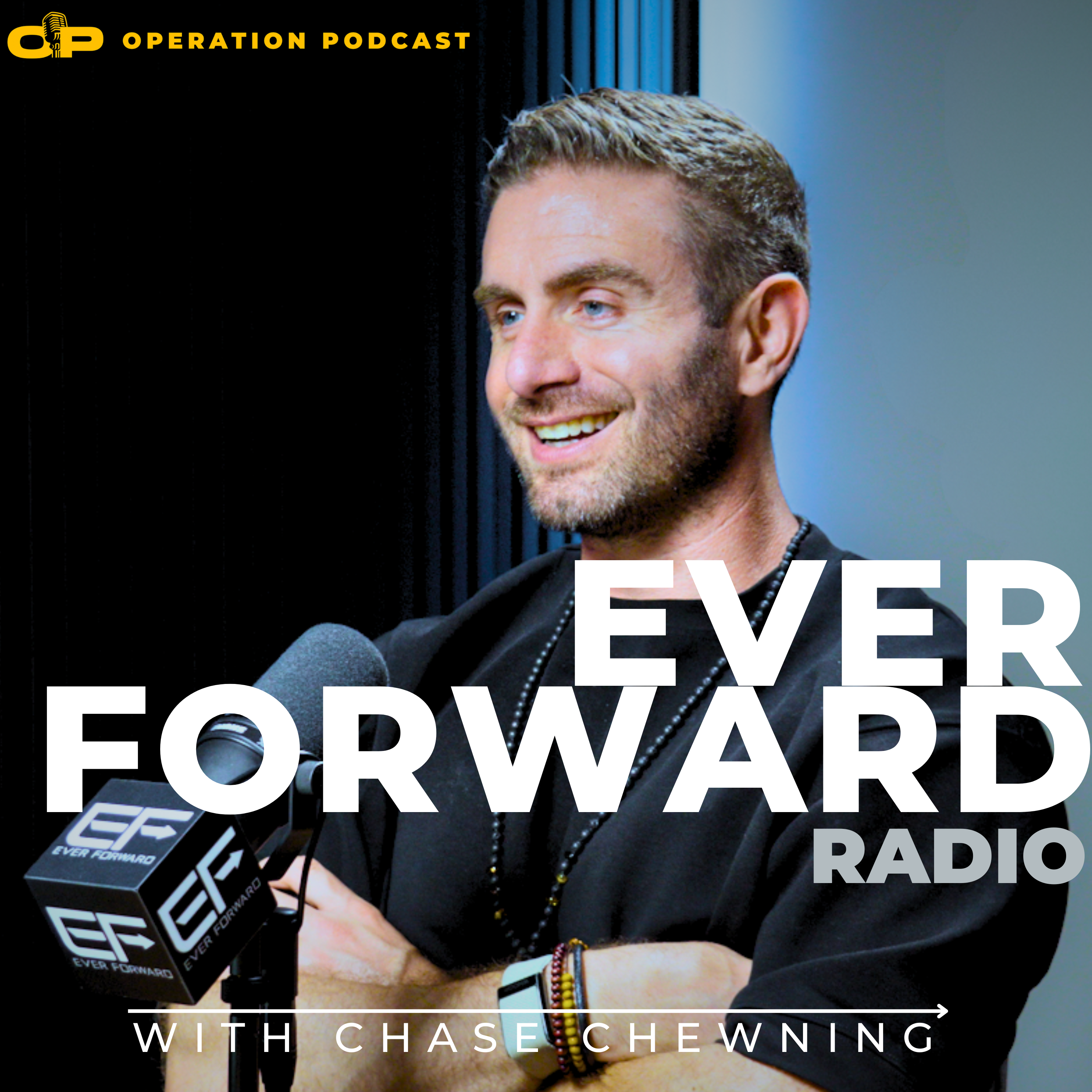
Ever Forward Radio with Chase Chewning
Operation Podcast
Craig Groeschel Leadership Podcast
Life.Church