
The Revolutionary Man Podcast
The Revolutionary Man Podcast is for high-performing husbands and fathers ready to lead with purpose. Hosted by Alain Dumonceaux, this show is more than men's empowerment; it equips men with the tools to reclaim their masculine identity, master life at work and at home, strengthen emotional resilience and improve their mental health. Featuring expert interviews and raw solo episodes, each week brings insights to help men lead their families, grow their businesses, and build a lasting legacy. It’s time to stop settling and start rising.
The Revolutionary Man Podcast
You'd Have Fixed This Anywhere Else
Use Left/Right to seek, Home/End to jump to start or end. Hold shift to jump forward or backward.
Let me know your thoughts on the show and what topic you would like me to discuss next.
You can spot a problem early. You can feel it in your gut, name it, and move fast. That instinct has probably built your reputation at work and in leadership. So why does it go silent in the one part of life that carries the highest stakes?
Tonight we get ruthless about the contradiction: we act quickly when a serious issue shows up in a domain we respect, but we “sleep fine beside” the same kind of worsening problem at home, in a relationship, or in our inner life. We break down the vocabulary that keeps men stuck, the phrases that sound like maturity but often hide avoidance: “I’m picking my battles,” “Now isn’t the time,” “It’s not that bad.” If someone on your team used that language for a year while doing nothing, you would see straight through it. We ask why you accept it from yourself.
We also talk about the real cost of waiting. Personal growth, relationship repair, integrity, and purpose do not hold still while you delay. The meter runs, the crack spreads, and the cheapest window to act disappears. To make it concrete, we run a brutal thought experiment: if the man responsible for your life reported to you, what would his performance review say, and would you accept it?
If you’re ready to stop calling negligence “patience,” listen now, then subscribe, share this with a brother who needs it, and leave a review so more men can find the work.
Key moments in this episode:
00:00 The Contradiction
01:12 The Instinct
03:00 The Same Problem, Two Responses
05:15 The Names You Give the Waiting
06:54 What Waiting Actually Costs
09:04 The Performance Review
10:25 The Hard Floor
12:14 The Closing Argument
Thanks for listening to the Revolutionary Man Podcast. For more information about our programs, please use the links below to learn more about us. It could be the step that changes your life.
👉To join our movement:
⛰The Mirror
You'd Have Fixed This Anywhere Else
SPEAKER_00The average man today is sleepwalking through life. Many never reaching their true potential, let alone never crossing the finish line to living a purposeful life. Yet the hunger still exists, albeit buried amidst his cluttered mind, misguided beliefs, and values that no longer serve him. It's time to align yourself for greatness. It's time to become a revolutionary man. Stay strong, my brother.
SPEAKER_01For three episodes, I've gone pretty easy on you. We took it slow and we mapped it out pretty carefully and you let you arrive at the things at your own time. But tonight, that stops. Because there's a contradiction in you that's so sharp that once you see it, the patient version of this conversation is going to be over. Because you have the instinct. It's fast, reliable. It's a hard-fought instinct. It's for catching those serious problems early. And it's one of the best things about you. Because it fires the instant that something important starts to go wrong, and it will not let you rest until that thing is handled. Because it fires everywhere that you've decided to take seriously. Everywhere except one. You see, there's a problem in your life right now that you have moved on from months ago, maybe even years ago. And if it had shown up anywhere that you respected, you wouldn't have let it sit. Tonight, we look at why the same problem gets two completely different responses from the same man, and what that waiting has been costing you the whole time that you've been calling it something noble. So
The Instinct
SPEAKER_01let's start with the instinct, because it's real and it deserves the respect. When something serious goes wrong in a part of your life that you've decided matters, you do not wait. You feel it almost before you can even name it. It's a wrongness, a signal that something is off and it's getting worse. And so what do you do? You move, you surface it, you say the uncomfortable thing in the room. You start to pull it apart, find the root cause, and throw whatever it takes at fixing it. You don't let that serious problem just sit and rot. The idea actually offends you. You've built your name on being the one who catches the thing while it's still small and then acts on it before it spreads. You've seen this, you've seen what happens to people who don't, the ones who feel the wrongness and look away, who tell themselves it'll sort itself out. But you've watched that problem and they ignore it, and the size of a hairline crack becomes the thing that brought the whole structure down. So you act early. It's on principle, because you know better than almost anyone walking that the cost of a problem is the lowest the day you first feel it, and it climbs every single day that you don't. So it's that instinct that has saved you more times than you could possibly count. It's not a small thing, it might be the single most valuable reflex that you own. You hold it up against your actual life because there's exactly one place where you have switched it all the way off. So let me ask you a question. In the domains that you take seriously, how long do you let a serious worsening problem sit before you act? Now hold on to that number in your head, because we're about to trigger it to something.
The Same Problem, Two Responses
SPEAKER_01There's a problem in the most important part of your life that meets every test you'd use to trigger action anywhere else. It's serious. And you know that it's serious. This was never about something that you couldn't see because it isn't small, it isn't improving on its own. And it has been going on long enough that new is not a word you can honestly use for it anymore. If this exact problem, you know, this size, the seriousness, this duration showed up in anything that you actually took seriously, you would have acted on it a long time ago. It would have been reflexive. You wouldn't have needed anyone to point at it. The instinct would have fired and you would have moved that very week. But here, this instinct is silent. The same man who can't sleep over a problem at work sleeps fine beside this one. And not because you don't feel it, you feel it. It just sits in the background of most of your days, a low hum that you've become an expert at not turning toward. You felt the wrongness for a long time. And for the first time in your capable life, you felt it and you decided to wait. That's new. You don't wait. It's the one thing everyone knows at your work would never swear that you do. And notice what it costs you just to admit it. You spent years being known as the man who doesn't let things slide. Decisive. You're on it. The head of the problem. To look straight at this is to admit that the description has a hole in it exactly where it matters most. That your decisiveness was partly a luxury. Cheap to spend in the arenas where deciding never threatened you with anything. So this was the exact problem appeared tomorrow in a part of your life that you took most seriously? How fast would you move? And what does the gap between that speed and your actual speed tell you about what you've been quietly deciding this is worth? And would you consider these two questions? Consider this as well. How
The Names You Give the Waiting
SPEAKER_01does a man who acts on instinct talk himself into waiting? He gives the waiting good names, doesn't he? It's not that bad. Every relationship goes through this. I'm picking my battles. Now's just not the right time. We're both just stretched thin right now. Take a moment and listen to those. Now, picture someone on your team using that exact language about a serious, worsening problem that they'd been sitting on for a year. It's not that bad. Now's not the time. You would see straight through every word of it, and it would be instant. You would not hear wisdom, you would hear a person managing their own discomfort by pretending this problem is smaller than it is. And you'd name it Avoidance. And depending on the stakes, maybe something even harder than that. And you'd be right. The phrases you'd never accept from anyone you hold to a standard are the exact phrases you've been accepting for yourself, and probably for years. About the highest stakes problem you've got. Picking your battles is a real thing. But you're not picking. Picking actually means that you're gonna fight for some of them. And yet you've quietly retired from this one and kept using the language of a man still in the ring. So if one of your people handed you the exact reason that you've been handing yourself, would you call it strategy? Or would you call it what you already know it is?
What Waiting Actually Costs
SPEAKER_01And here's what the waiting actually costs. And this is the part you've worked hardest not to look at directly. You tell yourself waiting is neutral, that nothing much is happening while you don't act, that you can get to it later, and it'll be roughly where you left it. You do not believe that anywhere else in your life. Everywhere you respect, you run the opposite principle. An unaddressed problem does not hold still, it compounds, the crack spreads, the cheap fix becomes the expensive one. That is the entire reason you act early, because you know waiting carries a price and the price climbs. And so you've staked your whole competence on knowing that. And then you walk into the most important part of your life and behave as though the meter isn't even running. It's running and it's been running the entire time. The problem that you're tolerating is not the size it was when you started tolerating it. Something has been accruing this whole time and quietly, and it's been in the background. And while you called your inaction patience, I'm not going to total it for you tonight, because we're going to do that later. But the part of you that does the math everywhere else already knows the bill is larger than it was, and that you are the one who has been letting it grow. And here's the quiet brutality of compounding. It's the slowest at the start. And so when acting would have been the easiest and the fastest at the end, when acting is hardest, your cheapest window was years ago. You spent it waiting. Every window since then has cost more than the one before. The window that you're standing in right now is the cheapest one you are ever going to get again. So, everywhere the price of waiting is real, you act early. Why is a single place you've decided waiting is free the exact place the price is the highest? So let's make this concrete in the one way that you just can't dodge.
The Performance Review
SPEAKER_01Imagine the man responsible for this part of your life reports to you. He's on your team now, and it's time for his review. You pull up his record, here's what's in it. A serious problem, flagged by his own instincts, left unaddressed for how long has it been now? A year? Three? Longer? No plan, no action, a long row of quarters where the same issue rolled forward untouched, and each one carrying a reason that sounded fine in the moment and yet accomplished nothing. So what's your honest assessment of this performer? You wouldn't be cruel about it, but you wouldn't lie either. You'd say he had every capability of the job required and didn't apply it. You'd say the gap wasn't skill, it was will. You'd say a man who performs like this in the role that matters most has a problem he is actively choosing not to solve. And then you'd do the thing that you always do with a performer like that. You'd stop accepting the explanations. You'd start expecting the change. You'd hold him to the standard. You'd hold everyone to the standard. Everyone but the man in the mirror. In the one role where the standard matters the most.
The Hard Floor
SPEAKER_01So write the honest review of how you've performed in the most important role that you hold. And then ask yourself, would you accept that performance from a single person who reported to you? Now, the hard floor that's underneath all of this, the different response is not an accident. You didn't forget to act. The man with your instincts does not simply fail to notice a serious problem for years. You set the bar for action impossibly high in this one domain and on purpose. Because a high enough bar means you never have to clear it. If the problem only counts as serious enough to act on, once it has become a catastrophe, then everything short of catastrophe gets to be tolerated. And you get to call that toleration patience, maturity, perspective, even keeping the peace. A raised threshold is how a man makes his own inaction look like judgment. Saying things like, I'm choosing not to make this a thing is the same thing as saying I've decided not to do the work, just in a calmer voice. And if there were anyone positioned to watch this the way your work gets watched, they'd have forced your hand a long time ago. But there isn't. So the threshold has sat exactly where you set it, just high enough that your own life never quite reaches it. You are not failing to escalate this. You are choosing not to. And you're doing it every day. And addressing the choice is the best word you own. So if you stop pretending the threshold was set by circumstances and admitted it to yourself, what would you have to do tomorrow?
The Closing Argument
SPEAKER_01Let's bring this together. You're choosing the gap. That was in episode nine. You're choosing it to stay where you're safe. That was in episode 10. You built it so that no one could make you look, that was in episode 11. And today you've carried a flawless early warning instinct your whole life, and you aimed it everywhere except the one place where you're using it would cost you something. The same man who would never let a serious problem rot has been letting one rot on purpose, behind the best vocabulary that he owns. That's the friction. And it's the sharpest one yet. Because you can't claim you don't have the instinct. You have it, and it's excellent. You just simply refuse to point it here. See, this price is not theoretical. It is not later, and it has been accruing the entire time that you've been calling it patience. So we're going to total it. We're not going to do that today. Tonight is just this. Stop calling it patience. You have called it negligence in anyone else. And the honest part of you, the part that runs the math everywhere it's allowed to, already knows exactly what it would do tomorrow if it stopped waiting for a permission that was never going to come. The band of brothers is where men stop tolering at home what they'd fix anywhere else. So start acting while the price is still payable. And if you're ready for that, you know what to do.
SPEAKER_00Thank you for listening to the Revolutionary Man Podcast. Are you ready to own your destiny? To become more the man you're destined to be? Join the Brotherhood that is The Awakened of Man at theawakendman.net and start forging a new destiny today.
.png)
Podcasts we love
Check out these other fine podcasts recommended by us, not an algorithm.
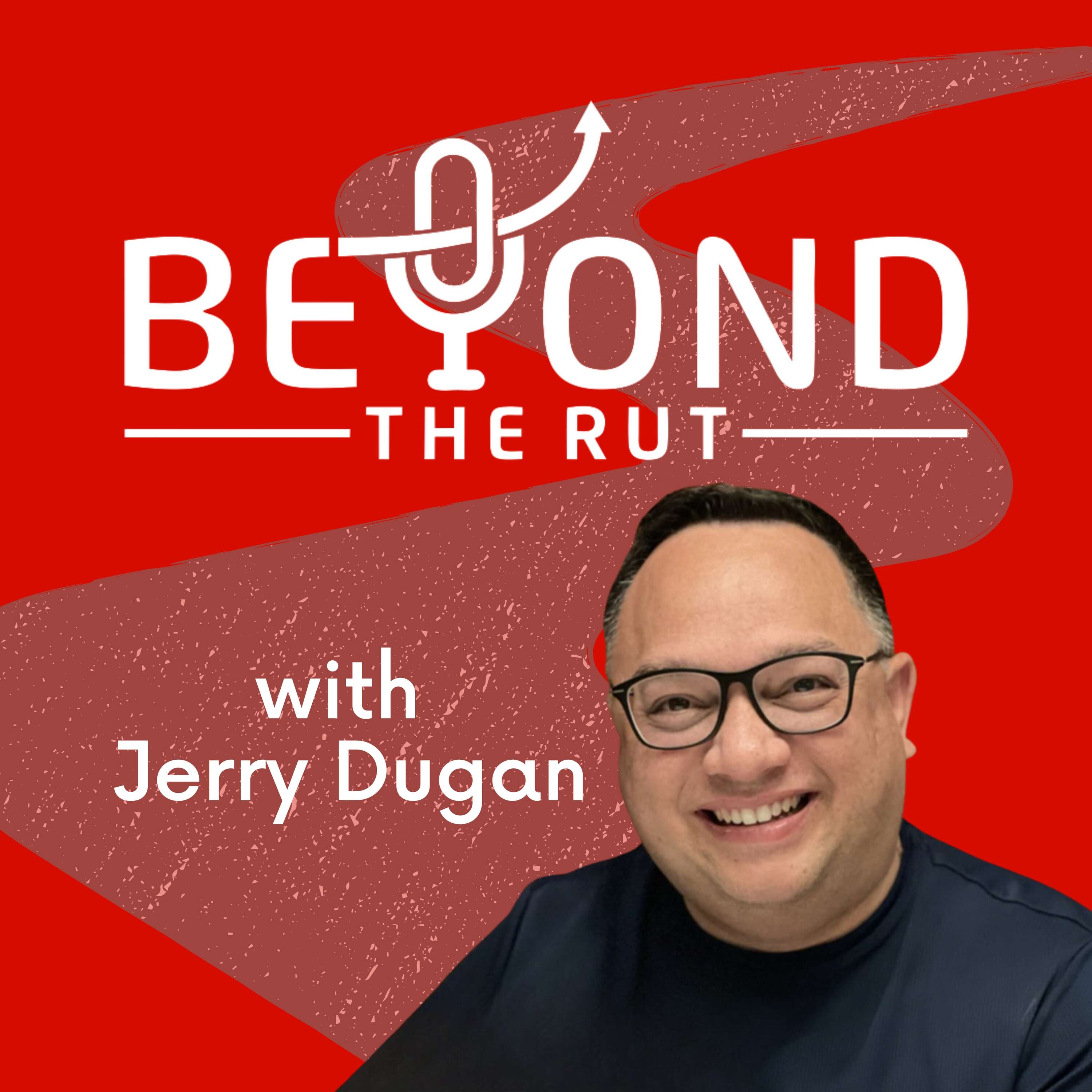
Beyond the Rut: Create a Life Worth Living in Your Faith, Family, Career
Jerry Dugan - The Work-Life Balance Leader, Author of Beyond the Rut, Redefining Success
Living Fearless Today
Mike Forrester
The Game with Alex Hormozi
Alex Hormozi
The Dad Edge Podcast
Larry Hagner