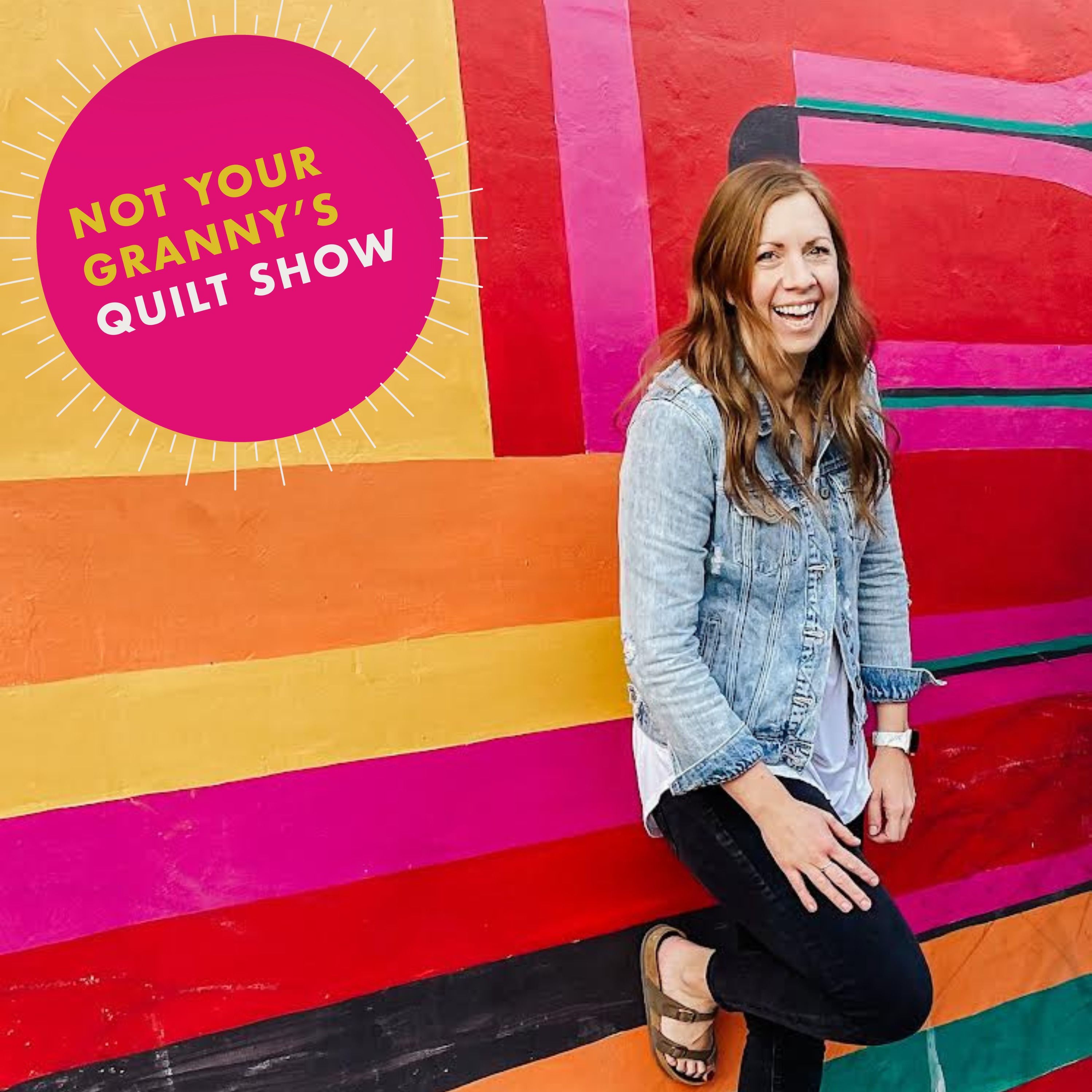
Quilting on the Side
Co-hosts Tori McElwain of HeyTori and Andi Stanfield of True Blue Quilts share real talk about what it takes to grow a successful quilting business while balancing full-time work, family life, and creative energy.
Whether you're into quilt pattern design, longarm quilting, teaching workshops, or selling handmade products, you'll find practical tips and honest conversations here. We cover everything from digital marketing and course creation to time management and the mindset shifts needed to build a sustainable, fulfilling side hustle.
This show is your go-to guide for running a profitable quilting business on the side - with encouragement, strategy, and plenty of real-life stories from the stitching trenches.
Quilting on the Side
Unraveling the Art of Graffiti Quilting with Karlee Porter
Use Left/Right to seek, Home/End to jump to start or end. Hold shift to jump forward or backward.
In this episode of Quilting on the Side, Tori and Karlee Porter discuss the evolution of quilting, particularly focusing on graffiti quilting. Karlee shares her journey from working with long arm machines to developing her unique artistic style. The conversation explores the importance of community, the impact of self-publishing, and the accessibility of quilting machines. Karlee emphasizes the need for open-mindedness in the quilting world and the significance of balancing business with creativity. The episode concludes with rapid-fire questions that reveal Karlee's personal preferences and inspirations.
Don’t miss an episode! Like, comment, and subscribe for more quilting stories, tips, and industry insights.
Chapters
00:00 Introduction to Quilting and Artistic Journey
03:11 Transitioning from Long Arm Testing to Artistic Quilting
05:52 The Evolution of Graffiti Quilting
08:55 Reactions to Graffiti Quilting and Breaking Norms
11:47 The Impact of Graffiti Quilting on the Quilting Community
15:02 Self-Publishing and Building a Brand
17:51 Expanding the Product Suite and Online Teaching
21:00 The New Graffiti Quilting Book and Its Features
23:47 Creating a Community Through Quilting
26:45 Conclusion and Future Directions
33:33 The Evolution of Graffiti Quilting
39:11 Balancing Business and Creativity
44:15 Open-Mindedness in Quilting
52:31 Finding Inspiration and Community
59:28 The Bruce Wayne and Batman of Quilting
Also mentioned in this episode:
Podcast Episode Where Tori yelled: Collaboration Over Competition
Sam Hunter's Podcast interview with Karlee Porter: https://www.revcraftbiz.com/p/navigating-the-gatekeeping-with-karlee?r=rkjue&utm_campaign=post&utm_medium=web&showWelcomeOnShare=false
Karlee Porter Inspiration:
Jeff Soto: https://jeffsoto.com/
Jessica Hische: https://jessicahische.is/
James Jean: https://www.jamesjean.com/
Alphonse Mucha: https://en.wikipedia.org/wiki/Alphonse_Mucha
Qveen Herby: https://qveenherby.com/
NF: https://www.nfrealmusic.com/
Charlie Puth: https://www.youtube.com/@charlieputh
Connect with Karlee Porter
On Instagram: https://www.instagram.com/karleeporterdesign/
On her website: https://www.karleeporter.com/
Want More Quilting Business Content?
🔗 Support us on Patreon for exclusive perks
🔗 Grab Tori’s new book, Workshops Unleashed
📌 Follow us on Instagram
Co-Hosts:
Tori McElwain @heytori.tech
Andi Stanfield @truebluequilts
If you want more support with your quilting business, make sure to hit follow.
Tori (00:02.685)
Welcome back to another episode of Quilting on the Side. Tonight is just me, Tori, and Carly Porter is our guest tonight. So welcome, Carly. I'm so excited you're here.
Karlee Porter (00:07.086)
Hi, thank you so much for having me. I'm excited.
Tori (00:16.885)
So I'd love to start off with having you introduce yourself and to tell us how you got started quilting.
Karlee Porter (00:22.318)
Okay, so my name's Carly Porter. I live in Northern Utah and I have been an artist all my life, but a quilt specific artist since 2009. And I got started in quilting actually by learning how to build and assemble and test long arm quilting machines. So, kind of weird.
Tori (00:47.665)
really unusual. How did you get in with with a long arm company?
Karlee Porter (00:52.32)
Yeah, so there's just a long arm manufacturing company within the vicinity of where I live. I was just looking for a full time job after I got married and they had an opening in their production team, which is like building the sub components for quilting machines. And yeah, I was just looking for a full time job that had health insurance and they were hiring. So I did not know what a quilting machine was. Like I thought I was just building.
like subcomponents for manufacturing machinery. And yeah, when I went to the job interview, they were like, okay, these are the machines that we need you to like learn how to test and build different parts for. And that was my first experience with a long arm quilting machine was running it for, you know, 25, 30 minutes, making sure all the functions worked and just moving it. So for probably the first nine months of my job there, was
quilting for 40 hours a week, but it wasn't all the fun, exciting, artistic quilting. It was setting up a machine and running all of the modes and making sure all the buttons worked and making sure that the tension worked properly and then disassembling it and then sending it to the shipping department. yeah, so that's kind of like the very Cliffs notes of how I came into contact with a quilting machine and...
As far as being an artist, from a very young age I was always artistic and so being able to apply my artistic skills onto fabric with thread was just kind of the natural progression of fabric being my medium for doing art. And so I've been stuck with fabric ever since and enjoying it very much.
Tori (02:38.507)
Have you ever taken up piecing as part of your exploration or has that mainly been quilting?
Karlee Porter (02:46.002)
Yeah, I have done piecing, but for me, piecing has always kind of been like a means to an end to get to the quilting machine. So my piecing skills are very rudimentary. Like this quilt that I'm laying on, this is about the extent of my piecing skills is like an equilateral foundation paper piece triangle. You know, I've done lots of half square triangles, lots of square.
90 degree block type quilts, but yeah, I've I really fell in love with the free motion quilting portion of the quilt making process. And so that's kind of the lane that I've mostly stayed in for the last 15 years is just really enjoying the aspect of basically drawing with thread on fabric. So I piece a little bit, but it's always secondary to whatever my plan is for the actual quilting.
Tori (03:42.675)
Yeah, I could see that. And I love that. That just makes me think of how many different avenues the quilting industry has.
Karlee Porter (03:44.084)
Yeah.
Karlee Porter (03:50.782)
Mm-hmm. Yeah. Yeah, there's really room for everybody and there's something for everybody. There's so many different styles to cater to people's aesthetic and then so many different techniques to try that cater to different skill levels, which is really cool. So yeah, it's nice to feel like there's a portion of it that I'm like, this is what I'm really good at. This is what I'm going to stick to. This is my favorite part. So I struggle to...
get out of the free motion quilting box other than with computerized quilting, but yeah, I just feel like even after doing it for 15 years, I just haven't run out of steam. It's just still so fun to me. So do you wanna see what I'm working on right now? Okay, so I have my phone holder hooked up to my sit down quilting machine, but this is a piece that I'm working on for
Tori (04:34.695)
Yes.
Karlee Porter (04:48.332)
my graffiti quilting masterclass. And I'm like about two thirds of the way done with it, but check that out.
Tori (05:00.321)
I always love the colors you choose.
Karlee Porter (05:03.435)
Thanks, I'm such a rainbow freak. And it looks kind of blue because I'm using a marking pen, but this is what it'll look like once I wash away all the marking lines. It's kind of a more true color to the color scheme that I'm working on. But in my graffiti quilting book, one of the sections has 324 different quilting motifs. And so I'm quilting this quilt to quilt out every single one of them.
Tori (05:08.971)
Okay.
Karlee Porter (05:32.179)
and then I'm recording the footage so that my students can see the process of it actually being stitched out so they can follow along with it. So it's been a doozy. Thank you. So yeah, that's.
Tori (05:43.923)
It's gorgeous!
Those of you listening on a podcast platform, go check out our YouTube so you can see some of the detail and what she did because it's gorgeous.
Karlee Porter (05:54.291)
Yeah.
So yeah, that's my favorite part is the free motion quilting.
Tori (06:02.433)
Well, how did you get out of being a long arm put together and tester and into more of the artistic side?
Karlee Porter (06:12.887)
That's a great question. So I worked for the quilting machine company from 2009 and in 2013 was really when I was starting to really have kind of a mature and developed artistic style within quilting. And so I was just making all of these quilts primarily like I would go to work during the day and I wasn't able to do any creative quilting. It was all very mechanical, scientific.
testing sort of stuff. But then I would come home at night and use this little old sit down loaner quilting machine that the company let me borrow. And that's where kind of the magic would happen. And so from 2009 to 2013, I was just making all of these, these artistic pieces that would now be known as graffiti quilting, but developing the style. And the more I started showing my quilts to people, the more they would say, like, first of all, they'd be like, wow, that's amazing, which is also really cool.
But then they would say, well, how did you do that? What did you do? Like, what was your thought process? And so I thought, man, I really should like write down and kind of verbalize or put into vocabulary what it is that I'm doing when I approach a piece of fabric with quilting. And then in 2014, I published my first quilting book, which is now Graffiti Quilting. So Graffiti Quilting, when I published it, it really kind of took off like wildfire. And so by the summer of
2015, I had a whole international teaching tour booked. Like I went to Australia and Canada and Europe and across the states to teach graffiti quilting. so, you know, when I started asking for weeks off at a time at my day job, they were like, that you don't have enough PTO. And I was like, well, okay, then I guess this is where we part ways because
I've really found something that I feel like is my calling in the quilt world and in the artistic world. So yeah, so I put in my notice at the quilting machine company and then spent the whole summer touring, teaching graffiti quilting. yeah, and then I've been freelance ever since.
Tori (08:32.329)
I would love to share a little story with you. So during that time, my mom, she's a free motion long arm quilter and she's an award winning long armor. She loves free motion. She really embraced Karen McTavish, but she loved graffiti quilting when you were touring. I actually, she, she wanted a quilt to practice on. So I sent her my king size. It was a strip quilt, just a very basic strip quilt with a negative space in the middle. And my entire, my bed still has it on right now.
Karlee Porter (08:34.76)
Yeah.
Karlee Porter (08:48.393)
Aww.
Karlee Porter (08:57.672)
Okay.
Tori (09:00.945)
our king-size bed is full of her graffiti quilting.
Karlee Porter (09:05.48)
Gosh, I love that. That's amazing. That's so cool. Thanks for telling me that. That's awesome. That makes me so happy. And how special, like a quilt that your mom made and that's awesome. Yeah.
Tori (09:09.415)
I think like often, like every time I watch it, I'm just like, God, this is so beautiful.
Tori (09:23.393)
I just wanted to share that with you. But she was in that that that tour, like you're talking about that 2015, 2016. That is when she started. It started really coming up with her own style. And you're one of the people that inspired her to do that. So I just wanted you to know that.
Karlee Porter (09:34.215)
Mm-hmm.
that's awesome. Thank you. Well, that's so great. Tell your mom thank you.
Tori (09:45.346)
She won't listen. I'll tell her. I'll tell her listen. I don't know she to all of them. I think she listens to a few episodes. Oh, that's wonderful. So you started developing the Grifidh Quilty. And actually, that was one of my questions I wanted to ask you is how did people react when they first saw this style?
Karlee Porter (09:47.995)
Yeah.
Yeah.
Karlee Porter (09:58.172)
Mm-hmm.
Karlee Porter (10:03.081)
So it was a mixed bag. So I think there was kind of there was a whole kind of range of reactions that I was getting. I think depending on lots of factors, like I think that I had a few different experiences where I feel like graffiti quilting kind of disarmed people and kind of showed their biases within quilting that I found really interesting. So when I started quilting in 2009, I was 18 years old and
So, you know, here I was like this young kid just kind of learning how a quilting machine worked and doing it all like behind closed doors, right? Like all of these quilts that I was making prior to the book being written were just like me in my basement apartment making art, right? And then when I started showing people there was kind of a wide range of different reactions. There were people that were like, like I kid you not the first time I went to Houston International Quilt Festival.
A woman, like I was there like talking about my quilt and she must have not heard me talking, but when she came up to me, she had like a question about something else and she said, oh, where is your mom? And I was like, my mom's in Utah, where's your mom? Like she just, all she saw was how young I was, right? And that was kind of silly and interesting. And then it was like further in the spectrum of
quilters saying like, that's really cute. Like, you've been quilting for a couple years. I've been quilting longer than you've been alive. So how cute for you that you're like still learning and practicing. And then it was more like, okay, well, like, that's cool for you. But that's I've never seen anything like that before. And then there would be like comments about just how many rules I was breaking, like how wrong
Graffiti quilting was because it was so far from non-traditional and very, like it's an art form. It didn't originate as a functional way to quilt a quilt. It just now applies to functional quilts. And then I even had a woman who saw one of my mini quilts, this one behind me, it's called Waste of Thread because I took it to a quilt guild meeting and I held it up and I said, look what I made, it's so pretty, right?
Karlee Porter (12:23.001)
And the woman in the front row said, my gosh, that is such a waste of thread. And I was like, what do you mean? And she's like, you overstitched so much, you could have quilted a whole king-size quilt with the amount of thread that you put on that little fat quarter. And it like took me back so much. Like it really caught me off guard and disarmed me. But then it was interesting to see like the perception of like the...
Like this woman was raised by a mother who had lived through the Great Depression, right? And so it's like this generation that is very much about like scarcity and not wasting a single thing and keeping track of every little scrap of fabric, right? Which is part of the quilting history is like patchwork. Part of that is recycling fabric and you know, not making waste of anything. So I like, I get it. I get where she was coming from, but.
So it's kind of interesting to see kind of the whole wide range of responses. But I do have to say that over that whole range, 95 % has been very positive and encouraging and inquisitive, which is really cool because I think that graffiti quilting is not something that really existed in the quilting world before, you know, before I came and did it. And so
Not to sound like all JoJo Siwa or anything, but like I feel like I contributed something new and different to the quilt world. so it was cool to feel like by and large, most people were embracing that and excited to see a new possibility that can be done with fabric and thread. And this was also an interesting timeline of this happening because, so I feel like...
You could almost argue that anything that is machine quilted on a quilting machine could be considered modern quilting in the sense that quilting machines have only really been accessible to like the home quilter for maybe maybe 15 years or so. Like when I worked at the Quilting Machine Company, I really kind of saw the cusp of how these machines were starting to hit the market and not just be considered industrial.
Karlee Porter (14:44.672)
manufacturing machines that were reserved for people who wanted to take out a business loan and do quilting for hire, right? Like in the late 2000s, it seemed like quilting machines were very regional. It was like, one quilt guild may have one person who has a quilting machine and the rest of the people are like patch workers and they all send their quilts to that person to get them quilted. Whereas now it's like,
It's so much more common and accessible for people to have a quilting machine without it being like a business expense or a business endeavor. And so I feel like I was there at an interesting time to start showing people like what is possible with these machines and that they don't have to just be like a bread and butter edge to edge. That's a means to an end to get the quilt quilted. The quilting is its own art form.
And the more motions and movements that we can learn with this free motion machine, the more art we can apply to our quilts and that we don't always have to just rely on the quilt top or the patchwork to be the art. yeah, so it's kind of an interesting character arc that I've had over the last 15 years of kind of being right on the cusp of this wave and then...
also contributing my own kind of flair and style and feeling like I kind of have a little bit of influence over where that wave goes because I have just showed so many possibilities for what someone could do with the machine and that it doesn't have to be what your grandma taught you how to do because your grandma didn't have a quilting machine, right? Like maybe your mom didn't even have one. Maybe you're the first generation quilting machine owner in your family.
because they're so accessible now and that's only been a decade and a half that they've really been that accessible. So yeah, that's interesting. Yeah.
Tori (16:42.945)
I love it. So I from my perspective, and it may be I have unique perspective because my mom was one of those early adopters of long arm because she thought it was ridiculous how she had to send she made like, my mom's an overachiever. She when she started quilting, she made like 15 tops, one for like each person in the family. And she's like, need to get these out there. So she tries to send a long armor. And she charged her you know, like $200 a quilt top just do basic meandering. And she's like, I can do this. So my mom got a long arm. So
Karlee Porter (16:50.597)
Mm-hmm. Yeah. Yeah.
Karlee Porter (17:00.323)
Yeah. Aw. Mm-hmm.
Karlee Porter (17:08.724)
Yeah. Yeah.
Tori (17:12.147)
I got to see her journey with it. I think, and again, this might be a unique perspective, but I really think that you were in the forefront of pushing art, artistry within the quilting world, because there was quilt art. There's always been, I think, not always been, but it's been around for quite a while, but it wasn't as known. It wasn't as popular. It wasn't as accessible until I started seeing the work like your work, where it was like, it was more modern. It was, we didn't have to worry about piecing.
Karlee Porter (17:25.989)
Mm-hmm.
Yeah, yeah.
Karlee Porter (17:33.413)
Mm-hmm.
Mm-hmm. Mm-hmm.
Tori (17:40.706)
And I always admire it. when I, when I met you at a QuiltCon, I was literally fangirling. I was so nervous. I was just like, Oh my gosh, it's Carly Porter. Like I call you by your first and last name. Like it was weird to pause and say, Hi Carly, thank you for joining. Cause I'm like Carly Porter, it's Carly Porter. cause I seen you as somebody that I can relate to, right? Cause we are, I think we're about the same age within like a year and
Karlee Porter (17:48.581)
Karlee Porter (17:58.155)
You're so sweet.
Karlee Porter (18:07.652)
Mm-hmm.
Tori (18:09.609)
I feel like we've had similar journeys in the quilting industry where we've learned it. I learned piecing first and then got into free motion quilting, which I have been loving a lot lately, but I don't have a lot of access to it. So I get to rent and I get to play and then I get to like watch what you're doing. And speaking of which, okay, so I'd like to get into, cause like I could talk about, I feel like we can go back and all day, but I do want to get into how you've built out your product suite. you have, so we start.
Karlee Porter (18:17.348)
Yeah.
Karlee Porter (18:24.49)
Yeah.
Karlee Porter (18:29.284)
Yeah.
Tori (18:36.735)
We stopped at your story where you've created graffiti quilting and you're starting to get it out there. So what came next?
Karlee Porter (18:40.591)
Yeah.
Karlee Porter (18:44.036)
So after I published Graffiti Quilting, the cool thing about that book was I had gone down the path of traditional publishers because I thought, oh, if you are a quilter and you want to make a quilt book, you go to one of the publishers in the quilting industry and do that whole rigamarole, right? And I found out fairly quickly while being in talks with multiple publishers that typically within the quilting world,
Publishing a book was not a financially viable pursuit. was a marketing strategy. was like, multiple publishers said to me like, yeah, like we'll do a 5,000 print run and you'll get paid, I don't know, about a dollar a book. And maybe we'll do a rerun if all 5,000 sell within a certain amount of time and all this stuff. as I'm doing the math in my head, I'm like,
wait, like I've poured my heart and soul into this book. All you have to do is hit the print button and you're gonna take 95 % of my profit. Like I'm not doing that. And so I went down the self publishing route and a lot of things really like kind of fell into place in really cool ways with, you know, that path being kind of put in front of me. But
I made enough money in the pre-sell of my first graffiti quilting book that, so my threshold for when I knew I could safely quit my full-time job and pursue freelance artistry full-time was when my side hustle paid me more than my day job in a month. And so when I announced the publishing of my book and I put it on pre-sell, I made enough money in the pre-sell first month of the book.
to not only quit my job, but purchase my quilting machine with cash before I left. And it's not because I sold 5,000 copies, it was because I sold enough copies and I was actually making a profit with each copy sold. so that's another big part of my story is kind of this like do it yourself kind of millennial hyper independent attitude that like...
Karlee Porter (21:09.047)
really has propelled me to be able to be financially independent enough that I can really devote the time and energy to what it has taken to build something really robust and comprehensive. yeah, so I self-published my first book and it did really super well and I got paid super well for it because I wasn't giving it away to a publishing house that was gonna happily take that money.
And then that led to just lots of teaching engagements. So I started teaching internationally and teaching stateside and teaching at a few shows. And then in 2017, I started teaching online. So that was the thing that was interesting was like the overexposure of people everywhere saying like, come teach for me, come to my shop, come to my guild. And I was like, I can't go everywhere. Like I can't be everywhere at one time. And so teaching online was a really
nice way to stay accessible to people all over the world, but have them be in cohorts based on timing instead of based on location. yeah, so I started teaching online a lot. And then when COVID hit, we went fully online, but we already kind of had an infrastructure in place that just made it kind of easy to help people stay in a position where they could have access to good
quilting education without having to leave their home. And so, yeah, that's kind of the last 10 years or so. And 2024, we just celebrated the 10 year anniversary of graffiti quilting. And I republished and revamped and built out the book so much more. this is the new book and you can see how thick it is. So for reference, for those of you who can't see this,
The original graffiti quilting book is about 85 pages and the new, this is the textbook for the graffiti quilting course. It's 364 pages. So it is massive and so, so huge. Yeah. Yeah.
Tori (23:17.793)
like that.
Tori (23:23.041)
That's amazing. what have you, just like an overview, what have you added to it?
Karlee Porter (23:28.641)
So really a lot of it was like when I wrote the first book, that was like my first attempt at trying to vocalize what graffiti quilting is. But then between 2014 and 2020, there were really so many times that while I was teaching in class, I would say, okay, this actually isn't in the book because I didn't know what I didn't know when I wrote the book, but let me teach you this thing.
And so I had continued to build the curriculum and really the book is just the manifestation of all of that good educational content. So like, for instance, like I can walk you through what the book covers. So there's 10 chapters in the book. The first chapter talks all about tools and materials and especially with graffiti quilting because it's such an artistic form of expression. It's not like, okay, quilting cotton and this type of thread.
and this type of batting. It's like, no, do you want to use fleece? Do you want to use minky? Do you want to use silk? Do you want to use satin? Do you want to use cork? Do you want to use leather? Do you want to use faux leather? Do you want to use... And it's like, so it talks about all the different tools and materials above and beyond what's normal for the quilting world. Because really we're artists and so we're going to use lots of different materials, not always just, you know, the traditional quilting cotton.
Tori (24:50.529)
I'm imagining like leather bags now with graffiti quilting on it.
Karlee Porter (24:53.785)
Yeah, yes, yeah. I just quilted a piece of satin yesterday and it like quilts up so beautifully. So there's so much room for experimentation that I think the quilting world is still, like I'm still working on helping people take that permission to be like, yeah, there's more here than just the cookie cutter stuff that we see. so then chapter two is...
a free motion quilting bootcamp. So I am militant about making sure that my students understand what their quilting machine is doing so that they can, they know how to tackle the hurdles or the stresses or the troubleshooting of their free motion quilting. Because if you're fighting with your machine or if you're fighting with your thread or your tension or the technicality of the quilting,
you're never going to be able to get into a place where you're focusing on the artistry and the design and the techniques that your arms are actually doing. So chapter two is this whole big free motion quilting boot camp where we talk about stitch length and tension and like how to adjust your bobbin, how to adjust your top thread, how to discern between different thread types and different fabric types and when to use what and where and all of that. So it's
a really good kind of baseline for just understanding what it is that your machine is doing because then you can mindfully give it direction, right? So then part three is a kind of a glossary of design principles. So these are things that will apply to any type of free motion quilting. So these are things like the design principles that will apply to every single motif.
that we teach in the class. And then part four is all the different motifs and their skeletal structures. So you understand them, what they look like all by themselves. then, yeah, yeah. So we talk about it in the sense of each design is like a body. So you have the skeleton and then you have some muscle and then you have some skin, right? So it's like you build these things up.
Tori (26:54.241)
I like that structural structure.
Karlee Porter (27:08.628)
So we get to know each of those motifs in their very simplest skeletal forms. And then we talk about different ways that we can apply muscle and skin and how that can manifest in quilting. And then part five is this quilt that I showed you that I'm holding up right now. It's a super robust, extensive combination calculator, essentially. So there's just a layout for each motif and then 18,
different combinations based on that motif. So it's like feather plumes with ribbon candy, feather plumes with contour lines, feather plumes with arrows, feather plumes with loops, feather plumes with triangles. And then with each page, that layout, the base design changes. And so it's like, if you were to combine two of the different motifs in any combination, what could that look like? So there's 324 different motif combinations.
And it's just one for each because you can combine two designs in different ways, right? So it's kind of infinite, but I give you a good baseline of 300 plus to start with. So that's part five. And then part six is a challenge. It's called the brainstorming challenge, which is what helps my students kind of start to figure out how they can pair motifs together. Because with graffiti quilting, you don't...
plan any of the motifs out beforehand. You do it one step at a time and you don't decide what you're gonna quilt until you're in the spot. so part six kind of breaks that down. Part seven is like what to do when you hit roadblocks. So sometimes when you're adding motifs, you might have awkward spaces or little gaps that you're not sure how to address them. So we do a comprehensive lesson and a lecture and a demonstration on.
what to do when you see those roadblocks that kind of can get you stuck. And then part eight talks all about like the compositional structure of your overall quilt. So instead of focusing on every little motif, you start to focus on like, what is your end goal? And you start to visualize what that is. And then part nine is a collection of 30 different free motion fillers. So sometimes there are parts of your graffiti quilting where you just need to fill in a space with a repeatable design.
Karlee Porter (29:26.472)
So there's 30 different ones that you can do. And then part 10 is like the last 15 years of all the graffiti quilting quilts I've ever made and it's a trunk show. So the thing that's so cool about this book too is like that's all the 364 pages, but throughout the entire book, I've also embedded QR codes. So basically every page that you see in the book, there's a QR code that will link to additional content, most of which is videos. So it's like, not only do you see what's written on the page,
Not only do you see the illustrations, but when you scan the QR code, it'll take you to a video of how to draw the illustration, how to quilt it on a sit down, how to quilt it on a stand up, or there will be extra lectures and demonstrations and videos that are all just organized in this like beautiful book that's so pretty you could put on your coffee table.
Tori (30:16.861)
It really, really is. I get to flip through it at QuiltCon and it was just gorgeous. just, I'm like, can I buy the book? But I love how you've done this offer. I love it. Because not only have you taken a idea and an artistry that you developed 10 years ago, you've added so much to it and made it a comprehensible course that they can work through. I think it's brilliant. And I love that how deep you went with it.
Karlee Porter (30:18.391)
Yes!
Karlee Porter (30:22.557)
Thanks.
Karlee Porter (30:40.434)
Mm-hmm.
Karlee Porter (30:43.976)
Thank you.
Tori (30:46.219)
Cause there, there's so many creatives that we talked to on the podcast and, with my clients and the DMMC and, they want to try to do like everything and they don't take it. They don't take the time to think about how can I go deeper with my one thing that I'm really enjoying? And I think that is a beautiful example of how you can do that. And I also at Qualcomm. So one thing I wanted to talk to you about was how did you figure out or how did you develop?
Karlee Porter (31:00.274)
Mm-hmm.
Karlee Porter (31:06.174)
Thank you.
Tori (31:14.003)
and this might've been just kind of a natural progression, but you had an array of different products that you could purchase at the table. So how did you come about figuring that out?
Karlee Porter (31:19.624)
Mm-hmm.
Karlee Porter (31:24.606)
Honestly, all of the tangible products were just kind of like afterthoughts to things that all have to do with the class. So when someone signs up for my graffiti quilting course, not only do they get a copy of the textbook, but they get a welcome package with tons of gifts. Like things that are like, even though we're online together and we don't ever get to see each other in person, I want you to know how much I love you. And so...
I do like a welcome package that includes like a copy of the coloring book and some postcards and some homemade caramels and some stickers and some, you know, iron on decals and some, just graffiti quilting themed stuff. And so really my booth was showcasing all of the gifts that you get when you sign up for the class. And then people just wanted to buy one off sometimes as well, or they were students of my class that are like, I want this sticker or I want this decal or I want this.
iron on and, but the fun thing about QuiltCon was I had just opened registration for my 2025 class that week. And so when people would look at stuff in the booth, I would let them know, hey, if you sign up for my class, you can go on a shopping spree right now and pick out your whole welcome package and you get it all included in your registration for the class. yeah, so that was kind of the thought process with my booth was,
sure, you can buy all of these fun little things by themselves, but this is all part of like an exchange that we're having to be closer friends. Like I don't want to just sell you a sticker. I want to be your biggest free motion quilting cheerleader. And I want to teach you everything that I can. And I want to hang out after this, you know? So, so yeah, so it was, it was really fun to have a booth at QuiltCon for that because each item that I sold
was also a conversation point to something deeper and something more connecting than just like, I bought this decal at a quilt show, you know? So yeah, so that's how that all came about.
Tori (33:26.655)
I love that. feel like that's a powerful lesson too for our listeners in the business space who are going to these shows and vending and that you can do exactly what you did and have an array of products that may lead to something more than just what's sitting there on the shelf. I think that is so brilliant.
Karlee Porter (33:33.052)
Mm-hmm.
Karlee Porter (33:41.624)
Mm-hmm. Yeah. Yeah. Thank you. Thanks. I appreciate that. And, you know, a lot of those things too were like, I got feedback from my previous students about things that they liked in the welcome package. And then I also had a lot of requests. Like, all of my machines have, like, custom drawn tattoos, like that I just drew on all my machines with Sharpie.
And people are like, I want a tattoo for my quilting machine. And so that's how the decals came about because people are like, I want a decal for my machine that's graffiti quilting style. And so I printed a bunch. And then, you know, I had done some hand drawn stuff with Sharpie on my clothes and people are like, I want graffiti clothes. And I'm like, okay, well, here's some iron on transfers, you know, so it was all kind of stuff that just led to, I don't know, like fun little tchotchkes, but it all tied back to.
my aesthetic as an artist and graffiti quilting and what that's all about. then also like encouraging people, if you like this style, not only can you have the products that I've made, but you can learn how to do this and you can come up with your own signature style of graffiti quilting, which is also really cool and unique. like, it blows my mind still to think how cool that is that graffiti quilting is free motion. Like the quilt on your bed, that's not my quilting, that's your mom's quilting.
Like that's your mom's flavor of graffiti quilting. And that is so special and sentimental. And so my goal is to not to teach people how to quilt like me. It's to teach people how to figure out how they quilt so that they can develop their own taste and their own feelings and their own style and find out what they like and what they don't like. you know, I get to be the one to help them discern that. But it's all stuff that lives inside of them. Like I'm not...
I'm not giving them that skill. I'm just helping them nourish that skill.
Tori (35:39.827)
I had a teacher one time mention that one thing that we're really teaching is mindset. And I feel that with free motion quilting.
Karlee Porter (35:45.647)
Mm-hmm.
For sure, for sure. Yeah, I mean, a lot of my curriculum have, I've put in side quests. So I call them design challenges in the book. So it's basically like, as we're working through the curriculum, there will be design challenges that will really like focus in on specific aspects of your quilting. And some of them really are mindset. Like there's a design challenge that's like,
Sometimes we get so wrapped up in what our quilt looks like, we forget to enjoy it. So your challenge is to go on a picnic, take your favorite quilt, eat food on it, and then write in your journal how it felt. Think about what your quilt is actually doing besides functioning as a quilt, right? And so, yeah, I love that too, to kind of round out the mindset of like, why do we quilt? It's not how do you quilt only, it's also why are we even doing this?
Tori (36:44.897)
I love that. I want to like sit and process everything, but I know we gotta keep talking. So let's get a little more technical about your business. you have, do you have any help or is it just like a one moment show?
Karlee Porter (36:51.93)
You
Karlee Porter (37:01.152)
it's, I would say it's mostly a one woman show, but I only continue to be as on as I am because I have good support behind me. but like no full time situation. Like I'm the only full time person here. my husband is a computer genius. So honestly, the only reason he's not full time is because he's so good at it that he can optimize what he does.
He's a software engineer full-time for like a legit boss. And then he's my unpaid employee or he's paid in different ways. So my husband is my business partner. would say that he definitely is, he's probably pulling 30 % of the weight of the business of just managing the finances. Not because I can't do it, I just don't want to.
Like, it's not like a weird, like, he wears the pants and the purse string sort of thing. It's like, thank you for managing the budget so I don't have to think about it. And then he manages the website and makes sure that things are running smoothly. And then when I stream my live class sessions, he's behind the camera. I have five different camera angles that I use when I'm teaching. So I have one on my quilting machine, my iPad, my front-facing camera, my overhead camera, and then...
my sit down quilting machine. So I have all these different camera angles. So while I'm teaching, he will like be switching camera angles and like pulling up comments. If people have questions, he'll point them out and he kind of keeps the behind the scenes going. And then I've had friends that have kind of helped out here and there. Like if I have a huge order of welcome packages to send out for class, sometimes I'll have friends come in and help me, you know, stuff packages and stuff like that. But
But yeah, for the most part, it's kind of me just trying to keep up. Yeah. Yeah.
Tori (39:02.505)
Right, I feel that. I totally feel that.
me see what else I want to ask you. Look, I love this conversation already. think we're like doing amazing.
Karlee Porter (39:11.257)
Yeah. I know I can be long-winded, so I'm trying to keep my answers succinct to give you as much as possible without giving you more than you want. Without being TMI.
Tori (39:23.563)
Well...
Right? Like I, yeah, sometimes there's a boundary there that's hard to like, where is the boundary on? I listened to your interview with Sam Hunter and I loved it. First of all, I thought it was a great interview. You two together was just wonderful to listen to. And I wanted to get your, your thoughts on how we can, because our industry is
Karlee Porter (39:30.174)
Yeah.
Karlee Porter (39:37.247)
Mm-hmm. Thank you.
Karlee Porter (39:44.077)
Thanks.
Tori (39:54.218)
Mostly older women. So do you have any ideas or have you found a way to possibly reach a like our generation a little bit more like how do we grow this industry with the new generations coming up? And you don't have to have an answer to this, but I was curious with your style. I feel like it appeals more to our generation and I was curious if you had any any thoughts on it.
Karlee Porter (40:14.025)
Mm-hmm.
Karlee Porter (40:17.497)
Yeah, so I think open-mindedness is a big thing and I think that we are fortunate to be in a generation that I feel like there is a decent Level of open-mindedness that's kind of baked into Millennials It's kind of funny because I this just reminds me of a story there was I got a really mean DM on Instagram like a month ago
that someone like kind of I had posted something on my story and so this lady didn't like it and so she said something like speak for yourself and I was like sorry if my story felt like in a like a personal attack on you like you're welcome to unfollow me like I'm in that phase of my life I'm in that era that's like I don't know if you know this but you don't have to follow me like I'm just so much
more unbothered than I used to be with mean DMs. And she said something to me that was like, you talk about the quilt police, like the imaginary quilt police, like someone's banging down your door telling you what you can't do and that's just not real. And you just talk about imaginary quilt police because you like to fear monger or something like that. Basically talking about how the quilt police are not real. And I was like, I thought to myself,
I have had way less experiences with the quilt police in the last five years than I did the first five years of my career in the quilt world. So I was like, yeah, I walked so you could run. Like you're welcome that there's no quilt police. It's cause people like me had to keep on speaking up and like telling them what's what. Like the lady who said, what a waste of thread. I had to be like, no, actually this isn't a waste of thread and I'm gonna keep doing it and I'm gonna keep doing it and showing it to you and making your eye twitch until you realize that it's not a waste of thread.
And so it was interesting to think about like how far our industry I think has really come in open mindedness. And that's a great thing. But I also am going to like take a little bit of credit in the fact that it was people like me who continue to show up, even though some of these more seasoned quilters were straight up quilt police. Like, let's call it what it is. And so
Karlee Porter (42:46.494)
So I wanted to call out that, that like, feel like in the last, now being able to look at the industry with 15 years of experience, we've come a long way and I'm so proud of that. And I love that. And I feel like when I was 18, 19, 20 years old, I knew two other quilters who were in their early twenties. Like that was it. And now I feel like we go to QuiltCon and we see...
women our age, we see women a little older than us bringing their teenage daughters, we see women a little older than them who bring their granddaughters. so, yeah, I think I don't know that it's anything necessarily specific that we have to do to get our generation into it. I think we need to just keep doing what we're doing because that traction builds over time. Like,
So I think things like that really help in just saying like, I'm gonna stay open-minded and anyone who wants to sit with me can sit with me. I'm gonna make space for that. And I'm not gonna try to yuck people's yum. I'm gonna like what I do. But also at the same time, I'm gonna give people the decency and respect to say that they can have their own opinion as well. And I think that's becoming more and more common naturally.
Like I think the way our world is and you know, like each generation is a different breed. Like these Gen Z kids, they're different. They're different, but it's not bad. And so what I don't want is as a millennial to look at Gen Z or Gen Alpha and be like, I've been quilting longer than you've been alive. Like I don't want to ever treat anyone, but especially people who are less experienced than me.
the way I was treated sometimes by people who were more experienced than me. So yeah, I guess that's a soapbox without like really having a definitive answer to your question. Yeah, think just, yeah, it is for sure because it's like, we want people to enjoy it because it's like what we were talking about where it's like having a quilt on your bed that your mom made you, that's such a special thing.
Tori (44:42.079)
that's fine I gave you the box I'm like here you go Carl because I think it's an important part yeah
Karlee Porter (45:00.028)
As quilters, we get to have so many wonderful interactions with other makers and then people who are not makers, but they know enough to respect and value and treasure what we do. And that is a real luxurious commodity to be able to get that. And then there's also the preservation aspect. Like we are preserving an art form.
and continuing to build upon it. Like that's what graffiti quilting is. It's an homage to traditional free motion quilting in a new, innovative, modern way. But like throughout my book, I'm not trying to say that I invented the feather. I'm not trying to say that I invented loops and ribbon candy, but what I can do is say, this is so beautiful. Here's how we've seen it traditionally. Now, if you're...
mind is open, you could also see it in this way, but you get to choose and you get to pick and you get to decide and it's your quill. So I think open-mindedness is a big thing that really goes a long way. Being willing to hear someone else's story or being willing to hear it and disagree, but still respect the person and like move on with your life and unfollow if you want.
Tori (46:14.689)
I love the fact that you're talking about, well, sorry, like three thoughts at once. I think leading with positivity is gonna be a really great force. So celebrating each other, sharing each other's work and sharing the work that others have inspired us. I feel like that is a great way to keep moving forward and keep that in mind and quiet the quilt police. If we're busy celebrating each other, then the quilt police doesn't really have much to say.
Karlee Porter (46:28.074)
Mm-hmm.
Karlee Porter (46:35.753)
Mm-hmm.
Karlee Porter (46:42.203)
Mm-hmm. Right. Right. Right. Yeah. And I think even too, like one thing I've also kind of learned is like, everyone has their opinion and we get to have that and that's okay too. So it's like what I used to see as Quilt Police being like, you can do this, you can't do this. Now I'm like, wait, what you meant to say was you can do it this way or you can do it this way. And so like kind of getting that discernment to be like,
It's interesting because it's almost like swapping where they would be like, that's so cute for you. Like cute little girl trying your best, you know? And now I'm that way. That's like, that's cute if you feel like you want to just like you. You've probably seen this on my social media, so I feel like I'm going to just call myself out. I absolutely have a bias against stippling and meandering.
So like, that's where I think I'm like, that's cute if you want to stipple, but I would never like, you know, so we all have our biases, we all have our opinions and that's okay too. And so kind of learning to swallow that as well and replace it with compassion. I have also learned how to do that and both sides of that, both the experience of both sides make sense. And you know, maybe the quilt police that I have encountered in the past.
Especially because I tell the stories. like, you don't get to hide behind like if you're gonna do something embarrassing expect to be embarrassed But like maybe they've learned something I know that I have had times where I've learned that like I have posted about like I posted a meme that was like friends don't let friends just stipple their quilt and There was Pete there were people that were like I love stippling and I'm like, that's cool Like I don't and that's a difference of opinion and that's fine, you know
So yeah.
Tori (48:38.297)
See, I love meander and stippling and that would have made me laugh so hard. I would love to break out of that.
Karlee Porter (48:43.071)
Yeah, yeah. And that's like the point that I make because I teach free motion quilting is like, I think my bias is if you want to stipple and you know how to quilt a ton of other designs and you go back to stippling because of your preference, awesome. What I don't like is like when someone spends so much time on a quilt top, they pour their heart and soul into it and then they don't know any other way to quilt it.
Tori (48:49.504)
Yeah!
Karlee Porter (49:10.975)
To me, that's like such a sad missed opportunity. Like there's so much more than meandering and stippling. So if you can, like there's multiple quilts that you make. So maybe just don't stipple all of them, you know? But again, that's my own bias. It's my own, that's my own preference and I get to have it. And if people stipple everything, that's their quilt. And so who am I to swoop and poop and you know, like that's, that's not my job.
Tori (49:30.215)
No, I didn't.
Tori (49:36.417)
I feel like you approach it in a way where it's like, let's get you learning something else and let's try something else. Like the way you've described approaching everything so far is in a very much of experimental, let's create, let's play and explore. And that's how I'm kind of taking that. I hope I did too.
Karlee Porter (49:51.571)
Mm-hmm. Yeah. Yeah.
good, good. Yeah, I hope that that judgment didn't come across. I hope it didn't seem like I was piling on after you were like, I do love Stipple. And I'm like, okay, let's keep talking.
Tori (50:01.154)
No, no, no.
Tori (50:05.921)
Well, specifically meander stippling sometimes exhaust me. that's that's question I would like to ask is how do you because you quilt so intricately. So how do you stay strong enough to to do that? Do you have like? Yeah.
Karlee Porter (50:21.425)
You mean like physically? So I talk about this a lot in class. The importance of making sure that you're quilting ergonomically. So a big part of when people have injuries from quilting, I wouldn't say all of it. Like sometimes you're doing everything right and you still have injuries or fatigue or anything. Like I'm not trying to blame people's injuries on this, but for me, I have found my own experience
When I have bad posture, when my table is too low, when my table is too high, when I have the wrong chair, when I am so tensed and clenched up that I'm like, yeah. Like the song I like to sing when I quill is, if you're happy and you know it, unclench your jaw. Because that's where I hold so much tension. I feel like I hold it in my jaw and the top of my neck. And I'll just notice like, my gosh, wow, I have some extra vertebrae that have been hiding.
because I've been so hunched over. So I think that's a big one. And then also just being careful with fatigue. Just because I could quilt day in and day out doesn't mean that I should. So being able to take time to stretch or to rest or to do other activities, there are other physical activities you can do to build muscle that you do use with quilting, like core strength. So I like to go one wheeling, which sometimes people, that's like,
It's like a motorized skateboard, but it has just one wheel in the middle of your feet. That's why it's called a one wheel. And people think you're just standing on this board, but you're doing micro movements that engage your core while you're doing it. So like that helps with my core strength. I like to go kayaking. So there's my upper body. I love riding my bike. So there's my lower body. I love playing volleyball. So there's like my agility when I'm quilting. So I think finding other physical activities that
are not quilting can also be helpful as well. Just so that you're taking care of yourself as a whole, not just as a quilter, but just as a human who has extremities that need care.
Tori (52:33.195)
Definitely. I realized I was muted.
Karlee Porter (52:36.24)
So.
Tori (52:38.273)
Carly, talked about so many things. There's so many things I could ask you. We might invite you back, but I didn't let Andrew have a chance to talk to you.
Karlee Porter (52:44.785)
Okay. Yeah. Anytime you want to chat you as you can see, I can talk and talk and talk. So yeah.
Tori (52:50.113)
I really enjoyed the conversation, but I'd like to get to our rapid fire questions. I have a few more for you. So one, and these can be as long as you want, so they don't have to be like very quick. But the first one is, the first question is, what color do you struggle to include in your quilts?
Karlee Porter (52:54.227)
Okay, let's do it. Okay.
Karlee Porter (52:59.923)
Heh.
Karlee Porter (53:07.506)
So I have two answers. If I had to pick one single color, I would say my least favorite color in general is orange. That doesn't always necessarily translate to not using it, but if I had to choose a least favorite color, it would be orange. So I would say like I wouldn't typically choose fabrics that have orange as a main part. But really my bigger struggle is colors that are not in rainbow order. So like if I love the quilt behind you,
like the rainbow order, I keep looking at it. I don't have diagnosed OCD, but I would say this is the thing that comes closest when things are not in rainbow order. Or when someone tries to do a rainbow, but they swap the green and the blue. I can't. I eat my gummy bears in rainbow order. I eat my Skittles in rainbow order. I eat my &Ms in rainbow order. When I make a salad,
I try to have every color of the rainbow in my salad. Like maybe I do have undiagnosed OCD. I don't know because yeah, my salads are healthy, but my brain may be strode. So, but yeah, so I'm definitely a rainbow file. If I can default to a rainbow or some section of the rainbow, struggle to use bright colors that are not in rainbow order.
Tori (54:10.241)
Well, it is very healthy.
Tori (54:31.649)
That's really interesting. Okay. So I think I know the answer to this one, but the second one is yardage or pre-cut.
Karlee Porter (54:32.816)
Yeah.
Karlee Porter (54:39.818)
probably yardage just because I can cut off a piece and take it straight to my quilting machine as a whole cloth quilt. So yeah, I did go through a phase where I was like a fat quarter queen, where as I was buying fabric and building my stash, I would just pick out fat quarters that I loved. But the downfall with that for me was I would struggle to ever cut into them because it was like, here's my little piece of fabric that
like I'm too scared to do anything with. So, but yeah, I'd say yardage of solid fabric is kind of where I live, whether it's Kona Cotton Solid or leather or cork or non-traditional yardage, like getting a bolt of silk fabric is like so, so fun and just quilting on silk. So yeah, it's a yardage. Is that what you were gonna say? Is that what your hunch was? okay, okay.
Tori (55:12.64)
security.
Tori (55:32.065)
I was thinking yardage. With cork, do you put cork on your long arm?
Karlee Porter (55:36.789)
yeah. my gosh, it's so fun. Yeah. Yeah, do it. Do it tonight. Do it right now.
Tori (55:40.833)
That's fascinating. Okay.
have to write mine, so I have to book two weeks in advance, but I could do it two weeks. Next question is, what is your favorite notion?
Karlee Porter (55:48.881)
Be good.
Karlee Porter (55:57.125)
Does an iPad count? Can my iPad? Or is that like a machine?
Tori (56:01.874)
No, I call it, I would count it because you use it for computerized designs too, right? Like, yeah.
Karlee Porter (56:05.999)
Yeah, yeah. would, yeah, I'd say my favorite notion is my iPad or my laptop.
There you go.
Tori (56:13.217)
Honestly, you say. But my artistic side is now, or my creative side, I should say, words. It's marketing. It's translated differently than it used to. So it's been interesting. Next question is... Oh, I lost track. Hold on. They're not actually numbered.
Karlee Porter (56:22.788)
Yeah, yes.
Karlee Porter (56:35.972)
That's good.
Tori (56:38.815)
Who is inspiring you right now? And they don't have to be in the quilting world.
Karlee Porter (56:43.056)
can I name a few people? Okay, so there's a graffiti artist named Jeff Soto. I love him. A hand lettering artist, her name's Jessica Hish. I love her. Probably one of my all time most inspiring artists. His name is James Jean. has just, you'll have to Google these people because instead of me trying to explain why they're so amazing, when you see their work, you'll get it. But
James Jean is another one. And then I would say a timeless one that like an artist from history that I have continuously fallen in love with is Alfons Mucha. He's like an art nouveau graphic designer from the early 1900s. So yeah, he's another one that's super inspiring. And then I would say like outside of visual art, I've been listening to a lot of rap lately and there's two.
Like music is another thing like it's a whole side thing that's separate from my quilting identity But I love listening to music and I love writing music and playing music So Queen Herbie, she's a rapper. I'm obsessed with her right now NF is another rapper who I really love I feel like I connect with his lyrics a lot and Charlie Puth who is just like a genius a musical
musical genius and he's so generous like his Instagram account he's like professor poof let's talk about music and talks about like technicality so yeah those are some of the and and then the last thing I will say I'm also very much especially lately and especially coming off of it being indigenous national indigenous day is that now it's like escaping my mind people's indigenous day
Is that what it's like the official name of the holiday? Now, now I'm paranoid that I'm getting it wrong because I don't want to get it wrong. Indigenous Peoples Day, yes, Indigenous Peoples Day. Yes, OK. I was getting paranoid because I want so deeply to make sure that I'm being respectful. But like I have a lot of respect for Native American culture, like rug weaving. There's an Navajo artist, she's a weaver and a designer. Her name's Naomi Glass.
Tori (58:37.473)
think so.
Tori (58:40.897)
I just see it as Indigenous people. Yeah.
Karlee Porter (59:02.384)
She's amazing. And then also just Native American bead loom art, like making bracelets out of seed beads on a loom. I have found a lot of inspiration and just meditation, and it's kind of something that slows me down and is completely separate from being a quiltpreneur. It's just like making these bracelets, following the pattern, and then giving these bracelets as gifts to people who I love.
And yeah, so Native American culture inspires me a lot, especially the Navajo tribe. So yeah.
Tori (59:40.691)
over here like I need to make more time to look at all of this. I'm googling a lot tonight. I recognize a few names that you shared but I want to like I want to see what they are. I'm like interesting so I'll find them and I'll link them below the podcast everybody else can go see too. What is the most rewarding part of your business?
Karlee Porter (59:44.31)
Yeah.
Karlee Porter (59:51.734)
Yeah, yeah.
Yeah, awesome.
Karlee Porter (01:00:01.806)
I would say, like, so when I talk business, Quilty Business specifically, I would say there's like this Venn diagram, right? I like to call it the Bruce Wayne and the Batman. So identifying in your business, what's your Bruce Wayne and what's your Batman? So what I mean by that is Batman is amazing. He fights crime. He runs around the city. He drives a fast car. He has all these cool outfits and all these cool gadgets.
He's only cool because Bruce Wayne is bankrolling him, because Bruce Wayne is a billionaire, right? At least a millionaire, but I feel like he's a billionaire. So in your business, the Batman would, for me, the Batman is like a side quest, like making quilts that are for people or making quilts that are just purely for joy. It's me fighting crime, like me fighting quilt police, right? Like just.
pushing limits and pushing boundaries and learning more about myself creatively. That's my Batman. And my Bruce Wayne is like, what are the things that allow me to be financially stable so that if I want to spend six hours one day being Batman, my bills are going to get paid. And so for me, the Bruce Wayne's, my two main things would be computerized quilting designs and teaching free motion quilting. Those are the two things that are like my bread and butter income streams.
And so my happy place is like this Venn diagram of your Batman and your Bruce Wayne. What are the things you love to do and the things that make you money? And if you can live in the middle of that Venn diagram, that's where fulfillment as a business owner comes from. So, so yeah, I would say teaching people, creating new computerized quilting designs that really push the limits of technology and really get out of the box and are innovative and are designs that no one has seen or done before.
And then, you know, pushing myself as well and making sure that my own creative capacities are also developing when I go out and fight crime as Batman. Yeah. Yeah.
Tori (01:02:09.433)
I love that Batman and Bruce Wayne and the Bandai what's in the middle and got me thinking what's mine like
Karlee Porter (01:02:16.138)
Yeah, I think it's such a valuable identification for every creative business owner, identifying those things, because you can't have just one or the other. If you're Batman only, your money's going to dry up and then you're going to feel either burnt out or resentful or stressed out or anxious. But if you're doing all Bruce Wayne, you're going to be bored in a conference room all day and you're not going to have any dopamine or adrenaline or anything that gets you out of bed to be excited about what it is that you're doing.
It's really important to have those things and to try to maintain balance between them. Because it's easy to follow Bruce Wayne around the mansion and be like, okay, what's my next money thing? Where's my more money thing, right? But if you can identify ways that you can say, okay, what's a more steady income stream so that I can take a break, take a nap, and then put on my cape and go have some fun.
Tori (01:03:10.113)
It's funny, the reason I was laughing because I think the thing that gets me out of bed lately is I love to learn. Like that is my, I love to learn new things. And right now I've been diving into more of like AI and SEO and GEO. so like thinking about my, the thing that likes VF right now is like really nerdy. It's like, I want to go learn.
Karlee Porter (01:03:17.964)
Yeah.
Karlee Porter (01:03:23.393)
Mm-hmm. Mm-hmm.
Karlee Porter (01:03:31.647)
It's great. No, that's great. It's so great because it's like the thing that brings a smile to your face. That's all that matters. And your own barometer is the only thing that matters. So only you can identify your own Bruce Wayne's and Batman's because you're the only one that actually knows that Bruce Wayne and Batman are the same person. Right. Only you know both of those people. So. Yeah.
Tori (01:03:55.286)
Yeah, that's not quite where I thought you were going with that. So that was an interesting, that's really cool. I to be Googling and doing a Venn diagram tonight. That's what I'm gonna be doing. So last question for you. this is whatever counts for you. So whatever quilt counts as, well, you'll get it. So how many quilts are in the room with you right now?
Karlee Porter (01:04:04.663)
Good, Okay.
Karlee Porter (01:04:18.557)
my gosh, okay, let's see. One, two, three, four, five, six, seven, eight, nine, 10, 11, 12, 13, 14, 15, 16, 17, 18, 19, 20, 21, 22, 23, 24, 25, 26, 27, 28, 29, 30, 31, 32, 33, 34, 34.
Tori (01:04:42.593)
My favorite thing is that you can count them all like that.
Karlee Porter (01:04:45.292)
I have like, I have some on the wall, I have some in a frame, and then I have like, back there is a fireplace and above the fireplace is a shelf, and that's where I store my quilts, and so I'm just like, kind of looking at my stack of quilts, so yeah. Yeah.
Tori (01:05:02.387)
So wonderful. Carly, thank you so much for being here and I'd for you to share where people can find you.
Karlee Porter (01:05:08.67)
Yes. So if you want to see my day to day, well, week to week happenings on social media, I don't post every single day, but Instagram is a great place to just connect quickly when I am online. And then you can find everything about me at CarlyPorter.com. That's K-A-R-L-E-E, Porter. No relation to Fonson Porter, no relation to Chelsea Porter, although they are people that I like and admire. I'll just say that one rumor that I heard about myself.
was someone said, the only reason Carly Porter is even successful is because she's a porter from Fonz and Porter ever heard of him. And I was like, okay, first of all, I married into this family. It's not the same Porter's like grow up. Okay. So for the record, I'm self-made. Okay. I'm self-made. Yeah. Yeah. Yeah. Thanks for having me. I've had so much fun chatting with you.
Tori (01:05:58.635)
For the record, it is on the record. Thank you so much, Carly.


Podcasts we love
Check out these other fine podcasts recommended by us, not an algorithm.


The Creative Business Boss | Creative Business Growth, Marketing for Creatives, Creative Entrepreneur
Maude MacDonald | Creative Entrepreneur Business Coach & Branding Business Strategist
Craft to Career
Elizabeth Chappell
The Rev Craft Biz Podcast
Sam Hunter
Craft Industry Alliance
Abby Glassenberg
Measure Twice, Cut Once
Susan Smith
Love Yourself Thin Podcast
Dara Tomasson
The Quilter on Fire Podcast
Brandy
A Quilter's Life
Paula Chamberlain