
Dangerous at Both Ends, Tricky in the Middle
Welcome to Dangerous at Both Ends, Tricky in the Middle an equine behaviour and training podcast with Jen Nash and Barbara Hardman.
There’s a lot of information out there about horses.
Some of it is brilliant. Some of it is outdated. Some of it has been repeated so many times we’ve stopped asking whether it was ever true in the first place.
So… we ask why.
We talk about equine behaviour, training, welfare, learning, veterinary medicine and the science behind the things we do with horses. We pull apart research, question long-held beliefs, tackle the things doing the rounds on social media and, increasingly, answer the questions you send in to us.
And we don't always agree. Sometimes there isn't a neat answer. Because behaviour is complicated. Horses are complicated. Humans are definitely complicated.
We’ve talked about everything from reinforcement, enrichment and emotional regulation to gastric ulcers, calming supplements, thermoregulation, travelling horses, cribbing collars and whether you should scrape the water off a hot horse.
And somehow we’ve also covered Beyoncé, jellyfish that don't sneeze and Barbara accidentally killing a rabbit while playing golf. Basically, things go off track. A lot.
But underneath the madness, we want to do one thing: help people think.
Not tell you what to think.
Ask better questions. Look at the whole horse. Be curious about the evidence. And maybe get a little more comfortable saying, “Hang on… why do we do it that way?”
Got something you want us to talk about? Send us your questions, dilemmas, unpopular opinions and things you've always wondered but perhaps been too afraid to ask. Nothing is off limits.
Welcome to Dangerous at Both Ends, Tricky in the Middle.
Real questions. Real conversations. Science, behaviour… and a reasonable amount of madness. 🐴🎙️
Dangerous at Both Ends, Tricky in the Middle
Bonus Episode 6: Extinction in Behavioural Modification
Use Left/Right to seek, Home/End to jump to start or end. Hold shift to jump forward or backward.
Here we talk about Extinction, when a behaviour reduces because it no longer “works” for the horse. We look at what extinction bursts are, what emotional responses can show up, and when extinction may or may not be an ethical or effective choice. Clear, considerate, and welfare-focused.
Voice note your questions on WhatsApp to +353 85 143 8688 to have your questions answered on the Podcast.
Meet Your Hosts
Barbara Hardman (Bright Horse Equiation)
www.brighthorse.ie
📧barbara.j.hardman@brighthorse.ie ☎️+353 85 143 8688
Jen Nash (The Equine Method)
www.theequinemethod.co.uk
📧 Info@TheEquineMethod.co.uk ☎️+44 7902920923
Hi everyone and welcome back to another of our bonus episodes. And today's topic is going to be all about extinction and the role it plays in you know behaviour modification with regards to horses, dogs, any animals, your partners, your husbands, your wives, your children. Yeah, I'm really excited to be talking about extinction work because I think it is often an underutilised part of behavioural modification because it just seems it often seems too simple or too good to be true. Um I find people sort of go, Oh really? Can it be that simple? And it's like, yes, there's something fantastic about it. And you know, really just yeah, I I I love extinction work, I think it's really powerful, and I think it's often underutilized. Um, as the name suggests, uh, we're trying to get behavior to go the way of the dinosaurs, and you know, we're trying to remove it from the repertoire. Really, that's what it means. So it's nice and easy to remember. Just think of dinosaurs and not wanting it around anymore. Although I would I would love a T-Rex in my back garden, Jenna. I'm not gonna lie. Um, so in this episode, we're gonna break down what extinction means in the context of behavioural modification, how it works from the animal's perspective, and how you can use it effectively in your training, obviously, with the the right support from a behavioural practitioner. Yeah, let's kick this off then with a clear definition of what is extinction. Um, yeah, okay, we've got no more dinosaurs, but extinction work of our animals, our pets, and our horses is not about asteroids hitting the earth. In behaviour modification, extension refers to the process whereby a previously conditioned behavioural response gradually disappears because the reinforcement that maintained it is no longer provided. So, can we simplify that even more? Extinction is about when a behavior disappears because whatever was causing the behavior or maintaining the behaviour is no longer provided. I think that I I don't know if can you get any more simple than that? Yeah, no, I think that that's simple. This could be lots of different things. So when we look at uh behavioural modification and supporting our animals, uh myself and Jen, our primary goal is to try and find out what is maintaining the behaviour. Um, and depending on what may is maintaining it, it depends on our approach, right? So lots of different things maintain a behavior. So maintaining meaning like keeping it going. So in this situation, I'm gonna just describe like you know, countersurfing, you know, for for dogs, and you know, you leave food out on the table or on the countertop, and they manage to stretch up, stand on the countertop with their front paws, and eat whatever it is that you're you've left up there. So I often get people going, like, oh, how do I get them to stop? And of course, I'm like, Well, don't leave anything on the countertop. And I know that sounds really oversimplified, which is why I said, like, you know, is it really that simple? And it's a yes, because ultimately what's maintaining the behavior is is positive reinforcement. Every time the dog gets on the table or the countertop, they manage to get some food and that is reinforced. If we simply control and manage that situation and don't leave anything out, every time the dog gets up on the worktop or up on the table to look for some food, doesn't get food, it's not being reinforced, so that's maintaining the behavior, and then slowly the behavior goes extinct. So that is one example of extinction work. The other could be an underlying medical condition. So, for example, if you had or your dog or your cat had uh a urinary tract infection that was making them pee everywhere, right? You know, so this is this is a little bit more nuanced. Now I'm going into it just to kind of give um an example. Um, so the urinary tract infection is maintaining the behavior because they are having an irritable bowel like our irritable bladder, you know, the bacteria infections, you know, giving them irritation and uncomfort, and they're peeing more around the house. That's maintaining the behavior. If we remove what's maintaining the behavior, effectively the behavior will become extinct, and that could be from a medical perspective as well, and then supporting them. So if we remove that, we remove the infection, then the behavior of urinating places could become extinct, and then it's no longer performed. Now that one's a little bit more of a grey area, but it's just to try and explain that there's lots of different ways that we will look at trying to perform extinction work in our horses and our dogs. Yeah, you just reminded me of a classic one that I had last winter or the winter before. So it was a horse who the client called me up because the animal, the horse, was perform uh performing, you know, described as being aggressive and dominant at the gate and then difficult to lead and handle, and like you know, bucking and charging down the track to to the stables. Um, and you know, there's a lot of wording there that we covered in our previous full episode, debunking dominance. So if you haven't listened to that, please do go back and listen to that because a lot of that it will now be very relevant to what I'm about to say. And one of the simplest things we did with this, so it was a mare, okay. So, what do mares protect? Resources, food, it's winter, food is of a short supply. Um, one of the things that was set up was that the horse's food, feed was ready in its stable, so every time the horse came in, its feed was there waiting in the stable and a big massive hay net as well. So it was a very, very quick one to change around. Well, let's just remove the food from the stable and just have a very small quantity of hay there. There's no hard feed waiting for it, and that changed the behaviour very, very quickly because the reason I said it's important to consider it's a mare because we talk about this in our previous full episode about debunking dominance, that mares will very typically resource guard resources that are linked to production of well, reproduction being calories, food, fibre, like I say, winter. So you know, a horse who was hashtag aggressive and dominant at the gate. What she was just doing was just trying to make sure she was the first out there because she was feeling very anxious and motivated to get to the stable for that high food resource. And we've just removed that resource, she still got her dinner, guys. I don't weren't starving the horse, we just made the whole stable less exciting so that she came in. There was a bit of boring hay, so she still had some fibre, and then after a little while, then the food came later. But by just removing the food bowl from the stable straight away, helped de-escalate the behaviour. There was more going on, and actually, perfect scenario, there were medical things as well. And once we had all the certain things, we managed to extinct a lot of underlying main um maintenance reinforcers that were at play without actually doing too much behaviour modification. There really wasn't a whole lot of behaviour modification from a training point of view. It was a case of it was management and changing the management practices to extinct a lot of behaviour and it worked brilliantly. I think it's what I think it's really important about extinction and you know why I think it it isn't utilised as much is you know, we come about things a lot in behavioural modification from training the behaviours that we want. So, like, you know, counter-surfing and saying dogs, like we might go, oh, I want to train them to sit or go to bed, but you've not actually removed what's maintaining the behaviour. So then what you actually get into, so you you know, you've you've left out um you know the Sunday roast on on the couch top, but you know, you're like, Oh, I want to train them to go to bed, and I'm gonna get them to sit, and I'm gonna get them to go to place, and you know, I'm gonna train them not to jump up and all the rest of it. You focus really heavily on that, and there's a value in that, but you don't remove the Sunday roast, and it stays up there, you know. So what happens is you actually end up making it even more reinforcing for counter-surfing because you've not removed what's maintaining it, and all the training in the world isn't going to do anything. Because just because you've trained your dog highly obedient and they've got fantastic like training skills, all they need to do is get on the countertop once, even one in ten times, and get a little bit of that Sunday roast, and you've actually made it even more reinforcing because there's a type of kind of positive reinforcement from uh in a variable perspective that makes it close to gambling, yes, which makes it even yes, it makes it even stronger. Um, and then you've got it uh you're fighting even more, and then of course, then you get crossed and you're like, Go to bed, I told you not to do that, da da da da da, and then they start to hide it a little bit more. And again, the same thing happens with underlying medical issues. So, again, say I have you know a cat who's inappropriate urinating in the house, and you know, I don't remove the underlying medical condition, and I put 20 blister trays down and I cover everything in plastic and I scold them and all the rest of it. I'm not going to be able to train that behaviour until I remove what's maintaining it, you know, and we often forget that. Like, there's it's you know, if you had a broken leg, Jen, and you know, I was like, nope, I'm gonna I'm gonna train you how to drive your car. Oh, I can't, I've got a broken leg. No, you're gonna learn, you'll put the clutch in. I I physically can't. It doesn't matter how much I train. I know I've gone off the rails a little bit, but like it's just to kind of get people to understand it doesn't matter how much training you do, if you do not remove what's maintaining the behaviour that you're trying to modify, you are just it's you're you're trying to climb Everest, you're making your life so much more complicated. Yeah, and I think it's I think it's worth noting here that before we I I can already feel the language, it I can feel it that it could be very easy to demonize and be like, well, we're gonna prevent them from doing the behaviour so they'll learn not to do it. It's not a case of that. So we're you stop reinforcing that behaviour is one way of doing it. So, as I say, if your horse, if your horse pulls and drags you drags you to a bucket, and every bucket is now empty, eventually, over time, that horse is going to learn that buckets are not where food is, and eventually that might might decrease. We've talked a little bit about the gambling effect. So, if people aren't aware of that, the gambling effect is whereby you get sometimes it's a yes, you might get lots and lots of no's, then you'll get a yes. So, for example, take the dragging to the bucket. If you have buckets around the yard and your horse goes to four empty ones, then the fifth one there is food in there. The horse is positively reinforced for that dragging behaviour. But the dopamine hit will be so much higher in the horse's body than if he had got food from every single bucket. Now, if he got food from every single bucket for the rest of his life, he's gonna be very motivated to perform the behaviour. But if it's a oh maybe, maybe I'll get it, maybe I won't, it's that oh maybe that's very, very exciting. So that's your gambling effect. But I want to come back to extinction. So I was gonna say because I think that actually leads really nicely into extinction burst, because that's how that's where we can it can kind of fall over, is because of that gambling effect, yeah, you know, and we can end up making it more powerful, and this is where it's really, really important for to sort of stay fast. Like if we put extinction work into your training plan, we'll explain this and we'll also explain what's known as the extinction burst. So it's it's basically like because it's been reinforced for so long, that gambling effect kind of takes over, and you're like, Well, this isn't working, this isn't working, I'm not getting what I want. Okay, well, what if I try really hard? What if I try really, really, really hard, you know? Like, what if not only climbing on the table, what if I, you know, climb on the countertop and you know, knock over the cupboard and you know, knock things off the countertop. What if I really like it's it's it's called an extinction burst where there's a one big, like you know, intense, it's not one, but like it's one massive intensity of the behavior. Um, and that happens before the decline. And this is and I I will warn my clients, I'll be like, be prepared, be prepared for one big last hurrah, like where they really try and push your buttons whole fast because after that the decline will come, and that's where I find people tend to, you know, tend to miss the trick as well, there because when that happens, that's where you get your gambling, and then they go, Oh great! So, what I have to do is I need to be, you know, if they get rewarded or reinforced in that moment in time, then what they learn is I need to be really intense, and then I'll get the reward. Yeah, so you know, caution when using extinction, obviously, because we don't want a really intense reaction to happen instead. Yeah, and I tend to find that these extinction bursts are they get dangerous when the underlying behaviour has not been addressed. So if we try and try and think of an example here, if imagine that imagine that I had a imagine that I had a shopping addiction, right? Imagine I am really Imagine you had a rug addiction, like you have kept having to buy horse rugs um and it was getting out of control and we tried to do an intervention and uh imagine that Jen. Imagine that, right? So that fictitious situation. That fictitious situation. And your well-meaning friends might go, right, well, I'm just gonna take all of their I was gonna take their credit card away. I was gonna take their purse, gonna take the credit card away. No, you can't buy anything. There we go, extinction. You can't perform behavior, you can't buy anything, fine. But so that has that has prevented the behavior from being performed, that is fine, but that only works if the maintaining, if the if the if the function of the behaviour, the the thing that's maintaining the behaviour is the actual purchasing. If we don't we have to identify what's the underlying cause for the behaviour, and that might have been loneliness, you know, or it might have been you know other behavioural needs. So just let's just pretend that I lived on my own um or I didn't have any hobbies, or I was really socially anxious to go outside. So that was something that I did to like use up my time. So actually, it wasn't about purchasing, it was about feeling my time to meet a behavioural need. So then what might happen is there might be an extinction burst on my end where I don't know, where can we go with this example, Barbara? What would be an extinction burst in that situation? I throw the laptop out the window. No, I mean I suppose like an extinction burst in that situation was like you would you would go outside your normal repertoire of behaviour. So you may go I might rob I might rob I'll I'll I'll rob Hope Valley, I'll rob the sh the shop instead of it. Rob Hope Valley, yeah. I'll get in my car and go outside and do all the things I would normally do. Yes, yeah, like that this is it, and then this is it, and then when people go like, oh, it's so out of character that they did that, it's like it's you know, a lot of those that are extinction births, like where you're performing in a behaviour. Um, you know, like uh it's uh you know, shopping example and Jen's um clear rug problem aside, like I think you know, dieting is a really good one as well for people, you know. Like um, you know, as of the last couple of years, I've I've had to remove things like since we're not picking on Jen and a rug problem, um, you know, I've had to remove like a lot of saturated fats from my diet, you know, things like I say, cheese and milk. I miss my milky coffee. I occasionally do have a milky coffee, um, but I went through lots of extinction bursts. It was like remove milk from the house, and I won't do it. And then I would find ways to be like, oh well, if I if I'm driving down to the shop there and uh, you know, there's the insomnia or there's a Costa Coffee, and oh well I'll get I can get a milky coffee there, you know, and and I I usedn to buy coffee there, but I would find another alternative behaviour to be like, well, I kind of miss miss milk, or you know, oh you know, cheese doesn't count if it's on pizza, you know. Um and it takes a long time and it you know and we talk about we've talked about it with a kind of habit bundling and habit bundling, habit bundling and forming habits and stuff in our other other podcasts. So it's definitely worth going back and listening to that because that will make a lot of sense here, where when you're trying to form new habits, extinction bursts will happen where you'll it seems like a lapse, but it's it's not, it's that final burst of extinction, and they are the hardest ones to work with because you're going good, you're going good, you're going good, but maintaining the behavior, what is maintaining the behavior? Like, what is it that's there? And it's really complex, you know. It is really complex, as Jen said, like you know, if you like if you enjoyed like online shopping and that was what you did, what was is there something missing? Then that's why you know you're you're shopping. We saw an ink a massive increase in, and the you know, I think the reason you probably use that example as well, we saw a massive increase in people online shopping and using that form of comfort during COVID because we were miss we were socially isolated and we were missing it, so we were missing that dopamine. So we were like, okay, well, what else can we do to get that dopamine hit? Well, we can we can shop and stuff, and you know, we've gone off the rails as we often do, but it was more just to kind of explain that like this form of behavioral psychology is so complex, um, and I mean it's fascinating, but it intertwines into everything that we do, and we find it hard to find solutions and support humans in our society work through these complex behaviors. It's even harder for our dog or our cat or our horse or our animals when we can't even speak the same language as them, and they have different underlying drivers and motivations. They can't tell us if they're in pain, they can't tell us if they're stressed, anxious, and and tired, they can't tell us if they are overstimulated by their environment and actually just need a bit more rest. You know, they can't tell us any of that. So you know, not only do we have to interpret their behavior, what's happening, we then have to figure out what's motivating it, and then we have to try and apply apply the extinction work to support them and find a way to work through that extinction burst in a safe way because it does get more dangerous. Yeah, and I love how we started this episode being like, Oh, it's really simple. The concept is simple, right? The concept is simple. The concept is simple when the motivational and the fact the motivational factors and what's maintaining the behaviour is simple. It is not as long as those things are simple, then extinction is simple. But in life, things are rarely, very rarely simple, and it does get complex and dangerous when the underlying motivation is not addressed. And for me, you will see, especially on social media and YouTube, um, and we don't like naming names, but I'll just go for you know, you'll see a lot of natural horsemanship techniques which are essentially attempting a lot of extinction because they're just saying no to the horse, like no, don't do that, no, don't do that. And we've talked at length in season one and season two that don't is not a behaviour. Yep. So what do you leave that horse with? So if you don't, one of the best ways to work with extinction is yes, you're going to extinct, so you're not going to reinforce the behavior or you're gonna put things up in barriers to prevent that behaviour from being performed. So let's just say bolting behavior. One way, one way you can deal with bolting behaviour is to ensure that the horse is never in a situation where it can bolt. That might mean putting up a walkway or higher fences between wherever you're walking to and from, right? That is a bit of extinction work to prevent the behaviour from being performed. But then we need to go right, cool, so we can do that bit there, so there's less chance of that behaviour being repeated, so it won't be less reinforced. But now we need to look at what is causing that behaviour. Why does the horse want to bolt in the first place? Because the risk is without extinction work, if you don't put things in place to help extinction from happening, you risk then a repetition of the behaviour happening. Does that make sense? So if you had a bolting horse and you're going from one place to another in a big open field and big open space, you can do all the behaviour modification of your target and your your positive reinforcement, your shaping, counterconditioning, whatever it is, negative reinforcement you want to use. But because of the gambling effect, if something happens, a big tractor backsfires and your horse bolts and they get loose, and they haven't performed that bolting behaviour for say a month, and now they're performing it big style, it has now been repeated and it has been reinforced. Whereas if we could have put barriers, a walkway, fencing, changed where they were turned out, perhaps put your if you can put your shelter in your field so there is no leading, so for a long period of Of time we can just reduce the opportunity for boating to happen at all, and you do your assess what's causing the behaviour and address the underlying concern, then we have a really good behaviour modification plan. But yeah, that and because not all behaviours are appropriate to use extinction work with, and like I think you know, I know I know you said it there at the at the start, like when we started and said, like, oh, you know, this is quite simple, but it's more that people I think feel like, oh yeah, just don't do it. That seems simple, but it's so much more complex because you know, if we move remove something from the repertoire, then we need to to fill that vacuum with something else. I see this in particular if we have dogs where you know we don't have any bite inhibition and jumping up and biting is happening, like it's very, very hard to get that behaviour to go extinct because the environment itself unintentionally reinforces it, you know, because if you have a dog loose in a house and you step into the house and they're like, Woo, guests are here, I'm gonna jump up on them. Well, it's just been reinforced, you know, finding a way to to provide extinction work for that and reward the behaviours that we do want, it it gets it's and it's a very common problem, and it gets more dangerous, say, when we have less bite inhibition, and that starts to happen as well because every time that that happens, it becomes reinforcing, and it's very hard to then provide extinction work to that. And this is where again I know we we alluded to it being like more dangerous, is we get to a point where we think the extinction work is happening, the extinction burst hasn't happened yet, and everything seems to be going well, and you go, Great, you know, my dog's you know not biting anymore and not jumping up, and you know, we start to ru remove the controls that we put in place to help the extinction work happening. Suddenly, the dog has the ability to do it again, and we're right back to square one. So it's really important when we're doing extinction work to it needs to be in conjunction with filling the vacuum with something else and supporting the behaviours that we do want at the same time, so that we're removing column A and giving column B and going, This one here is is better for you, this one here is what we want you to do. And this is why it's so important to balance extinction with other reinforcement strategies, whether that's negative reinforcement trained or positive reinforcement trained, it's to help keep the training experience a positive one. So if we're saying this is no longer an option to be performed, but this is, and this has a much nicer outcome. So over time you are trying to then modify that behaviour. But I think the key thing for me to take away from this episode is extinction work is fantastic when carefully managed and monitored for stress or anxiety or frustration behaviours, but it works its best in conjunction with the likes of counterconditioning or shaping, which is what we spoke about in our previous bonus episode. So on its own is one thing you have to really know what you're doing if all you're gonna do is extinction work and it won't work for everything, it's not appropriate for everything, it works its best in conjunction with some positive focused behaviour modification for a new task or a new behaviour to give them a new option of performing something else which fits more of what we want to see. So take the bolting horse, for example. Instead of bolting, you know, maybe it might be one step forwards, the horse might take a shoot forwards, but as the person asks for that halt, that wool, they respond to that and stand still, click reward. So it's not saying to the horse, you can never be scared in your life. If if it was a fear-based behaviour that this is only when this works, if this was a medical issue that has to be addressed through the vets, if your horse was bolting because it had one or too many frights in a particular place, you want to desensitize that area, but also is our stop command there? Can does the horse have a positive association with stop? Can we make stop and stand still a really positive experience for them? Actually changing what they're conditioned. So it's called counter-conditioning or associative learning as well, and make something that was worrying actually a positive thing, and now we're actually training a new behaviour rather than thinking preventing bolting. Does that make sense? Yeah, absolutely, because the thing is as well, and you know, and and this is important for anyone using this, is like you know, extinction can cause frustration in the animal if you know it's not carefully managed, you know, as Jen alluded to, and like it's really important that like we need to it goes back to what's maintaining the behaviour, you know, stress and anxiety, and then if we're if that's maintaining the behaviour, and then extinction work adds a layer of frustration, then that's going to be really really critical for how we actually perform the behavioural modification, and it's really important to balance that with other positive experiences, as Jen alluded to there. Um and there are other methods within behavioural modification that we'll use in conjunction. It's very rare that extinction we use extinction in isolation, I would say, Jen. Like I wouldn't it's it's it's part of a bigger picture, um, and I know other trainers will refer to it as kind of control and manage the environment as part of it, and yeah, it's it's it is part of a bigger picture, but I do think it's often underutilised within behavioural modification, and it is something that I think is really, really powerful when we get our heads around it, yeah. I think to be able to support. Yeah, and I I think one of my favourite ways of using extinction work, you know, it is not is just to the really, really innocent behaviours, the learned behaviours that aren't, you know, aren't dangerous, aren't biting, bolting, kicking, any of this stuff. It's just a behaviour that has learned over time. So your horse could just learn that it is completely acceptable to rub their head on you. So they might approach you in the field and you are just the best scratching post because in the past you've scratched them or bum scratches, you know, horses that will turn their bum on you in the field or unstable and practically pin you against the wall because they like their bum scratches. Now, on the face of it, there's no health issues here, right? There's no aggression, there's no nothing dangerous going on here. It's just a really innocently developed, learned behavior that the horse genuinely thinks is appropriate because it's how they would do things with their best friend, you know, they would walk up and be like, here, scratch me here. So one way of doing extinction work here would be, you know, if your horse starts turning their bum to you, is you just walk away but scratch them somewhere else. You know, you can still provide scratches, but maybe not there, or just leave the situation. So it could be that every time the horse turned their bum on you for bum for bum scratches, you just walk out the stable and go do something else for a few minutes and then come back over time. Redirect them, install a scratching post, you know, so it's not associated with you. Um, you know, so you're you're removing, you know, what's maintaining the behavior is the fact that you know they try hard enough again, you're gonna scratch their bun, you're like, oh okay, fine, I'll give you a bun scratch. You know, remove yourself from situation and ne and never reinforce it, but also provide an alternative scratching post. So what's maintaining the behavior is a desire for that aloe grooming, but what's inappropriate is using the human by smushing them across. And I use I use that example because Ruben does it to me all the time. Ruben loves a face scratch so much, it he loves it, loves a forehead scratch, and you know, my understanding of Ruben is you can have it with the brush, so I will hold the brush for you and you can rub your head on the brush. But as soon as he starts, if he misses the brush and moves onto my body or my arm or shoulder, he tries to rub his face on me. I just walk away from that. I'm like, no, no, no, not me, not human, not human, not me. Turn around, we can engage. I'm not gonna, I'm not denying you scratches because you wear a fly mask and it's summer and we all get itchy faces, but it's on the brush. To the point now, I mean Ruben's 16, I've had him for 11 years. I can hold a brush up and he will just scratch his head on the brush, you know, instead of me. And it it takes a lot of discipline. So we talk we talked right at the start of this: extinction works when we're consistent and the underlying can reasons for the behaviour are understood. Ruben wasn't scratching me because there was some sort of medical issue, he was unhealthy, it's not a dangerous behaviour, it was just simply an unwanted behaviour from my perspective and just something he'd learned innocently. I had to be really strict of myself that I didn't scratch him with my hands, I didn't allow him to practice scratching his head on my body, I had to remove myself from the situation, but I filled the vacuum by providing a brush as a different option. And now I've done a nice circle around for extinction, but also provided something positive so his behavioural needs are still met, but my outcome has been met as well. I'm no longer the walking scratching post. So if you're planning to use extinction work in your training, as Jen said there, it's like it's important to be patient, be consistent, be prepared for that extinction burst and hold fast, and remember it's important to understand what's maintaining the behaviour and also linking in with positive reinforcement so that you are filling that vacuum that you've created with the behaviour that you do want. Absolutely, and it's worth noting, guys, that extinction work isn't applicable or appropriate to all behaviours, and as a horse owner, I wouldn't expect anyone to just know this stuff, and this is why it's so important to reach out to Equine Behaviorists like Barbara and myself to do that assessment for you to identify that is this an appropriate approach to changing this behaviour, or do we need to take a different route? Because those extinction bursts can be big, they can be scary, and if you don't know what you're doing, it's not a good place to be. So, thank you so much for listening to this episode. We hope you've enjoyed the discussion and I hope the information on extinction has been helpful and it gives you some new strategies and ideas for training and working for your horse with your horses in the future. And if you enjoyed this episode, please guys do share it with others that you might find might find it beneficial or interested. Um, and don't forget to leave us a review, it really, really helps us. So on Spotify or Apple or wherever you get your podcasts, uh we only accept five-star reviews, by the way. We'll be back soon for some more bonus episodes and tips and trips on animal tips and trips, tips and tricks even on animal training and behaviour. And stay tuned for our longer podcast. So if you want to hear us talk in more detail and uh discuss air fire recipes, there's some some nice two hour episodes there floating around. Until next time, guys, take care, happy training. Bye. Bye.
People on this episode


Podcasts we love
Check out these other fine podcasts recommended by us, not an algorithm.
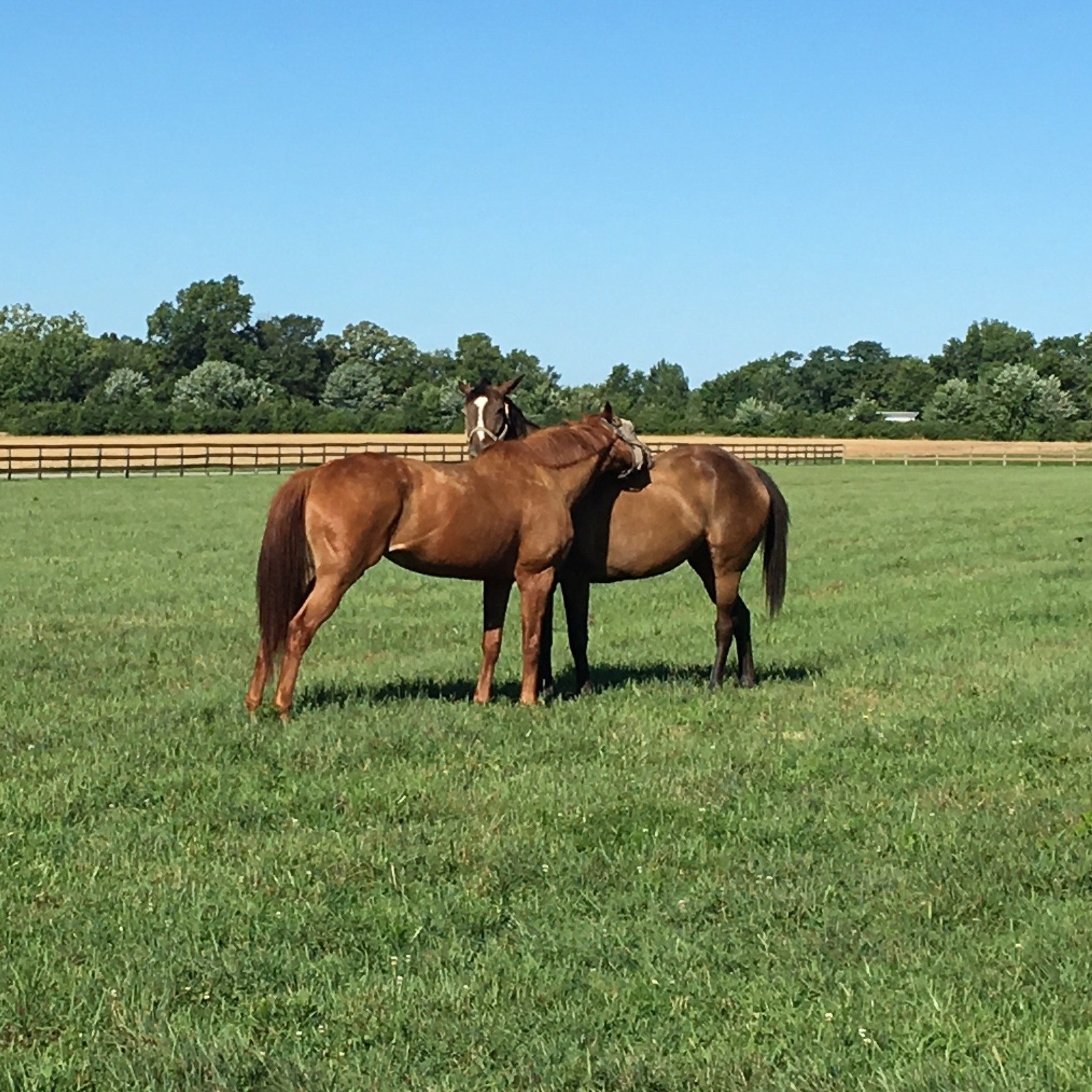
Conversations in Equine Science
Nancy McLean
International Society for Equitation Science
International Society for Equitation Science
Brain and Behaviour
Daniel Shaw
Bright Horse & Hound
Barbara J. Hardman
Science Weekly
The Guardian