.jpg)
Dangerous at Both Ends, Tricky in the Middle
Welcome to Dangerous at Both Ends, Tricky in the Middle an equine behaviour and training podcast with Jen Nash and Barbara Hardman.
There’s a lot of information out there about horses.
Some of it is brilliant. Some of it is outdated. Some of it has been repeated so many times we’ve stopped asking whether it was ever true in the first place.
So… we ask why.
We talk about equine behaviour, training, welfare, learning, veterinary medicine and the science behind the things we do with horses. We pull apart research, question long-held beliefs, tackle the things doing the rounds on social media and, increasingly, answer the questions you send in to us.
And we don't always agree. Sometimes there isn't a neat answer. Because behaviour is complicated. Horses are complicated. Humans are definitely complicated.
We’ve talked about everything from reinforcement, enrichment and emotional regulation to gastric ulcers, calming supplements, thermoregulation, travelling horses, cribbing collars and whether you should scrape the water off a hot horse.
And somehow we’ve also covered Beyoncé, jellyfish that don't sneeze and Barbara accidentally killing a rabbit while playing golf. Basically, things go off track. A lot.
But underneath the madness, we want to do one thing: help people think.
Not tell you what to think.
Ask better questions. Look at the whole horse. Be curious about the evidence. And maybe get a little more comfortable saying, “Hang on… why do we do it that way?”
Got something you want us to talk about? Send us your questions, dilemmas, unpopular opinions and things you've always wondered but perhaps been too afraid to ask. Nothing is off limits.
Welcome to Dangerous at Both Ends, Tricky in the Middle.
Real questions. Real conversations. Science, behaviour… and a reasonable amount of madness. 🐴🎙️
Dangerous at Both Ends, Tricky in the Middle
"What’s the Difference Between Desensitisation and Systematic Desensitisation?"
Use Left/Right to seek, Home/End to jump to start or end. Hold shift to jump forward or backward.
In this episode, we chat all about desensitisation and more importantly, how it differs from systematic desensitisation. These terms often get used interchangeably, but they’re not the same!
We break it down in a practical and horse-friendly way:
- What each method actually involves
- How they’re used in behaviour modification
- When things can go well… and when they can go wrong
- Why careful planning and ethical considerations are key
Join us as we explore how to build confidence and reduce fear in horses using evidence-based approaches, with a dash of humour, honesty and real-life case examples.
Voice note your questions on WhatsApp to +353 85 143 8688 to have your questions answered on the Podcast.
Meet Your Hosts
Barbara Hardman (Bright Horse Equiation)
www.brighthorse.ie
📧barbara.j.hardman@brighthorse.ie ☎️+353 85 143 8688
Jen Nash (The Equine Method)
www.theequinemethod.co.uk
📧 Info@TheEquineMethod.co.uk ☎️+44 7902920923
Hi everyone and welcome back to another of our short episodes. But just before we get started, we actually wanted to cover some ground relating to our previous episode. So the previous short episode was on the topic of extinction, and following that, we've actually had a couple of questions come in. So, Barbara, do you want to just run us through what was the question that we wanted to answer in this episode about extinction? Yeah, um, it's great. Thank you so much for sending in your question. You can do that now on all of the directly on the podcast. You can send a message in if you want to ask us a question so you don't have to email, you can just do it on Spotify. So thank you very much to um this wonderful fan who sent it in. Uh, hopefully, I can call you a fan. So, the question is how do I know when I'm using extinction work and when it is flooding? Because they sound really similar to me, and I'm really confused about the difference, which is a fantastic question because yes, there is an aspect of flooding and extinction work, and there is it's a fine kind of line because we can actually flood an animal by removing something when it's far too much. So, for example, weaning, and if we were to take away the mare too soon and leave the foal in a very sudden and stressful situation where they no longer had the mare, we would be removing something, but it would also be flooding. So, it is an excellent question. So, when we're using extinction work, and like with all of our training, we need to make sure that we're not flooding our horses. Yeah, I think it's a really interesting concept, and especially like the weaning as an example, because we think about what would actually happen naturally, would be the mare would have her foal, and foal would suckle, and at a certain point in time the mare would become pregnant again, the stallion would cover the mares, she'd become pregnant again, and that wouldn't that would naturally start uh a weaning process because she wouldn't produce milk anymore, her body would be putting you know calories and energy onto different priorities, and she would start to push that foal away. So a little bit of natural extinction work would be happening because that foal would be going to suckle and not getting the reward being the milk. So critically, what we're filling the voids with what? That the foal is old enough to start grazing and performing other behaviours. Yeah. So this this is this is where that would be correct extinction work. Exactly. When we get involved, um we get involved and we go cold turkey and we go you have no choice now. Um so absolutely flooding can happen with extinction work 100%. And flooding is uh maybe that's a topic we should cover in one of our shorts. You know, what is flooding? How does it happen? I it's not I don't think I don't know that we have it on the list to do, but we should do. No, we don't, and I think we're gonna talk we're talking about the desensitization work today, so it actually kind of you know serendipity in many ways, you know, it's all kind of lined up, you know. When desensitization goes wrong, well, I suppose you know it can tip into flooding. Yeah, so maybe we'll end up covering both topics today anyway. So, guys, we've let the cat out of the bag. Obviously, today's topic is desensitization. We are going to define what is desensitization, and within that definition, we will actually end up talking about flooding as well and explain the differences. We're gonna we're gonna talk about how desensitization works and some practical tips on how you can use it in your training routine. 100%, Jen. So hopefully, we will definitely get desensitization today. Um, if we don't have enough time, we might just cover flooding in a separate bonus because I think it probably would deserve some. But we'll see where we're going. You'll find out by the end. We don't know yet. Um, so whether you're completely new to horse training uh or you've been at for a while, understanding desensitization, particularly with horses, is just the key to really helping your horse, you know, stay calm or at least be responsive in lots of different situations so that we can help them navigate kind of a complex human world. Absolutely. I think there's a there's a misconception between desensitization and an immobile, unresponsive horse. You know, the word desensitisation, desensitizing, you know, in the scientific language it makes sense, but it can sound like numbing. And you know, the the goal is not to numb your horse, it's just to make them less worried or less reactive to whatever that stimulus or trigger has been. But the other side of it is to actually help build confidence. But we'll get into that in more detail now. Yeah, I think what's really important to understand is because horses there's two two aspects to it. Because horses are prey animals, they are a sensitive species, you know. So, like we we talk about this in one of our other episodes, where called you know, which is I think called uh normal, abnormal, or unwanted. Oh, and season one, you know, yes, yes. Um, so like being a sensitive animal as a prey animal is very normal behaviour. So we talk about desensitization with horses, you know, it's very much a type of associative learning for them, I I think, anyway, because it's an innate behavior for them to be sensitive. So, you know, some of the stuff we do with them is like capituation, and then you know, some of it is you know desensitization, and really it's like associative learning, and then we have counterconditioning when they've been too sensitized to something, and also a lot of our traditional training involves actually sensitizing our horses to certain things, you know. Um, so um, if you think about some uh traditional natural horsemanship techniques, you know, using a round pen, you know, we're asking our horse to move forward from a lunge line or a rope, and we're sensitizing them, we're asking them for quick movements, we're asking them to move away really quickly, and we're getting them to be very sensitive to any kind of movement of our body and move away, and that was you know, that is sensitizing techniques. Whereas if we were to desensitise, say your horse was really scared of bunting, you would actually be trying to get them to be quieter and you know less reactive. So, you know, it's it some some of the traditional training that we do can almost be counterintuitive to desensitization techniques that we want, um, but we we'll get into all of that in this episode. Absolutely. So let's just start with the basics then. So, what what is desensitization? Well, in the context of horse training, uh desensitization well, it's a technique used to you know reduce a horse's reaction to a specific stimulus, yep. So whatever it is, a trigger, stimulus, whether that's flapping plastic bag on the hedge, umbrella, whatever it is. And the idea is that there is a very gradual exposure, so exposing them to that stimulus in a very controlled and systematic way. So the way I was taught was that we identify whatever the trigger is and then expose the horse to that trigger in very small incremental amounts as to ideally not elicit a response. So, one way we were taught to do it in the courses I did was you'd horses loose in the field eating hay, and if the horse felt the need to leave the hay and move away from you, there was too much intensity of that exposure. So maybe you you opened the umbrella too far or you were too close to them with it, or the noise of the clippers, you'd gone too far. If the horse felt the need to lift their head, check it out, then they could put their head back down to the hay pile. That was a safe zone for desensitization. They'd noticed it, made a decision to not react. But that was the way that I was I was taught through my courses with regards to systematic sensitization because you just very, very slowly increase the intensity of whatever that stimulus was. Yeah, and and if anybody's familiar with watching, you know, um my videos, I have some on YouTube and I do on socials, uh, I use a check-in technique um where it's like a fist bump or with a target, and and other people will use something similar with other species, and I use it with with horses, so it's a way of kind of understanding exactly what Jen said. It's like, have we gone kind of too far? Are you still able to process? Is this too stimulating? Um, so when your horses get quite big, it's usually you know, they suddenly get an extra couple of hands on them and the and the head is up and we've engaged giraffe mode. Okay, yes, we have that hyper-vigilance. What happens is when we know it's not desensitization, is when they freeze and you're getting no movement whatsoever, and they're not able to perform other behaviours. We're now not in desensitization, now they're just sensitized, and we're not actually desensitizing. Um, so that's where I use a check-in technique, just like Jen says like it are they lifting the head, are they able to re-engage in the activity that they were doing? So, in that case, they're eating some hay, they lift the head up, they look, they go back to the hay, so they're able to re-engage in that activity. So that's why I like targets because I can sort of go, Hey, can you touch this? And if they're still in giraffe mode and they're going, whoa, no, I can't, no, I can't, I don't want to engage in that, then you know you're desensitizing, you know, it's it we've gone out of desensitization, we're not actually working on it. Whereas if we can touch back at the target and check back in, it's like okay, great, you know, we're doing some desensitization work, and then we kind of triple into counter-conditioning as well because they're performing an activity, but you know, we're this is where this there's subtleties and nuances within all this, but it's all part of the same paradigm, I would argue. What do you think, Jen? Like, I know this is a conversation that we have a lot where we're like, okay, when is it counterconditioning, when is desensitization, and then systematic desensitization and habituation, and there's all this it's a big melting pot, really, and I suppose our goal is our goals are very similar. Um, and like this is a conversation that me and Jen have a lot, so it'd be you know it's it's you get our inner thoughts on this. So for me, as soon as we start asking the horse to do a task and ignoring a stimulus, for me that's overshadowing. Because it's saying don't pay attention to the scary thing, do your target work instead. For me, that's overshadowing, and it's it's saying that's there, but you're fine, you can do this. That's there, you're fine, but doing this. So I'd overshadow with targets for like needle fear, so as the somebody approaches, touch the target, do this activity instead. This is nice. So the horse is then paying more attention to this activity than this one. For me, systematic desensitization is when there's no food reward, there's no real interaction with the human, it's literally just exposure at a level which doesn't start a startle response, the horse doesn't perform a startle response, and the reward essentially is you can then take that pressure away, and then you just work up the ranks. So, say it's the sound of clippers, you might record your clippers and play it on volume level two, and that might be what the horse can cope with. Then over repetition, you go up to volume three, and you do that X amount of times, then volume four X amount of times, but every single time there's no food reward, there's no training, there's no nothing like that. For me, pure systematic sensitization is literally exposure work, working under threshold to not elicit a startle response. Because I've seen I've seen it with practitioners where like, and this is where I think it gets you know that it gets confusing for people because in that example that you described, you may have say two handlers, and you have someone who's effectively applying systematic desensitization, where you know there's an approach and retreat with the clippers, you know, take a step, you know, remove yourself, turn off the clippers, you know, you're going backwards and forwards to slowly desensitize, but then you might also have a handler on the other side who's pairing that at the same time when you have that removal of the pressure and the sound, who's marking and then providing a reward. Yeah, so to me that's associated or the counterconditioning. That's not but but it's still part of that, you're still your your goal and your driver is to desensitize the horse. Yeah, I thought I'd say the end goal is the same, but the method is different. So I'd say in that situation, systematic desensitization is not being done, it will be achieved, but it's not the route being taken. The route being taken there is approach and retreat subtle negative reinforcement with associative learning to then desensitize. So I think a horse can become habituated and desensitized via a range of techniques, but for me, said if you're going to do systematic desensitization, it is about exposure under threshold, and that is it. But I'm slow, it's so slow, it's so slow, and like see, I like for me, I again it's we talk about that void. I I personally don't like just using systematic desensitization alone. I always like a combined approach, just like I like using you know a combined approach with negative and positive uh reinforcement. So if I have like um a dog with sound phobias for like say um fireworks and stuff, um, you know, I uh I will use sort of YouTube videos with fireworks at a very low level, and we'll slowly increase the volume and all the rest of it, but at the same time, I will also be like, Okay, well, we're gonna play this sound, but we're also gonna use a lick mat where they're engaged in that activity, so it's creating positive associations because like I find now I know we're kind of going down a rabbit hole by now. We've wants to talk about this for a while because it's something that me and Jen talk about a lot, um, outside of the podcast, but like it's kind of like when we were talking about that vacuum. I always worry that systematic desensitization alone creates a vacuum because you know it could you know, if we don't get it right on its own and there isn't something else on the other side. I'm waving my hands around, there isn't something else on the other side. Are we creating a vacuum where the horse, the animal might perform a different behaviour, and then that could get inadvertently reinforced? You do you know what I mean? Or if you do it wrong, just no, no, no, no, no, I get it, but that's that that that that issue is if we do it wrong. Yeah. So the the whole point of systematic sensitization is it is small and gradual and under threshold. So the horse gets used to this noise or what image or whatever it is without feeling the need to do anything, not to change. So there's no. But that means they're just they're just but they're just but they're just standing still then. But they're still like so you you explain you you start with them eating hay, right? And they're in the field and you're approaching them, but they're performing a behavior. They're eating their hay. So they just continue to eat their hay, they just continue to perform normal behaviours, whether that's sleeping or moving or grooming, they just learn to ignore it. I just I find it like I I worry that we are missing things in the horse when we think that they're not responding. So, like um, you know, if we're watching that behaviour, uh do you remember that paper? Um, I cannot remember for the life of me and the name of it, but it talked about um not bravery in horses, but it was like you know, horses that were more compliant or appeared to be more compliant, but their hearts were actually going like the clappers, yeah. They were actually more anxious than they were, um, than they appeared to be. So when we talk about like no obvious m reaction, is it a case that like it is we we you know we think we're doing systematic desensitization, and in reality the animal is just not responding in a in a highly sensitized way? Do you get what I mean? Yeah, like are we missing some subtlety that's there and that we think that we're exposing our horses to a low level, and I think I I see that with you know, you see that with trainers kind of online as well, and you know, where it's like, oh, we're doing desensitization, and then you kind of look at it and you go, hmm, is it actually flooding? And then you know I I never said people were doing this well. This is how it's meant to be done. So it's the way it's meant to be done, the concept of it is it's exposure under threshold for habituation. That is the concept. Never said that people were actually doing it well because what Barbara's talking about is all the things that go wrong and why this isn't done well, because we're not unless you really know what you're doing, and you've got heart rate monitors and you've got a way of managing um monitoring maybe eye temperature or something, there's gonna be subtle startle responses that are being missed, unless you have the most amazing eye in the world, or you're actually able to work with horses in almost a free-ranging environment whereby they can leave and have so much space to perform natural behaviour. So there is approach, there's a there's a thing called cat, I think it's controlled approach technique, which is basically if there is any change in the horse, you stop, and it's completely controlled by the horse. I'm sure it's cat controlled approach technique or something like that, whereby you train purely by systematic sensitization, and it will it's it's giving the horse full autonomy over the situation. So, say you approach a phenomena, right, and you're in a in the field, and the horse were to just move away from the hay pile or alter their chewing pattern, you would stop and you would wait for them to return back to normal, and you would try again at less intensity. So it's completely going under threshold and letting the horse then decide what happens next. It I don't know how well it actually works because I don't know if humans are actually capable of doing this. On concept, it's exposure under threshold to provide habituation. I don't know if anyone's actually really capable of meeting that, of actually, I mean 100% ticking all those boxes. And I think this is where we've talked about this. This is why I find this a really interesting one, and why me and Jen talk about it until the cows come home. Um, because we've talked about it in our other bonus episodes, negative reinforcement, you know, positive reinforcement and punishment, and negative punishment. So what we talked about in those episodes is in many of that they don't they don't appear in isolation, and what we're actually doing as well as part of some of that systematic desensitization is is negative reinforcement and subtle negative reinforcement. So you know, so because you know, like in that example, you're removing the pressure, you know, to to support the behaviour that you want. So that's why I'm always like, well, if you can use because they still perform the behaviour, you know, like in that, you know, they they freeze and then you move away, and then you reduce the threshold, that's negative reinforcement. So I'm like, if we can use negative reinforcement, subtle negative reinforcement to perform systematic desensitization, then wouldn't that make sense that we can also use other forms of the quadrant to support systematic desensitization? I know I'm asking theoretical questions here. Well, I feel like I feel like I have a story where I can talk to this a little bit. So yeah, yeah. I have worked with mules and horses and ponies that have come from abandonment cases and severe trauma and severe abuse and neglect from humans. Abuse doesn't always mean physical hating guys, abuse can be neglect as well. But basically, equines, mules and horses that have had enough time and experience to be like humans are evil. Like I know we talked about the word evil in another episode, and but the the horses are like oh humans are the worst things in the world. In those scenarios, I I actually can't work with food because even tossing food on the floor is terrifying. My movements are terrifying, my presence is terrifying. I can't even trying to do approach and retreat is too much movement, even at a distance, just too much movement. Of course. So, what we've had to do is work with that now. Very often in this case, this animal has been put in the stable, then it's left in. The stable, and I'll get called and say, Look, it's living in a stable. I we want to turn it out, but we can't get near it to put head collar on it. So that horse ends up living in a stable for X amount of days, months, whatever. So that systematic sensitization gets completely ruined when we have to throw hay over the stable door and change water buckets. But we're gonna forget about those things that just have to happen. But in the training sense, that that training might just start with me stood five metres away from the stable door and just standing there doing nothing, just being. And the horse is the horse is gonna be like in a bit of a start. I was going, Oh my god, oh my god, what's going on? And then they'll go, and as soon as they start, well actually, no, it's not as soon as they start, sorry. They might breathe, start breathing, drink, pee, eat some food. I'll then stay there for a little while, let them become accustomed to my presence and then leave. So it's not a case I d it is a really, really subtle and tricky one because you'd never want the horse to learn, oh, if I move the human leaves, oh, if I pee the human leaves, if I drink the human leaves. There's always a chance of the wrong pattern being learned. But that is where systematic that those are situations where the only thing we've had to work with is systematic sensitization because getting close enough to do any sort of pressure and release, approach and retreat, positive reinforcement was actually flooding for that those animals. But then I think um ones they habituate to your presence, then you can switch into the training. So then, yeah, like so. I think like you know, I mean, it's it's awesome that you have like that experience to be able to draw on because I don't think uh there's not gonna be too many people who have been in a situation with you know such extreme welfare cases as well. So it's almost close to feral animals, really, isn't it? Like where you're where you're you know, like and it's it's it's um a situation of being like it's nearly habituation, as you say, like it's like okay, you no longer need to react habituating, and then you're incorporating a desensitization, and then you're incorporating desensitization with effectively operate conditioning, you know, as they applying that vacuum, and then you're shaping you know further into so like we we talked about shaping in the last one, so it it almost feels to me like when we talk about you know desensitization work and all these different terms that they're part of our broader shaping plan, you know, in many ways, and we're looking at it holistically, um, and depending on where that animal currently is in their flight response or where their trigger is, then that's going to tailor what we need to do with them and how we'll approach everything. There was something you said to me in a voice note, actually. No, no, no, no, it's perfect. Um Barbara and I chat regularly, obviously, and there was something you said to me literally just the other day, um, because the kittens are obviously just like causing mehem 24-7, and you shouted at the kittens because they were like climbing. Oh, they just ignore me. Yeah, exactly, exactly. But they've desensitized, you know. So desensitization happens all the time. What's funny, they were never sensitised in the first place. What I find interesting about that is because, like, you know, they have had no experience with that noise meaning anything. So I'm just like, Oi, lads, you know, get out of my pasta, which tends to happen, you know. It's like I don't know why they seem to think that they can just climb into the dinner bowls, and I'm like, get out, and then they're like, they just look at me, they just completely ignore it because it's never meant anything. Now, if I made that a learned response, right? Um so like I I would never get into a whole different thing. So if I use like a disruptor, right? So like clapping, so me clapping, uh poor Monty just looked at me, tends to be a disruptor for me, right? You know, and I usually use clapping with uh, you know, dogs and cats. So like if they're focused on something, and you know, again to get that check-in. I had talked about at the time. If I need a disruptor, a clap is great, a whistle, we use whistles with dogs and stuff as well. Um, they don't know what a disruptor is at this point, so they just completely ignore me. So I have to train that response to get them on my pasta ball. Um, but we I I digress, I completely digress, but yeah, this is it. It's like that always for me. This is okay. I I will actually go on a diatribe. This always is a county where we've been born again now, yeah. Um where we have fear, you know, uh generalized anxiety, and then like phobias and stuff, and um you know, being afraid of something is normal, right? You know, it's it's perfectly normal survival mechanism. Um, and then you know, you've got let's say your generalized anxiety, so your mules example, where there's a fear of what might happen, you know, they're they're unsure of the humans, and they've been in situations where there's almost a learned response, and they're like, Yeah, I'm not trusting that human, you know, there's no way, and then there's just fear of like like it'll happen if I'm sitting here and I hear a bang and my heart will go and I go, Whoa, what's that? Normal, totally normal. I don't need to necessarily desensitize to that because that's that's just a normal response, that's fine. But if I was sitting here all day long, going like, oh god, what if a bang happens? What what if the door goes, like that's you know, generalized anxiety, and then that would need desensitization work, and then there's phobias where it's there's no normal function, and it it's it's a it's more neurological than anything else, there's like layers to it, and I mean I I find it fascinating because like when does a normal a very normal fear response become a you know generalized anxiety where you're in a constant state of fear to the point of a phobia where all the training in the world can't help that phobia, you know? Um it's yes, I you know, I there's my countdown clock. I I just find the whole I just find the whole thing really fascinating because how as behavioural practitioners, you know, and I think psychologists as well, finding the line between a normal fear response and then a phobia or a learned fear response and then applying the right techniques because if you're with your horse and something rattles in the bush and all the rest and they go, Oh, what's that? I'm not necessarily, yeah, I'm not necessarily looking to do desensitization training for that. I just go, okay, that's a normal response. Yeah, I would I would want I would what can we stop? You know, that that that's where I'd be like, like, okay, we had a spook, can we stop? Good. And then whereas if you if you had a rational, if you were if we had constant bolting for you know, and they were constantly like highly sensitized to that, then I'd be really concerned for everybody's safety. And it's yeah, because as they there's normal natural behaviour, and then as they at the start of this, they are sensitive animals. So I I have met people over the years who've you know had had sharper horses or spookier horses, and you know, you can tell when they're about to go, oh sidestep over there. And I've had owners go, like, I just need them to stop spooking, and I'm like, get a bite. Yeah, that that's not gonna happen. And and you know, and people have promised them the world going, like, yep, uh you know, I can spook bust your horse and they'll never spook again. No, it's unhealthy. The whole bomb proof thing is not healthy. I spook. I say when I talk about something like if I I can hear speaking of kittens, you know, I've sit in here and I hear crash and a bang from upstairs. You know, if it catches me off guard or David just swans around the corner and goes, Hello, I'm like, Oh my god, what was that? Do you we do it, it's normal, it's normal for us to be able to have sensitization, you know, be sensitive to certain things like that. I always argue, you know, because there's obviously a stress element to certain types of sensitization. Um for me, the biggest thing is how we cope afterwards, as you say, it's like what happens afterwards. What happens after those? Can you stop? Can you check back in? Can you can you come back down again is nearly more important and how you cope in that stressful environment because life has stress in it. Um but anyway, I knew this one would probably go off the rails, might be a little bit longer, which is definitely why flooding is probably gonna have to be short. Yeah, so I think I think with systematic sanitization, the whole and again I caveat this by saying I don't think people do it well, but the idea is to make life less stressful by giving those small incremental exposures to not elicit stress. So if you've ever had horses who have lived near a railway line, they will over time desensitise and habituate to that train going by to the point where they won't miss up, they won't blink. They will there's no way there's not some level of physiological reaction to that train going past them. It will there will be an increase in heart rate, there probably is an increase in blinking, but they will gradually over time be nowhere near as stressed as they were when they first moved into that that field. Competition horses on and I'm saying this in a very generalized manner because there are still stressed out competition horses, but in a very general manner, your experienced competition horse will have become desensitized to the tanoi, to the crowds, to the high-tiered seating platforms, to the colourful jumps and all these things through exposure, whether it's been trained or not, if exposure to a stimulus is small enough and gradual enough to allow for good experiences to happen around it, and there and for those triggers or stimuli, for example, the tiered seating, if every time your horse sees people in a tiered seating and it just either has no consequence or a positive consequence, it will desensitise to that and pay less attention. It will become sensitized if everyone gets up and starts clapping or running up and down and they get a fright, then they'll become sensitized, and you might need to do systematic sensitization work there, or some counterconditioning, or overshadowing, and there's there's so many options, so many things you can do. But my main thing for desensitization is it's happening all the time. We can use it as a training and training technique, but I personally find it really really difficult, and because of how difficult it is, it's actually really ineffective because it's very hard to do it correctly. So it's not usually my go-to thing, but the word is used a lot in the wrong context. Yeah, no, 100%, Jen. And like my preference is to use, as I alluded to at the start, systematic desensitization or counterconditioning because, like we've talked to in all the other ones, I like to fill the vacuum. Now, I appreciate we've talked about a couple we've jumped around a little bit because me and Jen really enjoy this topic. So I just want to really clearly just kind of define a few of the terms that we've used here just to kind of make it easy for everybody to kind of understand because I know we're jumping around a little bit. So, as Jen said about habituation, um, imagine I say you have a dog who is barking at the sound of the vacuum cleaner every time you you hoover, um, and you just keep hoovering and you might do it in a different way, the dog might move away, bark a few times, and then over time the dog goes, Oh, actually, the hoover isn't gonna do anything. No outcome happens, and they habituate to the sound of the vacuum cleaner and get used to it. If you, on the other hand, have a dog that's really scared of thunderstorms, really common, you know. Before you have a thunderstorm, you you might go, Okay, I'm gonna play a recording on a low level at a very low volume and gradually increase it. And this is what Jen was saying, as long as they remain calm, and over time they become less fearful of that sound, but very important that you don't just crank it up, it's you know, a very low volume, there's they stay calm, they're asleep, there's no reaction that you can see, and then you slowly increase it. And this is where we were saying sometimes you know, understanding the behavior that they're performing is really important because they may be more stressed and we don't necessarily do it correctly. Whereas systematic desensitization is if you have a dog that's say afraid of your vet, they don't like injections, or they don't like you know, they've had some kind of associated learning, or they go in and they're scared of going anywhere near the vet's office. You know, as you're going in, you may do kind of an approach and restreat, go into the waiting room without seeing the vet, have a treat, leave again, come back in, and so you're still doing that gradual step by step, but you may also be applying you know some of the terms for operate conditioning stuff. I know we're jumping around a good big house, like it's a it's a huge topic and it's a massive part of behavioural modification. Um, so as I say, when we talk about desensitization, as Jen says there, we very rarely get it 100% right, particularly I think with horses, because they they're masters of body language, so getting us to make sure that they're staying calm, making sure that they are actually calm as we introduce something at a low level is incredibly hard because just because they freeze and they're staying still doesn't actually mean that they're calm, they could actually be just flooded and afraid. Yeah, I think I think that's a very key part, is the key the the goal of systematic desensitization is not immobility, it's to just not react. Yeah, so it's not about immobility, it's about just whatever they were doing already, it doesn't take their attention away from it. They can they can notice it, obviously, like you open an umbrella, they might go, Oh, there's an umbrella, but then go straight back to whatever they were doing. It's the fact it doesn't disrupt what it is they were doing, it's not about opening the umbrella and immobility and standing like a statue, because that'd be a freeze response. It's a real genuine desensitization, whether it's systematic or not, is just building up that confidence level and that security in themselves, whatever language you want to use, that they can notice that stimulus but feel no requirement to change what they're doing. So your horse might be cantering, you might be in the show jumping ring, and somebody gets up off their stand and walks down the steps and makes a loud banging noise, but your horse is so desensitized to it, they carry on cantering. It doesn't, it's not uh a startle response for them anymore. It doesn't sensitize them. So for me, that the key one of the key things that a lot of people miss is it's not about staying still, it's about not breaking stride, not changing. They can notice absolutely they're a living, breathing animal, but they don't feel they need to change what they're doing. And I think this comes from like you know, we're so used to, and we've talked about this in previous episodes about you know, horses coming from like a war perspective and us riding into battle, and you know, high level of compliance is required in those situations where our expectation is that compliance is required, so we often see compliance as a desire or that that the animal is okay in that situation, just because they happen to be complying doesn't necessarily mean that they are and uh aren't actually afraid of that stimulus, yeah, and it's not actually desensitization, we know it's not true, so yeah. So one of the things one of the things I wanted to add in about desensitization, systematic or not, just desensitization that so far in this episode we've talked about how difficult it is to do, especially as a training technique. But let me tell you this for free it is happening against you every single day. So it's very difficult for us as humans to work with systematic desensitization and get the way we want it, but we are desensitizing our horses to our movements and our behaviors all the time. All the time. As Barbara said earlier in this episode, horses are masters of body language, and they have over time learned that our expressions, our movements, so much of what we do means nothing. They have desensitized to so much of how we talk, how we move, you know, to the point where some people are like, Oh, I can't, my horse doesn't listen to me. A very common one is people lunging their horses, and that's because they'll be clicking their tongue or come on, off you go, clicking their hands, waving the rope, whatever, and the horse is walking and they keep going, they go, come on, walk on, walk on, walk on, come on, that's it, walk on, walk on, and the horse is walking, the horse is the horse is desensitizing. Now, in this example, I want you to imagine the horse walking around pretty calm, pretty chill, just walking, and then the person's like, Whoa, come on, walk on, walk on, turn, come on, time to trot, come on, trot on, trot on, and the horse is just like, Well, when the person, I mean, you guys can't see me on video, but hopefully you can all visualize this. The arms waving, the clapping, the slapping, the stomping. I just hit my head off the my hand off the desk there. You know, it's desensitization has happened against you, it's not you haven't wanted that to happen, but it has happened because the horse has learned through enough repetition that waving and stomping and voice and everything, yeah, means nothing. Don't react to it, means nothing. There's no consequence, there's nothing in it for them. Consequences can be positive as well, guys. Doesn't mean you're gonna hit your horse, but sensitization happens all the time. Horses who don't react to when you throw a rug over their head backwards and it's the wrong way around, or when the husband or the boyfriend or the partner help tries to hold help and they put the head collar on inside out or something when the horse doesn't react. Those are horses that have desensitized to weird and wonderful things, they'll desensitise to kids running around the yard. I'm literally I'm laughing because like my animals are so desensitized to me, and yeah, because I mean you know how laissez-faire I am. It is very much like you know, and and this is it, and like they will learn from you, but like also as well when we talk about you know, horses that are quote unquote dead to the leg, or when we don't have and we don't have brakes, you know. Great examples. We've we've we've asked them, you know, when someone's like they're rushing jumps and they're not responding to the rain pressure. We know we need to very clearly look at how we're actually applying that negative reinforcement because potentially we're applying that negative reinforcement to the point where they're desensitized to it, you know, and and how we apply that is really, really important. And then, of course, we get into you know quite sad territory when we talk about terms like learned helplessness, yeah. Where this is when we're talking why, why again for me my preference is you know, I'm doing desensitization to to offer another, you know, go, hey, can you do this instead? Don't mind that, hey, can you do this instead? Because when we don't offer that, and we say, No, not this, no, not this, not allowed to do this, not allowed to do this, then the horse goes, Oh, well, I can't do anything then. Yeah, but again, that's not systematic sensitization. It's not, no, it's not that's it. Okay, we're getting to flooding. Yeah, I know it's it's the it's sort of where it goes wrong because it's such a minefield and and it's very hard for people to navigate. And this is why I'm not a fan of it. I I very, very rarely prescribe systematic sensitization to anyone at all. We will we will achieve desensitization through target work, counterconditioning, associative learning, learning something else. We can still achieve desensitization, but it's so rare. Or I won't prescribe systematic desensitization, but I'll say, look, you're gonna do this stuff with your horse for relationship building exercises and just have a nice time, and when it comes to our problem behaviour, you're gonna wait until I'm there and we're gonna do that one together. And do you know it's funny because when you look at other species, desensitization and systematic desensitization are a lot more uh successful? And I would use them in training plans for for dogs, like and less to an extent for for cats, but only because I don't have too many cat clients occasionally come in. Um but you know, we would, and sometimes, and again, this is I I often wonder these are my kind of musings is it because horses are a prey animal, their natural tendency is to be sensitized, you know, and and Sensitive to things and we bred them in such a way to be so compliant. Um, whereas just general, like I know I talked about like sound phobias there for for dogs and stuff, um, that we can actually support, you know, for for fireworks or thunderstorms, that we can actually support them by just playing some of those sounds and supporting them in that way, like without anything else, and can do it quite successfully. So I often wonder is that a result of just you know the ethology of that particular animal and the different species and what's appropriate for a prey animal that's been domesticated for a different you know way and um compared to like a dog and other predator animals? Just a quick one what other species of animal have we domesticated as a pet that's a prey? Uh cats. Cats, prey animal? Cats are predators. Oh, prey animals, sorry. Uh rabbits, guinea pigs. Oh yeah, okay. But do we train guinea pigs, gerbils? Do we? Yeah, yeah, yeah, definitely. Oh, rabbits do some crack and stuff. No, I mean I mean in the general sense of the human population. Do you know what I mean? That's just like you have a dog, you train your dog. You have a horse, you train your horse. It's not normal to train your cat. Do you know what I mean? Like, I mean in the general occupation, we're talking about expectations, like it's it's it's just you know, dog training, you get it horse training, you get it cat training, yes, you can do it, obviously, and it's highly recommended for several reasons, blah blah blah blah Barbara will tell you, but it's not a societal thing, so I'm thinking the general, yeah, and and like when you look at the research and stuff, um, everyone's getting our inner thoughts on this because again, me this that me and Jen talk about all the time, so uh enjoy. Um, so it's really interesting because yeah, like horses perform like um occupy a really unique niche, our society, because they're not quite companion animals and they're not quite agricultural animals. I don't think, to the best of my knowledge, too many people I say are training sheep and cows. There's some wonderful people who do, obviously, but as Jen said, it's not it's not a normal thing. So, how many other prey animals are actually, you know, I don't know, people have trained rabbits to jump and stuff. But who's doing systematic desensitization with rabbits? Well, I s I suppose I suppose do you know where would be a very good place to look for that type of research would be zoological animals, prey prey animals in a zoological context. Yeah, you know, and I'd say going back to your mule example, if they were prey animals that were closer to a wild dyad, um you know, or feral, with little human introduction, that's where I can imagine desensitization being very important and powerful. Yeah, and in that in that particular those cases in particular, that's all you had to work with. Yeah. Because any any movement was terrifying. Yeah. Absolutely. And I and I think, you know, yeah, I think we we we can all kind of understand that as well, where it's like if you've been, you know, if you're out in a forest or you're on if you've ever been done a safari or you know, i if you're out I was gonna say in the wilderness, but do you know what I mean? And say you spot a deer or we're back to the woda. We're back to the body. I was even just thinking I was even just thinking of Scotland or like, you know, um I say not so much the the deer in the Phoenix Park here in Ireland, but like, you know, if you're out in in the Keringgorms or you're out like you know, hill walking and you see a deer, you know, you know, okay, don't move. Like, and if the wind blows the wrong direction, like this is this is it, it's like you know, then they're gone. Like natural normal behaviour as well. So it is it is very hard to get desensitization right, um, particularly I think when we're looking at prey animals, because everything everything about us has got to be sensitizing, absolutely. So, I mean, like we're trying conscious that these are supposed to be short episodes until now until now we have managed to keep them short. Um so I mean talking points is there a role? Is there a place for systematic desensitization in the truly domesticated whore setting? I would say there is a place, but I honestly don't think it is something that anyone should take on lightly. There are so many better ways and more structured ways, easier to follow methods of achieving desensitization without necessarily doing a systematic desensitization approach. I think unless you have someone very experienced, yeah, just don't I would use like catching issues and approach and retreat if I really need to get them in, you know, if there's something else going on, um clipper training, um you know, but my my preference in all those situations is to teach a target of some description, as you said, Jen, it's like teach that alternative behavior and then bring in the fearful stimulus, and it also gives you a really clear barometer, and I think I alluded to that at the start. So the problem with a lot of the kind of decentralization techniques is you know, you really need to be, and this goes to to dogs as well. You know, as horses, you really need to understand clearly the behaviour that you've seen in front of you, and even with all our expertise, myself and Jen included, you know, horses are masters of body language, and they are also masters of hiding their own emotive and effective states, and we don't fully understand that. So just because it looks like the horse is coping, okay, does not necessarily mean that they are, and we have the potential to end up flooding them or triggering them more than we think. Whereas, at least if we can provide a check-in with the target or teach an an alternative behaviour, and then I just say move that into overshadowing or counter-conditioning, then we can ask the horse if they're not okay, they're not going to be able to perform that other behavior you know that we've trained. And if they can't perform that other behaviour, then that's our barometer. We don't need to be experts then on their behaviour and run aground because we didn't read the situation properly, but just doing desensitization, we can fall back and go, okay, my horse isn't able to touch in on this target, okay. My horse isn't able to step forward and step back, you know, to light pressure. That means they're not okay here. So I can then tweak my training. Um, I think that's probably both of our preferences. Yeah, because we'd always I'd always rather give the horse some sort of way of communicating with us that is more obvious to us. You know, the horse is communicating all the time, but for us as the humans, it's much easier for us to see a horse physically put its nose or feet on a target than uh just trying to count its blink rate or notice the respiration rate, or somehow know that their heart rate is changing, like we're not able to do that. So having on-off switches is some things. Barbara's talked about a couple of papers that hopefully we'll remember to put in the show notes. So there is research on compliance. Yes, more homework for you, Barbara. Um, compliance, not confidence. Okay, so that is research that has been done that has shown that horses can be compliant and their heart rates be off the scale. And we have also there's been quite a lot of research into on-off buttons whereby a horse can be trained to put their nose on a target or press a button, knowing that a not so pleasurable thing will happen, such as needles, and can choose to do that because there's a positive association afterwards. So we have trained horses, and this is what you see in the vets all the time. Sorry, not the vets, or in the zoos, you'll see those tigers or or leopards putting their paw willingly into that chute because and they know they're going to be injected, they know they're going to feel something discomfort, but they also know that it's going to be followed up by positive food. So that's consent-based training, and we'd always manage that. Is that desensitization? I don't think so. Yeah, and it's it's it's so interesting because this is what me and Jen talk about in our 20-minute long voice notes all the time. Because it's really, it's really hard to navigate it. Particularly, it's one of these things, Jen, the more you know, the more you like you think you don't know, because we have all these definitions floating around in our head, and we have all this expertise and training, and then we're like, when does one thing become the other? And behaviorists are and scientists are really annoying, and they like to come up with different terms for lots of different things, and it's fluid though. It's fluid, and I think that human humans, people, humans, like we really, really struggle with fluid concepts, yeah. In general, like fluid sexualities, we can't cope with that. Fluid relationships can't cope with that, fluid training systems. We we like to have things fluid weather. I can't cope with fluid weather, we're having well, I don't like rain much anyway. Um I know my dad's gonna love that. Shout out to Glen with two N's, as my good friend Grace would say. That's how she remembered two N's so total. This is insight into Jen's life, family life. Um, my good friend Grace, sorry Grace, you'd now be named on the podcast. You're naming everybody. I'm naming everyone's great. Um, so my dad's name, Glenn, is spelt with two N's because one N is a valley and two N' is an actual name. But Grace would always forget what how how to spell on a Christmas card, so she would write on on the envelope either two N's or one N, and then it'd be like two lease and Glenn with the other one. So she'd be like, Well, on one of them, I'm right. And then eventually we just came up with the rhyme Glenn with two ends, and she's never found. Oh love that. That's wonderful. I'm not gonna forget nobody else can forget the name. That's wonderful. You can be famous now, Glenn. Glenn with two ends. I love that. That's wonderful. Um, we got so we've totally gotten sidetracked in this one. We started talking about what was the actual point? Oh, fluid. Fluid, nobody gets fluid. Um, like we we started out going, this is gonna be a bonus episode, and now at the hour mark. No, it's not, we're gonna keep going. This is going so this is the full episode. You're welcome, everyone. Um, right, no, fluid. We do care, Jam, what we say in fluid. How many times can I say fluid in one podcast? Um, it's difficult, we don't like it because it doesn't fit into a box, and we like to know today. I'm doing this, and I think I honestly think it's one of the reasons why people do really enjoy going to the gym, right? And doing special like weight lift exercises because some people do, some people do, because you can sit there or stand there or whatever, and you're like, I am working this muscle group, I'm doing this exercise, doing this muscle group. Now I'm gonna put those weights down, pick up something else. Now I'm doing this, and it's very clear cut, but but you're not actually working those, but you're not actually working one muscle in isolation because no, no, but in their heads there, but they're in their heads. No, I know, but like, but but that's it, but it's a group, right? It's you know, it you know better than me because your your your darling donald is physio man, but like, or the body man, um but yeah, so like ultimately, like I mean I should know because also biology, but we're getting dizzy now. So, like, you know, if you're using one muscle, muscle groups come in pairs, right? You know, so you're always gonna work a muscle in extension, presumably. Yep, yeah, you know, and then I would argue, right, just to go on to that nice tangent, like you know, we've talked about it, it's like you can't have negative reinforcement, like sorry, you know, you can't have negative reinforcement without positive punishment, and you can't have positive reinforcement without negative punishment. You know, there's there's a connection between them. Yeah, there's a connection to all of them. This is the thing. So this is why I'm always like, can you know, I know you're like, oh, I don't really think it's desensitization, but then I'm like, well, I always kind of think of it, are you trying to I I I kinda take out the desensitization and just go, I want to sensitize a horse to something or ourselves, right? I want to, you know, we we've all done it when we were kids, and I'll tell the story in a minute, but you know, like your parents like, do not touch the hot thing, do not touch the hot thing, and you know, if you do, you get positive punishment, right? You know, that's sensitizing. You're sensitized to oh, I'm not gonna touch that. Uh I once was messing around with the door frame, and my parents went, Barbara, do not put your finger in the door and close the door. And I went, hmm, ever the scientist, uh, put my baby finger in the door and slammed the door closed. Oh my god. I was I was like, Well, the thing is they were just like, Don't do that, stop messing with the door, you're gonna hurt your hand. And I went, or will I? Like, so I was like, I'll test this out, and then when crying to my parents, they're like, I put my finger in the door, and they were like, You eat it, why would you do that? No, we've all we all do stuff. There's there's like don't climb up that tree, you'll get stuck, and then you get stuck in the tree and you're crying and you can't get back down. And then you can't down. I was like, Well, what do I tell you not to do? You know, yeah, because don't isn't a behavior, and as soon as you tell someone not to do something, they want to go and do it. Don't think about purple elephants. I don't know where you go. Isn't it pink? Oh, this is my the point of that was by that's positive punishment, right? Because you're not you're just gonna decrease the chances of performing that behaviour, but at the same time, it also creates a sensitization to that. Okay. Do you get me? Yeah. So I'm going like, okay, well, if you use Well, let's go back to the needle thing. Yeah, go ahead. Yeah. So for me, the it's positive punishment because of the pain of so it's still sensitizing. So that's why I don't feel like cooperative care where it comes to needles, we ever, ever truly desensitise because it's never not gonna hurt. Never not gonna hurt. That's some great English there, Jen. It's never it's always going to be some level of pain. So in some cases, I think we can desensitise, I think we can st I think we can desensitise and habituate to some things, and I think some things we cannot, and it's it's it's just wrong ideas, wrong concepts, bad training, poor understandings, and mismarketing to say that I can desensitize your horses to needles. It's like no, we can help your horses consent to needles. Yeah, I like that, and and it's it's funny because I actually think it dips into a greater cognitive ability on the horse's part because when you think about it, you have you know the horse is aware of what's going to happen with the needle, right? You know, so like we they're they're sensitized to the needle, needles hurt, same with us, right? We take a deep breath, it's like I'm gonna draw blood, okay, you know, and you know it's gonna happen and you're consenting, you know, and effectively you're you know, as say it's positive punishment for performing that behaviour, you know. So is it gonna decrease but but then is it only positive punishment to decrease the likelihood of that behaviour? Is it only positive punishment if it decreases the the likelihood of that behaviour? You know, so the fact that just you accepted the pain, but you still performed the behaviour, is it then no longer positive punishment? Yeah, because you didn't you didn't perform a behaviour, you you willingly accepted something. There will be you can yes, yeah. There will be an answer to this. Somebody who really truly is who deeply understands like neuroscience, neurobiology, psychology, there'll be a term for this where it's no longer punishment where you when you willingly are aware of the consequences, and I'm assuming a key factor here is that it is then rewarded on the other side. Because to be really, you know, uh severe example, flogging, right, back in the day. There's no way that you could say that flogging wasn't punishment, even if you willingly were on, you know, thinking about um the navy back in the day and you willingly took your punishment and it was what ten lashes, that's still gonna be punishment even though you willingly accepted it. So that's a very severe case. So can it ever not be punishment when it's pain? I don't know. But when it comes to something like a needle and you consent to it, and then be you get a reward, it's a learned behavior, I don't know. It's getting very deep down the rabbit hole. It it it is, but that's I think what we love about it. And if you're still listening at this point, then you know I think you probably enjoy the nuance of it too. Because like, I mean, I at the end of the day, like you would you will meet behaviorists and you will meet like you know, whether they're human psychologists or animal behaviourists who are very sure about the terms and the definitions, and are very clear to be like, nope, this is what this is, and this is what this is, you know, and if you're doing this, then you're doing this, and you know, and love all those kind of like very segmented, as Jen said, it's like you know, like going to the gym. Uh, I'm not of the camp that we're so so solid in our definitions because there are some definitions that we talk about now that we're just starting to understand. We talk about like fear and anxiety scales, calming signals, stress responses, you know, uh effective states in animals, and we're still developing that understanding. Well, yeah, especially effective states, right? Since we did our masters, it was emotional states. Now it's effective states. Now it's effective states. But we're basically still talking about the same thing with very small differences. And like when I did my undergraduate, overshadowing wasn't a thing, and either was counter-conditioning, it was all just desensitization or habituation, you know. Whereas now we have a like then master's wise, it was like, okay, here, you know, we have counterconditioning, which again is that like you know, as we were talking about, it's like there's a form of desensitization, but then you're also like adding something new in here, right? You know, so again it's filling that vacuum. Um the very basic way that I was always taught was nice to nasty, nasty to nice. So counterconditioning is just changing, countering the previously associated condition. So if your horse sees a head collar and expects something awful, then you change that condition. They see the head collar and they expect food. Nice to nasty, nasty to nice. Yeah, and like the thing is, and you know, you know, and then you're like, and it's it's more um I feel like it's like a branching tree. That's kind of nice, you know, like you have a small shoot growing where you're like, okay, well, we've got three branches, these are our three ideas, and then our understanding and knowledge grows, and then it sort of spawns out a little bit more, and there's more little offshoots that start running in. And I think it's just gonna keep going. Would you would you would you would you call it fluid? Would you call it fluid? Stop it. You know what? You know, um how many uh yeah, ten points to Gryffindor for whoever counts how many times Jen said fluid in this um podcast. They all move into one another and they all inter inter interlink and ink to work, and it's it all depends on the horse, their health, their prior learning, the human, their health, their prior learning, the environment. There's so many influential factors which will have an influence on what sort of learning or experience is happening. And it's funny because Andrew McLean, when he talks about overshadowing uh as a desensitization technique, he is very much like it has to be movement related, like there's a locomotory aspect to it, which I think is really interesting. So I'm like, well, why is there a movement? But this is something that you know I I've said to Jen and I kind of stumbled upon over my on my journeys, is like um, you know, when we're using uh food with geldings um and they drop and they tend to be standing still, and we know that that's higher arousal, right? And so they're being sensitized and they're getting that dopamine, the sugar hit, and then you move them, what happens? Like, and they actually come down a little bit. So I'm like, is there a whole different aspect of desensitization in movement dynamics? What's the physiology? Because then, like, that freeze response we were talking about earlier. But what about flight? Yeah, the is is flight. Because even walking walking can be a very slow flight because the horse doesn't crab crawling down the side of the road, yeah. I can see it in my mind. Yeah. You can have a very small flight, but your horse is still in flight. That's interesting. I've not come across that before because I've I mean, and this is me talking to vets, for example. I know there's a couple of vets that will um say you are trying to um just clip a small amount of hair. Where the sorry the example I'm talking about is um little horses have hairy legs and they've got mites or something, and we're trying to take like a skin scrape or treat a wound on one leg, right? But you know they have itchy legs. So if you can reach over and scratch the other leg like mad, scratching, scratching, scratching, take their retention, say onto their right leg while you very quickly do something small on their left leg, right? That in conversations I've had with vets, they call that overshadowing, and they have learned that in their CPD as overshadowing. And it's funny because I would call that stimulus blending fucking behaviour, excuse my French, everyone, but sometimes I just really hate scientists and behaviorists. Because it's just like there's just so many stupid words for everything sometimes, and you know, it's like a humble brag of how many words you know, um, myself included. We all we all love it. We're like all these little words. Well it's and then sometimes what is it? I mean, in in that case in particular, it's distraction, right? It's distraction. Yeah, and then it could be a just like I talked about the clap and the disruption stimulus. Well, that's what I wanted to say. I was coming back on, you know, you got your you got your horse, your horse, you've got your gelding who has dropped and is on the verge of arousal, or maybe he has come fully aroused, and you move them to de-arouse, right? Is that descent oh no, is that overshadowing or is that disruptor? Because to me, that's actually a disruptor, because you're disrupting that effective state. Disruptor, I would say disruptor. Hashtag is he fully aroused just because you said that and I giggled so because I'm a child. You guys, you're all getting a window. This was supposed to be a short episode where we defined something and we never did. And I feel like we're giving you more questions than we're giving you insights, but this is this is one of the I guess this is what me and Jen do. This is on a daily basis. You're just getting it live. But I understand why people get frustrated with behavior and why people don't want to study it and they get annoyed. And I can think of good friends who they listen to this, they'd be like, Yep, I'm one of them, because there is it is haha, so fluid. Um, it changes and interlinks so much, and there's so much unknown, not known. But I would caveat that and go, guys, the amount that we don't know about horses, we also really don't know about ourselves as well. It's not that we just don't know much about horses, it's just behaviour as a whole, as a species overview. There's so much that we just don't know, and we're doing our best, you know. Science is doing its best, and it will change. If you listen to our debunking dominance episode, we talked about the research that was given in the 1930s was then debunked in the 1960s by the same researchers, you know, what we know now is what we know now, and in another 10, 15, 20, 30 years it will evolve. Yeah, because like you know, just uh say with the the stimulus blending, um you know, that one's you know, uh it's it's like um good people talk about call it lots of different things as well. You will see that with like layering different cues. So say you have taught a horse to respond, like say they're um you know, scared of the whip, and you want you desensitize them to the whip, and then you get them to step forward or step to the side using a target, and then you blend the two of them together so one of them used to be adversive, then one of them's positive, and then you create another cue, and then you're like, Well, is it stimulus blending or is it creating a cue, or have I created just different associative learning? I would have said that was just shaping, it was just shaping. I know it's just shaping, but you could also call it you know, you could call like and I think okay, so this is where I get a little bit frustrated with the the industry, and this is like any no actually do this is just any industry, um like different groups will you know like it's a way of recognizing like and like, you know, do you know the correct terms for things? You know, and it's like are you in the in-group? You know what I mean? Like, um, what's the you were ex uh we were talking about three tracks and four tracks with horses and you know in dressage. Well, yeah, we were talking, yeah, we're talking about dress dressage movements in correct form and stuff. So if you go to three tracks, not four, yeah. Exactly. So so Jenna has a lot of experience with British venting and like you know, riding at a much higher level than I ever did, and like it's not something that I did, like I came to horses in a different way. So whenever I have a question about like dressage movements or anything like that, Jen is my go-to. Uh so I was asking, you know, she was explaining, you know, like correct leg yield and four tracks and three tracks and all these different ones, and I was finding it very hard to visualize because that's not my in-group, you know, because I didn't grow up with it. Whereas for Jen, it was really easy to understand because she grew up with it and was like, Oh, these are the terms I understand. Once Jen showed me some photographs, and I went, Oh, so it looks like there's three pillars, and if it looks like this four pillars, or I can see all four legs, that would be I get it, I understand. And you know, it wasn't that I wasn't smart enough to understand certain dressage movements, they were just certain terms that were used, which helps people in the in-group recognize each other. Yeah, it's really interesting. In that in that example, the way you described it, as in like three pillars, and the central pillar being the gravity, no, the centre of gravity. The centre of gravity, I was like, Oh, that makes sense. The way you described it made so much more sense, and I realised that. But it's about language and communication, right? And my argument is always as long as we can all understand each other, then does it matter what we fucking call it? I've cursed so much on this one. I'm sorry, Glenn, what you in. He's gonna love this episode. He's gonna so really you know, because like, and and then this is on a personal note, because of my dyslexia as well, I get a lot of spelling wrong for stuff, and like there's people who there's two types of people, there's people who will kind of laugh with me and laugh at me, you know. So there'll be people who'll go, okay, there's a barbarism for you, you know, in an endearing way, and then there's people who go, Oh god, you don't even know how to spell that word, like you know, and it's a way of kind of separating, and sometimes I feel like all these different words for you know, we talk about desensitization, this and habituation, systematic desensitization, overshadowing, counterconditioning, and the end goal in pretty much every situation is to support our horses in some form of handling. Does it matter what we call it? And and I don't often explain it to unless my unless my clients actually want to know the terms, I don't explain it in those you know terms. Um, separation anxiety or tr movement triggers, I call no FOMO because it's something that people can understand, you know. Like when it comes to you know just actually teaching them certain things, like you know, can we check in? Can we get their attention back? You know, accessible language because that's all it matters. Yeah, I I I've moved back in the day when I started off. I I did I tried to do confidence and systematic and desensitization clinics because it was the language that I knew people wanted, so I called the clinics that knowing full well that not a lot of desensitization would be going on, but it's the language that people wanted, and it's what they attach to because it's it's language that has been used a lot because the goal is to have that bomb-proof horse, and we were all told that to have your bomb-proofed horse you have to desensitise them to all these triggers, and you you have to desensitise them. So it's it's it's language that I find myself using even though I know it's not being used in the right context, which is really frustrating, right? But but this is when we talk about human language, we're going on a we're going a massive tangent now, but trying really hard to keep it back on the systematic sensitization here. Ah, why not? If they're listening at this point, if they have stayed to this point, they're here to the end, Jen. That's the way I look at it, you know. It's like a thing if you're hitting the hour 20 minute mark, more power to you. I think it's a good thing. But it is it is a challenge that we all face, but like you say, it doesn't really matter. I think what really matters is that we're gonna do another episode on learned helplessness and flooding, because we're not gonna cover in this because it's far too much. So to me, it I I almost don't really care what people say to me. Do they want a bomb-proof horse? Do they want to desensitize, do they want a confidence build, do they want compliance, whatever? It it it's it's the overall picture is pretty much the same. That is fine by me, and I will work with you and talk with you, whatever language you want to work with, you know. If you want to just say to me, Look, my horse is being a dickhead, I don't want it to be a dickhead anymore. I will work with you. I might not call your horse that, but that's fine. That's what we're gonna go for. I know what picture you're looking for, so we will find that picture and we'll get there. What we won't do is we won't neglect what the horse is showing us and tip them into learned helplessness and flooding. That's that's where we have to draw the line, and that's it's maybe it maybe it's the danger words we need to be more careful of. So we need people to really know what learned helplessness is and really know what flooding looks like. For me, that's that's more important than making sure everyone knows about the differences between countercondition, associative learning, blah blah blah blah blah. They're all fun things, they're all nice things. We can work with them, doesn't really matter what they are, but learned helplessness and flooding, we need people really need to know. Just to be difficult, as always, as I say, like general take that training plan and adapt it to different things, you know what we've been talking about here is like, and this is where I I get kind of sticky about it as well, is because like we've talked about positive reinforcement and negative reinforcement, and that they're kind of part of it, but behaviours will still class it now. Clark, correct me if I'm wrong, Jen, but what we're talking about is this non-associative learning, or at least it's classed as that. Now, I again I I just disagree because I'm like, well, there has to be an associate, like you know, that they they say that like they took my serious day the wizards association, yeah. That they say it's like a non-associative learning, but I'm like, if you're doing you can't say that stimulus blending or overshadowing, where you've got, as you say, the nice to naughty or the naughty to nice, as you say, you know, the uh you know, isn't some form of associative learning. Of course, how could it not be? That's what I don't understand. Yeah, because in that example of the scratching of the leg, it's still a nice thing that you're doing, so you're you're trying really hard to pair, you know, either the application of the cream or you know, whatever it is the vet just needs to very quickly and briefly put on that wound with something nice. It's really not much different to so Ruben just had his vaccination sort of the week, and I couldn't be there. Um now normally I would he uh Ruben in his younger years went through a lot of medical stuff and he became a horse who would rear away from needles and he perfected it by the way. He would wait just until an E felt needle and he would do the most amazing rear, it was gorgeous, but not helpful in the slightest. Um so when Barbara was over um a couple of summers, I got her to try and be a vet, and I think I think we spoke about this in season one, but to this day I will try and jam would yeah, I was trying to I was like be more vet Barbara, be more. Um but that's a different story. You can go back to series one and listen to that, setting your horse up for success. But the point of this one was is that I would normally try and do a warm-up with Reuben, you know, so then the vet can just do their job and I couldn't be there. So I just said, look, just get a licket, get a bucket of food, put something in front of his face, and as that needle is going in, just he will just just do that, and that's what they did. So that was essentially it wasn't really a training moment, that was a management moment for me, which could be classed as overshadowing, stimulus, blending, dissociative learning. There's so many things you could maybe put on that because it was a case of here's your yummy bucket of food been held up into your face, so you can eat this while we put this needle into you. Same time, boom, boom, done. Yeah, and is it prevents, you know, it's almost prevents it. So like this happens a lot where you know I've had clients in the past who have tried to use scatter feeding to distract their dogs who are quite reactive on a walk, and it'll work for a little bit, and but they're not actually really training anything. Like that's uh for me, I'm like, that's definitely you know, non-associate. You know, we go, oh, it's non-associative learning. So, like, you know, the dog uh barks at strangers and lunges and stuff, and what they've done is they've brought treats out and they scatter it on the ground. With they see the trigger coming, they scatter it on the ground, the dog eats the treats, and then you know the trigger walks past, but at no point does the the dog actually never desensitises. Yeah, to me that's triage. To me, that that's just just that that's just triage, that's just short-term management. So, like, like I say with Ruben the other day, that is me using my knowledge and my expertise, my knowledge of my horse to keep everyone safe and to allow the vaccination to go ahead. But I'm under no illusion that I can't leave it like that. And just just for a little bit more context for everyone, Ruben now lives out 24-7, and he has never in his life, to my knowledge, been vaccinated in a field, and he has never in his life, definitely ever, never been vaccinated in a field without me being there. So, person task environment, like everything has changed. Hence me going, right, triage, management, high food reward, right there, and managing the situation from a distance, but that is not a training situation. He's not necessarily learned anything. I still need to go in and train that for you know for next year for his annual vaccinations and and so on and so forth. So it's really interesting what you just said there about associative, non-associative learning, or is it maybe actually that their horse is just associating the wrong thing, not the wrong thing, but just something that we didn't want them to, which has made me remember a case study which links back to our original topic of systematic desensitisation, because systematic desensitisation is a technique often you know advised to be used when dealing with clipper fear. Um but clippers are intensely complex when it comes to why a horse might not want to be clipped, and this is where if you don't know what you're doing, you can end up sensitizing your horse very, very quickly and the wrong associations being built. So the short format story of this is that I like to break down clippers into all their possible stimuli, which is you know the sight, the sound, the smell, the feel, vibration, heat, all of it. There's loads to cover, but what we didn't anticipate, and this was a learning curve for me, this was quite a few years ago, glad to say. Um, forgot to ask when they had last sharpened the blades. So, what happened? We did brilliant work, and the horse was rock solid, munching their hair, absolutely fine. And then I was like, right, you guys can crack on, you're good, because we were just doing little patches of hair, and the whole and I was happy. I was like, we are good, we have got this right, and then a couple weeks later, all goes wrong, and I come back and I realise what's happening is that the clippers are gnawing through the hair and basically ripping the hair out, not cutting, not clipping, and getting snagged. And then you start to realise, oh, we've just connected a positive punishment, we've sensitized the horse when we've been wanting to do systematic sensitization, and this is why I think if you don't know if you're if your job, if your profession isn't about watching behaviour and breaking things down into small little chunks, you know, there's so many things that can be missed, and you can go, but I'm desensitizing them, you know. Exposure, I'm waiting for you, exposure, exposure, exposure, exposure. And if you can you just imagine how awful that would have been. By the way, when I say things went wrong, they had they didn't get past the shoulder, like they literally clipped out the shoulder, that's as far as we went, and they noticed differences in their horse. So I came back and we identified this. But can you imagine if someone just ran with that and they were just like, No, no, no, but I'm doing the right thing. This is the way this is how it should be done. Yeah, because they're just like, Oh, okay, you know, so you know, it's again it's this like structured block of like you know, instead of being adaptive and looking at the creature in front of you and using all of this understanding and knowledge of behavior, you're going, Well, I do, you know, A, B, C, D, E, and we do not deviate and we just click through them, you know. And as I say, I do encourage people to go back and listen to that shaping bonus episode because we talk about how adaptive that needs to be in there, and like you know, fair play to that owner and like that and your client for recognising that something had gone awry and getting you back in to identify that because I do think as well, like in that situation, it's really important to analyse what's happening all the time, and also as well to be like kind to yourself in that situation because, like you know, I know we've talked about this in other episodes, but like we can't be perfect, and it's okay to like make mistakes, you know. I have inadvertently scared my horse many a time, I'm sure we all have, yeah, you know, and you know, God bless Ned, my very first traffic cone. Um, that's probably one of my favourites. Oh, that's a brilliant video. Barbara, Barbara actually managed to sensitise Blossom to a target, to two cones, to the point where now, well, in that video, it's it's a great video of sensitization, and then she's like, Oh my god, no, cones of the devil. That's brilliant. I it's it's so wonderful. It is one of my favourite videos in the world because I was like, Great, we're gonna introduce target training, and you know, like we're gonna use cone, and you know, Blossom already understood targets, and I was like, Great, we're gonna do some cone target, and there was a little bit of you can't quite see it on the video, but there's a little bit of plastic tied on the top of the cone. Um, the cone I called Ned, um, and it just flapped ever so slightly as Blossom went to nose boop it and it fluttered into her nose, and she spun on the spot, beautiful pirouette, by the way, and like you know, went absolutely sideways, and all you can hear off camera is like proper dragon snorting, and then I had to go and desensitize my horse to the traffic cone that I was trying to use as a target. Oh, it's just wonderful, and I wouldn't mind. But if we're out hacking and stuff, still still to this day, sometimes she'll give them a side eye, you know. Sometimes she's just like, Are you one of the evil traffic cones? Are you one of the nice traffic cones? So at the end of the day, like, you know, uh, I mean, yeah, again, it's one of my it's one of my favourite things. Um, because like we can't, you know, we can't be perfect, and we may go in with the view of doing one type of training and end up coming out with something completely different and being adaptive. So I think that goes to the core. Like, like how we came into this podcast to talk about one thing, Jen, and adapted and came out with something completely different. I I'd call it I'd call it rather fluid. I'd call it rather fluid. It's not fluid, it's not fluid. Okay, guys. Well, to try and wrap this evolutionary episode um of desenitization and all the different meanderings, like little rivers going down, linking into each other. Um, I think we can kind of summarize. You're just doing that to annoy me now. That was just more water-based content. Did you get that? Did you enjoy that? I did, I did, I didn't enjoy it, but I got it, but I didn't enjoy it. Meeting the main river, the meeting. So I can just I'm gonna cut Jen off from here and go from here. Like any training technique, I think desensitization has its challenges. Hopefully, if you've gone this far, you'll understand that that's you know, it's it's part of it. And you know, ultimately, whatever kind of technique you're using, and this is it doesn't matter what you're doing, but ultimately it's ensuring that you don't move too quickly. Yeah. Like whether you increase any stimulus, whether it's any of the methods that we've discussed, you don't do it too fast. You take your time, you know, and try not to overwhelm, you know, your horse. Um, because it can set back your progress. And if it does set back your progress, don't panic, take a step back, stop, re-evaluate. There's always ways to move around things. There's always ways to tweak things. Absolutely. I mean, desensitization is a powerful tool in horse trading when done correctly. And very, very key here. Desensitisation is involved in many, many different techniques. So I honestly wouldn't get hung up on it too much. Just think about having very gradual exposures to whatever is the fearful stimuli, being very consistent in your approach and pairing that with the pairing the whole process with a positive outcome for your horse. And the whole idea is helping your horse stay calm and confident, not eliciting any sort of startle response. So if your horse is showing any sort of startle, that can be both freeze, flight, fidget, uh fight, biting. The nipping and biting are also startle responses because the horse isn't happy in that situation. That is your feedback, that is your intro, that's your information. So take a step back, put the horse away, get onto the shaping podcast that we did the other day. Bit more in shaping, go back on your shaping plan, go a few steps backwards to a point at which it felt good and rebuild. And then probably also get in touch with Barbara or myself so we could be there with you to coach you through it, and it'll just be more fun when you have support. Teamwork's always more fun. I'm just laughing. Coach them through it. If they've gotten to this far, they'll be like, okay, so if you come out and help me with desensitization, I'll get two hours worth of you know, you arguing about the definition of desensitization. No, we do that in our own time. We do that in our own time. We're not gonna burden you with that. No, no, no. A promise that we're with you in person, it's all about you and your horse, and we will give you 100%. We keep this one in-house, yeah. Uh so yeah, like I think we'll we'll wrap it up there, guys. And you know, just yeah, as I say, as Jen says, slow start, fast finish, be patient, reward calm and relaxed behaviour. You know, if you're struggling to see what that might look like for your horse, that's where you know we employ targets, as Jen says, like we can support you with that, and yeah, and and thanks for tuning in to whatever this podcast was. I don't even know what I'm gonna call it. You know, the the inner workings of our mad brains. Um, I really do hope you enjoyed it. And if you have any comments or queries, there is now a new function within the podcast service that we use, so you don't have to email us directly or message us on social. You can actually just click the button and send us a quick message, it's fully anonymized, so you know please don't troll us. Um yeah, it's worth yeah, it's worth it's worth saying when you click on the button to ask a question or send a message, it will come up as a text message to a mobile. Don't worry, it's all legit, and then it comes through to us um in the podcast. So we test it out earlier, it works really well, and we would love to hear from you guys comments, questions, queries, suggestions, as in like topic suggestions, what do you want us to cover next? We'd love to hear from you. We said we test it out earlier. Um, Jen trolled me on it earlier, so that's how I know it's liable to troll. It works really well, really well. Uh right, okay. We disappear, we'll go get food. You can hear my dog barking, that's because everybody's looking for food. It is well nearly time for dinner time. Have a wonderful week, guys, and thank you again for joining us. Thanks as always, guys. It's been a pleasure until next time. Bye. Bye.
People on this episode


Podcasts we love
Check out these other fine podcasts recommended by us, not an algorithm.
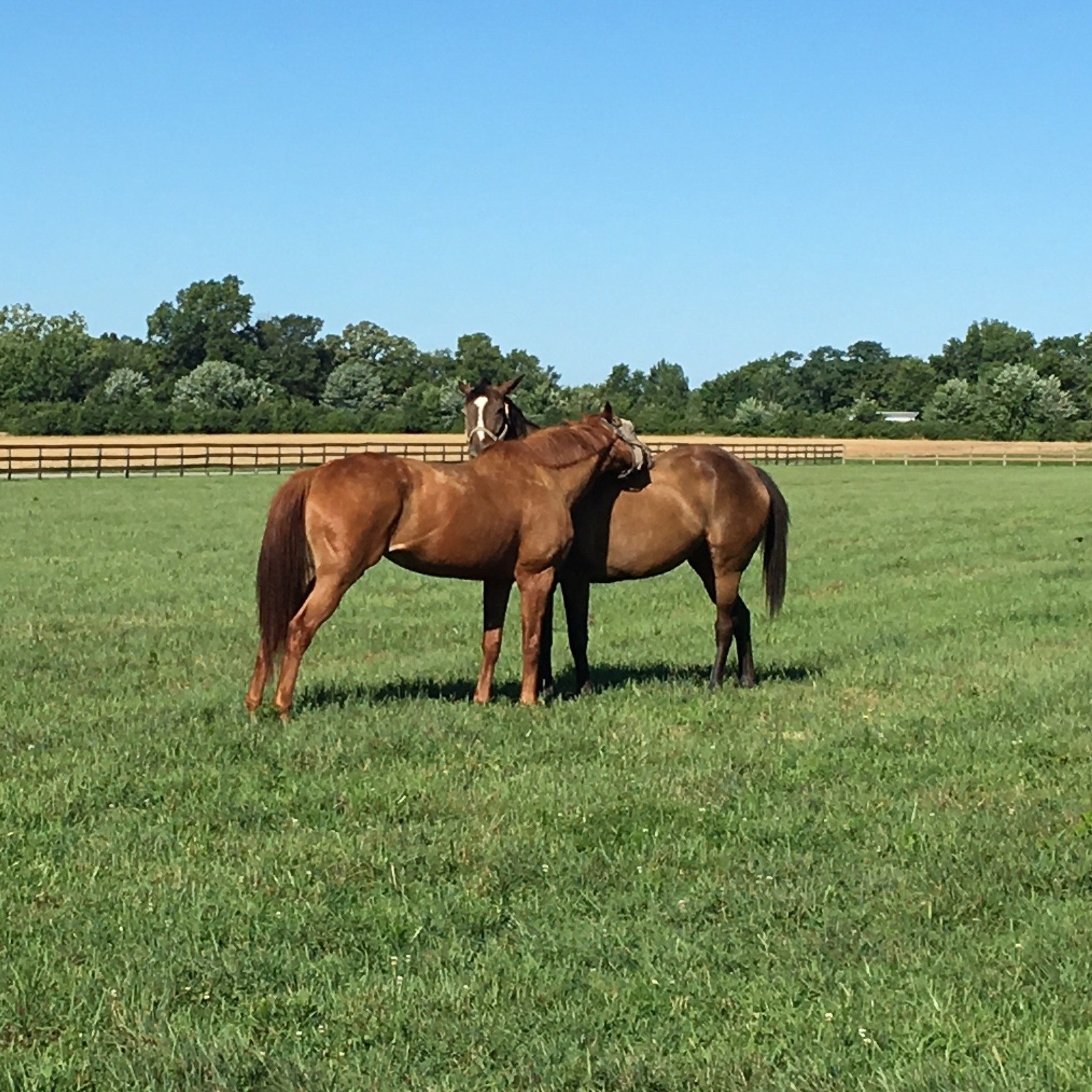
Conversations in Equine Science
Nancy McLean
International Society for Equitation Science
International Society for Equitation Science
Brain and Behaviour
Daniel Shaw
Bright Horse & Hound
Barbara J. Hardman
Science Weekly
The Guardian