.png)
Strangers With Kittens: Gen X Stories from the Least Parented Generation.
We're the so-called "slacker" generation but we somehow raised ourselves, our kids, and now our parents. Laugh between breakdowns and bad decisions, and let's finally give credit where credit is due. Here's to Generation EX-CELLENT!
Strangers With Kittens: Gen X Stories from the Least Parented Generation.
Building Boundaries Not Walls With Katrina Oliver
Use Left/Right to seek, Home/End to jump to start or end. Hold shift to jump forward or backward.
This week Gen X finds actually effective ways to enforce boundaries with the help of a licensed professional. Katrina shares her immense knowledge and expertise on the subject while teaching us how important it is to resist trickle-down trauma passed down to us from our childhoods.
Get Some Therapy On This Brand New Episode of Strangers With Kittens
Listen Now
Watch Full Episodes on YouTube
@StrangersWithKittens
Strangers With Kittens is a podcast created by Eileen Kelly and Produced by Ashley Aker. Original music composed and performed by Chris Hajian. You can listen to full podcast episodes on Spotify, Amazon, Audible, and Apple Podcasts.
Follow Strangers With Kittens On Social Media
Keep The Conversation Going
Eileen Kelly (00:00)
I always want to hear what, you know, somebody's.
Katrina Oliver (00:00)
Yeah. If you
see me on there, you can call me out.
Eileen Kelly (00:25)
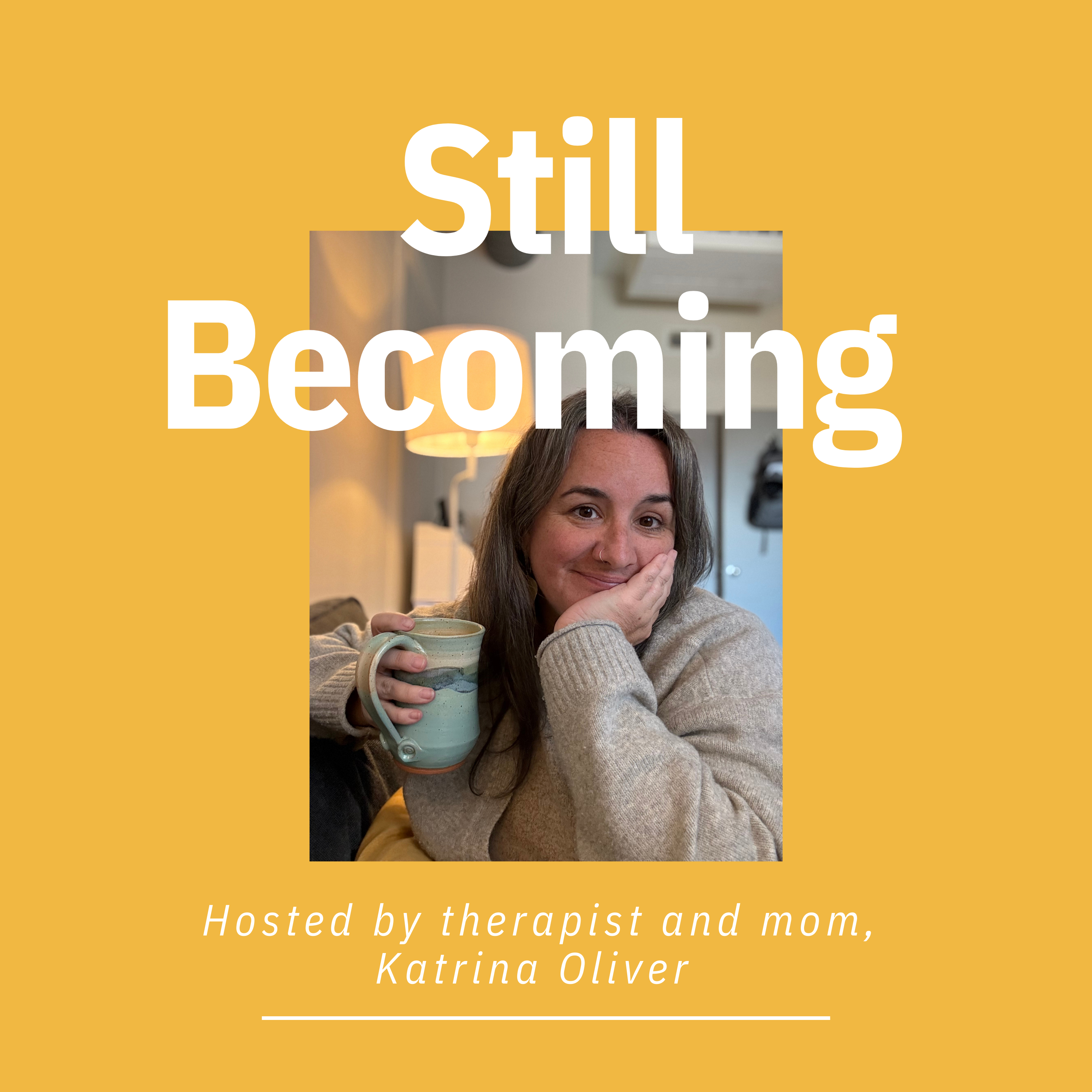
Hi, welcome to Strangers with Kittens. I'm Eileen Kelly and today I'll be talking to Katrina Oliver, licensed clinical mental health counselor and host of the podcast Still Becoming with Katrina Oliver. Today's guest is a therapist, but this content is for entertainment purposes only. So let's get to it.
Eileen Kelly (00:45)
Hi, welcome to Strangers with Kittens. It's so exciting to have you. I'm so happy you're here.
Katrina Oliver (00:47)
I'm excited
Thank you. I feel really honored. It's great to be here.
Eileen Kelly (00:58)
I'm going to jump right in because I've consumed a lot of your content and what particularly resonates with me is what you've had to say about boundaries. And
feel like there's a lot of talk now about boundaries, which is great. I'm not very good at them. I'm learning. ⁓ If I had to classify my style, I'd say porous.
⁓ But there are a lot of things that you really break down that I haven't seen broken down in that way before. And one was types of boundaries. ⁓ Yeah, and I would love to hear from you directly about the different types of boundaries and how we can set them, hold them, protect them.
Katrina Oliver (01:23)
Okay, nice.
Yeah,
absolutely. I'd love to. I always start by reminding people that having boundaries is not a personality trait. Like, you're not born with boundaries or born without them. This is a total communication skill, and we can all hone that. And so when people are like, I'm just not good at that, it's like, well, you haven't had the chance to practice it. Or it's been hard to practice, or you've had experiences that make you not want to practice it. But absolutely accessible to all of us.
Eileen Kelly (02:00)
Hmm
Katrina Oliver (02:18)
And it's messy when you're learning to do this, and it's not perfect. I'm always in process and renegotiating boundaries. so, yeah. gosh. I think we are talking about it more, and I'm so glad. some people, I just hear so many clients and people say, I'm just bad at boundaries. And it's like, well, you haven't learned, so let's learn. And the reason.
Eileen Kelly (02:27)
Well, that's good to hear.
Yeah.
Right. Right.
Katrina Oliver (02:46)
I like talking about the types is that people can identify the ones that are easier for them and start with that. Like there are some boundaries that I feel are much easier to set than others. And so like one of those for me that I think people can be a little clearer about is physical boundaries. Like, I'm not a hugger or putting out the hand for the handshake or. ⁓
Eileen Kelly (03:06)
Oooooh
Katrina Oliver (03:11)
you know, just saying what they are or aren't. Not that this is easy in all scenarios. It's just a real quick, we give cues all the time about what's physically OK with us or not. When you meet someone, how much proximity you leave, all of those things are physical boundaries. And so I think sometimes we don't realize, that is setting boundaries, how I greet people, how I allow people to be in my space or touch me, right? So that's one type.
Eileen Kelly (03:22)
Mm-hmm.
Katrina Oliver (03:39)
Another one is that I think is easier is material boundaries. Like, do I lend things to people? Do I not lend things? Like I'm thinking about my kids learning to have boundaries around their toys. Like, this one's mine. Or you could play with this for five minutes, right? How we lend or give our things. And those are boundaries. And so
Eileen Kelly (03:50)
Mm-hmm.
huh.
Katrina Oliver (04:04)
As we talk about the different types, just invite people to say what feels most accessible to me to start trying. And starting small can be a great way to do it.
Another one that feels pertinent is digital boundaries. How much you consume. So my I didn't mention but my history is working with adolescents in the school system as a school counselor previous to becoming a therapist and just seeing the effects on children's brains and
Eileen Kelly (04:22)
Yeah, tell me about that.
Okay.
Katrina Oliver (04:40)
emotions due to how much digital content they consume. I've been.
hyper aware of this before I became a mother. So that was my first window into thinking about, how much are we using screens and what is it doing? But now I'm like, here's my phone. I'm trying to build a business. I enjoy consuming content by other powerful women. And it's addictive, frankly. And learning to.
Eileen Kelly (04:53)
Hmm.
Yeah.
Katrina Oliver (05:09)
set boundaries for ourselves is, you know, I'm not saying this to someone else, but how much am I going to allow myself to consume? also think it's really timely with how much news media we're consuming. It is a constant balance between being informed and not being so dysregulated that I can't go about my life and do my job or be with my kids, you know? And so how much news media
Eileen Kelly (05:14)
Yeah.
Right?
Right.
Katrina Oliver (05:38)
is okay for me to consume. And that's different for everyone.
Eileen Kelly (05:40)
Right, and that may
be different, yeah, for different people. And there's a certain sense, for some of us, a sense of obligation. If I'm not informed, I'm not being a good citizen. But if it leaves you non-functional, how responsible or helpful is that?
Katrina Oliver (05:44)
Absolutely.
Absolutely. And it is absolutely finding the balance that works for you. It comes up in a lot of my sessions in my office right now is helping people find what that middle point is for them so that it doesn't cause shutdown. mean, developmentally in the scheme of time, right? Like us being able to have news from all over the globe, our brains haven't adjusted to being, you you've seen the things like you weren't meant to.
Eileen Kelly (06:12)
Mm-hmm.
Katrina Oliver (06:28)
hear all the world's problems over breakfast or.
Eileen Kelly (06:30)
No, I
haven't heard that, but I've been saying it for years. like, we are not built for this. We're built to take care of our family and immediate community.
Katrina Oliver (06:41)
Yeah, and like one definition of trauma is too much too fast. And if you are consuming too much information too quickly, it overwhelms the nervous system. And now again, I do feel it is important to be informed. I'm not saying don't, but I am saying make it intentional, not I'm scrolling and scrolling and scrolling. It's what are my trusted news sources, a couple, and when do I consume those?
Eileen Kelly (06:53)
Hmm.
Yes.
Right.
Katrina Oliver (07:11)
and for how long and putting some clear parameters and not I am at the whim of these news stories and they can yes yes yeah because we can't cope with that level of overwhelm.
Eileen Kelly (07:20)
Right, whatever pops up on my screen. Yeah.
No, we can't. And I was just saying to a guest a few weeks ago about how, I go through periods of having like healthy sleep and really being on it and then sort of being lax about it and scrolling through Instagram before I go to bed and it's like, ⁓ a cute animal video and then some thing horrible that happened in politics and then
war and then Epstein and then I'm like, and I can't go to sleep, you know, and I'm cursing myself forever picking up my phone because I'm in a completely different mental state now.
Katrina Oliver (08:08)
Yeah, I think that's valid for many of us. You know, I follow fun and informative pages and then mixed in like you just said. It's like, I didn't want that, you know.
Eileen Kelly (08:17)
Yeah, I didn't
ask for it. Why is this part of my feed? Yeah. And it's 11 PM or whatever. And I would like to curate what I'm exposing my brain to right now. And it's like an assault.
Katrina Oliver (08:21)
Yep. Yep.
Yes, it is, it really is. And so acknowledging that the, that inner child or whatever part wants the scrolling, like I hear that and let's think about if that's a good idea right now. That's kind of how I talk to myself. Like the same way I would talk to my kids, I hear you want that bowl of candy before bed. I hear it, but like let's think about what that might do. And I do have a cutoff time for social media for myself in the evenings. I'm not.
Eileen Kelly (08:39)
Mm-hmm.
Yeah.
Right, right.
Katrina Oliver (08:59)
Again, I'm not perfect on that either. Nine, nine p.m.
Eileen Kelly (08:59)
Which is...
Okay, good to
Katrina Oliver (09:05)
Mm-hmm.
Eileen Kelly (09:06)
I always want to hear what, you know, somebody's.
Katrina Oliver (09:06)
Yeah. If you
see me on there, you can call me out.
Not perfect, but yeah.
Eileen Kelly (09:15)
I like that though. like the, you know, we really do need to, you know, growing up, there were so many boundaries in place for us. On the one hand, yes, Gen X was very feral in many ways, but cartoons were for a few hours on Saturday mornings. And then you went outside because there was nothing good on. wasn't 24 hours.
Katrina Oliver (09:29)
Mm-hmm.
Yeah.
Yep.
Eileen Kelly (09:40)
a million channels, whatever you want, whenever you want. So now you have to develop an inner discipline and develop a set of boundaries around this, right? Like we, and as parents, we are, like our parents didn't have to worry about it because it was built in. TV shut off at midnight. It just turned into, you know, the star spangled banner and, and the
Katrina Oliver (10:02)
you
Eileen Kelly (10:07)
rainbow bars or whatever, and then it was off. So you didn't have to worry about your child watching TV at 2 AM secretly in their room, on their computer, or whatever. We just, feel like as parents, as educators, therapists, anyone who's working with kids or has kids, there's so much more of a burden when it comes to things like this.
Katrina Oliver (10:08)
Yeah.
Yep, absolutely. the access to things, particularly like on YouTube or other things that kids have access to, it's really overwhelming as a parent. And so I create digital boundaries for my children until they can create those boundaries for themselves.
Eileen Kelly (10:42)
Mm-hmm.
Yeah.
Right now with the lawsuit, the landmark lawsuit, I mean, it's a very timely topic. I feel like we've been talking about it for years and years. But the fact that that lawsuit was just one sets a precedent and opens a door for big changes that I think are a long time coming and I hope come soon because it's really the only way corporations are ever going to
Katrina Oliver (10:53)
Yes.
Eileen Kelly (11:19)
do the right thing is if it affects their bottom line.
Katrina Oliver (11:23)
Absolutely, absolutely. And adolescents who consume social media in particular, just, more so than other television or whatever, I just see it affect their self-esteem and their levels of happiness. And it's heartbreaking. So the accountability feels really good. Yeah, I'm glad to see it.
Eileen Kelly (11:44)
Yeah.
So do you find that Jan Actors in particular struggle with boundaries because, you know, reading, know, listening, watching a lot of your content and really reflecting more on why this isn't, this feels a little uncomfortable for me or it's not something that comes naturally to me. And like you were saying, it's, you know, they're muscles that maybe you haven't used. You just have to practice. But.
I was the youngest of six kids. We had one bathroom with no lock or latch on the door. We had a basket of toothbrushes. And you just used whichever one wasn't wet that night. So it really, there was no like, this is mine. You can't use it. You can't have it. Yeah.
Katrina Oliver (12:28)
Wow.
Yeah, looked very different.
Eileen Kelly (12:39)
And I know that's not everyone's experience, but I do think that a lot of people I knew grew up like in very close quarters with big families and boundaries really just were like unimaginable because there just wasn't the space.
Katrina Oliver (12:55)
Yeah, I don't think there was the language much either. When I see kids now, they are far more willing to talk about mental health, their wants and needs. They're just a little less inhibited, I think. And I can speak to it especially from the women end of the socialization of we make people happy and we are nice.
Eileen Kelly (12:58)
Right.
Mm-hmm.
Katrina Oliver (13:21)
I think that's a huge part of why boundaries feel difficult for so many women in midlife, is that it feels rude. That's what I hear. I don't wanna be mean, I don't wanna be rude. ⁓ gosh. Yeah. Yep. Yeah, I think, ⁓ and especially ⁓ high achieving women who are like...
Eileen Kelly (13:30)
Hmm. Yeah, I want hurt anyone's feelings. I don't want to rock the boat or ruffle anyone's feathers. Yeah.
Katrina Oliver (13:44)
their perception, other people's perception of them is so important of like, have to be this thing, I'm an eldest daughter, so I talk about that a lot. The image and the making other people happy, and so boundaries don't fit into that way of interacting with the world. I think that's a huge part.
Eileen Kelly (14:03)
Mm-hmm.
Yeah. And I think even women who, I mean, I have friends who go to work and are badasses at work and might be corporate lawyers or whatever, but then they get home and there's a guilt in not spending. You always feel like you're supposed to be wherever you're not.
If you're at work, you feel bad that you're not at home. If you're at home, you feel bad about a deadline that you know is coming or whatever it is. so sometimes it could be hard to hold boundaries in every area of your life as a woman because you feel like when you get home and you do have that time with your kids, you just have to say yes. You just have to, you know.
Katrina Oliver (14:27)
Mm-hmm.
Absolutely.
Mm-hmm.
Mm-hmm. Yes, the I have to be everything to everyone all the time. And 100 % needs to be 100 % across the board. Yeah. And I think those women might have some great boundaries at work. You they may, if these highly successful women, ⁓ and where they are room to grow is to think about what boundaries at home might look like and how do I protect what I need while still being a caregiver, partner, maybe caretaker to everybody else.
Eileen Kelly (14:57)
Mm-hmm.
Yeah.
Yeah.
Katrina Oliver (15:19)
hard.
Yeah.
The other thing I was thinking
Eileen Kelly (15:22)
Okay.
Katrina Oliver (15:23)
about was mental boundaries, but it's kind of emotional too. And this comes about respecting differences of opinion, but also what you will allow talked about in front of you and what you won't. And I think about people who are going to family dinners with people on the opposite side of the political spectrum and having to have conversations around.
Eileen Kelly (15:35)
Mmm.
Mm-hmm.
Katrina Oliver (15:44)
what they're able to talk about or not able to talk about, what they're able to be present for, how they will engage in those conversations and how they will not.
Eileen Kelly (15:53)
Yeah, this is a big one. we really, you know, I just, mean, summer's right around the corner, barbecues, 4th of July, whatever. And then before we know it, it's Thanksgiving and the holidays. yeah, and it's a real problem in our country. And families have broken up and people feel very anxious and traumatized.
Katrina Oliver (16:06)
Yep, it's always that.
Yeah, and I think it's really helpful to think about what your boundaries are before going into those situations. And one boundary is I don't discuss politics. Another one would be I'm happy to listen to what you have to say as long as you are not demeaning me or others or, you know, ⁓ I'm happy to have this conversation. I'm not OK if you start using profanity or, you know, what is the
What is the line? And for some people, it's just best to say, I'd prefer to enjoy this sunny day and good food, and I do not want to talk about politics. If you choose to talk about politics, I will leave.
Eileen Kelly (17:05)
Yeah, I have actually said that. Yeah. And it worked. Yep.
Katrina Oliver (17:07)
Great. And then people know. And then people know
what to expect. And they can then decide. And then you act accordingly. I think that's the other thing is boundaries aren't telling other people how to act. It's what you will or will not tolerate. So they can do whatever they want to do. But how you respond to that is your boundary. If you choose to do this around me, I will remove myself.
Eileen Kelly (17:25)
Yes.
Right.
Katrina Oliver (17:36)
You know, yes. Yep.
Eileen Kelly (17:36)
Right. And that's perfectly reasonable. You're not trying to control anyone. You're giving them
a choice. If you feel that you need to keep expounding your beliefs, your views, then I feel the need to leave. Yeah. And both of those things are reasonable. But this was several years ago, in my case, when I did say, if you're going to continue this line of conversation, we're going to leave.
Katrina Oliver (17:51)
Yep. Yep.
Eileen Kelly (18:06)
So it's up to you. the politics stopped and actually didn't ever come up again, which was great because it was always a source of stress before get togethers. And then it wasn't an issue anymore after that. It didn't come up.
Katrina Oliver (18:08)
Yep, absolutely.
Wonderful. Yeah. So the boundary was clear. That's great.
Eileen Kelly (18:28)
Yeah, and it was fine, you know? Yeah.
And you know, not everybody can handle that. think that some people get very upset if you, they feel that you're trying to control them even though you're not. You're just saying if this happens, then that will happen.
Katrina Oliver (18:50)
I was teased for my boundaries. And I mentioned this in my podcast, but that it was the phrase like, Katrina and her boundaries. And that people felt that's right. That would be that would be great. ⁓ That other people felt I was putting distance between us.
Eileen Kelly (19:00)
like a new band, Katrina and the Waves, Katrina and Her Boundaries.
Katrina Oliver (19:12)
And that was hard because I was no longer allowing things to happen that felt bad for me. And so I would say, no, this is how much I'm willing to share with you about what's going on in my life. This is how much I'm willing to do this or that. And for me, it helped me feel safer in those relationships because I knew that I had created a container that felt safe.
Eileen Kelly (19:13)
Hmm.
Katrina Oliver (19:39)
But for some people it was like, ⁓ geez, now there's all these rules for communicating with Katrina. And I'm like, yeah, there are. Mm-hmm.
Eileen Kelly (19:46)
Yes, yes there are. Yeah.
And that is so reasonable, but it's amazing how difficult that can be for some people.
Katrina Oliver (19:54)
It is, and especially when it's new, it's a change and that's understandable that that could be hard for people. You know, I get that. When you have relationships where both people have boundaries, it's beautiful. Like I have a couple of friendships where I have women in my life with like really clear boundaries and I feel I mostly do. And we can feel so authentic with each other. Like I can be like, do you want to do this thing?
Eileen Kelly (20:13)
Hmm.
Katrina Oliver (20:23)
and I know that they will answer in an authentic way and that they're honoring themselves and thinking of me. And it's like the intimacy it can create in friendships and relationships when we know that I don't have to worry because you're taking care of yourself, I'm taking care of myself and we care for each other, it's the best. It's really the best.
Eileen Kelly (20:27)
Yeah.
Yes, and when
someone, I'm thinking of one friend in particular, when someone does that, it then gives you permission to have boundaries as well. know, and that really, it took a long time for me to, and it's still a struggle for me to feel like I can say, you know what, I don't feel up to our plans that we made today, or.
Katrina Oliver (20:55)
us.
Eileen Kelly (21:08)
You know, I'm someone who always pushes myself and is like, I have to because I said I would, or this person's asking me so I can't say no. And I'm really forcing myself to pause. Because the other thing is the reflex is, OK, yes. And to just pause and really take a breath and think about it. Does this work for me?
Katrina Oliver (21:25)
So glad you said that. Yep.
Yes,
yes. I love that you said the pause because if you are used to being the like, okay, I'll do whatever you need, girl, that's what's gonna come out. So that's where I would recommend, ooh, let me think about that. I'll get back to you. You know, that's a baby boundary, it is. Yep.
Eileen Kelly (21:41)
Mm-hmm.
Right. And that's like a boundary. That's like half a boundary to just be like, wait a minute.
even those of us that feel as though they're the absolute worst with boundaries can say, let me think about that. Yeah.
Katrina Oliver (22:04)
Yes, yeah, I think
that would be one of those to put in your pocket, right? Like when someone asks you to do something, start with, ⁓ let me get back to you. Let me think about that, you know? And then ask yourself, yeah, I do too. That's a good one.
Eileen Kelly (22:14)
Yeah, I like that one.
So we've got okay, we've got that doesn't work for me. We've got Let me think about that Those are two. I mean, I feel like those are the some of the most important ones
Katrina Oliver (22:23)
Mm-hmm.
Can you?
Yeah, and just another way to say that is like, touch base with me in this many days or I'll touch base with you. You know, I'll come back to it.
Eileen Kelly (22:42)
Now, in those days where you're contemplating something, do you feel anxious? Do you feel like, god, I said I was going to get back to this person and I didn't? Or if you're feeling that way, is that the signal to you that the answer is no?
Katrina Oliver (22:47)
you
That's a great question. I think it would depend where you are on your boundary journey of the anxiety, right? Like if this is new and you're really struggling, you know the boundary you want to set. I think there probably is some anxiety there. If you're genuinely just taking time to self-reflect and you know that that's okay, I don't think there is as much. Yeah, yeah. And the more you practice it, the quicker you know, right?
Eileen Kelly (23:06)
Mm-hmm.
Hmm.
Katrina Oliver (23:25)
learning to listen to what happens in my body when it's a yes for me. When someone asks me something and it's a yes, what does that feel like versus when someone says something and I'm like, the way you said something earlier about not wanting to do something, it's a no. Like, mm-mm. And learning to notice the sensations in your body when you're like, yes. Or, mine's a contracting, like no. Mm-hmm.
Eileen Kelly (23:33)
Ahem.
Yeah.
Mine too.
Katrina Oliver (23:54)
yes feels way more expansive. And so when you can pay attention to that, you might know instantly it's a no, but you don't know how to say it to that person. That's the great time to say, me get back to you and figure out what are the words for how I need to say this no.
Eileen Kelly (23:56)
Yes.
Hmm.
Now,
With boundaries, is that something that can be weaponized in a relationship? If someone sets a boundary that is infringing on the other person's happiness or satisfaction, who's right there? What's the answer?
Katrina Oliver (24:33)
Right, sure.
Yeah, and I think you might be talking about walls also. Walls feel more like ultimatums, hard and fast. A boundary is a communication between people. And if the spirit is communication, that's a boundary. If you are in a relationship with someone and you have conflicting boundaries,
I don't think there's any right or wrong ⁓ that's a difference in boundaries. let's say, we didn't mention intimacy boundaries, obviously. Like when we're talking about intimacy and safe words and all the things people use, that it's really important to have clear boundaries for what people are comfortable with. So let's say somebody has an intimacy boundary that's pretty clear in one direction and the other person.
has other needs, they can still respect that boundary. However, over time, that might create an issue in the relationship to be explored or talked about, right? It doesn't make one person right or wrong. I think when it becomes... ⁓
Weaponized is that wall of demands on how someone else must be. A boundary says, you know, this is what feels comfortable with me. This is the way I will engage with you. And if you do this, I will need to remove myself because that doesn't feel good or safe. So it's really thinking about boundaries or communication, how I want to be treated. We talk about it, right?
⁓ how that lands for the other person, and then we figure out where we go from there. In a safe and trusting relationship, boundaries are what you want. ⁓ But yes, I think if it's weaponized, it's automatically not a boundary is what I would say. That's something different.
Eileen Kelly (26:30)
Yeah,
it's something different,
Katrina Oliver (26:33)
you
Eileen Kelly (26:34)
so I think back to when I went to a therapist for the first time and it was the 90s and it was very anxiety provoking and it ended up not being a good fit, which also when you don't have any experience, you don't have anyone to really confer with about the experience, then you feel like, I guess I'm doing it wrong or whatever. If you don't like click with the person that you
set up an appointment with. And now, you know, I know we talk about, we were talking about tech boundaries and just how much screen time and all that stuff, but one of the things that's wonderful about social media is you and many other therapists are able to talk about these things in small clips on TikTok and Instagram and
it I would make anyone who's considering going to therapy, it's like there you are. That's what you sound like. That's what you look like. That's just getting familiar with the language, the vibe of the person in this way that's safe before someone makes a commitment just seems so great to me.
And I wonder what your thoughts are about it. And also do people try to get away with just that? Like I don't really need to go to therapy because I can just watch the 60 second TikTok clip and I'm good.
Katrina Oliver (28:03)
Mmm.
Sure.
there's so much there. There's so much there I want to say. Yeah, I'm super grateful that we can do these bite-sized mental health things. I talked about those type of boundaries in an Instagram post, and someone can go find that, and it's helpful. And also, like you said, the vibe. You will see the vast variety of therapists out there just by watching a couple of our videos, right? Our personalities are so different.
There's OK, so the two parts I want to talk about there is the first one being I tell everyone you should shop for a therapist. Do not just pick the one that you found that has availability. I want you to look at their credentials, obviously, but more importantly, what kind of work they do. Is there a certain type of therapy they do? If they have a video on their profile, just hearing my voice tells you so much about me, right? The way that I talk or.
I always tell people, I'm not a wind in the trees, like whispery therapist. But some people are, and some people want that, you know?
research says, you know, within the first two sessions, if the therapist is a good fit, it feels comfortable. You may not be spilling your guts, but you're like, no, I can talk to this person. If you don't feel that after two sessions,
Eileen Kelly (29:23)
Yeah. ⁓
Right.
Katrina Oliver (29:28)
start thinking about shopping around. When I have consultation calls, I encourage people to, I'm like, have a couple of these phone calls. Don't just assume that I'm a good fit. And a lot of times people call me back and they said, thank you for doing that. I did. And I'd still really like to work with you. Cool. Sometimes I never hear back because they found someone who's a better fit for them. And so I do think it also de-stigmatizes therapists to be on there being like, hey, I'm a human and I have to take the dress every day too.
Eileen Kelly (29:55)
Yes, for sure.
Katrina Oliver (29:58)
I think the part that's dangerous is that social media is not therapy and people are confusing that. And that yes, you can learn particular skills through social media, videos, websites, courses. The relationship between a therapist and the client is what makes therapy so different and so special.
And that when you talk out loud to someone else and you trust them, this is, would say, same reason why, please don't use AI as your therapist, please. Again, you want a technique? Great, you can go find those. But therapy is about, so much about the relationship. And you cannot substitute that or shortcut that. And having to talk about things that are deeply uncomfortable and look at someone else while you're doing it.
Eileen Kelly (30:34)
my god, yeah.
Right.
Katrina Oliver (30:53)
I mean, that's what helps us move through the things that are difficult and then have real feedback in real time. So good tools, not therapy. That's what I would say.
Eileen Kelly (31:05)
Yeah,
that is so true. Yeah, the human experience is essential. It's not just like, you know, a workbook.
Katrina Oliver (31:16)
Right, no, and there's value in workbooks. We just can't call that a substitution.
Eileen Kelly (31:19)
Right.
But that's not yeah, exactly. Yeah. I've ever been stumped by a client. Have you ever felt like I don't know how to help this person? Really?
Katrina Oliver (31:32)
Absolutely. mean,
yes, gosh, if I knew everything, like, I don't even have an idea of what that would be like. I'm a human being, trained human being, but what I will go to for in session is I'll say things like, wow, I think we should just sit with that right now. Like all the, you know, that's such a.
Eileen Kelly (31:43)
Eheheh
Katrina Oliver (31:59)
cliche for therapists, like, let's just sit with that for a second. And then I notice what comes up. You know, I may use some somatic skills where I ask them to tap in and notice what's happening on the inside in their body. I'm also simultaneously doing that when I'm hearing them say things. How am I doing? I'm self monitoring. I'm watching them. You know, if I don't feel a clear path, it means we need to talk about it more. So I'll say, you know, say more about that.
Eileen Kelly (32:03)
Mmm.
Katrina Oliver (32:25)
And then using different modalities, I can tap into, OK, are we talking about needing to change some of our thoughts here? Do we just need to name and tame the feelings that are coming up? So I'll always go to a skill that I feel. But there's something also just about being present and just saying to somebody, whoa, I am so glad you told me that. I'm here for you. I hear you. Right? ⁓
Eileen Kelly (32:50)
Hmm.
Katrina Oliver (32:55)
Everyone is so different. I might have one person come talk about this issue and another person talk about the same thing, but they don't need the same response for me. So there's a lot of noticing what's going on in the room, acknowledging where they're at, acknowledging where I'm at internally,
Eileen Kelly (33:05)
Hmm.
Katrina Oliver (33:14)
then proceeding with some intuition also. I mean, I just think that that's part of my training is listening.
Yeah, that was a question.
Eileen Kelly (33:24)
Have you ever had to
fire a client?
Katrina Oliver (33:27)
I have not, nope. I have had.
Eileen Kelly (33:30)
Mmm.
Katrina Oliver (33:36)
No. Yeah. Yeah. I mean, think that's the other thing. ⁓ yeah.
Eileen Kelly (33:37)
That's good. I mean, it must happen at some
point, sometime, but I'm glad you haven't had that experience.
Katrina Oliver (33:45)
And what I would say is
if it had happened, it would be a discussion of, I'm not sure that this is a good fit anymore and here's why. We call it immediacy, where we're gonna be real with each other in therapy. And
Eileen Kelly (33:53)
Mmm.
Katrina Oliver (34:01)
why I ask my clients, how's this going? Like, how are you feeling about this? Are you getting what you wanted to do out of this? How are you feeling about me? That's really...
Eileen Kelly (34:04)
Mmm, yeah, right.
Katrina Oliver (34:14)
learning some vulnerability in a safe emotional relationship. And so I don't know if I'd even ever use the term firing. I think if there was something in the therapeutic relationship that was unhealthy, I would have to address it. And we would see if it was something that could change or they needed to see someone else.
Eileen Kelly (34:35)
Hmm.
Yeah, I like that. It's honest. I asked that question because I've known people that saw therapists for years and I don't know, just didn't seem like there was a lot of movement or a lot of progress or growth. And I always thought, boy, if I was working with someone and I saw this after five or seven years, there's no growth. think just as
Just to have integrity myself, I would have to say, I feel like I'm not helping you progress.
Katrina Oliver (35:12)
I
think that would be a conversation absolutely to have. Like we've been working together this many years. These are the goals we've had. And I'm wondering if you felt that you've made progress. Yes or no and why or why not? Let's talk about it. Here's what I'm noticing. And I'm wondering, is this still the best fit for you? ⁓ I think some of that needs to be on them where they might be like, I think I've really made some progress. Like I want to keep going. Or it could be like,
Eileen Kelly (35:40)
Right.
Katrina Oliver (35:41)
You're right, like we've sort of stagnated. I think I might need some fresh eyes on this and I'd be like, great, let's look at your insurance, let's find someone who's a good fit for you.
Eileen Kelly (35:52)
Yeah,
because if you're personal trainer, you see the physical changes, right? And if you're not seeing any physical changes or any increase in endurance or cardio, ⁓ fitness, you're realizing that what you're doing isn't helping. But I would imagine as a therapist, it's a lot more, what's the word, like a little harder to maybe see.
Katrina Oliver (36:17)
Yes.
it's, you know, it can be five steps forward, two steps back. It could be, ⁓ we really are hitting this goal and man, not this one. know, humans are so much, so much more complicated than like.
data point, you know, and that's why, I probably like many therapists, you know, on the humanistic side, it's like, yes, I want us to like look at these markers and make sure that your symptoms are managed or under control or decreasing, but also like you're a human being and that's super complex. and yeah, to say you're improving or not improving, well at what? Like, you know.
Eileen Kelly (36:35)
Mm-hmm. Yeah.
Yeah, it's hard to quantify and...
Right, right.
Yeah, what are the data points that prove that? Yeah.
Katrina Oliver (37:03)
So much.
Yeah, and it's good. It is good to have goals. Like I want to say that like and depending on the severity. I love working with people who are in life transitions. So having a baby, marriage, divorce, death, ⁓ know, changing careers. I love that, you know, just that when we're in the midst of change. And so I don't think there's a lot of that is just supporting them.
as they're moving through that change and crafting who they want to be in their next chapter, all of those things. Whereas someone with, let's say, extreme depression, I'm going to have a very different set of goals and markers and safety measures in place, you know? So it really is going to depend.
Eileen Kelly (37:46)
Yeah. Speaking of that, someone who's sort of changing and evolving, have you noticed people needing to tweak or change their boundaries based on different stages of their lives? Like when you're parenting, your boundaries with young children are different as a mother than they are with teenagers or adult children, right? And learning how to navigate that.
Katrina Oliver (38:11)
Yeah, think parenting is a great example there of how boundaries need to change because your child is really developing and things are different. In general life change, what I see is people just getting clearer on their boundaries usually. ⁓ Not so much as like it's a big change, but it might be, there's a new environment. I need to think about what this boundary looks like in that environment specifically or
Eileen Kelly (38:28)
Mmm.
Katrina Oliver (38:38)
I just gotta get really clear on this boundary. Like, this is why I love working with women in their 50s, especially southern women in their 50s, because I think they got the people pleasing even more as a message. And when they start to be like, no, I'm like, yes, I just love it. And they're like, dang, that felt good. It is, it is, to watch people do that feels.
Eileen Kelly (38:50)
Yeah.
Yeah, that must be so satisfying.
Katrina Oliver (39:05)
Like you said, it feels different on the inside when I'm listening and respecting my own boundaries. And it just is really cool to watch people do that.
Eileen Kelly (39:14)
Are you noticing
trend on social media and in your practice with women in the last couple of years with the things that have come out and I mean that horrible case in France and everything that's come out in the Epstein files. It's such an assault on the female psyche and
what you know we've been especially like you said especially southern women have been brought up to be polite to always make everyone else comfortable to kind of sacrifice themselves for the comfort of others are you seeing change in that based on the world at large
Katrina Oliver (40:05)
I would say that I, I notice because of the attention that we're talking about it more, that people are more comfortable bringing it up, are more like, maybe it's okay if I set a boundary. I saw this influencer or look what happened to these girls. That's not okay. I think there's more less stigma.
more of a like, shit, This is like what? ⁓ Or noticing in their own lives. But I just think it's becoming more normalized to have the conversations, which I am.
Eileen Kelly (40:42)
Yeah, yeah. And I ask because I imagine that southern layer, that veneer, that kind of smiling, even when things are terrible, it must be much harder to maintain with everything that we're exposed to right now.
Katrina Oliver (41:04)
Mm-hmm.
Yeah, I think you either mask harder or you start to really say, shit more, you know? Yeah, either it's like harder to keep that, but I'm going to layer up that mask or I don't want to do that anymore and I'm going to do this differently. And that's what love about women in midlife. They're like, oh, hell no, I'm not going to do that anymore. Like, I do not care. And so they start having those conversations here before they have them out in the world.
Eileen Kelly (41:11)
Mm-hmm. Yeah.
Yeah.
Right?
Yeah.
Katrina Oliver (41:33)
And yeah.
Eileen Kelly (41:36)
Yeah, and I don't know if it's the hormonal shift, the you've had your nose to the grindstone raising kids and you're finally able to look up and look around and be like, wait a minute, I don't want to keep living like this. Or, you know, maybe a combination of a lot of things. But.
I feel like there's just, there are so many women in midlife that have zero fucks to give anymore. And that combined with the Epstein files, the horrible case in France, so many things, it's just like, what, what are we doing here?
Katrina Oliver (42:19)
Yeah, and to me that's exciting. That's, that's pivot point, you know?
Eileen Kelly (42:23)
Yeah. It's
exciting for me too. I guess I just
you're seeing. Because I think the Southern culture can grip a little tighter to what's familiar and safe. I don't know if...
if you're noticing that there's less of that.
Katrina Oliver (42:51)
No, ⁓
I should mention I'm in a very blue bubble of Asheville, North Carolina. when people also, not everyone is blue, let me be clear. And I work with lots of different clients. But when people read my profile on psychology today, they get an idea of who I am and how I approach therapy. so I probably don't have a great cross section of Southern culture, but I certainly
Eileen Kelly (42:57)
Okay. Yeah.
Mm-hmm.
Mm-hmm.
Katrina Oliver (43:20)
see women who are fed up and are like, we got it, I got it. And it usually starts in their, it's their personal life where they're like, wait a second, I wanna create some change here, which I just love. Yeah.
Eileen Kelly (43:22)
Yeah.
⁓ huh.
Yeah.
Yeah, I know Asheville. I have a friend who lives there and I've performed out there and it's such a great, it's such a great, city, I love it. It's pretty fantastic. Okay. Okay. Yeah, but I lived in, I lived in Southern Ohio for a short time and ⁓ Southern Ohio is, is, is Kentucky culturally.
Katrina Oliver (43:41)
We'll call it a city now. Yeah, I love it here.
Eileen Kelly (43:56)
So that was a real culture shock for somebody from the East Coast and the New York metropolitan area because I don't know, I just thought we were more alike than we are. And I saw so many women swallow situations and emotions in social situations.
And I dialed myself way down, by the way. Like I was like on two. And I would see the women around me that I was spending time with just swallow so much. And I thought, my God, it is really hard to be a woman here.
Katrina Oliver (44:37)
Mm-hmm. Mm-hmm. Yeah.
Eileen Kelly (44:39)
And as
much as I died myself down, I was too much, you know, I was like, well, that's as, yeah, that's as low as it goes. I'm barely holding it here. So I had to get out.
Katrina Oliver (44:43)
I was gonna say it was still too much.
Yeah, So many women
are given that message, no matter where they live, that they're too much. It's just such a, if we have anything beyond to like, you know, very meek and mild, we're too much. I work, that's something I work through all the time is my fear of being too much and like being comfortable with my muchness.
Eileen Kelly (45:06)
Yeah.
I love the muchness. I encourage the muchness. I would like too much and then a little more. I just went to have you heard about early birds? It's this dance event that is kind of taking taking the country by storm but it's for women and trans people and
Katrina Oliver (45:16)
Yeah.
Yeah.
Mm-mm.
Eileen Kelly (45:39)
You know, it's they can't legally say no men, but they say politely please don't come but it's fantastic music and dancing from 6 to 10 p.m. and their slogan is for women who have shit to do in the morning and It's just like a joy fest people just letting loose no self-consciousness whatsoever
Katrina Oliver (46:01)
⁓
Eileen Kelly (46:06)
Just feeling the music, amazing DJs that changed the song after 45 seconds. Like, you're psyched to hear the song, and then just when you're like, all right, it changes to another fabulous song. So the energy just stays up. It's so much fun. yeah, it's just a roomful of muchness, and it's glorious. It's glorious. So yeah, more dance parties, more muchness. That's the goal.
Katrina Oliver (46:23)
⁓ I love that.
That is so, yes.
I love that, I love that.
Eileen Kelly (46:34)
Well, this has been so much fun. Thank you so much for taking time to speak to me.
Katrina Oliver (46:37)
is.
Eileen Kelly (46:41)
really excited. So I want to mention it again, that's still becoming with Katrina Oliver is the podcast. And it's brand new. And I can't wait to keep up with you and listen and follow. So that's on Apple podcasts, Spotify, iHeartRadio, wherever.
Katrina Oliver (46:50)
that.
Eileen Kelly (46:59)
Wherever you get your podcast, go find Still Becoming with Katrina Oliver and Counselor Katrina on Instagram and TikTok. it's been so much fun spending time with you and getting some scripts for boundaries. The boundaries.
Katrina Oliver (47:10)
great. was.
Thank you. just so enjoy your podcast and all the things you're doing and talking about. And it was an honor to be a guest. I really appreciate it.
Eileen Kelly (47:26)
⁓ thank you. All right, well, I'll be listening. I can't wait. Bye.
Katrina Oliver (47:32)
Bye.



Podcasts we love
Check out these other fine podcasts recommended by us, not an algorithm.