
Microsoft Community Insights Podcast
Welcome to the Microsoft Community Insights Podcast, where we explore the world of Microsoft Technologies. Interview experts in the field to share insights, stories, and experiences in the cloud.
if you would like to watch the video version you can watch it on YouTube below
https://youtube.com/playlist?list=PLHohm6w4Gzi6KH8FqhIaUN-dbqAPT2wCX&si=BFaJa4LuAsPa2bfH
Hope you enjoy it
Microsoft Community Insights Podcast
Episode 44 - Moonshot Solution using AI with Peter Ward
Use Left/Right to seek, Home/End to jump to start or end. Hold shift to jump forward or backward.
We sit down with Peter Ward to decode how real moonshot solutions are built at the intersection of clean data, practical AI, and unapologetically human design. From Copilot adoption to rethinking org charts, we connect the dots between cost, capability, and cultural change to show where the next wave of value will emerge.
We start by reframing the Copilot debate. The £30‑a‑month question isn’t the point; the outcome is. Peter shares how teams translate AI into measurable time savings, faster delivery, and better decisions, while addressing the quiet blockers: messy data, limited access, and incentives that favour stasis. We dig into the shift already visible in hiring data—entry roles thinning, mid‑senior roles holding—and why career growth now rests on a new metric: innovation density, the number of high‑value outcomes you can ship by orchestrating AI agents.
Setting The Stage: AI Moonshots
SPEAKER_01Well, welcome to Microsoft Community Insight Podcast, where we share insights from expertists and up to date in Microsoft. I'm Nicholas, I'll be your host today. In this podcast, we'll dive into Moonshot Solution with AI. It's kind of a curious topic. And today we have a special guest called Peter Ward. Can you please introduce yourself, please?
SPEAKER_00Nicholas, uh, thank you for being a guest on the show. And uh, yep, I'm located in New York, and I believe you're based in the UK, aren't you? Yep. All right, very cool. Okay, so um I've done this topic uh a few times at conferences and I've done a few keynotes. So um I try and make it convers uh conversational. So I'll jump through this quite quickly. So, Nicholas, feel free to interrupt me and um ask questions.
SPEAKER_01Yeah, sure.
SPEAKER_00And I'll jump into it on this.
SPEAKER_01So the the first question I'm gonna ask is why why is it called moonshot solution?
SPEAKER_00You're seeing my thunder already on the show, right? Okay, uh on this. Let's just go through this.
Meet Peter Ward And Format
SPEAKER_00So let's just talk about introduction, about the what sessions about terms, technology, data, and moonshot ideas. So I'll come on to this. I'm gonna come through this at quite a fair uh quick pace. Okay, so just very, very quickly, uh, let me just go back a second. Uh, that's about that there. So there's a few themes here about technology over the years, impact in the workplace, jobs, and the problem with AI. And of course, quite often you have moonshot ideas, uh, is when there are breakdowns. Uh, and I'll talk about this. Where um AI ideas all go wrong, and then AI moonshot ideas. So basically, there's about five themes, and it's gonna be a bit like a Seinfield episode. Did you ever watch this show, Nicholas? Yeah, I can't remember the name.
SPEAKER_01Uh it's very oh, it's very classic. I can't remember the name.
SPEAKER_00Okay, so basically, Seinfield Show is a big show I used to watch Thursday night on NBC back in the 90s, and there's always like four different themes. Well, there were themes which are just totally unrelated, and it just sort of like merged together at the end. So uh I've done this presentation a few times and it generally works. That's all I'm gonna say on that. So, welcome
Defining Moonshot Solutions
SPEAKER_00to this, and um, thank you for having me on the show. So, let's just talk about this. Nicholas, do you you got um co pilot? Do you have do you use copilot every day?
SPEAKER_01Yes, I use Gab Copilot, and sometimes I use uh Microsoft Copilot.
SPEAKER_00You're using the paid word version, are you?
SPEAKER_01Uh yes, at my workplace, yes. But like in my personal time, I use a free version of Microsoft Copilot.
SPEAKER_00I understand that. Um on that. So Andamus, who do you work for?
SPEAKER_01I work for Microsoft partner called Canus. We provide solutions to like customers.
SPEAKER_00All right, very nice little plug there, actually. Yes. Okay, right. Okay. So with your customers, how copilot adoptive are they at the moment?
SPEAKER_01Uh so some of them will want retro like POC, how we can use it to increase productivity within a team. So whether it's help developers and myself work more faster and deliver more values. So within our team, we just have to persuade the client how we can increase values and stuff. Right, okay. And whether it's like integrate it with like maybe a Slack, or we can integrate it with Teams as well.
SPEAKER_00So, do you find there's a little bit of resistance about with people saying, well, it's $30 a month, I can't afford that. Is there a little bit of that going on?
Copilot Adoption And ROI Pushback
SPEAKER_01Uh no, not that aware of.
SPEAKER_00Right, okay. So, in the quite often when we roll this out to clients, you know, um there's always a little bit of resistance uh uh about Copilot, and it's usually, well, we're evaluating it, we're doing the POC, we don't want to roll it out. And like, like when you think of salaries, you know, and I think, well, $30 a month is not a lot of money here. There's always that back of resistance, and like you know, students will spend more on their subscriptions to Spotify and Netflix than they do, then than an employee come a customer and an employee, uh, then an employer doesn't employees, which is a bit odd, don't you think? Where like Netflix is about consuming. So basically, you've got a tool that will increase productivity, increase profits, lower costs, but we don't we're not, but we we need to evaluate it on this. So basically, when it talks about new moonshot ideas, you've got to get good data, good good AI, and then you get the moonshot ideas, and then data is that new oil in the in the economy. And realistically, okay, AI without data is absolutely pointless, and data without uh without AI is pretty much worthless. That's not me being profound. There's a lot of documents and a lot of uh articles on this. The economist has a very good um is a very good um article actually on this as well, about that how data is becoming the world's most valuable resource. Very quickly about me. Um I am the founder, former CTO, now CEO of Soho Dragon. We're a Microsoft partner, I'm Microsoft MVP. Based in New York, my first version of SharePoint was 2003. You do use SharePoint much? Did you use SharePoint back in the day much, Nicholas?
SPEAKER_01Yeah, yeah, we we find because we're I'm like a I always work for Microsoft like partners and like IT. They always use SharePoint and Office 65. All right, what was your first version of SharePoint? I was uh 2013, 18, but I'm not that 2003. That's quite that's you should get a war.
SPEAKER_00Yeah, yeah, yes, I know. When you when you start using 2003, you do get gray hairs. Okay. Um, so when you talk about moonshot, you asked about that idea. Um I know this is more of an American term, but a big problem, radical solution, breakthrough technology. When you think of the moonshot, you already think of this guy here a lot, JFK. He had that moonshot idea. I want to put a man on the moon. This is we're gonna put a boatload of money, a boatload of resources, massive problem. We don't think it can be done. And of course, uh, this was actually done, but there are other moonshot ideas in terms of COVID vaccine, big breakdown in the pandemic. Yeah, okay, massive amounts of research uh um to get that vaccine actually done. 3D printing is another one, okay. DNA, and that was a game changer, basically, where they put money towards this, and with and that was invented in 1984, where scientists determined
Data As The New Oil
SPEAKER_00some unique DNA characteristics. It was a game changer. That's what that moonshot idea. It's a game changer in how we actually solve crime and actually prevent innocent people going to prison. 3D printing is all game changer. That was 3D printing was basically invented in '83, where you could don't, you know, you can manufacture something there and then on site and make it. Okay. IVF. If I said to you 60, 70 years ago, you can take an embryo, a sperm from a man, an egg from a woman, put it together in a lab, and actually give it to somebody else to have your baby, you would have said this is out of your, you know, this is something out of a sci-fi movie. That's quite common now in across the world. Okay, and you know, I'm on that. So let's just talk a little bit about memory lane here, okay. And I'm the reason why I'm talking about this is because it does lead into the co-pilot. Back in the 90s, you saw like had personal computers, lang, uh, lang networks, emails, and then of course, the mid-90s, the internet and email, then the cell phones, BlackBerries came out, online shopping, on and smartphones, and video conferencing. And of course, now you've got the AI agents. So let's just review the impact of this. Okay, when PCs came around, suddenly you could number crunch um spreadsheets, word processors, new skills were required. Just as now you've got the prompt engineer. Now then it was the um keyboard literate, uh PC literate. Okay. Langs, it meant you could share files with other coworkers without printing them out. Okay, okay. You could um on that file sharing as well. Okay, impact of email on the internet, then suddenly the information could be shared, okay, not just between on the walls of your office, you could actually work at home. Okay, so up until the
Career Roots And SharePoint Era
SPEAKER_00internet was available, you had to come to the office to actually get information. And then suddenly external communications and you could actually work outside. And of course, you could not only work at home, you could, you know, um, you could actually work on the other side of the world now. Um on this, so that had a bit of a game changer because it suddenly meant that your co-workers all didn't need to be in the office, they could be and then hence the hence the word of the remote worker. Okay, and like and yeah, and and with this case here with the internet with that remote worker, if you look at New York or if you when you graduate or someone in London, um, if you graduate, you would move generally move to a big city for three reasons to develop your career, earn good money, okay, and then spend money on things you couldn't necessarily buy. Now you can do that without moving to big cities. So that means big cities are gonna have to reinvent themselves where you can work remote and still develop your career. You can you want to watch like weirdo Japanese um um movies, you can now do that streaming. If you want to buy Korean comics, you can buy all that online. You don't need to go to these boutique stores in the big cities, okay? So as a result, none of that is actually true in you know 30, 40 years ago, and that's going to be the impact of technology. Let's look at the BlackBerry, okay? Email everywhere, scheduling in real time, and of course, that shifts in work-life balance. That causes so you didn't do just the five o'clock whistle just didn't blow when you finish work, it can continue throughout the
Moonshot Examples Beyond Tech
SPEAKER_00night. Online shopping, okay, no one predicted this. So I actually had my eyes tested earlier this year online. Okay, don't need to go to the optician. Okay, so yes, you can buy stuff online, but that's people don't realize that high street was the access point of information and consumerization, where basically, if you wanted to get the travel agent, you'll go to a travel agent no longer. That's online. If you wanted to uh buy clothes now, you can go now buy that online. And you see this. The only things which are really expanding now are things like coffee shops where you have to consume the products on the high streets, and you know, like and also with this online shopping factor, like I think I think you you not only buy anywhere, but I I think after like three days of me sitting on the swimming pool on a family holiday, I'm sort of like buying you know, buying the food for next third, next for my on my Hello Fresh. Um, and then and I'm also looking at buying stuff online as well. So therefore, you can now do anything. You're on holiday, you're actually difficult to actually get away, you're still connected. The smartphones, suddenly business apps are in your hand, e-commerce payments. You can now do that outside the office. Okay, you could do it on the road, you didn't have to work. Another reason why you didn't have to come to work, okay, because your workhorse machine was actually in your house. You know, it was actually in your hand as well. Okay, and if anything, you're like like the Gen Z generation, smartphone has basically replaced their PC. Okay, video conferencing. This to me is one of the most under talked out technology, like since particularly since the pandemic, because there was used to be say something to be said where, oh, you know, um our project manager is based in Brooklyn. Uh okay, now it doesn't matter if we're based really in Brooklyn, Bulgaria, or or Bangladesh. Okay, so there was a leveling up process uh what COVID did, particularly with video conferencing and connectivity. Okay, so yes, that was a game changer for remote work, but people got accepted to this technology where, well, hang on a minute, uh, your team is spread around the world. That's actually a good thing now. Okay, so let's just talk about these consistencies of these technologies. Okay, few consistencies are is that in every one of these devices I mentioned, you had work and home devices. Okay. Um, so basically, you remember you started off with work PCs, now people have work and home PCs. Same with cell phones. Companies use you a cell phone and you have um and you have work cell phones, you have work, you have have work um cell phones,
Technology Waves And Work Impact
SPEAKER_00email addresses. You used to have work even now, it's all work and personal. Okay, and that's gonna be the same with agents, and you know you're gonna have work agents like Copilot, okay, and then you might have personal agents as well. Same as instant messaging to use Teams at work and WhatsApp at home. You know, try and organize a family holiday without using WhatsApp, you know, it's just a barrage of emails. Okay. Other consistencies are is that rational people and the companies will always won't recognize that impact at the time, particularly the CFO. Okay, unless that technology is compatible with the spreadsheet, they will say no, we don't see the value. Okay, so you've got to get not actually the end user on board, but you've got people actually not even using the technology on board. So things like talk about cost reduction, what your competitors are doing, okay. Um, I'm on this, how headcount can be reduced. Okay. Um, but this is where it's like the everyone everybody dreams or dreams big until they start seeing the price tag. And co-pilot, it's not free. Okay, I often find this as a bit of an odd behavior, okay, because if you look at the impact of technology over the workplace, okay, this is your typical workplace, um, you know, 130 years ago. Nicholas, do you know what the biggest, the first billion-dollar company was in America in uh in a hundred years ago? Have a guess.
SPEAKER_01Netflix? No, it's not Amazon. 100 years ago. No, the first billion dollar company. No, I'm not sure. Okay. I wasn't born, I wasn't born lender time.
SPEAKER_00Well, no, it's I know it's not okay. It was actually US Steel. US Steel was the first US billion dollar company that had 300,000 employees.
SPEAKER_01Wow. Okay.
SPEAKER_00In less than 100 years. Look at these, look at these numbers. Okay. So some of these companies are a hundred times bigger than they were in less than a hundred years, and their headcount is a third less. Look at Apple, it's a third less in general than than the steel company. Okay, but look at the profits. So I know you've had globalization going and cold war, new market ending and new markets, but these revenues are quite astonishing. Look at the on terms of these numbers, where yeah, the headcount is coming down, but the wealth creation is going up. And you know, these numbers are quite staggering. So surely you're going to get a case where basically you're going to get the first billion dollar company with a headcount of one. Okay, if you look at those numbers, okay, because you're getting automation coming into the workforce. So let's just talk about that automation in the workforce. There's the trend summary here, okay. I'm noticing this increasingly on all charts, that basically you're now getting um a case where let me just get this in. You're getting basically data uh departments here, but you're getting AI agents, you're not getting humans on the all charts. Okay, so as a result, hate count reduction is actually occurring. Okay, so obviously that's going to cause a trending problem because companies are actually gonna be hiring less. This is a graph from indeed. Okay, now hate count hiring drop vacancies peaked here in 2020, but this is actually reduced by best part of 70% in three years. Okay, so yeah, it's reducing okay in three years. So it's not just reducing, but look at the speed it's reducing. Yeah, okay. Now you might you know, so and what at Soho Dragon, we actually do actually sort of like do bit of recruitment ourselves, okay, but we've noticed that a lot of the companies are not hiring entry-level jobs, they're hiring mid and senior level jobs. And now that's already well, but how do you become a senior level job person when you can't get an entry job? Okay, this you know, you know, these these numbers, this slide's nothing particularly big, new, profound, 60% decrease of 35%. Uh, okay, not just a problem in the US, it's going right across the Western world. Okay, a few headlines here going on again. You see this all the time now. Hiring impact, Zuckerberg, AI jobs replace mid-level jobs, halting hiring career. IBM replaced 200 roles AI agents. Okay, so you're now seeing the AI agent on the all chart. Now, with that, you know, so as a result of those virtual um employees, okay, it's going to take automation because
Remote Work, Cities, And Commerce
SPEAKER_00I don't know AIs are having their own memories, they will work 24 hours a day as well. So the other thing, as well, is that particularly in the US, you earn more money as you get more senior, but you have a greater headcount. Okay, that's a big okay. But if your head count is reducing because people are using AI agents, then it's that innovation error is gonna be how many agents you're managing or how much innovation gen density you've got that you can produce. Okay, so if you're thinking about a career growth, stop asking about how how I can get more and start asking how can I innovate more with AI. Okay, because that's where your your yardstick is gonna be. Because your team size is gonna is actually going, is actually the decreasing in size. So let's just take a quick pause. Okay, you can now do more with less. That's not a profound statement. Generate more wealth with fewer people, not necessarily profound, but look at the numbers I presented. People don't realize the big impact that that is actually happening. Cities, companies are gonna be, you know, are changing are gonna have to change with this, okay? Behavioral changing, okay. And then if that technology is affected both society and in economically as well, okay. And hiring is going to change as well in terms of we don't need big cities. Do we actually, you know, if we're a US company, do we need people, everyone based in the US? Okay. So obviously, like you know, today you've got like the small medium-sized business, tomorrow it's the small, mighty size business. Okay, so that 50-person company can do what it used to take 500 or 505,000 people. So it's all very well saying, look, you know, I'm a I'm a Tata type consultancy with 10,000 employees. So what? I'm a small company and I've got 5,000 agents, okay, which are probably, you know, which can run, which can work 24 hours. Okay, so let's just go back to this good data, good AI, moonshot solutions. So, how do you get to that moonshot in the AI? Okay, so let me just talk about where it all goes wrong. So we talked about data. Okay, now if you ever want to know where people, if you ever want to know if you've got too much data, okay, okay. Um I suggest you look at the Amy Yang um TED Talk, actually. Okay, and I actually believe a lot of data is actually misdirected. And if you want to know, look at the if you want to understand what I'm saying, look at this TED talk. So basically, Amy was like talking about how basically bad data actually destroyed Nokia, okay, because Nokia had lots and lots of data points about the world's population. Um, and Amy S said that's none of this is actually going to work. This data point is gonna work correctly, okay, because it doesn't take into account that when the smartphone comes out, there's gonna be a shift in buying behavior. Nokia said that they've got thousands of data points, you've only got hundreds, okay. And so Nokia's entire business model was based on um was based on a false problem of all the wrong data points. And you have to remember that big data all comes from the same place, okay, the past. And the volume data isn't really a guide to what's important or basically its reliability. Okay, good example of this is the Titanic. Okay, uh, the Titanic, they had notes stating where icebergs were going to be. Of course, the iceberg that actually sunk the ship was a rather big data point, okay. Okay, and they didn't know how to act on it, they didn't realize how big it was. Okay, other points as well with data points is uh what you've got to make sense of information. Nicholas, have you actually been to New York?
SPEAKER_01Uh yeah, twice.
SPEAKER_00Okay, have you driven around much?
SPEAKER_01Uh no, I just take the train and watch.
SPEAKER_00Okay, so I live in Hubokan, okay. And if you're driving into new New Jersey in Fiddle Income Tunnel, you'll know Hubokan is on the right hand side. Okay, yet you're presented with this sign that says go straight ahead for Huboken. So you sort of realize, wait a minute here, I'm this makes no sense. The sign makes no sense, and then you realize I've got to go straight ahead, else I'm basically gonna basically uh go through the Lincoln Tunnel, even though Huboken is actually on this side, is towards the right of the sign. So you get this um unconscious bias where you're basically looking at data that's actually not correct. Okay, and even though you might have historical information that you think the data is actually correct, it actually you can't make sense of it. Okay, so I've often I've now learned this lesson, but uh, you know, often swipe cause a couple of a multi-car pile-ups going through the Lincoln Tunnel when I'm realize I'm actually in the wrong lane on that. Okay, emotional viewpoint as well. Like I said, I live in Hoboken, which is basically to the west of New York, it's actually in New Jersey. Okay, most people in New York, their viewpoint of data is all the New York subway. I think
Smartphones, Video, And Global Teams
SPEAKER_00half of these people I speak to in New York think I get a canoe to work. Okay, the night the Microsoft Office is in Times Square, yeah, uh, which is right here. Okay, I can basically get from Harboken to Times Square in 27 minutes. Okay, from Williamsburg here, it's actually 29. So it's quicker for me to get it to Times Square from Hoboken to Williamsburg. But anyone in Williamsburg will say that's not how can that be? You're not on the subway, you're in a different state. It's an emotional connection to viewpoints of data that they don't know because their viewpoint of their data is very much more um is you know, is much more on the um is in the New York based. Um Nicholas, most people who listen to this podcast, are they in the UK or is it a bit of a global situation? A bit of everywhere. Okay, so a good example in London, okay. Most people in London, if you're if you ever want to buy affordable or more affordable property in London, okay, look at places which are not on the subway map. Okay, because most people buy property and they're basing their decisions based on the subway map, zone one to six, okay, rather than perhaps something which is in zone one or zone two, which has a bus route. Okay, okay, so therefore that that is their and that is the reference point that people buy property of mass transit, which is visible to them, but bus routes are generally not visible to people. Flow of information, okay, is important. Data public is not you know, chat GBT uh came out actually. Chat GBT came out in 2019. Did you know that, Nicholas?
SPEAKER_01Uh okay. Oh, yeah, I didn't know that.
SPEAKER_00Okay, so therefore, if you had access to public to that kind of those kind of tools in 2019 as a business or consulting firm, you know, you would have definitely an advantage of your competitors. A lot of data is actually hidden. I talk about the subway maps, okay. Incorrectly weighing the importance of data, access of information. This basically means buying it, okay. Good tooling and good skill sets. Okay. The tooling is important because you've got to separate the noise and the signal and skill sets as well, because you've got to think it's for the report and getting that information in real time. And of course, the filters as well. Let's just talk about edge effects with data as well. You will always look at trends. Every time you see a trend, you will also see counter trends. A good example of this is podcasts. You've got the Joe Rogan podcast, which is three hours, you've got TikTok videos, which are 30 seconds. Okay, so just because there's a big trend going on, I would also look at the other trends because that's also where your competition is not operating as well. Okay, let's just look at copilot. Okay, do you are you a bit of a Star Wars fan, Nicholas? Yeah, yeah. Okay, you knew Ryan Goslington in Star Wars, did you?
SPEAKER_01And not in person, but I think I saw his character in Star Wars.
SPEAKER_00Yeah, okay. So basically, yeah, you could ask Copilot about names about the like you know, about this, uh, about the new Star Wars, and can come up with some okay stuff, not the best creative things, but quite often it can't actually sort of when you sort of think about names of movies in Copilot, like for example, what movie is this? Do you know what movies this is? This might be you know you might remember this. Yeah, you don't know the movie? No, have you heard of Harry Met Sally?
SPEAKER_01No, I haven't heard of it.
SPEAKER_00Okay, missing out it's it's Harry reached out to Sally. Okay, it's mixing up the vocabulary. Yeah,
Work Vs Home Tools And Agents
SPEAKER_00okay. Let's just look at this one. That's very uh what movie is this, not sure Oceans 11, but of course, including Popeye, Ocean's 11 version 2. Obviously a sales version, it's mixing that all things are up. Okay, so let's let's just talk about how to create moonshot solutions. Okay, so the other thing you've got to sort of look at sometimes you need to look at things like the emotional factor. Okay, if you and I were sitting down 30 years 25 years ago thinking about Uber, you would probably say you want to have faster cars and more taxis. That is not the success of Uber. What Uber did was it reduced the anxiety of the user, okay? It got visibility of where it is, okay, it could tell you how much it priced your the price was, and it could actually get told you when it's going to get to that destination. And that's super important, particularly with the family where you might want to spend a bit more money um and um to basically get to the airport on time. And you know, if you miss an airport flight with your family, like the entire vacation is completely ruined, and you will get the blame on that. Okay, and that's where it is, where it's not just all data science nerds who look needs to say, Well, how do you make it better? You need to look at the emotional factor. Okay, okay, and that's a difficult sell. You know, a CFO wants to reduce costs, doesn't necessarily want to care about the emotions of the of the of the users. Post-it notes as well. Um, do you know the story about post-it notes about how that all came about? No, okay. Basically, they invented the glue that didn't work, it it wouldn't stick, but they did that when they removed the glue, it didn't leave a mark.
SPEAKER_01And that's how post-came.
SPEAKER_00Right, okay. You've also got to be creating something that basically maybe is a total pain point, solve a problem that no one knew existed, but and that might be a total pain point. Okay, so have a look at this for a bit. Uh yes.
SPEAKER_03Seven temperates have been targeted by scammers. It's not just our grandparents. I was one of them. This film isn't about getting scammed. This is about getting even. Meet my friend Daisy.
SPEAKER_02Hello, scammers. I'm your worst nightmare. I'm an AI created by O2 to waste phone scammers' time. So W thenadot. I think you're right. I'm just trying uh to have a little chat. How time flies, it's showing me a picture of my cat Fluffy.
SPEAKER_01It's showing you a picture of your cat Fluffy.
SPEAKER_02Stop calling me you stupid. Got it, dear. Because while they're busy talking to me, they can't be scamming you. And let's face it, dear, I've got all the time in the world.
SPEAKER_03So whilst you're out enjoying life, Daisy and O2 are here fighting scammers,
CFO Skepticism And Cost Narratives
SPEAKER_03taking calls, and wasting hundreds and hundreds of hours of scammers' time. If you want to help Daisy and O2 ruin a scammer's day, you can report scam numbers to 7726. Because you can't do it all on your own, can you, Daisy?
SPEAKER_02Who says I am, love?
SPEAKER_00So you can say that's a good idea of you're solving problems that basically um that you don't that no one really thinks actually exists. But now I've quite shown you that people might uh actually that's a service I actually wouldn't mind paying for as well. Um making things quicker and faster isn't always cheap, is isn't always uh a win. If you ever go to these travel websites like um kayak or tripadvisor, they actually deliberately delay their search results. So it looks like the tool is actually working um more for them. It's bringing back all more information for them. So it gives you that illusion. Okay. Others what things as well. Um, do you have um Nicholas? Are you familiar with the search what with a remarkable? Do you know anyone who with a remarkable?
SPEAKER_01In what way, sorry? Remarkable.
SPEAKER_00Are you familiar with the remarkable tablet? I haven't heard of that. Okay, Remarkable Tablet is all it does is just pay it's electronic paper. Okay, yeah, it's an electronic notebook. Okay, it's about 700-800. It's a lot more expensive than a surface, but it does one thing only. It only does one thing, okay. So when you have someone that does one thing, people will think it's a very good advice, a very good tool. Yeah, but Swiss Army knife has many blades, but not many of them are very good on this. So, therefore, just because you it does one thing and it's expensive does not mean this makes um economists go crazy because you're increasing the price, reducing the functionality, but demand is increasing. Let's look at Dyson, okay? Dyson vacuum cleaners are $800 in the US. Okay, when these came out, this is a billion-dollar industry, a multi-billion dollar industry. When this came out, there was no data to suggest that Dyson there's a market for $800 vacuum cleaners. Okay, in fact, I would almost like say if anyone who can afford an $800 vacuum cleaner is basically um can for cleaners to clean the house. Okay, however, okay, it makes no sense, but just because there's no data, and like you know, there's no data, it doesn't make any does not mean there's not actually a market on this. Okay, in the interest of time, I'll just skip a few slides. Okay, uh, I'll just do the wrap-up here. You I've just talked about the technology over the years, the impact of the workplace, job market, where I where AI goes wrong with bad data or looking at the wrong data, and a few moonshot uh ideas I've discussed about uh on that in terms about price, data, looking at solutions that you don't actually want, uh, which which people aren't aware of. I would say all companies are gonna be technology companies, but the companies that scale will also be data companies. Um, if you sort of ever
Headcount Down, Wealth Up
SPEAKER_00come around my house at night and I'm what are you doing, what's like geography channel or National Geographic, and um I noticed there's that there's uh there's bees, okay, and with a beehive, and like they do what's known as a woggle dance, okay. And basically you think, well, hang on, 20% of the bees just do what go off and just do what they want at random, or 80% do sort of like actually get the pollen from the nearest flower bread and bring them back. That 20%, okay, is called innovation. Okay, it's because you you know you because you might sort of wonder why doesn't that the plea the you know the queen bee discipline these bees or the governance police bees do anything about that? Why do I tolerate such inneration? But without these random bees, the hive is trapped in existing nectar supply and it will starve to death. It'll be too reliant on a single source of nectar, there's no capacity for adaptation, discovery is not new, they can't get lucky. So rejection of failure isn't a verdict, it's actually data. So I suggest you use it. And this is where when it comes back to that whole like, well, we need to get value propositions with AI. If you're doing 80%, if you're doing 10 AI pilots, co-pilot uh co-pilot pilots, and eight out of 10 don't work, the real question yourself is what was going on with those eight out of 10, okay, that's not a failure. Was it the wrong requirements? Was it the wrong people? That's what you should look at. Okay. And similar with the B's, okay, if that innovation just then didn't exist, okay, you wouldn't get any innovation in a company. And quite often companies try and stamp this out as much as possible, particularly in the IT department, where well I can't see any value in this. Well, let's pilot it, let's just try and basically have a little bit of inefficiency and see what we can learn. I would say people ride the wave with the co-pilot. Um, I've seen great productivity wins with my co-workers and customers. This is my reading list. And I would say, you know, enjoy the rest of the podcast. And uh Nicholas, do you have any questions?
SPEAKER_01Yeah, it's it's quite yeah, it's quite scary how AI is moving. And the only thing that might worry about everyone is the human connections and the social aspect of work because if everyone like if the workplace is reducing employees, they'll have agents, there's no connection we made to like who want that.
SPEAKER_00Well, that's true. We have this problem at SORA. We talk about like, you know, like we don't do a Christmas party, okay, um, because people are just remote. We do a retreat every two years, but we don't have a Christmas party because it's just you know, it's like doing that, you know, it's like a virtual happy hour, virtual happy hours are a little bit just contrived and just boring. Okay, you people want that human connection.
SPEAKER_01Yeah, I think people because if you have like a company which's full of agents and like half of them, and then half of them is employee, you'd be talking to an agent instead of talking to a human being.
SPEAKER_00Well, that's true. Well, people are doing that more for therapy now, I've noticed. I've heard people say, Oh yeah, I was talking with Chat GBT on some ones on a vacation. But you're absolutely right, in terms of well that corporate culture where even at Soho,
AI Agents On The Org Chart
SPEAKER_00we saw, like, you know, don't we in the US office we don't really hire it? It doesn't really work out too well when we hire younger employees because younger employees want to work in the office, they want to work with a pool of younger people as well. Yeah, and most of the people in the office have got family and kids, and they just want to leave leave at six o'clock and go home. Yeah, so there's that go there's a little bit of that going on.
SPEAKER_01Yeah, I think uh we need to do more of uh uh helping younger people where there is more apprentice uh stuff because it's it's quite scary how AI is moving. So it means that they might lose their career if falling behind, like if you're your grandkids and kids later on.
SPEAKER_00No, I I totally agree on that. All right. Um we uh come to the end of the show, shall I stop sharing?
SPEAKER_01Uh yeah, so thanks a lot, Peter. Uh hope everyone enjoyed and see you soon for the next episode. Thank you. Thank you, Nicholas.

Podcasts we love
Check out these other fine podcasts recommended by us, not an algorithm.
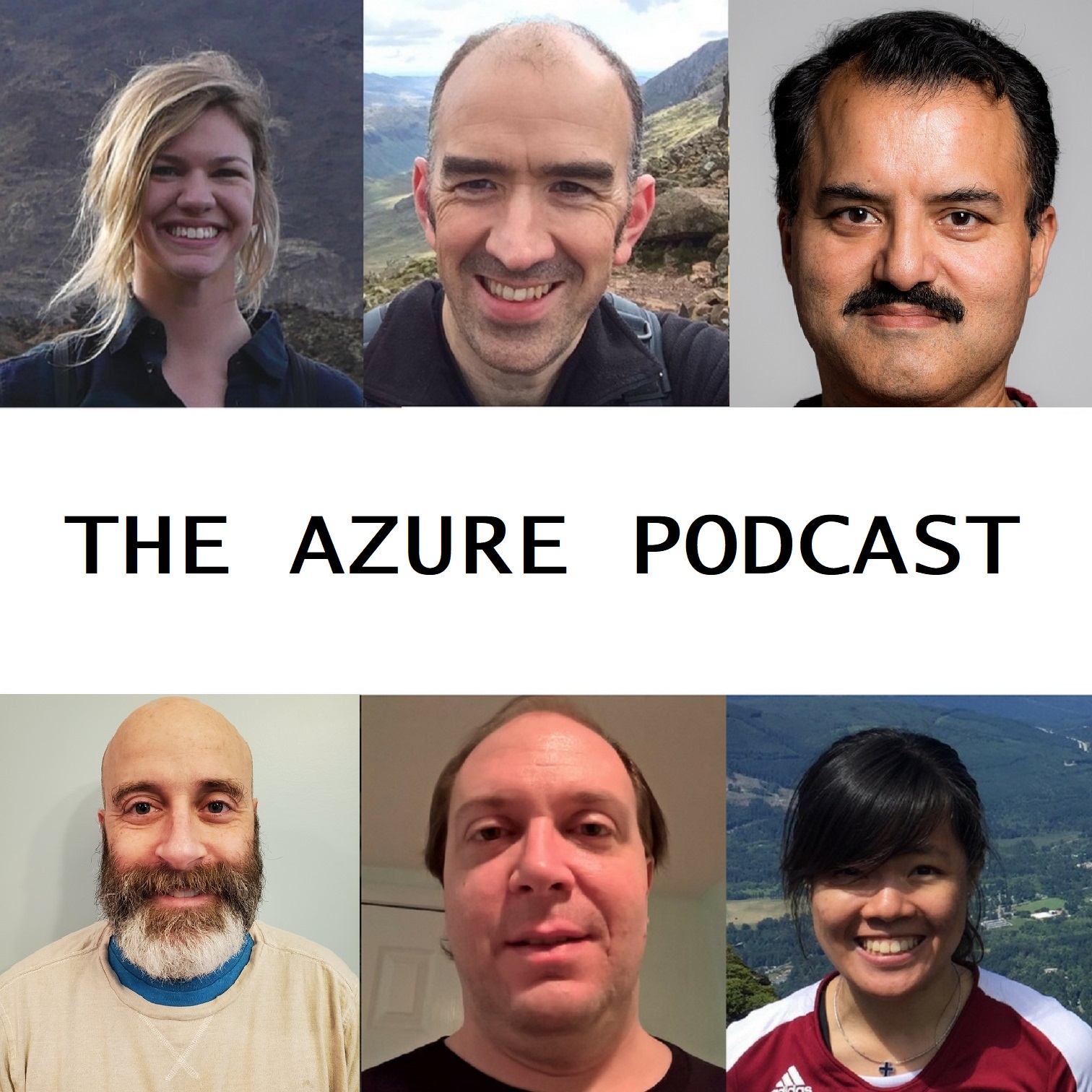
The Azure Podcast
Cynthia Kreng, Kendall Roden, Cale Teeter, Evan Basalik, Russell Young and Sujit D'Mello
The Azure Security Podcast
Michael Howard, Sarah Young, Gladys Rodriguez and Mark Simos