
Rock n Roll Chicago Podcast
The Rock n Roll Chicago Podcast is a weekly podcast that interviews bands and musicians from the Chicago area. The podcast is hosted by Ray Bernadisius ("Ray the Roadie") and Mike Metoyer ("Hollywood Mike" of Cadillac Groove, Mike & The Stillmasters). The podcast covers a wide range of topics, including the history of rock n roll in Chicago, the current state of the scene, and the challenges and opportunities facing musicians today.
Founded in 2019 by Ray the Roadie and Paul Martin, the two co-hosted the show until 2022. In 2023 Ray was joined by Mike Metoyer as the new show co-host.
The Rock n Roll Chicago Podcast is a great resource for fans of rock n roll and musicians alike. The podcast is informative, entertaining, and inspiring. It is a must-listen for anyone who loves rock n roll and wants to learn more about the Chicago music scene.
Here are some of the things you can expect to hear on the Rock n Roll Chicago Podcast:
Interviews with bands and musicians from the Chicago area
Discussions about the history of rock n roll in Chicago
Information about upcoming concerts and events
Tips and advice for musicians
And much more!
If you're a fan of rock n roll, or if you're just curious about the Chicago music scene, then you need to check out the Rock n Roll Chicago Podcast. You can find the podcast on iTunes, Spotify, and other major podcast platforms.
Show your support of the podcast and visit our Swag Store. Just click copy and paste this link in your browser: https://tinyurl.com/yr5pa7zt
The Rock n Roll Chicago Podcast is edited by Paul Martin.
Theme song courtesy of M&R Rush.
Rock n Roll Chicago Podcast
Ep 235 Who's Who
Use Left/Right to seek, Home/End to jump to start or end. Hold shift to jump forward or backward.
Who's Who classic rock cover band is the ultimate tribute to The Who! The band recreates the classic rock music, the energy and the excitement of The Who at its prime with excellent musicianship and vocals. We challenged them with the age old question, “who’s on first?”
Podcast edited by Paul Martin.
Theme song courtesy of M&R Rush.
www.rocknrollchicagopodcast.com
Ep 235 Who's Who
Coming to you from the studios at the Illinois Rock and Roll Museum on Route 66, it's the Rock and Roll Chicago podcast. Hey everybody, it's Ray the Roadie. And this is Mike of Hollywood.
Mike, how are you feeling this week? I'm feeling a lot better than last week. Yeah, yeah. I think it's kind of calmed down and stuff.
Yeah, you were getting your ass kicked last week. I was. Yeah.
Yeah. Just feels better now? A little bit. Yeah.
Yeah. How are you doing? What am I doing? How's the workout coming along? Workout's coming along. I did some arms yesterday.
I'm very sore today. Yeah? Yeah. Well, that's good.
I mean, yeah. At least I'm getting something out of it. You know, everybody's got to exercise.
You have to. You have to. It is the best medicine.
Yes, it is. I prescribe it to everybody. That's the way I catch up on my podcasts.
Hey, that's a fantastic idea. Yeah. See, people should listen to our podcast at the gym.
I might have to start listening to our podcast episode. You don't listen to our podcast episode? Of course I do. But I don't like to hear my own recorded voice.
That always sucks. The first time I heard my own recorded voice, I was like, no, it's not. That's not me.
Yeah. What did you say? Who's that? I can't even remember what. Oh, actually, I remember what it was.
What? I recorded a song at Soundtracks. Remember that? Remember Soundtracks? It was at Stratford Square Mall. Yeah.
And I did The Way It Is by Bruce Hornsby. Okay. And I thought I had a fantastic voice until I heard that cassette tape.
But anyways. All righty. Well, tonight.
This goes to prove that you're not always who you think you are. That's right. That's right.
Who are you? Who are you? Who are you? I don't know. We got a couple of guys sitting here, and I'd like to find out who's who. Yeah, I would too.
I bet you they can tell you who you are. That's right. And here's the band.
Who's who? Who's who? How you guys doing? What's up? Doing great. Doing great. You know, I have to say.
Yes. It always sounds like they bring the same crowd of people with them. And they're all guys.
Yeah. But they didn't. Yeah.
But not this time. No, no, no. But she wasn't cheering.
Yeah. You know, her name is The Wife. I told, you know, her name is The Wife.
That's what she told me. Is it? Okay. Very well.
Very unusual name. Don't ask it. Don't ask.
Yeah. So The Who. The Who.
The Who's who. Why? Why not? Yeah. Great band.
That's what they say. Great band. Yeah, exactly.
50 years of great. Well, how long have you guys been doing it? Going on 15 years. 15 years.
Yeah. Wow. This better be good because I won't get fooled again.
I'll tell you, he needs to start a cover band called Bad Dad Jokes. I mean, he needs to do it. Yeah.
So how does the whole thing come about? Who made the first phone call? Well, first of all, tell us who you are and what you do. I am Wayne. I'm Roger.
All right. I'm the singer. And I'm John.
I play the guitar. I was going to be wrong. I was going to say he's got to be the bass player, but he's not.
So who's your guitar player? So it's actually me. I'm the guitar. I'm sorry.
Bass player. Who's the bass player? So our bass player is Tom Hesselin. Okay.
Fantastic bass player. Our drummer is Tom Klimczak. The two Toms.
Gotcha. Yeah. Both awesome musicians.
And we've been doing this since 2011. Right. And just kind of started.
Wayne was more into the beginning of it than me. I was brought in right after it started. But started in 2011.
Jay Dwyer, a fantastic bass player, wanted to do a Who tribute band. All bass players want to play the Who because of John Entwistle. Of course.
It's just the way it is. So his idea was to start the band. And Wayne was a vocalist.
And they were looking for a guitar player. And they called me and it worked out. But Wayne, what else do you have to add to the start of the band? Is that pretty accurate there? That's accurate.
Yeah. So, I mean, you guys founded it. You guys were the start.
Who made the first phone call? Our bass player, Jay. Yes. Okay.
So it was started by the bass player. Yes. Absolutely.
Legacy, because all bass players want to play. They want to play John Entwistle bass. They want to do the Thunder Bass.
They want to do all that stuff. Well, ironically, when I went online to look you guys up and find out what you do and where you're playing in the whole bit, the first picture that I pulled up was a bass player was a guy named Alex Evans. Oh, of course.
Who was with you guys for a while. I've known Alex for quite a few years. He's actually filled in for my band on occasion.
And we play together at an open jam every once in a while as part of the house band. So I've known him for a long time. Fantastic bass player and singer.
Great performer. And everything. The guy plays everything.
He's got it all down. He's got a degree from Berkeley, the whole bit. He's one of these guys where you just want to burn your shit or punch him in the face.
Yes. I learned so much playing with him. Yeah.
For five years that we played with him, I learned a ton. Yeah, absolutely. Well, that's good.
When was that? So I want to say like 2015. Okay. Through like 2020, he was our bass player.
About five years. We played all over the place. And like I say, learned a ton.
And he's just a phenomenal singer. He's actually got a voice that kind of sounds like Townsend. Yeah, he does.
Some of the Townsend stuff and, you know, close your eyes. You wouldn't know the difference. Yeah, right.
Right. No, excellent. Excellent.
And who's and remind me again who the drummer? Tom Klimczak. Okay. Yeah.
So over the past 15 years, we've gone through a slew of drummers. Like Spinal Tap. It's like Spinal Tap.
Drummers, bass players, keyboard players. And every time we've kind of upgraded, you know, so it's been really good for us. And for me to learn to play better.
Right. So when you decided that you were going to put together, I guess, let's call it, you know, I guess the buzzword nowadays is tribute band. Right.
Everybody's calling it a tribute band. When you decided that you were going to put the band together, did you say we're going to put together a Who tribute band? Or did it just kind of formulate itself that way? Well, I've been in bands with Jay before, the bass player. Okay.
And he said, I'm thinking of putting a Who band together, tribute band together. And I said, well, give me a call when you do it. Because I love Roger Daltrey and it's kind of my range.
And so he gave me a call one day and he said, we're doing it. Okay. All right.
Is there a specific era of the Who that you cover or do you do it all? Because these guys were playing back in the 50s and stuff and they sounded nothing like they. 60s. Yeah.
Well, they even sounded. I thought it was longer than that. 60s.
Yeah. Yeah. Early 60s.
They even sounded way different when Moon passed, you know. Yeah. Right.
Oh, they definitely did. Yeah. For sure.
Okay. Yeah. We cover the whole range, though.
I mean, from the first hit that Townsend wrote. I think the first song that he wrote was Can't Explain. Turned out to be a hit.
And then, you know, the rest is history. But we go from there all the way up to their. Better You Bet.
You Better You Bet. Face Dances album. Who Are You? All that stuff.
And I have to admit that, you know, You Better You Bet. I think I was 10 or something like that. So that is where my Who pedigree began.
Right. Knowing that there was a decade or so before that even came about. Sure.
Sure. We had fans from all ranges, you know, from the whole range. People who've seen them, you know, 10 times.
And after a show, they'll come up and tell us where they saw him, what Keith Moon did and what, you know, crazy stuff happened at the show. So it's fun to meet the fans from all those different eras. Isn't that insane? I've been to shows where there's been a tribute band.
And afterwards, it is the people come up and they start asking you questions, thinking that you're actually Roger Daltrey. That's true. That's true.
Or they'll tell you things that you didn't know. I've kind of heard it all over the past years. But, you know, there's always something new to learn and something that someone will say.
I met a show and this happened or they, you know, got this record. And it brings them back. Brings them back.
I love it. Yeah. Do you respond to them almost like in character or do you kind of draw on your own experience? Own experience.
Yeah, yeah, yeah. We don't do the English accents or, you know, put on any airs of being the band. Right, right.
We try to bring the energy and the music that they brought. So it's not more of it. It's more of a dedication, I guess, you know, nobody's going up on.
I mean, you're not speaking in the microphone with an English accent. Although you do kind of dress like him because I did see some videos and you kind of got the costume. We kind of try to do a little bit of the clothes, a little bit of the flavor, but mostly the energy because they had tremendous energy in their prime, you know, in the 70s, they were just a phenomenal live act.
Oh, yeah. So to try to emulate that is our goal, really. Yeah, yeah.
Truth be told, when I was in high school, a senior in high school, I had a friend named Carl, who was a huge fan, mainly because he had brothers that were like 10 years older older than he was. And he called me up and said, hey, we're going to go see my favorite band. I was like, OK, well, who's that? And he goes, we're going to go see the who we're going to Alpine Valley.
This is their farewell tour. Well, it was the first of the first of talking about touring now. Right.
Exactly. I think they started that whole thing. Hey, let's let's have a farewell tour.
So everybody thinks it's the last time they're going to see us. We'll make a shit ton of money and then next year we'll do it again. I went to the Rolling Stones farewell tour in 86.
I don't think there's a single band out there that had a farewell tour and didn't come back and didn't come back unless somebody died. Yeah, right, right, right, right. Because they thought, wow, we made more money on this tour than we ever had.
That's right. Let's wait three years and do it again. Do it again.
Led Zeppelin didn't have the chance to do that. Yeah, unfortunately. Yeah, yeah.
But but I'll tell you what. Every time they have gotten together for reunions, it's been a madhouse. It's been a zoo.
Oh, yeah, it was. God, it was years ago. It was the concert that they did where Jason Bonham played drums for them.
And it was Father's Day. And my kids had something going on. And my wife had something else going on.
And I was by myself for like three hours on Father's Day. Middle of the day, I'm flipping through the channels. And I think I came.
I can't remember the channel that it was. But this concert was just starting like they were being introduced. And I sat down.
It was the middle of the day. I was just day drinking, watching that. That pseudo kind of Led Zeppelin reunion kind of thing.
But my story about Alpine Valley was it was the middle of the week. And we had to go to school the next day. Well, we decided to drive my car.
And I had to get up really early. I ran track and field and the whole thing. I had to be there at like six o'clock in the morning before school would even start and everything.
We finally leave Alpine Valley. It's like 1230. And it's like, Carl, I can't drive.
I can't do this anymore. You've got to you've got to drive. So we pull over.
I don't even remember getting home. All I know is I woke up at six o'clock in the morning and Carl's laying on the floor in my bedroom next to me. Right.
Oh, my gosh. And my alarm's going off. I'm like, oh, my God.
And I'm thinking, how's Carl going to get home? So I had to wake up. I had to drive Carl to I think he went to school at Driscoll High School. And I had to drive all the way back to Schaumburg.
Oh, my gosh. You must have been a good show, though. Oh, yeah.
But it was. The last song I remember was Behind Blue Eyes. There you go.
And that was the middle of the song. That was the middle. Yeah, that wasn't the end.
That's not the encore. No, that was not the end. Yeah.
So what's your demographic like when you guys go to a show? I mean, is it is it one specific type of age group? Are you guys branching out to all kinds of different people? So interestingly, we're branching out a bit. We've been teaming up a lot with the Doors Band of Perception. Oh, OK.
And they bring young folks who are into Jim Morrison and kind of that culture of that, you know, 60s era. Right. And so we're getting all kinds of people all across the demographics.
Of course, you know, our core is the folks that grew up with it. Right. You know, but we're seeing all kinds of fans all across the age ranges, which is great because it seems like younger folks are into classic rock.
And they may have seen it on a commercial. They may have heard it at a sports arena or something, but they're getting into it maybe because their dads had it. But there's something about it that younger kids are getting into.
Well, you go into places. I find I go to Jewel or something. And all of a sudden I hear the music.
I'm like, that's the Stones or The Who or somebody. I'm like, or Black Jewel. I'm like, that's my music.
What's it doing here? Yeah. When did this become elevator music? Exactly. Last week, we were just getting stoned listening to this.
And now I'm listening to War Pigs as I'm picking out... Produce. Produce. So what was your favorite place to play? Man, that's tough.
House of Blues. House of Blues in Chicago. We played there four or five times and it's always so much fun.
The main stage? Yeah. On the main stage. Wow.
That's pretty cool. It was almost sold out the last time we played. That just absolutely shocks me.
I can live to be a hundred and I don't know, as a musician myself, understand why people... Why you can sell thousands of tickets to go see a tribute band. Yeah. It was a combination of us and a Rolling Stones band.
Yeah. So good combination. Great.
We did a lot of promotion and it was packed. Just absolutely packed and so much fun. What do you think that is? You know what? In that instance, it was just a good combination of bands.
And it must've been the right timing. I can't remember what time of year it was. It might've been spring and it was getting nicer out.
And for some reason, people wanted to go out on a Saturday night and see a couple of tribute bands. And maybe they didn't even know we were there, but they came and showed up and we were on the bill and they saw us. Well, wasn't the weekend before the Zeppelin band? I think it was, yeah.
Led Zeppelin II plays at the House of Blues two nights every year. Okay. They do two concerts every year.
And so I think there's at least the talent buyer there likes tributes or something. Yeah. Yeah.
Well, it's definitely the hot thing right now. I mean, regular cover bands have a hard time getting booked now because they're not a tribute band. Yeah.
And it's like, I'm trying to figure out why. I guess that was more of the question is, you got a bunch of people sitting around, what do you want to do? Well, I hear there's this Who tribute band playing on Saturday night at such and such a place. Oh, we definitely have to go.
Yeah. Well, you know, that's not really the Who, right? Yeah. But they treat it like it is.
And they go freaking nuts. Cheaper to see us than the Who. Oh my gosh.
Well, of course. And yeah, a lot of money to see the real Who. They come around and, you know, they're not in their prime anymore.
I've seen them. They did Quadrophenia and I love them. Right.
But they're just, they don't have the same energy. They're phenomenal. They have like 20 musicians on the stage and we've got, you know, four or five and we're bringing a lot of energy.
So maybe that's part of it. I don't know. Yeah.
Yeah. You don't have a keyboard player in the band, right? We do. You do? We do.
Awesome keyboard player, Dan Wilcox. He loves the Who. He's probably the biggest Who fan in the whole band.
Wow. He loves the Who. He knows every song.
Every song. Well, I can imagine that because like you said, some of this stuff, if they're going to play it live and you don't have a guy with a synthesizer, so to speak, you got to have 20 people on the stage. And that's what the Who do.
They tour with 20 people, you know, four keyboard players and three guitarists and this and that. But yeah, he's great. And all their more recent songs, you know, relatively recent songs have a lot of keyboards in them, synthesizers, keys.
So ever since Quadrophenia. Ever since Quadrophenia. Yeah, right.
That was kind of their, you know, it sounds stupid to say this, but that was like their Sgt. Pepper album. Yes. Everybody kind of uses that as, you know, as like the measuring stick or whatever.
But yeah. And every, you know, every audio engineer or recording engineer I've ever talked to says that if you are planning on making a living at this career, you have to listen to the album constantly and just listen to it technically. Yeah, there's a lot going on.
A lot going on. And the story with that, you know, I know a lot of Who stories, but they toured the first time with Quadrophenia with tape. So analog tape.
They didn't have tracks. They didn't have a keyboard player. So there's photos of Keith Moon with these headphones duct taped to his head to try to keep up because he had his try.
Can you imagine him playing to a click track? Oh, right. So it didn't work. You know, it just didn't work.
So at the end of the show, the headphones are, you know. He's not even listening anymore. It's like, whatever.
Yeah. You know, I think I've seen that. I think you're saying that that's and that's the reason for that.
That's why. Wow. That's pretty, pretty amazing.
Wow. I'm kidding. So tell me about an unusual experience.
You know, you're playing a show. Somebody comes up once and talk to you. And there's every band's got a story about there was this one time and everybody brings it up.
Yeah. You know, I'll let Wayne give one. But mine is one of mine is we're playing at a festival.
And one of our former drummers was in the crowd. Rob Van Dahl, phenomenal drummer. But he went on to do other things.
And we decided to reenact the Who's Cow Palace event. OK. And that's when Keith Moon before the show, he took some horse tranquilizers.
And so he got out and he got through like three songs. And then he totally passed out on the drums. He said, like, that's the only time he did that.
Right. So they took him back. And it's a sports palace in San Francisco.
He took it back and put him in the shower, brought him back out. He played a couple more songs. He passed out again.
And so they gave up. And Pete Townsend says, does anybody in the audience know how to play drums? And I mean, good. Yeah.
And the guy raised his hand and they brought him up and he played like three songs. And by then he was gassed. And they just, yeah, they ended the show.
So we reenacted that. We had our drummer kind of, you know, pretend like he's passing out. We brought up Rob and we played My Generation and the crowd went nuts.
Oh, that's pretty cool. Now, you have to be a Who fan to really know that whole story. You do.
You're not narrating something like that. Correct. So the people that were there seeing you, they saw it and recognized it.
They're like, holy crap, this is really going on. Really cool and authentic. OK.
Wayne, what do you think? What's going on for you? We were playing a festival in Crystal Lake and I was tired after we were done. And I was by the fence just trying to get my breath. And this lady came up to me and said, I had the worst day today and you just made my day.
Oh, that's great. Yeah, that's pretty cool. Yeah.
Yeah. No, you can't beat that. There's a poster to that scene is, you know, you know, musicians do what they do.
And, you know, they they'll die never knowing how much joy they brought to people. Well, you don't even realize it unless they say something like that. Absolutely.
That's pretty good. You're listening to the Rock and Roll Chicago podcast. Hey, everybody.
It's Ray the Roadie. And this is Hollywood Mike of the Rock and Roll Chicago podcast. If you've been joining our weekly program, we have great news for you.
Just tune in to Road to Rock radio on Mondays at 7 p.m. central time. And you can hear a rebroadcast of one of our past episodes. Then again, on Thursdays at 7 p.m., you can hear our most current episode brought to you by the Illinois Rock and Roll Museum on Route 66.
So go to Road to Rock dot org, scroll down and click on radio station. That'll bring you to the Road to Rock radio, a station committed entirely to the great music from Illinois, from Chicago blues born on Maxwell Street to today's rock and roll and everything in between. 24-7 all music with its roots in Illinois.
Sunday nights just got a whole lot bluesier. Get ready for the Bus Stop Blues, a show that takes you deep into the soul of the blues with classic hits, road stories and live jam sessions. Hosted by blues man Kevin Purcell and me, the one and only Road Bill.
The Bus Stop Blues is two hours of nonstop blues, banter and badassery. Check out the Bus Stop Blues podcast at thebusstopblues.com, where you can listen on Spotify, iHeart, Apple Podcasts or any other major podcast platform. Hop on board the Bus Stop Blues, where the blues never stops rolling.
There's a lot of good songs that they got. But do either one of you have a specific one that's easy for you to say that you like? So for me as a guitar player, you know, Pete Townsend was not like a Jimi Hendrix guitar player. He wasn't a great lead player, more of a rhythm.
He kind of was the orchestra leader. He led the band and then Moon was playing solo drums and Entwistle was playing lead bass. So he was trying to hold it all together.
But there's a song called Young Man Blues, which is an old jazz tune that they turned into a rock song. This is on the Live at Leeds album. Great, great live album.
And that's my favorite to play because I get to kind of improvise and do whatever I want for five or ten minutes. It's hilarious. It's fun.
Yeah. OK. Get to stretch out, you know? Yeah.
What's your favorite song to sing? My favorite song to sing? No, I don't like to sing because it's hard to sing. But in like third grade, I used to go in my brother's room and he had eight tracks. He had Who's Next and Bargain.
I don't know why. Bargain is one of my favorite songs. It's really hard to sing, though.
The best I ever have. That's a real hard one. Well, I mean, nothing, really nothing he has is easy to sing.
You know, he's one of those he's one of those singers where you don't realize he's got a deceptively high voice. You don't realize the range that he has because he can actually pull the bass and mid-range notes out of his voice. And you hear that more than you hear the high notes.
And he tried to sing it. And you're like, holy crap. Yeah, the high ones are not falsetto.
Right. Those are from the gut. Right.
He's singing them full on. Yeah, absolutely. Absolutely.
He's one. The other guy that's always hard to sing is Bob Seger. Oh, he's another one of these deceptively high voices.
Great voice. Right. Yeah.
Very difficult to sing. I'll bet. So what kind of what kind of places are you playing? I guess what kind of venues are receptive to having a Who tribute band? Because that's interesting to me.
You don't hear we've we've interviewed a lot of tribute bands, but I don't think we've ever had anybody that we would classify, you know, like a classic rock tribute band. I don't think so. We've had like punk stuff and we've had like a Leonard Skinner tribute band and stuff.
But the Who was pretty unique. Yeah. Yeah.
So last month we played at the Vixen in McHenry. Okay. Had a great show there with Cashmere, Led Zeppelin.
We team up with them fairly often. Another good combination. Who and Led Zeppelin is a good crowd pleaser, you know, brings in the crowd.
And then we played at the Impact Fuel Room in Libertyville, Austin's Fuel Room a couple of weeks ago in Libertyville with the Doors Band. And again, good combination, good crowd. This weekend we're playing at the Broken Ore Marina.
Nice. Port Barrington, which is always a fun, fun time. Yep.
Especially when it's nice out. You playing in the afternoon or in the evening? 4.30, I think. So kind of right in the middle.
Yeah. So are you playing a Sunday? Saturday. It is a Saturday.
Saturday. I had to think for a sec. Okay.
All right. Yeah. Well, yeah, that'll be a good time.
Yeah. I guess it's warm enough for people. It's going to be a little cool for all the bikes to come out in the boats.
Unfortunately. Well, I think bikers, some bikers will still do it. Won't be like it's July or August.
That's true. Some tough riders will be out there. But yeah, that should be fun.
And I hear they've actually remodeled that place. Yeah. It's real nice now.
It used to be a tent. Now it's like a structure. Yeah.
Right. Right. Right.
I think the last time I was there, there was a solid roof, but there were no walls. But there's walls and stuff around it now. There are.
There are. It's nice. They still can open the walls though, which is really cool.
Yes. We're doing that. And then this summer, we've got some concert in Wheaton.
We've got a concert in Lamont, you know, some outdoor concerts. We played a lot of those on Saturdays and Sundays. So there's still things going on for us, which is nice.
Playing a playing full, you know, three to four hour shows on your own. Or do you always have an opening act? Or how are you guys doing that? So the most we ever play is probably two hours max. Although we played, we'll tell you about Rock Fest up in Wisconsin.
We've done that four or five times. And that's like four sets. Wow.
Okay. And that's tough, man. After two hours, I'm pretty much done.
Yeah. That's a long day. That's a long day.
Leave it on the stage. So we're not doing that this year, but it's fun when we do it. Thank the Lord.
Thank the Lord. Yes. It's fun when we do it, but it's a tough, tough gig.
But two hours max for us. Especially when it's 99 degrees outside. So are you getting opening acts or are people opening for you? So some of these, we have the venue will select the acts.
You know, we just get whatever, whoever they select. Fortunate Sons we've played with. And we're playing with them again this summer.
I know a couple of those guys. Yeah. We're playing live at the Lakefront in Michigan City, Indiana with the Doors band again.
Nice. So we're teaming up with them. Okay.
So either we get an opening act or they get us. It's a lot of, as you know, in a band, it's kind of word of mouth. Networking is how you get shows, you know.
That's really how you do it. We've been able, luckily, knocking on wood, you're able to get some shows that way. Yeah.
Yeah. Because, I mean, unfortunately, The Who isn't producing any more new music. So eventually it's like you start to run out of stuff.
Yeah. You know, you're, I guess you're reaching for the B-sides at one point in time. If you're doing more than two hours, we'd like to bring the energy.
So if it's more than two hours, we're all starting to fade, you know, by that. Very hard. Yeah.
Because we're like full on, you know. Well, what's hard with The Who is everybody has their favorite, but you have to play the hits, you know? Yeah. So it's really by the, by the end of two hours, you're just mostly playing the hits, you know.
That's true. They had a lot of hits. Yeah.
Yeah, they did. Have you ever done anything like, like decide, okay, well, this show, we're going to play this album in its entirety. Yes.
We've done the Who's Next album in its entirety, which was a lot of fun. We played a place in Michigan. I can't remember which town, but we played the whole Who's Next album.
We've done it a few times and it's got Bargain in there, which Wayne loves. Right. It's a great album.
Every song is... That's a great song. That is a great song. Yeah.
So every song on that album is great. And so it's, it's a challenge for us. That's like the greatest hits.
It is. Every song on there is good. It's got some mellow songs, some hard rock songs.
So it's a good challenge to cover it. Yeah. And we've done Tommy.
And we've done Tommy. Nice. Wow.
Okay. Did it at the Arcata Theater. Yeah.
And Reggie's, I want to say. Reggie's, yes. Reggie's in Chicago.
So it's been fun. That's another challenge. Yeah.
You know, that's, that covers a lot of ground. At the Arcata, we brought in some female singers to do Acid Queen and Mrs. Sally Simpson. Right.
Sally Simpson. Some of the female parts and it worked out very well, I think. Very well.
Yeah. I'd imagine when you're doing something like that, there has to be a little bit of, I guess, a little bit of a theatrical performance. If you really want to pay credit to the album, you want to kind of go from one song and then the next and not a whole heck of a lot of communicating with the crowd.
Yeah. We tried to do it that way. Just like seamlessly, like the album, you know.
Hard to do. Very hard to do. Speaking of Tommy.
I know of a bluegrass band. They're called the Hillbenders. They did the full album in bluegrass though.
That's cool. But it's really, really good. That's a great idea.
That works. Well, I think that's your next project. Why do you say that? No, I'm talking to them.
Oh, okay. Bluegrass. We'll do bluegrass.
Do a bluegrass version of it. Now, as the guitar player, do you pretty much try to copy Townsend's sound by going with the guitars that he used, the amps that he used? Or are you just doing your own thing? You know, a little of both. I've got a bunch of high watt amps and I used to drag those out and they weigh like six tons.
God, yeah. Oh my God. So to drag those out by myself was a chore.
Yeah. So now I go with the fenders, but that's what Townsend uses now. He does.
Not the Road Kings. No, I can't remember which one. Bassman? Maybe Bassman.
Yeah. With a nice clean sound. So I go with that and then I've got, of course, an SG, which Pete Townsend model SG, which I use.
Okay. And other guitars. But, you know, I try to just emulate the sound and play the right chords and the right leads and stuff and let that take care of itself.
Yeah, yeah. You know, believe it or not, there's the famous poster I had on the wall in my room where he was playing a red Stratocaster. And it's the famous picture of him jumping in the air and his legs are just kind of.
Oh, yeah, yeah, yeah. And the reason why I bought a Fender Bassman, I think, is because he's playing a Bassman in it. Yeah, yeah.
In that picture. Well, you know, he played everything. He would play everything and then break it.
Yeah. And that's something to try and piece it together. You know, I totally forgot about that.
I guess he did. Hey, they broke a lot of them. People break shit today because of Pete Townsend.
Can you imagine how much those guitars would be worth now? How many have you broke? Many. Have you? Many. Have you really? I have.
It's part of the show now. Yeah. We do.
We break a guitar every show. You buy a Squire or you. Yeah.
Our keyboard player gets a guitar on, you know, it's cheap. Yeah. Will or whatever.
And then he gives it to me and then I smash it. Wow. Yeah, it's fun.
And then give it away. And then people are like, give it to me, give it to me. You know, they want it.
And then they want us to sign it. Yeah. So a little souvenir.
I would be absolutely terrified to do that. You know, with my luck, something something's going to splitter and it's going to go in my eye. John is fearless.
It scares me. Wow. Yeah, it's fun.
And it shocks the audience because they're not really expecting it. You know, they're not really. Even if they've seen us before, they're still nodding.
You know, are we going to do it this time? Are they really going to do that? So it's been a fun part of the show. Very cathartic. I guess that's something I need to do like one time.
You got to. But I'm not going to use any. I don't know.
I'd have to go find a junky piece of crap. But the key is you got to have it plugged in and the volume all the way up, because then when you hit it on the ground, you got to hear all that, all that stuff. So you leave it plugged in, you do all of it.
Turn up the volume, leave it plugged in, drag it across the stage, across the amp. You know, it's just, you know, it wails. It wails.
There's no video online. I look for your videos. I couldn't find a video of it online.
We haven't. It's there somewhere. And one show, our drummer, I think it was one of his first shows.
Yeah. Not the one we have now. But he was into it and he started kicking his drums over.
And oh my God, it was crazy. It was like a riot. Wow.
He never did it again though. Yeah, yeah. I can't, I don't know a drummer that would start doing that.
No, no, no. We, I played a, I played a show years ago that just reminds me as I played a show, we were at the Roundhouse in Aurora and the drummer that was in this band was, I mean, very meticulous about his drums. He didn't even want you to look at them.
Don't touch it. It was like, it was like the symptoms. Spinal tap.
And a women's roller derby team shows up. It's like 18, very athletic, very good looking women, right? Very athletic. I mean, they're still wearing their shoulder pads, you know, the whole bit.
They come in, they just won this championship and they're into the music they were playing. And one girl jumps up on the stage and she runs, jumps up in the air and lands on his bass drum. And she's standing there with her backs to the audience, but she's facing the drummer.
She's got the devil horns in the air like that. And all he could think to do was stand up. And all I heard was, get the fuck off my drum.
Oh my God. I don't hear drums anymore. I hear nothing.
There's no rhythm section anymore. We're turning around and he's just screaming at this poor girl. And she's looking right back at him.
This is a chick from a roller derby team. She's looking right back at him. Shut the fuck up.
That was great. I thought somebody was going to die that night. No sense of humor about the drums.
No, none whatsoever. Which I mean, but he played very nice drums. Oh, there you go.
I can totally get that. Well, actually the drums that our drummer kicked over, who's were they? They were Dax Nielsen from Cheap Trick. He was borrowing some of his drums.
Yeah. He was the drum tech for Cheap Trick. Okay.
So he borrowed Dax's set. Oh no. Not his best set.
Not his best. Right, right, right. A set.
Okay. And he kicked it over. Crazy.
I wonder if it's the... No, it's probably not the set of drums we got over here in the museum. Probably not. That was blue, right? It was like it was.
Yeah. Wow. Like a blue sparkle.
Did he know that at the time? Oh yeah. He did. He was just in the moment.
He was in the moment. When you started breaking your guitar, he felt like he had to break something. Yeah.
And the crowd went nuts. Yeah. They loved it.
Unbelievable. Yeah. And nothing happened to the drums.
I'm not the drummer, so I don't know. Couple of nicks here and there. Probably a couple of nicks, yeah.
Oh, wow. That's amazing. That's almost like that story of the movie, The Hateful Eight, when Kurt Russell destroyed the real priceless Gibson guitar.
Oh, yeah. Yeah, yeah. Oops.
Oh, I didn't know. That's right. Wow.
That's absolutely amazing. So what do you guys have coming up? What kind of shows, like in June? What do you guys have coming up for June? It's a very good question. We've got the show in Michigan City, Indiana, right on the lakefront.
I guess there's a venue down there. We're going to find out. There is.
It's actually a really nice venue, if it's the one that I'm thinking of. Yeah. It's like a two-level type, kind of a roadhouse bar.
It's right across the street from a zoo area. It's right where, if you go to Michigan City for the day, that's where you want to go. Gotcha.
Big parking lot right there on the beachfront, kind of downtown Michigan City. Really nice place. Could be fun.
Yeah. We're playing at the Rockford Hard Rock Casino. Okay.
Yeah, just got that. And it's funny, things just kind of land. It's like in December, I'm like, oh, I might not have any shows this summer, you know? Right.
And then all of a sudden, we got 15 shows. So it's crazy how it works. Then we got Pierogi Fest.
Not Pierogi Fest. We did that. It's Taste of Polonia.
Polonia. Taste of Polonia in August at the Copernicus Center in Chicago. Okay.
Yes. So that should be fun. Yeah.
But you can still get pierogies there. Oh, definitely. We did Pierogi Fest last year, and you could get a lot of pierogies there.
Oh, yeah. That was a fun gig. Yeah.
But yeah, so we got some good stuff coming up. And as you can see from Wayne's shirt, we got a little side project going on. Okay.
Called Ghost Signs. All right. Hard Rock Originals.
We're playing at the Sundance Saloon in Mundelein. Okay. With Blackened on May 15th, Saturday.
So yeah, we're trying to get the... Well, there's a whole story behind that, but we're trying to get the originals going. And this opportunity fell into our laps. And now we just have to get our act together.
So there's Ghost Signs. Yes. You said it's Hard Rock? Hard Rock, yeah.
Hard Rock, and it's the two of you. It's two of us. Yep.
Nobody else from Who's Who? So not right now. We've got a couple other... We've got another drummer, another bass player. Our current bass player for the Who is in a couple other bands.
He's really into prog. Okay. Siberium, I think it's called.
And they're releasing an album and stuff. So he's busy. But this is going to be fun.
We're playing a lot of our own songs and some hard rock covers. And it's just so different. We played a show at Reggie's opening for Bisto Blanco, I think, from LA.
It's Alice Cooper's daughter. Oh, no kidding. That was fun.
That was our first show. Yeah, yeah. And we did good.
Nobody left. It's always good when the crowd outnumbers the band. People clapped.
People actually clapped. And so I think that gives us confidence to do another one now. We just have to kind of practice and make sure we know the songs.
How long has this... Oh, go ahead. How long has this been going on? Well, geez, we've been writing for 20 years, I think. Yeah, yeah.
Okay. Haven't had a band, just trying to get the songs out, you know. Yeah.
We have so many songs, we need to play them now. So this little side project is... I mean, it's not really a side project. It's kind of almost... It started before The Who.
Right, yeah. You know, it's kind of what brought us to The Who band until we could get, you know, some fans and then switch over. Yes.
So, yeah, it's funny. It's kind of been a predecessor to The Who band, but it's continued on. And we've gotten our music out on Spotify and all those places.
So getting a little bit of traction. Okay. Actually, I think they're playing it here.
If there's like a radio station at this museum. Yeah, the Road to Rock. The Road to Rock.
Yeah. So hopefully get a couple of our songs played on there. Excellent.
So trying to get it out. It's so much fun. And we're putting together a song list for our radio station.
Our radio station. Fantastic. Yeah, Rock and Roll Chicago radio station.
Fantastic. Well, maybe you could check it out and see if it fits. Yeah, absolutely.
It's been a lot of fun. And like I say, I've done The Who now for going on 15 years, but the most fun I ever had was the gig at Reggie's because that was our own songs. Yeah.
And the crowd was not expecting, you know, didn't know what to expect. And they kind of dug it. And nobody knows when you're messing them up.
Exactly. Nobody knows. We messed them up, of course, you know.
Of course. But, you know, everybody sounds different when they're playing their own music. Yes.
You know, you can always tell, you know, if you hear back in the days where you had to have a demo CD and stuff, you can always tell the difference when somebody's playing a cover song and they throw in one of their originals and you're like, oh, that's a different band. Yeah. Yeah.
Yeah. It's hard to emulate the same style, you know. Yeah.
We're mixing in some cover songs with it. We are. We got to play 90 minutes.
And so that's the other show we played was like, you know, 40 minutes or something. So we got to really stretch out our repertoire a little bit. So what kind of covers are you playing? Just to give people, I mean, I'm assuming that the covers that you choose are going to kind of support the continuity of your originals.
Yeah, yeah. So what's the cover stuff that you're doing? We're doing My Hero Foo Fighters. Okay.
And Bad Motor Scooter. Oh, nice. Montrose.
Yep. What else do we got? We've got some Alice in Chains. Alice in Chains.
Blood and Them Bones. Okay. So that's kind of consistent.
For the Metallica fans, you know what I mean? Yeah, we thought, what are Metallica fans going to like? Yeah. Yeah. So we're going to try and do Behind Blue Eyes, but make it a little bit more heavy.
Kind of do a heavy version of that, you know. Yeah. You know, there is a version of that.
Right. I know. Fred Durst.
Yes. Fred Durst. Yeah.
But John, I didn't notice because I heard it the other day. He told me that they don't go into the heavy part in that song. I didn't realize that.
He added some verses to the song that The Who didn't write, but they never go into the hard rock part. Okay. So we're going to try and go into the hard rock part.
We should do the hard rock part the whole time. Well, we could. Yeah.
Really confuse people, you know. Yeah, yeah. Well, that sounds interesting.
We're going to have to listen to that and grab some of those things for the editing. Also, we've got something coming up in November. We're going to do a rock and roll tribute cruise.
Oh, okay. We've been tagged to do it along with a band from New York called Foreign Journey. Oh, okay.
And they do Foreigner and Journey, as you can imagine. But we're going on the Norwegian Encore, and we're going to Honduras, Belize, and Grand Cayman. Oh, nice.
We're playing on the boat, and then we're going to stop at a private island and do a performance on the island. Oh, nice. Hopefully, they'll let us come back on the boat after that, you know.
There you go, yeah. You guys stay on the island. Yeah, you stay here.
That's right. But no, we're really looking forward to it. It's something that kind of came about, we weren't expecting.
And it's a great opportunity, and it's for a charitable event, charitable cause, Cruising for the Cure, I think it's called. Okay. And so, you know, really honored to do it, and great opportunity to meet folks from all over the country, and they're advertising internationally, and filling that boat up.
So it should be a lot of fun. Well, send that information to us as well, so we can, you know, put that, or go to our fan page on Facebook, and drop it as an ad or something like that. We'll do.
I mean, we've got downloads all over the world as well. Yeah. You know, use it to promote it.
Yeah, would love to, would love to. Yeah, it's a good cause, and a good time, I think. Yeah, yeah.
So if people are looking to find you, where can they find you, social media-wise? Social media-wise, we're all over Facebook. That tends to be where I post a lot. We've got actually two Who's Who pages for some reason, but there's, you know, you'll see where our next shows are, and there's videos, and other information.
We've got a website, you know, who'swhoband.com, but I don't update it as much as I should. That's my fault. I'm too busy, but yeah, it's great.
Social media has been good to us. That's how we get a lot of people to our shows, really heavily promote. What about Ghost Signs? Do you guys, do you have a page for that set up? Ghost Signs is also right now on Facebook, and we're on Spotify, and iTunes, and Amazon Music, everywhere.
Okay. So yeah, Ghost Signs, it's one word, Ghost Signs. Excellent.
Yeah, so thanks for letting us talk about that. Yeah, no problem, no problem. All righty, then.
Well, thanks for coming in. Thanks for having us. Some great information, and a surprise with the Ghost Signs.
Yes, sorry to throw a wrench in the works. Oh, no, no, that's fine. A surprise from a ghost.
That's right, yeah. All righty, guys, thanks for coming in. Thank you.
Well, now we know who's who. Or Hughes-Hugh. Hughes-Hugh, yeah.
Hughes-Hugh, you put the emphasis on the H's. On the H's. Hughes-Hugh.
Hughes-Hugh. Yeah. I'm like, Hornsquip.
And that was a nice little surprise about their original band. Yeah, they should have just talked about the original band a little more. We were shoving them out the door, and all of a sudden, oh yeah, we write stuff.
You know, maybe we have them back. Maybe we have the original band back so they can play some stuff in the studio. That's right.
Because that would have been great. That would have been great. I'd love to hear the stuff live.
Yeah. For sure. Yeah.
So everybody, make sure you get out and check them out. It's Hughes-Hugh. Hughes-Hugh.
And as they said, they'll be playing all over the place. And thanks for listening to the podcast. And check us out every Tuesday for another exciting new episode.
See you next week. The Rock & Roll Chicago Podcast is edited by Paul Martin. Theme song courtesy of MNR Rush.
The Rock & Roll Chicago Podcast does not own the rights to any of the music heard on the show. The music is used to promote the guests that are featured.


Podcasts we love
Check out these other fine podcasts recommended by us, not an algorithm.
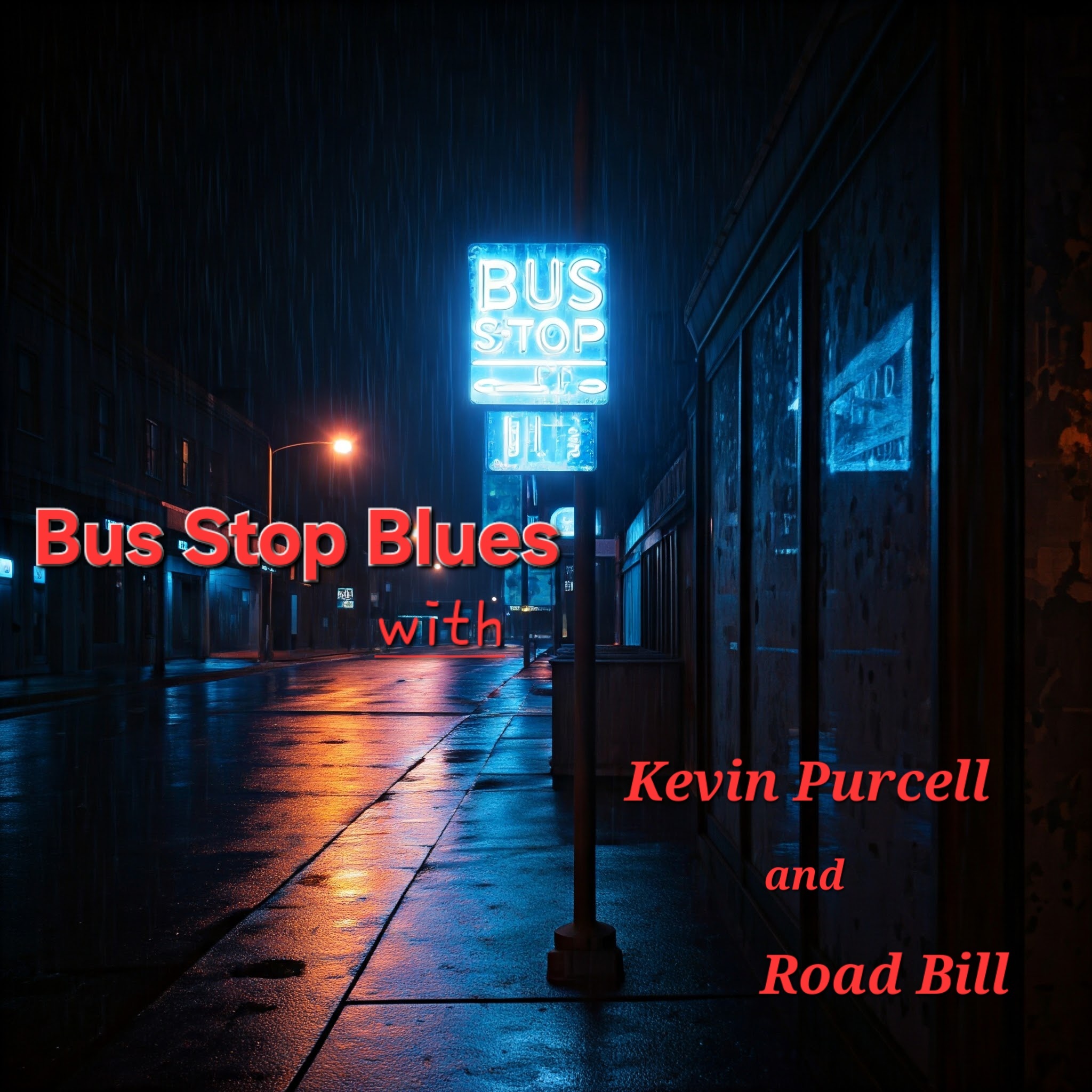
The Bus Stop Blues’s Podcast
thebusstopblues