
Rock n Roll Chicago Podcast
The Rock n Roll Chicago Podcast is a weekly podcast that interviews bands and musicians from the Chicago area. The podcast is hosted by Ray Bernadisius ("Ray the Roadie") and Mike Metoyer ("Hollywood Mike" of Cadillac Groove, Mike & The Stillmasters). The podcast covers a wide range of topics, including the history of rock n roll in Chicago, the current state of the scene, and the challenges and opportunities facing musicians today.
Founded in 2019 by Ray the Roadie and Paul Martin, the two co-hosted the show until 2022. In 2023 Ray was joined by Mike Metoyer as the new show co-host.
The Rock n Roll Chicago Podcast is a great resource for fans of rock n roll and musicians alike. The podcast is informative, entertaining, and inspiring. It is a must-listen for anyone who loves rock n roll and wants to learn more about the Chicago music scene.
Here are some of the things you can expect to hear on the Rock n Roll Chicago Podcast:
Interviews with bands and musicians from the Chicago area
Discussions about the history of rock n roll in Chicago
Information about upcoming concerts and events
Tips and advice for musicians
And much more!
If you're a fan of rock n roll, or if you're just curious about the Chicago music scene, then you need to check out the Rock n Roll Chicago Podcast. You can find the podcast on iTunes, Spotify, and other major podcast platforms.
Show your support of the podcast and visit our Swag Store. Just click copy and paste this link in your browser: https://tinyurl.com/yr5pa7zt
The Rock n Roll Chicago Podcast is edited by Paul Martin.
Theme song courtesy of M&R Rush.
Rock n Roll Chicago Podcast
Ep 237 Mr Myers
Use Left/Right to seek, Home/End to jump to start or end. Hold shift to jump forward or backward.
Mr. Myers plays "Caribbean Rock"- a mixture of reggae, soca/calypso, beach music, and their own originals. Their unique musical mix includes rock, jazz, Latin and of course Caribbean music . The band has an energetic upbeat sound that has thrilled audiences young and old. For a musical trip to the islands, you simply can’t beat the sunny sounds of Mr. Myers!
Podcast edited by Paul Martin.
Theme song courtesy of M&R Rush.
www.rocknrollchicagopodcast.com
Ep 237 Mr. Myers
Coming to you from the studios at the Illinois Rock and Roll Museum on Route 66, it's the Rock and Roll Chicago Podcast. Hey, it's Ray the Roadie. And this is your man, Hollywood.
Man, Hollywood. The man, Hollywood. Wow.
That's right. Yeah. You're very zen today.
I'm very zen. Yeah, very zen. Very... Yeah, yeah.
I get that. I get that aura from you when you walk in. I'm sorry.
I thought I showered. I apologize for that. I didn't mean to do that.
That's okay. That's all right. So how are you doing? I'm doing good.
How are you doing? Yeah, I'm doing good. How are the eyeballs doing? The eyeballs are great, man. I can see better now than I did before.
I hardly even need the readers. Excellent. Excellent.
Yeah. You still hitting the gym? Of course. Look at this thing.
You know, you should get together and go hit the gym together one day. Okay. Yeah.
And then we'll get the gym to sponsor us because we need sponsors. Yeah, we need some sponsors. Yeah.
So any gyms out there looking to sponsor a podcast, we're looking. Yeah, yeah. So I'll tell you what.
We have some folks in the studio tonight. We do. As every night.
Legendary. These guys are legendary. I can't tell you.
I mean, I think these guys have been around about 103 years now. Somewhere around that. Yeah.
It seems like it because when I started playing in bands, I saw them everywhere. Yeah. Yeah.
So you want to tell everybody who it is? It's Mr. Myers. All right. And they brought their fans with them.
They did. Yeah. And once again, it's always guys.
I don't hear one female voice in there. What's up with you guys? How's it going, guys? We are good. Yeah.
You guys came in from a long way. Todd, it was. Todd and Dylan.
Right. OK. Where'd you come from? Genoa, Illinois.
Genoa. Not Italy, but yeah. Yeah.
Genoa. Almost as far. We're not that we're not that important.
But man, thanks for being here. I do appreciate that because I know exactly where it is. I have a friend that lives in Genoa, actually.
So that's quite a hike. But they still don't hold the record. They don't.
No, we did have one person that came here from Green Bay. Yeah. The band plays here.
He lives in Green Bay, but he came all the way down, did the interview. And I asked him, are you staying at your brother's house? And he goes, oh, no, I'm going back to Green Bay. Wow.
Yeah. I mean, you really got to want to be here. Yeah.
Drive back from Green Bay. Although if I lived in Green Bay, I'd want to get out every once in a while. Yeah.
I couldn't be a Packers fan. No, not at all. I couldn't.
Although although, you know, one of my one of my close closest and dearest friends, I've known him since the fourth grade. His son actually plays for them. And I'm very conflicted about that.
Matt Orszag Jr. is their long snapper. Yeah. And I went to school with his father, Matt.
So, you know, it's like, OK, yeah, I'm a Matt Orszag fan, but I can't be a Green Bay fan. No, no, just can't do it. I just can't do it.
Yeah, yeah. So anyways, so how are you guys doing? Everybody doing OK? Oh, yeah, we're good. Take us, you know, take us way, way back.
First of all, how long have you guys been around? Tell everybody that. It's going to be 44. We're on 44 right now.
44 years. In band years, that says more than dog years. Yeah.
Yeah. Way more. Yeah.
Way more than dog years. Still don't have MNR Rush beat yet, though, do they? No, they do not. Wow.
No, they do not. They're at this year's 53 years. 53 years.
Ray works with MNR Rush, so he's kind of proud of that. And all original members. Still recording new music.
Yeah, because I know they're not all original members because he's not. He's 24. I'm not quite.
Right, right, right. So how did this whole thing come about? Take us all the way. Take us back 44 years.
And people want to know, you know, how this entire thing was created. It started actually in Wisconsin because I'm actually a cheesehead. I'm from Eau Claire, Wisconsin.
You know, I thought I smelled something. And so it goes back to I was looking for a percussion school. I started playing, you know, drums and piano when I was like five.
And the only school in the country that had a steel band was NIU. And so I auditioned at a bunch of different schools. And I was hooked when I heard these guys play because I've been to the Caribbean.
I got lucky enough to go. So it's really my parents fault that they got me hooked on this. But I went there in 78 and, you know, hung around.
And I started doing some jams with the guys after hours with steel drums. And then I bring in a bass player, bring in a guitar player. And it was kind of like after hours, we kind of took over the steel band room.
And so in 1981, I was a junior. And we started actually gigging. And by about 1982, we had started going on the road.
And so my grades went, but at that point, you know, it was all NIU music majors, which has been a lot of these guys over the years. And then I think by the mid 80s, we were doing the college tour. So we had a big old refrigeration truck that, you know, we go out and we do like we were in 17 states.
We'd wake up Friday morning, drive to Cleveland, Cleveland. And, you know, we'd play and then we'd go on, do Akron. We do.
So we come back Monday morning about 6 a.m. and then go to class. Wow. Wow.
Supposedly. So you guys did some traveling. It wasn't just around the Chicagoland area.
You guys did some traveling for quite a while. Yeah, it was really neat. Back in the, you know, at that time, we were a lot more mobile.
Right, right, right. You know, it's funny that you said that because you're right about the NIU steel bands and everything. I was in a band years ago called Forget Hannah.
They're they are still in existence today. I was one of the founders of the band and everything. And our drummer at the time, a guy named Doug, same story.
He was a steel drum major at NIU and but he wanted to be in a rock and roll band. So he went out and bought a conventional kit and taught himself how to play a conventional kit and just and didn't play steel drums. And I mean, we were doing, you know, 90s rock.
But he was a steel drum major. And to this day, I've never heard him play steel drums because he just he doesn't even have a set anymore. But apparently, you know, he actually became like a like a student of some world renowned steel drum maker.
I mean, he can not only play them, he could make them. But I never heard him play because he just didn't have a set. I don't I don't know what it was.
But interesting story, though. I think what is his last name? You know, I think it's Doug Walker. I think.
No, not a different, not Doug Walker. And I swear to God, I was going to tell you his last name. But you know how one of those things are right on the tip of your tongue.
I'm a musician, so I have too much ADD to remember everything. And I was going to tell you it's also age as well. Should go on Prevagen.
Yeah. By the end of the show, I'm going to remember his last name because I'm going back. I'm going back about, gosh, over 10 years that I played with those guys.
So, yeah, I mean, 80s, I mean, we had a couple we started doing actually LP albums in studios with two inch tape. You know, and I still, you know, that stuff is it's all come back now. But we we did we've done, I think, four studio albums and three live albums.
So it just kind of continues, you know, but I did a compilation of all the vinyl stuff on a double disc in 1986. We did that in 96. I'm sorry, I lost 10 years.
And so then these guys came on board. So if you want to go this way, he's chronologically the oldest. This is Rich Fulfs over here.
Yeah, I joined in 80, early 89. So it's been, what, 36 plus years now. So of steady employment.
Actually, I played bass in the band for the first year and a half. And on one of the albums, actually, it was a trombone player that picked up bass because I could read the bass clef. So it was very easy to do that.
But I was also a guitar player. Guitar player left after about a year and a half. And I jumped into that spot.
And I've been there ever since. So he's on the horn section on the early stuff, too. He is the horn section.
Yeah, that's right. Me and Frank and Benz. Yeah, so there's every I think there's about 85 people over 44 years.
I'm not going to do the math, but this guy, you know, he skewed the thing a little bit. So we wish I really appreciate. Yeah.
And so. So we're going to take a step back really quick, because I'll tell you what, we've got people of all different ages that listen to the podcast. So there's people like myself.
Like, you know, I know what you guys do. Ray knows what you do. But tell everybody exactly the type and style of music that you're playing, because I don't think we've ever had anybody on the on the podcast before that does this.
And I don't believe so. I don't believe so. Yeah.
Well, as I started out, you know, I was very influenced by Bob Marley and Harry Blythe, Jimmy Buffett, you know, all the island stuff. But we tended to do the Marley stuff more authentic, you know, steel band can't doesn't have the real bass, doesn't have guitar skank. So we took and combined the steel drums with all the the traditional stuff and reggae bands and Calypso, you know, like the all that stuff.
And we made it's called Caribbean rock, which is funny because now it's called trap rock. And I should have just called what now it's called trap rock. OK, which is kind of since, you know, Buffett has passed away, of course.
But it's it's kind of that genre with the acoustic guitar and the hammock and the but, you know, so we we do like the practice that we do quite a bit more. We do quite a bit of either Paul Simon or we do even some Rusted Root. We do my gosh, I mean, like police.
Yeah. A lot of police. OK, so you guys are kind of branching out a little bit like staying, you know, on our first live album we did.
So lonely. We had a great sing along, you know. But so, yeah, I mean, the police, we do even some now we do some Jack Johnson.
We do Rusted Root. But there's also a lot of originals involved. So, I mean, the catalogs probably I got over 100 tunes and originals.
So what we do is we'll do our originals, but we, you know, Smatterman. But also like I might do Cecilia in a world music style. And so people know the song, but they don't know the group.
And that's why I think it's been successful because we've melded that, you know, that kind of thing together where you redo a cover song in a completely different way. It's definitely worked for us, you know, so. Right, right.
We got another gentleman sitting over here who's kind of a legend unto himself. I'm going to give this over. This is Wally Huston.
Hey, Wally. How you guys doing? Doing good. How you doing, Wally? Good, good.
Yeah. I've been around for what? Early 2000s. Yeah.
That's still like almost 20 years, right? Yeah. That's 20 years. Yeah, yeah.
I actually remember seeing the band through all the festivals around town. And, you know, I said, that's cool because it was different than everything else. Now, I've been playing like we're talking about, you know, mid 70s.
He's got quite a resume. Yeah, I used to play in town. I used to play with there was a band called One Way.
It was like a 10, 12 piece band. You know, the Tower of Power, Winter Fire, Stevie Wonder, that kind of stuff. Right, right.
And, you know, there's so many bands. I know maybe some of you guys, you were talking about Em and I Rush. I played with a band called Koala.
Okay. I don't know if you remember that from anything. Yeah, Koala.
And then a lot of club bands, a lot of show bands. And then I went on the road with Dave Mason. Okay.
Went with him for a bunch of years. I did a little bit with John Denver. You remember Phoebe Snow? That's a lot.
You went on the road with John Denver. Okay. Even like bands like Bon Jovi, they do the tours.
Right, yeah. Then they do corporate stuff. Sure.
Nine times out of 10, most of the band is not from the band. Right, like for the corporate stuff. Yeah, so when I did John Denver, it was like John Denver, me, and maybe a percussionist.
Right, right. And it was a corporate or a private thing. Right.
So I never really did the tours. Same with Phoebe Snow. I was on the road with Dave.
We played in Manhattan, played whatever the clubs we were playing back then. Phoebe would come in and sit in and say, what are you doing? How long are you in town? I went two weeks. Go do some private stuff.
Yeah, yeah. Do you by chance know Terry Rollins, a guy named Terry Rollins? I remember the name. I just can't remember from where.
Yeah, well, he lives right around here. He's down the road over in the Lockport area. Same story.
He played with Jimmy Buffett. But he was not a member of the Coral Reefer Band. When Jimmy Buffett opened up a new cheeseburger in Paradise, he was his bass player.
Oh, OK. Yeah, yeah, yeah, yeah. Just a little bit of advice.
Don't get into a plane with John Denver. Yeah, well, yeah, no, no. But you know what? When I first- Especially with an open bar.
We were doing, with Dave, we used to do, Dave Mason, we used to do these ski tours. We'd do all the major ski resorts. So we were in Aspen, and they had the China Club there.
So we went to play, and John Denver was on the bill. Nitty Gritty Dirt Band. John Denver's wife was a big singer from Australia.
And that's how I met those people. And then I played with them. We did the whole show.
But it was like, it was insane. I had no idea, all the years of watching John Denver on TV, you know, like Ed Sullivan. So how far back does that go, right? Or playing the guy that works with God.
No, when I met him, I had no idea how big he was. He never looked big to me on TV. A hunky man.
He was- Really? He was pretty buff. A big dude, huh? Yeah, maybe six feet, at least. Yeah, I had no idea.
He always looked small to me on TV. Yeah. No, you kind of surprised me there too, because he doesn't seem like he'd be a big dude.
And he smoked a lot of pot. Of course. That was all true.
Yeah, Rocky Mountain High. That's right. Yeah, no, I remember when he passed away, I was like, all this stuff started coming out about he had a drinking problem, and he smoked a lot of pot and the whole bit.
It was like, that's not the image that he portrayed in the public at all. I was like, he almost didn't believe it. But hey, so who was the Doug that you thought it was from a name? Oh, Doug Walker.
I knew him from, he was a steel pan player after I left. Okay. Yeah, I don't know if that was him or not.
No, it was Doug Dale. Okay, no, I don't know. Yeah, but yeah, I was in a similar, exact similar story.
You sure you're not thinking of Dick Dale? No, not Dick Dale. Okay. It's Doug Dale.
Not Dave Dale, Dan Dale, you know, Dale Dale. There could be a Dale Dale. Oh, my God.
Chip and Dale. That's a duo. That's a duo.
That's a good joke. All right, that was a good one. Yeah, yeah.
So I think what, well, actually, no, we can't, we can't overlook this young man over here. He's obviously not been in the band for 44 years. Not quite, no.
Yep. So tell everybody who you are, when you joined, the whole bit. Yeah, I'm, I'm Dylan Donnelly.
I'm Todd's son. So I, I grew up kind of watching. Nepotism.
Calypso nepotism. That could be a song. It's got a nice ring to it.
Calypitis, a little calypitis is what it is. Oh, that sounds like a sexually transmitted disease though. Oh, I don't think you want calypitis.
I got a case of the calypitis. Yeah, a little kind of chill on top of that. So yeah.
And what do you play? I play keys in the band. So I, I grew up kind of seeing him do the whole thing. And originally when you're really young, you don't really know what your dad actually does.
It's just like, oh, he seems to be like working different hours than most of my friends' dads. And then when I, when I get a little. I think dad works as a hooker.
I think my dad's a hooker. He leaves the house at like seven o'clock, comes home at three in the morning with all this money in his pocket. It's all cash.
A lot of singles. Yeah. And then when I, when I got a little older, then I started to actually like, you know, go out and see the bands and I'd be like, whoa, they're just like creating this amazing music on stage.
They're, there's this chemistry. They're, they're not just like playing. They're like watching each other.
They're improvising. They're, they're playing off each other. It's this really fun thing.
And then eventually I started playing piano on my own and it kind of worked out that I slowly started slipping my way into playing with the band. It would be like, I do a song or two here and there for fun to kind of, you know. He's like, that was my plan.
Worked my way in. Yeah. He mentioned like, I'm going to take it over.
I'm going to take over this band. Then we're going to, then we're going to turn it into a Foo Fighters tribute band. Like I planned.
It's like the frog boiling in the water. People will never know. Yeah, that's right.
That's right. So did, I mean, did you always want to play this kind of music or did you just, you're just like, I'm going to do it because my dad does it. I mean, I would say it started out doing it because my dad does it.
Cause like, I don't think people who are like 14, 15, like when I was, when I started, I think first playing are probably not going to be as influenced by like all the seventies stuff that he was. But then through like learning that stuff, I got like a really deep appreciation for it. Bob Marley, Jimmy Buffett, Paul Simon, all these artists we play and the lineage he's created.
And then I'd say probably 2019 ish is when I pretty much became the full-time keyboardist because for a long time there had been no keyboard player. Usually he killed and buried the original keyboard player. It's a lot of pressure.
Yeah. I'm scared every day. Yeah, that's right.
He just cornered him one day and said, I have a shotgun and a shovel and I know how to use both of them. You can walk away or this is going to get ugly. That's right.
And he took over the spot, right? That's right. That's what it was. It works.
How old are you? I'm 23. 23 years old. Born in 01.
So about half the age of the band. He just graduated from Lawrence university up in Appleton, Wisconsin. Lawrence university.
Congratulations. You're about the same age as my kids and it's the same exact thing. It's like, I've been trying to give my kids music lessons their entire life.
You know, my son could have been playing guitar since he was five, but he's only been playing guitar since he was 20 because now he decides, okay, dad was right. And he's a fantastic drummer. He really is.
He taught himself how to play the drums. So yeah. And speaking of drummers, my younger brother also, we do the family thing too.
I have a, he's 20 now. He turns 21 in August. He's pretty much the full-time drummer on our band too for the past six years.
He's up there now. Where's he? His name is Tyler. So he's, he's up at Lawrence right now.
It's a sophomore year. Gotcha. We get him back for the summer.
You have no idea how many similarities you and I have. We've got the connection to NIU and the steel player and the, you know, and the whole bit and both of your kids go to the same school. Yeah.
Mine too. How cool is that? Where I pay rent on one apartment. We got a sibling discount, which was nice.
So get that. Yeah, exactly. Yeah.
No, that's the way to go. If you've got two of them met close to an age, go. Send them off.
Yeah. Mine are even closer. They're just a year apart.
So it was great by the, by the time they, you know, we're both in college. They're like, yeah, we're going to go to college together. They've always been each other's best friend.
They get along well. It's nice. Cool.
Send one check to one place and everything. We're good. That's one big check.
You know, my son's looking out for his sister. So, you know, we're all good. Cause other times you get the siblings that are like, I want to go literally as far apart as physically possible.
It's like West coast, East coast, but like as many miles as we can. No, not my kids. They're each other's best friends.
There's been times where they had friends over and I see the friends sitting in the living room and watching television. My kids are out. We're outside the backyard playing.
They just left their friends sitting in the house. So he's a, tell him about your musical career. He's got his own side project going.
Yeah, I knew he did. That's what I was getting at. I had that vibe.
Yeah. He's he's yeah. Yeah.
I've been in my college career. I kind of got a lot more into like songwriting and production and doing all the stuff myself for my own projects, which I just released under my own name. It's Dylan Donnelly.
Not quite as much the Calypso Island-y stuff. It's more like indie folk, but done kind of like taking a lot of influence from like seventies singer songwriters like Paul Simon, Nick Drake, Leonard Cohen, like really great lyricists, but doing it on the piano and maybe taking some like nineties, like indie influences, like maybe some Wilco or Modest Mouse, stuff like that. Actually being an artist as opposed to, you know, doing it on an app on your phone.
I mean, that's the way to do it. It's a lot of fun to like learn enough of all the instruments to do like enough of it myself. Like I can play like enough drums to do like simple stuff, enough bass to lay down like simple grooves, enough guitar to do just like enough strumming to get the songs down.
Then piano is like the thing I focused the most on. Yeah. Doing some recording and stuff.
Obviously. I've got two full-length albums and two EPs and smattering of singles. Nice.
Wow. At least in the past like four years. That's great.
I'm his manager, so. Okay. Okay.
So he'll name puzzles a little bit. So what are you guys doing here? Yeah, yeah, yeah. I'll tell you what I've been enjoying a lot about music lately.
When you start talking about those genres you were talking about, you know, there's this whole genre where it's a little blues, it's a little country, it's a little rock and roll, right? But I've been enjoying the fact that people are getting back to, hey, I made a mistake here. That's okay. Leave it in, you know, or the guitars have that pencil through the speaker sound again, you know, where nothing sounds overly processed.
And the music is bringing back the artistry, you know. It's real. It sounds like it's made by people.
Exactly right. It sounds like it's made by people. That's exactly it.
So I'd love to hear some stuff. Yeah, I think it's about time we hear some stuff. Because I'm really impressed by the fact that you guys have, you know, kind of been able to reinvent yourselves a little bit from 40 years ago, playing this style of music.
And now you're coming to the area where, all right, you got a younger crowd, younger audience, new music is out there. Now you're doing the Jack Johnson stuff. Because I tell you what, you know, I don't think people realize how much rock and roll music is actually influenced by Calypso and reggae and stuff like that.
You know, it's like the same people that say, I'm a Pink Floyd fan, but I'm not really a blues fan. Well, yes, you are. You just don't realize it.
It's not related. It is. It is.
I mean, Pink Floyd was pretty much just the blues band with Fancy Lights, you know. So I think it's time to get them all set up. And I think so.
All right. We're gonna take a short break now. You're listening to the Rock and Roll Chicago Podcast.
Your Sunday nights just got a whole lot bluesier. Get ready for The Bus Stop Blues, the show that takes you deep into the soul of the blues with classic hits, road stories, and live jam sessions. Hosted by blues man Kevin Purcell and me, the one and only Road Bill.
The Bus Stop Blues is two hours of nonstop blues, banter, and badassery. Check out The Bus Stop Blues podcast at thebusstopblues.com, where you can listen on Spotify, iHeart, Apple Podcasts, or any other major podcast platform. Hop on board The Bus Stop Blues, where the blues never stops rolling.
Hey, everybody, it's Ray the Roadie. And this is Hollywood Mike of the Rock and Roll Chicago Podcast. If you've been joining our weekly program, we have great news for you.
Just tune in to Road to Rock Radio on Mondays at 7 p.m. central time, and you can hear a rebroadcast of one of our past episodes. Then again on Thursdays at 7 p.m., you can hear our most current episode, brought to you by the Illinois Rock and Roll Museum on Route 66. So go to roadtorock.org, scroll down, and click on radio station.
That'll bring you to the Road to Rock Radio, a station committed entirely to the great music from Illinois, from Chicago blues born on Maxwell Street to today's rock and roll and everything in between. 24-7, all music with its roots in Illinois. All right, for the first time tonight, we have Mr. Myers playing one of the original songs for us.
Go ahead and tell us about the song. This is called Modern Day Pirates. About 10 years ago, I put this out, and we have quite a few friends that are pirates at heart.
I've always kind of been a fan of Pirates of the Caribbean, so I wrote this one as an ode to... So yeah, this is Modern Day Pirates. Some of you guys will know this one, but... Modern Day Pirates Modern Day Pirates Arg. You know, what does this sound like? Because I was so tempted to hit this in the middle of that song.
That would have actually been cool in there someplace. Yeah, no, very good. Wow, I really like that.
I do, too. That's... it's got a cool groove, man. It was pretty cool.
That was Gilligan's Island meets Land Down Under, if you must know my two influences. Oh yeah, I can totally see that and hear that. Yeah.
We're forgetting a member that's not here tonight, and he's covering his part, but our sax and flute player is named Kevin Flanagan, and he unfortunately couldn't be with us tonight, and he actually joined a year after Rich, so he's actually one of the longest running people as well, right? Oh, I don't know. When did he come in? He was like a decade after me. Frank was that year.
I've lost... I've lost a whole decade. You lost a whole sax player there. 99, okay, yes.
We... I mean, we does that to you. Yes, Frank Chudacki was... What was your name again? So yeah, so Kevin Flanagan does sax and flute, and so he is our sixth member, so yeah, we're kind of covering here tonight. Over 44 years, how many members have you had in this band? I don't know.
I've lost count. Some only lasted like a week, so I don't know if I count those. That's the truth, yeah.
I think probably, I was going to guess like 75, because it started out... I was using music majors that would jam with us for a while, maybe a couple weeks, and then realized that they were terrified of going on the road. So then, yeah, I mean, we had several incarnations, like each album, like each every five, six years, probably had a different lineup. But then, like I said, there's guys who've been around for many, many albums, which... But yeah, it's like through the early years, I mean, we had the first 10 years, probably, you know, 25 different people, and all very musically gifted.
I mean, at NIU, I had all the music people, you know, and it was a wonderful source of musicians. It still is, but I mean... So yeah, it's been quite a few people. So when you... So you were a student at NIU, and you put this whole thing together, and you were pretty much drawing from the people that were there on the campus and everything.
Did that continue on? Is it still kind of like an area that you go back to? Or is it... Or if you need somebody else now, it is. Okay. I mean, I've stayed in the area.
I actually... We rejoined the NIU community steel band so that my two sons could play. They actually play still drums too, they didn't tell you. But we did that, you know, for years, and I've kept in touch with all the steel band community, and I actually went, like I said, I went back and played for their 50 year, which was kind of fun.
But no, the amazing, especially percussionists, I have, although I got that covered now, but I got a lot of different... The drummers came, you know, and horn players, of course. But it's been a great, you know, source of... That's why I've been in the area so long too. Right, right.
Well, I would like to know who is Mr. Myers? One in three people guess it, but it's on a bottle of rum. Oh, Myers Rum. Yeah, so... Oh, okay.
One night we were just sitting around, and we needed a name for the band, and I don't know what was in my head. It probably was a bottle of Myers Rum, but it's funny when you play like schools and stuff, you say Mr. Myers is like a kind of a fictitious happy guy, which, you know, so that's where it comes from. But I think about one in three people guess it, but, you know, we don't publicize it at the grade school so much.
Right, right, right, right, right. We should probably go down that rabbit hole and figure that out. Now look up the story of Myers Rum and see who that Mr. Myers was.
Yeah, Fred, Fred L. Myers. You know, there's a famous band director from Sterling, Illinois. His name is Cloyd Myers.
Okay. And he actually was part of the John Philip Sousa Band. Oh, wow.
He was like an original old school guy. And he's still around. No, no, he's been gone for a long time.
Well, he's still somewhere, right? Yeah, right, right. He's not whistling Dixie anymore, but, you know. But it's so funny because a lot of the people that I went to school with, they found out I was in this band.
Of course, they immediately thought that it was named after Cloyd Myers. Wow. The famous marching band guy.
They would come up to me and say, it's so cool that you named your band after this famous band director. And just go with it. Yeah, it is cool.
Yeah, that's right. Yeah. Well, he liked his rum too, so.
Of course. Yeah, yeah. Well, you have to live the entire lifestyle.
I mean, it's just the only thing you can do. I had a question in there and. Again, Prevagen.
What's that? I keep forgetting. I had a question in there and it was related to. I guess where I was going with that was, you know, 44 years.
How did you keep it? How did you manage to do it for that long? I don't know. I guess I'm just stubborn. I don't really want to do anything else.
Yeah. I've tried doing other things. I tried selling insurance.
I tried. I mean, I keep coming back to it. And, you know, it's been lean years, obviously, and the kids in college.
But I'm still making it work. And you can have a bad day at your day job and go, just go out and flip the switch and boom. I mean, I've actually done a couple different side projects.
Like I did one called Healing Steel Drums, which is like a layered thing with all these. It makes these overtones. It's pretty cool.
I'll have to get you guys a copy. And I did another one when my kids were born called Warm Other Music, which is interesting because now he's playing the songs. I wrote it when he was like a baby.
And did I embarrass you? No, but there's a couple of things I've done just on my own where we have a studio in the basement where I'll just do the same thing. I'll lay down a bunch of tracks. And now, of course, I got musicians in the house.
I can just say, come downstairs. Yeah. But no, I mean, it's been in the songwriting is also I get out of the when you get out of the flow.
Sometimes you have to kind of force yourself back into it. I'll have songs in my notebook from 10 years ago that finally I'll just like, oh, it all came together. So he's been a real source of inspiration getting me going again with the songwriting and stuff.
Yeah. That's why you never throw them away. No, no, no, you got to keep them around.
Paper plates, napkins, there's lyrics. Yeah. Yeah.
When you when you started off was were you more of an original band or did you incorporate covers? We did both. I mean, from the start, I probably I did a two song EP, which is generous in 1982, which are both originals. Then in 84, we did like a kept growing like we did, you know, two songs and four songs.
Then we did an album in 86. All original stuff. Well, I think we threw in usually like Cecilia was our trademark song, Simon Garfunkel.
But these days, I mean, I could actually do an entire evening of originals and I the band guys always are like, come on. And then I, of course, do the stuff that the crowd's going to sing along to. So if you find a mix, though, and a mix of stuff that covers that are different and also your own stuff.
And that's why it's worked. I do believe that it's, you know, we still have people. We still sing Dale with the crowd.
We went to Key West in 2011. I sang Dale. We opened up for Jimmy Buffett and I sang Dale on Duval Street for 5000 people.
So that was kind of a bucket moment, you know. Right, right, right. But I mean, there's we've done like Vegas.
We've done cruise ships. You know, we've had some fun times over the years. Oh, sure.
Yeah. Yeah. I have to admit, I have seen you guys.
I saw you probably around 1998, I want to say, sometime around there. And it was only because I was in a band at the time and they were saying, hey, you need to go check out a couple of different places to play. And I want to say that it was in Hanover Park at a place called Stay Out West.
Is that ringing a bell? Right off of like Lake Street, I think, in Hanover Park. And it was in a big shopping center. There was a Dominic store there and Stay Out West was like in a back corner or something like that.
And at the time, I think everybody knew, oh, they're a Jimmy Buffett tribute band. But no, they're not really. You're not really a Jimmy Buffett tribute band.
But that's what everybody said. You got to go see Mr. Myers. There's this Jimmy Buffett tribute band.
And I sat there and I watched you guys for probably about two hours and you didn't play one Jimmy Buffett song. And I was thinking to myself, I'm already a Jimmy Buffett tribute band. We didn't start doing any Buffett till probably like mid 90s.
I finally gave in and like just the requests were coming in. But yeah, it's dangerous. You can get billed like that real quick.
But if it brings people out, why not? Because most people don't know how to define the music. No. Again, Caribbean rock is my best catchphrase.
And it's just kind of everything. We did a 40 year double disc. We did a live thing at Dirty Nellies and we did a video and everything.
And so it's got everything from like I wrote, there's a jazz tune on there. There's jazz blues. There's world music.
I did Paul Simon. So crazy after all these years at the end. But Phil Collins in the air tonight, we opened up with, which is pretty cool.
Oh, nice. Just stuff that we try to just go all over the place. And you can't people are like, what's in one sentence? What do you do? I say, well, Caribbean rock.
But even that you can't if you can't pigeonhole it, you're kind of your own genre, I guess, or mixture of. So, yeah, because you say Caribbean rock and right away people are going to say, oh, reggae. Yeah.
Well, yeah, sure. But there's Calypso as well. And believe me, my friend Doug that I told you about earlier, he used to correct me all the time.
No, that's Calypso, not reggae. And, you know, there is a difference. Well, I'll tell you what, let's get I'd like to hear another one, right? I would like to also hear another one.
Yeah, it'd be great. And then when we come back, then we'll talk about where people can find you and places that you're playing and some shows you got coming up next. Sound good.
Sounds good. We'll be right back. You're listening to the Rock and Roll Chicago podcast.
And for the second time tonight, we have Mr. Myers. This is a little rum punch for breakfast for all you guys. I think you need some.
So I thought about that for a while. Finally, my good conscience got the best of me. I said, nah, I can't drink rum for breakfast.
I can't even talk. So when the bartender came back, I had to grace the decline of his offer. So I said ever so nicely, I told him, I told him, I told him, I told him, don't give me rum punch for breakfast.
Even though this is your specialty, this is a high end offer. So anyway, so I ordered some coffee, drank it right up. Then I ran off the job because I was already late.
When I got to work, my boss said, hey, what's wrong with you? But I knew right then it was one of those days. It was one of those days. I kept watching the clock, waiting for lunchtime, thinking about how the morning had gone.
How much better that he said can be. And I asked him, I said, do you serve breakfast all day long? He said, but of course. Would you like rum punch for breakfast? But you know that it's our specialty.
And with a very busy day ahead, it'd be a much better day. We'd never be waiting. Just give me rum punch for breakfast.
Because I hear it's just your specialty. Just give me rum punch for breakfast. It'd be a much better day if we'd be waiting.
I think it was Myers-Ross. Oh, you're in the band now. I'm in the band.
Did you see him shredding on that bass guitar? I was, yeah. Holy crap. I usually do a solo on that song.
Oh, do you really? If we get the solo, it's paid by the note. Well. But I did throw extra notes in.
Yeah, yeah. He was shredding on that thing. Wow.
Very nice. Very nice. I'll tell you, I don't know anybody's names because this is not my preferred genre of music to play.
Do I enjoy? Absolutely. But I'll tell you the thing that I've always been inspired with is the rhythm section in Bob Marley's band, in The Wailers. The way that, weren't they brothers, right? The drummer and the bass player brothers.
Yeah, absolutely. I mean, it's amazing. We opened for The Wailers.
Did you? They're related too. You know what? There is a, I will tell you, I have to be very careful about what I say here. So we can have the full conversation when we're not recording anymore.
But what I can tell you is that Bob Marley has many family members in the area. And several of them have actually performed at open jams around here in the area in the whole bit. And I've talked to them and spoken to them in the whole bit.
It's amazing his connection and influence on a lot of people here. I know of at least three. Well, he's got a nephew that lives right here in the area too.
So cool. Yeah, it is. We can, we can have that.
We can have that story. We can talk about that story afterwards when we're not blasting it out to the 14 people that listen to it. Here's his address.
Go to his house and hang out. Yeah, exactly. No, I, for sure I could connect you with them.
And they're fantastic musicians. You know, something might come out, come out of it if you guys just hook up on Facebook or something. Oh, please.
Yeah, they're, they're a lot of fun. So how, speaking of which, how, how can everybody find you? Tell everybody about your websites and stuff like that. Well, the main one is mrmyers.com. So it's spelled M-R-M-Y-E-R-S.
There's no extra E like the rum. And then on Facebook, if you look under Mr. Myers Band, but there's also, I mean, there's, there's a YouTube channel. Just if you look for us on there and then also there's Todd Donnelly Music.
I've got stuff in there and then Dylan Donnelly Music over here. But yeah, you can find that my stuff on my own website too. We're about to do some more stuff.
We got a crazy summer coming up, but just watch for some new music coming out. We're going to try to get at least a couple of singles going before summer, but you know, for next year, we got the 45. So it probably definitely have some kind of big project in the works.
They can actually see the whole Dirty Nellies, the 40 year show. It's on YouTube. If you look up the whole, the whole show is on there.
We had the horn section. We had a lot of alumni come back and it's like a, we are the world up there. There's like 47 people up there.
Four tambourine players and two drum sets, two percussionists. So literally like five people playing some kind of drum on stage. It was nuts.
Right, right. A lot of fun. Yeah.
Please come out and a lot of summer dates on there. You'll see the wall of ink, which is all our summer. And then yeah, it's, it's been wonderful being here.
You guys. Yeah. Are you guys traveling outside of the state a lot this, this year, or are you pretty much going to be playing around? We're kind of grounded.
I mean, we're going to maybe up into Wisconsin a little bit, you know, but like, like Geneva, I go up that way. Here we go. Yeah.
I mean, not so much like maybe there'll be some travel next year. We're hoping for the 45, but I'm going to stay, you know, notice the grindstone doing, doing some new music and we'll keep everybody posted though. And we do.
Sounds good. Sounds good. Wisconsin is like going into East Germany, right? Yeah.
Does they tear the wall down? Yeah. The wall of cheese. The wall of cheese.
Backwards. That's right. Alrighty guys.
Well, thanks for coming out. Really appreciate it. Yeah.
Good to see you. Well, there you have it. The 44 year old Mr. Meyers.
Mr. Meyers. Yeah. Wow.
They've been around a long time. Long time. But, and I have a disclaimer earlier.
I said that we'd never had a, a band like Caribbean rock in here, but we did have Johnny Rustler and the Beach Bum Band. Yeah. That was before your time, I believe.
Right. Right. So Johnny, if you're listening, don't get upset.
Yeah. Yeah. We remembered.
We called you out. We made correct. That's right.
That's right. So, hey, it's summertime. It's the perfect time to go out and see that kind of band.
It sure is. Festival season. It's warm.
Yeah. Time to go to the beach. Yeah.
I bet you'll find them at places like the Broken Ore and other places along the water and the chain and stuff like that. Yeah. Heck yeah.
A lot of fun. So get out and see them. You're going to have a good time with them.
And as always, thank you for listening to the Rock and Roll Chicago Podcast. Check us out every Tuesday for an exciting new episode. See you next week.
The Rock and Roll Chicago Podcast is edited by Paul Martin. Theme song courtesy of MNR Rush. The Rock and Roll Chicago Podcast does not own the rights to any of the music heard on the show.
The music is used to promote the guests that are featured.


Podcasts we love
Check out these other fine podcasts recommended by us, not an algorithm.
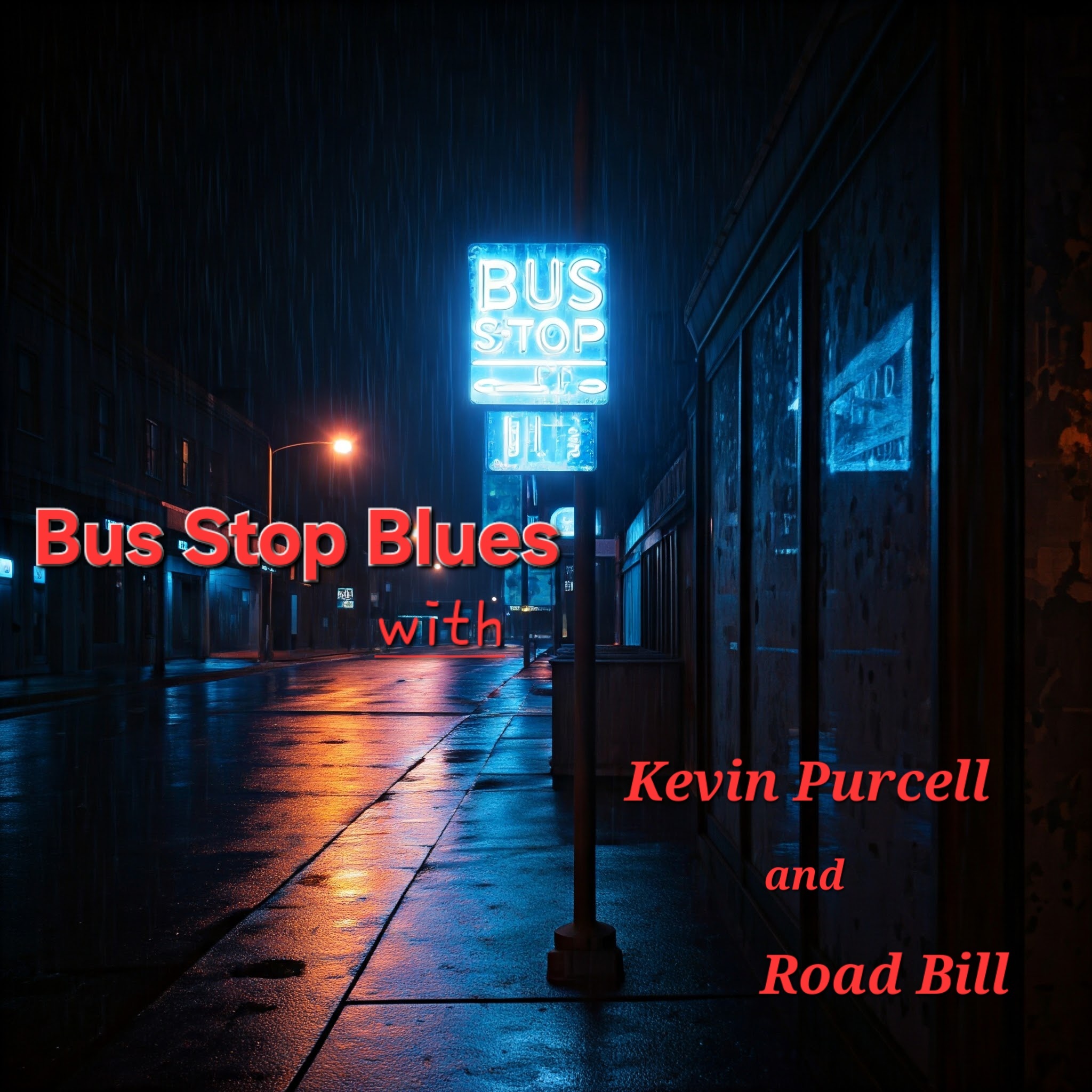
The Bus Stop Blues’s Podcast
thebusstopblues