
Conversations With Purpose
The Conversations With Purpose Podcast is brought to you by the co-founders of Seven Focus, a multi-faceted consulting team that works in partnership with you as you act on your personal, professional and community goals, engaging you to consider the different layers at play - experiences and understandings - so you succeed, long after our team is gone.
Building on the impacts of the Beyond the Training podcast, Conversations With Purpose serve as an example of moving toward the intended impact, by talking about the very things that makes connecting challenging.
Join the conversation as we share perspectives, ask tough questions and navigate the social dynamics, innuendo and interactions - all while we learn and grow!
Conversations With Purpose
When the Work You Believe In Gets Attacked
Use Left/Right to seek, Home/End to jump to start or end. Hold shift to jump forward or backward.
No doubt you've been in the news or the community hearing about and possibly being affected by the U.S. Presidential Executive Orders, Memoranda, or misguided vitriol to squash, discredit and illegalize the concepts of DEI and the work (and workers) therein. In this episode, our hosts, like many in our communities discuss the impacts of what has happened to this moment in time and what to do, knowing the personal, professional and future intentions of the movement.
Welcome to the Beyond the Training podcast. Hey, Jamie. How are you today?
SPEAKER_00Hi, Robert. I am okay today. How are you today?
SPEAKER_01I guess okay is the word. I want to wish our listeners uh happy Black History Month, uh Happy Lunar New Year. Uh by the time you're you're hearing this, you might be celebrating President's Day here in the United States. But um yeah, just happy February 2025. Um, trying to see some of the positivity in this month that we're in right now. So I'm okay also trying to work to be better. And I guess that's kind of a statement about my mental health. How's your mental health, Jamie?
SPEAKER_00Today it is steady uh over the past few weeks. It's been a rocky road um mentally for me. Um to the point I've I'm not, I don't know that I've said this on the podcast before, and I don't know that I've actually told you this, Robert. I'm not a big crier, it's just not part of who I am. It takes a lot for me to be moved to tears.
SPEAKER_01Yeah.
SPEAKER_00That's not a you know, a bad thing or a negative thing, it's just how I emote and my emotions show up. And I've been moved to tears more than once in the past few weeks. So that it's been hard for me, and I've noticed it's taking a toll on a few other things in my life. And I've been trying to combat that in a variety of the ways, being really committed to getting runs in and working out. Um and I've created a few other strategies for myself that I'm sure we'll dig into. So it's been rough for me these last few weeks mentally, but grateful for the conversations that we've already had around mental health, what I know about mental health as being important. And um, so I'm grateful that I've been able to lean on some of those interventions, maybe we could call it, to support my mental health during hard times.
SPEAKER_01Point of clarification, you're saying the things that have drawn you or gotten you to get closer to having tears and to crying are the things that are impacting your life, not the crying itself.
SPEAKER_00Yeah, I'm not upset that I'm crying or um well, I don't want to say that. I'm because I normally don't cry, I am bothered that I've been moved to that. Uh and not uh I yeah, I'm bothered that I've I I have been reflecting on is this an indication of my resilience? Um and so I've been processing through those things and um what's really been hard for me is the new administration, presidential administration, and the decisions that they've made um that are impacting millions and millions and millions of people, some people who don't even realize it's impacting them and are oblivious to it, um, and the fear that it's caused and the sadness and the the resistance and the struggle and um it's just a crappy place to be right now, and I know that we will get through it and it's just hard to see people dehumanized in this way.
SPEAKER_01Absolutely. Yeah, or in any way I would I would uh add, and this way, this is very visceral, this is very close to home, actually, uh for both of us in the careers that we're in, in the communities that we're in. And then you know what I was thinking also is that you and I are I would say well educated. I was gonna say very educated, but maybe well educated is the better way to do it. There's a curse in that when you know enough stuff to know what's going on. Um I I have it's been a long time since I've not been a college-educated individual um with a with a uh a master's degree, but even before that, I think I was I knew a little bit about the world. You remember in I don't know if you had to do this in school, uh, I remember one of my favorite things to do was the current events activity in elementary school. Did you ever have to do that? You had to like pull something out of the newspaper and and talk about it in class.
unknownOh yeah.
SPEAKER_00I was like, I don't know, maybe, but when you said the newspaper, I was like, I do feel like I remember cutting things out of the newspaper pulling a piece.
SPEAKER_01One of my favorite things to do, and I was the kid, I know everybody's gonna be like, nerd alert, and that's fine. Uh, I would be looking for like the most controversial, most like uh, I don't know, not the it for for you know a nine-year-old, something that was pivotal is like something that um happened in the park, or or the governor said something, the president said something, but I always thought I was you know finding the most salacious thing uh in the in the post or the the news and uh bring it in, and everybody else is bringing in like Broncos win, or it's gonna be sunny outside, or you know, a new fossil was discovered. But I was looking for the scandals. Anyway, anyway, I've always been paying attention to news or paying attention to current events, and so I can't I count that as educated as well as my formal education and like to think of a man about the town. But then the fact that I know all this stuff puts me in a space where I have I I can see what is happening, the dehumanization that you're talking about, like the policies and the practices and the politics that are going on, not just in our own little towns and and hamlets here uh where we live, but across the world, the ripple effects, the millions of people that you mentioned, I know what's happening to those people, or at least I have an academic understanding of what's happening to those to those people based on what I know about our history and what I know about our present, current events. So then I think about you, I think I'm hearing you say too, thinking about those things all the time and can't let it go. And and it's hard to have. We said this on the pod a while ago. Remember, we talked about how you can't turn off the DEI lens. As a matter of fact, you and I are still due to have a conversation about severance and wicked, uh, because that's the last time we talked about our mindset, uh uh not being able to turn off the lens. By the way, I'm ready whenever you're ready. So uh I've watched enough of Severance to give a full report. I'm I have not finished it because it's quite long and quite boring, but it's it's enough that I can ask you.
SPEAKER_00It's boring.
SPEAKER_01I do. It's it's more full of things that I think you and I can talk about. Absolutely. Uh for the entertainment value, I'm getting not much from it. But that's only because of what I like to watch and what I like to you know sit in and uh put my time into. That's all.
SPEAKER_00Well, I I did watch Wicked. It was in the movie theater. I wish I was could have brought I wish I did bring my notebook in and take notes because there were so many things that I was like, yep, we need to talk about this. Yep, we can talk about this. Um, and I didn't, which is probably for the better. Um okay, so future podcast. Wicked and several. You said a few things that I'm grappling with, and I don't want to take away from your experiences when we think about what's happened in the last few weeks in our country, the dehumanization of people, the decimation of activities, programs, roles that we know is valuable in organizations and is valuable in humanizing people, diversity, equity, and inclusion work. You said that you're you you're well educated, you know, you watch the news, you can see it. And I know people that have don't have a college degree and understand the dehumanization that's happening right now and are disgusted with it. I know people that have a college degree, Harvard, Yale, even our current vice president went to one of those, what people would call well-educated elite institutions. And they are part of the dehumanization of people. And when we think about the news, many of them would say they watch the news every single day and believe in the dehumanization and believe they see what's happening and they believe it's the right thing to do. They believe they're protecting themselves and this country. And so I want us to be careful to not boil it down to it if only people watch the news and if only people are educated, because there's people that are doing both of those things that are actively contributing to the dehumanization of um our neighbors and our friends and our colleagues. So it comes down to what are we consuming in the news? And I know you know this. You are well educated, you do watch the news. How is this okay with you? Um, and you're asking yourself that question.
SPEAKER_01Or you're talking about all these other people who are yes, yeah.
SPEAKER_00Yeah, how is this okay with all these other people that continue to vote against their best interests? And you know, we we came into this podcast talking about today just the decimation of specifically diversity, equity, and inclusion, and the impact on companies and and our work. And sometimes I feel currently I'm feeling a little guilty if we center the conversation on that. And I don't want to get into oppression Olympics, but there's so many other realities that are happening for people that are way worse than you and I losing a contract or two.
SPEAKER_01Yeah, and it's also connected to the dehumanization that you're talking about, though. And so that's that's not I I hear you saying feeling the guilt. And I think this conversation is a part of talking about how people are being ripped from their homes and their family, their places of work and their families, how people are losing their ability to feed their cell themselves and have livelihood, uh, how folks are around the world wondering if the United States is a place that they can actually come and be safe, whether they have uh citizenship or a passport for that matter, all of these things that are falling down in the United States from the federal and then state governments uh is connected. So I think it's even though we'll be talking about our experience as practitioners and professionals and humans in the work uh to further celebrate diversity, uh, further work to include uh that diversity and work towards the equity that uh we believe every human deserves. Well, I think we're talking about all the things at the same time. So on the point that you are making, um, it's well taken. There are dumb people who are in charge of our many of our livelihoods and are making policies and practices that uh are going are hurting people or killing people, in fact, uh or will lead to people killing. If we're thinking about the future uh effects on our climate, those of us who are breathing the oxygen currently, uh, or will have kids who will. And so there are well-educated people who are just dumb and making dumb decisions in their own interests with their own interests in mind. And then there are people who are not, quote, well-educated, formally educated, who know what's going on. They know you don't uh drill into the the ground as often as you can just because you can, so that uh uh you can make more money, because it the the ground is gonna fight back at some point. Yes. I uh your point is well taken. What I was intending to say is that I can't turn it off. And part of the fact that the reason the reason I can't turn it off is because of what I know. Not just because I'm educated, it's just that's how I got here. There it if I hadn't taken the educational journey that I did and then professional journey that I did, I could see a world where I'm not paying attention. As a matter of fact, Jamie, and I'm and I know you said you had a follow-up question. Uh, we were at uh a birthday party just uh yesterday, and uh we were a lot of our friends for this this person we're at. Shout out to Maki. Maki, happy birthday. I know Maki's listening. Uh we're at Maki's birthday party and and and we're talking about how long we've known each other. And she because she's a uh we were at a table with a whole bunch of new parents, uh, she was like, Well, what would you be like if you weren't a parent? Because I'm an old parent, as we've discussed. I've been a parent for more than half of my life. And so if I wasn't a parent, if I didn't go in that route uh 20 some odd years ago, then I'd be a totally different dude. I would not be on this podcast with you, Jamie. As a matter of fact, there are a lot of uh lesser valuable podcasts that are out there uh that I probably would be a part of and would be in the social media game and play in places and ways that are probably more dehumanizing and disrespectful to the human identity than what we do today. Because it'd be dumb. I would be dumb. I'd be doing dumb stuff. I did dumb stuff before I got to be a parent. I did stuff, dumb stuff until I learned that I needed to be an adult and a parent. And so I can see how easy it would be to just turn it off if I wasn't me, if I didn't hadn't gone in this in this path. So you're right. You can be a you can be a president, you can be a vice president, you can be a Fortune 500 company uh CEO, you can be uh chief executive officer of a nonprofit organization, and ignore the fact that what's going on right now is leading to the decimation of entire communities and is actually gonna cause, if for those capitalists out there, it's gonna cause a whole bunch of problems economically uh for most of us because of the ripple effects of these practices, policies, vitrio. But you had a follow-up question, so I digress.
SPEAKER_00I did, but and I'm gonna digress for a second too. And you talked about the news and consuming the news, and you and I have talked about this before that um at night I scroll through the news and and read the headlines and think into stories, and that's been my routine. And there were, you know, there are people that say I just can't do it, I have to shut it off. And and that's in some ways, that's their right, and for sure take care of yourself. And that contributes to the ability to just ignore stuff.
SPEAKER_01Yeah.
SPEAKER_00And just live in my bubble. And so what I've I was just talking to somebody at the other day, and I said, Yeah, it's really hard to consume this all, especially right now, because it's story after story of you know, people saying, Well, that's a DI hire, and that's why that happened, or you know, we're switching DI to MEI and videos of particularly white men and white women being terrible to other people, um, and you know, just saying really hateful and hurtful things as it relates to immigration. And so that's all over the news. And when I started the podcast, I told you I'm figuring out a strategy. And one of the strategies is I don't do it every day because it's creating a new routine, and that's sometimes hard. But I said to somebody, I was like, I have to pay attention to some of these things. One, because I want to, and two, it's part of my job is to know how we're excluding people, to know where inequities continue to exist, to know where we're not uplifting diversity and know how that might be impacting our clients and our customers and the organizations we're working with. And I said, well, then I can do that when I'm working at my job. So I don't necessarily have to do it at night. I can do it between, you know, the eight to five, um, versus taking some of my evening time um and doing that. And um, so I have been doing that and I've been binge watching another show on Netflix that is just gives me some good laughter along the way. Um, so that's one of the strategies is I'm still doing it, but at what time am I doing it? Is what I'm you know, reflecting on and working through. I did get I don't know that catfish is right the the right word, but what's the word where you read a news headline and you believe that to be the truth? I don't know if there is a word for that.
SPEAKER_01Well, I think they call that clickbait, or was it clickbait? Is that what you're saying?
SPEAKER_00Well, I didn't I didn't actually go into it. And the clickbait was interestingly enough, how we started this podcast that the federal government was canceling Black History Month.
SPEAKER_01Oh, uh-huh.
SPEAKER_00I believed that and I said that to another group of people, and later somebody was like, I can't find this anywhere. And I'm looked and I was like, You're right, I can't find it anywhere. Now the government is doing other things that are impacting Black History Month, so I want to say that. Um, but as far as I can tell, they haven't officially canceled History Month. And I don't even know that they can do that. They can say that they're not celebrating it and honoring it, but Black History Month doesn't actually come from the government, um, from my best understanding. It's a federal, recognized celebration, but there's like a whole other or another organization that sets the theme for Black History Month and um does some other things. So I did get clickbait, so clickbaited. So it was a reminder to me that I need to slow down and quit just sort of mass consuming a bunch of things. And that's what fear is intended to do, right? The fear-mongering. It's intended to make you go, oh, they're doing this and oh, this is happening. Um and it's hard in the news to really get what's really true. Um, and social media can that can be even more dangerous. Um, you see something that someone posts and you we believe what we see is true, and and more often than not, there's a different story behind it. So wanted to say that my question to you, it's more of a broad question. How are you experiencing reflecting on reacting to diversity, equity, and inclusion no longer being an allowable learning, an allowable engagement at the federal level, and that that is having huge ramifications for companies that receive federal dollars, for nonprofit organizations that receive federal dollars. And there's been encouragement from the federal government for private companies to also scale back.
SPEAKER_01It is a broad question, and so I have so many responses to all the different pieces to your question. To try to keep it simple for the purposes of our pod today, it's hard for me to concentrate on the impact of all of what you just said. So the effort to crush DEI using federal powers and federal influences in the United States, all that has been hard to concentrate on. I recognize how closely impacting all of that is on me personally and my pocketbook and my family's uh ability to thrive. And at the same time, all the other dehumanization that you mentioned, I have been thinking about. And so I have not been really thinking about like, oh man, how does this gonna affect me personally? Because I have people who are I'm close to who are concerned that ICE, the immigrations and customs enforcement agency in the United States, will be in their neighborhood. And in fact, they have been in my neighborhood, contacting people and certainly taking people from their workplaces uh wherever they go, uh, which is also in my neighborhood. As a matter of fact, there's a detention center in my community. So there are people who I work with, people who I have supported uh and do support, there are people who uh I live near who are in fear of being taken. And not because, actually, they're not legally uh allowed to be here, not because they are uh people who are undocumented. There are some folks in our neighborhood, in our communities who are undocumented, but they're afraid because not only the stories that we're hearing, some of the stuff that is on the news, but the stories that the communities are telling, is that um in our law enforcement is indiscriminate with uh fulfilling the wants, needs, policies uh of the government. And we know this to be true. This is not all this has always been the case, not just with immigration raids, but we know that our law enforcement from the federal, state, and local levels has never looked at brown and black and uh differently abled people as human, fully human, and has used those policies and practices uh to dehumanize and demonstrate their uh lack of empathy since the beginning, since it has since we have had police, since we have had law enforcement and so in this country. And so I can't even think about is not having DEI contracts going to affect me, or how is it? I can't concentrate on that because I'm thinking about how how I can help folks have red cards, get access to red cards, or get access to immigration lawyers, or um help people build their contingency plan if a parent or a family member or a kid is is taken or left behind because of the way that the raids uh around immigration are happening. How can I help someone uh in those situations? What is it that I have to uh to offer? That's what I'm being I'm concentrating on. I'm also thinking about those folks, Jamie, who are or were uh federal contractors or federal employees whose uh jobs uh at the time of this recording are still in jeopardy. What I will say is that by the time you're all listening to this, those play those folks probably either have other jobs, um, are in litigation with regard to how they're losing their jobs or have lost their jobs. There's there it could be anywhere um in any of those places. And so I'm thinking about that. You can you I can't imagine being a federal employee for any number of years and all of a sudden because the president. And changed. Now you don't have a job. I also recognize that firing federal employees is not as easy as it sounds. And so we have to sift through the details of what you were what we know about what's going on, like what you were saying, Jamie. Not every article is as truthful as uh uh what's real. But those folks are actually losing their jobs. I have a job. My my job is holding on, I'm holding on at the time at the time of this recording. I still have a job in diversity, equity, and inclusion. And yeah, we've lost it, we've lost money. You and I and seven focus, we have lost money and opportunity as a result, and we're balancing how we're going to be able to keep that. I it's really hard to think about me and us when I know what else is going on, is is at not my door, but as at the doors of people that I care about and and and I'm trying to help. So the broad answer to your broad question is I haven't spent enough time thinking about what's going to happen to me. And if I'm real honest, I feel a little guilty both in not having thought about it more, because that if my pocketbook gets changed, then that impacts my family. And at the same time, I don't know if I can think about me because all that stuff I said earlier about my educational attainment, that plus my citizenship, that plus my socio class, socioeconomic class, I'm in a such a better situation than a lot of the people I just named.
SPEAKER_00I have thought about me from the perspective of some of what you named, and and it connects to one of our ways of being of reflective of self. And what I have thought about and what I have shared with people is that because of a lot of the privileges I have and the identities I hold, I will make it through the next four years likely fine. Uh, you know, I'm a light-skinned Mexican-American woman. I don't speak Spanish. Um, and so the odds of someone threatening me or ICE detaining me are low. It doesn't mean it couldn't happen. And and we know that history tells us that many, many, many legal citizens have been detained and deported for no cause. Um and so I've been reflecting on the power and privilege that I have and that I hold, um, and and and knowing that I can't feel comfortable with I will probably make it the next four years fine, um, because of some of the identities I hold. And I know that that's not true to your point for my friends and colleagues and neighbors. I do think if we're, you know, wanting to offer some of our friends some stuff today, is think about how the administration, the direction of our country might be impacting you. And where do you have power and privilege? And where can you leverage those things in pursuit of your values of equity, of humanity, of access and opportunity?
SPEAKER_01And um, I'll add a shout out to the black executive uh perspective podcast. Uh, my man Tony Tidmitt invited me on. And so wherever you find your podcast, find the Black Executive Perspective Podcast and the episode I'm on with uh Kevin Clayton, he asks us, Tony asks us, what could we do? What could we be doing? What should we all be working towards? And I remember saying, educate ourselves better and vote better. And even those two things are a lot. But I think what I would add the third thing, what you just said, what we're talking about, think about what you can do for the people that are around you being impacted right now. Uh, and and literally do something. Don't just like be on Facebook and uh post a sympathetic note or you know post something in your window uh about you what you believe uh to be true. Like do something and and literally do something for people who are are needing it, because many of us, to your point, are going to make it through the next four years. I none of us can noneone who's listening can see the fact that I had my chess cat smile uh grin when you said it, but you and I have different uh ideas about if what we're experiencing now is gonna be four years in length or something different.
SPEAKER_00Wait a minute. Are you anticipating that it's gonna end sooner? Are you anticipating that it's gonna go longer?
SPEAKER_01Yeah, oh absolutely. We're going to be experiencing, we may not be experiencing the Donald Trump presidency or presidential administration past 2024 years from uh nine. Um, we will be experiencing this kind of dehumanization for much longer than however long Donald Trump is president. And I don't know how long he's going to be president. That's not even the thing I'm thinking about. What you said is I'll make it past the the next four years. I don't I I don't think it's there's gonna be a cap on what we're experiencing right now. And we're just in the beginning, we're in the first month.
SPEAKER_00Got it. Okay. Thank you. I I immediately went to, I know that somebody has already introduced in legislation um the ability for our current president to extend their term. So I'm thinking. Yep. I know that people have different feelings around this word, but I have hope that things will be different. I have hope that people will realize they continue to vote against their best interests. And the uplifting of one doesn't mean somebody is excluded. And and we talk a lot about this. So I have hope, and I had this reflection last night that hope is part of my faith and religion. Hope for things not yet seen. And and I specifically remember maybe one of our first podcasts we talked about this that I believe in the things that we cannot see yet. And I believe in a reality that we've not yet seen yet. Uh, there's another Bible verse that um what is it? Um prayer without work or prayer without deeds or faith without work is dead. Yeah, yeah. And so I recognize that I can't hope for something and not do anything. Um and uh, you know, I've I know people say hope is not a strategy. Hope cannot exist in isolation. And um, I have hope that me, you, other DI practitioners, other community members, other people um will continue to educate themselves, know better, keep doing better, leveraging their power and privilege, fighting back, resisting. I believe in a better reality than we're experiencing. And and me and you might not be here to experience it. We talk about seven generations, and what we're doing now is planting the seeds for seven generations in the future. And I want to make sure that I'm on the right side of history and keep planting the right seeds uh for our work. So as we wrap up, likely not the last conversation that we will have around what does DEI become, diversity, equity, and inclusion become in the next few days, months, years. I encourage our listeners to think about what authentic action they can take from their sphere of influence and their sphere of control to get us closer to a reality where all people are uplifted and honored and recognized and humanized. So keep doing your own homework, keep taking action where you can. Your company might be removing the program. That doesn't mean you can't do things outside, inside. I read a post, I don't know if I saved it, but it was a LinkedIn post. It said something like diversity and equity inclusion can still be in your organizations, uplifting voices and meetings that are silenced, having diverse hiring panels are still allowable. And they listed all of these things that are still allowable outside of the diversity, equity, and inclusion acronym. So there's many things we can continue to do and pursue.
SPEAKER_01No doubt. Um, would you mind if I got on the soapbox for just a moment as we as part of my close?
SPEAKER_00I uh appreciate, and I'm sure your list, our listeners appreciate our your soapboxes. So give it a go.
SPEAKER_01Thank you. So there are far too many influencers for me to name, and it wouldn't be fair for me to just like list the ones that I listen to or watch uh now who are talking about how one DEI has always been around. It's it's been something that has been a part of our fabric of the United States of America and culture and politics uh since there's something called United States of America, and that the version of DEI that is right now being vilified and and literally being made illegal in some ways, um, is the kind of action that we've seen before in a number of ways. And so those of us who are listening or in places who are like feeling like DEI is going away or changing in some way, um, really do Jamie said, do your homework. Do your homework and really think about and learn about what is this thing called DEI? What is it really that we're talking about? What is really being talked about on the news by our federal government, by our politicians, and and by our uh CEOs or whoever's running the programs at your organization, because, and this is my favorite part that I keep hearing over and over by these influencers, if you happen to like ramps in buildings or up to the buildings that you need to be going to, then you're a fan of DEI. If you've ever tried to cross the street and press the walk button, especially those in cities where there's an audible um, you know, a wait or uh don't cross yet kind of signal, um, even the rumble strips where you stand when you're pressing that button, those are parts of the American with Disabilities Act work towards making it more accessible for people, every people, not just people who have a disability, but people of any kind, shape, or or ability to be able to get across the street without being lit up by the trucks and the traffic that's in the in the street. If you have ever been thinking about somebody in your family who really needs an opportunity but just don't have enough experience because they can't get their foot in the door and you or someone else help them to do that, maybe because you're a part of a fraternity or a sorority, or because you happen to know somebody you used to golf with who's inside the organization, or because you just happen to know that if you meet someone in a particular coffee shop and you have a conversation with them after buying said coffee, then they might give you a shot uh at the interview. You're in favor of DEI. That I was thinking about this the other day as I was driving around the GI Bill, the opportunity for military personnel who go across this great world to fight for freedom. Uh, I'm putting that in quotes because I don't want to get into the poli sci part about what is war and the military-industrial complex. But our our soldiers, our military personnel, leave and come back, and they're hoping to be able to uh continue their lives or give a life, a better life for the folks that they leave behind. And the GI Bill, the opportunity for them to get education paid for and have access to housing, because we all know that education and housing are part of the American dream. Then if you're for that, you're for DEI. So I'm not the only person who's saying this. I'm not the only person who has uh concrete examples, and I love all of our social media influencers who are putting this out there right now. Please, all of us who are listening, not only go and find those social media influencers who are talking about, well, what is really DEI? But also check it out yourself. Like check the references, really go in there and dig into it and see. Because all this stuff that is in the news media, the stuff that is your clickbait, isn't really what we're talking about. We're talking about diversity, equity, inclusion. We're talking about the identities and experiences of people who have uh lived them that uh are really important to celebrate and highlight. We're in the middle of, in the midst of Black History Month. And so we know that black history is American history. We don't have the United States of America without black folk. So DEI is a part of our fabric. We are thinking about how to make sure that anyone who's in the workspace or in education spaces have the ability to do that through their full humanity. So, how do we open the doors and create the spaces and make the tables, set the tables to invite them to participate fully in their humanity? That's inclusion, no matter who they are. And at the and at the end of it, if we want people to thrive, and that I think, Jamie, is the question that I'll leave us with is if you really want people to thrive, how are you gonna do that if you don't know what it is that they need? And if you're not concerned with what it is that they need in order for them to thrive, then you're on the side of the dehumanizer.
SPEAKER_00We are all interconnected. And while it might not feel like it for you right now, somebody else thriving directly impacts your ability to thrive. Period.
SPEAKER_01Period. This has been the Beyond the Training podcast where we really are looking to move past the good intentions, and then frankly, we want to start having more good intentions in all the spaces. And we want to really think about what is our impact? How do we have great impact in the words that we speak, in the moves that we make, in the voting that we vote for, in the policies that we set up. And so we really appreciate you being here with us every week. And we want to hear from you. What did this bring up for you? How is DEI being treated in the spaces that you're in? Send us an email at impact at seven-focus.com or hit us up on the social media we're allowed to be on for now so that we can talk more about how to move from great and good in tech or maybe great intent to even greater impact. Thank you so much for being here, and we will see you next time.
Podcasts we love
Check out these other fine podcasts recommended by us, not an algorithm.
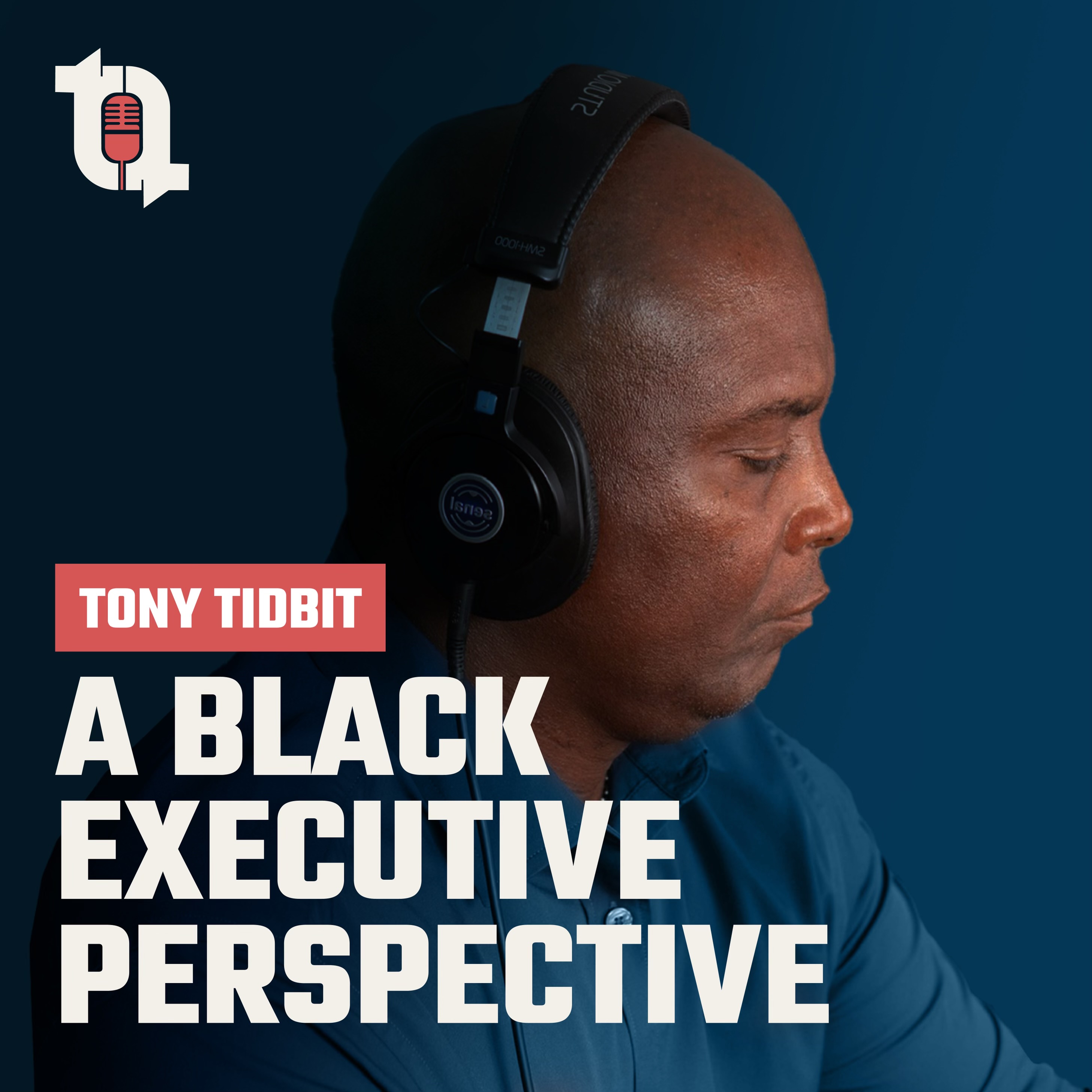
TonyTidbit: A Black Executive Perspective
TonyTidbit ™