Wisdom Qigong Uncovered
Welcome to the Wisdom Qigong Uncovered Podcast, where we invite you to immerse yourself in the harmonious energy of the Qi Field. This alternative health podcast serves as a gathering place for those with open hearts and open minds, fostering connection and respectful listening as we share the transformative experiences within the Zhineng Qigong practice.
Join us as we explore the profound power of Zhineng Qigong, delving into its principles and techniques that can elevate your mind, body, and spirit. Through engaging conversations, we learn from the wisdom shared by our friends in the community, gaining insights that inspire us to elevate our Qigong practice to new heights.
Whether you're a seasoned practitioner or just beginning your journey, this alternative health podcast is a welcoming space for you. The Zhineng Qigong Community Podcast is more than a dialogue – it's a collective exploration, a source of inspiration, and a supportive guide on your path to holistic well-being. Welcome to the Zhineng Qigong community; this conversation is tailored just for you.
Find out more at: zhineng-qigong-students-hub.com
Wisdom Qigong Uncovered
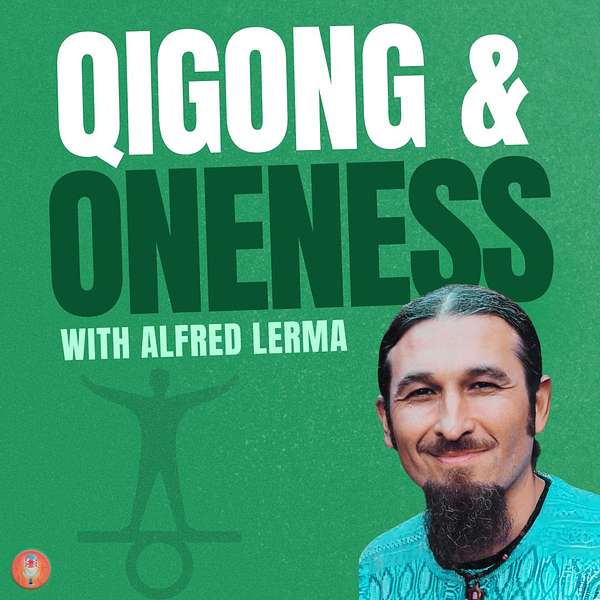
Qigong - The Unifier: Alfred Lerma
Use Left/Right to seek, Home/End to jump to start or end. Hold shift to jump forward or backward.
📘📚 Get your FREE E-book on the "Eight verses meditation" by Dr Pang:
https://www.zhineng-qigong-students-hub.com/exploration-of-the-eight-verses-of-zhineng-qigong-meditation-e-book
Unity is the cornerstone of Alfred's philosophy and life's work. Unification begins within oneself, as he discovered on his journey to becoming a "unifier." Self-awareness became the key to unlocking his potential and aligning his thoughts, emotions, and actions. Gratitude emerged as a powerful practice, transforming his outlook and relationships.
Life intention, Alfred learned, is crucial to finding one's purpose and path towards joy. Bringing people together became his mission, but he first had to unite the fragmented parts of himself. Inner alignment proved to be the foundation for creating harmony in the external world. Thought patterns, once recognized, could be reshaped to support growth and positive change.
Emotional acceptance opened doors to self-compassion and deeper understanding. Self-compassion allowed Alfred to embrace his imperfections and continue evolving. Connection with nature reinforced the idea that we are all part of a greater whole. Qigong mindset provided a framework for integrating these concepts into daily life.
Present moment living became the ultimate goal, allowing for full engagement with life's experiences. Holistic wellbeing emerged as the natural result of this unified approach. Consciousness, when cultivated, illuminates the path to personal and collective transformation. Transformation, Alfred discovered, is an ongoing process of unification, awareness, and growth.
Mindfulness Moments
- Unity in Qigong: Alfred Lerma expressing his life intention to unify people and nature, highlighting the importance of self-unity before achieving external unity.
- Self-Awareness: A key concept discussed is self-awareness, which allows individuals to recognize and alter old thought patterns that may hinder their journey toward unity. This awareness is crucial for personal growth
- Role of Thoughts: Alfred stresses the significance of recognizing thoughts without assigning them meaning. This approach helps individuals avoid reacting negatively to their thoughts, fostering a healthier mindset
- Life Intention and Purpose: Having a clear life intention provides direction and purpose. Alfred's goal of bringing people together is rooted in his desire for unity, which he believes is essential for societal progress.
- Connection with Nature: Alfred believes that connecting with nature enhances our understanding of unity and ourselves, viewing nature as an extension of self that contributes to the unification process.
- Integration of Practices: He integrates Qigong practices into his daily life, combining Western and Eastern philosophies to deepen his understanding of self and enhance his ability to unify with others.
Links & Resources
LinkedIn: https://www.linkedin.com/in/alfred-lerma-3a687a35/
W
🎮 Discover Qigong Game: https://www.zhineng-qigong-students-hub.com/discover-qigong/
🎁 Discover the power of Qigong with this easy-to-follow Starter Kit: https://qigong-starter-kit.com/
🎙️🌟Explore more podcasts, events, and resources visit:
https://www.zhineng-qigong-students-hub.com/
Connect on Facebook, Instagram, Youtube
Welcome to the Zhineng Qigong Community Podcast, Wisdom Qigong Uncovered. My name is Torsten Lueddecke and this is today's story.
When was the last time a Qigong master asked for your life intention? Well, that is exactly what happened to Alfred Lermer. So he had to dig deep. To discover that he has always been about bringing people together, unifying us with nature. And that was when the idea of being a unifier was born. Only to notice that he wasn't even unified within himself.
And how often are your thoughts not aligned with where you want to be? Finding yourself disconnected from who you are. Realizing you're not even on your own team. This is where his fascinating journey began. And we invite you to travel with us.
First of all, I want to hear a little bit about this Chief Gratitude Officer, because I don't think many corporations have that position to offer. So please tell me a little bit about that, Alfred. Thank you.
Yeah, absolutely. Thank you. It's great to see you, Torsten, and it's great to be here, uh, to be able to share with the community.
Um, yeah, I'm excited. I've had a recent change within my profession, uh, and I've moved out of a corporate environment. And now I'm, uh, working with Present Moment Living, which is the company that me and my wife have both co founded and co owned together. And, you know, I came here and You know, I've always had a calling to, you know, have a title like chief happiness officer, but I've, I've heard that before and, and so I was like, well, I don't want to do the same thing that other people have done, even though that's kind of the path that I'm looking to take is something towards joy and happiness.
And I said, well, you know, why don't I bring gratitude into the mix and create a role that if I can create any role that I want. Well then, and I can put myself in that role, as long as of course I have my partner's approval within this, is that I would like to be a Chief Gratitude Officer. And so I'm now the C.
G. O. of present moment living and, you know, part of that is still learning for my own self what that's going to mean to play that role. And if other companies in the future pursue something like that, well, they're going to come to me and say, well, what do you do? Who are you? And how do you bring gratitude to yourself and to your corporation or, or your organization?
And I've always found that, uh, one of the sayings that I've heard is that gratefulness brings joyfulness. And so, therefore, the more that I can come into a relation with gratitude, the more I can appreciate what I have and that of what it is to be alive and to be able to share that gratitude with others in support of other people finding joy within their life.
But I have to do that within first, and then I do that with those around me, uh, from the company and the organization and my family, uh, and then share that out with others. And so I'm a practicing chief gratitude officer, but I'm excited to step into the new role.
That sounds wonderful, Alfred. And I think it is something that we might want to explore in a year's time to see how it went and what your experiences were.
Other corporations or other people can learn from that and, uh, uh, you could share your experiences and maybe then in a year's time again. Now today we also want to talk about something that actually, you know, came up to my mind when I was thinking, okay, who to whom to invite. And that is something that you put a reputation in the, in the community, that unity is something very close to your heart.
And, uh, maybe let's explore a little bit about that. What does it actually mean to you and how did you get to that point?
Yeah, yeah. Great question. And, uh, I guess it's nice that I'm known in that respect being that it's something that I'm passionate about. And I think that it's always been something that's called to me from a very early age that, um, I, I cared about kind of bringing people together and I was very much.
Thinking that, well, the way for us to move forward as a humanity or as a society was to practice unification so that we can work together. As I've seen what division does, and I don't gravitate much to, uh, to division and thinking that it's an actual solution for the future. And so, from a young age, I always, Thought in that way and, but I didn't quite know that's what it was that I was longing or looking for until I got older.
And it really became really clear for me was when I joined the Huang Yan Chi therapy program. And in the first year in 2015, we were in Paros Island in Greece. And Master Liu was asking us what our life intention was. And he says, well, if you don't know it, think about it. Let's, let's really hone this in.
This is a part of this training is to be able to find out what is your purpose and what is your service for the world then. And how does that show up for you? And so as I'm reflecting over there in a beautiful landscape and I'm thinking about it, the thing that keeps coming up for me is unity. And I thought, well, you know what I want to be in life?
I want to be a unifier. I want to help unify people. I want to bring people together. I want to bring us together with nature and our surroundings, with Mother Earth. And so there was this calling to do so. But when I found in that understanding of wanting to be a unifier, I was realizing that a part of this practice of Zhen En Qi Gong and Guan Yin Qi therapy is to learn how to unify with yourself.
And myself and many other people in the world are very disconnected internally, and we're not unified with ourselves. We're not even on our own team. You know, we're trying to go to a goal and get to an intention, but we don't believe in ourselves and we don't sometimes even believe in the intention itself.
And so we have to take a look at that. And so I found that there was, um, a lack of unity internally, you know, lack of unity within the relationship to my thoughts and that of what I thought were good or positive thoughts or that were negative and hindering me from progressing. And how I was in relation to my feelings and my emotions, uh, whether I felt good or bad about how I felt and how I received that.
And then also just in relation to my own physical body and self image that I didn't necessarily love myself. I didn't appreciate myself or who I was or what I carried. And so I need to come into unity with self, which is also still a practice. That if I can unify with myself, then I could start showing up in that presence and then talking to other people about my experiences and what it's like to unite and unify.
And the simple definition to me for unification is, is working internally. It's inner and outer unity. And so knowing that, you know, there really isn't a separation, at least within my belief. And it's just different versions, different forms of each other. But as we come into harmony with one another, it becomes so much more powerful and we amplify our potential.
And so it's been a journey of self unification through understanding my life intention, and then practicing as an outward form of service and support of other people, finding unity within themselves. I'd like to
explore a little bit, you know, the journey you took for self unification because that's, it sounds like something that a lot of us are dealing with.
And I'd like to get a little more, you know, in practical terms, what did you do exactly? What is your approach? How did you achieve that? Or how are you working on it? Because it might be a process that is ongoing. Um, but what does that mean for you in practical terms? Yeah,
I would say that for myself, uh, it's, it's looking, um, at my thoughts and my thought language as one.
So it's really about awareness. So you know, I have an intention to unify and they'll say, okay, well now I need awareness of what that looks like. And so within that awareness, I need to be aware of my thought patterns and my thought language. I need to be aware of my verbal language. I need to be aware of my body language.
And so I can see what my habitual patterns are. So I, we all have these habitual response patterns that as something happens, we think in a certain way, we feel in a certain way, we act in a certain way. So it's not like the three A's, uh, awareness, attitude, and action, much like the three levels of, uh, matter or substance.
So as I'm looking at alt language, I'm looking at it and I'm saying, well, Are my thoughts in alignment and encouraging towards self, or am I telling old stories about who I am and how I am and what I'm becoming, and are these thoughts in alignment with where I'm trying to go? If they're not, then I'm not unified with myself and where I'm trying to go, and I need to update that.
Language in my mind and shift over and this would be the idea of shifting over to positive polarity in the new point of life and thought transformation. The other part is then coming in to seeing well as emotions come up instead of greeting them as if they're bad emotions as something that I want to push away a negative.
I actually greet it with, um, kind of almost like a warm hello or a friend, even if it doesn't feel like a friend. So if I get anxious, I'm like, Oh, Hey, anxiety. What are you here to show me right now? And it really means I just care and I care a lot. So it creates these feelings and so I'm able to reframe the relationship to the emotion as well and then take that energy and transform it into something that is positive or in alignment with who I am or who I want to be.
And then the other part is the physical body is being able to then say, well, if my thought language isn't supportive of who I am, but what I look like. Um, then I got to look at the love and compassion I have for myself. And if I've made mistakes or if I make wrong actions, it's okay because I'm not perfect, but I'm learning to be better.
So having compassion for the realization of the mistakes. And then saying, okay, I'm grateful for what I realized. What can I apply next? And then practice that moving forward. So knowing that it's a continuous practice to be better, not to be perfect. And so that, that compassion and that gratitude come in to be essential practices.
And then I increase my cultivation by integrating Qigong, not just within the movement and the practices of the methods, but as a, as a mindset of how I continuously live. Um, while additionally bringing in just the culture that I have from being in so many Native American ceremonies and learning these ways as well, that helps me bring together this Western and Eastern philosophy to kind of unite into who I am and help me with my perspective and then help me with my practice to then be able to deepen that relationship and love for self and then, you know, continue to refine as I go.
So let me see whether I understand everything correctly here So you're not saying you're you're looking at your thoughts and your feeling and then resisting them and saying oh I shouldn't think that or I shouldn't be like that or stupid me. I'm thinking the wrong thing again Nothing like that. You're just you're taking that as it is because that is the reality.
That's what's going on But with your awareness you're looking at. Okay, what? What other meaning could I put to that or what, how, how could I, how could I, can I, how can I move from that thought into something that is aligned with who I am? So really that it becomes a congruent one, that everything you do, you feel, you think, you act is congruent with who you are rather than just, you know, some scattered thoughts or feelings that you can't, um, that you can't, um, How can I put this, uh, integrate, uh, into, into who you really are is, is that, you know, I'm just trying to put it in my own words, uh, correct me where I'm wrong, please.
So that we've got the right idea here of what you're doing or what your thought is around that.
Yeah. I think you're spot on. I think it's exactly right. It's not a resistance. It's an acceptance. To what is coming through, and it's not an identification that that thought is going to identify who I am as a person.
Because I have good thoughts and I have bad thoughts, and that's just in a dualistic explanation of good and bad. You know, in, in a neutral sense that, you know, it's just, it is what it is. It's the relationship that we put to that, that then determines whether or not we classify it as good or bad or how it shows up in our life, if it feels good or not.
But in this idea that, yes, it's, it's just a receiving of the information and then the perceiving of that. And that's always one of the teachings that I've always taken away that. Receiving time is healing time, and perceiving time is healing time. And if I say, oh, I have a bad thought, that makes me a bad person, and I dwell or build upon that, I'm just watering that seed for it to grow more.
And I'm not trying to water that seed. I'm, I'm looking to say, well, that's an interesting seed that lives within me. It gives me awareness of what might be in my subconscious pattern of thinking. Those storylines that just come out. I said, Oh, I didn't even know I thought that way. I didn't catch that before, but I have more awareness.
I now can see a pattern that's running within me that I didn't have the conscious depth before, but now I have that level of depth. Now I can look to update the program and the code of that particular story and say, I am not telling that story anymore about how I can't do this or how I can't do that or how I'm not good enough.
I'm going to say, well, what's the opposite to that story? And then figure out the language of that. And that will be my antidote. That will be my new medicine, my new prescription for my well being. So anytime that old story pops up, awareness sees it and says, Ha! I see you. I'm not telling that story anymore.
And I'm not feeling these emotions, and that could be a long, you could feel that way for a long time and not realize it, but now I use consciousness to apply the solution to be able to say, Oh, here's what I tell myself when I, that old story comes up, I'm going to give myself it. That other frame and other thought and that other perspective and adjust the storyline, but I'm going to believe in the story at the same time.
My name is Leilah Cupido and I'm the project manager of the Students Hub. Our team is constantly adding events, teachers, videos, and other resources to take your practice to the next level. Improving the quality of your life and the life of the people around you. We do this work for you, so please use it. Hunyuan Lingtong
Thank you. Right,
right. I understand. Now, here's something I would like to add from my experience, if you don't mind, because I, uh, I also think that a lot of the thoughts that just pop up aren't even my original thoughts. It's just something that, you know, society, my upbringing, my history, whatever has put into my head.
So I think there's also an important exercise. Awareness to see, okay, is this really who I am? Is this really my thought or did I just well just copy something You know from my past or from what other people have told me So I think there's a lot of awareness can do a lot here To get clarity to get clarity in your thoughts and the same is probably true for emotions I mean a lot of emotions are just something that's triggered By whatever impulse from the outside world.
And it doesn't really have to be who I am deep inside. So, uh, I think awareness and it's, it's, it's like a, it's like a very exciting, um, thing to do because you discover so much, you're really on an art of discovery and I'm sure it must be fun as well. And, uh, being very. Producing a lot of gratitude, uh, to do, to be on this journey and to see all these things about yourself, to learn about it, and then, you know, to share it with others.
Yeah, yeah. Yeah. I I love that It's very exploratory, it's very curious and it's, you know, very open in that understanding, but you're so spot on in the thought that it is a filtration. We're, we're filtering these thoughts and these feelings, or they're coming up automatically. Based upon the programming and the experiences and the influence that has come in through so many external sources That then we believe it It's just ours and us but it's really us in combination with all the external things from our life experiences And then we you know have these lenses of perception and it filters our thoughts and our experiences And it's an outdated prescription, it's an outdated filter, uh, it's an outdated program.
And so we presently look to view this world with also that future wisdom and awareness that we're becoming, but we're already bringing that awareness in as we already have it. So, well, let me adjust my lens to be that of what I'm becoming and being, but not necessarily just of who I've been or what I've experienced.
Because if that's always filtered through that, then we're always going to be viewing things from an outdated sense. We still bring the wisdom and the experience, and we give thanks for that, but we don't get caught up that that's always how we have to view things, and we have to do some updating, okay?
Our filtration system. So as we translate the information, we also have a better interpretation of that information.
Now, this part of, you know, unifying yours within yourself, how has that changed your daily experience, your daily life, anything that you could share from your life, you know, how that has an impact, an impact on you and helped you to move forward.
Yeah, yeah, I would say that it has helped me have a more sense of personal appreciation for my life. I feel like we kind of all go through these challenges of like being who we are and really accepting ourselves for who we are. We're in this constant state of comparison. We're in comparison to people outside of us.
We're in comparison to older versions of ourselves. We're in comparison to our future version of ourselves, and we're not there yet. And between all these comparisons, comparison is the thief of joy and we're trying to bring that joy back in and we're trying to realize how do we then, how do I not use self criticism and self judgment as a fuel source to move forward.
He says, well, get up and go, you're not good enough. And you kind of beat yourself up for failure and use that as a fuel source to move forward. While self criticism is, is good as a temporary fuel source when you gotta give yourself a boost and say, stop being lazy. It doesn't give me that long term sustained fuel to be able to get me to where it is that I need to be without feeling drained and, and beat up because I'm attacking myself internally for that of what I feel I'm not doing well.
And therefore, you know, I give love and compassion and grace and patience for other people for them to go through their journey. But yet the expectation upon self is so much greater and so much more demanding. That it isn't the same reflection of compassion, so self compassion in this journey, uh, that it allows me to then be able to really meet myself for who I am now and be able to say, okay, I can actually still right now feel joy.
I can feel peace and I can feel love, even though my life isn't perfect and the things that are around me are perfect. They're not ideal. There's a lot of struggles that are going on, but I can actually still feel well, even though there's maybe some illness or disease that's happening throughout the body.
I could still feel the sense of wellness within. Um, so that has really allowed me to like open up my heart to myself and open up my mind to possibilities so that I can actually be able to be like, okay, right now here, here. Everything is, is okay. It is okay. Um, and so the appreciation throughout the day and my surroundings is just so, there's so much more depth.
Uh, so I feel a greater sense of, like, reverence and sacredness in regards to the day, and it helps me feel whole as a person, uh, and that will, that improves my presence, and, and so that, I think that's really just impacted my, the health of my well being holistically. On a day to day basis in a moment to moment or point to point basis
that absolutely get that and we were, you were saying earlier that obviously the, this process is not just within yourself.
We're talking about unity here with the outside world, with other people, with nature. So maybe let's, let's go to that level now and talk a little bit about how you see that and, um, and, uh, how you actually put this into practice.
Yeah. Yeah, I, I, I think so. So I've had a deep relationship and longing and love for the earth and the universe again from a young age.
Um, and then through different practices and ceremonies that deepen that appreciation. And so when I'm going out into a sense of like, I thought, well, I hear a lot that we're going to go out into nature, you know, I need to go be in nature and in some respects, it's almost like we're believing internally that we are not nature because I believe that we are universal nature as human beings, but it's almost like conceptually in language wise, we say nature is outside.
And then human beings are separate and then we are going to go put ourselves into nature, which is a separate entity. And it is, it is separate in the sense that you're going and experience a world of many different forms and beings and, and vibrational frequencies, and it has much feeling. And so that relationship to the concept of nature really resonates with people.
But I think linguistically. It gives the feeling of being separate and therefore kind of underneath the surface, I believe, some disconnection. Um, so we're like, Oh, we're going to go connect the nature. So I think in the unification of this, that I want to unify with myself in other forms, uh, and that being nature or other people and that everything is going through a similar evolutionary cycle of growth.
And that in that relationship of reunifying with other aspects of life, uh, that if I saw everything as a different version of me, it makes me feel like, I'm helping me in not necessarily in the selfish way, but in the loving way that we're kind of helping different versions of ourselves. And this is all a part of that, like family web, this web that we're all connected, but still coming from the central source that we all have it within us.
And so this idea or belief of a philosophy of oneness and us all being different versions of that oneness, that when I come back into relation, it makes me feel that there's a different sense of connection, so that I'm not a stranger to this thing. It is actually a part of me and I'm a part of it. And so how I think and how I feel in relation to it is going to determine A lot of times the health of the relationship between me and it, and so it's like a giving and receiving.
And in that giving and receiving, there's just a beauty of blessing that comes in both directions. Uh, and so that integration in that thought process really helps me stay in a different respect for, for life and for everything that's happening around me in that way.
And, and, uh, can you see it, uh, that people react to that, uh, on an uncut, did they pick it up on an unconscious level or, uh, yeah, when you're with others, does this show you a relationship somehow?
I believe so. I believe that, uh, people will, if it's not spoken, your presence speaks and your energy speaks, the vibration, it's, you know, it's a, it's an imprint. It's like an energetic imprint or fingerprint. And so the state of vibration of where I'm at is going to determine the energetic fingerprint that I'm impressing upon someone else.
And that as they receive that, my prayer is that they will be able to receive that feeling that I represent, that sense of connectedness and togetherness, and that it makes them feel safe and supported. And they may feel more open to sharing something with me that they wouldn't share with someone else because of that, of that presence and that it helps them, you know, come into a different realization within themselves that, that I'm, that I'm actually doing my best to meet the person in the moment for who they are then.
And even if I knew the person from before. That I'm not trying to talk to the story of who I think they are from who I knew them from before. Because when we see someone and we're seeing someone again and we saw them five years ago, in our mind it's like we saw them five years ago and there's a picture of them.
It's like a picture that we put on the wall and we put in the wall of our mind. Then we come to see them again and they saw us five years ago so they have their own picture. And now when we come to talk to each other, we're actually talking to each other's pictures or each other's stories. We're filtering through the old version.
And over the past five years, so much has changed within each individual person. So when we come back to talk, are we talking presently to who we are? Um, or are we talking to each other's stories of who we think we are or who we're affiliated with in regards to different organizations, um, that we That we say, Oh, you're this person, you believe in that.
Well, you start talking to the story and not talking to the person anymore. So I want to be present to communicate and talk to you for who you are in the present moment and appreciate that and try to remove some of my judgments of who I think you are based upon who you were or who I think you're, what you're doing or who you're affiliated with.
And I think that helps with the relationship and the dynamic of how we come together and have a relation. in that moment. Um, so yeah, I, I do feel that it is felt and received. Um, And sometimes if I'm not in the best of places or not most organized within myself, I do believe that that is also felt and received as well, because there's times that I'm not as unified as an individual or with another person.
And then I have to look at that and, and see. Reflect on that.
Now, how you go through life is, uh, obviously very much in tune with, you know, what Qi Neng, Qi Gong is all about, because the healing work, for example, that we do would not be, would not be possible if there wasn't unity, if things weren't connected, if we couldn't tap into, you know, the joy and Qi field, if I couldn't, with my work, um, uh, have an effect on your body without doing the healing work.
healing work. So, so that is, it works perfectly, um, in, within Qigong. And I, you know, I believe that if you are working as a Wundian Qi Therapist, you cannot do that work without Going through life, having this fundamental understanding. And, uh, but I guess the, the, the challenge for us is that we might be aware of that unity the moment we do healing work for each other, for example, or the moment we share a chi field together and we practice together, uh, but on a day to day level where we go about doing our daily lives, then yeah, it's often not so present.
So again, it becomes a thing of staying aware. And, uh, fully utilizing that and, uh, emerging in, in that and, you know, be grateful for that. Um, I think, so I think there's a, there's a fundamental understanding of it within the community, but yeah, very few people actually go through life on a daily basis with an awareness of this unity.
Yeah, and and that's what calls me so much to the practice is that it's a unity practice to me You know, it is it it is a unifying practice and it shows people the ways to do so using ancient wisdom That's been passed down for so long and then presenting it in a modern way And then seeing how we're evolving together as we move forward and understanding that so it's really a great unifying aspect the past present and future of into the now, and that then becomes the oneness of this present moment.
And, and, and so that really, so that resonates with me to know that I'm doing a practice of unity. Uh, and then, yes, that then shows up in, in different times where you go, you move into a practice and you're like, okay, I'm concentrated, I'm aligning with my intention. I'm doing the movements, um, I understanding how I'm applying consciousness in this way for the betterment of self, uh, and, and so those practices come in and then you, you know, you work with a client and you focus and you put your intention on the needs of the client and you merge together into one field, you know, bringing the heart and together the heart to heart and the mind to mind together and this unifies together.
But as a person that's providing a service of care, that's where separation then happens and says, okay, my service of care is to provide this love and concentrated focus of attention to this individual's intention and really just doing, um, or focusing on improving their wellbeing based upon what their needs are at this particular time.
And to unify with someone in that way is a beautiful thing. And that, that gives me. a sense of fulfillment and meaning in that. And, and you're right that as you step out of these concentrated times that you know where your focus is and you move into this daily life and you have all this information coming in from all these different directions, shooting your thoughts and your feelings and these, all these different ways that it can be easy to lose yourself in the midst of the fog of this information.
And we're just kind of, we're trying to stay afloat in all the information. And so to stay grounded. And stay connected and move to, you know, through, uh, this life and all the interactions that we have. And maintaining that peace and that practice of the state of being that it's important then to carry that awareness of what our intention is consistently to be able to then realize that connection that we're having throughout all times of the day.
Uh, and then when we get off center, well, we course correct and come back. But you know, maintaining that state in that sense consistently, uh, is where we're just trying to prolong the sense of unity and gratitude and joy throughout the day and be like, Oh, as I reflect, how long was I joyful? How long was I grateful?
And usually we'll find they're just pockets of time and then it goes away and then it comes back and then maybe it's a little longer. Or maybe it's shorter. And at the end of the day, you just try to say like, okay, how well did I do today? And then meet that, reflect, start again, try again tomorrow.
Practice being better.
And I think that is one of the reasons why, you know, most, uh, Qigong masters that you and I are working with, they always emphasize the Qigong mindset. So this is, this is a basic setting that you have in your mind that you, when you go through your, your day, this is the mindset that is so important.
And it's not just the physical exercises that are obviously very important, but if the mindset is there, then, uh, we, we see, we see this with some of the masters. I think that's why we find them so attractive because we, we see them, we observe them in that daily life and no matter what life brings up, you know, the, the, the basic mindset doesn't change.
They're always in the same state. state of being. And, uh, and I think without necessarily being able to give it a name at that moment, we feel like, okay, there's something special about that person, which isn't really about the person. It's just that they, they probably have a learning that we are all Only just, you know, working towards, um, that makes it so attractive and makes it so fascinating.
Um, because yeah, it's another thing that they, that they teach us when they talk to us is that we are masters as well, and we can do the same thing that they can, and I find that very attractive so that we don't have to look up to them and say, well, they're a master and I'll never get there. No, we can get there.
And it's actually the mindset that will make all the difference for us to, you So I have a similar quality of life and a similar way of gratitude and going through life. Is that fair to say that's your experience as well? Yeah, it is.
Yeah. Yeah. That that's the thought process I was having in relation to that mindset was that Qigong mindset and it's just how you carry yourself.
And yes, the masters and as they gone through this experience and have deepened the relationship itself and. Help to express that out. People are attracted to the magnetic aspect of what it is to resonate at a particular frequency and to be able to give that light out. And so, you know, they become, you know, we, we are, we are attracted to light that helps give us.
Um, with a sense of clarity on where to go in our path as we're working through the darkness and we're trying to remember who we are. It's like, I feel like this time is like called like the age of remembrance because we're in a remembering process of what it is that we already carry within us. And as different people move through their cultivation and reach different states of enlightenment, they're then able to share what they've remembered.
And then now helping you to remember. And then it continues to move down to each person, each generation. And, and so we're, we're remembering and we're going through this process. And, and I think that the other thing that I really like about the beauty of, of this idea that, you know, we're all masters or the reassurance or the encouragement is that there's also a very, equal thought process between a student and a teacher or a master and a practicing master, that it says, We're all the same.
We're all on the same level in a way. We're all in the same field. We're not necessarily better than one another. We're learning from one another. And so even if you look up to someone and say, wow, you're so cultivated and I want to give gratitude and thanks, that it's not an idolization, it's a respect thing.
And so you give respect to those that have passed down wisdom and And you give reverence to that, but it isn't an idolization aspect and nor does it look to be, you know, hierarchical in that sense. It's really a matter of respect. I appreciate that. It's very empowering and it's very encouraging for the individual to then be able to, you know, say, man, I am special.
I am great. And, you know, for so long, I, you know, we think that we're not, and it's just like, no, you have a unique gift to give. What is that? Let's help use practice to give you clarity to find your purpose and then do what you do well so that you can now tell other people about how you got there and now how you're providing that service to help people then come up together so we all kind of grab each other by the hand and we move forward.
together. Um, and so that's what is also another beautiful thing that I find within the practice and then within the, you know, just the relationship to everyone involved within that, which makes the community so supportive. And that's a very encouraging community. And a lot of times we lack inner encouragement.
And so we get it from the ex, we get it from the external to fuel our fire. Uh, and, and while we practice building our own internal encouragement, uh, to be able to tend our own fire and, and fuel our own fire, uh, but it works well when it comes both ways. You know, it comes internally, it comes externally.
We give externally. And then everyone benefits in that way. And, and that's what I find very beautiful. What's in it.
Wonderful. Thank you very much, Alfred. Uh, but I don't want to let you go before not asking a little bit about, uh, present moment living. That is, it sounds like the obvious name. for your organization.
Uh, so this is the, the company that you and your wife are running and the workshops you're doing, would you say that they are similar to other workshops or this has something that differentiates your offer other than who you are, obviously, uh, which is a great drawing point for people that they want to work with you, but to say any, any particular approach that you have that you would like to share with us here.
Yeah.
Yeah. Thank you for asking for president of living. Um, yes, the name reflects the thought that we want to help people live in the present moment knowing that that's the only moment that we have. And each new moment is the birthing of the next new moment. And it's just a continuous process of, you know, the moment that's past and the moment that's coming.
And we keep moving through this process. And as we take this journey as human beings, that whether it's from birth to earth, We want to provide a service of care that supports you in that journey, regardless of the stage that you're at. So, some people might be, um, you know, looking to have a newborn that's coming to life and be blessed with good chi, good energy, and really supported to help have a good field for the family as this baby comes into life or has just been born.
Or maybe Um, someone is going through an illness and they want support to be able to support them in the transformation of that illness. Maybe someone's looking for life coaching or consciousness coaching to help them work through or navigate a particular stage within their life or find a sense of purpose and have meaning.
Um, or you're in a state and you know, you need couples, uh, support with a relationship within a couple. Um, or my wife is certified as an end of life doula. So you're at the transitioning phase of your life in this physical body and you need some support and care or the family needs that. You need perspective.
We want to provide a service of care and love that supports you regardless of the phase that you're at. Presently, we do that with Qigong classes, we do that with Spontaneous Qi Therapy, and I will also give talks at different places, whether it's a company, an organization, or maybe it's a community, that the thought that I can provide perspective, and also practice to support the application of that knowledge, and That, that could then help people understand it logically and conceptually, but also give them the ability to understand how to put that feeling and care into it and put that heart into what they're doing.
And then give a practice that helps people get there, uh, and get to really deepening the relationship to who they're becoming. And help them practice that. And so, our services will continue to evolve, but they will be focused within that idea that we want to provide a service of care and love and support of people's well being.
And what that looks like is tailored to the individual. And We find out what they need and do the best we can to support them. And if we're not the ones to be able to do that, then hopefully someone in our network that we can connect them to them to be able to provide that level of care. And that's essentially what we do at present Mul.
I I love that you are, it's not just an isolated ong exercise you are teaching. It really is a holistic approach where, yeah, where you, you bring all of who you are and all your knowledge and all your, your, uh. Your, your empathy, uh, to move the next person to the next level. And she, she, she go, obviously it's the, it's the core in many of your trainings, but you are, but you're, you're, you're taking a very realistic approach and not just using it as a tool.
And I love that about what you guys are doing and to obviously all the listeners information in the show notes as usual, if anybody would like to get in touch and yeah, and I just want to thank you very much for taking the time today, Albert, and it was a pleasure to have you here on the show. And give my regards to your beautiful wife and I hope to see you and her somewhere in the world Very very soon.
Absolutely. Thank you, my friend. Thank you, my brother All the best to you and your loved ones And I look forward to connecting with you soon in the future.
Yeah. Thank you very much. Bye. Bye.
We trust you enjoyed this conversation and we invite you to subscribe to our podcast so we can stay in touch and notify you of future episodes.
We will end today's episode with the eight verses meditation performed by Qigong teacher Katrien Hendrickx. Enjoy.
To get your free ebook on the eight verses meditation, please check the show notes below