
Keystone Concepts in Teaching: A Higher Education Podcast from the Stearns Center for Teaching and Learning
Keystone Concepts in Teaching is a higher education podcast from the Stearns Center for Teaching and Learning at George Mason University. We focus on impactful teaching strategies that support students and faculty. Join us for conversations with experienced educators across disciplines and instructional modalities who share their actionable, evidence-based tips from the classroom!
Why keystone concepts? These are essential ideas that support effective teaching and learning. Our podcast aims to enhance faculty development by sharing these concepts and inclusive strategies to support faculty of all types and disciplines.
Subscribe now on your favorite podcast platform to get notified about new episodes every 2 weeks during the spring and fall semesters. Listen to our <25-minute episodes while you're on the go to discover small change strategies you might try now!
Hosted by: Rachel Yoho, CDP, PhD
Produced by: Kelly Chandler, MA
Keystone Concepts in Teaching: A Higher Education Podcast from the Stearns Center for Teaching and Learning
S1 E1: Building Strategies That Include All Learners
Use Left/Right to seek, Home/End to jump to start or end. Hold shift to jump forward or backward.
Join us as Dr. Shelley Reid discusses how good teaching is focused on learning, rather than just delivering content, in a way that supports and includes all students.
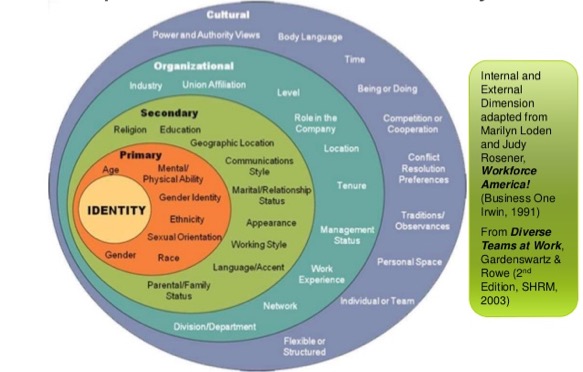
Resources: Think-Pair-Share and other active learning strategies, Concentric circles of diversity
Season 1 Episode 1: Building Strategies That Include All Learners
Rachel: [00:00:00] Welcome to Keystone Concepts in Teaching: A Higher Education Podcast from the Stearns Center for Teaching and Learning, where we share impactful and evidence based teaching practices to support all students and faculty.
I'm your host, Rachel Yoho. I'm a faculty member in the Stearns Center for Teaching and Learning, focused on faculty educational and professional development.
I have an interdisciplinary background with expertise in global climate change, renewable energy technologies, and environmental health, with particular emphasis on social and environmental justice. At my previous institution, I received the University Wide Educator Rising Star Award two years in a row; the Exemplary Course Award for the Climate Change, the Environment, and the Future of Public Health course that I developed; and the Diversity, Equity, and Inclusion Strategies Award in Education, the only DEI education award at the university, as well as two faculty commendations at an earlier institution.
I look forward to discussing [00:01:00] teaching approaches and strategies with our guests and sharing actionable resources with you.
Today, I'm joined by this episode's guest, Shelley Reid. Dr. Shelley Reid is the Executive Director of Engaged Teaching at the Stearns Center for Teaching and Learning. Shelley has grown up in an extended family of teachers, including several college English professors, as well as a middle school principal, a gymnastics coach, a history teacher, and a high school counselor, so it's not surprising that she frequently studies how both students and teachers learn.
She's an Associate Professor in the Department of English, where she directed the Composition program for 10 years and has taught undergraduate and graduate courses in writing, editing, and program administration. She has recently published articles about how teaching assistants in Composition programs learn to teach, how writing students engage in peer review activities, and how program leaders can assess student progress.
She is interested more generally in questions of how learners transfer knowledge from one context to another and how institutions shape the work of teachers and [00:02:00] learners at all levels.
So welcome, Shelley. Thank you so much for joining us.
Shelley: Thank you for having me.
Rachel: And so with this new podcast from the Stearns Center, some of our goals are really looking at increasing access to teaching and learning content for educators, and supporting student success through faculty development, and importantly, supporting faculty success and experiences.
So in our first episode here, we're going to discuss how good teaching is focused on learning, rather than just delivering content, and done in a way that supports and includes all students.
So we often hear about inclusive teaching, but Shelley, can you tell us a little bit more about this? It seems like inclusive teaching really is just that aspect of good teaching.
So what does this mean to you?
Shelley: Thanks, Rachel. I really agree with that. I guess I'd start by saying that college teachers in the 21st century need to actively engage all of our students in order to be better than the internet at supporting their learning. I borrow that phrase "better than the internet" from Jose Bowen, who points out that if all [00:03:00] students really need is information, they have that now. They have free 24/ 7 access to it without even having to put on shoes or drive on the beltway. But we all know that being exposed to information isn't the same thing as learning, right?
Rachel: Yeah, absolutely. So what does that mean for us in teaching then?
Shelley: So students come to college for help not just in knowing the facts or the equations, but in seeing how those connect to one another, help in applying principles or processes to complex problems, and help in creating or innovating new solutions. And so students need learning that includes an integrated balance of knowledge and skills.
They need carefully curated information that meets them where they are and builds into more complex patterns. And they really need guided opportunities to practice using the information to engage with tricky situations in the field or the profession and to receive feedback on how they're doing.
Rachel: So that's really a [00:04:00] lot to balance, so scaffolding the learning, scaffolding the experiences, giving a lot of feedback. What can that look like, for example, in a class?
Shelley: So in some classes, the information might go to all students from a case study that they read as homework. And then the practice and feedback might come as they are all invited to work synchronously in small groups to identify the next steps or solutions in that case. In other classes, the information might come in, say, three 15 minute mini lectures, and the practice then can come between those lectures.
I can, as an instructor, give my students invitations to join a brief discussion with a peer on a key question, or I can put up an onscreen quiz about applying that information to the situation, or I can give students an opportunity to work individually through the last two steps of a problem that I start for them, and then maybe they can share some answers out.
So there are lots of different ways to invite students into practice, as well [00:05:00] as giving them fundamental knowledge.
Rachel: That's great. So we see some really practical aspects there of not only the types of activities, but even how to structure perhaps a live or synchronous course. And so when we're, we're expanding this discussion a little bit, can you tell us about how an approach of including all students is really fundamental to this learning focus strategy?
Shelley: Absolutely. So one key principle is for teachers to shift from including all students in receiving knowledge to including all students in practicing and receiving feedback. You know, we've all given lectures where we think students are following along because they're nodding or smiling, but then when we ask them to apply the knowledge, many of them struggle with it or even fail, right?
Rachel: Absolutely. And we're hoping everyone's nodding and smiling as they're listening here as well.
Shelley: Right. And so, or maybe we hold a class discussion, but say only 30 percent of the students really contribute, and there's a group of students with their hats on in the back row, and we're [00:06:00] not quite sure whether they're engaged or not. If our goal is to enable learning rather than just delivering content, we have to design regular opportunities for all students to practice what we are preaching.
So one basic strategy is often called Think, Pair, Share, and it only takes a few minutes, but it includes every single student in active practice. So instead of me asking a question, maybe three students raising their hands and one of them answers and then we move on, I can ask a question and tell all students, "I want you to think of an answer or the answer to this question. I want you then to turn to a peer and share that answer with your peer. Find out whether they agree with your answer or have a different answer so you get immediate feedback from the peer." And then I can ask a few of those pairs to share out a couple of the ideas that they had while everybody else listens.
So everybody has been included in that moment of Minds On [00:07:00] practice.
Rachel: So often we hear about techniques like Think, Pair, Share in an active learning discussion or an engaging your students type of discussion. So let's expand on this a little bit. Can you tell us a little bit more about how these types of activities, even like the Think, Pair, Share, is a kind of inclusive teaching?
Shelley: Absolutely. Anything that allows all students to feel that they're invited into the work of the field, the solving of problems, the engaging with complex opportunities, all of those allow students to feel as though they aren't just sitting on the sidelines watching, but they've jumped in the pool, they're swimming along with us.
Another key move in enabling learning for all students is to connect the information that we're providing them to purposeful, impactful practice. Students, as it turns out, don't always have enough context to see the forest when they're concentrating on the individual trees. It can be easy to assume that a student in an advanced biochemistry course or an [00:08:00] accounting course knows how and why the information we're addressing today is relevant to professionals working in the field, but really not all of them do.
And so, for instance, research shows us that female students in STEM courses often feel a lot more included in and excited about the learning when their instructor explicitly connects a lesson or a lecture to a story showing how professionals using that knowledge are helping to improve life for a community.
In the same way, researchers tell us that first generation college students may not have a clear mental picture of how professionals in the field actually apply the knowledge that's outlined in a lecture or a book chapter. And those students will remember and apply the information more successfully when they have that bigger picture to connect to.
Rachel: That's really interesting here. So your point about not assuming that our students all understand the purpose of what we're asking them to learn helps highlight how many different kinds of diversity affect teaching and [00:09:00] learning. When we're talking about this, in order to consider diversity a little bit more fully, we need to be talking about how the diversity of identities and experiences and practices show up in the classroom. Often this is considering and focusing on things like race or gender, but diversity in the classroom is really much more than that. We also differ in lots of different areas like language and manners and culture or social roles or educational background, skills, income, sexual orientation, all of these different things, some of which may be more or less relevant in the classroom.
And so when we're thinking about this, we have lots of different aspects of diversity, to be thinking about, which poses not only a challenge, but maybe some opportunities as well. When we're thinking about diversity, we want to be thinking about how the class or any other group is diverse, not an individual, for instance. We have some of the primary, secondary, we might have organizational, aspects of diversity. For instance, the type of position someone [00:10:00] has, maybe here at the university, their role as a student, you know, what type of program they are enrolled in, as well as moving out towards, you know, cultural aspects of diversity.
And we'll include in the in the show notes a really interesting figure that shows some of these concentric circles that move out from from the primary aspects of diversity there.
And so Shelley as we're talking about and we're thinking about these different aspects of diversity and our teaching and learning, some of the activities that we're looking at here - how do or how might these different aspects of diversity impact how educators approach their teaching?
Shelley: I really appreciate that idea about all the kinds of diversity, some of which we see and some of which we don't, right? We might glance out into a classroom and have a guess at how our students might be coming to this learning situation from a range of backgrounds, but they may also have a whole lot of different experiences, resources, and values that we can't see that affect their learning directly.
They're [00:11:00] also going to have diverse levels of preparation and confidence related to the course. And so, sometimes it helps to be a little bit more proactive about finding out a little bit more about our students. Maybe you can do that through an anonymous survey. Maybe it's something that happens as part of a class discussion.
I like an exercise that one of my colleagues does. She asks students to complete a note card or sometimes an email, and she invites them to tell her anything you want me to know about you that will help me help you learn and succeed in this course. This way, students get to choose what they want to share.
They can focus that on what will help them learn, so they're focusing in on how they can succeed in the course, and the faculty member gets to learn a little bit more about how to be inclusive in their teaching and understand how student perspectives and experiences might affect their learning.
Rachel: So that sounds like a really interesting activity and a goodway to learn a little bit more about our students. [00:12:00] But what if there's information they don't want to share or don't see as important? What do, what do instructors or what can instructors do then?
Shelley: It's a great question. I think our goal as faculty members can't be to know every single thing about every single student so that we always adapt in exactly the right way, and we never leave anybody out, and we never offend anybody. That's an impossible goal!
Rachel: I think that sounds like an impossible goal. So while we're maybe not striving for perfection in all situations or instances here, what might be a more reasonable approach here when we're thinking about the diversity in our classrooms and a little bit more inclusive teaching?
Shelley: Well, we don't want to live in fear, and also we don't want to just give up and say to students, "Take it or leave it, this is who I am, this is how I teach, this is the way the field is." Students really do respond well when faculty show that we're making an effort. So I think a much more achievable goal is to take what I think of as a deliberate, exploratory [00:13:00] approach.
That is, I set out to do this in a kind of scientific manner. I will identify some changes that are designed to give students more opportunity, access, or flexibility. I tell student what we're doing and why. And then I seek some feedback. I ask their feedback about how this is helping their learning or whether it's getting in the way of their learning.
And then I want to be ready to acknowledge what else I might need to change. If something really doesn't go well, I might need to apologize, but that's still better than not having tried something. If something just needs a little bit of a change, I can share student responses out with the class and explain what it is I'm going to try to do differently the next time around.
So, for instance, I might tell my students that for their Monday assignment, they can either solve three short homework problems, or they can make a video response to a larger case study. Then I can explain that I'm creating these options [00:14:00] to allow people who are concrete thinkers or more abstract thinkers to show me what they know.
Cause that's my goal. I want to know what they know, what they can do. I don't want to trick them and give them surprise information that's only going to reveal what they don't know, right? And then I can do an anonymous one question survey afterward to see if students felt like this approach, this choice that they had helped them engage as learners. And I can tell the class what the survey said. These will give me ideas about how I might continue this practice, or I might tweak it for the next assignment out.
Rachel: Yeah, that's really great. And, and it's a, it's a great way to also feel like we're taking a little bit of our own guesswork out of teaching, you know, really getting some of that feedback. So I really like the idea of exploring ways to, you know, adapt to this, this very diverse student body, all of these different aspects of diversity, really getting that student feedback, rather than just being perfect the first time out.
Not that we, you know, don't always want that, but I think it might [00:15:00] also work for strategies that that raise the bar a little further. What can we do better? What can we do next for instance?
And so as we're thinking about some of the different teaching strategies here, some of the different aspects of diversity, we also want to be thinking a little bit about inclusion.
And so when we're talking about inclusion we're really looking at a campus community where all members have these three different key points, so that they are and feel respected, so they might be visible in the curriculum or learning names, that they have a sense of belonging, that there's some transparency in the teaching. Why are we doing this? That there's encouragement, that there's a positive attitude around learning. That we might be looking at, for instance, that they're able to participate in and achieve to their potential. So this could be looking at how we look at active learning, different types of scaffolded practice, how we're structuring activities and learning experiences. Overall we can really extend this to student success and career preparation.
And that's really what we're here for. We're here to help our students. We help [00:16:00] them learn and achieve and prepare for differentlearning experience and life experiences. And so while we're thinking about this, you know, obviously diversity is essential but it's not sufficient.
We can have spaces that an institution, an organization, or any particular setting, can be both diverse and non inclusive at the same time. And so here it's a really good opportunity to think about what is that sustained practice of creating inclusive environments that's really necessary for success.
And so I think that's particularly relevant here, not only at, you know, George Mason University, but in universities broadly. It's a really relevant point for faculty. So leaving opportunities for students to connect to learning in different ways is a really good first step, but we can also extend this out and look for other options as well.
And so Shelley, as we're thinking about moving simply from just being in a diverse space to helping learners really belong and succeed in that space, so helping students to feel [00:17:00] included that they belong in those spaces, what does teaching to support all students look like in practice to you?
Shelley: So, in thinking about the big picture, for me, it's about purpose and purposefulness. And so, that can mean making a commitment, every class, to two things. First, explaining exactly why I think it's important for us to inquire into the knowledge or strategies that are on deck for the day, and also creating time or space for every student to have that hands on or minds on learning for at least, like, ten minutes out of every hour.
That first point, I'm going to say again why we're doing this. I'm going to say again why we're doing this. It can start to seem repetitious, or maybe it feels too career oriented. My home discipline is literary studies, and we're not always looking for a concrete application for how we read Toni Morrison's novels.
But we [00:18:00] do have a reason to be engaged in that work, with that book, with that story at this time. Giving students that background information really helps ground them and help them see how they are being invited into the profession. We all got into our fields because we find this work meaningful and valuable, whether that's because we know it will support our client in our rehab practice at 2:30 on an afternoon, or because we know that the ethical questions of choosing to support one person versus many people really help us understand some fundamental characteristics of being human. As faculty, our "whys" are part of that invisible background that we bring into the classroom. They're part of our diverse perspectives.
And those are secret. Those are not visible to students unless we bring those forward and let students get a glimpse of that story.
Rachel: Yeah, that's such a great point. You know, so often we're trying to cover [00:19:00] so much content that it feels like we're always rushing to get through a thing and what gets taken out are those, those learning experiences, those application times as a group in those synchronous types of settings, if that's the modality we're teaching in.
And so sometimes we're, we're so much caught up in the, the "what" that maybe we're forgetting to emphasize the "why."
Shelley: Yeah, absolutely. And then thinking about how we include students in acting, in applying that knowledge, that can also look like lots of different things, but also not very complicated events depending on the class.
Students can work the second half of a problem that you share with them. They can brainstorm a list of connections or consequences with a partner. They can answer a quiz or a survey via an online application. They can identify key elements of a scenario or even write up the whole day's class in a quick movie promo and decide whether Ben Affleck is going to play the instructor or [00:20:00] whether somebody else is going to play them. And so all of these give your students, whether you're synchronous or asynchronous, a chance to take what you've been giving them as background information and see how it feels to get their own brains working about this.
Students should always know the why, and they should always be invited and expected to try it themselves, not just take notes on what I tell them.
Rachel: So it kind of seems like we're back to what we were talking about earlier, that this seems like a really good just general approach to teaching. So what about this is making it particularly inclusive of all students or supporting all learners in this case?
Shelley: That's a good question. Let me see if I can explain with a specific example.I like a collection of approaches that come under the description of "cool calling." Now we know cold calling is surprising one student with a tricky question, putting them on the spot and seeing if they get it right or get it wrong. [00:21:00] Cool calling can use several strategies to be more inclusive.
First, and I think most important, is deciding what question to ask. If you ask a question that has many right answers, such as most of the questions that experts in the field are really trying to wrestle with, you're going to give a space for lots of students to find their way into that discussion. And so that might be the difference between, "Is A right or is B right?" And a more inclusive question that says, "What are two or three reasons someone could give for choosing A over B?"
Second, you ask all students to write or maybe tell a partner one of their answers. Or you give them 30 seconds, maybe even a couple of minutes to think it over if it's a really tough question. Remember, it takes students a while to shift from I am receiving your information mode to I am producing my own knowledge mode.
Once that's [00:22:00] done, you know that everybody in that class has something they could contribute. They've had a chance to mull it over. They've given it some thought. And so now they're ready.
And at that point, I don't mind calling on several students, even some of the ones who might otherwise not volunteer to speak. I can also ask for more volunteers. And I can ask for people who might have a different answer. Does anybody out there have another answer? Who else has another version of this?
So that what we're doing is building a much more complex picture and we're building it together. Even then, I can decide, because it's cool calling, not cold, that I'm going to allow somebody to pass. If I call on them, they can say, "Nope, I don't have it today." And I'm like, "Fine, that's alright." And I'll move on to the next person.
All of these strategies mean that everybody is working a real problem. Everyone was invited to do this straight out and expected to participate. And everyone then is [00:23:00] enabled to be successful in their contribution. They can also make a mistake or have a bad day without any negative consequences. These are really key principles of lots of inclusive teaching strategies.
Rachel: Yeah, that sounds great. And a really, really tangible thing for us to do is think about how we're engaging our students, how we're making it possible for all students to engage with the content, how we're making it possible for students to engage in a perhaps not terrifying way with class discussions.
And so, really here, what we're looking at are some of the strategies, some of the ways that we can engage students, how we can support all student success. When we're thinking about diversity in the classroom, we're taking a really expansive view and how we're supporting all students in these places.
And so, as our wrap up for today, can you give us just a very quick overview of how, how does this conversation that we've been having represent a keystone concept in teaching?
Shelley: So I [00:24:00] think a really main concept is the idea that faculty need to create an engaged learning experience for all students, so that we're not just presenting information, but we're enabling learning. We're including students in practice opportunities and feedback opportunities. I think another background piece of this, though, is the idea that as instructors keep teaching, we have to keep evolving, we have to keep trying new strategies that move us from simply acknowledging that we have diverse learners to actively inviting them into the work of the class in the field.
Rachel: That's great. Thank you so much, Shelley, for your input and your expertise and joining us for this discussion.
In our next episode, we hope you'll join us as we explore more about how to teach and support all students as well as all of our instructors. In our next discussion, we'll continue to expand on these concepts, and we'll talk about even more very specific activities and things that you might try in your [00:25:00] classroom.
Podcasts we love
Check out these other fine podcasts recommended by us, not an algorithm.
