MAHPERD "Voices From The field"
In this podcast, you will hear from educators and professionals in the field sharing their insights and experiences in the HPE (Health Physical Education) and allied fields. I hope you find this podcast informative, and inspiring. Learn about best practices and tools that you can implement in your teaching practice. We want to know not only what you do, but also the action steps you took to get you where you are. The Status Quo is not in our vocabulary folks, my guests are leaders in the field who are taking action to make an impact in their respective fields. If you have any questions or would like to be a guest on the show email mahperdpodcast@gmail.com
"If you always do what you've always done, you'll always get what you've always got" Henry Ford
MAHPERD "Voices From The field"
If P.E. is Required, Then What Are We Teaching?
Use Left/Right to seek, Home/End to jump to start or end. Hold shift to jump forward or backward.
If you’ve ever heard a student say, “We just played tag,” and felt that sinking feeling, you’re going to want this conversation.
In this episode, I talk with Dr. Hilary Glencross, PE teacher educator, curriculum designer, and founder of UBD Movement Lab, about how to make physical education look and feel like real learning without losing the joy of movement.
We dig into Understanding by Design (UbD) and why backward design changes everything in PE: start with the end goals, align to standards, build assessments with purpose, then choose activities that actually teach something. Hilary explains what a strong standards aligned physical education curriculum looks like, why student voice drives engagement, and how clearer vocabulary and learning targets help kids explain the “why” behind what they’re doing. We also unpack assessment in PE, including cognitive and authentic options that give students more than one way to show growth.
Then we get practical. Hilary shares her SHAPE America standards to Massachusetts frameworks crosswalk and how it can save districts hours of tedious alignment work, freeing teams up to focus on essential questions and better unit plans. We also talk UDL and SEI supports for multilingual learners in PE, including visuals, sentence stems, word wall cards, and smarter ways to structure partner talk so every student can participate in the moment.
If you care about inclusive PE, curriculum mapping, standards alignment, and making physical education easier to defend and easier to teach, this one is for you. Subscribe, share with a colleague, and leave a review with the curriculum challenge you’re trying to solve right now. Check out the site below!
Resources:
https://www.ubdmovementlab.com/#/
Thanks for listening! 🙏🏼 If you picked up a new idea or felt inspired by today’s episode. Please take a moment to follow the show and share it with another educator who’s passionate and let’s keep the conversation going!” I’d love to hear from you and if your interested in being a potential guest on the show; email mahperdpodcast@gmail.com
Welcome And Guest Background
JakeHello and welcome to Voices from the Field, a MAHPERD podcast where we talk with educators in the field to hear about their perspectives and experiences. My name is Jake Bersin, Advocacy Chair for MAHPERD, and today I have this pleasure of speaking with Dr. Hilary Glencross. Dr. Glencross has made some notable and exciting shifts in her work. Welcome back to the show, Dr. Glencross.
SpeakerThank you.
JakeJust a little bit more background. Dr. Hilary Glencross is a physical education teacher educator, curriculum designer, and founder of UBD Movement Lab. She is a professor in the Sport and Movement Science Department at Salem State University, where she prepares future educators to design inclusive, standard-aligned PE experiences. Her background teaching high school and adapted PE continues to shape her focus on accessible, student-centered curriculum. She founded UBD Movement Lab to meet the growing need for PE-specific curriculum support in schools. Through consulting, professional development, and customized resources, she helps districts strengthen standards alignment, curriculum design, and instructional planning using understanding by design. Her work also emphasizes universal design for learning and support for multilingual learners, providing practical tools that move educators beyond activity-based teaching toward purposeful learning. Hillary is actively involved in MAHPERD and Shape America, contributing to ongoing conversations about curriculum, teacher preparation, and the future of physical education. Alright, let's
Why Curriculum Design Became The Focus
Jakedive in, Hillary. So you've been doing a lot of work lately around curriculum. What sparked this deeper focus on curriculum design?
SpeakerI think curriculum for me has always been something I enjoy. And I think back to teaching high school, and I was the one where my coordinator would say, you know, we're gonna do this in the department meeting, you don't need to do it this weekend. And I think I just enjoyed playing with it. And so when I got to teaching a higher ed and my involvement with Mapard, Maria had put me on the speaker's bureau. And I think my first district that I was in was Lowell Public Schools. And I was working with K to eight and almost every teacher there for that professional development. I think there was about 20. They were mainly emergency licensed teachers. So they knew nothing about curriculum. And it was a full-day PD that I ran. And I think I just had so much fun just throwing in all this stuff, and I felt like we could have done so much more. And that's really what kind of launched it. And then that was my very first year at San Helm State. I was doing that. And then that spring, I actually taught our curriculum and instruction design course. And that's just my favorite course to teach. So it's a grad class, and we really break down UBD. They create three unit plans, they create two curriculum maps. And it's just, I love the design. I love the unpack. I love aligning the activities with the standards. And there's just so much that you can do with it that I think that's just where my passion really took off. Maper then got me into a few other districts. And then I was like, there just seems to be a need for it, and I enjoy it, and I'm teaching it, and it just all overlaps. Then I'm like, let's start this business and get into some more districts.
JakeFantastic. So you mentioned UBD. So for listeners who might not be familiar with that, can you just tell a little bit about what UBD means and the importance of it?
SpeakerSo the UBD is understanding by design. It's Wiggins and McTighe,
Understanding By Design In Plain Terms
Speakera backwards design to approaching curriculum. And you're kind of starting like with like that overarching goal and aligning the assessment before you get to those activities, before you get to lesson planning. So everything that I've done since being at Salem State has been grounded in Wiggins and McTighe. So for me, I'm like UBD is everything. And that's where I'm like, okay, we're gonna launch UBD movement lab and go from there.
JakeThat's great. So what does a good PE curriculum look like in practice? Like what with all these curriculums out there, you can be store-bought curriculums, it's homegrown curriculums. What what are your thoughts on what a a good PE curriculum should look like?
SpeakerI would say it can't be there's so many great things out there, but it really needs to meet the needs of your students and the things that you also can bring to the table. I think your strengths and your passions as well. And I'm a huge believer in having those conversations with your students and really getting to know them. I mentioned on the last podcast that I was on with you,
What Strong PE Curriculum Looks Like
SpeakerI was one that hated Physit. But doesn't mean that there's not things out there that I could enjoy that align with phys it. So if you meet the needs of your students, you're getting higher engagement. And then really taking the time to unpack the standards and making sure that you still have standards aligned curriculum, you have different types of assessment. It's not all just psychomotor. Like there's certain psychomotor things that I struggle to do, and I'm not scoring that four out of four, you know, and it's like this is what I teach, and I'm still not at that level. So the students are the same way. So it's making sure you have cognitive assessments, authentic assessments that are thrown in to have different ways of showing learning. And that's where I think there's tons of great stuff out there to buy, and you can easily implement it, but it all definitely needs to be modified to fit the needs of your students to really get the most engagement. But I think the standards alignment is huge because that's what gets us away from this rolling out the ball, playing games that really have no meaning. Like you need to give Phys Ed the why and the purpose to it. And that's why I think about one of our students the other day, and actually one of the districts that we worked with, and they just do a lot of tag games. And we're like, what like what are we doing? Like, what's the purpose? Like, how are we connecting this to standards? And it was just the light bulb kind of went off, and it was like, yeah, it's fun, it got them moving, you know, but there's so much more that we could be doing, and to see the shift with our student teacher was kind of cool to see.
JakeI think that you're 100% correct. The students need to know the why, and we need to know the why before we even start because that's what's going to also add value to what they're learning. So when the parents or caregivers ask them, what did you learn today? Oh, we just played tag versus oh, we were learning about evasion or or how to cut or agility and reaction time and and those types of things.
SpeakerYou throw the actual vocab right into it, and it's like it gives us meaning. When you put those vocab words in, you really do put the education into what we're doing.
JakeSo, Dr. Glencrosh, you made something called a crosswalk, is that right?
SpeakerYeah. So I designed a crosswalk between shape standards
The Standards Crosswalk Time Saver
Speakerand mass frameworks. I think working, I was with Concord Carlisle over my spring break, and I was brought in by the Mayford Speakers Bureau, and I was told they need help aligning practice four to their curriculum. And their coordinator reached out and they're like, this is what we have. And I'm like, wow, this is really good. Like you have a solid curriculum. And I'm like, practice four is already there. I'm like, so what exactly am I doing for your two-hour PD? And they're like, well, we need to align standards. And I'm like, it looks like it's done, you know. But if you take that to an administrator and they're like, Mass has what, seven practices for their frameworks? And it's like, you only have one in your entire curriculum. Like, are we really like, is it done? And so I was like, there's gotta be more. And I know MapErd is like for phys it, it's only practice four, like that's what it meets. And health, it covers a lot more. And I'm like, no, we're gonna dig into this because again, I like curriculum, I like just playing around with it. And I pulled up the mass frameworks and I'm like, okay, well, this one fits. And I guess this one fits too, but like we're in the shape standards. And Concord Carlisle had the national standards in their map. They were just aligning with mass frameworks, and so two days worth of work because I was there on a Wednesday. So Monday and Tuesday, I sat down and I created this crosswalk, and they got the most basic version of it. It was an Excel spreadsheet, like this grade span indicator, this mass framework. And we went and we plugged it in and we were done within an hour of me being there, and I had two hours, and I expected us to be done pretty quick. And I was like, wow, like that crosswalk, even though I put in so much time to design it, I was like, that saved us so much time in the district. And then we got to use that extra hour to create essential questions and really expand more on that UBD that they were expected to kind of have with their curriculum mapping. So then I was like, okay, I'm talking to Maria at Mayford and I'm like, we got to like somehow make this bigger. And I told her what I did at Concord Carlisle, and she's like, that's amazing. And then I get off the Zoom and I'm on Canva and I'm creating this actual user-friendly document. And I'm just hoping to kind of get it out there and get districts using it because, like I said, in one hour we had Concord Carlisle's entire curriculum aligned to mass frameworks because they already did the work with Shape standards. And then I was at the leadership conference presenting on this, and someone asked me, like, we have the old shape standards. And what's really cool is Shape America has the crosswalk from the old standards to the new ones. And I think it's a free download if you're a shape member. So I was like, go to shape, realign to the new ones, and then we have the new framework so you can pull mask ones in. And they were even surprised at how quick that all happened. So I mean, it's definitely a time saver, I would say. It's about 20 hours in the making, but in an hour, your curriculum is aligned if you have shape standards there.
JakeSo I'm sure they were ecstatic with the work that took place.
SpeakerYeah, Conquer Carlisle was shocked, and that's why she's like, We're done. And I'm like, Great, but we're looking at your curriculum map, and I had it up, and I'm like, let's keep going. Like your map's almost done. It has a few more components that we could add in that their district was expecting for like next year, I think. And so we just we moved on to essential questions. Elementary had a little bit more alignment work that they were working on, but it was just the fact that standards were done and their coordinators, like, that's it. Like there's nothing else. And we're like, yeah, we're good. Like, let's just keep going on curriculum. I think the standards sometimes, like, I think we sometimes get what the standards are and we can unpack them, but it's tedious work to have to align it to what we're doing, you know? And so if you can take the time away from that and really then break down how are we assessing or what activities or what's the overarching essential question, like that's where more work comes in, and it's a little bit more fun than just being like, okay, standard one point. It's like I said, it's tedious.
JakeAnd I can imagine this work will look different depending on the district you work with, right? So in your consulting experience,
District Needs Buy In And Starting Points
Jakein addition to curriculum support, what other support are they looking for? Is it mainly curriculum or is it assessments or is it all tied, everything's tied together with the UBD? What's your experience with that?
SpeakerSo, what I'm seeing is that there's a lot of districts that are using UBD. They are in old standards, so it's a lot of shifting to new standards, implementing some new stuff. But what we found at the leadership conference, which was really cool because it was a bunch of coordinators, is that it's getting your phys ed staff to actually buy into it and see like the reason. And so it's like, I don't know how to answer that question yet. I'm still playing around with that because it's really cool. Like you have the curriculum, it's like let's expand it. And I think it goes into like what's the passion of your staff though? Like, if they're not into teaching lacrosse and your students don't want to play lacrosse, you know, there's a disconnect. It's like, yes, it aligns with standards, fine, but they're not like excited about it, you know. And I think it is a conversation of like, how can we get you excited? I think that's the next step. And then there's districts that don't have any kind of curriculum at all. And they're like, well, where do we start? And I'm like, let's start at the standards, you know, and I'm like, let's figure out like what are your power standards? What are the ones that are most important to you that you want your students to succeed in over their 12 years with your program, you know? And I think that's the big one. And then I think assessment really does come later. I've noticed that there's definitely more assessment happening in FISA than when I was a student or even early on when I was teaching high school. So I think that's great, but making sure again it's aligned, there's a purpose to it, and that the students understand that.
JakeI think you brought up two really important key points. One, how do we get the buy-in from the staff because they're the ones teaching it? And then two, where do we start? Start with the standards instead of starting with the gamer activity, which is very instead. Let's what are we gonna learn? Like we really need to start, like you said, with those standards and think long term. So Right.
SpeakerAnd they're there whether we like them and agree with them or not. Like that's what we're expected to teach to. So which ones now align with our passion, our ability, our students' passion? You know, I think again, student engagement and getting student voice is so important to me that it's like have that conversation. The students are the stakeholders in your curriculum, they should be involved in some decision making as well.
JakeDefinitely. On your website, UBDmovementlab.com, you mentioned SEI and UDL. Can you talk a little bit about your work with these two frameworks?
SpeakerYeah, and I'll be honest, they're frameworks
UDL And SEI For Multilingual Learners
Speakerthat I well, I mean, SEI had I had heard of. UDL I had not heard of at all. And I think this goes back to my mentor at Salem State, Dr. Emory Gal. She makes the point that like UDL comes natural to us. And that's why I didn't know there was a word for it, you know. And I don't remember learning it when I was there in undergrad, and now we push it, and it's it comes natural to FIZ ed teachers because it's your extensions and refinements, right? So it's happening all the time in your lessons, you're making those modifications, you're adapting for your students, and that's your UDL. But then the SEI came about, and I was teaching high school, and everybody had to get the SEI endorsement, but there's too many other teachers, and it was like, okay, well, I'm not gonna get it, like whatever. And my last two or three years in Watertown, I spent quite a bit of time with our ESL department, and my professional goals aligned with making sure our multilingual learners were being met because I was finding that they're working 40 hours a week on top of going to school and they're not caring about my class. Like they don't care if they got a zero on the assessment. You know, they don't understand it, they don't care. And I'm like, okay, well, it makes sense that you don't understand it, but you should care. And I'm like, how can I make it something? You know, and I really broke down my workout log for them. We had pictures, we had the words, translations, we had everything, my smart goal assessment. I had sentence frames and I had all this stuff, and I'm like, okay, we're doing it, you know. And then I get to Salem State and this past week, but it was our big lecture. Like our students are at the end of their semester and their lesson plans are turning it in, and we're assessing it, and we're like, there's no SEI. Like, you just finished your SEI endorsement course. Why is this not included? Like, what is happening? And I really just think a lot of times phys ed teachers and myself included, when I taught high school, like I said, I modified the assessment. I was so happy, like I met their needs. And our students do that now. It's like they turn in the exit ticket and it's modified. But what I've come to realize is it's like, yes, your assessment got modified, but did they understand you in the moment? You know, and so really breaking that down. So just like UDL and modifying the task for performance and changing equipment and everything, you need to change the language and you need to have like if you're doing a pair share, which I see with one of my students all the time, she starts her instant activities with pair shares and stuff. And that is where your MLL student is completely not involved. And it's like they don't understand. So you can ask the question, have some visuals there, have some translations, but give them that sentence starter, you know, and so that they know how to answer it. Or when you're teaching, it's like you're really emphasizing the vocab, you're really demonstrating the skill, you have the visual, you have the video, but it's not all about translations, you know, and it's like one of the things that I have been working on that I want to get on my site at some point are word wall cards. And I have the little clip art, I have the English word for the vocab, you know, kicking, throwing, whatever it is. And then I have the translated word small underneath. But I think the one thing to also keep in mind is that sometimes your multilingual learners can't read their language. You know, think about a kindergartner. Like a kindergartner could speak English, but are they even reading English? You know, and so now multilingual learner is the same thing. They might speak Spanish, but they can't read it. And I think even having that visual card and the clip art helps the students that can't read as well. It doesn't matter if they're multilingual or English speaking.
JakeIt could help everyone.
SpeakerYeah, and I think that's the purpose of and SEI. I mean, yes, SCI is more multilingual learners, but there's kids that can't read. So those pictures, those extra demonstrations and reinforcement help those students as well.
JakeWell, we're thinking about the language domains too, right? Speaking, listening, reading, writing. You mentioned think, pair, share, that's perfect, where they're listening to each other, they're talking, communicating. And then as far as some practical ways for PE teachers, you also mentioned the sentence stems. Right? Absolutely. I use a projector a lot myself, and I know a lot of other PE teachers do. But or if you don't, you can write it on a whiteboard or you know, a poster board. So simple takeaways that teachers can utilize tomorrow.
SpeakerRight. Or even using your students. You know, you have some students that might know Spanish as well or the other language, and it's like they can be partnered up because your multilingual learner wants to learn from their peers as well. Like it's embarrassing to be partnered with the teacher and having the teacher really break it down. So if you have a student that can kind of fulfill that leadership role and help take them under their wing and learn English together, like I think that's important too.
JakeSo you're thinking about presenting again at Mayford. I know you presented at the leadership conference. What might this your next presentation focus on? What are your thoughts on that?
Future Sessions And Portrait Of Educator
SpeakerSo I have three right now, and I know Mayford's trying to get sessions, so I might be submitting all three. So my leadership conference was on stage one of UBD, really looking at standards and the why and all that. And so part of me wants to redo that with more in it for anyone that wasn't at the leadership conference. So that might be in there. The UDL and SDI, that's kind of like my new passion right now, especially since I know my students are struggling with it. So I'm thinking about implementing that and expanding on what we just talked about. And then my last one is I actually submitted an article for publication on portrait of a physical educator.
JakeOh.
SpeakerI'm waiting to find out if that needs changes or a resubmission somewhere else. But that for me is also been my passion for three years at Salem State, basically defining professional dispositions of what it means to be a physical educator. And talking to Dr. Anne Marie Gallo, it's like that could be brought into schools. So I'm kind of thinking about how can I present on that and make it like the portrait of a physical education student. And I have this vision of it like aligning with full value contract through Project Adventure and all of the things that I did with my college students to envision what it looks like to be an educator. I actually saw on LinkedIn Marlboro Public Schools does a portrait of a student or a learner. So I was like, that they're doing it. Other schools are doing it.
JakeYeah, I think it's common. Yeah, portrait of a graduate, our district did that too. I think it's great. I'm looking forward to reading that article. That sounds really cool. Yeah.
SpeakerSo there's a whole recipe for it. So I'm like, maybe I bring that to Mayford too. So you might see me in a couple different capacities there. That's why this portrait of a phys ed student, I think, would be really cool. And to maybe get a district to pilot it with, I don't know. We'll see what comes about with that.
JakeThat's interesting. What impact do you hope this work could have in three years from now? We're here now, but three years, five years. What do you hope to see UBD
Vision For UBD Movement Lab
Jakemovement lab going?
SpeakerI would love to just see it building connections and helping districts really get students engaged. I don't know what it looks like. I have so many different visions. Like those that know me know I love using AI a lot that I'm like, okay, well, maybe I'm in, I know there's a district trying to get someone to present on AI, and I'm like, I'll do it, you know? And it's like, so maybe we're going in AI and using that in phys ed and how it supports that. Obviously, the continuation of alignment with standards, I just I think that's huge. I think districts need that. It gives the value to phys ed. It helps advocate that we should be recognized for what we do. SEI and UDL, I think just meeting the needs of all of our students. So it's like there's so many different directions that it could go in. So I think I just I'm someone that wants to help. And so I'll be on a Zoom with a supervisor in the field that has one of my practicum students, and all of a sudden the conversation is we're talking curriculum, and it's like it has nothing to do with my consultations or anything else. And it's just like we're having fun, and all of a sudden it's like, oh, you guys have to go and teach. Like, sorry to keep you. And it's just, I think, building that network and making sure that teachers are supported and have what they need to get their students moving, and again, advocating for what we do and putting the education into phys ed.
JakeThank you for taking on this leadership role. Your passion is very evident in everything you're saying and what your vision is. Let's talk a little bit about your website. You have some resources on there, and some of them are free, right?
SpeakerI do have one that's free right now, and I'm hoping to get an SEI UDL one up there soon for free.
Free Tools And How To Get Help
SpeakerSo the one that I have up there is a very basic curriculum audit, and it kind of just you go through it's a checklist, and you can see where you're at with your curriculum, and you can see maybe where some flaws are. So it goes through program philosophy and vision, your standards alignment, the vertical alignment with activities, different unit designs and assessment and stuff. So if you notice all of a sudden you're scoring really low on it, maybe that's where it's like reach out, have a conversation. Maybe I have something that can just send you as a resource and you can implement it, or we could work together, or even just research. There's tons of other things out there too, but it helps you recognize where you might need to start your curriculum work. And then I do have my crosswalk up there, and I do have a UBD unit plan template that kind of shows the fill in the blanks. And I tried to give guiding examples within that unit for specifically phys ed, because you can download the UBD template anywhere, but I think in a phys ed, Mindset sometimes you're like, okay, so what exactly gets plugged in here? And so I tried to add some of that in for physid.
JakeThat's really great to have an example because you're right. Sometimes we see examples, but it's not really related to our content area. So we're like, where do we start? Even though we have a template, where do we start? So if those guiding questions are there, that'll be super helpful for people trying to self-assess where they're at. And the checklist for the guiding questions, is that for individuals? That could be for district coordinators, that could be for anybody, right?
SpeakerYeah, it really could be for anybody. It's got seven sections, yeah.
JakeOkay.
SpeakerIt's been a little while since I wrote it. So seven sections that kind of just looks at your entire district's curriculum. So if you're just a phys ed teacher that likes curriculum and you want to look at it, bring it to your coordinator and be like, hey, I kind of enjoy doing this. And this is what I looked at. Can we look at some of this other stuff? Curriculum or assessment or whatever. Definitely could be used by teachers or coordinators or I guess administrators, principals, superintendents.
JakeBD Movement Lab, that can be accessed obviously by anyone. So in the future, it's going to have more resources, more components. That's the goal, right?
SpeakerOh, yeah. That's definitely the goal. My semester's just ending. So I'm hoping this summer, my focus is on getting some resources up there. You can definitely connect with me, schedule a time to talk. All my consultations are free. It says 30 minutes. We probably end up talking for an hour. It's just what I enjoy doing. And again, Amory Gallo tells me I'm a bad business person because I just want to help you. But yeah, the resources should hopefully be up there. It kind of all came to fruition really fast when my crosswalk was designed. And that's where it was just like everything happened quickly, and now I'm just trying to expand slowly but quickly now that it's summer.
JakeWell, that's great. So as we come to a close, Dr. Glenn Cross, what's one key takeaway for a P teacher or maybe a district coordinator or administrator who's listening? What do you want them to take away?
SpeakerI think the big
One Takeaway And Closing Request
Speakertakeaway, and it almost goes back to the UDL and SEI, is like making sure all of your students can access your curriculum and engage when they understand the why, which then full circle goes back to making sure that you're aligning with standards and everything else. But I think engagement is huge in just involving them in curriculum design conversations, even. Even if it's informal, they're sitting out on the side. It's like, okay, why are we sitting out? How what would you change in our curriculum, you know? And it's like you can take that informal feedback and make modifications and reflect on it and improve your curriculum just through a ninth grade student, you know, or a fifth grade student.
JakeSo thank you so much. Dr. Glitchfross, thank you so much for sharing your work with us again. It was great to have you on. Listeners, we'll have this episode uploaded soon. We're also asking you to rate and share the podcast if it's helped you in any way. You all the best. Thank you all for listening. Have a great week, and we will be back soon.
Podcasts we love
Check out these other fine podcasts recommended by us, not an algorithm.
Distinguished Physical Education Podcast Episodes
Gary Zaharatos
The Supersized PhysEd Podcast
David Carney
The Assistant Principal Podcast
Frederick Buskey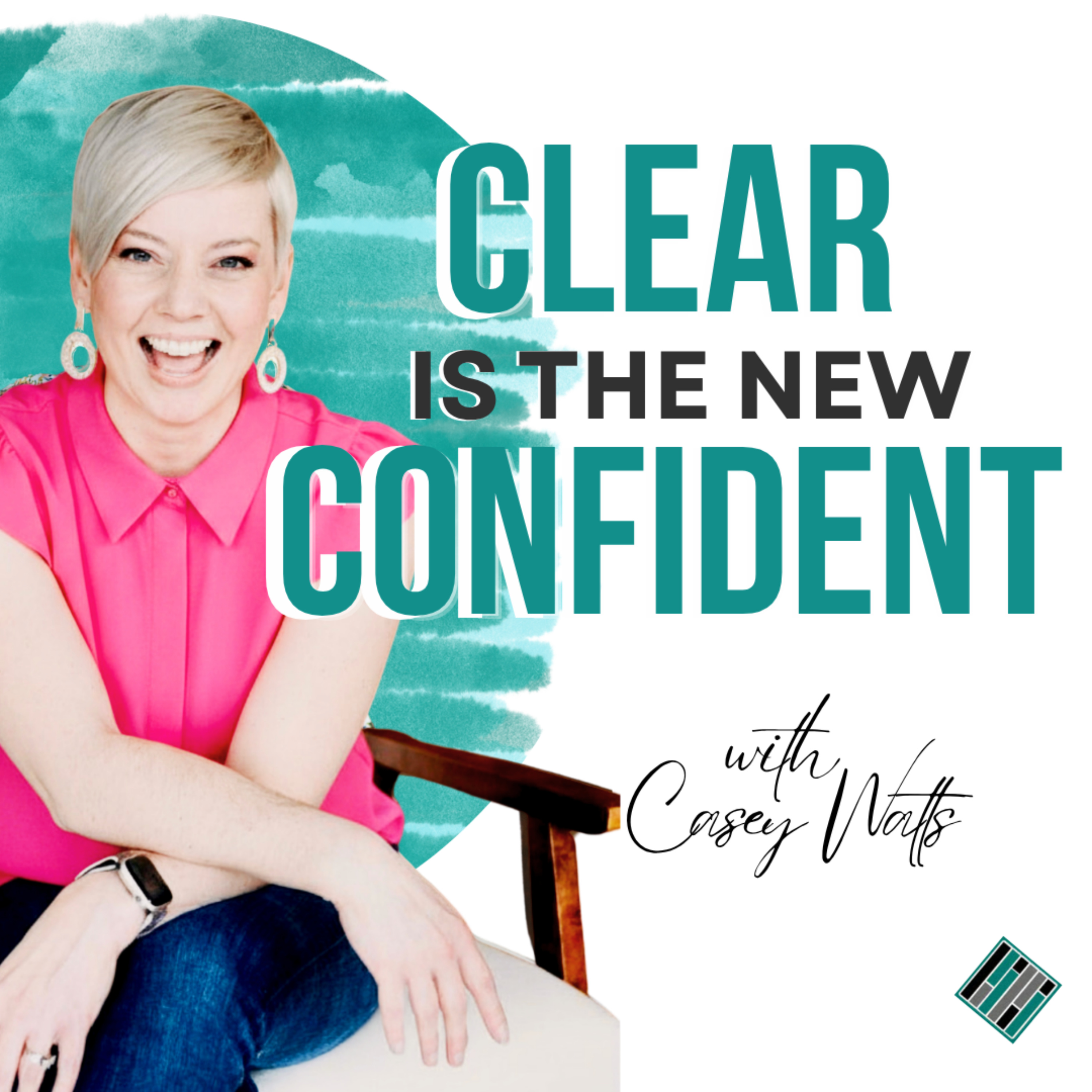
Clear is the NEW Confident with Casey Watts
Casey Watts, Clarity-Driven Speaker, Author, Leader