.png)
Capturing Essence for Care: Storytelling that Promotes Personhood in Healthcare
Feeling overwhelmed by caregiving responsibilities? Struggling to stay present and patient when you're stretched thin? Transform your caregiving relationships in just minutes with evidence-based storytelling strategies that honour the whole person—not just their needs.
Listen for practical tools to:
- Open deeper conversations with aging loved ones, even when time is scarce
- Access life story approaches that reduce caregiver stress and burnout
- Hear real conversations with people with lived experience, including persons living with dementia
- Build meaningful connections that sustain you through the demands of caring
Host Lisa brings together personal historians, digital storytellers, healthcare practitioners, family caregivers, and seniors themselves. Each episode delivers actionable insights for anyone balancing multiple caregiving roles—whether you're supporting aging parents while raising children, managing care from a distance, or working in healthcare while caring for family.
Perfect for: The sandwich generation, family caregivers, adult children of aging parents, healthcare providers, long-term care staff, home health aides, personal support workers, memory care teams, social workers, activity staff, and anyone seeking to preserve dignity and connection in their caregiving relationships.
Join caregivers already transforming their relationships. Discover how small storytelling moments create profound connections—and give you the resilience to keep showing up with compassion.
Please join this community by following the show.
Capturing Essence for Care: Storytelling that Promotes Personhood in Healthcare
16. The Waiting Room Revolution with Dr. Samantha Winemaker: How to Show Up as a Whole Person in Healthcare
Dr. Sammy Winemaker shares how patients can present themselves as unique individuals to the healthcare system rather than becoming "a cog in a wheel." We explore practical ways to ensure your personhood remains at the center of your healthcare journey, even when time with providers is limited.
• Healthcare systems value efficiency and standardization, which can wash away personhood from patient care
• Patients need to actively present themselves as unique individuals with specific needs and preferences
• Dr. Winemaker encourages patients to tell providers "this is what you need to know about me"
• Working in home-based palliative care provides rich environmental cues about patients' lives and personalities
• Information is a patient's superpower - the more you extract from the healthcare system, the better
• There's a difference between being aggressive and assertive - learn to be assertively engaged in your care
• Dr. Winemaker's "My Big Picture" tool summarizes who you are, what matters to you, and your communication preferences
• Healthcare professionals also need human connection - they often feel like "robots on a conveyor belt"
• Being seen as a whole person isn't just nice - it's essential to receiving appropriate care
To learn more about Dr. Winemaker's approach, visit The Waiting Room Revolution where you can find more information about their book "Hope for the Best, Plan for the Rest" and the accompanying workbook.
Connect with Dr. Sammy Winemaker
Other resources mentioned:
Thank you for listening!
Do you have a question or a topic related to "capturing essence for care" that you would like discussed on the podcast? Text the show using the link above or send Lisa an email: awestruckaspirations@gmail.com
Interested in learning more?
Intro and outro music with thanks: Upbeat and Sweet No Strings by Musictown
Lisa brings over 25 years of experience working in healthcare settings with older adults. The perspectives shared on this podcast are her own and do not represent the views of any past or current employer. Patient/resident stories are shared only with explicit permission or as anonymized composites for educational purposes.
Welcome to Capturing Essence for Care, where we discuss the importance of incorporating personal life stories into healthcare and share ideas to help you on your journey. I'm your host, Lisa Joworski. Well, hello everyone. Welcome to Capturing Essence for Care. I am over the top excited today to have Dr Samantha Winemaker, she said it was okay for me to call her Dr Sammy Winemaker, which I know she's known as on her podcast, the Waiting Room Revolution that she does with Dr Hsien Seow, and it's incredible. If you haven't checked it out, I really strongly encourage you to do so. Dr Sammy Winemaker is a palliative care physician who cares for patients with serious illness and their families in the home. She's a clinical professor at McMaster University in the Department of Family Medicine Division of Palliative Care. She has won numerous awards for her leadership and palliative care education for healthcare professionals. And, Dr Sammy, I'm just so thrilled that you joined me for this and I can't wait to see where the conversation leads.
Dr. Samantha Winemaker:I'm so excited to be here on your podcast. Thank you, Lisa.
Lisa:Absolutely, Thank you. I was quickly mentioning to Dr Sammy, before we started pressing record, that I was looking over her book Hope for the Best Plan for the Rest Seven Keys for Navigating a Life-Changing Diagnosis, and it's a wonderful read and I love the seven keys and I like how they're not necessarily step one, step two, step three, and that you talk about how you know using them just to help you make sense of your journey along the way. So I'd love to pause and just invite you to share a little bit more about whatever you think is most important, that really resonates with capturing essence for care, and how your work really ties into that, because I really think it does.
Dr. Samantha Winemaker:Yeah, oh, it's my favorite topic, Lisa, so happy to speak to that.
Dr. Samantha Winemaker:I think that what we're really trying to do when I take sort of a bird's eye view at the work that Dr Seow and I are doing is that we're really trying to help patients and families present themselves to the healthcare system as unique individuals, so that they don't end up becoming a standard or a cog in a wheel or a widget on a beltline whatever metaphor you want to use that most of the people that I meet at the end of a journey tell me that they feel reduced to an organ or a bed number or a diagnosis, and it contributes so much to their suffering.
Dr. Samantha Winemaker:And so if we peel back the layers and we look upstream at what is part of the problem, part of the problem really is that patients and families don't know what they don't know when they become a patient or a caregiver. Yeah, and the system has a way of trying to standardize people, not not intentionally, but the healthcare system values things like efficiency, fiscal responsibility, boundaries, guidelines, standards, etc. Etc. Policies and all of that over time can wash away the personhood out of patient hood. So our work in the waiting room revolution, which is our social movement, which is where this book was born out of, is really meant to help put the human at the forefront of the care journey, so that even if you and I, Lisa, had the exact same diagnosis, that you and I would have different illness experiences because we are able to present ourselves as uniquely us and be treated as an individual.
Lisa:That's exactly what I want to stress is that, with healthcare, when we're going into either people's homes or even in the hospital walls, I think, because of all the reasons you just said, it feels like there's a limited amount of time for healthcare professionals to spend to get to know the people that they're working with.
Lisa:Yet that is the most important part is the importance of getting to know who the person is. Who are they as a unique being? How do we ensure that we understand? So, thinking about your seven keys, one of them is knowing your style, and I think that's really important, just knowing that if you and I had had the same condition or the same trajectory, that's going to look very different because of our experiences, because of our values and beliefs, because of our personality and so on. So what do you think? I'm just going to dive right in and, I guess, ask kind of a loaded question on what do you think, with time being so limited in healthcare, how have you personally learned about the people that you're striving to support and care for? Like, what can we do that helps us to get to know people, especially when there's not a lot of time?
Dr. Samantha Winemaker:to do that? Yeah, because that's the challenge, right? It's like how do you have the biggest impact with the least amount of time to ensure that you're seen as an individual? It reminds me of someone recently who told me that she was looking for a new family doctor and what she ended up doing is actually writing a letter about herself to the family practice so that they could understand the kind of person she was, and she ended up landing a family doctor because of it. And so this idea of connecting with a healthcare provider on a personal level, I think it has huge bang for its buck.
Dr. Samantha Winemaker:To answer your question, you know, what we're trying to do is encourage people to come forward and say to any kind of healthcare provider and often this is what you need to know about me to be able to provide me the best care possible. It is a flip of the question that Dr Harvey Chochinov, a well-respected psychiatrist in Winnipeg, teaches healthcare providers. He teaches them to ask what do I need to know about you to be able to provide you the best care possible? And so you're saying why should that be reserved to healthcare providers? Let's teach citizens of the world to come forward and say this is what you need to know about me. So we're really trying to activate patients and families to feel that it's their right and it's preferable that they come forward in those ways and say this is who I am, this is what's most important to me, this is the way I like to communicate, this is the amount of information and detail that I like or not, and you know.
Dr. Samantha Winemaker:Here's three important facts about me, or fun facts about me that you may want to know about, because I believe people get more bespoke kind of care. It can speak to the health care provider's heart, and it's not that patients and families have to be manipulative. But if you are just quiet and passive and go with the flow, you are really at risk of getting just, you know, standard care that is good for most people, but not everyone. So we're telling people to find their voice. So those are a few ways I mean. There's other things that you know I can mention when. Well, I might mention to your listeners that I am a palliative care doctor who works in people's homes, and so I'm really lucky to work in that care setting. Because it is so special work in that care setting, because it is so special, I get to really appreciate that the the patient that I'm about to meet is a person in their own ecosystem.
Dr. Samantha Winemaker:That got details. As soon as I drive into the neighborhood, up to the front door, you know, in through the front door, I am bathed with various you know signals, sensory signals that give me a sense of the kind of person or people I'm about to meet. I often look at the pictures on the wall, the magnets on the fridge, the state of the gardens and what the porch tells me, what the door itself tells me and what's inside. So I'm really lucky that a person doesn't have to make such a huge effort in the care setting that I work in. Just imagine if you are in the hospital setting where things are not personalized, that it would be. You'd have to be more intentional about bringing your personhood forward.
Lisa:Absolutely, because when you're going into the home and I can relate to this where you have so many cues to talk about, right, there's conversation starters all over the place by looking at their environment and focusing on the pictures on the wall or their garden, or asking who does that beautiful gardening. So you have more chances to just sporadically think of questions that you wouldn't necessarily ask if you were to see them in the hospital setting. So do you have a favorite memory or, I guess, one that was most impactful to you when it comes to somebody you worked with, obviously without sharing any privacy information, but is there an example of a situation where you felt like you know this person really impacted you and will almost leave an imprint with you going forward?
Dr. Samantha Winemaker:There's so many, of course, because the work that we do is so rich with personal moments. But I believe I was mentioning to you just before we started that I had been visiting an elderly gentleman. I can't remember what his diagnosis was, but he was quite frail. I believe he was in his early 80s. And we were talking like we do and I was getting you know to understand his storyline, what had happened, where we're at and what to expect as we move forward.
Dr. Samantha Winemaker:And his wife left the room for just a moment and he leaned forward to me and he said open the drawer, the top drawer beside me, here, beside the bed over there. I said here. He said, yeah, open it and bring the top picture to me. So I opened the drawer, looked at the picture. It was this old style photograph that was almost sepia. It was beige and white and black. It wasn't in color. And there he was standing on a beach with an old fashioned male's bathing suit. You know he looked quite fit, you know, at that time. And he said to me I just want you to see what I looked like when I was younger. I was so strong, he said, and so it allowed us to. Well, I asked him actually, why did you want to show me that when your wife has left the room, something like, oh, she hates? When I keep looking at that, photo.
Dr. Samantha Winemaker:So there was something that I guess she probably felt bad for him. I'm not quite sure, but he was trying to tell me about, you know, grieving his younger, stronger self and really not recognizing this frail older person that he's become. He wanted to be seen still as having some strength, I think, and so we talked about how, where physical strength may be waxing and waning over time, that there was so much other strength that just oozed from him, including his strength of character. So it was just a little private moment, him sharing that with me. That was sweet, bittersweet.
Lisa:I bet, I bet how beautiful, and I'm guessing that that was really his sense of identity, that he didn't want that to be lost and wanted to share that with you, when maybe you know, if his wife has seen him do that several times, he might just need fresh eyes, you know, to look at it and appreciate it, right?
Dr. Samantha Winemaker:Yes, exactly, exactly.
Lisa:Okay, so I'm interested to and thank you for sharing that story. I'm interested to learn about your podcast, your podcast and your podcast itself. I'm curious. I'm finding with doing my podcast, that sometimes people in the older population don't necessarily know what podcasts are yet. Like you, I think it's really important and there's lots of great information and conversations that people could learn from. That would help their healthcare journeys. What have you learned since your podcast and since writing your book? What do you find is most helpful for the people that you're trying to reach?
Dr. Samantha Winemaker:I believe that what's most helpful is that people feel permitted to seek information and to speak what's on their mind and that they don't have to be quiet and, in quotations, a good patient to get what they need, that there's definitely a difference between being aggressive and assertive, but we strongly suggest learning how to be assertive instead of passive and, if that's not your style, that you find someone in your inner crew that can have that more assertive side that you take everywhere you go so that you get what you need.
Dr. Samantha Winemaker:So I guess the biggest piece of advice for people is that information is your superpower as a patient and family, and the more information that you can extract from the healthcare system, the better off you'll be able to curate your own time that you have left. So that's really. Information can turn into time, and time is the currency when you have a progressive illness and you don't want your time to be spent trying to fit into something that doesn't feel like you, trying to fit into something that doesn't feel like you. So knowing that you count and your people count the most is a really important message for patients and families to hear.
Lisa:And doing that in a way that's succinct and so that it is heard effectively is so important, isn't it?
Lisa:So I'm working on creating digital stories or life story videos, and not by myself, same as you.
Lisa:It's more of a encouraging people to do it, increasing awareness for people to create whatever, or to look at their phone, say, when they're in a visit, an appointment with a doctor or social worker, whoever it might be to look, whether it's at their phone or at their photo album but I know, realistically, everybody has phones now but to see if they have any little clips, you know, video clips or a picture that they could help, that might help for them to show the person that they're meeting with, because I think it helps, like what you were saying with the environment earlier at home you have so many things to go on and in a hospital setting or in clinic, even there's not those, those prompts. Do you think? Do you think that's a good suggestion, I guess, as I'm looking at you being in a you know, a physician, do you think physicians would be open to seeing something like that near the beginning of an appointment, to get to know the person that they're meeting with? I think?
Dr. Samantha Winemaker:it would be different. It would be different for that to happen, but I'm all for change and provocation and I think that some healthcare providers, physicians, have told me I wish I would have known that the person wanted to talk about that or was interested in that, and had they only told me. So what's to lose by, you know, offering up something like that? I think that you know, compared to status quo, that that would be a fantastic thing. To try to be honest, whether it's you know, something on your phone or a picture or just a couple of sentences that you say at the beginning to sort of introduce yourself. I think that it might go a long way. So I would say I'm all on board, 100%.
Lisa:No, that's good. It's just good to hear what you know, people in your position have to say about that. So, thank you. I think it's one of those things where, through the sensory input that we receive, that that's maybe something that would be different, that doesn't happen all the time. That would make us remember, you know, that's that unique visit that we had and would stand out you know, even just as important.
Dr. Samantha Winemaker:I think that healthcare providers need rescue. They also have been reduced to feeling like robots on, you know, a conveyor belt, and so it would be sort of startling for someone to say, okay, this is me and I want to be treated as me, but not in a bad way. It might at first feel like it takes up time, but after the encounter, the healthcare provider who now has spent time with someone human to human actually feels better and will be more resilient in their future work. So I think it's super important, not just for the patient and family, but I think that we have to offer our healthcare providers a chance to feel human as well, absolutely.
Lisa:It goes both ways and it's a richer experience, isn't it, when we feel fueled from the work that we're doing and like it's more than just a number. I think health care staff professionals want to do that as well yeah, oh, I can share something with you, lisa.
Dr. Samantha Winemaker:Okay, I don't know if you know this, but we uh, developed a workbook after the book was published. So we had so many people ask us do you have a workbook, do you have a course? And yes, we do now. So we have this work, have this workbook, hope for the Best, plan for the Rest, and it is a workbook regarding the seven keys. But why do I tell that to you Is because at the end of the workbook, all of the exercises culminate into this one page that we call my big picture. Oh wow, yeah, that we call my big picture oh wow, yeah.
Dr. Samantha Winemaker:And this one page which you can take a picture of, or you can just have it in a paper form, whatever you like. This is what you bring to the healthcare system. It travels with you everywhere you go, and on this my big picture page, it says this is who I am, these are my people. This is what's most important to me. This is the way I want to communicate. This is the degree to which I want information. This is how much I want to talk about the future open and honestly, instead of sugarcoated. You know my most important values and it's a summary of who I am, and so we're asking people to encourage their healthcare providers to photocopy it or, you know, somehow upload it into their chart, and so that's sort of a hopefully a quick way that people can present themselves as a person by taking this form wherever they go.
Lisa:Wow, that's an incredible tool. I knew about the workbook. I didn't know about the last part, how it kind of summarizes all of the information that they've worked on. I'll add any links, but how would people access that if they wanted to know more?
Dr. Samantha Winemaker:Yeah, you can. You can ask. Well, first of all, you can just check it out on our website, the waiting room, revolutioncom, and if you choose to buy it, then you can buy it on. You know, through Amazon or any online bookstore will sell it. It's not on the shelves and stores, but you can buy it online.
Lisa:Okay, that's fantastic, that's really exciting. That's exactly. These are the things. So this podcast is really to. My dream is to kind of create almost like a resource, like a hub of ideas and resources that people can find to help them to capture their essence, so that we have health care professionals as well as a lot of storytellers and people who are artistic and creative, who want to help in certain ways whether it's photographers or life story writers, and so this is an incredible tool that can help them, also help the people that they're working with.
Lisa:I love it yeah, I love what you're doing. Oh, thank you, thanks, I appreciate that. So, out of curiosity, this is maybe a too personal of a question, so you can tell me if you don't want to go there. But if you say you were to go to hospital for a month or two, what would you hope that your care team knows about you for that journey? It doesn't necessarily have to be end of life, it's just a matter of like. While you're there and you don't have your loved ones around to be a voice for you and you weren't able to speak up for yourself for whatever reason cognitive, emotional, physical what would you want people to know about you to really capture your essence?
Dr. Samantha Winemaker:Yeah, that's a really good question. No one's ever asked me that, lisa, but I think I would start off by saying that I would love people to refer to me by my name and so and I would give them permission to call me Sammy I would tell them that you know, my family is most important to me, so having them around is what I value most. I would also tell them that I am the kind of person who likes information, for better or worse. I feel better when I'm in the know and I would prefer not to have things shared, sort of in a half style or half truths or sugar-coated that I'm someone who can balance. You know the reality of things. But also don't be scared if I show my emotion, because I can do that and it's okay. It's not a signal to stop talking to me. So I would also say that I do like to have some.
Dr. Samantha Winemaker:I'm a very private person. I'm modest in many ways, so I would prefer them to understand that about me. So yeah, for example, you know I wouldn't want to be put to sleep in the OR feeling like I was, you know, left for everyone to observe. So yeah, my modesty is important to me and that you can use humor around me, that that is something that I really appreciate as long as it's in good me, and that you can use humor around me, that that is something that I really appreciate, as long as it's in good taste and you know, right.
Dr. Samantha Winemaker:Yeah, I do appreciate a sense of humor and I would ask people just to be real with me actually.
Lisa:I love that genuine conversations, authentic connection, where you can just be honest but, like you said, polite, respectful, a little light humor. I'm much the same way, Like I just don't worry if I cry, because I'll probably cry pretty easily, but know like that, I want to know you know and to really look at the positive side of things and give some hope along the way. I think that's important too. I love that. Thank you for sharing. It's interesting when you're asked a question like that. It really makes you think on the other side, right.
Dr. Samantha Winemaker:I'm sure I'm going to think about that more as the podcast is over and think what I could have said but you can call in and we'll have a chat and add whatever you want.
Lisa:Yeah, is there anything else that you think would be helpful to mention while we're together for this conversation, for the people listening?
Dr. Samantha Winemaker:No, you know what? I think that the most important messages I think that we were able to highlight in this episode, but I wanted to thank you very much, Lisa, for having the courage to get out there and, you know, tell citizens of the world how important it is that they be seen as people, not just patients and caregivers. And so I believe we're kindred spirits in many ways and our work is completely aligned, so we're both part of the same revolution.
Lisa:Absolutely. Yeah, oh, this has been such a wonderful conversation. Thank you so much for your time. My pleasure, lisa. Thank you for listening, and I hope you enjoyed this conversation with Dr Sammy Winemaker just like I did. If you did, I'm sure you'd also like her podcast that she co hosts called the waiting room revolution. You can find a link in the show notes, and through the show notes you can also text our podcast with your ideas for future episodes. For Capturing Essence, for Care what do you want to learn about when it comes to capturing essence? Share your ideas with me and I will do my best to bring you information that would help you on your journey. You can reach out by sending a text to that link, or you can also email in at awestruckaspirations at gmailcom. A-w-e-s-t-r-u-c-k-a-s-p-i-r-a-t-i-o-n-s at gmailcom. Thank you again and take care.
Podcasts we love
Check out these other fine podcasts recommended by us, not an algorithm.

Redefining Dementia
Person Centred Universe
Co-Created
Snack Labs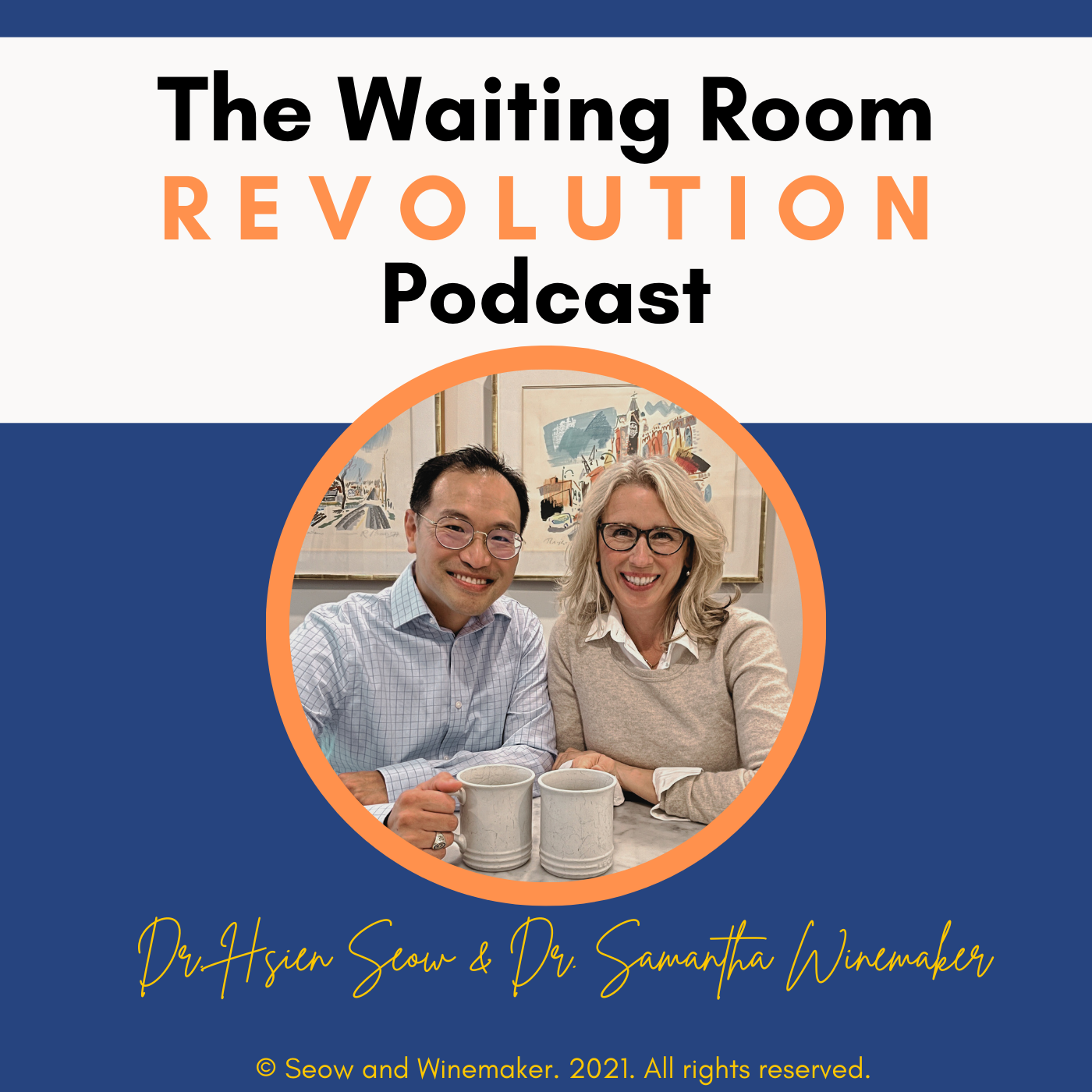
The Waiting Room Revolution
Hsien Seow and Samantha Winemaker
The Storytelling Lab
Rain Bennett
The Doctor's Art
Henry Bair and Tyler Johnson