The Okotoks Podcast
The Okotoks Podcast is your ultimate guide to life in Okotoks! Hosted by Carlin Lutzer, a professional realtor and proud Okotokian, this podcast brings you stories, insights, and conversations about what makes this town just south of Calgary such a special place to live. Whether you’ve called Okotoks home for years or you’re just getting to know the community, this podcast is your connection to everything happening in town.
From local businesses and real estate trends to community events and hidden gems, The Okotoks Podcast celebrates the people, places, and experiences that define life here. We talk about what it truly means to be an Okotokian, cheering for the Dawgs and Okotoks Oilers, sharing firsthand perspectives from those who shape the town’s unique identity.
And, of course, we can’t talk about Okotoks without mentioning the legendary Big Rock, an iconic landmark that serves as a symbol of our strong, growing community.
Join Carlin Lutzer as he explores the heart and soul of Okotoks, bringing you engaging interviews, local insights, and everything you need to stay connected to the place we proudly call home. Whether you’re looking for the latest news, local recommendations, or just a reason to love Okotoks even more, this podcast has something for you!
The Okotoks Podcast
The Real Reason You’re Paying More at the Pump
Use Left/Right to seek, Home/End to jump to start or end. Hold shift to jump forward or backward.
Why is gas in Okotoks more expensive than Calgary? It’s not what you think.
Carlin Lutzer digs into a question that’s been frustrating locals for years: why are gas prices in Okotoks consistently higher than in neighboring Calgary?
With the help of Dan McTeague, a former MP and president of Canadians for Affordable Energy, listeners get a rare insider's breakdown of what actually drives pump prices, from refinery margins to political policies.
But the episode doesn’t stop there.
Dan lays out a compelling and controversial case against Canada’s current energy direction, linking rising costs to government-imposed climate policies and global agendas.
Whether you’re mad about your gas bill or just curious about Canada's energy future, this one’s worth the ride.
Listen For
2:17 How did Dan McTeague go from Parliament to predicting gas prices?
4:23 When did affordable energy become a crisis in Canada?
8:25 Are climate policies making Canadians poorer?
17:22 Is Okotoks actually being gouged at the pump?
26:40 Why do gas stations sell fuel below cost?
Connect with guest: Dan McTeague, President at Canadians for Affordable Energy
LinkedIn| Gas Wizard| Canadians for Affordable Energy
Okotoks Chamber of Commerce (Hometown Holidays info)
Connect with Carlin
Dawn LeMaistre (00:08):
Welcome to the Okotoks Podcast. I'm Dawn LeMaistre, the executive director of the Okotoks and District Chamber of Commerce. Christmas has arrived in our beautiful downtown and we're looking to try and keep that holiday magic alive all month long. For the month of December. Every Saturday afternoon, we'll have live performances on the Old Town Plaza stage at the clocked tower, featuring some incredible local talent and festive Christmas music. Get pre-registered for your horse drawn wagon ride on Sunday afternoons as well. Departing from the Elks Hall. Visit our socials and website for performance and wagon details and times there's so much happening. As a part of Hometown Holidays initiative. Be sure to check out the Chamber's website for full details. Now, let's get into today's episode.
Carlin Lutzer (00:52):
Why are gas prices so high in Okotoks? Seriously? Why is it that we routinely pay more here than Calgary? Are we getting gouged or is there something else going on behind the scenes? Today on the Okotoks podcast, we're digging into a question a lot of people around town have been asking, and we're doing it with someone who knows this world better than almost anyone in Canada. My guest is Dan McTeague, former member of Parliament, longtime advocate for consumer energy affordability, founder of Canadians for Affordable Energy, and the Man Behind Gas Wizard, the tool millions of Canadians use to understand and predict gas prices. If you've ever wondered whether Okotoks is getting singled out or if there's a bigger national story behind the numbers, this is the episode for you. Let's get into it. Well, Dan, thank you for joining me this afternoon,
Dan McTeague (01:49):
Carlin. Very good to be here and glad we can actually have a chance to discuss something that is almost second nature to who I am, and it's known to the gas man everywhere, but it's nice to be able to finally put some numbers so that hopefully people can understand.
Carlin Lutzer (02:03):
Yeah, absolutely. So before we get into why I contacted you, I'd love to find out a little bit about you. Now, you are a former member of Parliament. Can you tell us a little bit about that?
Dan McTeague (02:17):
Yeah. A member of parliament from 1993 to 2011 riding a Pickering, mostly Pickering Scarborough would be Ajax. That area served under both the Jean and Paul Martin governments, and that came to an end in 2011. And since then have used a lot of the work that I gained, both in terms of consumer issues, everything from competition to energy, all the way over to food pricing and put that to good use over the past few years in terms of assigning infinity together. Something I had worked on many, many years ago, and that was gas price predictions to help people know when prices were going or down as they often did for pretty much 50 years before I started.
Carlin Lutzer (03:03):
Right. And now this brings us to, yeah, you were the founder of Gas Wizard and you are the president of Canadians for Affordable Energy. Are those one in the basically gas wizard and affordable energy one and the same, or are they two different entities?
Dan McTeague (03:21):
A long time ago, I would predict gas prices from my MP website, but the time the ethics counselor said she used my work but didn't like the fact that it was there could present an issue of conflict. So I broke out and created something called tomorrow's gas price day.com and predicted for 50 or 60 cities across Canada, and that worked for quite some time, merged with a gas buddy, did a lot of work with them mostly in the United States, and then went back to when I saw the energy issue in Canada beginning to effect the bottom line for Canadians, mostly as a government result of government policies, which I can explain later time to come home and start dealing with issues rather than bingo, calling gas prices to explain what was behind the sudden dramatic and sustained increase in energy prices, which was cascading through the economy. And we saw that now to a point several years later where finally and predictably affordability is now the issue, the number one issue in Canada.
Carlin Lutzer (04:23):
So when did you start to see this trend? When did the alarm bell start going off saying, it looks like we may have a problem with affordable energy?
Dan McTeague (04:34):
I'd say by 20 16, 20 17, the Trudeau government, remember I was a liberal MP for 18 years. This liberal group was very different than the one I had come in with.
Carlin Lutzer (04:44):
Absolutely. John Christian was. I think we would take him any day right now with his leadership. Even Paul? Paul Martin to some degree as well. I think there was certainly some conservative centris, maybe can we call 'em centrist? That wasn't a catchphrase back in the day, but I think there were certainly cent leaning, that's for sure.
Dan McTeague (05:09):
Yeah. Well, they understood the importance of ensuring the country was financially fit while at the same time became an attractive place for investment while maintaining our social programs. So that was quite a tall order, but it was a balancing act that worked out fairly well between both the individuals and was continued by Steven Harper came to an end in 2015 and with it Troublingly, it appeared that the government was going to go in a very different direction, one that had been led by the likes of which had undermined Canada, Ontario's competitiveness, the McGinty government had created the likes of Kitty Telford and of course Joe Butts who hailed from these very unknown woke organizations that were very committed to green policies, and this was going to be the central part of the federal government's policy and then would be imposed on Canadians. And I think everyone went along with this because we had not much else to really worry about.
(06:09):
2015 was about, I mean, what generalizations election on issues on refugees and marijuana 2019 climate issues. 2021, you had hysteria over COVID in 2025, you've been able to exploit the issue of Orange Man bad. The liberals of the 2015 era were very different from the era of 20 19 93. Many were fiscally responsible, many recognized the importance of maintaining our social programs while maintaining cohesion in the country. We went through a number of constitutional battles, all of which didn't amount to much, and we had the separate threat in 1995, and then we had economic threat in 1997. All of these things were addressed one way or another, but ultimately Canada emerged from that and had about good 20 years of prosperity, which began to unwind in the late 20 18, 20 19 period, much to do with the government imposing significant regulations, restrictions that had the effect of driving up the cost of energy, which in turn drove up the cost of everything else.
(07:14):
And at the same time, policies based on net zero, it's a world economic forum. UN climate goal agendas were extraordinarily damaging to Canada, and apart from the migration issues economically, Canada wound up as it is today in a very significantly dire financial situation. No matter how you try to sugarcoat it and try to make it sound like it's operational and capital or try to bend this around the realities that we're a nation that seems substantial degrowth and substantial growth in the cost of living and the cost of servicing our debt and our services and those programs we take for granted. So that's really the essence of what Canadians for affordable energy was. It started with a colleague of mine, a friend known for many years, John Williamson, who's now a conservative member of Parliament, and there was a time and a place Carlin where liberals, conservatives, new Democrats could actually talk and talk to each other rather than trying to talk over each other, try to undermine. I lived in a very good period where there was a lot of bipartisan cooperation and they're in a country as diverse as co.
Carlin Lutzer (08:25):
Yeah, it's really sad. And actually, basically what you just said really depressed me because it is with a country as rich in resources as Canada and with the ability to extract resources in the most environmentally friendly way, it's really sad that we've really, there's many different terms that we can use, but I'm just going to use shot ourselves in the foot when it comes to developing and pursuing our minerals and extracting them in environmentally friendly ways. Now, what is it, what is it that politicians are pursuing these net zero goals so hard that they're willing to sacrifice people? I'm not even joking people's lives because there's a lot of people that are on the, yeah, they're not doing well financially, and sometimes when you start struggling financially, your mental health is at risk. And what is it about these politicians that fail to see how they're hurting the country in light of how they're looked upon in the whole platform of the World Economic Forum?
Dan McTeague (09:53):
I think Canadians have bought into the idea that they have to do better by themselves, always been sort of people who are willing to apologize for anything and everything at the same time.
Carlin Lutzer (10:02):
Think, yeah, sorry if I'm getting a little bit excited.
Dan McTeague (10:04):
Yeah, no, but I think you have some actors in this country who have exploited the goodness, the good nature of Canadians, while at the same time buying and advocating institutions and influencers who have had a lot to do with sending us into opportunity. Direction isn't, of course just net zero climate goals. It's also DEI. It's a lot of other factors where we've simply ignored the traditional boundaries by which we could operate as a country recognizing that we can do better, but we have to do it in the context of reality. We've thrown those away in favor of international standards that were imposed in a very top down way, and I mentioned the UN and WEF, but it is very much a part of the, and I'm not a conspiracy theorist, a global, I serve this country of foreign affairs. I still have my diplomatic passport sitting around somewhere that many years ago.
(11:00):
So I don't take these things lately, but I know there has been a degradation in the ideology, certainly around the liberal party of creating opportunities for society, not socialism, and certainly not devolving the country into an order which simply follows in lockstep the dictates of those who have been not trying since the 1960s to create an orthodoxy over climate and weather that prevails everything else and with a religious ferocity that I rarely witnessed. Now, all of that is to say much of what we have pursued have deviated significantly from reality, and those deviations are now starting to cost, whether it's electric vehicle mandates, whether that's carbon taxes to consumers, or whether that to be regulations that are driving up the cost of business and food and energy. All these things have come as a dramatic consequence of people basically setting aside and treating reality and pragmatic and consensus development policies by governments in favor of these kind of policies that are aspirational but have no basis in fact and are very frankly dangerous when they're put under the kaleidoscope of realism and practicality.
Carlin Lutzer (12:24):
Yeah, yeah. A few months back, we had a conversation with a food bank, and this week we just released a podcast with another organization that around Christmas time, they want to help people and people are really, really struggling in Canada, and that's what's heartbreaking is we have politicians that are more concerned about their global agenda than their local agenda. And that's, like I said, I've been in oil and gas before, worked in oil and gas and know that we have, the standards we have are insane, almost like crazy, like just a drop of oils dropped on the ground. Well, they rope it off, they tape it, they do an inspection, they figure it out, okay, what's the problem? How deep did it go? They dig it out. Well, you cross the border and you go into the United States going to Montana and you see those oil wells, they don't care where the oil sliding. So it's just a problem that I wish there could be, and I'm not saying that the green initiative is all bad. I think that there can be some good inside of the green initiative, but there needs to be a synergy inside of that. Do you agree with that or
Dan McTeague (13:37):
No? I think the green obsession has delivered us to a critical point where I think we are at the point of no return where it's going to continue to get bad. Our level of appreciation for the needs of individuals comes well after those who are pursuing some figment of our imagination that somehow producing fossil fuels or releasing CO2 or creating CO2, which is a giver of life. Don't take my word for it. It's plant food and if you don't like it, stop breathing or exhaling is what I would say. But we produce what, four or five pounds of CO2 every year. Does that make it a bad thing? No, it makes it a matter of fundamental necessity and by any measure, scientific, economic or otherwise, what we have done here is pursued an agenda, a philosophy that I think is extraordinarily dangerous and has evidently clearly shown that our pursuit is nonsensical.
(14:40):
And so I'll take my word for it. The Greta Thunberg of this world have packed up and moved on, and so apparently I have others like Bill Gates and other organizations which hold fast. The idea that somehow we can create really, if you will, a hysteria around the idea that one particular molecule, which is not a pollutant, CO2, is somehow bringing about the end of humanity is my understanding, none of which has happened, none of which will happen, and without which society, the planet, and life on the planet would die without CO2. So look, I'm not extraordinarily emphatic on this, but in pursuing something that has been very suspect from the beginning, bought by influencers and bought by government and charitable organizations that have put money towards us, we've distorted and we've made a gro of our policy in this country, and we've heard a lot of goodwill intention people, my best friend's wife, I was with her them this weekend. Still the same problem here in Kitchen Air Ontario. The numbers continue to rise, and it's not so much students that are heading the food banks or international students, it's now of course ordinary seniors
Announcer (15:53):
Who
Dan McTeague (15:53):
Can no longer afford ends meet. And it's a sad situation. It should not happen in a country like Canada. Build a few pipelines so we can turn things around very quickly.
Carlin Lutzer (16:01):
Absolutely. Dan, right away, I want to have you back open invitation to come back on this podcast anytime because you're a fascinating individual, a wealth of information, but I'm going to bring us back here as to the reason why I contacted you. And here in Okotoks, we feel that we have a little bit of a gas problem and gasoline. That means the price at the pump. It seems like they're jacking up the prices a little bit too high on us, like right now, today, on average, Costco straight across the board, all in the area, we're at 1 0 9 0.9. Costcos are the same all over, but the gas stations in town are on average a dollar 20. But if we go into Calgary and we're not even talking, we're not even talking Costcos, even though Costco is at 1 0 9 in Calgary as well, we're seeing prices in Calgary of 1 0 4 0.910 5.0 one, ten one fourteen. We just feel that we are maybe getting gouged a little bit, but can you give us your opinion on what's going on with the gas prices?
Dan McTeague (17:22):
Well, right now, gas prices, the wholesale price for any gas station, Calgary or here in Ottos is about 80 cents a liter, 79 80 cents a liter. Advent tends more a little 78 to mortally about 2 cents, but that's on the wholesale side, which no one sees. If they take the time to look at some of the companies, whether Petro Canada or Shell, sometimes other companies offer this information. What's happening is that you're seeing in Calgary gas stations offer fuel below cost. Now, here's why I mentioned the numbers earlier. If it's 80 cents a liter for a gas station, doesn't matter who you are in Calgary, and you have to add 13 cents a liter, which is a provincial taxes, 93 plus 10 cents, which the excess taxes a dollar three, and you have to pay GST on top of that, it's costing that gas station without transportation costs at least a dollar $9 10 to buy their fuel.
(18:16):
So they're selling it for a dollar two or even 99 cents a liter. Someone is taking a haircut. In other words, it's selling below cost. It's a typical gas war, but some gas stations are allowed to do that because they have a direct connection to the refinery. And why is that important? Well, if I take West Texas intermediate and I divide West Texas intermediate selling at 58, 50 $9 a barrel, I multiply that by the Canadian dollar, dollar 40, and I divide that by a hundred fifty nine, a hundred fifty nine liters in every barrel of oil. By the way, that's allegedly gasoline. I'm looking at the number here. I do it almost every day. I've been doing it for 30 years. It works with about 52 cents a liter, but the wholesale price is 80. So refineries are pulling onto after it takes some 10 cents a liter turn oil into gasoline, they're still holding onto a 20 cent profit in which they can help subsidize any particular station they want so they can engage in these kind of gas wars and that. They're great, they're wonderful, and they distort. But what happens when prices actually start to go up and when prices start to move way up, they don't just add the five 6 cent increase. They actually reapply that 10 cent a liter, at which point you sometimes see 10 or 15 cents a liter. Very common in category. People get very upset why they go up 15 cents a liter. Well, the fact is it should have been down 10 to 12 cents a liter before price during going up on the market.
Carlin Lutzer (19:40):
Right? For sure.
Dan McTeague (19:41):
I know it's very hard to top follow. If you follow everything I've said there, point by point by point, it'll give you an idea, an illustration of why selling gasoline at a dollar or two when it's costing you a dollar raise. Someone's picking up, I'm sure that's the dog in
Carlin Lutzer (19:52):
The background. Yeah, no, for sure.
Dan McTeague (19:55):
At some point the matter, someone's going to have to pay for this. I'm not sure who's going to, but there's no such thing as a free lunch.
Carlin Lutzer (20:02):
Yeah, yeah, no, for sure. Okay, so from what you can see, Okotoks is just charging a fair price, so they're actually making a little bit of profit, or do you feel that charging right now at a dollar 20, they might make it a little bit extra profit. The gas station's in town
Dan McTeague (20:25):
11, 12 cents a liter, Carlin, it looks like they're making maybe 2 cents more than what is normal. But I want to let people know that when you're buying your gas gasoline, it's costing you a dollar 10 as a gas station. You can't offer gasoline for a dollar 10 or under. Why? Well, who pays for the credit cards? You come in there and you offer your credit card, I won't get people to use the number. You waived your credit card. That's 2% off, that's 2% off the bottom line of that 10 cents. Then you use a loyalty card, optimum, whatever. There's a thousand different types. That's another two or three or 4 cents a liter. How do you make ends meet? When you're a get go, you're losing five or 6 cents a year. It often leads to a circumstance where your rich uncle will gave you the money for your gas station or the bank that follows your credit.
(21:15):
It's going to basically call your line or call you up and say, listen, you can't have a business where you're losing 10% of what it costs you to run your business each and every day. So you have to have a refinery backing you up. So I say to the refiners, stop playing this game with these people where you're giving them five or six, spotting 'em five, 6 cents a liter so they don't lose any money and allowing people to get into a gas war because take advantage of it while you can, but you're going to be really shocked in the next couple of weeks. Gas prices go up four or 5 cents a liter for whatever reason. Basically that's based on the Chicago market. What's Apple here in Canada? It goes up 5 cents a liter and the guy say, well, we can't continue losing 10, 12 cents a liter, so we're going to add five plus 10 or 12.
(21:58):
It's up 15 to 20 cents a liter. People get furious, but no one really, I call it gas bar shenanigans and gas bars see themselves no favors by doing this. As far as Okotoks is concerned, that's what pricing should be. Here in Ontario and Toronto, I'm here in the Toronto region. It's a buck 31, buck 32 a liter that has a 10 cent retail merchant. They're not selling it for a dollar 15 or a dollar five. So it's kind of cute to do that, but it comes at a significant cost. And gas stations do themselves no favor by doing this, although many will say, we can't survive if we don't do this. Well, it's a real hit to the credibility of organizations that do that because they're trying to sell below cost to be trendy, to stay alive, but they shock people when they drive prices up and they will do that guaranteed in the next several days.
Carlin Lutzer (22:52):
So what's the point of trying to lure people in at a loss for a gas station? Is it So they go in and they buy the potato chips and pick up their bread and lottery tickets and cigarettes and all that stuff.
Dan McTeague (23:04):
There's more money in making in selling what they call ancillaries and beef jerky, coffee, potato chips, car wash. Take your pick than there is in selling gasoline.
(23:19):
The other thing is, and many gas stations get a benefit by doing this, if you can increase your volumes somehow, some way you manage to get more people in your store to buy stuff, and you manage to go from, say, 15,000 liters sold a day to 20,000, your supplier is going to give you an extra 2 cents off your next load. In other words, rather than buying for 80 cents or 79 cents delivered, you're going to get it for 75 or 76, and that tends to go for a very long period of time. And why does that happen? Refineries in Edmonton run 24 hours a day, seven days a week, 365 days a year, they can't stop. So if you can take a product from them, especially in an environment where there's a slow down or people are not buying as much, you're going to win. By the way, the real indication of whether price really means is effective is where diesel goes. So this time of year, diesel prices go through the roof. There's down to the one between 1 35 and one 50 across the province. So that's not going to move down much, but I would expect these, take advantage of these days, advantage of 'em if you happen to be in Calgary, but don't beat up the dealers in the gas stations, Okotoks. They're charging what it takes to stay in business in your community.
Carlin Lutzer (24:31):
Yeah, no, and that's fair because I think many of us, Okotoks, were ready to hit the streets rioting. No, I think it's just a question. That's why you
Dan McTeague (24:41):
Need to call Dan mct.
Carlin Lutzer (24:41):
Yeah,
Dan McTeague (24:43):
Call the gas
Carlin Lutzer (24:44):
Pack. Yeah, exactly.
Dan McTeague (24:45):
I get no money from these people, by the way. They often don't like what I do, but I do try to explain to people in layman's terms so they understand who's making what. And if anybody's making money here, it's the refineries. Go to Edmonton and start picketing IOL, Imperial Oil and the Shell and Suncor, because those are the guys that are taking, as I mentioned, and that oil, by the way, I mentioned it earlier at 52 cents a liter. That's WTI. If we go to what's called what we use here in Canada, Western Canadian Select WCS, that's about 44 cents. So I'm being generous of saying it's net 20 cents a liter that the refiners are making every single liter. So I'm going to think about it this way. I'm Petro Canada. I have 150,000 barrels I produce or process every day. Every barrel is 159 liters. So if you're making 20 cents on every leader, hot tide is 159 tons, 150,000, well, that's a license to print money,
Carlin Lutzer (25:46):
Right? Absolutely. No, I lived in the lower mainland way back in the day. I won't say when because I don't want people to know how old I am. And the gas prices, the further you got away from downtown Vancouver, the cheaper the gas prices got. Now, it seems like there's a little bit like here, there's a little bit of a reversal, and I'm wondering if maybe Okotoks and the surrounding areas are big enough now that, and it's not as many people commuting anymore, maybe after 2020 or something. This is just a theory that I had in my head that maybe they're not commuting as far, and so they're realizing that we don't have to be competitive with Calgary gas prices right now. We can make enough by just charging and still make it right, because you're basically saying Calgary's in the midst of a gas war, they're fighting for customers.
Dan McTeague (26:40):
You can buy gasoline cheaper than they can replace it. So if your replacement cost is a dollar 10, you're selling it for a dollar two, you got to come up with another 8 cents a liter just to keep your nose above the waterline, plus what it costs for you to honor the credit card 2%, these things, 7 cents on every liter goes to my groceries, whatever the case may be. Costco, I mean, yeah, people say, I get great prices at Costco. Yeah, you do, but you pay 150 bucks or whatever number a year on membership. And by the way, when you're at Costco, do they give you the same deal on their products in the store as they do for gasoline? So we call this loss leader or invitation to treat, call it whatever you want. At the end of the day, they free lunch,
Carlin Lutzer (27:20):
Right? Yeah. You get your rotisserie chickens at Costco. You got your hot dogs that they lure in, they bake you in, and then you go in and spend 450 bucks. So Dan, I thank you for that explanation, and I'm sure that all the gas station owners in Okotoks will thank you as well. When I contacted you, I was looking for, okay, what's the problem here? What's going on? But I really appreciate your explanation. You explained it very well.
Dan McTeague (27:49):
No problem. I was worried. I looked at the wrong, I was looking at my own numbers, and I thought it was diesel at one 40. Oh, that, who's charging one 40 for gas and union? Oke, we got a rip off happening here, but no,
(28:00):
One 20. I'm telling you right now, if I'm in the business of selling gasoline, it's going to cost me without losing money. It's going to cost me at least a dollar 18 to a dollar 20 to keep my business going unless I've got some kind of, again, a generous refiner, a generous bank or rich uncle who's going to spot me some money. Otherwise, in Calgary, I'd hate to be in Calgary. It costs more, by the way, I mean the taxes over there alone, which you explain. It's a really cutthroat competition, and often what happens is that the people do exit the market. Unless, of course those gas stations aren't gas stations anymore. They're many grocery stores.
Carlin Lutzer (28:33):
Right? Absolutely. Dan, I appreciate your time. I know you got to run, but again, open invitation. I have a feeling we'll have you on again. Maybe we can talk about how Ontario feels about Albertans or maybe not. We
Dan McTeague (28:50):
Want to move there. I know I got two sons that are ready to pack it in here because things
Carlin Lutzer (28:54):
Are really
Dan McTeague (28:54):
Yeah,
Carlin Lutzer (28:55):
Yeah. Well, yeah. Well, let's chat
Dan McTeague (28:57):
As bad it is there. Trust me, it's nothing compared to here. There's no future here. And I know a lot of young people are saying the last hold up is Alberta, so keep doing what you're doing over there. Keep doing it a lot longer if as you can. But download voting patterns of people here in this part of the world, determine your future. You guys are on a roll.
Carlin Lutzer (29:17):
Yeah, no, for sure. No, and it is heartbreaking because I think we do want to be unified. I think we would prefer a United Canada, but I just think you're right. You talked about it earlier, the policies to just keep shooting us in the foot, and sometimes you need some leadership and
Dan McTeague (29:37):
Someday you'll get it. But in the meantime, I mean, do what you can to hang in there. But I seem to remember some policies made by people that I knew when I was much younger, and this is the one I always like to keep. A lot of people get very annoyed when they see that name. They're honorable Morris Strong. I got that from many years ago. In 1978 when I ran into campaign for someone. I'd worked neighbor. He was going to be the little candidate there. That's a guy who used to run petro cans, a guy who used to run Ontario Hydro. You want to talk about the granddaddy of Green Energy and Climate Policy? Well, that's the one. And he's a Canadian, so all things come back to politics one way or another.
Carlin Lutzer (30:16):
Absolutely. Dan, thanks for your time. We look forward to having you on again, and maybe we will do it face to face when you move out here. Okay. Thanks, Dan. Take care. Take. Well, that wasn't the answer I thought I was going to get regarding gas prices in Okotoks, but it was an eyeopener. Talking with Dan really pulled back the curtain on what's happening not just in Okotoks, but across Canada when it comes to energy affordability, government policy, and the real forces driving what we may pay at the pump. Energy is becoming more expensive, not just because of global markets, but because of deliberate political choices that impact fuel heating and overall cost of living. Dan offers a perspective rooted in decades of political and energy industry experience, and whether people agree with him or not, it's hard to argue the depth of his insight into how energy works in this country. Thanks for listening to the Okotoks podcast, and if this episode helped you understand gas prices a little better, share it with a friend who's been complaining about filling up at Costco, Calgary, or right here in town. See you next episode.
Announcer (31:41):
That's it for today's episode of the Okotoks Podcast. Big thanks to Carlin Lutzer real estate for making it happen, and thanks to you for listening.


Podcasts we love
Check out these other fine podcasts recommended by us, not an algorithm.

Stories and Strategies with Curzon Public Relations
Stories and Strategies https://storiesandstrategies.ca/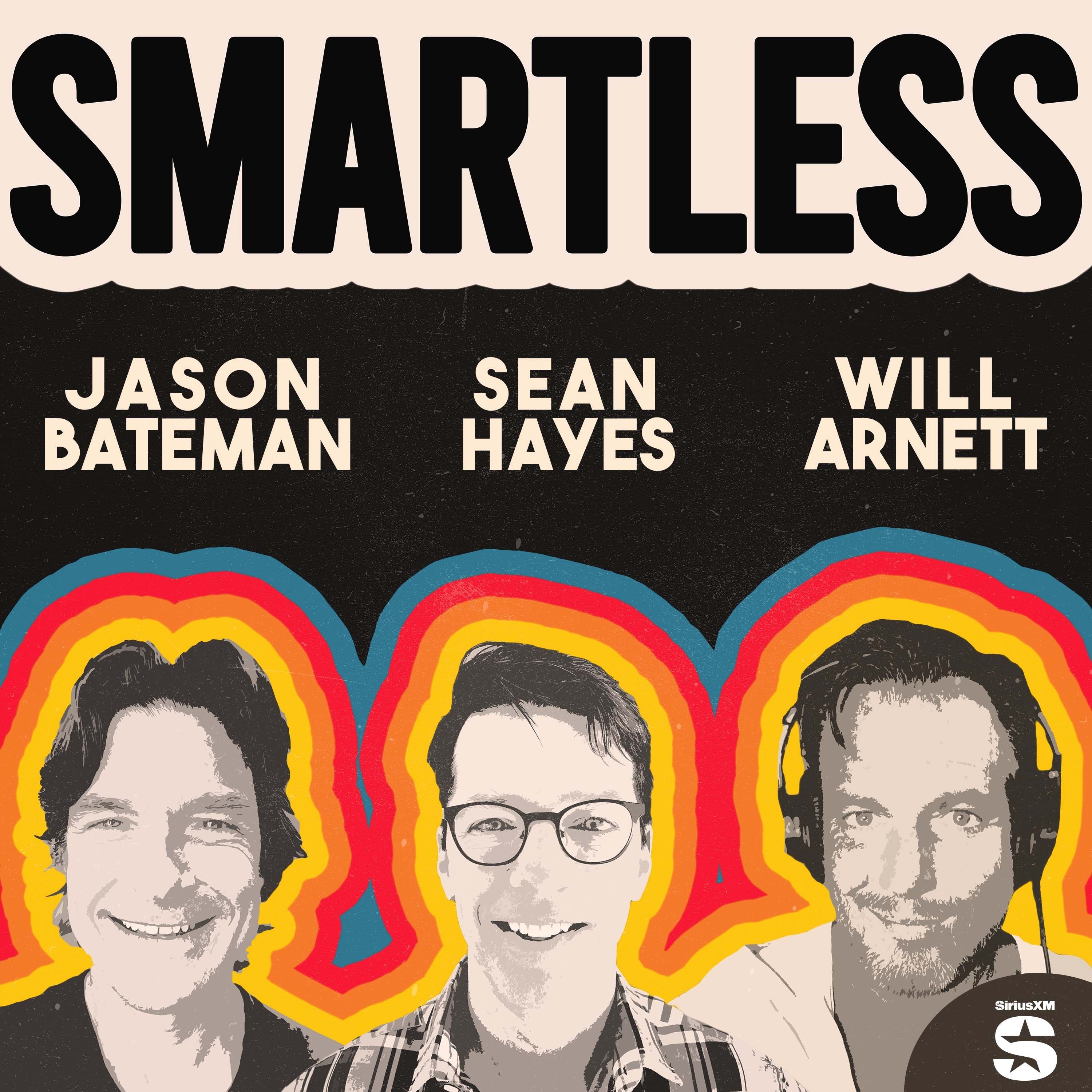
SmartLess
Jason Bateman, Sean Hayes, Will Arnett