The Okotoks Podcast
The Okotoks Podcast is your ultimate guide to life in Okotoks! Hosted by Carlin Lutzer, a professional realtor and proud Okotokian, this podcast brings you stories, insights, and conversations about what makes this town just south of Calgary such a special place to live. Whether you’ve called Okotoks home for years or you’re just getting to know the community, this podcast is your connection to everything happening in town.
From local businesses and real estate trends to community events and hidden gems, The Okotoks Podcast celebrates the people, places, and experiences that define life here. We talk about what it truly means to be an Okotokian, cheering for the Dawgs and Okotoks Oilers, sharing firsthand perspectives from those who shape the town’s unique identity.
And, of course, we can’t talk about Okotoks without mentioning the legendary Big Rock, an iconic landmark that serves as a symbol of our strong, growing community.
Join Carlin Lutzer as he explores the heart and soul of Okotoks, bringing you engaging interviews, local insights, and everything you need to stay connected to the place we proudly call home. Whether you’re looking for the latest news, local recommendations, or just a reason to love Okotoks even more, this podcast has something for you!
The Okotoks Podcast
Where Do You Find Hope When the World Feels Broken
Use Left/Right to seek, Home/End to jump to start or end. Hold shift to jump forward or backward.
When the world feels louder, angrier, and more divided than ever, where does real hope come from?
Carlin Lutzer sits down with longtime friend Bill McAlpine to explore why so many people are feeling overwhelmed, fearful, and disconnected, and how hope can still be found even in dark seasons.
From lighthearted moments about lifelong sports loyalties to deep reflections on social division, fear-driven media, and the loss of respectful conversation, Bill offers thoughtful insight into what has changed in society and what has not.
As the discussion unfolds, the focus turns toward unity, relationship, faith, and the power of genuine connection.
This episode invites listeners to step away from noise and polarization and rediscover hope rooted not in circumstances, but in community, purpose, and God, just in time for the Christmas season.
Listen For
3:38 Why does loyalty to sports feel more unifying than politics?
7:30 How has technology changed the way we connect with others?
16:39 What can we learn from how the Cree ask “Who are your people?”
34:00 Where can we find real hope when life feels overwhelming?
Connect with guest: Bill McAlpine, Retired Professor Emeritus, Practical Theology at Ambrose University College
Connect with Carlin
Email | Website | LinkedIn | Facebook
Sheep River Dog Rescue formally know as Moe Dog Rescue. Passionate about giving Dogs another chance.
Special thanks to Okotoks Nissan for arranging this podcast with Kelly Hrudey.
Announcer (00:00):
This is the Okotoks podcast, proudly sponsored by Carlin Lutzer Real Estate. Thanks for joining us.
Carlin Lutzer (00:19):
The world feels noisy right now, almost as if every conversation we try to have gets us tangled by technology tension or the tug of war of opinions. Communication is harder, patience is thinner, and divisiveness seems to be winning far too many rounds. But in the middle of all this, the Christmas season still steps forward like a lantern in a dark field, reminding us that hope isn't lost. It's necessary. Today's episode of the Okotoks podcast, I've invited someone who has shaped my own thinking and faith. For years, longtime friend, mentor, and former college professor Bill McAlpine. Bill joins me to help untangle this moment We are living in, we talk about the fractures in society, the complications of technology, the weight of our media diet, and why asking better questions might be one of the most helpful things we can do. We look at the unexpected places, hope hides from personal stories that stitch strangers together to the way sports create loyalty and unity in ways. Few things can, and we explore how faith still serves as a quiet but unshakeable anchor. When the world feels like it's drifting apart, this conversation is honest, grounded, and deeply needed. Let's get into it together. Bill, thank you so much for joining me in this conversation.
Bill McAlpine (01:56):
My pleasure, Carlin, thank you for the kind invitation. Great to be with you.
Carlin Lutzer (01:59):
Yes, and for those that are listening and they see the name Bill McAlpine, we're going to have to clarify because this is the Oke podcast. Now, you were not the former mayor of Okotoks, is that correct?
Bill McAlpine (02:14):
That is correct. I have met him. I met him Bill at a dog's game and yeah, he was a bit older, but much better looking than me. But yeah, no, I'm not that one. But every time I go across the Bill McAlpine Bridge and all this stuff, I get a warm feeling in my heart.
Carlin Lutzer (02:34):
Yeah, no, absolutely. Yeah. So that's quite something that you have the same name as a former mayor, but there could be a little bit of confusion. So we want to get that out the gate. Now, bill, you and I go way back, but before we get into it, bill, you've kind of chosen an interesting path when it comes to sports. You are a Toronto Maple Leaf fan.
Bill McAlpine (03:04):
Yes. Without apology, I know you're
Carlin Lutzer (03:09):
And a Flames fan.
Bill McAlpine (03:11):
Yes, I am.
Carlin Lutzer (03:11):
Yes. Now which comes first, the Flames or
Bill McAlpine (03:15):
Yes,
Carlin Lutzer (03:15):
Toronto. The Yes. Both come first. Are they tied?
Bill McAlpine (03:21):
Well, when the Leafs come to town, I can't lose, but part of my loyalty to the Leafs has an organic link to it, because you see at one point back in the fifties, we lived around the corner from Tim Horton and my brother was Tim Horton's paperboy.
Carlin Lutzer (03:38):
Wow.
Bill McAlpine (03:38):
I'm not lying. This is not hyperbole for a pastoral illustration. This is fact. So I feel there's kind of a familial link that Tim and I had because my brother was his paper boy. My kids are still praying for my healing because the last time they, at least one I was here, I got my driver's license. So that was a long time ago.
Carlin Lutzer (04:00):
Yeah, no, for sure. Well, bill, as mentioned at the start there, that, yeah, our world is in a very interesting place, and my dad would always talk about how bleak things seemed to be when I was growing up as a kid and we'd talk about politics and we'd talk about this and that, and he seemed to think how could they get any worse back in the day.
(04:27):
But now we fast forward to 2025, almost 2026, and I think it's safe to say they've gotten a lot worse. And just in conversations that I've been having with people, whether again, like I said, whether it's on the podcast or it's whether with people that I'm meeting for coffee or whatever, met with a friend last week and he basically said, I can't wait for 2025 to be over. And I think that's kind of the common theme as to where people are at. People are hurting, people are hurting financially, people are hurting because they're scared for the future. They don't know what the future looks like. And we're splitting society up so much that society no longer, you really can't have a conversation with somebody that you disagree with on any topic. And if you dare do that, there's a chance you're not going to be friends after and you're not going to talk for a very long time. So that's why I reached out to you, bill, is just want to have conversation to leave us with a little bit of hope.
Bill McAlpine (05:48):
Yeah, there's no doubt, Carlin, I think that the world in which we live is tragically, certainly not tragically hip, but tragically disconcerting. And I do wonder if, and I've heard it suggested that in reality the world is not that much worse than it was. I mean, I went to school in the sixties and seventies when Vietnam was at its peak and living in the states during Vietnam. Let me tell you that, that was a horrible, horrible space to be in. I don't think either country has experienced anything quite like that in the last 25 years.
(06:30):
That's maybe a whole other thing. I have to think that what has exacerbated the whole thing is the advance in technology, the access that we have to so many sources of information. And that the challenge, of course is what sources do you believe which ones are reliable, are credible? I mean, I have some friends and they listen to, and guess what they call alternate newsfeeds. There is a profound depth of cynicism with regard to mainline media furnishes us with the news every day. And so people are torn is what it is we believe. And when you consider the amount of time that we spend each day on these things and on the internet, I think a number of things have happened. We have lost the capacity and maybe even the desire to communicate as humans were meant to communicate. And that is face to face.
(07:30):
And
(07:31):
I think you're right. You've nailed it as far as the fact that our culture makes it. And I'm overstating, and I know that there are happy exceptions to this least. I hope there are, but we cannot, it seems anymore, have an acceptable, respectful conversation with someone who holds a different view, who lives a different lifestyle than we do. Because the moment that we declare that, I can't agree with the beliefs that you're embracing or the lifestyle you're living, but I want to talk to you, I still want to be able to understand, I still want to be able to communicate with you. Those stores are shut, it seems more and more because I'm automatically identified as biased or more spiritual than now or whatever it is. And so we have become, as a culture, very divisive. I don't remember a time when we were more divisive than it seems we're right now. And that's on a number of different levels, both politically, even in Canada, good old as sorry, Canada, we are becoming more and more entrenched in our persuasions and our beliefs, and we're becoming very divisive. I think there was a time when, not that long ago too, just when President Trump imposed his tariffs, it looked like Canada was going to finally put down some of nonsensical divisions and barriers and say, look, we got to stand as a unified country. I'm not sure if that's still happening as much anymore, but
(09:06):
I think it's hard to know really what is a reliable source that hasn't the integrity that I can trust this. And we get loyal to those and we get upset when people don't like those things. I was in the classroom, I taught for almost 30 years, and I love teaching millennials because I warned them at the front of the class. And maybe Carl and I think did, I had you in class, I think,
Carlin Lutzer (09:33):
Did I? Yeah, yeah, absolutely.
Bill McAlpine (09:34):
Yep, that's right. You were such a stellar student. You
Carlin Lutzer (09:37):
Oh, yeah, yeah. Front or back, the notes, taking notes never slapped. Oh yeah,
Bill McAlpine (09:43):
Yeah, of course, of course. But I would warn the students at the minute front of class, listen, if you're not going to ask the tough questions, I'm going to ask them. And the reason I say that is because I grew up in a solid conservative evangelical pastor's home where questions weren't welcome. They were unfortunately equated with doubts. And it wasn't that I had doubts, I had questions, but I've come to believe that questions that are suppressed, but they'll become doubts eventually. And so I wanted to have a classroom where students could ask those tough questions that maybe they didn't feel comfortable asking in their church or even in their home, which I think would be really too bad. But I mean, how can I not work through some of the issues? I had a grade eight science teacher that made it very clear he didn't discredit the Bible.
(10:35):
He believed in God, but he just felt that what evolution did was explain some of the gaps of the creation story. So as a 14-year-old, I thought, that makes sense. We don't have a detailed account of creation really. God spoke and these things came into beings, and I brought that home to the dinner table and it was a very short conversation. No, we do not believe that at all. And I've come to probably believe similar things as my folks did, but it was a stinky journey to get there because this man was not antagonistic and he made sense. And so I wanted to just ask the question, so help me understand what does the Bible say about that? So I think you're right, Carlin. I think with the advancements that we have experienced that in many ways have enriched and simplified and helped us to living our everyday life, they have also complicated and terrified our lives in a lot of way with the speed at which things are happening.
(11:40):
There are times when I think as a kid, when I watch my grandkids, we have six grandkids and I watch what they do when we come together as family. Well, their phones or tablets are going to come out, not all the, some of our kids are, they limit the times they can have. And I am grateful for that. I mean, as a kid, we used to go out and play outside and they had to be home when those street lights came on. And I think those days are gone because we're fear riddled culture that you can't let your kids be outside like that. And I get that. Anyway, I've rambled a bit there, brother.
Carlin Lutzer (12:15):
No, that's fine. A couple things that I just want to go back on is just with the social media, with the cell phones and the time we do spend on there, I think a big enemy to our society is our algorithms. We look at something on Instagram, we see something there, and all of a sudden we may share it with somebody or we send it to somebody, and then all of a sudden you're getting in your feed, all these things that are feeding that thought that you had. Absolutely. And that seed that was planted by that one video that you saw begins to grow and starts to grow as truth
Bill McAlpine (12:59):
Sometimes.
Carlin Lutzer (13:00):
And the differences between the far right and the far left get greater and greater. But I do believe that before things start changing around, there needs to be a movement for unity.
Bill McAlpine (13:19):
Absolutely.
Carlin Lutzer (13:20):
Our governments, I feel, doesn't matter what side of the table you're on, whether you're right or left, they want to split because in the split in the division, we keep the focus in on other people and not them for making these decisions and
(13:35):
Policies.
(13:37):
I feel that the government is fighting battles that's not up to them to fight. And in that it just continues to, even when you are the team that you have voted in is winning, you turn a blind eye to their behavior. And again, I am not saying that the right's right and their left's bad or the left's right, and the, you know what I mean?
Bill McAlpine (14:05):
Of course.
Carlin Lutzer (14:06):
Yeah. I just think that this is where we will continue to see the society deplete if we remain so far apart. And I believe that the left and the right aren't too far apart. I think that there's certain things that we just, again, we need to sit down and say, okay, what are we about? But I feel that a lot of times it's just the politicians that are splitting us and it doesn't need to happen. And as we do that, we are allowing the politicians, and yes, there is a lot of government control and overreach, but that starts affecting us, and we don't really realize how that is affecting us. You look at even through the teacher strike and the divisions that that's caused upon, of course, with teachers and the government, with some parents and the teachers and all those things. And really at the end of the day, you would think that there would've been a better solution for walking through something as brutal as this, but bringing it to a resolve. And yeah, not everybody's going to be happy, but it just, I don't know, bill, it just seems that we are at the brink of something. And maybe I'm reading too much into everything. Maybe I guess maybe part of my problem is this podcast and me feeling like I need to be involved and know what's going on. There's been some podcasts I start listening to. No doubt. It's the alternative media that you were mentioning. I had to stop listening to it. There was some nights I couldn't fall asleep because of
(15:46):
The fear that was starting to grow in my mind as to what was going to happen. And my gosh, why did I ever bring kids into this world?
Bill McAlpine (15:53):
Yeah, exactly. Yeah. Well, it's the same. Yeah. I mean, of course I pray for our kids and our grandkids every day, and part of my praying is focus around what kind of world are they going to grow up in? What are the pressures that are going to be put on them? And I think we have lost a sense and a desire to focus on what we share in common, the magnifying glasses that were put on these differences. And some of them, when you get right down to it, I'm forced to ask the question, so the heck what? So you hold this view and I hold this view. Okay, that's the privilege of living in a democracy to have a different opinion. But if you're offended, because I don't hold your view, that's your privilege in a democracy to be offended.
Carlin Lutzer (16:39):
Yeah,
Bill McAlpine (16:39):
But don't get upset if I'm not offended.
Carlin Lutzer (16:41):
No, exactly. That brings me to two points, and I've used this before in this podcast, but we are about to go into one of the greatest times of year some of the greatest hockey we'll ever watch. And that's the world juniors.
Bill McAlpine (16:57):
Yes, absolutely.
Carlin Lutzer (16:58):
And the last couple of years, we'll delete that. We don't remember those. We remember the good times. So we're hoping, again, we're going into this Christmas season, high hopes, but when Canada scores the goal, do we really care who actually scored the goal? I have never celebrated a McDavid goal before, but I did the last February at the Four Nations Cup. That was awesome.
Bill McAlpine (17:26):
Absolutely.
Carlin Lutzer (17:27):
I didn't care because he was playing for our team. He was playing, we were all unified as Canadians. And are you telling me that the politicians that don't have the right people in positions to coach them as to how to unify us as a nation? They absolutely have those resources, but they choose. They choose not to. Sorry, this might be, I'm starting to borderline on a conspiracy theory, but I'm not going to do that, bill. So that's the thing, bill, is I do believe as a nation, we do as a nation, as neighbors, the people across the street from you, there's enough that you can build in relationship with those people to unify you, to bring you together, to bring you close. And that is the very thing that I just wish I long for that when the United States was most unified, unfortunately, it's when they're fighting a war,
Bill McAlpine (18:31):
They
Carlin Lutzer (18:32):
Become unified through war. When I've used this on the podcast as well before when watching the movie Wicked, and it says there's nothing that unifies people more than a real good enemy. And I don't think that's the kind of unification we necessarily want, but we certainly need to be pointed in a direction, A direction as a country, you just think if for example, and I wasn't planning on this getting so political bill, but even for a pipeline and saying, okay, Canada, here's what this pipeline means on a, let's see the numbers. What kind of money is this pipeline going to bring? Why is it such a big deal? But we never get those kind of fiscal numbers given to us as to if we can do this, this is the bottom line for us as a nation, and this is how this is going to help us. Not one, but two. You know what I mean? But it just seems like no matter which way you go, there's discord.
Bill McAlpine (19:40):
Well, I think the problem often Carlin, is we politicize things too often and too quickly. So issues that are really in essence are either at the fundamental level, they are economic or social, cultural, whatever. We make them political. And once we move an issue into that realm, we've lost the capacity to have that kind of conversation once again. And I think that will help us to understand going back to the time when I was in the States in Vietnam was at high, sorry for going back there,
(20:19):
But that was a divisive, that was incredibly divisive because at the same time that the United States was conscripting young men and I went to school with guys who had either just come back from Nam or were on their way. It was horrible. We had the peace movement so on. These men and women came back from Vietnam, they came back to the home country they loved, and they were dirt bags. They were horrible because the peace movement saw them as scuz because they were fighting a war. I'll never forget it was a Kent State University in one of the peace movements, four American students were shot on American soil by American servicemen when there was a riot somewhere that rattled that nation. And I think coming back to the whole divisive nature of what, and I think what our social media and the technology, and especially as you say our algorithms tend to do, is they're making it much more difficult and challenging to even consider, let alone be willing to say, okay, listen, I have one agenda item.
(21:31):
I want to understand you. That's what I want to do. So I'm not going to criticize you. I'm not going to jump all over you. I'm not going to label you. I want to listen to you. I've got some former students that have made a radical change spiritually and religiously and would love, and I'm going to as much as I can, going to have sit down and I'm going to say, listen, I'm not going to try to convert you. I'm not going to try to scold you or upgrade you or whatever. I simply want it to tell me your story.
(22:03):
And I think if we could listen to one another's stories, we'd understand among other things, we're not alone in this sense of hopelessness that people are experiencing these days, really what hope is there, we cover that out really well past on the smiles, and we lie and say, yeah, we're good. Yeah, we're fine. Absolutely. And I think being able to set our agendas aside momentarily, to simply say, tell me your story, general, what's interesting, Carlin in our White Western culture, one of the first questions, if I meet somebody at our church, for example, and I'm in the foyer within five minutes, one of the questions I'm likely going to ask is, what do you do? What I learned from a really former colleague and very good friend who's Cree Indian in his culture, they don't ask that question. They ask the question, who are your people?
(23:01):
And that says to me, they're interested not in what I do, but who I am. And I really wish that we would be able to create the space where we can have those kinds of conversations because I think we get into these tirades in these, there's a really good word I learned way back called vitriolic. You can use that if you want vitriolic conversations where you acidic and we kind of attack each other. Well, we don't know what's going on in one another's lives, so we don't have to know all the details. But I guarantee it would help us a whole lot to understand what someone is going through that has brought them to where they are. And why don't we listen to that for without this a sledgehammer in our back pocket. Now that would be really uncomfortable. Don't try that at home, but that we're going to pounce on them because they are this or that or embrace this or that, or they believe this or that. Why don't we just look, there comes a point where we need to ask those questions. I'm not saying we should never, well, I think we've lost, as I've said already, the capacity and the willingness to listen to one another. And that goes for parents too. As parents, our kids need to know they are heard and understood. My students in the classroom, I wanted them to know that in my classroom, you have a safe space and you'll be heard. And I help me if I don't understand, you'll help me understand that's what I want.
Carlin Lutzer (24:23):
Absolutely. Just a thought, and this is probably a little bit dangerous to use this as an example of what you're trying to get across, but you look at the trucker convoy, you had society split, you had society split on that. And I think people needed to get into a position as to realizing that these guys, their livelihoods were being taken away because they
Bill McAlpine (24:57):
Absolutely,
Carlin Lutzer (24:58):
They felt that their rates and freedoms were taken away because they chose not to get a shot. And they're fighting the shot, right? We're not going to get the COVID shot, can't cross the border, whatever, or can't cross the border. So these guys were desperate because it wasn't no longer about just getting their livelihood where they were fearful, fearful of losing that. But then you take the other side, the people that are the frontline workers, seeing people die as a result of COVID. And these people are panicked because of what's going on, what they're seeing going on in the hospitals, and they're just like, how can anybody not get this shot?
Bill McAlpine (25:45):
Of course, of course.
Carlin Lutzer (25:50):
Trust me, I'm not picking the side. Don't shoot me for picking the side either way because, but here's the thing is that we all bring something to the table. We do. We all have a different perspective, and our perspectives need to be heard. Right, exactly. You got to go in that with a mindset that I'm not going to change and I'm not going to change people's mind. I think people go on social media think I'm going to change people's minds. You're not going to change people's minds.
Bill McAlpine (26:19):
No,
Carlin Lutzer (26:19):
Of course. You're not going to change a person's mind in a debate. You're not going to change them. You're going to change someone's mind by your lifestyle and proving through how you are living your life that the decisions of A, B or C are correct. Right. And being able to have healthy conversations. And
(26:39):
There's
(26:40):
Many, many other hot topic conversations that we can certainly get into. But again, I think that everybody needs to take a step back and look at things through that person's eyes. Absolutely. And the things that they're going through and the hurt and the pain that they have. And we need to sit there and listen,
Bill McAlpine (27:05):
Carla, and I've pulled back from social media substantially. I mean, I still text my wife and I still text our kids and grandkids and
(27:16):
All that kind of stuff, but I have absolutely refused to get into any conversations on Facebook or whatever. And part of the reason is it has made me gag the number of times I read people taking cheap shots at either politicians or particularly the church and other people from the safety of their two dimensional world behind their computer screen. And they launch into these tirades about why this is all wrong and just paste it out there. And if anybody wants to get into response, well then they're blocked sometime. And I think really, that to me is the most immature process of communication. It really is. If you want to have a strong feeling about that, you are welcome to do that. Absolutely. But why not do it on a face-to-face rather than pasting it out there where you hope that thousands of people are going to read your convincing arguments? Really, thousands of people could give a rip about your arguments. So don't give yourself an inflated idea of how important your comments are. And I think I am encouraging. I mean, my wife and I have made a decision. We don't do the social media much anymore.
(28:44):
I have contact, for example, I went to Scotland to do doctoral stuff and I've connection with some of the guys. We all did our PhD at the same time, around the same time. Well, we have connections. We're called the dogs and it's spelled D-A-W-G-S. I don't know what that is. The significances, probably some Latin theological terminology. Yeah, for sure. I'm a practical theologian. I don't do that kind stuff anyways, but I think I still have some connection with people like that on these platforms and stuff like that. But man, oh man, when it comes to the stuff that I see going up on Facebook, one of our kids has chosen, he has never once been on Facebook. And you know what? He has survived. Amazing. He's still sitting up and taking nourishment and he still lives and he is not on Facebook.
Carlin Lutzer (29:48):
No, that's amazing.
Bill McAlpine (29:49):
Honestly, good for you.
Carlin Lutzer (29:51):
Well, did you hear what Australia just did yesterday? No. They've banished social media for kids under 16.
Bill McAlpine (30:01):
Good for them.
Carlin Lutzer (30:03):
I have no idea how on earth they're going to do that.
Bill McAlpine (30:05):
Well, seriously.
Carlin Lutzer (30:06):
Yeah. But that's amazing. I do just think how our society would change if we didn't have social media. And you're right, we either had to pick up the phone. Yeah, well, email's pretty nasty as well, but pick up the phone face to face. Back in the day when I used to have to phone a lot of people for the line of work that I was in, the progression was I need to get this person face to face because they're losing their mind via email or text or not so bad on the phone. But if you can get 'em face to face, you see the body language. You talk not just with your you words, but your body as well, and you get across and you
Bill McAlpine (30:58):
Look through. Well, communication experts will tell us communication is 10% words. 90% communication is nonverbal. Right. Its the way, it's the body language. It's the connection. It's that physical presence.
Carlin Lutzer (31:14):
Yeah. One thing that I see since having this podcast or whatever and looking at my stats, I have some podcasts that download a lot, and then I have some that are just like, it's the negative ones Bill. It's the negative ones that people want the negative stuff. I always use the example of my older brother used to live in Edmonton, and he would listen to Brian Hall on six 30 Che, and he could not stand Brian Hall, but he had to listen to 'em every afternoon. It got the blood boiling and it was the thing that he was just like, oh, what did he say today? And Oh, I can't believe he said this. And that's not true. That's what people want. And I look at that and as a quote unquote podcaster, you start looking for rabbit trails to go down to get you the, well, this one's going to get me more downloads if I go this route. This is going to be awesome of, and this is going to be, oh, this is going to stir the pot. And that's what people are searching for. Clicks you to get the clicks, to get the likes, to get the comments, to get you higher up on algorithms and feeds you. You need to have higher likes and comments and dislikes or whatever, and that's going to get you in front of other people's faces. And then you're going to grow by your content. But it's the trash. It's the trash. It's the trash controversy sells. It does. It's being mean to other people being mean to people. Groups being mean is what sells. And
Bill McAlpine (32:52):
It's, yeah, unfortunately.
Carlin Lutzer (32:54):
Yeah. Bill, we've, we spent a lot of time painting a pretty nasty kind of a dark picture a little bit as to
Bill McAlpine (33:08):
Yeah.
Carlin Lutzer (33:09):
But Bill, as I texted you yesterday, and I'm just like, if there's one thing, if we have people that are listening, if there was one thing that you could leave them that gives them hope for life, and we talk politically as well for the most part, but you start breaking that down and we get provincially, municipally, and then we look, well, what about into the homes, right?
Bill McAlpine (33:44):
Yes.
Carlin Lutzer (33:45):
There's a lot of disheartening things going on inside of our homes, relationships, finances, arguments. What's one thing you could leave with us to give people hope this Christmas?
Bill McAlpine (34:00):
Yeah, thank you, Corland. It's a great question. I think there's no question that I think there are two things that our society, if it's not added, it's certainly approaching epidemic proportion. One is loneliness. I'm a senior citizen of 75 years old, and apparently the number one challenge in disease among my generation is loneliness. And with that, I think comes this hopelessness. When we go downtown Calgary and you walk along the streets, I see hundreds of people who are seemingly hopeless. And every time my wife and I see that Heather will often say, how did they get here? What's their story? They weren't born into this typically, so how did they get here? So what do we say to someone who is feeling hopeless right now? I don't know where your listeners might be. I mean, we have very dear friends. She has just been discharged from hospital into palliative care. It seems pretty hopeless. There's not much more they can do. She has stage four cancer. Where's hope in that?
(35:30):
And I think if we're looking to circumstances to give us hope, that's going to always come up short. It really will. My mom used to, when we used to write letters, you remember what adults are. Those are pieces of paper and you write cursive writing, and then much are our grandkids can't read. Some of can't read cursive anymore, but oh man, I'm sounding like a crotchety old. Anyway, my mom used to sign, and one of her favorite verses was Romans 1513, and it was this, the God of all hope fill you with all joy and peace and believing so that as you trust in him, you may abound in hope, abound in hope. And I believe that is entirely possible even in the face of a cancer, even in the face of a lost job, a broken relationship, a home that seems to be disintegrating, a culture that is wandering in a frighteningly close to disintegration and despair.
(36:46):
Having said that, there are some wonderful things going on as well. And like I say, we are addicted to the negatives. We are addicted to what's wrong and we lose sight of the fact or choose not to pay attention to the fact that there are some amazing things going on as well. There really are the younger generation of 18 to 25 year olds both. This is around the world. I've heard of instances in Britain, in Australia, I've heard of instances even in Iran. There is a spiritual revival going on that country, but God is doing some amazing things through the 18 to 25 year olds. And my generation better stay out of the way and encourage this because I think there is hope. Carl and I really do. And what we are celebrating in this season of the birth of Christ is much more than a myth or a religious celebration. It's a reality.
(37:58):
The shepherds, I'm going to be preaching on this actually this weekend. The shepherds were given good news of great joy. Good news, great joy. Does the world need that? Oh man. Yes. Does the world need good news? Absolutely it does. Are people hungry for not happiness that's contingent and dependent on happenings but on joy that is not affected by the happenings? That's a deep, and I can't fake that, Carlin. I can't make that happen. All the positive possibility thinking in the world is not going to give me hope. It won't. It'll give me maybe a little ripple here and there. But it's like many things that over promises and under delivers. And so I would say first of all, lonely hopelessness is complicated and compounded by isolation, by being lonely. And sometimes I think when we sense that hopelessness, we withdraw and we remove ourselves from connection with other people.
(39:05):
So I would say if you don't have connections that pray that God would give you some connections, some friends, some connections that will so that you know are not walking through this life alone. God never intended that. Never did he never intended that we fly solo. That's not how he's made us. We need each other. We desperately need other people. So I would say that, and then I would say believe that there really is a God of all hope who wants to enable us to abound in hope. The amazing thing is my circumstances can say exactly the same.
(39:48):
I lost my brother at 57 way too young, but I didn't lose my hope that I will see my brother again. No question. And so we prayed for his healing. And don't tell me that we didn't have faith. There were sin in my life. I don't know. I don't know why my brother had to pass away that young, but I have not lost a sense of fact that there is a God who helps me abound in hope. I've seen that happen, Carl, in ways that I can't explain it. The Bible talks about a piece that defies explanation. And it's true. I can't put it into a scientific formula or say, okay, here's the cause, here's the effect, and all those kind of neat and little tidy things. There's some things that just are beyond that realm of neat and tidy explanation. Put it absolutely profoundly and powerfully true.
(40:45):
They really are. So I would say there is hope. There is hope, but no government's going to give it to you. The stock won't give it to you. Your lover won't give it to you. You hope your kids will. But don't put that pressure on them. But God will. I am convinced that I grew up in a Christian home, so I had no scintillating testimony. Like I went to Bible school with a guy who was a Hell's Angel from Los Angeles, nasty story. Wow. Talk about a convincing conversion story. And the worst I did was I picked gum off the pews and flick it back while my dad was preaching that never be on hundred Huntley Street or anything like that. But I came to realize that I needed Christ as much as Rick who was a hell's angel, needed Christ. And God's been as gracious to me as he has been Rick.
(41:44):
And he will be to your listeners. He will. And he is God of all hope. I'm convinced of that I convinced is hope. And my prayer would be that we would discover that in just remembering the fact that God would reduce himself to an infant, helpless, completely dependent little baby. I'd like to know how much he weighed, how many inches was he? Those are the questions that he asked. Well, how much did the baby weigh? I don't know. Was it a boy or girl? Yes, he was. So to me, the fact that God would go to that extent tells me I have hope. Because if that's how much he demonstrated his love for us, he really did. It's amazing. Anyway,
Carlin Lutzer (42:32):
Bill, just before we close, I know there's a lot of listeners that maybe have already tuned out. Maybe some have actually hung on just because they want to hear it to the end, and that's awesome. But there's so many people out there that have tuned God out based on the performance of people that say they are followers of Jesus.
Bill McAlpine (43:15):
Yes.
Carlin Lutzer (43:17):
And while you're talking, that's the thing that kind of kept playing in my mind is that there's people out there that really do not have their hearing aids turned up to hear the voice of God simply because of the behavior of other people. What are your words to those people?
Bill McAlpine (43:42):
I think I have been there probably think most of my kids have been there and I've had students that they have basically walked away from the church because of people in the church. And to them I would say don't try to hide behind something that's smaller than you. By that I mean when I hear people say they've left the church because it is full of hypocrites, well obviously you would think a hypocrite is a smaller person than you because of course you're not a hypocrite. And when we try to hide behind someone else, the enemy convinces it then by, I mean, I think there is a Satan demonic influence that gets us to focus on people and listen, we are chronic disappointments. People will always disappoint you there. I've had people in my life who've done the very opposite, who they have been gifts of God to me and have been such support and all that, and they're out there. But I would say to those who say have been hurt by people who claim to be Christians, I am so sorry. That should never happen. And one day God will hold those people accountable. He will give an account for every idol word, for every thoughtless deed.
(45:20):
But I would also say that if we were to take our focus off those people, and I know because they're close and tangible and physical and red in our face, they're going to seem much more real. But there is that spiritual dimension where God is equally real, who never disappoints, never disappoints and never lies and never leads us down to some garden path. So as hard as it is, the best thing I would say is get your eyes. Try to get your eyes focused on who God is. And you do that in the Word. You read that in the Bible, you look around. When I go to the mountains and I look at that creation, I think honestly it takes way more faith. It takes way more faith to be an atheist than it does to be one who believes that there is a God who created those things. To say that all of this creation came from time plus nothing, plus the impersonal, some cosmic burp. Seriously, man, you've got way more faith than I do. It is like taking my watch all apart, taking it up on top of the Calvary Tower, throwing it down from the top. And it all bounces together in works for sure.
(46:48):
And I think there has to be an intelligent, all powerful designer, and he's proven himself through history, through the lives of millions of people that he is and that he cares for us. He really does.
Carlin Lutzer (47:06):
And I think that the church has confused the gospel.
Bill McAlpine (47:17):
Oh yeah. We have
Carlin Lutzer (47:19):
Unfortunately confused the message of Jesus even and to the journey that I've been on, bill has been one of a freeing journey. And I do believe that Jesus' words are so simple, believe in the Lord Jesus Christ and you'll be saved. And then all these promises start to kick in promises that God has. He's promised to prosperous promise to give us a hope and a future, sorry. We will delete the prosperous, I'm not talking prosperous when we talk about financial blessings, but it's
(48:14):
More
(48:14):
Of a prosper inside of our own situations. And I start to call the a lot, not some Christians, the ones that use the Yeah, but I call 'em yeah buts. Yeah. But believe in the Lord Jesus Christ, you'll be so. Yeah. But then if you don't, you got to, and if no, Jesus came to simplify things to make things easier as opposed to following the 100 what, 613 laws in the, is it 613 laws that well, you got to follow this or believe in the Lord Jesus Christ, he'll be saved. Right?
(49:00):
Yeah.
(49:01):
And allow him to work in you and to give you the peace that can pass all understanding.
Bill McAlpine (49:07):
Right. I'm memorizing the gospel of John with my friend Tim. Tim Bergman says, hi, by the way. Yeah, I know Tim. And we're doing John 16 in the last verse of John 16, Jesus says, I have said these things to you so that I meite have peace in the world. Here's a promise in the world. You will have trouble. Thank you, Jesus. But then he says, take heart. I have overcome the world. I have. And even though it may not seem like he hasn't, or at least seems that the world has overcome us, I've come to believe Carlin, and this has become a mantra of mine for life, and that is this, God is never doing nothing. He is always doing something and he's bigger.
(50:01):
There have been times when some of the darkest days of my life as a parent, and I yelled at God, I used those psalms and I yelled them back to God, where are you God, why does this and all that stuff. And that's when God impressed on my heart or my soul, that truth that he's never doing nothing. He's always doing something. Whether I see it or not. There's a great chorus. We're saying, even when I don't see it, you're working. Even though when I don't feel it, you're working. You never stop. You never stop working. And I believe that. I really believe that,
Carlin Lutzer (50:39):
Bill. I feel that, and this is kind my catchphrase that I've been using a little bit. The evangelical church kind of looks at the Jews and says, you've missed the Messiah. You missed it. He was born. You missed it. It was right. It happened and you missed Jesus, and now you're still waiting for him. You guys, you missed it. I feel almost in the same way, the Evangelical church has missed the grace message of Jesus, the message of hope, the message to free you and not to live a life and bondage, but to truly find freedom in Jesus. And I find that a lot of evangelical churches still live in the law. Here's the rules. This is what makes you Christian, is that the fact that you follow this, and if you do this and no, let's believe in the Lord Jesus Christ and you'll be saved.
Bill McAlpine (51:54):
Well, and we have our proof texts by their fruits, you'll know them, and we apply that not always appropriately. I think you're right, and I don't doubt, I mean the church is God's idea. That's not a human. The institution of church and the polity and all that stuff, that's human stuff. But Christ said, I'm building my church and I'm building it in a way that the gates of hell don't stand a chance. They don't.
Carlin Lutzer (52:26):
Well, I laugh because of this. I don't know which bill it is that the parliament's passing right now. And to restrict certain things and certain scriptures and all that thing, these politicians need to look at what that does for the faith. You look at what's happened in China and how that church growing under communist regime that has made Christianity illegal and that there's nowhere in the world that the church is growing as fast as in China.
Bill McAlpine (52:56):
That's right. Yeah. I mean, if you take critical mass the country, that could probably be called the Christian largest Christian country on planet Earth. If by that we mean critical mass, as in numbers of baptized believers would be China.
Carlin Lutzer (53:12):
Yeah. It's crazy.
Bill McAlpine (53:15):
And what's coming, there are places, I think there are countries in Africa where there are more Christians being martyred for their faith than at any other time in history. I've already mentioned Iran. We have friends who are from Iran and friends who have been ministering there. And honestly, God is never doing nothing. He is doing some amazing things. The government's a mess. We work with a lovely couple in who are trying to learn English, and they're concerned because their government is infighting and all kinds of stuff like that. But God is not limited or restricted by what we try to do. And even when we as Christians are bonehead, and we are Carl at times, we are, despite the fact that there are some amazing things going on in through the church, I'm convinced of that too. There's some wonderful, happy exceptions, but I think unfortunately, they're not the ones that are going to make the news. And it's uncanny how often when people, the Christians they connect with are, let me say unfortunate.
Carlin Lutzer (54:37):
No, for sure. Bill, I appreciate your time today.
Bill McAlpine (54:42):
This is my pleasure, my friend.
Carlin Lutzer (54:44):
Yeah, no, it's been good seeing you, and I know that you're a little bit under the weather, and hopefully you'll get rid of that tickle and that cough that you have, and I hope you have a great Christmas. It's far being old. I hope you have a great Christmas bill, and I appreciate your time today. You as well crowing. Bless your friend. A heartfelt thank you to Bill McAlpine for joining me in this conversation. This I invited Bill on the show because for as long as I've known him, he has carried this steady ability to point people towards hope. And in a season like this, that voice matters. If this episode encourages you, I'd ask one simple favor. Share it with one person who might need a little lift Right now. Sometimes hope travels best together, and please, I do love hearing from you. Whether you disagree with this episode or it has resonated with you, please reach out. Let's keep the conversation going. We do have a group on Facebook called the Okotoks Podcast. Just search up the Okotoks podcast on Facebook, and you can join the conversation there. Maybe your own pursuit of faith has been paused or wounded because of someone else's actions. If that's your story, my hope is that whatever has been done to you will not stop your pursuit of finding true hope this Christmas. There is a reason to hope this Christmas Merry Christmas okotoks. We will be bringing you more episodes early in 2026.
Announcer (56:32):
This has been the Okotoks podcast, proudly sponsored by Carlin Lutzer real Estate. Until next time, take care.


Podcasts we love
Check out these other fine podcasts recommended by us, not an algorithm.

Stories and Strategies with Curzon Public Relations
Stories and Strategies https://storiesandstrategies.ca/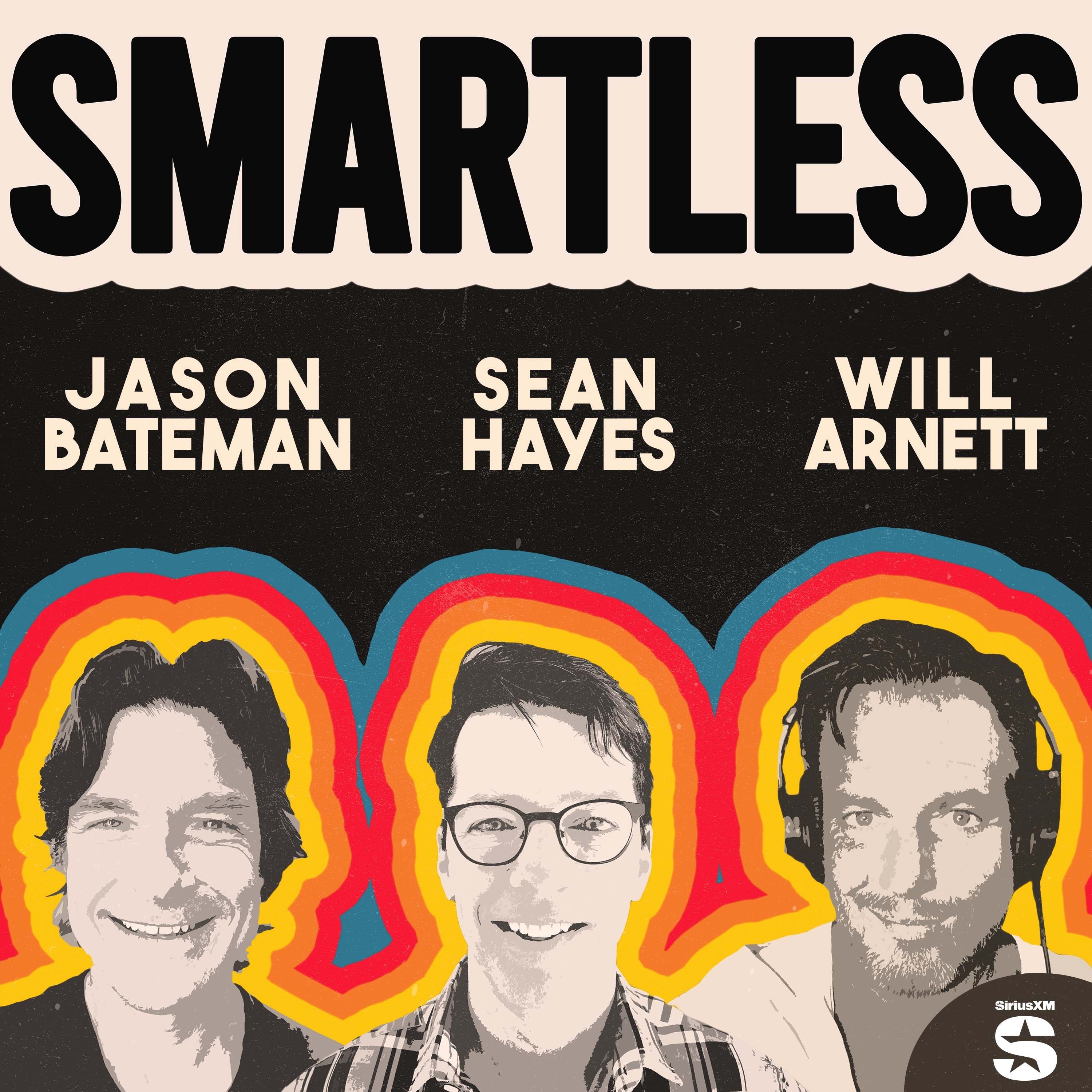
SmartLess
Jason Bateman, Sean Hayes, Will Arnett