The Okotoks Podcast
The Okotoks Podcast is your ultimate guide to life in Okotoks! Hosted by Carlin Lutzer, a professional realtor and proud Okotokian, this podcast brings you stories, insights, and conversations about what makes this town just south of Calgary such a special place to live. Whether you’ve called Okotoks home for years or you’re just getting to know the community, this podcast is your connection to everything happening in town.
From local businesses and real estate trends to community events and hidden gems, The Okotoks Podcast celebrates the people, places, and experiences that define life here. We talk about what it truly means to be an Okotokian, cheering for the Dawgs and Okotoks Oilers, sharing firsthand perspectives from those who shape the town’s unique identity.
And, of course, we can’t talk about Okotoks without mentioning the legendary Big Rock, an iconic landmark that serves as a symbol of our strong, growing community.
Join Carlin Lutzer as he explores the heart and soul of Okotoks, bringing you engaging interviews, local insights, and everything you need to stay connected to the place we proudly call home. Whether you’re looking for the latest news, local recommendations, or just a reason to love Okotoks even more, this podcast has something for you!
The Okotoks Podcast
The Truth You’ve Been Avoiding About Your Health
Use Left/Right to seek, Home/End to jump to start or end. Hold shift to jump forward or backward.
What if the real weight you need to lose is misinformation?
Carlin Lutzer sits down with one of Canada’s top personal trainers, Julie Hodge, to tackle one of the most frustrating cycles of all: yo-yo dieting.
As January rolls in with resolutions and renewed motivation, this honest and hopeful conversation dives deep into what it actually takes to lose fat and keep it off…for good.
Julie shares the science behind sustainable weight loss, the crucial role of lean muscle, and why cardio and calorie-cutting alone often backfire.
Whether you’ve tried keto, carnivore, Ozempic, or every “new year, new you” trend out there, Julie explains how to finally break the cycle, build habits that last, and make 2026 the year you stop starting over.
Listen For
:55 How Do You Finally Break the Yo-Yo Dieting Cycle for Good?
7:10 What’s Really Sabotaging Your “Healthy Eating” Without You Noticing?
12:29 Why Is Muscle the Key to Long-Term Fat Loss and Metabolic Health?
25:21 Is Keto or Carnivore Hurting More Than Helping Your Weight Loss?
34:58 Should You Use Ozempic for Weight Loss—or Is It a Trap?
Connect with guest: Julie Hodge, Strong Certified Body Transformation Coach, Certified Nutrition Coach
Website| Instagram | Email | Facebook | YouTube
Connect with Carlin
Email | Website | LinkedIn | Facebook
Sheep River Dog Rescue formally know as Moe Dog Rescue. Passionate about giving Dogs another chance.
Special thanks to Okotoks Nissan for arranging this podcast with Kelly Hrudey.
You're tuned in to the Okotoks Podcast sponsored by Carlin Lutzer Real Estate. Let's get into it.
Carlin Lutzer (00:17):
Happy New Year, Okotoks, and welcome back to the Okatokes podcast. As we turn the page on another year, January one always feels full of possibilities. New beginnings, fresh goals, and for many of us, a quiet hope that this year might be the one where things finally stick, especially when it comes to our health, our fitness, and how we feel in our own bodies. A lot of New Year's resolutions sound familiar. Losing weight, getting stronger, eating better, building healthier habits, and finally breaking free from that frustrating yo-yo dieting cycle. And today's conversation is about doing exactly that, the sustainable way. So when I was thinking about who would be the perfect guest to kick off the new year, there was only one name that made sense. I'm joined today by Julie Hodge of Julie Hodge Fitness. Julie is one of Canada's most respected personal trainers. Having been voted Canada's personal trainer of the year in 2020 and 2024, and she is currently nominated again for 2025 with the winner yet to be announced.
(01:23):
In this episode, we talk honestly about weight loss, caloric deficit, muscle building, nutrition, strength training, and why quick fixes and extreme diets so often backfire. Julie breaks down why muscle is our insurance policy, why cardio alone isn't enough, and how sustainable weight loss really works in a real world. If fitness, health, wellness, and long-term results are part of your New Year's vision, you're going to get a lot out of this conversation. You can also follow Julie on Instagram at Julie Hodgefitness, where she shares practical, no nonsense advice on training, nutrition, and building lifestyles that last. Let's get into it. This is New Year, New Beginnings on the Okotoks Podcast. Julie, happy New Year.
Julie Hodge (02:11):
Happy New Year, Carla.
Carlin Lutzer (02:12):
Yes, I know. It's crazy. It's 2026 already. And of course, we're pretending it's 2026. We're recording this a little bit earlier, so we're just going to pretend that it's January 1st and we're launching this here today. But Julie, as we enter a new year, resolutions for people as we start the newness of a brand new year, a lot of times health, weight loss is always a big thing. Typically, we've binged a little bit in the Christmas season and now we are looking at getting serious here. My date, what I do is I usually wait until the kids go back to school. So my date of getting serious about everything is probably going to be January 5th. But I look forward to the conversation because I'm on a pretty nasty little yo-yo up and down with my weight. I've discovered ways that I can lose weight fast, but then keeping it off is a problem.
(03:16):
So that's why I reached out to you. And I do appreciate your time, Julie, for joining me.
Julie Hodge (03:22):
Well, you're very welcome. And thanks for asking. And that is actually a really super important topic. And I would say you're not alone. Most of the people I deal with women, but generally it still applies. Most of the women I deal with are all in the same boat, right? Can lose the weight, can't keep it off. And it's a vicious cycle. So let's put a spoke in the wheel here and you ask me what you
Carlin Lutzer (03:45):
Want to know. So how do we put a spoke in the wheel? My little journey, and maybe I hired you for a little bit of counseling here today, but my journey was right before, I think it was 2019, somebody posted a picture of me on social media and I was like, "Oh my gosh, I do not want to be on photos. I don't want my picture taken because I do believe that I was over 270 pounds." And I took that as a little bit of motivation. I clarified my why. My why is not something that I'm comfortable sharing with openly, and I don't think I ever will show as to what my why was, but I had a very big why and that picture was motivation for me to make some serious changes.
Julie Hodge (04:42):
Sometimes you need that shock. If I can share right back to you, that is almost exactly the same story that happened to me this year. And so I'm in this business for 30 plus years already, and I saw a picture of myself on our hunting camera from our forest back in April, May, and I could not believe what I was looking at. It was like a glass of ice cold water in the face. And I was like, "Okay, how have I let it get this far? Who is that? " That is not me. And that spurred my own journey, which has spurred a new journey in my business evolution. And so yeah, and a very, very deep dive into the why of what it is that you're asking of that whole yo-yo cycling, gaining it back later, why that happens and what we can finally do to end that cycle.
(05:45):
There are certain things that need to be in play. And like I was sharing earlier, but I call this like working from the end, right? You need to know the end so that you can get started in the beginning. And so many people have, I just want to start, they're just thinking small. They're thinking beginning, "I just want to lose the weight. I want to drop the fat." That's great. That's the goal, but they're not seeing the end in terms of sustainability, keeping the weight off three, four, five, 10 years. And there is actually a lot of stats that I share in my groups with women on what makes the fat loss sustainable long term versus what doesn't. There's like some science rooted behind this as well and statistics. So where should we start? You tell me.
Carlin Lutzer (06:35):
Okay. I got a question for that because I think I do it all the time is I lie to myself. And then when I have that aha moment when I realize, okay, I've put on weight, the weight that I've dropped is now back. I have lied to myself about my eating habits because there's times that I can be working out and I actually have lied to myself so well that I believe that I'm eating well. But then if I was actually, to be honest with myself, realize, okay, but yeah, there was a few areas of compromise there.
Julie Hodge (07:10):
Exactly. Well, here's a powerful question I ask. For example, this is a true question on my intake forms. How many times a day do you put food in your mouth or drinks that have calories in it?
Carlin Lutzer (07:21):
Yeah. See, my problem's not the drinking. Yeah, I have a few-
Julie Hodge (07:26):
No, and I don't mean that because that can be pop, that can be double, doubles.
Carlin Lutzer (07:29):
Absolutely. No, and I feel that it's not the alcoholic beverages that I struggle with. It's not beverages at all. I think it's just the snacking and what I'm actually snacking on.
Julie Hodge (07:42):
Yeah. Right. How many times a day are you putting food, anything with calories in your mouth? And that is a huge eye opener. I call those BLTs, bites, licks, and tastes,
(07:54):
And they add up significantly. If you look at how many calories are in that tiny little bit of nuts, one time is okay, but if you're, oh, a little bit of ... It's not a lot, that one's a couple, but ... But if you look at the volume of energy in that tiny little bit of nuts, you could be looking at 180 calories from that. If you're doing that three or four times a day, flush your gram in a little taste here, maybe a little handful of the shredded cheese out of the bag, whatever. I've been there and done that. That's why I know. It all starts to add up and you're looking at thinking you're eating or cleaning up your eating. And let's say you think you're eating a good 2,000, 2,500 calorie day, but really it's more like 2,500, 3,500 when all those BLTs are added up and then people wonder why they can't, because it really literally is an energy exchange.
(08:46):
And don't outsource your, this is ironic, your health social media influencers because it is energy, it's either used or it's not used. If you're using that energy, great. If you're not, it's excess and it has to go somewhere and that is in fat. Make sense?
Carlin Lutzer (09:06):
So yes, absolutely. So the goal for us is to live in a caloric deficit
Julie Hodge (09:14):
In the beginning, right? We're talking about the end and the beginning here. In the beginning, is it sustainable to live in a caloric deficit?
Carlin Lutzer (09:26):
Well, probably not.
Julie Hodge (09:28):
Because are you back? You said yo-yo dieting.
Carlin Lutzer (09:32):
Yes.
Julie Hodge (09:33):
If living in a caloric deficit worked, everyone would be at their goal weight and no one would ever need help with weight loss again, right. But it doesn't work.
Carlin Lutzer (09:42):
No.
Julie Hodge (09:43):
Being in a caloric deficit is fine until you lose or drop the fat. I don't like to say lose it because we're not losing it. Because if you lose something, you can find it again. We do not want to lose the fat. I
Carlin Lutzer (09:52):
Can find
Julie Hodge (09:52):
It. We want to drop it
Carlin Lutzer (09:53):
Off for good. Very easily. I can find
Julie Hodge (09:55):
It. So to drop the fat, we need to be in that caloric deficit. But even before we drop the fat, Carlin, here is what most programs and coaches either don't understand or don't teach. I'm going to go there. I'm going to be controversial on that. I'm going to be a disruptor. You can't drop the fat if your body is not in an environment primed and prepped to drop the fat. Example, women. I mean, men have hormones too. Of course you do. Women and their hormone changes in midlife. Let's go there. They are in a process of change. So their hormones are doing some things as they are meant to naturally. As they age, things change. Okay? Estrogen decreases, maybe cortisol is rising from stress of weight, what have you. We can try and try and push and struggle and caloric deficit ourselves into weight loss, but we're going to end up in a worse position later because we have not laid a foundation of metabolic health to begin with.
(11:02):
Because our bodies are used to yo-yo dieting, they're used to being restricted. Then we go back to eating normally, we gain more weight. It's never learning to trust us. So the number one thing we do is help our bodies trust us. How do we get our bodies to trust us? Consistency, consistency, consistency, whether you're in a kalaric deficit or not. So the environment we need to create is one where number one, we till the soil and we feed the soil of what it needs. Meaning we get off all of the weight loss, quick fixed foods, for example, that are often highly processed and marketed because businesses want to make a money, want to make money on their products. We start to eat real food. We start to make sure that we've got the micronutrients that our bodies need. And where do we find micronutrients in real food?
(11:53):
Generally, fruits, vegetables, variety, eat the rainbow, those kind of things. How else do we lay that foundation? Making sure that we're hydrating our body. And what is the number one thing that we need to do so that in future, because we can't live in a caloric deficit forever, in future, we're going to eventually need to start eating more calories again. And what is the buffer between eating more calories and not gaining the weight? You want to take a guess what that buffer is?
Carlin Lutzer (12:27):
No, I'm not sure.
Julie Hodge (12:29):
Muscle.
Carlin Lutzer (12:30):
Muscle. Okay.
Julie Hodge (12:31):
Muscle. Muscle, muscle, muscle. This is huge.
Carlin Lutzer (12:35):
All right. So yes, that is certainly a question that I do have for you is just the balance of cardio, muscle building and what we're putting into our bodies for nutrition. I believe that's probably the three things that are most important, but I always ... Yeah, I certainly do struggle with how much do I do cardio, lifting weights. I've always felt that cardio was always something that was better for me because I could feel it. I could feel the difference faster if I go for a half an hour run versus lifting weights for a half an hour. But I'd be interested to hear what kind of balance you expect out of your clients.
Julie Hodge (13:24):
Well, the first thing that I do is I look at ... Number one, I look at how many times they're putting the food in their mouth, like I mentioned, to get an idea of where their level is right now. But then I also ask, how much cardio are you doing? And women tend to do way too many cardio seeking movements and not enough of what really moves the needle, which is strength training because lean muscle is very metabolically active. Lean muscle does a host of things behind the scenes that does not get enough credit for.
(13:59):
And cardio, you don't get the same long-term outcome bang for your buck when you do cardio as you do for strength training. The muscles need a stimulus. They need that pull. They need to contract, pull on the tendon, which pulls on the bone, which creates and lays down, not only creates muscle from the damage that you're doing in the workup, but that tension on the bone for bone density, especially. And that applies to women and men because as we age, we need to make sure that we're no longer looking at one data point, which is our scale weight, right? We're looking at multiple data points, bone density, muscle density, measurements around the waist versus the hip. Does that make sense?
Carlin Lutzer (14:43):
Yes. Sorry, can you just help me again understand how we build bone density? Is that all through weightlifting?
Julie Hodge (14:51):
It helps impact, right? Any impact. So you think of jumping wheel, but not a lot of people can jump. So you can still have low impact activities that help bone density, right? Whether that's stepping up and stepping down up and down the stairs, whether it's walking minimal for that, but it helps obviously for getting the joint circulating and all of that stuff. But anything where you're having a little bit more power, right? Starting from the ground up is super duper important for that. But the weight training itself, because you're putting a stimulus on the muscle and you're making it work hard, we want this. We want to be able to lift heavier things as we get older for so many different reasons. So when you don't have enough of a stimulus, you're not getting that much muscle contraction, right? It's not having to work that hard.
(15:45):
You want to essentially find an activity, AKA training, that stimulates as many of those muscle fibers as you can. So think of the bicep. If I can do ... I see this all the time, women just doing curls with lightweights forever and ever. Amen. Whereas if they go a little heavier, they go a little slower and they really engage those muscle fibers completely and fully. They get so many better results, they're building lean muscle because of the damage they're doing to the tissues in the workout, which lay down new fibers later. It's a big thing that's going on. The magic of the muscle is actually in the recovery. That's another topic. But anyways, so these women that are doing, or men, too much cardio, not enough strength training, big disservice because muscle down the road allows you to utilize energy, which is calories from
Carlin Lutzer (16:36):
Food
Julie Hodge (16:37):
Or whatever it is, better. And it gives those calories a place to go instead of just fat. Fat storage in the body is literally unlimited, virtually unlimited, right? Which is why you can see people who can gain enormous amounts of weight and be very obese. Do you ever see a woman, for example, like me, putting on that much muscle that would make me look like the Goodyear blimp? No. But fat has unlimited capacity for storage. Muscle on the other hand is lean and tight and helps to pull your body in. It helps to use the food you're eating and give it a place to go. And the more muscle you have on your body, the more metabolically active you are, meaning your metabolism skyrockets, you burn more calories at rest so that when you come off fat loss and you've done fat loss with muscle retention and building at the same time, okay?
(17:35):
Then you find yourself more metabolically active and able as those calories come up eventually because they need to. We can't live in a calorie deficit. Your body has that buffer, which is muscle and muscle's hungry because it's so metabolicically active. Then we are feeding the muscle, we are not feeding the fat cells. So if you prioritize lean muscle, along with losing fat, you lose the fat and not the muscle. The problem is, and I know this is such a huge topic, most weight loss programs focus on dropping fat,
(18:08):
But they don't put the focus or the onus on the muscle at the same time. So not only are men and women losing muscle, or sorry, fat, they are losing the most valuable thing on their body, which is muscle at the same time. And as we age, we are already losing muscle. If we are not purposely trying to keep, maintain that muscle or lay down new muscle, like build lean muscle, then we are essentially dropping fat and losing way more muscle than we would naturally. Because even if you work out, like I'm 53 and I work out four times a week focusing on strength training and I barely do any cardio aside from walking just to get some extra movement in my day. And I'm leaner, tighter, stronger, wearing smaller clothes than ever, and I have to eat more to maintain that muscle. But that said, when you're doing that and starting to increase those calories, that lean muscle is very hungry, so you need to feed it more down the road.
(19:09):
So for
(19:10):
Example, I just lost 30 plus pounds since May of this year, all of the fat, all of it fat, Carlin, and I keep an eye on those data points of skeletal muscle and muscle mass because I have a bio-impedance scale because I think it's time to get out of the regular scale weight
(19:29):
That's
(19:32):
Start to measure point better as we age, right? The bone density, the muscle and the lean muscle. It's super, super important, which is why women, and this is what the studies show, because I'm going to tie it back to what I said in the beginning. The studies are showing that the people that manage to lose or drop the weight and keep it off long term, they've done two things. They've prioritized lean muscle through strength training so that they're losing fat. Non muscle, important, distinction, huge. And they've cultivated not only the soil, but part of that soil are the small micro things we do every single day. So that instead of just following a meal plan where you say, "Okay, eat this. Okay, great. I'll just eat what my coach tells me. " I'm just following a plan. I'm not learning how to do it myself.
(20:21):
I'm not learning the why. I'm not learning those micro habits that I do over and over and over and over again that create a lifestyle that I can sustain because I know what to do. So like drinking walk, getting more steps through the day, getting to bed on time, prioritizing protein first. All those little things add up to be the big things, okay? Getting your workouts in every week. And the more you do that, the more you create that sustainable lifestyle. But basically, a lot of people just want a quick fix to be said, "How do I just quickly lose the fat?"
Carlin Lutzer (20:56):
I'm feeling guilty, Julie. I'm feeling guilty.
Julie Hodge (21:00):
I got to tell you, my friend, if you truly want this, this is where you have to ... Remember you talked about lying to yourself. You have to get really honest with yourself. If you truly want this, you need to do these things forever. You need to eat 80% of the time a whole food diet that supports your micronutrients and macronutrients. And 80% of the time, and 20 is fun food and have all your favorite foods. Every food can fit into a healthy lifestyle and you need to do the strength training. That's it. You need to because otherwise you're going to lose fat and muscle, you're going to get frailer and weaker. So would you rather be lean and strong, or would you rather be lean, skinny, and skinny fat? That's the choice you have in front of me. So I can give you the information, but you have to do the stuff that is what works.
(21:56):
And so when I say don't outsource your health to social media, every second person would have you believe that if you take drops of this or drink this drink, you're magically going to transform your body, be strong and never have to worry about it again. That is false, false, false, because that denies the truth about biology and physiology. The fact is we have muscle on our body for a reason and we need it. And if you don't want to be the kind of person that's living in a nursing home where people are helping you up and down off the toilet, you need to start to be serious about the metabolic significance of muscle and doing things that are very active and supporting that muscle. You can't just diet yourself and sit around all day. Okay? You got to diet and be someone who seeks more movement so that you become a person who moves, you're more metabolically active and that you don't find yourself in a worse position down the road because every time you diet and loose fat, you wreck your metabolism that much more.
(22:57):
Those are layman terms, okay?
Carlin Lutzer (22:59):
Right. Okay. So when you say movement, what pictures come to your mind when you say movement?
Julie Hodge (23:04):
Just for example, I'll take me as an example. I was sitting around a lot as I gained the 30 pounds in such a short amount of time, I was sitting around letting menopause be my excuse. I was lying to myself. "Oh, I need more rest now. I'm getting older. Oh, I should just do less. I'm getting older. "It's okay if I have the double doubles three or four times a day
(23:27):
Because I was still living in the old me when I was lean and fit, that was no longer me. And so instead of sitting around all day and watching all the shows and working for hours on my laptop, I started realizing like, " Wake up, Julie, what has happened to your workouts? What has happened to getting up and moving every hour on the hour so that you don't just sit there and tighten up? "So one of the things that I started to do is just get a certain amount of steps in a day, not 10,000, just even 7,000. And did I do it all at once? Not often, but I would get up and I would get my Fitbit and I would just find ways to do a little bit more walking, even if it just means walking to the end of our long driveway and back, walking around the house a little more, just doing more things that were moving, not for fitness, not to get a workout in, to just move more.
(24:23):
That is what walking is for me now. It's just an opportunity to move more. I mean, I have a walking pad here. I have a standup desk. When I run calls, I walk on my pad usually just to get steps in.
(24:35):
And then I got back to the strength training, which enables my metabolism to increase my body to be more metabolically efficient, not lose the bone, not lose the muscle, but lose what I want or drop what I want, which is the fat. And so it is a longer term approach, not a shorter term quick fix or magic pill. Those things, if the quick fixes and the magic pill works, half of the people on Instagram, Facebook would not exist in what they're selling because they would work. But the fact is you can't outsmart biology, you can't outsmart physiology. There are certain truths that are truths. What works is not sexy, but it's timeless, right?
Carlin Lutzer (25:21):
Right. And that's the trap that I got into, Julie, is I ... Well, not a trap, but it actually is something I found a way that I could lose the weight super fast and I saw the results on the scale and the mirror and photos and all that stuff. And I did the keto diet. I did the keto diet. And then just last year I tried carnivore. I'd love to hear your thoughts on those types of diets.
Julie Hodge (25:47):
Oh, okay. For sure. So again, I just preface this by saying short term in the beginning, long term thing from the end. So keto, that can help with your appetite short term. And where that often fails is sustainability.
Carlin Lutzer (26:04):
That's where I'm at right now.
Julie Hodge (26:05):
All right. Yeah. Hormone stress, muscle loss and micronutrient deficiency. Notice how muscle loss, right? These are some of the dangers of a diet that eliminates or avoids micronutrients and macronutrient groups. Okay? So I've got some notes here because I just want to read my notes on it because I want to cover this really, really well for you. Okay? So unfortunately, many women, and we'll say men here are also never taught how valuable vegetables and fruits are physiologically. We're told to eat them, but we aren't told why. They provide fiber, soluble and insoluble, which going back to fertility of the soil here, support gut health, blood sugar regulation, satiety, and hormone balance. When we remove these foods or severely limit them, women or men can develop digestive issues, increased inflammation, and this is the big one, metabolic dysregulation without understanding why. So yes, you're seeing outside that keto diet you went on is giving you some results right now and short-term to me is six months a year, two years to me, a short-term.
(27:21):
We've got a life. Praise the Lord, hopefully, if he's willing, ahead of us.
(27:26):
So if you are just following this and you might be getting those initial results, but the warning here, we can develop digestive issues, increased inflammation, metabolic dysregulation, and those things are happening under the surface. I like to say menopause or midlife for men and women. It's like a magnifying glass. So when we've done these things, like followed these very kind of, I will say rigid in one way, diets, it's not until later that the damage of that becomes presented. Okay? You follow me here? Yes. So what you're doing, let's say last month with a keto diet may feel fine and dandy right now, but what's happening physiologically or biologically under the surface with muscle, your metabolism, your gut, all that stuff, that can be slowly simmering under the surface and then boom, it's going to present itself again down the road, right? Okay. So it's just really important to be mindful of that.
(28:32):
And same with carnivore. I know that it has gained a super, super big following, but again, short term, it feels simple. Long term, we can see things like gut issues, poor digestion, macronutrient gaps, not to mention micronutrient gaps, right? Micronutrients, by the way, is where we get those vitamins and minerals through the food and social rigidity, that's another story. But vegetables and fruits are not optionable extras. They're like building blocks. We need them. And so they provide the wide range, like I mentioned, of those vitamins, the minerals, the antioxidants and the fiber that support the gut microbiome and our overall metabolic health. Remember laying the foundation for fat loss that
(29:18):
Lasts
(29:19):
Fat dropping that lasts. So basically the things that work, like I said, they stand the test of time. And when we think we can hack them in our ego way, that's when we run into trouble. Our bodies can humble us quickly. So not a lot of people like to hear this, but I'm in the business of getting the results for people, not supporting them and staying stuck, spoke, will, spoke, stop the insanity, we stop doing all the things that we think are going to work this time, even though they've proven not to work before and start to find the missing puzzle pieces. Have you ever tried to put a puzzle together and there's just that one piece Piece and you get it all done, you're like,
Carlin Lutzer (30:02):
"Where's the last piece?
Julie Hodge (30:03):
Where is
Carlin Lutzer (30:04):
It? " I don't do puzzles, but I do steal the last piece typically
Julie Hodge (30:09):
From the family member
Carlin Lutzer (30:10):
That's doing it and then put the last piece
Julie Hodge (30:14):
In. What a great segue. Keto, carnivore, intermittent fasting. They will steal that one little puzzle piece. They steal that puzzle piece and then you're like, "What the heck? What's going on two years down the road? I thought I was there and now I'm gaining more weight now and now I have more fat on my body." This is why. This is that metabolic cycle. So the first thing you really want to do is just feed your body what it needs so it can trust you again, so you can regulate that metabolism, improve that gut health. Get your hormones to do what they're supposed to do again. For example, fun fact, did you know waking up in the morning you should be hungry?
(30:59):
How many women I deal with that wake up in the morning and they are not hungry? I can easily find out why. It's hormonal. There are hormones that are responsible for hunger and satiety. And when they are dysregulated or upside down, you're not hungry in the morning, so you don't eat. So we further deny the body what it needs to set the foundation for the fat loss that we want, reinte and repeat. When we feed and fuel our body instead of restrict it and force it, it starts to be like, "Oh, this is great. Okay, cool. This is good. This is good. Oh, I'm going to get hungry now. Oh, right on. I'm going to get hungry now this person's feeding me. I'm not starving for all these different micronutrients. Now I'm going to feel a little bit more comfortable now that I'm working and I'm kind of revving my engine steadily a little bit better.
(31:51):
Now I'm going to think about letting go and dropping some of that fat because the environment is conducive to this for me now. Oh, and this person is actually respecting my muscles. This person cares about this valuable fiber stuff all over my skeleton. Wonderful. Perfect. This is really what I want. And now I can use the food they feed me and I can put it there and make them work even better. And so once you start doing that, the effects are profound and they are longer lasting. It's the after dropping the fat and what happens after that, that most people start to fall down. Do you know, Carlin, if you were to hit your goal weight, do you know how to start reverse dieting yourself back so that you can eat?
Carlin Lutzer (32:41):
Never heard of ... I have no idea what you're talking about.
Julie Hodge (32:46):
And most people do not, which is the point. So I think things like podcasts like this and getting the truth of the message out are so important because there are so many people stuck in eat less, do more cardio, eat even less, even do more cardio. And what they're doing is dysregulating that even further. It's like digging a hole. You dig a little hole and then you go back to your real life and you fill the hole. But this time the hole actually gets filled with a little more dirt, which means next time you dig a hole, you got to dig through more dirt, try to get the whole deeper. And then you get the whole deeper, but then you get out of it and you add more dirt. This is fat, right? Do you see? So you're digging, you have to dig harder every single time just to get out of there as opposed to if you just do it right, which sometimes means finding someone who has what you need and being willing to trust them to help you with it.
Carlin Lutzer (33:51):
Yes.
Julie Hodge (33:51):
Because I hire coaches when I don't know what to do because I can keep digging holes that keep getting deeper and deeper and deeper, or I can help myself by finding someone who knows how to get me out of the hole.
Carlin Lutzer (34:07):
Yeah.
Julie Hodge (34:07):
Right?
Carlin Lutzer (34:08):
No, for sure. Well, Julie, I believe today you are that for me just with the advice that you gave and hopefully for others that are listening. I know that you are available to coach people that can reach out to you. I'll provide all the information to your contact information at the end of the show so listeners can get in touch with you and at least start the conversation with you and what that looks like. Now, we're starting to run out of time here a little bit, but I want to open up another can of worms before we say goodbye. And I can almost predict what your answer is going to be, but what about Ozempic? There's so many people that are taking Ozempic to not just to ... And a lot of them aren't even fighting their diabetes. They're just doing it just to lose weight.
Julie Hodge (34:58):
Yeah. To drop the weight. Yep. So that is huge right now. And like I said earlier, which I'm going to say, there is no quick magic pill.
(35:08):
Are you going to get results on it? Yes. I've had women go through my program, come completely off the GLP-1s, completely because they're given their bodies what it needs and they're creating that soil and they're creating the habits every single day to get them there where they don't need to rely on that drug or that pill or whatever it is. But yeah, with GLP-1s like the Ozempics, it is even more critical. This is my sincere heartfelt warning. It is even more critical that anyone on it prioritize strength training, especially. Okay? Again, we are living in a culture of comfort right here and right now. I want you to think from the end and start to think, I'm hoping, praying that you want to stick around for another 20, 30 years, 40 years, whatever that might be. I want you to start to be clear on what quality of life do you want to have in those years.
(36:07):
Are you willing to sacrifice that for a temporary thing right now? Okay. I mean, I'm a faith-filled person, so I kind of think of this in scriptural terms. You want to just indulge now in what you want temporarily, or do you want to have that beautiful quality to continue doing the things you love with the people you love 20, 30, 40 years from now and do it independently?
(36:35):
Muscle is our insurance policy. Muscle is magic, for lack of a better word. It is biologically powerful. And as much as fat loss is wonderful and we want to look in the mirror and love our bodies and think, "I just feel so good." It starts aesthetically. It becomes a deeper, deeper health thing. So if you're on GLP-1s, to get on a strength training program, just start with what you have, where you are. There's no right or wrong way. Just start. Just start. Okay? Yeah.
Carlin Lutzer (37:08):
No, that's perfect. Well, Julie, I do appreciate your time. I do and have been told this information before, but the psychological barrier in my mind that cardio overweight training is still a battle for me. Like I said, I talked about it earlier. I just feel better. So in 2026, I need to get over that psychological barrier of cardio because my body and my age because I do like to run. I like to go for a run, but my joints, my knees, my hips even are starting to feel the pain of that. And I do think that if I do adhere to what you're saying, I think by the end of 2026, I think my body's not going to be a sore. It's going to feel a lot better.
Julie Hodge (37:55):
And actually, Carla, I do work with runners who love to run, and if I were to tell them never to run again, they would just shun me. So you have to also look at how can we make these things fit in? Because you said something important. You like it, it's good for stress relief, you enjoy it.
(38:13):
That is good because of all the good hormone things that happen when we're doing something we enjoy. So don't not do the things that you enjoy. Just realize that the way you do them may look different. Instead of relying upon that, you need to make sure you've got the buffer with the strength training. And because I work with runners and I've seen this happen with their testimonials, the more they did the structured, and again, structured, optimized types of workouts, which is not jumping from a different workout every time you lift weights, by the way. It's the opposite of that. And over time, because of that, the muscle, right? The way they've developed their muscle and put on that lean muscle to help protect the joints they're running is improving. I've got one lady who took, what was it, 20 minutes off of her, was it a half marathon time, marathon time, which is significant.
Carlin Lutzer (39:09):
Yeah, absolutely.
Julie Hodge (39:10):
Huge. Right? From prioritizing strength training in addition to her running training. And so yeah, it has a place everywhere. So do what you love. It just might mean in this season of life, it looks a little different and there's nothing wrong with different.
Carlin Lutzer (39:30):
Julie, what do you want to leave the listeners with today?
Julie Hodge (39:35):
Great question. I would really love to leave your listeners with some really easy, simple, actionable things that they can do to start laying that foundation. And these are things that I do in my group with my online women who are getting off GLP-1s, who are completely receiving full relief of autoimmune symptoms and things like this in just a few short weeks, and it's this. So I want you to start feeding and fueling yourself, which means lean protein, dietary fat, and your carbohydrates. Okay? I want you to start every day before you put anything in your mouth with fresh water, put lemon in it. Don't care. Just hydrate upon waking and then don't skip meals. All right? So you're going to start to fuel your body with whole food. You're not going to skip breakfast in the morning and you're going to put water in your body before anything else.
(40:33):
If you can really be consistent in following those, you're already going to start to experience results. And I would just say this, grace, not guilt. Just like your body, your mind doesn't know if there's a real bear behind you trying to kill you or it's in your mind, give yourself grace over guilt because guilt and shame and all those yucky things are going to contribute to additional stress and raise your cortisol levels and create more hormonal dysfunction. So enjoy it, love your body, nourish your body, and just start with those little three things that I just said, but the key is just to keep doing them over and over and over again.
Carlin Lutzer (41:17):
Yeah, absolutely. Julie, I hope that you come back sometime and update us on things that we can think about, maybe new things that you've learned, but I do appreciate your time today, just even really selfishly for what you've taught me in the few minutes that we've spent together. So I do appreciate you. And I wish you all the best in 2026. And once again, happy new year.
Julie Hodge (41:44):
Thank you. Happy new year to you. Let's do this 2026.
Carlin Lutzer (41:47):
Absolutely. Thank you, Julie. All right. Well, that's a wrap for today's episode and a huge thank you to Julie Hodge for joining me and kicking off the new year with such honest and insightful conversation. If you want to connect with Julie, search her up on Instagram, Julie Hodgefitness, where you can even join a class with Julie online. If there's one takeaway from today, it's the sustainable weight loss and long-term health aren't about extremes. They're about understanding your body, prioritizing lean muscle, fueling yourself properly and building habits you can actually live with. You can outsmart biology, but you can work with it. As we head into 2026, my hope for you is that whatever goals you set this year, especially around fitness, nutrition, and wellness, you approach them with patience, consistency, and long-term mindset. Small changes done consistently do add up. If you enjoyed today's episode, make sure to follow Julie on Instagram at Julie Hodgefitness.
(43:03):
She shares a ton of valuable content around strength training, nutrition, muscle building, and sustainable fat loss that goes far beyond January resolutions. As always, if this episode helped you or encouraged you, please consider sharing it with one person who might need it. That small action helps this podcast grow and keeps these conversations going here in our community. Thank you for listening. Thank you for supporting local conversations and from my family to yours, happy New Year. Here's to health, hope, and a strong start to 2026. This is the Okotoks Podcast. We will talk to you soon.
Announcer (43:43):
You've been hanging out with us on the Okotoks podcast. Thanks to Carlin Lutzer Real Estate. We'll see you again real soon.


Podcasts we love
Check out these other fine podcasts recommended by us, not an algorithm.

Stories and Strategies with Curzon Public Relations
Stories and Strategies https://storiesandstrategies.ca/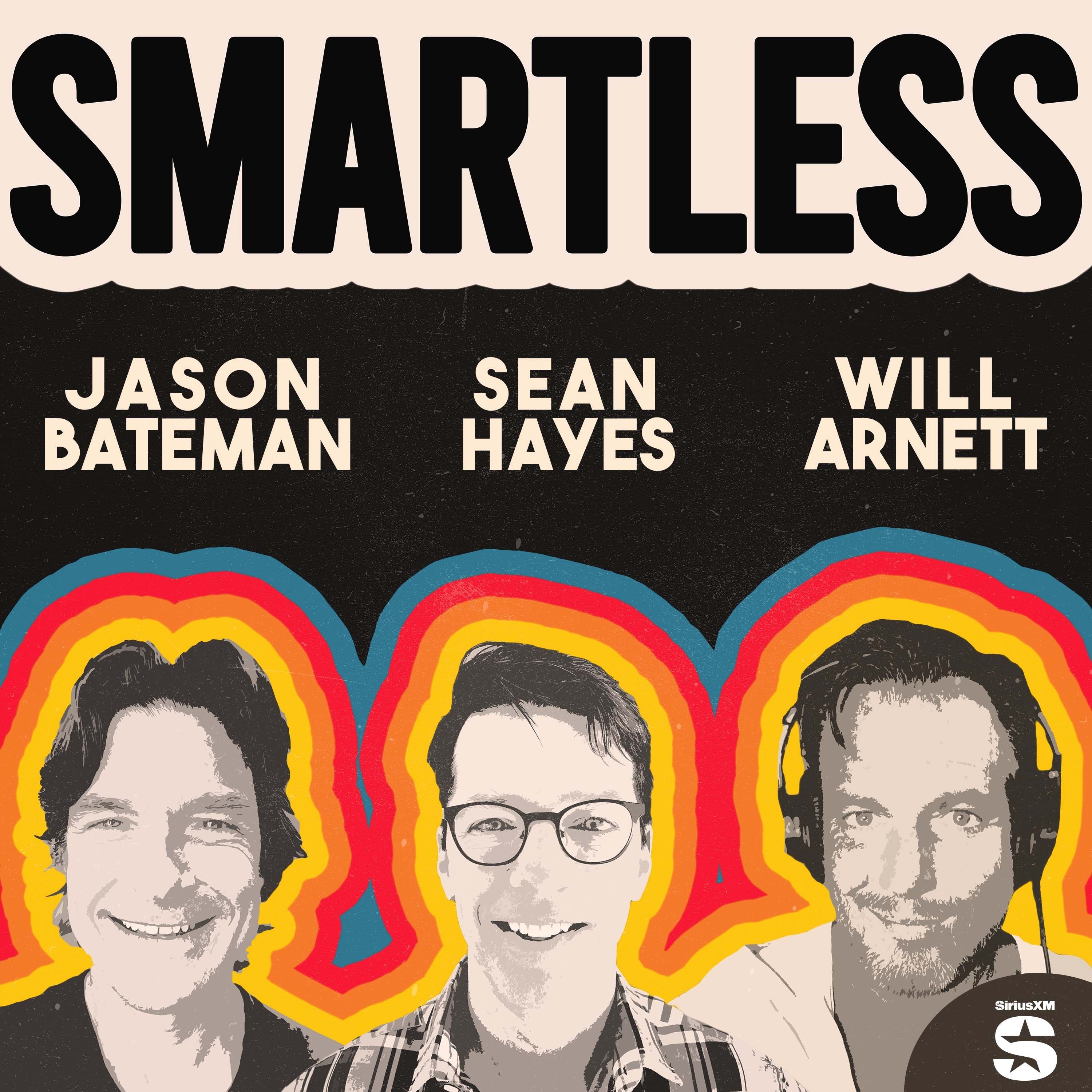
SmartLess
Jason Bateman, Sean Hayes, Will Arnett