The Okotoks Podcast
The Okotoks Podcast is your ultimate guide to life in Okotoks! Hosted by Carlin Lutzer, a professional realtor and proud Okotokian, this podcast brings you stories, insights, and conversations about what makes this town just south of Calgary such a special place to live. Whether you’ve called Okotoks home for years or you’re just getting to know the community, this podcast is your connection to everything happening in town.
From local businesses and real estate trends to community events and hidden gems, The Okotoks Podcast celebrates the people, places, and experiences that define life here. We talk about what it truly means to be an Okotokian, cheering for the Dawgs and Okotoks Oilers, sharing firsthand perspectives from those who shape the town’s unique identity.
And, of course, we can’t talk about Okotoks without mentioning the legendary Big Rock, an iconic landmark that serves as a symbol of our strong, growing community.
Join Carlin Lutzer as he explores the heart and soul of Okotoks, bringing you engaging interviews, local insights, and everything you need to stay connected to the place we proudly call home. Whether you’re looking for the latest news, local recommendations, or just a reason to love Okotoks even more, this podcast has something for you!
The Okotoks Podcast
Part 1: The Case Against Separation
Use Left/Right to seek, Home/End to jump to start or end. Hold shift to jump forward or backward.
What if Alberta really did separate from Canada—then what?
Carlin Lutzer welcomes back former Alberta cabinet minister Thomas Lukaszuk to unpack the heated and highly personal debate around Alberta’s political future.
With over 456,000 signatures recently submitted to oppose a sovereignty referendum, Lukaszuk reflects on the state of civil discourse, the real risks of separatism, and why he believes independence is a dangerous illusion.
From rural voter disenfranchisement to the haunting lessons of Quebec and Brexit, this conversation dives deep into the emotional and economic realities of separation…and urges Albertans to think critically before they vote.
Listen for:
8:10 Could Alberta separatism spiral out of control like Quebec?
14:12 What is Thomas Lukaszuk’s vision for fixing Canada without separation?
37:04 Could the U.S. take advantage of an independent Alberta?
52:52 When will the Alberta referendum actually happen?
54:56 Are frustrated voters unknowingly risking Alberta’s future?
Connect with Guest:
Thomas A. Lukaszuk
Connect with Carlin
Email | Website | LinkedIn | Facebook
Sheep River Dog Rescue formally know as Moe Dog Rescue. Passionate about giving Dogs another chance.
Special thanks to Okotoks Nissan for arranging this podcast with Kelly Hrudey.
Announcer (00:00:00):
You found the Okotoks Podcast sponsored by Carlin Lutzer Real Estate. No refunds if you laugh too hard.
Carlin Lutzer (00:00:17):
Before we get started, I want to be very clear about the purpose of today's conversation. Alberta's at a crossroads. Discussions around sovereignty, separation, and the possibility of an intimate referendum are no longer abstract ideas. They are real, emotional, and deeply personal for many Albertans. These conversations can easily become divisive, heated and unproductive. That is not what this podcast is about. The space is for civil discourse. It is for listening even when we disagree. It's for asking hard questions without demonizing one another. And it's for recognizing that reasonable people can look at the same facts and come to different conclusions. In this episode, I'm joined by Thomas Lukaszuk to talk about Alberta's political landscape. This is the second time that Thomas has been on this podcast. We're going to look at the separatist movement and the implications of a potential referendum. We discussed the recent petition that gathered over 400,000 signatures from Albertans who want to remain in Canada and the challenges rural Albertans face in that process and the broader historical and economic context behind separatist movements in this country.
(00:01:42):
This is not an episode telling you what to think. It's an episode encouraging you to think deeply, to do research and to listen carefully, especially to voices you may not agree with. Because if we can't talk to each other respectfully, we've already lost something far more valuable than a political argument. Let's get into the conversation. Well, Thomas, thanks so much again for joining me.
Thomas Lukaszuk (00:02:07):
Thank you for having me again.
Carlin Lutzer (00:02:08):
Yeah, you betcha. And so much has transpired. So much remains the same, but so much has happened since the last time we talked. And I do. I sincerely appreciated your time last time and the things that you talked about. I also, as a Canadian, I appreciate what you're doing for Canada and also as an Albertan, what you're doing, because I know that you're passionate. And that's with this podcast, what concerns me is just the lack of civil discourse that can happen even amongst people where if you don't agree with them on a certain subject, doesn't matter what the subject is, you can't have those conversations. I'm not saying that I agree with the APP. I'm still on the fence, Thomas. And yeah, congratulations on getting so many signatures. I believe that there was 456,000 signatures turned in for Canadians that signed up to remain in Canada and send a message.
(00:03:13):
404 of those were officially verified, so obviously some of them weren't verified, I guess.
Thomas Lukaszuk (00:03:18):
Yeah. So what happens, the vast majority of signatures that were not verified, it wasn't a large number, but nonetheless. And that is an issue that we need to address, I think, later on through legislation. And the reason is this, many Albertans who live on farms usually have as their address, a PO box. So if you look at their driver's license or any documents that they have, it's always a PO box, but they actually do also have a land description address, but most people actually don't even know what it is. When you ask them, what is your address? They give you the PO box address. So when they were filling out the petition, they would put down the only address that they actually know, which is the PO box address. And that is something that elections Alberta would not accept, which is actually really odd because when elections Alberta sends out voter cards to those, let's call them farmers, to those farmers during election time, they actually send it to the PO box because that's the only address that they have.
(00:04:24):
So they discounted all the PO box addresses. And unfortunately, rural Albertans were disenfranchised because their signatures didn't count and I wish they did. But I can also tell you on a good side, since we handed in this petition, I think about 70, 7-0, 70,000 people signed up on our website saying we didn't have a chance to sign the petition, but we want to register as supporters.
(00:04:53):
But nonetheless, it's not thanks to me, it's thanks to our volunteers. It was record setting for sure.
Carlin Lutzer (00:04:59):
Yeah, for sure. And would you say your mission was accomplished? I thought that ultimately you were wanting to stop the potential of a referendum. Is that correct?
Thomas Lukaszuk (00:05:11):
Sure. And if we were given the help that the premier has given the separatists where if we really had 120 days as opposed to 90 days, we would've collected many, many more. Yes, I filed under the legislative provision, which asks the premier to hold a vote in the legislature. And then if she chooses not to, then it takes us to a referendum because I had two goals in that sequence. Have this resolved in a legislature so we don't cause the damage and the divisions in Alberta by going through a referendum campaign. It will be horrible. But if the premier doesn't choose to take that option, then if there is to be a referendum, let's have it on a positive question because since vast majority and any polls shows that since vast majority of Albertans want to stay in Canada, then the question should be reflecting the wants of majority of Albertans, not the opposite.
(00:06:10):
So we'll see what the premier does, but I suspect she will call a referendum simply for political reasons. If she wants to survive as a leader of that party, hence a premier, she probably feels that she has to have a referendum to make her political base satisfied.
Carlin Lutzer (00:06:31):
So you knew in advance that this could potentially kick off a referendum?
Thomas Lukaszuk (00:06:34):
Of course. I knew in advance that there would be a referendum because either I filed first or they filed first, except by filing first, I gave the premier an option, let's call it a safety valve, that she actually could not call a referendum and resolve this in the legislature, which from a purely responsible position, that would be the right thing to do because you would avoid a divisive referendum. And since we elected our MLAs, they would vote on our behalf in the legislature. And some would vote for separation, and I think majority would vote for staying. But if she decides to have a referendum, as I said earlier, we're prepared for it. It's regrettable that she feels that we have to have one because it will be divisive from a social perspective, damaging economically without a doubt, it already is. And I fear, I study history.
(00:07:32):
I know what happened in Quebec. It actually got not only divisive, but dangerous.
Carlin Lutzer (00:07:37):
Yeah. Yeah. And like we talked about last time, just how many companies moved out of Quebec because they just didn't know there was certainly some hostility there. Okay.
Thomas Lukaszuk (00:07:48):
So- Carlin, people died. Let's not forget that. People died.
Carlin Lutzer (00:07:52):
Tell me
Thomas Lukaszuk (00:07:52):
About that. Well, FLQ crisis, there were kidnappings and there were murders during the separatist movement. So let's not forget about that. And we are all passionate about things.
(00:08:10):
I am extremely passionate about Canada and Alberta. Separatists are extremely passionate about their cause. And not that anybody's planning it or anticipating it, sometimes passion gets out of control. As difficult as it is controlling your volunteers, sometimes volunteers go on a limb and do something you wish they didn't do. That always happens in all campaigns. When you deal with such highly charged emotional issues, and when you then have our premier adding fuel to it, and we will probably see the American administration getting engaged and adding fuel to it, things can go out of control. And that is something that is continuously in the back of my mind as well.
Carlin Lutzer (00:08:56):
Right. So yes. And I think what you're learning ... I follow a lot of different things on social media. Are you alluding to just basically some volunteers stepping out of their bounds and maybe trying to sabotage now a little bit what the separatists are trying to do?
Thomas Lukaszuk (00:09:15):
Or anybody. Volunteers are phenomenal. They do what they did. They collected nearly half a million signatures. They will collect signatures for the separatists as well. But in any movement, there's always volatility because you can't control what people out there will do. And some people get very passionate. And I was working really hard during our campaign to make sure that our volunteers are gracious and thankful. And I was encouraging them not to get into debates because this wasn't a campaign about changing people's minds. It was about collecting signatures. But even some of our volunteers got passionate because they care so much about this issue and they can't understand how somebody doesn't get it. So when you get into these referenda, they're very unpredictable.
(00:10:09):
And if any country can avoid this kind of a divisive referendum, it should. If there is any better way of resolving an issue, particularly when polling shows, and I'll give the benefit of doubt to my opponents, let's say they are at 30%, as some polling indicates, well, that is still a big spread. 30, 70 is a big spread. Do you really need a referendum on it? If the polling was 40, 60, 45, 55, then okay, you may feel compelled to have a referendum. But when every single polling shows that the support for separatism really waivers between 20 to 30%, is it worth the risk? The economic risk, the short social risk, the unpredictable factors that can happen during these passionate campaigns? I don't think it is. But the only person that can now stop a referendum, considering that separatists will get their 170,000 signatures, it will be the premier.
(00:11:16):
And I think that is a great burden of responsibility that will be lying on her shoulders as a leader.
Carlin Lutzer (00:11:23):
Okay. But for the separatist movement to be collecting signatures right now, it's a little bit of a moot point, isn't it? Because of what you guys, the Forever Canadian movement did? It is. They wouldn't have to be collecting signatures.
Thomas Lukaszuk (00:11:38):
No, no. It's something that they wanted. And I find it surprising because for a movement that is so certain that they will win a referendum, just give us this referendum because we know we will win it. Why did they not file under the old 300,000 signature rule like I did? Why did they have to convince the premier to make this easier for them to bring it down to 170,000 and give them extra time instead of 90 days, 120 days? This is not what someone who's confident of having a majority would do. I was confident that we have a majority. That's why I went under the old rules and I had no problem surpassing my minimum of 300,000 signatures. But for some reason, they felt compelled to lobby the premier to make it easier on them. And she did. But you're right, it's a moot point because if the premier wants to call a referendum, she can't call a referendum regardless.
(00:12:38):
Either on my question or out of her own volition, Premier doesn't even need a petition to call a referendum. She can call a referendum tomorrow on whether the sky is blue, as she did on the time, on the changing of daylight saving time. So she doesn't really need this exercise. But the reason this exercise is taking place right now is because her base, members of the UCP Party and many of them are supporters of separatism, are demanding that of her. We saw this at the UCP convention. So she gave them this exercise. They're going through it and we'll see what the premier does with it at the end.
Carlin Lutzer (00:13:21):
Yes. And we are. Yeah. We're starting to see the lineups for signatures for the separatist movement. We do talk about the damage. In your world, what is the best way to go about ... Because I think we talked about before, you have issues with the way the federal government is dealing with stuff. The separatist movement, that is their main problem as to the reason why they want to do this is because of the federal government and the way that our hands have been tied for years. What's a perfect world in your mind, Thomas, for getting us as Albertans to the goal, to where we want to be?
Thomas Lukaszuk (00:14:12):
Yeah. So let's start with the premise of your question. You say in your world, my world is your world. We live in the same world. I am no different than you are. I'm an average Albertan. And can
Carlin Lutzer (00:14:26):
I stop you there, Thomas? Sure. Because we are so ... I believe that as Albertans, as people, as members of the human race, we are so similar. Do we want to pay lower taxes? Yes. Do we want to open the door for business? Absolutely. Do we want less government to get in the way? Yeah. I think the government has taken on such a big role that they wanted to be the be all and end all for every question that's answered. Well, if the government ... You know what I mean?
Thomas Lukaszuk (00:14:58):
But we are the government too. I was a 30 year old that was not happy with the way things are going, so I decided to run for office. And who knew? I got elected and I became the government and you can run for office tomorrow and you can become the government. So we often speak of government as if it was some kind of a foreign entity that was super imposed on us. No, but it's us running for office and forming a government. And if we really don't like it, we vote and we voted out. Now, with Alberta government. Now with the federal government, there is an issue because of the fact that different parts of our country have different voting tendencies. And it's actually quite interesting. I was in Nova Scotia about a month ago now speaking with some current and former politicians and just with people, because I was there to unveil a monument to the Canadian Navy.
(00:15:58):
So a lot of soldiers and others, and they say, "You guys in Alberta, you always vote conservative. Whether it's good for you or bad for you, you always vote conservative." So they can't figure out why we vote the way we vote. And we can't figure out why they vote the way they vote because our realities sometimes are somewhat different. We have different industries, but we definitely have different population basis. So if you go into the maritimes, especially to Newfoundland, they have very similar issues as we do because they have smaller population and they can't in themselves vote the government out. They just don't simply have enough seats in the house, enough population to justify more seats in the house. But at the end of the day, we all can run for office. And I can tell you as a progressive conservative, and I still believe that I am a progressive conservative in cabinet with Ralph Klein.
(00:17:00):
I served with five premiers, but two terms with Ralph Klein, we were often peed off because when Harper was in government, there was nothing we can possibly do to get his attention. As a matter of fact, I remember when we wanted to have a joint caucus meeting, so the federal conservative MPs and us together and hammer out some common issues because Alberta was not happy then either, except it was more difficult to criticize Ottawa because conservatives were in government, so we were sort of nicer to them. But Harper would not even grant us a meeting. He would only come to Alberta during the stampede breakfast. Why? Because he didn't have to. And we politically understood it. Why come to Alberta and spend time when you know you're going to win every seat anyway? Then liberals get elected and they're politically are asking themselves, why come to Alberta?
(00:17:57):
We can walk on water and they just purchased a massive pipeline with taxpayers and they won't vote for us anyway. So we positioned somewhat ourselves also in a place where Ottawa just looks at Alberta and says, "What's the point?" One party says, "We're going to get it all anyway." The other party says, "No matter what we do, we're not going to get anything anyway." So there is part of that. And the population is another one. I'm frustrated. I want everybody to understand that the forever Canadian movement, all of our volunteers, we had over 6,000 canvassers and I believe another 5,000 volunteers just doing general duties. I don't think many of them, if any of them would say, "Things are perfect. It's Nirvana. Don't change anything. We just love the way things are. " No, that is not the case at all. We are also frustrated about certain things.
(00:18:56):
I wish we had more seats in parliament. I wish we had more senators.
(00:19:02):
There are fixes to be made to the equalization, the transfer formula for certain. Those are things that we need to look at. But one thing we all believe in, all the sort of nearly half a million signatories to the petition, I think I can speak on their behalf for that, is we believe that separation is not the answer. Separation will cause more problems, unimaginable problems to people who live in what we call Alberta right now than what we have right now, for sure. But there are solutions. And I point to this recent MOU that Carney signed with Smith. Is it symbolic at this point in time? Yes, but things are starting to move. There will be projects that will be tabled in the major projects office in Calgary. It shows you that there are pathways. Canada is an interesting country. It's a country of continuous internal negotiation.
(00:20:01):
We always compromise and we negotiate issues between provinces, but if any of those who are proponents of separatists, if they would traveled the country and spent few days in each province and talked to people and elected provincial politicians, they would find that in every province, people have different issues with the Federation. And one thing we have to be aware of is that if we were to open up the Constitution, and let's say let's redraw the parliamentary map, let's add seats to Alberta, then other provinces will put their gripes on the table as well. Because when you open up a Constitution, every province gets to put their bellyaches on the table to have them resolve at the same time. And my concern is that be careful what other provinces will be asking for. So let's start talking to each other. Let's open up a table and see where we can compromise.
(00:21:00):
And we're not going to get everything and we may still be somewhat unhappy. But as a labor minister twice, I can tell you, dealing with unions and employers, I always found that if everybody leaves the table either equally happy or equally unhappy, you know you got yourself a good deal. And we live in a country that is sort of always either equally happy or equally unhappy. Newfoundland and Nova Scotia are frustrated because government stopped, the fishing industry basically froze it. And that was livelihood to a lot of people, but they did it for reasons because if they didn't, they would run out of fish anyway.
(00:21:44):
The supplies were devastated. In Ontario, as you know, they're having problems with manufacturing in United States and what's happening right now. So there is issues across the province. And this is not to justify them, but what I am saying is this, let's be mature adults about this. Let's present the Prime Minister with a list of things that we believe need to be fixed for this country to be even more functional and let's negotiate in that spirit. And there are mechanisms in place, but convoys and blocking borders and now having a separate this referendum is actually causing ourselves more harm and it's making it to negotiate more difficult with other provinces.
Carlin Lutzer (00:22:34):
But I guess just to cut you off there, but it seems like, okay, yeah, they've tried the chucker convoy, they've tried all these things, no matter what they do, 10 years-
Thomas Lukaszuk (00:22:47):
Of course it doesn't work. Holding your breath doesn't work either. So you can say, "I tried everything. I even held my breath." Well, that's not how things get done. The fact is that we need to work with other provinces and we need to work with the federal government. And I know it's frustrating because the system is slow and I can tell you that-
Carlin Lutzer (00:23:15):
Well, even Mexico has said they don't like dealing with Canada because of the policy and how slow Canada moves on anything. It's just how do we ... Because Kearney's been in power for- Less than a year. And there's still, it just seems, again, it's just rhetoric. It's talk. It's not a plan. We're, well, we'll do this if ... And there's so many variables that you know that a pipeline's never going to get
Thomas Lukaszuk (00:23:41):
Built. Well, I wouldn't say that because we forget that a massive pipeline just got below. And I'm not a big fan, but it was actually Trudeau that made it happen. During Harper times, actually, we didn't build pipelines. Trudeau was actually, this is the irony of it all, but we are in such separate camps right now. It is so tribal right now that we don't acknowledge the good things the other side did. And what I am hoping to do, and that's why this forever Canadian is 100% nonpartisan. I have Ian McClellan, one of the three forefathers of the Reform Party working in forever Canadian organizing. I have Brent Radgaber, Harper's, a member of Caucus working on this. So we have conservatives, we have liberals, we have dippers. Everybody's sort of working together because we believe that a Canada is still by far one of the most enevable countries in the world.
(00:24:48):
And it's not us saying that about us, it is the world. Statistic after statistic shows that Canada with life expectancy, with health, with life satisfaction, with average medium earnings, with wealth per capita, we're ahead of most, actually all Western countries. It is couple Scandinavian countries actually that beat us to the punch on some of those measures. So we know that we're a great country. Are we perfect? No. We have things in history that we need to reconcile and we have things today that we need to reconcile, but not through breaking up this great country. We simply have to sit down and negotiate. So one of the things I hear all the time is the number of seats in parliament, and I get it. Now, but if you want to have a system, one person, one vote, and each vote counting the same, then there is a legitimate argument against PEI.
(00:25:48):
But let's be honest, PI as a province has fewer people than City of Edmonton. So that is PEI is not our problem. Let's not blame PI. It's not those extra four seats that they have that really make the difference. It is Ontario and Quebec.
(00:26:04):
And the fact is that their combined population is bigger than the rest of Canada put together by far. So how do you make a system one person, one vote? We will never have the number of seats that Ontario has in Quebec has because we simply don't have the population. Our population is growing, so maybe there needs to be an adjustment. Maybe we can pick up couple of seats, but that is not going to solve the problem. Senate, frankly, I'm not a big fan of Senate to begin with. Harper promised Triple E Senate, equal elected and effective. He never did that because he also didn't want to open up the Constitution knowing that other provinces would put other things on the table. Trudeau promised electoral reform. He also didn't do it because he knew he would have to open the Constitution and no prime minister, doesn't matter what political party will not open the Constitution easily.
(00:26:59):
So are there other mechanisms that we can put in place that will compensate us for not having the same number of seats as Ontario, but how can we possibly have the same number of seats as Ontario when they have 10 times the population? So those are things that we need to look at, but the way we're going to resolve them is either developing other new mechanisms that bring a different balance to the table.
(00:27:29):
There is a phenomenal table of the first ministers where all the premiers once a year sit down and negotiate things. I firmly believe that that table should be meeting more often than once a year. There are a lot of things that premiers can hammer out between themselves without the federal government imposing it on us. So there are mechanisms, but we settle that separatism is not the answer, period.
Carlin Lutzer (00:27:58):
Sure. Yeah. Yeah. I look at the issue right now between Alberta and BC and Alberta wanting a pipeline. It'd just be nice if the federal government could oversee it, but not really have a say. If Alberta and BC can figure it out, let's keep the federal government out of it. Let free enterprise go and let's ...
Thomas Lukaszuk (00:28:19):
And that's what I'm saying, that First Minister's table, I think, should be the table and is the table where a lot of these things can be resolved. But see, this is where politics come in. I don't care who you are, you're Danielle Smith or Ralph Klein or Rachel Notley. You're the premier of Alberta and you have a province next door, British Columbia that says no to a pipeline and you talk to them and they sort of dig in their heels, you dig in your heels on other things. So instead of taking the political hit and saying, "Look, I can't resolve this issue with them," or we would have to give something to BC in exchange for them giving in. Politically, the easier thing to do is to blame the federal government, say, "Look, go to mom and dad and say, Mom and dad, fix our problem." And in families, mom and dad usually say, "No, you two figure out your problem.
(00:29:11):
I'm not going to be solving your problems." And we don't apply that when it comes to interprovincial issues. And frankly, maybe the prime minister should say, sit down the premier of Alberta and British Colombia and say, "You two better figure out this problem because you don't want me stepping in and figuring out that problem for you because both of you may not be happy with what I will do. " But more onus should be placed on premiers and provincial governments to resolve those problems. I love beer. It is ridiculous that Alberta beer, we have some great microbreweries. Our beers are not available on the liquor store shelves of Ontario, Quebec, and British Columbia, but it is also ridiculous that I legally cannot go to the Okanagan Valley and buy a case of wine and bring it to Alberta. I'm actually breaking the law by doing that because I'm supposed to pay Alberta excise tax and it's supposed to go through Alberta Liquor Control Board.
(00:30:17):
I'm sure everybody brings a case in a trunk and nobody worries about it, but the fact is that there are these barriers and there are wines that you cannot buy in Alberta liquor stores and we tax them. Those are things that premiers can resolve. So a lot of these problems that we have in a very simplistic way, we look to Ottawa to solve those problems for us. And then we complain that Ottawa has too much authority. Well, we're giving them that authority because a lot of these problems can be solved interprovincially.
Carlin Lutzer (00:30:49):
Right. And I look at, you open up the can of worms a little bit more with even supply management. You start talking about that and how the governments, as opposed to allowing, and I know it's such a sensitive issue, conservative leaders won and lost the race based on supply management. You have such a huge issue that the states are saying that this is a big issue. We need to get control of this. And everybody's afraid of letting free enterprise take its place.
Thomas Lukaszuk (00:31:24):
But you know who's afraid the most? Actually, it was us. I'm pointing the finger at myself. When I was in a progressive conservative government, we were continuously told that we need to deal with supply management and we would say no. You know why? Because we did not want to upset Alberta's dairy industry. So it is actually the conservative governments that maintain and protect management supply, supply management, I should say. And looking objectively, as much as I disagree with most everything that President Trump is doing right now, under supply management, you can see the argument. Objectively speaking, you can see why he feels the way he does. Yes.
(00:32:13):
Because as free enterprises, we truly believe that market should direct what we buy for how much we buy and where we source it from. Well, supply management flies in the face of that. Actually, the quotas are more valuable than the cows or with eggs, the chickens. And yet as conservatives, we say, "Oh, no, no, no, that stays." Well, if that stays, then Quebec says, "Heck with you, what about our cheese?" So we have to be truly objective. And that is why I am a firm proponent of saying, "You know what? Let's sit down as Canadians, as adults. Let's put our ideological hats on a side and actually examine the issues." And if we are being honest, very few conservatives will be able to, for example, defend supply management. But maybe if we choose to keep it, then that means we have to give up something else because that is something that frustrates either other provinces or other countries.
(00:33:22):
And that's how negotiations are done. So I am not suggesting let's give up supply management, but that means we have to give up something else in exchange. And I know it's frustrating, but just like the wheels of justice, common sense and negotiations take time. And sometimes you have to wait for another administration to get elected that may see some things your way, but then they may see other things not your way. But that's what grown up relationships are all about. We see this in the microcosm of a family. Our kids, our spouses upset us and we even may walk away from a dining room table sometimes mad. But at the end, we go to bed under the same roof. Tomorrow is a new day and we try to see their perspective. We say to each other, "Tell me, how do you feel? Tell me, why do you see it the way you see it?
(00:34:18):
" And we need to have those conversations, but not in a spirit of separatism in a sort of accusatory way because as much as I disagree with separatists, I love them. They're Canadians. They're Albertans. They're my neighbors possibly. And at the end of this process, I want them to be just as happy or unhappy as I am.
Carlin Lutzer (00:34:44):
Well, that's where I wish honestly that we could back this bus up five years and say, "Let's work together." Because again, I don't think we're too far apart as to what we're wanting. You back it up five years and say, "Okay, let's come up with the plan. The step-by-step plan is to lobbying the federal government. Here's what we want to see. And then how can this gain movement? How can we gain traction? Do we need to get louder? Do we need to suggest other things? Do we need to not threaten, but say, let's open up the Confederation. Let's look at going the route of ... I know that it would be almost impossible, but to go to a Confederation versus a Federation. Start conversations like that where each province has its own ... It has a little bit more power than what it does. I know that those are big, huge, scary talks, but I do look at this vote, Thomas, that is coming up.
(00:35:50):
And for both sides, for people that want to separate, for the people that want to stay, it's a vote that affects us federally where actually the average Albertan, it does matter. And it's so important to get engaged. And that's why I reached out to you. And yeah, again, I'm going to be reaching out to the APP and seeing if they meet with me again. It's just like, let's engage. Because here's a question that I have for the APP right now. With Trump talking about greenland and basically moving forward and kind of ruffling a lot of feathers with NATO. And I know that your stance is that this is virtually impossible and we're hurting our province greatly by even having these conversations. And I get that. But let's just dream with me for a little bit that it actually does happen. We wake up the next morning when Alberta's now its own country.
(00:36:52):
Now what? Who are we going to partner with? What does that partnership look like? We're not going to be partnering with BC. We're not going to be the rest of Canada. We are going to have to go south.
Thomas Lukaszuk (00:37:04):
And- I don't think you will even have to make that choice. I think that choice will be made for you very quickly.
Carlin Lutzer (00:37:11):
I think if ... And this is another part that scares me, Thomas, is the steps that are going to be taken and where does that put us ... Because I think if Trump is still in power, that he will try to leapfrog some of the steps that need to be taken place. Of
(00:37:32):
Course.
(00:37:33):
And all of a sudden, he will wave his magic wand and say, You are now a country. And if anybody has a problem with it, they have to come through us. That's very scary because then we are forever indebted to the US and we are at their beck and call. And does that put us in a better place than we are right now?
Thomas Lukaszuk (00:37:49):
Well, that's the thing. So if the separatist goal, which I can admire, I can understand the goal. I do too. We would like to be independent and we would like to maximize on our resources. It's a nice goal to have. And I would like to be rich and I would like to drive a Porsche. It's a nice dream. It may be not realistic for me at this point in time in my life, but maybe. So it's nice to have aspirations. It's nice to have dreams. It's nice to have goals, but you have to look at what price are you willing to pay and what is the potential loss or the potential danger of trying to achieve those goals in the manner that you're doing right now. So let's look at Alberta. So let's follow your dream. So it's the day after the referendum, separatists received 50 plus 1%, and that's when it actually starts because what would normally happen according to Canadian jurisprudence, Canadian law, is that this would trigger a conversation with the rest of Canada, with provinces leading towards separatism.
(00:39:03):
There's a process that it has to go through. The courts will have to approve things and the treaties would have to be dealt with. And national debt and all that, pension plans, you name it. Airports, military basis, national parks, Canada Post, NAFCAN, and the list goes on and on and on. There are hundreds of thousands of Albertans currently employed by federal government. They probably would be relocated to other parts of Canada because employment would have to be guaranteed. They would choose whether they want to follow their job or stay here. Tens of thousands, or if not hundreds of thousands of houses would go up for sale because people would be relocating. But let's say the day after, I firmly believe that President Trump would not say, let's wait for Canada to figure this out for the next 15, 20 years. He would see a vulnerable prey.
(00:39:57):
His politics is very predatorial from economic perspective. And even one can say military perspective right now. He sort of combines those two forces into one. So much like as he's looking at Greenland, and he doesn't care that Greenland is part of NATO. He doesn't care that Greenland is part of European Union. He doesn't care that Greenland is a sovereign territory belonging to Denmark. He says, "I don't care. I want to own it. " And Greenland says to him right now, "But Mr. President, if you want to have more military presence, build as many bases as you want, military basis on the island." He says, "No, I want to own it. " They say, "If you're looking at critical minerals and oil on our island, let's make a deal, bring your American company, start digging and drilling." As he said, drill baby drill. And he says, "No, I want to own it.
(00:40:49):
" Alberta would be in a very similar position now, except Alberta would be in a worse position because he already has pipelines running to the United States and he virtually is the only customer of Alberta oil and he is already buying it at a discounted price. We don't sell it to him at a world price, but as we all know, Americans buy it cheaper. So if you're President Trump, and frankly, I would be shocked if you wouldn't do it, why would you want to be buying oil from Alberta when you can actually own it, when it can become American oil? Why would you say-
Carlin Lutzer (00:41:26):
Okay, but is that part of the separatists where the separatists want ahead or the separatists wanting to be in its own-
Thomas Lukaszuk (00:41:35):
Well, I hope not, because that means becoming the 51st state probably without representation in Washington, because I don't see President Trump giving us Congress and Senate seats. This would be sort of a protector of United States. Now, separates are saying, "Well, if British Columbia doesn't let us put a pipeline through BC, once we become a separate country, we will be able to run a pipeline through United States to the Pacific Ocean." What governor of a state United States and what president of the United States would say, "Oh, sure. Why don't you run a pipeline through our territory so that you can sell your oil at a higher price than you're selling to us?" That makes no economic sense. No, we will keep you landlocked so we are still the only place where you can sell the oil. And by the way, now we own your oil
(00:42:29):
And we own your critical resources, we own your water most importantly, and that is a very important aspect. So this idea that this tiny province, and I'm talking about population and military strength, this tiny province north of United States, attached to the Unitited States would somehow exist as an independent country and negotiate deals with Unitited States that somehow would be more beneficial to us than what we have right now, literally is a pipe dream. We would be at the beck and call of the United States and we would be selling to them whatever they want to buy at the price that they dictate to us and there is no turning back. And if you think that it is difficult to get a pipeline through British Colombian when we are still the same country, what would BCO to Alberta a separate country when we are separate countries?
(00:43:24):
So then there's this silly argument.
Carlin Lutzer (00:43:27):
See, yeah, I guess I would say to that then at least we can negotiate with BC on our own terms and BC could very well benefit very greatly from that if negotiations are held in obviously in good faith and BC could- So why not do it now? Well, I don't know if they can. BC doesn't even want to have that conversation, it seems like.
Thomas Lukaszuk (00:43:48):
So why would they then, if it's a separate country? What would make BC look at Alberta more enviably as a separate country when it doesn't when it's the same country? See- Money in a bigger piece of the pie. So let's give that to them now.
Carlin Lutzer (00:44:07):
But can they not because of the amount of royalties that need to go to the federal
Thomas Lukaszuk (00:44:11):
Government? No, no. We can share our provincial royalties with them.
Carlin Lutzer (00:44:16):
So
Thomas Lukaszuk (00:44:17):
Why
Carlin Lutzer (00:44:17):
Not? Alberta probably doesn't want to give up any of the provincial royalties.
Thomas Lukaszuk (00:44:23):
But it would have to if it was a separate country.
Carlin Lutzer (00:44:24):
But they wouldn't have the royalties being paid to the federal government then.
Thomas Lukaszuk (00:44:27):
Well, but don't forget the fact that this new country of Alberta would have to set up from scratch a new country. Think of all the federal ministries that need to
Carlin Lutzer (00:44:40):
Exist.
Thomas Lukaszuk (00:44:41):
We would have to have our own national defense. We would have to sign international trade agreements virtually on every product that we produce with the rest of the world because none of the trade agreements like NAFTA and CIDA with European Inn, none of this would apply to Alberta. So now you have a farmer that will be harvesting in the fall. How does he sell his stuff to any place other than United States? And United States would say, "Well, now we have you. You will be selling grain to us or corn to us or whatever at the price we want because you have no access to foreign markets." So separately say, "Well, if BC doesn't let us put pipelines through British Columbia, we can not allow trains through Alberta to British Columbia." Well, tell that to Albert-
Carlin Lutzer (00:45:33):
Trains, trucks. Yeah. Yeah.
Thomas Lukaszuk (00:45:35):
Tell that to Alberta farmer. If you block trucks to British Colombia, how are Alberta farmers ... And that's one thing that I really found very interesting through this forever Canadian when I was touring on our unity bus across the province, separatists for some reason tend to be fixated on oil and gas. And don't get me wrong, it's an important industry in Alberta, but how is it that we suddenly forgot about farmers? What about their products? How will they reach their markets? Vast majority of Alberta agricultural products are sold outside of Canada. That means they're inspected by federal agencies. Our beef and everything is expected by federal NGC. Now you have to set up these agencies in Alberta and they have to be trusted by the rest of the world. Our federal agencies are. These new agencies, who knows? We have no trade agreements to sell our product outside of Alberta.
(00:46:34):
We are buying a whole bunch of other supplies from outside of Alberta for farmers. So how would farmers access the Port of Vancouver? And who said that British Columbia and federal government of Canada would give this new country access to the port of Vancouver? So separates come back, they say that there is a United Nations Convention, that every landlocked country has to be given access to ports in adjacent countries. That is true, but those negotiations take decades in some cases. If you don't believe me, ask Middle Eastern countries that are landlocked and still can't access Tidewater. So they have this sort of utopian self-centered view that we are so special and so important that all of a sudden if we become a separate country, British Columbia will dance to our tune. Americans will treat us as an equal partner and the rest of Canada will be nicer to us than they are right now.
(00:47:38):
And that simply is not the reality. Once you leave, you leave, you're on your own.
Carlin Lutzer (00:47:44):
Yeah. Thomas, I've taken a lot of your time. I have a headache. No.
Thomas Lukaszuk (00:47:50):
Welcome to my world.
Carlin Lutzer (00:47:51):
But Thomas, I really do because I am. I'm a fence sitter. I want what's best for Alberta, just like everybody else in this whole conversation. We're all the same. There's lots of different things. But if you can, in a minute or less, you have one minute to tell somebody that's on the fence, what do you tell them?
Thomas Lukaszuk (00:48:14):
Well, the fact is this, the risks that are proven, look at Brexit, what it did to United Kingdom. Their economy tanked. They went back in now. Look what's happening at the Basque region. Look how Quebec devastated its own economy. All the major businesses left Quebec. They made themselves a have not provinced by all this. And they're about to enter that again, looks like. Why do this to ourselves? The risks outweigh the benefits. Are things perfect? They're not. They never have been and they never will be perfect. But look at this country from 30,000 feet. It honestly is by far one of the best countries in the world. And do you want to be part of United States? Look at what's happening in the United States right now. We are sort of the bastion of civility in the world. Let's work together. Let's address the issues that are problematic.
(00:49:17):
And the fact is we will never solve them. So I can't promise you that we will solve all the issues because there will be new ones that will creep.
Carlin Lutzer (00:49:22):
For sure.
Thomas Lukaszuk (00:49:23):
But that's who we are. And let's be rational. And at a time when the world is eye in Canada, Russia's eye in Canada, United States is eye in Canada. We need to be strong together. And the fact is that there are no rational economists that will tell you that Alberta would be better off financially if it became a separate country. Separatists are selling this Euthopian view that doesn't take into account what it actually takes to set up a brand new country. And the fact is that you know what? Albertans, and I know I'm not going to be telling people, "You should be lucky how well you have it, " because we all wish things were better and we think that we could always do better in life and so we should. But the fact is compared to the rest of Canada, Albertans are actually doing exceptionally well.
(00:50:19):
Our incomes are higher, our taxes are lower. Could they even be higher by way of income and lower by way of taxes? Sure, they could be, but not if we become an independent country that will be basically a resource colony of United States within a day.
Carlin Lutzer (00:50:38):
Yeah, no, for sure. Well, my friend, I appreciate you. I appreciate your time. I know that a lot of this just comes down to leadership as well. You just wish we ... Yeah, maybe Kearney does just need to call everybody together and say, "Hey, we have some unity issues. Let's figure this out. We do. Let's figure it out and let's-
Thomas Lukaszuk (00:51:01):
But you know what? We do, but let's not run to daddy every time, whoever the daddy is. And Harper was in the same position. For God's sakes, we elect provincial governments. Canada is unique where there is no- So just bringing
Carlin Lutzer (00:51:13):
The premiers together?
Thomas Lukaszuk (00:51:15):
Sure. There's no other country. And no prime minister. Well, yeah, exclude the prime minister out of that conversation if you wish. But the fact is there is no country in the world where provinces or in Germany land tags or states have as much power as Canadian provinces have. Other countries don't understand Canada because they don't know why so much power arrests in provinces. That's where the power is. We have 10 premiers and three territorial premiers. Those 13 should sit down and hammer out a deal and say, Mr. Prime Minister, this is how we want this country to run. This running to daddy in Ottawa and saying solve our problems has not worked well so far with no matter who was in government. From Brian Maroone to Crakian to Martin to Harper, it doesn't matter whether it's liberals or conservatives. And people had this hope that if Poliev was to win, things would have been better.
(00:52:07):
No, they wouldn't have been better. They would be just the same and probably maybe even more divisive. We have premiers, we elected Danielle Smith. I think the weight of this burden should be lying on her saying, "You be the leader. You calling your colleagues, other premiers, put your provincial issues, ask Ever Premier to put their provincial issues on the table and start hammering them out.
Carlin Lutzer (00:52:31):
" Yeah. Thomas, we got a long time until the referendum, but I hope to have you back- I don't think we do. I think it'll happen sooner than you think. Oh, for some reason I was thinking October.
Thomas Lukaszuk (00:52:44):
I think Premier's going to call it before the
Carlin Lutzer (00:52:45):
Election.
Thomas Lukaszuk (00:52:46):
And I think she's going to call an early
Carlin Lutzer (00:52:48):
Election. Okay. So in your mind, when do you think this referendum's going to happen?
Thomas Lukaszuk (00:52:52):
Well, I can tell you we're ready. We have pivoted our campaign and we are ready for our referendum campaign. I hope we never have to deploy this campaign, but we probably will. But I think Premier will want to deal with this before-
Carlin Lutzer (00:53:08):
Yeah, let's get her over with.
Thomas Lukaszuk (00:53:10):
Yeah, before the election, because now she has a couple new political parties nipping at her, the Republican Party of Alberta from the right and now this progressive Tory party from, I don't know where, because I don't know much about them. So I think Premier will want to address this referendum issue, and that's unfortunate because it won't be pretty. Referenda of these type are never pretty. We saw what happened with Brexit. You know what happened with Brexit before we end? That is interesting because you said you studied Brexit and there is a straight analogy. So before Brexit, every single poll, almost identical, no matter who did the polling, was that pro separation from European Union was at about 30%. It havered one plus minus 1% or so. Then the vote took place, referendum vote, and it turned out to be just slightly over 50%.
(00:54:08):
But interestingly enough, few days and then all the way up to now, polling is done about Brexit and it went back to 30%. So a lot of people maybe like you, fence sitters or people who are just not happy with things in general, use a referendum to send a message of frustration. And then the morning after say, "Oh my God, what have I done? I really didn't want to separate." And that is the danger of referenda. It causes people to sort of go on a fringe. It's sort of like a by election. Governments usually lose by elections because people want to send a message. Well, this is not the way to send a message. You don't throw matches in a gas station because you just don't know what's going to happen.
Carlin Lutzer (00:54:56):
So here, I know that ... Well, we just went through municipal elections and sometimes having ... I had conversations with a lot of people and some people just got out and voted because they just felt that it was what they needed to do. They didn't do a lot of research. So they just went and voted and checked off the names that they recognized. And so am I hearing you basically say that if you're a fence sitter, don't go vote?
Thomas Lukaszuk (00:55:24):
No, no. What I'm saying is if you're a fence sitter, actually sit down and do some real serious reading and don't go on YouTube. Don't go into these sort of whatever you call those things that you get into these foxholes and start reading because of algorithms, what you want to read, but read some objective stuff. Even if you don't pick up newspapers that you normally pick up, pick up a newspaper that you normally wouldn't read. See what the quote unquote other side reads and sees. I do this all the time. I don't discount the views of separatists. I don't make fun of it. I read their stuff because I want to know what it is that's feeding their point of view. And I wish they did the same thing. And I think most readers of both sides of this issue will find that the risks by far outweigh the potential benefits and the potential benefits are very farfetched because they're based on whole bunch of assumptions that Daddy Trump will love us and say, "You guys be separate and I will buy all of your resources, will negotiate new deals and they will be better than what you already have.
(00:56:39):
" And British Columbia will say, "Okay, now you're a separate country. Put that pipeline through." And oh yeah, by the way, welcome to TransCanada Highway CN and CP Rail and the Port of Vancouver. The doors are open. Use it as much as you want and all that. And Northwest territories and Yukon, don't worry, we won't put any dams on our rivers because we will care about your water supply in Alberta. Life doesn't work like that.
Carlin Lutzer (00:57:07):
For sure. Yeah. Thomas, my friend, will you come back?
Thomas Lukaszuk (00:57:13):
Anytime. Of course. We need to continue talking to each other.
Carlin Lutzer (00:57:16):
Awesome. No, I appreciate your time today. I know. And that's the thing, right? We need to always have these conversations, keep them rolling, listen to both sides. Everybody ... Yeah, again, we are so much the same. And I feel ... Yeah, whole nother conversation. I just feel that government likes to split us and divide us and we divide ourselves.
Thomas Lukaszuk (00:57:41):
Yeah. And I hope that the people out there, because just because you love Canada and you want to say in Canada, doesn't mean you're part of this forever Canadian movement. A lot of people feel that but are not affiliated with us. But I certainly hope that ... And that's my message actually to both sides because unfortunately there are sides is that be respectful to each other. I may disagree with you, but at the end of the day, I will still have a beer with you because I agree with you on a whole bunch of other things. This is a major one that overshadows everything, but I agree. But let's for goodness sake, stop the name calling. I kid you not, on Twitter X account, I must have blocked over the last year, it's in tens of thousands, not in thousands anymore, in tens of thousands of people, simply because of just outright vulgarity and name calling and belittling.
(00:58:37):
If I had a dollar for every time somebody offered me a ticket to move back to Poland, well, for goodness sake, I was 11 years old or almost 12 years old when I moved here and I don't have almost any relatives in Poland. My English is by far better than my Polish and just the vulgarity and the belittling and attacking of family and friends, that's not how you're going to get your point across.
Carlin Lutzer (00:59:07):
Yeah. It's listening and actually having civil discourse with people.
Thomas Lukaszuk (00:59:13):
Of course. Do
Carlin Lutzer (00:59:14):
You know what I mean?That's the only way. I feel we get so entrenched, like you talked about earlier. You get stuck in your political colors and that team can do whatever they want and you turned a blind eye. But as soon as the other team does something that's a little bit dangerous, you're all over it. You allow fouls to happen if it's on your own political party side and you crucify the person that does it on the other side and it is. It's
Thomas Lukaszuk (00:59:46):
Tribal. And yeah, it's tribal. And I found over time, I don't know, maybe it's maturity because when I was in the house for 15 years almost elected, I was probably known as a guy who was going hard artists, after liberals and the peers. I was sort of the attack dog for Premier Klein and Stellmack and Redford and others, but I mellowed down over time and I actually am making friends now with people from all political parties. But when I look back objectively, for us as a provincial government with Ralph Klein in particular, because I served with him the longest, it was as difficult to work with conservative federal governments as it was with liberal. We never had an NDP, so we don't know what the heck would that be like, but it was just as difficult. The issues remain the same, but you don't say, "Well, that's proved that federalism doesn't work." No, now looking back, it doesn't work because every time we had a problem in Alberta of any kind, we would always point the fingers at Ottawa instead of trying to resolve that problem ourselves.
(01:00:58):
And even when there were just provincial problems, you create a problem at Ottawa to detract the attention from your provincial problems. We have so many provincial problems. Our healthcare right now, especially in rural Alberta, is really problematic, but it's easier to start a fight with another province or Ottawa and garner political points support that way than actually trying to address some of the real provincial problems. And that is why I squarely place the blame on provincial governments that are playing this divisive game because they choose not to deal with a lot of the issues that are domestic. And I think a lot of Albertans would be much happier with life in Alberta if many of the provincial issues were fixed. The state of our highways right now, provincial highways, the state of our healthcare, classroom sizes and education issues in those senior homes. Yesterday, friends of my husband was put into a senior's home here in Alberta.
(01:02:00):
This place is just ridden with mice and the poor lady wife is calling everyone she can get. Those are real issues that frustrate us and those are provincial issues. So it's easy to start big wars with the rest of Canada when actually you're not even minding your own backyard that would improve our lives so much.
Carlin Lutzer (01:02:22):
Well, we all do it. We all deflect, right? Sure. Somebody's coming after us, we deflect. Well, so I'm going to let you go, my friend. I appreciate you very, very much.
Thomas Lukaszuk (01:02:31):
Thank you.
Carlin Lutzer (01:02:32):
Me too. And yeah, with what you did, getting all those signatures was unbelievable and for the love of the country and for the love of Alberta. So it's very commendable and I appreciate you. I appreciate the conversation today.
Thomas Lukaszuk (01:02:51):
Thank you, Carlin. I appreciate you too. Thank you, Thomas.
Carlin Lutzer (01:02:53):
Take care.
(01:03:05):
As we wrap up today's conversation, I want to thank you for staying with us through what is undeniably a complex and emotionally charged topic. No matter where you land on the question of Alberta's future, one thing should be clear, the decisions ahead of us carry real consequences, economic, social, generational consequences. These are not choices to be made lightly, emotionally, or without serious thought. If you're firmly decided, I'd encourage you to keep listening anyways. If you're a fence sitter, do the work, read, ask questions, seek out perspectives that challenge your own. And if you disagree with what you heard today, that's okay. Disagreement isn't the problem. Disrespect is. We don't need to throw matches into a gas station. We don't need to tear each other apart to prove a point, and we don't need to confuse division with strength. Albertans are capable of serious, thoughtful, and respectful debate.
(01:04:05):
We are capable of working together, holding our leadership accountable and shaping the future of this province through engagement, not anger. Thank you, Thomas, for joining the conversation and thank you the listener for choosing to engage rather than tune out. This has been the Okotoks podcast. I'm Carlon Lutzer. Until next time.
Announcer (01:04:25):
You've been listening to the Okatoks podcast brought to you by Carlin Lutzer Real Estate. Thanks for joining us. We'll catch you next time.


Podcasts we love
Check out these other fine podcasts recommended by us, not an algorithm.

Stories and Strategies with Curzon Public Relations
Stories and Strategies https://storiesandstrategies.ca/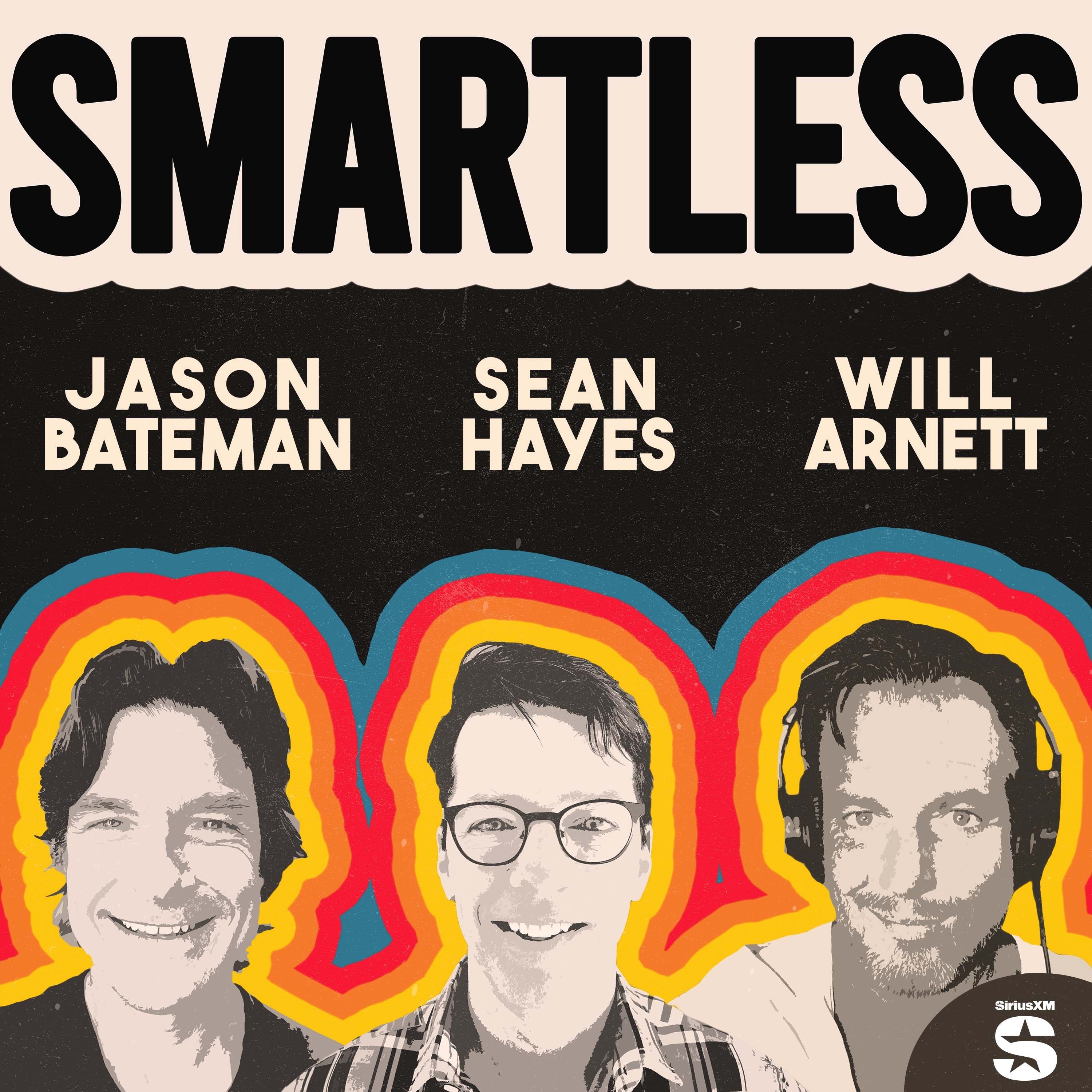
SmartLess
Jason Bateman, Sean Hayes, Will Arnett