The Okotoks Podcast
The Okotoks Podcast is your ultimate guide to life in Okotoks! Hosted by Carlin Lutzer, a professional realtor and proud Okotokian, this podcast brings you stories, insights, and conversations about what makes this town just south of Calgary such a special place to live. Whether you’ve called Okotoks home for years or you’re just getting to know the community, this podcast is your connection to everything happening in town.
From local businesses and real estate trends to community events and hidden gems, The Okotoks Podcast celebrates the people, places, and experiences that define life here. We talk about what it truly means to be an Okotokian, cheering for the Dawgs and Okotoks Oilers, sharing firsthand perspectives from those who shape the town’s unique identity.
And, of course, we can’t talk about Okotoks without mentioning the legendary Big Rock, an iconic landmark that serves as a symbol of our strong, growing community.
Join Carlin Lutzer as he explores the heart and soul of Okotoks, bringing you engaging interviews, local insights, and everything you need to stay connected to the place we proudly call home. Whether you’re looking for the latest news, local recommendations, or just a reason to love Okotoks even more, this podcast has something for you!
The Okotoks Podcast
How Catriona Le May Doan Redefined Victory After Gold
Use Left/Right to seek, Home/End to jump to start or end. Hold shift to jump forward or backward.
What does it take to win gold—and still be grounded?
Carlin Lutzer sits down with legendary Canadian speed skater and two-time Olympic gold medalist, Catriona Le May Doan.
From growing up in Saskatoon to lighting the Olympic cauldron in Vancouver, Catriona shares her journey through elite sport, her struggles with perfectionism, and how she’s using her voice today to empower others—especially women—through leadership and confidence-building workshops.
They talk about what really happens behind the scenes at the Olympics, how to build mental resilience, and why it’s okay to not be okay, this conversation delivers gold—on and off the ice.
Listen For:
:22 Who is Catriona Le May Doan and what makes her journey unique?
7:12 What does perfection in sport really mean—and is it even possible?
15:16 What makes the Olympic Games so beautiful beyond the medals?
22:37 What advice does Catriona have for young girls struggling in sport?
31:19 How can you work with Catriona and what is "Pursuit of Victory"?
Guest Catriona Le May Doan
Website | Instagram | Olympics’ Website
Connect with Carlin
Announcer (00:01):
You're listening to the Okotoks podcast, proudly brought to you by Carlin Lutzer Real Estate because even the big rock had to settle somewhere.
Carlin Lutzer (00:22):
Today's guest is Catriona Le May Doan. Catriona is a two-time Olympic gold medalist in speed skating, one of Canada's most respected athletes, and a powerful voice for women in sport mental health and leadership. In this conversation, we talk about her unconventional journey into speed skating, the immense pressure and beauty of the Olympic games, and the idea that perfection in sport and life is not an illusion. We also dive into the importance of support systems, but mission teams behind the elite athletes and why cheering for more than just the podium matters beyond sport. Catriona shares her work today through leadership workshops, helping people build confidence, embrace their uniqueness, and navigate their own personal journeys. Whether you're an elite athlete, a parent, a coach, or someone figuring out the next chapter of this life, this conversation offers perspective, encouragement, and a reminder that the journey doesn't end when the medal stops. This is the Okotoks podcast, and I'm honored to welcome Catriona Le May Doan. Well, Catriona, it is an absolute honor to have you on the Okotoks podcast.
Catriona Le May Doan (01:42):
Thank you. Thanks for having me.
Carlin Lutzer (01:44):
Yes. And as we move into the Olympics, I believe the Olympics, the Winter Olympics, start February the sixth, we thought what a great thing that you agreed to come on the show, just to talk about your journey a little bit, and some of the struggles, no doubt that women face in sports, and then at the end just would love to hear about what you're doing these days. So how did you get into speed skating?
Catriona Le May Doan (02:13):
Well, it's not the, well, you know what I was going to say? It's not the normal path, but nobody has a normal path or a normal journey. My parents, I'm first generation Canadian, my parents were from Scotland, came to Saskatoon for one year. Typical story of many immigrants, gave their children names from their country. They were going to go back. We all have Scottish names, and we are the only family that didn't go back. So all my cousins, aunt and uncles were still in Scotland. I'm the youngest of three girls. My mom put us in everything, even though my parents were academics, they weren't sport people. They never skated a day in their life. And then I discovered speed skating. So I discovered this sport where you go outside and minus 40 in spandex.
Announcer (02:55):
My mom's like,
Catriona Le May Doan (02:56):
Ooh, thanks a lot. So that's, it started. But most cities, most towns, even in Canada have a speed skating club. Even if they don't have an oval, they have a rink. And that's where a lot of the short track starts. So we grew up doing long track and short track. So it's a lot more common of a sport than people realize.
Carlin Lutzer (03:15):
For sure. I cannot think of a long track speed skating course that's outside, right? I,
Catriona Le May Doan (03:22):
There are tons right here, has an incredible one. Edmonton has one. We used to be, I think in Lethbridge medicine hat had one.
Carlin Lutzer (03:32):
Okay.
Catriona Le May Doan (03:33):
Oh yeah, they're everywhere. People just don't realize
Carlin Lutzer (03:35):
It. No, absolutely. Well, that's very cool because before we got on the show, I watched a few of your YouTube videos and did your first Olympic medal, did you win that outside? Were you
Catriona Le May Doan (03:51):
No, my first Olympics were outside in 1992 in Albertville, and then in 94 they were indoor, but we were still, I mean, we still had World Cups and World Championships outdoor for many, many years. But in 88 was the first indoor, but 92 was a disaster with ice. And really that's when they said, you know what? It's not a fair competition. And so then in 94 it was indoor, and then the Olympics have always been indoor since
Carlin Lutzer (04:28):
Oh, yeah. Well, especially when you're considering the wind and how that could change your time and gusts and all that stuff. Yeah, it was quite fascinating to see that I still, I believe it's Mark Lee from CBC. I can hear him announcing your gold medal. I believe it was him that did it.
Catriona Le May Doan (04:50):
Steve Armitage,
Carlin Lutzer (04:50):
Was it Steve Armitage? Okay.
Catriona Le May Doan (04:52):
It was Steve Armitage. And the reason, I'll tell you a story that most people don't know, people always say, oh, is your nickname Kat? It's like, only Steve Armitage called me Kat because Steve Armitage would never mispronounce a name, and he knew he would never get mine. Right. We don't have enough time in the world to go there. And so he called me Kat because he will not mispronounce the name. And so that is the only reason he called me Kat.
Carlin Lutzer (05:19):
Okay, so you don't pronounce your name Catriona?
Catriona Le May Doan (05:23):
No.
Carlin Lutzer (05:24):
How do you pronounce your
Catriona Le May Doan (05:25):
Name? It's Catriona.
Carlin Lutzer (05:28):
One more time.
Catriona Le May Doan (05:29):
Yeah. My sister had to teach me how to say my own name, but in French I say Katriana and I've started to say Katriona more because then people spell it right. It's don't even worry about it.
Carlin Lutzer (05:48):
Okay, I'm going to try it one time. Cat Catriona, Kari
Catriona Le May Doan (05:54):
Ka. Nah, the last syllable is, nah, not Anna.
Carlin Lutzer (05:58):
Okay. Catana
Catriona Le May Doan (06:00):
There.
Carlin Lutzer (06:01):
Okay, well, we'll work with that. I might just pull a Steve and call you Cat too. Okay.
Catriona Le May Doan (06:09):
Welcome to the last 55 years of my life.
Carlin Lutzer (06:11):
Okay, I'm going to pump your tires here a little bit. Two time Olympic gold medalist, a five-time world champion, a longtime world record holder in speed skating, competing at four Olympic games. And then you didn't just represent Canada, you also defined excellence on the world stage. I see in the YouTube videos, you are the one that they chose to light the flame at the opening ceremonies in, I believe that was Vancouver, wasn't it? What a moment. Even watching that on YouTube, just getting goosebumps seeing that happen, what an incredible honor that must've
Catriona Le May Doan (06:57):
Been. It was it all the years of competition. People always figure you miss that. I didn't love the stress, I love the training, I love the
(07:12):
Routine and I love the challenge, but we're perfectionists. And so you go to race and it's 37 seconds once every four years trying to be perfect. And in 94 I fell. So I understand sport. Until you cross the line, until the game is done, nobody knows what's going to happen. So that's stress. And then even now as a mom, I don't even know how my mom survived four games of watching me stand on the line. And that part I didn't love, and they were never perfect racist, perfect race doesn't exist. I had to come to terms with that and it took me a long time, but my Olympic races weren't my best, but they were good enough. And so you're always kind of chasing this perfect. And I don't think what I went through, even transitioning into broadcasting after sport and then being able to do five games and being part of 2010 lighting the cauldron, carrying the torch, I think it took a long time for it to sort of sink in what I had done in sport.
(08:24):
And part of that was I was the first person to defend a gold medal, and there've only been three Canadians, myself, excuse me, Alex Belado and Rosie McLennan in trampoline. And so you don't realize how difficult something like that is until years past and you see people attempting it and you go, okay, that was very difficult. And I think that's when it kind of hit me, I think, because you're always chasing and you never take the time to just sit back and look. And that's why even if I move forward to the last games in Beijing 2022 when I was Chef Demi, that to me was the final part of coming full circle. It was something that I wanted to do to help the athletes. And I had always said I wouldn't get the Olympic rings tattoo until I was Chef Deion. A lot of athletes get it, and it was just my own thing. So that was kind of my icing on the cake that it's come full circle and sort of now what? So that was to me, they're my 11th games of being a part of whether it's athlete media or mission team. So it's a lot just means I'm really old too.
Carlin Lutzer (09:39):
No, for sure. No. So this Olympic games, do you have anything to do with the up and coming Olympic games?
Catriona Le May Doan (09:48):
So I do have a bit of a role. I'm actually going for a week to Milano to host some of the Canadian Olympic Committee sponsors. So the chef, Demi Jennifer Heel, who I'd mentored going into 2010, she's a moguls athlete, Olympic champion from 2006 and the silver medal from 2010. These games are very, I mean, they're going to be very difficult for people because they're in clusters and they're not close together. In Beijing, I would go 17 hours a day going train to here, bus to here, and go hit all the clusters. This is going to be very difficult. So I was asked to go and host some of the sponsors at different events because I understand what the athletes are going through, I can sort of help the sponsors see it. So it's going to be super fun. There's a bit of, it's a tough one because I was part of the Calgary bid, and so we look at what's happening in Italy right now with venues not necessarily being done and not at the best. And we just said, oh, what this would've done for not just our city, our province, our country, and for sport and just development of health within our community and the economy. So I do have a bit of a hard time,
(11:03):
But Italy has some good wine, so that'll help.
Carlin Lutzer (11:07):
Yeah, they'll push you through it exactly on Are there committees and stuff that are looking at maybe putting another bid together for the city of Calgary or
Catriona Le May Doan (11:20):
It's constant, but I mean, it's a different system now. And after 26, Vancouver had been very far along, but then the provincial government, they had a change of government leadership and the provincial government said no. So the reality is the IOC wants the games to come to Canada, but they don't like how we've done it in 2026, we pull out 2030, we pull out, and that was a lot of money invested even by the International Olympic Committee. So why should they don't like our system? And because we need provincial, we need municipal. And what happened was we had a vote, but we actually won the day of the vote. But it was the prevo because people didn't understand what it was actually going to do for our community, how good it was going to be, how much free money we were actually going to get. And this is money that's not taken away of something else. It's federal hosting money, so it's already in a pot. So they're looking at it, but the games that are possible are a long ways away. They're like 20 years away, you we'll be lucky if we're alive at that time.
Carlin Lutzer (12:30):
Well, you look at even the spinoff still from the 1988 Olympics in Calgary, just the benefits of the speed skating track, the COP and everything that, yeah, yeah, no. So when you were at the Olympics, were you able to enjoy the moment or were you so stressed about what you needed to do and how you needed to perform that you weren't able to really enjoy that experience?
Catriona Le May Doan (12:59):
I was fortunate with the schedule that I attended all four opening ceremonies of the games that I went to in 2002. I got to carry the flag in. And to me, I'm an opening ceremony fan because it's very traditional. They're the oaths. It's about why the games exist and people can talk about politics all they want. And there are politics in sport, there's politics and everything. But at the end of the day, there is nothing that brings the world together like the Olympic games and the basis of what the games are about to me are still so beautiful. And so I was able to enjoy that. But you don't do anything leading up to your event. Obviously you're on a very strict routine, just like you would be at any competition, but it's much more rigorous trying to get from the village to the venue. It's security is always very tight. And then afterwards you get to see a couple of the events. But when people think that the Olympics, were a big party, there are about three sports that are done in February. The rest of us, our season goes until March. So you finish the Olympics and regardless of what your result is, you still have a month of competition and often it's world championships.
Carlin Lutzer (14:27):
So
Catriona Le May Doan (14:27):
Those are important events. So it's not this big party atmosphere that people think it is.
Carlin Lutzer (14:33):
Yeah. Unless you're a snowboarder.
Catriona Le May Doan (14:38):
I'm not picking on the sport, but sliding sports are usually done at the games. That's one of the big ones. But the Nordic sports, the skating sports, everybody's season is still going until the end of March.
Carlin Lutzer (14:54):
Yeah, for sure. Okay. You said there's something beautiful about the Olympic sports in my vocabulary. I guess if I was to look at describing the Olympic sports, I don't think as someone that's only ever watched it on TV would describe the Olympic games as beautiful. Can you tell me what does that mean?
Catriona Le May Doan (15:16):
I'm done the spirit. It's the fact that, I mean, my competitors and teammates, we do the circuit around the world. We see each other all the time. But to us, the ultimate is to have that opportunity to push ourselves on that one stage. And that's where in the Netherlands, their Olympic trials are just as important almost as the Olympic Games. But in the rest of the world, it's about, that's our goal. There's no professional circuit. So our goal as a kid is I would love to win an Olympic medal. That becomes your dream, for sure. Is everybody's dream come true? Not necessarily, but you have this opportunity to push yourself. And it's not just physically, it's the emotional, mental stress is huge. So being able to put that all together at the right moment for 37 seconds is a huge accomplishment. But what I talk about, the beauty of it is that for people to come together in, honestly, there is nothing else that breaks down the barriers.
(16:31):
You go into the cafeteria, you have however many languages you have, however many sports and mission team, people of all shapes and sizes and colors, and you're all together in one place. And I say in peace, have there been moments where there hasn't been peace? Yes, but I mean, if we look at nine 11 going into Salt Lake City, we didn't know if the games were going to happen, but it was like, no sport will prevail because how the Olympic games were originally dreamt about was that this is how the world would celebrate together. And so that's what I mean about the beauty of it, because I look back to what the gains represent and are there bad parts of everything? Yes, there are in the entire world, but if we can't see the beauty in any of it, then to me, why are we doing it?
Carlin Lutzer (17:24):
Absolutely. No, for sure. When you talk about mission team, what's a mission team at the Olympics?
Catriona Le May Doan (17:30):
It's the people you never see. I mean, what's funny is in 1998, our coach of long tracks, if he's getting his team, won five medals. Nobody will ever have seen him. Nobody will know his name. With a lot of the sports, a lot of the, let's say men's and women's hockey, you always know who the coach is. You see them and they win hopefully one medal. So mission team isn't just the coaches, it's even more behind the scenes. It's the people who are arranging the rooms, who are cleaning the rooms, who are, they're doing all the behind the scenes. So in Beijing, we were 224 athletes, I believe we were 225 mission team, and that was a COVID game. So in Milano Cortina, there are probably 400 mission team athletes don't necessarily see them, they'll never meet them necessarily, but they volunteer their time. And even as Chef Demi, I was mission team in 2018 as assistant chef. And then in Beijing, it's a volunteer role. So really what you're doing is just helping the athletes and helping them to have their best possible Olympic experience. And for me, Beijing, because there was no family or friends, and my mom had actually been, she passed away two weeks before Beijing. And so I became mom to 224 athletes. So I took on that role. I was the chef, which then you're a mentor, you're the spokesperson. But I also viewed it as I was a mom to these athletes because their moms weren't there.
Carlin Lutzer (19:05):
Right, for sure. No, that's awesome. So with your journey, what are some of the key things? What are some of the key people or things that all of a sudden the right piece to the puzzle came together so that you were able to succeed in your Olympic journeys? What are some of the things that fell into place for you?
Catriona Le May Doan (19:31):
It is the experts that were behind my training. So I just actually had a coffee a few weeks ago with our sport physiologist, most brilliant person in the entire world. And that's why our team was the best because people did not have a Doc Smith. He designed our program, so not just year to year, but within a quad, within those four years, he would design it knowing when we had to peak, when we had to have volume. So he worked with our team through a few of the Olympics. So I mean, my job was, I was given this training program and then I need to do the work, I need to do the extra work, I need to do the video, I need to do the hot and cold, I need to do all the other stuff during the day. But the experts were designing the program.
(20:18):
So we know that in Salt Lake City, I had peaked probably two weeks earlier, I'd won my world championship sprint, which is a combination of four races. But at the Olympics, I had a good enough 500, and then I absolutely died in my thousand. But to me, that was a bonus. But Doc told me after the games, he goes, I knew in the thousand you had peaked two weeks earlier. And I'm like, oh, well. But to him, he was like, oh, I miscalculated. But two weeks in four years is pretty darn good. But those are the people who helped us along the way. And we had a change of coaches, but we had a pretty great team that we were like a family. We respected each other. Didn't mean we had to be best friends, but we had a solid team. Everybody knows the name Jeremy Weatherspoon to me, Jeremy was like my brother.
(21:16):
And you spend 10 weeks together in Europe. I mean, things about your teammates that people don't know. But it was that I was raised with the hard work ethic. And fortunately and unfortunately, I have that driven, and I'm not apologizing for being driven, and nobody should ever apologize for being type A, driven people kind of term that as, oh, you're type A, that's great, but I'm a perfectionist. And when you are perfectionist and you are looking for perfect, that's the tough part because perfect doesn't exist. So when you do something well, you need to learn to celebrate it and say, okay, now how do we move forward? Where I sometimes was more stubborn and always driving, driving, driving.
Carlin Lutzer (22:09):
For sure. No, absolutely. So for the young athletes, and I guess we could even narrow that down a little bit more to the young girl athletes that are looking to aspire in whatever sport that they're working in, what are some of the things that you would say to encourage them to keep going? Because no doubt there's valleys, there's highs, there's lows, and there's times that a lot of them just want to quit.
Catriona Le May Doan (22:37):
Yeah, we unfortunately still have that drop off in girls dropping out of sport, there's always a rule for everybody. So again, why are they leaving? Why are you leaving? Is it because you don't fit in? Well, that's okay. It's okay to be different. And that's what is very tough as a youngster, even as an adult, it's difficult to be a little bit different. It's hard to do different things. There aren't a lot of female coaches. So for young girls to see the pathway, you don't always see yourself because you don't see a lot of female coaches, but there is a role for everybody. But it has to be your choice. Never ever let somebody else choose for you, whether that's a parent, whether it's a friend, excuse me. And that's the hard thing is we're influenced by so much, but it's okay to be driven.
(23:30):
It's okay to be strong and muscular. It's okay to be frustrated. That is all okay, male or female, because we have this thing about, I had a daughter, ringette and a son in hockey, and this idea that boys are so tough, I mean, they're just as emotional, but our society still doesn't allow that. And that frustrates me. We have this sort of bravado side still for males, and it's like, oh my goodness, you wonder why we're in this mental health crisis. Allow people to be who they are. And at times, do we need to put on a mask? Yes, every one of us do, whether young or old, but to me it's surrounding yourself with the people who you can be truly raw and vulnerable with and then help you through that next step, whatever that might be. And it's okay if somebody chooses to leave sport because that's their own choice,
Carlin Lutzer (24:27):
Right? Yeah. Because we don't, I do think the amount of pressure that we as parents can put on our kids, I remember mine is in sport, sport, mine is a musical instrument that I wanted to quit so bad because I dunno, there's so many different things along my journey, but I wanted to quit so bad, but I felt I'd really hurt my parents if I quit. And because the pressure and
Catriona Le May Doan (25:00):
For sure, and that's the reason I didn't quit, was because my mom always just said, are you enjoying it? You do what you want to do. So if she put pressure on me, I would've turned and gone the other way,
Carlin Lutzer (25:10):
For sure. Absolutely. Your mom was very wise.
Catriona Le May Doan (25:14):
She was very wise.
Carlin Lutzer (25:15):
Yes. Yes, absolutely. So what does that then, obviously you haven't left the sport. Do you still skate every once in a while?
Catriona Le May Doan (25:27):
Not necessarily speed skate as much, but I play Old Lady Ringette and Old Lady Hockey. I actually played Ringette before I speed skate it. So I've continued with Ringette and then I started with hockey a few years ago, and it's fun to play both. It's hard to actually get onto speed skating time because it's a specific time at the Oval. And so I hope to do a little bit more of it, but I'm still super active, but I still get on ice. I am pretty fast to the puck in the ring, but I'm not good with anything after that. It's a hot potato for me. I'm like, get this away from me.
Carlin Lutzer (26:03):
Yeah, yeah. No, for sure. So where does that lead you now in your journey? Where are you working? What are you doing? What motivates you now?
Catriona Le May Doan (26:13):
Well, it's still about helping people be their very best. And because what I've really learned is that a lot of what we do, people on the outside view it, but we need to celebrate our own successes. And for 10 years I worked at Sport Calgary helping to introduce sport to the community. And now what I've taken the step to do is I want to help people be their very best and not necessarily the very best, but their very best. So I'm workshops, leadership workshops, workshops where people can help build their confidence, whatever that might be, whether it's youth, whether it's women, whether it's anybody in a workforce, whether it's teams and teams, I mean corporate or sport or any sort of team. But what I want to do is help people to understand who they are, what their story is. Because as soon as you understand your values and what your story is, you'll understand a little more on how you can get to that next level.
(27:15):
Because we're in such a pressure society, everything's fast. We don't have time for anything. We don't have time to sit back and really reflect. So it's a bit of a workshop structure where we can reflect on who we are, because if we don't know who we are, we don't know where we're going to go. And so I'm excited about it. I was stressed about it, all of the above. And combined with that, it's a lot of volunteering. I'm chair of Canada Games Council, and so I mean, I love to travel and I'm bilingual the next games I was in St. John's all of August next games during Quebec City. So I love that I can use my passion for people in sport and combine it with language as well. So that's what I hope to do and continue to build that out. But I'm at the beginning of it, so it's fun and stressful at the same time.
Carlin Lutzer (28:05):
For sure. And are you predominantly working with women or is it men as well? Is it
Catriona Le May Doan (28:12):
Everybody?
Carlin Lutzer (28:12):
Okay,
Catriona Le May Doan (28:13):
Everybody. And the reason I say women is I know that there's a community of women who are either entering or reentering the workforce. So targeting some workshops for them, but also targeting workshops for anybody who wants to build their own confidence, which honestly is everybody, because people walk around with masks. People walk around in an artificial world where it's okay to say, I don't know how to get to that next step. I don't know how to improve myself. And we know that we're in a mental health crisis, which that comes from not taking the time to really understand who we are and what makes us tick. And what makes me tick is different than what makes you tick. And there's no right or wrong answer. I've had people tell me, well, I know you're an extrovert. I love people, but I am a pure introvert. Where I get my energy is being by myself. And it took me a long time to learn that. It took me a long time to actually be okay to vocalize that because people had their own opinion. And so that's the difficult thing is having that strength and confidence to actually be who you are, to be completely vulnerable and within reason in certain environments, but also to be transparent and to be okay with being who you are.
Carlin Lutzer (29:41):
Absolutely. No, you're exactly right. We do, I think sometimes we pigeonhole not just ourselves, but our kids for the way that we are. And then the way that we are gets passed down to our kids, and it just kind of compounds as the generations go on, if we can find the things to free our children and free ourselves, no doubt, to find that confidence that we need to be
(30:08):
Happy with who we are in our own skin. And this comes up in the podcast time and time again, it's the social media when we're looking at our neighbors next door and like, oh, why can't we be like them? They got, but they got their own issues that they're not putting out on Instagram and Facebook and all that stuff. But we're just, and I feel like, and I think that this is for, I think especially young women, I got two daughters that are both teenagers and just going through Instagram feeds and seeing things that, and the different images that they see and they, oh, why can't I be like them? And it's just bombarding them.
Catriona Le May Doan (30:54):
Exactly.
Carlin Lutzer (30:55):
And taken them to that place where you talk about where people aren't comfortable with who they are. And it's based because we are constantly comparing ourselves because we're constantly seeing things that we can't, no one actually really is not even the people that are posting it on Instagram, they've got their own crap they're dealing with. Right.
Catriona Le May Doan (31:13):
Yep. That's for sure.
Carlin Lutzer (31:15):
So that's awesome. How can people get in touch with you?
Catriona Le May Doan (31:19):
Well, my new, and you know what? My logo, I think it's my good friend David, think he created it, pursuit of Victory is my logo and my company name. Because to me it's about victory and how you define victory. What's your victory? And yeah, I'm super excited about it. And so people can reach out to me, go to the website. My email is on there, my cell phone's on there. So just reach out and we can touch base.
Carlin Lutzer (31:49):
Sure. Sorry, what is the website?
Catriona Le May Doan (31:51):
Pursuit of victory.ca.
Carlin Lutzer (31:54):
Okay, perfect. That's awesome. So no, that is a great thing that you're doing because I think it is certainly very needed and it is nice that, like you said, men are starting to come out and talk about their struggles with mental health. I know that there's, and it's great, especially when the high profile people start talking about it and letting people know that, Hey, even though you see me as a hockey player or a speed skater or whatever, we're all dealing with stuff.
Catriona Le May Doan (32:34):
Exactly. Yeah. We all have insecurities, all have stresses, we all have family issues, all of it and financial issues, whatever they might be, we all have it. And so nobody is immune, and it doesn't mean you have to publicize everything, but being the reality is like some people deal with anxiety better than others, but there are always ways to improve ourselves. And again, then you get the confidence of not always comparing and do we want certain things that others have? Yes. Do I want less stress? Yes, but how am I going to deal with what I have and be confident with who I am?
Carlin Lutzer (33:18):
Absolutely.
Catriona Le May Doan (33:18):
Or more confident, let's just say that.
Carlin Lutzer (33:20):
Yeah, yeah. No, absolutely. And you think of the struggles that people face, and especially this time of year heading into the dark days of winter, the long Christmas is now over and everybody's kind of, now we're looking at January, February, and then into March dealing with winter. But you just wonder how much the Olympics help some people that are struggling with mental health to enjoy, to celebrate, to see the beauty inside that you talk about inside the Olympics and help people get over that hump of winter in the dark days of winter. Right,
Catriona Le May Doan (33:55):
Exactly. And so yeah, I would encourage everybody, log on, cheer on for the athletes, not just the athletes, the three athletes who are going to be at the top of the podium, anybody wearing the maple leaf, those who come 32nd, those who fall, those who struggle. And I look at the athletes who, they're still naming teams. So the whole team, people are still going through Olympic trials, so it's a very tough time for them, but it's a choice that athletes have made to represent all Canadians. So I would just encourage everybody, the athletes have made that choice. They've represent every single one of us. So to me, it's always encouraging to watch the games and inspiring to hear the stories. And then remember, after the Olympics, then we can watch the Paralympics. So more athletes who have incredible stories about representing the Maple Leaf and representing their country. So I would say to everybody, take the time, cheer on the athletes and know that there are so many people who've given their time behind the scenes as well to make that happen. And even just send a word of encouragement to any athlete that you feel connected to, they read them.
Carlin Lutzer (35:02):
Absolutely. Yeah. That's awesome. That's a good word. And the coverage right now is so great through CC SportsNet. Now, I don't know if TSN does much, but no doubt the highlights and stuff. And there's SportsNet, we'll,
Catriona Le May Doan (35:15):
Sports
Carlin Lutzer (35:15):
Center. Yeah, we can certainly see it. So that's awesome. So okay, before I let you go, I got a few quick questions for you. Rapid fire questions here. What was your favorite pre-race
Catriona Le May Doan (35:28):
Ritual? Well, I kind of had a routine. I'm glad I really didn't have to always do everything. I wasn't, but two hours before the race, I would get to the oval, but I like to have pasta with some protein the night before. That was my kind of ritual. But again, we traveled the world, so it depended what we were served. Yeah, sure. We were in Kazakhstan. We had sardine some nights, but oh well.
Carlin Lutzer (35:57):
Yeah, hopefully that digested. Okay, so guilty pleasure snack
Catriona Le May Doan (36:06):
Now or then?
Carlin Lutzer (36:08):
Both. What was
Catriona Le May Doan (36:09):
That McDonald's back then? When I was super tired at Crave.
Carlin Lutzer (36:15):
Yeah. So would you go for it every once in a while you'd sneak over there? Oh yeah, yeah, yeah.
Catriona Le May Doan (36:20):
Now it's my glass of wine. In the glass
Carlin Lutzer (36:23):
Of wine, for sure. Red wine. Absolutely. Do you have a most embarrassing athlete moment?
Catriona Le May Doan (36:29):
I dunno if I do,
Carlin Lutzer (36:33):
Because you're a perfectionist.
Catriona Le May Doan (36:35):
Yeah. Well, not everything I did was perfectionist. Yeah. You know what? Sometimes our suits, especially if you fell our suits, were really see-through. At one point I had more black underwear than anybody in the world because our suits were so see-through that, if you couldn't even have a logo on your underwear, everybody would read the logos.
Carlin Lutzer (36:59):
Seriously. Wow.
Catriona Le May Doan (37:00):
Yeah, we got kind of used to that, but at first it became pretty self-practice, so I made you say
Carlin Lutzer (37:07):
That. Yeah, no, absolutely. Well, my most embarrassing moment would be if I had to put on one of those suits that you had to put on. I don't put them on anymore. What's a book habit or routine that changed your life?
Catriona Le May Doan (37:22):
Which, what
Carlin Lutzer (37:23):
Was a book or a habit or a routine that changed your life? Is there anything?
Catriona Le May Doan (37:32):
Oh man. Tuesdays with Maury.
Carlin Lutzer (37:35):
Unbelievable book.
Catriona Le May Doan (37:37):
Yeah,
Carlin Lutzer (37:38):
Unbelievable.
Catriona Le May Doan (37:39):
And even the ones afterwards, the first person, the five people you meet in heaven, and it really, yeah, I've given that book to everybody. I know. I love it. And my daughter has read them, and those books really helped her deal with, I think even death and her faith and everything. So yeah. Amazing. Quick reads. Beautiful.
Carlin Lutzer (38:08):
I know I haven't read a lot of books in my life, but I have read that one. My wife and I, years ago we went, it was in Regina, the Globe Theater did Tuesdays with Maury, and that was just as powerful to me, is the book is just the two person play. I think that's unbelievable.
Catriona Le May Doan (38:27):
Read the next ones.
Carlin Lutzer (38:29):
I will. I will.
Catriona Le May Doan (38:30):
Yes,
Carlin Lutzer (38:30):
Absolutely. Last question. What was the fastest speed they recorded you going?
Catriona Le May Doan (38:40):
Well, my fastest 500 was 37, 22. I think it was about 55 kilometers an hour. I still have the Canadian record, so it's been 25 years, which my kids thing is so cool. My kids are 21 and 18,
Carlin Lutzer (38:57):
I'm 53, and I think that's so
Catriona Le May Doan (38:59):
Cool. It's cool, but it should be broken. So to me, there's a level of, I'm frustrated because we haven't had a 500 meter skater. This is 25 years ago. The whole sport has developed, so I get a little bit frustrated that we haven't had the development in the Women's 500 break that record, but so I still have the record. That's what all it's just say.
Carlin Lutzer (39:29):
That's very, very cool. Well, I do appreciate your time. I'm going to try it. I'm going to try it. Just wait, just wait. I have to think about it. Ana
Catriona Le May Doan (39:44):
Ka
Carlin Lutzer (39:45):
Ka. It's syllable
Catriona Le May Doan (39:48):
Is the middle syllable. Katriana
Carlin Lutzer (39:52):
Katriana
Catriona Le May Doan (39:53):
There.
Carlin Lutzer (39:54):
Kana. Katriana. Thank you. I appreciate your time. Thank
Catriona Le May Doan (39:58):
You. My pleasure.
Carlin Lutzer (40:09):
Success isn't just about standing on the podium. It's about how you define victory, how you respond to pressure, and who's standing with you when the lights are brightest. Catriona's story reinforces the importance of support systems celebrating small wins and creating space for mental health conversations, not just in sport, but in everyday life. Her message to young athletes and really to all of us, is clear. Embrace what makes you different. Don't rush the process and understand that the journey continues long after the finish line. If you enjoyed this episode, please share it with someone who could use encouragement, whether they're chasing a dream, supporting one, or simply trying to find their footing, subscribe, leave a review and help the conversation. Reach beyond Okotoks. Thanks for listening, and until next time, keep cheering for more than just the top three.
Announcer (41:09):
That's all from the Okotoks podcast, where we keep it grounded just like the big rock. Thanks to Carlin Lutzer real estate for the support.


Podcasts we love
Check out these other fine podcasts recommended by us, not an algorithm.

Public Relations Stories and Strategies
Stories and Strategies https://storiesandstrategies.ca/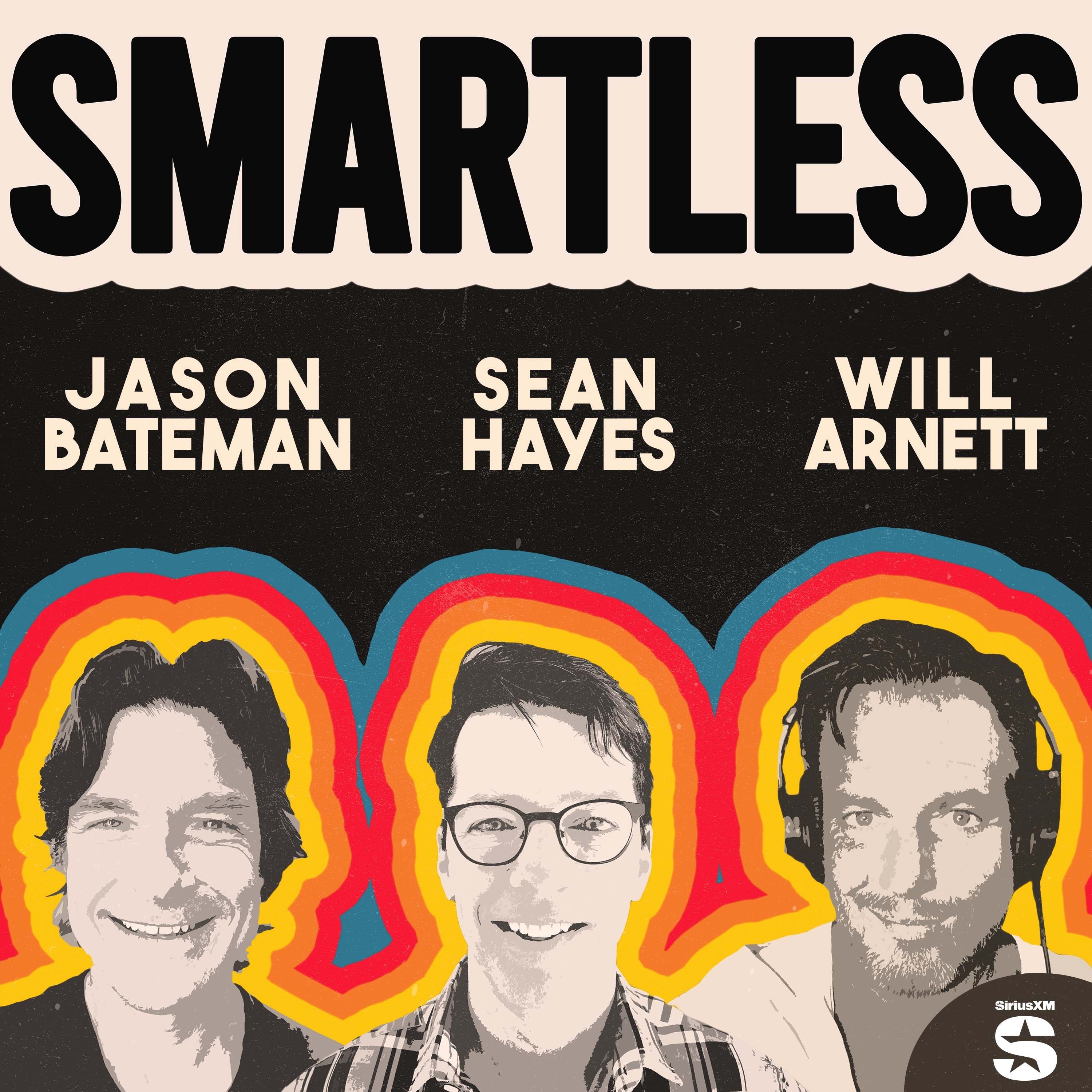
SmartLess
Jason Bateman, Sean Hayes, Will Arnett