The Okotoks Podcast
The Okotoks Podcast is your ultimate guide to life in Okotoks! Hosted by Carlin Lutzer, a professional realtor and proud Okotokian, this podcast brings you stories, insights, and conversations about what makes this town just south of Calgary such a special place to live. Whether you’ve called Okotoks home for years or you’re just getting to know the community, this podcast is your connection to everything happening in town.
From local businesses and real estate trends to community events and hidden gems, The Okotoks Podcast celebrates the people, places, and experiences that define life here. We talk about what it truly means to be an Okotokian, cheering for the Dawgs and Okotoks Oilers, sharing firsthand perspectives from those who shape the town’s unique identity.
And, of course, we can’t talk about Okotoks without mentioning the legendary Big Rock, an iconic landmark that serves as a symbol of our strong, growing community.
Join Carlin Lutzer as he explores the heart and soul of Okotoks, bringing you engaging interviews, local insights, and everything you need to stay connected to the place we proudly call home. Whether you’re looking for the latest news, local recommendations, or just a reason to love Okotoks even more, this podcast has something for you!
The Okotoks Podcast
From Croatia to Okotoks to the Olympics…Meet Josip Brusic
Use Left/Right to seek, Home/End to jump to start or end. Hold shift to jump forward or backward.
He moved to Canada at 12 — now he’s moving at 140 km/h toward Olympic glory.
Carlin Lutzer chats with skeleton athlete Josip Brusic, whose path to the Olympics is anything but ordinary.
Born in Croatia and raised in Canada, Josip shares how a high school weightlifting club, RBC Training Ground, and a fateful skeleton scouting camp in Edmonton led him to become one of Canada’s Olympic hopefuls.
From the mental and physical grit required to master skeleton, to the sacrifices athletes make behind the scenes…including self-funding much of their journey, Josip’s story is a powerful reminder of resilience, determination, and saying “yes” when the rest of the world would say “no.”
Listen For:
4:42 What is the RBC Training Ground and how does it help find future Olympians?
6:24 Why is luge considered more dangerous than skeleton?
13:17 What was the moment Josip found out he made the Olympic team like?
19:04 How did Josip recover after a terrifying skeleton crash in Whistler?
Guest: Josip Brusic
Website | Instagram | Email| Facebook | LinkedIn
Connect with Carlin
Announcer (00:00):
You're tuned in to the Okotoks Podcast, sponsored by Carlin Lutzer Real Estate. Let's get into it.
Carlin Lutzer (00:17):
Today's guest is the definition of an unconventional Olympic journey. Josip Brusic was born in Croatia, moved to Canada just over a decade ago, and somehow found himself hurdling down an ice track at crazy speeds. You will not believe the speeds that he hits on this track. Now he's representing Canada and skeleton at the Olympic Games. In this conversation, Josip walks us through how a background in weightlifting, a chance, opportunity through RBC training ground, and an appetite for pushing his limits led him into the world of sliding sports. We talk about the differences between skeleton and luge, the intense physical and mental training required, and what it actually feels like to qualify for the Olympics after years of sacrifice, crashes, and self-funding along the way. From Okotoks to the world stage, this is a story about resilience, discipline, and saying yes to a path very few people would ever choose.
(01:24):
Josip, thank you for joining me today.
Josip Brusic (01:26):
Thank you, Carlin, for having me.
Carlin Lutzer (01:28):
As a community, we are so pumped and excited for you. I can't imagine how excited you are to go to your first Olympics.
Josip Brusic (01:35):
Thrilled. Absolutely thrilled.
Carlin Lutzer (01:37):
Absolutely. Now, you are from Okotoks and that's obviously the connection. First of all, where were you born?
Josip Brusic (01:47):
I was born in Croatia. I came to Canada almost 12 years ago now. Okay.
Carlin Lutzer (01:53):
Yeah. And where did you land first? I don't think you've been in Okotoks for 12 years, have you?
Josip Brusic (02:00):
No, I haven't. The first city me and my family moved to was Lloyd Minster. The border city, Alberta, Saskatchewan, up north.
Carlin Lutzer (02:09):
Yeah. That's a rough place to land. Yeah. Yeah. You're not wrong. Yeah. So then after Lloyd, did you go to Calgary for a bit and then you ended up in Okotoks?
Josip Brusic (02:22):
Exactly. Yes.
Carlin Lutzer (02:24):
Yeah, right on. Well, we are so proud of you and proud of what you have done. And this is huge for our community, having someone make it to skeleton. Now, can you tell us a little bit about your journey? How on earth, because what's your top speed that you hit?
Josip Brusic (02:41):
So the skeleton, my skeleton journey, I'll first answer that. Started off, I guess, many years ago in Lloydminster where I was going to school there. And I had a math teacher who would start doing these afterschool weightlifting sessions for all the multi-sport athletes and anyone who wants to come and gain an edge in their sport. And I've really committed to that. And that really showed me that any effort that I put into my physical fitness, it's going to show. And that's when I went to RBC training ground. And then I made it to the final, and that was a big deal for me in my athletic journey. Even though that's not exactly how I discovered skeleton, it helped me be on a path of going into track and field. And when I moved to Calgary, where with the track club that I ran, because Calgary used to have a sliding facility
(03:48):
That is shut down now, but there were many Olympic bobsledding and skeleton athletes going through the club. So that's how they always knew my results from the RBC training ground, and they always had a plan for me to transition to a sliding sport. And then one day my coach told me, "Hey, go try this out, like a scouting camp for skeleton in Edmonton." And that's where I met my current day coaches and teammate. And the funny story is I was the only one who showed up to that scouting camp and all my coaches are from Calgary as well. So we all drove for no reason. We could have just met up in Calgary. Oh,
Carlin Lutzer (04:33):
Really? Oh, that's crazy. So they always ... Now, what's RBC training? Did you say RBC Training Foundation?
Josip Brusic (04:42):
Yes. So the RBC training ground, it's a fitness combine made out of your strength, your speed, your power, and your endurance. It's multiple fitness tests. And then the goal is to ... They have this across Canada. They test athletes a whole background. And what they try to do is they try to find their whole moto is, do you have what it takes? Could you be the next Olympian? And they try to pair you up with different smaller sporting organizations. There's Rugby Canada, there's Cycling Canada, there's Popslet Skeleton, there's different sports like that. So if you're willing to transition from your sport into that sport, they give you both financial support and they kind of guide you into it.
Carlin Lutzer (05:42):
Yeah, that's awesome. Yeah, because certainly sliding sports aren't something you sign up for when you're six years old to say I'm going to be ... Because what's the actual age before someone can actually go down one of the tracks? Is there a certain age?
Josip Brusic (05:56):
Yes, there's a certain age. For skeleton, it's a bit later. It's usually around 14, 16 is the youngest. For Luge, that's a different story altogether. Eluja is kind of like the gymnastics of sliding sports where you need to get into it around eight to 12 years old.
Carlin Lutzer (06:16):
Okay. Can you explain that to me a little bit? Why is luge the gymnastics? What's the major difference?
Josip Brusic (06:24):
It is a lot. It's more difficult than skeleton. Even though skeleton, you're sliding head first on your stomach. In luge, you're sliding on your back feet first. There is more danger to it. There's more things that can go wrong. So the progression to go up to higher heights and faster speeds and luge takes a lot longer than it does for skeleton. So that's why-
Carlin Lutzer (06:53):
Did you say luge is a lot more dangerous than skeleton? Or did I get that wrong?
Josip Brusic (06:58):
It is dangerous. Yeah. Skeleton is the least dangerous of the sliding sports.
Carlin Lutzer (07:03):
Really? Yeah. I'm just thinking going head first versus going feet first. You would think that headfirst would be more dangerous than luge. Okay. So do you get going faster in luge than skeleton? Okay. So what's the speed that you get going on skeleton?
Josip Brusic (07:24):
So the fastest track in the world is our track in Whistler from the 2010 games. And my fastest speed there is just under 140.
Carlin Lutzer (07:34):
140 headfirst. Okay. That's nuts. That's absolutely nuts. Okay. What's the fastest speed in Luge then on that same track?
Josip Brusic (07:46):
I'm not sure. They have changed it in Whistler since the accident and just before the games. So it's made much safer for them now, but they would be slightly five to six kilometers on average faster overall all the time. But that's not quite the reason why it's more dangerous. It's more dangerous because the sleds that they slide on, their center of mass is higher. So on our skeleton sleds, we're really close to the ground. Our center of mass is really low. And also our limbs, our arms and our legs are going the proper way if we're to hit a wall. They're going the other way. So they have a slight chance if something really bad happens, their arm has a chance of catching a wall and going the other way. So there's that component. And because their sleds are higher, there's a more chance to roll over.
(08:51):
So the center of mass is higher, so it's easier to
Carlin Lutzer (08:54):
Flip. Okay. Well, that's a great explanation. That's something that I did not know. But still, you hitting speeds of 140 is nuts. That's absolutely crazy. So when was the first time that you got onto the track and went headfirst down the track?
Josip Brusic (09:14):
So my first time was in 2022, 23 season. It was in Whistler. After doing it a couple of times in the Calgary Ice House, which is still open at the Windsport facility, I've decided to give skeleton a shot down the real track, which is only available in Whistler. And then you start really low. So you start halfway through the actual track and it just feels like a fun little ride. There's nothing that can go wrong. You're not gaining a lot of height in the corners. So you're just kind of holding on and looking around and it's like, whoa, it's so fun. And then the next day you move up and then your progression starts from there.
Carlin Lutzer (10:02):
Okay. Well, that's crazy. Really, you've just been doing this for three years and you're already top of the class, which is unbelievable. So that obviously says a lot about your commitment and what good shape you're in and the continued working out, lifting weights, staying on top of your game. Now, what does a normal training week look like for you? Kind of mid-season, but still you got to be training. What does a normal week look like with how many workouts and how many times do you get to go on the track and all that stuff?
Josip Brusic (10:38):
So in the summer it looks a lot different than in the winter. In the summer, we just try to get as physically fit as we can.
(10:45):
And in the winter, you still try to go to the gym four to five times a week. The tensity would be a lot lower because your primary focus in the winter season is to slide. And now we only get two to three runs a day sliding. So we only really do it for two to three minutes. So a lot of training, a lot of practice goes into visualization and studying the corners outside of actually doing it. And then when you are doing it, you really want to make sure you are really, really focused. And that's what it feels like. Feels like a minute of pure focus. Nothing else is happening. You try to execute your game plan because the way we steer is with our head, shoulders, knees, and toes with the whole thing. And then we try to control the corners. Yeah.
Carlin Lutzer (11:46):
Yeah. No, that's awesome. So what does your diet look like? You're on basically chicken and rice. Is that what you're eating or is it pretty regimented right now?
Josip Brusic (11:56):
Yes. Yes. It's as healthy as it can be as ... There's never really junk food. When you're athlete, you never really eat any of that, but there's no one meal. Any advice that I can have for nutrition is just have non-processed organic food as much as you can. You want to have your proteins, your veggies, your carbs, all of that.
Carlin Lutzer (12:23):
Right, right. So once you are ... When does your season come to the end? Is it at the end right after the Olympics or does it continue into March?
Josip Brusic (12:34):
It continues into March, yes.
Carlin Lutzer (12:36):
Okay. Okay. So you're not going to be able to really celebrate when you're in Italy too much, but what's the one meal that you're going to go to as soon as you're done because you haven't been able to have it, or treat, snack, or chips or whatever. What are you craving right now?
Josip Brusic (12:52):
What am I craving? Oh, that would be like mac and cheese. Mac and cheese, yeah. Yeah. With some pulled pork toppings and ... Yeah.
Carlin Lutzer (13:03):
Yeah. Yeah. Geez. Yeah. Well, good for you. The commitment is unbelievable, but no doubt it's going to ... Well, it has already paid off. So what was the moment like when you found out that you are going to the Olympics?
Josip Brusic (13:17):
I did not believe it. They gave me the call. "Do you want to go? "I was like, " Yes, I want to go. "But also it was such a rush to get down to Calgary as fast as I could. So it was really overwhelming emotion-wise.
Carlin Lutzer (13:34):
Oh yeah. No, I can't imagine. So then all of a sudden your phone's ringing off the hook, you're probably getting text messages from all these different people. So you got to get to Calgary. So no doubt, at that point, are things started to be paid for you quite a bit quicker? Okay, here's a ticket for you, get on the first flight to Calgary. Are all your expenses now taken care of and everything from point forward?
Josip Brusic (13:59):
So to go to games, yes. The games experience is paid for, yes. But usually everything outside of the games is not. So even though you are on a national team, we still have team fees and we still have to pay for our own flights. And yeah, our whole season we is funded by ourself.
Carlin Lutzer (14:25):
Right. Is that different? Is there some other countries where once you're on the national team that everything's basically covered?
Josip Brusic (14:32):
Yes, many others. Many others. USA being a great example of that.
Carlin Lutzer (14:38):
Yeah. Yeah, for sure. Yeah, no, that's crazy. I think because right now, the winter games, the pride that we will be feeling like already what we're feeling for you, we're going to be feeling that for the entire nation. And we're in some pretty crucial times here as a nation where we need something to celebrate. So this is amazing. The Olympic Games, it's so great. When is the date? Do you know when does skeleton start and when ... How many times will you end up sliding down the hill?
Josip Brusic (15:15):
I'll have training before the game day, the race, but the race is on February 12th and 13th. So it's a four heat race split up across two days.
Carlin Lutzer (15:30):
Okay. So you get to try the track like the day before. Is that what you said?
Josip Brusic (15:36):
There's going to be official training three days- Three days. ...
Carlin Lutzer (15:39):
Before
Josip Brusic (15:41):
The race. And we're actually leaving for Italy on this Saturday and what is Thursday and two days I leave and then that's when we're going to start study, walking down the track for the two days. And then we're going to get into our paid training, which is going to be another couple of days and then break opening ceremony, and then we go into our official training and then it's a big show.
Carlin Lutzer (16:08):
Yeah, no, that's awesome. So then after you're done, you're going to be there for the opening ceremonies, which is fantastic. Do you then come home or do you ... Not all athletes can stay till the end of the Olympics, right?
Josip Brusic (16:23):
Yes. So I will not be there for the closing ceremony. Usually athletes choose one or the other opening or closing.
Carlin Lutzer (16:30):
Yes. Yeah. But you didn't really have a choice, did you, because of when your event starts? No. No, for sure.
Josip Brusic (16:35):
Yeah.
Carlin Lutzer (16:36):
No, that's amazing. Well, we are so pumped for you. We will be as much as we can, I'll be setting the PVR and seeing if we can ... It'll probably be early in the morning that you're racing with the time change.
Josip Brusic (16:53):
With the time change, here in Canada, it's going to be 1:30 in the morning and then the second one is going to be like three in the morning. So it's going to be a hard watch.
Carlin Lutzer (17:04):
Yeah. No, absolutely. Now, do you have any family members traveling with you to go see it?
Josip Brusic (17:11):
Yeah. Unfortunately, my parents will not be able to come, but my sister is going to be there and I have some distant family in Croatia and that's a three-hour drive from Italy from where they live, so they're going to be coming out.
Carlin Lutzer (17:25):
Yeah, for sure. No, that's awesome. When do you expect to be after the games back in Okatoks? Do you plan on coming back to visit your folks?
Josip Brusic (17:36):
Yep. I'll be here for a week and then right back to training in Whistler.
Carlin Lutzer (17:42):
Yeah, right on. No, this is awesome, man. We are so pumped for you. We're so excited to have representation from Okotoks. You have a great story. No doubt is very inspiring to kids listening, right? They hear your story, they see the work that you put in and how it paid off. And it's just awesome to chat with you this afternoon and looking forward to watching you go down that track, 140 kilometers an hour. Is that also the track in Italy as well? Do they know what the top speed that's been hit on that track?
Josip Brusic (18:22):
Yeah. No, it's going to be around 130. 130.
(18:27):
But the speed is relative. What we feel is the pressure of the G-force in all the corners. So when you say ... It does sound really fast, but the way you feel it is just, I guess, on your neck, on your head, because that's the one part that's not on the sled, you feel your whole body compress, but you also feel your head come down as you go into the pressure of the corner and then you can feel it release and then you count the pressure. Some corners have two, some have one depending on the size, but yeah.
Carlin Lutzer (19:04):
Have you ever had any crashes? I'm sure you have.
Josip Brusic (19:08):
Yes. I had a very memorable ... My worst crash ever was my first week of sliding in Whistler.That's my deciding point of whether I want to stay in a sport or not. And luckily, my coach has a great video of it. And after looking at the video, I saw that it was a really dumb mistake on my part that I could really easily fix. And I did not want that crash to define my experience of skeleton. I was not done with it, but I also wasn't sure if I was going to stick around. So I told myself, okay, once I complete this progression to the very top of Whistler, the top of the track where you have a chance to hit those at 130, 140 speeds, I told myself that's when I'm going to decide if I'll stay in it or not. And it took me a year of the whole first year to do it, but by the end of the year, when I made it to the top, I was already hooked.
Carlin Lutzer (20:10):
Really? Yeah. So you just got back up on that horse and away you go, right? It just after that crash, you got to face your fears. No doubt the longer you go, the more it builds up in your mind and all the different scenarios. But man, that's incredible. What a great story you have and what a great experience. We thank you for going to represent this country and the pride of Oketoks is visiting with me right now this afternoon. So I do thank you so much.
Josip Brusic (20:43):
Thank you.
Carlin Lutzer (20:43):
Thank you for your time. Thank you for having me. You betcha. Josip's story is a powerful reminder that elite sport rarely follows a straight path. From immigrating to Canada to discovering skeleton through RBC training ground, to surviving a major crash early in his career, and still choosing to keep going, his journey is built on grit, trust, in the process, and an incredible mental edge. Competing at the Olympics may look glamorous on TV, but as you've heard today, it comes with relentless training, personal financial sacrifice, and a deep commitment to the craft. If this episode gave you a new appreciation for sliding sports or inspired you to rethink what's possible when preparation meets opportunity, make sure to share it with someone who loves sport, perseverance, or a great Canadian underdog story. Thanks again to Josip for joining me, and thank you for listening to the Okatoks Podcast.
Announcer (21:55):
That's a wrap on this episode of the Okatoks Podcast. Thanks for tuning in and thank you to our sponsor, Karlin Lutza Real Estate.


Podcasts we love
Check out these other fine podcasts recommended by us, not an algorithm.

Public Relations Stories and Strategies
Stories and Strategies https://storiesandstrategies.ca/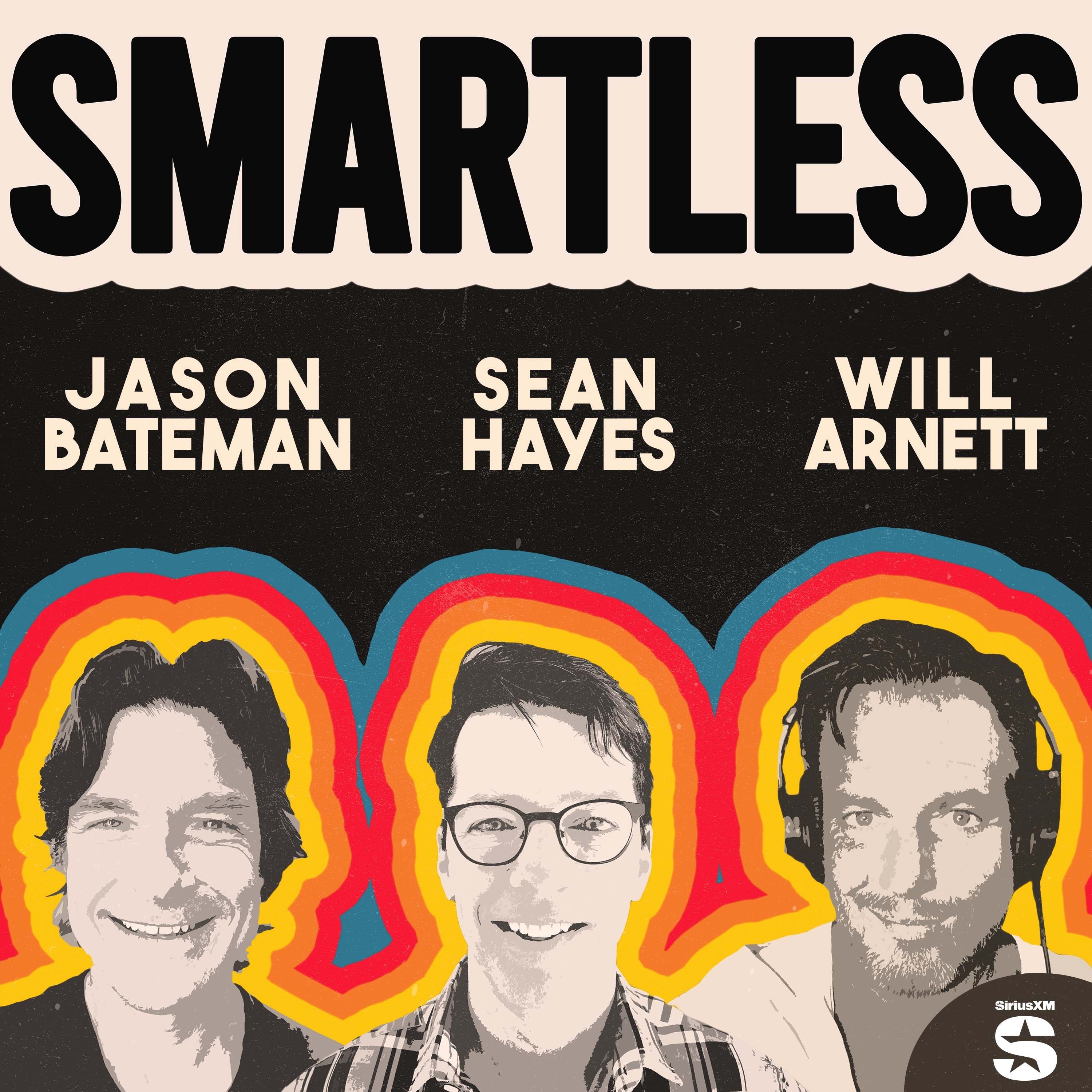
SmartLess
Jason Bateman, Sean Hayes, Will Arnett