.png)
Bad Theology: Busted
This is the podcast of the Institute for the Study of Christian Zionism.
https://studychristianzionism.org
Got a question about the podcast?
Reach out to us via email at BTBusted@studychristianzionism.org.
Bad Theology: Busted
Episode 10 - Christian Zionism within the US Media Landscape
Use Left/Right to seek, Home/End to jump to start or end. Hold shift to jump forward or backward.
This month we're diving into one of the most pervasive and dangerous distortions in American religious and political discourse: the problem of Zionism in US media and publishing. In conversations about Palestine and Israel, many people encounter not just facts on the ground, but carefully shaped narratives about identity, history, and morality. One term that comes up in this context is “hasbara,” Israel’s approach to public diplomacy—how the state explains and justifies its actions to the world. For everyday media consumers, these narratives don’t always arrive labeled or obvious. They’re woven into news coverage, social media, political rhetoric, and faith-based discussions, sometimes carrying theological undertones or moral framing that can be hard to parse in real time. The distorted theological language of Christian Zionism is one such manifestation of Israeli Hasbara. For decades, we've seen how the narrative around Palestine gets shaped by powerful interests, with religious language often weaponized to legitimize the illegal Israeli occupation, apartheid, and ongoing genocide.
Resources Mentioned
- Times of Israel article on Gaza Encampment at Columbia
- The Atlantic magazine article
- How To Sell A Genocide, Adam Johnson
- America’s Misadventures in the Middle East, Chas W. Freeman Jr.
- History of Zionism from 1600-1918, Nahum Sokolow
- Public Opinion, Walter Lippmann
- “The Problem with Passover,” Harriet Malinowitz
- “New public diplomacy”
- The Network approach
- The Nation
- Mondoweiss
- Middle East Monitor
- The Electronic Intifada
- Fairness & Accuracy In Reporting (FAIR)
- Fairness Doctrine in FCC
- Merchants of Doubt: How a Handful of Scientists Obscured the Truth on Issues from Tobacco Smoke to Global Warming
- Hasbara Handbook: Promoting Israel on Campus
- The Global Language Dictionary
- The Complicit Lens: The US Establishment Media’s Role in the Gaza Genocide
- Food Rules: An Eater’s Manual, Michael Pollan
- Makdisi Street Podcast
Credits:
Original music: Karl Saint Lucy & Danny Frye (feat. Rev. Dr. Munther Isaac) - “The Path Forward”
Produced, written, and performed by: Karl Saint Lucy (ASCAP) & Danny Frye (BMI)
Featuring sampled speech by: Rev. Dr. Munther Isaac
Drums, mixing, and mastering: Danny Frye
Keyboards and programming: Karl Saint Lucy
Logo design: Dee Roberts
Hello, and welcome to Bad Theology Busted, where we challenge the dangerous theology of Christian Zionism in all the places that it hides. This is the podcast of the Institute for the Study of Christian Zionism. My name is Jesse, and I'm joined by my co-host and friend Dee.
SPEAKER_03Thanks, Jesse. This month we're diving into one of the most pervasive and dangerous distortions in American religious and political discourse. The problem of Zionism in U.S. media and publishing. In conversations about Palestine and Israel, many people encounter not just the facts on the ground, but carefully shaped narratives about identity, history, and morality. One term that comes up in the context is Hasbara, Israel's approach to public diplomacy. How the state explains and justifies its actions to the world. For everyday media consumers, these narratives don't always arrive labeled or obvious. They're woven into news coverage, social media, political rhetoric, and faith-based discussions, sometimes carrying theological undertones or moral framing that can be hard to parse in real time. The distorted theological language of Christian Zionism is one such manifestation of Israeli Hasbara. For decades, we've seen how the language around Palestine gets shaped by powerful interests with religious language often weaponized to legitimize the illegal Israeli occupation, apartheid, and ongoing genocide. We're joined this month by two experts on the subject, Dr. Adam van der Teig, whose academic work examined how power dynamics shape religious narratives in media, and Dr. Harriet Milinowitz, an expert in rhetorical analysis who has tracked how Zionist narratives get amplified while Palestinian voices get systematically marginalized. This month's conversation isn't just about theology. It's about power and about who gets to tell the story and about how religious institutions complicit in this oppression need to be called to account.
SPEAKER_00If you enjoy the show, don't forget to subscribe and leave us a review on your favorite podcast platform. If you find something of particular interest in our conversation, I welcome you to leave a comment on YouTube or on your listening platform of choice. If you believe in the work this podcast is doing, I invite you to join us and become a contributor at the donation link provided. We'll be back with our guests after the break to discuss how the Zionist agenda filters through media and publishing channels in the US and into people's consciousness, impacting their theological perspectives, religious beliefs, and political alignments.
SPEAKER_02Someone once said In the beginning, God created us in his own image, and since then it's been returned in the data. And I think today many an awful empty and the same.
SPEAKER_00She's the author of Selling Israel: Zionism, Propaganda, and the Uses of Hezbara, and Textual Orientations, Lesbian and Gay Students, and the Making of Discourse Communities, as well as articles and reviews in Mondo Weiss, Common Dreams, Slate, The Women's Review of Books, Radical Teacher, College English, The Right to Literacy, and elsewhere. She co-founded a Palestine film series at her local independent cinema, is a member of Jewish Voice for Peace, and has worked with Palestine Solidarity Groups in the Hudson Valley and Central New York regions. Harriet, thank you so much for being here with us today. As someone who has worked extensively in rhetorical analysis, you've tracked how narratives get shaped and amplified in the publishing world. What have you observed about deeply rooted propaganda strategies like Hezbara that make it difficult to get Palestinian perspectives and critical analysis of Zionism into mainstream digital and print media?
SPEAKER_04Thanks. There are many. But one that's often overlooked is that journalists in popular media are not compelled, as academic writers are, to employ certain practices that can help them to confirm the truth claims of their sources. One of the principal practices they can ignore is going back and examining primary sources to weigh them against what their own sources claim that primary source said. So, for instance, if Benjamin Netanyahu tells us that David Ben Gurion was a deeply religious man, which he wasn't, a journalist can simply write that Netanyahu said this, which from her his direct experience cannot be disputed. They are not obligated to find a primary document in an archive or on the web or in a reputable historical source to corroborate or disprove this. One example of this, the Times of Israel hell headlined an April 25th, 2024 article about the Columbia University Gaza encampment. They headlined it, they called it Jewish students horrified by Juden Rhine on campus. The word for Jew, Jew-free, basically. It reported on Jewish students fleeing the campus, fearing for their safety. One student speaking on Zoom from the shelter of her his parents' home in Houston said the protesters got what they wanted. The campus is Juden right now. It's occupied territory. Jews are not allowed. Another Jewish student reported, they say things like, kill all the Jews, and we want one Arab state. It's like the Hitler youth. The author of the article doesn't mention any attempts she made to verify these allegations or whether any of her firsthand experience on site confirmed them. Certainly, she does not let any of the protesters speak for themselves, nor does she quote any of their signs or handouts that might support or contradict the notion that a perilous animus toward Jewish students reigned at Colombia. Just one more example. Rashida Tlaib, the only Palestinian American in the US Congress, was censured by the House of Representatives in November of 2023 for referencing the expression, From the river to the sea, Palestine will be free when calling for a ceasefire in Gaza. The resolution, which was passed by 22 Democrats along with most House of Republicans, claimed the statement was actually a genocidal call to violence, to destroy the state of Israel and its people, to replace it with a Palestinian state extending from the Jordan River to the Mediterranean Sea. A writer in the Atlantic magazine informed his readers that that expression was actually a code, a chilling phrase that implicitly endorses the killing or deportation of the nine million Israelis. The American Jewish Committee characterizes the refrain as a call to arms for erasing the state of Israel and its people. Julie Raymond of the American Jewish Committee told NPR that the expression produces a feeling that the conflict has been exported and that Hamas is on the doorstep. There was no indication that the critics had so much as considered Slave's explanation reinforced by countless others, including the new numerous Jews such as myself who enchanted it, that it's an aspirational call for freedom, human rights, and peaceful coexistence, not death, destruction, or hate. Nor did they engage with the rational discourse of Ahmed Halidi, a researcher at Oxford University, who asked, is free necessarily in itself genocidal? I think any reasonable person would say no. Does it preclude the fact that the Jewish population in the area between the river and the sea cannot also be free? I think any reasonable person would say no. But where are the reasonable people in Congress and the media? In the end, NPR and the New York Times short-circuited any real attempted inquiry by opting for a conflicting interpretations perspective. To some it's this, to others it's that. Conflicting narratives and conflicting everything else leave us as we began in limbo, as if there are no sources available to be researched that might possibly give us a clue and steer the discussion in an illuminating direction. Wow.
SPEAKER_03So thank you for that. Dr. Adam Vanderteig is the faith-based educator and researcher at the Highlander Center in East Tennessee. He organizes with Nebraska Faith for Palestine, facilitates based societies with the Institute for Christian Socialism, and is an ordinant in the Evangelical Lutheran Church in America. Recipient of the John Brown Lives Fellowship at Craig Garden and a Louisville Institute postdoctoral fellowship, Adam earned his PhD in practical theology from Union Theological Seminary in the city of New York, and is the author of several publications, including Thoughtful, Independent, and Progressive, except for Palestine, Israel's genocide in Gaza, and the complicity of progressive Christian media, and by any sacramental means necessary, baptism as engaged defiance of eco-sided empire. Adam, thanks so much for joining us today. Your work examines how power dynamics shape religious narratives in media and publishing. How do theological justifications for Israeli policy get normalized through these systems? And what are the economic and political forces that make certain theological frameworks publishable within Christian media landscapes, while others that are critical of Israel get excluded?
SPEAKER_01First of all, thanks for the invitation to be here. It's a real pleasure, and it's a pleasure to meet Harriet as part of this process. I did do my PhD in practical theology. I don't necessarily consider myself an expert in media studies. It was the case, though, that with media, you know, growing up in the church to a family of pastors in particular and educators, and starting high school and then finishing my grad first graduate degree in a 10-year period where there were no cell phones, there were no social media, to suddenly cell phones and social media are everywhere. It was interesting to see how that impacted communities of faith, uh, communities of learning. So it's always been an interest of mine. I think with regard to economic and political forces that Dee is uh asking about, to me, it all starts with the power elite. Uh, I think they shape the agenda. That's a bipartisan imperial United States government project. That's the Zionist political project and its movers and shakers. It's the weapons manufacturing industry, it's the tech surveillance industry, it's Israel's uh Ministry of Foreign Affairs, it's U.S. cable news, U.S. network news, it's the White House, everybody in the White House corresponding center, everybody in the ballroom, it kind of starts with them in my mind. I think they set the agenda. So the the power elite, as C. Wright Mills and later later Heather Gottney called it. Um I think it starts with them. I think as it trickles down into liberal media and then even into Christian liberal media or ostensibly progressive Christian media, some publications, I think, state political and theological claims and then publish in alignment with their stated claims. I think other Christian media state political and theological commitments, but don't always align with those commitments. And I think a lot of it has to do with respectability politics, to be honest. If you align with power, if you align with empire, chances are, indirectly or directly, you'll be rewarded by empire. So it's easy to align with empire. And I think that's that's part of what's at at play here. Um, with regard to the normalization of theological justification, in terms of normalization, I think I think mostly just about repetition on a very, very basic level. I think children who later become adults, we all learn truth through repetition. If I bump my coffee mug hard enough, it's gonna fall on the floor. I just kind of come to expect that because it's happened enough times, embarrassingly. In the case of media, if you hear something, you know, this is the sound bites that we always hear, like Mike Huckabee, particular scriptural verses, you hear them over and over and over again. That's intentional because our conceptions of truth have a lot to do with repetition. I think about Joseph Goebbels, the Nazi propagandist, knowing this and talking about this, writing about this, simple phrases repeated often. That's how we shape and influence truth. Um, so propagandists know how to how to do that. I think what's interesting in a Christian context, and more specifically in the tradition or context of a liturgical Christian community, one can go to church on a Sunday morning and hear the word Israel between five and twenty times. The psalms, the hymns, the readings, the sermon, the prayers. And there's the repetition Israel, Israel, Israel. It's God's preference for Israel, etc. We hear that so often. And I think that makes Christian communities in an interesting and kind of dangerous way susceptible to Zionist propaganda. Um, Zionists want to conflate ancient biblical Israel with the modern state of Israel. It's part of the project. If you're using that word, hearing that word as often as a lot of Christians are, especially in liturgical communities, um, that word ends endlessly repeated, leaves you a little bit susceptible, I think. Um, the last thing that I would say is I'm I'm in the process of reading Adam Johnson's recently published book titled How to Sell a Genocide. And I'd used Adam Johnson's work and the chapter that I think Dee or Jesse mentioned earlier. I quoted a lot of his short form pieces that he was doing in real time, especially in the early months of Israel's genocide in Gaza. So this book titled How to Sell a Genocide, it has me thinking, well, how do we buy a genocide? What makes us buy a genocide? Because obviously the power elite is working to sell it. And that's what Adam Johnson has pulled together. But it's that I that's, you know, I go back to the idea of susceptibility. What makes Christian communities susceptible to buying this propaganda? And I think a lot of that has to do with fear, a lot of that has to do with confusion and ignorance. Ignorance not in a pejorative sense, just confusion, lack of knowing. And unfortunately, I think a lot of it has to do with complacency. And I think I'll open some of those up as we continue talking.
SPEAKER_03Israeli Hasbara, a mixture of propaganda and diplomacy that operates mostly through digital media, is prevalent. As Hezbara continues to evolve, it has nurtured a linguistic frame and created a negative interpretation regarding Palestine in order to construct consent for Israeli war crimes. Since the beginning of the US-backed Israeli genocide in Gaza, efforts to obscure realities on the ground in order to create, quote, good PR, unquote, for Israel have gone into hyperdrive. Simply put, the mission of Israeli Hasbara is to respond to the shifting political opinion in an ever-changing media ecology in an effort to manufacture consent for Israel's domineering violence. So the question I have is how do each of you understand Israeli Hasbara, not just as public diplomacy, but as a theological and moral narrative. And what responsibilities do you think faith leaders and communities have in discerning, challenging, or complicating that narrative when it intersects with Christian and Jewish theology and public opinion? And Adam, we'll start with you.
SPEAKER_01Thanks for the question. So, how do I understand Israeli Hasbara? In the chapter I published in Graham and Mitri's book, I used an extended definition of Hasbara provided by Chaz W. Freeman Jr. from a book called America's Continuing Misadventures in the Middle East. And I know Harriet has a definition or thorough understanding of Hasbara. If I think about it just at the level of practical theology or ordinary Christians, ordinary pews, ordinary places, I'm thinking about the fact that the United States as an empire and the State of Israel as an imperial outpost, both of these uh nation states or states are founded and maintained on genocide. They're founded on tremendous industrial level violence and ethnic cleansing. If that's your origin story, you are always, already rehabilitating your image because you need to suppress it. You need to keep it down there, buried away. That's an ongoing aspect of these two projects, the United States and the State of Israel, I think. So, how do I understand Israeli Hasbrah? It's just a basic necessity if the state of Israel is gonna maintain itself, just like it's a basic necessity if the United States is gonna maintain itself and it's hold on power to a certain degree. You know what? The United States were about to celebrate, some of us are about to celebrate 250 years. Watch for all that propaganda. We're not gonna be talking a lot about genocide, I guarantee it. Maybe on the margins, but not a lot. It's not gonna be front and center. Um, so we're these two entities, if that's your project, if that's part of your founding story, you're always already rehabilitating yourself, which just necessitates narratives. I think with regard to the responsibility of faith leaders, I have a lot to say on this. I'll be brief, but I have a lot to say on this. I have a lot of feelings. So I'm a Lutheran, I'm in the Lutheran tradition, and Lutherans, we we all but fetishize word. Everything is word. In the beginning was the word, the word was with God, the word was God, Jesus is word, we preach the word on Sunday mornings, sacrament, the sacrament of baptism is word and water, but the sacraments themselves are also expressions of word. So word, word, word. In addition to that, our liturgical calendar, our Sunday school curriculums, our Sunday morning worship liturgies are all premised on stories, Bible stories, Bible narratives. A sermon usually interprets a particular Bible story. So we have word and we have story, even at the level of daily devotionals, it's stories. And then we have the gospel, which we think of as the good news. It's news, good news, God's news, gospel as the truth. So, in one sense, this may not be a popular opinion, but for me, Lutherans, but really any Christian, especially Christians in liturgical traditions, no one should be more astute, no one should be more sophisticated, no one should be more masterful at discerning Hasbara, challenging Hasbara. I'll get into this a little bit later, I imagine. But our Tradition is premised on word, stories, narrative, and news. So Christians should be really good at all these things. And not just that, but providing an alternative, an alternative based in the truth, an alternative based on what we know is going on in a place like Gaza, which continues to go on in a place like Gaza. I think generally speaking, and I say this as a you know, a pastor's son and pastor's nephew, pastor's cousin, on these and other issues, I think Christians, we just expect too little of ourselves. We just expect too little of ourselves on things like this. We should be experts on words. We should be experts on Bible stories, stories in general, narratives in general, and news.
SPEAKER_03Yeah, thank you. I'm going to interject two thoughts before we move to Harriet. The first one is that I think that it reminds me of a personal experience of mine, which is that when I was going through the ordination process in the Presbyterian Church USA, which is also very liturgical, word-heavy denomination, at that point in time, I was in, we were in the mix between are we ordaining like teaching elders or are we ordaining minister of word and sacrament? Right. And I was in this flux. And I was trying to make the case that theological librarianship is a ministry of the word. And I was like, no one is more well equipped to foster the moving of the spirit through words than librarians in theology schools, but they didn't buy it. That's besides the point, sort of. But it reminds me, the second thing I'll say is that I think that this invocation of like apathy and Christians not expecting enough of ourselves. I think it's pointed that there's so many pastors in different non-reformed and non-liturgical traditions that don't go through a theological education process and they're not trained to engage with the word in a critical way. And so I think that that is also massively important to name that like while theological education in a Western context has problems and it's not perfect. There's something to be said for going through the process of going to seminary and having to engage with scripture and commentary that is like different from how you formed yourself in the world before that. So those are two things abroad for me. And I just uh thank you so much. And so, Harriet, I'm curious, what does this look like for you?
SPEAKER_04Um, well, I just wanted to say one thing first about something um Adam said before in the prior, in your prior answer, you said uh just because people are selling something, does that mean others have to buy it? Or why does it mean others buy it? And one thing I've thought about a lot in all the research I've been doing on propaganda is that there's very little written about reception. You know, like they'll say this is what so-and-so did. And but what made people accept that, believe it? And I do refer in my book to George Orwell and his idea of double think. I still don't feel like I've ever had a satisfactory answer for myself about what allows double think to happen. I know it happens, but it I'm still incredulous that it happens. So I appreciated you bringing that up because I think that's a very unexplored area. In terms of uh the present question, um I um I'm just gonna give a little bit of history here to fill something in, but it was a man named Nahum Sakolo, who was an associate of Theodore Herzl, and who went on to various leadership positions in the World Zionist Organization, who is said to have brought the term Hasbara into the Zionist lexicon. And Sakolo is also considered the father of Israeli journalism. Propagandist journalists, it would seem a little contradictory, but no. The sort of journalism that he practiced and preached was not the sort that we usually associate with the free flow of information in the model of liberal pluralist media. He cultivated a very Israeli form of journalism in which the role of the press was to stimulate nation building and promote the goals of the Zionist movement. And I'm not saying this enough finger-pointing where they felt that themselves. That was the idea of a good journalist. Fostering national unity around these goals was considered the responsibility of journalists, and many editors and reporters agreed and avidly took part in this. One of Sakolo's goals was, as he put it, to create an active and forceful hasbara among Christians, which he was not himself. To that end, he authored a book in English called History of Zionism 1600 to 1918, and specifically at the English, and based on research he did at the British Museum. In it, he appealed to the Christians of England by arguing that the Bible was as intrinsically English as it was Jewish, and thus furnished common moral ground. He wrote that, quote, Zionists hoped that English Christians will be worthy heirs and successors to the Earl of Shaftesbury, George Eliot, and many others. He also wrote that Cromwell's life was shaped by the influence of the Bible. Cromwell's examples, he said, were Joshua, Gideon, and Samuel. Hebrew warriors and prophets were his ideals. So one task faith leaders might endeavor to pursue is exposing how and why that act of persuasion worked. This means, of course, engaging in some study of how propaganda works effectively, which does go back to that idea that Adam had raised about reception. Why do these things work? A more current feature of Hasbarat that faith leaders and communities would benefit from understanding is what's known in the PR field as the new public diplomacy or the network approach. This sort of operation is not unique to Israel and has been characterized as one that, and then this is a quote now, as one that is made up of actors with shared interests and values that cooperate to promote a common narrative. Strategic narratives are stories about human action created by elites, including government leaders, security experts, consultants, professors, think tanks, institutes, and universities, among others. They are communicated to the public through speeches, press conferences, official documents, journalistic reports, films, and documentaries. So that's the end of that quote, explaining what this network approach is. And many of the activities and resources may be initiated or sponsored by people who are high up in the system, who act as hubs in the operation. For example, Israel's Ministry of Foreign Affairs, the IDF, the Interdisciplinary Center, Herzlea. But importantly, it's very important that the flow of activities occurs indirectly and discreetly in order to avoid the impression of government oversight. So the government is the invisible partner here, which to many might smack of state propaganda. Some of the actors are in the government or Israeli NGOs or pro-Israeli American organizations, but act as if they have no connection to the Israeli government. This is especially the case with programs that target university and college campuses. Faith and fundraising organizations are part of this network. Entities within this network include Tagliet Birthright Israel, Camera, APAC, the Amha Initiative, Campus Watch, Hasbora Fellowships, Stand With Us, Hillel, and the Anti-Defamation League, and those are just some Kufi, Christian Voices for Israel, is seen as a very powerful component of this network. So establishing the links that tie those organizations both to each other and back to the Israeli government ministries is certainly one way of complicating the narrative.
SPEAKER_00Thank you so much. This has uh been such a fascinating conversation. And you know, I often say, actually, in personal discussions and conversations, don't confuse marketing with theology and history. So, Adam, as you mentioned, like throughout church, you hear Israel, Israel, Israel over and over again. So it's are we receptive to this propaganda? But then from Harriet, we hear from you saying, baked in from the very origins of the movement is propaganda to the Christian world. Why is the nation named Israel? People think it's a continuation of biblical Israel, but that's why they chose the name, Israel. It's marketing. So let's move to the next question. In the scholarship surrounding Christian Zionism, US media, and publishing, there is often a recurring effort to frame support for the modern state of Israel in theological terms that obscure the political realities of occupation, settlement, and state violence. Much of this literature focuses on the ways religious language, prophecy, and moral legitimacy are used to shape public opinion. But it frequently stops short of fully confronting the underlying power relations that make such narratives possible. As a result of the broader structures of Western Empire, settler colonialism, and military control, Palestinian dispossession can be treated as a secondary issue rather than as the central framework for understanding the facts. This raises an important question about the limits of such discourse itself. When Christian Zionism is examined primarily as a matter of media influence or theological interpretation, what gets left out about the material conditions on the ground? And how does that omission affect the way readers understand Israel's actions, Palestinian suffering, and the role of US religious and media institutions in sustaining these dynamics?
SPEAKER_04Well, first and foremost, I'd say I'm a very deep believer in the role of independent media. Without it, I have no idea what I would think or believe. And that's why I have some sympathy or at least understanding for people who are ensconced in only mainstream media and don't have available other sources to compare it to. It's only from independent media that I have any real sense of conditions on the ground about what's actually happened in Gaza, to hospitals, to universities and schools, to homes and neighborhoods, to flooded tents and empty food buckets to children with amputated limbs, to babies left to waste and incubators, to people grieving the loss of their family members in real time. Print and online media such as Drop Site News, The Intercept, Mondo Weiss, Jewish Currents, and the Nation have been invaluable. Even more so are those sources where visuals play a vital role, especially Democracy Now in Al Jazeera, and certainly not least, webinars from outlets such as the Electronic Intifada, Middle East Monitor, and Arab Center Washington. The Arab Center Washington puts on the best webinars I've noticed. So first and foremost, I'd like to say the key to understanding Israel's actions, Palestinian suffering and material conditions on the ground, is bolstering the independent media movement. Once one comes starkly face to face with what actually exists, one is much better equipped to challenge religious and media institutions that gloss over or openly deny those realities. Independent media gives us crucial sources to further share with others. In my book, I discuss how Pulitzer Prize-winning journalist Walter Lippmann explored in his 1922 book, Public Opinion, the ways that people construe realities that are beyond their immediate experience. Since we can't be everywhere at once, even now at the age of the internet, which he did not foresee in 1922, Lippmann held that people grasp reality via what he called the pictures in their heads, derived from the media of the events they could not know firsthand, which in a complex world amounted to almost everything. Thus he said, our beliefs are constructed from what he called fictions and symbols or mental images of events derived from other sources. By fictions I do not mean lies, writes Lippmann. He simply means that we inevitably rely on the second or third hand representations we form of reality. These representations govern our actions, and for Lippmann, propaganda is simply quote, the effort to alter the picture to which men respond, to substitute one social pattern for another. In my book, I give examples of at least two notorious instances in which the pictures in their in our heads hijack the pictures on our screens as if to rightly illustrate Walter Littmann's argument that we see what we have already been persuaded to see. And I just wanted to uh read them from here, from this book. So I know we're all thinking about the latest genocide in Gaza, but we have to remember there have been some atrocious uh stories before that. In the summer of 2014, Israel killed 2,251 Palestinians, including 1,462 civilians and 551 children, while 73 Israelis died, 67 of them soldiers, during Operation Protective Edge in Gaza. Yet for mainstream media watchers in the United States, what was overwhelmingly encountered was not the carnage in Gaza, but rather the refrain tweeted by the IDF and echoed by countless news anchors and editors that, quote, barrages of rockets are being fired nonstop from Gaza into Israel. It wasn't surprising then that ABC World News anchor Diane Sawyer, upon seeing pictures of destruction and desolation, instinctively narrated, We take you overseas now to the rockets raining down on Israel, and here an Israeli family trying to salvage what they can, one woman standing speechless among the ruins. The pathos was moving, but Peter Hart of Fairness and Accuracy in Reporting, or known as Fair, had to break the news to ABC World News that they had misidentified the people in the photographs who were actually Gazans stunned by Israeli missile attacks. Running in terrorist sirens whale is how ABC correspondent Alex Marquette began the segment right after Sawyer's introduction, writes Hart, who observed that at that point there had been little damage and no reported deaths in Israel. Nevertheless, the item of chief interest to US media was Israeli fear of what could happen rather than Gazans living in the tragic aftermath of a real onslaught. Yusuf Monayer of the Palestine Center and Rania Halleck writing in the Electronic Entifada had also revealed the error, but their message was unlikely to reach the viewers of corporate news. Then, just one more case. In February 2022, as the world's attention and sympathies were focused on the Russian invasion of Ukraine, a photograph taken in the Gaza Strip in May 2021 by Agence France press photographer Mahmoud Hamsimaj in the wake of Israeli airstrikes was mistaken for something else. World War III! Russia has just attacked Ukraine, proclaimed the caption of a February 24th Facebook post. Other Facebook postings similarly mislabeled it, reported USA Today. So, I mean, these are just a couple of examples of we think we know what we're seeing because of the pictures in our heads.
SPEAKER_01I really appreciate what Harriet contributed to this question. I think when I think about what gets left out amidst the discernment and the analysis and the study and scrutiny, honestly, the first thing that came to mind didn't even have anything to do with Palestine. The very first thing that came to mind was an episode from 2018 during the first Trump administration when one of Barack Obama's former speechwriters, John Favreau, tweeted a photo of what looks like two very young people lying prostrate in a steel cage, a steel fenced cage. And part of what Favreau wrote in the caption was this is happening right now. You know, it's an it was it was supposedly an indictment of Trump's border policy at the U.S. Mexico border. Additional reporting happened to find out that that photo was actually taken in 2014 during the Obama administration. And I often use that example as a way to illustrate the bipartisan nature of empire, U.S. empire. And I think that extends to policy on Israel, the bipartisan nature of the policy on Israel. But I I mention it because the question that you posed, Jesse, indicted me. I use that as an example and too often blow right past the fact that in that photo are two young people lying prostrate in a steel cage. And that should be enough to bring any conscious human being to a pause. That alone should be enough. But I use that example and I'm trying to prove my points and make my arguments, and I just blow right past that. As it does relate to Palestinians, in you know, I'll refer back to Johnson, Adam Johnson's book just because I'm I'm toward the end of it right now. He has this section where he shows demonstrably how Israelis and this is in he's focusing mostly on liberal media, how Israelis are described as hostages, whereas Palestinians are described as prisoners, even though you know there isn't much difference in the context. It's a distinction of little difference aside from politics. But then he shows, and he gives 10 examples right in the text, within a single sentence. So this is like Axios, New York Times, Washington Post, within a single sentence. Israeli children are referred to as children, Palestinian children are referred to as minors within a single sentence. So you're making these very political distinctions that humanize one set and dehumanize the other. Now, as it relates to the question you posed, that's a really important political distinction to be discerning in real time. But what your question helps me, you know, helps remind me about is that whether it's Israelis or Palestinians, they're still children. They're children. And what we do to our children should bring us to a pause. You know? Like, so what gets law what gets lost is the humanity of our children, especially. But also our, you know, our adult men, women, otherwise, like our adults, of course. But I think that's a huge piece that gets lost. I if I'm understanding Harriet right, one of the things I thought about too is if I'm dealing with print media, there's inherent distance between me and the subject already, you know, in in a sensual sense, not sensual as it relates to the erotic or pleasure, but just sensual, like my five basic senses, you know. Like if I'm reading something, there's already a pretty big distance there. I th I thought about this too during the early years of, especially the early months of COVID. My wife and I were living in New York City in March 2020 when COVID hit. And you're reading all these things. It's like one big mass collective trauma that so many people were experiencing on an hour-to-hour basis. I think the same is true for the genocide in Gaza, um, the violence now in Iran. You're reading about these things, but it's really hard to grasp the humanity within it. You know, the and you you can conceive of the collective traumas on one level, but it it there's still some distance there. I do think, as it happens, Christian liturgy might be a tool to help Christians access some more of this humanity. What I mean by that is if I think about a Christmas season, we celebrate Christmas, and usually I think it's a week or two. I think it's a week, maybe two weeks later. I think it's just a week later. The liturgical text is usually the slaughter of the innocents. But in a lot of churches that I've been to that Sunday after Christmas, we just turn it into a carol sing. It's just a carol sing along. So we take this slaughter of the innocents text and we put that on the shelf. Yikes, we're not touching that. We're just gonna sing Christmas cares because that feels better. That could be a moment to slow us down and help us metabolize this uh biblical story and narrative like I was talking about. Earlier, and then also relate it to the tragedies and atrocities that are happening in our world today. That could be a tool, but too often we we shelve it. I've said before in other contexts, like, you know, our Christian liturgies and our worship services, they all too often, it's also an unpopular opinion, but they just like we turn them into ticklish and fanalizing bedtime stories and fairy tales, and we let ourselves off the hook. If we really confronted the violence in our biblical stories, it might help us confront the violence in our world. And what gets lost to this question about what gets lost, part of what gets lost when we prefer ticklish and fanalizing bedtime stories, fairy tales, to the violence and the real material stuff in our scripture that we share with other traditions, even, what gets lost is not just the metabolization, but also the call to action. It's harder to be called to action, it's harder to realize our agency as Christians in the world. If you're if you're a white Christian like me in the world, you have tremendous privilege. And you miss the call if we just sing our cute, you know, Christmas carols the Sunday after, instead of like really handle the text and really confront a text.
SPEAKER_00No, that actually reminds me, uh maybe a little plug for for my work with Fosna, Friends of Spiel North America, but we annually do preach Palestine, where we work exactly on that is liturgies and hymns that really do try to hammer in the reality, both exactly what Adam, you're saying, but also really highlight the reality of Palestine. And it's a story about Palestine taking place in Bethlehem, and it is turned into a bedtime fantasy. And the the real story, the real imperial violence gets completely lost and sanitized from the story.
SPEAKER_04Did I just say one thing related to that in terms of what Adam said about the the violence in these stories? I I once wrote an article called The Problem with Passover. And I know that people feel that they don't have to do the literal version that they've been handed, and they can update it in all kinds of cool ways. But I think there's a general refusal to acknowledge that the story of Passover is of the Exodus, is a story of liberation for some, totally at the expense of others. And for it's a story of genocide. And the slaughter is massive. And in some ways, it does feel like a real template for the NAC. And but what I don't understand, and this goes back to not understanding double think, my really progressive friends continue to enjoy their satyrs and people who are, you know, in total solidarity with Palestinians, too. They're aware, but somehow when it comes to the Passover story, there's a lobotomy.
SPEAKER_01That that resonates so deeply with me and my communities and traditions. Absolutely. Yep.
SPEAKER_03We briefly mentioned in season one, episode five of the podcast, that the Israeli government had partnered with Show Faith by Works, a California-based company, to launch a geofencing campaign that was intended to flood the mobile devices of Christian worshippers in certain areas of the U.S. with pro-Israeli messaging in order to try and recover Israeli control over the narrative. In that company's filing with Farah, the Foreign Agents Regulations Act, the company clearly states that, quote, the ads were aimed at increasing support for Israel while stressing Palestinian ties to Hamas and support for terrorism, unquote. Showface by Works planned to channel money from Israel to church leaders who would, quote, counter new and evolving pro-Palestinian messaging as the global narrative shifted, unquote. The state of Israel was literally paying pastors and social media influencers to, quote, increase positive associations with the nation of Israel, unquote, while at the same time linking the entire Palestinian population with extremist factions. In addition to the geofencing operation, the company had planned to deploy at least one Hollywood settle trailer that was designed as a mobile museum, presenting a high-tech Israeli-friendly portrayal of the genocide in Gaza, or the war, as the Zionist agenda would call it. Now, due to enormous backlash, the company ended up pulling the entire project. However, I am curious what critical media literacy skills are necessary for individuals to be able to identify and counter the sophisticated propaganda techniques used in Israeli Hazbarra campaigns? And how can clergy and lay leaders alike root out Israeli Hazbarra when they see it so that they refrain from restating Zionist talking pieces in their lived ministries?
SPEAKER_01I think I might be speaking out of turn in terms of discrete media literacy skills. Here you could speak to those with more authority, I think. I think discrete media literacy skills are only really effective if they're collective and not just in like individualized on isolated levels. I think that works too, but you know, you need mass mobilization around genocides like the one happening in Gaza. So I feel more inclined to talk more about theological and political commitments that make the soil fertile for media literacy skills. So part of what I what I think first about, and the alliteration is an accident, honestly, but I think about skepticism, study, solidarity, and struggle. And this returns me to the sacrament of baptism, which was what what my dissertation was about, um, especially in the very earliest Jesus movements. So um the earliest Christians were also fighting media or narrative battles of their own. Caesar, you know, the Roman Empire, Roman Emperor identifying itself as God and and the maker of all creation. Um the earliest Jesus movements were also in their own media struggle. And someone like Alan Kreider, who writes persuasively about baptism in those earliest communities, identifies three B's and you know, moral alliteration here, but belief, belonging, and behavior. And the emphasis is on how hard it was for someone who wanted to become part of the Jesus movement to do so. Over a three to five year period of the you know catechumenic process, you had to demonstrate that your belief had changed, that this God and not Caesar was God. You had to show concern for pro you know this community over this community, this one preoccupying itself with the dispossessed and the disenfranchised and the imperial cult communities, concerned with comp cutthroat competition, domination, you know, social mobilization, essentially. But the biggest thing was behavior. The changes had to do with behavior. You had to so thoroughly and fully demonstrate a change of behavior before you could even be brought forward to the sacrament of baptism. And the strength and robustness of this whole process is how a tradition like the Jesus movements survived in those early centuries. So this is kind of the the soil of what I I think Christianity being, and then you can add to that media literacy skills. But I think first you have to get to a place where we're we're skeptical of empire, imperial media, imperial narrative, we're actively involved in study, solidarity, and struggle with the dispossessed and in the disenfranchised. The other thing that comes to mind, I think, and maybe this just has to do with myself and my context, but I think a lot of middle class, mainline Christians have a really, really hard time with confrontation, disruption, anger, and upset. And if we're really going to confront much of anything, if we're really going to practice new media literacy skills, we need to get used to confronting people when we hear Zionist tropes and cliches. You know, if Jesus looks at his disciples and says, Get behind me, Satan, or you faith, faithless and perverse generation, or I brought fire, not peace, I brought division, not peace. Like there's all these moments in the gospels where Jesus is actually really angry. And yet I feel like a lot of mainline Christians have like a pathological avoidance when it comes to conflict, anger, confrontation, any of these things. So if we're really gonna handle the inaccuracies that we see in media, whether it's Christian, religious, or otherwise, we need to be able to call them out and we need to be able to hold the line, hold the line and advance the line. And in lieu of that, I don't know how well like discrete media literacy skills take hold effectively. You know, like there's gotta be the the fertile soil before we get there.
SPEAKER_03I'm conflating two things here said by two different previous guests on the podcast, but I truly do think because the church is the church of the middle class, we like peace, right? But as black folk would say, peace is silence, peace is apathy, peace is aligning with the status quo. So I think you're absolutely right that to invoke our South African anti-apartheid friends, you have to have a suspicious hermeneutic of all these things, a suspicious interpretation of what you're looking at and what you're reading at.
SPEAKER_04Well, I just want to say again in response to Adam first, um, when you say we need to confront these things, that's an eternal question to me is what kind of confrontation is a good one? Because I've often been, I mean, people think of me as belligerent sometimes. And and uh certainly in college administrative settings where everybody's just being completely phony and you know, skirting over everything. I I always think, how can I learn to be like that? I just don't know how to do that. But um but you know, you there are nostrils of psychology and interpersonal communication that say, well, aggression is not good, assertion is, but I don't know, passivity's not. Um but how do you effectively confront these things in a way that's not being self-righteous and bombarding somebody with with your opinion about it? But anyway, I'm glad you brought that up. Okay, so to go back to the question, the issue of the state of Israel literally paying pastors and social media influencers to spread their propaganda goes back to what I said earlier about the new public diplomacy and the network approach, in which a vast number of organizations appearing to be unconnected to each other actually all have ties going back to central Hasbara organizations and Israeli ministries. Creating the optics, which suggests that their message comes directly from the mouths of faith and cultural leaders, while concealing the chain of communication that often goes all the way back to the prime minister's office, amounts to virtual cloaking where an idea actually originated. Um, it's a technique that can actually be traced all the way back to the work of Edward Bernays, the American-born nephew of Sigmund Freud, who is widely considered the father of public relations. Perhaps his greatest tour de force was staging a spectacle on behalf of the American Tobacco Company, which sought to swell the ranks of women as a market for the cigarette industry. Bernays realized that he needed to break the taboo of women smoking in public. To that end, he engaged a corps of debutants who, on cue, stepped from prominent churches onto Fifth Avenue at the March 31st, 1929 New York City Easter parade, whipping out and lighting up cigarettes. Bernay's script had the women calling their cigarettes torches of freedom, and his proficient outreach to media ensured that the performance would be widely publicized as an emancipatory one. Within 10 years, 20% of women were smoking while tobacco revenues soared. It was the rhetorical genius of public relations to realize that in a persuasive appeal, the identity of the speaker, the audience, and even the subject and the purpose could be hopelessly scrambled in the public mind so that objective third parties could appear to be endorsing the wisdom of adopting particular goods or ideas when in fact they were only the veils and profiting instruments of highly interested parties. And then their critical media skills and more generally critical thinking or literacy skills. They are, in my view, essential not simply for critiquing Israeli Hasbarrah, but for understanding and navigating the entire world we live in. Writing my book, I sort of surprised myself by giving credit for building these skills to an entity I was immersed in for over 40 years, and which was often the bane of my existence, and which has scant prestige in universities, and that is the very humble English 101 and which many of us have toiled in those trenches for a long time. Having perused countless freshman writing textbooks of course adoption, I know that the vast majority of them stress critical thinking skills, including, and these are just some of the things that are included, evaluating sources, mounting persuasive evidence, scrutinizing the logic of an argument, recognizing logical fallacies, and appraising the accuracy of paraphrases, summaries, and quotation. However, by the time students graduate, they're apt to forget these things, which is why our public discourse gets away with what it does. Strangely, university mission statements often highlight critical thinking skills as one of their hallmarks of excellence. The platitudinous speeches of administrators and the carving away of the humanities would seem to believe that. Look at a freshman writing text. But these skills are taught as if they're vital to writing academic papers. They don't seem to apply in the world beyond that.
SPEAKER_01If I if I could just say really quick, I think Harry answered this like Harry answered on behalf of herself very well. I think Harry answered on behalf of me very well, too. I think she said better what I was trying. The whole the whole point about the baptism being this three to five year process is that it's just not a semester. It's just not a single semester course, as it were. It's like you had to demonstrate that you could be skeptical to this message and embrace this message, you know, this kind of thing. And then as it relates to like the confrontation and the anger, I mean, there's a long laundry list of things that mainline Christians absolutely refuse to talk about. I think at the top of that list is money. You mention anything about money, people run for the doors. You can't talk about money, you can't talk about genocide either. It's this practicing of these things over time such that you're calibrated to being able to do that, you know. Um, I I remember being in divinity school, my friends' congregants used to say, I had an anger issue. And I would usually say, I think you've got a tranquility issue, you know? Like it goes both ways. We talk about being regulated or deregulated in this pathologizing ways. Like sometimes being regulated means being like kind of unhinged apoplectic at injustice. Like that's what being regulated means. It's okay to be angry and confrontational. That's what I was gonna do. Anyway, thank you, Harriet, for answering on behalf of me too, on that one.
SPEAKER_04Adam, I like your response. I think you have a tranquility issue. I'm gonna save that one.
SPEAKER_00Thank you both so much. When I think about my own evangelical background, and then Adam and what you were saying about this three to five year catechism process of being incorporated into one kingdom away from another kingdom or one way of being away from the ways of empire. And I think about how anathema that sounds to so much of the ways of doing church and being Christian in the world of the communities in which I grew up, which is evangelize, evangelize, go save souls, go meet someone, get a confession, and baptize them next Sunday, because we need to save as many souls as possible for what? Before the rapture comes. Save as many people before it all goes up in flames. And the way the entire way of being Christian in the world reinforces this sanitization process that you speak of.
SPEAKER_03It's reminding me in this moment of um something that Mark Charles brought up in episode eight of the podcast about how humans like to separate ourselves from nature and from the natural world and set ourselves as like different or somehow uh completely removed from that ecosystem. And as I have a dog in my lap right now, this is Lex, and he has incredible um media literacy skills in that he is very good at at like emoting the truth of how he feels without giving a care about how somebody else might feel about that. And I think that there might be a lesson to learn there is that we so often you brought up respectability and respectability politics. So often we're so afraid to be seen or perceived in some sort of way that will like make us less marketable in capitalism, right? Um, and I think that all of this is just to say I think it's really important that we get rid of the like, if the veil has been removed from like people's eyes about, say, US Empire, given the situation in Gaza, throughout Palestine, in now in Lebanon, in Iran, if the veil has sort of been removed from people about what it means to be a citizen of the United States in this world. I think that gives us the freedom to be honest with our feelings and like to be loud and make people uncomfortable. Like that's part of the reason I did not make it through the ordination process, is because the way I preach is I like to make people uncomfortable enough to where they crumble a tiny bit in the pew, but like not so uncomfortable as if they've fallen apart completely and can't pick themselves up and go anywhere, right? But that was part of the reason why I did not make it through, is because I refuse to play the game just to get my foot in the door, to then, as someone would say, cause problems after I get in. But I was like, no, it makes no sense to like play into this uh system of keeping the raw and the real hidden behind a veneer of being too afraid. If I ever were to do a doctorate of ministry program, the thing I'd like to research is how much do pensions impact clergy and teaching faculty from speaking up about Palestine? That would be what I'd want to do my demon research in if I were ever to do that, because I really think that that coupled with the fear of being anti-Semitic is what keeps money and never having actually done the work to deal with the Christian church's place in the ecosystem, the fertile ground that created an environment in which a Nazi Holocaust against the Jews could happen, right? Never having actually grappled with that really because it's too uncomfortable. It's too, it brings up too much stuff that too many people don't want to engage with. And then, as we said, we've said on the podcast a couple of times, but like in the United States, no one ever wants to admit that the country was founded on genocide, the genocide of the indigenous peoples here, and it was built on the backs of black people who were stolen from their lands and enslaved. And that's uncomfortable. It's uncomfying. No one wants to do that work like outside of in like the public sphere, but people really don't want to do that work in the theological sphere. They just don't want to do it. And I'm here to say that that theology busted and the people we bring on is hopefully a landing space, a launching pad for people to do that theological work. Because I think the relevancy of faith, any faith tradition, is at risk right now if you don't do that theological work to say no, genocide is it's actually a red line, and we're gonna boldly proclaim that.
SPEAKER_00And just to respond to that, in fact, to anticipate based upon some of our social media comments that we've received, yes, people are often willing to acknowledge what happened in the past or abstract it to, yes, that happened, that was said, that was dead. Oh, slavery, that was bad, that was happened, that was then. And so they'll say, What are you talking about? We do acknowledge it. But they have not dealt with it. They have not dealt with the fact that we're living in the world created by that and benefiting from the world built upon the blood of others. That is what we need to do. And also, as another seminary graduate who did not ultimately. Go through the ordination process. I really resonate, D, with what you were saying because I don't want to be in a situation of censoring myself, of saying, you know what, I gotta I gotta worry about my paycheck or I gotta worry about this. And when even when I was overseas and living in Lebanon, a lot of foreigners there too were supported by US-based institutions. My situation was different. And I was had an independent Lebanese-based support system there. And so I definitely felt like I could speak out. And others often really had to worry about what are my donors gonna say if I speak about this, then they're gonna cut my funding. And it's real. These are very real concerns.
SPEAKER_01I was just saying quickly, I know we have a last question here. I'm not gonna just add to the conversation. In in the Lutheran Church, you know, we we all but glorify Dietrich Bonhoeffer. But the fact is the average Christian in Nazi Germany was Nazi, and we don't reckon with that. We hold Bonhoeffer up here and then pretend we're like him. And I'm like, okay, hold on. We don't know our history enough. Like we have to account for these things. We have to account for ourselves. It's it's really troubling. I think for me in my ordination process, this podcast, when it airs, will probably be the thing that trips mine up. We'll see.
SPEAKER_04When you do address these things and make people uncomfortable, often for people I know that's presented as a good thing, you know, making good trouble and all of that stuff. But again, how does that affect the reception? And it may be a good thing ethically to do, it may be a good thing cathartically to do, but what if it backfires and doesn't achieve the purpose of saying something to begin with? Aside from the repercussions that can come to you, loss of pensions and you know, being thought ill of, aside from those things, what if the very person you're trying to have this conversation with shuts down because of it or dismisses what you're saying because of it? I think there's a very fine line, and I'm always puzzling over that sort of thing.
SPEAKER_00I just want to I want to affirm that and I do think through that question a lot. In education, right, they say teaching hasn't occurred until the learner has learned. And so I do want to hear that and definitely recognize that. Moving into our final question. For people who aren't trained in theology, media studies, or geopolitics, it can be especially challenging to sort through competing claims, emotional appeals, and deeply rooted narratives. So the question becomes not just what to think, but how to think. What tools or habits can help someone engage this topic with care, integrity, and a commitment to truth? What specific media literacy strategies can people implement to recognize emotional manipulation tactics like victimhood framing and myth making and actively challenge the narrative control that Hezbollah seeks to establish over public discourse about Palestine? Or another way to phrase that, for the average media consumer who may not have formal theological training, what practical habits or critical lenses can help them recognize Israeli Hezbollah at work, evaluate what they're seeing or hearing, and respond in ways that are ethically and theologically grounded rather than reactive and uncritical?
SPEAKER_04I think I'd like to answer this question in two parts. The first part has to do with the competing claims, or as it's often presented to us, the matter of balance. And this was one big theme in my book that I devoted some time to, so I thought I should address that here. I included an epigraph in my book, a quote from someone named Daniel Okrint, who was the first public editor of the New York Times. Okrint said many years ago, and here's the quote from him the pursuit of balance can create imbalance because sometimes something is true. And maybe I should say it when people usually ask me to repeat it because it's a little dense, but um, the pursuit of balance can create imbalance because sometimes something is true. This became known as Okrin's Law. And my original working title for my book was Sometimes Something Is True, actually. He originally said it in reference to a 2004 editorial decision to use the word genocide in describing what happened to the Armenians at the hands of Turkey in 1915. Previously, the Times House style had barred the word because Turkey maintained that there had been atrocities committed on both sides and that the word genocide thus betrayed anti-Turkish bias. Ultimately, Okrant and the Times' executive editor was were persuaded that not calling the killing of a million people because they were Armenian a genocide was a farcical distortion of its own. So they accepted that. But the notion that balance must be applied to any fair argument has long been weaponized as a tactic to neutralize the spread of information about Palestinian rights and liberation. And the imperative to provide both sides of an argument, the credibility of each notwithstanding, was codified in a formal regulation when the U.S. Federal Communications Commission, the FCC, created what was called the Fairness Doctrine in 1949. It was eliminated well down the road, but a lot of journalists still adhere to it. And that led to the both sides' mantra being held as axiomatic in objective reporting thereafter. Naomi Oreskies and Eric Conway described the long-term impact of the 1949 Fairness Doctrine on news reporting and ultimately on public policy, near the outset of their landmark 2010 expose called Merchants of Doubt: How a Handful of Scientists Obscured the Truth on Issues from Tobacco Smoke to Global Warming. This is a terrific book, which I really w recommend because I think so much of what they talk about helps you deconstruct the whole balance argument. Their thesis is that insistence on presenting both sides of an issue rather than giving accurate weight to both sides is a tactic that keeps conclusions forever misleadingly in abeyance. They portray a cast of characters, scientists, businessmen, journalists, who launched what they call the tobacco strategy, establishing doubt in the public mind regarding the veracity of scientific claims about a product by presenting both sides, even if one side is fiscally sponsored by an industry that produces and profits from the product, and the other side represents expert consensus arrived at via peer-reviewed scientific methodology. Pioneering this strategy from the 1950s through the 1970s by provoking a debate over whether or not smoking caused cancer, and it was known by then that it did, spinmeisters applied it again and again to critical health and environmental issues such as acid rain, the ozone hole, pesticides, secondhand smoke, and global warming. In each case, they manufactured doubt and sustained profits by creating the illusion that the jury was still out on quote debates that had in reality been settled. I would argue that the tobacco strategy is what Zionist public relations and public diplomacy personnel deploy as a way of discrediting evidence that Israel is indeed an apartheid state, that the occupation is indeed illegal, that the war on Gazans does indeed constitute a genocide, that the IDF does indeed repeatedly target journalists, medical personnel, and humanitarian aid workers, that Zionism is indeed a manifestation of settler colonialism, that Israel does indeed have a sophisticated nuclear power capability, etc. This often compelling but ultimately illogical diversion in the name of objectivity has kept doubt alive about such subjects as the root of the Palestinian refugee problem during the Nakba, the authenticity of United Nations reports, the veracity of rape and beheadings claims about October 7th, the intentionality or not of the killings of observers of the post-October 7th carnage in Gaza. So all of these things, well, there's this side and this side. We're not saying that this is right or wrong, but there's doubt. We don't really know. And the second part of my answer refers to the question about recognizing and responding to Hasbara. There are actually numerous ways to address this question, but one I would recommend is going to the source and finding out what the Hasbora experts tell their Hasbarists in training. There are actually two guideboys that I discuss in my book, but right now I'll just say something about one quite bluntly called Hasbora Handbook, Promoting Israel on Campus. And the other one was written by Frank Luntz, who you many of you may have heard of. And he he was a an ardent Republican um propagandist and strategist. Anyway, this one, the Hasbora Handbook, is dated 2002, and it says it is published and produced by WUJS, the World Union of Jewish Students, who I had not heard of before. It says near the outset, and then I'm I'm just gonna read from what I quoted in the book here from their handbook. So it says near the outset, and this is a quote from them there are two major approaches to communication to use during Israel advocacy. These approaches to be used in different situations are point scoring and genuine debate. Far more attention, and I'm speaking now, far more attention is devoted to the first. As we are told, genuine debate can backfire when used on people who are analyzing arguments and trying to think deeply and who really just want somebody to present arguments rationally to them. In short, this guide isn't designed for colloquy with those people. Instead, the reader is tutored in basic propaganda devices that can work on less intellectually sophisticated people, not as in a university classroom to recognize them as sleight of hand that Malthesans use to cheat at logic, but rather to be able to mobilize them tactically oneself. When one is engaging with these more naive people, point scoring is effective since their credulousness allows one to quote, give the appearance of rational debate whilst avoiding genuine discussion. Point scoring works because uh, and this is more of a quote from the book, point scoring works because most audience members fail to analyze what they hear. And anyway, these people are only paying partial attention. On the other hand, they say point scoring should be avoided when quote, talking in serious academic circles because it can seem shallow, they say. Good venues for practicing point scoring include talk, according to them, talk radio, student newspapers, large panel discussions, and anything to do with television or the internet. Still to avoid alienating audience members, quote, while point scoring needs to be disguised. To disguise point scoring, comments need to seem to be logical and to follow from what was said before. Use phrases that subtly change the agenda or rephrase the debate. Some ways to do this might be to say, well, that's not really the right question, or I really think that we'd all be better served by looking forward instead of looking back at things that happened over 50 years ago. The past is important to note, but we have to move on in an attempt for peace is, you know, the line. Uh and I'm sorry if I keep knocking college administrators, but that's the sort of thing they're all done. Um some of the more convoluted forms of sophistry that are recommended might indeed draw laughs from the academic set, but the gullibles are likely to be stopped in their tracks by faux commonsensical statements such as settlements have never been the main obstacles to peace. Before 1967, there were no settlements and still no peace agreements. Or there's there's this one. Uh so this is the last quote now. Israel is constantly being accused of a disproportionate reaction. The question of proportionality is somewhat absurd. A proportional response to a bus bombing would be for Israel to place a bomb on a Palestinian bus. This is obviously unacceptable. It is equally absurd to suggest that Israel must be wrong because more Palestinians have died than Israelis, as if it were a competition, and were more Israelis to be killed, Israel would somehow become the good guys. So um that that's the end of the handbook session. I should say that the Lunt's handbook, known as the Global Language Dictionary, is takes a very different sort of approach. This one I found much more entertaining. But anyway, and and also just I want to say as a final thing that there are really different approaches to Israeli propaganda, and some have become outdated. And the old kind was no, that's not true. There are myths and facts. That's just a myth. This is a fact. Israel really just wants peace, blah, blah, blah. They gave up on that because it wasn't really going anywhere. Well, I mean, apparently it was going somewhere for a while, but then they changed to this whole new marketing approach where of the positive lifestyle that Israel brought to people. And so now they devote a lot of money to film festivals, making good, and they do make some good films, but to, you know, films that can be shown at film festivals, wines. I mean, they advertise all of these things and basically the good life. And they don't want to be associated with just war and religion anymore, not those dark topics that want to be associated with good times.
SPEAKER_01Uh, I I love Harriet's answer, first of all. So totally affirm all that. Yeah. And so, in terms of practical habits, critical lenses, I'd say read Harriet's book, Selling Israel. Read Adam Johnson's book, How to Sell a Genocide, read Robin Anderson's book, Complicit Lens. Those are great places to start. Super easy, as close as your local library. Those are great practical habits. Other practical habits, I'll abbreviate my answer from before. I'd just say study and struggle. That is what Christianity is for me at bottom, is a way of study and struggle. If you read the Christian Gospels a particular way, you see Jesus fleeing arrest and maneuvering out of targeted assassination attempts before you know the crucifixion happens. And that's local gentry working on behalf of the imperial power elite. So that leads me to think, okay, Jesus was, you know, chased, targeted, detained, tortured, and crucified. So who today might have something to say about that? Who today could teach me something in that way about empire? And that's political prisoners. Uh, read George Jackson, read other members of the Black Panther Party or the Black Liberation Army. They know as well as anybody uh how empire treats people who want to do things differently than empire. As it relates to Palestine, the the Palestinian prisoner solidarity movement. It's a whole movement. It's a great place to start, great practical habits. Study those people. And you know, in law, I mean, that's a theological task for me is studying those people in those movements. Not because we need to emulate them as it were, necessarily, but they know something that a lot of us don't know. The other thing I'd I'd open up a little bit is the tagline might be the bigger the media, the more contempt it has for you. So I think about you know, whether it's Fox News or MSNBC, MS Now, or even network media, I think the bigger it is, the more contempt it has for you as a member of the viewing audience. And what I mean by this is several years ago, I remember reading a book called Food Rules by Michael Pollan. And he writes about two things in particular that I think are relevant. The principle is relevant. He writes about things like watching the Super Bowl and seeing commercials for Doritos or beer during the Super Bowl. He said, if you're seeing advertisements like that, that means that whoever owns Doritos has a boatload of money, which means they have an advertising department. And they also probably have like a recipe department where they're hiring scientists to try out different recipes until they get to the most addictive recipe that ends up in the bag. So that's what I mean about scale. Like if you're seeing these things on TV, they've got money. And if they've got money, they've got power and influence. They have the opportunity to create opportunity to get their product to you to sell it. And the other thing I remember him saying is when you walk into a grocery store and you look to the fresh fruit section, you see this like wooden crate of these boring, dumb red apples. There they are. And then you walk down the cereal aisle, and cereal box after cereal box has like cartoons and icons and color. And you know, you pick up one of them and they say, like, no trans fat, organic, this, this, this, heart health, da-da-da-da-da. So you go down this aisle and all these things are screaming at you how good they are for you. And yet, the the healthiest thing in the grocery store is that sad, boring red apple that just sits there in its wooden crate without any advertisements. I think those principles we can pick up and set in the in the context of media. They can be glossy, they can create effectively incentivized parasocial relationships with the anchors or the correspondents. They, you know, you can be one of the boys with Joe Scarborough on Morning TV or whatever. You know, they have the money to do this, they have the money to produce the sets and the music and all the things. That doesn't mean it's healthy for you. In fact, there might be an inverse relationship to that. So that's part of what I mean about the bigger the media, the more contempt it has for you. On the flip side, if you listen to a podcast like the McGee Brothers podcast, which is one of my favorites, one of those three brothers, especially lately, will start the podcast by saying, Everyone, we really hate to do this. But please like, please subscribe, please share, because the algorithms are trying to push us out of the realm, out of the arena. So this is what I mean about like there's the big glossy stuff that's not healthy, and there's the smaller stuff that's trying to make its way through, but doesn't quite have the influence. The other thing I'd say, so you know, that happens to the Mc the McDeC brothers. I've also heard Chris Hedges talk about that, like the platform after platform after platform that he has to find, or the new documentary about Amy Goodman and Democracy Now. I think all these things are helpful opportunities to engage the evidence around these media. The last couple of things I'd say, I mentioned the White House Correspondence Center earlier. If you watch, I think they used to be on C-SPAN or whatever, they you know, they used to record that. I hold that in my mind and think to myself, that's the problem right there. We think Fox and MSNBC or MSNI or whatever, they're opposed camps. But every year at the White House Correspondence Center, if they hold it, they're all in the same room, they're all drinking together, they're all partying together, they're schmoozing with the same celebrities, and then after it's over, they go to all the after parties together. It's the power elite, it's the news media elite. They are the enemy. If you watch one, they'll tell you the other one's the enemy, but they're the enemy. They are the power elite. So I think the bigger the media, the more contempt it has for you, the more it takes you for granted, the more it assumes that you're just gonna parrot what you hear and not scrutinize it. And that's part of the practical habit that I think Christians, especially the word, the story, the narrative, the news, we need to get into a habit of scrutinizing all that stuff. And the last thing I'd say is that these habits, there's urgence, there's urgency around them. You ask about practical habits, we really gotta do these, we gotta do them together.
SPEAKER_00Yeah, thank you for that. And thank you both for giving of your expertise, time, and energy for this vitally important conversation. To our listeners, thank you for tuning in today. We want to express deep gratitude to each of our listeners who've supported us throughout our first season. We'll be back soon to continue the work of challenging Christian Zionism in all the places that it hides in season two. Follow us at the underscore ISCZ on Instagram and up scroll for updates.
SPEAKER_03Our original music, The Path Forward, was written and produced by Carl St. Lucie and Daddy Fry, featuring sampled speech from Reverend Dr. Muntar Isak. ISCZ is a project of Friends of Seville North America, a nonprofit Christian ecumenical organization seeking justice and peace in the Holy Land through education, advocacy, and nonviolent action. That theology busted depends on generous contributions from our listeners. And as Adam just invoked, we hate to say this, but please leave us a review, leave us a like, help us small media swim in this larger infrastructure. So to learn more about ISCZ and to donate to our work, please visit us at study Christian Zionism.org. Until next season and season two, thanks so much.

Dee Roberts
Co-host
Jesse Wheeler
Co-host
Karl Saint Lucy
Producer
Dr. Adam Vander Tuig
Guest
Dr. Harriet Malinowitz
GuestPodcasts we love
Check out these other fine podcasts recommended by us, not an algorithm.

Across the Divide Podcast
Across the Divide
The Munther Isaac Podcast
Bethlehem Institute for Peace and Justice
The Electronic Intifada Podcast
The Electronic Intifada
Front Light
Mennonite Action
Just World Podcasts
Helena Cobban
The Magnificast
The Magnificast
Makdisi Street
Makdisi Bros.
Middle East Focus
Middle East Institute
The Mondoweiss Podcast
Mondoweiss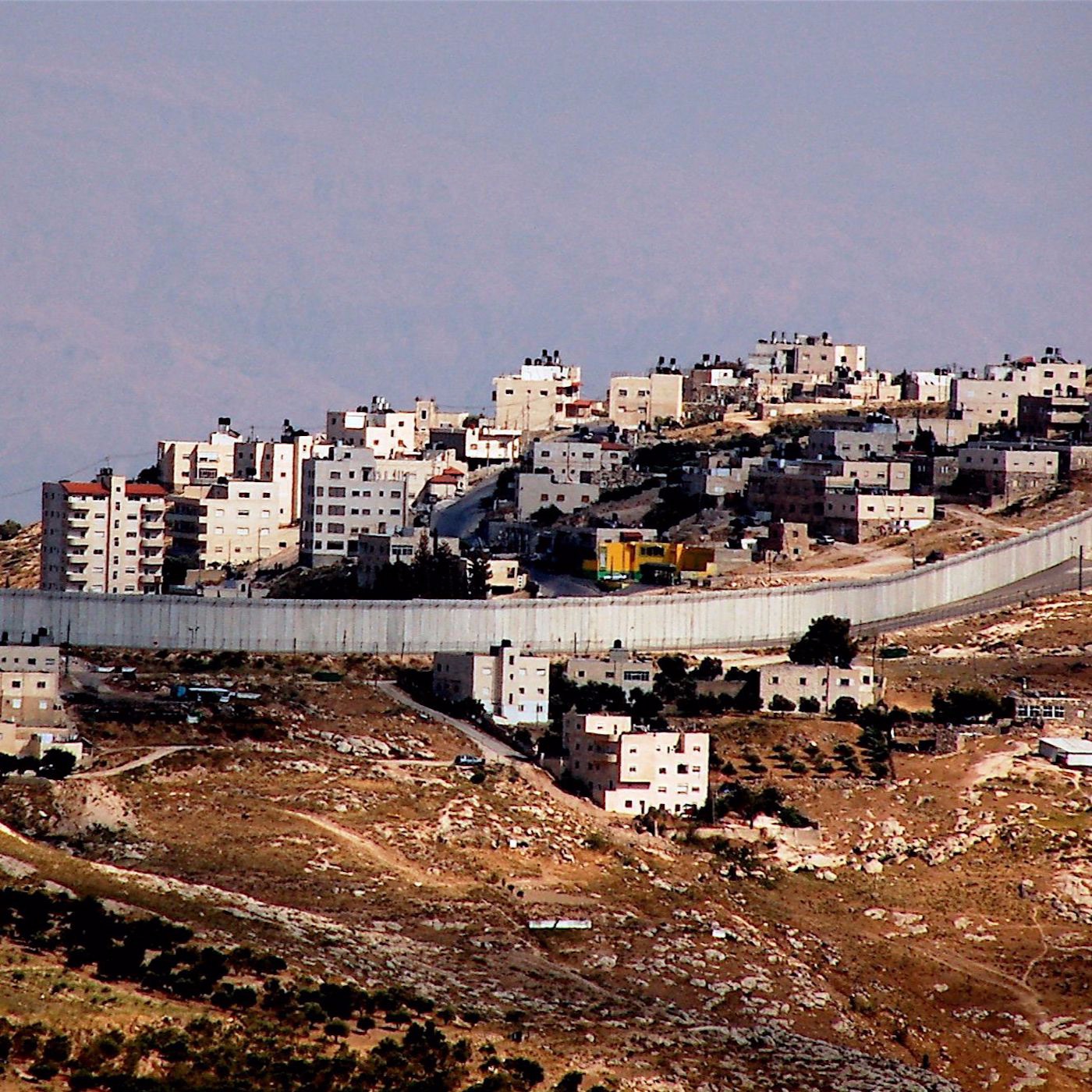
Occupied Thoughts
Occupied Thoughts by FMEP
PalCast - One World, One Struggle
Tortoise Shack Media
The Palestine Pod
Lara E. and Mikey B.
Palestine Remembered
Nasser Mashni
Palestinians Podcast
Palestinians Podcast

Rethinking Israel, Palestine, and the Faith That Formed Us
Erna Kim Hackett
Rethinking Palestine
Al-Shabaka: The Palestinian Policy Network
Shake the Dust
KTF Press
Sumud Podcast: Inspired by Palestine
Dr. Ed Hasan
This Is Palestine
The Institute for Middle East Understanding
Unapologetic: The Third Narrative
With Amira and Ibrahim
Unpacking Zionism
Institute for the Critical Study of Zionism