
Gen Z vs Friends
Come join me as a I re-watch one of my favorite nostalgic shows to find out if it was really as bad as all the generations after me seem to believe it is. There will be a discussion (with myself), mostly as I try to rationalize why I still think its a good watch, but we'll try and keep it scientific (well pseudo-scientific... ok in no way scientific but there will be numbers), give it a score and come to a decision once and for all.
Gen Z vs Friends
Orphan Thanksgiving
Use Left/Right to seek, Home/End to jump to start or end. Hold shift to jump forward or backward.
My Favorite thing, our first holiday episode people. We got burned turkey, we have unspecified venereal diseases, we see classic sitcom misdirection hijinks, we observe in realtime the emotional weight of being part of a blended family when half of the other adults in the equation hate your guts (really this could be referring to Ross or Susan). Its like a Freaking Norman Rockwall magic eye over here people, Drink, It, In!
Good afternoon, morning, evening, good night, whatever whatever time of day you happen to be enjoying this episode. Welcome to Gen Z vs. Friends. I'm your host, Todd Sullivan, and I'm excited to be back here again with you. Um having a discussion about one of my favorite things from 80s and 90s television, and that is a holiday episode. Uh, in this case, the one sometimes, by some quote-unquote experts, referred to as the one where underdog gets away. Um, for me it will now and forevermore be remembered as the Orphan's Thanksgiving episode. Um so sit back, relax, get yourself a coffee, get yourself something something stronger, find a cozy place to sit, get on pace with your dog, whatever it might be, uh, and let's enjoy discussing uh the very first holiday at Monica's house. Alright, here we are. We're gonna start this particular episode a little bit uh a little bit differently, uh, with a a moment of reflection that I swear will become relevant in just a few moments. Um when I was back in university in the early 2000s, uh by which I mean I mean the the aughts, the pre-2020 print pre-2010s, um, let's not do the math on that. Um the the Orphan's Thanksgiving was a pretty commonplace concept and and held some excitement, uh, especially in your mid-20s. Um, it wasn't something that I actually took part in. Um, first of all, Thanksgiving, Canada, not not as big a holiday, still a really great one, but it's earlier. It's very much not the beginning to to Christmas or any of those sorts of things, but it's still a you know a really lovely holiday. Um but even though, also, even though I was away from for school, I was only a few hours drive away from home. And so getting there was sufficient motivation in my mother's turkey dinner to make the drive back every year that I was away at school. Um but for those who aren't familiar with the concept at all, it it's pretty straightforward. It's not as sad as it sounds. It's just effectively when a group of 20 somethings in particular are spending a spending a holiday. So this could be Orphan's Christmas, but really it's just an orphan's dinner. Um but a group of 20 somethings are spending a holiday far, farther away from family. And so they're going to attempt to kind of recreate the trappings of the holiday with their chosen family with their friends. It's it's not just about being away from family at that time of year. Um, because you can always do that. And you can always, you know, you can keep it light, you don't even have to celebrate, but it's about being away and then choosing to try and replace their the family interaction to some degree with your friends and in what is very often, you know, maybe a bit of a watered-down level of pomp and circumstance, watered-down level of, you know, tradition. Um, but in many ways, is you know, you get the chance to rebuild your own. It's it's really also, and we'll talk about this a little bit later, a specific break, you know, not like it was in previous generations, where maybe in your early 20s you had kids of your own, you were starting to invite your family back, or you, you know, you were starting those traditions for your children and your nuclear family. Um, it's about the fact that you you're not continuing in that tradition, at least not yet. Uh, and so you're replacing it with something new, something entirely of your choosing. Also, though, you know, it's orphans dinner, orphans Thanksgiving. So it's not entirely by choice, it's not not entirely what you want. Um, there's a tinge of you'd rather be with your family, um, but you're gonna make something great where you are. Basically, what it comes down to, it's dinner, it's dinner with your it's a big traditional dinner where the food's maybe not quite as good as you remember, um, but the conversation is just usually decidedly less controversial. Um maybe. Depends on who your friends are. I shouldn't speak for you. Maybe you had super controversial angry wine throwing orphans' Thanksgivings and orphans Christmases. Um, but that didn't, that wasn't the vibe uh that most people I knew were going for. In those that same time frame, uh, I was also aware of the fact that you know it had got widespread popularity really through this first holiday episode of Friends that we're going to talk about today. In a lot of ways, most people gave that credit as the first one. This idea, uh, even though they never called it that, they never said that specifically. Um, but they they hearkened back to this episode and and really use that as a reference point, even though it was then repeated in a lot of other sitcoms and um, you know, there's lots of other episodes that came up in the late 90s and early 2000s, where effectively they they did the same thing, um, kind of replaced those family dinners with friends dinners. Um, and in some of them like directly referring back to uh the this episode of Friends or the and the episodes that followed. Um but interestingly, it actually, point of fact, it actually started almost 10 years before that, uh, in 86 in a very similar episode of Cheers, uh, which in many ways is probably the best uh analogy, precursor to Friends itself, with a once again a group of friends. You you see very little family tie there. You the family's talked about elsewhere, um, meeting in a you know in a third place, in that case, a bar versus a coffee shop. Um, but that cheers is is actually, they literally had an episode called Orphan's Thanksgiving, um, where all of the characters' Thanksgiving plans are interrupted. And so it leads them to then have this collective dinner in the in the the main bar space, the main set uh of of cheers. Also that great thing, especially in older sitcoms, where they just found ways to do everything in the main set, everything in that main space. If you ever get a chance, there's an excellent old um English sitcom um called Are You Being Served, uh, about a department store. And one of the the most amusing conceits is how are they going to explain why this wedding, why this funeral, why this whatever needs to happen on on the floor of the department store? Because they only really had three sets: the the canteen, the the lunchroom, the main floor, and then the back office. And so, you know, they weren't going to build another set for for anything, basically. Um but uh yeah, same thing with cheers. Gets them all there, gets them all into that main space, they all have dinner together. Um there's a chance that the in-universe friends, our six friends, were influenced by watching the gang at Cheers. Um, it's never directly referenced. They don't do a lot of you know discussion outside of really old sitcoms and really old movies and shows and political events and occasionally occasionally CNN and and George Stephanopoulos and things of that nature, but they don't get into it, probably I guess would break the world a little bit too much. But we assume that these children, literal teens of the 80s, could have grown up watching these things, um, may have seen that, seen that episode, thought it was a great idea. Um, and yeah, and and now they also are going to try and find sauce amongst their friends on the ruined holiday thing, Thursday. One of the things to note, so as I said, I kind of described in case there's any Americans listening what Canadian Thanksgiving looks like. It's a little more subdued, same basic idea, um, except it's a holiday Monday, and so we have our dinner on a Sunday, uh, and it's middle of October. Um for Canadians who haven't been to the to the States for Thanksgiving, I've celebrated a couple of them down there. It is huge, as it was explained to me. Um for a lot of people, it's much bigger than Christmas as far as a chance to return home, to come back to your family, to have that gathering. Uh, the weather's a little better. You do get a better fall in most parts of the U.S., um, mid-football season, all those sorts of great things. Um, so it is a much bigger deal. Um, and so the idea that it would actually be ruined is is in many ways losing Thanksgiving is a much bigger loss than even if you'd lost Christmas or um any of those other holidays. Um so, but when we start to get into it and and we'll talk more about what it actually was, and we'll talk more about the uh the episode, but I wanted to talk to get a little deeper into it, uh, or at least my own experience, because I I really think that in many ways, the concept of the Orphan's Thanksgiving, the orphan's dinner is a metaphor for the show itself. Um, not to mention just the period of life that it's really attempting to illuminate. An area, an era when you, you know, you want your independence and you're aggressively striving and working for it with your career, with your love life, with your friends, all with how you treat your family and your parents, especially. Um it's also, as I mentioned before, it's a time period where even 10 years before friends, uh, in previous generations, you'd have been working to establish and rekindle and continue those traditions for yourself. But by the early 90s, and not for everyone, absolutely. Uh, you know, a lot more people were more, a lot of people were more traditional, uh, even more so than today. Um, and so they'd have already done this. But there was a much stronger push to actually either break away from or fill the gap between. You were having a longer stretch. You didn't get married at 21 or 20 or 18 as soon as you got out of high school. And so by the time you're in your mid-20s, you're already replicating those things you did with your parents. Even if you're going to do those things eventually in the early 90s, there's a much larger gap between when you'll have those trappings of home, kids, um, all that sort of stuff that is kind of so essential for setting up that vision of a traditional Thanksgiving. Not to mention the fact it just doesn't fit with so many people. I mean, we forget sometimes you've you've still got Phoebe in this group, you know, who doesn't have parents, who's estranged from what little family she has, um, and who's, you know, very has led a very unique uh and different life. Um, but if friends had been set in the 70s, outside of things like Three's company, you know, all of our characters probably would have been married. They'd have had at least one or two kids. Uh I it sh it scares me when I think of how many kids my parents had when they were the age of the friends, because mostly because when I was the that mid-20s, that supposed age of the friends, mid to late 20s, um, you know, the idea of having had multiple kids would have been terrifying. Um, but yeah, you'd have you'd have actually been beginning to host Thanksgiving dinner for your parents in your home. Like I said, continuing those traditions on rather than just A going back as a child, as a guest being hosted in your parents' home, or as in the case of characters here, filling that space, finding something else that is fulfilling on those holidays. Um, in this case, they're they are either consciously rejecting it. So you've got Chandler, who's, you know, throwing off the trappings of traditional Thanksgiving because of his trauma, um, dealing with their ongoing unconventional unconventionalness like Phoebe, um, or rudely and unexpectedly kind of being cast out of the nest like Joey and the Gellers. And Rachel doesn't count because all she did was miss a flight, as we'll get to. Uh, but either way, you know, you got people in different stages, different points of life than each other, different points of life than their parents would have been at their age, different points of life than people even living outside of the urban environment. If you were suburban, you know, you were in the suburbs because you had those things already, um, jumping ahead, you know, as we've seen when some of the characters look to get that, obviously they move to the suburbs. Um, but you're once again, it's that recognition that you're maybe not exactly where you thought you'd be, where the world thought you should be, um, but you you don't want to be sad about it. So how do you make up the gap? But you've got all these different traditions, um, and that's that's the magic thing about it, is that it's not just the continuation of one or two. You know, the the two traditions of a married family are are complicated enough. Um, but the idea that you've got six different people with sif six different ideas of what this should look like, all trying to blend it together in one way, finding that classic Rockwellian warmth and image of a family in what might or might not be the more transitory place or embrace of your friends. So, with all of that, what about the episode itself? Um well, as we've talked about before, first of all, um, in addition to the orphan's dinner, uh Thanksgiving story, and I'll you know what, think about it, I I did read an article I'm looking at this that talked about how orphan's dinner is a term we shouldn't use anymore. So um I realized it I've now realized it too late into the episode, probably how many times I've said it, and it is not intended to offend, and I will try and um trim it, but it very much is the concept and and was the name of the event um in the time that was relevant to me. So uh, but I will try and trim it down. Um but as I've said before, um, in addition to the dinner, in addition to Thanksgiving, the other great and very memorable storyline in this episode is Joey's VD poster. Um Joey gets his most recent big break. Uh he's had a he's had at least three in the first nine episodes of of the first series. So, you know, his career's hopping. Um but he gets his most recent big break, which is going to be posing for a series of public health posters, which seem to be ubiquitous in New York, everyone knows about them. Um, but at the time he poses for them, he doesn't know how they'll be used, uh, basically what what public health push they'll be attached for. It turns out for him, it's to have his image attached to VD or venereal disease or STDs or the most current acronym of STI, sexually transmitted infection. Um, interestingly, on a side note, I guess in theory a venereal disease could include a disease of the genitals not transmitted through sexual conduct, contact or conduct. Uh so the two may not actually be a directly analogous synonym. Um, but I'm pretty sure the only reason they used VD at the time, uh, and in the gener the decades prior to this, was to try and actually just morally separate herpes from sex and therefore maintain the myth that it was just as likely to have come from a toilet seat as a sex worker, um, which leads us to the issue with the Tribyanis, of course. Um, Joey ends up at Monica's with the rest of the friends because his family his family effectively disowns him over the ads. You know, keeping in mind the time frame, early 90s, uh tail end, middle end of the middle um uh of the AIDS epidemic, and apologies if my my timing on that is off, but it's you know not high point. Uh, but hey folks, Todd here just wanted to jump in here real quick. Uh didn't didn't intend in recording this episode to have a discussion of the AIDS epidemic, but I did want to correct myself uh in that 1994 was not past the peak of the AIDS epidemic, an epidemic which is still ongoing and which the World Health uh Organization estimates uh estimated actually peaked in 1997. So just wanted to make sure I was correct about something which is, of course, uh such a tremendously important issue. Um and it really only makes the discussion around uh VD STIs and uh and this episode uh all that more important. All right, back to it. You know, one of the most valid critiques of the the show, um, and arguably uh all sit all of the many sitcoms that we've talked about and will talk about that are set in New York in the early 90s, one of those most as one of the most valid critiques is that uh it would have been impossible to have had, especially Phoebe and Joey as artists living in New York in this time frame without ever having to discuss the impact HIV was having on their communities. But when Joey's family won't have him over for Thanksgiving, it's probably not because of the disease, but what the disease means. The only venereal disease to be that afraid of at the time was AIDS. And the reason for the very Catholic American-Itan family to be afraid to even have him in the house. Like that's the point they make. He's not even welcome at the house, not just to like eat or sit at the table or whatever. He couldn't come to the house was because people thinking he had AIDS meant people would now think he was gay. And this could have been a really excellent storyline, a chance to discuss a hyper-relevant topic and do so with some compassion. And that opportunity is not taken here. I should say that it is entirely possible to make the argument that this is just like comedic fair and would not be the time or the place to get into discussions of discriminate discrimination against the LGBT community. It's also a show in its first season, may not have had the clout to have had that, but then no one actually forced them to use this story mechanic. They didn't, it didn't have to be to be VD. It could have been something else, could have been um, there's all any number of embarrassing diseases in the world. Um you could have done any of those, uh, but they chose to use VD. Uh, they chose to use effectively a stand-in for AIDS. Um could have had Joey criticize the Pope, could have been in a play about pilgrims that wouldn't let him out of his schedule, lots of things that would have kept him in New York, but they chose to use this instead. On the flip side of that, knowing that it's a conscious choice, it is also, I think, valid to argue that the story was intentional, and as far as the writers and producers could push the issue, in a world where having mentioned AIDS, let alone feature its effect on families, uh of even those who survived, was going too far. At this time in television, most mentions of of AIDS in HIV were, you know, um very sad stories and um, you know, uh at best melodramatic if they were trying to be non-discriminatory, um could have been could still have gotten away with a great deal of hate and discrimination, though, uh without anyone batting an eye. Um and so you know, it it could have been they they didn't or couldn't go there, they weren't being allowed to go there, but they still wanted to have this discussion, and that to those who were actually savvy enough to know Joey's in the theater community, um, and I I'm not trying to say that every actor, by any stretch of the imagination, is gay in New York, uh, only that there is, as it is a more accepting community, as we know, you're more likely to have people who have been pushed to the outskirts of society. Uh at the time, that meant a lot of LGBT individu LGBTQ individuals, uh, you know, would have found homes and and places for safe expression in community, especially in in New York, uh, in that world. I don't think we're relying too much on uh on stereotype in that argument there. Um, but so they knew everyone would have known that Joey was in the theater community. You knew what the public health campaign in this time in this time period would have meant by VD. You know, they weren't talking about an itch. They were they were talking about AIDS. Um, and so if you were if you know that knew those things, you could read between the lines about the conversations between Joey and his mother that we didn't see what she was so worried about, what she was so worried about, the family or friends or neighborhood, or the the priest who came to dinner thinking because everyone knew Joey was in those ads. I don't know which one it was, and I don't know that anything's ever specifically been said on it. Nothing that I could find. I want to give, because I love the show and I enjoy the characters, I want to give them credit for the latter, but I'm aware that that may very well be my own bias coming up with reasons and justifications, and I have no foundation for those assumptions other than my own guesses. Um but while we ponder that in the background, let's take a look at what brought everyone else to death to dinner. Um The Gellers in this case, you know, they're their stereotypical suburban adult children. They're, as we mentioned before, used to being invited back into the family home for the great secular American holiday. No need to discuss their Jewish roots just yet, because this is just Thanksgiving. Um, everybody isn't welcome. Part of what makes it so great. Um and right up until fairly close to the holiday, they assume the same will be true this year, until Monica has to break the news to Ross over, of course, coffee. And while I do, you know, kind of fully support the Geller parents' decision to take the holiday. That means they won't be present and won't be hosting Thanksgiving dinner, especially considering the stress. If we look at the overall timeline, it's been a few weeks since their mom lost her mom. A lot of stress, may not want to throw a big dinner, wants to get away, wants to not have to deal with the that burden of family and hosting and all those sorts of things. So that's all, you know, that's all perfectly understandable. The late notice does seem a little on the cruel side, but if you consider that it's early enough in the holiday season that Joey's ad campaign has time to spread virally, as it were. A few weeks before it's a few weeks before Thanksgiving at least. And to be honest, that may be a perfectly reasonable time frame to tell them that they've got to make their own arrangements. With that, of course, Monica volunteers to cook. Not exactly that in a hardship or a terrible situation to have a trained chef cooking your uh Thanksgiving Turkey dinner, and really the rest is history. Uh, what is a little lost in the episode is that Ross spends an extended period of the day at Carol and Susan's and discovers the joy of talking to his as yet unborn son, uh, if even if it is only despite Susan. Um, what I really only realize though in watching this uh and watching it so quickly after the other initial episodes is that, you know, this is Ross's old apartment that he's visiting. You know, in the the very first or second episode there, when the guys are building Ross's furniture, uh, one of the comments that's made is that Carol got the good TV in the big apartment. So this is their place. This is where he lived for years with Carol as his wife, um, up until really just three months ago, right? Like some point over the summer is when everything kicks off. Well, we can September or earlier. Um, so we're within three months of Ross having moved out. Um, and up until then, it seems he was fairly oblivious, living a relatively happy life with Carol, and had been for all the years of their marriage. And again, I can't, you know, every time I I re-watch these, as awful and shitty and jealous and petty as Ross can be, um, and is, you know, he's competitive and petty with with uh Susan in this episode. Um the fact that he's trying to make it work under these circumstances, I actually think is not given enough credit that, you know, he could have just cut ties, run away. Uh, he could have been even more, he could have been truly angry and and aggressive about it. Um mostly he's just trying to make it work, and and I can, you know, not to not to put too much real world into this environment, but I can imagine how depressing that would be myself. So uh outside of the Gellers, you know, we've got Chandler, who is at no point intending to attend uh the full Thanksgiving dinner, even when it's just his friends, you know, he shares a little bit of his his story of WoW about how Thanksgiving is a reminder of his parents' divorce and and how traumatic the you know him finding out about that was. Um however, you know, stepping back, I love Matthew Perry and I love the Chandler character, but to have been in that position once again, Chandler was a privileged kid. Um, yes, it's sad, and yes, it would be traumatic. Um, it would be tough on him. But but it there's also a sense of like, it's been a few years, maybe you can try and get over it just a just a bit. Um you know and and then also he talks about this and and people talk about his sad Thanksgiving meal, but you know, is anyone over Bowl of Mac and cheese? Sounds delicious. Um especially once again, Monica gave it to him, she prepped it. I feel like there's real cheese in there. That was not just the cheese dust powder. Um, that was some good stuff right there. Um, Rachel, as we mentioned, you know, even worse in her level of privilege. Her parents are effectively holding her hostage over her independence. The family apparently goes on an annual ski trip to Vail. Um, but she's got to pay for her own ticket to join them this year. Uh, this is just by the fact they do have, it's later found out, uh, a ski chalet available to them somewhere within driving distance of New York. But they fly to Vale for Thanksgiving every year. So, you know, it doesn't make us feel doesn't help me feel any worse for Rachel. I and I have to admit, some of this is my own bias. I've gotten more and more sick of watching TV about how exciting it is to be rich in the last few years. Um, you know, things like billions and succession and um some of these stories about like just oh the the intricacies and then the intrigue of being hyper wealthy. It's like, ah, you know what? I don't care that much. And Rachel's, you know, this particular episode, she's she's verging a little bit on that, a little bit of a little bit spoiled, a little bit saucy about it. Um, but so she's got to actually cough up the couple hundred bucks for a plane ticket to join her uh on this family ski trip that would have been worth thousands, right? You gotta pay a couple hundred bucks. That actually doesn't seem terribly um unreasonable to me. Um it's also a little bit pathetic about how bad her boss thinks she's at her job, but lets her keep it. So she's obviously just there because she looks good in a skirt and a tight sweater. We don't have to get into that too much. I'm not gonna, you know, put too much shade on Terry, the central perk manager, and why he's keeping Rachel there. Um, but they know she's bad. She knows she's bad at this point. Um, but her friends are willing to pool their money so she can go on the vacation that none of them, except maybe Chandler, once again, could have hoped to afford. Um, you did look it up, they give her a hundred bucks. Current, I don't know if that was the whole ticket or if just the portion she didn't have. Um, but there has been some significant inflation about the cost of a flight from last-minute flight from New York to Vale. Then finally, of course, we get Phoebe, you know, very much the grounding wall rod to this walking disaster of self-centeredness. Um, someone who hasn't had a Thanksgiving in so long because of the whole lack of a family thing. Um, her, you know, grandmother's not gonna be available. I think she was working anyway, but she doesn't have those deep family connections. Um, it's a little bit sad here as well when she talks about not having had one for so long. And when you realize that Phoebe was Monica's roommate for years, we know uh all of this has yet to come up. Um, but Ross used to bring Chandler back for Thanksgiving, and Phoebe never brought Monica back, or Monica never brought Phoebe back home for Thanksgiving. Maybe she didn't want to go. I mean, you know, the gallers, we've met them. See, how much time did you want to spend with them if it was really possible, right? Um, but um Phoebe, she approaches the holiday or the Lactro with a sense of joy and whimsy that the rest of these kids are, to be quite frank, too spoiled to realize um even existed. Where does all the chaos ensue? Because it's sitcom. There must be chaos. Well, it's with a balloon. Uh the the Thanksgiving Day, Macy's parade. Um, this was a year before Jerry unwittingly pops Woody the Woodpecker, um, with the handlers of underdog losing him in the wind and the gag running to the roof to watch his escape. Um, in doing so, classic sitcom miscommunication ensues. Everyone leaves their key behind, the dinner is ruined, and Rachel misses her flight. There's more than a little suspension of disbelief about the sheer volume of keys Joey and Chandler possess and how long it takes to find the right one. Yes, a roast turkey is a little bit more sensitive to cooking times than, say, setting a jello, but the black smoke and concrete potatoes seem to hint at the process having potentially taken hours. Um, that's a little much. You know, I'm pretty sure I can test keys, especially when I know what they look like fairly quickly. Um, we get Ross, who shows up only after everything is burned, so he was gonna be late for dinner, which rude. I mean, this might be the worst thing that Ross has ever done, um, especially since he had the key to the apartment the entire time. If he'd just been on time for dinner, no issues. Eventually there's, you know, a moment of angry recrimination where Monica talks about how insensive everyone's been, and they likely all are forced to take a moment to consider how inconsiderate and insensitive they've been to their not just Monica here in this day, but probably to their own parents their entire lives. Um and yeah, they they eventually have a very whoville Grinchesque Thanksgiving with mac and cheese and uh uh peanut butter and jelly sandwiches. Um, and then they have that, as I said, Grinchesque realization that it's not about the trappings of Thanksgiving, but it's about the company that you keep. And a little, hopefully moment of growth at the end of the episode. Everyone re you know, maybe some of those things are not so important, maybe having things exactly as you remember them, not so important, um, because there is there's still ways the world is still a joyful place even if it's not as you ex expect it to be. Um it's a little overly sacrine, but you know, the message is there. Uh, and considering it is meant to support a holiday, we can give, you know, we don't have to take take it too hard. It is a little overly sweet, but it is okay. You have your friends, uh, because your parents will never truly appreciate your awesomeness. With that in mind, to the scores. How did this episode do? Um, I think it was, you know, I I probably sounded a little more negative about it than I actually feel. It's it's still a it's still a funny episode. It's still a good I I am a bit of a sucker for holiday episodes of sitcoms, especially the ones from my youth. Um we we won't talk about them. That's obviously not the point of the of this podcast, but uh, I do think the Christmas episodes of Fraser, for example, um, are some top-notch holiday television. Um so we're how did it score? Well, it it is. Is it funny? Yeah, uh it is. Uh you kind of don't want it to be because it's a little cheesy, and but I laugh quite a bit in rewatching it. Um, this is an episode that's you know, it's good in the moment. It catches you while you're watching it, it gets you to laugh at its jokes, becomes less satisfying as you think about it and start to pick it apart. But in the moment while you're watching it, it's it's good. Uh it it serves its purpose. So, you know, gave it some solid points there. Does it address a new topic? Well, coming back to the question from early on, is is the show avoiding the AIDS question or is it asking it and answering it covertly? I it's not strong enough. And so I but at the same time, there is it is part of the conversation. Uh, and I think it is actively trying to be part of that conversation, but I do think it missed some of that opportunity. So I don't feel either giving them points for it or completely ignoring what was there. So, you know, it's a zero for addressing something new, uh, but I'm also not going to subtract anything from being offensive on the flip side, which if I thought they were being intentionally, if they if I thought they were intentionally disregarding uh the question of AIDS and uh in relation to the VD uh topic, um, I don't think that's what they're doing, but I do think they missed a larger opportunity. It's called a moral wash, um, which many would say is fundamentally a moral loss. You can't be morally neutral, really. You can be positive or you can be negative. Um, but for the scientific purposes of this test, we'll take it at face-up value and give it a zero. Uh is it a memorable? Yes. You know, the jokes are on the VD story, Joey in his poster, trying to pick up a woman the first time he sees one, then eventually tearing them off and giving himself a Tony by cleaning cleaning one up. You know, there's just the mechanics of that. There is some good stuff there. Um in fact, in a lot of ways, some of the gags, uh, some of the jokes are some of the strongest from the first season, and and give credit where credit's due. I am, however, going to take a point both for being cringy, for its kind of sacronending, um, and drop another point for it having been overly formulaic. Until I learned about the Cheers thing, I would have actually given them credit for inventing the formula. Um, but since they didn't, they are by definition following someone else's formula, even if they did reinvent it and push it forward to the next generation. Um finally, one point each for the could and should. Um, make it again by bringing us to the final score for the very first holiday in Monica's house. A very average, warm, and inviting, without being too overbearing. Five points. Joining me for season one, episode nine, Gen Z vs. Friends, on this entirely human-made, human-rich, human-negated. Good lord, I do far too much work for what is supposed to be a hobby. Um yeah, thank you so much for being here. Thank you, thank you for um enjoying this episode with me, enjoying this episode through me, whatever you want to call it. Um always excited about the idea that anyone is back here for a second time or finding it for the first time. Um, and hopefully we will find you back here again for episode 10 in a few days or whenever precisely I get around to editing editing it and getting it out. Um, look forward to talking to you then.
Podcasts we love
Check out these other fine podcasts recommended by us, not an algorithm.
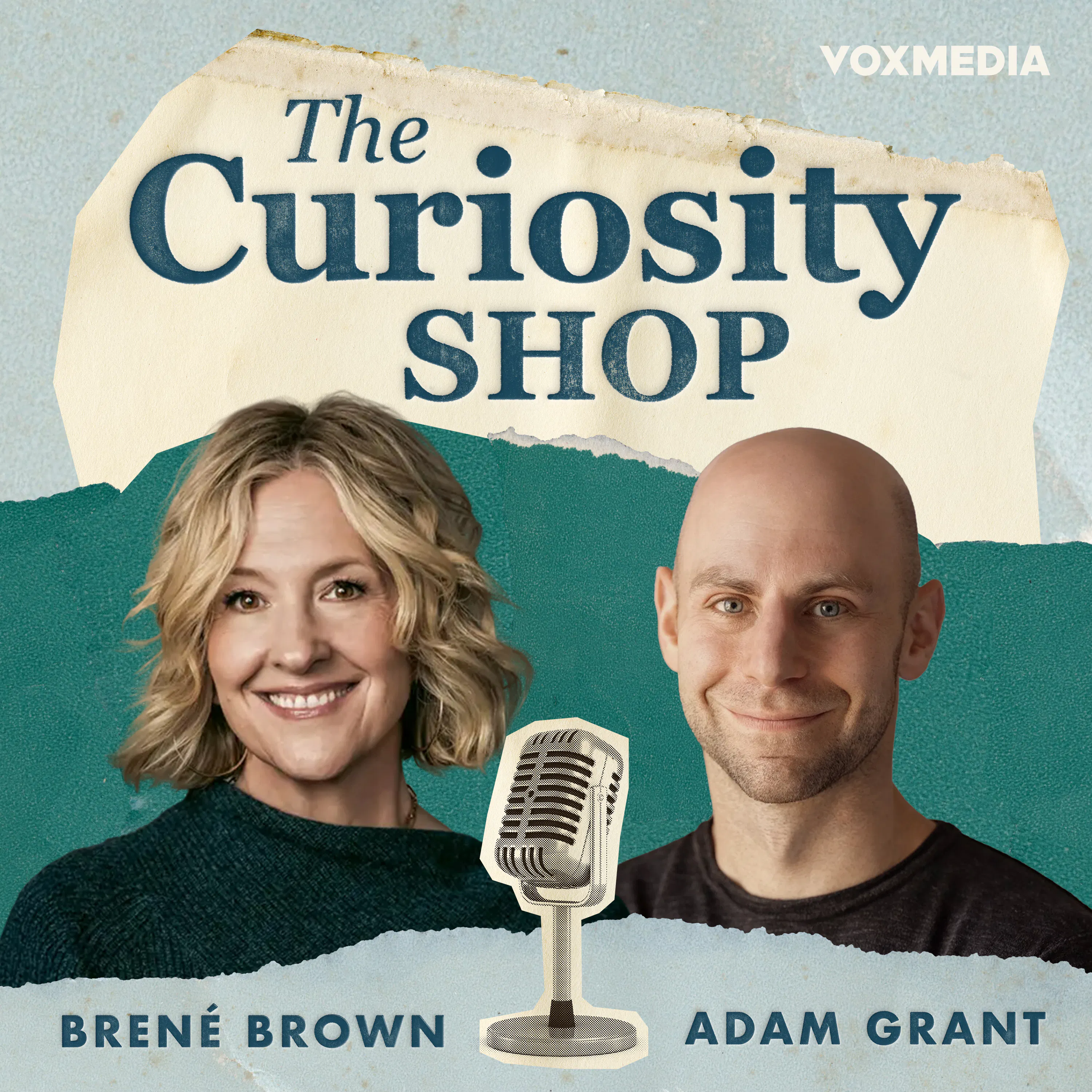
The Curiosity Shop with Brené Brown and Adam Grant
Vox Media Podcast Network
Cautionary Tales with Tim Harford
Pushkin Industries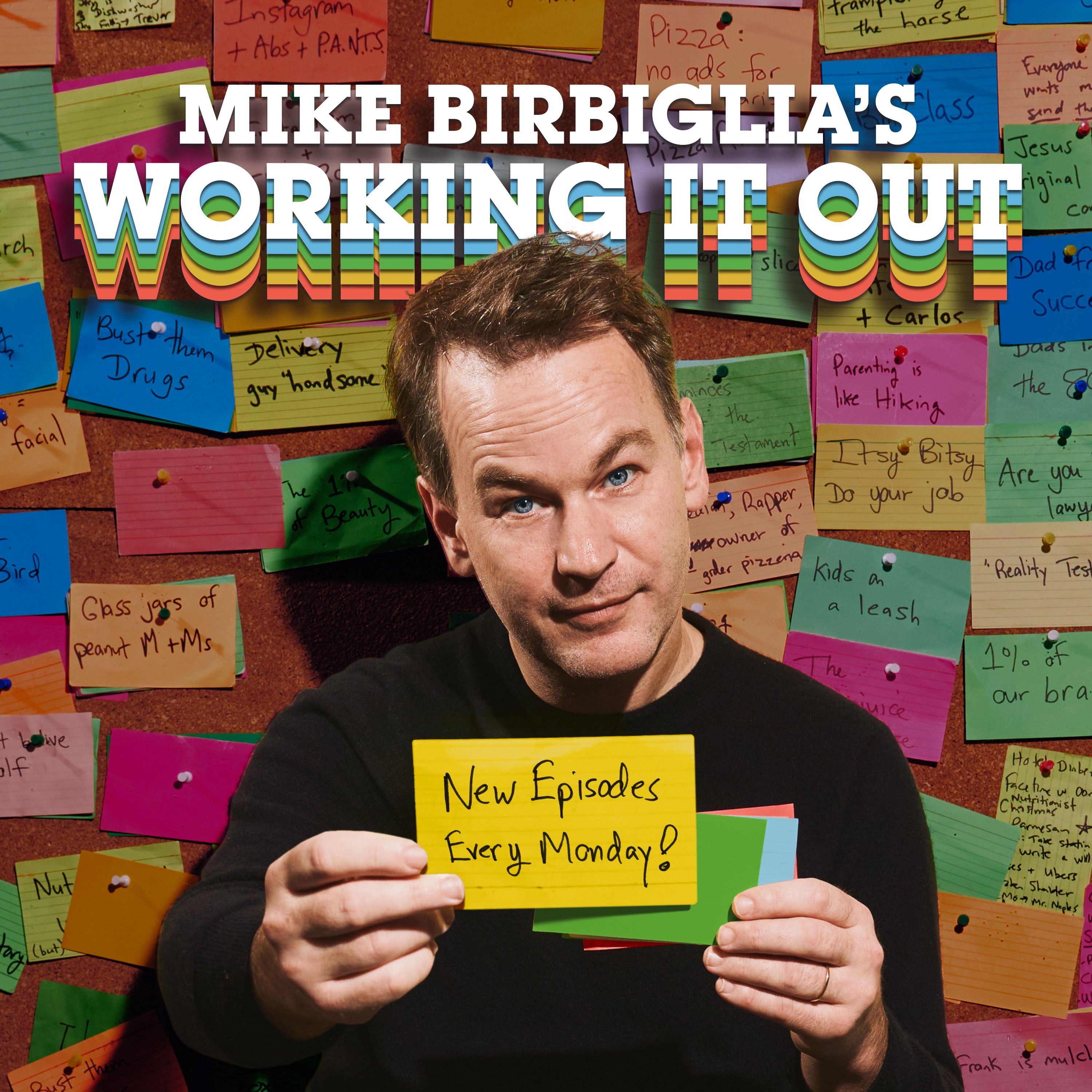
Mike Birbiglia's Working It Out
Mike Birbiglia
You Made It Weird with Pete Holmes
Pete Holmes