
No Map Included
How many versions of yourself have you already lived through?
A career that ended. An identity you outgrew. A dream that changed. A version of yourself that's simply over.
Most of us only hear these stories once they've been neatly wrapped up.
No Map Included is about the part before that.
Hosted by filmmaker and producer Yessi Sanchez, the podcast combines honest conversations with people navigating identity shifts, creative careers, and uncertainty with real-time documentation of building independent films from the ground up.
No one here has everything figured out.
That's the point.
If you're trying to figure out who you are after something changed, start with whatever episode feels right.
No Map Included
Dr. Laurie Bruce | Who Are You When Everything Changes?
Use Left/Right to seek, Home/End to jump to start or end. Hold shift to jump forward or backward.
In this episode of No Map Included, I sit down with Dr. Laurie Bruce, a clinical psychologist, mindfulness coach, and host of the podcast From Both Sides of the Couch, for a conversation about major life transitions, identity shifts, grief, and learning how to navigate uncertainty when you don't know what's next.
With more than 25 years of experience, Dr. Bruce helps people build resilience, regulate their nervous systems, and move through life's challenges with greater self-awareness and compassion. Through her work and her podcast, she explores mental health, burnout, relationships, emotional wellness, and the very human experience of healing from both the clinician and client perspective.
Together, we talk about what it means to be in the messy middle of a major pivot. Laurie shares her experience navigating an unexpected divorce after thirty years of marriage, while I reflect on stepping away from acting after nearly three decades of building my identity around it.
We explore grief, uncertainty, resilience, and the stories we tell ourselves when a chapter of our lives comes to an end. We also talk about therapy, the importance of allowing yourself to be supported, and why healing often begins when we stop trying to rush through difficult emotions.
We also share some of the resources that have helped us navigate change, including Atomic Habits, The Pivot Year, This Is How You Heal, Yoga with Adriene, The Wellness Scoop, and MadFit.
And if you're currently navigating your own transition, whether it's a career pivot, the loss of a relationship, the end of a dream, or simply not knowing where you're headed next, I hope this conversation reminds you that uncertainty isn't something to solve. Sometimes it's where the next chapter begins.
Connect with Dr. Laurie Bruce:
Podcast: From Both Sides of the Couch
Website: www.drlauriebruce.com
If this conversation resonated with you, I'd love to hear from you. And if you know someone currently finding their way through a major life transition, send this episode their way.
About the Podcast
No Map Included documents the process of building stories in real time: from proof of concept to premiere.
Hosted by filmmaker and producer Yessi Sanchez, the podcast explores the work behind the work and the paths that don’t show up on IMDb.
I always had a very clear path in mind of where I wanted to go, and I always went after it. And what is interesting is that now that I'm in my 30s, I have no idea ... where I'm going. Realistically, we never know where it's going, right? Yeah. You just have a vision in your head, and you still don't know where it's going, but- Yeah ... it feels a little bit more safe- Yeah ... when you have that vision. And right now, I do not have a vision at 📍 all. Hi, and welcome to No Map Included. Today, I have the privilege to talk to Dr. Laurie Bruce. I am a clinical psychologist and a mindfulness coach, and my podcast is called From Both sides of the Couch. And in my podcast, I talk about all things related to mental health and wellness, particularly for women. I have a lot of clients that are women in mid-life who are pivoting, who are facing empty nest and really having an opportunity to reevaluate and to look at their lives. So I talk a lot about building up resilience and strength and learning how to cope with the challenges of life. We were able to connect through our major pivots in life. So I am super excited to talk to her about different stuck points and what it feels like to be in the messy middle, but we're also talking about the perspective of being on the other side of 📍 📍 it. This is No Map Included, where I document the journey from proof of concept to premiere, building a feature film, a vertical series, and everything in between 📍 I particularly love working with other therapists and coaches, helpers, healers, people who are really committed to wanting to help others. I love working with those folks because I feel like there is a tendency to be some burnout and stress associated with caring for others. So I feel like that's one of the most helpful ways that I can utilize my skills, is by helping the helpers. Oh, I love that. Yeah, you never really think about the helper's psychology and what they're going through, and that, that can be really heavy, do you feel like there comes like an automatic barrier so that you need to protect yourself, or do you have to do that? Yeah, yeah. I think that's the question, isn't it? How do you do that? How do you maintain empathy, maintain sensitivity, maintain connection to others, maintain vulnerability? Like, we know all of those things, the research shows, helps improve our wellbeing, but at the same time, when we're consistently with people who are hurting, who are struggling, who are carrying shame and trauma and generational shame, generational trauma, that is heavy. It's a lot. It's a lot to carry. And so, I feel very passionate about wanting to help support people in this field because, truly people are leaving the field now more than ever, at a time in which we need the support now more than ever. So who's helping you? Well, I'm very transparent. It's a great question. I'm very transparent about the fact that I've been pretty much in therapy consistently throughout, since I was 19 years old. And so therapy for me, being in consistent therapy, is life-changing for me. It's what helps me cope. It's what helps me grow and learn and, get out of my comfort zone. I'm naturally more of an introverted person. I'm very emotionally sensitive, and I take things to heart. And so, yeah, I need a lot of support and I also try to de-stigmatize the shame around seeing a therapist. I think it's one of the best gifts that you can give yourself is to be in your own therapy. Yeah. Interesting, because therapy for me growing up was like, "No, you don't need therapy. You don't have anything wrong with you." Yeah. Um, it's kinda everyone else is crazy but you. Yeah. You're good. You're good. Yeah. You don't need that. Yeah, exactly. It gets stigmatized and yeah, it's, everything is very small in Switzerland. Everyone- Mm ... knows each other, and so it's like, ooh you don't want people to know- Yeah that you're going to therapy. Yeah. I mean, I don't know. I left the country 10 years ago, so I feel like it's probably changed. Um, but yeah, I don't really know a lot of people who go to therapy in Switzerland. That is so interesting and I do have to say, so I think you are probably the first person from Switzerland I've ever met, so that's super cool, and I have such tremendous admiration for people who come to the United States from another country. One of my dearest friends came from Venezuela, and I don't even know how many years she's been here now. But I do not have, I know in my heart of hearts, I have no capacity whatsoever to move to another country and live there. I could never do it. So I admire you so much for doing that. Thank you. What a badass you are to be able to do that. I would never do it again. I'll tell you that. I mean, I feel like I've grown a lot, and it is beautiful to, um- learn different cultures, and the United States is so different from Switzerland, and it's also very similar in certain ways, you know? I feel like every generation from my dad's side immigrated somewhere. Like, my great-grandparents came from, um, India originally to Belize, and then my grandparents moved from Belize to Mexico. Then my dad immigrated to Switzerland. My mom lived in Mexico for a few years. And so every generation moved somewhere else. But still, it is really hard. I can't even. And yeah, it's, dealing with all the immigration stuff on top of everything else that is going on in the world- ... was really hard. And so I would not do it again, as in, like, I'm very happy where I am right now. Mm-hmm. I'm glad that I built some resilience out of it, but I feel like I've also lost a lot of things. Like I said, I was an actress before, and I just, made that decision to finally officially step away. Wow. Um, yeah. It's been really recent. Um, but I mean, I've been stepping away for years now. But just I never really made it official. But I feel like dealing with all the immigration stuff on top of- Mm being an actress in LA, surviving in the city, the city's very expensive. There are a lot of people living here. There are a lot of struggles that come with that. So- Yeah ... that on top of everything, I think made me really fall out of love with acting. Oh. Um, which is sad, but I feel like it does have- That's sad It does have something to do with that, um, in particular. Well. Um, but a- again, I'm very happy that I'm here. I'm just saying for my future, I don't think I would- leave the US. Yeah. Because I don't think I have it in me to do- The capacity- Go through- ... to do it again. Yes. Yeah. Yeah. Maybe go to a different state or something like that, but yeah. So you came to the US specifically to further pursue your acting career. Yes. And you've been here, did I hear you say 11 years, 10 years? Almost 10 years. Yeah. Almost 10 years. Next year it's gonna be 10 years, yeah. Okay. So in terms of your pivot, where you are in your, I really hate the phrase your journey but I have not yet been able to come up with an alternative that makes me feel comfortable. But in your life journey, so you came here to focus on acting, and maybe if you feel comfortable sharing a little bit about, what has that been like for you and what are some of the things you've had to really think about in order to even consider making such a major career pivot? I'm not gonna lie, acting is really tiring. I mean, everyone- Mm ... knows that it's a really hard job. Mm-hmm. I feel like being in my 30s and realizing, oh, I'm never gonna have the stability that I'm craving- ... that is really hard to not know, okay, maybe I just have to work another year, and then I'll finally be able to make consistent money through acting. It's just always up and down. We had a major strike a few year- well, three years ago. There was COVID, like everyone experienced that- Mm-hmm ... obviously. There is just not enough work out there. Mm. And it is hard to not have that stability. I am craving a peaceful life. Yeah. And as an actor, I don't think you'll ever have that. I mean, I still love it. Um- Mm-hmm ... but that was the main reason, I think- Yeah ... where I was like, ugh, it's just hard to come up with the energy- Yeah ... for that when I want other things in life. And also, I started performing when I was three years old. Aw. Um, so I've done it my whole life, and never really thinking, "Oh, I wanna do something else." Um, yeah, that is probably- starting to think about, okay, what else can I do? What else do I wanna explore? Yeah. Like, that started probably, like, five years ago. I feel like everyone goes through that a little, um, when they're, like, 28, 29. Like, what do I wanna do for the rest of my life? Mm-hmm. Or, like, for the next decade, you're probably gonna question also family. Like, what do I want in life? Yes. I don't want my life to continue like this. Yeah. Like, I don't want to struggle like this or to hustle like this for the rest of my life. When I look at my future, that's not in the cards. Yeah. So I need to make a change. Yeah. Yeah. Yeah. Even though our pivot stories are very different, I'm noticing already some similar themes. Um, so for me in this juncture of my life, I'm a little bit older. I'm 53, and the pivot that I am I guess I would say through at this point, um, is a couple of years ago, I ended up getting divorced after being with my ex for 30 years. And so what really resonated with me when you were speaking are the issues around, like, identity. This is who I have been as long as I can remember. You here, you know, doing acting since you were very little. Um, 30 years is a long time to be in a marriage, and the question of, oh my gosh, well, what next? If I'm not a wife, if I'm not married, a married woman, then who am I, and what is this next phase of my life even gonna look like? And I think that's really scary. I mean, it's terrifying when your whole identity is around this w- I mean, it wasn't my whole identity, but a big part of my identity was this aspect of being a wife. And when that changes, it's very destabilizing. And, you know, we can kind of be in a stuck place for a while as we're trying to figure out what is next for me, and what is that even gonna look like? How long do you feel like did it take for you to realize that? Like, what was- Mm-hmm ... the shift for you? Well, the shift for me was that my husband left me so it was not, uh, of my doing. Um, so it was sudden for me. It was sudden and unexpected. I was not anticipating this. For me, it came out of nowhere. So for many, many, many, many months, I was just struggling with the shock and the, not, maybe, I guess, denial, but more the shock of it, like where the fuck did that come from, was my real experience. I was not prepared for it. And so for me, many months was just kind of digesting, wow, this is my new reality. This can't be my reality. This is your reality. And so that was a stuck phase for me that lasted a long time of, this can't be true, this can't be true. It is true. And so I will say looking back now have it feeling like I really am genuinely on the other side of it finally coming to some sort of acceptance that this is my reality, now what? And in that sense, I felt like I went from a place of real despair to hope. Okay, so this chapter of my life, whether because of my doing or not, is over, and I need to accept that. I need to grieve that. I need to be kind and compassionate to myself and recognize this phase of my life is over, but, or and, now what can I do with that? Now what are some ways that I can grow and learn and change that I never thought possible for me? And so I think that phase has actually been genuinely exciting for me. Scary as all get out, but also at the same time, very exciting. Um, thinking about, you know, how do I wanna live my life? And being able to do things completely 100% on my own terms how I want to do them without having to compromise has been a real joy. Was there something in particular that happened to you, or was it just time? Oh, great question. Was there anything that happened? Honestly, I think it was just really, really giving myself the space to grieve and grieve hard. Um, I have an incredible therapist. I have an incredible family. I'm so blessed with wonderful friends. My kids are amazing. I have two grown kids. I'm just so, so, so blessed with people that gave me the space that I needed to just, like, not function for a while, you know, not work. All I had to do, essentially, my mother was so amazing. I moved in with my parents for a while, and all I had to do was basically feed myself and, you know, that was it. And in fact, actually, my mother, you know, cooked. I had to do nothing for a while. And I have a lot of compassion for women who don't have that luxury to be able to just step out of their lives for a moment and give themselves the space to grieve and heal. It's very beautiful that you were able to just let yourself be held for a little bit. Yeah. But I imagine that also comes from therapy, being in therapy, since you were 19 years old. So I feel like that is very beautiful. Thank you. I appreciate that. And one of the biggest gifts, one of my best friends from childhood, we've been friends since, um, first grade. She lost her son, um, when he was so young, 21 years old. Her son died unexpectedly. And for me, I think that that's the worst kind of pain that one could ever imagine experiencing. And what my friend was able to do for me was really just be with me in my grief and sadness. And I think that's a really special gift that not too many people are able to really do. They can do it in short periods, they could do it for a phone call or for a little short period of time, but there are very few people in our lives who really truly can just be there for you at 1:00 in the morning, you know, when you feel like there's nothing to live for. Like, she got it, and I knew she got it. And there was, of course, she's always been, you know, uh, the dearest friend to me, but knowing that she survived that, knowing that she could get through that, and that she believed in me and that I could get through it, and that she was there for me, that really gave me space to really truly, uh, just grieve. You know, just really grieve hard. And she kept giving me the messages, "When you have to cry, you cry. You cry like a motherfucker. You get in your car and you scream and you cry and you pound your fist and get it out." And I don't, honestly, even with all the therapy that I've had, without my friend Jen, I'm not sure I would've done that naturally, 'cause my natural tendency is to be like, "Okay, let's figure out what I'm gonna do. I'm gonna come up with a plan." And Jen really encouraged me to stop and you need to let yourself feel. And that was profoundly helpful for me. That is really beautiful. Do you think that that experience in your life made you want to help people, um, who are going through transitions like that? Definitely, and I do feel in this weird sort of way, for my therapists that are listening, they might be able to resonate with this. As a therapist, I really truly believe that the universe somehow gives you the clients that you need. It's our responsibility to differentiate and to discern. My patient is not me, and their experience is different than mine. Their experience is their own. But I learn just as much from my clients, maybe even more, as my clients learn from me. And so how it is that happened that, you know, when I return to work, all of a sudden randomly I start getting all these clients with major issues of loss and betrayal and grief and all of these things that I normally don't typically get in my caseload. But for whatever reason, I was getting them, and I really do feel that there's this element of the universe giving you exactly what you need at that time, which then helped me to heal. Because Jen had given that to me, and my therapist and other friends had given me that space, it made it easier for me to be able to give that space to my clients. Yeah, I feel like I have, uh, similar experiences with podcasts that I edit because I'm a podcast producer as well. And so when I listen in on those conversations, it's for some reason exactly what I'm going through that week. Yes. Which is crazy. I can- Isn't that so weird? It is also so beautiful- Yeah ... that, yeah, the universe is giving you signs. And I feel like for a few years I didn't really believe in anything. I- Mm-hmm ... but now I'm reconnecting with that again, that- Mm ... the universe is giving you signs, and maybe it is meant to be, and it's okay. Like, it's just because I can't explain it really that I- Yeah ... was like, "Ah, no, it's silly to believe in the universe," you know? But now I'm like, "Oh, no, it's okay to just..." Also, I feel like it goes... it's the same thing, like being held by the universe and like having trust that maybe there is a greater plan, maybe not, maybe- There is something that is meant to happen. I am meant to learn something from that. And also listening to you, I feel like I am just going through a little hump in my life. I mean, I- It's not, though. It's not. I mean, yeah, please don't, don't minimize that for yourself. Like, this is, uh, this is understandably a huge transition. You moved to another country to pursue a career that ... Now you have made the decision, "I'm not going to do this anymore, and I've gotta figure out what's next for me." So it sounds like you're really m- like right now, as we talked about the beginning, the middle, and the post, it sounds like you're really in the messy middle right now of this huge pivot and just not knowing. And getting comfortable with not knowing is really, really freaking hard. Yeah, I agree. It's really hard. It's also fun and exciting, but also falling into the hopelessness, I think, is very easy and so I constantly need to... I mean, I'm reading a lot now, and I've also lost my stable restaurant job in the last two weeks. Oh, no. So it's been a lot. Ugh. Um, and yeah. I, again, I still feel, I don't wanna minimize it, but I still feel like it is just a little hump in comparison to other things that I've experienced in my life that were, like, in comparison, I know I probably shouldn't compare, but, like, in comparison were so much harder than what I'm going through right now. But , I do wanna grieve, like, the loss of a dream. I did have the stability of working in a really cool environment, but I loved my coworkers. Mm-hmm. It was something stable that I was able to do. It was fun because it was in a wine bar and I was learning about wine. Um, and so that happened around the same time I decided to, make it official and step away from acting. And then I think that same week the owner of the restaurant told us that they're gonna close the restaurant permanently. Oh my gosh. And so that's why I'm like, "Okay. I have created this year the podcast, No Map Included," and so the universe was like, "You know what? Let's just let her figure it out, like, completely." Yep. And, um, it is- Wow ... kind of fun if you think about it, if you think about, like, it gives me permission to do things that I never did while I was an actor. Like, it's hard to change your hair color, which I didn't do, but, like, a few things that, you shouldn't do when you're an actor. Mm. Like, you shouldn't have drastic changes. You always kinda have to be available. You never know 📍 when your next opportunity is gonna be, who you might meet, like networking events. And finally being able to, like, "Ugh, I don't have to think about that at all." Yeah. I do have the freedom to finally think about other things that I might be interested in doing, you know? So it is an exciting time. It is frightening. I feel like I had my two weeks where I was sad. But I also went on a little trip. It was also my birthday. Oh, wow. April was a lot. So I feel like I just need to take this opportunity to just- Try different things and be okay, like wallowing a little bit in the uncertainty, if that makes sense, you know? Yes, absolutely. So giving yourself that space to grieve the perceived certainty. Like I think you said it earlier, like we never really know. We think we know about how our life is going, and if I've learned anything, you know, by surviving this divorce, it's that. You think you have your whole life mapped out, but you really don't. You wake up one day and all of a sudden your life is entirely different. And I think that it is a myth that we have everything all in this nice sequential order of how things are gonna go for us. We really never do know what is gonna happen. So I think embracing that uncertainty, embracing the exciting aspect of it, validating of course that it's scary as hell, and what if, what if, what if, is a normal place to be. Um, but there's a song that I used to play over and over, music's really important to me, and there's a song, think the singer's name is Cody Fry, and it's What If. But he's saying, "What if I fly?" Like what if... Yeah, normally we think about all these awful things. What if I fall? What if I do this? What if I do that? But what if I fly? What if it's more amazing than I ever could have imagined it to be? And so that's, I do feel like a really important mindset shift as we're going through a major pivot time, is it's easy to fall into the hopelessness or the worries, the catastrophizing, the beliefs that it isn't gonna work out. And I think it takes effort and energy, work, support, reminders, sometimes therapy to keep us focused on, but what if it is more freaking amazing than you ever would've imagined it could be? It's funny because I feel like I always ended up, , when I was at the other end of it, I always felt like it's even better than I imagined it. Mm. Funny now, and I'm still getting over that a little, is that now I feel like the last 10 years of me acting was a waste because I haven't... And I know that's not true. Good. But that's how I feel. Yes. Um, because I have not, like, made a career out of this I mean, I have, but what is the point of it now that I'm changing careers, you know? That I'm- Yes ... exploring what's next. I feel like, "Ugh, this was all a waste of time," which I know it isn't, and I feel like I don't know how to get over that feeling of- Yes ... it isn't a waste of time. Yeah. Um, yeah. I can really, really resonate with that. When I was in that messy middle of, "Oh my gosh, I wasted 30 years of my life," that's a horrible pill to try to swallow, and I consistently needed to remind myself, "No, none of it was wasted. All of it is an opportunity to learn and to grow." And yeah, how do you make that shift from regret and seeing it as a waste to know every single experience that you have, it has value and meaning and purpose if you choose it to be? 'Cause to me, that's about mindset. That's about, how am I gonna take that in? I could go down the rabbit hole of getting stuck in that thought or belief that I've wasted my life, but what's that gonna do for me? That's just gonna make me miss out on chapter two. So I think really reminding yourself that everything, every mistake, every quote, unquote, "failure," I don't even like to use the word failure because I don't think there is such thing as failure. There are growth opportunities, learning opportunities if we choose to think of them that way. So all of the experiences that you've had, there's no way to know in the future the value that they have brought to you. But just trusting in that there's inherent value no matter what. Yeah, 100%. This reminds me of a conversation that I had with my friend, who also stepped away from acting a few years prior to me and she- reminded me that you can have different lives in one lifetime. Yeah. I feel like this performer lifestyle I had now for 30 years, and I think that's why it's hard for me to imagine a different life, you know? But it's also exciting when I think about, oh, maybe in five years I will think about this chapter as in like, oh yeah, I used to be an actress and I used to be in this and this movie, and it's gonna be fun. Um, so I also need to remind myself that the point is to just live- Yeah and have different experiences, and just the experience of life is just so exciting. Um, and I think that's the point. Yes. Yep, totally agree that when we can shift our mind away from accomplishment as the definition of success, and shift more towards the experience, what you learned, how you grew, how you got stronger, tougher, wiser, like that's the point. The joy of it, the experience of it, the meaning of it, all those things are not about success. It's about the process. So again, going back to the, I hate the word, it's the journey. And so someday I'm gonna come up with a better way to put that, but it's just that's the truth. Why don't you like it? I don't know, it just sounds so hokey and sounds so, like, trite, and I think probably 'cause everybody uses it. Like, my wellness journey- Mm-hmm ... and my mental health journey. Something about it that just gets on my last nerve. Oh, that's funny. How about path? Is path good? Path is a little better. Yeah, my path. I could do that better than journey, yeah. Yeah. I love it. So, as we're winding up and we're thinking about, additional resources for our listeners, if they are currently in the early stages, the messy middle, or, you know, post-pivot, Are there resources, books, authors? Who do you turn to for words of wisdom and additional support for this topic? What I love to do is really nourish my mind and my body, and coming back to that because that's when I am the happiest. And so I love to listen to The Wellness Scoop by Deliciously Ella. She also has an app with a bunch of recipes that are healthy for you, good for you. Also desserts that are healthier. And so I really just wanna nourish my body. And then she also has meditation, on that app. I also love Yoga with Adriene. Yes, yes, she's amazing. Love her. Love her. So yeah, I just wanna nourish my body. But for reading, I am reading Atomic Habits finally. I've had- Excellent. Good. Classic ... yeah, I've had the book for a very long time, and I just never... I don't know, it just didn't click, I guess. And I absolutely love it. Awesome. How about you? What do you have? Awesome. So I have been absolutely adoring this author by the name of Brianna Wiest. And so one of her books that you would probably most appreciate, is called The Pivot Year. And she also has, um, The Mountain Is You, I think is the second one. The one that I most appreciate from her is called This Is How You Heal. She's a beautiful, gifted author. And I just adore her work. And for a long time, I bought the audiobook and would just listen to the book every night before going to sleep, and that's just trying to almost, like, symbiotically get these words into my head. This Is How You Heal. So I'm a huge Brianna Wiest fan. I think it's W-E-I-S-T. I hope I'm not butchering that. And my current goal is to focus more on my physical health, getting my movement, improved. 'Cause I know it's so essential, especially as we get older we wanna really make sure we're taking care of our body. I'm so overly focused on taking care of my mental health that I do have a tendency to neglect my physical health. So in this chapter of my life, I'm gonna try to have a little bit more balance there. I love that. Yeah, it's all connected. Oh yeah, I remember one more person, it's called Mad Fit on YouTube. She does a lot of workout routines that are also easy to follow. There are different ones for beginner, like medium, whatever you're looking for. And I really appreciate those because every person is at a different stage in their fitness journey, and I feel like I'm always starting again with, like, getting good habits and a good routine. That's why I'm reading Atomic Habits. But yeah, that's another name that I wanna throw out. I know not really books, but I think it really helps to get into your body and just not in your mind all the time. Yes. Yes, 100,000%. Yeah. Awesome. Well, thank you so much, Yessi- Thank you ... for, uh, having this conversation today. I hope that some of the things we talked about inspired the members of our audience to think about things in a different way, and I always love meeting new people, and my very first person meeting someone from Switzerland. That's so cool. Yes. Yes. Thank you so much for taking the time for this conversation. I think it's a good reminder to see things a little bit more lightly, not go into this doom and gloom, even though there is not really a path right now, and I really appreciate it. Thank you so much. Yes. Thank you. 📍 You just listened to No Map Included. If you're building something, a film, a series, a career, and you don't have the full map yet, that's okay. Neither do I. I'll see you in the next chapter

Podcasts we love
Check out these other fine podcasts recommended by us, not an algorithm.
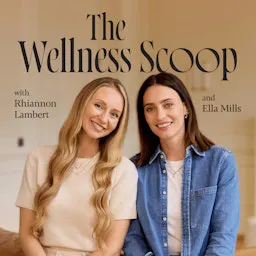
The Wellness Scoop
The Wellness Scoop