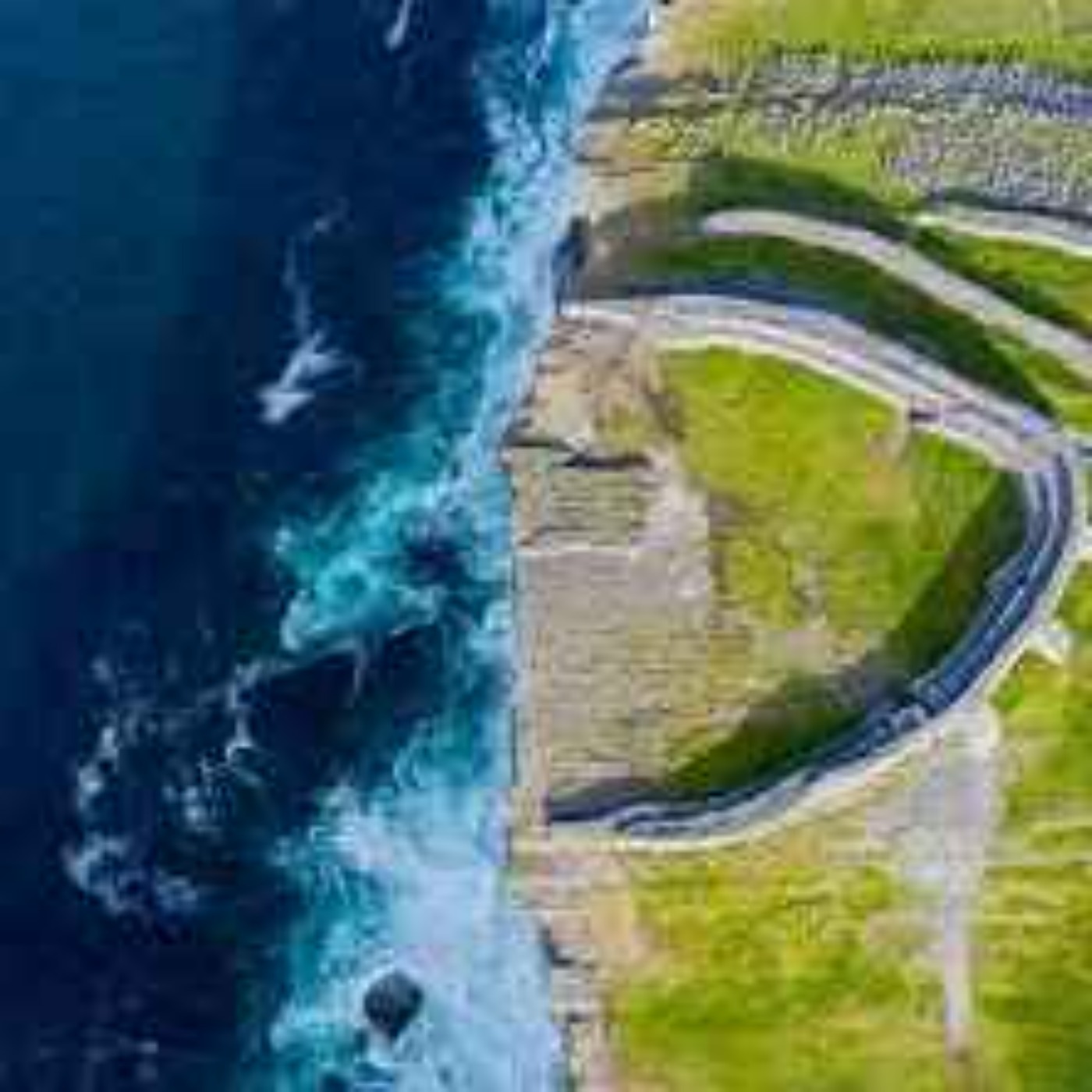
Aran Island Discs ☘️
Aran Island Discs is an intimate, Irish-hearted interview series in which guests explore the soundtrack of their lives. Inspired by the timeless tradition of storytelling and the wild spirit of the Aran Islands, each episode blends conversation, memory, and music into a vivid portrait of the person behind the public image.
Across candid, often deeply personal interviews, recall songs that shaped them — the tunes that carried them through childhood, challenge, triumph, heartbreak, and homecoming. These musical choices become gateways to unexpected stories: the mentor who changed everything, the night everything nearly fell apart, the place they return to in their mind when the world gets loud.
Recorded with warmth, humour, and unmistakable Irish authenticity, Aran Island Discs celebrates culture, creativity, and the emotional power of music. Whether the guest is a celebrated artist, an athlete, a thinker, or a local legend, every episode offers a fresh perspective on the people who shape Irish life today.
Settle in. Take the ferry. Discover the stories that live between the notes.
The podcast presenter is Rossa McDermott, and the series is recorded at Dublin South Podcast Studios in Dundrum. The concept is devised by Dos Amigos, and edited by Peter Rice
#aranislanddiscs #podcast #podcastseries #nusic #rossamcdermott #acast #spotify #applemusic #ireland #inismor #inismeain #inismaan
Hosted on Acast. See acast.com/privacy for more information.
Aran Island Discs ☘️
John Robbie
Use Left/Right to seek, Home/End to jump to start or end. Hold shift to jump forward or backward.
John Robbie has had a remarkable and unconventional career that spans international sport and influential media, bridging Ireland and South Africa in a unique way.
Born in Dublin, Robbie first came to prominence as a talented rugby union scrum-half. He represented Ireland national rugby union team between 1976 and 1981, earning nine international caps. Known for his sharp passing and tactical awareness, he quickly established himself as a composed and intelligent player. His abilities were further recognised when he was selected for the British & Irish Lions tour to South Africa in 1980, one of the highest honours in the sport. This experience would prove pivotal, as it marked the beginning of his long association with South Africa.
In 1981, Robbie made the bold decision to move permanently to South Africa, where he continued his rugby career with Transvaal. At a time when the country was still under apartheid, this move was both professionally and personally significant. Although he came close to representing South Africa internationally, he never played for the Springboks. Nevertheless, his rugby career in the country helped establish his reputation and laid the foundation for his later work.
Following his retirement from professional rugby, Robbie transitioned into broadcasting, where he would achieve even greater prominence. He became a leading voice on Talk Radio 702, hosting a daily talk show that gained widespread popularity. Known for his direct, no-nonsense interviewing style and his trademark phrase “Cut the Slush,” Robbie built a reputation as a fearless and engaging broadcaster. Over a career spanning more than three decades, he interviewed politicians, sports figures, and public personalities, becoming a trusted and recognisable figure in South African media.
In addition to his radio work, Robbie also contributed as a rugby commentator and columnist, maintaining his connection to the sport that first made his name. His insights into both Irish and South African rugby added depth to his analysis and broadened his appeal. Beyond media, he has been involved in charitable initiatives, including work with the Laureus Sport for Good Foundation, reflecting a commitment to using sport as a force for social change.
In summary, John Robbie’s career is defined by its breadth and impact. From representing Ireland and the Lions on the rugby field to becoming one of South Africa’s most prominent radio broadcasters, he has successfully reinvented himself while maintaining a strong connection to sport. His journey illustrates adaptability, resilience, and a willingness to embrace new challenges across continents and professions.
Welcome to Iron Island Discs, a podcast series where we talk to Irish people from different walks of life as they reflect on their own journeys. Join me, Rossa McDermott, as we explore the many aspects of Irish Disney and what it means to each of our guests through life's ups and downs. John Robbie, welcome to Iron Island Discs.
SPEAKER_01Great to be with you, Rossa. I'm ashamed to say that I've never been to the Iron Islands. It's a wish list, it's on my wish list. I want to take it off. But I have been to another island, which is Robin Island, which you might just heard about on the coast of uh off the coast of Cape Town.
SPEAKER_02I heard I believe the man who resided there once told you to shut up as well, did he?
SPEAKER_01The great Nelson Mandela told two people in public to study. One one was Bill Clinton, who criticized about uh criticized him about South Africa's stance supporting Cuba, and the other one was John Robbie when we were we we were at a dinner and uh he sat beside us because I sent a rather cheeky note which is now framed in my bar, which I'm actually looking at as I told you, and I said, Could the president come and talk to us? We are the the private media, we're not the SABC. And he came over and I got chatting to him and I got into a rather controversial subject. And at one stage, I sort of talked over him and I'd look the digit was out, as I would be if I was interviewing, and he said, Now, yo, he said, you are not on the radio now. And then he he burst into tears, he said, yo, shut up, and then he burst into laughter.
SPEAKER_02Oh my god, you've got a reputation dumb. Tell us about Robin Ireland.
SPEAKER_01Robin Ireland is so amazing, it's it's obviously got a massive history, even before the political prisoners, the ANC and the PAC and Nelson Mandela went there. It was a leper colony. It was, you know, troublesome chiefs were sent there in the the sort of border wars between the the Brits and the South African native community. So it's it's got it was a leper colony, as I say at one stage. Troubled history, but in many ways it is so cruel because A, it's impossibly beautiful, and B, the view looking over Cape Town, Table Mountain. So every prisoner who woke up there looked across at one of the great sea views, one of the great sea city views. So it sort of added insult to injury, but it's well worth a visit. Anyone who comes to South Africa, and you think of this man who came out after 27 years in jail with not a shred of bitterness. And it's uh it's a lesson for anybody in Rossa.
SPEAKER_02Listen, Carol. I've heard people who stood in his cell, and it's a very emotional, hard to get your head around how a man spent so many years there and can come out the way you just described him.
SPEAKER_01Absolutely. Well, it's so tiny. That's the thing that you think, and there's a a block of about 10, which were the high security prisoners, and a lot of other prisoners on Robin Island who were there for decades with him never actually saw him because they were kept they were kept a secret. But I'll tell you a story I haven't told many people. When I was playing rugby in South Africa for Transvaal, the Transvaal rugby team, we were down to play against Western Province, which was a huge game, North against South, and it'd be played in front of 50,000 people. And we got a message, we were to train on the Thursday and Friday, and we got a message and said, and this is the old South Africa now, and this is when Nelson Mandela was still on the island, and they had a rugby pitch there that the prison warders used to play on. And we got an invitation and said, Would the Transvaal team like to do their training session on Robin Island? And I said, Oh my, can you believe it? You know, and and sadly, our team management said, No, no, no, too disruptive, etc. So, so who knows? I could have actually been on Robin Island when the great man was there, but it didn't happen. But uh, gee, it's a memory, I can tell you.
SPEAKER_02You can certainly do a good imitation of him, anyway.
SPEAKER_01Can I let you can I let you just think of Rossba every everybody in South Africa can do a good imitation of Nelson Mandela, such was his stature.
SPEAKER_02Yeah, what a great man. And tell us, you ended up in South Africa in what 1981 after your tour. Yep. And what made you go? I remember uh because I'm a few years younger than you, and not many. Uh, we were doing leaving or while in college, and uh you'd won the Leinster Cup, then you left Ireland to go to South Africa, where everybody else seemed to be going the other way, leaving South Africa.
SPEAKER_01Yeah, there's a little bit more little bit more to it than that. I mean, there was I was a rugby player, rugby nut, high school, Trinity. We'd great success. And then I snuck, I broke my leg playing for Ireland against France in 1977. And then a little guy came in called Colin Patterson, who was a genius and my absolute nemesis of my life, because I'd sit in the stand as a replacement for Ireland and I'd watch him having an average game, throwing the odd bad pass, and I'd think this is my chance, and then bang bang, he'd be in for a try or two, and that was my that was my chance gone. But I snuck on to the British Lions tour in 1980, uh to South Africa, and and uh you know, had a wonderful time. I was a replacement. And then the next year, Ireland went and it split the country down the middle. It did, it was absolutely unbelievable, and I was stuck in the middle of it, and I must have decided not to go, and then decided to go and decided not to go. And and in the end, I went and had a miserable time. I got a virus in my shoulder, didn't play. I'd lost my job with Guinness's. I was a graduate trainee with Aunt Guinness's.
SPEAKER_02That's the one thing I always remember. I mean, jobs weren't that easily found in those days. And you, Mike Gibson, left jobs in Guinness's to go on this kind of random tour. Well, Gibbo didn't. Gibbo stayed.
SPEAKER_01He was far more, far more responsible than I than I was. But I I I left and looking back on it, I mean, I was a rugby nut. I had you know, I was recently married, I got a young kid, but rugby was my game, and and Guinness's allowed us to go and said we can't interfere with your uh leave. And then an old schoolmate of mine, a very famous journalist called Peter Murta, who's been on this show before you, as uh well Peter, Peter was I was in the same year with with Peter, and terrific, terrific journalist. And I tell you what, a very fast runner as well. We wished he'd played rugby, and he realized that in the midst of this huge row, you know, Guinness is one of their biggest export areas after sort of the UK and America was Nigeria and West Africa. So he went to the Nigerian embassy and said, Are you aware that two Guinness employees are probably going to get picked? And Nigeria, not the greatest hotbed of rugby, weren't quite aware of this, but it rose up and then they said, Look, we might have to nationalize the breweries if these guys go. So Guinness changed their mind, and and and my wife was so fed up with this row, said, Why don't you just tell them to F off? So without quite doing that, I left and I went and disastrous tour for me personally because of this this injury. And and then people I got offered jobs in South Africa, and and the rugby side of it was incredible. The stadiums, the crowds, the standard of rugby was well, a bit like today, was amazing. And so I decided to go for a year, which has turned into 45 years. And uh, that's basically how I how I got to South Africa.
SPEAKER_02And when you look at your a summary of your career, your rugby is one of the key features. Are you a broadcaster, a rugby player? How do you describe yourself?
SPEAKER_01I think I think I decided I describe myself whose whose life is in blocks. You know, I put a chapter and I had a chapter, and for most of my early life, rugby was the central, central thing, and and I ended up far more, achieving far more than I ever should have done in terms of talent. But I think that that uh uh um I was so determined that I I sort of punched above my weight, and I'm hugely proud that I, you know, I made it to Ireland and the Lions and then came out of the blue to South Africa and actually made it to the to the top here. My greatest uh uh honor and achievement was in 1987. I was named one of the five players of the year in South Africa, along with Nas Burtha, Danny Kerber, and you know, two other amazing, amazing players. The fact I made it in in two countries is is is of uh of huge pride. And and so then when I finished my rugby, I had a rugby job. I was working with an engineering company that I didn't particularly enjoy, but you know, we were we were playing professional rugby in all but the money. We got money under the table, but nothing, nothing too serious. And then I had to sort of uh uh settle down and you know decide what I really wanted to do. And then I fell into radio where a local radio station 702 asked me to do sports broadcasts, and I did it. And that led to me doing a sports program where in those days it was unheard of in South Africa to take calls on air from listeners, because my God, they might say something controversial about the apartheid system. But I loved it having grown up in Ireland and the banter in pubs, and you know, you'd slag one guy one week or you'd take a particular position, you'd bounce back. I absolutely loved this idea. And then 702, which because it wasn't government-owned, had a medium wave signal as opposed to FM. Yeah, and so we battled when they started the government station, they started their own radio station, irreverent music station. And over a bottle of whiskey, our directors decided to go talk, which was great. And then suddenly you had a well, who who can talk? And there was this little loudmouth Irishman doing the sports show, and I suppose I was getting more politically aware. And so they stuck me on the graveyard shift at uh 10 to midnight. And I started on the 26th of January 1990, doing this no-holes barred talk show late at night. And I had one week of a fantastic show. We talked about real issues, we had all sorts of things going on. And then one week later, on February 2nd, 1990, the president, F. W. Detklerk, stood up in parliament and announced, without telling his cabinet, without telling his party, without telling his wife that he was going to release Nelson Mandela and we were going to work towards a democratic country. And there was this little radio program, 10 o'clock till midnight, that I hosted. Yeah. And it sort of went bananas. So that was my incredibly lucky start on radio. And I ended up having 30 years uh on 702 and retired nine years ago.
SPEAKER_02So you're a broadcaster, really, is how you look at yourself now.
SPEAKER_01I look at, as I say, I look at myself. Now I'm a retired man. Now I'm I do various other things. I've been doing a bit of television work on the History Channel, which has been fascinating. Having hated history at school, I absolutely am passionate about it now. So I look upon my life as these different chapters. And when one finished, you know, I closed it off and said, that's it, done, and then started the next and the next. And uh long may it continue.
SPEAKER_02And is there a leadership thing in you, John? I mean, you high school won the cup in 73, you're part of the team. Are you fortunate? Are you a leader? Are you driven? Everywhere you've gone, you seem to have uh been a success.
SPEAKER_01Yeah, I don't I think underneath it all, I'm I'm actually quite insecure. I know a lot of people won't won't believe that, but I'm actually quite insecure. And and in a way, it's that fear of failure drives me very, very hard. And it's also that I don't know if you've heard of imposter syndrome, where you sort of you sort of get to a certain level and you think, oh my god, I'm gonna get found out, you know. Don't look down, you're on the tie rope, never look down, you're on the tie rope. That's that's exactly so so those things are sort of whistling around in my in my psyche. And like a lot of people, we we disguise it very well. But when it came to rugby, because I was such a fanatic, and I I cannot explain the fanaticism that I had. Where that came from? Well, it came from my Welsh granddad. You know, my I don't have a drop of Irish blood in me. My father was from Airdrie, just outside Glasgow, and my mum was from Mountain Ash in Wales. And my granddad, my dad came to work with Guinness's running the ships. He was a marine engineer, and he ran the boats and in fact built the lady Patricia, which I think might still be might still be going. And um, so we settled in Ireland, but my Welsh granddad, who's a teacher, came and lived with us, and of course he loved rugby and Bective Rangers, because Cliff Morgan had played with him for a season, they always had links to the Welsh clubs. So when Ebu Vale or Cardiff or Neith came over to play Bective Rangers, I used to always go in because I loved my granddad. And then going to high school, which was a rugby school, it it was love at first sight. And I was an absolute rugby fanatic. So, in many ways, I was quite uh insecure, but when it came to rugby, I knew my rugby. And I was vice captain of the team that that won the school's cup. Don Lewis was captain, a fabulous, fabulous guy. Went on to be deputy head of Wesley College and a marvelous, marvelous guy, and then went to Trinity and then got sort of elevated into captaincy and had a ridiculous year. And then suddenly I was captain of Cambridge, then suddenly I was captain of Leinster. In fact, I captained everybody except Ireland. I captained them in one game in South Africa in 1981. So I can actually say I captained Ireland, but I loved captaincy. And in a funny sort of a way, when I was playing rugby, I always had, even though I was, I mean, I was a very good player, I was never a great player, but I was a very good player. But when I was captain, that sort of almost took that insecurity away from me, if I can put it that way. And I'm a bit like Frasier on the television now. I'm analyzing, analyzing myself in the past. But I always played much better when I was captain than when I wasn't captain. So I think leadership in terms of, and funnily enough, when I got on the radio and and when you're in a radio station, you're driving a morning show, the biggest morning show in a market like Johannesburg, you know, you have a team around you. And in a funny sort of a way, that captaincy ability came through in leading a team. And, you know, we had a the tightest, tightest team made up of people from all sorts of different backgrounds, but we we we aimed and I think achieved a level of excellence that that I'm very, very proud of. So leadership, so so, but when I knew what I was doing, I was a good leader, I suppose.
SPEAKER_02And where did uncertainty come from? Do you think that's uh an Irish thing? Do we lack confidence? Is it a trait of Irish people underplaying ourselves? Not now. Not now. It's a different culture, but going back to your time and my time.
SPEAKER_01I think that's a very, very interesting, interesting point. Uh, you know, when I when I grew up, I mean I grew up in Greystones, uh, almost idyllic youth. I mean, in Greystones. My mum had actually visited as a as a as a student. Uh, she'd visited Bray and Greystones and met some people, and she always, when we moved to Ireland, she'd always wanted to go, and we lived in Greystone. So we as a seaside village, we never went on holidays because we were living in a holiday. We didn't need to, yeah.
SPEAKER_02Yeah.
SPEAKER_01We did, we, we, we, we did, we didn't need to. And and I remember growing up, I mean, partly because A, I was a Protestant, you know, in sort of Catholic, holy Catholic Ireland, if I can say that in those days, because the you know, the church had an iron grip. And so there was an element of of maybe being slightly disattached, if that, if that's a word, unattached. And also the fact I had this sort of Welsh and Scottish background. And funnily enough, the first ever interview I did was after the Irish tour to New Zealand in 1976. And I did an interview, and I played quite well, you know. Donald Canaff had broken his his leg, so I played the vast majority of the games, including the test match. And so at the age of 20, I came back, and I suppose I was a little bit of a a name, and I did my first ever interview with Ulick O'Connor, the famous Ulick O'Connor. Ulick O'Connor, yeah. Who was, you know, this talented gobsite. That's the only way I that's the only way I can describe him. And I liked him, but he was, but I was very, very nervous doing this interview. And he seemed to do the whole interview trying to suggest that rugby was a filthy game and the all blacks had been, and it wasn't like that at all. And I'd gone very quiet because I suddenly was on this interview, not knowing what to do. This man was putting words, and when the actual interview was printed in the paper, his whole thing was on this element of are you a slight outsider? Are you Irish? Are you an outsider? You know, which which looking back, I suppose was was was very, very uh observant. But when I grew up in that time, Irish to be Irish was almost to be second rate. Yeah, you know, if if it was if it was from England, oh, the Beatles, the Stones, whatever, ah, it was fantastic, the movies were fantastic, the the soccer teams were fantastic. Ireland in those days was to be second rate, and then along came the Dubliners, yeah, and suddenly the Dubliners were this bunch of talented geniuses who rocked up things. I mean, they had a hit number one with the seven drunken knights on top of the pops. Can you believe it? And then also, also, also Tony O'Reilly, of course, great rugby player who went on to take America by storm business-wise, you know, it all ended a little bit disappointingly, but but suddenly you noticed, you know, that there were these uh Val Dunican on the television, you know, that suddenly, hold on a second, there's almost nothing to hold you back. But to answer the question, when when I when I grew up, Irish was considered, Ireland was considered second rate, and all eyes were on UK and and on America. And that's why I look back at those people as trailblazers and and Jewish, we should be proud of them.
SPEAKER_02Yeah, but we did it ourselves. We we grew up in this apologeticness in the 70s, which when I was in the States in the 90s, you two and London were rocking the world. Suddenly, self-belief and confidence did come. But people forget that in the 60s and 70s, Irish people were not viewed as that cool.
SPEAKER_01Absolutely. That's absolutely and funnily enough, you talk about confidence coming, and I would say, and and I speak with my heart now, and I know a lot of people are gonna uh uh uh hate me for it, but that developed into overconfidence, the Celtic Tiger. And I remember coming back, and mates of mine were now couldn't sit down without talking about a freaking flat in Bulgaria they bought off plan and they were gonna make millions in it next year. And you know, the size of your lawnmower or the size of the jumping castle was important, the size of the car. And for a while I thought Ireland, Ireland got it, got ahead of itself. And funnily enough, the the Irish rugby team, and not so much the team, but supporters, got ahead of themselves. You know, suddenly it was so good that everybody else is crap. Thankfully, I think that's bounced back a little bit now, and there's a level of balance that's come back into things. And you know, I always I always joke that when I'm in the in Ireland, I'm the unofficial South African ambassador, and when I'm in South Africa, I'm the unofficial Irish ambassador. Because one of my great passions is supporting tourism in both countries, because it's the one thing that can create jobs straight away. And and yeah, so maybe the balance is right now. But in my life, I talk about chapters, I mentioned that to you. Initially, very much the apologetic feeling second rate, building up into being on a par with everybody, and then going ahead of yourself. Dana was another one winning the Eurovision, and then going ahead of yourself and getting a little bit, a little bit uh arrogant. But uh, but hopefully that's dissipated now. And you know, I'm I'm a South African citizen now. I've been here for 45 years. I I love this country. If the Springboks play Ireland, I'm up for the Springboks, and that's not an intellectual decision. It's not an intellectual decision, it's just the the way it is. But I like to myself like to think of myself as an Irish South African.
SPEAKER_02You and Rassi against the world. I mean, the World Cup highlighted how strong those conflicts could be. We could have won, you could have won, you know what I mean? Broke back. You won the game.
SPEAKER_01You won the you won the game, we won the cup. Which would you rather? Which would you rather have?
SPEAKER_02Exactly. And that's the full view, perspective is what it's all about. Indeed. And so now being in Salari for so many years, where does Irishness sit with you? Is it distant memory?
SPEAKER_01No, no, no, not at all. Not at all. And Irish music, Irish literature. I mean, you know you're old when you start reading Irish poetry. You know, I got a birthday, I got a birthday present for my 70th birthday, which happened on November the 17th. I can't believe I'm 70. I mean, you know, where's this where's this little kid from high school winning his medals? Yeah, exactly. Is now 70. But you know you're old when you use a voucher someone gave you to to buy books on poetry, you know. So that's when you know you're that's when you know you're old. But no, my Irishness is is very, very much here now. And and uh as I say, I'm totally proud of what the country has done. I'm worried as I am about the whole world, because the whole world seems to have this this sort of internationalism that was the flavor some years ago that said, look, it's one world, we're all together, we help each other. And now with with idiots like Trump and and Netanyahu and some of these people, the world has just turned into this cruel, cruel, selfish place. And I look at some of the things that have happened in Ireland as in South Africa, with with absolute fear and and Disgust. And you just hope that somebody, whether it's uh Nelson Mandela, can stand up and just say, hang on, guys, let's take a stock of ourselves and let's look at ourselves as people, not as not as selfish nationalists. So uh yeah, I'm I'm I'm worried at the moment, and certainly certain things I see in Ireland. I mean, to see burning buses and riots in the middle of Dublin, and and also also to see people terrified to walk down uh uh Cottle Street at night. Now I know that that that's probably just the bad news stories that have come through, just like crime in South Africa often affects people. But looking at it from a distance, there are certain aspects that worry me.
SPEAKER_02Yeah, and news travels in a funny way now. There's always the bad news, and sometimes it's prone to exaggeration, but it doesn't change the overall perspective.
SPEAKER_01I mean it's exactly well, it doesn't that the the you know, if you think about it, that perception is reality when you're booking an airline ticket.
SPEAKER_02Correct.
SPEAKER_01Let's put it that way.
SPEAKER_02And the world is a more aggressive place than it was 10 years, 20 years ago. I mean, I was in Boston when Mandela was freed, and the world was in a bad place. We thought, but it was unimaginable that he'd walk out one day out of Robin Ireland and do what he did. So some days you've got to be hopeful and positive that there's something else around the corner that we're not expecting.
SPEAKER_01Well, people don't realize, I think now that I mean it's extraordinary now. You know, we we I did my Mandela impersonation and told you my Mandela story. You talk to people who are not even youngsters now. You know, you talk to people who are close to middle age and they look at you and say, you spoke to Nelson Mandela. You know, you know, it's like it's like, my God, something has something has has rubbed off on you. But people forget that South Africa was on the verge. It was literally on a knife edge. You know, South Africa, every time you look at the obscenity of of Gaza, the obscenity of Ukraine, the obscenity of of Sudan, which of course nobody cares about because it's tucked away in Africa, that could have been South Africa. Yeah. And in fact, if it was in South Africa, it would have been a hell of a lot worse than that. It could have been as bad as that. And luckily, Nelson Mandela came out of jail. Uh, everyone thought a right-wing sort of conservative uh leader called FW de Klerk realized that there was one chance, one moment of uh window of opportunity for South Africa. And somehow those two managed to get on with a lot of ups and downs along the way. And for all the problems South Africa does, and it does, and the government has been a huge, huge disappointment over the last decade in particular. And yes, there's crime, and yes, there's all sorts of issues. But you look at the world, South Africa is one of the great success stories where it negotiated itself away from a civil war. And sadly, it should be doing so much better. But uh, I'm still optimistic that sanity will prevail.
SPEAKER_02Yeah, I was only there once, I think it was 93, stayed in Rosebank in Joe Burg, and was scared. See, if you couldn't do this, you couldn't do that. So it's amazing to see how the country and Rosebank was a safe place, you know what I mean? The hotel, I know Rosebank very, very well indeed. Probably changed now, John, but we were we went with the psychosis of the place was dangerous. Don't do this and don't do that.
SPEAKER_01I know, I know what you're saying, and yet I would willingly walk. You know, I've lived here for 45 years and never had a violent criminal act at all. But I'll tell you a funny story, and it goes back to what we talked about perceptions, Rossa. I when I was sort of driving our early morning show, you could do an outside broadcast as long as there was a reason for it. So, for example, at a World Cup, we'd go to the UK, we went to Australia, we went to New Zealand, when the Laureus World Sports Awards were in St. Petersburg, we went to St. Petersburg, we went to France. You know, so as long as there was a reason for it. And then this headline came up that the uh GDP of Nigeria had just overtaken South Africa as the biggest in Africa. Now, I'm not sure if it was true enough, but I jumped in on this and said, we've got to go to Lagos. And so we went to Lagos, and everyone says, What? Lagos, Nigeria, oh my god, they'll cut your throat and rub your shoes. My wife wouldn't let me bring my nice watch and all this sort of stuff. Anyway, we got to we got to Lagos. The nicest people I've ever met, ever, ever, ever. They were just so fantastic. There were lot, lots of problems with the country. But the thing I remember was all these Nigerians saying to me, You live in Johannesburg. How can you live in Johannesburg? So they are perceptions, I suppose. But as I say, if you're if you're booking a ticket, perceptions are reality.
SPEAKER_02Yeah, I'm just back from weed 10 days in Colombia, and I wouldn't have gone for that fear. And I've never meant been to a nicer place in Cartagena in my life. So there you are. You have to book the ticket. When we look at the toughest moments of your life, John, where you've had to be really resilient. What comes to mind? Or have you had bad tough moments?
SPEAKER_01Oh, yeah, yeah, yeah, yeah, yeah. Well, my little brother died last year of cancer. Horrible, horrible cancer, and uh Peter Robbie, and I miss him terribly. And and he went on the radio, the Joe Duffy show, and he phoned up and said, I want to talk. And he got cancer of his urethra. Now, can you imagine anything worse? He lost the lot without being indelicate. Was never down, never bad, nude nothing. And he insisted on phoning Joe Duffy's show to talk it through, boots and all, you know, no uh holding anything back, just to warn people about symptoms and about getting checked and everything. And I can't believe you know, tell you the number of people who got in touch with me, people who didn't even know who it was until the end and realized it was it was my little brother Peter Robbie, and just to say how incredible. And he died a horrible, horrible death last year. So that was big, and losing my dad to cancer early, you know. So so death, but I mean, death is is is part of life. I think being involved in that whole shit show over South Africa was terrible because I knew, and and you could always justify it, you know, you could always say no politics in sport, you can always say keep sport uh away from this. What does it matter when businesses are doing business and governments there's so much hypocrisy, so why should sport people suffer? But if I'm honest and and even to myself, then I knew one day I would regret it. I knew one day I would regret making a selfish decision. Not going once. You can always say I wanted to go once, and you know, I think of my dear friend Tony Ward, who went on the Lions tour and then bravely said he's not going with with Ireland. Uh Donald Spring, a lot of other guys did did the same, and and and and especially Hugo McNeil, who who at that stage was just breaking in to the Irish team as a youngster and you know, risked his sort of running foul of selectors and so on by by not going. But I think in the middle of that shitstorm, it it was horrible. It was horrible, horrible, horrible. And you know, to have people pointing at you and people figuratively spitting at you. And and I think being disappointed was the point. And I look back and I'm massively disappointed in myself because here was an ethical decision, and I went against what I knew was right. And and and that hurts me. And in a funny way, it you can actually compare it with when I was on radio here, things got very, very tense. And and I I had some death threats against me, and and there was a you know one of the one of the worst uh apartheid assassins in South Africa, a guy by the name of Eugene De Koch, who came out of jail about two years ago. He was known known as prime evil. He served 20 years in jail, and and he told me that he was told to shoot me, to assassinate me, and there were other things to be shot, and you know, and and at who you did have protection for a while, didn't you?
SPEAKER_02Bodyguards, didn't you?
SPEAKER_01Yeah, no, no, not at all. Not at all. There'd be the occasionally after a threat, there'd be a because I don't think people realize quite how serious it was till afterwards. But my point, my point is this I look at that where I should have been more worried about it. And my family and my kids suffered at school with you know, kids can be cruel and comments about your dad and my wife and things, things like that. And yet at that time, I wore those like a badge of honor. It was it was cathartic. I was standing up for what I knew was right, and in a funny sort of a way, I think I was A, because you know, I was much more politically aware, but I'm not making that as an excuse. I was still wrong to tour South Africa. But in a funny sort of a way, I found that almost cathartic. That here I could take a brave, unselfish decision. I could put myself out there and stand up and be counted, yeah, whereas I didn't, I didn't those years ago in the rugby. So again, to go back to my my sort of theme or my view of my life as chapters, those were sort of different, different chapters. And and sometimes I look back on it now, terrified. You know, when you look at the and and I remember Eugene Decoq speaking to him, and uh I said to him, because the police told him to assassinate me with a crossbow. Can you imagine that? I was to be shot with a hunting crossbow in order to send a message to people who were having a go at the at the apartheid uh regime. And I said to him, you know, um, but I'm still here. And he said, No, he said, I didn't shoot people because they were on the radio. I shot people because they were planting bombs against the the regime. And I remember saying, once I'd recovered my breath, I I remember saying to him, But if you hadn't had that view, would I be dead? He said, Absolutely. And uh I said, Would you shot me with a crossbow? He said, No, no, no, you'd have been a victim of crime. And it just made me think the number of victims of crime who actually were people who were assassinated by the you know secret army and police sort of dirty squads is quite extraordinary. But but even talking to you now, uh Ross, it seems like a different world away.
SPEAKER_02Yeah, but did you realize at the time how close to the edge you were living? I mean, we used to hear I had a few people I knew who lived in South Africa, so we say, Do you won't believe what John was talking about? Because you were ahead of your time, you were more than Joe Duffy was here, equivalent. You were very polemic, you were very open, you're you know, you did put yourself up there.
SPEAKER_01I did, and I I mean I was honest, and as I say, looking at the people don't get medals for honesty, you know.
SPEAKER_02You're very brave to be honest. You know what I mean? There's a lot of people who are honest and are not here anymore. Honesty has a limited value when you're speaking against the establishment and secret forces.
SPEAKER_01Ross, I had uh Archbishop Tutu on as a guest, and he became a particular friend of mine. He was the most I mean, I mean, even you know, Mandela, but my real hero is Tutu because no matter what, and he was a brave, brave man and stood up, and he could all well and Mandela, but they could always have a sense of humor. They always looked at the at the best side in people, no matter the dreadful things that were happening, and yet they were tough. Don't don't get me wrong, they were tough, tough people. But I remember after my show, Desmond Tutu looked at me and said, You don't have a show, you have a mission. Yeah, and I remember my armed, you know, the hairs of my arms went up. And and I think even more so than being told to shut up, Mandela. That's maybe my proud, maybe my proudest moment.
SPEAKER_02And do you mean Steven Beagle? Or was he?
SPEAKER_01Oh, Stephen Beagle was dead before I came. Stephen Beagle. Absolutely. And there was uh oh gosh, name name is gone now, David, David, David, academic, who was who was uh shot by a murderer called Ferdy Barnum. Oh yeah, man. Another guy who who were who were rugby players. And I played rugby against them. And I remember funnily enough, the night of the World Cup semi-final in 95, I was commentating for RTE. They very kindly asked me to be a guest commentator, and I was flying back after the England-New Zealand semi-final, the one where Joan Alomu ran riot and scored four tries. And I ended up sitting beside one of these apartheid killers, one of the guys who'd been an apartheid killer. I won't, I won't give his name. And uh we had a chat, and I said to him, I said, Look, there's a level of forgiveness now in this country, but people just want to know what happened. And he said, Well, look, I don't know what to do. What this and I said, Why don't you go and tell Mandela, do it and say to him. This is how I grew up, this is what I was told, these are some of the things that that that that I have done, and I'm I'm deeply sorry for it, which was the view he expressed. And we had this great chat, two hours from Cape Town to Joburg. And then as we were saying goodbye, he just turned to me and said, John, this conversation never took place. You know, in other words, there was still that fear, there were still those different different emotions that that went through. But looking back, I mean, I've lived incredible times, I've seen incredible people and and met incredible. But the greatest thing is living, and you know, when you're on talk radio, current affairs, you have this unique view of history because you're living through it. Yeah, and I suppose, and and the other thing was, you know, people people look look to me and say, How did you get there? You know, this little Irish rugby player ending up here, sort of in this incredible uh position. And the way it answered is saying that that in any other country it wouldn't have worked. I mean, you look at, I don't know, Pierce Morgan in America, you know, you went over there, and who is this arrogant brick telling people what to do, you know, f f off. And in the the days of apartheid, the whole thing about apartheid was you were put into a pigeonhole. So if you were a white African, you were put into that pigeonhole. This is basically what you believed and what you believed was right. If you were a uh a Zulu from KwaZulu-Natal, this is where you were. If you were a causa from the Eastern Cape, if you were an Indian from Natal, if you're a colored person, you know, everybody was put into that little box. And then by total accident rather than design, and I told you how I ended up on doing sports radio, taking calls, and then because we basically had nobody else in the radio station, I got thrown on this graveyard shift. And then here's this sort of white rugby playing guy who's Irish, but he doesn't fall into what a white rugby player would mainly do, and he's loud and he's this and he holds people to account. And looking back on it, that was the real stroke of luck that I had. That that it was the one time where nobody could put me into a pigeonhole. And as a result, people listened because it made compelling radio. Because it was, as well as what you were talking about and who you were talking to, it was who the hell is this guy? Yeah, what does he feel? So I again, as with rugby and so many things, I look back and say, Thank goodness I had so much luck.
SPEAKER_02Yeah, but being an outsider enabled you to see things you weren't compromised, and nobody knew where the hell Greystones was, nor did they care.
SPEAKER_01Well, well, I was as I say, I was compromised because I'd come on rugby tour.
SPEAKER_02So for a fast. Oh, you you knew in your head were, but they didn't know who it was. No, no, no, no, no.
SPEAKER_01Of course, a lot of people knew. And and another thing, for example, I mean, I uh people used to say to me, now this was when the country was on a knife edge, Rossa. You know, the country could have gone to that scenario, the the low road scenario I talked about rather than the high-road scenario. And people, especially white Saddam, used to say, Oh, you bloody Robbie, you bloody Irishman, you can always go home. You've got a passport. What about us? We're living here, you see. And I this was, they used to attack me with this. And I used to say, I'll get a South African passport the day they announced the first democratic election. And I did, and became a became a South African citizen uh 1994. So there were there were sort of um pluses and minuses on it, but uh I used it to my advantage and yeah, caused caused a bit of a stir looking back, I must say. Sometimes to the owners of the radio station, I must say.
SPEAKER_02I was gonna say, uh they might be pulling you aside and giving you a yellow card. And you hope you didn't tell Desmond Tutu to cut the slush, did you?
SPEAKER_01What what happened? People say, you know, what what happened was I mean, literally, we would we would say good morning. It's it's like I was six to nine, the morning show for 17 years, and we'd say, uh, morning, it's John Robbie here. Talk radio 702. Nice to have you on board. The lines are open, and the lines would be open right throughout the show for three hours, you know. So you were there balancing your interviews, your comments on things, callers, adverts, uh, news, information, weather, business. You were balancing it all in this little tiny thing. So some people would come on and say, Oh, John, you know, I love your show. Oh, your show's done so well. And can I tell you what? And I'd say, cut the slush, get the point, you know. And I mean, there was another one. People used to say, Hey, Robbie, hey Robbie, and I'd say, My name is John. My father's name was, and then I remember 15 years later, someone would say, Hey, Robbie, and you'd you'd continue talking and because it's so boring. And then I'd get you know, a hundred emails saying, Why didn't you say your name is John? In 19 uh you said this, therefore you're a racist, therefore you're a bigot, therefore you're this. Oh god, I wish I'd never said it. And I wish they'd take it off uh Wikipedia or wherever it is. You can't can't take these things off, Doug. Oh, you can't, you can't, you can't. Part of the past, part of the past.
SPEAKER_02And is Jenny forgiving you for going for a year and staying 45?
SPEAKER_01I think there's far more worse things Jenny has to forgive.
SPEAKER_02But Johnson both integrated into life and you love it.
SPEAKER_01Absolutely love it. And and and again, with with you know, some guilt. I don't know, I'm don't know, but middle class or something. And you know, I've I've been successful, but I mean, I couldn't buy a broom cupboard in Dublin, let me put it that way. But we live like rock stars here, we live like movie stars here, you know, and yet a couple of miles down the road, there's a squatter camp. There's people living in tin shacks, uh and so on. So, you know, it's the the poverty side of things, and what really makes you mad is it should be so much better. It should be so much better. But then you're getting into politics and holding people accountable, and I sound like I'm on the on the radio now. But but this country's been hugely good to us.
SPEAKER_02But are you an idealist, John? Are you fundamentally?
SPEAKER_01Yeah, I think so. I believe I believe most people are are good. Most people are good, and I believe that that ultimately things will. Yeah, I would I would be definitely an idealist. My wife would say that sometimes I'm I'm not a realist, you know. But but again, again, I wear that as a badge of pride as well. I can't God, these people who go around totally miserable, you know. I have no no time for them, no time for them.
SPEAKER_02You're also very generous in charity as you got four-feated lions jersey. Like you're a compassionate man in Ukraine.
SPEAKER_01Oh, well, you're right. You know, I don't that's for other people to say. That's for other people to say. That's for other people to say. Uh I let I let other people judge me, good or bad. In fact, funnily enough, I was back some years ago. Greystones had their 75th, my old rugby club, Greystones, and they invited me back, and I came back with a great friend of mine from Ireland, and we went to the dinner, and it was, oh, I was the main speaker. And without being immodest, I think I gave a very, very good speech, and it was fantastic. And this lady came up to me and said, Hi, John, I'm the chairman of Fair Oak, which is the Gaelic football club, which is right beside Greystone's rugby club. And I sort of thought, Oh, pleased to meet you, you know, gonna tell me what a great speech. And she said, I was never so disappointed when you went to South Africa. I said, What? She said, No, no, no, because you were this young Greystones lad doing great, and Steve Biko was my hero, and I followed the South African thing, and you went. And I I just had to say, Mayor Culpa. Yeah, you know, I'm I'm guilty. I feel exactly that. And I said, Thank you for saying it. You know, thank you for the honesty in in saying it. But you you can't go back. And a lot of rugby people now who went to South Africa, you know, you can hide behind it saying, Oh, it was rugby, oh, I wasn't interested, oh, I didn't know. You know, but I'd like to think you talk about being idealistic or whatever, but I'd like to think I can stand up and and take my punishment like a man, and and and I do. And a lot of people, even people who are anti-South Africa at the time, I mean, my mate Hugo McNeil, for example, because he says, Stop saying that. You know, you've you've you've atoned, if you like. Yeah, get over that. But I think you have to say it. And when you look at things now like what's happening, particularly in Gaza with Israel, which is absolutely obscene. And I'm proud to be part of Dubs for Palestine, which my old mate David Hickey is involved, which is taking using sporting people, particularly the GAA, to stand up against what's happening in in Palestine, you know? So so you have to take a stand and you have to say something and stand up and be counted. But it's easy when you're 70 and you're retired.
SPEAKER_02Yeah, I think you was right in the sense that we won't we all have to release some of our demons and forgive ourselves. And you can't take it with you forever. But at the end of the day, as you get older and you reflect, life in his little boxes, things you've done take different shapes, and you see you see things which always say, I could have done better there, I should have done that.
SPEAKER_01But hey, absolutely. It's like missing that drop goal against whoever lands down all those years ago. I should have done better.
SPEAKER_02Yeah. And Tony Ward says you shouldn't have beaten them in the same final senior cup either.
SPEAKER_01You know, Wardie, give it over. And you know the story, of course. We beat them 10 9, and I got the winning score. And John West was the referee. Uh great friend, wonderful referee and guy. And and Wardie always says, Just because you had a Protestant referee, that's why you that's why you beat us. Get over it, Warty, my dear mate.
SPEAKER_02Apart from the seven drunken nights, is there any other music that's accompanied you accompanied you through your life?
SPEAKER_01Oh gosh. Again, well, I mean, South African music is incredible at the moment. And they have a thing called Amma Piano now, which is this new form of, I can't even describe it. It's there's a young girl here called Tyler, T-Y-L-A, who's taken the world by storm. And musicians here, I mean, even Voter Kellerman. Can you believe I have a guy living less than half a mile away who's won three Grammys? And after James Galway, he's probably the most famous flautist in the world, and people have never heard of him. Voter Kellerman, with a W, Voter Kelleman. But but I love Irish music in in particular. Dubliners, obviously. And when I discovered that Ronnie Drew lived in Greystone, uh, it was amazing. And his son Phelan was a great mate of my late brother. But if you ask me Irish music, I mean, you know, Sinead O'Connor singing The Foggy Dew or Luke Kelly singing uh Ragland Road, I mean, that's that's my and and funnily enough, I was never a great pogs fan. But then when Shane McGowan dropped, I mean, I just said, how can somebody go through life with teeth like that and not get them fixed, you know? And when he passed away, and then there was so much publicity. I mean, the pogs, and I look at what he did, and when I'm sort of pathetically in the gym, as I was before I uh I spoke to you, that was the music I was I was playing, and uh yeah, Irish music, I absolutely rainy night and so I think is a powerful song.
SPEAKER_02It just takes me.
SPEAKER_01I think a pair of brown eyes is even better. Yeah, exactly. But but there you are, that's the one that gets me.
SPEAKER_02So when you're 70, John, uh, what's life look like? I mean, um I read this note of uh some guy in a hardware store has said, I used to hear you on the radio, and my dad used to take me to school. Does that make you feel old?
SPEAKER_01Oh no, but but it's fabulous when that happens. But the ones that really get me, at the height of my infamy, if I can put it that way, amongst the black community, I was asked to someone had pulled out, Dennis Hutchinson, who's a famous ex-golfer and and and broadcaster, he was to give out prizes for one of the casinos in Pretoria at I think it was Irene Country Club, at Irene Country Club. And it was on a Sunday, and they phoned me on a Saturday and said, Would you do it? And oh, by the way, here's what we'll pay you, and like money that I couldn't believe. So Jenny went out and I went up to this golf day, and we played this golf day, and it was a boozy golf day with a long field. So we finished at the end, and everyone is sort of moving off to the casino where the the event was to be. And then then this waiter came up to me, a young waiter, and he said, There's someone over there who wants to know, are you a member of the ANC? This isn't a golf day.
SPEAKER_00Yeah.
SPEAKER_01And I said, Oh, tell them I'm a member of the CNA, which is like a shopping chain. Big joke, you'll laugh. When we were there, we realized there was somebody shouting, and there were these three giant Afrikaans guys screaming at me, shouting at me, you know, thathing communists, you this, that, and the other. And they actually were big gamblers. And they told Sun International that if I gave out the prizes, they would shoot me. Right. And I was there with my wife, and I suddenly looked around and everyone had moved off, and it was terrifying. And the organizers didn't want to fight, and they said, Do you mind not doing it? Which was very, very gutless of them. And but these people were, you know, they were dangerous, dangerous people, and they were they were very drunk. And about three, no, no, about just before COVID, whenever COVID was, somebody said, Oh, I'm a member of Irene Golf Club. And this guy came up to me the other day and said, When he was younger, he'd had a go at you at the golf club with his mates. And he now realizes that what I was trying to do, which was to educate people into this window of opportunity. And he said, He's so embarrassed about it now. And he said to me, because he knew I was meeting this guy, or this guy was meeting me, would you accept his apology? And I think that meant more to me than anything else. You know, people come up to you and say, Oh, I loved you, I loved you, this. People come up to me and say, You know, I hated you. I hated you when you were young. I would have shot you. But I realize you are white now. Thank you very much. And a lot of black people come up to me as well and say, uh, John, we all thought that white people were like Eugene Terra Blanche, you know, who's the right wing sort of fire brand, etc. And your radio program in educated me that not everybody is like that. So every so often when somebody does that uh uh to me, I get such a such a buzz, and you sort of feel it was worthwhile.
SPEAKER_02That's amazing. How would you sum up then your life looking back as a 70-year-old man now? I'm only few years behind you, Josh. How would you sum it up?
SPEAKER_01Incredible, incredible, incre I mean, you know, I always tell this joke, I say, as Nelson Mandela told me, never name drop. You know? Well, on Friday I was playing golf with Gary Player.
SPEAKER_02Oh yeah.
SPEAKER_01Plus he ate. Gary Player. Uh he's 90.
SPEAKER_0290.
SPEAKER_01You cannot believe it. Apart from the fact he's a friend of Trump, but we stayed away from that because I hate that man. But what an amazing person. So, you know, I'm playing with Gary Player. I know what Gary Player, Dave King, the ex-chairman of Rangers in Glasgow, who came out here with 10 pounds to his name, is now a multi, multi-millionaire. You know, the the I'm playing with him, I'm touching, and Gary Players are hitting golf balls like you. He shot four under par, by the way, off the off the club tees. Not even I play off the old man's tease now. I'm so so weak. Off the club tees, it could have been eight under par. And I'm sitting there chatting to Gary Player, chatting about things. So I look at the people I've met, I look at the incredible family I've got. I've got kids and grandkids who are all doing so well. I've got friends all over the world. Murray Mextead spoke to me the other day, the great New Zealand number eight. And and yeah, I mean, they've got I've got a few enemies, but not many enemies in the world. And you get to 70, and you've had a career like I have, which in many ways was was holding people to to account or even holding their views to account. And the fact that I think there are not too many enemies, then I'm then I'm not doing too bad. So I think I'll look back and say, incredibly lucky.
SPEAKER_02John Cameron Robbie, it's been an absolute dream and a pleasure talking today on Aaron Island Discs. Thanks very much.
SPEAKER_01Thank you very much, Ross. And one day I'll see you on the islands.
Podcasts we love
Check out these other fine podcasts recommended by us, not an algorithm.

Aran Island Discs ☘️
Rossa McDermott