.png)
Resilient Supply Chain — How Leaders Keep Business Moving
Resilient Supply Chain is for supply chain, operations, procurement and technology leaders who need practical ways to manage disruption, reduce risk and keep business moving.
Each Monday, former SAP Global VP and technology futurist Tom Raftery speaks with the executives, operators, founders and innovators redesigning how goods, information and decisions move through global supply chains.
These are candid conversations about what works in practice—not polished PR narratives or vague predictions. Guests explain how they are responding to supplier failures, geopolitical shocks, volatile costs, capacity constraints, changing regulations and rising pressure to improve both performance and sustainability.
The podcast examines:
- Faster planning and decision-making under uncertainty
- Supplier risk, sourcing strategy and business continuity
- AI, automation, visibility and operational intelligence
- Warehousing, logistics and fulfilment performance
- Scope 3 emissions, circularity and responsible sourcing
- The systems, incentives and organisational changes needed to turn data into action
The central question is simple: what helps a supply chain withstand disruption, adapt quickly and continue serving the business?
New episodes are published every Monday at 7am CET. Resilient Supply Chain+ subscribers also receive bonus analysis, highlights and briefings on emerging industry trends.
Follow Resilient Supply Chain for practical lessons from the people solving real operational problems—and building supply chains that perform when conditions do not go to plan.
Resilient Supply Chain — How Leaders Keep Business Moving
Fuel, Freight, Fertiliser: The Iran War’s Supply Chain Cost
Use Left/Right to seek, Home/End to jump to start or end. Hold shift to jump forward or backward.
What happens when a war hits not just oil, but fertiliser, LNG, jet fuel, shipping, and food? This isn’t just geopolitics. It’s a live stress test for global supply chains.
In this first bonus episode of Resilient Supply Chain+, I break down how the US and Israel’s war on Iran is rippling through global trade, energy markets, inflation, and food systems, and why this matters right now for anyone serious about supply chain resilience, sustainability, risk, and visibility. There’s no guest this week. Just me, cutting through the noise and focusing on the second-order effects business leaders and policymakers can’t afford to miss.
You’ll hear how disruption in the Strait of Hormuz is affecting far more than oil, from LNG and jet fuel to fertiliser, sulphur, and industrial inputs that sit underneath manufacturing and food production. I break down why this war is already becoming an inflation story, why shipping firms are sacrificing payload just to carry more fuel, and why fertiliser shocks may turn out to be quieter, slower, and even more destabilising than oil shocks.
You might be surprised to learn that the biggest strategic lesson here isn’t just about diversifying suppliers. It’s about reshoring energy. I explain why nearshoring manufacturing is only half the job if your operating model still depends on imported fossil fuels moving through militarised choke points, and why more local renewables, storage, electrification, and flexibility are increasingly resilience tools as much as sustainability tools. I also share a practical personal example from Spain’s blackout that brings that point home.
🎙️ Listen now to hear how this war is reshaping the future of resilient, sustainable supply chains.
Could your supply chain take the hit? Download my free 15-minute resilience scorecard to uncover hidden vulnerabilities, calculate your score and turn the results into a practical 30-day action plan: tomraftery.com/scorecard
Podcast supporters
I'd like to sincerely thank this podcast's generous Subscribers:
- Alicia Farag
- Kieran Ognev
- Gary Lynch
And remember you too can become a Resilient Supply Chain+ subscriber - it is really easy and hugely important as it will enable me to continue to create more excellent episodes like this one and give you access to bonus episodes of topical, timely supply chain resilience analysis.
🎤 Looking for a keynote speaker on supply chain resilience, AI, and sustainability?
I help leaders understand the forces reshaping global supply chains, from geopolitical disruption and climate risk to AI and real-time decision-making.
Download my Speaker Pack: https://tinyurl.com/spkrpck
Finally
If you have any comments/suggestions or questions for the podcast - feel free to just send me a direct message on LinkedIn, or send me a message using this link.
If you liked this show, please don't forget to rate and/or review it. It makes a big difference to help new people discover it.
Thanks for listening.
Good morning, good afternoon, or good evening, wherever you are in the world. Welcome to episode 113 of the Resilient Supply Chain Podcast, and the very first bonus episode of Resilient Supply Chain+. Before I get into today's topic, I want to quickly explain what these bonus episodes are and why I'm changing the model. Up to now subscribers to Resilient Supply Chain+ had exclusive access to the back catalogue. That's changed. I've now opened those back catalogues to everyone. So what do you the subscribers get instead? In my view, something better. From now on roughly every couple of weeks, I'll be publishing exclusive bonus episodes like this one. Focused on timely developments, major trends, and fast moving stories that matter to supply chain leaders now, not six months from now when the normal interview cycle finally catches up. Because if you lead in supply chain operations, procurement, technology, or policy, the highest value insight is often not timeless theory. It's timely interpretation. It is the ability to look at a chaotic situation. Strip out the noise, understand the second order effects, and ask the right questions while there's still time to act. This is what Resilient Supply Chain+ is for. And for this first episode, I want to talk about the unnecessary, illegal and profoundly ill-advised war being waged by the US and Israel on Iran and what that means for global supply chains. This is obviously a humanitarian and geopolitical crisis first, but for this audience, it's also a business stress test. A stress test of concentrated energy dependence, a stress test of maritime choke points, a stress test of industrial systems built on the assumption that fossil fuels and fossil linked inputs will always stay cheap, mobile, and available. Now, one thing to be clear about. Not every price rise, shortage, delay, or inflation spike in the global economy can be pinned on this war alone, the system was already under strain. This war has hit that already brittle system at one of its most exposed pressure points and magnified the consequences, and that pressure point is the Strait of Hormuz. Roughly a quarter of global seaborne oil trade moves through it. And roughly a fifth of global LNG trade does too. So yes, oil and gas are the obvious story, but they're not the whole story. Because this war is also disrupting jet fuel, marine fuels, fertiliser inputs, sulphur, petrochemicals, helium, and wider industrial chains sitting underneath food production, transport, manufacturing, inflation amongst others. So on this episode, I want to do three things. First look at what's actually being disrupted. Second, explain why the business impact is broader and potentially longer lasting than many leaders seem to realise. And third, draw the strategic lesson reshoring manufacturing is not enough. We need to localise more of our energy system as well. Not in the fantasy sense of complete self-sufficiency. In the practical sense. Generate more power domestically, electrify more end uses, build storage, improve efficiency, strengthen grids, reduce the share of your operating model that depends on imported fuels, moving through militarised choke points because sunshine and wind do not need to pass through the Strait of Hormuz. What's actually being disrupted? Well, let's start with the obvious piece. The International Energy Agency has called this the greatest global energy security threat in history. And Fatih Birol has warned that even if the fighting stopped and transit resumed, some damaged oil and gas sites could take six months or longer to recover. And the Qataris have said their LNG facilities at Ras Laffan will take up to five years to be repaired. That matters because it tells us this is not just a market scare. There's physical damage here, and physical damage doesn't care that the headlines may move on next week. The OECD meanwhile says that the conflict has wiped out what had been an improving growth outlook and warns US inflation could hit 4.2% this year as higher energy prices work their way through business costs and consumer prices. So this is not just an energy issue. It's already becoming an inflation issue as well. Then there's shipping fuel. One of the reports I reviewed notes that marine gas oil prices were up 190% by the 9th of March, compared with a month earlier, and shipping has already absorbed billions in extra fuel costs since the war began. In some cases, vessels have reduced cargo loads to carry more fuel. Just think about that for a sec. Ships are sacrificing payload to move energy. That's not a minor cost fluctuation. That's a system under stress.. Aviation is another clear example. The Gulf is one of the key junctions of global long haul air travel. Dubai, Abu Dhabi, and Doha together normally handle more than 3000 flights a day. Since conflict began, more than 30,000 services to the Middle East have been cancelled, and the region usually supplies about half of Europe's jet fuel imports. So again, this is not just about passengers being inconvenienced. It affects cargo, it affects executive mobility, it affects high value, time sensitive shipments, and it affects the economics of global air links built around gulf hub models. And then we get to the underappreciated part, fertiliser and sulphur. The OECD says that Gulf States account for 34% of global urea exports and half of sulphur exports. Another analysis I looked at puts Gulf States at 49% of globally traded urea and 30% of ammonia, whichever figures you use. The point is the same. These aren't side markets. These are foundational inputs into food systems and industrial production. Why this matters is beyond energy. This is where I think a lot of companies still frame the problem too narrowly. They see energy shocks as cost events. Fuel goes up, freight goes up, margins get squeezed. Then eventually things settle down, but that framing is too narrow. Modern supply chains don't just consume energy. They are arranged around the expectation of cheap, abundant, movable fossil energy, plus the industrial inputs that come with it. When that expectation breaks, the effects spread in layers, transport costs rise, industrial production costs rise, fertiliser costs rise. Agricultural costs rise. Food inflation follows. Central banks get nervous, consumers pull back. Investment decisions, harden. And timing matters. The agricultural calendar doesn't wait for diplomats. Farmers in the Northern Hemisphere are in a narrow application window for nitrogen and missed shipments can quickly change planting decisions with yield effects showing up later. That matters because fertiliser disruption doesn't always arrive with one dramatic headline. It arrives more quietly. Delayed, planting lower yields, more expensive food, weaker importing nations. Then political instability. One of the most dangerous features of the whole situation is this. Oil shocks are loud. Fertiliser shocks are quieter, slower, and in some ways more destabilising because they work their way into food systems with a delay. Reports outta Thailand are useful here because it translates into macroeconomics and operational reality. Farmers there are struggling with diesel costs, fuel shortages, and rising concerns about fertiliser affordability for the next cycle. That's what a geopolitical energy shock looks like when it reaches the farm gate. Not theory, not abstraction, not a Bloomberg chart. Someone trying to decide whether they can afford to irrigate or harvest. And unlike oil, fertiliser doesn't benefit from internationally coordinated strategic reserves. So yes, this is a war story, but from a business perspective, it's also a lesson in compounded fragility. This disruption may outlast the headlines, and a fair critic would say, we should not pretend to know exactly how long this lasts. That's true. Some elements may stabilise faster than feared. Roots may partially reopen. Markets may adapt, some volumes may be rerouted, but the point is not certainty. The point is risk asymmetry. If disruption proves short-lived some of the pain unwinds. If it proves sticky, the effects compound through infrastructure damage, insurance withdrawal, force majeure, inventory depletion, and behavioural shifts by buyers and carriers. That is why the International Energy Agency's six month warning matters so much. Good resilience planning should not be built around the best case scenario. It should be built around the consequences of being wrong. And there's a broader point here too. Even before this war, the global system was already running with reduced redundancy. We had pandemic aftershocks, Ukraine, Red Sea disruption, climate shocks, persistent inflation, trade friction. So Hormuz is not breaking a healthy system. It's hitting one that was already compromised. That's exactly why this matters for supply chain leaders. Resilience is not tested when conditions are benign. It's tested when multiple stresses stack. The strategic lesson is to localise more of the energy system. We talk a lot in supply chain about nearshoring and reshoring manufacturing, bringing production closer to demand, reducing transport risk, cutting lead times, building regional redundancy. All sensible. But if you near shore production while remaining heavily exposed to imported oil, gas, jet fuel, fertiliser, or fossil derived inputs routed through unstable regions, then you've only solved part of the problem. You've moved the factory, you haven't moved the dependency. So when I say we need to reshore energy. I don't mean every country can become fully self-sufficient overnight. I mean, we should localise more of the energy system wherever practical. More domestic renewables, more storage, more electrified transport, more heat electrification, more demand flexibility, more grid investment, more regional diversification, where true domestic supply is limited. And yes, that system has dependencies too. Solar batteries and grid equipment all have their own concentrated supply chains, but that dependency profile is different. Once built a wind farm or a solar installation isn't exposed to daily tanker flows through a war zone in the same way that imported fossil fuels are. It gives you a degree of domestic controllability and price stability that fossil imports simply don't. That distinction matters. The International Energy Agency itself expects this crisis to create renewed impetus for renewables, nuclear, and electric vehicles. That shouldn't surprise anyone. When fossil fuels are cheap, people call clean energy, idealistic. When fossil fuels spike, suddenly clean energy starts looking prudent. And I've seen a version of that resilience personally. During the Spanish electricity blackout last year, my electric vehicle helped me power my home. I mention that not because one anecdote proves a global thesis, but because it makes the point tangible. Resilience becomes a lot more real when more of your energy system is electric, local, and flexible. So what should supply chain and operations leaders take from this? First, separate immediate actions from structural responses. The immediate actions are quite practical, map direct, and indirect exposure to oil, LNG, jet fuel, shipping fuel, fertiliser, sulphur, petrochemicals, and industrial gases. Revisit cost and inflation scenarios. Stress test freight assumptions, review customer commitments, pricing clauses, inventory policies, and exposure to fuel linked surcharges. And don't just ask where your parts come from, ask what energy and feed stocks their production depends on. Then there is the structural response. Accelerate electrification where it's already viable. Pursue more local or regional power procurement through PPAs, onsite generation, storage, and flexibility. Treat energy as a strategic dependency, not just a utilities line item. And from a policy standpoint, governments need to stop responding to every fossil shock by doubling down on fossil dependence. Harder sectors like aviation, petrochemicals, and parts of heavy industry, they won't transition overnight. Fine. But that's an argument for prioritisation, not paralysis. Do the easy substitutions first. Reduce avoidable exposure first. Build options before the next shock, not during it. And on food and fertiliser, policymakers need to stop treating them as a footnote. If governments prepare for oil shocks while ignoring fertiliser shocks, they're preparing for the first order crisis and sleepwalking into the second. So I'll leave it there. The war on Iran is illegal, unnecessary, and most of all economically reckless, but it's also clarifying. It shows that fossil fuel dependence is not just a climate issue. It's a supply chain issue, an inflation issue, a food systems issue, a resilience issue. And it shows that true resilience is not just about where you manufacture. It's also about where your energy comes from. How exposed it is to distant conflict and how much control you actually have when the system comes under stress. The firms and governments that learn the right lesson here will not stop at supplier diversification. They will localise more of their energy system. They will electrify more of what can sensibly be electrified. They will reduce dependence on imported fuels flowing through militarised checkpoints, and they will stop treating energy security and supply chain resilience as separate conversations because they're not separate conversations. They are the same conversation. And this is what Resilient Supply Chain+ the podcast is for. If you found this episode useful, share it with a colleague who still thinks resilience begins and ends with inventory. Thank you, and until next week, stay resilient.

Podcasts we love
Check out these other fine podcasts recommended by us, not an algorithm.


Peggy Smedley Show
Peggy Smedley
Supply Chain Revolution
Supply Chain and Sustainability Strategist, Sheri Hinish (Supply Chain Queen)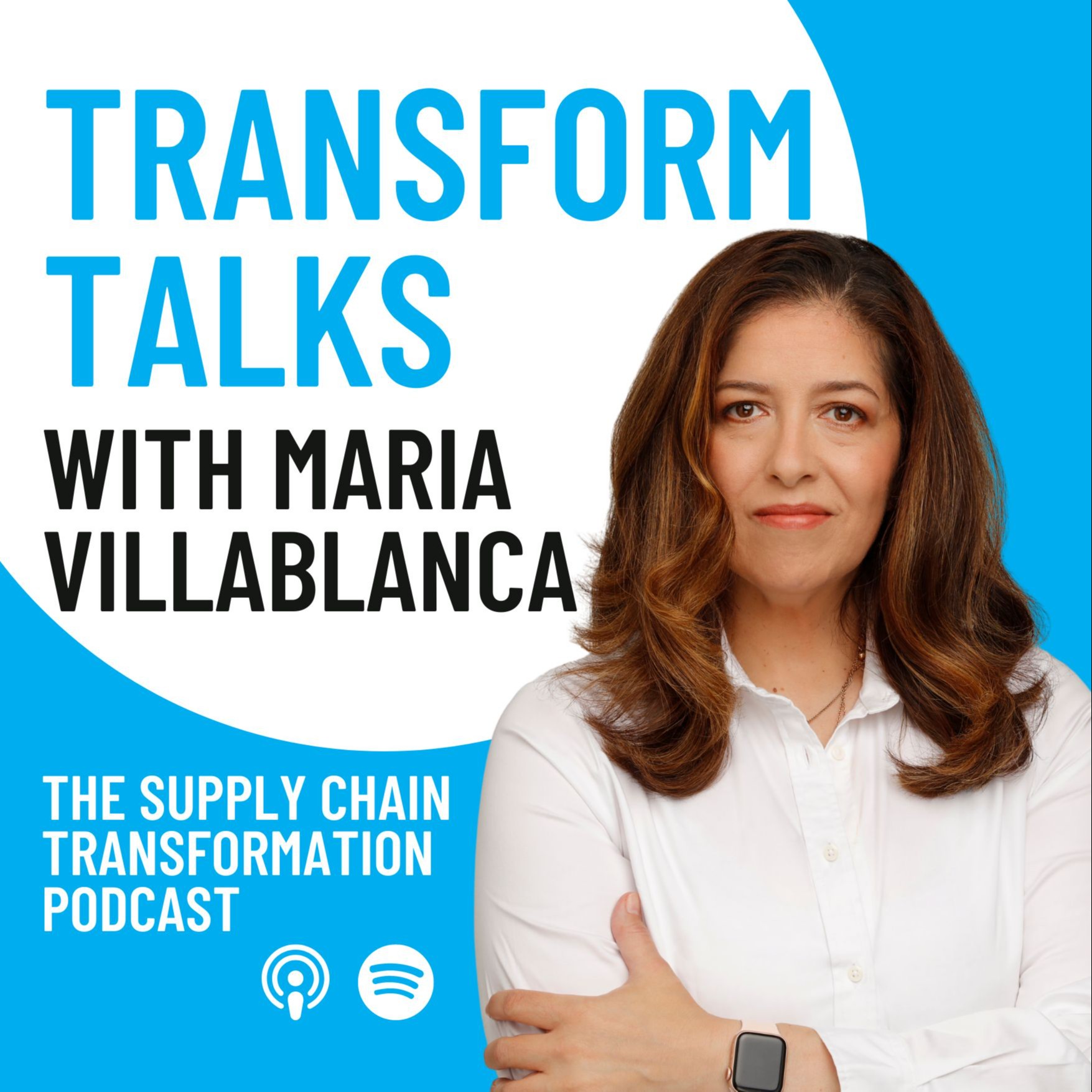
Transform Talks: The Supply Chain Transformation Podcast
Villablanca Consulting Limited
Leaders in Supply Chain and Logistics Podcast
Alcott Global
Supply Chain Next
Supply Chain Next
Supply Chain Now
Supply Chain Now
Buzzcast
Buzzsprout