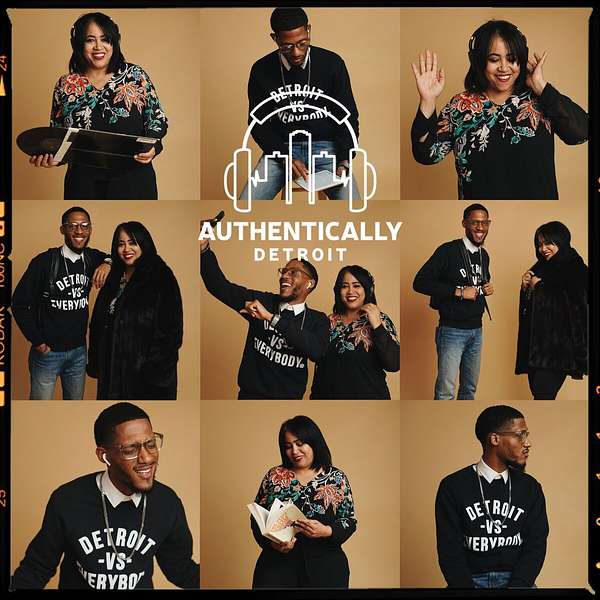
Authentically Detroit
Authentically Detroit is the leading podcast in the city for candid conversations, exchanging progressive ideas, and centering resident perspectives on current events.
Hosted by Donna Givens Davidson and Orlando P. Bailey.
Produced by Sarah Johnson and Engineered by Griffin Hutchings.
Check us out on Instagram, Facebook, and Twitter @AuthenticallyDetroit!
Authentically Detroit
Black Detroit Democracy Podcast: Detroit City FC, Fair Development and Community Power with Maxwell Murray
The Authentically Detroit Podcast Network in collaboration with Detroit One Million presents: The Black Detroit Democracy Podcast, hosted by Donna Givens Davidson and Sam Robinson!
Together, Donna and Sam illuminate the complexities of Detroit’s unique political landscape and give residents a resource for navigating civic engagement and election season.
In this episode, they trace Detroit’s housing failures from the Leland House scare to a subsidy-first market that missed real demand, then turn to solutions that center seniors, families, and accountability. Then, Maxwell Murray shows how DCFC and the Urban Football League use street soccer, food, and learning to reclaim space and teach civic power.
Maxwell is a Detroit native and founder of The Urban Football League. He joined Detroit City FC in March 2024 to support youth programming and expand access to the game across Detroit. A proud Detroiter, he first connected with the club as a summer intern in 2017. He studied African and Black Diasporic Studies at DePaul University, where he founded The Urban Football League to use soccer as a tool for cultural expression and community building. At DCFC, he leads efforts to break down barriers to participation and chairs the Youth Travel Program’s Community Resource Group.
For more episodes of the Black Detroit Democracy Podcast, click here.
Detroit City Government is a service institution that recognizes its subordination to the people of Detroit. The city shall provide for the public peace, health, and safety of persons and property within its jurisdictional limits. The people have a right to expect aggressive action by the city's officers in seeking to advance, conserve, maintain, and protect the integrity of the human, physical, and natural resources of the city from encroachment and or dismantlement. The people have a right to expect city government to provide for its residents, decent housing, job opportunities, reliable, convenient, and comfortable transportation, recreational facilities and activities, cultural enrichment, including libraries, art and historical museums, clean air and waterways, safe drinking water, and a sanitary, environmentally sound city. Keep it locked. The Black Detroit Democracy Podcast starts right after these messages.
SPEAKER_06:Detroit 1 Million is a journalism project started by Sam Robinson that centers a generation of Michiganders growing up in a state without a city with 1 million people. Support the only independent reporter covering the 2025 Detroit mayoral race through the lens of young people. Good journalism costs. Visit Detroit One Million.com to support black independent reporting.
Donna Givens Davidson:I'm Donna Givens Davidson, President and CEO of the East Side Community Network.
SPEAKER_07:I'm Sam Robinson, founder of Detroit One Million.
Donna Givens Davidson:Thank you for listening in and supporting this expanded effort to build another platform of authentic voices for real people in the city of Detroit. We want you to like, rate, and subscribe to their podcast on all platforms. The purpose of this podcast is to encourage Detroit citizens to stay vigilant in the fight for justice and equality with a special call to action for Black Detroit. We seek to build awareness of our history as a gateway to freedom, a beacon for justice, and a laboratory of liberation. Today we're joined by Maxwell Murray, the Youth Development and Community Engagement Director for Detroit City FC. Welcome to, I guess that's the Detroit City Football Club, right? Yeah, yeah. Okay, all right. Welcome back to the Black Detroit Democracy Podcast. It's time for Word on the Street, where we break down what everyone's been saying behind the scenes. Sam, what have you been hearing?
SPEAKER_07:Uh, the story of this week, certainly as it pertains to the most vulnerable residents, uh, downtown. Lots of folks that live in this Leland house. Some of you, uh, some of our peers have have frequented the Leland City Club. Have you ever been in there?
SPEAKER_02:I've never been in, but I've heard about it through conversation, so on and so forth.
SPEAKER_07:Yeah, I've never been uh at one of these rave events. Apparently they've been going on for years. Um, this Leland House high rise threatened uh all of the tenants after it came out that they owed DTE 40 grand uh back on their electricity bill. DTE threatened to shut off uh power for residents this week. And now, just today on Wednesday, uh, we have new reporting saying that folks uh can actually stay in their apartments. So before we went on, I'm just you know thinking about these poor folks that I saw yesterday moving all of their stuff out of bins. I mean, some of these folks are in their 50s and 60s moving out by themselves, right? Yeah, and then and then they see the news this morning that actually they could have just stayed.
Donna Givens Davidson:Yeah. Well hopefully hopefully some of them will return. Um, it's not like um they've necessarily found a great place to be. Um, they just left because they had to. And so I'm hoping that those who moved in with relatives or into substandard spaces return home and fight for their rights to have the you know occupancy inside the Leland House.
SPEAKER_07:At Leland House, also I think, you know, being inside of it yesterday, I didn't really traverse any of the units themselves. But, you know, the same feeling that when I was in the Addison building on uh Charlotte and Peterborough, that like, how is anybody living this old dilapidated building that probably is not up to code? Senior housing and senior living, I think is is one of the more overlooked conversations when we talk about housing and affordable housing. A lot of these Detroit seniors are are not living in conditions that I think the newcoming, uh you know, outside the suburbs folks that see Zillow and see what our uh you know apartment stock is. I think a lot of people are sort of naive about it.
Donna Givens Davidson:There's a mismatch between housing need and the provision of housing in our city, period. Um whether you're seniors, whether you're a family or an individual, our housing policy has really been directed towards attracting new people in. And without getting into too much detail, a lot of those practices that have been developed are failing because the demand for expensive housing is not quite what people thought it was. And so um there's a great demand for family housing, for senior housing, for housing for low-income families, um, adequate housing, not just housing, but adequate housing. We have too many people living in in um spaces that don't really meet their needs. And um, housing is a human right. And if you believe that safe and affordable housing is a human right, we have to do a better job.
SPEAKER_07:Yeah, Nick Manis and Kirk Pino a couple weeks ago, um, headline of their story was a rental market in crisis, landlord developers desperate for Detroit solutions. Uh Doug on stage with with um Dan last week, sort of echoed the sentiment that the idea that the Detroit rental market is in crisis.
Donna Givens Davidson:Um market that he helped create. It's a crisis he helped create. And as he exits stage left, he will leave that crisis behind. The city's entire policy has been built around multifamily housing in these developing spaces. Um, this every single one of these developments has received subsidy and support from the city of Detroit. There was a belief that if we build it, they will come. We built it and they didn't, and now we're in trouble. Or we built it and they came and then they left during the pandemic. Whatever the issue is, I think that um Ducan can't simply acknowledge there's a problem without taking responsibility, at least in part for that problem. He certainly is given credit for revitalizing Detroit. But if these projects fail, and I don't believe they will, I believe there's going to be efforts to maintain a lot of these projects. If they did fail, that would be a responsibility he helped share. But whoever um mayor elect Sheffield would be blamed for that failure, and I think that's unfortunate.
SPEAKER_07:We're gonna see um, you know, this Detroit Housing Commission, the Wayne County Housing Commission. Um, I I think really, you know, I that has been a focus of what she's saying that she's going to do.
Donna Givens Davidson:Well, I'm I'm co-chairing the housing development and planning um committee, and I am not at liberty to talk about it. But what I am at liberty to do is say that they are bright minds sitting around the table committed to making sure that um Mayor Alex Sheffield is successful in all of her endeavors. And we will see. Um, I'm always excited about the opportunity to innovate and ideate with smart people and say what are some common sense things that we can do, what are some tools and resources that we can utilize to improve our city's housing stock? And I think you can expect to see good things happening despite the challenges that have been presented.
SPEAKER_07:Yeah, and some of those challenges, you know, property insurance doubling interest rates, um developers and and landlords are have been raising this concern for a long time.
SPEAKER_02:It's interesting, you know, me coming from the Detroit City uh perspective as well, uh, with the new stadium project and like aspects of affordable housing being connected to that aspect of like large development revenue.
SPEAKER_05:Yeah.
SPEAKER_02:Um for me, again, I'm not as legible in in terms of being able to speak to it as you all. Um, but what I think about as a east side Detroiter and someone who has generations of a family who are from the east side of Detroit is as the city begins to grow, um, we have to make sure that we're not selling people an idea um or trying to connect these ideas for the sake of like the developer's profit. You know, as a person within DCFC, I even question that towards the people up at higher leadership of what does this housing look like and who's it for? Sure. Um the aspect of changing the notion of history um in terms of like the stadium project and taking over one of the, I believe, one of eight ever black owned hospitals in the city of Detroit and turning it into this space that's obviously going to like change the notion of what that space was and who even filled up that space. Um my grandfather worked in that hospital and was one of the first black pharmacists too. So yeah, no. Um I hear what you all are saying.
Donna Givens Davidson:I worked in that hospital as well. It was um one of my first jobs, the only job I've ever been fired from. Um but that was all my fault. My aunt was a nurse in that hospital. I have so many ties, emotional and otherwise, to that hospital as a source of pride. I will say that um Detroit has had black hospitals since 1917. There were at one point 18 black house hospitals in the city of Detroit. But what um Southwest Detroit General did was it brought them together and opened a new building. And remember, it was new and it was beautiful at one time, or you probably don't remember because you're so young, but it was a new and beautiful modern hospital that was built. A lot of the other hospitals were built in brownstone buildings or older buildings, but this was one that was a full-service hospital. And its demise is something that um many of us are not happy with. Um, it within the Southwest Detroit community, I've heard many negative things about the hospital from people of Latino, Hispanic-Latino background, which I didn't I was not aware of. And I don't want to justify, I just think that having it sit there as an eyesore was problematic and seeing that space being brought back to life as something else. Because when you drive down there, every time I drove by that hospital, it's like, oh my goodness, I'm sad to see it vacant. Um, but I agree with you also that we have to maintain the history and identity of Detroit. And anybody who grew up in Detroit knows that Detroit is a houseproud city. We're a single family home city. Children have a front yard and a backyard. Am I right?
SPEAKER_05:Yeah.
Donna Givens Davidson:Yeah, that's what we're used to, right? And this idea that we're going to transition from uh, you know, homeowner city, a house proud city to a multifamily city is one that I think goes against the grain of many Detroiters. And there's some Detroiters who are leaving the city in pursuit of single-family homes that are being developed outside of Detroit because we're not doing it here. And so um, again, I'm really excited about the future. I cannot and will not speak about what that may be, but you can look on Rise Higher Detroit on the Mirror Alex website, and you can sort of see some of the ideas that are being brought forward for housing and uh as well as other things, and know that this is not simply a changing of the guard. This is actually a um changing of the vision for what Detroit will look like. And one of the things we've got to do is protect the investments that the city has made because it doesn't make sense to have new ISOs.
SPEAKER_04:Yeah.
Donna Givens Davidson:And even if I didn't agree with the building of some of these developments and the way they were done, I still don't want to see them fail. I don't think anybody does. Um Leland House is on another extreme, and that's because it was a housing built for low-income seniors. Right. Right. And we used to have things like SROs, the downtown, um, single residence, residency occupancy units that were not studios, but you know, people had shared kitchen and bath facilities all through the city. Um, we used to have a lot of different spaces for people at different income levels, and you've seen the loss of those spaces in the downtown and midtown area. As the they they have this that area has gentrified. We've got to make sure that we create home for everybody who needs one in our city. Leland House is an example of how we've had a space, it became neglected and actually should not be, you know, offered as housing to any human being. And so hopefully, with this, you know, that was my takeaway of going inside the building yesterday. I was like, oh my God, this is you know, the question we should all we should all ask ourselves is would I want my mother to live there? Right. Right? Would I want to live there? And if you would not put your mother there and you wouldn't be there, then why is it that we're okay with other people living like this? Um, if we looked at a community where everybody mattered, everybody had value, we would make sure that our public policy reflects that. Um, I'm excited about what's coming, but I don't want to spend too much time on that because I'm not at liberty to speak about some of the things that we're discussing, other than to say I'm excited, good things are happening. And there's going to be an inclusive process. There's going to be surveys to the community, there will be meetings at the community where people can come. I think there was a meeting on Monday, and there will be future meetings where people can come out and really talk about all of these matters and weigh in before policy is finalized so that we also have a place where everybody's voice matters.
SPEAKER_07:Yeah, there is that uh community survey. It's up right now on the transition website there.
Donna Givens Davidson:There's gonna be a different survey.
SPEAKER_07:Oh, okay.
Donna Givens Davidson:Yes, there's another we're we're working on survey questions now. So expect this to be an administration that is really trying to make sure that we are heard. Um, and to know me is to know that I don't give lip service to anything. I speak my mind. And so if I'm saying people are going to be heard, I will do everything in my power to make sure, and I also have confidence that this is what the mayor-elect is promising and will do. Um so that we can, you know, you're always going to have challenges like the Leland House because we live in a capitalistic society, but hopefully we'll have solutions that uh meet the challenges where they're at.
SPEAKER_07:Well, there is more than just the Leland House where uh see Detroit seniors live in substandard housing conditions. We could talk about that all day. I do want to talk about um DCFC. Obviously, you're you're joining us in the context of this news happening. And I kind of I presented my story in the framing of you know this development happened, is you know, is being approved, going through the process of approval, the CBL process. I um was at one of the meetings, didn't didn't watch all of them, but from the reporting through Malachi as well as Lewis Aguilar, um, kind of got the feeling from talking to some of the neighborhood stakeholders that the biggest issue sort of from critics or opponents of the deal was the parking situation. Um it was unique in that there wasn't this mass no, we cannot give money to tear down this. Because again, the abatement going to the stadium project is for the demolition of the hospital, correct? Not the actual stadium itself. Right. And so um, you know, I think a part of this deal um was$1.2 million for the surrounding community. Um that's going to go toward uh public art, it's gonna go toward free tickets each season for for residents of of the nearby Corktown, Southwest Detroit area. And so um, say you know,$17 minimum wage, union neutrality is gonna be the thing that I think a lot of labor folks look at and say, hey, why when DCFC is only taking this much money, yet we know that they're not worth what Illich and others are. Why can't we do this everywhere? And that's exactly what happened. We had um advocates come to council and say, you know, we we need um we need preemption laws that should apply to all taxpayer subsidized developments in the city.
Donna Givens Davidson:We absolutely need to change the way that we um, you know, um monitor these projects, the way we approve these projects, and the community benefits process should be improved. Um, this is a good community benefits process for the most part, but we've had really bad ones on the east side, like with the expansion of Solantis. Terrible community benefits process. We need to standardize good practices, and then we need to measure and monitor those practices because sometimes things get agreed to at the community benefits table, and the Office of Civil Rights is responsible for making sure that they are actually in compliance. And so one of the concerns has been the lack of compliance monitoring and reporting to the larger community. Um, I expect to see that improved as well. I know there's people who are really working on that to make sure that we get what we pray for. Um, we should be getting job guarantees. You know, this idea that we don't want to make people guarantee jobs because it'll, you know, mess up the deal. So what? Our idea is that we want people, look at all the jobs that we're creating inside of Detroit that are not being occupied by Detroiters or held by Detroiters. If you are going to build in the city and the city is going to invest in you, you should either hire people from Detroit or hire people who are willing to move into our city and contribute to the well-being and growth of our city. Um, that's my that's my feeling, and I'm speaking as an individual. Um, and hopefully that becomes part of public policy in some way, shape, or form.
SPEAKER_07:I think it's interesting as folks really celebrated the stadium deal that was approved for the soccer team. Um, some groups were not as as pleased with the WNBA project. Rick Mahorn did call in back-to-back weeks to city council to say, please approve this. Um the WNBA practice facility um is according to the Pistons Sports and Entertainment CEO, Richard Haddad, a separate development from the youth sports academy that's going to happen right next to it. I think they want to like make Spire or like Mount Verde in Detroit. And so um the in order to skirt past, you know, this is according to the advocates that are criticizing um the WNBA group. I mean it's it's they think that they're skirting past the$75 million threshold saying this is one development worth this much under the$75 million threshold, and the other development is worth this much. There's two developments. Malachi did you know really kind of present it uh in his reporting and in asking Richard Haddad to his face, you know, in your own Brownfield plan, you present them as one plan. Yet here you're saying that they're two separate plans. Uh they're not going to go through the CBO process. The business went through the CBO process at the Henry Ford site. Uh, you know, I don't know if that might have scarred them.
Donna Givens Davidson:But um well, I mean, I think that we can close loopholes, right? Um, and I actually gave a letter of support to the project um for the DRBA, not for the city council, you know, the Brownfields plan, which included both. I think it will be at benefit. But again, I think that that community benefits are really important. I think that what the community benefits process does is make sure that when developments are happening in our city, we're being clear about the expectation for how those developments will improve the community. Not so that we can ask for unrealistic things, but I actually haven't seen unrealistic things being being asked for by community members for the most part. People are asking for basic things, like with the Stellantis CBO, we were trying community benefits process, we were asking for things like air filters on schools and on homes. I don't think that's unrealistic and on daycare centers. But what ends up happening is when the city is um too aggressively pushing something, then sometimes the community needs are seen as problematic or burdensome. And we don't want to burden expectations in sense that the approval we've had how many air quality violations, and now some of those things are being put in place in response to violations, but it Have been done proactively. Um, we've got to do a better job. I think that this is an example of something that worked.
SPEAKER_02:Yeah, and so yeah, giving uh community members the opportunity to speak up and voice about voice their minds about changes that are happening in proximity to them is the most crucial element of any type of change, yeah. Um, and trying to at least do it the right way. Yeah. Um, you know, I agree with your sentiment about having Detroiters, like in terms of uh having Detroiters become a part of the workforce, especially if your plan as a developer is to build within the city and to become a part of that fabric. Um, I think that there's a long way to go. Uh I don't think I think the CBO is just the first step in the sense of actually showing up the next point with action and making sure that that action is again not for the sake of your own growth, but actually for the benefit of the people who call the community home as well.
Donna Givens Davidson:Exactly, because the Detroit City Charter speaks of the city's responsibility to its citizens, not to its businesses. And so citizens should always benefit from whatever the city does. There has to be a pathway to benefit. Maxwell, I'm really excited to talk to you. Um, you are exactly what I think Detroit needs. And that's a young person who goes to college, comes back, and creates something and invests something new. And you're bringing your own brilliance and mindset to create something new and create a pathway for Detroiters to be involved in something new. So we're gonna take a break and we come back. I really want to talk to you about your background. I understand you you and I kind of studied the same things in college decades apart. Um so we're gonna take a break and be right back.
SPEAKER_06:Have you ever dreamed of being on the airwaves? Well, the Authentically Detroit Podcast Network is here to make those dreams come true. Formerly known as the Deep Network and located inside the Sodemeyer, the Authentically Detroit Podcast Network offers studio space and production staff to help get your idea off of the ground. Just visit authenticlydet.com and send a request through the contact page.
Donna Givens Davidson:We had a conversation a little earlier about the uh tackle football and how every athlete does not necessarily enjoy being tackled. My son being one of them who played football when he was he loved flag football because he could just run with the ball and you pull his flag. But when it got to tackle football, he liked it less and less. And in high school, just decided had to tell his father I'm not doing this anymore.
SPEAKER_02:Yeah, yeah, no. My uh my stepdad, um, I grew up, I'm from uh right over, I grew up off of Bringard, uh right over near where Fisher Academy is right now, helman for the people of what it was named beforehand. Uh I used to play for the Eastside Giants. I remember I used to, when I was about four years old, I used to walk around with a Green Bay Packers helmet on, funny enough, around the city of Detroit. It was one of those plastic helmets, because I was just aching to like play tackle American football because my stepdad was a coach for the Giants. And then once I was finally of age, I tried it out and I was fairly good at it uh because I'm a pretty athletic person all around. But um at the end of the day, I did not like getting tackled. I was not a fan of it. On my with my dad, dad, um, I was working with baseball and like having he wanted me to play baseball so badly. And once I told them that soccer, I think they all knew that soccer was like my calling, though, at the end of the day.
Donna Givens Davidson:That's awesome. You know, all of my kids played soccer until they got old enough to matriculate into other sports, and then it became track.
SPEAKER_04:Yeah, yeah.
Donna Givens Davidson:Um, but soccer was looked at as soccer, right? Not um a a sport that you continue playing through high school and college and to the professional ranks. And so, you know, it's we have a lot of youth soccer leagues, and then they're over, and now we have adult soccer leagues.
SPEAKER_02:My first ever kicks with the game was uh Eagle Sports at Baldog Park, right over off of East Warren. Um so yeah, very much, you know, being on the east side of Detroit, right over where that border is, going into like Gross Point, Harper Woods. So my first times ever playing was in terms of competition and joining teams, was bouncing back and forth between that Gross Point Detroit line and you know having all those different experiences with sports.
Donna Givens Davidson:So let's talk about it. You are um a young Detroiter, right? Um, what was your experience growing up in Detroit and what brought you to this foundation of the um Detroit Football Club?
SPEAKER_02:Um, my experiences growing up were very normal, traditional. Like I know the streets like the back of my hand, they'll never leave you, you know, one when you're born in this city. My first, my earliest memories are driving around with my grandmother, who I actually live with right now, um, and me learning the street names in the backseat of her car and driving past the liquor stores off of like Mac and asking her, Granny, what does L-I-Q-O-U-R mean? And she said, liquor, and you don't you can't have that type of thing. So uh Mac and Maxwell and me seeing my name on the street for the first time and stuff like that.
Donna Givens Davidson:So now you'd be asking your grandmother what is C-A-N-N-A-B-I-S, right?
SPEAKER_02:Yeah, yeah, for sure. Um, but that that's the type of Detroiter I am. I'm an Eastsider. My mom is from Mac and Buick, my stepdad, Lillybridge and Jefferson, my dad, Lafayette Park, uh, you know, grew up in Woodbridge because my dad had a house off of Trumbull and Calamet. So really bouncing all around the city, you know. Um, cousins over on the west side off of Livernoy and uh Cherry Lawn. Uh you know what I mean? So all across the city. Um my mom's an educator in Detroit Public Schools. She's a principal now at Marion Law Academy. So a dance teacher as well, had her own dance studio downtown.
Donna Givens Davidson:Wow. So what's your mom's name?
SPEAKER_02:Denise Allen.
Donna Givens Davidson:Okay.
SPEAKER_02:Yeah, yeah. So um just like, you know, those normal experiences of being a real Detroiter who has family all over the city. Parks going to Bell Ow for family picnics, big Thanksgiving holidays, different things like that.
Donna Givens Davidson:Um you went to DePaul University and you study African American diasporic studies, right? Yes. Yeah, I studied African American studies as a minor years ago that we didn't have diasporic studies. I'm really excited to hear about that though, because the diaspora is something that people are really fighting against right now, right?
SPEAKER_02:It's like, oh no, you are uh I'm a oh no, you know your history. Oh no.
Donna Givens Davidson:Well, you know, not just that, but also, you know, I am a descendant of slavery or something like that, American descendant of slavery, and that makes me special, and you can't come here and take my rights away. And it's like, did what we forget about the diaspora? And I'm I know I'm going off a little tangent, but because of your studies, yeah.
SPEAKER_02:The fact that we're connected to something larger. Um, I still remember the first aspect of learning the word diaspora, which is connected to the Latin root, uh, the Latin word to uh which means disperse. Um and it shows again, kind of going off of what you're mentioning, that we, especially right now, we become locked in into what our worlds are based off of where we're located, uh, without really paying full attention to how we ended up where we are.
Donna Givens Davidson:And we're being manipulated. We're being manipulated by people who want to see us fragmented because unified, we're more dangerous than we are fragmented. And I don't care about those Africans, I don't care about those Haitians, you know. The ignorance that goes into that is cultivated by people who draw on people's legitimate grievances, right? These people are getting into college easier, whatever the perception that people have, or they look down on us because I read one Facebook post by somebody and they said something negative. So now it becomes all of Africa hates black American people. And then, of course, all black American people hate people from across the diaspora. Those are the wars that I see happening among many people in your generation. But also, I was on a call a couple of years ago with some folks who wanted to build a sister city in Johannesburg and Detroit. And so I'm on the call with some people from the university, and this is during the first Trump administration, and somebody's there from the Department of State, and they said in this call that there are four something like 43,000 members of the diaspora who lived in the state of Michigan. And I was like, what? And everybody was agreeing with this. And I was like, can you define diaspora? Well, diaspora is if you were born in Africa and you moved to the United States, and I was like, did we change the meaning? And somebody said, Oh, don't get upset about that. But I actually had to just pull out of that project because I couldn't support a diaspora project that did not acknowledge that black American people is part of the diaspora and sought to separate us.
SPEAKER_02:Yeah, no, that makes a lot of sense. Um also, you know, getting into that aspect of like home, you know, sister cities and home. This will never not be home. Detroit won't never not be home, Natchez, Mississippi with my granny won't ever not be home, Little Rock, Arkansas, so on and so forth. Like that's also the places that have made us into who we are as a people. Um so I've never really been interested in this ideal of like necessarily like repatriation. Uh it's been more so, if anything, I reach repatriated back home to Detroit. Because when I left the city, I was like, I'm never coming back here. Uh, you know, a lot of a lot of young a lot of young Detroiters have this idea that in order to make it in this city, you have to leave the city. Um, and because of that, I I started to think and reflect on it, and I think that's ultimately a lot of the reason may of why it maybe why our experiences were the way that they were. Uh, because we would we have all the capabilities to make it into what we dream of, but we also leave it behind because we grew up here and we don't we don't see it for everything that it is.
Donna Givens Davidson:Yeah. I I really appreciate that comment. I graduated from high school in 1981, and in 1981, people were leaving and not coming back. So this has been an ongoing trend. It's almost as though when people were integrated and assimilated and you know, to some extent into a larger society, a lot of people thought, I've got to get out of this black Detroit and go into the real world. And um, some of them came back when Dennis Archer was elected mayor, but a lot of them have just stayed away, which is you know really heartbreaking to me to see so many people, you know, begin to see that. And then I have friends who have lived away from home since they were 18. And when they come and visit, Detroit is so foreign to them. What brought you home?
SPEAKER_02:Um, what brought me home was the work, honestly. Um, I had started the Urban Football League in Chicago. Uh the practice was growing, uh, grain gaining some traction. Um but then also DCFC as well. Um, my first ever internship when I was 17. So that's a sign for anybody who's listening in high school, you can't get internships in high school. Um, but my life has always been full circle. So started off at 17, being an intern with the team, uh really working directly with front on the sporting side of things with the first team. Um, and went away for school, was the only high school intern. And once it came around, uh, like I said, my work spoke for itself, and it was uh a call where they're like, we have this space and we kind of need someone like yourself to kind of take over take it over and be able to build it out across the city.
SPEAKER_07:So seems like you've you know been pretty successful in that.
SPEAKER_02:Yeah, no, I mean um I know it's early still. Yeah, yeah, it's still early. I mean, it's it's early in some sense because I started Urban Football League in 2021. Okay. Um, so it's been about five years or so, so it's not necessarily early in terms of the idea, but I am a firm believer. Uh one of my sayings to myself is all in due time. Um I was real young when I started this project, and I'm still very young now.
SPEAKER_07:That's that's what I mean.
SPEAKER_02:Like this is still very early.
Donna Givens Davidson:So in your you you live with your grandmother now, and your grandmother said your grandparents had a big influence on you, right? Yeah, yeah. I can always tell when people were raised by grandparents because they just have this, you know, you're like old for your age, and you have these sayings already. How old are you?
SPEAKER_02:I'm 26, but I just checked my Spotify rap today, and my listening age was 70, if that says anything about you.
Donna Givens Davidson:I I I feel in this conversation, like I he sounds like one of my friends, right? That's awesome. So, you know, I I want to talk about, we just talked about the community benefits process, right? And this was not part of the community benefits process, but one of the unique aspects of this project is that you are in there already trying to make this relevant and connect to um black Detroiters. Is that true?
SPEAKER_02:Yeah, most definitely. I mean, even before that community benefits process was started or began, I've that was my my mission when I set out on the work here with DCFC. Just to benefit the community. But also show how, again, for me, I had to, it took me 20 years almost to recognize how football was a tool to connect to other ideals of life and personhood and identity and community and connection. Um now that I see it, now hopefully it can happen quicker for others. And in the way in which I build out curriculum for programming and the way in which I serve as a resource or face for black families to come into the field house downtown off of Mount Elliot and uh Lafayette. Um, the fact that I grew up right down the street at my grandmother's house at Lafayette Park, um, with my dad dropping me off in the morning because he worked for DTE.
Donna Givens Davidson:Like this is Did you live in the Mies Vanderroe townhouses in the house?
SPEAKER_02:The ones right across the street from uh Martin Luther King Holmes. Okay. So uh yeah, like I it it's full circle for me in the fullest extent because I am now my my daily work and practice is not only who I am as a person, but I'm then able to walk within that and create a pathway for others to also see things maybe not in the way that I see them.
Donna Givens Davidson:So you grew up right, you were your grandmother's right around the block from where the field house is now, right?
SPEAKER_02:Yeah, so it used to be a hockey center, yeah. Yeah, right across the street from King.
Donna Givens Davidson:Yeah, that's amazing. Um, so I want to talk about your travels because when you graduated from college, you traveled the world. And so you actually visited parts of the nate of the world that included the diaspora, although other cultures too. Can you talk about your travels and things that you learned there that you're bringing back into this Detroit experience?
SPEAKER_02:Yeah, yeah, most definitely. Um, you know, I was I was given the privilege to be able to go to different places through family as well as through friends. And um, you know, I went to places such as London with uh my dad. I've been to Paris with my dad and cousin. Um I also was able to go to places like Marrakesh Morocco, which was incredibly eye-opening for me, not only as a lover of the game of football, but then also as a dark-skinned black American traveler throughout the world. Um, you know, many people envision their first time going back to Africa as this coming home repatriation, as we were speaking about earlier. But not many people understand the complex nature of what Africa is, the fact that the Maghreb region of Northern Africa is completely different from West Africa, which is completely different from Southern Africa, which is completely different from Eastern Africa, and you got Egypt existing on a plane all by itself. Um, so yeah, no, I think um ultimately those travels though equip me again with the ability to expand upon myself, um, again, to come into connection with the game in different ways, such as seeing kids playing with cans and on dirt roads with no shoes on, but with smiles on their faces and not necessarily wishing for more. Maybe they are, but I couldn't read that and how happy they were in those moments.
Donna Givens Davidson:Well, that you know, that's part of Detroit history too, right? There was a time when people had to make dolls out of, you know, all kinds of things, and anything could be a, you know, a toy. Um, and that's feeding the fueling the imagination. I mean, joy doesn't just come from having things, it's the materialism that makes us think you have to have the newest this to be happy. And you know, a lot of times on Christmas, you get the newest something, you're not still unhappy because you didn't get this new thing. So it's interesting to see how people can be satisfied and find joy in what is and in their imaginations.
SPEAKER_02:And that's the beauty of football in and of itself, though. That's why they call it the beautiful game. Um I've never heard that before. Um, the reason why I believe where that name comes from is because it's the most popular game in the world for a reason. It's because in in terms and to be able to play the game, you do not need that much. You don't need goals necessarily. You don't really need a ball necessarily. You need your you need you don't necessarily need other people if you love the game that much. Um I do personal training sessions across the city with some players, and we do them at Easter Market underneath shed number two. Um one because it completely changes up the notions and frameworks of how they understand soccer and soccer training. But then we're utilizing the concrete base that the shed is standing on as like a passing wall. And then there's people driving by and they're able to see us, and then we're there's music playing. It's a complete I'm trying to change up the framework and notion of how we understand and see the game.
Donna Givens Davidson:What age groups are you working with?
SPEAKER_02:Uh in terms of my DCFC daily job, uh, I work with we offer programming for ages two through twelve. We also work with and employ some high school students at King High School. Um in terms of my urban football league program, it really kind of ranges between, I would say, probably like eight to like fourteen.
Donna Givens Davidson:So where where do you where do you play your games?
SPEAKER_02:Your um we found a home, uh, a home court right over at Social Status, right off of Jefferson and Holcomb. Um, I'm not if you've ever driven by.
Donna Givens Davidson:Yes, I've always wondered what that is.
SPEAKER_02:You see the murals and stuff like that.
Donna Givens Davidson:Yes.
SPEAKER_02:Um, so it's a beautiful space standing alone on itself. Um, but luckily we're able to bring in some more life into it in a way that many people don't expect or understand when they first walk by.
SPEAKER_07:And it just feels so perfect. I mean, the art that is I mean, it it sort of lends to your international travels and talking about I mean, how did you come upon that space? How did that I mean I think you've explained this to me once, but it just is so perfect because we go in there, yeah.
SPEAKER_02:Let's let's hear it. Yeah, simply just I was I was dating a person who was living right next door. Sure. And one night I was coming, going to their place, and I saw the court, and I was like, every day when I would wake up there, it was like something I could see out of their window. Yeah. I don't see this person anymore, but I the the space has become home. Appreciate that.
Donna Givens Davidson:You know, that that's my route to and from work. Yeah, and so I drive by and I'm like, what is that? And I never see anybody in there, but I think not too long ago I did see people inside of there. That's amazing.
SPEAKER_07:Yeah, I mean, every Sunday this summer, um and I was at a handful of them, um, as well as my neighbors, some of my friends. Um, it became a real community event and vibe. I mean, parents would get to know one another that had kids. I mean, it was like an intergenerational thing because it was just a space. I mean, it's really I'll show you videos after this, but I mean, it fits a lot of people. You had one Sunday where it was like a youth day and there was just teams, it was a whole organized thing. Explain it.
SPEAKER_02:Uh, with DCFC, we have a partnership with Black Star Soccer. Um Black Star is a national organization that does like different soccer initiatives specifically focused on the black community across the country. Uh, we've been working with them for about five years. Detroit City FC was their first partner. Um, so with me utilizing the space, we do a Black Star weekend every summer, and I was like, I think this would be the the perfect space for us to kind of actualize what they call the community or street pickup. And um, so we hosted it there. I brought in my friend Francesca to serve like Haitian food. We have some of my friends DJing. Um, it really turned into kind of like a street festival for street.
Donna Givens Davidson:I have never been in there. I only drive by. Um Sam just showed me a video to see what the space actually looks like inside. It's incredible. Wow.
SPEAKER_02:Yeah, no, it's amazing. Um, again, it's it's the way in which I want to want it to find a space as well as how it won how I wanted it to speak to me. It was natural.
Donna Givens Davidson:Where does your money come from?
SPEAKER_02:Uh, I mean, I guess it comes from DCFC and my work itself, but we're lucky uh to work with social status where they you know they don't charge us for the use of that space.
SPEAKER_07:That's amazing that they just let you in there, man. And uh the community aspect of this uh has uh uh grown.
SPEAKER_02:I think this summer was a big year for for Yeah, it was a it was a good experience. You know, we're in the plans. Uh actually right before I came here, I had a call with social status and the team to just kind of go over what our next year is gonna look like. And one of the main things that they kind of reiterated in that experience was uh they appreciate that as a community partner, I brought something to the table that kind of worked for itself. Um a lot of people go to them expecting for the resources to just be poured in immediately to help them get forward. Um, and I think what they see and in us, the Urban Football League family, is that no, we're going to continue to show up. We're gonna show up for each other, and within that, the added resources will only grow the idea and help it move further.
Donna Givens Davidson:So you are doing amazing work.
SPEAKER_02:Yeah, what what what's going on in the wintertime though? Uh we're shifting the idea to the football classroom. So uh expect, you know, Sam being in the space one Sunday morning doing a workshop on aspects of local journalism and how to speak up for yourself and your community.
SPEAKER_07:Yeah, expect that we could do a workshop.
SPEAKER_02:So my my whole idea is to, like I said, my mother's an educator, uh, to try to find ways to make education and access to information accessible for everybody, to take down that paywall, not that exists only for soccer, but also for learning and to show that it's really a communal practice.
Donna Givens Davidson:So, what about the Chandler Park Fieldhouse? Um, it seems as though you could also have practice there.
SPEAKER_02:Uh so I mean that is definitely a space which we utilize more so from the perspective of DCFC youth programs, really trying to grow the sport across the city, um, ensuring that we're uh partnering with the spaces that are growing and developing to ensure that the local community who calls that space home also knows that DCFC is like a resource that's available to them. Um when it comes to the Urban Football League, it's I think it's a very uh there's a very specific uh language that we're speaking every Sunday when we're out there. Uh you know, there's the aspect of it being intergenerational as you spoke to. There's the paint and murals on the wall. There's the literature that you put out the fruit. The literature free food, the coffee. Um but within that, you know, there's a language. And that visual language goes hand in hand with it. So as for right now, that is still our home court and our home space. The football classroom will still take place at social status just indoors inside the shop. Luckily, they're opening their doors for us to come in as well. That's amazing. Um but also I've been looking for other places uh to you know host maybe indoor sessions and different events and well you're certainly welcome to host classes here at the Saturnari Wellness Hub.
Donna Givens Davidson:Um we have a teen center here and to connect with our teens um because what you're doing is remarkable. I think it is bringing the world to Detroit, bringing everything you've learned and you know, all of these ideas that are not are kind of foreign to us. Um not too long ago, when I first got to East, I guess it is almost 10 years ago, um when Alex Allen took over the Chandler Park Conservancy, he talked about bringing lacrosse in. And we started having lacrosse classes at the uh in Chandler Park before there was a field house. Um the first thing that was built was a football lacrosse field. And I think it could also accommodate soccer. I'm wondering if there's a way also to utilize other spaces as you grow. Chandler Park has a number of soccer um practic soccer fields right there on Dickerson.
SPEAKER_02:Well, yeah, the main thing that we really need to do is uh shift our ideas of even what the space looks like to play the game. So we have tons of uh abandoned parking lots and courts where uh across the city. How can we turn those into multi-purpose court spaces where there's a basketball hoop as well as a soccer goal? Um I have an idea that I'm gonna keep to myself, but how can we introduce all the resources that are needed so that people don't have to show up to the court with their own ball, but then they can use it utilize it and put it back? Um you know, um these are my ideas. One of my major goals when I first started the Urban Football League was to battle the aspects of gentrification through the means of soccer. And by especially being an Eastside Detroiter, I grew up seeing the empty blocks where homes used to exist. How can we bring the sport to a community, a sport that is seen as foreign? How can we make it natural and authentic by also having a means of trying to reimagine how this space can like serve the community?
Donna Givens Davidson:And that is so in keeping with the work that Eastide Community Network has done over the years. Just so you know, I mean, I'm just really vibing to this. We have a fellowship, and one of the things that we do is we help exit um expose people to a lot of sustainability opportunities. And in turn, people develop project ideas that can transform vacant land into a productive use that they own and control, right? And so there's so many examples of people just taking control of space. And ownership is the best uh resistance to gentrification because if I own it, you can't take it from me. Well, you can, but you know, it's not easy for you to take it from me. And so, you know, if more Detroiters are reinvesting in their own spaces, you don't necessarily need to build a new house there, although we do need more housing. But sometimes what we need is a beautiful space, and what I've seen is how residents can um whole transform a whole block by creating a garden.
SPEAKER_02:Big shout out to Juan Howard and Umoja Village and the work that they're doing over at the Puritan uh on the west side of the city. He's been a guest here. But for me, you know, speaking of I my going back to this kind of rounds out everything. You know, it's called Sunday service for a reason. Um that connects to my mother uh being uh a person of faith and of God, a woman of God. I went to church right off of Mac and Connor. Jameson Temple, right down the street from where we are right now. Um how do we make sure that our spaces again how do we make sure that we're benefiting our community that's directly there? And how do we also make sure that they see us? When I was growing up, those were the questions that I was asking when I was in church, and that's why there's the free food, because I can't just show up to play soccer but not feed people. And because why would they show up? I have to give something for them for them to give something back to me, and that's the kind of the the nature or relationship or the ethos of what the Urban Football League is, which is showing up for each other, uh giving back to who we are, learning more about who we are, and I guess just trying to use soccer as a tool to you know do that.
Donna Givens Davidson:Shout out to your lineage, your parents, your grandparents, and other people who helped formulate those beliefs, and to you for bringing this back to the city of Detroit. What do you want to see happen over the next five years that will help you grow your vision?
SPEAKER_02:Um, I think the main thing that I would like to see happen is just more uh more collaboration. Um for about five years or so, the majority of the work that I've been doing has come directly from you know my mind. It's come with community partners who have been very, you know, giving in that in that experience and that run. Um but you know, my dream is again the things that I've kind of spoken to. You know, uh working with the city of Detroit and the officials and the people and leadership to try to actualize what some of these ideas are. Um having a HQ for the Urban Football League that is owned by us and where that you can play street soccer, you can have I can have the community library and don't have to lug the books with me everywhere I go.
SPEAKER_07:Um I mean every week he is transporting food, literature, and you know, in in boxes in your car out of your car, man. Um and it's like, yeah, you want any help? And he'll be like, no, I got it. I'm like, dude.
SPEAKER_02:Um, but I mean it's a ritual for me though, too. Yeah. And that goes back to again just the nature of what it is, which is Sunday service. It's just my way of giving back. So yeah, I love that. Maxwell Murray.
Donna Givens Davidson:Well, I want to thank you for introducing us. Yeah. And I want you to know that you have a partner with ECN to the extent that's something that serves your mission because I think that the what the work you're doing is in keeping with the work that we do and want to do. And a big part of what we do is try to, you know, support other people in their work so that we're not trying to take it over. We're just trying to be a support, a partner in what you do. Um, it's always exciting to have young people. Um, you are reversing a brain drain, right? You're bringing it back, and we need more young people to know that you can. You know, we've got Sam here, we've got you here, and other people who are coming here and helping to change the face of what Detroit is um so that we can remake it into the city that we want to see. Um we're so sometimes we stay so focused on rebuilding what was that we forget that time. Does that stand still? And we've got to reimagine things. So thank you so much for your work. Um any last comments before we break?
SPEAKER_02:Um, I think there's no more comments from me besides a very gracious thank you to both of you all for giving me the opportunity to come speak about myself as well as the project as a whole. Um, to spread some more awareness about Detroit City FC. Um where can they find you on social media? They can find the Urban Football League and everything we're doing from that angle at um at the Urban Football League on uh Instagram. And then in terms of getting connected with me, uh my information is unfortunately out there on the public DCFC website, so you can always find me.
Donna Givens Davidson:Um the last thing I want to say is of course, we want to get make sure that every young person, every person in Detroit is engaged in democracy. That uh democracy is not a spectator sport any more than soccer is, right? You gotta learn it, you gotta study it, and you gotta participate if you want to have power. And so one of the other ways that we could participate is by making sure that we share tools of democracy with the people that you were working with, starting with kids, right? Young people have to understand that they have power and influence over what happens, and when they get involved, even at a young age, they can help change the face of the city. Um, change never happens without young people at the forefront.
SPEAKER_02:Most definitely. Um, even relating that last comment, I guess this is my final comment, but uh Socrates, uh Brazilian footballer from the 70s. Um, he played for a club that was at the moment in time, Brazil was fascist. It was a communist, fascist state. And his club, the entire team, they began to play for the aspects of like democracy and liberation. And they were leading models in getting in the country to get to that point. Uh similar thing, similar story with the FLN movement and the Algerian war against France, and then also a similar story with uh Kwame and Kruma and Ghana's uh uh independence uh story. So yeah. Wow.
Donna Givens Davidson:I could talk to you all day. Seriously. Um I do have to go, but I want to thank you so much for joining us. And for those of you who are listening to the Black Detroit Democracy Podcast, be sure to like, rate, and subscribe to our podcast on all platforms. And of course, support black independent reporting on Detroit1Million.com because good journalism costs. Thank you.
SPEAKER_02:Yes, appreciate you.


Podcasts we love
Check out these other fine podcasts recommended by us, not an algorithm.
