
The Mindfully Rich Podcast
🎙️ Welcome to the Mindfully Rich Podcast
Hosted by Thee Gina RichE Richardson, financial leader, speaker, and storyteller, the Mindfully Rich Podcast is where we redefine what it truly means to be rich.
After nearly 20 years in the financial industry, I've learned that wealth is about more than what's in your bank account. It's about living with intention, growing through life's experiences, building meaningful relationships, advancing your career, strengthening your mindset, and creating a legacy.
Each week, I'll have honest conversations about money, career, leadership, personal growth, relationships, faith, and the everyday decisions that shape a rich life. You'll still find practical financial wisdom, but you'll also discover the life lessons that no financial statement can measure.
Whether you're building wealth, navigating a career transition, pursuing purpose, strengthening your mindset, or simply trying to become the best version of yourself, this podcast was created with you in mind.
Because over here, I believe a rich life isn't measured by what you own—it's measured by who you're becoming.
What You'll Hear Each Week
💰 Money & Financial Wellness
💼 Career Growth & Leadership
🧠 Mindset & Personal Growth
❤️ Relationships & Life Lessons
🙏🏾 Faith, Purpose & Intentional Living
🌱 Legacy & Community Impact
If these conversations encourage you, don't forget to follow, leave a review, send fan mail, and share the podcast with someone ready to build a richer life.
The Mindfully Rich Podcast
Conversation #121 | Love Is Blind: The Domestic Violence Financial Abuse Episode
Use Left/Right to seek, Home/End to jump to start or end. Hold shift to jump forward or backward.
In recognition of National Domestic Violence Awareness Month, my latest episode delves deep into the shadows of financial abuse, an insidious form of control and manipulation within domestic violence situations.
Join me as I shed light on the covert tactics abusers use to maintain power and keep their partners financially dependent. We'll explore three key aspects:
🔐 Resource Isolation: Discover how abusers restrict access to financial resources, leaving victims trapped and vulnerable.
💼 Career Sabotage: I'll unveil the tactics employed to hinder job opportunities and derail existing careers, a distressing facet of financial abuse.
💸 Exploitation Unveiled: Uncover the stark reality of financial exploitation and its devastating impact on victims' lives.
If you or someone you know is in a domestic violence or abusive relationship, remember help is just a call away. Connect with the National Hotline because no one should ever suffer in silence.
Tune in and empower yourself with the knowledge to recognize and combat financial abuse in domestic violence. Together, we can make a difference. 💪 #BreakTheCycle #EndTheSilence #FinancialAbuseAwareness
My goal is to ignite conversations about money that can lead to solutions for improving everyone's relationship with their finances.
Together, we can break the taboo, demystify the complexities, and empower individuals to take control of their financial well-being.
Your support is the catalyst for change, and your voice can revolutionize how we approach money. Let's get everyone talking about money and make a lasting impact. 💰💬🚀
🖤Click Here to go to my website
🖤Click Here to follow the Podcast on IG | @Mindfully_Rich_Podcast
🖤Click Here to send The Mindfully Rich Podcast a love offering on Cash App | $RichE85
🖤LISTEN 🖤SUBSCRIBE 🖤SHARE
#TheMindfullyRichPodcast #Moneymindset #Recession #Finances #MultipleIncomeStreams #FinancialManipulation #FinancialMindfulness
🎧 Your unwavering support means the world to me! Thank you for being there every step of this incredible podcast journey.
You, the listeners, are the real champions – keep sharing these episodes with ERRRRBody, pen those fantastic reviews, and always remember, you're not just listeners; you're my dynamic marketing team and the rock-solid support system that keeps this show thriving.
Your support for my black-owned business is deeply appreciated, and it drives me to keep delivering content that matters. Let's continue this remarkable journey together! 🙏🎤💫
Hello, hello, and welcome back to the Mindfully Rich Podcast, your weekly look at life and finances with a twist, where we talk about improving your overall relationship with money and building better financial habits. On each episode, I'll discuss real life situations and give y'all practical advice. The point of this podcast is to help you stay in your financial lane so you won't end up broke. I'm the creator and host, Gina Richie Richardson. Now, let's jump into today's conversation. Hey y'all. Hello. What's up? I didn't know which one I wanted to start with. And I know y'all probably like, no, you're not coming back hoarse. Okay, I don't know what this is. I've been doing good all today. And I don't know what happened with my voice, though. So y'all just hang on in there with me, okay? So for those of y'all that's been rocking with me for a minute, you already know I'm a gratitude person. So I gotta say thank y'all so much. Thank you, thank you, thank you, thank you for being here. Thank you for waiting on me. And also thank you so much for listening right now. All the sharing, all of the love that y'all have been giving me. And a special shout out to Bunny Wabbit, okay? If you ain't checked out the IG page, I mean, check me out at mindfully underscore rich underscore podcast. Chow. Bunny Wabbit right now is getting all of the praise, okay, because that's the reason why I'm back so quick, okay? I had told myself, I was like, maybe the new year I'll come back, but nah, I'm back. I'm back, all right. And so welcome back, everybody, to the mindfully rich podcast. I am so glad to be here. So glad to be back with y'all. And yeah, I know I didn't repeat it myself quite a few times. I ain't did it in a minute. So I gotta get back in the swing of things. Okay, so I'm sure you're like, hello, stranger over there, all right. And I know I'm popping up unannounced on your podcast stream right now. So I'm hoping that this is a pleasant surprise for you on your Monday morning for those of y'all that be listening when the episodes are released. And so, where do I start? Okay, um, we're gonna go to the episode, of course. All right, and so I'm gonna go ahead and just jump into our mindful money moment. And so, for those of y'all who are new and listening for the first time, this podcast started as a labor of love. It was in March of 2020, and my goal was to always take a music title just because I'm a music girl, like I love music, and so I love songs, lots of songs, and so I wanted to take a music title and somehow tweak it into being a part of the topic that I wanted to talk about on the podcast, right? Sometimes I'm successful with doing that, sometimes I'm not. And so I've been on my Zoom, okay? And so today we got a song inspiration, and it's gonna come from EVE, okay? For those of y'all, you know, I'm a millennial, so back in the day they called it EVE. Y'all know it's Eve. But Love is Blind, the financial abuse episode. I know y'all probably like, girl, not you coming back dark, okay? No, the reason why I wanted to name this episode that is because we're ending October, which is National Domestic Violence Awareness Month. And so I thought that it would be pretty cool to discuss the realities of financial abuse and dependency in domestic violence cases, along with some helpful tips for you to spot somebody that's going through domestic violence. And if you are going through a domestic violence situation, hearing these things and hoping that it'll make you not make you, hoping that it will help you with making a move. All right, especially if you're in this situation. And so I don't know. It's like through the history of this podcast, I've always taken a look at those national days. And so I was like, I mean, it's two days left in October. I want to talk about this because I was a banker for many years, and I can remember seeing, and and specifically, I saw women who were in traditional relationships with men, and I saw them being in those financial abuse and dependency relationships, right? And so I was like, you know what? I'm gonna take some of the things that I saw, also along with some research, because I don't want to come on here acting like I know something, talking about something that I haven't researched myself or got some information on, and I feel like this is a good way to continue to spread that awareness, okay? All right, so let's go ahead and start with some stats. All right, did y'all know that financial abuse occurs in 98% of abusive relationships? And the number one reason why victims stay in abusive relationships is over money. All right, and since I'm a money girl, we gotta talk about it. I got another stat for y'all. 78% of Americans don't recognize financial abuse as domestic violence. And then one more stat the CDC has indicated that domestic violence is our number one public health issue with devastating physical, emotional, financial, and societal consequences affecting over 10 million men and women every year. Okay, so the Mindfully Rich Podcast wants to do its part in making sure it is boosting awareness. And of course, I'm gonna talk about that financial piece. And so, what does financial abuse look like? So this comes in the form of when your partner takes away your ability to access, obtain, or even use any type of financial resources. So I want to talk about what that looks like. So I have three of the top financial abuse tactics, and the first tactic is going back to limiting financial resources. So, what does this look like? This is when you have monies withheld from you, so you may not have access to your actual money. You're given an allowance, you're like limited, you have limited access to your bank or your credit cards, or you don't have any knowledge of the household bills or how they're paid, what that looks like, or also not having any financial decision-making power in the relationship. So I want to pause right there because I know that you're probably thinking, oh, this just may be a situation where the person doesn't make money. Like they're just a stay-at-home person and they're not receiving any type of income. But I want you to know that this could happen even if you're the breadwinner, right? And I'm not speaking in men or women's terms just because relationships are so fluid nowadays. I'm saying you, as a person who is listening, okay? Partner for whomever your partner is, just because I want to make sure that I'm being very clear that this can happen to anyone, it happens to over 10 million people. So I want to make sure that I'm being very clear there. So when we think in terms of, oh, this can only happen to someone that's not working, no, it can happen to everyone, whether you're working or not. When someone is trying to make you dependent on them, they take away those things. I know lots of couples where the person is the breadwinner, but they don't see the money because they're entrusting the other person to take care of the bills or take care of the finances, do all of the things. And so when one person becomes so dependent on the other person and is used against them, when it's used as abuse, this is what it can turn into. Here's your money. You don't have to take a look at the account. I got everything. I'ma get the bills. You cool, you good over there. You just have to continue to watch for those signs. And so that's moving into the next tactic. This is when your partner blocks you from obtaining a job, career, or sabotages your job or career. So I got another stat for you. In 70% of domestic violence cases, victims reported that they weren't able to have a job. So let's talk about that. And I know what you're thinking. You're probably thinking, oh, that's not something that can happen to me. I'm gonna always keep my job. And so this is the thing when we're talking about domestic violence, we're talking about someone that wants to have control over you, someone that wants power over you. And I'm specifically talking about the financial abuse piece that happens in those domestic violence situations. And so when we're talking about a partner that blocks you from obtaining a job or a career or tries to sabotage your current job or your career, remember, we're talking about control. And so what that looks like is the partner may tell you to quit your job. They got you, they working hard enough, they making enough. You don't have to be on your job just because they want to be able to financially control you, make you financially dependent. Or what if your partner starts stalking or harassing you at work? Have you ever had that happen? Have you ever seen that happen to someone? Or if your partner starts making you late to work or does stupid stuff that would cause you to lose your job, right? And you're probably thinking, does stuff like this happen? Yes, it absolutely happens. And then another thing that can happen is if your partner keeps you away from furthering or advancing yourself, like going to school or those career opportunities that come up, some training, leadership programs, things like that. Those are all ways to block you from your job so that you can quit andor lose your job so that they can maintain that financial control over you. And we live in an economy where you need two incomes, all right? But this is one of those tactics that you'll see in those financial abuse cases that happen through domestic violence. And I've seen this before. I saw a woman who had a job and her partner would work all of those jobs with her. Wherever she would go, he would go. She was at the job working in one role, he would either be in that same role or security role, something. He was following her every single place that she would go. And I used to look at that like, this is so weird. While some people was looking at it like, oh, that's cute. That is weird. Okay, ain't that much we need to see each other in the world. And now realizing and going back to it and thinking about it, I'm like, that was some type of control, that was some type of power to see you, to make sure that you weren't doing nothing while you were away. And I see that that case was worse than what I thought it was because someone to have to keep an eye on you all day, y'all gotta go to work together, leave together, do all that's too much. So paying attention to situations like that. And so the last tactic use in financial abuse is when your partner exploits you financially. So exploiting you financially, that can look like when you're forced to sign loan documentation or financial documentation of any sort and you don't know what it is, and it's just like just sign this. All right. Or if your partner is forging your signature on documents without you knowing, and you're popping up and you're seeing if you're checking your credit, you're seeing you got a new account that opened, you're seeing different bills come to the house and you've never signed on for them, but you see the bill coming to the house in your name, and you're probably wondering, does this happen? Yes, this happens. So I want to talk about fraud here in a second because I've seen this happen firsthand where credit was being used, or there was some type of fraud going on on a debit card. And this is the thing, especially when it comes to your financial institutions, your banks and your credit union. You can't come in and claim fraud against your partner if you're not gonna file a police report. And lots of people don't know that. And banks and credit unions start doing that just because that's a home dispute, right? And when you start bringing that into the bank and/or credit union to try to say fraud, but you don't want to file a police report, that means you don't really believe that it's fraud yet. Because those cases are a little more trickier, and that happens across the board, whether that's in partner situations, you have kids that'll do that, family members, it happens all the time. So going back to my original point, when you start seeing that, when you start seeing these bills come, your signing documentation, things like that. Once again, we're talking about control, we're talking about power, and we're talking about an abuser who is taking advantage of you financially because they're trying to exert their power over you. That's something that you need to look out for. And you're probably wondering, all right, so I'm looking out for all of these things that you say look out for. What do I? So first and foremost, I want to give you the contact number for the National Domestic Violence Hotline. It's 1-800-799-7233. This is the thing. Every case is going to be different. There are lots of people in these types of cases where they're experiencing financial abuse in domestic violence cases where they may decide not to leave just because they have become so dependent on the other person, or they've just made the financial abuse that they've experienced normal. It's normalized in their life, right? So you have to make that decision as to what does this look like to you? What do you want to do? Do you want to stay in this relationship, or are you making this decision that you want to develop an exit plan out of this relationship? And then also once you decide which way you're gonna go, because I don't know what that's gonna look like for you. If you decide that you want to leave the relationship, though, finding and creating that safety and that escape plan, just because if you've been in this abusive relationship where finances are being used against you, you've you've been financially dependent on this person. It's not gonna be easy just because you get into a rhythm with this person. So you have to develop and see what that safety and that escape plan, what that's going to look like for you. I can't tell you exactly what to do. I can tell you this when you're finally fed up with what you're going through, you'll make a decision. And hopefully that decision doesn't come too late. Just because in domestic violence cases, there are lots of victims whose decision came short. So all I can say is you'll make that final decision for yourself. I do have a story for y'all just because in the intro, I always talk about I relate this to real life. And so I've been debating with myself if I wanted to talk about my own personal experience with this, but I would be doing a disservice to y'all if I did it. And so I've experienced domestic violence for a short period of time. And when I experienced it, it was so shocking to me because this is the person that I love, the person that I wanted to be with, and I thought that they wanted to be with me. And so when things turned physical, it was like I started coming up with excuses. Like, I can't believe that this is happening, I can get through this. What? He really don't mean to do this to me. Like, I didn't know what was going on, and I'm a strong-willed person. So I was sitting here like, why are you staying through this? You're smart. This doesn't happen to people like you. But it did. And I sat there and I couldn't understand why. Because when you're in it, you're in it. You can't see it from the outside, you can't see the realities of the situation and what shouldn't be happening, what's right and what's wrong gets convoluted. So as I sit here and as I talk about financial abuse and how it happens in domestic violence cases, please know when you're sitting there thinking to yourself, this can't happen to me, and please know I'm also not saying this is your relationship. I am bringing awareness to situations that happen and tactics that are used by abusers. So that way you can be aware of it because I've seen financial dependency. I have been a person who is financially dependent on someone else where there was abuse and where there wasn't abuse. So I understand it all too well. So I wanted to make sure that I am doing a service to the awareness of domestic violence and bringing awareness to financial abuse and making sure that y'all can understand what the signs look like. And so if you know somebody that is possibly going through domestic violence and you're seeing any of the financial abuse tactics on them, you gotta first make sure that you're being a friend to them so that they can open up to you. You gotta make it a judgment-free zone for them so that way they can open up because you don't know exactly what's going on, and you need the person to make sure that they are telling you about it. And you can have conversations with them, you can validate their feelings, you can talk to them and be supportive and help them with finding support and finding resources and ways to spot people, especially when we're talking about domestic violence, because I saw this a couple of weeks ago, and I literally I saw a woman, she had a black eye, and she didn't even have it covered up. And I was like, I feel like I need to say something to her. But then when I look back around, I didn't see her again. And it's in those moments where I'm like, if I see something like that, you see black eyes or bruised lips, bruises on people's bodies, things like that, right? It doesn't always come in those forms, but those are like those blatant signs of let me just have a conversation with this person, just because you never know what you can do in that conversation that can help that person. And so just wanted to give y'all something to look for and look at, just because domestic violence, it's it's one of those things that it harms people physically, financially, emotionally, their behavior. Like, I mean, there's just so many different effects that happen. And so, just to make sure in these last couple of days of domestic violence awareness month, making sure that I'm doing my due diligence and talking about it. And so, ooh, I know this was a heavy topic today, but you know, I want to make sure we're talking about it. We're gonna talk about all of the things, okay? So if you know somebody that is experiencing something or you know that that it that it may look like this, you know, send this episode on over to them and just spread awareness as a whole, right? Like just just spread this, spread this episode everywhere, like I always say. Y'all know what it is. All right, y'all. So I didn't start it rambling. Okay, I'm doing too much. I'm I'm glad to be back, but I ain't gonna ramble. So much in store. So make sure y'all continue to follow the Instagram page. You know, that is my preference of social media. My Instagram pages at mindfully underscore rich underscore podcast. I'll have updates and things of sorts there. And just continue to listen, listen, listen, share, share, share. And that's all I got, ain't got no more. And I want y'all to make sure you are living life mindfully, intentionally, and on purpose, darlings. And until next time, when I hit y'all with another one.

Podcasts we love
Check out these other fine podcasts recommended by us, not an algorithm.
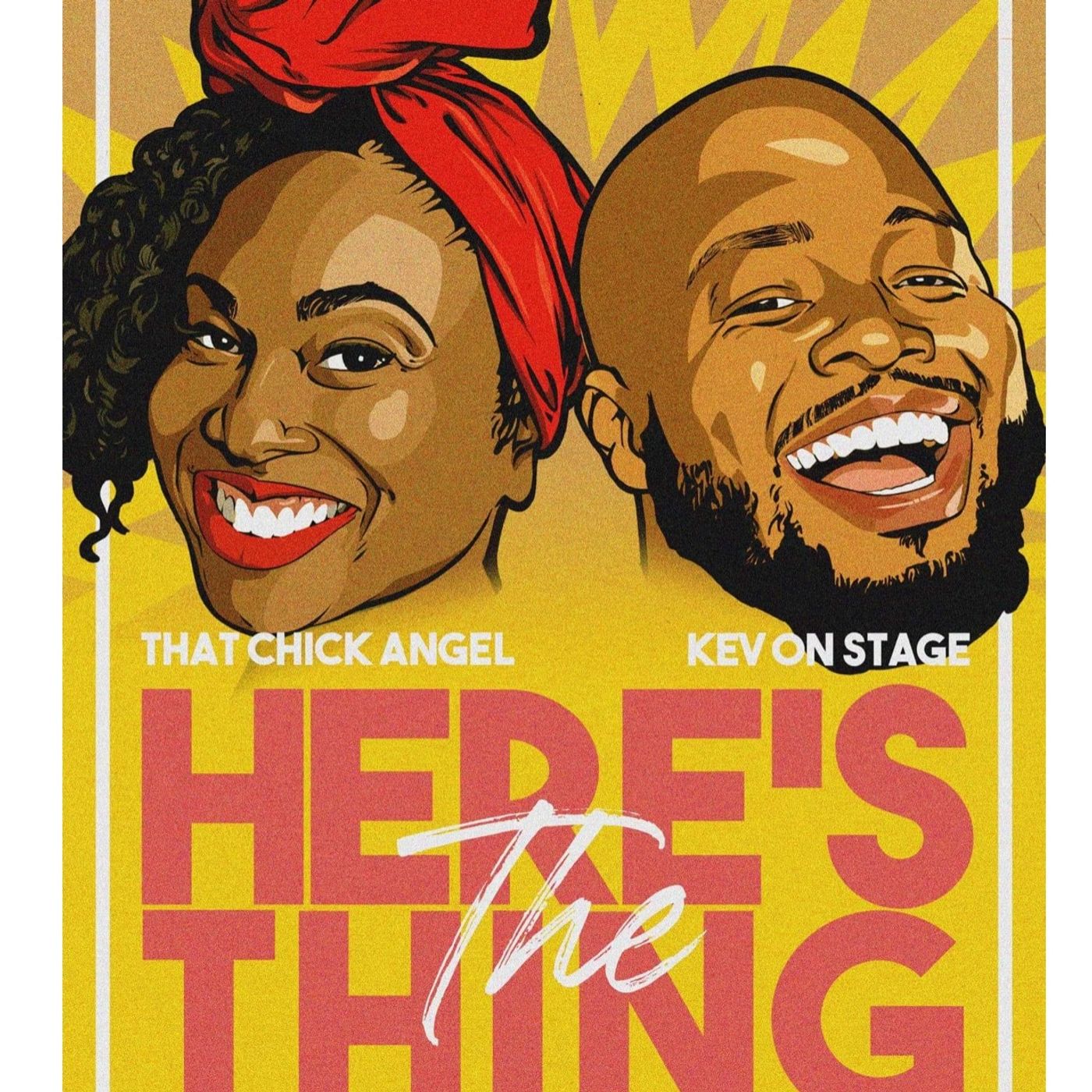
Here's The Thing
KevOnStage ThatChickAngel
The Friend Zone
Loud Speakers Network
Get Your Guy Coaching Podcast
Anwar White
Jade + X. D.
Jade + X. D.
The Read
Loud Speakers Network