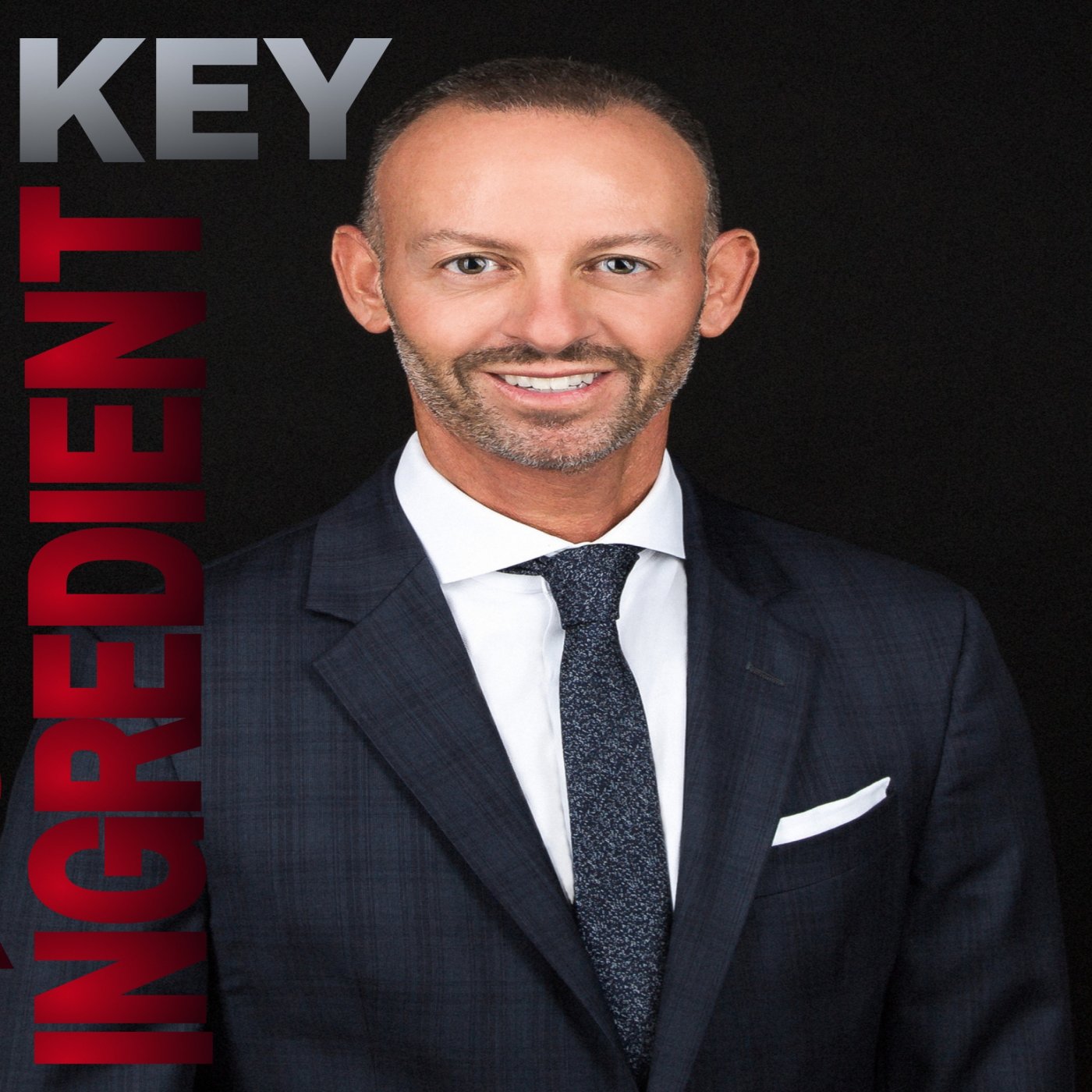
Spotlight on Good People by Robert of Philadelphia
This is your go-to source for inspiration, shining a light on the unsung heroes of Naples and Southwest Florida. From heartwarming stories to practical tips, we celebrate the people who make our slice of paradise more connected, compassionate, and kind. In a world full of noise, we’re here to uplift, inform, and inspire — one story at a time.
Spotlight on Good People by Robert of Philadelphia
A Second Chance at Life and Leadership: Brian Roland’s Comeback Story
Use Left/Right to seek, Home/End to jump to start or end. Hold shift to jump forward or backward.
After a near-fatal accident, Chef Brian Roland could have stepped away from it all. Instead, he stepped into something deeper. In this unforgettable episode, Brian opens up about recovery, resilience, and rediscovering purpose—not just in the kitchen, but in life.
From founding Crave Culinaire to inspiring a community through service and strength, Brian’s story is a reminder that healing is a team effort—and love is the most powerful ingredient of all. Chef Brian Roland is living proof that pain can be a portal to purpose. Through unimaginable hardship, he’s remained grounded in gratitude, anchored in service, and committed to making every moment count. He reminds us that the true mark of a leader isn’t perfection—it’s presence, heart, and humility.
Thank you so much for joining us on Spotlight on Good People. If you enjoyed today’s conversation, please share it with someone who might be inspired, subscribe, and let us know who else we should shine the spotlight on. Until next time — keep shining your light.
They found that my brain was shrinking at a 40 times rate faster than it should in somebody my age, my wife, as a way to protect me. She had told me that my phone got crushed. Trying to get back to the basics of, you know, learn how to eat again, how to go to the bathroom, how to walk, you know, all of that.
This candle vigil that happened, 250, 300 people up in front of the hospital. I mean, it was just unbelievable. So I instantly, I started crying. And so you can imagine as a chef having the best reputation in the US and not being able to taste anymore, she goes, oh, you're going, you're going into work and you're gonna cook.
I was like, yeah, daddy's a chef. I worked. She's like, you're not a real chef daddy. You're just a pretend shep. I was covered in lobster guts from head to toe buying organic and buying quality and buying from reputable sources that you know are going to be what they say they're going to be. You're, you're avoiding the sickness that's coming down the pipeline.
You know, we can all start with the same raw ingredients. And say, Hey, you've got 1, 2, 3 hours to prepare me. You know, two courses, three courses, whatever it might be, and I guarantee you they're gonna come out a hundred percent different today. I have the profound honor of sitting with a man whose story embodies the very essence of what it means to rise, serve, and inspire.
Brian Rowland is not just a celebrated chef who's built a culinary empire here in southwest Florida. He's a living testament to the power of the human spirit. As many of you know, three and a half years ago, December 4th, 2021, Brian faced a moment that would've broken many of us a devastating accident that almost claimed his life.
But what emerged from that darkness wasn't just survival, it was a deeper commitment to creating beauty nourishing community, and lifting others up through the universal language of food and hospitality. Brian's journey from that hospital bed back to collaborating with fellow chefs to raise money for mental health shows us that our greatest challenges can become our greatest gifts to the world.
He's taken his pain and transformed it into purpose, his recovery into resilience, and his gratitude into grace. I think you're gonna love this conversation 'cause he's, he's so real, he's so authentic. He's such a great human. I had the honor and the privilege to sit with him today. Uh, so beforehand, I, I just want to know everybody to know 'cause I wanna know too.
Tell me what you did last night. 'cause I know you had it all close to an all-nighter. You've been busy the last couple days. Yeah, yeah. So, uh, last night was one of our pop-up dinners and, uh, we do normally during this summer we do this pop-up dinner series where we invite other chefs in, we collaborate with them and we create typically a four or five, six course dinner and we invite people from all over to come and enjoy it.
And often we do it in a unique space. Uh, we used to have our own event venue and now we search for venues that are, you know, a beautiful backdrop, uh, great place for people to, to visit. So last night was at Artist Naples, so they had the art element, they've got the music, and, uh, so we were able to take over a private area that, uh, we had, uh, 40 wonderful guests that came and joined us.
So it's a lot of fun. And what's that like? So do they have kitchen facility there for you to work prep in and working or, yeah, so, uh, a few years back they did a large renovation and they put on the, uh, baker Museum side, which has, um, a nice little catering kitchen you, you can call it. So, uh, you know, it's got an oven, some hot boxes, some refrigeration, a beautiful, uh, stainless steel top with some heat lamps that you can pull down over the food, so.
Oh, cool. It really worked out great for this type of an event. Yeah. Well, I appreciate you, uh. You know, being here today after going through what had to be a lot of adrenaline, a lot of work, a lot of hype, a lot, it was a big deal last night. So thanks. No, absolutely we're, you know, it's a pleasure to be here and uh, you know, it was fun.
'cause like I said, we get to collaborate with the other chefs. So we flew in Charles me day, who's a chef here many years ago. We had, yeah, big name here. Yeah, yeah. A couple restaurants, three restaurants, and a great dear friend of mine, my wife. And, uh, so we flew him in from Indianapolis and he created his menu with us and he was thrilled just to get back to the area 'cause it's been quite some time.
And yeah, I think a lot of the guests that knew him, they had dined in his restaurants and it was a lot of fun for them to be able to cook, to eat his food again because it's been so long. Uh, so, you know, the end of it, he just said, man, this was. Such a har, you know, not only a heartwarming, you know, opportunity for him, but it was great because he could feel the energy from Naples again.
Yeah. And I think he wants to come back to this area, actually. I know he wants to come back to this area. Yeah. So we'll see what comes of it. Uh, cool. But yeah, it, it's, that type of a dinner for us is the best because having our own ability and platform to be creative, uh, for our own team, for team crave, uh, that's really what drives us every day.
And, uh, to be able to do that with someone from, from another kitchen right. From another, uh, um, style of cooking and, uh, it's just great 'cause we get to bounce ideas off of each other and we help each other elevate our cuisine. And, uh, so it's just, it's so much fun. Uh, and, you know, and then end of the night, uh, we get to interact with the guests, you know, we get to really see what their opinions were of the meal and Yeah.
Uh, and so that's a lot of fun. And, uh, and it was pouring rain at the end of the night while we're loading the trucks up until about 12:30 AM so awesome. That's always a lot of fun. Wait, top it off. Yeah. Yeah. That is so cool though, because it, it, it allows for the. Because an ordinary flow of a business, you're not collaborating with somebody who's in your role at another business or somewhere else.
So to be able to put those creative energy and juices together and work together like that sounds really unique and special. I think that's so cool. Yeah. Oh, it definitely is. And there's a lot of local chefs who I've known for many years or I've worked with over the, over the years and, um, and they all have their own styles.
I think that's what's so unique about, uh, about cooking and about being a chef, is that, you know, we can all start with the same raw ingredients. Literally you can give us each, uh, basket that has the same exact thing in it and say, Hey, you've got 1, 2, 3 hours to prepare me, you know, two courses, three courses, whatever it might be, and I guarantee you they're gonna come out a hundred percent different, right?
Yeah. Or 90% different. Yeah. And so it just goes to show that everyone's approach to food, everyone's approach to ingredients, to flavor profiles, to presentations, you know, we all pick little bits and pieces of our journey and we put them into, uh, what we prepare and what we create and to take raw ingredients and make something that can put a smile on people's faces.
Yeah. That's really to me what it's all about. Um, but I know for me, I've always. I've always tried to surround myself with people that are better than me. Mm. It's the only way I'm gonna continue to drive to be better. Mm. Um, and, and it's a great way to continue to learn. You know, I started very early as a chef, um, out of culinary school at age 19, and, you know, you have a lot to learn at that age.
Mm. And you have expectations, you know, from those that are around you to be able to hold your weight and, you know, and, and so I knew that when I became a manager that young, it's a little harder for you to learn from the people above you. Right. Because typically that's what you do when you're growing up in the industry.
You know, you, you learn from your mentors, you learn from your, in my case, your sous chef and your executive chef. Well, I started quickly as a sous chef and grew very quickly into executive chef. So the collaborative approach to cooking has always been the best way for me to continue to, outside of researching, you know, and reading and all that.
Yeah. Uh, to be able to learn and yeah. There's a lot of trial and error that goes into it. Yeah. And that's what's fun for us. Yeah. That's what I, I love about food is that it's, uh, it's not a science. It's a ever evolving. It's, there's so much creativity involved in it, which is so cool. Yeah, for sure. I have to tell you that when I saw you in here last week, um, and I saw you smiling and getting your hair cut mm-hmm.
Because he looks good, doesn't he? He looks really, really good. And, uh, he got his hair. Pascal was cutting your hair, and, uh, he did great. And I, when I saw you in here. I, I, I honestly got a little choked up. I was just so happy to see you and see you look so good, and to see that smile on your face. And, uh, there was a guest who I was talking to across the room behind you, and she said, is that Brian?
And I said, yeah. Doesn't he look amazing? Doesn't he look great? I was so happy. It just filled me, it made my whole year, man. It just, so it was so cool. Thank you to see you. And I'm, I just really appreciate you doing the work and everything you did to, to be here and to be you all, even more of you. So, well, thank you.
Thank you. And I'm honored. Super, super honored to here. Well, I, I greatly appreciate you saying that. And you know, I think that's been for me, um, since the accident happened, you know, 2021, December 4th, 2021. Um, changed my world forever, my family's life forever. Mm-hmm. Uh, just had a baby. Uh, she was three weeks old when this happened.
Wow. Remington. Remington. Yep. We call her Remy. Remy. And, uh, my wife, you know, post, not even really post Portland. I mean, it was so soon after the accident got our three businesses we're trying to operate. Mm-hmm. Uh, now she's got a husband that's in the hospital for two months. I was there. Didn't know if I was gonna make it for a little while.
Yeah. And, uh, so it, it, um, yeah, it changed our world and it required a ton of rehabilitation and, um, just trying to get back to the basics of, you know, learn how to eat again, how to go to the bathroom, how to walk, you know, all of that. And, uh, so it was a lot. It put a lot on us, uh, emotionally, me physically, um, and obviously my relationship with my daughter, you know?
Mm. It was so new and it was everything we had worked so hard to finally have a child. Um, I don't know if you know our journey, but we had, uh, three miscarriages, uh, three failed I UIs and we eventually had, uh, IVF and it worked the first, the first try. And so now we have our beautiful rainbow baby. Oh, that's awesome.
That's how beautiful a great story. It's, it's awesome. And, uh, so that was between Nicole and, and Remy. They were my driving factor to get outta that hospital and get back home. Yeah. So I could be with them. Um. So, you know that the reaction that you just shared, as you can imagine, uh, it's been, uh, almost four years.
December this year will be four years. Mm. And that type of reaction is a daily. Mm-hmm. You know, because I'm reconnecting with people again now that I'm feeling a little bit more like myself. Mm-hmm. And I'm able, I built up the strength to be able to do more again. Um, it took a lot of time, but, um, but that reaction, you know, it, I, I don't think I'll ever, ever get tired of it.
I, because I love, I've always been a people person. I've always really enjoyed connecting with people, building relationships, and the collaborative, you know, collaborative part that we just talked about as well. But in and outside of the business, you know, I've just always loved to be there with people.
And part of what we do is creating experiences that hopefully will leave, you know, a, a memory in, in our guests for hopefully their life, their lifetime. And so, you know, that, uh, that reaction reminds me of how important it is that I'm here. Yeah. And that I'm able to be something for my family, but also something for the community and, and for those that I like to, you know, to be able to touch.
So, yeah. Um, so thank you for sharing that and Yeah, no, absolutely. All I can say is it's, it's great to be able to be seen. Yeah. You know, 'cause there was a point in time where I wasn't sure if that was going to be the case. Yeah. I can't even imagine. You know, just, uh, because being who you are and the way that you are and the way that you're made.
To almo to think for any moment that you're not gonna be able to be that like going, that struggle, like going through that. Yeah. Like the thought of I may never be what I live for mm-hmm. In my life. Yeah. That's, uh, I you, you kind of hit the nail on the head there because I I think for, for a little while.
You're right. It was tough. 'cause I, I've always been that glass half full, you know, very optimistic. I'm always a very positive person. Uh, that's how I motivate my team. That's how I try to ke just keep myself every day. You know, I get up and, you know, I don't drink coffee in the morning. You know, a lot of people, especially in our industry, 'cause they've had a lot of alcohol and whatever the night before too, right.
I mean, it's important that they get up and they, they drink a couple shots of espresso and maybe a couple Red Bulls just to get in the door. Uh, but for me it's like I'm on a natural high and I, I just, I, I appreciate, and I love and I value life so much in so many ways that waking up in the morning is a privilege and, you know, now more so than ever.
Um, but, you know, getting a chance to, um, you know, to, to recognize that there was a point in time that I didn't know if I was gonna ever be able to cook again. Hmm. And I've never, because I've been such a positive person, I've never for myself really experienced depression of any kind. Um, if there was something that didn't go right in life, it was considered a challenge to me.
Yeah. And then I would just, you know, what would I have to do to achieve my next goal or to overcome the challenge? And so that's how I've always really approached everything. But this was different. This was different. I've never been so physically debilitated in my life. Mm-hmm. I've never had these types of challenges before.
And emotionally, you know, it took a turn for me. It was something that I, I, I was struggling. I, I can honestly say now that I was going through depression. Mm-hmm. And you know, when you have that, when you know, you know, you've kind of reached rock bottom, I guess, as they say. Yeah. And although I still said to myself, I'm gonna get through this, I'm gonna get through this, I'm gonna get through this.
I didn't know what it was gonna take. And I didn't know it was gonna take three and a half years to be able to sit here today and, you know, and be able to, to talk about our story, I guess. Um, so yeah, it's, uh, it's an amazing journey and I owe so much of it to God and, uh, my spiritual connection now more than ever.
Actually tonight I start Bible study, you know, this is something that Awesome. I, I've, uh, I really started to take a different approach to my life and raising Remy now and with Nicole, um, the church that we go to is fantastic. And just the energy that we feel, um, you know, surrounding us, um, when we know that God's looking down on us.
Yeah. He truly gave me a second chance of life and yeah, I'm gonna do everything in my power to make the best of it now. Yeah. Well, the rally in the community that I know, it took pain, a tremendous amount of pain, um, and prayer and love in this community. I mean, there was such a fierce. Team behind you, man, in this community.
It was just like praying and yeah. Whatever was, whatever anybody could do. There was just a lot of, lot of love and prayers for you, brother. Oh, I appreciate that. Yeah. Uh, I, I can't agree more, you know, being in the hospital for two months, uh, my wife, uh, as a way to protect me, she had told me that my phone got crushed and in the, in the, uh, the fall.
Yeah. And, uh, when the elevator lift came down on me, um, and really what happened was she and my family were protecting me from the media, from, you know, anything that at that fragile state that I was in, in the hospital, um, that could protect me from emotionally and mentally breaking down. Sure. Yeah.
Because I really, you know, I remember waking up a week after they had me in an induced coma, just 'cause of some physical stuff that, um, they had to start to let heal and I had a brain bleed, so, you know, but not to get into all those details, but they, she was protecting me. And so she finally was like, after a month, I said, well, you know, I'd love to be able to connect with people that I have in my cell phone that I can just say, thank you, you for all the prayers, and thank you for, um, just for everything they've done to help my family through all this.
And so finally, you, they all said, okay, it's all right. But she said, just do me a favor. Don't Google your name. And I'm like, oh, okay. She said, you know, try to stay off social media if you can. So I said, all right. Um, she said, I'm, I'm, I'm telling you, there's a lot of stuff that's out there. A lot of, it's very good, but, you know, it's, it's just, it's hard to read.
Mm-hmm. So. After some time, uh, remember I woke up in the morning and I was eating breakfast, and if you wanna consider hospital food, breakfast, and especially for you, right. That was the toughest part. I had, Nicole brought me some meals a few times. I, I will tell you that I, but yeah, just, I woke up and I said, okay, today's, today's the day.
I'm gonna see what I can, uh, you know what, what I find when I Google my name. Mm-hmm. And part of what you just mentioned, the outpour of love and support from the community. This candle vigil that happened, 250, 300 people up in front of the hospital. Mm-hmm. I mean, it was just unbelievable. So I instantly, I started crying, you know, and then I'm reading all the stories and watching all this, the news, um, stories.
And it was, it was a lot. It was a lot. Yeah. Uh, and it just, it instantly made me feel. So much more grateful. Um, and it really truly helped me realize how strong this community is. And I've always loved Nicole and I have always loved to be able to give back to the community and in any way we can. And we really, truly try our best to help nonprofits raise more money and help them meet their mission and, you know, and work hard to spread what we can do to help others.
And this was, I mean, instantly it made me realize that it is a two-way street. Mm-hmm. And that they care as much about us as we do about them. Yeah. Yeah. You know, and that it means a lot. It really means a lot. And every day that sits right here on my heart and it just, it motivates me to want to even do more.
Yeah. So, so thanks for saying that. Yeah, of course. I, uh, I, I was, you were talking about your wife and I, you know, for her to have just given birth not long before this, but then to have to turn into whatever she had to be for you and for give her Yeah. Yeah. A, a rockstar. She honestly, like, I call her my rock and she's always really been, but I learned her strength through this.
Mm. More than anything. Mm. Um, you know, for her to balance it all and still be the best version of herself for everybody, even still today. Because now that I'm reentering the world now a little bit more. Yeah. Uh, you know, it, it still leaves her with Remy all day long. And, and, um, just ensuring that everything is where it needs to be and being the support for me and, you know, and everything that I've gone through my process, my, my thought process, my, you know, the, the way that my brain kind of works now is a little bit different.
You know, I've got a little bit of memory loss, uh, short and long term. Um, I've got, you know, some future health stuff I'm gonna be dealing with. But the creative stuff, it always used to just come to me very quickly. Mm. And now it just takes, it comes to me still, but it takes a little bit more time. Mm-hmm.
And I've always loved to bounce ideas off of her. And she, believe it or not, Nicole has, I will say this on record, Nicole has a better palette and a better nose than I do. She always has. And that's probably one of the things that attracted me to her the most was early on, like, we would, she would taste something.
She'd be telling me these like, flavor profiles, and I'm like, wow, that's actually right there. I do taste it. And she'll smell something. She's always been like big on scents and, uh mm-hmm. Mm-hmm. You know, candles and things like that. Mm-hmm. But, um, but we'll walk into a room, um, and she comes from the hotel world, so she, you know, a lot of the hotels, they, they focus on infuse.
Yes. Yeah. And it goes right through the air conditioning fence, you mm-hmm. You know. And it's their signature scent. Yeah. Their signature smell. Um, so we'll stay at places specifically for the scent. Scent. Yeah. Which is pretty cool. Right. Um, and so, you know, we take that idea too, and we say, well, how can we bring aroma into our culinary journey with our guests?
You know, it's not just the sight, the sound, the tent, the, the smell, the taste, you know, all of that encompasses a full sensual, you know, journey. Yeah, sure. Yeah. Uh, so she's, she's been so great with me over the years and just helping me with elaborating on what I am thinking or I'm sensing or I'm tasting, you know, and it's been, it's been wonderful to, uh, to have a partner, you know, that can do that.
Yeah. So, but yeah, her strength through all of this and, uh, and I think for the future, I think I, she's my rock. Yeah. And she's certainly, uh, the strongest woman I know. Yeah. She's a remarkable woman. Yeah. I mean, I mean, and you got three businesses going at the same time. It's post COVID not long after that.
Yeah. And she's got you. She's got a new baby. She's got, so she's, uh, that's a lot. But she has a, uh, a day of pampering lined up for her here, by the way. So we make sure we get her set up for that. She deserves some good love, and she's awesome. The two of them. Your, your daughter and her. Yeah. So you, uh, I grew up in Drexel Hill, which is only, uh, uh, outside of Philadelphia, which is only about 50.
It's only about an hour from Princeton, Uhhuh, not far from there. What was it in your upbringing that, uh. That got you on this journey, this quest, this food world quest. It feels like a quest. Yeah. I feel like I'm a character in one of those old video games that I used to play as the Quest for the best meal.
Um, no, I, you know, growing up my mom and dad got divorced when I was really young. I was about three years old and you know, my mom worked her butt off at several jobs and she was a waitress at times. She sold Tupperware as a Tupperware manager. I mean, she did a lot of great things. My dad, uh, one of the biggest mentors of mine as well, um, he's a successful dentist.
He just retired actually on my birthday this year. Kudos dad. Congratulations. Hey, way to go. Yeah. Hey, your parents did a good job too on me. Me too. So they honestly, they well done Mom and dad e even though they were divorced, uh, I gained so much from both of them and, uh, those that were in our lives. And, um, so, you know, earlier on with my mom working as much as she was, often we were left with.
Tupperware stackable, you know, microwaveable meals. Like she, she would prepare the food and would go into these little vessels that would go in the microwave and they kind of like cook in three different, uh, cook zones as, as the microwaves were going around in the, in the container. Um, so, you know, I was responsible for heating that up and, you know, and we would eat it or we would be left some money to get some pizza or whatever it might be.
Um, so Culinarily speaking my earlier years, uh, and, and mom was a good cook. She really was. And when she had the time, she would cook us delicious meals and, and that was great. Um, but I think that experience, uh, started me off on wondering what else is out there, you know, what, what else can I do with food?
Right. Yeah. Um, so, but my first job was at a small Italian restaurant, Theresa's Cafe in, um, Princeton, New Jersey. And, uh, or just outside of Princeton. And, um. I started as a dishwasher, uh, and I was the dishwasher that was washing dishes, but I had, you know, my head over my shoulder looking at the guys prepping stuff behind me all day long.
Mm. It intrigued me and I wanted to learn more. And one day, one of the guys kind of like waved over and said, Hey, hey, come on over. Do you wanna learn how to make the pizza sauce with us? Meanwhile, what I didn't know is he just wanted me to stand there and grind the pizza, the, you know, the tomatoes as long as I could get my arm hurt every day, so he didn't have to do it.
Uh, but no, you know, I started with that and then he taught me how to make pizza dough. And before I knew it, I was learning how to like, toss the pizza dough in the air and make the actual pizza. Um, and, you know, I worked my way up from there and, um, learned front of the house as well. I worked the pizza counter and then I learned how to serve tables.
And it was my junior year in high school, they had asked me if I wanted to start on the actual hotline cooking, and I, of course, I said yes. Um, so I did the pantry first, and then I worked my way into the, uh, the hotline. And I just remember coming home one day and telling my mom and dad, I said, you know, I think this is something I really wanna do this for, for my career.
I, I love this. The ability to take, like I said earlier, raw ingredients and create something that can put a smile on someone's face. And I didn't know anything really about presentation back then. I didn't know anything about really pushing the envelope with creativity and, and modernist cuisine, I guess, as you would call it today, but learning the basics and just understanding.
How to cook something without burning it, right? Mm-hmm. How to, uh, what the difference between grilling and sauteing and poaching and brazing and all those different techniques. I was learning it on a small scale, at least, uh, when I was, you know, 16 years old. Uh, and I started as a, as a freshman, so at 14.
And, um, so just working my way up that way and, and telling them, you know, my dad, I remember he said, okay, then if this is what you wanna do, we're gonna get you into the best culinary school. Mm. So we applied to one school and one school only. The Culinary Institute of America, the Ccia, CIA man, the ccia.
It is the Harvard of Food. It is the place, man. Yeah. Oh, well, it's got a wonderful reputation. Yeah. And, and there's a reason for it. I can tell you, going through the program, it was just a, a tremendous amount of learning and, uh, the, the staff that they have on, uh, on their, um, uh, campus there, you know, I think it's still today, at least back then, it was the only culinary school in the United States, actually, maybe even in the world with, um, with this many certified master chefs.
Um, normally the master chefs, you know, they're, they're running master restaurants somewhere. Mm-hmm. But a lot of them, when they get into the, the, I guess the age where they don't want the hustle and bustle anymore of the restaurant, but they have a lot to offer and they can teach a lot. So they take on these roles at these culinary, uh, schools, and I think at the time they had maybe eight there, and there was just.
Not too many master chefs actually in the world. So, uh, it was great to be able to learn from some of the best and to learn some of the techniques, the way that they have their whole, um, program, um, laid out and, you know, everything from basic skills to, uh, wines and menus and food safety. And, um, you know, I just, culinary math was the name of one of the classes and I'm like, man, I never really did well in calculus.
I was not a geometry kind of guy. I was like, how am I gonna get through this? What does that actually mean? But when you actually think about when you have to convert a recipe or create a recipe, you have to learn what tablespoons ounces, you know, cups. Oh, right, right. Mm-hmm. You know, all of that type of, uh, of measurement, uh, converting from grams to ounces, right?
I mean, there's so much that you have to learn, but, um, so understanding food costing mm-hmm. Is a huge part of being a successful restaurateur. Mm-hmm. And being able to run a kitchen appropriately so that you can be profitable. That's mm-hmm. What we're all in business for. Yep. Hopefully. Right. Yeah. And so it was great.
We, we, uh, we went through a lot of intense training. Um, but, um, yeah, so, so back in New Jersey, it was, I think just being a part of a small restaurant that kind of lit this fire in me and, and helped me realize that I have a craft in me that I didn't realize at the time. You know, I always joke, I have terrible handwriting and I blamed it on Dad.
'cause you know, he's a dentist and they always say doctors dentist, right? Everyone in the medical field has terrible handwriting. You know, they write their scripts and they just scribble. Um, and that's the case for me too. Um, you know, I've tried to take my time with it, but I just, I'm not good at it. So, uh, not good at that, not good at drawing and painting.
I've developed a little bit of a better skill there, but, so I was always kind of wondering like, you know, well what is my skill? I don't know what it is. And so I just, I felt it with this, it was something that connected with me and, and it just grew from there. And it's, it's been such a great journey. So then you, you graduate, I, I've always had it such a special place in my heart for the hospitality restaurant business in particular, because that was my background too.
I was a dishwasher. I started out as a dishwasher. Oh, that's great. At a, at the, what was the Ramada Inn? Where Wiggin at the entrance of Wiggins Pass Park now, which is, there's a condo there that was then the Vanderbilt Inn and the, yeah. My, uh, mentor boss who hired me, David Boyd, was hired me, uh, at 12 when he wasn't supposed to, 'cause he weren't allowed to work at 12.
Right. But he hired me anyway. And, uh. And I was too little to, uh, to reach the dish washing machine. I was short. I still am short. But, uh, I had to stand in these crates and he used to call me the munchkin, but he gave me a shot. And I, I loved that kitchen. I loved working for him. I, he taught me so much about, uh, hard work, but also having fun and hard work.
And, but, but in that business, you give up a lot of life. I mean, you're there all, every holiday. Mm-hmm. Every, all hours. And, um, it's, it's a lot of hard, hard work. So I, I know what it takes. It takes just a tremendous amount of sacrifice, I think being in that business. And it was great to me. I, I was so, I, I still, to this day, I talk to him on the phone a couple times a week now, which I'm grateful for my mentor, uh, who gave me a shot.
And, uh, you know, I did the prep cook thing and then was the breakfast cook on the weekends at 16, which I thought was the coolest thing. And having to get up at five in the morning when everybody else is sleeping in 'cause they were out drinking on Friday night. I just, I, it gave me a lot of things that I have a work ethic.
Uh, it gave me my first car. I bought a piece of property. I did things that I wouldn't have been able to do because he gave me that shot. So I am forever grateful to the hospitality industry for the opportunity that gives people, you know, and people will work hard and wanna work their way up. And it got me through college and, and I know how to cook now and I love to cook, so it's special to me.
But now you at 19 graduate from the. School of schools, literally the, you know, top of the line, uh, culinary school. And what happens, how do you end up Where you here, right? Yeah. So, uh, so during the two and a half year program, there's, uh, right in the middle is our, they call it externship, but it's our, you know, the internship, uh, portion of the, uh, schooling.
And so we have an opportunity to browse thousands of different restaurants all over the United States and the world really. There's some outside of the country too that are approved externship sites. Um, each site has to have certain requirements in order to allow for an externship to come there. Um, and the school really wants to promote your ability to.
Be able to work through different stations, through different aspects of the business so you can gain as much professional, you know, real life experience before the school lets you off into the, the big world. Okay. Right. Yeah. Yeah. Kinda like a doctor does rotations in different Exactly. Aspects of medicine.
Yeah, exactly. Exactly. So, uh, I, I ended up choosing a restaurant down here called Maxwell's on the Bay. Mm-hmm. Which you're familiar with one of your locations mm-hmm. Right there in Venetian Village. Um, and so my grandparents lived here at the time in Naples, so I got to stay with them, which I was very grateful for because I remember I was working the steamer station many nights, and Maxwell's was known for a lot of their seafood that they did.
And they had lobster night, they had this beautiful, uh, lobster tank up front. They would get all the live lobsters in. Mm-hmm. And I was on the steamer station. So you can imagine that a lot of the, the lobsters that come through the door get steamed and then, you know, you have to take your knife and crack the shell and crack the claws, and then it goes out and they get to eat it.
Um, but lobster night was probably their most popular night mm-hmm. Of the week. And at the end of a lobster night for me, I wore a white chef coat. I was covered in lobster guts from head to toe, you know, the green row, and just like all the slop from, you know, breaking down lobsters, which it was gray. It was a cool experience.
Um, but to get that jacket white again was the impossible. And grandma. Knew how to do it. She, she was amazing. She would get those jackets crisp, clean, and white. The chef, right. Chef coat. Yeah. Every single, uh, every single week. So, so it was great. So living with them was wonderful and, um, just being as close to, you know, to the restaurant was great.
So, um, I was there for a year, uh, sorry. I was there for about eight months, I think was the internship. And then, um, after I graduated from school the following year, I came back down and I worked at Maxwell's again. I really loved it. Um, and then I had dined at Chop City Grill on Fifth Avenue and fell in love with what they were doing at the time.
Mm-hmm. They were one of the most innovative restaurants down here. Skip Quillen. Mm-hmm. Um, and Tom Gilbertson were the owners at the time, and that was their first venture here. Was that Skip's first chops? Uh, no, Paso was actually First Paso was first. First, okay. Which is next door. Okay. And then Chops, then yba.
Okay. And then they opened up Chop City Grill and Bonita, uh, and then Bluewater Bistro, and it just kept going from there. They turned that into the saloon that just super successful. Um, and, and Skip became a, a big mentor of mine as well, because he's a trained chef. Um, went to school as well. And, um, he just, he, he had a, he was kind of a step above a lot of the people down here, so I really gravitated towards everything that he was, uh, he he had to offer.
And so he asked if I wanted to be a part of their opening team, their management team at Chop City Grill and Bonita. So I had about a year before it was gonna be complete, and I went back home. I was working. During the summers back home in New Jersey at, uh, country Club, two Country clubs. One was Fors Gate and the other one's called the TPC at Yasma Ana.
And there was a French chef there named Patrick Re, who is probably the number one culinary mentor. And he, he taught me a lot about not just cooking, but a lot about how to treat people and how to interact with people. Um, and we can talk about him later. But anyway, um, Patrick was friends with, or still is friends with Daniel Baud, who is one of the premier chefs of the world.
He's from Leon, France. He owns, uh, Danielle at Restaurant Danielle in Manhattan. Mm-hmm. Cafe Ballou. I can go on for probably another 10 minutes telling you about all the d names of the different restaurants he owns today. Mm-hmm. But I, uh, I knew that I had about a year and I wanted to get the best experience that I could to prepare me for what was to come.
'cause I was still very young and the restaurant was set to open right around when I turned 21. So I, uh, spoke to chef, uh, uh, Patrick about it. And he got me in to work at, uh, cafe Ballou. Um, so I worked a little, like at Restaurant, a little bit at Cafe Ballou. I was there for the opening of DB Bistro, which was another one at Times Square.
And, um, it was one of the most intense work experiences of my life. Mm-hmm. Every day I learn something so above what I thought food to be and. Just about every day. I came home from work crying because of the intensity. Everything, you know, when you, you go into a three Michelin star restaurant, your expectations are super high.
So for the chef or the owner for the team, you have to make sure that you meet the mark on every dish. Or a critic could be in that night, and your reputation can go down the tubes pretty quickly. Mm-hmm. So if a dish wasn't right, when it came down the line, and chef was there, not, not Danielle, but my executive chef at the time, or the sous chefs at the time, and it did not look the way that it was supposed to.
It was getting thrown in the garbage and we needed to make a new one, and it had to be immediately. So the intensity was just always, and I wasn't accustomed to that at the time. So anyway, I got that experience, came back down, opened up Chops and Bonita. I was there for about five years. An amazing experience for me.
And I just remember being, you know, 20, 21 years old and you know, guys that are twice my age that I'm now in charge of. Mm-hmm. And how do you, how do you take that on? Right. That's a challenge for me because I don't think these guys are going to respect me. They don't think that I know much. And I heard the grumbling, you know, like mm-hmm.
Who's this guy think he is, you know? Yeah, sure. And, and I'm not, uh, you know, I'm, I'm a very, um, I'm a very positive person, but I, I make sure that I earn people's respect. You know, I don't feel like it's an expected thing in this world. Um. And I, I remember there was a manager that I worked for who said something that I love.
He said, you know, when, when we meet, you have a hundred percent of my respect. It's your job to keep it. And, you know, and that, that kind of sits with me. And, and I think when I, when I talk to people about the relationships, I like to build with people, you know, respect is a huge part of it. And I go in with a hundred percent respect, but I do not expect that people give that same thing to me.
Um, and not often everyone does. So I knew that I needed to earn the respect and the only way I knew how was to just show them that I have great work ethic and that I'm willing to do anything for them. Mm-hmm. So I remember coming in every day and I would just set up all their stations. I would prep everything as early as I could before they even walked in.
Mm. Because when I first got outta culinary school, I knew nothing about creativity, about how to blend spices together and ingredients together to create something that would taste good. Mm. So much of it was trial and error. Yeah. You know, you said earlier about. The food industry, you know, that it's not necessarily always the science.
There is a huge science behind cooking. You know, howing, um, the, the cooking process actually occurs, you know, when caramelization is happening. Mm. You know, what, what is actually happening in the pan? You know, proteins and sugar is converting, you know, over to create this caramel flavor, this mount yard reaction is called where, you know, you're, you're gaining different flavor components and profiles and coloration and all of that.
So there's a huge science behind it. Um, and, and how you make an emulsification, like such as a, a mayonnaise, you know, that's shelf stable or you know, a hols That's hol Yeah. Yeah. It's a warm emulsification. Just something as simple as a vinaigrette. Yeah. You know, you remember the old seven Cs vinegarette packets?
Yes, yes, yes. You open it up into that glass container, pour a certain amount. Yep. A certain amount of vinegar, a certain amount of oil, and you would have this fully separated uhhuh concoction. And when you shake, shake, shake, shake, shake the whole thing up and put it down for a moment. It's emulsified, right?
Yes. And it's taking the fat and the acid and making them combined as one. So there's a huge science behind it in that regard. But. There's so much opportunity for creativity. And so having the opportunity to learn from my peers and those that were a part of that early on team at Chop City Grill, you know, once they understood that I was there for them and I had their backs, Hmm.
Soon as they'd walk in and I'd say, Hey, your station's set. Everything's ready to go tonight. Do you mind helping me with the, the features for tonight? The specials? Mm-hmm. And they lit up. They were like, yeah, that's great. Mm. So it was through that sort of early on collaboration with them where they were happy to be able to provide that.
And I was super happy to be able to have them do it because I wasn't ready to do it myself. And then my, I developed my palate that way and I started to be able to try things and, and understand why, what things tasted good to me at least. Mm-hmm. And I think once I established what I understood to be good that my palate recognized as being good, I would then test it on others and say, Hey, I think this tastes well seasoned.
I think this is, you know, a, a good balance of flavors. What do you think? And once my team started getting on board, then I started testing it with the public and I would put features together and one, and I get instant feedback from 'em. So, you know, earlier on, I think that was my way of, uh, of developing in a lot of ways.
And, uh, so from shops, I went to crew at the Bell Tower shops in Fort Myers. Uh, I was there for two and a half years. I worked my way up from, um, I actually took a step down as a line cook just 'cause I wanted to get my foot in the door there after four years of being executive chef. And, um. Worked my way up to sous chef, to executive chef, and ultimately as an operating partner there.
What, why the move? What, what was the, you know, as young as I was starting at chops, um, I had learned so much, but I wanted to get more experience from different places Okay. From different people. Mm-hmm. And again, as I was a, a leading, you know, as a manager from such an early age, um. You know, it was hard to be, to, to learn.
It was hard to learn other than just practicing myself and learning from the people that I worked with day in and day out. Yeah. But, you know, there's so much more out there. So it's a new challenge for you. New challenge, you know, and, and new environment. Mm-hmm. And honestly, going from, we were in Bonita, but going up to South Fort Myers totally different clientele base too.
Yeah. And this was pre COVID, so there were a lot of, you know, the doctors and the mortgage brokers and the bankers and those that loved to frequently dine and they had, you know, uh, plenty of money to be able to use, you know, in the restaurants. Mm-hmm. So we could create things that just blew people's minds.
And, uh, it didn't really matter what it cost to them, it was just they wanted something that was the next new thing. Right? Yeah. And, and the most creative that they could get. So we were flying ingredients in from around the us around the world and just creating stuff that I, I still to this day, I'm really proud of what we put together.
And, um, and Shannon Yates, who was the owner at the time, or co-owner at the time, and executive chef, um, he passed actually after COVID, um, from COVID. Oh, wow. And, um, but he was a huge mentor. He, he really knew how to drive flavor and just build an experience when people come in, you know, you want them to leave going, I gotta come back here again.
Yeah. And I gotta tell all my friends about it. Yeah. So I learned a lot of that there. Um, did, did you have a lot of, um. Uh, creative, uh, freedom there. Were you able to do a lot? Yeah. That was my favorite part. And actually I did a chops in a lot of ways too, but, you know, the menu accrue, we had a lot of staples.
Um, but we could be very flexible with what we put out on the plate, especially with our features. You know, we could, I mean, some exotic ingredients we would bring in. I mean, I had ostrich eggs in there once. Wow. So we would do bison on the menu and elk and venison, like a lot of like, you know, exotic meats and things.
But, um, but I would say what really stuck with me the most was the vegetables that we would get in from a place called the Chef's Garden. And it's located in, um, here in Ohio and they do some of the most amazing organic vegetables that you would ever imagine. And some of them are, uh, hybrid and heirloom varieties.
Um, but the colors and the different sizes and the, just the creativity that goes into what they do there. Um, farmer Lee Jones is the name of, uh, the owner of it right now is his family created this just amazing place. And when you go around to some of the most prestigious restaurants, even in the world, uh, at one point in time, if not still today, they order a lot of their specialty produce from that company.
Wow. And they ship it all over the world. They overnight it. Wow. So it's, uh, it's really, it was a great way for me to understand that part of, you know, of the industry. 'cause farming is such a huge part of what makes our jobs. Either a success or not. Mm. And the way that the industry over decades of time has changed from all organic, all, I mean, organic wasn't even really a named thing, if you think about it.
Yeah. Because everything was organic. There was no need to process. There was no need to, you know, enhance, like enrich things with bleach and with, you know. Yeah. Yeah. Like, think about like what happens to wheat now and why so many allergies have become today a problem is because of the way that foods are being processed now.
Mm. And uh, and it's a shame in a lot of ways. And, you know, if you look at the farming industry and commodities, just how things have had to happen over the years because Americans especially, we want it and we want it now. Mm-hmm. When you go, like my, my wife and I, and actually Remy now, we love to travel and we've gone to Italy.
We've, we just got off of a cruise. We were in, uh, Iceland and Norway and England, and, um, my wife and I, we've done a lot of great places. And when we go there, obviously for me and for Nicole, it's about what can we learn in the culinary world? Yeah. You have to, it's kind of part of your Yeah, yeah, yeah, yeah.
We wanna go to some of the best re restaurants, so we wanna go to, you know, some of the best places that we can learn from. Yeah. Um, but what was the most striking was. Their ingredients, the flavors of the tomato, the flavor of the, just everything but that, especially when we're inland, um, in Italy, it's amazing how whatever is indigenous to that area is really all you see on the menus.
Mm-hmm. And I, I just remember them saying, you know, I think we wanted to order some fish one night and we couldn't because they were not serving fish. It was only meat. Mm-hmm. And we quickly learned that if you're a coastal area there, that's when you get to enjoy the things that are from the coast. If you're inland, you're getting all the steak you can eat, you know, and, and poultry and meat.
So it doesn't happen as much here. If we want fish flown in from somewhere, we get flown in. Yes. If we want, you know, beef from another region or beef locally, like that's what we get. And um, you know, if you want strawberries when they're not in season, you go to South America, you go to wherever it is that they're being grown.
Yeah. And there's the convenience factor, but you're not getting it at its peak. You're not getting the best quality. Mm-hmm. You're not getting, you know, food the way that it's meant to be eaten. Yeah. So. So much of what I learned through going to the chef's garden and touring their facility and understanding farming and understanding composting and understanding the way that it should be done.
Yeah. It just, it sparked a new curiosity in me to just learn about food the way that it should be. Yeah. And so we try our best to source the best possible, you know, quality food and ingredients that we can all year round. Um, and, and, you know, and I think it's, it's something that we all should do and, uh, and shop at the right places to source our food and our ingredients.
Yeah. I love what you bring up. 'cause it, it has me understand it better that is not organic as a marketing tactic that is organic. What organic originally was. Correct. Organic was this, it was organic. Well, I'm glad that you touched on that because you're right. It, it became a marketing thing because those that were willing to do it Right.
Want to be recognized for it, number one. Yeah. But also, you know, if, if, if I'm a farmer and I wanna produce the best quality ingredients and, and, and stock for anyone, uh, and I want it to be sold. I have to educate people, you know? Yeah. And, and I've gotta spend a lot of time helping you understand why buying it conventionally and buying it organic, why buying it organic is better.
Yeah. And so I think companies put a lot of marketing dollars into helping the general public understand it. The problem is it was so much more expensive. And so for those that couldn't afford it, it didn't make a difference to them. But they were eating an eggplant that was organic or not. Right. Right, right.
Um, the flavor profile, maybe they could taste a little bit of difference, but to them it was more about the dollar. Right. And I think a lot of America and a lot of the world today still struggles with that is why, you know, why do I have to spend so much more on it? But I'll tell you that especially now, where my health is so much more important to me, you know, buying organic and buying quality and buying from reputable sources that you know are going to be what they say they're going to be, you're, you're avoiding the sickness that's coming down the pipeline for those that are not spending the time as educat.
Yeah. Because when we pump ourselves full of ingredients and stuff, that just doesn't belong in our bodies. Right. You know, that it's not, it's not gonna go very well for you. Yeah. You know? Yeah. Yeah. And that's gonna catch up with you over time. And, and now more than ever, you know, while I'm trying to get back, you know, health-wise, I'm trying to get physically fit again and, and build my strength.
What I put in my body is the most important thing. Yeah. So, um, yeah. I mean, marketing became such a huge part of this and selling it to the public. Um, but unfortunately because of the way the world, you know, everyone would try to do anything they could to put that organic label on their food, even if really was not organic.
Yes. So they were bending the rules and breaking, you know, the Yeah. The, the rules to try to get there. Uh, but it, it's very important. Very, very important. Well, I think it's very real what you say, and it, it, it maybe reiterates what we, my wife and I were thinking, 'cause we were in Europe last summer mm-hmm.
The summer before. And, uh. She could eat foods and we could eat foods that we would eat here. And we felt fine. We felt great. You know, we're eating normally don't eat a lot of carbs, but eating a croissant or eating mm-hmm. Some of the breads felt fine. Didn't feel that bloated, swollen feeling that we had.
Mm-hmm. We felt great. Like it was okay to eat it. Yes. Because they're grinding the wheat right outside their backyard and they're making it into the flowers that are producing that stuff with. And to that point, my wife has a gluten allergy and we, you know, when she eats gluten of any kind, she'll get a really bad migraine and, you know, and it, it'll sometimes go on for days and days.
So whenever she gets it, we're like, okay, what did you eat? Let's think about it. Yeah. You know, what could it have been? There's so many things that have, you know, wheat and soy in them today that you don't even know. And even if you turn over the label, you're probably not going to read the form that it's in.
Right. Because you don't understand some of the stuff that's on labels anymore. Right, right. So I remember we were in Italy and they're very, very, um, good when it comes to gluten allergies. You know, sun's gluten, that's what they say there, right? Mm-hmm. Because that's, that's, uh, without gluten. And, uh, we were told that you can eat the flour in Italy.
It is nothing like what you get here. And so try it, try some pasta, try some bread. So she did it the first time we were nervous and we went, I think it was like a week and a half, and she, she was on like a gluten party. It was, you know, we would still be very conscious and careful of it, but I mean, it's unbelievable how much.
Different it is to eat it when it's not modified, when it's not, you know, additives aren't added to it. And you know, the, one of the reasons that, um, she can do that is because of the processing, um, that happens, that that doesn't happen there. Right. Yeah. So it's, it's unbelievable. And there's actually a restaurant here locally that uses imported flour direct from Italy, and, um, and you can, you can eat, she can eat it as well, and it doesn't give her the same effects.
I've heard about that. Yeah. Somebody was talking about that. Yeah. What is that? Uh, uh, truly, yes. That truly, yeah. Someones talking to me about that. Yeah. Yeah. It's a great little spot. Um, there's others too that, that do it too. I think the, a couple of the bakeries here in town also. Yeah. You know, but did you do a, somewhere in there?
Did you do a backpack trip in, did you go to Yeah, in Europe somewhere when I, uh, well, so I wouldn't call it full backpack, but after graduating from CIA, uh, my girlfriend at the time and I, we, we traveled all through Europe. We flew into London and we went through the channel down to Paris and we went all through France, Italy, Austria, Switzerland, Amsterdam, and Spain.
And it was. Amazing. So yes, we had backpacks, we were staying in hostels, you know, that was the majority of what we were doing. Mm-hmm. And we'd splurge like every few days and or every week we would go to like a one or two star hotel if we could, but Yeah. 'cause a hostel, you're like sharing a room with a bunch of other people, right?
Yeah. Yeah. And it was not something we were, I mean, we just came out of dorm life. Yes. It didn't matter. Right, right. Kind of the same but 10 bucks a night and we were still young. Yeah. But it was really all about how can we get through Europe and still what, what we wanna spend our money on was any restaurant we could afford.
Right. So that was where, you know, we did it, but I remember like, I rolled up my suit and that was in the backpack and just so I had something, be able to go to those places. Right, right. You gotta do what you gotta do. Um, but no, that, that type of experience is awesome. Travel is such an amazing part of our lives now, and, uh, and now that, you know, I'm feeling a little bit more like myself.
I don't want to, I don't wanna miss anything in life anymore, you know? Yeah. And so I want to try to give Remy what I can and exposure to what we can to, you know, to see the world. Yeah. Um, and, and in hopes that it'll spark something that'll inspire her as she continues to grow and learn as well. Yeah.
Today was her first day of school. Oh, how awesome. I know. Very exciting. Oh wow. So exciting. So exciting. Wow. How old is she? She's three and a half now. So it's, I say first day of school, it was a big deal. Yeah. It's pre-K three. Yeah. But it's, uh, you know, it's a, it's a big milestone. Yeah. And, uh, and she's, yeah, she's amazing.
We love it. So, um, you know, you, you were talking about, um. Experiences. And I wanted to ask like what, and, and you've touched on it a little bit, how has life changed for you personally and professionally since the accident? Yeah, yeah. So personally, obviously the physical aspects, my, my body is still nowhere near where it was before the accident.
And, uh, I've got a lot of rehabilitation, a lot of future medical stuff that I'm gonna deal with, with memory loss and just stuff that they've learned through my brain, scans and all that stuff. But, um, so I think physically, you know, building strength is the part that's still the toughest. I've daily pains, I've got nerve damage in my left foot that is constant pain, all day long, pain, tingling, numbness.
Like, it's just something that I, I am understanding now I'm gonna deal with for the rest of my life. Mm. Um, had some bladder issues, which has caused me to have to self catheterize, uh, every day now. Wow. Stuff that, you know, not everybody knows about me. And when you see me on the streets now, and those that have known me from before, especially like last night's dinner, you know, they're like, gosh, you look great.
It looks like nothing happened. Mm-hmm. And although that makes me feel great, because I was also worried that I was gonna come out of this looking broken. Um, you know, it's, it, it prompts me to think, you know, well, it might look the same. On the outside, but if you only knew what was going on the inside. Mm.
And so that's something that kind of sits with me and I, and I know that that's gonna be a long-term battle that I'm gonna be struggling with. And, um, but you know, again, when, when you have to look at the silver lining and everything and look at the good and everything, you know, I'm still here and, and I'm here for my daughter and my wife and my family and my friends and my teams.
And, um, then it could have looked a heck of a lot different. So, so I'm left personally a lot more grateful, I'd say, than ever. And, um, and just pushing, uh, forward in the best way I can professionally. Um, being back in the kitchen, it was invigorating. Hmm. It was the, the first day back. I remember messaging Nicole and saying, I have not felt this good in years because it had been three years since I had been stepped foot in my own kitchens.
Um, I started practicing a little bit at home, but part of the issue is I can't stand on my feet as long as I used to mm-hmm. Without a lot of pain. Hmm. So working through that, building up my own strength and stamina. Um, but being back in the kitchen, um. In some ways it's kind of like relearning some of the things that I knew I had, uh, or that I, that I knew before.
Um, but it's kind of like riding a bike, you know? Mm-hmm. You get back on the saddle and, and it just clicks again. And, uh, and even last week, or the last dinner I did with Chef from 21 Spices, yes. We cooked another collaborative dinner with him. Mm-hmm. And I remember messaging Colin saying, uh, you know, there's something along the lines of, I, I feel like I still got it.
It really feels great. But, um, you know, when you, when you cook, especially professionally, so much of it is about timing. Uh, not just to get a recipe right, but when you're working on the line and you're cooking for hundreds of people, sometimes at the same time, um, there, there's a lot of technique and timing involved in, let's say, sauteing, you know, at a restaurant.
If I was gonna sear 10 pieces of fish at the same time and rotate them in and outta the oven and get my sauces ready and make sure the risotto is, you know, on, on point and seasoned, dried, and not, you know, overcooking, the pasta that's in the water, all that's happening simultaneously. Yeah. And to do that as tickets are still coming in to read the ticket, to make sure the next order's ready to go.
It takes a lot of multitasking, a lot of timing, a lot of skill and talent and, um. You know, if you don't do that for a while, you kind of lose your edge. You lose your touch like anyone would in any industry. Yeah. And so I remember steering the fish for the, this event and, uh, you know, and I had eight pans out at the same time, all at different temperatures.
And there I was just kind of back in my element. Hmm. And I felt like the timing was on and you really, you know it when you flip the fish over and you see a perfect golden sear on it. Mm. And when I was putting them on the sheet tray after, and I had now 34 pieces that were all the same golden color. Oh yeah.
Yeah. I left that day saying, okay, I still got it. You know, I, there's parts of me that I still need to work on very hard, but at least I know the basis is there. At least I know I'm gonna get back in touch with what truly inspired me from the beginning with this. Mm-hmm. So a lot of, I think professionally for me, it's, it's reconnecting with my creative drive now.
Um, just building, uh, the, the next best thing for us with Crave. Mm-hmm. You know, going back to. Surrounding myself with people that are better than me my whole life. Um, it's no different within my business when I hire an executive chef, when I hire a sous chef, I want them to be stellar because I, they need to represent the business well, but I also want them to be able to bring something to the business and to be able to collaborate with them to build something better than I could have done on my own.
Yeah. And so that is part of what Con continues to keep me driven to build, crave to the next level because I know that collectively we still have a lot to offer. Yeah. And I know that we're gonna, we're gonna continue to be, you know, innovators in our industry and hopefully in this, you know, community for a long time to come spoken like a, um, there's a common theme with you and it's this servant leader leadership mm-hmm.
That you bring always in this, uh, serial optimism, which you have to have as an entrepreneur. You have to, it's true. The glass always has to be half full no matter what. Yeah. And you, uh, embody that and bring it everywhere and it's, but as you be successful as you are, you know, which is awesome to see, so Well, thank you.
And here and to be around 'cause it's infectious. It's like, thank you. It creates that vibe. And I, I remember it working in the kitchen so well with, with David and that I just couldn't, I just loved being there. He created it, the space that was just vibrant, exciting, fun. Even though we had to work hard and there was a lot of pressure and always was, and even as a breakfast cook at the time.
But I remember him, I was serving scrambled eggs at the time and the. And I was just scrambled. Like they're just scrambled, like big deal, you know, put 'em on the thing. And he took the pan and he threw 'em in the trash. He said, would you wanna be served eggs that look like that? You know, he just, it was so important, the presentation of a scrambled egg.
It was a big deal. Yeah. Like it, you know, you want it to look away. That is inviting. And I'll never forget that moment when he did that to me. 'cause I just thought scrambled eggs were just scrambled eggs. You know, like it was a, it was a big deal. But, but, uh, that team, that environment that it's, it's a special place.
And like you said, and I, I think it takes a rare type of person, uh, with a lot of humility to have people around them who might be better at some things than them. Mm-hmm. Especially as the leader, CEO, the owner, um, to be surrounded by. 'cause some people take that as a threat. Mm-hmm. It's almost like a threat to their, uh, who they are mm-hmm.
When other people around 'em. But, but when you build those other people, 'cause you, you, you've done it over time and it shows that you build others up and it, it lifts everybody. When you, when you do that, when you're, it does a hundred percent. And, and I think even early on, um, just trying to get our minds aligned in a lot of ways.
Like my younger team with crave our catering company, uh, and I say younger, some of them were way older than I am, but, um, but it was the younger team, meaning that the starting team. Mm-hmm. You know, what, who were we gonna be to this community? Who were we going to be to ourselves? What type of food did we wanna create?
You know, what type of experience did we wanna create? And there was a lot of, um. A lot of, of a journey, I think, for us to kind of explore, you know, what are the possibilities. And I just remember having these, these little, um, you know, we'll call 'em meetings, I guess, where I would bring all of 'em around. We would, I would have a bunch of food for us and beverage and we would just sift through cookbooks.
We'd challenge each other, Hey, each of us come up with 10 new hors d'oeuvres, 10 new entrees, and let's just sit at the table and we'll just talk about them. We'll see what comes of it, whatever, you know, we'll do our top 10 in each category and then we'll try them in the kitchen this week. And that was kind of the start to this just amazing process for us where it was digging deep into our hearts and our minds and seeing what was out there and saying, how can we incorporate our own experiences to make something spectacular?
And the ideas just bounce off of each other and they get better and better and better and better within minutes. And it's just super cool to, you know, to, to have that collaboration. And, and I learned early on that. It was an uplifting experience for everybody. You know, the fact that I created a platform for them to be able to be creative like that mm-hmm.
It was no different than the chefs that did that for me in the past. And I recognize how important that is in, in someone. And like you said earlier, our industry is a tough industry. I mean, number one, you're in this hot kitchen all day long. I mean, and it's sometimes that alone can make you dehydrated and just exhausted at the end of the day.
Mm-hmm. Um, which I think is why typically you see the industry goes out for drinks afterwards. Right, right. Notorious for that. Yeah. I mean, it is like you go out one 'cause you've been stressed all day and you need a relief from it. Mm-hmm. Two, it's like, it's just a way to kind of like disconnect your brain from the, the stress of the day and you know, when you get to talk to people that are in the same situation as you mm-hmm.
From other restaurants and stuff. Mm-hmm. Um, I wasn't a huge bar person at all. Um, I would occasionally go out for a drink, but I was really focused on, on the work aspect and, and how to build the business and, you know, and I had a very dedicated and talented team and um, but you know, you do have to find a special person to really get through every day what we do.
Um, and especially in this area in catering and the catering side of it. Uh, 'cause we've got clients that are very well traveled that they come from these trips that they go on around the world and the number one thing they say is, Hey, either we want to give you. Carte blanche, all the creative drive for our menu, or it's, I traveled to this and this country and I had this type of dish.
I want you to recreate this for our Oh, wow. Our guests. Wow. And that's a huge challenge sometimes. Yeah. Especially if we've never eaten it ourselves. We've never been there before. Yeah. Just takes a lot of research to development. It takes a lot of trial and error and, um, but at the end of it, when we can wow them with the, the work, I mean, it's awesome.
It's so awesome. It's very rewarding. And I think that's one of the things that I gain the most from this industry. Um, I mentioned that, you know, when you can create something and give it to someone and kind of get that instant gratification or, or acceptance mm-hmm. Or not, you know, you get that instant feedback, I should call it.
Yeah. Uh, whether they like it or not. And you see their facial expressions and you, you hear hopefully their comments about it. Um, it makes, and for us with Crave, I mean, we get that in people's homes and their businesses, and it's, it's every day when you're in a closed kitchen restaurant, often you don't get to touch the guests much.
Right. And so you depend on the feedback you get from the servers or from, you know, maybe online reviews that you get. Yeah. So for us with Crave, it's great because we get a lot more of that instant feedback and uh, and that helps drive us more. And it helps us make the changes that are necessary to improve, um, things that maybe our pallets, pallets aren't really.
Sensing or, or thinking about, you know? So, um, yeah. It's, it's, uh, it takes a special person and, uh, someone that's got a lot of stamina and patience and Yeah. Um, and mental capacity and yeah. It's, it's a lot. But, uh, it's, it's wonderful and rewarding if you can be surrounded by the right people. Yeah. I never considered that, that feedback loop of being able to sense their, the experience of what I just served or delivered, uh, when you've closed off behind in a closed kitchen.
Mm-hmm. And, and not seeing it, experiencing it. And, and sometimes that could be a little scary too because you're seeing, uh, oh, uh, what's that look on their face? Do they have gas or do they love the food? Yeah. You know, it being in an open kitchen, especially at chops, uh, that was my first open kitchen experience and every night I would explain to the team, we're on stage.
Because everyone in this dining room can see us. So every night we treat like a performance. Truly. I mean, you, you're a team and you know, I started with sports at a younger age and I learned what a team was about. But when you're on a team like this and you're performing at this kind of high stress level and, and high paced, fast paced environment, um, you know, it takes a lot.
And, and so to be able to, from the line, and we call it the cook line, right? Mm-hmm. To be able to look over and you can see your guests eating the dishes you just prepared. It's amazing for me, uh, when I would expedite, let's say I could actually time everything more appropriately because I could turn around and see that Robert needed a little bit more water poured and that you needed maybe some more silverware and that your salad course was just cleared or you know, that the, that you're ready for the next course.
Um, or that your hand was up trying to get somebody's attention. You know, these are things that I, as the kind of. Uh, conductor of, you know, this, this culinary experience I could, um, interject and help with and, and really help build the experience and the timing of the experience as best as possible. Um, but there's, you know, there's parts of it too where when you're on stage, you really can't do some of the stuff that happens in a lot of kitchens, right?
You gotta have a very clean environment. You gotta make sure that, you know, you're not, can't lose it, you're not cursing, uh, you know, and like, oh, Mrs. Smith, uh, center steak back because it was a quarter of a degree, overcooked or undercooked. And most chefs would be, you know, cursing at Mrs. Smith. So, yeah.
Yeah. Um, but, you know, it's, it's, I think that has developed for me and a lot of the people that, that worked with us there developed a sense of, uh, professionalism, you know? Mm-hmm. 'cause you need to carry that when you're on stage and, um. So, you know, I think that that was a huge part for me of growth and uh, and really helped me understand the importance of it.
But back to that instant feedback, when I was younger and I worked at chops before opening the one in Bonita, I worked the walk station. I don't know if you've ever been to Chops. I remember that at the very end of the cook line mm-hmm. Is six seats that you could reserve or you could just walk in and sit at, and you're right there in front of my station.
And one of the things we would do is we would create this amus B, which is French is like a, a palate, uh, excitement, uh, excites the palate, right? So it starts you off. Your sense is off by communicating with, from the palate to the brain and saying, Hmm, this tastes good. I want something more. Mm-hmm. So we would have the ability to create these little, you know, two or three biters.
And so for me, again, I was young, I didn't really know how to make things work. I was just. Kind of trying things for the first time and mm-hmm. So I'd create these little dishes and then hand it over and hope for the best reaction. Yeah. And I would get, I would ask them, please tell me what would you do better?
You know? Yeah. What would you want to see this taste like or look like? And so it was a great way for me to just practice. And, um, so that was, I think, the start to this journey of the, the feedback and how important that feedback is for us. How, how cool as a guest that is too, to be able to give open feed, to solicit open feedback like that.
Yeah. Where you're, there's this freedom to, I'm not gonna hurt your feelings 'cause you asked me for it. Exactly. So I, I'm gonna tell you exactly. And be part of the process too. That's very cool. And a lot of chef don't want to hear it. And I will say that the, it is tough when you, you know, did he hear something that you poured a lot of love into?
Right. Right. And they were like, yep. It wasn't that good. So it took some time to get past that. Yeah. That stage at least. Yeah. That was good training for you. Yeah. Yeah. That's great. Yeah. What was, when did the thought to leave the security of a
partner or, or a, uh, you were, what were you in Fort Myers? What was the, uh, operating partner there? Operating partner. Yeah. So when did the thought come into your mind that I'm gonna go on my own and, and, and do this? Company crave. So it was a little after, you know, the housing boom that turned into a housing crash.
Right. You know, around like 2007 and oh eight, where, you know, the, the, especially the restaurant industry, it was so hard to get people to spend money anymore. Yeah. So restaurants were closing and, you know, real estate was going upside down. So the mortgage brokers and the real estate agents money, yeah.
They didn't have money. They didn't have business anymore. So there was a lot of uncertainty and, and unknown. And I think Fort Myers got hit the hardest down here at least. Yeah. Uh, and the business is the hardest. So I had gotten a phone call from a headhunter that was looking to fulfill a position down in Naples.
And at the time I was still very happy with crew, so I, I declined. But about a week later, they called back and said, are you sure we really want to connect you with the owners? We think you would be a really good fit. And so I, I said, okay. The time a week had passed and I already saw the writing was kind of on the wall in Fort Myers, things were happening already in closing.
And so I started to think maybe I need to find something that might be a little bit more long term secure. So. I talked to them and I was halfway through the conversation, they were telling me about this restaurant that had been in existence for 20 years. They were gonna renovate and elevate everything about it, and they wanted to bring a whole new kind of big city feel, steakhouse and seafood.
And, and it all sounded really great. And I said, well, I gotta ask you, you know, where's this located? What, what is the name of it? I said, oh, well, we were Maxwell's on the Bay and we're renovating and turning into M Waterfront Grill. Oh, wow, wow. And I was like, oh my gosh. I, I did my internship with you guys.
Oh, wow. And I actually had known the owners, but not too intimately. And so it, we hit it off immediately again, and the conversation was already going very well. And after some negotiation over a few more conversations, I went full force into opening and Waterfront grill. Mm-hmm. So I stayed there for about five years with them, and it was a wonderful experience.
Chris and Peter Serino are amazing. Um, and, and they are still one of the original owners of longest standing restaurants here in Naples. Yeah. They, I think now they're at 30. Something years. Yeah. 35 maybe years. So real kudos to them that they're awesome. And, um, and the restaurant's just still continuing to put out great quality food anyway, so being there for five years, uh, and, and now I've had three long stints working, um, under some great ownership learning and developing my own, you know, skills.
And I was invited by Chef Harold Balling, who owns Harold's in Fort Myers to do a event with the Southwest Florida Food and Wine Fest. Um, so there's a Naples Winter Wine Festival in the southwest Florida Wine and Food Fest. And, uh, so I did it. It was unbelievable. I was able, I got the experience to do one of the wine dinners as well.
Hmm. And I think that was what turned my, my journey. Hmm. Being able to create the type of food that I love in more of an intimate environment where I'm not dealing with four or 500 covers. I'm not dealing with anything more than the menu that we have created for that evening. Yeah. And it was special and it was connective and it was interactive and it was personalized and all of what I love to do that I had.
I'm gonna use the word control, even though there's not so much control as I'm going to, I guess, state here. But the control, meaning when you cater a dinner like this, you're not dealing with reservations coming in, staggered, you're not dealing with, um, different menu items. You know, you have a set menu and you know, when it starts, you can kind of dictate when the next course is coming.
Um, the journey you create, you create a timeline for it, and then you just stick to that timeline. Mm. And I like that because it, it allows for us to do more with the food and more with the experience than you could in a regular restaurant. Mm. So having that experience, being able to go out and talk about the course in front of everyone, it just, it, it was everything that I wanted.
So I remember coming home one day and I said to Nicole, we were dating at the time, we weren't yet married. And I said, you know. I think I wanna try to do a business involving that, that whole experience. Mm. Can I do just like wine dinners? You know, it would be great. Yeah. Yeah. But I was making really good money at, at, uh, and Waterfront Grill, and I said, I, I don't know if this is the right move, but I wanna try it.
So it took a lot of soul searching and I took the leap of faith. Um, Nicole stated at her full-time job, I think at the time she was at Gulf for Life Magazine. And, um, and just, I, I said, I gotta do this. I gotta figure out what this could mean for me. I knew my work ethic, I knew, you know, my connections in the, in the, uh, community here.
And uh, and I just hoped that, you know, that God would direct me in the right way. And yeah, so it was, um, late 2012, I gave my notice. I think I gave like three months notice and. You know, I didn't want to, uh, ruin the relationship that I had developed with, uh, with m and, and the guys. And, uh, and I took that leap of faith, like I call it.
And, uh, and it was a great start to the journey. You know, in the beginning I was booking, you know, 10 to 15 person dinners. Mm-hmm. Uh, not super lucrative, but you know, at least something that was manageable that I knew I could deliver something that would be worth the price point. Yeah. Uh, 'cause you're not, when you're doing, when you're hiring a kid or you're not just buying the food and beverage, you have to also buy the service team.
The, I shouldn't say buy, but pay for, you know, the service team, the chefs and their time, whether it's the prep time or the actual execution time of the event. Um, and, and so many other details whether we're providing the rentals, the silverware, glassware plate where linens, things like that. Yeah. Floral entertainment, you know, with Crave.
We add it all now. Um, and we really try to build this huge package that I. Allows for our clients to look at us as kind of a one-stop shop. Mm-hmm. So if you don't wanna deal with the headaches of planning the party from, you know, ground zero, we can build it all the way to execution with you. Mm. Um, so it was right around, uh, 2012 and, uh, I started this, uh, Nicole took about.
Three years, I think, to really get our feet wet with this and realize, okay, financially we can make this work. Where she came over full time and, and was, um, our director of operations. It was three years in that she came over. She, yeah, I think it was early of 2016 is when she actually, uh, came on full time.
Time. She made the leap. Yeah. Um, and from there, you know, we developed Grave Culinary in so many great ways. We, um, at some point, I think in 16 we started the, um, uh, crave event staffing business. So it's, uh, more hospitality focused Staffing. Mm-hmm. So let's say here at the salon, you want to have champagne and chocolates passed around during a little special event you're doing.
Mm-hmm. You don't necessarily need the full on catering. You don't need Yeah. You know, a chef to even be there. Yeah. So we would have a trained bartender that you would hire and we would provide the chocolates, or you could provide the chocolates and uh, and we could provide the champagne or you could provide the champagne and Yeah.
Our bartender would be part of the crave event staffing. Okay. Uh, module that, uh, we created. So that platform's been great for places like the waterside shops and some country clubs and, you know, places that don't necessarily need the full on catering. Yeah. But they can still hire staff even if you have a little dinner at your home and you just, you're like, you know what?
I like to cook, uh, I just don't want to finish. Right. Yeah. Because I wanna be able to enjoy the dinner with my, with my family or my friends. Yeah. So you can prep it to the point that you want and then you can hire one of our chefs to come in and actually execute the dinner for you. Oh, how cool is that?
Okay. So there's a lot of different, you know, a lot of flexibility with that uhhuh. Uh, but then we opened up our first event venue called Venue Naples, um, and we were in business. Through after the first year of COVID. Um, but during COVID, as you can imagine, you can't do events anymore. You have everything gone to be gone six feet apart from everybody.
I mean, our business was just it, it was shot. Um, so we went to Alto Go Food and we started Crave to Go and Crave Pantry and that. You know, proved to be a very smart move. We were using our, um, it was an 8,000 square foot building, but 5,000 square feet of it was, uh, our event venue. So we were actually, we lined up tables and we were doing our staging, our to-go food out of the front area.
Wow. Deliveries were going out the back door all day long. We were collaborating with people like Norman Love Confections and Ster Bay Olive Oil and getting all their products together and delivering them in OneStop shop to people's homes. Pretty. That's awesome. What a pivot point. What a great, you know, to in, right.
You gotta, yeah. I mean, had against the, we wanna stay in business. We had to, but the event venue was great. We got to be creative with our own space, do our own pop-up dinners and, you know, fun shows and magic and, you know. A bunch of cool themed events that we would do there. Um, and uh, from there we, uh, we grew into our restaurant management group, so we have Crave management group where we run and operate, um, private restaurants.
Right now, they're all private. Um, some in communities, uh, we've got gather of Valencia trails, uh, we've got, um, uh, Kinsale, which is a new golf club. It's only been open this past year since last November. It's right across from Kalia Bay. There's a beautiful plot of land on the corner, Wiggins Pass and Vanderbilt.
Mm-hmm. Mm-hmm. And they built a stellar, um, really like world renowned golf course there. It's really, truly all about golf, but we're honored to be there. Food and beverage, uh, program there. They hired us to come on and do that. Oh wow. Awesome. Uh, we're in a temporary space until our clubhouse is built, but we're already talking about what the future looks like and it looks.
As if they're interested in having us come and be their full-time food and beverage in the actual clubhouse too. Wow. Which will hopefully have, and that's a, that's a selling point for them to have your name with them too, so. Well, thank you. I, I appreciate that. No, you would think like that's, Hey, this is who we have.
We don't just have a kitchen. We have, you know, the best in the area. That's kind of cool. Well, you know, when we first sat with them and we talked about this experience, um, you know, that this temporary portion of it, it's under a dining tent, so we're outdoors. Um, and our kitchen is actually in a long food trailer.
So imagine like a very long food truck that has pretty much every piece of equipment we would need to create a great, I was gonna ask you about that, but our catering kitchen is 12 minutes away. So the idea is throughout the course of the week, we'll prep a majority of the food there, and then it gets transported over to the truck for service that day.
Okay. So we're constantly bringing our ingredients over, uh, to ensure that we've got the quality we need and, and, uh, the availability because we can't store things in bulk, at least on site, because we don't have a walkin refrigerator there. We've only got whatever refrigeration is there on the truck.
Yeah, yeah, yeah. So it's, it's good. But um, yeah, when we first talked to them, they told us the vision and they said, you know, this is what this platform will look like. Do you think it's something you, you can take on? But we need to elevate this to a level that speaks to the same level of golf that we're providing.
I think it costs like $425 a. To just be a member. 425. Four 25,000. Okay. Yeah, yeah, yeah, yeah. I know. I had to ask that number again just to, just to learn if that was actually what they said. It, it's insane. So, you know, we now have this big responsibility on us to deliver the best of the best to them. So, and, and we try our hardest to do that every day.
Uh, but the restaurant management group is something that we want to grow, we want to expand upon. Um, we're actually in the process of a renovation at Crave. We've moved our corporate offices, so our catering management team and management team can be over in a new office space around the corner. And we knocked down some walls and started a renovation inside to increase our kitchen capacity, our warehouse space, um, and, and our tasting room.
So we can still provide tastings for our, our weddings and our corporate clients that wanna try the food ahead of time. Hmm. Um, so it's, uh, it's part of this journey I think, for us. And in this next. This next step for Crave, you know, now that I feel like I can be a little bit more involved, um, and continue to help grow the businesses, you know, we want the restaurant arm to grow.
We wanna be able to take on more with catering, potentially have our, our, um, our business name in other cities. Um, we already had started pre COVID to be up in the Sarasota Bradenton area. Yeah. Mm-hmm. Uh, but we have started to cater a little bit more over in Fort Lauderdale and, uh, Miami and West Palm Beach areas.
Mm-hmm. And that's a spot that if we do it right, uh, we've always tried to make calculated decisions, uh, to maybe put a satellite kitchen over there and, and start a little miniature version of Crave and see where it goes. Wow. So that's something that I think we're thinking about a little bit. Um, and we'll see what comes of it.
Um, but, you know, one step at a time and, uh, and that this is kind of the, the program that we've got here now, uh, locally, what is that like for you to, um, because you gotta have people in play, I mean, to be able to, uh, ensure that myre my creative, um. Way is gonna be implemented 110 miles from here and I'm not gonna be there to make sure that it goes out the way that I need to see it.
What's that like? Oh man. That I think is the, the hardest thing for anyone, like in any business Yeah. To, to think about, you know, is your vision going to be replicated Yeah. In the appropriate way if you're not there. Yeah. And I think I've had to look at that on a different scale within my business even today.
Like, let's just talk about from the accident to today. Mm. My team had to rally together and figure out how to run, crave without me. Yeah. And that was a big change for everyone. Sure. You know, and even just from the administrative side, doing the pricing for every invoice that was either me or it was Nicole.
Nobody else did anything on the financials or any of that. Wow. So my best friend be from up in, uh, Maryland, he's also a chef. Um, he runs a catering company up there amongst a few other businesses. And he flew down to just be with Nicole and be with the team. And they had to make a lot of adjustments and changes, but.
You know, it, it, it showed a lot about what we had built because the team was able to do exactly what we needed them to. They, they rallied and they, they got stronger and stronger. Um, and yeah, it was a little different for a while, but until I was able to get back in front of my laptop on my kitchen table, at least that was my first, you know, and reference into the business.
Yeah. Um, you know, it was them doing it on their own. And the, you know, for me, I was nervous as heck. I was like, what's gonna happen to our reputation? How is this business gonna look? Yeah. You know, and how are people gonna perceive the business now that they think that Brian's not involved anymore? You know?
Sure. Yeah. So, to that point, you know, I think as we look at scaling, you know, what are the things, what are the steps that we need to take to ensure consistency, to ensure that the lines of communication are there? Um, and to ensure that, that we're hiring the most trustworthy team members that we can, who not only have talent, but understand what it takes to deliver consistent and quality food all the time and service all the time.
So, so much of it lies on the team, I guess, is what I'm getting at. Yeah. Yeah. Yes. The training is a huge part of it, but you really have to find the right people to. To deliver what it is that you envision for your business, you know, for you and your salons. Right? I mean, sure. You, you have, um, team members that each have their own personality.
Mm-hmm. Mm-hmm. They each have their own style in cutting. Yeah. A hundred percent. They each have so many differences from one another. Mm-hmm. Yet they're all housed underneath Roberts of Philadelphia. Mm-hmm. And that's, there's something special to be said about being able to build a connection with each of your individual stylists, you as an owner, but also each of the clients.
Right. And for us in the food business, you know, each of my chefs have their own skills. They've got their own techniques. Yeah. They have their own experience that they gained from working under other chefs. And their approach to a particular dish might be totally different than the next guy's approach and my approach.
Yeah. So what I've always done over the years is I try to, uh, to offer as much creative drive and no, I give them creative freedom. Right. As you mentioned earlier. Yeah. To be able to cook from the heart. And as long as it still fits the guidelines of what crave represents Mm. It's okay if it tastes a little bit different.
Yeah. I just wanna make sure that it's enjoyable and that it still makes the chef passionate about doing it. Mm. I know over the years, for me, recipes were a guideline and a basis for me. Mm-hmm. But I didn't love following them to a tea all the time because I knew that there was more that can be done with what I was reading on paper.
Yeah. Or I might try the recipe and it didn't taste right. So I tried it again and it still didn't taste right. I'm like, is it me or is it the recipe? So I'd make, you know, tweaks to make sure that it tasted great. Hmm. And, uh, I think it, it is no different for every chef and, and, um, those that like to be creative and, you know, and having, like I said before, just minds that come from all over, it just makes the experience so much better.
So we're gonna look for that when we go to scale. We wanna have people that are just as passionate as we are, that are just as trustworthy as we are. If we do open another kitchen, and sure. I'm gonna have to spend several months over there, probably rent something over there and stay there for a while just to make sure it's being run and marketed and Sure.
We're connecting with the business, you know, people over there to, uh, to build a name for ourselves. But, uh, the idea would be that I'd be able to take some steps back and have the appropriate leaders within each of the companies. Yeah. And so far right now, between Dale Gather and Crave and the staffing company, we do have the right leaders in place so that I could be here doing something like this.
Yeah. And don't have to worry so much that tonight's parties are not gonna be okay. Yeah. You know? Yeah. So it's, uh, yeah. It's, it's truly a, a pleasure and an honor to have such a great team. Yeah. Well, you've empowered some great people and you've brought out the best in them and that's Well, thank you. One of your gifts.
Yeah. I love what you said to, uh, cook from the heart. Mm-hmm. That's a cool, that's a cool, uh, I, I, I love hearing that 'cause it's like they get to be who they are cooking from their heart. They've got guidelines, but they, but. I've got this latitude that they can cook from their heart. That's really cool.
It's so needed. I, I learned early on what it made me feel like to be able to do that. Mm-hmm. Because the people that I worked for had the same mentality. Uh, but I also remember working for a couple of people who were very much, you know, this is our menu. This is what it needs to look like. And we can't vary from that, uh, from at all.
Yeah. Um, and what ultimately started to happen was, you know, they'd ask for certain ideas for new menu items, and we would spend a lot of time developing them. And then they wouldn't go with any of it. They would just go what they want. Mm. And after some time it started to stifle our creativity. And, you know, once you can only go so far where you spend a lot of time and energy trying to produce and create something to get shot down time, after time, after time.
Yeah. Instead of, you know what, let's work with this, right? Mm-hmm. This great foundation. Let's see how we can improve upon this. Mm-hmm. And find a respectful way to help people realize that they do have true talent, and that there's still some that we can do together. Right. What can we do together to make this better?
So I try to instill that mindset to everybody, with everything we do. It doesn't matter if it's cooking or not. You know, it's, it's funny 'cause we relate being a chef sometimes to being an author or a writer. And what I mean by that is we get writer's block just as much as the next, right. Yeah. Um, when it comes to writing a menu, you know, they're.
Days and nights where like it just flows. But I would say now more than ever, it's like sometimes that rudder's block kicks in and, and you have to get your spouse either into a mental space or, or just start a conversation with someone that sparks that creativity again. Yeah. Um, but it's, yeah, it's, it's fun.
It's fun and cooking from the heart makes it a lot more, um, personalized. Yeah. Truly personalized. Yeah. My wife sometimes will say to me, 'cause I, I do like to cook. I, I mean, I wouldn't say I'm a, um, I just, sometimes getting in the kitchen and just creating something or messing around in the kitchen is therapeutic for me.
Sure. And she's like, you're just making a mess in there. We could be doing something else. What are you doing in there? We could be cleaning the back deck, but I, I love it. I, it's therapeutic for me. I, I I love the a hundred percent. Just, just, yeah. What, what it is in there. What's going on in there? Um, so I, I wanted to ask you about, um, the, this thing that I've been thinking about because I remember you, you talked about popups.
Mm-hmm. And my. Back in the day, in the early eighties, my parents, when they had the salon, there would be the fundraisers in the community. And instead of just giving away a haircut or a haircut package, my father was a great cook and he loved to cook for people. Mm-hmm. He the Italian family, he loved to cook, but he wasn't the traditional Italian cook.
He would, he had some flares of the Italian, but he would do a lot of seafood with it. More marinara is just not the, my grandmother's gravy type Italian. Right. Um, and he loved to cook and what he would do was, was they would auction off a dinner at Robert's house for 15 people or whatever it was, and he would donate the dinner and it was like a pop-up dinner at That's house.
Yeah. And, and, uh, on Tradewinds Avenue in Vanderbilt. But he, he loved, uh, he loved to do it, but the popup experience for people is kind of, I don't know if it's the same thing, but I'm just equating it to that, you know, here's the menu, here's what we're creating for you. This is our menu and this is what he gets to create for people.
And he loved to see their reactions to what he created. 'cause he was creative. Like he was with hair in the kitchen and what he cooked there too. Yeah. As long as there's no hair in the kitchen. Right. No hair in the food. That's a, that's a big no no. He'd love the hair. He wouldn't cut hair at home. So hair at the salon, food at home.
Um. But that, that, uh, was something that people paid a lot of money for. I remember them, like they're coming to, they're paying all that money. They're donate what It was a donation Sure. To go have dinner at, at our, at our house. But the popup experience, like, tell me about that. What is happening in that world right now?
'cause you been doing it later. Well, you touched on, on two important things. Um, so it's the, the, um, donation part, right? And, and how you're helping an organization raise funds for their cause. Yeah. But also, you know, what does this pop-up mean for the guests and how does the interaction create, you know, a memory for them?
So, uh, on the pop-up side for us, uh, it is kind of evolved over time, but aside from it just being. Often a collaborative thing. Um, in the beginning we weren't inviting other chefs in, we were just our own chefs. We were doing our own thing, and we would kind of create the theme, create whatever it is. If it's, we're gonna focus on an ingredient, we're gonna focus on a region, whatever it might be, or a particular wine or alcohol.
Um, but we would try to build an experience that we knew would relate to, or not necessarily relate to the guests, but draw people's attention. So if it was, um, you know, let's just call it molecular gastronomy, right? That was, that's a term that you heard many years ago, but it really involved a lot of like innovative cooking technique and preparations and presentations.
So when we first started Crave, I wanted to be very memorable and I wanted to build an experience that they couldn't stop talking about. Hmm. And so molecular gastronomy was kind of a, a fun thing for us in the beginning. And, you know, we tried our best to learn as many techniques as we could to incorporate little nuances of it in the food that we did.
Not something that was so overwhelming and too, too techy or, you know, too, too sciencelike that people were just kind of turned off by. But something that was more of an enhancement, um, or a wow factor. And so that's kind of what started the drive behind the pop-up dinners. And we, you know, we started them smaller.
It was 10, 20 people and then the popularity just grew and grew and grew. And so now kind of turn the corner to the donation part. Um, early on. The goal of any business owner is to one, uh, how do I make money in this? Right? How do I make this lucrative? Mm-hmm. Two, how do I get the word out there that I am a business now, that I'm, I'm someone that's here, that is, you know, looking for work.
Um, and, and three, you know, what do I do to, um, market myself to them and, uh, you know, and make a difference in some way, in any way that I can, uh, in the community that's around me. So early on, we started with donating our first, I think it was a four person dinner, because it was, I knew it was all coming outta my pocket at the time.
I was so young. It was like, how am I gonna make this work? So it was a four person dinner. I think we got like, you know, 600 bucks for it, for the charity. And I was like, okay, that's great. You know, like 125 bucks a person. Like that's, uh, then we did an eight person and we got like 1200 bucks. And, um, but slowly what has happened so much in our business at least, is word of mouth has just spread like wildfire.
We did not spend a dollar on marketing until, I think I hired on our social media company maybe five, six years ago. This is our 13th year in business. And early on we did not pay for any marketing because. Especially, I think because of the reputation I built in the restaurants mm-hmm. When the community found that I was starting my own catering business, um, the media followed, you know?
Mm-hmm. They wanted, that's the next newest thing. Mm-hmm. Like, what's, you know, chef Brian gonna do, and how's this business gonna work here in town? Um, so it helped a lot with boosting our visibility, but these donations to the charities really helped us get in front of three, 400 people at a gala or, you know, whatever type of an event it was.
Um, we were donating our logo would pop up on the screen and, you know, so at first it was like, okay, there's a great way to get in front of people. Mm-hmm. But then quickly the, they became popular and the dinners started going for 3000, 5,000, $10,000 for the same a person dinner. And we're like, whoa, that's pretty crazy.
We were fortunate in 2014, I was on a show on CNBC called Restaurant Startup, and it was a super cool experience. Um, really put a lot of eyes on us all here locally, but also Miami and other locations. I mean, this was a national show, so, but we had calls from investors that were on the other coast of Florida that were like, Hey, if you're ready, you know, we'll do a restaurant with you.
We'd love to sit and talk. Um, I'm glad that we didn't, we never took on any investors. We stayed, uh, just Nicole and I as ownership, a hundred percent ownership. But, um, um, after that experience, it was. Business just took off. And these donated dinners. Now we were having, you know, bidding wars that were happening where, uh, people were bidding up to 5,000, 10,000 going back and forth.
And the auctioneer would say, well, Brian, would you do another dinner? So now we're splitting it, we're making $20,000. And it grew from there. And one 50, I think the, the biggest dinner split that we did was $115,000. Wow. That we raised in like five minutes. Wow. That's awesome. So Robert, I have to tell you, when you're early on starting a business and your focus is growing the business, it's one thing.
But when you can see the impact that you can make on a, not just the charity or the nonprofit, but the mission that they do and the people that they help and the children that they help, and whatever it might be, it became so much more meaningful to us. Whereas, and I've said this before and I, I always say I'm probably gonna regret it, but I never do.
You know, I became the yes man, right? Nicole and I became the yes people. Mm-hmm. If you asked us, we're in Mm. Because we know that we can help in some way, shape, or form to better the community, to better their, their purpose. Mm-hmm. So anytime these types of opportunities present themselves, we try to align ourselves with it.
Um, but now it's not about the business anymore. Right. It's really just about helping people. Yeah. And because of what I've been through and what Nicole and Remy have been through the traumas that we've experienced, we know, like you said earlier, what community means now. Mm-hmm. And so giving back, we know it's gonna.
In some way, shape, or form affect us positively down the road too. Yeah. Um, and, and you know, and, and God's, you know, in charge of all that, but Yeah. Right. Yeah. You know, but mm-hmm. We're, we're just, we're grateful to be able to do something like that and to have a team that represents us well and, and respects that part of our business too, because it's, uh, you know, it's, it's, I think a big thing in this world is being able to help others.
Yeah. So, yeah. Well, and you've always done it. It's not just something new for you. It's been, it's been in your DNA as a culture from the beginning. You've been a giver and, and contributing and giving back. And, um, that's why we're, as a community, we're blessed to have you, you know, there's a lot of things.
Okay. Your name, uh, like Norman, love is to chocolate is to crave, is to just food. Like, just food. Period. Crave Your name is synonymous. You know, it's like the name when it comes to Oh, great. Like extraordinary food. It's just, thank you. It's synonymous. It's like, it's like, should be in the, in the dictionary that way, you know, literally, no, no joke.
Really? You, there's such a, um. The brand has such a reputation that, you know, I, I, it's, it's easy for me to see why people are gonna, um, outbid each other for that experience, you know? That's awesome. Well, thank you. Thank you for saying that. You know, it's, it's a lot of hard work. We, we certainly don't always feel like we're the best of the best.
We try our hardest every day. Um, but you know, it's, I think when you, when you sit on that pedestal and say, we're the best, you're not, I mean, you're dead at that point, right? Of course. Why wake up every morning if you're gonna go day in and day out and think you're better than someone else? Um, so we just try to put our best foot forward and, you know, and, and create something that at least for ourselves, we think has improved upon from yesterday and, and then just continue to share it with the world.
And, uh, but thank you for sharing that. That means a lot to us. Yeah, of course. Absolutely. Makes all the hard work worthwhile for sure. No, it's, it's, uh, you know, we're, this, Naples is blessed, this area's blessed to have these pillars and which is why I like that we get to chronicle who you are and get to, um, document this moment in time because I, I think, you know, you have.
The best is yet to come for you. I mean, a lot is great, has already been there, but there's more coming and I'm more excited about that as a community, you know, after the accident too, not knowing if I'd be able to be back in the kitchen. I'm certainly not back at the same capacity as I once was, but, um, you know, thinking about, you know, that term the best is yet to come.
I've had that in my mind a lot because now I think to myself, well, what does life look like for me moving forward? You know? Mm-hmm. Do I want to be more on the entrepreneurial side, which I really started to take a loving of, uh, before the accident? Um, or is there a part of this world that I still want to, to learn more about?
You know, I love, I love trading in the stock market. Is there a place for me in the markets, you know, like something else? Not to say that, that I would ever, ever, ever change, crave in any way. I think crave is gonna remain, but, uh, for me personally, you know, what does it look like? And, um, you know, and so what I learned, uh, actually through my lawyer, uh, through all of this with, you know, my medical expenses and all that, um, she had experienced some trauma of her own through time.
And, uh, and after a while, um, she started, she had found an opportunity to speak in front of a group, uh, about the traumas. And she quickly realized how much that was helping others. And, uh, and, and people started to realize how good she was at it. And so she now does this, you know, uh, several times a year and has begun to build a big name for herself with it.
And so she said, you know, after she had learned. A lot about me early on, even before I was even really able to talk much about myself. It was more about what she had researched and learned from friends and family. Um, but she said, you know, I remember a couple months in, you know, she said, I've learned a lot about you over these past few months.
And she says, I learned kind of the character of type of person you are. Um, but I've also learned how much of an impact you have when you speak to people and the, the community and things. And she says, I think that you're gonna find a way to take this experience that you just had and help people with it.
Hmm. She said, whether it's the brain injury or the bladder injury or whatever it might be, find a way to connect with those that may be experienced a similar trauma or are experiencing a similar byproduct of their own trauma that is gonna affect them in a similar way. And you're gonna find a way to give them hope.
And, and it hit me so hard when she said that, um, because it really ties into a lot of what I've always loved to do, but now it just has more purpose and more meaning because it's gonna directly help someone in a different way. Yeah. It doesn't have to be through food now. It can be just through my own personal experience.
Yeah. And ability to potentially motivationally speak to them about, you know, what it might be, or at least show them that I can be a support for them in some way, shape or form. So there's an event coming up, actually, um, I've mentioned to you earlier, it's, it's called From Trauma to Triumph. And it's supporting David Lawrence Center.
Uh, it's gonna be held at Gray Oaks on October 14th. It's a luncheon. It's 1115, it begins. Um, David Lawrence Center. I don't know if you know much about them, but Absolutely. Yeah. So mental health, brain health, um, the work that they're doing there is phenomenal. Mm-hmm. Matter of fact, the popup we did last night, a portion of the proceeds of all the ticket sales is going to Dave Lawrence Center.
Awesome. Um, when I had this brain injury and I started to learn the side effects about it, a great friend of mine, um, Amanda Pearson, she's an employee right now. She works for David Lawrence, but she used to work for the Chamber and she's got her own podcast actually. Okay. And she connects people in the community and she just loves to share, um, everything about businesses similar to kind of what you do here as well.
And, um, so she and I and, uh, our spouses and Remy, we were at brunch, uh, after church one day. And, uh, she started telling me a little bit more about what they're doing at David Lawrence Center. She talked about this huge renovation, this huge project. It's a four year project that they just started, like last month, knocking buildings down, building this campus.
And the focus, at least in one area of what they do, is gonna be brain health, brain research, and um, uh, and support. And I instantly, she said, you know, we're gonna be looking to, to really make this big community outreach and we wanna, you know, speak to, to, uh, just not here locally, but nationally and, uh, about.
The brain health and what it means to people today. And um, and instantly as she was talking, I said, this is it. This is what my, I've been waiting for. Yeah. Something to align myself with. Yeah. And so quickly I said, I'm in. And she's like, what are you talking about? And I'm like, I'm in. She's like, I still don't know what you're talking about.
And then so I elaborate a little bit about what we, what we just spoke about. And, um, it's been a couple of months now and we are ready to, uh, hit the ground running. So this, uh, opportunity with David Lawrence Center is just a, a way for, she's gonna be on stage interviewing Nicole and I, and we're gonna get to talk about what we've experienced over these last couple of years and, um mm-hmm.
How we plan to, you know, what, what is this next to come. Right. The best, uh, the best is yet to come. Yeah. What is this next part of our lives look like and how do we want to, uh, to grow from here? Um, and, and I know a lot of, it's still unknown, but I just feel like some of the pieces are starting to come together.
Yeah. And it's, it's great because we're starting to see a little bit of a path. Yeah. I love that. That's awesome. I, I know David Lawrence has been there a long time. Mm-hmm. And they've been a great resource for thousands of people. Yes. Our members of my family included. Mm-hmm. Yeah. Um, so I, I we're, we'll rally behind you with that.
Whatever we can do as well. So that's October 14th. Is this next event? October 14th? Yeah. In the, at Gray Oaks. At Gray Oaks. Alright. We'll make sure to put a lot of information up about it in the podcast and we'll get a lot of, um Yeah. Uh, of the eclipse for it too, so. We'll, well, thank you. Promote it just as well.
Thank you. Yeah, for sure. Very much. Um, yeah, I think that, um, it's, it's one more layer of how do you turn? It's what a serial optimist would do. I love that term. It is you, uh, you know, to take a tragedy and turn it into, how do I make a difference in, in the world? How do I use this to, to contribute to others?
'cause you've always been about that anyway, so it really, it's, it's inspiring in itself. You know, just that whole, your whole story, you know, the Well, thank you. And the pain and suffering that you continue to go through. And I know it is hard to look at you and say, but you look, you look extraordinary, man.
Thank you. You look so good. And I'm, I'm sorry you're struggling with what you're struggling with. 'cause I can only imagine. Um, and I'm, I'm grateful for the fact that medicine is where it's at. Yeah. And that, you know, you're able to be on the road to recovery, which is long. Thank you. My wife's had a couple of brain surgeries and, um, oh wow.
She's had a stroke before. And, uh, the brain is something that, talking to some of the neurosurgeons they talk about, there's so much they don't know mm-hmm. About it. Mm-hmm. But it's such an incredible, uh, part of the human body. It really is. And the way it, uh, she had for a year, she was unable to recall.
Certain memories or certain, you know, things that she knew she knew. Mm-hmm. Um, and, and it wasn't there, but the brain found new neural pathways to get to that data that's there somewhere in there. It's fascinating. It's bizarre. It just takes time. But yeah, yeah, she was able to get those pieces back, but it was frustrating for her in that process to kinda reconnect with what she knew she knew, but she just couldn't find it.
I can relate wholeheartedly, uh, earlier on, especially, there was so much of my life that I just, I forgot about. Mm. Like I couldn't, I couldn't connect with those thoughts anymore. Mm. Um, and even today, just retaining a lot of that information, you know, I've always felt like I was pretty sharp and, you know, and, and could, uh, multitask very well, and I could, um, my memory was great.
Uh, and, and now you know, Nicole and I'll have conversations and she doesn't know if I'm just being a guy and just say, yeah, yeah, I understand. I hear you. And then she tries to, you know, get me to recall what she spoke about and I've already forgotten it. And she's like, Brian, are you listening? But when we realized that it's actually something more, it was something that, you know, was actually happening to me with this whole memory loss and stuff.
And, you know, it's, it's truly unfortunate the way that things happened. And I really, again, I try to be that serial optimist and think, you know, how can I, how can I take my experience and, and do good by it? And, um, you know, but we're, we're looking at, uh, at a future that, you know, from the brain scan that I took.
From the day the accident happened to a year later, they had to do a special brain scan to just see the progress, see, you know, where my brain is at. Mm-hmm. Um, because of the brain bleed, they found that my brain was shrinking at a 40 times rate faster than it should in somebody my age. And what they can determine by that is that at age 65, I have a 50% chance of having dementia and at age 75, a hundred percent chance of having Alzheimer's.
Mm-hmm. Wow. Uh, I don't wanna believe that. Yeah. Uh, you know, you said medicine obviously is improving a lot. I don't want to, you know, live my life counting the days by any means. Right. Um, you know, when I see little bits and pieces of this memory stuff happening, now, obviously it's not a very settling feeling, but when I can align with an organization like David Lawrence Center that is going to devote so much of what they do to brain health and brain research, if I can extend my life and someone else's life to be on this earth for just a few more days, you know, I think every bit of what I do is important when it comes to that.
Yeah. Um, so, you know, I, like I said, I mean, I've learned a lot through this experience and I value things way different than I ever have. Um, and now it's just a matter of, you know, what do I wanna do every day to fill my heart, to fill my family's heart and those that are close to me and, and help in any way I can.
And, you know, primarily it's still. Through food. Yeah. Uh, but, um, but so many other ways I'm finding can, can do the same for me. Yeah. So at some point, if I physically or mentally just can't do it still, I'm, I'm gonna have other paths to be able to take. Yeah. What a beautiful thing. I mean, to be able to, for somebody to get the message that you're delivering so that maybe they could have that experience in life without having a tragedy, but they could actually get the message that, yeah.
Fill my heart today and live fully now without having to experience what you experienced, but get that message from you. You know, it's a, that's a special thing in itself. Well, thank you. Uh, and, and that is the message that I truly wanna You nailed it right there. I mean, I think I don't want people to have to go through anything close to what I have had to go through either or my family.
Um, and this affects Nicole in different ways than it affects me, right. I mean, because she didn't physically experience it, but she experienced a lot more and in a lot of different ways than I did and things that trigger her and things like that. So, you know, I think there's a lot that, uh, that. I don't want people to have to experience but still take that same approach to life, like you said.
Yeah. You know? 'cause life is short, you know, they always say that, but Yeah. Yeah. You always hear, you know, you might not be here tomorrow, you know, but you never really take it seriously No. Until it happens to you. Yeah. And, and even though it happened to me, I still like, I'm amazed by how true that statement is and, um, you know, and just grab your family and your loved ones close.
'cause you never know. You never know. Yeah. It's never too, it, sometimes it can be too late. Right. Yeah. It can be too late to give your child a hug in the morning to, you know, read a bedtime story. And, and I'm guilty of it myself because I'm kind of reentering myself into a lot of different things now and it's hard to balance and it's hard to stay focused on what truly is the most important thing.
Yeah. So, yeah, it's, don't waste time. Yeah. No, I get it. I get it. Yeah. Yeah. And I appreciate it too. Yeah. I wanna shift gears a little bit. Sure. Um, so what, when you, when you're in your creative flow in the kitchen, what, what music is playing? So, you know, early on when I was very focused on my technique and.
Ensuring that everything was being done properly. I didn't want any music in the kitchen because to me it was all more about focus. Yeah, it was about focus. And I recognized that when music started playing and people started, you know, dancing around and singing, time was being wasted. Uh, you know, and, and focus was just being drawn to things that were not what was important to make the dish perfect, right?
Mm-hmm. Mm-hmm. It wasn't important to make the dining experience for the guests. So I quickly omitted music from the kitchen and I said, guys, this is how it needs to be for a little while until we can prove that we are able and capable of doing what our end goal is. Uh, with music, we're, we're gonna do it first without, so they respected it.
And I think it, it, it grew that way for a little while, but, um, you know, but then as I slowly started to let music in, uh, it was kind of like whatever the team wanted at first, and it depended on who was prepping in the kitchen. On that day. Some days it could be like heavy metal rock music. Some days it was hip hop and rap.
Some days it was just like easy, easy listening music. For myself personally, um, there's some hip hop and stuff that I like, so if I, I had a busy day, have a lot of prep to do, I get something a little bit more fast paced. Um, but, uh, you know, personally I like things like John Legend and Michael Bule and some of the little more like, vocal and like pentatonics things that have vocal and acoustic and things like that.
I, I really enjoy. Um, I started early on a little bit as, I don't wanna call myself a musician, but, you know, playing the clarinet at a young age mm-hmm. And learning a little bit of guitar and piano and, um, so I've always loved music. Um, but vocals are always something that's very special to me. Mm-hmm. Um, if, if someone hits a note that is so perfect and so on key, um, goosebumps, like throughout my body, right.
I mean, it's just such a special and amazing feeling, uh, that someone created through their voice. It's just awesome. Yeah. So I like to sing and I love all that. And, uh, so that's why I think that that type of music has always been something that I enjoy. So if it's hip hop or anything like that, that's a little more upbeat.
Often it's the type of hip hop that has really good vocals too, so like, usher as an example, or Neo, you know, like those are two guys that have incredible voices. Yeah. But also can do it to a, a great beat and, you know, and throw a few verses down at the same time. So yeah, I like that type of stuff. What's, what's a, something that would go with the vibe of a restaurant you envisioned like.
What, what music would fit? So for like, front of the house? Yeah. Like what would be up front? Yeah. Um, I, I, I enjoyed jazz type music too, but I wouldn't do just like old school jazz. It'd probably be something that is a little more upbeat. Um, I, I also, especially when I was at Crew, we had, uh, what we called the Tosca lounge up front.
It was like a tapa style lounge. And then we converted into a sushi bar a couple years in. And during that experience, at least in the upfront part of the dining, we had a lot more upbeat, kind of like lounge, contemporary style music that, um, that it made you feel good. Mm-hmm. Um, and I'm all about finding an environment that can make you feel good.
So whenever we do these popups as an example, we'll have a playlist that evolves throughout the course of the night. So I think in the restaurant, uh, might do the same type of thing where, and it's kind of tough because when you stagger reservations, someone's starting point might be the ending point of somebody else, right?
Correct. Yeah. So it really is determined by how far into the evening you are. 'cause I know for me, if I'm gonna eat early, I'm expecting it to be a little bit more laid back. But if I'm gonna eat a little bit later in the night, normally the restaurant's a little more hustle and bustling. The music's probably gonna pick up.
Yeah. So our playlist at these popups typically will start with something more like dinner jazz type music, and it'll evolve into something a little bit more upbeat. Where at dessert time, hopefully we've got club music going on. Mm-hmm. So that's the type of experience that I like to do. It just builds the energy along with the meal.
Okay. Now, if your life were. A movie, what would the opening soundtrack be? I feel like my life is a movie sometimes. Oh man. Oh, the opening soundtrack. Gosh, uh, should I say the theme to Rocky? No, it fits. I get it. Yeah. Yeah, that's a hundred percent. I totally get that. Yeah. It's like a, a, a battle every day to just, you know, get to the top of that mountain.
But yeah, something like that. Okay. Gosh, I'd have to put some thought into that. Okay. Yeah. Well, the first one though, I, I, I, I can get that one totally. Um, do you have a hidden talent? Someone asked me this the other day and I put some thought into it, and, um, so. I can do a Rubik's cube. If you were to mix up a Rubik's cube, I can actually solve the cube and my best time is a minute and 54 seconds.
Really? Yeah. Yeah. That's a hidden down for sure. Yeah. Without taking the stickers off and re-putting them around what I did when I was younger. No, I, I learned the technique and it's, it's really, it's a technique process that you have to do in a certain order. Um, and, and I learned it. And even though like if I don't pick it up for a couple of months and then I go back to it, I have to kind of remember it.
So I can't do it that fast. But if I'm well practiced, minute 54 is my best time. Really? Yeah. So there's a teachable method to that. A hundred percent. Oh, hundred percent. Didn't know that. Yeah. Yeah. Go on YouTube. I mean, there's like 150 different videos that you can learn, and there's different steps that you have to master.
So it's like step one is one layer, step two is layer two, and step three is layer four. And then once you have layer four, you have to learn how to get them in the right rotation, in the right direction to land on the absolute final. Um. You know, matched area. Yeah. Like, so the whole cube, just what had you go down that path to figure that out?
Brain health. No joke. No joke. So after the accident when I was stuck on the couch every day forever 'cause of my, you know, I couldn't walk and all that. Um, I needed to find ways to keep my brain engaged. Yeah. You have to do that. Yeah. So I, I bought a Nintendo Switch and you know, me at age 43 is playing Nintendo Switch.
But it was good because it was hand-eye coordination. It was like, you know, it was nostalgic for me too, because all the old games that he used to play, they had newer versions of. Yeah. But, so I would do some of that. But then there were games that were brain challenging too, where Nicole would be, do it with me, like, you know, jeopardy and Wheel of Fortune, things like that where you could do brain solve type stuff.
And talking to my neurologist, he said, you know, the, the best thing for you to do right now is keep engaging the brain. So do things like Sudoku and word search and crossword puzzles mm-hmm. And things like that. Mm-hmm. Mm-hmm. So Nicole and I would do these like. Sudoku challenges where I would print off like 10 boards and we would just time each other and we would see who could do it first.
Right? Yeah. We would finish it first. So it was a lot of fun. So the Rubik's Cube became something that I was like, you know what? I've always wanted to solve that, and now more than ever would be the most challenging. Yeah. But lemme see if I can learn it. So I just put myself through the, the process and, uh, once I mastered layer one, I'm like, oh my God, I could do it.
And yeah, Nicole pat me on the back all along, even though she was like, you're such a big kid. Whatcha are doing? A minute? And what, what is the record? A minute. 54 seconds. A minute, and one time four. That's awesome. All right. I dunno if you've ever seen some of like the, I'm going to only be, I'm not trying to be stereotypical, but like the Japanese children that can Oh, sure.
Yeah, yeah, yeah, yeah. They do it in like eight seconds. Yeah, yeah, yeah. Just their, their hands are, you wash them and they're like, their hands are shaking all over and it's like, click, click, click. What I had to learn actually during the research is there's two different, I think more, but there's two different major differences in some of the cubes.
One is the basic that you turn and it's normal, and then there's like the quick cube, or I don't remember what they call it, but. The actual infrastructure of the cube. I mean, if you look at what the science of the cube is, they're all rotating on like little rotating axis, right? Uhhuh. And they have these axis that are like faster.
So it's like having really well oiled roller blades, right? Oh yeah. Like the wheels on roller blades, right? Yeah. Yeah. So these things, like, you flip it around and it just like smoothly goes around and you can almost turn it, it'll keep turning kind of a thing. Yeah. So that's how I think they go through the motion so fast with their hands.
Oh, to shave off seconds with Exactly. Right. Instead of like, oh shoot, I'm stuck and you're trying to get it to go around. Right? So that was a big learning curve for me. I had to get one of the professional cues, you know, to,
I gotta try that. You, you never do anything half fast in my life. Right. If I'm gonna do a ruby cube, it's gonna be with a professional pew. That's awesome. That is awesome. Now you got me one Wondering about that. I can try that. If, um, are there any recent or have there been any in your life books that have, uh, impacted you?
Or is there something that's recent that you're reading that you like or podcasts? So, um. Earlier on, and this was pre-accident, uh, there's a book called Life on the Line, which was the story of Grant Atki. He's a, um, a world renowned chef, but super popular chef in Chicago. And his story, uh, is he was actually recognized as best chef in the United States from Bon Appetit Magazine amongst so many other things, Michelin stars and all that.
But this particular year he had developed, um, tongue cancer. And so he went through the whole process of, you know, radiation and everything, I mean, on his tongue. And so you can imagine as a chef having the best reputation in the US with just the pressure of having this stellar experience at your restaurant every day and not being able to taste anymore and not being able to sense sensations on your tongue anymore, which is so important to a chef.
Sure. When the accident first happened to me, I lost sense of taste. I lost sense of smell because of where the brain injury was in the frontal lobe. And still today it's not where it used to be, but it's getting better. I give notice changes, so. So much of his story when I reread it today really resonates in me.
Wow. And what he's gone through. And I remember his little excerpts from his team and they would say, you know, it was amazing because he had such a muscle memory when it came to cooking. I know for myself too, when you feel the granules of salt, you know how much you're picking up. You know how much of that salt you're gonna put in this dish based upon the, the quantity of what you're seasoning.
Mm-hmm. Whether it's seasoning a protein, a fish, a steak or something, or it's cooking risotto or pasta and making sure it's seasoned appropriately. I know how much by feel that I need to pick up and put on there. Yeah. So his muscle memory from all of that was so profound. It was so perfect that he would season something and he couldn't taste it himself, but he would slide the pan over to a sous chef who would taste it, and the sous chef wrote about it and said, every day, every time it was spot on.
Wow. He never missed a beat. Wow. Even though he couldn't taste his food on his own. Wow. So it was really inspiring to read that and to recognize that there's a long way that my palate and my brain need to go before I'm gonna ever be able to, you know, do it that well. Yeah. But it's a goal. Right? It's a goal to reach.
Yeah. Yeah. So I loved his story. It talked so much about his career and growing up and starting at the small restaurant washing dishes. Like there was so much about his story that, you know, resonated me. So it's called Life on the Line. Um, and, and there's a double meaning there. Life on the line, they call the cook line, right?
Mm-hmm. We as chefs, we cook. Oh yeah, of course. Yeah. That's the line. But his life was also on the line because of his tongue cancer. Wow. So it's pretty cool. Um. Podcast wise, I'm starting to do a lot more like motivational, uh, speaking and that type of stuff. Um, uh, I don't know if you know, uh, Ray Higdon, um, he is a motivational speaker.
Mm-hmm. Great businessman, entrepreneur. Yeah. And, um, he changed his life over quite a bit, uh, to focus a lot more on, um, spirituality and God, and, um, and how, you know, Jesus and God has changed his life. Yeah. And, um, so now he took this business platform that he's done and, you know, he's wrote books and he's motivationally speaking up on stage in front of thousands.
And it's focused a lot more on, on religion now, or I should say, on God and, and the importance of it. So, um, again, in this journey, Nicole and I have done a lot of soul searching as well, and we've found God in a lot of new ways. Mm. Um, so with, you know, my journey starting tonight with Bible study, I mean, I'm, the Bible is really gonna be a lot more of my, my, uh, my scripture now, you know what I plan to read a lot more of Yeah.
Being a, as you said, uh, you know, a serial optimist. Um, you know, I, I find a lot of optimistic and motivational excerpts that come out of the Bible. Mm. And, you know, in the scripture, and when I go to church and I read some of the stuff that, the passages that they're putting up on screen, it connects with you in so many great ways that, um, why, why would you not wanna live reading that every day?
You know, and you don't have to look at, I, I've never really been a, a very religious person at all. I actually was raised Jewish. Oh, is that right? Yeah, I was, yeah. Um, and, and Judaism is still very important and still even a part of, you know. Yeah. When you look at history when it comes to religion and Christianity and all that, um, Jesus was Jewish, right?
Mm-hmm. So I, um, I've never really been very spiritual and, and very connected religion, but I think life happens and there are reasons that God was brought to me and, and why I want to also speak through his word now a lot too. But I think some of the motivational stuff that I'm learning and some of the approaches to life that I, you know, have now have in front of me, um, it's a lot easier when you have that type of, you know, reading to, to be able to motivate you every day to just be the best version of yourself and, you know, and trust in the bigger purpose.
Yeah. How are you able to, I, I interpret some of the verses in the Bible to. Put them onto your life. 'cause sometimes I, I want to be able to get more out of it. Mm-hmm. And for me, I have, I find this challenge sometimes of not understanding the ver the way it's written, and I know it means something, but sometimes interpreting it is difficult for me.
Yeah. You know, uh, that's a good point. And, and I'm still learning myself. Yeah. Really. I mean, I'm still learning a lot of this myself and, um, uh, church has helped me a lot because they break it down in a way that is a little bit more understandable. Yeah. And they might take just the passage and that can be the full hour's worth of the service.
Yeah. But they'll, they'll break it down to a level that everyone will say, okay, now it resonates in me. I get it. Yeah. I, I think Bible study's gonna do a lot of that for me as well. Yeah. Yeah. Um, but parts of it are, you know, there, there's, I'll call them characters, right. But characters that, you know.
People that are part of history and are a part of why things happen the way they did. And when you, when you look at what they did and what they experienced, once you learn about that passage and then you learn about, you know, like the Book of John and you learn about those types of things and you start to see it a little bit more often through repetition, it makes more sense to you.
And so now they'll bring up parts of the Book of John when we're not reading the Book of John. And you'll go, okay, I remember that. Yeah, I remember that part. And I remember why he did what he did or why what he experienced affected him in that way. And there all it is really is life experiences. And I think you and I can certainly say I can be affected in a lot of ways by my own life experiences, by other people's life experiences.
And you can take what they, what happened to them and apply it to your life and apply it to how you wanna live your life, whether it's good or bad. Yeah. You know, I always used to love, um, when I was, uh, growing up and I was at the TPC Osana, after my mentor left, another chef came in and he was this high regard, you know, respected chef in the American Culinary Federation.
And he became quickly known for what he coined as the ultimate dog, which was a hot dog that was served on the beverage cart. And it was like his claim to fame. It was a hot dog. And so. Quickly he became known as like a big headed chef that really did not have this talent to, you know, to, to back it up.
Hmm. Um, but I will say, 'cause I worked for him for a couple years, that I would not have known what was right until I knew what was wrong. And I learned a lot from him. I learned in some regards what not to do, but I also learned some shortcut tricks that, you know, helped in some ways. I never like to take the shortcuts, but under pressured situations, you kinda need to learn that.
Mm-hmm. So when you can learn what's, you can't learn what's right until you know what's wrong. I take a lot from people's experiences, even if it doesn't apply a hundred percent to me. Mm-hmm. And I think the Bible can actually be that to anyone. Yeah. In that, you know, you're never gonna be the guy that got onto Noah's Ark, but you can certainly understand what it takes to rally people together and, you know, save the, the colony just because of, you know, because of a tragedy that might be under underway.
Yeah. What are hurricanes like to us here? Right. Yeah. Yeah. Right. I mean, that's exactly what, what we deal with. Right. Right. We're boarding up and sometimes shipping out for a while until the coast is clear, we can come back. So, um, yeah. I, I think there's so much about the Bible that I don't know yet, but, uh, it's been a, a great way for me to connect to my own personal emotions, really kind of bring our family together, set a path for Remy.
Uh, 'cause where we're sending her to school now, there's a little bit of, uh, of, uh, undertones of, you know, the Bible and mm-hmm. And, um, helping them understand beautiful, you know, who God is and Yeah. And why it's important and there are. So many gods out there, you know? And, and I, I think all religion is important and, um, you know, it's a matter of, of how it applies to you and you know, what it does for you in your life.
And I think that could be special for anyone in any environment. Well, I really appreciate you sharing that with me because, um, this year I lost my father-in-law, who was my hero in life. He literally was, um, you know, my mentor, but he was, he was like a, a walking Jesus to me, literally. He was like a mentor of, he was like a apprentice of Jesus.
I called him 'cause I love, he was just, um, he embodied what it is to serve other humans. Mm-hmm. And I just admired him. I loved him so dearly for that. I just admired his spirit every day and every moment to, to live life fully now and to serve others, like drop everything in the moment to serve another human being.
It's just who he was for me. Mm-hmm. And he had a relationship with God and the Bible that I always admired, but I am finding that since he has passed, people are put into my pathway that have opened up another version of it for me. So I appreciate you sharing that for me with me because, uh, I know there's more for me in the Bible and, and through God and through, um, what he opened up for me and my, my life and mm-hmm.
You know, his, who he, who he meant to me and who he is for me and mm-hmm. So having you, um. Yeah, openly share that with me is really good for me too. No, it's my pleasure. I appreciate that. Yeah, I mean, I, it's, it's one of those things that, um, not everyone has a reason to go to the Bible, I should say initially, right?
Yeah. Often people go to the Bible because of a trauma or because of an addiction, or because of something that they're looking for peace, or they're looking for something that can be a guiding light for them to get through a time in their life that they never expected to be in. Um, and often God ends up being the best way.
Yeah. You know, and so, but, but just like I spoke about earlier, surrounding yourself with great people. I mean, you have to also learn and talk about it with people that are good at learning and talking about it with you, you know? Yeah. And because otherwise it's just a bunch of words on paper that don't really mean much, you know?
Right. Yeah. So if I didn't have this platform and I didn't have a great pastor that we would go and speak with, and I didn't have a wife who really enjoyed this as well and was important to, uh, her and her family, um, then it, it probably would not do what it's doing for me right now. Yeah. So, well, it's, it's also for me, seeing it in action in you, and it's not just your words, but it's your actions too that kind of help me understand it more.
So I appreciate that. That's kind of cool. Sure. Thank you. What's your, you don't drink coffee, so I can't even ask you that. What's your coffee? No, I do. I do. It's just not a daily. Okay. Normally, like Nicole, it's funny because. Remy has actually taken a liking to the kitchen and it started with her little plate kitchen.
You know, she put, we, uh, we got a little apron for her with a Crave logo. One of us Awesome. The woman that does embroider for all of ours, she gave it as a gift to us. Oh, cool. It's the most adorable thing. Um, but she loved it. And she loves to be a, you know, a chef in the kitchen. Um, she just actually asked me the other day, she's like, where are you going, daddy?
I said, well, I'm going into work. I, you know, I've gotta do some cooking. She's like, well, you're gonna cook like a chef. I was like, yeah, that, that's daddy. That's daddy's work. 'cause she knows I'm a chef. She always says, I says, what's daddy? She said, daddy's a chef. But she said to me, she goes, oh, you're going, you're going into work and you're gonna cook.
I was like, yeah, daddy's a chef. I work. She's like, you're not a real chef, daddy. You're just a pretend chef at home. I'm like, no, no baby. Like I, that's actually my job. That's what I do. So Nicole said to me this morning, I didn't know she was doing this. She said this morning, she says, you know what, what Remy said to me, a sir, I was like, she said, did you know that daddy's really a chef?
Like he's a real chef. This is a three and a half year old. Right. I love it the best. This is the best. So anyway, so she, um, she started to take a leg into cooking. So we would always play a little bit in the kitchen, but Nicole is a coffee fiend. She like. I call her a coffee connoisseur. Yeah. 'cause it's not that she needs to drink and drink and drink and drink coffee.
Yeah. But she appreciates really good coffee. Yes. Yeah. I love that. Love that. And if it is not like anytime we go traveling, and I didn't realize it until recently, the reason we were going into all these different coffee shops is because she loves great quality coffee and she wants to find the perfect cup of coffee.
But she also has this passion for coffee that I think you might somewhere down the road see a little coffee shop that we, that is inspired by us. Oh, how cool. Mean it's how it's kind a little passion project. Yeah. Love project. I love it. Love it, love it. I think we might be soon. Yeah. Oh, how embracing. I'm excited for that.
Yeah. Yeah. It'll be cool. But the point I was gonna make is that, uh, early on, Remy loved that mommy was making coffee and wanted to know. She's curious. She's so curious. So her little step stool that she can get up on that bring, brings her up to counter level. Um, Nicole would kind of make the coffee with her and she would say, okay, press this button.
So she would press the button, the espresso would come down and, you know, help me put the, you know, the grounds over here. Um, help me pull down the lever to pack the grounds. Uh, so it was all learning for her. And then they would press the button when the espresso would come down and she would duck down and she would go, go coffee, go.
Go, coffee, go. So Nicole started videoing this and quickly she became the baby barista. And like the, the, the likes and the hits on social media were like, like wildfire coming through. Ah. So it became their thing. And so now Remy likes to make coffee with Mommy, and she's helping her make little creations now, and it's so much fun.
So coffee is actually special to our family. Oh, I love that. Um, I just, that's great. You know, I don't need the caffeine per se every day. Yeah. And actually I don't drink soda really at all. Um, and since the brain injury, I am now pretty much decaf because there's a lot that, uh, caffeine does to your brain that it quickly speeds up, its processing and it's not really good when you're in a healing stage.
Mm. Makes sense. So, um, so I do more tea and it's decaf tea. Mm-hmm. Um, or if I do coffee, typically it is decaf. Occasionally I'll have, you know, caffeinated. But anyway, you had a question about coffee. Yeah. Well that answered it. I was just like, what? Yeah. So I got it. And it's still around the household. It's just not necessarily something you wake up to or need to wake up to in the morning.
Yeah. Yeah. But I do love the smell of coffee. Yeah. In the morning. That's something. So when she's making coffee, I'm like, it, it perks me up a little bit, which is nice. Yeah. That, me too. I just, I'm an espresso. It was my father and i's drink together uhhuh because he, you know, just how he used to in his later years, he wasn't well and he was at home and he would invite me over.
He wouldn't put anything in the text except for a picture of an espresso cup, which meant to come have the espresso with me on the back, on the back deck. I love it. And since he passed in 2015, we put, um, espresso machines in each of the salons and it's sort of an, uh, a tribute to him every time. I love that.
Oh, I love that so much. Yeah. That's so great. Yeah. It's our, uh. Are way together, salute to each other. Love it. So it's why I always ask, but I am a coffee, uh, I, I, yeah, I like, uh, I'm, I'm, I'm this year I've, I've done su I'm going sugar free just for the year just to just Good for you. Just to, uh, I dunno, delay the gratification, I guess, anyway, but also just kind of get sugar outta my system.
Anyway, you're gonna see some amazing changes. Yeah. Truly amazing changes. Seven months in here, so. Wow. Wow. That's so great. I'm, uh, I know, going back to it was, will be different, you know? Yeah. I, I, we had some, we have a woman who works for us who's from Cuba and, uh, incredible woman, incredible family, super hard work, and just the, her whole story's remarkable.
Mm-hmm. She recently, in the last several years, had her, got her sisters out of Cuba mm-hmm. To have them come here and her sister came here for the first time and we wanted to celebrate her sister's freedom. Mm-hmm. It was a big deal that she came here. So we had them over for Thanksgiving dinner and um, you know, aside from the Turkey, we, we always had to do other things.
I did a tenderloin and, you know, just not the traditional Turkey because it's kind of boring, but we did other things and, and we had a lot of food and for them it was overwhelming even their. Uh, they, they couldn't stomach the meats the way that we could 'cause they just didn't have it. Sure. They used to weren't, it wasn't accessible to them.
Mm-hmm. It was beautiful to see the feast, you know, we're celebrating this and I thought they would be like all over the food, but it wasn't what they were used to. Sure. Their bodies weren't used to it. Sure, sure. Accustomed to it. So I, um, I'm, I'm thinking to myself, like, I love HaBO gummy bears. I love them.
I'm thinking on, uh, you know, new Year's Eve or January 1st, like, you know, eating them. But I'm sure my body will respond differently than it has before. Like, honestly, you can overdose on sugar pretty quickly. Right? Yeah. Yeah. And not realize that, you know, 'cause it'll be a sensation that will be so pleasurable initially.
Right. 'cause your palate likes sweetness. Right. Or at least probably used to. Right. Yeah. Yeah. I'm a sweets person, so I know that very quickly if I start to eat the sweets, I'm gonna keep going on the sweets. Yeah. And then it affects my weight and it affects my brain clarity and it affects, you know, so much.
Yeah. So, um, yeah. I mean I would definitely say in moderation very important. You know, if you do start to bring it back. Yeah. Um, but being able to cut it out completely, it is. I, I commend you for that because. Personally, you know, if I'm cooking, I know exactly what's going in it. Right? Yeah. And I'm pretty good at reading a label and recognizing that fructose and sucrose and those types of things, that is sugar, right?
Sure. It's not just going to say sugar. Right? Yeah. There's a lot of different ways that sugar can be exactly identified. Yeah, yeah. In different form of sugar can be identified and going to things like artificial sweeteners and even Stevia. I think Stevia has its place and there's definitely, you know, flavor wise, I think it could do a great job, but it seems like, especially with Americans, right?
Like we overcompensate so heavy into the other area. Yeah. So, okay, I got sugar outta me, but now I'm just gonna do all carbs, or now I'm gonna do, you know, I'm gonna drink alcohol now or whatever. But there's what is what's in alcohol sugar, right? Yeah, yeah, yeah, yeah. So it, it's, it's, it's a very difficult thing to do, so I I commend you for it.
Definitely. Yeah. Well, I, I'm, I'm fascinated by I much, sugar is in everything. Mm-hmm. It isn't so many problem. Like why is it, does it need to be in so many things? Why do they have to put it in everything? It seems like it's such an ingredient that they, sometimes people don't realize that, uh, in some regards, it helps preserve things, right?
Oh, so. Now we go back to cooking with the right ingredients. You know, if you're gonna grab things that are shelf stable, that are sitting on the shelves for a year, you know, two years, whatever it might be. Mm-hmm. Mm-hmm. Um, they have to put some sort of preservation method together to make that stay on the shelves.
Right. Yeah. And often a form of sugar can be used in order to help that. Oh, okay. Yeah. Uh, but there's a lot of cooking processes that use sugar in a lot of different ways. Right. Like candying sugar. Yeah. Um, how you make a caramel and, you know, how you can, uh, preserve, you know, how you make your gummy bears.
Right. I mean, there's, there's a lot of different ways that, uh, that we, we use sugar. Um, but you're right, it's in things that you would never expect. And sometimes it's small amounts, sometimes it's a lot larger amounts, but, um, often it's about tricking the brain into saying, this tastes good. I say tricking because some of these foods that are out there have things in them that are not good for you and should not even be in food to start with.
And they have the job of saying, okay, here's our base. Now go make it taste good. Mm-hmm. And they'll hire chefs that'll come in and they'll be their corporate chef for this, you know, flavor company to make the flavor of this whatever tastes good. It's crazy. Wow. That's a whole world. It really is. Yeah. It really is.
There's a lot of money in it, so Yeah, there is. That's what's there. It is. Yeah. My pleasure Has been this year watching what we went out to dinner with my, uh, sister and brother-in-law mm-hmm. And my wife. Mm-hmm. And they, the offering of a dessert menu is always there. And I, I will, sometimes my wife will say, well, not, I don't want dessert, but I get pleasure out.
Her seeing the, her re response to eating a great dessert. Mm-hmm. Like watching her face Yeah. Seeing the sugar high, seeing it happen. So that's what I've had to, that's what I've replaced with my dessert is, is watching her, you living vicariously for her. Yes. Yeah, exactly. That was great. That's great.
Watching the enjoyment in others watching it happen. Uh, what's something about you that most people don't know but should? Oh man. Um. I tell really good dad jokes. No, I'm kidding. Ask my wife and she will not agree with that statement. Uh, something about me, I already went over the Rubik's, Cuba, like I said, I trade in the stock market.
Yeah. And that's been a passion of mine. Mm-hmm. From early on, I would day trade, um, penny stocks when it was first started, and I made a lot of money in such a short period of time. And then I lost a lot more money than even shorter period of time. So it was a huge learning experience. Were you doing that around the time that like the guy on CNBC would come on and he would Jim Cramer?
Yeah. Yeah, yeah. Absolutely. Absolutely. Bye bye. Bye bye Sell. And the second that I bought something and then I would see that it was a sell, I'm like, no. How do I get out of this thing? Yeah. I mean, that was, that was a huge part of how I learned a lot of, you know, what I did. But I got on like chat boards and I started reading a lot about, and it's tough because penny stocks, sometimes they're like shell companies that are just ways that people are filtering money into their businesses that Yeah.
Probably in some ways, definitely in some ways is not legal. This is something I would do. This is just the company's quote unquote, that I might invest a few dollars in. Right. Yeah. And, you know, you learn about them and they, they have this like front facing image, that professional website, you know, this is our mission, this is what we do.
Mm-hmm. And you never would really know that this was, it was like a bogus business until they break a law and all of a sudden their company goes bankrupt. Right. And so I learned a lot about. How many of these companies are out there? And to be very careful when it gets comes to the penny market. The penny market is really like any company that's subpar sub dollar range in the 90 cent, 80 cent, you know, all the way down.
Mm-hmm. But then there's like sub pennies, which are like double zero one or triple zero one. Oh, I didn't realize, realize you did. That's less than a penny per share. If you look at things like, um, cryptocurrency right now mm-hmm. Some of the cryptos you'll see are like 0.0, 0, 0, 0, 5, 6, 7, 8, 9, and that's how much one coin would be valued at in that moment.
Oh, okay. So if you can imagine, especially if you're looking at like, let's say a 10 cent stock, I can buy like a million shares for next to nothing, a million shares. And you think to yourself, if that someday gets to a dollar, I now have a million dollars, uh, and I spent 50, you know, $10, a hundred dollars, whatever it was, whatever the increment is for that.
Particular penny stock. So, long story short, um, I got lucky in a few, you know, when you get into these groups and you see the momentum trading happening and you learn how to read charts, uh, there's definitely a science behind it. There's a lot of ta, you know, technique and strategy. Um, but if you can trade in on an upswing and sell before it crashes mm-hmm.
Which sometimes can happen in an hour, which sometimes can happen in a day, sometimes could be a couple of months. Yeah. Or you might actually hit that one penny stock that turns into the next Apple or Microsoft and actually does something right for themselves and they just, you know, they start a penny because that's where a lot of them have to start in order to get the funding and the visibility they need.
Mm-hmm. Mm-hmm. So it was a big learning experience for me. And I, I caught a lot of 'em. I remember making like 10 grand in five minutes one day, and I was like, oh my gosh, this is so easy. This will be what I do for the rest of my life. Right. And then I lost 20 grand at the next moment, and I'm like, uh, okay, nevermind.
I'm not as good as I thought I was. That sounds like my poker game. Yeah, right. I do love poker too. That is something that good. That I really love too. And that's calculated risk. People don't understand it. It's more, it's different than pulling a, a lever or a left a slot machine. Yeah. Yeah. Agreed. No, no.
You like to play your odds. Yeah. You're, you do, you play your odds, but you're also playing people. That's the part I love the most. Yeah. Yeah. You the person. Yeah. Because you, you're not playing the house they tell. Right, right. And so you've got a little bit more control. You don't have the control over what cards you have, but you watch it on TV sometimes, and you see guys that have like three, four, and the other guy's got Ace King, you know, and like, uh.
A three, or let's say like a two five and an ace comes up, well, he's got a pair of ACEs, but I've got a potential straight here. Yeah. So I'm actually sitting in a much better place. Yeah. But if I don't pair up again, or I don't get the end of that straight, he's beating me. So I might say, all right, I've got better odds.
I'm gonna either go all in or bet a lot heavier and try to get the guy that's got the better position that he's really sitting in, in terms of who could win if it closes right now. Yeah. And get 'em to, to fold. So you gotta read people, you gotta learn their style. And um, yeah, I, I have fun playing poker a lot.
Yeah. Fun. Yeah, that's absolutely exactly what you pointed to. What I love about the game, it's just the, you're playing with eight other humans, Uhhuh, and you're playing that other human being aside from the cards. You've got another game going on. That's, that's just, it's not just Ace King, it's, I've got a straight draw, or I've got a flush draw.
Right. You know, it's just, yeah. That's exhilarating. You know? Yeah. And like you said, like one hand, you know, you've got the nuts or your thought were the nuts. Right. And I just got beat by. A full house. 'cause and then you also, you didn't even catch that. That's even a possibility in that moment. Yeah. Right.
So you gotta know your hand and you gotta also know what's potential a hundred percent. Yeah. Sometimes what could we getting beat by? Yeah. You get so focused on what you're waiting for, for you. Yes, yes. But you're like, ah, let me risk it. And then the guy has like a completely better hand than you, you ever thought he could have?
Yeah. Yeah. Yeah. We used to get into a bunch of games after work, A bunch of the chefs and I, like we'd get together. But, um, we wouldn't just play Texas hold them or anything like that. We would add, you know, like there's so many different names of so many different variation games. Yeah, of course. Yep. Yep.
Where like, wilds come into play and, you know. Mm-hmm. And it's like now you've got, you know, six cards or eight cards instead of just the four, the two that you're playing in regular games. Yeah. Yeah. It's like, it goes all over the place. But it can be a lot of fun. It a lot of fun. Yeah. One of my favorite games, I love the, was an old, my grandparents, we'd play for pennies, Uhhuh at my grandmother's house and my grandmother, they were, they were big time.
But, um, one of the games that I, um, people don't understand fully that it is a different game than just roulette. I don't know. That's the thing I love about it. Yeah. But I just, yeah. We're, we're actually talking about it. I'll have to have to let you know when we play, but I'm trying to get a, a little game together, uh, from a group of guys from the gym.
Uh. We've never played together, but one guy plays Omaha a lot. Uhhuh, which is a real game. It's I game, like game that's really getting out to game. It's a fun game. But yeah, he goes to the track and I guess they play, that could be a lot of money on the table at a time. Yeah, I'm not up for that game. Yeah.
I just play the smaller two, five or one two. But anyway, we get a game together. I'll have to invite you. I'd love that. Yeah. That'd be a lot of fun. Yeah. I love it. Cool. Good. I have a couple more for you. I'm going to let you do, uh, one of these, uh, and then I'm gonna let you get back to work. But I appreciate you giving us all this time.
These are just rando. Oh goodness. Taking a card here. Am I looking at it? Yep. Okay. You can read it out loud. Whatever it says there. It says Icebreaker. Where's the strongest place you've fallen asleep. Huh? The strangest place you've fallen asleep, man. Um, gotta think of the strangers. There's a lot of places that I've fallen asleep, a lot of places.
Um. You know, when I was working in Manhattan, I was, initially, before I moved into the city, I was taking the train from, uh, New Jersey Inn. And this isn't necessarily strange, but, um, on numerous nights after the intense cooking that we do, I'd get onto the train and I would almost instantly fall asleep.
And it was about a 45 minute ride. And they're not waking you up. If you miss your stop, you miss your stop. And so I would end up so far down into New Jersey into a whole nother area, like the, we weren't the last stop. And then try to figure out at three o'clock in the morning, how am I now getting home, right?
Like, what's the next, so it's Uber, right? Because I don't have a car or anything wherever I landed, uh, or if I'm lucky enough to catch another train going the back the other way. So, uh, so that would happen to me a few times. Um, I then started setting alarms just for, I knew I had like 30 minutes, I would set an alarm to make sure I didn't fall asleep.
Um, but man, I mean, I've fallen asleep in movies. I've fallen asleep as a passenger in a vehicle all the time. Um, uh, mid-conversation with my wife sometimes after a busy night. Sorry, honey, it's not your speaking. I promise you it's not what you're talking about. Um, yeah, just, uh, but gosh, like an in public type thing, um, went to a Broadway show once, and I love Broadway.
But I just, I think being in this business, you know, you get so tired out and the moment that you get to kind of relax your brain, yeah, it just triggers this like. Peaceful feeling, and then you just start to doze off. Yeah, I get it. Yeah. It just, it happens. Yeah. That's a tough one though. But yeah, I think the train is probably, yeah, that, well, that, that fits.
Yeah. That's, that's one that you would say. All right. I'm from J New York to Jersey on the train and falling asleep on it. Yeah. Um, too often. All right. Got one more.
All right. This one's labeled deep. What is something you are weirdly good at? Well, we kind of went over the Rubik cube, right? Let's do one more. Let's do one more. Yeah. That one's a We did, we did do that one. 'cause that one's true. That one is The Rubik cube is, you're weirdly good at it. Yeah. All right.
This one's deeper. Do you have any vices or habits that hold you back in life? Oof. Okay. Hold me back in life, or hold me back in my connection to Nicole and Remy. Sometimes I think I'll label it as that and she'll, um, she'll be the first to say this. Uh, so, you know, again, as I kind of get through the, uh, the accident, I was trying to find things that would.
One, numb the pain, um, help take my brain off of what I was going through and all of that. And so, like I said, Nintendo and Ruby's Cube and Word search, those types of things became popular for me. But another nostalgic thing was sports card trading baseball card. Mm-hmm. Basketball card, football cards. And, um, my brother and I, you know, we had, as kids, we had these great collections, you know, probably weren't worth anything at the time, but we had the best players, you know.
And, uh, so I started looking on eBay and I, you know, I started to see there was a ton of stuff available. And, um, I had done some eBay business stuff a while back, like before really getting into restaurant cooking where I would buy like older electronics and then I would turn 'em around and mm-hmm. Sell 'em as vintage and, you know, yeah.
Make like a tenfold on whatever I got at a garage sale. So buying and selling was always something that I was kind of passionate about. And, uh, now it's more real estate than it is, you know, that type of stuff. Mm-hmm. Plus with the sports cards, I started small. I said, you know what? I like these players.
Let me buy a couple of 'em. And then I saw, oh my gosh, these are going up in value. Let me see if I can sell. So I learned it that way. And then I found these groups on Facebook that do a ton of buying and selling, but they're like, they're, they're kind of like games, and I'm not gonna go into any of the detail, but essentially you buy a spot and then, uh, once the full line is filled, you go the, the runner, they call 'em the runners, quote unquote, go to random.org and there's a randomizer.
They put the list into the randomizer and roll the dice. And on a video you can see the list gets randomized. And let's say it landed on 10, it'll go and randomize 10 rounds on the final round. If your name is on the top of that list, you win the card. If you're on the bottom two spots, you pay half of the value of the card.
So that's in its simplest form. So if it's a hundred dollars card, you are risking now that with one spot that you're gonna owe $50 and get nothing, or you might actually win the card. Okay. So I started to get really into this, and I started building my collection with my brother. We supposed started doing a lot of this.
Now we're so into it now. Like we, we have a lot of great favorite, you know, players. And so we're trying to build our collections and a lot of those, and we go to some of the card shows. And so I think that's kind of a, a little passion, you know, uh, thing for us. However, it takes a lot of my time, uh, when I'm not focusing on cooking and, and the businesses Yeah.
Uh, away from Nicole and Remy. And so, uh, I think that's kind of a habit, you know, now that, you know, I, I gravitate towards that sometimes more than I probably should. And, uh, and Nicole is, um, is honest with me about it. So, uh, it's a, it's a place that, um, I'm working towards, uh, putting, putting the cards down.
Brian, put the cards down. No, it's really not as bad as I made it sound, but there are times where it certainly gets in the way. So that's a big deal. Yeah. There's a, there's a, I was watching the World Series of Poker this year, which was on, a lot of it was on. Uh, they're streaming it online. Mm-hmm. And one of the poker players, uh, there has a.
Business of that or card trading business. Sure. Yeah. And he would bring these big boxes to the poker table and just was, would open them in front of people just to see if what he got. 'cause it was such a, oh, I think exhilaration. I know who this guys that you're talking about. I think I've seen this. Yeah, yeah, yeah.
He's, he's pretty crazy. Yeah. Because you, you get what they call like raw cards, right? They come right out of the pack. Yeah. And then you can submit them to some of the grading companies like PSA or Beckett or CGS, um, CSG, so, or SGC, excuse me. Uh, and with that, you are in hopes that you're gonna get the best grade possible, which is a 10.
When you get a 10, it means the centering of the card is right. When the surface is clean, the edges are good, the corners are good. Everything about the card front and back needs to represent the perfect card in order to get a 10. So your goal when you open up a pack is, do I have a card that's worthy of a 10?
And then can I handle it with so much care, get it packaged the way it needs to get packaged and shipped off to the grading company without screwing it up? Oh, yeah. Yeah. And then they graded. So, you know, so many times you'll get a nine back or even a nine and a half. Sometimes you're like, uh, what did I miss?
What wasn't just perfect? Yeah. Or you hope that the grader is, you know, fall, fell asleep on the job. Right. We're talking about fall asleep and gives you a better grade than you should get. But that all translates into better value for the card because the card itself has a value. But then once you have a grade, that's the highest it can be to a, to a collector.
It means okay, I can get that version of that card, but it's pristine. So I know I want to have that card because more valuable to an investor who I might sell to down the road. Hmm. Some of these guys and some of these cards, they're upwards of multimillion dollars for one card that somebody pulled out of a pack.
Wow. And you see some of the quality of the vintage stuff. Mickey Mantels, babe Ruth, Willie Mays, you know, all the big names, Luke Gehrig. And often they are in such poor condition, but even a one grade, like the number one grade of a Mickey Mantle can still have several hundred dollars even up to several thousand dollars in value because it's such a rare card.
And why are they in such bad condition? Well, because all the guys back then that had cards, they were getting it for the gum that came in the pack. Yeah. And then what would they do? They'd stick 'em inside the spokes of their wheels of their bikes and they go put for the clothes pin. Yeah. While they're riding.
Right. So you look at these cars and they got all these creases on them from going in the spokes of their bikes. And you think that, like, I'm sure some of them who might either have some of them still or whatever, think. If I only was not an idiot back then Right. I would be a multimillionaire. Right. I'd be retired.
Yeah. Yeah. But yeah, it's fun. And, uh, but there's, there's so much to it. And there's a local shop here actually is there? Yeah. East west. It's over in Vanderbilt shops. And the guys over there are great too. And they got a lot of fun stuff that they bring in there. So occasionally we'll go over there and check it out.
Do they sell the boxes that you can Yep. Open up and not know what you're gonna get? You can get individual packs or you can just buy, you can buy the whole box or you can even buy a case from them, which has some of the boxes in it. Yeah. And they don't know what's in the case. No, no, no. They're selling it.
It's sealed. Yeah. So you gotta be careful though. I will mention this because even on eBay and other places, uh, eBay had to go through this whole new authenticity process, which is an inspection that they go through to ensure that what their sellers are selling is truly what they say it is. So in the card world, that's super important because if some of these cards, and then they'll randomly select cards sometimes to get authenticated.
Mm-hmm. But if I say I have a PSA 10, Patrick Mahomes Right. Who's really my favorite football player. Mm-hmm. And I have the best collection of now, um, if I buy a 10 and it gets shipped to me and it's a fake slab, is what it's called when it's put into this, um, plant of plastic, uh, coating that has the grading on the top.
Mm-hmm. If it's put into a fake slab, because there's a lot of guys out there that can pirate pretty much anything. Right? Mm-hmm. Um. And it is, you know, it, it looks to an, the untrained eye to be a real true card. Um, I might go try to resell that and somebody might know better and he might say, you've gotta fake here.
This isn't real, and I can get in trouble for that. Right. Oh, right, right. Um, so eBay had to really stuff up their game and authenticate a lot of these to ensure that what their sellers were selling were actually truly the right thing. But when it comes to boxes, um, there's this process out there. I don't know how they're doing it, but they can open the, uh, sorry, open the case.
Or open the box. They'll have several of them. So they'll open until they hit a really good card and then hold the rest of the packs from that case aside and do that with several cases. So that's how they now get as many cases, or as many hits as they need, as many best cards. And then they'll put all the packs back together to fill one fully full case and then re shrink, wrap it with, oh wow.
A recreated Wow. Shrink wrap. And now you think you have a fully, you know, real full. Case Yeah. Or box that was tampered with. Yeah. Wow. And now the hits are not really in that case. Yeah. Because they've already taken them out. Yeah. So it's unfortunate that that type of thing happens, but I'm, you know, I've learned it over time and um, so, but when you go to a reputable place like that, you know that they have really good worthy stuff, so Okay.
You don't have to worry about that type of thing happening here locally. Yeah. You gotta pay attention to that more now. Yeah. Yeah. I don't know how many of those I probably, I, I, I'm sure there are so many people that wish they didn't leave it in their parents' attic. Right. The house got sold. Yeah. Well, I'll tell you what, and anyone that's listening to this, if you have a collection that you've been saving since you were a child and you need some help with making some money on it, you just wanna give it away for a good cause we talked a lot today about, you know, good cause I need to have some money for my daughter's college commission.
So I'm more than happy to help you go through it or at least tell you what you have that might be of value. Yeah. And I'll probably buy some things off of you too. Yeah, yeah. I'm sure there's so many of those out there. Yeah. It sounds so silly talking about this sometimes. It really does. It's like I'm an admin, there's mod moderators, like we've got these big card communities right?
And I'm like, I'm a chef and I'm talking about baseball cards. Anyway, um, I obtained one from someone that I lined, uh, for them and the line value for a Shard Hollow was $6,000 for this one card. Wow. So it took me two days to get it fully lined, but I can make money off of it and they can make more money than they would just being able to sell it themselves by going through this type of a process.
So it's been a great way to be able to learn a lot about the cars and their values and see what kind of interest there is out there for people to buy it. So, you know what? Let's talk, I might actually hit you up 'cause my got my first customer. I have to bring it down with them. Yeah, let's look at it.
Yeah, for sure. That would be cool. That would be cool. Yeah. He's gonna know. That's cool. Oh man. Alright. Final question. Mm-hmm. What do you love about your life?
Life in general, having life? Uh, I mean I certainly love that. Um, I have the best wife and child that I could ever ask for. They are my heart and soul, Nicole. Is the perfect match for me. Mm-hmm. You know, every, every relationship goes through its struggles. We all do. And, you know, don't see eye to eye all the time or have a different approach to something, but, uh, somehow, some way we seem to get through it on the other side and to get through what we've just been through in these last four years and still love one another and still wanna be the best providing parents for Remy.
I know I have the right person by my side. Mm-hmm. And, uh, so, uh, I love that for sure, and I've got a wonderful family, um, on both sides of our family, um, that support us as well. And, um, you know, I love the ability to be creative and just speak to people in, in different ways that can help them. And whether it's through food or it's through experience or, uh, just or through God, right?
Mm-hmm. I think it's just, uh, there's a lot of things to love on this planet and, um, I just feel blessed to be able to have a second chance to do that and find value in everything that I do. Um, whether in the moment it doesn't seem like the right thing to do or not, or it seems like the right thing to do or not.
Um. So, yeah, that's, that's a big question to answer, but, um, there's a lot to love, but I, I think primarily it's family, God, and, and just having a second chance to Beautiful. To live it. Yeah. Very well said. Thanks. Thank you for that. You, you're really the reason why this exists, this spotlight on good people.
No doubt. Brian, I appreciate you. You, uh, your story reminds us that true strength isn't measured by what we can lift, but by how many times we can lift others up. You've taken a moment that could have defined you as a victim, and instead chose to let it refine you as a servant leader from feeding healthcare workers during a pandemic, to raising funds for mental health, from creating unforgettable culinary experiences to building a business that employs and empowers others.
You've shown us that the most beautiful rep recipes aren't just about food. They're about hope, healing and humanity. Your resilience has become a gift to our entire community. And your humility in the face of such success shows us what true greatness looks like. You absolutely deserve this spotlight as one of our good people, and I have no doubt that your greatest chapters are still to be written.
So thank you for inspiring us all to turn our trials into triumphs and our recovery into service to others. Thank you so much. That, that really, that touches me a lot. And it brought a tear to my eye. Literally, I'm, uh. I, I do feel very blessed and, um, and honored to have been able to be on this with you as well and, and share our story and, um, and just hopefully help someone in some way.
Yeah, certainly just listening, so You are, you certainly are. And I appreciate you and I, I look forward to watching Remy through the years, you know, seeing her in her little coffee shop. Me too, me too. I'll have to mention the name now. So we're, we're considering Remy's Roast. Oh, re I love it. Remy's Roast.
Oh, I love it. I love it. I love it. That's my new favorite, Nicole. Don't kill me for saying that. Sorry. Sorry. That was premature. Oh, we got some tea. We got some scoop.
Thanks a million brother. My pleasure. Really appreciate it. My thank you. Thanks. Thanks so much. Absolutely.
Podcasts we love
Check out these other fine podcasts recommended by us, not an algorithm.
Everybody Loves Naples
Natalie Perez-Benitoa and Jay Parenteau
239 UNCENSORED
Studio 239