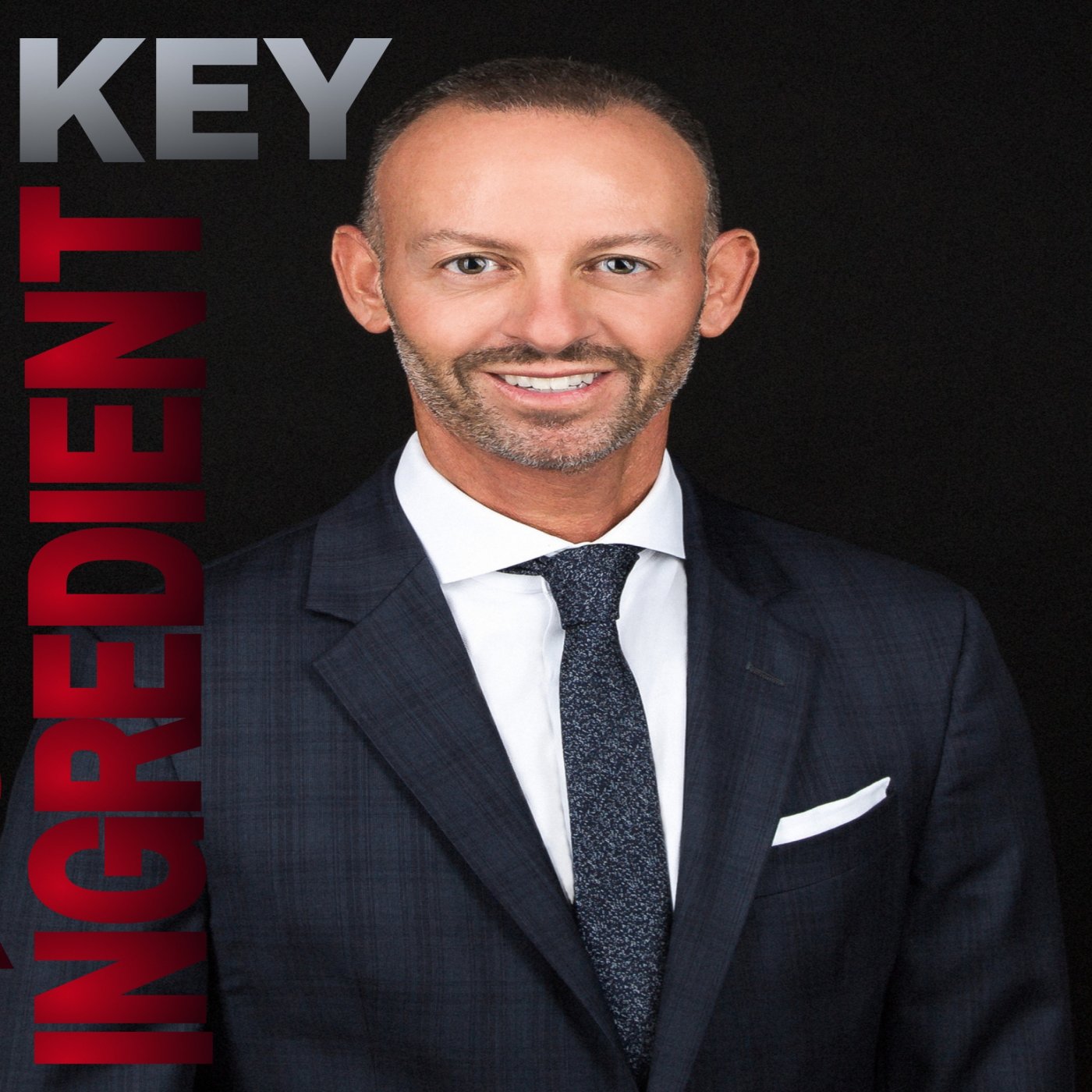
Spotlight on Good People by Robert of Philadelphia
This is your go-to source for inspiration, shining a light on the unsung heroes of Naples and Southwest Florida. From heartwarming stories to practical tips, we celebrate the people who make our slice of paradise more connected, compassionate, and kind. In a world full of noise, we’re here to uplift, inform, and inspire — one story at a time.
Spotlight on Good People by Robert of Philadelphia
Casino Myths, Water Truths: How the Tribe Funds Conservation
Use Left/Right to seek, Home/End to jump to start or end. Hold shift to jump forward or backward.
If you think the Miccosukee are history—think again. Popeye Osceola, Secretary of the Miccosukee Business Council, joins us for a gripping conversation on sovereignty, survival, and why protecting the Everglades and Big Cypress isn’t just cultural—it’s life or death for South Florida’s water. We get real about matrilineal clans, language reclamation, brutal chapters like Indian Removal, and the modern fight against bad-faith “consultation.” Popeye cuts through stereotypes (including the wild “aren’t you all gone?” myth), explains how gaming revenue actually funds environmental stewardship, and invites all of us to seek tribal voices first when policy touches the land.
Come for the history you were never taught; stay for a leader’s clarity, humor, and unshakable love for his people and the River of Grass.
So when I end up to be like, oh, I'm, I'm Miccosukee, I'm native. You'd be surprised how often I've heard, oh, we thought you were all dead. I think that's a big part of the reason why we deal with the issues we do today, because if people think we're not even here and they find out we're here, they're still not gonna give us priority.
Having been to public school here in Florida and Connecticut where I used to live for a few years, but also our Miccosukee Indian School, I got a wide variance on what education is being put out there, and I think it's by design. They don't highlight native history. Our objective is simply just to protect and save what protected and saved us.
There's no profit motive. You know, even the resort casino, that money is used to fight. For 1.1 million acres of land between the Big Cypress and the Everglades. I would ask that my fellow citizens who are non-tribal always lobby their governments to seek out tribal voices and matters. To do an environment, especially 'cause we're the ones who have the context of all the change.
Everybody says Lake Okeechobee. For us proper pronunciation would be obet. Anybody you see in South Florida, that's Miccosukee or Semino is descended from the less than 200 of us that remained after the Seminole Wars. So after sundown, it's just us. But before that, people are welcome to come and skate and I encourage them to do so.
No other skate park like it in the world. Everglade sunset's a beautiful thing. Everybody should experience it even better after you get a good skate session. And art, it is the closest thing we have to magic in life. Here's something that only existed in your mind now. Here it is. In real life like That's amazing.
Yeah. So this is this. You've been in a salon before with the one in New Orleans you said? Yeah. So this is your second salon. Well, I was actually mentioning, um, I used to be married to a hairstylist whose mother was also a hairstylist, and I realized is why I don't go to salons as much. Anytime she had to get her hair done, she made me go with her.
So I'd be there for like hour and a half, two hours just sitting there, not even getting this hair taken care of, watching somebody else. Right. So you did your time in a salon before then, huh? Yeah. Well, welcome back to the salon. It was much more inviting. Thank you. Yeah. Yeah. And we do owe you that, uh, that spiritual experience at the shampoo bowl, that head, neck and shoulder massage and the whole exfoliation.
Yeah, just the whole, uh, you know, help you wind down from your trip. You're always welcome back for that too. So definitely clears the skin and it clears the mind. Yeah. And, and I don't know what it is, but I you, a lot of women would kill for your hair. Man, I gotta tell you, look, I'm not trying to brag.
Every woman I've dated has been jealous of my nails grow fast, my skin is clear and my hair is long. And you know, just they ask, what's your secret? I'm like, uh, I conditioned it with 500 years of oppression. Well that was a lot of a big sacrifice for that then. Yeah. But I guess it paid off. Yeah. Yeah. Well done.
It looks good on camera. And Zach's got you on the good camera there too, so it's really gonna look great. Great. Alright. I wanna let everybody know, welcome back to the spotlight on good people, where we shine a light on the humans who are making our world more compassionate, connected, and kind. Today we have a profound honor of sharing space with William Popeye Ola, the youngest member of the Mic, Sui Business Council and Secretary of the Miccosukee Tribe of Indians of Florida.
At just 30 something years old. 36 now 36 years old. William stands as a bridge between worlds honoring the sacred traditions of his ancestors, while fearlessly navigating the complexities of modern tribal governance. As the grandson of past chairman Billy Cyprus, he carries not just a family legacy, but the hopes and dreams of an entire nation that has survived centuries of adversity with grace, dignity and unshakeable determination.
And in the little that I've known you just in the last half hour, I can definitely say you are a fierce force, and I love that. I'm, I'm, I'm honored to meet you and I really appreciate you taking the time to come here because we've been neighbors for my lifetime, most of my life and all of yours. And I, uh, I, I don't know a lot about.
What you've been up to and what you've dealt with in life and in just researching the, this conversation to meet with you. I've been fascinated by the rich, deep, incredible history that's right next door to us and, and the challenges that you've had to deal with in your lifetime. And I have a ton of respect for the fact that you've, uh, taken a stand.
You've really stood out for your generation because I, I imagine that's gotta be incredibly difficult to, um, to deal with, especially amongst such a small group of people. Yeah. I mean, your, your group is, you know, the size of my neighborhood pretty much. This is your whole nation. Yeah. Our current, well, first of all, I just wanna say to you for this invitation, I really appreciate it.
Mm-hmm. Um, our community is still pretty small. We're 667 enrolled members. Mm. Although we do have family who are maybe a part of semino or independent and not enrolled in either tribal government. Mm. But anybody you see in South Florida that's Miccosukee or Semino is descended from the less than 200 of us that remained after the Seminole Wars.
So, mm. We've been through quite a lot to make sure we're still here on this land and we're gonna make sure we do whatever we can to have a place here. Yeah. Well, I appreciate, and as I'm sure many do, uh, you are, you, you seem to me to be of an old soul anyway. You have you speak, uh, in a way that just in warming up with you here, I was like really moved by your, um, your passion, but also your knowledge of, uh, American history, native American history and just life in general.
It's been really neat to just get to know you and to have you make the drive over here. It's really cool. Yeah. And you know, to your comment about the history stuff, you know, I wouldn't take it too hard upon yourself. Um, having been to. Public school here in Florida and Connecticut where I used to live for a few years, but also our Miccosukee Indian School.
I got a wide variance on what education is being put out there. And I think it's by design. They don't highlight native history. Um, so anybody out there who really doesn't know Native History, it's not your fault Hmm. As a child, but as an adult, you do have the ability to seek out more. Yeah. So I, you know, say shaha again to you for seeking out more.
Yeah. Oh, well it's been really, it, it's had me thrilled to get to have this conversation with you because I love. Uh, history, but I also love that the tradition that, uh, you are working so hard to keep together and, and just the language alone to preserve that. And you were a teacher that is within your group?
Yes. Yeah. Yeah. I taught language arts. Um, our language is called, although quite honestly, that also is like the word we use just for our existence and how we live our life. Ah. Um, and at the Miccosukee and Indian School, I taught for over 10 years. I started off in pre-K after college. Uh, my degree is actually in computer animation.
Um, the school I went to was Full Sail University in Orlando and Full Sail is in accelerated program. So I got four years done in two. So when I finished, I figured, well, I'm ahead of schedule. I'll take some time off, hang out, travel. After about six months, I started losing my mind because of the intense schedule.
Full sail has you on. I was already programmed for that, and as much as I did not get sleep during those two years, my body acclimated and it's kind of what I like. So. I ended up working at our pre-K and then I moved onto our general education Miccosukee Indian School, taught Miccosukee Language Arts for about 10 years.
Um, towards the end of my time there, I was also allowed to teach digital arts, which again, that's what my degree is in. Mm-hmm. So I've always been drawn to education. You know, I tried to be a good student when I was in school, and as I became a teacher, I saw that this was my opportunity to provide what I wasn't always given as a child, which is an explanation or context.
And for me that's so important to have, so happy to be here to provide that for anybody who's interested. Yeah. This is great. So, uh, uh, tell me the word for the language again and which means more than just the language we call it? I, yes. Okay. I've been, I've seen it and I've been trying to pronounce it, but now hearing it if you correctly, well, it's a little tricky if you don't know the sounds, I guess, because some, they're very tonal.
Um, you know, for in our alpha. The letter K can make the K sound, but it also might represent the G sound. Hmm. In our language, we don't have the letter R. So if you talk to somebody from our tribe who's more fluent, you're gonna notice their words when it has a r might be a little bit more labored than maybe when you speak.
Ah, okay. So you were raised bilingual or how did you learn the Well, for me language has actually been a bit of a reclamation project because when I was young living out on the reservation, my language was very strong. I talked to elders, they, they would know what I was saying. I would know what they were saying.
When we moved to Connecticut, you know, my mom fell in love with a non-native man who's a good guy. Um, his name was Keith Brady. Unfortunately, he passed when I was young in a car accident. Oh wow. But moved to Connecticut and because of her. Upbringing and the rough existence that she had to face out here.
Um, she kind of was rejecting the culture a bit. So as a result, she didn't really speak the language to me or my siblings when we moved up to Connecticut. And I lost a lot of it. And I could tell, because anytime I came to to visit my dad, some of the community members, older ones would start talking to me, El Fungi.
'cause they just assumed I still knew how to speak it fluently. Mm-hmm. And you know, when we moved back down to Florida and I started going to Miccosukee Indian School and going to Miccosukee language arts classes, I was very reluctant to embrace it because I could tell how much I had lost. And you know, a lot of people do this instinctually, reflexively, where it's like, I feel lacking and I don't want to admit that, so I'm gonna act like I don't want it.
So I was resistant to reclaiming the language. But as I got older, you know, I kind of looped back around to see the value in all of this, especially as I got more. I don't wanna say connected to my grandmothers because I've always been connected to them. Like that's why I go by Popeye. It's a nickname my late grandmother Evelyn gave me.
Hmm. Um, but I started internalizing their message and their hopes, and I guess that's what I led with, and that's how I ended up teaching the language at the school. And I would always go from my experience of what would've helped me. I need to provide that for the students so that way they don't have to feel the way I did growing up.
Mm-hmm. How did you go about doing that? Because it wasn't like you, I, maybe there are, but are there a lot of textbooks? Like how do you teach a language that is, you know, uh, not very mainstream? It's been a bit of apu a back and forth push and pull with the community because there are differences of opinion within our community.
You know, I have grandparents who will say, you're only supposed to speak it, so you can't write it down. You can't record it. Wow. But then their siblings might say the opposite thing. Mm. Because they wanna make sure the language survives and that we continue as a people. And our whole existence is formed by the language we speak because it's been built up by our environment.
The context of our history. Hmm. Even the way we communicate, you know, our language is a bit more, this is what it is. It's just blunt descriptive. Hmm. You know, we don't even really have a word for love. We have words that kind of sounds that might mean similar, but not exactly. Mm-hmm. Um, so for us, sometimes people might feel that we're a little bit emotionally unavailable.
Mm-hmm. Certainly my exes would say that to you. But you know, living in Miami, I've dated Hispanic women and they often tell me that, oh, these American love songs have nothing on a Spanish love song just because of the language. Mm-hmm. Which is why okay, if it's about language, I get that. That's why the people in Miami are so passionate, I guess, when they speak.
Mm-hmm. Because the Spanish language does facilitate that. Ah, yeah. Yeah. Language. Is the basis for the emotion if there's something there to articulate it. Yeah, that makes sense. Yeah. You have a real, it seems to me, a real high degree of self-awareness. Where does that come from? Where do you, uh, how did that end up in you?
Anxiety. Doubt. You know, I had a lot of that growing up, so I'm always like conscious of myself in the space I'm in. And you know, growing up in the reservation we didn't always give each other positive reinforcement 'cause we weren't shown that. Hmm. So, you know, kind of got thick skins learned to grow that 'cause we're always joking on each other and doing stuff together, like having fun, which kind of made that connection like, all right, even though you just made that joke on me, everybody's laughing on me now you're like helping me do this.
So it's like, it's a little weird, but I guess we're friends. You know, I guess you care. This is how you show that. And I just realized growing up how much anxiety that built in me. And I wanted to make sure we can have like a better avenue for the kids where they don't have to go through all this, all this anxiety.
Mm-hmm. At the same time, like I said, I do contribute that for the self-awareness I have, but also teaching for so long, especially, uh, in pre-K, you have to be aware of yourself so that way you can present the version of yourself that's gonna work for your audience. Mm. So even when I was teaching, I realized a lot of people have a resistance because a lot of them have this perspective, but I just wanna be myself and they feel like they can't beat themselves in front of a kid.
Mm-hmm. And it's like, you can still be yourself. We're just asking you to be a better version of yourself. That's what I had to learn. Mm-hmm. Like, I'm still communicating and thinking as I would when I'm talking to these students. I'm just not gonna swear in front of them. I'm not gonna make off the cuff jokes because I know my audience, but I'm still being me.
Mm-hmm. What had you go from, so you, you were trained at Full Sail as a computer animator. Computer animator, and what had you get into the teaching world? What led you to that? Well, as I mentioned before, I graduated early, so I moved back down to South Florida and. You know, I was kind of hanging around traveling and I would go by our office, our administration building, even before I went to college.
I would go by there a lot 'cause my grandparents worked there. So I had to go visit them and talk to them and just learn history, learn how the government functions, what's going on day to day, that type of stuff. Mm-hmm. Um, so I was going to the office one day to visit a cousin of mine who was working as a secretary, or, no, actually no, I think I was visiting my grandmother that day.
And then I was walking out of the office towards where our school was and a community member by the, uh, name of late Marilyn Huggins. She saw me walking, she's like, oh, hey Popeye, what's going on? And I was like, oh, just hanging out. Maybe I'll go to the gym. She's like, oh, well, about to do this parent fundraising meeting.
Why don't you come join us? And I told her, well, I'm not a parent. And she was like, yeah, but it's your community. You went to school here, you can still help out. And she was right. It made sense. I was like, yeah, okay. So I just walked into the meeting with her, just tried to see how I could help. And the cousin I was referring to.
My timeline was a little shifted at this point. She was actually the interim director of our pre-K. She was there to volunteer at the meeting as well, and she was letting it be known, oh, we need native staff at the pre-K to help with language. And she said, if you're interested, there's a position. So I ended up applying, working in our pre-K department for about a year and a half.
Um, when she left, I left, you know, she was a great boss to me, and I felt a little uncertain about my place without her there. Hmm. Um, but then I started going stir crazy again, just hanging out at home. Ended up applying to the school because they needed A Miccosukee assistant for fourth grade. So I showed up in the summer to start planning and prepping, and the principal at the time told me, well, actually our entire Miccosukee language Arts department quit.
So we need you to teach that instead. So instead of being an assistant for a fourth grade class, I ended up having to teach like all these grades from like primary grade to like middle or high school, you know, and it was like, well, I guess this is what they need, so I'll do what I can. And that's how it began.
Yeah. But the one consistent through line in each point of my life is there's been a woman there to provide guidance. Mm. And for me, it's like, oh, okay. This is why we're matrilineal women know what they're doing. Mm-hmm. Oh, ex there's so many things inside of me boiling out. I, I know that a lot of people don't know.
Could you, could you describe that for people who don't know and including myself? 'cause I've only read a little bit about it. The lineage on the mother's side and the, and the, the way, um, I, I don't know what they're called. I don't remember the word. Well, we have, um, clans. Okay. And you get your clan from your mother.
It's passed down through that way. And for us, clan relations are just as important, if not more important than blood relations. So I could have somebody living in a community who's bird clan, and even though I'm not related to them by blood, they are still my family member. Mm-hmm. And for us. It keeps us more connected and accountable to each other.
I would say, um, if you actually embrace it, you're never alone. It also gives a little bit of sense of identity. Just, I won't go too much into it, but our clans do have like origin stories that kind of provide, um, an idea of what our role is in the community and the tribe and the culture. So as a bird clan, since there's so many of us, we're the ones who kind of we're the ones who are supposed to work, help get things done.
So I guess I'm kind of living it out in that sense. Ah, but yeah, clans are very important to us and that is what we need to continue propagating if you want our culture to be as alive and relevant as it is today. So a somebody on your mother's side, would that be a relation to your mother when, when you say it that way, like your mother's sister, cousin, somebody?
Yeah, and actually, um, you know, I'm sure a lot of. People from outside of America can relate to this sense. 'cause I think it's really only in America that you have that concept of the nuclear family so disconnected from each other. Mm. Other places tend to be like, yeah, we're all together, we're a family, why wouldn't we be?
Mm. Growing up we would have our, our camps, you don't have single family homes, you have a camp. Mm-hmm. You might have your chick, but you all eat at the same eating chick. You all cook under the same cooking chick. All that stuff. It's communal uhhuh. And in our culture, the mother's side is the most important.
So, you know, even growing up, the fathers would be like, oh, why are you bothering me? I'm just the dad. I'm not important. Go talk to your uncle. Mm-hmm. So for example, as an uncle, I'm the one who's expected to teach my sister's children about life things. Normally a father would, if there's, if they get in trouble, I'm the one who's supposed to institute consequences.
All that stuff you would expect a father to do that falls on the mother's brothers because again, it's all about mom's side, since that's where your clan comes from. Uh. The different clans. Go back to the meanings of the, yours is a the bird clan. Is that right? Yes. And there's a Panther clan. Yep. Uh, and there are others, and I don't remember, well, I'll go through the ones that we still have left.
Yes, Seminole has a couple more. But for us, we just have Panther Bird, Otter Wind, big town and what we call, they're called that because there are people that after colonization started happening, our tribe came across them and the Otter clan decided, Hey, we will adopt them in. We'll be like an uncle to them.
We'll keep an eye out for them. Hmm. But they had their own language and because we didn't know what that was, we just kind of called him dedi. 'cause that's kind of, I guess, what it sounded like when they spoke. Ah, dedi. Yeah. Okay. Is there still meaning behind each one of those, the origin of those? Like a panther.
Clan or the, yeah. Uh, we do have an origin story. I won't go too much into it, but I will say, I think you can find variations of it out there. But, you know, there was this in the stories, you know, all the different clans that we get our clan ship from, they're all kind of together. And as they exit out into the world, Panther was the one that kind of was the first to walk the land.
So that's why they hold such a high, um, I don't wanna say priority, but a position of authority culturally within our tribe. Mm-hmm. Because I saw another name, uh, Osceola. What's the correct pronunciation of that? In my tribe, we would say a, a yes. Okay. There is another woman, uh, Betty. Uh, who, but she's of a different clan.
Uh, clan. She is Panther Clan or I'm assuming you're referring to Ola. Yes. Yes. She's Miccosukee and Panther Clan. Okay, so same surname, but a different clan. Yeah. Okay. I mean, our last names come from important figures in our history. We didn't have last names until we had to start dealing with the outside government.
Who demanded that? We have last names. Oh, so Oceola. That's why you see Oceola or Billy or Tiger Tail names like that for last names because those were important figures during the 18 hundreds. Oh wow. Wow. This is fascinating. It's so cool. Like to just hear this for the first time in my life. It's very cool to know this.
So good to see. For forgive my, uh, I don't know. My, uh, naiveness. You're talking to a former teacher. I'm always happy when I see somebody excited at knowledge. Cool. Thank you for that. I, uh, it's thrilling to me. I, for, for people who don't know 'cause it's all new to me. Could you give people a summary of. Uh, the, the origin 'cause I think it's very young that it's just been in my lifetime almost, that you were, became a sovereign nation or that your people became a sovereign nation, which is a big deal.
Well, it's been in recent times that our sovereignty has been acknowledged, but we've always been a sovereign people since time immemorial. Okay. And for those who aren't aware, uh, time, since time immemorial is a phrase, a lot of tribe Jews, because we don't have, what does that mean? It basically means that the history goes so far back that it's not written down, it's just passed on verbally.
Gotcha. Okay. And that's how a lot of us operate as tribal people. We didn't develop written languages per se, we just communicate it to each other as people. Ah. So we've been sovereign since time immemorial, but the federal government has only acknowledged it since 1962. Ah, and there, okay. So take us through that process historically.
Um, sure. A little background, uh, even though. This area of Florida has always been part of our traditional ranging lands. And for us, we kind of link it to certain plants that we use for our culture. If that plant is found in the land, that means we've been a part of that land. But we used to live more predominantly in North Florida where you can actually find on a map Lake Miccosukee in the town of Miccosukee.
But you won't find any Miccosukee. That's where we used to be. Oh, okay. And as American encroachment started happening, we got pushed down into the Everglades. But even before that, um, you know, when you had the English here settle, uh, settling up in the Carolinas, in the French out past Mississippi and the Spanish and Florida, we used to kind of work with the Spanish because, you know, they weren't fans of the English.
Mm-hmm. And in North Florida, it kind of provided us supplies and just used this almost as like a buffer between them and the English. Ah. Um, after Spain sewed Florida. To Britain and eventually America, that's when you really saw a lot of that removal, Indian removal time, them trying to get us off the land and out to Oklahoma.
And then that's when you had the three Seminole wars. Um, it was around the time of the second Seminole war where our ancestor, ab bca was Sam Jones, who basically told us, you know, I kind of look at him as like a Miccosukee Moses figure. Mm. He basically said to the people, we are gonna go further into the swamp.
It is gonna save and protect us, trust me on this. And we listened to him. And that's why you still have unconquered, Miccosukee and Seminoles in Florida, ah, because of this elder who had this vision. And we followed that. We trusted him and it turned out to be true. And the threat was they were coming in and remove the government was coming in and removing.
Yes. Um, actually that's a very interesting part there because, um, I always like to highlight this when I tell people the history less than. Well, I guess that's 1830. You have the Indian Removal Act passed by Andrew Jackson. Barely 50 years into this country's existence, you have a massive failure of checks and balances 'cause Andrew Jackson Pursu or pursued Indian removal and the Supreme Court ruled it unconstitutional.
And I think that's important because even back then, the Constitution applied to people. They knew, they, they didn't consider citizens, they barely considered natives people, but they knew this constitution provides rights to these people on this land, whether or not there are citizens. Mm. So to me, it's a bit ridiculous that people are trying to debate something that was already settled back in the 1830s.
Wow. And, uh, when Andrew Jackson instituted Indian removal, as I said, the Supreme Court had ruled that unconstitutional. Andrew Jackson basically said, I hear you. Stop me. And nobody stopped them. And you had the forced removal of thousands of people from their land forced marches where a lot of women, children, and elderly passed away.
Wow. Uh, why? Well, it's usually same reason we deal with a lot of issues today, biases and racism, unfortunately. Mm-hmm. Um, Andrew Jackson made his name fighting Natives. In fact, I know he was a fan of One Creek Native, but that's 'cause that Creek Native reminded him of himself, you know? Mm-hmm. Um, a guy who was, I guess, willing to assimilate.
And it's just unfortunate that we still see a lot of that mentality propagating to this day. Mm. I mean, you still see people in positions of power elevating Andrew Jackson as some sort of aspirational figure. Mm, yeah. I, I, I don't know a lot about that period either and or what I remember or was taught.
And to hear that. I mean, it's sad to me. It saddens me because I, you know, I mean, he wouldn't be on this podcast. I know that. Yeah. Right. Not as a good person. Right. No. Um, what was so, so essentially going deep into the Everglades saved this Yes. Tribe from, from that threat, it protected and saved us. And for us, there's no other perspective they Everglades in the Big Cyrus other than we need to protect and save it or save it since that's what it afforded us.
It's as simple as that. Yeah. Even in the Miccosukee constitution, in the preamble, as far as I know, us and Bolivia are the only nations that have something about the environment and its constitution. Our preamble says we have to conserve our land and resources for future generations. Hmm. That's why everything we do as a government is geared towards protecting the environment, because that's where we get our culture from and that's what keeps us alive as a distinct people.
Ah, wow. There was a, um. Uh, I don't wanna butcher it. There was a, uh, a phrase that I saw or that I discovered online, which was, um,
I'm butchering it. I can try reading it for you if you want. Yeah. About the middle of the way there.
Does that mean anything to you? Is it that, uh, it said that when I was researching it, it did it, it said this could or could not be correct. It was something about the lands. It was a, it was a, uh.
I think some parts, but like I mentioned before, some of the language stuff is reclamation for me. So yeah, I'd have to think about this one a little bit. But you know, the nice thing about that is that it always gives me an opportunity to like call an elder or somebody older in the community. Yeah. Just be like, Hey, what's this word mean?
Yeah. And you know, you wouldn't be, maybe you would be surprised. Well, even like somebody who speaks like Spanish, or maybe your family speaks Italian when they're not speaking to each other as much, it takes a second for them, even the older ones to like, oh sure. Remember a word, you know? Yeah. Yeah. But I'll probably give my dad a call after just to be like, Hey, is this ringing any bells?
I can recognize some stuff, but, yeah. Yeah. And you know, it may not even be correct on online because Chachi PT was trying to figure this out. Me. Yeah. And sometimes they write stuff in a weird way, like, you know, we're the Miccosukee tribe. And that's like more of an Anglo size way to pronounce it. Ah, in our culture.
Yeah. Yeah. We would say mega. Oh. Or as I mentioned, Oola. We would say ette. Wow. That's way different. A couple other examples. Everybody says Lake Okeechobee. For us, proper pronunciation would be obe. You go in Miami, you have Hial. That comes from our word hayle. I did not know that. I thought different things, thought that was Spanish word.
I didn't know that. Really. I mean, I'm sure they claimed it, but we know where it came from. Yeah. Yeah. That makes more sense. How about, um, in Ali, is it iLet? iLet, mla? Yeah. Mt. So there's all these different names. You know, I lived in Connecticut as a child, and I, especially as I learned more native history, I learned about that policy, um, during the assimilation era that Henry Dahls and then pursued this idea of killed Indian, save the man.
We're gonna take away everything that makes them native, civilized them, assimilate them, and saved their souls. And I realized they shifted over time from, instead of killed the Indian, save the Man, it's like killed Indian. Save the name. A lot of places you'll find you won't find the presence of the actual tribal people, but you see all these names that come from them.
Yeah. Yeah. Wow. Oh, it's like, again, like Massachusetts, Minnesota, places like that, those are all tribal people or names or things? Words that they used. Massachusetts. Yeah. Really? Wow. Am I ignorant? Gosh. I mean, I mean, to me it's just, um, a great example of how, you know, unfortunately this country has a tendency to kind of take something, strip it of its meeting and then try to exploit it as much as they can.
Mm. That's been our experience as native people. Yeah. And I think that's been true ever since like, like Jamestown. A lot of people get it in their minds, like, oh, they started coming over here for freedom, religious freedom. And it's like, no, it's always been a business venture, you know? Yeah. And I think that is why the history has played out as it, as it has.
Yeah. It gives me a, a, a lot more, um. I have a lot more reverence for and appreciation for, because those names and words are everywhere. I mean, they are all over the elementary school that my kids went to Was your last name? Yeah. Your last name. Now what's the right way to say it? It's not, Oceola can say Oceola.
I, I know, but I, I really, I love the tradition of it, so I like to hear that. All that it truly is, uh, I would say ette. Ette. Yeah. I'm gonna memorize that ette. But that's even the, the symbolism. 'cause I say Imm Lee Road every day. I live off that road. But just that, that it's, it rings even though it's a, it's a, it might be a, uh.
A bastard Lee way to have the name or, or not really an honorable way, but to me, every time I hear that now or see that, or think of that, it's a real reminder to me of the richness and the heritage that was here long before. And it gives me a even greater appreciation for what you're fighting for and what you're about.
So I No, thank you. I love that. And I, um, it's, it's why I even get like that, that Zach. Got a hold of you and that you were able to come into town like that. This is a great opportunity and especially for people who live here and have lived here, and we get people coming in every single day to this area.
You know, it's just flooded with people moving here because of the, of how, what it is, how beautiful it is, and, and, uh, it is a beautiful part of the land. You know, especially look at the Everglades. No other place like it in America. Yeah, in the world. Largest river, river of brass. Yeah. I was, uh, we had Clyde Butcher, the photographer on uh.
About a month ago or so, we went to meet with him. Oh, really quick. Can I say great photos or great photos. Even better. Last name. What a last name Butcher, you know? Yeah. Yeah. So cool. Yeah. He was an, he was a wildly interesting, uh, extraordinary man and his love and his appreciation for the Everglades is like his passion.
His whole world exists around the preservation of them. And, and he, and he's from No, I always find it admirable when others are able to find the beauty and appreciate it as well. And you see it in his photos that clearly Yeah. He loves this land and he wants you to see it the way he sees it. Yes. Just like we want to explain to others how we see it.
Yes. Um, actually I do wanna put something out there if anybody's interested. Uh, we did work with Artis, Naples Baker Museum. Mm-hmm. On an exhibit entangled in the mangroves. Um, some of the artists are, you know, most of the artists were non-native, but they are showing their perspective of the Everglades.
Yeah. But we also have a native artist, Houston Cyprus, who contributed some as well. Um, they worked in tandem with our science departments to provide accurate information on the Everglades and Big Cyrus. Mm. And I actually did write a forward and some introductions for them, so if anybody's interested, they're welcome to go check it out.
Yeah, awesome. I would highly encourage them to do so, so they can, if they're not able to get out to the Everglades themselves, at least they can see the beauty of it from these people's perspectives. Yeah. How awesome. Yeah, I just think there's such an opportunity to, we just, in our family of, uh, our team here at the salons, we have about 60 and in in their families and their families, families and their children that they're raising.
Uh, there's such an opportunity to, to teach them whether the school system is doing it or not, but to educate them by just bringing them to the Everglades and to your, um, area to visit to see what is right here and, and to teach them what's going on and, and, and the rich history of it in our own way.
'cause there's so much to learn from. And now it's great because it's not just when I was. Growing up, there was one textbook that was usually written 20 years before we went to school. It was an old book that was not updated and it was somebody's interpretation of it. Now we can see so many of the real truths that are out there, which makes it kind of exciting.
'cause now I get to make up my own mind. I can read all of it and say, well this is good. I like this. I don't like that. And, and follow it that way. So because of that and the age that you're growing up, and I imagine that's a big deal in the transition for your culture as well. Um, and maybe why you are, you have been the chosen one to be the voice for everyone there, uh, because your generation now, um, it has opened up a new world and a new way to, for you to get the word out.
Yeah. It's interesting my generation, because, you know, we grew up just as the internet was breaking wide open. Yeah. So we had exposure to all these different things and you know, at first we're like, oh, that's fun and exciting. And then as you get older you kind of go back and like find the value in what you.
Yeah. The generation I see now seems to have, you know, they do like things in a modern world, but I see this fire in them that's burning bigger than my generation's fire, where they see like, no, we really want to make sure the culture survives. Mm. We want to embrace it. Mm. You know, for my generation it was something we had to come to terms with and accept and we do love it.
But it wasn't always just, you would just presume, oh, that's you're coach. Of course you love it. It's like, no, we had to get there. Yeah. But the younger people, I'm so inspired by them. Um, you know, maybe I'm biased because I was working for them, so, mm. You know, they're, they're gonna learn, they're gonna make mistakes that happens, but I feel like they're in a much better position than I was when I was their age.
Yeah. Well, and you've been a part of inspiring them to be that too, which is kind of cool. 'cause Yeah. You know, I have a hard time accepting that, not because I'm like, you know, I'm pretty confident in myself and, but the thing I've noticed, especially in this country, is like, I have a tendency to gravitate towards a cult.
The personality figures. And I've always been big on like, don't focus on the messenger, focus on the message, you know? Mm mm And tell people a story about something that happened and they was like, who did it happen to? It's like, no, it's not about who it happened to. It's about how can you use this experience for your life?
Mm. What can you learn from it? Mm. So I, I'm always hesitant for people to kind of like glom onto me as a figure too much, because I don't want them to lose the sense of, it could easily be you up here speaking. You just gotta prepare yourself. You just gotta seek it out. Yeah. Well, you've been one to take a stand for it.
So that's, well, I mean, I don't know. I think I also enjoyed being in front of the kids in pre-K, so I'm always seeking that out. I really miss teaching, so I don't mind having an audience if I get a chance to teach, you know? Mm-hmm, mm-hmm. As long as I'm teaching. Who was a, who was a big influence on you growing up?
You know, my late grandfather Billy, who worked for the tribe as chairman off and on for decades, so seeing his dedication and how things have been built up. And I always wanna highlight though, my grandmothers Evelyn and Peggy, as well as my aunts, June, Morningstar, Faron, Doris no longer with us, but you know, these women, they just made me feel loved and like I belonged.
Mm-hmm. You know? Mm-hmm. And I think that's so important, even now as an uncle, I'm always just thinking like, how can I provide my nieces and nephews, what my aunts provided me, how they made me feel? Mm-hmm. That's what I wanna give to them. And my grandmothers have always been the strongest presence in my life.
Mm-hmm. You know, our community wasn't always comfortable showing affection. That's part of, uh, what they call intergenerational trauma Sustained During the war times, a lot of people don't realize this, but during the wars it was total extermination type stuff. And unfortunately, some of our women, if the baby was crying and you're hiding in the woods and the soldiers are coming.
Sometimes they might have to smother the baby so everybody else can survive as a result. You know, there's kind of an emotional disconnect that grew. Mm-hmm. That trauma grew bigger from all the atrocities we had to face as a people. Mm. And we as a result, didn't always show affection. But my grandmother, Peggy has been somebody that has always shown affection, is always hugging and kissing you, letting you know that she loves you.
She's kind of an outlier in that sense. Mm-hmm. So as much as I have had problems with people just dealing with them, in my experience, that exposure to how she was when I was a kid, it's a big part of reason why I do what I do now and why I try to provide what I can to the kids. My grandmother, Evelyn, she worked in tribal government for decades as well.
That dedication, that's been internal. Like I mentioned, I go by Popeye because that's the nickname she gave me. Mm-hmm. Anytime I was gonna do something to Major in life. My mom and dad might say something, but that's just their opinion. Mm-hmm. What my grandma says is guidance. Mm-hmm. So I'm more likely to follow that.
Mm. Um, it's been a bit hard since she's not with us. So it's kind of like, well I gotta take all those lessons she taught me and just move forward with that now. 'cause she's not there. Yeah. But she's, you know, as long as people call me Popeye, she's always close to me. Yeah. And that is anything I've ever seen about you or read about you or watched about you that is the world knows you as Popeye.
I mean, I appreciate it because like you think of Popeye, you got good connotations. Either maybe you like the cartoon and spinach, or maybe you like chicken. Either way it works for me. That's great. What, um, what was it that got you. Into government. 'cause that's a shift. I've just always been politically aware, you know, I grew up around my uncles who are not fans of the American government because they know their history.
So even at a young age mm-hmm. Um, I had some sense that the way we are as a people is different from everybody else. You know, I moved to Connecticut when I was around four years old. I remember having my fifth birthday party up there, my grandparents up there, non-natives, but very loving people. Mm-hmm. I do wanna shout them out as well.
Mm-hmm. Um, in Connecticut, my late grandmother Joan, my late grandfather John, um, I have other grandparents up there who are still with us, fortunately. Mm-hmm. But they were the ones who, oh, sorry. I said John. I meant Joe, grandpa Joe. I just got confused 'cause I have a nephew now named Joe who's named after him.
Oh, cool. And he has sons named John. So I got a little confused, but you know, I always appreciate their presence. With that being said, when I was up there, I remember being in kindergarten and it was Thanksgiving and they were having us draw pilgrims in natives. Wow. And I remember I drew a picture of a native shooting, a bow and arrow standing on one side of the woods.
And on the other side of the picture was a pilgrim, but I didn't want to get in trouble, so I drew a Turkey in the middle and I was like, boy, shooting it at the Turkey. Ah. So I always knew there was like a difference between us because I'm like, that doesn't sound like my history. That doesn't look like me.
That one looks more like me. Yeah. And as I grew older, I don't know I, I'll say this, I started watching a daily show at a really young age in the nineties when John Stewart took over. Mm-hmm. And I really liked that show. So I always had a sense of like political consciousness. 'cause I distinctly remember in the lead up to the 2000 election when Bush and Gore, our primary school, elementary school, had a mock election.
And even, what grade was I in? Maybe like fourth or fifth grade. I remember joking to my friends, what they're having us vote for Bush or Gore. So they're having us vote for either sex or violence. So even at that young age, not even in middle school, I had a sense of like politics and Yeah. American society and that push and pull.
Yeah. And certainly growing up in the shadow of nine 11, that just even kickstarted that sense of political awareness even more. Yeah. You know, I was adamantly anti bush, um, even more so on anti Reagan, you know, I just do not have respect for those people who think that government is not there to serve the people.
Um, but I always had that awareness and it's just grown since then. Especially as I learned more history, not just our history, but world history, you know, I remember shopping at Banana Republic when I was younger and thinking, what a name. And then I looked into it, I'm like, wow, this is coming from like the damage, the term for the damage America did to like central, like Latin American countries.
And now they're just using it as a name of, like a high price store for rich people to go buy clothes. Mm. You know, it just, I didn't know that. Yeah. It says a lot about how things kind of get filtered through here. Yeah. So you. Brought that mindset to, because you, you, you have a government that it's its own.
What's the structure like there? 'cause it's, it's its own co You have your own constitution and you're sovereign. So what does, what does that mean? We have, as far as our, our tribal government, we have our constitution. And that constitution sets up a couple governing bodies. We have our general council, which is anybody enrolled in the tribe who is over 18.
They're allowed to vote on larger issues. And we have quarterly meetings called general council meetings, where myself and the rest of our business council, which is our elected officials, which includes our chairman, Talbert Cypress, our assistant chairman, Lucas Oola, myself, the secretary, our treasurer Kenneth Cypress, and our lawmaker, Pete Osceola Jr.
So together we run the day-to-day operations. And we have specific areas that we oversee as dictated either by our constitution or by what the Chairman feels we would be best suited for. Uh, in my office, we oversee the paperwork, enrollment for the tribe. When it's election time like it is now. My office works with our election board to make sure everything proceeds as it should.
But since I was an educator, the chairman has really enabled me to do a lot of educational outreach. Mm-hmm. As well as media stuff, since I do have that degree in computer animation. So trying to make sure he sets me up for success, which I always appreciate, you know? Mm mm. Play to people's strengths. Mm.
So that's how we function day to day is the business council together, making decisions, keeping in contact. We have weekly meetings every week where we just all come together to get updates together. So we're getting the news together and it's not just the last thing we want in our government is fractional as seeing how American governments proceeded.
That has been the biggest issue, partisanship. So we try to not fall into that, but we're humans, so sometimes it happens. Mm-hmm. As I mentioned, general counsel, they have quarterly meetings where we basically update them on the business and if there's larger issues that we need a decision on that's gonna impact the community as a whole, they're able to vote on those.
Hmm. And what are the pressing issues now? Well, for us, we have this detention facility, a concentration cap being built along the big Cyprus, and that was done without any cons consultation with us in that land. It's part of our traditional lands. We fought hard centuries, decades in recent years. Sorry.
Just take a quick sip while, yeah, go ahead. Yeah, yeah. Let's take your, take your breath, take your time.
As I was saying, we have fought a long time to. Secure our sovereign rights as a people in this land. And as I've been speaking upon this issue out there, a lot of people are revealing their ignorance. And I don't mean that in a bad way, even though bad things happen from it. You know, I realize as a teacher, ignorance is not always malicious.
Sometimes you don't know what you don't know. 'cause nobody ever put the information in front of you. Mm-hmm. But I hear a lot of people saying, oh, the tribe didn't care back then. Why do they care now? What's going on out there? Mm-hmm. And that's just ignorant because back in the sixties, they were trying to build the world's biggest airport out in the Big Cypress.
Mm. And the only reason that construction stopped was because the tribe, the Gladman, and the environmentalists came together, lobbied politicians and were able to put a stop to the construction of the Jetport, the airport runway that we have out there now, still to this day. After that, in the seventies, we were able to get the Big Cypress Preserve established the world.
Or America's first preserve was Big Cypress. Well, what does that mean, preserve? It's, it's being preserved. Is it park like or, yeah, it's, it's not supposed to be developed. It's, it's a little bit different than a national park. Okay. But it is just what it says, preserved. We're gonna conserve this land, make sure it's available for future generations.
Okay. Now, after that happened, it's been decades where we've been still trying to make sure our rights as a people are respected. And it's only been in the past few years that we got co stewardship agreements set up with the different parks around us. And those co stewardship agreements basically say that those parks are actually gonna work hand in hand with us on the policies that are being developed for the betterment of that land.
You know, even though the tribe is supposed to be consulted in issues to do a big Cypress, Cindy Everglades, that has been done, I would say, in bad faith. Mm. Because sometimes state or federal government, they might send a letter to the tribe, basically letting us know something's gonna happen. And before we can even respond, they just say, well, we consulted with the tribe.
It's like just checking a box. But they didn't really do that. Mm. So there's always been issues with our voice being heard out there. Mm. But I think it's important because as I mentioned earlier, our objective is simply just to protect and save what protected and saved us. There's no profit motive. Yeah.
You know, even the resort, the casino, that money is used to fight for 1.1 million acres of land between the Big Cypress and Everglades, preserve that land, fix it as much as we can. Mm-hmm. Mm-hmm. And it's not just tribe's future tied to that land. There's an aqua fire under the Everglades that provides fresh water to millions of South Floridians.
Mm-hmm. And when that's gone, it's just gonna be like Arizona with a beachfront. Mm. Mm-hmm. And I don't know anybody that wants to be in Arizona. Yeah. No, no. I like where we are. Yeah. Here. So, yeah, I did see that, that, that the funds from that are generated from that. That's the mission of that, that you're out to.
Yeah. Save what we have here. The specialness of it. Yeah. You know, I do wanna make a quick note about the casino and resort, because growing up I've traveled across the country and people sometimes they recognize, Hey, you look a little different. They ask like, oh, what are you? I've always said, I'm a person, which people hate when you just relate to them.
I'm just a human like you. Yeah. They always want to kind of compartmentalize you, box you down, something consumable they can digest. Right. So when I end up to be like, oh, I'm, I'm Miccosukee, I'm native. You'd be surprised how often I've heard, oh, we thought you were all dead. So I think that's a big part of the reason why we deal with the issues we do today.
Because if people think we're not even here and they find out we're here, they're still not gonna give us priority and our voice just because they we're not dead like they thought they were. Yeah. Which I imagine has to be just like such the, um, I, the challenge to overcome, like just this get, we're here and we've been here a lot longer than any of you.
And, uh, you know, we have something to say. Yeah. And I, you know, I, this is great for me to educate me, to educate the people who live in this, in this community too. 'cause I, I love the fact that you're fighting for the preservation of your heritage and preservation of your people. And, 'cause I, you know, growing up in, as I mentioned.
Outside of Philadelphia, in our little neighborhood of the immigrants from Italy that stuck together and we were raised by everyone on the street when I was out there doing something bad, if my neighbor saw me doing it, he, he disciplined me, told me, knock it off. 'cause we were raised by the village of Italians in that little community.
Call that Camp Justice. Yes. You're in the camp, you gotta know how to act. Anybody in the camp that sees you acting wrong has the right to let you know Yeah. How to act. Right? Yeah. There's nothing wrong with that. It's raised by that village. Yeah. They camp justice. I like that. Shows people care. Yeah.
That's what it is. Yeah. Caring. Yeah. A hundred percent. So your grandfather and his role, so, so this, so did the, did the council was, was this formation in 62? 'cause there was always sort of a. It had to be some type of a, a, a governing body I guess. Yeah, yeah, yeah. Yeah. And it used to be more culturally based.
You had your elders and the medicine men and the medicine men, you know, they kind of provided that for the whole tribe, that cultural guidance. But day to day, for me, certainly within the camp, you're gonna listen to grandma eldest woman 'cause she's the one who sees over the whole camp. Yeah. But as far as like more like the political realm and things like that.
Yeah. It would be the older men who would come together and discuss things. Okay. Okay. So it's not too different from that American phrase of like, happy wife, happy life, you know, who runs the house, you know? Yeah, yeah. Well now what's that been like? You being the youngest, is that the youngest ever? I'm not sure of the youngest ever.
I was 32 when I got on council. I know folks like my late grandpa Billy were in their thirties when they started getting involved with the tribal government. Okay. I'd have to go look at specific numbers, but in recent years, certainly I've been the youngest councilman. Yeah. And uh, that's. I, I, for what I see, it's, it's not com Well, it's not common anywhere, I don't think.
I think it doesn't seem to be, I do wanna highlight that people discredit younger people way too often. I've always been a bit frightened of teenagers. Even when I was one thinking about, like, you look at most of the worlds in the history of the world, life-changing events fought by teenagers. Yeah.
Directed by older men who don't have to fight, but it was teenagers fighting even. Yeah. Right. That's very true. Yeah. In the American Revolution, you look at guys like Nathaniel Hale, they were barely even 20 when they were out there changing. Mm-hmm. You debatable for good or worse, depending on where you're sitting, but they were out there doing it.
Mm-hmm. Yes. They had guys like Ben Franklin, elders there to help guide them, but so much was driven by young people. Yeah. And like I mentioned, my grandfather, he was in his thirties when he got involved with the tribe. Um, unfortunately, just like in America. Some of these older figures who got into these positions became entrenched and it kind of came a little, became a little difficult for younger people to kind of a place.
Yeah. That's what I'm here to try to make sure that younger people realize they have a place, have value. We need everybody on here. Yeah. I couldn't agree more. And I, I see the, the drawbacks of what's happening in our, in, in government now where you have these people that are entrenched Yeah. And year after year after year.
And they're just beyond their year. I mean, they, they're not, they wouldn't even be able to be licensed to fly an airplane. Yeah. 'cause they're too old. But yet they can run our country and tell us what to do. That's a bit absurd. You, that's, that's scary. It's not even like we want them gone, it's just they need to sometimes make room for others who can Yes.
Who still have that fire that, that fight in them. Yes. You know, even in our culture, if you're an elder, you're not gonna be the one who's expected to be like building the chickie, but you're still there on the side to provide guidance to support to those who are building the chickie. Yeah. So everybody's always supposed to have a place.
It's just, you know, like any people, anybody who's human power tends to be very seductive, right? Yeah. So that's always the battle is like, how do I not get too sucked in by this concept of power and what that might afford me? Yeah. How does the, um, because it seems like you've got, you've got your communities where people live, you've got businesses.
So is the council all involved in all of that? Do they, are they making decisions about all those things? Uh, the businesses and the, well, for example, the tribal enterprises are businesses. Uh, we do have direct input on that, although it depends. For example, our village, the tourist village, most people come to visit that's under our lawmaker's office.
He oversees that. So of course the decisions are in his hands, predominantly. Mm-hmm. But he'll reach out to us to get guidance or let us know something big and. You know, he often has me help him out with stuff, which I'm always appreciative of, you know? Mm-hmm. I always wanna make sure we collaborate as best as we can.
Mm-hmm. Um, so that way, just too, we're better informed on what's going on in our different areas. Mm-hmm. Our gas station and airboats, that's under our treasurer's office. Hmm. You know, even though the resort is overseen by all of us on business council, our assistant chairman who has a background in gaming and knowledge, you know, he's the one who's predominantly overseeing that day to day as a communication between us and our general manager there.
Mm-hmm. Mm-hmm. So we all have these different areas, but we all try to involve each other where we can and keep each other informed. That being said, we do have some community business on the reservation, and for us, we just have to make sure that whatever space they're on and whatever impact it has in the area around it is above the board.
But they're pretty much free to run that as they please. Okay. We are very big on, don't tell me how to live my life. I'll follow the culture. Yeah. Trust me as a community member. Yeah. Okay. I mean, even in the sixties we got federal recognition in 62. But before that, in the fifties when we were trying to negotiate the government, um, our ancestors, George Osceola, Jimmy Billy, Buffalo Tiger, who was our first chairman, as well as their attorney, Morton Silver, had flown up to Washington DC but what was called the Buckskin Declaration.
And we had basically wrote down on a piece of deer skin, like our declaration. And essentially it said, we're Miccosukee, not Seminole. And the best thing you can do for us is leave us alone. Mm. We know what's best for us. Mm. And we've generally operated that way. Mm-hmm. Ever since. 'cause that's how we operated before.
Yeah. The gas station that's in the middle of I 75. Well, we have that service station, but we also have one along Highway 41. Oh, there's one 40 because that's where our main community is along Highway 41. Oh, okay. So both those. Yeah. And it's interesting because off of I 75, that reservation, yeah. That is the first reservation the government established for us.
And right there you can see. Why it'd be better if it was left in our hands, because most of us live off of Highway 41, not I 75. Right. But that's where they chose to set that up. Oh. It was only, I think, in 1998 during the Miccosukee Reserved Area Act that the reservation area we're on now was officially designated as such.
Oh. But even going into, I'll give you a little bit more history on how we've always been adamant that we're sovereign people and let us take it in our hands. Yeah. After we got recognition as a federal tribe, they set up a BIA office, a liaison for us in case we needed help, but they set it up all the way in Homestead.
And at the time, certainly, it was a lot harder for our people to make it out from the Everglades to homestead if we needed to communicate whatever. Mm. And a lot of times when they went, people weren't even there. So in the seventies, some of our people went over to the BIA office in Homestead throughout all the furniture and contacted them and said, we wanna run this ourselves.
And then. I call it aggressive negotiations, but eventually the BIA decided, yes. All right, you guys can take over that. And we were the first federal tribe to assume operations of our police department, our health departments, and our school. So we've always been proactive in that sense of like, we're a sovereign people and we're gonna show you why we're sovereign, because we can do better for ourselves.
Mm-hmm. So you have your own police department? Yes. And we do get, you know, grants and funding from outside sources, but we oversee it ourselves and they're predominantly funded by ourselves. Mm-hmm. So what are the differences? Like, um, travel driver's license, passports, stuff like that? How's that work? Oh, it's, it's a mess at times.
You know, remember a community member trying to get their license and because we're on a reservation, this happens in a lot of reservations. People don't get the mail delivered to them because the US Postal system doesn't really recognize it as it should. Mm. Um, even when you're trying to get a license, because we don't have like.
Streets and things like that. You know, a lot of our licenses or our addresses are like HC 61 box West, whatever. Mm-hmm. Which is very confusing for people shipping stuff. I know. I've had a community member tell me that when they tried to get their license, the person at D the DMV told them, well, your last name is Oceola, so you need to go do this up in Oceola County.
It's like, that's not how that works. So there's all these other, these weird little issues that you wouldn't think, but they arise. And you know, a lot of times in the reservation people get their, get somebody else's mail just 'cause the person doesn't know what they're doing and they're dropping it off.
Mm. So are so you can't can, you can't vote? No, I can vote. Um, we are American citizens, so we do have that right to vote in our tribal elections. But just any general election in America, a lot of our members, because of. You know, knowing the history of the government, they don't have a lot of buy-in. Mm-hmm.
So they don't choose to exercise that. Right? Mm-hmm. I do choose to exercise that, right? Mm-hmm. Just so that way I feel like I have a right to complain about it later. Yeah. If you don't vote, stop complaining. Yeah. Yeah. Right. I, I couldn't agree more. Yeah. Wow. I'm, I'm just getting my heart and mind full of so much that I, you know, as a teacher, I appreciate, uh, you being a teacher.
I appreciate your, I mean, look, I'll say this, sharing your soul with me. Uh, you can thank my grandfather Billy for my ability to just talk. That was something he was very good at. He loved talking to people. Yeah. Yeah. Um, for me it's more like I can turn it on and off, you know? Yeah. I've, you know, when I was in full sail, there was weeks where I went to class, went home and worked on my stuff, and I might not have really spoken to anybody for a few days, and that was fine with me.
Yeah. And just locking in going work. Well, you got his, uh, his gift. But it's a, it's not just talk. It's actually, it's rich, you know? It's deep, it's rich, it's full of goodness. So I thank you. I, I appreciate it. It's really cool for me. Um, tell me about, this was something else that came up. Buffalo Tiger's legacy.
Yes. Um, he was our first chairman before he was our first chairman. Our elders had actually reached out to him when they started trying to communicate with the US government back in the fifties. They did so because Buffalo had grown up in a tourist village in Miami at the, I think the Musa, Iowa Village that used to be along the Miami River.
Mm-hmm. And even though he was raised, traditionally learned the medicine, all that stuff, he went to school in Miami. So he learned how to read and write. He understood the modern world. A lot of the elders at the time didn't speak English, didn't read or write. So they asked him to basically function as an interpreter.
And just to give you a sense of how much was at stake at the time, they, I told Buffalo, if you change what we say or try to do your own thing, there is a gun waiting for you back at the reservation back in the Everglades. So it was very serious times, especially when you look at the political landscape.
1950s, you had the Cold world or Cold War going on. Mm-hmm. Mm-hmm. Between us and Russia. Mm-hmm. Which I do want to take a second to say right there, I think you're seeing the dangers of prioritizing world power's perspective of history. 'cause they call it a code war, but it was real war, life and death for those countries actually fighting, being manipulated by America or by Russia.
Mm-hmm. Mm-hmm. Um, but yeah, Buffalo was relatively young man tapped to help that communication and after we got our recognition, um, he became our first elected chairman. And you led the tribe for quite a while, really focusing on trying to build up the government as a government, especially since back then you didn't have.
A lot of buy-in from the tribal members, even in their own government. Mm-hmm. You know, a lot of them viewed it as a means to an end. Mm-hmm. We had to do this to protect this, but it's not our way. So don't, don't stress out too much about it. Mm-hmm. We know it's really important. Mm-hmm. However, as we see things proceed, we realize, no, we do need to build up this government 'cause it's our first line of defense against encroachment from the outside world.
We've already seen on our history, certainly people in positions of power, they don't always value indigenous knowledge or perspective. So that's why we have to make sure our tribal government, the one that interacts with the outside governments, is functioning at its full capability and capacity. So that's important to you, his legacy?
Oh yeah. Yeah. I love that. Yeah. They spend a lot of time building up the government. I remember being at my Grandma Evelyn's house on the weekends or weekdays and people were always coming by, knocking on the door, asking her for help. And even if I see these same people trashing her later, that didn't affect her ability to help them or her intentions.
Yeah. Yeah. These are tribal people. I'm in tribal government. I'm here to help. Yeah. And I'll be honest, in government, that's my main mission as well. The worst thing I ever heard was Ronald Reagan say that phrase, I'm from the government and I'm here to help. He was framing it as a negative, and I think that impacts so much.
Or that shows why his impact has played out the way it has, if that's somebody's perspective in government. Mm. I just find that to be bad science. This idea of I think too much government doesn't work and it's not good. Put me in government and let me prove it. You know, like what mentality is that?
You're already tipping the scales to not work. Mm. Bad science. And I think, uh, to your point, when they are using it to their, when the power gets to their heads and when they're using that. Uh, longevity or power or whatever it is that comes with, you know, these, these lifetime politicians that just do it forever and ever and ever and just Yeah.
And become millionaires doing it. That's crazy that, that, yeah. That's the thing that, you know, well, recently you had that legislation where they're trying to make in like stock trading between Congress people, not something that they have so accessible to them. Yeah. So many resisted. I think basically it was only like one Republican Thomas Massey who was spearheading it.
Democrats were on board, but the other side who says it's an issue did not support it. You know? Yeah, yeah, yeah. That was, for me, it's like something that any citizen should lobby the representatives support seems like a no brainer. Yeah. Like you're, you're doing this as a service to us not to get rich.
Clearly they have insider knowledge since they're the ones who help designate the rules that everybody pays. Yeah. They're making the game, they're making the game up. Yeah. Of course, they're, that's how they're gonna do it. Manipulate the system and, yeah. That doesn't that. Well, I mean, never made sense.
Yeah, it still doesn't, but I think that's why it's so important that people stay involved with their government. 'cause people only get away with things when people aren't pushed to be transparent and held accountable for their actions. Yeah. Well what is it in you that, 'cause I, politics is the one thing that, you know, somebody who's never met you could actually just hate you, but they've never met you and don't know you just because you're in that position.
And what is it in your soul that has you okay with that? Because politics, you gotta have a certain level of something in you. Yeah. To wanna withstand that. No, I wonder what stories these people were told when they were growing up. 'cause for me, you know, as much as I do embrace the culture and learn about it, I do have a deep love and appreciation for things developed in American society.
Like I grew up reading comic books, or I just grew up reading in general. And all these books are mostly written by Americans and I appreciate them. You know, I have my mom and dad, but I also like to joke growing up my mom and dad were also TV and movies. I'm a child of media. I love that stuff. Mm-hmm. So I see value in things like that.
And I think about the stories that stick with me and they're simple stories, but they have a big impact. Like Spider-Man, of course with great power comes great responsibility. That's internalized in me deeply. I love that. Mm. There's another comic I read called Preacher, um, the character's dad had told him in the story, you gotta be one of the good guys 'cause there's way too many of the bad.
Mm-hmm. And it's as simple as that to me. Mm. Something I try to teach my nieces and nephews and the kids. Mm-hmm. I saw on the one interview you that you were at your home office and behind you were a lot of books. Oh yeah. I love reading. Yeah. What, uh, what's in your rotation? What would you like to. Say people should read.
Last last book I really finished would be Blood Meridian, which I always recommend people seek out. It's not a pretty read, but it gives you a sense of the brutality of history, but also this lyrical poetic, it almost feels nihilistic, but I don't know, it just, it's very downer story, but it felt great afterwards.
And Cormac McCarthy is such a great author. Um, you know, as much as I can since I was a young, you know, one of the biggest impacts on me was reading and then watching Lord of the Rings. And I don't have a lot of time as much to read it, but I try to reread it whenever I can because as far as pure writing, I don't know anybody in the last hundred years that did it better than Tolkien, you know, just as way with words.
Mm-hmm. Um, I do read a lot of comics still. I do want to highlight this comic book called The Ultimates. Um, it's actually taking a modern political stance, which I relate to a lot. And I think it's important for people to see that in all forms of media. Um, I dunno. Like, I've been trying to do a little bit more art as of late, 'cause that kind of took I, the art I've done the past few years is what I call corporate art.
'cause I use it for the tribe. Mm-hmm. So it's not necessarily my style. Yeah. And incorporates a lot of tribal elements to kind of get that perspective out there. But left to my own devices. Like my inspirations I always say are like, um, John Carpenter's the thing, the punk rock artist, Raymond Peton, who did the logo for Black Flag.
And a lot of those different flyers and posters from back then as well as Shell Silverstein and the Adam Bomb. Those all have such a big impact on the work I do generally. Mm. So I've been doing a lot of like just reading songs. I'm a big fan of Bob Dylan and I always find inspiration in his writing ability.
Mm. There's a great band called Titus Andronicus. So I've just actually been reading through a lot of lyrics that I find, or trying to communicate something more than just, doesn't just sound nice. Mm. How about any, any podcasts in your rotation that you listen to? I'm a big fan of, uh, Dan Carlin's Hardcore History.
You know, he does like multi-hour long episodes. He might have a four-part series about the Mongols in each episode is four parts or four hours long. Mm-hmm. I love that deep dive stuff. Mm-hmm. Um, big fan of Conan O'Brien, so I like to listen to Conan O'Brien Needs a Friend. Uh, there's this podcast I like called Revolutions.
I think it just ended not that long ago, but it's about different revolutions throughout the world. Oh really? Yeah. Okay, cool. I'd recommend those. Um, yeah, I'm trying to be respectable so I won't mention some other podcasts, but I'll say this because we deal with so much heavy stuff, existential stuff.
Mm-hmm. In my free time, I like to seek out the stupid to decompress. Yeah. Yeah. And I think I get that. Yeah. Especially like, I think the best show ever made was the Simpson Seasons one through nine, maybe 10 depending on who you ask. I learned so much about America just watching that growing up. And you have to be really smart at times to make a really dumb joke.
So I always try to enjoy different ends of the spectrum. I find sometimes people put too much priority on this idea of what's respectable. You know? Like I grew up watching wwe Stone Cold, I love Stone Code, Steve Austin. Yeah. That's not gonna prohibit me from watching wrestling and then going to Re Lord of the Rings, or Bram Stoker Dracula, things like that when I was a kid, you know?
Yeah. Yeah. Do do you have any aspirations for American politics? Yeah, for Americans to learn more actual history and not seek comfort. I think that's the biggest problem. You know, for my people. I've always said the biggest battle is comfort and convenience. 'cause when you seek those out above everything else, you start losing those rough edges that help make you who you are as a people.
Mm-hmm. Um, you start losing your way. And I think a lot of people are more comfortable just checking out. It's more convenient for them to just focus on their day to day instead of what decisions they're making that might impact others around them that they never see. Hmm. Nobody wants to really think about that because you're so focused on just getting through the grind of the day to day.
Hmm. But I would love to see more involvement from Americans and their local, state and federal government, a better informed populace that prioritizes science in different perspectives. Mm. You know, it's so funny to me seeing the reactionary crowd trying to reframe things in a way that's just not accurate.
Mm. Um, not that long ago, I think last week I just saw Homeland Security was putting up a picture of, um, manifest Destiny. You know, so things are looping back around because people don't understand history and it's easy for like a demagogue to point out a group of people and say, Hey, it's their fault that you're not doing good right now.
Mm-hmm. Mm-hmm. No. A lot of times it's more in your hands than you wanna believe. Do you see yourself getting involved in American politics in, in any way? As a representative or, no, I mean just as a communicator from my perspective of the tribe. Yeah. You know, even in the tribe I'm running for office again and that was not a guarantee.
Um, had some younger people and some grandparents and elders reach out to me, which kind of tipped me over to like, alright, I guess I'll run again. You know, I hesitate to say this just because of my perception of people who say things like this, but I do identify a little bit more as an artist, I guess.
So, um, that is my main aspiration. After my time in government is done in the tribe, just focus on my art. I have a lot of things I wanna draw, things I wanna write, you know, I wanna write like my own, like native like Lord of the Rings type thing. Mm-hmm. That's kind of referendum on all of our existence.
But your community is calling you, huh? Is that what it is? Yeah. I owe it to the younger ones. It's all for them, you know, as much as I wanna do right. By my grandparents. Yeah. I need to make sure these young people. Feel like they belong and that they have a place and that they should be on that stage with me.
Yeah. Because they're, they're gonna be on that stage without me one day. Yeah. And them to be ready for that. That's cool. I love that. I'm always trying to get them to take my job early. Retirement, I'll take it. Saw a picture. Uh, I think it's, it was on an Instagram account that you have, uh, of your mother and you Oh, yeah.
That's the two of you. Right. Zach, you'll have to put that up there too. This, uh, yeah. Yeah. It's a great picture of the two of them. Um, yeah. You know, my mom, she's had a lot of struggles through her life, but even through those struggles, she always made it known that she loves us and that she wanted us there.
Mm-hmm. And you know, you see a lot more stable households in America where they don't get that, you know? Yeah, yeah. Stable in quotes. Yeah. I, I know I grew up at a pretty dysfunctional house, but there was a lot of love. That's one thing goes as that's there. Yeah. You know? Yeah. For sure. It won't, won't fix everything, but it can sustain a lot.
Yeah, absolutely. How would your mother describe you? Positive adjectives, which I wouldn't agree with. I guess I was her first born, so you know, I have that. Mm. Um, I know she says she's proud of me. I'm a good uncle, I'm a good brother. These are her words, not mine. I always say like, just from my perspective, people can't really make me feel bad because they're not gonna say anything worse about me than I've already thought about myself that day.
I guess. Wait, say that again. People aren't gonna say anything worse about me than anything. I've already thought about myself that day. Yeah, yeah. Oh yeah. Yeah. That's, my mother would not agree with that. Um, yeah, I just, I would say at the end of the day, she's proud of the man that I've become, I guess.
Yeah. Which I think, you know, a lot of people, I guess that's really what you want. I don't know. It's weird for me 'cause I'm glad, but as I mentioned before, my primary barometer as far as how I'm doing a life was my grandmother Evelyn, so, Hmm. I'm glad I'm doing right by my parents, but really at the end of the day, I hope my grandma, you know, feels good about the path I'm heading on.
Yeah. And when did she pass? Uh, just a few months ago. Oh, is that right? Yeah, I'm sorry. Oh, wow. Wow. Yeah. Somebody who's so deeply meaningful to you and who your compass is by Yeah, I I could see that your, your life compass is derived from her to her to be gone. I'm, yeah, I'm sorry. I get that. I get that. No, it's interesting.
Um, at the time when she passed, it wasn't that long after my grandfather Billy passed, so those are both my mom's parents. Mm-hmm. And, you know, I didn't really allow myself to grieve as fully because I'm like, no, I have to be here for my mom and my aunt. Mm-hmm. That was their parents, you know? Yeah. Yeah.
Need to make sure I'm here for them. Um, you know, I'm a big fan of the Beach Boys and things like that, so when Brian Wilson passed. As much. I was saddened by that because he was like a genius. Bringing that amount of beauty, taking his pain, and putting that beauty out in the world for the world to experience that to better it.
I was listening to it a lot and you know, I was like, you know, these songs are lovely and I appreciate Brian Wilson. Why are you crying as much as I am? And I realized, oh, it's 'cause like now I'm, that loss for my grandparents is being filtered out through here, you know? Mm. So there's still parts of me that still need to kind of work through that because they were like such huge presences in my life.
Yeah. It's because of my connection to them that I honestly, that I ended up in tribal government the way I am. Yeah. It's kind of following their legacy. Yeah. Grief is something that you can't describe. You can't, uh, understand it. You can't communicate it. Yeah. It just comes when it comes and goes to, I hear this, um, you know, we've lost a lot of people in our life, you know, I did.
Community members don't do this. Don't really, there's got a lot of taboos with death. But I remember I was like, I feel like I'm forgetting people that passed away and I don't wanna do that. So I remember like during COVID time especially, we lost a lot of people between us and Seminole. Mm-hmm. And I started writing out names of people who weren't here with us anymore, that were connected through the tribe or were from the tribe.
And I stopped when I got the 50. Wow. And it's been five years since. So that list has only grown. Mm. And that also helped me reframe my mind where I thought, I'm barely 30 and I know 50 people have passed away before they should have. Mm. So what is that like for my grandfather who's like 70 something?
What is his list like? Wow. So they've been through a lot. Um, we've been through a lot. Usually you don't see that type of loss unless you're like in an active war zone or something. But that's just something unfortunately we have had to deal with as a people. Yeah. Yeah. And it's not that there's no preparation for that.
They're never prepared for that. There's no, but I will say this, my mom had told me something that stuck with me since, and I feel like it was probably the most. Things she's told me other than I love you. Um. Mm-hmm. 'cause she went through loss. My stepdad died when I was young and they were recently married, so she had to deal with that.
And she told me it was in a car accident you said, right? Yeah. Yeah. She told me it doesn't get any better, but you learn to live with it. Mm-hmm. And for me, that was real. You know, it doesn't get better 'cause they're not here anymore. But you do learn to live with it. You do learn to carry on and try to do what you can to kind of keep them alive in whatever way you can.
Yeah, yeah. Yeah. As I'm sure your grandmother would be incredibly beaming, proud to see here as she is. As is. Yeah. Yeah. Yeah. She, your family did a good job on you. No, the thing about her was like, you just joke with her, like, like she was like one of the, one of the bros or something, you know? Mm-hmm. Like I remember hanging out with her, making some jokes with her.
My mom was there and she was like so offended. On behalf of my grandma. My grandma was like, no, whatcha talking about, this is how we joke. So my mom was the odd man out in that, you know, grandmother was real. She was real. Real. Yeah. She was to the bone. That's beautiful. No, it's funny 'cause you know, when I moved into my house as a man out in Miami was talking about my pets, my cat and dog, she's like, Ugh, it's gross.
And it's like, what are you talking about? You have two pet pigs in your backyard. And she's like, that's family.
What can, how can we support you? What, what, what would like if, if, if your legacy in the world? I mean, those are two different questions, but I, I really want to know the answer to both. Like, what do you want to be your legacy and how can we support, how can I support you? How can we support you? I hope the legacy is that the tribe has a more active voice in the communities around us and then the policies being pursued by those communities in the government.
Say that again. I'm hoping that the tribe has a more proactive voice in the policies that are being enacted by the communities and government around us. It's important to me that people don't forget we're here and that we have a voice that's relevant, that is backed by legal standing established over centuries of back and forth with the government, the American government.
Mm-hmm. Um, our perspective is not informed by profit motive. It's basically, as I said earlier, we need to protect and save what protected and saved us. And I hope people can internalize that so they understand that we're not trying to do anything wrong by them. We're trying to do right by everybody. Mm.
As best as we can. Mm. So if people, I just hope they always remember to seek out the tribe, I would ask that my fellow citizens who are non-tribal. Always lobbi our governments to seek out tribal voices and matters, to do an environment especially. Mm-hmm. Not even just here, anybody who might be hearing this in whatever state you're in, there's native people around.
Make sure they have a voice that's present. Mm. Because we're the ones who have the context of all the change. Yeah. Okay. Love that. Um, I wanna shift gears a little bit Sure. To
a lighter side, fun side. Yeah. Uh, you, you did talk a little bit about music, but when you're in the zone, or maybe when you're creating, you're in your creative zone, whether you're writing or designing on the computer mm-hmm. Or whatever way, what music's playing. You know, as much as I was mentioning Bob Dylan and Titus Andronicus, I'm a big punk rock fan.
You know, the aggression, the transgression of the art, it draws me, I mean, on my wrist right here, you see the black flag logo. The original black flag from like the early punk days, like one of the originator punk rock. Yeah. You know, have your choice whether you like Ron Ray singing or Henry Rollins Des Cina, Rollins Uhhuh.
Um, I tend to gravitate towards Ron Ray's era, although it's all great to me. Uh, but I like to listen to a lot of punk rock 'cause it matches my inner, my inner energy. Very anxious person. And I do all of this to channel that anxiety in a positive way. Where did you find that music? Who, who influenced that music?
Where'd you, where'd you, 'cause that music's from a different era, so how did you I would say video games, skate videos and my cousins and friends. You know, first time I remember hearing Dead Kennedy's, I was playing, uh, Tony Hawk's Pro Skater on the PlayStation one. They had the song police truck, which I think also helped me get a little perspective on like the actual politics of certain dynamics.
Yeah. Between those that society views as less than and those who have authority and power. Mm. Um, I didn't know that Dead Kennedy said a song on that. I didn't know that because I didn't, there aren't many. Didn't know the dead Kennedy, so that's cool. Yeah. And from Tony ok Pro skater we're like, oh, this is a fun game.
Skateboarding seems cool. So we all started skateboarding, skating and then you watch skate videos and they have all these classic songs in there from punk bands or other bands. So you just kind of naturally seek those out. Yeah. Jackass, the series hit like an atom bomb in my community for my generation.
'cause we had all that pent up energy. We had cameras, we skated and it was like, oh, we can do wacky, crazy stuff. And they had great soundtracks as well, punk soundtracks. So that's what always spoke to me most that, you know, growing up especially, I had a lot to be angry about. So again, it's like this music matches my energy.
Yeah. I can like flow in this. Yeah. So I might be working on like some historical thing that's very like measured and professional and then you have like bad brains blaring in my head, you know? That's awesome. You, you mentioned skate park a couple times that you have. Is there a skate park on near you or, yes, actually, um, when I got into office, I had to make sure with our councilmen that we helped finish a project that some of my younger cousins had started, which is they had started raising money to build a new skate park on the reservation.
You know, when I was a kid, they got us a skate park behind our recreation center and I'm so appreciative of that, but the people who made this decision didn't skate, so they got metal ramps. You can imagine how metal fares out in the middle of a swamp and all that humidity. Mm-hmm. Over the decades, it became a liability skate at your own risk.
You know, and that shouldn't be what it is, where like it should be your ability that dictates how you do not the equipment. So I wanted to make sure that we got that skate park done. And for me it was important because going back to my point earlier about the youth. After they built that skate park for us, they didn't really provide a lot more infrastructural things or programs for us as a youth.
So a lot of us kind of grew up thinking like, well, I guess we're not that important 'cause they don't really seem to prioritize us like that. Mm-hmm. So I wanted to make sure that the gen younger generation saw No, we do prioritize them as a group. They're important to us, they're the future. Mm. I don't agree a lot with what George W.
Bush said, but I agree with him when he said the children are a future. Mm-hmm. It wasn't wrong there. Um, so yeah, we got that skate park done. Uh, that is actually a skate park that's open to non-natives from sunset to sundown. After sundown. Non-natives aren't allowed on their reservation for security reasons.
Mm-hmm. Mm-hmm. Um, in the past we've actually had people steal pets cars. Uh, one of my grandmothers was actually held at gunpoint and robbed. So we have security checkpoints on our reservation. Mm-hmm. Mm-hmm. So after sundown it's just us. But before that, people are welcome to come and skate and I encourage them to do so.
Mm. No other skate park like it in the world. You. Everglades Sunset is a beautiful thing. Everybody should experience it even better after you get a good skate session in. Oh, cool. Not only that, we worked with this artist who kind of painted the park to reflect the environment, so it kind of looks like water and sawgrass.
So it might be the largest piece of art in the Everglades as well. Hmm. I had no idea there was a skate park there. How cool is that? That's awesome. Check out the trail, skate park, Instagram. You can see footage for yourself. People from all over come by and skate out there. Yeah, that's great. It's our way to kind of give a controlled setting so we know people aren't wandering out in the environment damaging it and they can still appreciate the beauty around it.
Yeah, I was a wannabe skater back in the day, but it's so fun. Yeah. Like, you know, I do more like aggressive inline rollerblading. Um, I like skateboarding, but it's harder for me. The rollerblading is more fun. Anytime I'm in the air doing a trick, it feels like flying. It feels like freedom, you know? Yeah. Oh, you do that?
Really? Yeah. Wow. At the park, do you skate in the park with the blades? Yeah. Um, that's cool. After I'm done here with you, I have to head back to the res and I'm actually gonna be doing like a little filming or interview with this skate group in Miami called Girls Swirl. So I'll be at the skate park after this.
Oh, very cool. Oh, that's awesome. From here to the park. Yeah. I love it. I mean, that's a great work day for me. I'm in a salon and then a skate park. Yeah, right. Oh, government is such hard work. I gotta know. Uh, what's your coffee order? Oh man. Cuban coffee. It's really bad. You know, people take a, like a little shot.
Love it. Yeah. Yeah. I take the whole cup. Yeah, I'm with you. And I just, the past year or so, I finally cut down from two cups a day. I used to be at two Uhhuh, my girlfriend and others would getting like frustrated like, this is why you can't sleep. And I was. No, that's 'cause of full sail. I can't sleep. This was a problem before the coffee.
So a a, a triple Cuban coffee is probably your whatever they, 'cause they normally put 'em in these little tiny Yeah. Little like that. Yeah. That's nice. Like my secretary gave me a thermos of Cuban coffee for the right here. Awesome. Which you can see evidenced. That's great. Um, do you have a hidden talent that might surprise people?
Um, I'm not sure 'cause I don't try to hide a lot. I kind of operate on the basis of like, I'm an open book. It's not my fault of you're illiterate, but here it is. That's great. Yeah. Um, hidden talent. I don't know. Like I said, I try to lay it all bare as much as I can. Yeah. If I ever think of something, I'll let you know, but Okay.
Again, like I said, I try to have it where it's like, take me as I am. Here it is. Yeah. If your life was a movie, what would the opening soundtrack be? Johnny Thunder's Born to Lose, you know, right away? Yeah. I think you're the first one that ever nailed that in a minute. Right? Like right on the top of your head.
You got it. Yeah. Music's important. You know, it forms so much of what I do. So, yeah. Always have a song playing in my head 'cause it helps get the root of the day a little bit easier. Yeah. I mean, it's not a, it's not a bad thought. Right. Always having some art that means something to you kind of running through the back of your head.
Yeah. Keep you grounded. Yeah. If you weren't the secretary of the Miccosukee Business Council right now, what do you think you'd be doing today? I probably would've still been teaching at the school, quite honestly. I find so much fulfillment in that, um, you know, just having to deal with adults becoming an adult.
Oh, it's so draining in working with the kids gave me so much life. And even now, I always have to tell people like, I have to remember to treat adults with the grace and dignity. I usually just afford the kids. 'cause kids are learning. Adults should know better, but they just act like they know everything.
Yeah, right. So true. I I love that you have the heart of a teacher. I have so much respect for teachers and so much love for teachers because I think they're underappreciated, undervalued under, they just don't get enough credit for the world, in the world. I do wanna shout out one more strong female presence in my life.
Um, Bonnie Williams, she was my Miccosukee language arts teacher. Mm-hmm. And I was not an easy student. Um, very resistant to what they were teaching just because of that feeling of inadequacy. But she would always take time to talk to me and communicate this and that. Even if I didn't agree, she would still hear me out.
Yeah. She showed me so much patience and that's what I brought when I was teaching Miccosukee Language Arts. Her patience. Yeah. And as a reluctant Miccosukee language arts student. I learned all the tricks when I became a teacher, so I made sure those students didn't engage and those tricks that I did when I was a student, you know?
Yeah. It's like, let me clean this up 'cause you guys, I got something for you. I'm gonna use my knowledge of how to get out of this so you don't get out of it. Yeah. I'm gonna take the patient's body showed me, provide that to you. Yeah. Well you have a natural gift at that. 'cause I, you know, I've felt, I've been a student in this conversation and learned a lot from you, but there, there's a certain level of, uh, there's something inside teachers that's special and unique that they, uh, have such a huge impact on the world and, and you.
Yeah. Being that, and then also being involved in, in, in government at the same time, I think is a, a, a really unique characteristic to be able to balance both worlds. Lemme just say having been to public school, being a teacher, being in tribal government, even going to our school to private school, which is for the tribe, um, public education is so important.
Um, even things like P-B-S-N-P-R, things that serve the greater, broader public, that's what we should make sure we reinforce because that is gonna be the bedrock of our democracy. Mm-hmm. Private schools, charter schools, they only serve a select number of the community. Yeah. So, as a result, you are leaving people behind, which I think America has enough resources that that shouldn't be.
Yeah. So anybody out there, public schools, they can always do better, but they can't do better if you're always cutting their funding and attacking them. And I think it's important that the public realizes. That is what we need to build up. 'cause those students will one day be voting and making decisions that impact everybody.
Yeah. Well it's, it's, it just made me think of something 'cause we're having this conversation here and there's so much richness in what we've just been discussing and what you've shared with people that the public platform is such a great opportunity. Like just if, if, if, if a 10-year-old in this community just listened to this conversation, they would've got more out of this than I got in my 12 years about history and of rich history.
You know, so, so your voice is, uh, is, is special and it carries a lot. And we have this public, these public forums now that it's great to have your voice be speaking in the world and to be talking to people and sharing what you share. Because for me, um, um, it's an honor for me. It's definitely an honor and a big deal for me to, 'cause it takes a lot.
Um, it, it takes more than just, it is easier. Like, it, it's easier to just shut the door. If I'm gonna live my life, forget it. You guys deal with it, I'm mm-hmm. I, I don't have time to vote, I don't have time to complain, whatever. I'm just gonna shut the door and then it is to take a stand. Yeah. And, uh, you've been willing to do that and put yourself out there like that, which, uh, I always have such respect and honor for, you know.
Cool. Really cool. I thank you for that. But to me, I'm not taking a hard stance when I look at what my ancestors had to go through just for me to be here today. Hmm. So for me. The fact that I can do this without worrying about my life in the sense of life and death, which they had to deal with. Yeah. I'm operating from as much as we lost, I'm off operating from a point of luxury that they didn't have.
Yeah. So I'm not gonna discount that. I'm gonna embrace this idea of like, since this path was cleared for me, 'cause of everything they did, it would be a disservice to all of us for me to not even try to walk that path. Yeah. So let me see what's there. Beautifully said. You must write, you must write. Yeah, you must do that.
Really, I, you, you, you eloquently communicate so well. It's really cool to hear you speak so you gotta, again, I give credit to my students. I had to learn how to communicate effectively so that way they can get the best of me. Yeah. Cool. I love it. I have a, a, a question I always like to ask everybody, and that is today.
What do you love about your life? Honestly, I'm just happy to be alive. You know, today after this I'm gonna go to the skate park. I might try to go see some of my nieces and nephews after that and go home, see my girlfriend, see my dog. Just be able to enjoy the art and the community and the family. Mm-hmm.
That's what I'm gonna do today. Go enjoy skating at the community, get in touch with family, go home, see my girlfriend, and get back in touch with the art. You're not wrong. I was actually just writing, um, recently just came up with an outline for like a horror movie that I wanna try to give to my cousin who's a filmmaker so he can develop it.
I don't have time to write a script. Mm. But here's an outline that touches on the environment, couple's relationship, and some body horror. So, yeah. Cool. That's awesome. Yeah. So I'm, I'm always doing something creative. It's what really fuels me. Yeah. I think that's what it is. I'm just happy I'm able to still create, you know, art.
It is the closest thing we have to magic in life. Mm. Here's something that only existed in your mind and now here it is in real life. Mm. Like that's amazing. Yeah. Yeah. It's alchemy. Yeah. And the, the ability to, well, I had Chef Brian Roland on here the other day, and as a chef, you know, creativity is his soul and his heart too, where Yeah.
He gets to express himself. That's a art. Yeah, I know. Food, you know, it's such a huge connect, a connecting point from everybody. 'cause we all eat, but for some people it's like the way they showed a affection. You know, I mentioned my aunts, um, my late Aunt Morningstar, the last thing she said to me, did you get enough to eat?
Make sure you get some food. Mm. She just wanted to make sure I was okay doing well. Mm. She still showed me love and affection, like hugs and kisses. Yeah. But the fact that, that was like, make sure you're okay. Make sure you eat. Yeah. And that is like in like a metaphorical sense. It's like they're giving you a part of themselves, you know?
Yeah. Yeah. That has me really recognize something. 'cause in my. Growing up in our neighborhood, whenever you stopped at somebody's house in, on our street or down the street or around the block, that Italian mother was there to say, sit down, you need to eat. She was serving food all day long. All the time.
Yeah. Anytime you went in their house, it was their way of expressing love. It was, yeah. That's cool. Even growing up, I mentioned my grandmother, Evelyn, you know, like the homes, my cousins, we kind of all lived by each other. So at night we'd be running around the nig, I don't wanna say neighborhood, the road, the swamp.
Yeah. Yeah, right. Playing tag and stuff. And then me and my cousins would get done and it might be like 10 or 11 at night, we'll go to grandma's house 'cause that's where we're sleeping and she left dinner out 'cause she knew we were still playing and we're gonna be hungry after, even though she's in bed, she made sure the food was available and there was enough.
So when we got done playing at night, we went in and ate, you know? Yeah, yeah. And that's like, I think that's the thing I'm gonna miss most is knowing that. She was there looking out for us. Here's, here's food. I know you need it. Yeah. Come by the house, the door's open. Yeah. Even if it's late and we lock, the door, knock will wake up and open the door for you.
Yeah. Yeah. That's beautiful. Yeah. I love that. I we're, I, I so appreciate you allowing us into your life and I want you to know that always, uh, you didn't take us up on the offer today, but for your family, for your nieces, uh, for your girlfriend, for your mom, we're, I, I'd love the opportunity to pamper them and to have them come in and, and be treated like queens, like they deserve to be.
I that's, appreciate that, that's always an open invitation for you. If you wanna, I'm gonna do it before they do. Okay. Well, yeah, yeah. Or you all do it together. We'll put, we have a whole team that we'd love to pamper all of you, and it's an open invitation. I really mean that. Thank you. We're gonna stay on you for that, to bring 'em in here and let us, uh, do our part to, to do what we can for you to have the little, your, your, your nieces feel pampered, loved, like little princesses and take I appreciate that.
Yeah. It's always, it's always there, you know, that self-care part. People often neglect that and it's nice that you are able to provide that for people. Having engaged with it myself before, and I'm not somebody who's been big on self-care in that sense, but, you know, I think I mentioned this before we were recording.
I still think about when I went to that salon in New Orleans, you know, just how good my scalp felt and just how like they sort Yeah. I can see why women love doing this, you know? Yeah. Yeah. They deserve it. Yeah, they do do deserve it. They do a lot and, um. It's, it's like I was telling you about the spiritual experience with Maria.
'cause that's one of those things that is a, is a blessing that will change you. Yeah. And uh, it's always, it's always open to you. So I, I can't thank you enough for literally driving. I know it's, you say it's not a big deal, but you're a super humble guy. But it's, I appreciate you driving over here to see us.
'cause we could have come to you and at some point, maybe we will. We'll come skate in the park. Please do. No, anytime you guys wanna come out, reach out, happy to facilitate. Yeah, that would be really cool. I, I'd love to do that. I, um, I'm, I'm honored and I'm, um, I I won't be the same after today after having this in, in a good way, you know?
I'm glad to hear that. So I, it really cool to learn from you. So, as we wrap up our time with Popeye, it's impossible not to feel inspired by his, this remarkable young leader who carries the wisdom of generations in his heart while fearlessly forging a path toward a brighter future. Here is someone who understands that true leadership isn't about commanding from above, but about serving from within.
Protecting the sacred, fighting for justice, and ensuring the voices of his people are heard and respected. William embodies the very essence of what it means to be good people. He stands up for those who cannot stand up for themselves. He honors the past while building bridges to the future, and he never forgets that we are all connected to something greater than ourselves.
He truly deserves the spotlight as one of our good people, a guardian of heritage, a voice for the voiceless, and a beacon of hope for all those who believe in the power of compassionate leadership. Thank you. I will say there's still one thing I'm learning to do, even at my agents how to take a compliment, so, um, never been good at that, but thank you.
I appreciate that. Yeah. Our, our pleasure and thank you for what you do, for giving up all for sacrificing what you do for others. Appreciate you. Just doing what I can to try to make sure the next generation doesn't have to deal with the mess that we're trying to clean up now in one way or another. Yeah.
Thank you. God bless you, my friend. Appreciate it. Thank you. Have a great day. Yeah.
Podcasts we love
Check out these other fine podcasts recommended by us, not an algorithm.
Everybody Loves Naples
Natalie Perez-Benitoa and Jay Parenteau
239 UNCENSORED
Studio 239