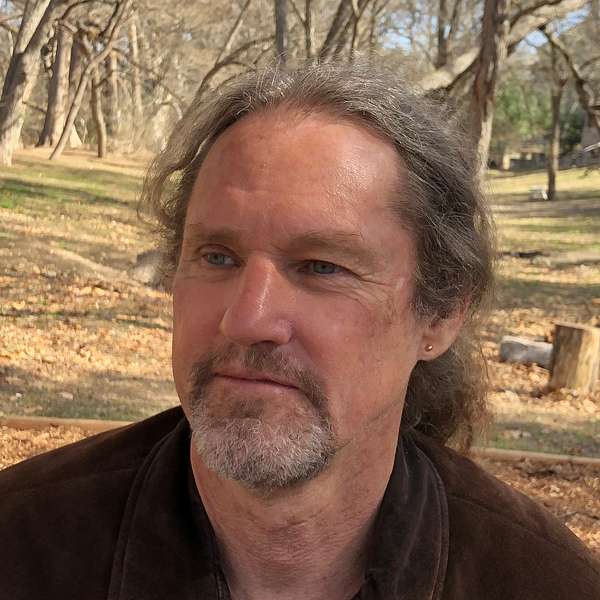
Awakening Together, Relaxing into Happiness with William Cooper, Master of Theology, Licensed Professional Counselor
Experience Awakening....Relaxing into your Being and, therefore, Happiness. William earned a 4 year on campus Master of Theology from Harding Theological Seminary. He was a Unity board president and, later, a Oneness trainer. In 1994 he went into private practice as a Licensed Psychotherapist. He has been to India 14 times averaging 3 months per visit to explore awakening with gurus and awakened beings. Also, Bhutan, Nepal, Thailand, Brazil, etc. In this series, William attempts to encapsulate and convey what he feels to be most important in his 50 plus years of direct experience on the path of Awakening. This series explores the hows of awakening and encourages the direct experiencing of the flow of your Being, (love, peace, happiness, fulfillment and joy). A practical blending of East and West. Meditation, yoga and Energy meet psychotherapy and awakened Beings...and beyond All. For more info and writings on the subject, www.williamecooper.wordpress.com
Awakening Together, Relaxing into Happiness with William Cooper, Master of Theology, Licensed Professional Counselor
64 Awakening, Deconstruction, Psychedelics - Live Q & A
An edited recording of a live session with questions from participants concerning their path of awakening. Great information but sound quality on this recording is only adequate.
Topics covered were psychedelic drugs and awakening, awakening is us without our "problems", meditation, deconstruction of old mental emotional constructs that are now blocking awakening, passing of SivaShakti, etc.
These podcasts are here to support your personal path of awakening whatever that might be. I feel they are most powerful when listened to in sequence from podcast one forward because each is built on the last. Though they, also, all stand on their own. If anything does not resonate, please disregard it and follow your heart. All my podcasts and website are free. Enjoy!
Though I am a psychotherapist, and these podcasts are offered to be spiritually helpful, they are not psychotherapy. If psychotherapy is ever needed, please reach out to a psychotherapist.
www.williamecooper.wordpress.com for more support. You may, especially, enjoy the short contemplations and the resource page which gives you some supportive material.
Hello, welcome. Thanks for joining me today. This is a good time for all that would like to to ask questions about your spiritual practice. Good morning, Kate. As most of you know, I have the podcast on Insight Timer and they're listed under Awakening Together, Relaxing into Happiness for all the other platforms. But on Insight Timer, they're just under my name. And what I'm trying to do in those podcasts is to give a step-by-step support for awakening. So I hope you found them helpful. And our time today is for you to ask any questions about your process, whether you've listened to any of the podcasts or not, because things come up. And while you're thinking of a question, you can type one in when you have one. But while you're thinking about questions, maybe I'll just talk a little bit about what comes to me in the meantime. The good news for us all is you hear it all the time, but it's true. There's nothing to do. We are radiant beings already. If you've ever been around a guru who's very clear and the light that emerges through them is so powerful that you can never, you almost can't move. I've been around many like that. So powerful. And you think, wow, but that's you. That's the same energy that's running through you, through all of us. So there's nothing we have to do to achieve that kind of brilliance, that kind of light. You know, the old paintings and the medieval paintings when they had saints and they had the halos around them, people could see them. That's how strong your light is. It's very strong. So that's the good news. There's nothing we have to do to get there. We're already there. So what's the problem? Why are we often in pain? Why is the world the way it is? Because somehow, and it's a long story, I talk about it in the podcast. We could talk about it today if you want, but we've cut ourselves off from ourselves. We've put layers over our light. Jesus says, don't hide your light under a bushel, bushel basket. You know, that was his way of saying this is what we do. We hide our light. Why do we hide our light? Well, I used to work with hypnosis quite a bit. I worked with 25,000 people in groups and individually. And in hypnosis, you accept an idea, a suggestion, and you accept it as true. And when you accept something as true, it mobilizes your mind, your body, your personality to support the suggestion that you've taken in. You think you're a rock and roll singer, or you think you're a monkey or something like this. Then you really do. Well, this is what we do to ourselves. We take in our own suggestions. Why would we do that? Why would we take those in? Because when we do, it cuts us off from really what's going on, the beauty of ourselves. Instead, we take as more true the hypnotic suggestion that we're giving ourselves. Why would we do that? Well, as little kids, we love ourselves. And I'm just going to make up a hypothetical. But let's say the people around us, our parents, and I'm not blaming your parents, but society, say, you know, I don't think you're that bright. I don't think you're very intelligent. So I don't think you've got a good personality. I don't think you're going to amount to much, whatever the message might be. Well, because you love these people around you, and you love yourself, you think, well, if I agree with them, they'll love me. I'll have their love. And because I love myself, I want their love. So I'm going to accept this hypnosis. I'm going to be on their side. Yes, I'm no good. So we take that in and we layer these thoughts on top of each other, or we get immersed in a cult. I mean, culture, our culture, we get immersed in it. And it's a cult. It's a hypnosis. And we start believing the things that our culture believes. Now, some of the things in our culture are very good. You know, the term, he's cultured, she's cultured, that's a compliment. These are good things. But also, in our culture, are things that aren't so good. And we can cover ourselves up with them. We can find ourselves drowning in the hypnosis of our culture. If you want to talk about past lives, multiply that by 100 or 1000 from the past. So we're layered, we're crusted over. And that's why we don't always feel ourselves. Sometimes it can seem to be an insurmountable task, can it? To melt through all of that. It can seem so difficult. But you know what? It can take a while. But first of all, what is time? We're in eternity. We have forever. What's the hurry? We'll get there. That's a guarantee. You will realize yourself. What is awakening? Awakening is you without your problems. It's you, the you that you already know, the best you, and I'm not talking about your personality. I'm talking about the fundamental energy that comes through you, the energy of happiness, joy, love, peace, well-being, the best of you, that which you seek through the day, why do people look at sunsets? It's so beautiful. Why do you go to the Grand Canyon? It's so beautiful. And in that beauty, what happens? Everything melts away and you feel yourself, you feel awe, you feel love, you feel well-being. That's you. That is you. That's what we feel. Well, everything that is in our way, that blocks us, can melt away. We can let it melt away. First of all, as I said, we have an infinite amount of time to do this. Secondly, it's kind of an interesting ride. Sometimes we're pushing so hard to get past something, to get over something. We overlook the fact that maybe it's perfect for this moment, just the way it is. How can that be? It doesn't feel very perfect. Well, maybe it is. So I'm just going to throw in that thought right now. Again, it's something we can discuss later if you'd like. But the bottom line, what gives me encouragement, is a little thing called baby steps. We all can do something every day. And that something is more powerful than we might give it credit to be. When we do something every day, something, we'll get there. It's true with everything in life. It's true on the outside. My partner and I have been working on our yard. And when we first moved into this old house in Florida, the backyard was covered with bushes. Thicket, you might call it. Not like little bushes. It's brush. Like being in the outback or something. And it was a daunting task. But, you know, every day we could cut one bush back. Every day, one. Now, beautiful backyard. Still more to go. But that's how it is in our spiritual life. We can cut something back every day. We can dissolve something. In the 60-something podcasts I've already published, there's plenty of guidance that I've learned in my 13 trips to India and talking to lots of enlightened people all over the world, including here in the United States. I've spent a lot of intimate time with them, like months and months. And each trip to India has been at least three months, one as long as six months. So I've had a lot of time to talk to people, to examine these things. I put all of that, as much as I can, into the podcast, what I found. Here's some guidance. But you know what I found that really guides me and can guide you? It probably already does. And that's listening to yourself, regardless of what I say, or what Buddha says, or what Jesus says. You are your own path. You know best. But do you know how you know? Yeah, you do. You stop and you listen. You connect. Connection is the ultimate path. Because when you connect, you are connecting from beyond this world. That's who you are. You don't even exist, because only things in this world exist. Part of you exists, the part that is in this world, in this world, but not of it. You shine down like a beam of light before it's even a beam of light, and then you hit this reality, this existence, and you turn into light, and love, and joy, and well-being, and everything else in existence. That's you. So connecting to all parts, all strata of this rainbow, we'll call you, is a path. It's an ultimate path, because it's true. All parts of you are existing always. Now the parts in creation, they do change, because that's what goes on in creation. But that's good news, because right now, often we're blocked in this cycle of the world. Often our job is to remove blocks. We don't usually come in unblocked in this timing of us being in the world. Our job is to unblock, and as we unblock, that energy of unblocking is transmitted to other people, and structures, and all through existence. We help the world as we unblock, because that's what the energy we're sending out. But it feels good to us, too, because we're unblocking. We feel better. So this happens through connection. What is connection? That's simply being present, staying present, not spacing out, but staying present to all that's happening to us. Well, what if we can't do that? Well, it sounds great. Stay present. Great. But how? Well, again, in the 60 podcasts or so, we talk about it in little bits and pieces, a lot of little baby steps. Let's say it's 60 baby steps, those podcasts. But the bottom line is, even if you feel blocked, connect to that. See, that is part of your existence in the moment, is a quote-unquote block, or quote-unquote pain. That is part of your existence, your rainbow, part of its pain, part of its joy. All these things are happening at the same time. You don't have to get rid of all the pain in order to feel joy. You can feel joy while you feel pain, because both exist in you. Your nature is love, joy, and peace, right? All the time. You're a bright light all the time. When Jesus says, don't cover up your light, it implies there's a light under that bushel. It's a light all the time. It's not like, well, you take off the bushel, basket, and then suddenly there's a light. No, no. There's a light all the time. You're a light all the time. You are joy all the time. So one part of your practice can simply be to locate that joy that's there all the time. Maybe you find it between the cracks. And you know, there's a lot of us, so we're all on different places in the path. Some are way beyond where I am. Some are not quite where I am. Some are way beyond where you are. Some are not quite where you are. But what I found was, there will be parts of your life that you're very deep, much deeper than anybody you know or will ever come across in your lifetime. You're very clear in certain areas of your life. You have that gift. So you can't really judge and say, well, I'm not quite as deep as the other person. Yes, you are. But not across the board. Because in our rainbow of colors, some parts are clearer than other parts. So what I'm asking you to do now is find the clarity where your joy shines through in your rainbow. It shines through somewhere, around the edges, through the cracks. Maybe it shines through all the time. You remember way back when there was a guy named Leo Biscaglia, I think his name, something like that. And his big thing was love. And he just loved people, loved people. He wrote a book. I think it might have even been called Love. I remember reading that or seeing him. Maybe I even read the book. I was no Leo Biscaglia. Nothing. That's why I was reading the book. I wanted to learn to love. It didn't help me much. He was loving, but so what? I wasn't. Not like him. But you know what? We all love. We all have some love. So we start with what we got. We water the seed of us. We find the joy and we water that. There's a kind of psychotherapy called solution-based therapy. And that's exactly what they say. They say, when somebody comes to you, ask them what's going on in their life that's good and water that. Don't focus on the problems. Water that. Water the good. Find the good. That's a good start. Addix, what is his name? Addix Huxley. Addis Huxley. Sorry for my pronunciation. But he said there were three, in his estimation, three essential paths or parts to awakening. He felt, and I think he was big in the 60s, something like this. But because people were so blocked, and they still are, basically, he would say, the three things are, take some psychedelic drug to break open your crusty mind. I don't take these drugs. I don't recommend these drugs. I'm just passing it on. And I see where they're coming from. Because when you take a psychedelic drug, things could go wrong. So it's not foolproof. That's why I don't recommend it, unless you're under good guidance and you know what you're doing. But when you take these drugs, what can happen is it can break through your crusty mind, and you get a glimpse, wow, everything they've been saying is true. I can see it. I'm having the direct experience of it. So he said, that's one portion of a path, perhaps. Do that, like, one time, two times. The problem that I've seen when I went down to South America, when I went to Brazil, take ayahuasca. And problem is, I didn't see people getting better. They just kept taking ayahuasca every week, go to ayahuasca churches. I was talking to a friend of mine last week. And in Austin, there are some ayahuasca churches where I used to live for 30 years. And I was invited many times. I never went. But I was talking with a friend and two people we know very well, very spiritual people. They've been at the ayahuasca for decades, and they look terrible. And they still have problems. So I'm sure it has a portal. Somebody asked, that's helpful. Somebody asked Ram Dass, who did lots of LSD. He and Timothy Leary experimented with LSD. That's how Ram Dass was kicked out of Harvard. He was the first one to lose his tenure in something like 100 years out of Harvard for doing experiments, which were legal at the time. I told him to stop, he didn't, got kicked out. He continued afterwards with Timothy Leary, and they did a lot of LSD. So I asked him, or was present when somebody else, I lose track, I've asked so many people so many different things. But he was an expert. So let's say I was the one that asked him. I said, can you awaken using LSD? And he says, well, it gives you a glimpse, but it's like you're attached to a rubber band, and it pulls you back into your old personality as soon as the trip is over. He said, I've never known anybody to awaken using LSD. It gives you a glimpse. His guru, Neem Karoli Bhabha, said, yeah, if somebody's very thick in the personality, and they can't see through their own personality, then have them take some LSD once, so they can see. But after that, the other two things that addicts like Huxley said, were meditation was the second link to awakening. Because in meditation, you sit still. And after you sit still, the clouds start to over some time, disappear, and settle. And you start to see yourself. You see the brilliance that you are in meditation. And also, you see all of the obstacles and constructions that we've created that are blocking us. They're useful sometimes, they're useful for a time. But then we outgrow them, and we forget to, or we don't know how to deconstruct those things that we have constructed. So the third part that addicts Huxley brought up was deconstruct, learn the constructions of your personality and deconstruct them, spend time with that. And that's part of your path. Glimpse, sit still in meditation, and simultaneously start to deconstruct that which is blocking you. Okay, I've talked a lot. I don't know if you all have some questions by now. Yes, Kate asks, oh, two good questions. Kate asks, would you please give us a basic lesson on how to meditate? And Kay asks, what are the steps of deconstruction? Two great questions. So let me address them both. And just in case I don't do a thorough job here, I hope to. But again, in the podcast, I have all these things there. But this is the time for you to be asking these kind of questions. So thank you. And please continue as we do this. Don't just go, oh, I should have listened to it in the podcast. No, no, you ask them now. Better. Okay, there are really, let's start with the meditation. There are really, literally thousands of ways to meditate. Some have to do with how you vibrate, they use sounds, others use light, others use chanting and mantras. And really, there are thousands. So I'm going to boil it down to one simple thing. And then maybe from there, just give you a couple thoughts on how to make sense of all the other methods of meditation. And we're all free birds, you see what works for you. But the basic kind of meditation is you first of all, first of all, meditation can be done walking or sitting, you don't have to be in a certain pose, anything like that. The idea is for you to be comfortable and not distracted. The reason why you close your eyes, if you do choose to close your eyes, is just so you're not looking at stuff all the time and distracting yourself. So, meditation is a time to let go of distractions, to extract yourself from the midst of our hallucinations. What do I mean by hallucinations? As you know, I think, and if you don't, I'll tell you now. We make thoughts, we decide, hey, I'm going to think of a purple elephant. And we project a purple elephant, we make that thought. We hallucinate consciousness, we take raw consciousness, run it through our neural networks, our brains, and we hallucinate a picture of a purple elephant in our head, that's called a thought or an image. Thoughts can be useful, our hallucinations can be useful. We can hallucinate, we can hallucinate how to invent something, we can hallucinate steps to get through our life tomorrow, or how to go to the bank, or how to open a bank account, or how to do math. Hallucinations can be helpful tools. But often we're caught up in hallucinations. Have you noticed how our culture loves stories? They're good things, we love them. We love going to movies, and we love people telling us a story about this guru or that guru, but we tell ourselves stories too, and we get lost in our daydreams. Well, all these are hallucinations, and none of them are real. The movies aren't real, the stories aren't real, they're entertaining, but they're not real. So in meditation, when we sit down, we're extracting ourselves from our hallucinations. It's not quite right to say the world is an illusion, a giant hallucination. It's a delusion. What we've done is we've put on top of what's going on in the world, our perspectives, our hallucinations. And that's what we say the world is. It's a delusion. You'll hear there'll be a group of people, and they'll say, oh, this event never happened, and Columbus never did find the new world, or the world is flat. I just heard that Galileo just got pardoned, I think in 1972, by the church. He was excommunicated or something, I don't know, for breaking their hallucinations. People take them seriously. So meditation is a time for us to break our hallucinations. Why? Because when we connect to who we are, we see clearly. We experience life clearly. We are like a beautiful atomic bomb, radiant and full of light. The one that comes through our body is us. Because there's only one. It's not like, well, there's one plus William, that's two. You know, the William's important, there's the one plus me. You know, all the rest of you guys can just be part of the one. But it's me and the one. That's what exists. No, no, no, no, no. Only one. The delusion is the William. So as I let this go, everything becomes clear. So back to your question, how to meditate. We sit still. There are many versions of this, but I'll give you the basic. You just sit still, get yourself comfortable, maybe sit in a chair, on a couch, wherever. Just so you don't have distractions, you might close your eyes and then you watch everything that is creating itself. It's got a momentum. It's like a rubber band that we've wound tight and we've let go of one end and it's spinning in our head. And we'll call those thoughts or hallucinations or emotions. Emotions are 3D hallucinations, but they're all spinning around because we're not controlling them. We're just watching them. Kind of like it's quite a different experience to look at a bottle of wine than it is to drink a bottle of wine. So in meditation, we're looking at the thoughts. We're not drinking the thoughts. We're looking at the emotions. We're not drinking the emotions. We'll see them. They're performing and all of them are very addicting. They will be crying out to you to drink them. Drink me, drink me, drink me. They're like little bottles of wine. And you will not be able to resist them for more than probably five seconds. I don't really know. You'll see for yourself, but you would think, oh, that's easy. No, it's not. Try it. Next thing you'll know, you'll be carried away by the hallucinations of that bottle of thoughts. And then a minute later, you'll snap out of it and go, whoa, what happened? Oh, oh, I'm meditating. Okay. And then you just start over again. So it's very simple. You just close your eyes and you watch what happens as your eyes are closed. You don't get involved with them. Yes, you'll feel them. Yes, you'll see them. So in that way, you're not made of wood. You are connected to them, but you're not jumping into them. You're just watching them express themselves. Now, just like a wound up rubber band twisted very tightly when you let go of one end, it spins and it's a whole cacophony of releasing thoughts and emotions. Now, once the rubber band spins enough, it becomes loose and limp and relaxed, and we call that peace. But until it does release all of its energy, it is not peaceful. That's why people say, oh, I can't meditate. It's not peaceful. I can't meditate. No, meditation is not supposed to be peaceful. It's supposed to be something very difficult because you're releasing all of this pent up poison. That's why. So I would go back to the first four or five, six, seven podcasts, and that will underline all of this. They're all on Insight Timer. Just go back there. They're all free. You can listen to them as you like. They're relatively short. Um, but that's it. Meditation is just another word for sitting still and don't drink the wine. Just sit and watch it. Watch the bottles. Don't get into that. Because you're not getting into them, they will melt away. And when they melt away, everything is made of consciousness and consciousness is made of love, joy and peace. Dogs are made of consciousness. Cats are made of consciousness. Thoughts and hallucinations are made of consciousness. The thing about thoughts and hallucinations is as you watch them, the gentle light of your awareness that is watching them like who's watching its awareness is watching. You're aware of these thoughts. The gentle light of that awareness melts them. And as they melt like a piece of ice under the hot sun, they turn into water. And as objects turn back into their basic consciousness out of which they're made, they turn back into peace, joy and love. Everything's made of peace, joy and love. Every atom, every molecule is made of peace, joy and love. So everything will melt away. Now, I started this talk by saying baby steps. Why did I say baby steps is because, you know, we've gone lots of lifetimes, perhaps without meditating. So we've every time we create an object, it's like having a saw and a hammer and going in the backyard and making a doghouse, a solid one. And now we don't use it. We just stack it up against the side of the house. And then we make a cat house and then another dog house and then another dog house and a bird house. And they stack up, stack up, stack up. Well, that's OK. Up to a point. But if you have lifetimes and every day you're making a new doghouse, eventually you're getting crowded out. Well, that's what's going on in our consciousness, in our psychology. We're buried in dog houses. So that's why it's baby steps. We deconstruct a doghouse at a time. If we do one a day, after a while, we at least get a big enough space that we can breathe again and see light and feel light. Short of that, you know, when I first went to India, I had the most profound experiences and the most powerful guru. And I've met a lot of powerful gurus. And I won't go through all my experiences right now, but I will tell you, I asked one of my gurus to take my karma, take my suffering. And they said they would. And I met other ones, similar requests. You know what? None of them could. Those dog houses are in my consciousness. Sorry, but we have to deal with it. We built the dog houses. We have to deconstruct the dog houses. What they can do, though, is they can support us. They can give us clear teachings so that we can see more clearly. And the second thing, they can give us clear energy. So as we're experiencing, as they're supporting our clear energy and we see so clearly, suddenly, bam, we run up against to the wall, against the wall, which is a wall of dog houses. So now we see dog houses we didn't see before. We have to still deconstruct the dog houses. They can't take them, but they can show us where the dog houses are. And we don't need a guru to find them. Life will show us too. Have you ever been walking down the street? You feel just fine. Somebody looks at you funny and boom, all these emotions start coming up. They cut me off. They did this. Who do they think they are? Well, those are dog houses coming up because your natural energy is peace, well-being, love. That's all that exists in you. That's your real energy. Where's all this anger coming from? That's a dog house. You know, if somebody cuts you off or they cut me off, and I'm just like you, I'm learning this. But if they cut us off, we don't have to be angry. We could just wonder what's going on with them. They must be in pain to be so disconnected. They cut us off. They don't observe us. What's going on with that? We could send them good energy. We could say a prayer. There's a lot we could do that flows from who we are rather than ricochets around through all those dog houses. So I think I've talked a little bit about meditation and a little bit about deconstruction. There's a lot of ways to deconstruct. I could talk a lot more about it. Let me just say a few things quickly. Again, it's in the podcast, kind of in the middle of all of the podcasts. I don't know the numbers, but a lot about deconstruction. PTSD is a kind of fixedness. You'll notice that under every emotion that you have will be a tension. Even when you let the emotion melt out, there's a tension and that tension is what causes separation. That's our fundamental. It's like we block. It's what we've blocked ourselves with. Yes, none of this is personal, by the way. It's all meant to be. And that's not... Depends on how you look at this and from what angle. But you need separation in order to get drama, in order to get creation, in order to enjoy our lives. To exist, you have to be separate. So none of this is personal. Yes, I'm getting cut off. Thank you, Chris. It's not personal either in the example. But I mean on a bigger picture. Our life is not personal. But back to deconstruction. Because we're looking at it now through that level as if things need to be different. The spiritual stuff is crazy because on another level nothing needs to be different. It's all perfect. But the flow of this perfection is calling for something to be different. It's a big paradox. So PTSD is a frozen block in us. And one of the ways to work with PTSD, I talk about it a little bit and I give some references, but is to be in touch with it. Go very slowly because if you push yourself too hard, you freeze up even worse, right? You hurt yourself. But you gently feel the edges of your pain. And then you find what we talked about earlier. It's a little bit of joy, a little bit of happiness. And you let that pain kind of strobe over to the happiness and just drink a sip of it. Just enjoy it. Take it in for a second. Realize that things don't have to be all locked up and painful. Because that side, the PTSD side, feels that that is the way it is. And it will never change, perhaps. But it will. So you go back and forth. You pendulate, as they say, like a pendulum. You go from the part that's frozen and hurting to the part of well-being. And you sip in just a bit. You just relax and enjoy. Hey, it's okay. And I don't have to heal all at once. Again, if you push yourself too fast, you'll freeze up. So that's one way to deconstruct. And all deconstruction, there's typically the part that's blocked off needs to receive. Receive some goodness, some well-being. You can hug yourself. Talk to a friend. How do you take in goodness? How do you do it? I don't know that somebody can awaken without being able to take in goodness, right? One of the past two awakenings, sometimes I'll say, is gratitude. Because our nature is gratitude. And that is a taking in and exuding, taking in grace and exuding happiness and well-being. So that's the process that starts to deconstruct things. On a grosser level, I don't want to overlook the obvious. I mean, I remember a long time ago, I went to a program that they talked about just a simple thing, self-talk. Change your self-talk. I'm no good. I'm no good. Change that to, yeah, I am. I'm okay. I'm good. You do a little at a time. You go baby steps because if you make too big of a jump, no, I'm no good too. I'm excellent. I'm the best ever. You don't believe that. But you change little things. Everything works together as a package because when you truly flow from your being, your self-talk does change. But you know what? An odd thing is, at some level in the system, you have to make a decision to change it. It doesn't happen automatically. Usually, you have to make a fundamental decision. It's like, well, this is ridiculous to be. I know that I'm peace, love, and well-being. Why am I talking to myself so poorly? Let me love myself. And you make a decision, and you do. You love yourself. Back a little while ago, somebody was at, I hope that helps, and the podcasts have a lot of different, you know, there's coherence. There's so many different ways of deconstruction. There's coherence therapy where when you meditate or otherwise, but you feel the wellness of your being, the goodness of your being, and then at the same time, you feel the pain of your separation, the hurt, the fear, the anger. When you feel them in close proximity, coherence therapy says the one that is the deepest, the most infinite, will dissolve the other. And in fact, the hurt, the pain, and the anger start to dissipate when put into close proximity. And that's what happens in meditation, right? We sit there. The awareness, what we didn't talk about in meditation is when you sit there, you're aware of the hallucinations, but the part that is aware, as you do this a lot, you start to sense what that's made of, and you start to feel the well-being of awareness, which is you, peace, love, joy. You know, I was saying awakening is you without your problems. And so awakening is beyond all religions. You could have, I could be a Christian with no problems. I could be a Muslim with no problems. I could be a Hindu with no problems, a Buddhist with no problems, a Taoist with no problems. Awakening is who you are. Often religions twist it around that concept to show you who you are. Some do a better job than others, in my estimation. About the food. Yes, there is a branch, I guess, in Buddhism, in Hinduism, where you eat certain foods, sattvic foods, foods that quiet your system, instead of foods that jumble you up. For instance, if you eat a lot of sugar, then you're all wound up, hard to sit still and meditate. That's the general idea. So foods can make a difference. Gandhi, when he ate, he was in prison during his peace movement, and suddenly he became enraged. And he didn't know why. Well, later come to find out, the chef who cooked his food was in prison for murder. And he had a horrible temper, and that energy went into his food and affected Gandhi. So we're affected by what we eat. Um, I'm not going to get into vegetarian or not. That's a whole other can of worms. You all can sort that out. But yes, it affects, it affects us, our food affects us, it affects our health, it affects our awakening. However, just like mantras affect because the vibrations can be helpful to us. However, the postures, our mudras, how we hold ourselves can affect our energies. However, just doing the basic thing, sit down every day and meditate. If that's 95% of it, then the other 5% is filled in by food, mantras, and other things. So if the energy that's coming through you is so clear, it, it is everything, you don't need the help of food or mantras or, however, it depends. You know, I alluded to this earlier, it depends on who you are. If you have food vulnerabilities, you have to listen to that. That's got to be like one of the number one rungs on your platform. Which gets us back to each of us has to listen to ourselves, right? Right? Buddha could say, no, food doesn't matter. But if it matters to you, it does matter. Forget about what Buddha says. Jesus could say something. But if it matters to you, it matters. You are your own Jesus, you are your own Buddha. So you have to listen to yourself. You know better than anybody. And you'll find out each of us, if we follow our heart, if we follow the next obvious thing in our life, we'll get there. Whereas there, there is being fully ourselves. Because that's all there is. Existence is all there is, and beyond. And it's okay. In fact, it's prescribed. The one created this creation, with all of its quote unquote problems and separations and pain and suffering. That's part of the painting. There's nothing wrong with it. So everything's okay the way it is. That's the bottom line. And yet there's something deep inside of you that calls for more clarity. And that's part of the way it is. That's your part in the painting. Jennifer brought up something that I'll address briefly. It's a beautiful saying in Tiruvannamalai that I've seen probably a thousand times. Shiva shakti. She passed away this week, earlier this week. So that's a sadness. Not for her. She's a bright light, wherever she is. But she was a big part of Tiruvannamalai. And Tiruvannamalai's got a thousand big parts. But she was a bright light. So I'm sad for all of us who have met her and those that were going to meet her. Later in the year, I'm going to do a series of podcasts on visiting India. And I've actually already done the podcast. But, you know, because I travel and do different things, I do these podcasts in advance. So I've already done it. And I talk about Shiva shakti in there. Sadly, she's now passed away. So you'll get my perspective. But you'll have to go to one of the other 999 saints in Tiruvannamalai. I do want to thank you for any donations. And Kate, I thank you so much for that donation. It's generous. I wanted to let you know that my portion of donations, when you make them, and I'm doing these podcasts all the time, and we've got this live podcast, so there's plenty of opportunities. This is not any push. But just to let you know, my portion of the podcasts go to feed orphans in Bali. There's an orphanage called Seeds of Love. And that's where when you donate my part of it, that's where it goes immediately. So when I'm in India, I like to buy dinner for saints. It's a holy thing to do. And look, I could use all the different avenues of holy things, all the good energies that come my direction. I'm all for them. That's why I go to India. But what I'm saying is when I feed these saints, they're so happy. And you know how much it costs to buy a saint dinner, an awakened guru dinner in India, in South India? Maybe 40 cents. I feed hundreds of them for $100. There's a lot of them. A lot of them live in caves and on the sides of mountains. And they gather, and you can feed lots of them. It's a thing you can do. India's a beautiful place. We'll talk more about it later. Okay. The thing about Shiva Shakti, she was little. She was about four, really, I don't know, four foot eight, let's say. And there would be a couple hundred people that would meet. And she would meet with everybody for 15 minutes in total silence. And she would look at you for 10 seconds, maybe. And during that 10 seconds, she would light up every chakra in your body. And she would send healing energy. And you would be face to face to any block that you knew of or didn't know of. And then I would sit for hours afterwards and just work it out. And the next day, she would see where you were that day. And she would do it again and again. So she would take you to your edge and then let you work out the rest every day. She was a very beautiful soul. She did that with all 200 people or 300 or however many were there that day. Okay. So thank you so much. I look forward, we're going to meet together again in two weeks on the 23rd, same time, 1030 in the morning. I hope you can make it. If you follow me on Insight Timer, you'll get notifications about my podcast and these live sessions. Nonetheless, I would go back if you haven't listened to the podcast and listen, they might be elementary to you, but I like a good review. You may not like how I say things or you may like how I say things, but see what you think. If you like them, listen. If you don't, then don't. Maybe you'll just join us for these live sessions. And when we meet next time, if you have a question, think of it ahead of time and bring it because any question will do. Once you ask a question, then it gets us something to talk about. Yes, energy cannot be created or destroyed. Nobody dies. Shiva Shakti did not die. Take care. Bye. Great job.