The Optimised Health Show
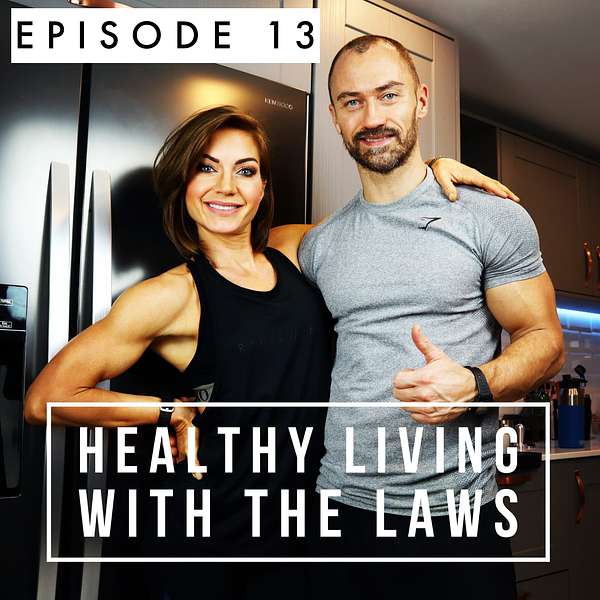
All Things Healthy Living - From What You Eat and Drink to How You Live and Think. Healthy living with the Laws hosts Ben and Sarah Law have both worked in the health and wellness profession for over 12yrs and have a huge passion for helping others live healthy, happy and with purpose. They absolutely love inspiring other 40 somethings through their journey and knowledge in nutrition, health and entrepreneurship along with a side serving of banter and giggles to brighten your day Sarah Law is an IFBB pro bikini athlete, qualified Naturopathic Nutritional Therapist and has built a successful online health and beauty business that has led her to being an international speaker, delivering motivational and nutrition talks to crowds as large as 18,000! Her mission is to empower women to love the skin they are in both from the inside and out. Ben Law is the founder and director of a global supplement brand, Lovelife supplements, that started from a dream to leave the corporate world. His passion for health and fitness led him to train as a Primal Blueprint certified expert and his mission is to to help people live a long, healthy, happy life. This podcast is for information purposes only and is not intended to diagnose, treat or cure any health conditions. If you have any health concerns please seek advice from a professional for guidance
The Optimised Health Show
Ep. 13 | All About Sleep – Why Sleep Is So Important and How You Can Optimise It
In this episode we talk about the importance of sleep and give some tips on how you can improve yours.
We are by no means experts on sleep but there certain routines and devices we've picked up over the years which have had a positive impact on our sleep and we'd like to share them with you.
We talk about:
- morning routines
- evening routines
- blue light blockers
- sleep tracking (Oura Ring - https://ouraring.com/)
- food timing
- red light exposure (Red Light Rising - https://redlightrising.co.uk/)
- eye masks - https://www.amazon.co.uk/gp/product/B00A8QMUIQ
- mouth taping / mouth guards
- snoring
- daily movement
- caffeine intake
- meditation
As always, please leave your comments below and make sure to leave a review!
You can also contact us on Instagram with any questions:
https://www.instagram.com/benlawprimal/
https://www.instagram.com/sarahlawuk/
Enjoy :)
Thanks to Our Sponsor:
Want supplements that *actually* work? Check out Love Life Supplements and use code BEN10 for 10% off your order.
Book a Consultation with Sarah: Free Wellness Discovery Call
Let’s Stay Connected:
- Ben: @benlawprimal
- Sarah: @sarahlawuk
Thanks for Tuning In!
Enjoyed this episode? Drop us a 5-star review and share it with your health-loving crew. Stay tuned for our next episode — we promise we won’t ghost you again!
This is Healthy Living with the Laws. Top tips on how to optimise your health from what you eat and drink to how you live and think. With your hosts, Ben and Sarah Law. Hello and welcome back everybody to another podcast episode of Healthy Living with the Laws. Hello, Benjamin.
Ben:Hello. How are you? I always never know how to start these things. No, it's always a bit awkward.
Sarah:Yeah, it is when you don't like talking. I mean.
Ben:Yeah.
Sarah:You like to just sit. Anyway, yeah, yeah, alright. You know, life's great. We're in our new house. We are. That's good. You might hear a little buzzing in the background because we're in the kitchen at the breakfast bar. And we've got a buzzy fridge.
Ben:Buzzy fridge.
Sarah:So if you hear a buzz, it's not Benjamin just buzzing away in the corner or a bee, it's the fridge.
Ben:We like the house, don't we?
Sarah:We do like the house very much. We're back in Santa Ularia area.
Ben:Santa Ularia.
Sarah:Depends where you're from as to what you call it. And life is pretty sweet.
Ben:Yeah.
Sarah:And it was absolute fate that we ended up in this place, wasn't it? Because the market in Abitha right now is pretty sharp.
Ben:Torrendous, yeah, nothing available. Overpriced crap. Only kind of seasonal rentals for the summer. Which are stupidly expensive. Which is ridiculous. They jacked the price up by double or more.
Sarah:But the universe was on our side because these ones we're in now. Basically, we're going to give you our life story before we go into anything health related. But it's about law of attraction, so it could be health-related in a way, kind of mindset. Anyway, so these were on Idealista, weren't they? Which is the equivalent of Right Move in Spain, but they were only for sale. And we kept looking at them going, I wonder if anyone will rent us one. So you messaged the estate agents, didn't you, and said, Can we rent one? And everyone was like, computer says no. They weren't up for it. Yeah, they're just no for sale. And we were like, we know that. And then our friends, Matt and Tiff, who also have a podcast if you'd like to listen, called the MT Podcast. Give them a shout out. Um, live on the road opposite us, pretty much, don't they? And we went round theirs one day, and then we were driving back to our other pad, our temporary pad, drove past and we were like, oh, let's just stop and have a little sneaky peek through the um fences to see what they're like. And there was a sign on the wall that said for sale and one that said for rent and a phone number. So we then messaged the phone number, and it was the landlord who only speaks Spanish, but he owns a lot in the block, and he showed us around a few, didn't he? In Spanish. Spoke to me like I could speak absolute fluent Spanish.
Ben:Cut a long story short.
Sarah:Sure he's thought. Basically, that's how we ended up here.
Ben:Yeah, we saw three or four, didn't we? There's loads in the block. And then we started a trend. We did start a trend. Because then loads of people started looking at them and they went pretty quick. But we got in early. We got the first in. And we got the best one. You got the best one.
Sarah:Which was occupied when we came to look around them, so we couldn't look at it, but he was like, Oh, this one's the best one because it got the best view. And we were like, right, we want to see it. And the first one we saw, we loved because the decor and everything was really nice. However, there was a small mould situation, wasn't there? Which for me it follows me round.
Ben:Yeah, there's a bit of leaky in the leaky leaky in the shower, I think, when they're in the corner.
Sarah:Yeah.
Ben:So that's a that was a no-go. It was very nice as well.
Sarah:It was really nice, it was very sad.
Ben:To be fair, this one was better, I think.
Sarah:And called my doctor and said, Do I really have to worry about mould that much? And he was like, Yes. So damn it.
Ben:This is a bet this is better, really. Yeah. It is. Two gardens, the only one with two gardens. Yeah, which means one garden can be my gym.
Sarah:Yeah, it's now the CrossFit gym. So if anyone would love to come over to a beather and pay to come in.
Ben:Every time you go, can everybody come around? No, you can train them. Nobody can come round.
Sarah:Everyone thinks you're a PT, so you can just put them in the garden and train them. I mean, you'd be the worst PT ever.
Ben:All the neighbours hate me already because making loads of noise, dropping weights. I've had to stop that really because it does shake the entire block.
Sarah:Yeah. And you would be an awful PT. I've just come to the conclusion. Because you'd just shout at people and get angry. You'd just be like, you're shit. But zero patience. No patience whatsoever. So don't actually come round unless you want to be. Don't come around anyway, because I don't like he doesn't like people. That's true, that's wrong. He does like people, you just like the introvert.
Ben:Yeah, we just uh need a load of stuff, don't we? Because it's pretty bare at the moment.
Sarah:We need to make it a home.
Ben:That's good it's going to be a good base. It is for the next few years. We need a solid base instead of moving every six months, which we hate.
Sarah:We've moved three times since we've lived in a beaker in the last year. I'm done with moving. No more moving. No more moving. Anyway, that's a life update.
Ben:Ramble crap.
Sarah:Ramble grab for the beginning. Let's get on with it. So yeah, today we wanted to talk to you about sleep. A super important topic that most people overlook. Would you agree on me?
Ben:Yeah, I think many people do, don't they? They just they don't realise the importance of it. No.
Sarah:They just think it's why are you raising one eyebrow at me like that?
Ben:Don't know. Um Yeah. I don't think people get the importance of it, do they?
Sarah:No.
Ben:People say I'll sleep when I'm I think it's more, definitely more people are aware now. It's like the last few years, there's been so much talk about it.
Sarah:Yeah, there's books and things you can read now on sleep, which is awesome because there didn't used to be.
Ben:Everyone's talk about their podcasts and stuff if you listen to that stuff. So we thought we'd chime in with our two pennies worth. Two cents. Not that we know.
Sarah:Two euros worth.
Ben:Not we know huge like the sciencey details.
Sarah:Yeah, we're not going to go into mass amounts of scienceiness, but we're going to talk about the importance of sleep, the kind of just give you a little brief on the stages of sleep and what can happen when you don't have enough sleep. And then we've got to do it. How to get better sleep.
Ben:Well, what we think what works for us and what we've learned. What really doesn't work. Yeah. The things that we normally do, basically.
Sarah:So yeah, we're going to share that with you. So sleep.
Ben:Okay, so what is sleep? I've always got to start asked with the most basic question. What is sleep? Sleep is not being awake.
Sarah:That's true. It's when you shut your eyes and your brain does it doesn't switch off, actually. Your brain is super active at night. Like I think people think when they go to sleep, their brain is just like mush and doing nothing, but your brain is so super active when you're sleeping, it takes a lot of energy. When you're sleeping, your brain does. So when you think you're not actually burning anything when you're sleeping, you're actually using a lot of energy because your brain needs it, doesn't it?
Ben:Yeah. It's recovering, it's repairing. Telling your body to do things. I think what is it? If you don't s if you don't sleep for like three nights in a row, you pretty much die.
Sarah:Yeah, yeah. Like you can go for you can go for food without three weeks.
Ben:Food without without food.
Sarah:Oh my goodness. That's the that's the thyroid brain. You can go without food for three weeks, you can go without water for three days. I can't remember what it is, something like that. About how many days you can go without sleep and then without thinking. You can't go without thinking, you can't go without sleep, basically. Anyway, that's rubbish. Um great start. Well done. Um so sleep. Super important. Why is it important? W well, it repairs is when you repair, basically, your body regenerates, so all of your cells get kind of cleaned. Like your brain as well. Doesn't it? You've got something called a gymphatic system in your brain. And at night time is when that kind of drains, which is draining like like your lymphatic system in your body, which helps drain excess toxins and things out of the body, the lymph system. The gymph system in the brain does the same kind of thing to the brain. So whilst you're sleeping, it's super active and it's basically drain helping drain toxins and shit out of your brain. How weird is that?
Ben:That is weird. But clever. Hmm. Very clever. I'm confused by that. I am.
Sarah:So it does that. Every single cell in your body is being replenished and rejuvenated whilst you're sleeping. Um, your hormones are being regulated whilst you sleep, your memory banks are like it's a bit like having a filing cabinet in your brain, isn't it? And it's being like organized.
Ben:And everybody knows you get a shit night's sleep, you feel terrible the next day.
Sarah:But some people don't, because it's that adrenaline response that happens when you're not sleeping properly and you're not having enough sleep, your body goes into this like massive adrenaline response, so you kick out loads of cortisol, so you feel actually quite perky, feel quite with it and wide awake because it's the cortisol response.
Ben:Only yeah, but only briefly, right?
Sarah:Well, you can go a few days feeling like that, and if you carry on sleeping like crap, then yeah, you'll hit a wall. Yeah, it'll be like you'll tank. Um, but yeah, that's where sleep as well is very important for hormone regulation. Um, because if you're not sleeping properly, then your cortisol will get jacked up.
Ben:And when your cortisol gets jacked up, why is it jacking your cortisol up to give you more energy?
Sarah:I think so, yeah. I don't, I mean, I don't know the full science of that, but I would imagine it is to do with energy.
Ben:Yeah, trying to try to generate energy because it doesn't have it.
Sarah:And also if you're not sleeping properly, that whole circadian rhythm is just off, isn't it? And you're your all of your hormones work in balance. So if your melatonin, which is your sleep hormone, is not right, then your cortisol, which is your kind of wake-up hormone, is going to be off too, which then will offset another hormone.
Ben:What is melatonin?
Sarah:Melatonin is the hormone that we produce which helps us sleep. It's our sleep hormone.
Ben:Yeah, and we naturally naturally secrete it in the well supposed to in the evening before bed.
Sarah:A lot of people do things that stop it from happening, don't they? Like staring at screens, working late, drinking.
Ben:Yeah. Yes. But fundamentally it's it's the sleep hormone. Um and you can actually supplement with melatonin.
Sarah:You can.
Ben:If you're not producing it yourself, which is not great long term.
Sarah:No, you don't want to do it long term. It's just a it's great if you can jet lag or something. Like if we've been to America, we normally on the way back will um dose low dose melatonin just to get that circadian rhythm back.
Ben:Yeah. Um you can mega dose melatonin for other things, but it's quite it's a potent potent uh for lots of things, isn't it? They're discovering. Yeah. Isn't serotonin the precursor to melatonin? Is that correct?
Sarah:Um I think so, yes. Is it serotonin? Tryptophan.
Ben:Yeah.
Sarah:Because they also say about eating turkey, because it's high in tryptophan, which helps you sleep. Yeah. So is tryptophan a precursor to serotonin? And serotonin is a precursor to melatonin. I can't remember. We'd have to look that up because I'm not sure. But anyway, basically, all hormones are linked. So if one is going squiffy, because like you're not sleeping properly and you're not producing the melatonin, because you've got blue light in your eyes at night time, then that's going to make all your other hormones go squiffy. So your cortisol is going to go swiffy. Your leptin and your ghrelin get massively impacted when you don't sleep properly. So leptin and ghrelin are your hunger and satiety hormones. So leptin is your satiety hormone, isn't it? So it's the hormone that kicks in that says to you when you've eaten, I'm full, I've had enough. And ghrelin is the hunger hormone that kind of is what makes your tummy grumble. So when you don't sleep properly, they get massively out of whack. So I don't know if anyone else has ever experienced this. I know I certainly have. I remember when I lived in Germany as a superstar performer in Starlight Express, and we used to go out on a Sunday night and get in at like nine o'clock in the morning, bad times, and I just can't sleep. Like if I go to bed at that time, I'm not one of those people that will be able to lay in bed all day the next day and sleep, even though I had awesome blackout blinds, which we have in this house, which is very exciting. Um, but I would then have like two hours sleep on the sun, well, on the Monday morning at like nine till eleven, and then I'd be up, and I would literally have a bottomless pit for a stomach. I would not be able to stop eating. It was like nothing filled the hole, absolutely nothing would fill the hole. And it wasn't that I was even hungry, but it's like it just wouldn't register. Um, so I don't know if you've ever had that where you've had a real lack of sleep, and sometimes I think we put it down to having drunk too much or something and being hung over, but actually sometimes it's the lack of sleep more than anything that is then causing our leptin and ghrelin to be off, so our hunger hormones are higher, our satiety hormones aren't there, so we can just eat and eat and eat, and it just does not fill the hole. Not ideal. No, so that happens basically when you don't sleep properly, and that can then obviously set you up for over.
Ben:So let's talk about the stages of sleep first before what can impact it.
Sarah:So, what are they? So you have light sleep, you've got REM sleep, you've got deep sleep, and then there are different phases of REM as well. You've got like four phases of REM, but we're not gonna go into all of those. No, but we're just gonna go through the the main one. So you've got REM sleep.
Ben:Rapid eye movement sleep. I'm just gonna read this from Aura.
Sarah:Good old Aura.
Ben:It's associated with dreaming, memory consolidation, and creativity. REM sleep plays an important role in re-energising your mind and body. REM sleep includes all your sleep, including laps. REM sleep makes anywhere between five to fifty percent of your total sleep time.
Sarah:Interesting. So it basically is where you consolidate things, isn't it? Yeah.
Ben:Memory consolidation. So it's like the filing. That's the dreamy part of the yeah. So when you're dreaming, that's that's kind of rem. That's rapid eye movement. And you're actually your eyes your eyes move rapidly.
Sarah:I'd love to watch someone sleep actually, it's been a bit weird.
Ben:Hence the name.
Sarah:I don't want to tell anyone about my random sleep sometimes when I have a lot of rem. I like to shout.
Ben:Yeah, you're a bit of a sleep talker, shouter, wailer.
Sarah:What did I what was that I said? Get out. There's been some classics.
Ben:I need I try to record it every time, and every time I kind of miss it.
Sarah:Oh well, my I'm normally a crap.
Ben:That was one of the best ones.
Sarah:I remember that dream so vividly as well. I was literally trying to get someone out of my house. And you know, when you're like in a dream and you're trying to run and you can't, or you're trying to talk and you can't, that's what was happening. And then eventually I could get the words out, and I was just saying, get up.
Ben:So funny.
Sarah:Yeah. But I'm I'm notoriously a crap REMmer, aren't I? I literally have like five minutes REM, not ideal.
Ben:It's a hard one to nail and nail.
Sarah:But um So that's the REM part sleep.
Ben:It's regulated by circadian rhythm. Yeah. Um, you typically get more REM during the latter half of the night, and that's definitely true for me, because it we have both have aura rings which track our sleep.
Sarah:And they are they are one of the most accurate trackers, aren't they? Like I have a Garmin watch and I have the aura ring, and I compared the sleep data from the Garmin watch to the aura ring, and it was hilarious. Like on the Garmin watch, it says I have like four hours REM and four hours deep, and I'm like, No rubbish. Um but the aura is very, very accurate.
Ben:It is the gold standard for sleep tracking, definitely. Um especially the new version.
Sarah:Yeah, so the majority of your rem comes in the later hours, doesn't it? The later part of your sleep.
Ben:Yeah. So there is deep sleep.
Sarah:Deep sleep. So deep sleep is the restorative sleep. That's when everything is being repaired, replenished. I wonder, I think that might be when the lymphatic system is. I don't know actually, I need to check whether that's when the glymphatic system is the most active. Yeah. But that is the restorative sleep.
Ben:That is Yeah, it's the most restorative and rejuvenative sleep stage. Yeah. Makes up anywhere between 0 and 35% of total sleep.
Sarah:I'm quite a good deep sleeper.
Ben:So when you're in deep sleep, your blood sh blood pressure drops, heart rate, heart and breathing rates are steady, arm and leg muscles are relaxed. It's hard for you to wake up. I'm reading this again from Laura. I can tell because you can't read very well. During deep sleep, your muscles grow and repair, immune system is refreshed and brain flushes out toxins.
Sarah:That is lymphatic system, there you go.
Ben:Yeah. And that's normally in the early stages of night, and that's 100% true for me. Like you normally just go straight into deep.
Sarah:Yeah. Um so super important if you're missing out on that.
Ben:Like I would say that's the most important.
Sarah:Yeah, because it's like your immune system is not being replenished, your lymphatic system is not working as it should, you're not flushing toxins out of your brain. That's not ideal. You're not repairing, you're not restoring muscles, and that's what people always talk about, isn't it? With like muscle growth. Yeah. People think it's all about what you do in the gym, but a lot of the time it's actually what you do out of the gym. Yeah, yeah.
Ben:It's the restore and recovery phases, and sleep is just as important as what you do in the gym.
Sarah:A huge part of that. So deep sleep is super important.
Ben:And again, if you're just not getting enough sleep, it's very rare that you're going to be getting enough deep sleep if you just and if I yeah, I could if I have uh under an hour of deep sleep, I can definitely feel it the next day. I don't feel as refreshed and as rejuvenated.
Sarah:Rejuve. Um so with regards to that then, what are the mistakes that most people make when it goes to?
Ben:I'm just gonna put it out there, we're not the like best sleepers in the world, the best routine.
Sarah:No, it's definitely something that we make as a New Year's revolution revolution. A revolution. A New Year's resolution. It will be a revolution. Yeah, we have got better, but it's it's definitely a work in progress, isn't it, for us? We're not we've not nailed it yet. But we do know what we should do, it's just we don't often do it that well. There are parts we've nailed, other parts slightly challenging.
Ben:So things that can negatively impact your sleep.
Sarah:Blue light, massive blue light is a huge one.
Ben:So and that's from all your screens.
Sarah:Yeah, any screens. If you're on a laptop, if you are I mean, even light bulbs, um TVs, TVs, like phones, how many people scroll on their phone before bed?
Ben:Any artificial light, yeah, pretty much, unless you have blue light blocking filters on every device, which most people don't. I have one on my laptop, because I'm on a laptop all day, called Iris. And there's Flux as well, Flux. Yeah, I've got Flux on mine. I can definitely notice the difference with that.
Sarah:But still, even if you do have that on and you're on your laptop late at night doing work and things, it's so stimulative to your brain that your brain isn't having that opportunity to slow down and calm down before you go to bed to get into that state.
Ben:Yeah, even when I've got the blue light blocking filter on my phone and laptop, and I have blue light blocking glasses. We both do. I've got blue blocks.
Sarah:What mine? Mine is Schwannick. Schwannick, something like that.
Ben:Swannick, Swannick.
Sarah:Swannick.
Ben:I think, yeah. Mine are blue blocks, which are really, really dark.
Sarah:You look a dude as well.
Ben:Yeah, orange. If you've seen the orange glasses, that's what they are.
Sarah:But we look even better because we've both got glasses. So we have to put our blue light blocking glasses over our glasses. It's like the double glasses thing. If people saw us in bed, they'd think we were absolutely.
Ben:You can actually get prescription ones, which you probably get.
Sarah:Yeah, probably be the best option.
Ben:But we have instead of looking like douchebags. Um yeah, so even when I've got those on, if I'm on my phone late at night, I can st I can still feel my brain is being stimulated. Because I know I'll switch to just like reading a Kindle, which is completely no blue light at all, and I can feel more relaxed. Yeah, totally.
Sarah:I can feel my heart rate and everything is different way.
Ben:And how many people you know go to bed with scroll on their phone? Um I've been I'm guilty of that. Yeah, I have to leave my phone out of the bedroom. Yeah, you leave it out now.
Sarah:Yeah, I leave it downstairs because I just know if I don't, I can't stop myself. I'm I'm like, I'm just gonna look at one thing, or something comes into my brain that I want to Google. God damn social media. Yeah, well, it's not just that, I Google things. I'm like, so do I. What if that happened, or what is that? And then I'll Google something, and before I know it, I've A lot of the time it's the only time I do get to look at that stuff.
Ben:Whereas I spend a lot of time on it, so I'm not the same thing. Um but yeah, I guarantee you know, a lot of people will do that.
Sarah:Yes, then it is their night time chill and people think it's their night time chill out time. I'm just gonna switch my brain off, I'm just gonna have a little scroll because it's mindless. But actually, it's just stimulating. Yeah, it's stimulating your brain, it's the blue light, all of that is just not serving you.
Ben:So a bare minimum, I would get blue light blocking glasses, definitely worth bare minimum, but I would say get an old-fashioned alarm clock and leave your bed, leave your phone downstairs. Yeah, but it's TV as well, isn't it? People watch TV like definitely watch your TV with the blue bright light blockers on.
Sarah:Yeah, always like from like from eight o'clock onwards.
Ben:I know it turns everything orange, but deal with it. Deal with it.
Sarah:Yeah. From eight o'clock onwards, we have blue light blockers on, don't we? Most of the time.
Ben:Yeah, and I can definitely feel a difference. It makes me more sleepy.
Sarah:If I have a call, I often have Zoom calls in the evening. And if I don't have my blue light blockers on and I'll sit there with my ring light on, I'm literally like, yeah, it's not good. It's not a good sitch. So blue light blockers one, um blue light blockers, a dark room as well. So again, uh do you have in your bedroom like an alarm clock which has got you know light coming from it, which a lot of people do? I can't I cannot sleep now because I'm so used to having a really dark room. If I go and stay in a hotel and there's a little light somewhere in the room, I can't I can feel it. Like I can absolutely feel it.
Ben:But it's yeah, people don't realise that as well. Like any any light on your skin. Any little bit of light on your skin because we're you know we're designed to be receptive to yeah, we're receptive to light, and that's how you're supposed to wake up with the light hitting your body. Yeah. So when you go to bed, you don't need any light at all on you.
Sarah:Which is why we were ecstatic when we moved in here because we've got the Proper blinds, blackout blinds.
Ben:It's awesome. They they love it in Spain, don't they? They love it. We love it. We love that they love it because we love it.
Sarah:We love, they love, everyone loves it.
Ben:Yeah, it's just it's just the standard thing. We didn't have it in the last the first one, which is upsetting. But here the blackout blinds are just the little tiny little gaps in them, don't they?
Sarah:Yeah, but we also wear eye masks, like proper dick. Proper eye masks. Complete dicks. We do, yeah.
Ben:But we have like, yeah, so that's another the blue light. Cutting out natural light. You can get if you don't have the rolly ones, you you can buy stick-on ones. I know they're a bit shit, but get a dustbin bag and just stick. We had a blind in the UK we had a blackout rollerblind. Roller blind. Yeah. It was okay.
Sarah:Um the temperature of your room as well.
Ben:Hang on.
Sarah:Oh sorry.
Ben:Then the eye masks. Yeah. There's been recent studies. I'm not going to quote them because I don't know. But you can remember some of it. That they do improve sleep. Even if even if you've got all the blackout stuff, yeah. You just having an eye mask. And I do I do find out.
Sarah:I can't sleep without it, it's weird.
Ben:Yeah, it's a weird comfort thing that makes you sleepy. I mean my head bloody hot. I wake up sweating. I'm like. Yeah, that's the only downside. If you've if it's hot, it would be.
Sarah:You need to get a good one. What's the one we've got? Because that is a good one. It's like silk. And it's not like a it's not like the elasticky bandy round your head.
Ben:It's I'll have to put a link in the show notes. Yeah, we'll put some links in the show notes to Aura to the Yeah, the one that goes right over your ears and basically wraps all completely around. Because I've had really bad ones that dig or you dig into your eyes.
Sarah:What was that other one that you got that was like goggles? Horrendous. That was really bad.
Ben:I mean it was supposed to be awesome and it was I was suckered in by another Instagram advert as it normally am.
Sarah:It was like puffy goggles.
Ben:Yeah, and then you lie on your side and it just pokes it into your face. It's like this is not fun.
Sarah:Well, my problem is as well, my big nose. So it's like every time I wear an eye mask, my big nose gets in the way and I just get light coming out of the bottom.
Ben:So the the silk one doesn't, yeah, yeah, it does the job. It does oh yeah, it does affect my ear a little bit. Does it? Because I've it's got a perforated ear on yeah, they do make your head hot.
Sarah:They do make your head really hot, which leads on to temperature of your bedroom.
Ben:Temperature your bedroom is huge, like huge. I know everyone loves to be cozy when they get in bed, but I don't know, there's a certain temperature, you know, where we sleep ideally up like it has to be cool basically. Yeah. And I love a cool bedroom, as cool as possible. Not too overly cool can affect it the other way.
Sarah:Yeah, because then you just can't sleep because you're freezing.
Ben:But it's got a yeah, not hot and too hot on a like in our UK house was horrendous. Oh, it was awful. For some reason, it was the boiler was the store. I didn't sleep very well there at all.
Sarah:No, that's probably why I had re bad REM all the time, literally like 10 minutes, because it was so hot.
Ben:Temperatures plays a big role, and here again we have air con in every room, which I love. It's my favourite thing. It is your favourite I hate it.
Sarah:But for sleep, I do like a cold bedroom.
Ben:But then there's the ooler, which we've Oh yeah, the ooh. The ooler, which we've got in the UK, which we haven't got over.
Sarah:So what explain what an ooler is to everyone because they hear all these words like aura and ooh.
Ben:There's so many Schmooler and everyone's it's a basically thing that you put over your mattress that sends it's like little tubes in it, it sends cool water around your mattress. It's quite cool. And it's it's temperature control per side of the bed, so one person's more of a cold being than the other, like us. Yeah. But we didn't find it amazing, let's be honest, to be.
Sarah:Well, I don't know whether it was just that room was super. It's like nothing, nothing worked. It was just like sleeping in an oven.
Ben:Yeah, but I don't I haven't experienced it, but there's apparently the the latest one, the eight eight sleep. The eight sleep is supposed to be the one.
Sarah:You want to make a note of the eight sleep.
Ben:And it that actually adjusts the temperature throughout the night based on your body temperature.
Sarah:Ooh.
Ben:Very clever.
Sarah:I quite like the sound of that.
Ben:Yeah, it will regulate because it you noticed how your body, how when you go to bed, you're really hot. Yeah. And then you cold, you get cold, and then I'll wake up hot and then you get colder throughout the night. You get your actually body temperature changes throughout the night. Yeah. Do you need the the mattress to change with that?
Sarah:That's very, very clever because I think do you have my I can tell my body temperature changes massively during the night. Yeah. So that's cortisol and thyroid though, but it's like sometimes I'll be freezing and then all of a sudden I'm like sweating like a pig.
Ben:Yeah, these are obviously quite spendy, spendy things. Yeah. You've got the cash. Or otherwise just open your bloody window or get a fan.
Sarah:Yeah, but then it's the noise of a fan. I quite like the noise of a fan, it's a bit like white noise.
Ben:Yeah. That's another thing that can help you sleep.
Sarah:Yeah, white noise.
Ben:What is white noise?
Sarah:I don't really know.
Ben:It's just a hummy, gentle noise.
Sarah:Yeah, just humming. Someone humming in your bedroom. But white noise can make a difference. White um white blankets, weighted blankets as well. Yeah, we've not done that every time. We've not, but I've heard good things about weighted blankets. They're to do with like how they help with cortisol or things. Maybe I need that. Yeah. Um they can help with like your your body feeling secure and safe.
Ben:Yeah.
Sarah:Yeah. But it is weird, isn't it? Because like even with uh even with if it's hot, I can't sleep without a cover over me. Like Yeah.
Ben:You're like weird. I know what you mean.
Sarah:I don't feel right, like I can't sleep.
Ben:It's a security yeah, I guess.
Sarah:So that must be what a weighted blanket will help with that as well. It's like it keeps you, obviously it weighs you down.
Ben:Yeah.
Sarah:So it can help with that feeling of security, which I think will have an impact on your cords on the thing.
Ben:Then that it's like the heat thing as well, then, isn't it? Because often duvets make you too hot to get the right kind of duvet for the summer. Like you can get the thin ones, can't you? You can. I don't know if the weighted ones have different heated beaters.
Sarah:I don't know. Some research to be done there on weighted body.
Ben:So then there's timing, which we're sh shocking at.
Sarah:Yeah, timing is the one for us that we've not nailed. Especially living in Spain. It's got worse rather than better.
Ben:Yeah, going to bed.
Sarah:Too late.
Ben:Too late can have an impact on it, because I'm gonna balls this up. But like for every hour of sleep you get before midnight is worth like two hours after or something. And this is where we're sh not good at it. Yeah, we get half an hour before too late. I mean it does vary individually as well.
Sarah:Yeah, it depends what kind of cron type you are, doesn't it? Like when your peak is, but it's still too late, yeah.
Ben:My sleep date is definitely worse the later I go to bed.
Sarah:Yeah. So trying to get nailed, changing that routine, trying to try to get to bed at a decent time, like yeah, ten.
Ben:Yeah, that would be nine, ten would be amazing.
Sarah:Um yeah, our goal is always right, if we could have lights out by half ten, but we just can't seem to do it yet.
Ben:No, we're not good at it, we work too late and yeah, that's the problem.
Sarah:We get into a bit of a flow for like eight o'clock and then we're like, oh, we've got dinner now. So that's yeah. Which then leads on to lead eating too late as well.
Ben:So that's eating a heavy meal too late. So that leads on to the next point, I guess, like blood sugar. Your evening routine and winding down for bed like eating too close to bed is a big one, which we're guilty of again. Yeah, we are. Um because we're Spanish. Can't it, while you're after you've been to sleep.
Sarah:Yeah, and it's that balance as well though, because if you don't eat, if you'll if you go to bed hungry, the same can happen, the same thing can happen, your blood sugar will drop and your cortisol will spike whilst you're asleep, which will wake you up. So it I I've definitely noticed that when I've been competing sometimes. Yeah. Um, I've had like if I've been on less calories and then gone to bed a bit hungry, and then I've been like wired in the middle of the night to say, I'm awake, and just not able to sleep properly at all. So it definitely makes a big impact.
Ben:We spoke about this before when I was doing CrossFit and not eating enough, or obviously not eating any carbs. Yeah. I would get to sleep okay, then I would just be awake from like two till five. Yeah. Because I just get a massive spike of cortisol. Yeah. Blood sugar got way too low. Yeah. So they introduced carbs and it got a lot better.
Sarah:Yeah, so it is actually um shown that having some carbs in your evening meal can really help with sleep. Some good carbs at night. Um, you just want to balance it with your proteins and your fats, but having some carbs in the evening meal can help with sleep if you're not sleeping well.
Ben:Um but just be too hungry when you get it.
Sarah:Yeah, don't be hungry, but don't be full. It's really helpful. You want to have a couple of hours basically between your last meet and going to bed.
Ben:At least 90 minutes to two hours. Yeah. You know, I know some people I follow do it like four hours, they'll have their last meal at like four pm. I mean that's a bit early for me. I'd yeah, that's lunch. Seems like I'd be hungry again before I went to bed, but yeah. But I'd I sometimes have my lunch at four, so it's a couple of hours at least, uh, which we rubbish at.
Sarah:Yeah, we especially here again, it's like we get into a bit of a workflow, then we eat dinner at like Spanish eat very late. And then that's why we end up going to bed at late. It's just we've just got to shift the routine, basically.
Ben:Caffeine late in the day as well. I mean, some people can. You're better at it than if you're a fast caffeine metaboliser, you can have it later in the day, definitely, and you get it out of your system quicker. But generally, yeah, like any caffeine like after 2 pm, maybe. Yeah, it's probably not a good idea.
Sarah:No, and a lot again, a lot of people, if you think, will go to the gym in the evening and they'll take a pre-workout that's like proper stimulative, loads of caffeine and crap in there, and it's that combination of the exercise and the caffeine and all the stimulants in the pre-workout, not really setting you up for the best night's sleep.
Ben:No.
Sarah:You may think you've had a good night's sleep because you're knackered when you get in bed.
Ben:So I think it has a half-life of eight hours or something.
Sarah:Yeah.
Ben:And scaffeine is a stimulant. Yeah. So it can definitely prevent you getting.
Sarah:So you can you can find out whether you are a fast metaboliser or a slow metaboliser. Slow metaboliser by having DNA testing, can't you? So that's what we did. We both did DNA testing and it shows you whether you're a fast or slow metaboliser of caffeine. Um, which is shows how quickly you get out of your system. So you're a you're a quick metaboliser, aren't you?
Ben:Yeah.
Sarah:I'm slow, which I knew anyway.
Ben:But yeah, because I can gym I can have caffeine in the day. You're okay. Unless you overdo it, which you sometimes do.
Sarah:Yeah. Because you not just coffee though, is it that you you have all these wonder teas, like yerba mate and yerba mate and puer and just a English breakfast.
Ben:Tea.
Sarah:Whammy of all of them. I do, yeah. I do have quite a bit of caffeine. You do have a lot of caffeine. Um, but yeah, DNA testing can be really interesting.
Ben:Yeah.
Sarah:Um I we'll put a link actually in here as well for DNA pal who do DNA testing. Um, and it's super interesting when you get the reports, isn't it? Like just to look through and your genes aren't your destiny. Oh my god, I can't speak just to know. Aren't your destiny, but it's very helpful because it helps you know how to modulate your lifestyle so that your genes don't become your destiny. So if you know you've got a genetic weakness in some way, then you can prepare for that by making sure that you're getting the right form of B12 or that you're looking after your adrenals because you're not very good at breaking down stress hormones or whatever it is, it just helps you know how to plan your lifestyle and your diet to fit your genes so that they don't become the issue.
Ben:Be super helpful. Yeah.
Sarah:So we've got a link in the show notes. We will say that and then I forget to put the links in the show notes. Yeah, I know. We need to write down what we need to put. Oh, I've got activated charcoal everywhere. Brilliant.
Ben:Just complain with the ampsual, that's not ideal. Training, training too late, yeah. So exercising too late in the day, spike cortisol.
Sarah:Yeah, if it's intense exercise. Walking, wonderful, but anything too intense is just gonna spike cortisol. Yeah. And that spiking cortisol is not gonna help.
Ben:I've definitely been guilty of that.
Sarah:A lot of people are because it's the only time they get to go and work out, isn't it?
Ben:Yeah. If you can train a bit earlier, yeah, do that. Yeah. Um an obvious one, or maybe not obvious. Booze.
Sarah:Yes. You are very good at looking at your data from when you drink and when you don't, and it's shocking.
Ben:Oh, it's completely destroys sleep.
Sarah:It's funny though, again, because it's one of those things you think you sleep really well when you've had a good night out on a booze. You think you have a really solid sleep, you're like, wow, I slept for ten hours, but the sleep quality, it's not it's not the quantity, it's the quality. It's horrendous. Quality is shite.
Ben:Yeah.
Sarah:It's it's not proper sleep.
Ben:No. That's what it's comatosed. That's why you do feel crap. Crap the next day. Mainly because you've had this horrendous night's sleep.
Sarah:Yeah, so obviously you've just flooded your body with toxins, but also it's the lack of sleep. Deep sleep takes your REM. Spunge your cortisol.
Ben:Elevates your heart rate. Makes your blood sugar all over the shop. Your heart rate is through the roof. Yeah. All night, it decreases your HRV massively. Yeah.
Sarah:Just ex- Can you explain what HRV is?
Ben:Probably not very well. Heart rate variability, it's the the variance in the beats. Beats and a higher. It's not always higher the better, is it?
Sarah:No, that's what people think. The higher the better, but sometimes that can show that your body's in a massive stress state when it's super high, like mine has been.
Ben:Again, it's one of those things that's become very popular recently, but it's understanding it is very it's very complex. Yeah. Because I have yours is so low. Really low HIV all the time, and I don't think I'm highly stressed all the time.
Sarah:No, you're quite a chill pill, aren't you? And I'm the opposite. I have super high HIV, like ridiculously high HRV.
Ben:But it's it's it's more about your personal trend. They call it um HRV balance.
Sarah:Yeah, even that is not necessarily because I can't explain this very well. But the practitioner I'm working with, Marek, was saying about what can happen is when your body's in a state of stress, it can put extra beats in. So it looks like your HRV is really high, but actually it's not, it's just that it's putting extra beats in somehow. I don't really understand that. But that so yeah, it's not it's hard to just have but that app that app that we downloaded, there's an app called Weltery, and that was really interesting because it it when you did your HRV on it, you could do it basically with your camera phone. Camera phone? Phone camera. What did you do?
Ben:Camera phone, yeah, that's fine.
Sarah:Camera phone, phone camera.
Ben:What the hell are you talking about? With your phone camera. Sorry, I'm sorry, people.
Sarah:With your phone's camera. With your camera phone.
Ben:With your phone, yeah, you can say either way, who cares, just move on. It's embarrassing.
Sarah:Anyway, so you you use your camera. Use your phone's camera. Yeah. Camera. You can measure your HRV, but what it does with that HRV is it it was a really interesting breakdown of it because it showed like which parts of because there's different like parts of the HRV as well, so it's showing like whether your body was just in a stress state, it was really interesting, wasn't it?
Ben:Yeah, there's a lot to it.
Sarah:Yeah, there's a lot more to it than just HRV. But anyway, digress.
Ben:All I know is when I've been drinking, it it goes down massively. Yeah. So for me, it's easy to see.
Sarah:Like heart rate goes up, HRV goes down, sleep quality goes down.
Ben:It's not good really. It's just not good for your sleep, basically. When you start tracking all this stuff, you realise, don't you? Oh. So the auras, good and bad, it's like, yeah, holy shit. Yeah. This is not good for you. Yeah. Which is good in a way, because it makes you realise. It makes you realise what's going on.
Sarah:But sometimes you're like, I don't want to know. Um restfulness is another thing that gets tracked on the aura, isn't it? And mine is always awful. I must roll around a lot in bed.
Ben:Moving around, yeah, in bed, but how do you improve that?
Sarah:Pin me down. Maybe that's why I need a weighted blanket.
Ben:I don't know if that's what it really represents. Is that good or bad? Who knows? Um like weing in the night. So much water before too much drinking liquids is quite an obvious one. But like if you're getting up. But that again, that's complex as well, isn't it? Yeah, because it can be to do with your cortisol as well.
Sarah:You're a weir.
Ben:I'm notoriously. I have to wee every night as well. So minimum once a night, like uh it's very rarely I go a full night without going to the water.
Sarah:Yeah, me neither. I always go once.
Ben:It does happen, but it's like once every two or three months at least. Yeah. So but you can mitigate it slightly by not drinking obviously loads.
Sarah:Yeah, before you go to bed. Which again, I often don't know why, I just suddenly get thirsty at night. So I end up drinking loads of water and then it's not ideal. But also, like we said, that can be a massive sign of a stressed system. When you are getting up to pee a lot in the night, it shows that your body's in a state of stress because it can't hold on to the fluids properly. It's to do with the potassium and sodium balance, which is controlled by your adrenal glands. Yeah. So if you're getting up to pee a lot in the night, it's a lot to do with that going on, which shows a stressed system.
Ben:So it's a whole new at the podcast, isn't it? Stress stressed system.
Sarah:So yeah, it's looking at that and going, am I peeing too often? Is it to do with water? If not, okay, there's a sign that my body is stressed.
Ben:So that leads us on to stress, yeah. Which is obviously a very complex one to tackle. Obviously, if you're stressed, highly stressed, you're not gonna generally be sleeping well.
Sarah:No, you've got to work on stress reduction throughout the day, blood sugar balance, blood sugar regulation throughout the day, because what you do in the day impacts what you how you sleep is.
Ben:Yeah, this is it, it it sets you up for that like even very first thing in the morning.
Sarah:Yeah, if you get on a blood sugar roller coaster, yeah, then your sleep isn't gonna be great because you've set the set the tone for the day basically by shooting your blood sugar up and down.
Ben:Like breath work and meditation is a great way to reduce your stress, especially just before bed. Like doing some deep breathing, some amazing apps.
Sarah:What's the one that you've got? Other Other ship. Other ships, really good.
Ben:It's really good, isn't it? Yeah, it's definitely worth it. There's so many different ones, and they've got funky music and a cool dude who says, Ready, let's depend on the do have some sleepy ones to help you, so like some deep breathing exercises to like calm the nervous system before you go to bed, which is a massive one here, especially if you're stressed.
Sarah:And sometimes you don't even know you're stressed and you are stressed. Like it's hard to know, like you might not feel stressed, but your body is actually stressed without you knowing it, because you're just used to your body feeling that way. So it's like what your autonomic nervous system is doing, and trying to regulate that and get it into a state of calm safety. Yeah. Is all those things, breath work, meditation, all make a big difference.
Ben:Just general movement throughout the day. I I definitely know if I've just been on the laptop too much, sitting too much, staring at a screen all day.
Sarah:Makes me feel rough.
Ben:Yeah, so taking regular breaks, trying to get some walks in throughout the day.
Sarah:It's great to just do after meals, 10-minute walks. Every meal you have, do a 10-minute walk.
Ben:That's a stanafiding thing.
Sarah:Yeah, we love a bit of stanafidine.
Ben:Helps sort of lower your blood sugar after the meal. Um getting in the light, yeah, as soon as you wake up, like any kind of light. So we have a red light, another device, but we have a red light from red light rising. Put them in the show notes too. It's gonna be a lot in the show notes today. So you get that red light that's kind of the opposite to blue light, what we talked about earlier, but that's good earlier in the day, especially.
Sarah:It's also good before bed though, as well, having red light at night.
Ben:I don't know why, why is that?
Sarah:I don't know. Must offset the blue light in some way.
Ben:Yeah, so we in the morning we'll sit in front of the red light, get most much skin as possible, exposed, get it in your eyeballs.
Sarah:That's the challenge though, isn't it? Because we wear contact lenses.
Ben:But that's what obviously I don't wear contact lenses as soon as I wake up. So I take my glasses off. Yeah. Don't forget to do this. I do stare straight at the light.
Sarah:I don't stare at it, I shut my eyes. I meditate in front of it.
Ben:Yeah, but before that, I just stare at it and I said, How long for? Well, I do that when I'm sometime doing the b breath work.
Sarah:Oh, good thinking. Never thought of that. I just keep with my eyes shut and I hope it goes through my skin.
Ben:You don't have a red light device because they're very expensive as well. But they are worth it. They are amazing. First thing. Because that helps set the circadian, doesn't it? Getting that light on your skin before midday. So going out for a morning walk.
Sarah:Yeah.
Ben:Just sitting outside in the morning. Absolutely. Doesn't have to be sunny.
Sarah:Just no, because you're still getting the light. It's light, isn't it? It's not about sun exposure, it's about light exposure. Also EMFs. That's one we didn't mention about bedrooms, sleep, switching off if you can. Electromagnetic fields. Yes. Switching off wireless routers and so all electrical devices, don't they?
Ben:Give off EMFs.
Sarah:Yeah.
Ben:Yeah. Um, so you're white turning off your Wi-Fi, which I guarantee 99% of people don't do at night can have a big impact. Yeah. Because you don't need it on at night, obviously. No. You're asleep. Um, so turning that off at night, putting your phone in flight mode. Um you can get remote control plug sockets.
Sarah:I know, that's quite cool. We need those. So you can with the way we live now, we live in a duplex. So it's like the people above us aren't going to turn it on.
Ben:That's the problem. You can't knock on the wall and say, turn your wife off, basically. We're going to bed now. Turn it off. Yeah, slightly a challenge. That can be tricky. Apparently, moving your bed away from the wall is another one to I think that's an EMF thing, isn't it?
Sarah:Yeah, I think it is. Yeah. You can also get Faraday bedding and nets and things which basically block EMFs.
Ben:EMFs. You can get Faraday pants, apparently. You can get Faraday clothing.
Sarah:I need a thyroid shoe.
Ben:I mean in term of ranking it in terms of things that impact your sleep, it's probably one of the lowest.
Sarah:It probably is, but health-wise, it might be one of the highest. Who knows? Who knows the long-term impact of EMFs?
Ben:There's a lot of studying studies coming out now, aren't there? Yeah. And the dangers of EMFs it's everywhere.
Sarah:Oh, this is the problem, it's the it's the the dose, isn't it? It's like we're exposed 24-7. All the time, everywhere. So yeah, so quick rundown of what people can do before bed then to sleep. Oh, this is one quick one as well. Gone. That was just gonna say, with like if you have a lot in your head, which sometimes I do before bed, you know, when you just like if you've had a busy day or you've got loads of things you need to do the next day, and if it's all in your head, it's like you just keep thinking about it. So just have a notepad and pen by your bed. And before you go to bed, just brain dump it all out. Like literally just write it all out, journal it, or schedule it into your diary. Like if there's things you know you need to get done, write them down. Because I think what keeps you awake is going, oh, I must remember to do that, I must remember to do that. So if you get it out of your head and into a calendar or just brain dump, then it's not in your head anymore.
Ben:Yeah, um, I need to do that because I'm guilty of that. Yeah. Because I'm like I said, I I wake up most nights to need it bee, and then when I go back to bed, my brain is racing. Yeah. Absolutely. Yeah, and I can't stop it sometimes.
Sarah:She's just so smart and so active.
Ben:Yeah. Um yeah, so that's could be helpful. Then genetically, some people like do sleep less anyway, um, because there's a general rule, isn't it? Between six and eight hours a night is ideal, anything even more than that is detrimental. You actually sleeping too much can be detrimental.
Sarah:Depends on your lifestyle as well, though, or like what's going on in your body, like if you've got chronic fatigue or something.
Ben:Yeah, generally sleeping under that is protein is bad. Um but I think that's highly individual as well. Because like some nights I sleep five hours and get loads of deep and rim.
Sarah:Well, it's the quality again, isn't it?
Ben:Exactly, it's the quality, it's so important, and then I can feel amazing the next day on five hours sleep, or I can sleep well, it's never really happened, but for like nine hours. If the sweet sleep quality is shit, yeah, and you feel like shit. So that I don't be fixated on the duration. I think it's the quality.
Sarah:Yes, it's all about that quality, quality, quality, and quantity. So a quick rundown of what people can do then at night time.
Ben:Or do in the let's start in the just in the day in general. Okay, quick from the top then.
Sarah:So morning light exposure. Morning light exposure. That was it.
Ben:Red light, yeah. Red light. Um you can do breath work and meditation.
Sarah:I think I always think like just spending, even if it's just 10 minutes in the morning working on you first, regulating your nervous system, meditation, visualization, gratitude, things like that in the morning. If anyone would like to join, by the way, if they want to do this, we've got a free Be Well Club, which is all about that, like taking 30 minutes in the morning for yourself to work on your mindset. So it involves gratitude, meditation, affirmations, raising your energy, reading something inspiring, stuff like that. But it's free to join. So if anyone wants to, you can pop me a message on the SoSh. Plug plug. Um that's free. And yeah, there'll be a success coach leading you through those things over 30 minutes in the morning. Um, but yeah, a morning routine, just where you take time for you before you stare at your phone.
Ben:Yep, just getting in the light is the most important thing.
Sarah:Regulating your blood sugar. So making sure that you eat a good quality meal that is gonna support your blood sugar, not spike it and drop it.
Ben:Yep, um movement throughout the day, general movement. Movement throughout the day, keep moving, take breaks if you're on the laptop all day. Blue light blockers, blue light blockers devices and on your face.
Sarah:On your face. Sleep mask.
Ben:No late caffeine, like after 2 pm, as a general rule. Or something or say midday.
Sarah:Yeah. Yeah, um eat some carbs at night.
Ben:Yeah, good carbs. Don't eat too close to bed, two at least two hours before bed.
Sarah:Good carbs as well, by the way, Pete's not Don't be too hungry.
Ben:Shoddy carbs as well.
Sarah:Don't be too hungry.
Ben:Eat yeah. If you go to even if you you know close to bedtime and you're hungry, it'd be worth adding some lighter carbohydrates in it. Yeah. Um I thought another point then.
Sarah:What was the other point?
Ben:Mouth taping.
Sarah:Oh, the mouth taping. Yeah, oh yeah. This is an important one. Yeah, so Also jaw position, snoring.
Ben:Yeah, snoring, haven't covered that. Why me? How long's this going on for? You almost think it's gonna be twenty twenty minutes and then we're here for like So most people well a lot of people mouth breathe while they're asleep, which can cause snoring, and snoring can be very detrimental to sleep.
Sarah:But also, mouth even if you don't uh have to be snore and you mouth breathe, it's just not it's not ideal.
Ben:It's not good for you. No, and can impacts your sleep, so people are believe it or not, taping their mouth is a is a thing. Taping their mouth at night, so literally forcing you to breathe through your nose. Forcing you to breathe through your nose, yeah.
Sarah:It is like a muscle that you need to train in a way, isn't it? Really? It's like just forcing your body to do the right thing because it's lost the ability to do the right thing.
Ben:Yeah, so I but I personally have a mouth guard thing. Yeah. I just got from Amazon, it's like a rubber thing.
Sarah:Like a rugby player's mouth.
Ben:Yeah, you put it in hot water and you actually mould it to your jaw. It's actually an anti-snoring thing. Put a link in the show notes, which we probably won't do. But it's supposed to bring your jaw.
Sarah:It definitely works because when you don't wear it, you snore it.
Ben:Bring your jaw for you're supposed to bite with your jaw forward a bit. I did it. I have done it where I put the jaw, done it too far forward, and had a massive pain in my jaw in the morning. Yeah. So even because you normally bite with your bottom teeth behind the front teeth. Yeah. So even if it brings it forward so they're in line, it opens up your airways and stops your snoring. Well, I think it stops your snoring.
Sarah:It definitely does work because when you've not worn it and you've snored, and when you do wear it, you don't ever snore anymore.
Ben:You went through a phase of snoring a lot, and I had to kick you. Yeah, so as a bonus, it also forces your mouth breathe. There's I mean, nose breathe. Yeah. Because you cannot breathe through your mouth without thinking. Yeah. And I'm just so used to wearing it at night now, I don't even I don't like not wearing it. So and it also, if you grind your teeth, it protects your teeth. Yeah. It's like a triple whammy.
Sarah:I'm a grinder. Big, apparently. I don't think I do, but every time I go to the dentist, they're like, You grind your teeth a lot. I'm like, Really? Do I?
Ben:So it stops you snoring, stops your grinding your teeth, and makes you force you to nose breathe.
Sarah:Win, win, win. There you go.
Ben:So that's mouth taping of a mouthpiece, and what else are we going to not drinking too late.
Sarah:Not too much water before bed.
Ben:Dark black out bedroom.
Sarah:Blacked out bedroom, no lights. Cool room.
Ben:Cool room.
Sarah:Weighted blanket, if possible.
Ben:My mask.
Sarah:Eye mask. Brain dump.
Ben:Brain dumping. Breath.
Sarah:I think that's everything. Your your nighttime routine will take you about two hours, but you'll have a lovely sleep.
Ben:It sounds like a lot of stuff, or once you you know, it's not actually when you actually do it.
Sarah:No, and just think like any any habit takes a while to build. So start with just one thing. Like if you start with one thing and nail that and then go, right, I've nailed that one, now I'm gonna add another. So that's what we've basically done, haven't we? We start by going, right, okay, let's start with blue light blocking glasses. Okay, we've got that habit done. Now let's add in making sure the room's dark. Now let's add in eye masks, now let's add in, and we're still working on those habits. The next habit is we've got to eat dinner earlier.
Ben:Go to bed earlier, eat earlier, like we say, constantly. Yeah. But yeah, so we haven't got it now, but we've got a lot of good bits in there. All the other bits um if you can track it.
Sarah:Get an aura.
Ben:Even better. I mean, aura is the best for tracking sleep, without a doubt. But they are a bit, again, they're a bit spinny. They are a little bit spinny. But I think well worth it.
Sarah:Well, this is it, isn't it? It's like investment in health. And that looks, I mean, they look quite cool too. Yours looks really cool.
Ben:It's got the I've got the matte black one, the new version. Because you know, a lot of the sleep trackers are on your wrist like wearing a watch. Yeah. Like I hate wearing a watch in bed. It's really uncomfortable. I've tried. Even the whoop I didn't like because of that reason. Yeah.
Sarah:Um and the whoop didn't seem very accurate at all.
Ben:So yeah, tracking can be beneficial.
Sarah:And you can see if all the little changes that you make are helping you.
Ben:Right, so we're on the about on the hour mark.
Sarah:Boom, done. Sleep. Important. Do it.
Ben:There you go.
Sarah:Hope that's been helpful for you all. If anyone has any questions, always feel free to reach out to us on the old soci. I'm now on TikTok too.
Ben:TikTok too.
Sarah:TikTok too. I'm pretending I'm 20 years old again on TikTok. I'm not Ben's not. I don't think I will do the TikTok. It's just one. I would love to see you on TikTok doing little dance routines.
Ben:Well 12 to 16 years old.
Sarah:Trying to relive my youth as well.
Ben:Yeah, so reach out on social media. I'm at Ben Law Primal.
Sarah:At Sarah Law UK. We're also at iBefor Living with the Law.
Ben:Comment on you can comment on the podcast, I think, can you?
Sarah:I think you might be able to, I don't know.
Ben:Or just leave a review. Oh yeah, if you'd love to leave a few. Five stars, that's not five stars. Don't bother. Don't bother.
Sarah:Yeah. But we hope you found it helpful and we really do appreciate it if you do leave a review. And yeah, we obviously we do this to help other people in some way, shape, or form. We don't get paid for doing it, we just do it because we want to share the learn and share the knowledge. So we hope you found it helpful. Have a wonderful rest of your day, everybody. And if there's anything you'd love us to cover on a podcast, or if there's any guests you would love us to have on, then feel free to reach out and share with us.
Ben:Yeah, we always say that, nobody ever does. But so come on, people.
Sarah:Share, share the love.
Ben:You do it like a QA thing would be good as well, wouldn't it?
Sarah:Yeah, we'd love to do a QA.
Ben:Gather some gather some questions. If you've got questions, yeah, ping them over.
Sarah:Ping pong. I've loose in the plot now.
Ben:Okay, on that note.
Sarah:Bye. Bye.