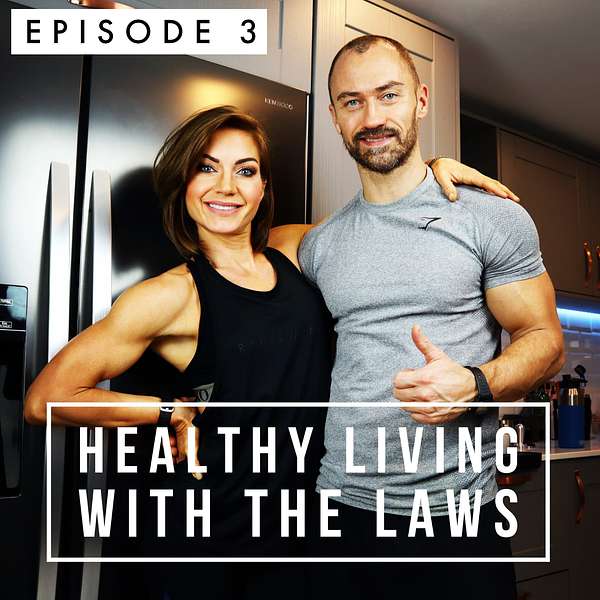
The Optimised Health Show
All Things Healthy Living - From What You Eat and Drink to How You Live and Think. Healthy living with the Laws hosts Ben and Sarah Law have both worked in the health and wellness profession for over 12yrs and have a huge passion for helping others live healthy, happy and with purpose. They absolutely love inspiring other 40 somethings through their journey and knowledge in nutrition, health and entrepreneurship along with a side serving of banter and giggles to brighten your day Sarah Law is an IFBB pro bikini athlete, qualified Naturopathic Nutritional Therapist and has built a successful online health and beauty business that has led her to being an international speaker, delivering motivational and nutrition talks to crowds as large as 18,000! Her mission is to empower women to love the skin they are in both from the inside and out. Ben Law is the founder and director of a global supplement brand, Lovelife supplements, that started from a dream to leave the corporate world. His passion for health and fitness led him to train as a Primal Blueprint certified expert and his mission is to to help people live a long, healthy, happy life. This podcast is for information purposes only and is not intended to diagnose, treat or cure any health conditions. If you have any health concerns please seek advice from a professional for guidance
The Optimised Health Show
EPISODE 3 | What Foods Should I Eat? Top Tips on Healthy Food Choices
In this episode we talk about what we think are the healthiest foods most people should be eating. It is quite a simple question but with so much diet advice out there it can be confusing knowing exactly what is good and bad for you.
We break it down into the best protein, fat and carb sources plus veggies, herbs, spices and fermented foods.
We cover a LOT in this one so make sure you're sitting comfortably!
Remember to like and subscribe and please comment below if you have any questions!
BEN INSTAGRAM: https://www.instagram.com/benlawprimal/
SARAH INSTAGRAM: https://www.instagram.com/sarahlawuk/
SHOW LESS
Thanks to Our Sponsor:
Want supplements that *actually* work? Check out Love Life Supplements and use code BEN10 for 10% off your order.
Book a Consultation with Sarah: Free Wellness Discovery Call
Let’s Stay Connected:
- Ben: @benlawprimal
- Sarah: @sarahlawuk
Thanks for Tuning In!
Enjoyed this episode? Drop us a 5-star review and share it with your health-loving crew. Stay tuned for our next episode — we promise we won’t ghost you again!
This is Healthy Living with the Laws. Top tips on how to optimise your health from what you eat and drink to how you live and think. With your hosts, Ben and Sarah Law. Gut health is so important. When the gut is functioning well, then all the other things will fall into play if you're putting the right things in.
Ben:Yeah.
Sarah:But if the gut is functioning well and you're putting the wrong things in, then the gut will probably end up going wrong. So start with the baseline of making sure your gut's in the great place, putting the good things in that are going to support gut health, eating nutrient-dense foods and promotes bioavailability.
Ben:That is one of the key, isn't it?
Sarah:They don't need to be boring. You know, we make loads of things out of these nutrient-dense whole foods that can be turned into something wonderful. Hello and welcome to episode number three of Healthy Living with the Laws.
Ben:Three already.
Sarah:I know. Time flies when you're having immense amounts of fun, as we have been.
Ben:Huge fun.
Sarah:How have you been?
Ben:Alright, I think.
Sarah:What have you been up to in the last two weeks?
Ben:Not a great deal.
Sarah:You've learned how to cut your hair properly. Yeah, you've got no little whiskers today, which is good, because they were distracting me last time.
Ben:I concentrated.
Sarah:Yeah. Is it shorter?
Ben:Huh?
Sarah:Is it shorter than the average?
Ben:I've gone a little bit shorter today, yes. I thought so. A couple of levels. You know?
Sarah:Wow.
Ben:Like to go close to the bone.
Sarah:Yeah, shave it all off. Maybe you can do mine next.
Ben:It's just easier, isn't it? If I don't have to cut it as often then.
Sarah:Well, if we're in lockdown for much longer, you might have to do mine because it would be disaster. Yeah, but lockdown hair is not great either. I'm sure many women can agree with me. I mean, if anyone saw my Instagram and uh a little picture I put on there recently of me doing yoga, and I looked at my toes and feet, and even I was disgusted. I mean I know my feet are not good at the best of times. You've got bad feet anyway. Well, they're dancers' feet, aren't they? But it was worse than that. I mean I've got stubborn feet. Yeah.
Ben:You've got what?
Sarah:Flat feet with bunions from dancing, and just a bit of sparkly pink nail varnish on my big toes. And the rest is just hard to see.
Ben:See, I was I was a foot guy before I met you. Definitely turned you off feet. And now I hate feet. Sorry. Thanks.
Sarah:Yeah, I've ruined that for you, that little fantasy.
Ben:My feet just normally grows hairy. Full of mud under my toes.
Sarah:Yeah, you'd you don't clean your toenails. I mean I don't paint mine, but yours are just dirty. I don't know.
Ben:How do you get so much mud under your toenails?
Sarah:Well, especially when you don't really go outside. You don't leave the house. Yeah, and you just don't clean the toes. Well, there's not really I was gonna say there's not much reason to leave the house right now, is there? It's kind of like you have to force yourself to get out of the home because there are no reasons and it's cold.
Ben:Yeah. I mean But that it but that's maybe for another podcast, you know, you're important to get out.
Sarah:Forcing yourself out of the house.
Ben:Even in these times you've got to get out and you try to walk. Try to get out.
Sarah:Try to walk. We do walk. Sometimes we crawl. But it is hard. Like again, Instagram. If you follow us on Instagram, you'll see some of our comedy moments. So I was in the uh yesterday we went into the gym, didn't we? The garage gym. And I was cold. Like you were in a t-shirt and then no top, and I had on two jumpers, a gelee, a woolly hat, and a puffer coat whilst on the treadmill.
Ben:Yeah.
Sarah:I just can't do it. I de I definitely think though, women naturally Yeah, women naturally definitely feel the cold more.
Ben:That's for sure, but you're pretty bad, aren't you? I definitely Because your mum's terrible. Well, my mum's worse than me.
Sarah:I feel like mine's not as bad as it used to be. My tolerance has definitely gone up, and I definitely think having cold showers every day has helped, for sure.
Ben:Yeah, definitely. It could build up your tolerance a bit.
Sarah:Yeah, I can definitely handle a cold shower a lot more than I used to and the cold weather in general, but there are certain days when I'm just like not feeling it.
Ben:But we have definitely have different thermostats, don't we?
Sarah:Oh my good. Like you, there's something wrong with your thermostat. It's on hot 24-7. It's like, but isn't it you yours is like when you eat. As soon as you eat, you literally burn up, don't you?
Ben:My metabolism is wild. I think it just goes crazy, doesn't it?
Sarah:Yeah.
Ben:I can walk for like five minutes in the freeze and cold and then be boiling hot.
Sarah:Yeah, you have to take your coat off, and I'm like, what is wrong with you? And it takes me a good three hours to heat up and then I'm finally there, just about ready. But it's so interesting when you look at things like body temperature as well, because so much again is regulated to hormones, so that's why again, when women go through the change and things like that, hot flushes, all of that fun stuff to come. Hopefully not too soon.
Ben:But you're getting on.
Sarah:Thanks. 40 this year. I am not long. How many months? February, March, three. Three? No, three. Three three months. And I'll be 14 when we go to the sun. We looked at the temperature today, didn't we?
Ben:I always look at the temperature.
Sarah:Yeah, every day. Sixteen degrees in sunshine, I'll take it.
Ben:Heat's four degrees, I guess.
Sarah:And great.
Ben:I quite like the cold, I keep saying this.
Sarah:Well why are you moving to a beaver?
Ben:Because I'm so hot, I like the cold. It cools me down.
Sarah:I just remember the first year we lived in a beatra, and it was record hot that year, wasn't it? In in August, walking down like the promenade where we lived, and you literally couldn't see because you just had sweat dripping in your eyeballs.
Ben:My eyebrows didn't you? There weren't enough to keep the sweat. I'm like, didn't you invent?
Sarah:But that was was that at the time when you used to shave your eyebrows as well?
Ben:No. No, no.
Sarah:That's another time. That was yeah, that was a little while ago. But didn't you? I'm sure you invested in like a sweatband.
Ben:A sweatband.
Sarah:Pretty cool.
Ben:That sweatband.
Sarah:80s sweatband.
Ben:But the problem is that just makes you hotter.
Sarah:Well, yeah, it makes your head hot.
Ben:That's just getting even hotter.
Sarah:And sweating even more. I can't wait for this year. I can't wait to see what happens. Whether you self-combust, I'll be perfect.
Ben:That's why we went to Bali.
Sarah:I was like, Yeah, I mean, even for me though, that was intense. Like I can handle heat well because I love the hot weather, but it was the humidity, wasn't it? It was beyond hot. It was like walk down the road and two minutes down the road, and I was like angry. You were angry a lot. Wet. But you were you were angry with it because you just couldn't.
Ben:I do get angry, I get hot as well. Yeah.
Sarah:It's like the rage comes out. Anyway, that's not what this podcast was going to be about, but you know, it's not about heat.
Ben:It's about we're talking about food. How general is that? Food. Welcome.
Sarah:Well, we thought we'd give you some tips on the top foods that we believe to be the most nutritious in different food groups, didn't we?
Ben:Yeah, it's just basically to keep things really simple for you because keep it as simple as possible and just say like what should you be eating like in very kind of high-level general terms. Yeah.
Sarah:Because a lot of people just don't know what is healthy and what No, and I think again it's because there's confusion with so much information and misinformation out there that you can read one thing and it tells you to eat one thing, and then you read another thing and it tells you it's the devil and that you'll die from eating it. So it's so hard to know.
Ben:Navigate the food aisles and know what is actually healthy.
Sarah:And with marketing, marketing is very, very clever. So you'll walk down food aisles and it will say certain target words that make you think things are healthy, but then you'll turn over the packets and realise that actually maybe not as healthy as it's promoted to be. And again, uh this is the thing like well, we talk about a lot, don't we? Like whole foods, because you know what they are, really. Whereas anything packaged, a lot of the time you you know we're not saying don't ever eat anything from a packet because we do eat things from packets occasionally, but it's knowing the source of the ingredients in those things because if you don't know where they've come from or what the source actually is, then high level if you're getting whole foods unpackaged, that's a good, very good place to start. Yes, isn't it? Yes.
Ben:Yeah. Quite simply, yes. Eat real food, peeps. Eat real food.
Sarah:But on occasion. So it's like I always say to people, the reality of the world we live in is convenience, of course, and taste is a big factor. So it's learning how to make the most of what you can with whole foods, but using those other things as like the icing on the cake, essentially, like the you know, like a protein bar or the protein powders and things that Yeah, don't make them your you know, your blue baseline, your staples. Yeah, they shouldn't be the staples, they should be the fill the gaps and you don't eat processed, but I do eat processed foods.
Ben:Yeah. Because I eat protein powders.
Sarah:Me too.
Ben:And stuff like that.
Sarah:Yeah.
Ben:But they don't have all the other.
Sarah:Yeah, and again, it's about quality. It's looking at, like we said, when you're eating processed foods, it's looking at what's actually in them and where they're sourced from to make sure that you're doing the best you can with the processed foods that you are eating.
Ben:When we refer to bad processed foods, we're talking like stuff that has 50 ingredients.
Sarah:Yeah.
Ben:And highly sugar-based or highly refined carbohydrates. Artificial stuff in there.
Sarah:Yeah. Things the body does not recognise basically.
Ben:Like a pure whey protein powder, I would not consider that to be a highly processed food.
Sarah:No. It's not a whole food, but it's also not, if you get the right quality, it's not a Yeah, it's not gonna have negative effects. Well, we'll talk about that in one second, depending on the person again. And this is where it becomes challenging because there I I believe there are some basic principles for everyone, but it's also really important to remember that everybody is different and everybody's body functions slightly differently. So what one person can tolerate, another person can't, and that's why it's important for yourself to figure out what your tolerance to certain foods are because it might be considered a health food, but you actually eat it, and for you it's not a health food. It can be triggering digestive issues and all these other things to go wrong.
Ben:There's a lot of foods in that spectrum, aren't there, in that in that borderline category.
Sarah:Yeah.
Ben:But I still believe there's certain foods that are pretty good for most people.
Sarah:Yeah. So let's talk about them.
Ben:So we're gonna break it down, aren't we, in into proteins, fats, carbs, and then veg.
Sarah:Miscellaneous.
Ben:Miscellaneous, veg, fermented foods, herbs and spices.
Sarah:And again, some some people listening might not know what fermented foods are, so we can explain a little bit about that when we get to that point.
Ben:I mean, some people probably might not even know what proteins, carbs, and fats are.
Sarah:No, this is true. And again, it's about education, isn't it? Some some people haven't been educated on that. And in reality, it's not something we're well, we didn't get taught it at school, did we? I don't ever remember being taught that. I got taught in cooking lessons how to make a coleslaw. It's gone. It's gone. It's gone. Debate here. What do you call it? Scone, scone. I say scone, you say scone.
Ben:Scone.
Sarah:But yeah, I got taught how to make coleslaw and a microwave sponge. It was good though. A jam microwave.
Ben:It was a big kids at school, isn't it? But we're talking 30 years ago now.
Sarah:Yeah, that's crazy to think about. It doesn't feel like that. I feel like I'm still 15. So yeah. What were we talking about? Completely lost.
Ben:Proteins, carbs, and fats.
Sarah:Oh yeah, what they are. So proteins, they're the building blocks of every single cell in the body, aren't they? Every single cell in the body is is made from proteins. So the amino acids are the building blocks of proteins, and they're what we need to form all the cells within our body.
Ben:And used to build muscle, to repair muscle.
Sarah:Yeah, and all cells.
Ben:And all cells. And bone health, bone density.
Sarah:And that's the thing I think a lot of the time again, people think that protein is just important if you work out or you go in the gym. It's like, no, it's it's probably one of the most underconsumed and most important macronutrient. Especially in women. I mean, obviously a lot of the women that I know and hang out with in the fitness world eat protein and quite a lot of it. But in the general world, a lot of people I see just don't ever, especially women, eat anywhere near enough protein. No. They overconsume carbs. Carbs, under eat protein, under eat protein. And again, many women probably undereat protein.
Ben:And especially as you're getting older, it's more even more important.
Sarah:Yeah. Because your body, it's harder to hold on to muscle as you age.
Ben:There's things like sarcopenia, isn't there? Um so it's actually more important to eat more protein as you age. Explain what sarcopenia is. Muscle wasting, basically.
Sarah:In simple terms. So it's it's something that happens naturally with age. And if you look at anything with aging, if you look at skin health, for example, like as we age, our bodies just aren't as effective at producing things. So like we produce less collagen in our skin every year as we age. So it's all those things start to kind of downgrade a little bit. So our bodies need more to basically be able to produce what we need them to produce. So protein is really important in that fact of helping with the structures within the body, you know, with everything in the body, isn't it?
Ben:Yeah, vitally important. Then vital. Fats.
Sarah:Fats, very important, and something that I think, again, a lot of women have probably had issues with. I definitely did in the past. I was literally fat phobic, wasn't I? For it took me a long time to get over that. And I truly believe, or I truly wish, should I say, that fat that is on your body and fat in food were called different things. I wish fat that you eat would be called fuel or something different. That's because my biggest fear was if I eat fat, it is immediately going to be fat on my body, and that is absolutely not the case. And the problem is under consuming fats, it just wreaks havoc on your body because you need fats. You need healthy fats to make all of your hormones. So hormones actually are uh the basis of hormones is cholesterol. So if you're not having those good fats and you don't have those fats in your body, well, your body naturally produces cholesterol anyway, it's going to produce it whether you eat it or not. But if you don't have those healthy fats, then your hormones just cannot function as they should, and they don't get produced in the way they should. Also, every single cell membrane that you have, so you've got your cells, but they have like a skin essentially, it's like your outer casein. And that that cell membrane needs to be fluid, so it needs to be able to absorb things into it for the cell to function properly, and it needs to be able to eliminate waste to detoxify, essentially. And so those cell membranes are made up from fats, lipids. And so if you haven't got that fluidity of your cell membranes, then they cannot function properly.
Ben:So fats are just And it has vilified for it been dead-vilified for decades, hasn't it? Oh yeah. Diet heart diet heart heart hypothesis.
Sarah:Hypothepathith, that's a really hard thing.
Ben:That's where the you know all the low-fat foods came in.
Sarah:Explain can you explain a little bit about that? Because you know you you explained that well about Ansel Key's study. Yeah. Seven Seven Countries study or something. Explaining it really well so far.
Ben:He Yeah, he did a big study.
Sarah:Brilliant.
Ben:And yeah, and and he he he correlated that countries that had the most vats had the most heart disease. But he disregarded like 50 other countries or something. He just took a cherry picked basically the the countries where human bias hypothesis.
Sarah:And that's this is the thing, human bias is a massive thing where people will find the evidence for what they want to prove. So he wanted to prove that heart disease was caused by eating a high fat diet, so he cherry-picked the data to show that to prove what he thought to be true, basically.
Ben:And literally from that, that's where it all began. Where it all began and the fat phobic fat phobia stuff kind of started, and all the low-fat foods came out, and fat was the devil, and especially saturated fat.
Sarah:Yeah, got demonized. And it's so interesting again because it's like where if you look at anything in the world, like one of the biggest things that I was taught at college was to research where the research is done, because so much scientific research, again, is like who actually funded the studies that are being done. So you may have some scientific evidence of something, but you need to look at who funded that evidence being created. Because again, there could be some human bias going on, it could be to do with funding and wanting to promote certain things that can call uh to create money. There's so many different parts of it. Like my mum, it was hilarious. Every time I was in a lecture at college and we were talking about all this, and I'd be messaging her, going, Don't do this anymore. Don't she was like, What should I do? What should I do? Because I just it fascinated me. I loved it. Loved it. But anyway, I don't know why I went onto that.
Ben:No, nor do I.
Sarah:Fat. We were talking about fat. But yeah, when I was a fat phob, my hormones were a mess. I didn't have any.
Ben:Yeah.
Sarah:I really I mean, I I did not have any, basically.
Ben:But you were really phobic, weren't you? Yeah. You had that see-through cheese.
Sarah:See-through cheese. I did like the C-through cheese.
Ben:It was literally the C-through cheese.
Sarah:When I lived in Germany, I don't even know. Such low fat. Well, it had no fat in it. I don't even know what it was, to be honest. It tasted like cheese. I mean, you didn't like it, but I'd have rice cakes with that on every single night when I got him from the show. It was my little treat with a bit of quark. Massive rice cakes and see-through cheese. What I mean, what a treat. Wow. Joy. And then mushrooms and tomato ketchup. Um that was my diet. I mean, that's embarrassing to talk about, but oh how times have changed. Thank goodness.
Ben:It turns out that fat is extremely important. Yes. Um for your brain function as well. Brain function is huge. Huge. It helps transport nutrients into the blood stream. Yeah. It's a lot of nutrients, fat soluble. It's kind of the preferred fuel for the body.
Sarah:And again, this is something that we we say this on every podcast, we'll talk about on another podcast.
Ben:Yeah, that's getting into kind of ketogenic.
Sarah:Kitosis and yeah, the ketogenic diet, which you know a lot more about than I do, but we can talk a lot more in depth about what a ketogenic diet actually is and the pros and the cons.
Ben:Yeah.
Sarah:But we're gonna save that for another one, so keep listening.
Ben:Um yeah, vitally important. Yeah. And then carbs. Carbs. The wonderful world of carbs.
Sarah:Who's going to Mars this year? Who knows? Who's ever getting on a plane again? So carbs are the quickest fuel source, actually the preferred fuel source of the brain.
Ben:Fats and carbs are both fuel sources.
Sarah:Yeah. And but they are the preferred source because they're the quickest.
Ben:Oh, that's de that's debatable.
Sarah:But again, it's what your what it would be The quickest form of. Yeah, exactly. And your energy your body wants to survive, basically. So it is the quickest way of your your brain does run on carbs. Yeah, on carbs.
Ben:Glucose.
Sarah:So carbs then, and we're not villain.
Ben:The fact is they're not essential. No. You can never eat a carb again. And still survive. It's you still survive because your body has processes to produce carbs. From other sources like protein. Internally within the body.
Sarah:Yeah. So they aren't um essential.
Ben:Or can run on ketones, which is an alternate fuel source to glucose.
Sarah:Yeah. But again, it's i I we both eat carbs, so we're not saying don't eat carbs, but it's about knowing what well, this is what we want to share with you. Some of the best quality carbs that you can eat.
Ben:At a fundamental level, they're turned into glucose.
Sarah:Yeah. Which is then fuel.
Ben:And fuel for your body. Turn into glucose in your bloodstream, in your liver. Yes. And some is stored in your muscles.
Sarah:Yeah, stored in your liver and your muscles for times of need. So if you consume, they're basically like your storage sites. So when you turn when you consume carbohydrates, they basically are broken down into sugar in the body, aren't they? Every single carbohydrate, no matter what source, is broken down into sugar. And what then happens is some of that will be stored in your lift-lifer, in your liver and in your muscles for times of need. So if you run low and you you have low bouts of blood sugar, your body can release it. Yeah, release it from your muscles or from your liver, which means you've then got that fuel source that you need. But the problem lies where those fuel sites, I mean those storage sites are full, and then you've still got too much sugar in the bloodstream, which is really damaging and very aging to the body, isn't it? It's not good. So it's about balancing that out in the right way to make sure that the carbs that you're consuming are doing what they need to do without without causing damage and it's just they will be turned into fat. Yeah. And then locked away, basically, so you can't even access them. So there's your carbs. And then veg is an interesting one that we want to talk quite a bit about, isn't it?
Ben:Because Yes, but are we going to get on to talking about what the sources?
Sarah:Yes. Yes, let's do that then. Otherwise people are like, brilliant, thanks for that.
Ben:Really helpful. So they're going to go to kind of talk about the best sources of proteins and most nutrient dense sources. What we believe to be the best sources.
Sarah:Yeah, and the most nutrient dense. But again, it's really important to remember individuality. So for some people, we may say a certain food, and actually your body does not tolerate that food very well. And if not, then obviously that is not going to be the best source for you. But these are, if you were to look at them in terms of nutrient density.
Ben:Nutrient density, absorbability.
Sarah:Yeah, they are probably the best sources. So let's go. Proteins.
Ben:Proteins number one. Beef. Beef.
Sarah:Beef.
Ben:But yeah, kind of meats in general are the most nutrient dense forms of protein.
Sarah:Yeah, and why would you say beef then over, say, if someone was going why beef over chicken?
Ben:Because carnitine, carnosine, creatine, arginine, iron, iron, C L A. Yeah. But it is yeah, it has a lot more nutrients.
Sarah:Yeah.
Ben:Chicken pork stuff like that. Um again and highly bio. So your body will absorb more of those nutrients.
Sarah:When they're bioavailable. It recognises them and knows what to do with them, essentially, doesn't it really?
Ben:Yeah.
Sarah:And with regards to beef, so obviously a lot of people's concern is the environment and animal welfare and things like that. So what would what would you say? I would say read the book Sacred Cow.
Ben:Yes.
Sarah:100%. And it's about being open-minded again, like we totally respect people's opinions, but you have to be prepared to look at all angles of things. And what we see a lot of right now is obviously a massive movement with regards to veganism. And I'm, you know, whatever people choose to believe, I'm all for that. But I think you have to look at both sides of the coin. And so what we see is a lot of documentaries, a lot of stuff out there on veganism and the planet and why it's all good, but no one is really talking about the other side.
Ben:So sacred cowards. Sacred cows are very talking pro-meat, brilliant.
Sarah:Yeah, so it's a very good one to kind of look from the other angle. So look from both angles, and then that means you get to decide for yourself which angle you believe to be the right angle. I think that's important to always do.
Ben:Yeah. And we always talk about sourcing the best quality. Yes, 100%. So from sustainable farming practices.
Sarah:Yeah, that have the ability to sequester carbon out of the environment if done properly in the right practices.
Ben:That's actually they're actually a regenerative neutral.
Sarah:A carbon sink.
Ben:Carbon sink.
Sarah:So that she It's like a regenerate regenerative, I can't even say that, regenerative farming practices have the ability to act as a carbon sink.
Ben:Act as a carbon sink are actually beneficial for the environment, believe it or not. Not just neutral, but actually benefit benefit the environment.
Sarah:But that's again why why you should read that book because it explains it in a lot better detail than we've just explained it. It doesn't. But it just that gives you a brief overview. Go and read the book, basically.
Ben:And kind of grass-fed not from cafo farms like what does CAFO mean? You put me on the spot. Cattle animal feeding operation or something like that. Where they're all crammed into like hundreds of thousands. Yeah. Fed all food.
Sarah:With foods they would not normally eat, they get sick.
Ben:We do not recommend that because that is definitely bad for the environment users. Yeah.
Sarah:And bad for you. Not regenerative. Yeah.
Ben:Um, and that's why we don't buy meat from those sources. We buy from Riverford again, plug. Well they use sustainable practices, they're all our animals are grass fed. I know it is expensive, that is that is a fact, but you do because it's so nutrient dense, you need to buy less of it.
Sarah:Yeah.
Ben:You need to eat less of it to meet your nutritional needs.
Sarah:I truly believe again it's down to priorities, and I'm I'm not saying obviously that everyone can go out and buy loads of organic meats, but when you actually look at the cost of a lot of processed and packaged foods, some of that is still not cheap.
Ben:No, exactly.
Sarah:And it it's not making you feel good. So and if it's doing the environment harm over the long term, it's just it's just thinking about implications all the time, isn't it? So, and again, another reason, like obviously with with meats that are more fatty, so when you're eating ones that are not from high quality sources, it's not it's the fat where the toxins are stored, isn't it?
Ben:So Yes, that's kind of where you get the bad fats by omega-6 is if you're eating the the fattier cuts of meat, and the toxins accumulate in the fat.
Sarah:Yeah, so basically we store toxins in fat. So animals are very similar in the fact that if they are toxic in some way because they're not high quality meat, they've been fed the wrong kinds of foods, then all the toxins will be stored in their fat. So then if you are eating the fattier cuts of meat, then you will be eating the toxins. And very similar to our own bodies, like I mentioned, like that's what we do as human beings. You know, we store toxins in fat cells. So if you don't lighten your toxic load, then you might struggle with your weight because it's like your body's like, I'm not gonna let go of the, I'm not gonna get rid of this. I'm gonna store it in these fat cells. So you need to salt that out before I'm even gonna go there. That's a whole different topic.
Ben:So, yeah, so beef and kind of meats in general. Very nutrient-dense, very bioavailable. Fatty cuts and meat, also the cheaper cuts contain a lot of collagen within the ligaments, tendons, so the tougher bits when you cook them for a long time, they break down, provide a lot of collagen, which is obviously great for skin, hair, nails, joints, joints.
Sarah:That's why we look so young.
Ben:So actually, that's where eating meat is can be quite very cheap because the they are the cheaper cuts.
Sarah:Yeah, so even if you were getting the organic grass-fed.
Ben:And like I said, like it's cheaper. Minced beef is extremely cheap. Even the organic grass-fed stuff we buy, it's like four pounds for 400 grams.
Sarah:Yeah, and then you can bulk that out with you know, we it's not like you just have to eat. You get like the meat.
Ben:Six to eight meals uh out of one pack almost. So that's like a five quid pack of meat for six to eight meals. Highly nutrient dense, highly good for you. Yeah, so it's not that expensive.
Sarah:This is true.
Ben:Depending on the cut. If you buy a fillet steak every week, yeah, of course, that's gonna be then that is expensive. Number two organ meats. Something that people are gonna be like, this is quite a biggie because they are literally the most nutrient-dense food on the planet.
Sarah:They're quite intense, aren't they?
Ben:But obviously a lot of people don't enjoy the flavour, shall we say? Because they can be quite strong.
Sarah:Yes. Should we talk about that wouldn't count as an organ meat, would it? When we went to France, the brain.
Ben:That is an organ meat, absolutely. Did that count? That's an org meat.
Sarah:So this is what happened. We went to France. When was this? Many moons ago. We were youths. We went to a little a little Do we want to take up with this? Yeah, we went on a little break to France, didn't we? As we used to do every like Christmas, we'd go away for a few days. And we went to a traditional French restaurant in Paris, didn't we? It was absolutely Baltic, freezing. I've never been so cold in my entire life. We went to this really traditional restaurant, and the waiter came over, and we were ordering our food, and there was a special, wasn't there? Special. Sure, very special. Definitely special. And he like, I was like, I'll have the special, and he was like, It is very special. And he went like this. You can't ski. No, he kind of pointed to the face, but I was just like, I had no idea what he was talking about. It was like it's very special. And I was like, brilliant, game on.
Ben:Are you absolutely sure you want this?
Sarah:So it turned out, and it was, I didn't realise, it like a pile of mush with two little white boiled potatoes, and then there was like a hairy something on the side, and I was just like, I have no idea what this is.
Ben:It was supposed to be like a pig's head, wasn't it? Basically. Or lamb's head.
Sarah:Yeah, like it I well, I can't even it was bits of a pig or lamb's head, basically. So there was the cheek with the hairy bits on, yeah. And then there was a pile of mush, so I didn't even go near the hairy bit because I was like, I'm I'm absolutely not touching that. Then the head, the the mushy bit, I was like, I don't know what that is. I'll give it a little while. Tried it and I was like, that is disgusting. And then I realised it was brain.
Ben:Yeah, it was brain. But little did you know, it would have been very extremely good for you.
Sarah:Yeah, but it tasted absolutely I mean you tried it as well, and you were like, that is But it didn't even seem cooked, did it? It was just gross. Just like a head. So I had a boiled potato and lots of red wine instead. A head on a plate. You had a lovely meal, you didn't even give me any, I don't think. I just had a boiled potato.
Ben:Yeah. And I just drank the wine. You digress.
Sarah:Yeah, yeah. So organ meats, tell tell people how you make organ meats consumable. There are some that I quite like, like lamb's liver is quite mild.
Ben:Most people like patties, don't they?
Sarah:My mum makes it wicked.
Ben:Probably don't even really realise it's got chicken liver walnut pate. That was just delicious, and that's yeah, a very good way of masking the flavour.
Sarah:But yeah.
Ben:Are people gonna make it? Probably not, but you buy a lot of pattes.
Sarah:They can come around, we've still got a kilo left from Christmas. Anyone want some organ meats?
Ben:I actually uh yeah, I could do like a chili and chicken liver chili now, don't we? Yeah. So I just combine a pack of beef mints with a pack of chicken livers, chop them up together, mix them all together, and make a chili from it.
Sarah:And it's any vegans listening to this today, I'm really sorry.
Ben:We will get on to the other bits, I promise. But yeah, it masks the flavour quite well, and but I don't actually mind the flavour yet anyway, but no, I quite like it.
Sarah:I mean, it is an acquired taste, but I do think your taste buds change the more you have something anyway.
Ben:Yeah.
Sarah:But I and again, I I don't know, it's like I feel like when I'm eating nutrient-dense foods, my body is like, yes, this is this tastes good, because it's like it wants me to eat nutrition, essentially.
Ben:Yeah.
Sarah:How many times can I say essential?
Ben:Um stop saying that word. But you can like you can fry like you can do like liver and onions, you're like put loads of herbs and spices, make it into a stew. Your mum does what liver and bacon. Liver and bacon.
Sarah:But she leaves the liver. No, she makes liver and bacon stew. All this gravy and everything. She loves it, she loves it. She leaves she leaves the liver. Dad eats the liver, mum doesn't. Oh god. Because she doesn't like the liver, and I'm like, but the rest of it tastes like liver. But that's like she says she doesn't like fish. But she eats salmon and mackerel. So I'm like, well, they're the fishiest fish I think I've ever tasted in my life.
Ben:Liver but she's pate.
Sarah:Yeah. But there we go.
Ben:Yeah, it's not for everyone, but there are ways of making it taste nicer. And failing all of that, you can get very good um desiccated liver.
Sarah:Yes.
Ben:Capsules or organ meats in general. Yeah. Hunter and gather.
Sarah:Dehydrated ascent uh I nearly said it again. Dehydrated kind of.
Ben:Yeah, so they retain all their their goodness, basically. They're kind of freeze dried almost like that.
Sarah:Yeah, and like capsules, so you you can't taste it. You just take it as a tablet, basically. So that's another one. Number three.
Ben:Fish.
Sarah:Fish. Oily fish. Amazing. Salmon, salmon, mackerel, sardines, herrings, anchovies. Anchovies are good.
Ben:Yeah, a lot of uh good fats, obviously. Yeah. Omega-3s.
Sarah:They cross over, really, don't they? They've got the the power of the healthy fats along with the protein source too. But you can also, in that kind of protein source, you could add in seafood in general. Seafood is a great protein source, prawns, squid, mussels. Yeah. Also very high in zinc, which is very good for the immune system.
Ben:Obviously, a lot of people don't like fish as well, but you can find yeah.
Sarah:You're mad. You can find ones. This is it. Like if you don't like fishy fish, then white fish is not really fishy. So if you went for like a monk fish or a um every cod.
Ben:Everyone likes cod, don't they?
Sarah:Cod and chips. Yeah, but I think most people like the batter. Um hake. Yeah, chunky bit of hake. Beautiful, isn't it? Yeah. They're just really good. Even like basas, actually. Bassa's one of Bassa's one of the cheapest and one of my favourites right now. You can get smoked bassa, and it's oh, so good.
Ben:Yeah. Even canned canned fish is really good. I have a lot of canned fish. Yeah, you just have to be careful.
Sarah:So easy. The BPA lining in the cans, that's the only thing.
Ben:Yeah, but I don't think they all have the BPA lining.
Sarah:They do.
Ben:They don't.
Sarah:They do.
Ben:But they're not acidic, are they? The the fish. But it's a problem.
Sarah:The fat as well. That's not acidic. No, but the fats leech BPA into Do they? Yes.
Ben:Says who?
Sarah:Says me.
Ben:They're a very easy and convenient way to get fish. And I have them quite often. I have sardines, canned sardines, and the beauty for those, they have the bones included. That sounds gross.
Sarah:But I like tin salmon with the bones in those.
Ben:You hardly notice the bones, they're very eat soft and edible, and that provides even more collagen. And calcium. Calcium. And the smaller the fish, the less mercury it accumulates as well.
Sarah:Yeah, so mercury toxicity is a is a big one, isn't it? Like big fish have quite a lot of mercury in them.
Ben:Obviously, tuna is extremely popular.
Sarah:And sword fish is a big one.
Ben:And tuna can accumulate a lot of mercury. Heavy metals. And that's they're very low in fat, so you don't get the fat benefit from them.
Sarah:Yeah. And those heavy metals can wreak havoc on your body again. They can do all sorts of funny things when you've got too many heavy metals accumulated in the body.
Ben:So generally oily fish are probably the best, aren't they? Yeah. Salmon mackerel.
Sarah:Wild wild salmon.
Ben:Wild caught if you can. A lot of fish is farmed, isn't it? Any other problem of the omega 6 is from what they're fed.
Sarah:Yeah. Number four.
Ben:Eggs. Eggs. Eggs are amazing.
Sarah:Eggs are absolutely amazing. Again, unless you have an intolerance.
Ben:Yeah, egg problems are a problem. I've got egg problems.
Sarah:I have got egg problems.
Ben:Not many people have egg.
Sarah:Well, no, they quite a lot do. But a lot of the time the intolerance is actually to the whites more than the yolks. Yeah. So it's no yolk. It's oh that was bad. That's his dad. That's your dad's kind of joke. It wasn't even a joke. Oh, it was half a joke. Yeah, so the yolk is actually where the majority of the good stuff is anyway. So the protein is all of it, and the white is has got a lot of it's very high protein. So you can get dehydrated egg white, can't you? And you can get egg white protein powders and everything, really. But it's so that's the high source of protein, but it's actually the yolk that has the beneficial parts other than the protein.
Ben:We put it in the protein category, but the yolk is a fat. Is a fat, and that it's one of the most nutritionally dense foods on the planet, isn't it?
Sarah:Choline, which is amazing for your brain.
Ben:Biotin.
Sarah:Biotin, which is great for your skin and nails. B vitamins, galore.
Ben:It really quite upsets me when people throw away the yolks.
Sarah:Yeah, I used to throw away all the yolks, do not.
Ben:It's like bodybuilders just eating the egg whites.
Sarah:Yeah. It's because it doesn't hit your macros. But it is that it's because a lot of the time, again, in the bodybuilding community, what you'll see is high protein. High protein, low fat. Low fat. Quite a few.
Ben:They just see the yolk as the fat source. Yeah, so it's like get rid of it.
Sarah:It's nutrition.
Ben:I have about some four to eight eggs a day.
Sarah:So what would you say to someone then who's worried about cholesterol issues because of eggs? Don't be.
Ben:Cholesterol can you consume has very little bearing on cholesterol within your body.
Sarah:Yeah, your body naturally produces cholesterol.
Ben:And your naturally produces cholesterol anyway. It's in every cell of your body.
Sarah:Yeah. And it's so vital for your hormones.
Ben:And that's old school thinking about cholesterol.
Sarah:There are a rare category of people who have like a gene mutation where consuming cholesterol makes a big difference. Um, but for the majority of the population, it actually doesn't. And cholesterol is actually the goody. Like where it's been demonized is obviously when you have, let's say, a heart attack and they find plaques, it's a plaque that causes that blockage in the artery. The plaques are made from cholesterol. So people go, Oh my goodness, there's a plaque of cholesterol. This is the this is what's caused it. But actually, cholesterol is trying to help you. So think of cholesterol, that plaque, as like a plaster. So what's what's happened is there's damage that's happened to the artery, normally from far too many highly refined carbohydrates and sugars, have caused damage to the artery. And inflammatory foods and all these other foods that are just not good for us have caused the damage to the artery. Cholesterol goes, Oh my goodness, there's damage to the artery. Let me come and put the plaster on, covers it over, but the blood flow going through makes the plaque of a bit like when you go in the shower with a plaster on.
Ben:Yeah.
Sarah:Comes off. So that's what blocks the artery. So it's actually not cholesterol that's the issue, it's the it's the damage that's already been done before the cholesterol comes in to try and do its job.
Ben:Yeah. So eggs are good, basically. Eggs are great. It's basically the yolk throwing away.
Sarah:We've already talked about fatty pups in the world.
Ben:Yeah, talked about that, talked about meats in general.
Sarah:So this is a controversial one. We're gonna talk about dairy and whey. No way, no way.
Ben:I love dairy. I'm gonna put it in.
Sarah:Love cheese. Ben is the cheese fiend. I'm not gonna lie, I do love cheese. Cheese is amazing. Because it produces the same response in your brain as drugs, it's addictive. Produces like an opioid response in your brain.
Ben:Yes. Yeah.
Sarah:And we talked about this a little bit last time about things that you're intolerant to, you sometimes crave because it produces that natural high of sugar. So it could be that. So this is where dairy is a controversial one. For people who don't have intolerances or issues with dairy, then it can be highly beneficial. But for a big proportion of the population, they actually do have an issue in the world. Yeah, it depends again on ethnicity eh, I can't say that. Ethnicity. Ethnicity. Ethnicity?
Ben:Ethnicity. Ethnicity. Ethnicity.
Sarah:Yeah. So certain populations can tolerate it normally a lot more than other populations.
Ben:And but cheese is less problematic, definitely. Problematic because it's fermented.
Sarah:Yes. And unpasteurized, there's a difference as well between the pasteurised and the unpasteurized because when you pasteurise things, you basically denature the proteins and you remove a lot of the digestive enzymes. So we need digestive enzymes to digest certain things. So you have certain digestive enzymes to help you break down carbohydrates, certain ones to help you break down fat, certain ones to help you break down proteins. So each kind of part of that protein needs a specific digestive enzyme. So lactose, for example, is the sugar within dairy, and that you need lactase, which is the digestive enzyme to break down the lactose. So quite a few people don't have lactose, enough lacto lactose enzymes to break down the dairy, which is where the issues come. So that's when people will see things like gas and bloating and digestive discomfort. But also it can come out in many different ways. Like I speak a lot about skin health. So what you see is with quite a few people with problematic skin, it's the rise in IgF1 that can then trigger breakouts. And that rise in IGF 1 comes quite significantly with dairy. So if you do have skin problems, I would probably recommend removing dairy and seeing if that makes an impact. If you've got digestive in uh dish. Oh god, digestive.
Ben:Yes. Removing one sort of thing. Yes.
Sarah:And then you could slowly introduce and see.
Ben:Because milk is probably the most harmful, yeah. Most problematic, yeah. Isn't it? Yeah. The most kind of lactose lactose. Lactose.
Sarah:Yeah. So but I would, if you have skin issues, I would definitely recommend just removing it and getting your gut into a good place and everything into a good place, and then you can slowly add one source at a time and see how your body will be.
Ben:Then we can even experiment between raw and pasteurised. Pasteurised. Yeah. Because a lot of people can tolerate raw.
Sarah:Yeah.
Ben:Then it's the pasteurisation that's causing the problem, kind of denaturing the proteins.
Sarah:Yeah, so you you have a whey protein. I personally use vegan protein.
Ben:I have no problem with whey. I think it's a great protein source.
Sarah:Yeah, because you don't have but then this is interesting, isn't it? So you are fine with whey, but you experimented removing because you drank quite a lot of milk as well. And you were getting eczema, weren't you, on your hands?
Ben:Yeah.
Sarah:Quite bad eczema. And you were like, what is it that keeps making this happen? And so you have removed the you just have a little snippet in your tea because you can't bear it. And it's not as bad, is it?
Ben:No, it doesn't appear to be.
Sarah:But you still continue to have whey and yogurt and cheese and cheese. Of course.
Ben:So Yeah, I mean there's a lot less lactose in whey than milk. Yeah. And then whey are. Sometimes people can react to casein as well. Even uh like very trace amounts. So if people have problems with whey protein concentrate, they might try a whey protein isolate because it has extremely low levels of lactose. So that could be an option if you you know you're finding out you're having problems with normal whey.
Sarah:Or try vegan protein. But again, be mindful of protein.
Ben:Again, there's more bioavailable amino acids in whey because it's animal sourced um precursor to glutathione like the master antioxidant.
Sarah:Yes. But also there's lots of um this is where we differ quite a lot. I personally am all for vegan protein if it's good quality. Because if you get the right blend with the right amino acids in the right form, then it can be highly bioavailable too. So again, it's it's being able to differentiate which is the right one for you. So as long as like with a vegan protein, I always recommend it not being soy-based for a start. And it needs to have the full amino acid breakdown.
Ben:So even if it does, though, they're not in the most bioavailable form.
Sarah:It depends on what kind you have.
Ben:No, it doesn't. Whey will always be more bioavailable. It's got the highest PV score.
Sarah:Yeah, but again, depending on the person's absorbability. So if someone it is, yeah, I fully agree.
Ben:I fully accept that some people can't tolerate it. Yeah. So they have to have a vegan.
Sarah:Exactly. So if if you are finding that it causes you digestive discomfort, then you're even if it's highly bioavailable, you're not actually getting what you need from it because you're not absorbing. It's not just what you eat, it's what you absorb, is the mass the massive takeaway from everything, isn't it?
Ben:Like here, we always include digestive enzymes in our whey proteins, which it massively helps digestibility. Well, there you go. Love life supplements.
Sarah:Stop plugging. Yeah, so it's figuring out for your body which works and which doesn't. And that's why a lot of the time I recommend people doing a bit of a phase of right, let's take these things out for a short period of time and then slowly introduce ones and see what my body tolerates well and what my body doesn't tolerate well, because then you can figure it out. Whereas if you're just throwing stuff at it all the time, it doesn't you don't know. It's so hard to differentiate between one thing and another, isn't it? So it's it's kind of a bit of a test test for yourself and figuring out what works for you.
Ben:We are saying well, protein powders are acceptable.
Sarah:Yes, if they're good.
Ben:Quality without loads of artificial cats cows and no bad artificial sweeteners or laden with sugars or just bad stuff basically. So, yeah, so like I was saying, like I mean, they're a very good way to get an extra protein as well. Yeah, absolutely. It's hard, quite hard to get enough protein almost from whole food sources.
Sarah:So, with a if you were looking at a vegan source protein, then it needs to have a combination of different things. So, for example, like pea rice and cranberry, pea quinoa and hemp, things like that. Yeah, so it makes if it covers the full amino acid base basically to make a full protein.
Ben:So it's just an easy way to get in and they taste good, but it's not lying. 30 grams of protein. I mean, I ha I have at least two a day.
Sarah:For me, they're just my satisfaction. So that I use them for a lot of baking, like I use vegan protein powders to bake a lot of things, like pancakes and stuff, because then it's like I always talk about the fact that healthy living doesn't need to be deprivation. So by having something like that, and if you can take uh you can make tasty creations from it, you never feel deprived. Like I never feel deprived, and like for you, we were talking about this last night, weren't we? You know, you have a little wander bowl at night, and I make like pancakes and stuff, and and if we ever kind of steer away from those things, let's say we go out for dinner or something, you feel like I really want my wonder bowl, which has got like your protein powder in and your nuts, and yeah, it's like you'd really crave it.
Ben:Natural yogurt mixed in with whey protein, some frozen berries berries. Oats, bit of oats, or like you've got like a keto granola type thing. It's just I love it, yeah. So don't feel deprived.
Sarah:No, it's like you crave it, and then when you go and have something else, you kind of go, it's not hit the spot.
Ben:I was just gonna say, like, and protein powders are great to have around training. Yeah, because they're they're quickly absorbable as well.
Sarah:Yeah. And after training as well, like your body is naturally your cortisol is naturally higher, and when your cortisol higher from that training, you basically shunt all the kind of energy necessary for digestion to your muscles, because that's what cortisol does. It it's there to, it's a very, very important hormone, but it's there to help you run away from danger and basically survive.
Ben:Yeah.
Sarah:So after training, when your cortisol is naturally peaked a bit higher, your digestion is going to be a bit slower. So by having something like a smoothie or protein powders, it's just really easy on the digestive system. It's already broken down, it's easily absorbed, you got it doesn't have to work too hard. So you're gonna find probably that you get a lot less bloating. Like I know for me, if I eat quite a hefty meal after I've been in the gym, my digestion is like not good, not good at all.
Ben:After you've been in the gym, yeah.
Sarah:Because my cortisol is obviously higher.
Ben:And before as well, that's why I've well yeah, and then you're like farti in the gym.
Sarah:Never good.
Ben:I like very easily I like easily digestible carbs and protein before I work out. Yeah. Not a heavy meal, and that's that's where obviously protein powders can come in handy.
Sarah:And for travel, I mean for travel, they have been a saviour, haven't they? For us when we when we have been well, when we've had the pleasure of travelling, they've been really, really helpful. So let's move on to fats.
Ben:Let's move on.
Sarah:You're in for the long haul, peeps. We're here for a while. Let's speed it up. We will speed up. So we've already talked why fats are so important. So let's talk through the the most beneficial fats that there are. In no particular order.
Ben:My favourite butter.
Sarah:You love butter. I mean butter tastes good, raw butter.
Ben:Grass fed, again, unpasteurised butter. We get that stuff from uh Sainsbury's Sainsbury's, doesn't it? Insignia.
Sarah:Is it? I thought it was French.
Ben:Yeah, it is. That was trying me trying to be French. Really badly.
Sarah:Brilliant, well done. So what are the benefits of butter? Butter benefits. Number one, it tastes great. Number two.
Ben:Number two, butyric acid.
Sarah:Butyric acid. Which is good for gut bacteria, isn't it?
Ben:Yes, I believe so. Put you on the spot there.
Sarah:Yeah. Butyric acid is a good, yeah, it's a good it helps gut bacteria, which are absolutely vital for overall health.
Ben:It's just a well it's a saturated fat, isn't it? And if we just explained, saturated fat's are actually good for you. Yes. It tastes amazing, let's be honest.
Sarah:On a slab of bread, white loaf, or what else?
Ben:Yeah, we're not we're not talking about slapping it on bread.
Sarah:I used to love that. Oh my I mean this is back in the days. It's incredible. When my mum used to go to Tesco on a Monday, it was my favourite day because she'd come back with a big white crusty loaf and I'd lob the end off. And it'd be like a warm in the middle, and then the end was all crusty and I'd just slather it in. Right, you're gonna be excited there.
Ben:It's supposed to be a health podcast.
Sarah:Yeah, sorry. Um obviously don't do that anymore.
Ben:So combine it with carbs, basically. That's crappy carbs. Um yeah, I use it to cook my eggs in.
Sarah:Has it got a high smoke point as well? No?
Ben:So that's that's my next point. It was important to keep the heat low with butter because it's got a low smoke point.
Sarah:So it won't taste good.
Ben:That's another point to mention that fats have a smoke point. And some fats have a low smoke point, so they're better for low heat cooking. So if they if they start to overheat and they start to go rancid and it kind of oxidises them, doesn't it?
Sarah:Yeah, and oxidation is just not good. That causes a lot of inflammation in the body, doesn't it?
Ben:Yeah. Damage to the body. So butter, low heat cooking, or just a slap on stuff. Face. Your face. Onto a potato moisturiser. I was supposed to say a potato, not your face. Yeah, potato.
Sarah:But again, it's like is the combination of high carb, high fat the issue? A lot of the potato.
Ben:Well, that is makes things hyper palatable, doesn't it? It does. But this is a this is a topic for another whole other day. Yeah, yeah.
Sarah:Surplus, it's not good, but oily fish, we've spoken about oily fish, the omega-3s. You need the balance between omega-3, omega-6, and omega-9. And the problem with most people's diets nowadays with highly refined oils and vegetable oils in everything is that the ratio is completely off. Yeah. So they have far too much omega-6, not enough omega-3, and like I said, you need all three, um, but you need them in the correct ratios.
Ben:Balance, but basically, yeah. Like a one to one or a one-to-two.
Sarah:Yeah, and most people have far too much omega-6s.
Ben:Most like three to one, I think. Yeah. But it's like, you know, in the Western world, it's like 60 to 1 or something.
Sarah:Because the omega-6s are in everything. Like if you if you look at most packaged foods, they all contain a lot of rancid vegetable oils.
Ben:Yeah, a lot of them are highly processed, high heat high heat. Yeah, which is not ideal. They can go rancid.
Sarah:Most of it most oils. Most oils are rancid before you've even consumed them. Yeah, which is a shame. Three, ghee.
Ben:Ghee. That is kind of clarified butter. And that g that's another one that kind of less lactose.
Sarah:Yeah, so if you do have issues with lactose, then ghee is a good alternative because it's it's free from the lactose.
Ben:And it's more for high heat cooking. Yes.
Sarah:Um Indian cooking, they use a lot of ghee. It tastes so good. Um, frying things in ghee is oh the smell of it when you cook with ghee as well. My goodness. It just, I don't know, I can't even describe the smell. It's just nice. Yeah, basically. Just good. For coconut oil. Coconut oil. We love a bit of coconut oil, don't we?
Ben:Yeah, another good saturated fat. Again, good cooking with good on a vegan diet as well.
Sarah:Yeah. Can cook with it very well as well, can't you? Because it's got a high smoke point.
Ben:High smoke point.
Sarah:Um, also good for brain health and brain fatigue.
Ben:Medium chain triglycerides, uh, which are great for the brain, um, give you kind of an instant source of mental clarity as energy.
Sarah:Yeah. Tastes great as well. I love I love coconut oil. I make so many things with coconut oil, again, like with vegan protein powders and coconut oil and mix it all together.
Ben:Yeah, great for Asian dishes as well, isn't it? Yeah.
Sarah:I mean, I always stir fry my rice at night, so the majority of the time I'll have like brown basumati rice, cauliflower rice, and I stir fry in coconut oil. Just tastes awesome. Just makes me happy.
Ben:Olives and olive oil.
Sarah:Yeah, another good source of healthy fats.
Ben:Um monounsaturated, isn't it? Yes.
Sarah:And really important with olive oil again. It's got quite a low smoke point, hasn't it? Well, isn't it to do with the quality though, whether it's Yes, Ben? Tell me.
Ben:If you buy again, if you buy very good quality extra virgin olive oil as high levels of antioxidants, and the antioxidants help it from going rancid in even in high heats, which is not well known. So you can actually cook with high quality olive oil.
Sarah:The problem is how many people actually buy high quality olive olive oil. So we think we're buying high quality olive oil.
Ben:Yeah, but the majority of the time it's not, isn't it? Yeah, a lot of the stuff even in the supermarkets has been sat there for far too long. Far too long, and it's gone a bit rancid.
Sarah:You always need to store oils in dark bottles bottles away from light. And and that's not what happens a lot of the time. If you look at a lot of bottles in the bottom. And you need to know when it's been bottled, it should be when it's been pressed.
Ben:You should have a date on the bottle.
Sarah:And cold pressed as well, shouldn't it? It needs to be cold pressed so it doesn't denature the well, doesn't make the heats uh make the oils go rancid with the heat. Um needs to you need to know when it's been pressed. So what what company is it that we have?
Ben:Mother's Garden. Shout out to Mother's Garden. Mother's Garden, amazing olive oil. Amazing, incredible olive oil, it's quite.
Sarah:You can taste the difference as well, can't you? Definitely it just tastes like completely different. It tastes like olives. Do you know what baffles me? Well, it doesn't baffle me, I know why they do it. But if you go and buy a jar of olives or other things, like let's say hummus, um, if you were to make your own, you would use olive oil. Obviously, if you had olives you'd normally store them in olive oil. If you buy olives from the supermarket, the majority of the time they're in vegetable oil, and you buy hummus, and the majority of the time it's with vegetable oil because it's cheap. That's the reason, isn't it? Cheap, easy, easily sourced, but not good. So ideally look for olives that are not packaged in vegetable oil. If you can get them in olive oil or brine, um that's gonna be better. And just be aware of the quality of your olive oil and use mother's garden if you can, because they're awesome.
Ben:Avocados, love an avocado. Oh, you eat avocados are awesome.
Sarah:I mean, I made a pretty awesome chocolate avocado protein mousse for Christmas, didn't I? It's actually a mocha. That was quite good. Mocha avocado protein mousse. So what it consisted of was obviously avocado, coffee flavoured protein, vegan protein powder, coconut milk. And that was about it. And some stevia. And then the topping was um some more coconut cream. They were good, weren't they? They went down a treat. They really did. I was impressed with myself.
Ben:Absolutely love avocados, they're so versatile, very nutrient dense as well.
Sarah:Yeah, it's got good fibres, loads of good fats. Um, they're a good source of vitamin A, I think, as well, aren't they? Plant-based vitamin A's.
Ben:I believe so. Yeah. So they're a winner. They're good for thickening stuff, aren't they? Yeah. Great for thickening stuff.
Sarah:Yeah, great in smoothies. You can buy frozen avocado chunks. Um, I put it on my Instagram reel the other day, it went wild. I've had like 12 and a half thousand views, and it was literally like mint chock chip vegan protein powder, frozen avocado that you can get from Sainsbury's ice.
Ben:I like frozen avocado, so good.
Sarah:Blend it with a tiny little bit of water in a Vitamix, and you've literally got mint chock chip ice cream. Boom. Yeah. Thank you.
Ben:And you can get avocado oil as well, can't you?
Sarah:Which is another good source of uh cooking oil.
Ben:Good to cook with, high smoke point.
Sarah:Yeah. Yeah. So let's talk about nuts.
Ben:Beg your pardon?
Sarah:Oh no, that's what I wanted to mention quickly about avocado because I thought it was quite interesting and I learnt it today. In Aztec, the direct translation of avocado is testicles. I don't believe that. It is that is a awahate or something. Agua hate. I can't remember. But basically the direct translation is testicles because when they grow in trees, on trees, they grow in pairs. Like testicles. There you go. You learn something new to them.
Ben:Testicles. Never eat one the same again.
Sarah:Without. Yeah. Anyway. Nuts. This is an interesting one because again, a lot of people eat a lot of nuts thinking they're being really, really healthy. Yeah, but they're gonna be is the benefit, it's the fat ratios again.
Ben:So a lot are high in omega-6, aren't they? Yes. But we do need omega-6.
Sarah:Yeah. So it's a good source of omega 6.
Ben:Whole food source are a lot better.
Sarah:But again, if you like go wild with the nuts and wild with the nut butters, which is very easy to do. Nut butter. So easy to just dig in.
Ben:Yeah, overeat massively, can't you? Especially if you've got a decent one. Macadamia nuts actually have like a one-to-one ratio. Yeah, they're a very good six. They're a very good sauce. Macadamia nut oil, you can get that.
Sarah:They're really tasty as well, they're creamy, aren't they? They're like really buttery.
Ben:But again, you have to be careful nuts going rancid, they go rancid very easily.
Sarah:Yeah, did you know you should keep nuts in the fridge?
Ben:And the freezer.
Sarah:Keep your nuts in the fridge, peeps, or in the freezer. So they don't go rancid.
Ben:Because they go rancid very quickly. You'll keep the nut butters in the fruit fridge, don't we?
Sarah:Yeah. Um, but again, it's it's that thing of how how do you know how long they've been on a supermarket shelf or how when they were shelled. So ideally, again, you should have nuts that are in the shells still. Keep your nuts in there. Keep your nuts in their sack.
Ben:Beg your pardon?
Sarah:Keep your nuts in your sack.
Ben:That's wrong. But that's not realistic, is it?
Sarah:Not really, because it's hard to crack nuts. So I mean I used to love it at Christmas. You used to do it at Christmas, that was the joy of the day, but other than that, I'm like, I have not got time to crack loads of nuts.
Ben:We'll just try and get them fresh and keep them in the fridge.
Sarah:Yeah. So we're gonna move on to carbs now because otherwise we're gonna be here for a very long time. So good carb sauces. Sweet potato. Love a sweet potato. Sweet potatoes really good because they are high in vitamins again, they've got lots of vitamins. Plant-based vitamin A.
Ben:Yeah. The downside they are high in oxalates, which are not great for you.
Sarah:But again, do a lot of the oxalates get diminished when you cook them? Yes. So it's not very often that you're gonna eat a raw sweet potato. True. So with with plant-based foods, this is where there's the issues, is that a lot of them contain anti-nutrients and they're there to protect those plants from being eaten, aren't they? Plants are very clever, really, really clever when you actually look into it. So they're they have these anti-nutrients in to stop them being attacked by birds and insects and everything. So obviously, when we consume them, those anti-nutrients can cause issues with our digestive tract, and they can also bind some of the vitamins and minerals so you don't actually absorb those vitamins and minerals as well as you would like to. But with a lot of anti-nutrients, they're actually broken down in the cooking process. And for most things that you're going to consume that have anti-nutrients, it's very unlikely that you're probably going to eat them raw anyway, isn't it? Like a sweet potato, you're never gonna, you know, pick up a whole sweet potato. No, no, no. Shove it in your mouth, aren't you?
Ben:So it's stuff like spinach.
Sarah:Spinach, yeah. Spinach and kale.
Ben:They're very high in oxalates. Yeah. And kale as well, can be you need to be really careful.
Sarah:That is, because it can impact the thyroid if you're over consuming raw kale. Um, I had that issue myself. So again, people are often doing things like having lots of raw veg in their smoothies, and you just need to be really mindful of that doing that too much because Yep, so back to carbs.
Ben:Sorry, yeah, just going off one. Potato, white potatoes are a great source in general.
Sarah:And with a white potato, did you know? I think you probably know this, but the listeners might not. If you cook a white potato and then you cool it, it acts as a prebiotic. So resistant starch, it creates resistant starch which feeds your good bacteria. So actually, what it does is it cuts the carb content that you're actually going to digest because a lot of your good gut bacteria will digest the carbs instead. So it's feeding them and helping them thrive and lowering the carb amount for you. So same with rice. Yeah, same with white rice. Cooked and cooled, less carbs. Yeah. More good bacteria gut healthness. Squash. Squash, any kind of squash. Orange squash. Not the orange variety, but the orange variety in the food form. Um so butternut squash, spaghetti squash, acorn squash. Oh, kabocha. Kabocha is amazing. If you've not tried a kabbocha squash, it's Japanese pumpkin. It is literally the best squash in the world, isn't it? It's like so chunky. Dense. Dense, meaty. It's just absolute weird.
Ben:Roasted squash is just joy, aren't they?
Sarah:It's an absolute joy. Yeah. We have a lot of roasted squash. Rice. Rice. We love a rice. We love a rice. We love a rice. We love rice as a carb source.
Ben:Not hugely nutrient dense. Well, I have white rice, but I don't use it for that purpose.
Sarah:Um no, use it to just get the carbs.
Ben:Just get the carbs in. It's easily digested. Great for around training.
Sarah:And again, it's important like when you're thinking about carbs, is the balance, isn't it? So a lot of the time, unless it's around training, where you need kind of that instant spike in fuel, you kind of want to balance them out with your good fats and proteins to make sure that you're not just having these massive spikes in your blood sugar, which we talked about last time, because that's just not it's not good for you in any way, shape, or form. So it's about balancing it all out. So one of the things that I often see is people again just thinking they're being really healthy and snacking on maybe just some rice cakes or something like that. No, couple it with some healthy protein or couple it with some fat so you're gonna balance everything out and you're gonna feel a lot more satiated as well.
Ben:And fats help slow down the absorption.
Sarah:Yeah, and protein does as well.
Ben:Brown rice can be a little bit more problematic.
Sarah:Again, depending on gut health, isn't it?
Ben:So not phytates, is it?
Sarah:It's uh lectins.
Ben:Lectins in the outer husk.
Sarah:Yeah, so the lectins in the outer husk, but again, that's all dependent on how your gut is functioning. This is why it's so important to look at gut health, because if your gut is in a great state, fully functioning, then the majority of the time things like lectins shouldn't cause a massive amount of issues for you because your gut's okay. But if you've got issues going on with your gut, then things like lectins might just cause digestive issues. So this is why gut, and this again is another topic for a whole other podcast, like the importance of gut health. Everything comes back to gut health. And so another great example of that is when we we talk about veggies and things, like if you're eating lots of high FODMAP foods, and FODMAPS is an acronym for the different sugars that are in different vegetable sources and foods. And some people can't tolerate them very well, and again, that's a sign of their digestive capacity, really. It's a sign of what's going on in your gut. So if you've got a small intestinal bacterial overgrowth, you may find it really hard to digest certain um vegetables and carbohydrates with FODMAPs in certain FODMAPs. So it's about really understanding that gut health is the key and really working out if you have issues with things. And what you'll see a lot of the time is when people go to the doctors with IBS, they'll automatically be put on a low FODMAP diet, which does produce immediate relief a lot of the time because you're removing the things that can cause that digestive discomfort and causing that damage to the gut essentially. But over time, that can be very, very restrictive, um, which can be stressful, and also it's not figuring out what really is going on at the bottom of it, why is your gut not happy with those FODMAPS? And it shouldn't be reacting to every single FODMAP. There might be one or two that you need to avoid. So, like I said, it's the certain sugars, so fructo oligosaccharides or a certain sugar in certain vegetables and oas for another one, oligosaccharides. I'm not going to go into all of them. But it's figuring out which ones you might be reacting to and seeing is there a reason why you're reacting to them? And if if so, then figure that out first. That's the root cause. But there might be some, for example, I just cannot do garlic as much as I love it. The majority of the time I just can't do garlic. It just ruins me. But again, it's like, is that a sign that there's something not quite right with my gut? Because at the moment I know that there's something not happening, not quite right with it. So I definitely know that when my gut functions a lot better and when my health is in its optimal state, then I can have garlic and be fine.
Ben:Yeah.
Sarah:So interesting figuring out what's going on there. Went off on one there again. Yeah, you did. Um, quinoa. Quinoa. Great one again if you're a vegan, because it's uh higher in protein, so you've got a bit of a combo there of carbs and protein. Got some fat in there as well, isn't it? Yeah, a little bit of fat.
Ben:And then you can get on to kind of carbs from veg because there's a high uh carb veg.
Sarah:Yeah. There is. Peas are really high in protein as well.
Ben:Yes, they are.
Sarah:And they taste good, don't they? I love a pea. I forget, I always forget about having peas. Peas are rice and peas.
Ben:Rice and peas winner. So this is like kind of what we're saying, that you don't always have to have a traditional carb source on your plate, like uh like a potato.
Sarah:Or a potato or you know, you'll be surprised how many carbs you can actually consume in veg.
Ben:You've got a massive plate of veg. Yeah. There's a lot of carbs on.
Sarah:Well, in one carrot, there's approximately like 14 grams of carbs. And just think how easy it is to munch on a carrot. I mean, I used to eat probably like a kilo of carrots. Peas as well. Peas are so easy to eat. I could eat a bowl of peas in no time, and that's a quite a hefty amount of carbs. And the great thing with them is they're coupled with um fibre, so the fibre helps with the blood sugar response. You're not gonna have as much of a huge spike because of the fibre content. You're gonna say something, I could see it on your lips.
Ben:Yeah.
Sarah:What was it?
Ben:I was just gonna say, like, obviously, we're talking like obviously you don't have to have carbs on the plate at all. These are just suggestions. If you were to put them on the plate, I would wanted to make the point like it's not it's not essential. It's not essential to have these on your plate.
Sarah:But again, this is individuality and where different people's bodies react differently and what's going on. So I know for myself, for example, when I've had adrenal issues, if I I don't have carbs, my body freaks out big time. And it's like my cortisol spikes. So it's working out again. Like this is where it's so complex, isn't it? It's not one you can't have one for all, unfortunately. I wish it was that simple.
Ben:And we're talking about again, we're mainly talking about whole food carbs.
Sarah:Which have a lower blood sugar response because they're coupled with the fiber.
Ben:Yeah and pasta, which I think makes a huge difference because now I can eat kind of whole food carbs. And not have the blood sugar issues like I used to.
Sarah:Because you don't eat the food. You used to eat bread and pasta, didn't you? And cereal all the time.
Ben:Deep down it probably wasn't just the carbs, it was the type of carbs make a huge difference.
Sarah:100% I agree with you.
Ben:Fruits.
Sarah:Fruits. Fruit's an interesting one. Um, again, because I think people couple fruit and vegetable into the same category. And so when you're told to eat your five a day or whatever, people go, brilliant, I'm gonna eat five bananas or five mangoes. I mean, I definitely used to consume a lot of mangoes. I mean, I actually nearly went to hospital because I ate literally a punnet, and not just a punnet, you know, like you get the bags of grapes in the supermarket. I ate the whole bag. Did you talk about this on another booklet? I don't know, I can't remember. But yeah, the whole bag. It was bad times, really bad times. I literally thought I was gonna have to go to hospital.
Ben:So But they can be a good source of instant carbs.
Sarah:Yeah, and they're coupled with a bit of fibre.
Ben:You know, not ridiculously. But again, again depending on which if you pick tropical fruits, great fruits vary massively in the amount of sugar within them.
Sarah:Berries are a good option, low glycemic.
Ben:I have a lot of berries, a lot of frozen berries. Um so berries are a great one.
Sarah:Pineapples and mangoes and yeah, all the tropical stuff is much higher. Much higher in Yeah. So you want to couple it, you know, balance it out, don't overconsume it.
Ben:But again, much better to have them in their whole forms, rather than like fruit juices, which can be just very high in fructose.
Sarah:Yes, and fructose in the whole food form consumed in moderation is absolutely fine.
Ben:Yeah, but isolated.
Sarah:Yeah, when you isolate it, it is metabolised differently in the body, so it's metabolised by the liver rather than like how other sugars are metabolized, and then that can cause non-alcoholic fatty liver disease. So it's not really ideal, you don't really want to do that. So, yeah, it's just like we said, overconsumption of this is the rule, really, with everything. You know, you can have what would be deemed as a healthy food, but overconsumption of that one healthy thing can turn it into being unhealthy.
Ben:Yeah, yeah. And especially in a refined form.
Sarah:Yes.
Ben:As well. So moving on.
Sarah:Veggies.
Ben:Veggies.
Sarah:Veggie veggie life. Vegetables.
Ben:We've touched on a few veggies, haven't we?
Sarah:We have.
Ben:Again, veggies can be a funny one, because depending on gut health. Depending on gut health, because there's a lot of actually, believe it or not, there's a lot of bad things in veggies. Yeah. People think they're the holy grail. Holy grail, like the best thing in the world ever. They're trying to defend themselves.
Sarah:Yeah, that's where the anti-nutrients come in. So that's what we were talking about the fact that when you cook them, you will remove a lot of the anti-nutrients. So eating them raw a lot of the time is probably not the best option for a lot of veggies. But then it's getting that balance as well, because then when you cook things a lot of the time, depending on the cooking cooking method, you reduce some of the vitamins and minerals in the cooking method. So steaming is always going to be better than boiling. Um, but again, this this boils down boils down. Oh god, so much to gut health because when your gut is in a better state, then you can deal with the anti-nutrients better, you can deal with the FODMAPs better, gut health, like I said, always comes back to gut health. So if your gut is in a good state, the ones that are really helpful.
Ben:Obviously, carnivore is very massive at the moment. It is a new trend that's and if you listen to people like Paul Saladino, then you never eat a veg again. No, it basically scares us. It has actually changed my opinion quite a bit on the wonder of veg, supposedly thought. See, I just And it's it's a hard one because obviously veg is just seen as the best thing in life.
Sarah:Well, I just think on the uh the basis of the fibre that's in vegetables and how that helps with hormonal balance. I know, this is where it's like, ah so you can see why people get confused, basically.
Ben:Yeah, and there's obviously there's a lot of goodness in antioxidants, um things that are minerals, but the argument is that you can get all of that from most of all of that from uh meats in a more bioavailable form. So is there really a need to even eat veg?
Sarah:I like veg.
Ben:Yes, me too, and that's the thing. And you know, we're not telling people not to eat veg.
Sarah:No, absolutely not, because I love it.
Ben:And it adds a massive variety, but and it's those different colours, that's the thing, isn't it?
Sarah:Like those antioxidants from all the different colours, all those different phytonutrients, to me, that's massively important for people's health and for supporting the liver and detoxification pathways.
Ben:Yeah, but you know, for some people who think they're eating really, really well, but they have some digestive issues, health issues, underlying issues, you know. They're eating loads and loads of veg every day. It could be adding fuel.
Sarah:Yeah, it could be adding fuel to the fire. I've I've had a couple of times, and again, this is what's what's really interesting about gut health. So I've had a couple of bouts in my life where my my gut health has been really off, hasn't it? And I've had testing done, which has proven that I've had like a parasite and bacteria being out of balance and lots of different things. It's figuring out why that happened in the first place, and sometimes it could be that you picked up a parasite from anywhere. I remember the first time I had it and I saw a nutritionist um and I and she said I'd got a parasite because we had testing done, and I said, How how did this happen? Where did I get this from? And she said, Well, I normally see it in little kids who pick their bum and put their fingers in their mouth. And I was like, I promise I've not been doing that.
Ben:Yeah, yeah.
Sarah:And but she said, you know, you could have been on the tube where you touch a hat. You know, there's so many places you can pick up things, and if your if your immune system is slightly low for certain reasons, then whatever it is, that parasite can just take hold and you know run rampant in your body. So this is it again. We're going back to gut health. Like how unbelievably important it is to make sure that your gut is in a good working order. And if you suspect anything is going on, then I would highly recommend having testing done. Yeah. See a professional and have testing done. And if you need any help with that, then feel free to message because I know a lot about the correct testing to do for gut health.
Ben:Yeah. And this could be a problem with again vegan diets. Yeah. Because obviously they're very veg dominant. Well, they're all veg. Well, no, and lots of carbs. Carbs, yeah.
Sarah:Um but yeah, so gut health, always. Always need to go back to gut health.
Ben:You know, if you don't have a problem with them.
Sarah:Yes, then the best ones to have. Green leafy veg. Absolutely brilliant for liver detoxification pathways. So lots of dark green leafy veg. Um broccoli is amazing, isn't it? Again, I'd recommend cooking it. Um, are the areas of the other.
Ben:Well, most of these best cooked, aren't they? Like we said, that breaks down a lot of the oxalates and then anti-nutrients.
Sarah:So broccoli in particular though has sulfur sulfurophane, doesn't it?
Ben:Yes.
Sarah:Which you know a lot about to talk about sulfurophane.
Ben:I don't know that much about it.
Sarah:Oh, I thought you did. Sulfurophane is is amazing. It's like an antioxidant, isn't it?
Ben:Antioxidant has anti-cancer properties, um and it's found naturally occurring in broccoli. Yeah. But it is again it needs to activate it, it needs the marinase enzyme, which it needs to be cooked basically and chewed for that to be activated, which is another reason why you should chew. You should chew and not have it raw.
Sarah:Yeah. Isn't that interesting though, like how things get activated by you chewing? Yeah. I think that and and again, like if you look at some people, they always eat on the go and they're just not chewing properly. They really don't chew their food. This is chew. This is chew. Oh, this is going downhill.
Ben:Um spinach, again, very good, but cooked. Cooked, yeah. High loads.
Sarah:Don't just be shoving loads in your smoothies all the time. Asparagus. Love a bit of asparagus. Some smelly weeds. Smelly wee. But it's like a weird smelly wee. It's like you quite like it, don't you? Yeah, it's kind of smell. Sweet. That's interesting. Corgettes.
Ben:Oh yeah.
Sarah:I mean, they're not a powerhouse, but they just taste good. They're just easy to bulk things out with, I find a lot.
Ben:We put that on there because it they're very, you know, low in the um anti-nutrient department.
Sarah:Yeah, and I use them to, like I said, bulk out things. So I'll grate Corgette and put it in my porridge, which sounds really weird, but it just bulks it out. I I mean I have probably 10 cordettes a day, don't I, to be fair? I put them in the air fryer, cook them, they're just delicious. Cabbage cauliflower, so all the brassicas. Again, brilliant for the liver and brilliant for hormonal balance. So for women, things like uh brassicas, broccoli, all of those are so good for your liver, which is so important for hormones, hormone balance.
Ben:Again, it can be very farty.
Sarah:Can be, yeah. But again, depending on whether FODMATs are an issue, yeah, whether digestive health is an issue, how they're consumed. So again, I can go through periods where I can eat those things and be absolutely fine. And then other times where no, just Brussels.
Ben:Yeah.
Sarah:Life is over as much as I love them.
Ben:I left mushrooms off there, but they're again extremely nutrient dense.
Sarah:Yeah. Very um But again, depending on gut health.
Ben:But they they don't most people don't have a problem with that.
Sarah:Well, if you yeah, fungi. If you've got some kind of yeast overgrowth, you are a really fun guy.
Ben:God, that's such an old.
Sarah:If you've got a yeah, like a candida or yeast overgrowth, then mushrooms can be problematic. Again, that was another issue I had. Mushrooms.
Ben:I actually did have your raw mushrooms.
Sarah:I used to eat raw mushrooms, yeah, with ketchup. That's weird. I actually went to hospital because I was in so much pain that I actually ended up in hospital from eating far too many mushrooms.
Ben:And again, I think this is where I know hospital for eating grapes and mushrooms.
Sarah:Yeah, um, people will think, yeah, healthy. But again, I think this is where some of the gut issues may have, you know, been either either beginning um and things were adding to it, or I might have caused issues through over consuming what would be deemed as a healthy food and just ruined myself, really. Not ideal. People are really going to want to listen to me for advice now, aren't they? Don't do what I did, Pete.
Ben:Um, probably it for Yeah. I mean, there's obviously the veg.
Sarah:Think rainbow. Eat lots of colourful food. Not skittles. Yeah.
Ben:And for fermented foods.
Sarah:So fermented foods are basically prebiotic foods, which means the prebiotics, think of them like the food for your good bacteria. So you've got your probiotics, which are your good bacteria. Prebiotics are the food for the probiotics. So fermented foods are prebiotic foods, aren't they?
Ben:Yep.
Sarah:So sauerkraut, amazing. Kimchi, um, yogurt. So again, normally raw yogurt is is going to be better.
Ben:Um like a fermented milk.
Sarah:Cultured milk.
Ben:Um kombucha is a fermented tea.
Sarah:Yeah, and tastes so good, kombucha. If you get a good kombucha, we actually went through a phase of making our own, didn't we? Haven't done that for a while. You get these things called scoby, which is a few. Yeah, it looks like a big, slimy, it looks a bit like a jellyfish. And then they have babies.
Ben:Oh that's wrong.
Sarah:They have babies though, don't they?
Ben:They do, they multiply. They multiply. So we had like a jar of alive.
Sarah:When we when we moved house, we had a jar of scobies. I mean, they're yeah.
Ben:They're not like gremlins or anything, they don't talk to you absolutely.
Sarah:No, no.
Ben:But yeah, they can be amazing for digestion, can't they? Gut health. Yeah, absolutely. Like we always get sauerkraut, it's so easy just to bang on your your meals. Yeah. Into your salads.
Sarah:But this is where again gut health is so unbelievably important because if you have, say, a small intestinal bacterial overgrowth, which is where you get a overgrowth of bad bacteria in your small intestine where it shouldn't be, then adding in things like prebiotic foods and probiotics can actually cause more damage than good because you're feeding the bacteria where it shouldn't be. So this is why it's so important again to look after your gut peeps and really think about it.
Ben:But yeah, we love fermented foods, don't we?
Sarah:I love kombucha. That's my little tipple. Oh, so it's a good mixer as well, isn't it? Gin and kombucha. And doesn't it isn't it something to do with the lactic acid? Is that I'm sure I read somewhere about the lactic acid offsets the alcohol in some way so it doesn't damage your body as much.
Ben:I didn't hear that, I didn't haven't heard that.
Sarah:Something to do with something like that.
Ben:I mean, that's how you justify putting in gin. Half gin, half kombucha.
Sarah:Yeah.
Ben:Herbs and spices.
Sarah:Okay.
Ben:Salt. Salt. Salt is salt. Eat your salt, peeps. This is another thing that was vilified for years, isn't it? That it's so vitally important. Yeah.
Sarah:It really is.
Ben:Up to like five grams a day, which probably most people.
Sarah:Especially if you are on a low-carb diet because your body cannot retain water, fame fluids. Fluids properly without it.
Ben:So plenty of salt, salt all your foods. Um the type of salt is important as well because there's a lot of bad salts that are mixed with other things like mixed with uh silicon dioxide or flow agents and stuff like that, and just have low mineral content because like natural spot salt is very extremely high in minerals. Like pink Himalayan salt, it's got like 80 different minerals.
Sarah:Yeah. So it's the balance, that's the key, isn't it? You need the balance between the sodium and the potassium.
Ben:Redding real salt is what we buy now, isn't it?
Sarah:Yeah, so you need a balance of all the minerals, and that's what a good salt will actually have the balance of them all in in the right way. So nature knows what it's doing. It really does.
Ben:Yeah. Pepper.
Sarah:Pepper great with absorbability in it.
Ben:Yeah, helps you absorb nutrients in other things.
Sarah:Yeah, so it makes things more bioavailable, which is awesome. So you might see that in some supplements that you take, that they've got pepper. Oh, stop it.
Ben:Mycocumin 95.
Sarah:Um yeah, they have bioparine. Bioprene?
Ben:Yeah, bioprene.
Sarah:In many supplements, which again will have piperine, peperine. Bioprene. Bioprene. Curcumin, awesome. Love curcumin.
Ben:Curcumin is a natural anti-inflammatory, isn't it?
Sarah:Yeah. So it's the active component in turmeric. So turmeric, you'll see, again, is a spice that's used in a lot of Indian cooking. It's the bright yellow one that stains everything. I mean, the amount of clothes that I've got that are just stained with turmeric. Um, and curcumin is the active component in turmeric. So curcumin is amazing.
Ben:It is. Um I mean, there's hundreds of herbs and spices, aren't there? But they can be extremely nutrient dense as well, they really are, and I think people forget. That it's easy to add to foods and adds so much flavour. This is it. You've got to have that base of herbs and spices in the city.
Sarah:Yeah, have your have your store cupboard. And this is one of the things like when we travel, we always like to go somewhere where we can cook, don't we? So we're like Airbnb a lot of the time. Yeah. And one of the first things we do is go and buy all like the store cupboard stuff, like all the herbs and spices, because that's that's got to be like the base level you've pantry. The pantry, yeah. Just flavour. Because what I see again is people eating really bland food. I'm like, you don't just need to eat a pile of bland rice. I mean, it's not really that in enjoyable, is it? Just on its own.
Ben:You can just salt just transforms everything.
Sarah:Yeah, it really does. And again, just check when you buy curry spices, look at the ingredients because a lot of them they again they put they put rubbish in them, and I'm like, why would you even think to put that in there? They just put stuff in that is not necessary at all.
Ben:I think that's it, isn't it? Because it's been going on for a hell of a long time now. Over never since I can talk this much in my life.
Sarah:I can tell, I can see you wilting.
Ben:I'm fading fast. It's fading away quick. But we've covered a lot there, I feel.
Sarah:I hope that's been really helpful. I mean, you might need to listen to it about four times um to really gain everything. But I think the key takeaway is to remember that gut health is so important. When the gut is functioning well, then all the other things will fall into play if you're putting the right things in.
Ben:Yeah.
Sarah:But if the gut is functioning well and you're putting the wrong things in, then the gut will probably end up going wrong. So start with the baseline of making sure your gut's in a great place, putting the good things in that are going to support gut health, eating nutrient-dense foods that have the most bioavailability.
Ben:That is the that is one of the key factors, isn't it?
Sarah:They don't need to be boring. So we I make things like sweet potato protein brownies. You know, we make loads of things out of these nutrient-dense whole foods that can be turned into something wonderful.
Ben:Yeah, I mean you just you've got about a million combinations of the things we just spoke about. Yeah. Combine different carbs, fats, and proteins. There's just thousands and thousands of possibilities.
Sarah:It really is.
Ben:And just keep it simple, can't you? A lot of the times simple but enjoyable. Simple.
Sarah:They really are. I mean, most of the time, if you see any of my food on Instagram, it'll be like I said, brown rice with collie rice mixed in, stir-fried in coconut oil with some prawns and then curry spices, so it's like a fake away. Um fake away. Yeah. Fake away. Never heard of a fake away. Last night was like organic grass-fed beef mince turned into a burger with um fries done in the air fryer and salad. So you know, you can create really great things from these great whole foods in the best possible way so you can not have that deprivation of food.
Ben:But the herbs and spices just take it to the next level, don't they? They really do. Add the flavour. Yeah. Right.
Sarah:That's us over and out. On that though, I'm gonna go and make myself some schnitt. I'm gonna have a mint protein ice cream.
Ben:Like and review. Thank you.
Sarah:Yeah, thank you everyone who has already reviewed us. We really, really appreciate your comments and your five-star reviews. Um, really make us smile. So thank you so much for doing so. If there's any topics that you'd really love us to cover, please message us. You can find us. If you're watching on YouTube, yeah, you can find us on um social media at Sarah Law UK.
Ben:At Ben Law Primal.
Sarah:And we will look forward to seeing your wonderful creations with all of these wonderful foods.
Ben:Thanks everyone.
Sarah:Thanks everyone. Take care.
Ben:Bye.
Sarah:Back