The Optimised Health Show
All Things Healthy Living - From What You Eat and Drink to How You Live and Think. Healthy living with the Laws hosts Ben and Sarah Law have both worked in the health and wellness profession for over 12yrs and have a huge passion for helping others live healthy, happy and with purpose. They absolutely love inspiring other 40 somethings through their journey and knowledge in nutrition, health and entrepreneurship along with a side serving of banter and giggles to brighten your day Sarah Law is an IFBB pro bikini athlete, qualified Naturopathic Nutritional Therapist and has built a successful online health and beauty business that has led her to being an international speaker, delivering motivational and nutrition talks to crowds as large as 18,000! Her mission is to empower women to love the skin they are in both from the inside and out. Ben Law is the founder and director of a global supplement brand, Lovelife supplements, that started from a dream to leave the corporate world. His passion for health and fitness led him to train as a Primal Blueprint certified expert and his mission is to to help people live a long, healthy, happy life. This podcast is for information purposes only and is not intended to diagnose, treat or cure any health conditions. If you have any health concerns please seek advice from a professional for guidance
The Optimised Health Show
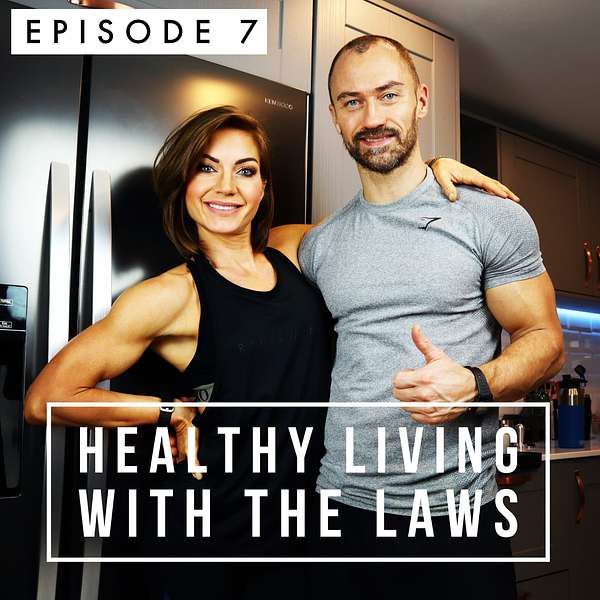
EPISODE 7 | All About Calories - Should You Track Them or Eat Intuitively?
In this episode we take a deep dive into calories. We answer:
What are calories?
How to track calories?
When to track calories?
When NOT to track calories?
How we track calories?
Calories vs Intuitive Eating?
Why a calorie is not a calorie?
What does calories in/calories out mean?
How can tracking calories help you lose weight?
How to regulate calories without tracking?
Enjoy!
BEN INSTAGRAM: https://www.instagram.com/benlawprimal/
SARAH INSTAGRAM: https://www.instagram.com/sarahlawuk/
Thanks to Our Sponsor:
Want supplements that *actually* work? Check out Love Life Supplements and use code BEN10 for 10% off your order.
Book a Consultation with Sarah: Free Wellness Discovery Call
Let’s Stay Connected:
- Ben: @benlawprimal
- Sarah: @sarahlawuk
Thanks for Tuning In!
Enjoyed this episode? Drop us a 5-star review and share it with your health-loving crew. Stay tuned for our next episode — we promise we won’t ghost you again!
This is Healthy Living with the Laws. Top tips on how to optimise your health from what you eat and drink to how you live and think. With your host, Ben and Sarah Law. So if you come across someone that says, right, you need to eat less and move more, shut the door in their face. Basically, unless you know 100% that you are over consuming the wrong foods and you're sitting on your bumble day. But if you're not, then it's not that simple, and this is where conventional medicine a lot of the time goes very wrong and really upsets me because it makes people feel guilty. It makes people feel ashamed and like they're sloth and that they're, you know, eating too much, and it's not fair to make people feel that way when actually there could be so many other things going on in the body that are causing that response in the body. Hello everybody and welcome to another episode. I'm joined today by Ben.
Ben:You joined?
Sarah:He's back. Everyone thought I'd uh divorced you.
Ben:Yeah, you've done some solo sods, haven't you? Solo sods.
Sarah:I have done some solo sods. But that's because I have some cool people to interview, and you know, sometimes it's just women chatting and you're not a woman.
Ben:Yeah, definitely not a woman. That sounds a bit womanly.
Sarah:Not my thing. Do you know it's International Women's Day today as well, so to all the women out there, high five. Not necessarily single ladies, but just all the women. Just you know, a big high five. High five to all the women. To all the women for being women.
Ben:Wow. How profound.
Sarah:So profound.
Ben:So yeah, what have you been up to?
Sarah:Oh, I mean, it's been joyful. I have been It's been a while since I've been on this thing. It has. You feeling a bit rusty.
Ben:Ear infection, didn't I?
Sarah:You've had an ear infection that's can you can you just tell everyone how you got the ear infection?
Ben:Pick in my ear.
Sarah:Here's a lesson to you all. Don't put your fingers in.
Ben:I had a scab in my ear and I couldn't leave it alone.
Sarah:Like a five-year-old.
Ben:Yeah, I paid the price because I got a really bad ear infection that's still not 100%.
Sarah:Ended up perforating your eardrum, didn't you?
Ben:Yeah. Yeah.
Sarah:That's not really what you wanted, was it?
Ben:No, I've I've appreciated ears a lot more since it's still uh ringing slightly and can't hear that well.
Sarah:At least it's not as pusy.
Ben:I mean that was I had pus coming out, I had.
Sarah:Oh, this is fun for you all to listen to, isn't it?
Ben:Yeah, it wasn't fun at all. Really painful, really horrible. I actually had to have antibiotics for the first time.
Sarah:Well, this is the first time you've been to the doctors in how long? Twenty twenty years, twenty-five years. Twenty-five years. You weren't even registered, were you? So it was like I actually had to force you to go in the end because I had to bite the bullet and go because it was just really bad.
Ben:And unfortunately I had to take antibiotics.
Sarah:Which are necessary in some cases, obviously, because you might not have an ear if you hadn't had them.
Ben:No, it was yeah, it was necessary.
Sarah:So just for everyone listening, obviously antibiotics can be necessary in certain situations in life, but they're not something we want to just automatically turn to because they completely wipe out all the bacteria in your gut, which is all the goodies that we need. Not ideal.
Ben:Yeah, not good for the gut, so I had to rebuild.
Sarah:But you've been alright, huh?
Ben:Yeah, not too bad. I've taken lots of probiotics, lots of fermented foods, lots of sauerkraut.
Sarah:Had a bit of a dodgy kombucha tummy it moment, didn't you?
Ben:Yes.
Sarah:Slightly loose down there. We could do a whole podcast on poo. I mean it's a topic.
Ben:I prefer not to, but I mean it's very yeah, it's a lot to talk about with poo.
Sarah:There's a lot.
Ben:But today we're not talking about poo.
Sarah:We're not. We're not talking about poo. What we're talking about calories. We're talking about calories. So calories are fascinating. And the reason we wanted to talk about this subject is because it drives me mad when I see people just saying, Well, the answer if you want to lose weight is you need to eat less and move more. And if only it that it were that simple, there would not be obesity in the world, would there? No one would be obese because it'd just be like, There's the simple solution. And what I hate about that is it's so frustrating for people who are doing that, and what they're doing is they're digging a hole for themselves because all they're doing is eating less, less, less, less, and less and moving more, more, more, and more. And it's just like they're making things worse, and then it's it's so soul-destroying for that person. I've been there where I've been running to the ground and had my like when I've been competing sometimes, had my calories dropped and dropped, and my my weight just kept going up, and I was like, what the hell? And then it makes you feel like you're doing something wrong, and it you feel a little bit like you're going crazy, and it's not fair for people to have to feel like that. So we want to help people understand a bit more about calories and why they're not as simple as you may think they are.
Ben:It's a lot more complex than calories in, calories out.
Sarah:It really is.
Ben:They do uh well, ultimately, you do actually have to burn more calories than you consume. But how you your body uses those calories can vary so much. So calories out is highly variable. Yeah. You can control calories in, obviously.
Sarah:You can, but it's not it's not even about how many you're consuming, it's about what your body is doing with them, isn't it? So that's the key. It's like it it's how your body utilises those calories, whether it's storing them or whether it's actually using them as fuel and burning them. And this is what's so complex because we don't have a little magic magnifying glass that can see exactly what every calorie is doing in the body and how it's affecting how the body works. So we want to give you some ideas as to knowing kind of what they are and how things affect calories. So if you are someone that tracks, we want to talk a little bit about that as well, didn't we? Tracking versus intuitive eating. Yeah. But if you are someone who tracks your calories or tracks your macros, this is really important to know because there's so many variables again, which actually make it really impossible to track unless you eat the same food every single day and then just slightly lower it or higher it, but that is not good for your gut bacteria either, because they they like variation.
Ben:It can work, yeah. It can work if you're if you're eating very stable. Yeah. Uh you just you can't well, I did it basically, didn't I? Yeah. My bodybuilding journey. I'm short-lived bodybuilding journey. My short-lived bodybuilding journey. I tracked for the first time ever.
Sarah:Yeah, and you were that person who was like, I will never track food. I just want to eat. And it the thing is with you though, you were eating a good quality diet before you started tracking. It wasn't like, you know, you were like, I'm I'm just gonna eat what I want whenever I want. You knew how to eat well, and I I think that's the thing that we're both really passionate about is helping people understand how to put good things in so your body actually functions and your your metabolic rate is higher, and and your body's fuelled in the right way. Use those calories properly. Exactly. And that doesn't mean that it has to be boring, like food that is nutritionally dense doesn't have to be boring. I think that's the thing. But the problem is when we're just over-consuming processed crap, we crave more of it because the hormonal response that creates in the body is chaos, absolute chaos within the body. So it causes all these different hormonal pathways to shift, and when that starts to happen, that controls our cravings and it controls our moods, and our bodies, you know, they want to be nourished, but their main role is survival. Survival and to produce babies. So, number one is survival. So if you're not fuelling your body with with things that it needs, like you're not getting all the vitamins and minerals that you need, even if you're eating loads, your body will think it's starving, so it will be like, right, I'm gonna make you eat more.
Ben:Yeah, you're calorie-rich but nutrient poor. Yeah, so you're overfed and undernutured. Yeah, exactly. So your body will want to keep eating to provide the nutrients it needs, so just make make you hungry and want you to keep seeking out calories to get those nutrients.
Sarah:Yeah, and this is why you see when people are undereating, they are obsessed with food, and I can definitely relate to that. Like when I was in my phase of eating an apple a day and not much else, all I thought about all day, every day was food. I would read recipe books, I would watch cooking. I mean, we what we do watch cooking programs anyway, but I would watch cooking programmes, I would read calorie books, I would literally look at food all day, every day, because that's your body's response. It's making you obsess about something to keep you on the planet.
Ben:It wants you to be survival, survival mode, isn't it? Your body wants to keep you alive at all costs.
Sarah:Yeah, but also what's really interesting, which we haven't really discussed, and we say this on every podcast, but this will be another one for another podcast about gut health. So I have a parasite, which is sounds gross, which I discovered recently because I've been feeling pretty crappy, and I was like, there is something not right with my body at the moment, and I was just like tired all the time, couldn't think straight, would go through bouts of just like severe depression, which I don't that's not me, is it at all? Like real lack of motivation, depression, just not a very nice person to live with, probably, was I understand? I'm sorry. I tried, and the thing is, like, I know the power of the mind as well. So it was doing so much work to try and get my head in a good place, but it was like no matter what I was doing, it would not make any difference at all to how I was feeling, and I was like, what the frickin' hell is going on? So I went and had a GI test done and discovered that I'd got a parasite, which we're still figuring out if that's the root cause of why I've been feeling the way I have, or whether there's something else, or whether it is all coming from the gut, and to be honest, most of the times most things come from the gut, but when you've got something like that going on, it again it's like your body is not absorbing. So what we discovered was I'd got a lot of malabsorption, um, and it was probably because of this parasite, so I wasn't absorbing the nutrients from my food, which was making me crave energy, like crave things to to pick me up. Um, and it's just like again, it was weird. I was like, I just could not control. Yeah, there were certain foods I was just like, I just feel like eating chocolate and carbs all day.
Ben:Your body was craving energy energy, yeah. And now you're you're really struggling to lose weight.
Sarah:Yeah.
Ben:And you what I do, how little food you eat, yeah, which goes to show exactly what we're talking about, like is so comp complex.
Sarah:Yeah, there's so much more to it than just eating less. So just to kind of explain that, I after competing, uh, and then I had a bout of like diarrhoea, and I was like, whoa, what's going on? But I didn't feel ill at all, just had a bit of diarrhea, and I was like, oh, just carry on as normal. And then all of a sudden started to feel really bad, didn't I? And then my weight just shot up by like three kilos, and I was like, right, well, maybe I'm just overeating. Maybe I don't need to eat as much now because I'm I don't know, maybe I'm not being as active, I don't know. You kind of cut start to question all the things you're doing, which is what I was saying about the mental element as well, because then you start to think you're going mad. So I was like, well, I obviously need to exercise a bit more and eat less. So that was my thought process. So started eating less, doing more exercise, which I think was actually making things worse, and my weight, no matter how much I bring my calories down, does not budge. Does not budge because it's all dependent on what's going on in the gut, and you have certain bacteria that drive how you use calories. So certain bacteria will will determine like how you um store it, whether you store it as fat or whether you use it as fuel. So this is again, it's about what the calories are doing in your body, yeah, and how they're affecting your gut.
Ben:Yeah. But people like simplicity, don't they? And the calories in, calories out model is very simplistic, isn't it? Yeah. Just eat less and you lose weight. But then you people just focus then purely on the calories and they ignore the quality of the food they're eating. Yeah. And it's just a numbers game.
Sarah:And also they ignore what else might be going on in their body and driving this problem with their weight, like thyroid health, hormone balance, gut health. Those things are actually the biggest driving forces in how our body utilises calories. So if your hormones are completely out of whack, then that's gonna play a massive role in how your body uses calories. And that's why you see when people go through the menopause, you know, weight challenges start to creep up because we have this hormone shift naturally as women, which then drives all these issues with weight story, uh fat storage and feeling crap. So you've got that element, but then, like we said, you've got the gut bacteria element as well, which determine, you know, this balance that we've got in our gut, these these bacteria that we've got, they need to be in balance. And if you've got an overgrowth of a certain type of bacteria, I think it's the thermicutes and the bacteroids. Which one is make you firm and cute. Oh, is that how you remember it? Made to be science. So the firmicutes make you firm and cute. Don't make you firm and cute. Don't make you firm and cute. Oh, they're the bad ones though. So you don't want an overgrowth of firmicutes, you want a balance of them against the bacterioids. It needs to be the ratio needs to be right between the bacterioids and the firmicutes. Fermicutes. Fermutes. The firmicutes. Um don't make you firm and cute. Because if you've got too many firmicutes, then you are more likely to store fat.
Ben:Yeah. So before fascinating. I always say don't before focus on calories, focus on quality of food first. Yeah. And trying to correct any hormonal imbalances you have, any gut problems, any gut like dysregulation you have first, and then you can use calories as a tool. Yeah. It's kind of what I've done.
Sarah:But I think where people use calories is because they just want to eat whatever they want to eat. So it's like an easy way of going brilliant. F F I F Y M. F F what would that stand for?
Ben:I don't know. I I F Y M. I I F M. If it fits your macros. Yeah. Or it's just eat whatever as long as it fits your macros. As long as you have enough, you know. Proteins, carbs, yeah.
Sarah:If you hit your if you hit your targets of protein, carbs and fats, they can come from any source.
Ben:And you see this a lot in the bodybuilding well, don't you? Yeah.
Sarah:And there's variations of IIFYM as well. Like obviously, I totally understand about having food freedom and not having this fear around food, but also it's about knowing how to nourish your body well, and where the IIFYM model goes completely wrong is that if you don't have a good relationship with food or you don't know how to nourish your body well, and you just think, brilliant, here we go, I've got to eat this amount of carbs, those amount of carbs can come from Snickers bars, you know. It and there's a very big difference between what a Snickers bar would do to your body to some carrots and sweet potato would do to your body. So it's really like you said, it's about knowing the good foods first and basing it on high-quality, nutrient-dense foods. Yeah, get that nailed first. And then focus on calories. And this is where other diet models annoy me as well, when you've got point systems and all that, because I look at the point system and I'm like, what? Or the sins, and I'm like, who came up with this? Like, it is insane when you look at some of the things that are zero points, or like you can eat 50 tons of pasta in one go, but it just doesn't make any logical sense when you actually understand nutrition.
Ben:Because different types of food can have a completely different impact and impact to the body, even if they're calorically matched. Yeah. Uh the same macros, um like for instance, like white rice, uh what you're saying when you cook and cool.
Sarah:Yeah, so this is another thing to consider. So even the same food, the way it's cooked, can dramatically impact the the response it causes in the body, the calor calor I can't say the word, the calorie Well what am I trying to say here? I don't know. So I don't either. My brain is it's this parasite. It's killing my brain, I tell ya. Some days I'm like, I cannot think straight. It's so weird. I truly believe, after having this, I truly believe that anyone is going who is going through anxiety, depression, um memory issues, you need to get a gut check done because I I can guarantee for most people there's something going on in the gut that's driving it. Definitely. Because we've got this massive nerve, it it controls everything. We've got a massive nerve that runs from the gut to the brain called the vagus nerve, which signals are sent up all down that what? See? Up and down your spine. You need to talk because I can't. So back to what we were talking about. Yeah, I've got a random time. So the way you cook foods determines also the calorie yield. That's the word I was looking for, the calorie yield that they have. So, example being, if you cook rice and you consume it immediately after you cook it, it will be a certain calorie yield. But if you cook it and then you cool it, even if you reheat it again, it becomes a resistant starch. So, what that does basically resistant starches feed your good gut bacteria rather than feeding you. So it means a lot of those calories that you're consuming actually aren't being consumed by you, they're being consumed by your good gut bacteria. So you're feeding your good gut bacteria, and that's where a lot of the calories are going, is to them rather than to you. So even if you do eat a really high-quality diet and you track, if you change one variable, like you change one day you cook your lunch and you eat it straight away, and the next day you batch cook all your rice and then you know cool it in the fridge, that's actually going to produce a different response in your body. Isn't that fascinating? That is fascinating. Same with potatoes. Yes. They produce resistant starch too. What else? Well, there's lots of foods that have a lot of resistant starch in naturally like banana. Green banana flour. Green banana flour. One of my faves for cooking with. I use it for making pancakes and lots of different things, but again, that is feeding your good gut bacteria, so a lot of the calories that you're consuming through it are actually not being consumed as such by you. And this is why it's so hard to track calories. Because if you would you do you track that or do you not? Do you go, well, I'm not actually consuming it, my bacteria are.
Ben:Yeah. And the same with fibre. Some people track fibre as carbs, but fibre is not actually digested in the body. Yeah. Is it it's not utilised as energy. No. It passes straight through. So it's either those. It does contain calories, yeah, but they're not really used for anything. That's why you get some people track net carbs, don't they? But subtract the fibre, and then other people track total carbs.
Sarah:And this is where it's really confusing when you travel as well, if you macro track, because in the States the fibre is is in with yeah, is in with the carb total on a packet. So if you looked at a packet, the fibre content would be included in the carbs.
Ben:So you have to minus the the fibre to get the net carbs.
Sarah:Yeah, and in the UK, we don't. So when you see the carb amount on a packet, if it says carbohydrates 50 grams, then it will say fibre 20 grams. So in fact, that would actually be 70 grams of carbohydrates. Total carbs. Yeah, total carbs, but 20 of those are not being consumed by you. The bacteria in your gut that need them are utilizing them and helping themselves with it, and then it's helping you eliminate toxins and old hormones and everything else out of the body. Body? Oh my goodness, this parasite, I told you it's ruining me. Literally.
Ben:At the body.
Sarah:At the body. Take that snippet. Um, the other thing we were going to talk about was packaging. So another reason to wherever possible, or as much as possible. Like we we really like to have like an 80-20 principle. 80% of the time, real whole foods, 20% can be, you know, some packet things here and there. But I'd say 90-90-10. 90-10 for me. But yeah. You eat a lot of protein powder.
Ben:I wouldn't consider that to be But it is, it's packeted. Yeah, but like we said before, it's there's processed food, bad processed foods, and then there's good processed foods.
Sarah:There is, but still, with regards to the calorie part of this, this is where we're going, is the fact that with labelling laws, they have a 20% leeway in what the calories are. So in fact, you could be consuming something and it could be 20% higher in calories than what it actually says on the packet. Yeah. So that makes it really challenging.
Ben:Yeah. But not all companies would have that. You know, they'd work it out properly.
Sarah:Yeah, they'd I they obviously try, but again, it's ob obviously really hard to do that for them. It's not it's hard in general. Yeah.
Ben:To work out any calories, that's why you can almost not trust any packaging because it's highly because it's it's complex to work out. And I've been to the supermarket before and it's a fair it's a strange metric, really. Yeah, it's about how your how do they figure it out basically the amount of energy required to raise your body temperature of water by one degree or something like that. Really technical there.
Sarah:But didn't they do it to do with like burning like I can't remember how they actually figured out calories, but it's to do with like b burning food, they would I I can't remember.
Ben:Yeah. Go and Google it. Maybe it takes to raise the temperature by one degree. Yeah, something like that. It's so hard to add. Put all those words together and you've got some kind of definition of what a calorie is.
Sarah:But I've I've To the supermarket before, and I remember buying a packet of salmon, and I was looking at it and I cooked it and it was quite oily, and I was like, This is says it's got like eight grams of fat in it, and I'm sure it's got more than that because normally a decent salmon fillet would have more than eight grams of fat, and then a couple of weeks later, I went back to the supermarket, the same supermarket bought exactly the same salmon, and the fat content on there was twice as high, completely different. So it is so challenging to actually track really, really track, like properly know exactly there's so many variables to it, which is what we're trying to show.
Ben:So you let's talk about tracking now, but you you can after a while of tracking, as long as you track them the same way each time, even if they're not even you know, if even if they're off by 20%. It's gonna give you some you g have a baseline then.
Sarah:Yeah, if you're eating a lot of the same things, then it becomes easier to track because it's like there's not as many variables.
Ben:Yeah, and it's easier to track a whole food, like a chicken breast. Yeah. Than a packet of whatever.
Sarah:Yeah, exactly. Much easier to track a whole food than it is to track a packet food, even though it might seem easier to track a packet food because you can just scan the barcode into a tracking app and it will tell you what it should be, but like we said, that could be completely off.
Ben:Especially when you've got like 20 ingredients.
Sarah:Yeah, yeah. Yeah. The more ingredients, the more margin for error. But also the way you cook foods like we mentioned, and again, are you tracking them raw or cooked? Because the cooking method will change it. So when water comes out of things when you cook it, so for example, if you cook things in the air fryer, like if I cook sweet potato fries in the air fryer, they are so you know, they're so light that you could be like, brilliant, I can have 500 grams of sweet potato, but it's it would be like cooked weight, it would be like 50 grams. That's generally best to measure raw, isn't it? Yeah, yeah.
Ben:Measure varies so differently, so much after you cook it.
Sarah:It really does, but then that's when it becomes con time consuming if you batch cook because well, or if you if you want to batch cook because it's time-saving, but then you have to weigh everything raw and either cook it just for that portion, or you have to weigh it all raw, then weigh it all cooked and work out.
Ben:Or just weigh it all raw and work out how many portions how many portions it's gonna be, and divide the cooked weight by that many portions.
Sarah:Don't count calories, peeps.
Ben:This is so we talk a bit about how do you track whore?
Sarah:Yeah, and if tracking is a good idea. Because I truly believe for some people, yes, and for other people no. So we were gonna talk a little bit about intuitive eating versus tracking, weren't we?
Ben:So just say how do we track Well, how do you track?
Sarah:Go.
Ben:Well, there's there's two main apps, really, aren't there? There's a few apps out there, but there's MyFitnessPal and Chronometre, and I personally use Chronometer.
Sarah:I use MyFitnessPal just because it's what I've always used.
Ben:Yeah.
Sarah:But interestingly, like neither of us ever used to track. I never used to track food, you never used to track food, and there's some days when I'm like, I wish I hadn't started tracking food because mentally it's quite exhausting.
Ben:Honestly, I I've never thought I'd track, but now I've now I've started. I do actually like to track every day.
Sarah:I just like the data, that's the thing. It's like I do like the data, see how that's interesting, and there's times as well when I again when you're trying to piece together the puzzle, so let's say you do have issues with your weight, like I've had recently, and so when you've got data, it's quite good because you can look back and go, What right, what was I doing back then? And for me, like if I look back at certain points in my life when I felt really good, my weight was really stable, I had lots of energy, they were sometimes when I wasn't tracking, so I don't know what I was doing. Yeah. So I'm like, oh damn it. So but maybe that's why I was feeling great because I wasn't tracking and I wasn't obsessing over it as well, because that mentally can have a big impact on your stress all the time.
Ben:So when yeah, so times when tracking is good is you may be like massively under-eating protein, for example. I think like I was um when I didn't track at all and I lost loads of weight. I I well I've said when tracking, so I don't know, but I think I was massively under-eating protein. So now tracking, I can make sure I can hit that protein mark as around 200 grams for me a day, um, and not lose muscle. Um so that's where it can be really good, or yeah, I I definitely eat carbs as well.
Sarah:Yeah, because people often don't realise how many carbs are actually eating.
Ben:When I was keto, I think I was eating way more carbs than I thought I was. Now I've tracked. Yeah. There's so many hidden carbs in stuff, yeah. Isn't there?
Sarah:Yeah, things you wouldn't even think because you're like, you know, even say whole whole yogurt, like natural yogurt.
Ben:Yeah, yeah, that was a big one for the bigger.
Sarah:You kind of think, well, that's just gonna be protein and fat, and then it's actually quite quite carby.
Ben:Obviously, veg, there's a lot of yeah, it can be a lot of carbs and veg.
Sarah:And depending which veg you choose, and that's that's something that you know I'm really kind of passionate about is you know, with with carbohydrates, getting a good amount of your carbohydrates from your veggies because they're whole antioxidant rich, fibre-rich, they've got so much goodness in them.
Ben:So, yeah, if you're if you're struggling to lose weight, that's where tracking can come in handy, or you're losing muscle, so then you can make sure you're hitting that protein level, or you're you can reduce your calories because you're maybe you just maybe overeating, basically. It's a good that's easy to do on a high carb or a high fat diet.
Sarah:It gives you awareness, I think, doesn't it? That's the key. It gives you awareness of what you're doing. So I think it's good to to use as a tool, but not necessarily do all the time. Yeah. So, like you could do it for a couple of weeks and just then you could really see, oh my goodness, okay, so I'm definitely over consuming carbs and under-eating protein, or I'm definitely not eating enough. It just gives you that awareness of what you're doing and where you might be missing things.
Ben:It's taught you so much. Yeah. If I if I stopped tracking now, I'd I'd still have a very good idea of what to eat. What's what's in stuff and what to eat. And people just they just overeat. Even on keto, people can overeat massively overeat fat because it's so easy to eat. And people even still can make some awesome high-fat snacks.
Sarah:It's like then you eat all the treats.
Ben:All those, yeah, all those keto treats and stuff, which are still quite highly processed. You'd be surprised. I think I was eating a ridiculous amount of fat. Um, people, you know, do stall with weight loss on keto. Yeah. Even though it's supposed to be this powerful weight loss tool, which it can be, but then people still don't lose weight on it, they're just they're just overeating still.
Sarah:Yeah, and also there can be some, you know, long-term implications with keto with regards to the fact that it can sometimes disrupt your gut bacteria as well, because of the lack of fibre sometimes that's in that diet. Because if you're really, you know, tracking and you're really meticulous about being mega low carb, you often end up eliminating quite a few veggies because they're actually quite high in carbs, like even things like broccoli, yeah, you know, it's quite high in carbs.
Ben:It's just get just good to get a baseline as well, isn't it? If you never track before and you're struggling to lose weight or whatever, you can track for a few weeks and you actually see what you're putting in your body, like you may be way overeating.
Sarah:Or way under eating. Or weight under eating, um which it definitely I think was me, and that's where bodybuilding really helped me because it made me start tracking and made me realise that I was massively under eating on a regular basis. Like when I first kind of looked and I was like, wow, okay, that's interesting, didn't realise. And this is what's challenging as well, because when we talk about intuitive eating, is sometimes that's actually not possible for some people. So intuitive eating is really, you know, eating what feels right when you're hungry, isn't it? It's kind of what it says on the label, intuitively eating. I mean, everyone knows what intuitive means, I'm sure, all of you fabulous listeners. But when what are you gonna say? I can see it on the edge of your mouth. You're like, let me speak.
Ben:Yeah, but that's where food choice comes in, but you have to get the food choice correct for intuitive eating can really work. Because I intuitively ate when I started keto uh paleo all those years ago. Um but I made sure I picked the right foods and that regulated my hunger without even tracking calories. So my my food naturally consumption was naturally less because my f hunger was regulated, so I wasn't getting hungry all the time. And then I just naturally I just ate when I was hungry, but when I was actually properly hungry, not when my blood sugar was low and my insulin was low, basically. Um so food choice I said this before, food choice really is the is the primary starting point. Yeah. And then you could add tracking after that, but then like I said, I uh I intuitively ate and I got very skinny, didn't I?
Sarah:You did. My mum was worried.
Ben:She was like, I mean I'm getting ill. I'm 80 kilos now and pretty pretty lean, pretty very lean now. And I was 70 kilos when I before when I went uh full keto and didn't track. And I you're looking back at pictures now, I was so skinny.
Sarah:You were, but you did you were literally like you know carb Nazi. Yeah, you ha you literally like would not touch a carb. You would like literally spit on them.
Ben:I mean it's a powerful tool. I mean I lost loads of fat, but that's where tracking would have helped because I lost too much, I start to lose muscle, yeah, and got very gaunt, denied. Yeah, the cheeks were because it's so the the diet's so satiating and if you do it correctly and you don't go for all the things. I wasn't literally wasn't hungry. No, you still have like two meals a day very low carb, high fat, and lost too much weight. And if I'd have been tracking, I probably would have bumped up my protein calories in general.
Sarah:And also where it can be challenging is if you've got if you've had an eating disorder, because naturally, like I didn't used to ever get hungry. Like it was very rare that I would be hung actually hungry, or I'd kind of lost the ability to recognise hunger and fullness properly, and that's again because when you don't eat in the right way, um it massively disrupts your satiety and hunger hormones. So if I'd have intuitively just eaten when I was hungry, I probably just wouldn't have eaten because I'd be like, but I'm not hungry. So it's like I had to make myself have regular meals, even if I felt like it or not, to kind of get myself back into a balanced state. And again, this is this is a lot to do with like hormone and and hormones and the power of what they do. So if you say to someone to intuitively eat and they've got blood dis uh blood sugar dysregulation, then that might be every hour because and that's not healthy. That's not what we should be doing.
Ben:Like I did before keto, I was hungry all the time. Yeah. So I'd be eating when I was hungry. Yeah, exactly. So you were intuitively eating.
Sarah:Intuitively eating, but that hunger was being driven, yeah, exactly by by hormones going wild and insulin and how that impacts your leptin and ghrelin, which are your hunger and satiety hormones. So that's where it can be challenging to intuitively eat. And also in dysregulation of cortisol is a big one. So cortisol is is our stress hormone, one of our stress hormones, which is actually really, really important. I think uh cortisol gets a really bad rap as being like the devil, but actually it's so important for life. We wouldn't live without cortisol, it's so vital, and it's like our get up and go in the morning, but when it dysregulates, it means it can be completely out of balance, so it should start high in the morning and then kind of come down as the day goes on, so you're ready for bed at night and you can get to sleep properly. But for a lot of people who are living in states of stress, about 84 of the popul 84% of the population, and again, stress can come from so many different elements. It could be that you've got a parasite like myself, which puts your body in a state of stress because it's constantly fighting, could be that you're under-eating, that puts your body in a state of stress, it could be that you're overtraining, that puts your body in a state of stress, it could be that you're eating foods that your body doesn't like, puts you in a state of stress, it could be mental stress, you know, emotional stress, there's so many different elements, uh, environmental stress, toxins, all of those things can act as a stressor on the body. And so when cortisol is dysregulated, what can happen is if you don't eat regularly, you can make it worse. So it's like you can um as soon as your blood sugar starts to dip, your cortisol will rise, and your adrenal glands which produce your cortisol are like a bank account. So if you keep drawing on a bank account when it's already in its kind of overdraft, you've got nothing left. And that's what happens with the adrenal glands. If you keep drawing on them and they're already not in a great state, and they're, you know, the cortisol is here, there, and everywhere, then it just exacerbates the problem. So for me at the moment, again, because we're not sure whether mine's linked to cortisol, because I've always had issues with my cortisol, and that's probably come from the past of under-eating and over-training and stress in my body just having a very low stress threshold. So if I went on just hunger cues, then I would be massively disrupting my cortisol even more because in the morning sometimes I'm like, I'm really not hungry. But if you've got cortisol dysregulation, then absolutely you should be eating within the first hour of waking because otherwise your blood sugar will dip, and then you get this rise or draw on your bank account of your adrenal glands, which is going to exacerbate cortisol dysregulation even more. Um, so the problem is with people when they have cortisol dysregulation, they can either never feel hungry. So, if you think about it when you're in a state of stress a lot of the time, you don't you just don't feel hunger. You're like, I'm not hungry because your body is so focused on the stress element not digesting, it's like we're not gonna make you eat right now. So you've got that side, or you've got the other side where people, when they're stressed, they eat because their body is like looking for fuel. So either end of the spectrum makes intuitive eating really, really challenging.
Ben:Yeah. So your intuitive eating can work, but it's you kind of have to sort the diet out first, you sort of sort sort your uh health out first by eating the right foods, choosing the right foods first before you can properly intuitively eat in a good way. Yeah.
Sarah:So it's tough, really.
Ben:This whole food is. You can almost think have to track before you can intuitively eat almost as well.
Sarah:Or is or maybe think to yourself, okay, so what are the good foods to be putting in on a daily basis? So having a list of things.
Ben:Good quality. 100% is get the quality of the food right first.
Sarah:Yeah.
Ben:Like we would say, nutrient-dense whole foods.
Sarah:As much as possible.
Ben:I would say low, low, low carb.
Sarah:Depending though, I'm not depending on you. This is very individual with low because again or non-processed carbs.
Ben:Yeah, exactly. Non-processed foods in general, like.
Sarah:Because low carb, low carb for one person might be very different to another person as well. Like you know, it's it's so individual as to what your body does, like for you.
Ben:100% re removing those carbs carbs maybe feel incredible. Yeah. That's what changed everything.
Sarah:Yeah. And it's interesting again because at the time, maybe if you'd have just swapped your carb sources, would you have had the same feelings? Yeah, and the bread.
Ben:And the bread I was having, would that have the same effect? Yeah. I don't know.
Sarah:Who knows? But I know for me, as soon as I go low carb or try to go if I don't have enough carbs, my body just goes into a state of absolute chaos and stress. So it's so individual uh as to what works for your body. So yeah, having a list of what are the good protein sources, what are the good fat sources, and what are the good carb sources.
Ben:You know, and make talked about in our last double podcast.
Sarah:Yeah, we did.
Ben:What foods to eat.
Sarah:Yeah, exactly.
Ben:So it's kind of having that as your baseline and So to summarise, number one, sort your food intake out. Sort your diet out. Put the food choice out first. Food choice trumps calories. So make sure you're getting the whole nutrient-dense foods. Foods that serve your gut well, nutrient needs.
Sarah:Yeah, make sure your gut that support your gut and support your hormones as well. And again, when you support your gut, you support your hormones more because they massively work in tandem.
Ben:So if you're eating like that and you're feeling great, but you perhaps you have weight loss goals and you're not actually losing weight still by eating, even when you're eating all the nutrient-dense food, then at that stage you can maybe bring in tracking, use as a tool just to see where you are as a baseline.
Sarah:And then you can figure out okay, do I need to increase that and decrease that, increase that, decrease that, maybe change the again, swap up the cooking method or swap up the type of carbs that I'm eating to find the ones that work best for me. So it is like it is like a bit of an an analysis tool, isn't it, to be able to monitor and go, okay, well, obviously what I'm doing right now isn't necessarily working, so think from there you can start to tweak things. You've got data to start tweaking things with.
Ben:Yeah. Too little protein, like I said.
Sarah:Or too much carbs and fat together.
Ben:But that's only if the intuitive eating is not working, so just bring it in.
Sarah:Yeah, exactly as a tool. Um, obviously, I understand if you are a competitor, it's slightly different because you've got a coach that needs to see what you're doing, and so coaches need data. So, of course, they're gonna ask you to stick to either a meal plan that they've created or tracking. So, again, different coaches have different methods. Some coaches will literally be like, right, here's your food plan, this is what you eat, and that actually makes their life easier because it's like if you're eating exactly what they say and you don't create any variables, then they know every week to go, right, okay, let's just alter that slightly. But the problem is it's very boring. Like if you eat the same foods every day, unless you you know your coach gives you a a a different diet every single day of the week, which is not very normal, then it becomes very boring, and that's where people completely lose it because it's like they have no yeah, they have no food freedom, no food freedom to to meal plants enjoy food, and food should be enjoyed. Like, I truly believe food, yes, it's fuel for the body, but you need to enjoy it as well. It's a massive part of life, isn't it? You know, you can't just eat food just because it's fuel, you have to make it fun. Chicken and broccoli. Chicken chickley.
Ben:So, yeah, in terms of actually tracking itself, it may sound like a complete pain in the bum. Um it kind of is to begin with, isn't it? Yeah, but once you get used once you get used to it, once you get going, and you can actually save loads of recipes within Connometer or Mind Fitness pal. And if you eat the same thing, like I say, eating the same well, most people think their diet is more varied than it is, but most people eat the same kind of things most days. So after a while, they're all stored in there. You can easily it's so quick for me now. Because that's why I was put off to begin with, because I thought it'd be so such a challenge to track everything. I just couldn't be bothered.
Sarah:It does make you less adventurous with food though.
Ben:It can do.
Sarah:Like if you look at how we used to cook compared to kind of what we have. Uh well. A lot of the time, like I was looking back through Google photos the other day and I was like, oh.
Ben:It stops you snacking.
Sarah:Yeah, it does stop you snacking.
Ben:So if you're a snacker, you know, before I can start cooking the meal, I'd go in the fridge and slice off a couple of bits of cheese.
Sarah:Which is probably like a block for you because you're a cheese fiend.
Ben:Or just pop a load of olives and just you already had like 300 calories before you start your meal. Yeah. And now again, like if you just stopped it, I just stopped doing that now.
Sarah:That's what you see a lot of the time. If you've got kids, maybe you know, they'll you'll be cooking their dinner and you'll pop a chicken nugget in your mouth, or you know, that eat their leftovers, and it's like that there's no mindfulness behind that. It's like you don't even realise that you're consuming what you're consuming. So it's very easy to over-consume without even realising you're doing it.
Ben:It's about being flexible with it, isn't it? Like, but sometimes I just don't track at all to have that break completely. Yeah, which I think is very like on a Saturday, or if you go out if you go out for a meal, no way you I'm tracking.
Sarah:This is it. When people say they track when they go out for meals, I'm like, you physically can't unless you're in the kitchen.
Ben:Well, I don't as you track alcohol, which is no, you don't.
Sarah:Yeah.
Ben:Sorry, I'm not tracking this. I don't want to, I'm going to ignore it. I often don't track veg either, to be fair.
Sarah:Um I track some veg, but not all veg. See, this is the stupid thing as well. So I don't track things like I don't weigh my cord jettes and lettuce. I'm like, I refuse to weigh lettuce.
Ben:That's why you can get my like we were saying, you get hyper-focused on the calories. Yeah. You know, like we're weighing a bit of broccoli for the amount of carbs it contains, when that food is providing loads more than just calories. It's like the one I hate is egg yolks, because they provide a tiny bit of fat, so people discard the egg yolk, or so but that egg yolk is providing so much nutrition, but they just they're breaking it down to just how much fat an egg yolk contains when it's providing so much more for the body.
Sarah:Yeah, so it's again it's like when you consume a food as its whole source, you know, and don't I do have egg whites like because I can get my protein higher and I can use them without going over too much on fat, but again, it's like if I were to just I didn't used to do that as much, if I were to just consume more egg yolks as well, then I'd probably just eat less. fat in other areas. So it's so interesting.
Ben:And is it other foods that contain negative calories? Like like lettuce.
Sarah:It cut it this is a debatable.
Ben:Usually more easy to digest.
Sarah:To digest it. This is debatable. People say that about celery and cucumber, but it's it's a debatable one. It's still got calories in, but yes that again like how your body is the fuel your body has to use to break it down. Yeah. So it's just so there's so much that goes into it. So much.
Ben:Yeah. Which is crazy. But don't fear it if you want to give it a go. Yeah. Give it a go. And we can provide tips on how to do it.
Sarah:Yeah but just don't obsess over it. I think that's the key. Obsess over it. And if you're like me that's the problem. This you know if you've got quite a obsessive personality it's quite easy to become really consumed by something. So for me it's like when I start doing something I'm all in to do it and then it's really hard to kind of loosen the reins a little bit and I feel like I used to have a bit more but I think that's because when I was happier with my body and I was at a place where I just felt really content and in a good place I would be like I've got more flexibility but I think when you're in that place where I've kind of been at for the last few months where I've not been feeling very well and no matter what I've done my weight has just not budged and I've not felt great in myself and felt particularly confident in my body then it's it makes you kind of go well I don't I don't want to stray off because it's gonna make things worse. So it becomes very much a focus which is challenging and again this I think this has been a very good lesson for me because it it's like it's constantly pushing my boundaries and testing me of like okay so what it what there's still things there that need working on. And I think there is for many of us like especially women but I think many more men too nowadays you know food body composition body image is such a huge thing that we all have those well most people not everyone and I'm you know the people that don't is great I'm I'm like yes that we need we need to all kind of look at you know how you have that mentality towards body image and and food but for the majority of people they do have negative thoughts about their body image and they do have concerns about food so it's about having that kind of healthy balance between not fearing food but also being really mindful about what food is doing for you and how it's working for you and nourishing you or not nourishing you. Yeah.
Ben:I think we've covered a lot there.
Sarah:Yeah we all say it's going to be a short podcast then it ends up being like forever.
Ben:Basically caries are confusing.
Sarah:They're very confusing. So if you come across someone that says right you need to eat less and move more shut the door in their face basically unless you know 100% you are overconsuming the wrong foods and you're sitting on your bum all day. But if you're not then it's not that simple and this is where conventional medicine a lot of the time goes very wrong and really upsets me because it makes people feel guilty. It makes people feel ashamed and like they're sloths and that they're you know not that they're you know they're just eating too much and it's not fair to make people feel that way when actually there could be so many other things going on in the body that are causing that that response in the body.
Ben:Yeah.
Sarah:Boom.
Ben:There you go. That's all right.
Sarah:So I hope you found that uh if you have we hope you found that useful and giving you some tips on you know whether counting calories and tracking is is for you or not the situations when it's good to do it.
Ben:How to do it how to do it why to do it why not to do it.
Sarah:Yeah why not to do it.
Ben:Focus on food quality first always better at the end. Yeah so listening thank you iTunes please leave a review. Yeah we'd love it if you do if you watch it on YouTube make sure it's only looked at the camera like and subscribe that is us done for another week and we will be back I think we've got another guest interview next week. I'm gone again am I?
Sarah:You're gone again I've out to do sorry um but yeah we hope you're enjoying everything thank you so much for listening.
Ben:Any topics you want us to cover leave a comment below or comment on Instagram or YouTube.
Sarah:So you can find Ben at Ben Law Primal and myself at SarahLawuk I've also just got a new website which I'm very excited about so if you go and check out my new website it's been hours of love gone into that let me know. You